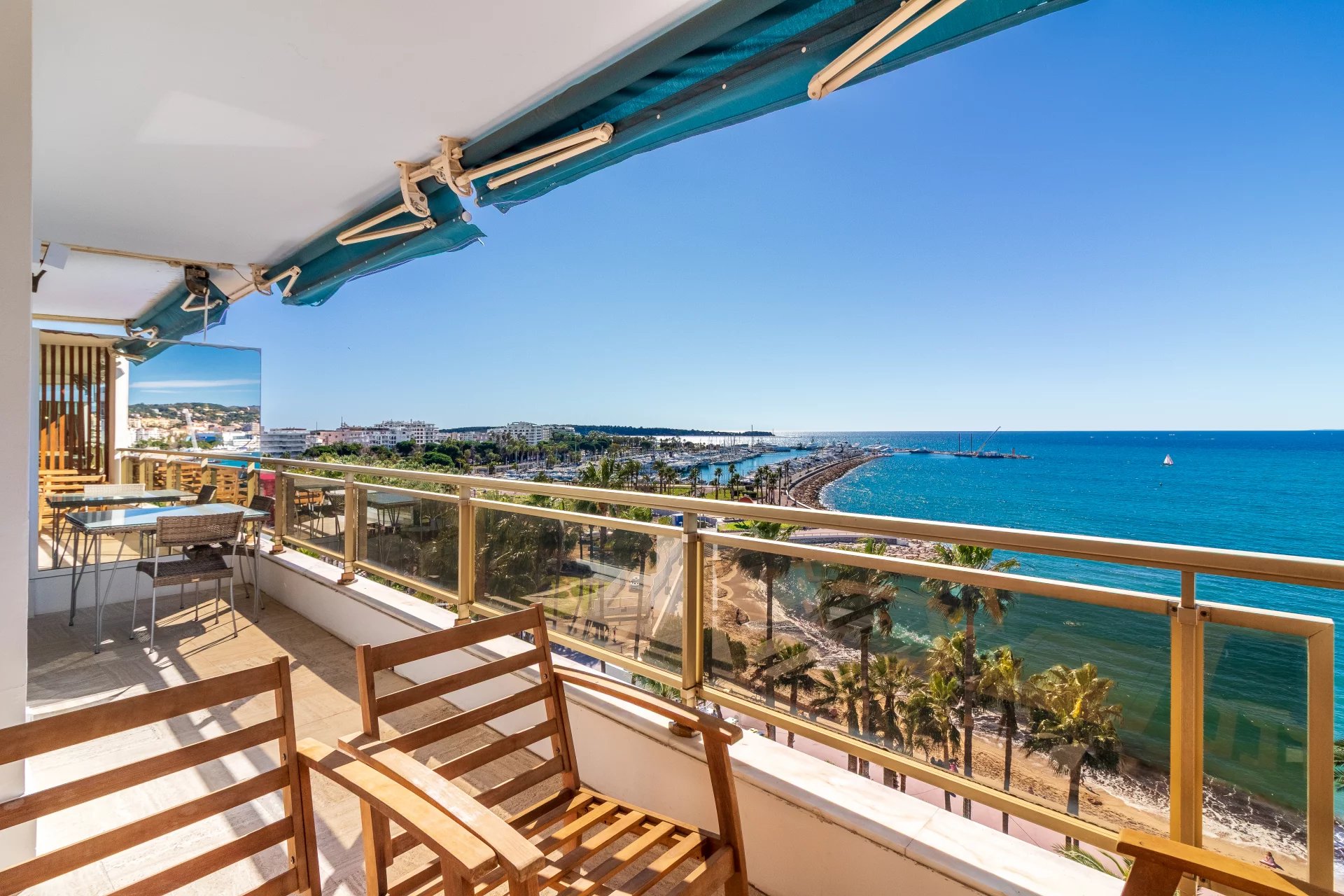
Acquiring a luxury villa on the French Riviera is a dream for many high-net-worth individuals, yet the journey from desire to ownership involves navigating complex legal frameworks, financing structures, and regulatory compliance. International buyers face unique challenges, from understanding French notaire processes to managing currency risks and tax obligations. This comprehensive guide walks you through every critical step, ensuring your investment in eco-luxury real estate along the Côte d’Azur becomes a seamless reality, whether you seek a family legacy estate in Cap Ferrat or a high-yield rental property in Saint-Tropez.
Table of Contents
- Defining Your Objectives And Preparing For Purchase
- Navigating Legal And Regulatory Requirements In France
- Financing Luxury Real Estate And Managing Costs Effectively
- Executing The Purchase And Ensuring Investment Value
- Explore Exclusive Luxury Real Estate Opportunities With Us
Key takeaways
| Point | Details |
|---|---|
| Define objectives early | Clarify whether you seek residence, rental income, legacy transfer, or tax optimisation to guide property selection |
| Understand legal essentials | Every French property transaction requires a notaire, with 7-8% transfer taxes on resales and 2% on new builds |
| Plan financing carefully | Non-residents can access mortgages up to 70% loan-to-value over 15-year terms with thorough documentation |
| Prioritise eco-luxury features | Sustainable properties with green certifications attract premium buyers and enhance long-term value |
| Engage expert advisors | Professional guidance through legal, financial, and regulatory complexities optimises outcomes and protects investments |
Defining your objectives and preparing for purchase
Before you step into the sun-drenched world of Riviera real estate, defining your objective early shapes everything from region and property type to tax strategy and holding structure. Are you seeking a private sanctuary for family summers in Antibes, a rental investment generating 3-5% annual yields, or a legacy asset for generational wealth transfer? Each goal demands distinct approaches. A residence prioritises lifestyle amenities like proximity to Cannes’ Croisette yacht-gazing or Menton’s lemon festival charm, whilst rental properties favour high-demand locations with strong seasonal markets.
Choosing your preferred location aligns with your priorities. Saint-Tropez offers Pampelonne paddleboard mornings and Vieux Port fisherman lore, commanding €20 million to €100+ million for clifftop estates. Cap Ferrat delivers unmatched privacy for those seeking seclusion amid botanical gardens and coastal sentiers. Eco-friendly property features are gaining significant value in luxury markets, with 2026’s sustainable villas incorporating solar arrays, green certifications, and biophilic design elements that appeal to environmentally conscious heirs.
Gathering required documentation early streamlines the process. Expect rigorous KYC and anti-money laundering checks, particularly for non-EU buyers. You will need valid identification, proof of funds, bank references, and source of wealth documentation. Establish tax planning frameworks and ownership structures with professional advisors before making offers. Consider whether direct ownership, an SCI (société civile immobilière), or offshore holding companies best serve your tax efficiency and succession goals. Pro Tip: Engage a bilingual tax advisor familiar with both your home jurisdiction and French regulations to identify double taxation treaties and optimise your structure from day one.
- Clarify investment purpose: residence, rental yield, legacy, or tax optimisation
- Select Riviera hotspots aligned with lifestyle preferences and investment returns
- Prioritise properties with eco-luxury certifications and sustainable features
- Compile documentation including identity papers, financial statements, and wealth source evidence
- Establish legal ownership structures with cross-border tax expertise
Visit our luxury real estate buying guide riviera for deeper insights into regional market dynamics, or explore how to buy a second home france for practical acquisition strategies tailored to international investors.
Navigating legal and regulatory requirements in France
French property law operates with precision and formality, centred on the notaire’s mandatory role. Every French property sale is overseen by a government-appointed notaire, whose duty is to protect both parties and collect transfer taxes. This legal professional verifies title clarity, conducts land registry searches, ensures compliance with planning regulations, and calculates all taxes due. Unlike estate agents, the notaire remains impartial, safeguarding the transaction’s integrity rather than advocating for either buyer or seller.
The step-by-step legal purchase process unfolds methodically:
- Submit a formal offer (offre d’achat) through your agent or directly to the seller
- Negotiate terms and agree on price, completion timeline, and any conditions precedent
- Sign the preliminary contract (compromis de vente or promesse de vente) and pay a 10% deposit
- Enter a cooling-off period (délai de rétractation) of 10 days for buyers to withdraw without penalty
- Complete due diligence including surveys, environmental assessments, and title verification
- Arrange financing and obtain mortgage approval if applicable
- Sign the final deed (acte de vente) at the notaire’s office, transferring ownership officially
- Register the property with the land registry and receive the keys
Be aware of registration taxes: approximately 7-8% on resale properties, around 2% on new builds. These fees, combined with notaire charges (typically 1% of purchase price), agency commissions (3-5% in luxury markets), and legal costs, add substantial amounts to your acquisition budget. For a €5 million villa, expect €350,000 to €400,000 in additional costs on a resale property.
“The notaire system ensures transparency and legal certainty, providing international buyers with confidence that their French Riviera investment is secure and properly registered.”
Comply with KYC and anti-money laundering regulations rigorously, particularly as a non-EU buyer. French authorities scrutinise large cash transactions, cryptocurrency payments (which we facilitate), and funds originating from jurisdictions with weaker financial oversight. Prepare comprehensive documentation tracing your wealth’s origin, whether from business sales, inheritance, or investment portfolios. The role of a notary in real estate extends beyond paperwork to ensuring the transfer of ownership is official and legally binding, protecting your investment for generations.

Our luxury real estate tax guide provides detailed breakdowns of French property taxation, wealth tax implications, and strategies for minimising your fiscal burden whilst maintaining full compliance.
Financing luxury real estate and managing costs effectively
Securing appropriate financing requires understanding mortgage options available to non-residents. French mortgages are available up to 70% loan-to-value for non-residents, typically on 15-year terms. Lenders assess your global income, existing assets, and creditworthiness across jurisdictions. Interest rates in 2026 remain competitive following recent easing cycles, though non-resident borrowers often face slightly higher rates than French nationals. Expect rigorous documentation requirements including three years of tax returns, bank statements, employment contracts, and proof of existing property ownership.
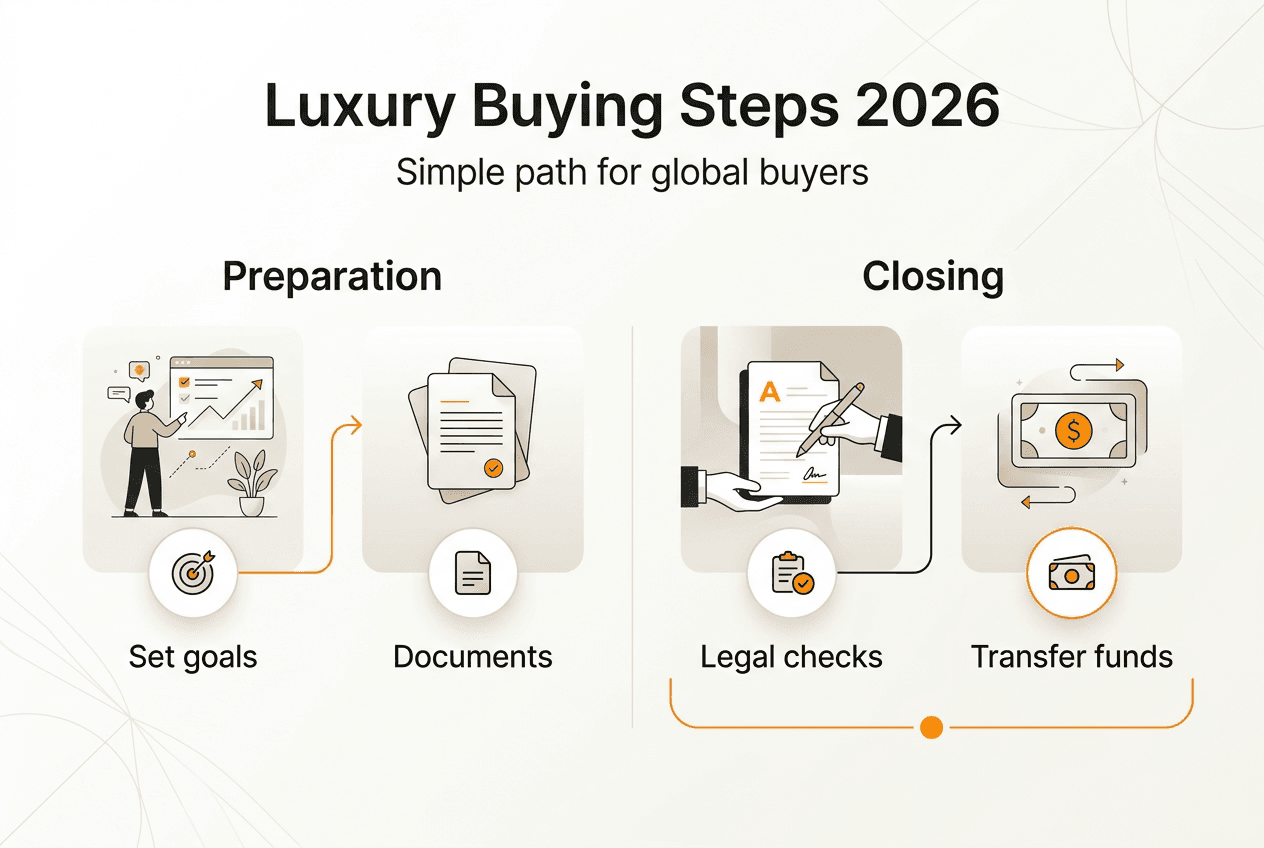
Prepare for additional costs beyond the purchase price and registration taxes. Notaire fees, whilst regulated, vary based on property value and transaction complexity. Agency commissions in luxury markets typically range from 3% to 5%, often negotiable on higher-value transactions. Budget for immediate post-purchase expenses including property insurance (mandatory), utility connections, and initial maintenance or renovation works. Many buyers underestimate the cost of furnishing a luxury villa to rental-ready standards, which can exceed €200,000 for high-end properties.
Consider tax planning methods to convert expenses into deductible items. Renovation costs, furnishing investments, and concierge services may qualify as deductible expenses if you operate the property as a furnished rental (location meublée). This structure can significantly reduce your taxable income whilst building a premium asset. Pro Tip: Structure your purchase to complete before year-end if possible, allowing you to claim a full year’s depreciation and expense deductions in your first tax filing.
| Cost category | Resale property | New build | Notes |
|---|---|---|---|
| Transfer taxes | 7-8% | 2% | Lower on new constructions |
| Notaire fees | ~1% | ~1% | Regulated scale, decreases with value |
| Agency commission | 3-5% | 3-5% | Negotiable on high-value deals |
| Mortgage arrangement | 1-2% | 1-2% | Includes valuation and legal fees |
| Annual property tax | 0.1-0.3% | 0.1-0.3% | Based on cadastral value |
Budget for ongoing costs including property maintenance, which averages 1-2% of property value annually for luxury estates. Eco-friendly upgrades, whilst requiring initial investment, often reduce long-term operating costs through energy efficiency and attract premium tenants willing to pay 10-15% above market rates for sustainable features. Swimming pool maintenance, garden upkeep, and security systems add €20,000 to €50,000 annually for substantial villas.
Explore our resources on how to finance luxury real estate for detailed mortgage strategies, or consult our luxury real estate tax guide to understand wealth tax implications and optimisation techniques specific to French Riviera properties.
Executing the purchase and ensuring investment value
Conducting thorough inspections and valuations before completing purchase agreements protects your investment and negotiating position. Commission independent surveys covering structural integrity, electrical systems, plumbing, and environmental factors like flood risk or soil stability. For coastal properties, assess seismic resilience and erosion risks, particularly relevant given the Riviera’s geological characteristics. Specialist valuers familiar with luxury markets provide accurate assessments, ensuring you pay fair market value rather than inflated asking prices.
Finalising your acquisition follows a precise sequence:
- Review all survey reports and negotiate price adjustments for identified issues
- Confirm mortgage approval and arrange funds transfer, accounting for currency exchange timing
- Verify all contractual conditions precedent have been satisfied
- Attend the final signing at the notaire’s office with valid identification
- Transfer the balance of funds, typically via bank transfer in euros
- Receive the signed acte de vente and property keys
- Register utilities in your name and activate insurance coverage
- Complete land registry formalities, ensuring your ownership is publicly recorded
Understanding luxury market pricing helps evaluate investment worth. The French Riviera, including Saint-Tropez, Cannes, and Cap Ferrat, commands a prime price range of €20 million to €100 million+ for clifftop villas, reflecting its status as a luxury real estate market. Properties with direct sea access, historical significance, or celebrity provenance command substantial premiums. Eco-friendly features serve as long-term value enhancers, with green-certified properties appreciating 5-8% annually compared to 3-5% for conventional luxury estates.
Post-purchase property management and renovations boost ROI significantly. Engage local property managers familiar with luxury rental markets if you plan seasonal letting. They handle guest relations, maintenance coordination, and regulatory compliance including tourist tax collection. Renovations should prioritise high-impact improvements: modernising kitchens and bathrooms, installing smart home technology, enhancing outdoor entertainment spaces, and upgrading to energy-efficient systems. A well-executed €500,000 renovation on a €5 million property can increase market value by €800,000 to €1 million whilst generating 15-20% higher rental income.
- Commission comprehensive surveys covering structure, systems, and environmental risks
- Negotiate price adjustments based on inspection findings
- Verify all legal conditions are satisfied before final signing
- Plan immediate post-purchase improvements to maximise value and rental potential
- Engage professional property managers for hassle-free ownership
Discover finding the perfect French Riviera luxury property through our regional market analysis, or learn how to invest in French Riviera real estate with strategies tailored to international portfolios seeking both lifestyle and financial returns.
Explore exclusive luxury real estate opportunities with us
Navigating the complexities of French Riviera property acquisition demands local expertise, market intelligence, and discreet professional services. We specialise in connecting high-net-worth visionaries with invisible luxury real estate cote dazur off market opportunities that never reach public listings. Our portfolio spans from Menton’s lemon-scented citadel properties to Saint-Tropez’s Pampelonne beachfront estates, each representing legacy investments for families protecting their children’s futures.
Our luxury property acquisition riviera services provide tailored advice throughout your journey, from initial objective setting through post-purchase optimisation. We facilitate cryptocurrency payments for digital millionaires seeking seamless transactions, coordinate with notaires and tax advisors across jurisdictions, and identify eco-luxury properties that align with your values whilst delivering superior returns. Whether you seek a private sanctuary in Èze’s floral-festooned lanes or a rental investment near Antibes’ yacht-dotted marinas, our local knowledge and global connections ensure you acquire not just a home, but an heirloom.
Contact the Living on the Côte d’Azur team today to begin your personalised property search, access our exclusive off-market listings, and receive expert guidance that transforms complex international acquisitions into seamless, rewarding experiences.
FAQ
What are the key fees involved in buying luxury property in France?
Typical fees include approximately 7-8% transfer taxes and registration on resale properties, around 2% on new builds, plus notaire fees of roughly 1% and agent commissions of 3-5%. For a €5 million resale villa, budget €350,000 to €400,000 in additional costs beyond the purchase price. Being aware of these ensures better budgeting and prevents surprises during the acquisition process.
How long does the French luxury property buying process take?
The process typically takes three to six months from initial offer to final completion, factoring in legal checks, notaire formalities, and financing arrangements. Extra time is needed for KYC and compliance procedures, particularly for non-EU buyers who must provide comprehensive wealth source documentation. Off-plan purchases of new constructions may extend to 12-24 months depending on build schedules and VEFA contract terms.
Can non-EU buyers obtain mortgages in France for luxury homes?
Non-EU buyers may access mortgages up to 70% loan-to-value generally over 15-year terms, though lenders require thorough documentation including global income proof, tax returns, and existing asset statements. Securing financing demands professional advice to navigate currency risks, interest rate structures, and cross-border lending regulations. Visit our guide on how to finance luxury real estate for detailed mortgage strategies tailored to international buyers.
What benefits do eco-friendly properties offer in the luxury market?
Eco-luxury properties attract discerning buyers seeking sustainable living whilst offering potential tax advantages through energy-efficiency credits and green certifications. They command 10-15% rental premiums, appreciate faster than conventional properties (5-8% annually versus 3-5%), and position your investment for future regulatory changes favouring sustainable construction. Explore eco-friendly luxury real estate benefits to understand how green features enhance both lifestyle quality and long-term financial returns on the French Riviera.
Recommended
- 7 Essential Steps for Buying Luxury Property in 2025
- How to Buy Luxury Property: Your Step-by-Step Guide – Living on the Côte d’Azur
- 7 Essential Luxury Real Estate Checklists for Elite Buyers
- Luxury Real Estate Buying Guide: Secure Your Riviera Legacy
- 7 Key Steps to Notary for International Documents in Ontario – My Mobile Notary
 //
//