
TL;DR:
- Côte d’Azur’s stability relies on strict land use laws, cultural prestige, and year-round demand.
- Legacy properties can be heritage estates or sustainable new builds, each offering unique long-term value.
- Thorough due diligence, strategic ownership structures, and ongoing legal and environmental assessments are essential.
Not all luxury properties are created equal. Across the salt-kissed corniches of the Côte d’Azur, where morning light gilds the terracotta rooftops of Èze and lavender-laced breezes drift from the hills above Antibes, a fundamental truth separates astute investors from those who merely buy beautiful homes: location alone does not guarantee generational wealth. The modern Riviera market demands precision, foresight, and a strategic layering of legal, environmental, and lifestyle considerations. Whether you are channelling inherited capital into a Provençal mas near Menton or acquiring an off-plan sea-view residence above Nice’s Baie des Anges, the difference between a trophy property and a true family heirloom lies in how intelligently you approach the acquisition.
Table of Contents
- Why the Côte d’Azur remains the gold standard for legacy property
- Choosing the right property type: Heritage villas vs. sustainable new builds
- Critical due diligence: What most investors overlook
- Maximising long-term wealth: Smart holding and legacy strategies
- What most luxury real estate guides don’t tell you about family wealth
- Expert support for your Côte d’Azur legacy property journey
- Frequently asked questions
Key Takeaways
| Point | Details |
|---|---|
| Côte d’Azur’s legacy appeal | The region’s stability, cachet and scarcity make it prime for multigenerational wealth. |
| Choosing the right property | Assess heritage vs new builds for long-term goals and sustainability priorities. |
| Due diligence is critical | Underestimating legal and environmental checks can risk both value and legacy. |
| Smart structuring safeguards | Flexible ownership and succession planning are key to preserving family wealth. |
Why the Côte d’Azur remains the gold standard for legacy property
Few regions on earth offer the constellation of attributes that make the Côte d’Azur so singularly resilient as a legacy investment destination. The combination of a protected coastline, strict planning regulations that limit new supply, year-round Mediterranean climate, and an internationally mobile elite clientele creates an environment where prime properties have consistently appreciated 5 to 8% annually. That figure is not marketing prose; it reflects decades of transaction data from Cap d’Antibes to the Monaco border, where scarcity and prestige feed one another in perpetual equilibrium.
The benefits of the French Riviera extend well beyond sunshine. Infrastructure investment continues to elevate connectivity, with improved rail links and Nice Côte d’Azur Airport handling over 14 million passengers annually, ensuring that your estate is never more than a short transfer from London, Geneva, or Dubai. International schools, world-class medical facilities, and a calendar of cultural events from Cannes’ celebrated film festival to Menton’s intoxicating Fête du Citron provide the lifestyle scaffolding that makes families choose to stay, season after season.
What does this mean for the discerning investor? Consider the following data, which illustrates the current landscape:
| Market indicator | 2024 figure | 2026 projection |
|---|---|---|
| Average prime villa price (sea view) | €4.2M | €4.8M |
| Demand growth for sustainable builds | Baseline | +15% |
| Average seasonal rental yield (prime stock) | 3.2% | 4.1% |
| New prime supply added annually | Under 2% of stock | Under 2% of stock |
| Off-plan buyer enquiries (year on year) | Stable | +22% |
What sets Côte d’Azur legacy assets apart from comparable luxury markets in Tuscany, Marbella, or Mykonos?
- Protected land classification limits speculative overdevelopment, preserving the exclusivity of existing prime stock
- Franco-European legal frameworks offer robust title protection and inheritance mechanisms not available in many competing markets
- Cultural and emotional cachet built over more than a century of aristocratic and artistic residency creates intangible premiums that outlast economic cycles
- Multi-season rental demand from the Monaco Grand Prix and Cannes film festival in spring through to the summer regatta circuit and autumn culinary festivals ensures year-round income potential
Pro Tip: When evaluating a Côte d’Azur property, prioritise those with unique provenance. An Art Deco villa once associated with a celebrated painter, or a Belle Époque residence with documented aristocratic lineage, consistently commands premiums that purely amenity-driven properties cannot match.
Choosing the right property type: Heritage villas vs. sustainable new builds
Having established the region’s enduring value as a legacy investment arena, the most consequential choice facing any discerning buyer is the one between a classic heritage estate and a visionary new construction. Both offer compelling legacy potential; understanding which suits your family’s goals is the art.
| Attribute | Heritage villas | Sustainable new builds |
|---|---|---|
| Architectural cachet | Exceptional, timeless | Contemporary, growing with time |
| Energy efficiency | Requires upgrading | Built to 2026 green standards |
| Maintenance complexity | High, specialist required | Minimal in early decades |
| Purchase costs | Higher notary fees | Lower notary fees (VEFA contract) |
| Buyer protection | Standard warranties | 10-year structural warranty |
| Payment structure | Full sum at completion | Stage payments, zero-interest plans |
| Legacy narrative | Proven historical prestige | Pioneering sustainability story |
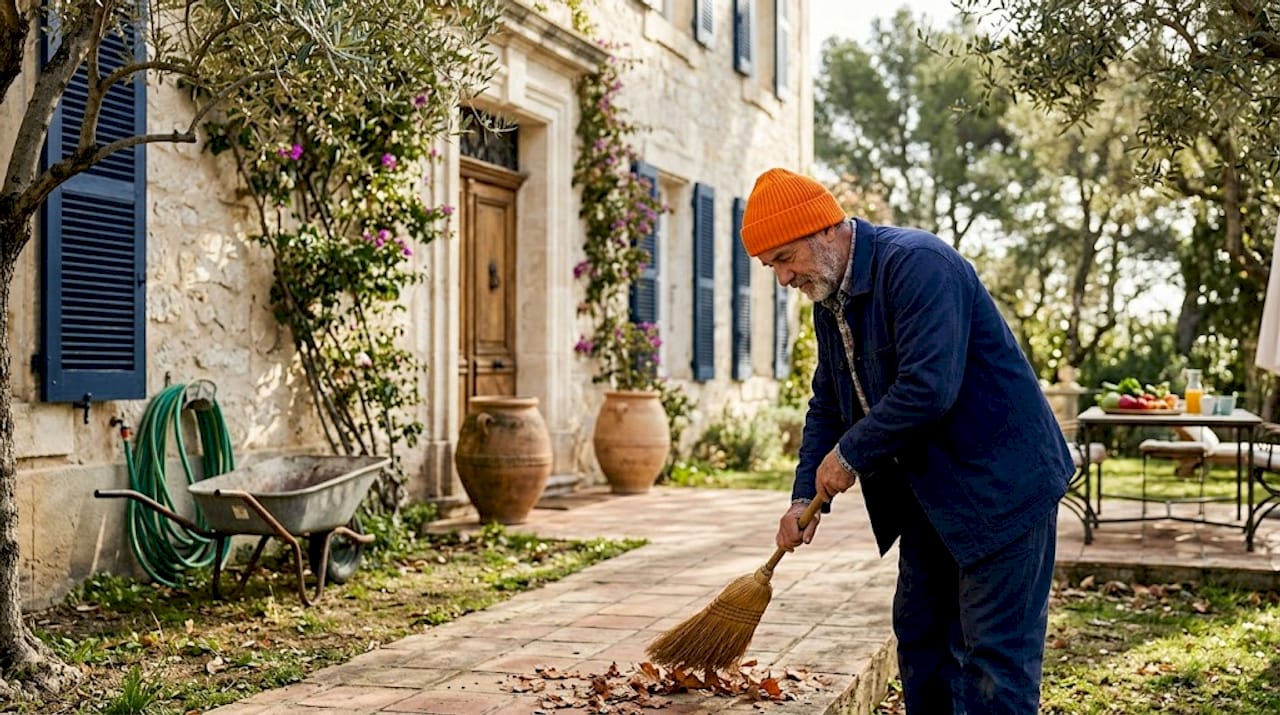
Heritage villas, particularly the grand Belle Époque residences of Cap d’Antibes or the Provençal mas nestled between Menton’s lemon groves and the medieval village of Saint-Agnès, carry an irreplaceable romantic weight. They are stones layered with story, and for families who prize cultural continuity alongside financial return, they remain unrivalled. The exclusive villas and penthouses we present frequently include such properties, each one a living archive of Riviera history.
Sustainable new builds, however, represent the future of legacy thinking. Off-plan residences in Sainte-Maxime, steps from the amber sands of Nartelle Beach, or the biophilic towers rising above Nice’s Mont Boron offer 10-year structural warranties, dramatically reduced notary fees under VEFA contracts, and energy systems that will not burden future generations with costly retrofits. Thoughtful legacy home design in these developments incorporates solar arrays, grey-water recycling, and natural ventilation, responding directly to the 15% surge in demand for new properties with green credentials that we observe across 2026 buyer enquiries.
How should you assess the true legacy potential of either type? Follow these steps:
- Commission an architectural survey that evaluates both current condition and the structural adaptability needed for multi-generational use
- Review planning permissions and any heritage designation that could restrict future modifications or additions
- Assess energy performance ratings and calculate the cost of bringing a heritage property to modern efficiency standards
- Examine the micro-location for flood risk, coastal erosion projections over a 30-year horizon, and proximity to infrastructure corridors
- Model rental income scenarios for both family use calendars and peak seasonal letting, factoring in property management costs
Critical due diligence: What most investors overlook
Once you are confident in your preferred property type, the work of truly protecting your investment begins. Due diligence on the Côte d’Azur carries nuances that even experienced luxury investors from London, Geneva, or Singapore frequently underestimate.
The most commonly overlooked checks include:
- Title history and boundary disputes: Historic properties along the Riviera often carry fragmented ownership records. Engage a notaire with specific expertise in Alpes-Maritimes land registry disputes, not merely a generalist
- Coastal law compliance (Loi Littoral): Properties within 100 metres of the shoreline are governed by strict regulations that can prohibit extensions, additions, or even terrace modifications. Violations discovered post-purchase can result in mandatory demolition orders
- Seismic resilience assessment: While rarely discussed in sales presentations, parts of the Riviera sit within seismic zone classifications that affect insurance premiums and structural requirements for renovations
- Environmental risk registers: Rising sea levels and increased frequency of extreme weather events make coastal flood mapping an essential part of your technical survey, particularly for ground-floor residences in low-lying areas near Antibes or Saint-Tropez’s Vieux Port
- Historic renovation compliance: Any previous renovations on heritage properties must be verified against planning permissions. Unauthorised works, even those completed decades ago, transfer liability to the buyer at completion
“The most expensive sentence in Côte d’Azur property is ‘we assumed it was fine.’ Due diligence is not bureaucracy; it is the foundation upon which every generation of your family will build their lives and their wealth.”
Understanding financing strategies is equally critical before committing. With French mortgage rates easing through 2026, structuring your acquisition financing correctly can significantly alter both the short-term cost and the long-term tax efficiency of your holding. We recommend also reviewing property search guidance that maps micro-market dynamics region by region, because the investment logic for a Cap d’Antibes villa differs materially from that of a Cannes Croisette penthouse or a hillside retreat above Èze’s gallery-lined lanes.
Pro Tip: Before signing any preliminary contract, demand a complete renovation and land use history dating back at least 30 years. This single document can reveal unauthorised extensions, boundary encroachments, or planning disputes that would otherwise remain invisible until they become your liability.
Maximising long-term wealth: Smart holding and legacy strategies
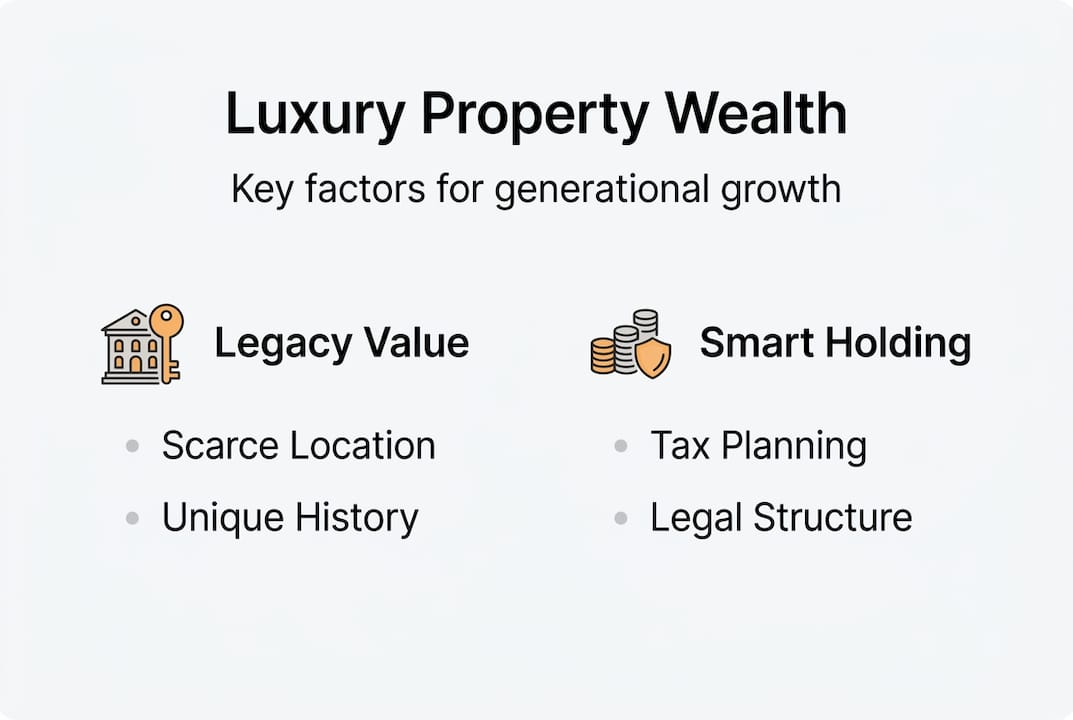
With thorough due diligence complete, your focus must turn to structuring the ownership in a way that protects, grows, and seamlessly transfers your asset across generations. This is where the difference between a beautiful property and a truly generational legacy is written.
The principal structuring options, each carrying distinct advantages, are:
- Personal ownership: The simplest structure, suitable for single-generation use, though it exposes the asset to French succession law and potentially significant inheritance tax obligations for non-resident heirs
- Société Civile Immobilière (SCI): A French civil property company that allows shares to be transferred to heirs over time, often using annual gift allowances to reduce or eliminate inheritance tax over a planned timeline. This structure is used by the majority of sophisticated multi-generational Riviera owners
- Corporate ownership through a holding company: Relevant for buyers who wish to integrate the property within a broader international wealth structure, often used alongside trust arrangements in common law jurisdictions
- Trust and foundation structures: For families domiciled in the UK, Channel Islands, or other common law jurisdictions, overlaying a trust onto a French SCI can provide an additional layer of succession protection and creditor insulation
France’s annual gift allowance of €100,000 per parent per child, renewable every 15 years, represents one of the most tax-efficient legacy and ROI strategies available to property-holding families. Used consistently from the moment of acquisition, a family can transfer substantial equity to the next generation without triggering a single euro of gift tax.
The question of family use versus rental yield is not binary; it is a balance that evolves with your family’s needs. A thoughtfully curated property for family wealth can serve as a private sanctuary during Cannes’ film festival in May, host the extended family through July and August on Pampelonne’s sun-drenched shores, and then generate 4 to 5% annual yield through elite seasonal lets for the remaining calendar. The key actions to avoid legacy erosion are:
- Never allow a property to remain operationally neglected. Regular maintenance preserves both asset value and rental desirability
- Review your ownership structure every five years to account for changes in French tax law or your personal family circumstances
- Maintain a ring-fenced reserve fund for major capital works, ideally 1 to 1.5% of property value annually
- Document family protocols for shared use, particularly where multiple heirs will eventually co-own the asset, to prevent disputes that can force a sale at inopportune moments
What most luxury real estate guides don’t tell you about family wealth
We have seen many families arrive on the Côte d’Azur with the unshakeable conviction that a prestigious address is sufficient armour against the erosion of wealth. It is not. The most painful conversations we have had over the years have been with heirs discovering that a celebrated family villa was held in a structure so misaligned with French succession law that the eventual tax bill rivalled the original purchase price.
Location, however extraordinary, is a necessary but insufficient condition for legacy success. The families who have truly built enduring wealth through Riviera property share a different characteristic: they treated their acquisition as the first chapter of a long-term strategy, not as the conclusion of one. They engaged cross-border advisors, revisited their structures as laws evolved, and remained as attentive to the estate’s governance as to its gardens.
The uncomfortable truth is that adaptability outlasts prestige. An understanding of high-end property that remains static will eventually be overtaken by changing tax frameworks, shifting climate risks, and the evolving preferences of the next generation. The families we admire most are those who hold their stone with conviction and their strategy with flexibility.
“A Riviera estate is not an end point. It is a living instrument, and the families who play it with skill are those who revisit the score with every generation.”
Expert support for your Côte d’Azur legacy property journey
At Living on the Côte d’Azur, we exist precisely for the moment when aspiration meets complexity. Our team provides curated access to off-market luxury properties that never appear on public portals, offering our clients a quiet advantage in one of the world’s most competitive prime markets. From the lemon-scented ramparts of Menton to the yacht-dotted harbour of Antibes, we know where the true legacy assets reside. Our legacy luxury real estate advisory service brings together legal structuring expertise, due diligence specialists, and a deep network of trusted notaires, architects, and wealth advisors. We also accept cryptocurrency payments, welcoming digital-era investors who understand that the finest stones deserve the most forward-thinking approach. Speak with us today.
Frequently asked questions
What makes a property a true legacy asset on the Côte d’Azur?
A legacy asset combines rarity, enduring architectural character, a prime and protected location, and an ownership structure specifically designed to facilitate smooth succession and sustained multi-generational wealth growth.
Is it better to buy a historic villa or invest in a new sustainable build for family wealth?
Both carry genuine legacy potential: historic villas deliver timeless prestige and cultural cachet, while sustainable new builds offer modern efficiency, lower ongoing costs, and 10-year structural warranties that reduce the burden on future heirs. Your choice should align with your family’s long-term lifestyle and financial goals.
What is the most common mistake luxury investors make in the region?
Bypassing advanced due diligence and assuming that a prestigious address guarantees retained value is the single most costly error we witness, often resulting in hidden liabilities or ownership structures that erode returns across generations.
How can I balance family use and rental yield in a luxury property?
A well-structured ownership model, combined with a carefully managed seasonal calendar, allows families to enjoy the property during peak personal periods while generating consistent elite rental yields during the remaining months, often achieving 3 to 5% annually.
Can Living on the Côte d’Azur help with off-market opportunities and discreet transactions?
Yes. Our specialists provide tailored access to exclusive properties not publicly listed and facilitate entirely confidential transactions for clients who value both privacy and precision in their acquisition process.
Recommended
 //
//