
TL;DR:
- In 2025, interior design emphasizes maximalism, eclecticism, and rich, tactile spaces that reflect personal expression. Warm, layered color palettes like chocolate brown, burgundy, and deep green dominate, complemented by curved furniture and sustainable textiles for a timeless yet vibrant aesthetic. Architectural details such as wallpapered ceilings and upholstered walls serve as the foundation for cohesive, authentic, and enduring interiors.
Interior design trends 2025 are defined by maximalism, eclecticism, and a decisive shift away from stark minimalism toward rich, tactile, and deeply personal spaces. According to a 1stDibs survey of 468 designers, maximalism leads with 39% of designer requests, with eclecticism close behind at 38%. These are not passing whims. They represent a cultural appetite for homes that feel curated, lived-in, and genuinely expressive. Whether you are furnishing a Cap d’Antibes villa or reimagining a Saint-Paul-de-Vence retreat, the 2025 home decor styles reward those who invest in character over conformity.
1. What are the dominant colour palettes for 2025 interiors?
Colour is the single most transformative tool in 2025 interior design, and the palette has shifted dramatically toward warmth and depth. Chocolate brown has nearly doubled in popularity, rising from 17% in 2022 to 33% today. That trajectory tells you something important: designers are not chasing novelty but returning to colours with genuine emotional resonance.
Alongside chocolate brown, burgundy and deep forest greens are gaining ground as the go-to anchors for living rooms and studies. Softer counterpoints are also emerging. Butter yellow and powder pink are appearing as accent tones in bedrooms and dressing rooms, offering warmth without heaviness. The interior colour trends 2025 favour a layered approach: one dominant earthy tone, one jewel accent, and one soft neutral to breathe.
Key colours shaping 2025 interiors:
- Chocolate brown as the primary wall and upholstery anchor
- Burgundy for statement seating and drapery
- Deep forest green in studies, libraries, and dining rooms
- Butter yellow as a warming accent in bedrooms
- Powder pink for dressing rooms and intimate corners
Pro Tip: When testing colour drenching, sample on large swatches rather than small paint chips. Undertones shift dramatically across full walls and ceilings, and what reads as warm taupe on a chip can turn cold grey at scale.
2. Which furniture shapes define the best 2025 design styles?
The furniture silhouette of 2025 is unmistakably curved. Rounded sofas, kidney-shaped coffee tables, and irregular organic rugs are replacing the sharp-edged geometry that dominated the previous decade. This shift is not purely aesthetic. Curved forms create a sense of flow and comfort that rigid lines cannot replicate, making rooms feel welcoming rather than architectural.
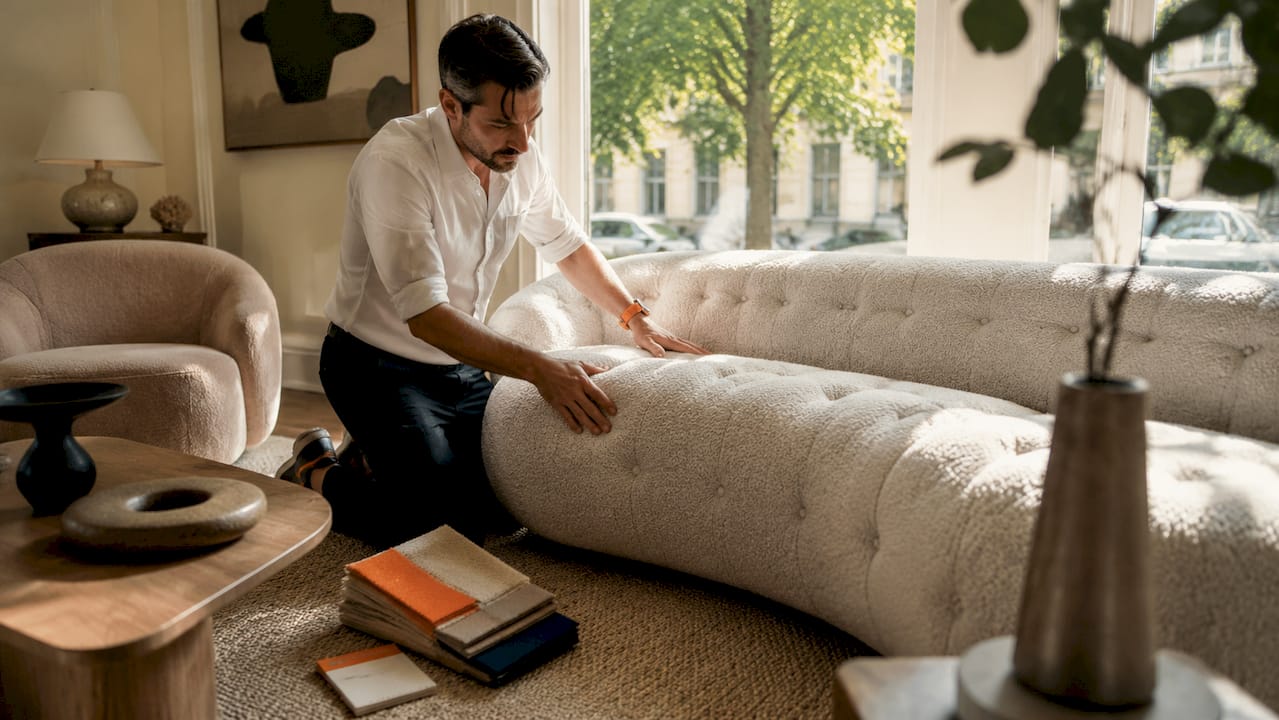
Upholstery is equally transformed. Boucle, velvet, and textured weaves are the preferred coverings, often in the rich tones described above. The comparison below illustrates how 2025 furniture choices contrast with the styles they are replacing:
| 2025 style | Fading style |
|---|---|
| Curved, organic silhouettes | Sharp-edged, rectilinear forms |
| Boucle and velvet upholstery | Smooth, flat microfibre |
| Irregular, hand-knotted rugs | Uniform geometric patterns |
| Colour-drenched upholstered walls | Plain white painted surfaces |
| Wallpapered ceilings as focal points | Bare, untreated ceilings |
Colour drenching and upholstered walls attract 35% and 30% of designer interest respectively. This signals that the walls and ceiling are now treated as furniture in their own right. Architectural details, from wallpapered ceilings to cabinetry with deliberate gaps before the ceiling line, are the structural backbone of maximalist interiors done well.
The practical sequence for applying these ideas runs as follows:
- Choose your dominant wall colour or wallpaper pattern first
- Select upholstery fabrics that echo or contrast the wall tone deliberately
- Introduce one curved statement piece, such as a kidney sofa or an organic rug
- Add architectural detail through ceiling treatment or panelled walls
- Limit smaller decorative objects to preserve a curated, uncluttered feel
3. How does ‘playfulism’ influence the latest interior design ideas?
Playfulism is the emerging design philosophy that rejects the Instagram-perfect interior in favour of spaces that feel genuinely inhabited. Designers Alexis Reid and Sophie Gunnersen describe playfulism as rejecting perfection for authenticity, encouraging homes that accumulate personality over time rather than arriving fully formed from a mood board.
This matters because the alternative, the rigidly styled showroom aesthetic, has begun to feel hollow. Homes that look untouched signal wealth but not life. Playfulism corrects this by welcoming vintage finds, mismatched chairs around a dining table, and objects with personal histories. A Provençal ceramic picked up at the Antibes market sits beside a mid-century lamp sourced in Nice’s Cours Saleya. Neither matches. Both belong.
“The best interiors are the ones that evolve. A home should tell the story of the people who live in it, not the story of a single shopping trip.” — Sophie Gunnersen, interior designer
Playfulism in practice means:
- Mixing furniture from different eras without forcing a unifying theme
- Displaying personal objects, travel souvenirs, and inherited pieces alongside new purchases
- Accepting asymmetry in shelving arrangements and gallery walls
- Choosing comfort over visual perfection in seating and textiles
- Allowing rooms to change gradually rather than undergoing complete overhauls
The result is a home that feels alive. For those investing in a second residence in Mougins or Valbonne, this philosophy translates beautifully: the property becomes a living record of seasons spent on the Côte d’Azur, accumulating warmth with every visit.
4. Which textiles best support sustainable 2025 interiors?
Sustainable fabrics are not a niche consideration in 2025. They are the foundation of the most enduring interiors. Natural weaves and layered linens lead the textile trends, prized for their tactile quality, their longevity, and their ability to age gracefully rather than date quickly.
The principle of layering textiles with paint and lighting is now a deliberate design tactic rather than an afterthought. A deep green linen curtain reads entirely differently under warm halogen light than under cool daylight. Choosing textiles without considering the light source is the most common and most costly mistake in interior decoration.
Textiles that perform well in 2025 interiors:
- Linen and crinkle linen for curtains, cushions, and bed coverings
- Natural rattan and jute weaves for rugs and accent chairs
- Boucle wool for statement upholstery in low-traffic areas
- Tailored velvet in jewel tones for dining chairs and headboards
- Organic cotton muslin for layered window treatments
Pro Tip: Avoid purchasing textiles based on trend imagery alone. Coordinate fabrics with your lighting and existing colour scheme before committing. A fabric that photographs beautifully in a styled shoot may read flat or discordant in your specific room conditions.
For those considering sustainable prestige properties on the Côte d’Azur, these textile choices align naturally with the biophilic design principles increasingly specified in new-build villas from Sainte-Maxime to Théoule-sur-Mer.
5. What outdated trends should you leave behind in 2025?
Certain 2025 home decor styles are defined as much by what they exclude as by what they embrace. The stark white interior, once the universal signifier of good taste, is now the clearest indicator of a space that has not been updated since 2018. White walls without texture, warmth, or contrast feel clinical rather than calm.
Button-tufted furniture presents a more specific problem. High-maintenance tufted pieces snag easily and accumulate wear in high-traffic areas, making them impractical for family homes or frequently let properties. If you love the aesthetic, reserve it for a bedroom or reading room where foot traffic is minimal.
Trends losing favour in 2025:
- Stark all-white rooms with no tonal variation or texture
- Over-the-top glam styles featuring excessive metallics and mirrored surfaces
- Uniform, Instagram-coordinated aesthetics where every object matches perfectly
- Button-tufted sofas and ottomans in living rooms and hallways
- Mass-produced gallery walls with no personal connection to the owner
The shift away from these styles is not arbitrary. It reflects a broader cultural move toward authenticity, sustainability, and the kind of quiet confidence that does not need to announce itself. The most admired interiors in Mouans-Sartoux farmhouses and Roquebrune-Cap-Martin clifftop residences share this quality: they feel considered, not constructed.
6. How do architectural details anchor maximalist interiors?
Maximalism executed through architectural details, rather than accumulated objects, is the defining insight of the best interior design trends 2025. Anchoring maximalist looks in permanent features such as ceiling wallpaper, colour-drenched walls, and upholstered panels creates a sophisticated base that smaller decor elements can complement without overwhelming.
This approach is particularly relevant for luxury properties where the architecture itself is already a statement. A villa in Èze with stone walls and terracotta floors does not need additional clutter to feel rich. It needs textiles, colour, and light chosen with precision. The architectural bones do the heavy lifting; the decor refines the mood.
Practical architectural moves for 2025:
- Apply wallpaper to ceilings to create a sense of enclosure and drama in dining rooms
- Leave deliberate gaps between cabinetry tops and ceilings to add visual rhythm
- Install pleated skirting or café curtains as period-referencing details in kitchens
- Use colour drenching across walls, woodwork, and ceiling in a single room for total immersion
- Specify upholstered wall panels in bedrooms as both acoustic and aesthetic solutions
For buyers exploring legacy homes on the Riviera, these architectural interventions add measurable value. A colour-drenched study or a wallpapered dining room ceiling is a design decision that photographs beautifully, commands premium rental rates, and ages with distinction.
Key takeaways
The most enduring 2025 interiors combine maximalist architectural detail, sustainable natural textiles, and personal eclecticism to create spaces that appreciate in both style and value.
| Point | Details |
|---|---|
| Colour leads the transformation | Chocolate brown, burgundy, and deep green replace stark white as the dominant palette choices. |
| Architecture over objects | Colour drenching, wallpapered ceilings, and upholstered walls create maximalism without clutter. |
| Playfulism rewards authenticity | Mixing eras, personal objects, and imperfect arrangements produces more compelling interiors than styled uniformity. |
| Textiles require coordination | Natural linens and boucle must be chosen alongside lighting conditions and existing colour schemes to avoid quick ageing. |
| Outdated trends cost value | Button-tufted pieces and all-white rooms signal neglect to discerning buyers and renters in 2025. |
Why I believe the best interiors are the ones that resist trends entirely
The paradox of writing about interior design trends is that the most admired spaces are rarely trend-led. Every season, surveys like the 1stDibs report confirm what experienced designers already know: the homes that endure are built on a clear personal vision, not a curated Pinterest board.
What I find genuinely exciting about 2025 is that the dominant trends, playfulism, maximalism through architecture, sustainable textiles, are all pointing in the same direction. They reward commitment to quality and personal expression over the impulse to follow. A chocolate brown linen sofa in a colour-drenched study is not a trend purchase. It is a considered investment in a room that will feel as good in 2035 as it does today.
The caution I would offer is this: maximalism without restraint becomes noise. The designers who execute it best, those working in the grand villas of Saint-Jean-Cap-Ferrat or the perched villages above Grasse, understand that every element must earn its place. Architectural detail provides the structure. Sustainable textiles provide the warmth. Personal objects provide the soul. Remove any one of these and the room loses its coherence.
For anyone investing in a property on the Côte d’Azur, this is not merely aesthetic advice. Interiors that reflect genuine taste and quality command stronger rental yields and hold their appeal across market cycles. The second home trends we observe consistently confirm that properties with considered, timeless interiors outperform those chasing the style of the moment.
— ab
How Côte d’Azur properties embody 2025’s finest design principles
At Livingonthecotedazur, we see these trends expressed at their most refined in the properties we represent. The villas and apartments across Cannes, Antibes, and Menton that attract the most discerning buyers share a common quality: interiors that balance architectural drama with sustainable luxury and deeply personal curation. Colour-drenched studies, linen-draped terraces overlooking the Baie des Anges, and boucle-upholstered salons that invite you to stay. These are not showrooms. They are heirlooms in the making. If you are ready to explore properties where design and legacy converge, our off-market Riviera collection offers access to residences that embody every principle discussed here. Contact us to arrange a private viewing.
FAQ
What are the top interior design trends for 2025?
Maximalism and eclecticism lead 2025 interior design, with 39% and 38% of designers citing them as the most requested styles respectively. Rich earthy tones, curved furniture, sustainable textiles, and architectural details such as colour-drenched walls and wallpapered ceilings define the aesthetic.
What colours are most popular in 2025 home interiors?
Chocolate brown is the dominant colour of 2025, having risen from 17% to 33% designer preference since 2022, with burgundy and deep forest green close behind. Soft accents in butter yellow and powder pink complement these warmer, deeper tones.
What is playfulism in interior design?
Playfulism is a design philosophy that prioritises authenticity and personality over perfection, encouraging homes that mix vintage pieces, personal objects, and mismatched elements. It is a direct response to the overly styled, Instagram-uniform aesthetic that dominated the early 2020s.
Which interior design trends are now considered outdated?
Stark all-white rooms, button-tufted furniture in high-traffic areas, and over-the-top glam styles with excessive metallics are all losing favour in 2025. Designers advise replacing these with warmer palettes, textured natural fabrics, and spaces that reflect personal history rather than trend conformity.
How do I apply maximalism without creating clutter?
Anchor maximalism in architectural elements such as colour drenching, upholstered wall panels, and ceiling wallpaper rather than accumulating decorative objects. This approach creates visual richness through permanent features, leaving the room feeling curated rather than crowded.
Recommended
 //
//