
TL;DR:
- Networking in real estate is a key strategy for generating referrals and accessing exclusive, off-market deals. Consistent relationship-building with partners like mortgage brokers and solicitors enhances long-term earnings and opportunities. Patience and ongoing generosity are essential to realize the true, compounding value of professional networks.
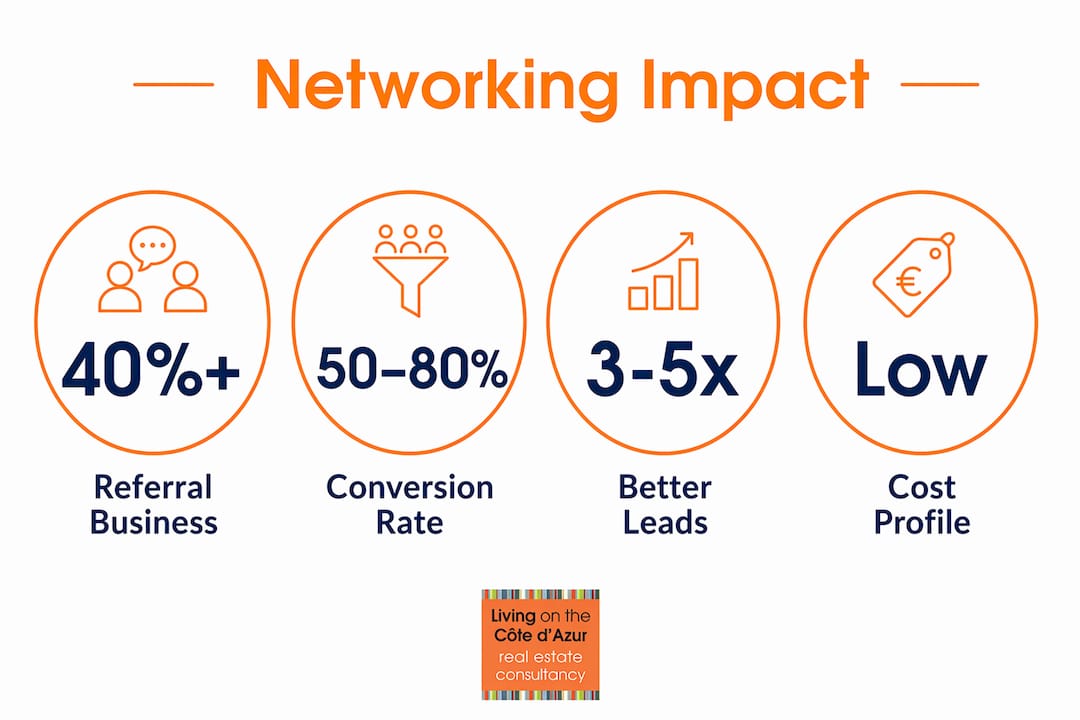
Networking in real estate is defined as the deliberate practice of building and maintaining professional relationships to generate referrals, access exclusive opportunities, and grow a sustainable property business. According to the National Association of Realtors, 41% of buyers find their agent through personal referrals, and those referrals convert 3–5 times better than paid leads. That single statistic reveals the true role of networking in real estate: it is not a social nicety but a core revenue driver. Platforms like AgentsGather and organisations like BNI have formalised what top producers have always known. The professionals who build the deepest networks consistently outperform those who rely on advertising alone.
How does networking affect real estate success and earnings?
The financial case for networking is concrete and well documented. Agents generating over 40% of business from referrals earn £40,000 more annually and spend 20–30% less on paid lead generation. That gap compounds over a career, making a well-tended network one of the highest-return investments a property professional can make.
New professionals feel the effect most acutely at the start. Those who commit to consistent networking close their first deal three months faster than those who do not. Three months of accelerated income at the beginning of a career changes trajectory in ways that are difficult to recover later.
The conversion data is equally persuasive. Referral leads from BNI achieve 50–80% conversion rates, outperforming Zillow, Facebook ads, and cold calling by a significant margin. A lead that arrives pre-qualified by trust requires far less time and resource to close.
| Lead source | Typical conversion rate | Cost profile |
|---|---|---|
| BNI referral network | 50–80% | Low ongoing cost |
| Personal referrals | High | Near zero acquisition cost |
| Zillow / portal leads | Low to moderate | High per-lead cost |
| Facebook advertising | Low | Variable, often rising |
| Cold calling | Very low | High time cost |
Pro Tip: Track where every closed deal originates. After six months, the data will show you exactly which relationships deserve more of your time and which lead sources are draining your budget.
The comparison above makes the importance of networking in real estate impossible to dismiss. Paid advertising has a role, but it cannot replicate the trust that a personal introduction carries. Professionals who invest in real estate SEO alongside their referral networks build a dual pipeline that reduces dependency on any single channel.
What types of networks are critical in real estate?
Not all networks serve the same purpose. Successful networking requires distinguishing peer networks from referral partner networks. Mixing the two without clarity wastes effort and dilutes results.
Peer networks: agents and fellow professionals
Peer networks connect you with other agents, brokers, and property professionals at a similar level. These relationships are valuable for market intelligence, co-brokerage opportunities, and moral support during difficult transactions. They are not, however, the primary source of client referrals. Treating a peer network as a referral pipeline creates confusion and erodes goodwill.

Referral partner networks: the revenue engine
Referral partner networks include mortgage brokers, solicitors, surveyors, financial advisers, and property inspectors. These professionals interact with buyers and sellers at critical decision points. A mortgage broker who trusts you will mention your name to every client who needs an agent. That introduction arrives pre-loaded with credibility.
BNI mortgage broker partnerships illustrate the value precisely. A focused BNI relationship can generate 5–15 high-quality referrals annually, each worth £8,000–£15,000 in commission. One well-chosen partner can fund a significant portion of your annual income target.
Key referral partners worth cultivating:
- Mortgage brokers and independent financial advisers: they speak to buyers before the property search begins
- Solicitors and notaires: they handle completions and often know clients planning to sell or buy again
- Surveyors and property inspectors: they visit properties constantly and hear about plans before listings appear
- Relocation consultants: they work with corporate clients who need both rental and purchase guidance
- Wealth managers and private bankers: in the luxury segment, these relationships unlock high-net-worth introductions
The distinction between peer and partner networks is not about hierarchy. It is about treating each lane separately with clear value exchange expectations. Your peer network grows your knowledge. Your partner network grows your income.
Which networking strategies best build effective real estate relationships?
Consistency outperforms intensity in relationship-building. A professional who attends the same industry breakfast every month for two years builds deeper trust than one who attends ten events in a single quarter and then disappears. Presence signals reliability, and reliability is what clients and partners are actually buying.
The most effective networking strategies for real estate share one quality: they prioritise giving before receiving. Those who actively refer clients to their partners expand their referral pipelines exponentially, becoming valuable nodes in a wider network. The professional who sends a mortgage broker three qualified clients will receive referrals back without ever asking.
- Commit to one recurring event per month. Choose a BNI chapter, a local property investors’ club, or a professional association and attend without fail. Regularity builds recognition faster than volume.
- Follow up within 48 hours of every meeting. A brief, personal message referencing a specific detail from your conversation separates you from the majority who never follow up at all.
- Use AgentsGather for scalable referral connections. The platform connects agents across markets, making it practical to build a referral network beyond your immediate geography.
- Refer first, ask later. Send a surveyor a client who needs a valuation. Introduce a solicitor to a buyer who needs conveyancing. These acts of generosity create reciprocal obligation without awkwardness.
- Maintain a contact record. A simple spreadsheet or CRM noting each contact’s speciality, last interaction, and any referrals exchanged keeps relationships from going cold through neglect.
- Use social media to stay visible between meetings. LinkedIn posts about local market conditions, property completions, or client success stories keep your name present in your network’s feed without requiring a face-to-face meeting.
Pro Tip: The most underused networking strategy is the handwritten note. After a referral, a brief handwritten card to the referring partner creates a memorable impression that no email can replicate.
Consistent, low-pressure follow-up leads to hidden deals and opportunity compounding over time. The agent who checks in with a solicitor every six weeks will be the first name mentioned when that solicitor’s client announces they are selling. Timing in real estate is everything, and consistent presence puts you in the right place when timing matters.
Building lasting relationships in luxury real estate requires the same discipline applied at a higher register. The stakes are larger, the clients are more discerning, and the value of a single trusted introduction multiplies accordingly.
How can investors and professionals unlock exclusive opportunities through networking?
The most coveted properties in any market never reach the public portals. Off-market transactions are conducted entirely through trusted networks, and access depends entirely on the quality of your professional relationships. An investor without a strong network is limited to what everyone else can see. An investor with the right connections sees the full picture.
Strong ongoing relationships lead directly to access to hidden, exclusive property deals. Sellers of prestige properties frequently prefer a discreet introduction to a qualified buyer over the exposure of a public listing. The agent or adviser who can make that introduction holds extraordinary value.
Practical ways networking unlocks exclusive opportunities:
- Off-market deal flow: a trusted solicitor or notaire who knows you are actively buying will contact you before a property is listed publicly
- Early access to new developments: developers share pre-launch opportunities with agents and investors they know and trust
- Joint venture introductions: investors with complementary capital or expertise find each other through shared professional circles, not through advertising
- Distressed asset intelligence: professionals handling estates, divorces, or corporate restructuring know about motivated sellers long before any listing appears
- Financing introductions: a private banker in your network can connect you with lending structures unavailable through standard channels
One strong professional connection can generate multimillion-pound referral business over years. That is not an exaggeration. A single trusted relationship with a wealth manager who advises high-net-worth families can produce a consistent flow of acquisition mandates that no advertising budget could replicate.
Social media amplifies these relationships when used with discipline. LinkedIn content that demonstrates genuine market expertise attracts inbound enquiries from professionals who want to refer clients to someone they perceive as authoritative. The content does not need to be frequent. It needs to be credible and consistent.
Finding off-market homes on the Riviera for investment purposes depends almost entirely on the depth of local professional relationships. In markets like Saint-Tropez, Cannes, and Monaco, the most significant transactions are agreed over private introductions, not portal searches. The benefits of networking in the property market are nowhere more visible than in the luxury segment, where discretion and trust are the currency of every deal.
Networking benefits compound through consistent presence and genuine relationships that extend well beyond initial events. An investor who attends a single property conference gains little. One who builds a reputation for reliability, generosity, and expertise over several years becomes someone others actively seek out.
Key takeaways
Networking in real estate is the single most cost-effective strategy for generating referrals, accessing exclusive deals, and building a property business that compounds in value over time.
| Point | Details |
|---|---|
| Referrals outperform paid leads | Referral leads convert 3–5 times better than paid sources and cost significantly less to acquire. |
| Separate your network types | Treat peer networks and referral partner networks as distinct lanes with different value exchanges. |
| Consistency beats intensity | Regular, low-pressure contact over months and years builds deeper trust than sporadic bursts of activity. |
| Give referrals to receive them | Professionals who refer clients to partners first expand their pipelines exponentially without asking. |
| Off-market access requires relationships | The most exclusive properties are transacted privately, and access depends entirely on trusted connections. |
Why I believe most professionals underestimate the compounding value of a network
After many years working in luxury property markets, I have watched professionals invest heavily in advertising, portals, and technology while neglecting the one asset that appreciates without depreciation: their professional relationships.
The mistake I see most often is treating networking as a short-term tactic rather than a long-term practice. Professionals attend an event, collect business cards, and wait for the phone to ring. When it does not ring within a fortnight, they conclude that networking does not work. What they have actually discovered is that a single interaction does not work. The compounding effect requires patience.
The professionals I have seen build genuinely extraordinary careers share one habit. They give consistently and without expectation of immediate return. A referral sent to a mortgage broker in january may return as a client introduction in september. The gap between the two events looks like silence. It is actually the relationship maturing.
The luxury segment makes this dynamic even more pronounced. A high-net-worth client who trusts their adviser will follow that adviser’s recommendation without question. The adviser who trusts you will send that client to you. That chain of trust, built over years of reliable behaviour, is worth more than any marketing campaign.
My practical advice is simple. Choose five referral partners who serve your ideal client. Invest in those relationships with genuine generosity over twelve months. Track every referral you send and every one you receive. At the end of the year, the return on that investment will be the clearest argument you have ever seen for making professional relationships the centre of your business.
— Ab Kuijer
How Livingonthecotedazur connects you to the Riviera’s most exclusive network
At Livingonthecotedazur, we have spent years cultivating the professional relationships that give our clients access to properties that never appear on public portals. Our network spans notaires, private bankers, architects, and trusted local agents across Saint-Tropez, Cannes, Monaco, and the wider Côte d’Azur. That depth of connection is what makes the difference between a property search and a curated acquisition.
For investors and families seeking prestige properties with genuine ROI, our off-market Côte d’Azur listings represent opportunities that exist only because of the relationships we have built over time. We also provide full acquisition support, from legal audit to tax structuring, through our property acquisition guide. Contact us to discuss how our network can serve your investment ambitions.
FAQ
What is the role of networking in real estate?
Networking in real estate is the practice of building professional relationships to generate referrals, access off-market deals, and grow a sustainable business. It is the primary driver of client acquisition for top-performing agents and investors.
How does networking affect real estate earnings?
Agents who generate over 40% of business from referrals earn significantly more annually and spend less on paid lead generation. Referral leads also convert at far higher rates than portal or advertising leads.
What are the most effective networking strategies for real estate?
Consistent attendance at recurring events, prompt follow-up, and referring clients to partners before expecting referrals in return are the three most effective strategies. Platforms like AgentsGather extend these practices across wider geographies.
How does networking help investors find off-market properties?
Trusted professional relationships with solicitors, notaires, and private bankers provide early access to properties before they are publicly listed. In luxury markets, the majority of significant transactions occur entirely off-market through these connections.
How long does it take for real estate networking to produce results?
Results from networking typically compound over months and years rather than weeks. New professionals who network consistently close their first deal three months faster, but the most significant financial returns accumulate over sustained relationship-building.
Recommended
 //
//