
TL;DR:
- Investing in Dubai property involves a systematic process from budgeting to asset management and requires understanding regulatory bodies like RERA and DLD.
- Preparation, including defining objectives and verifying developer credentials, is essential to avoid delays and risks.
- Model net yields carefully, and ensure all escrow, documentation, and registration steps are strictly followed for successful transactions.
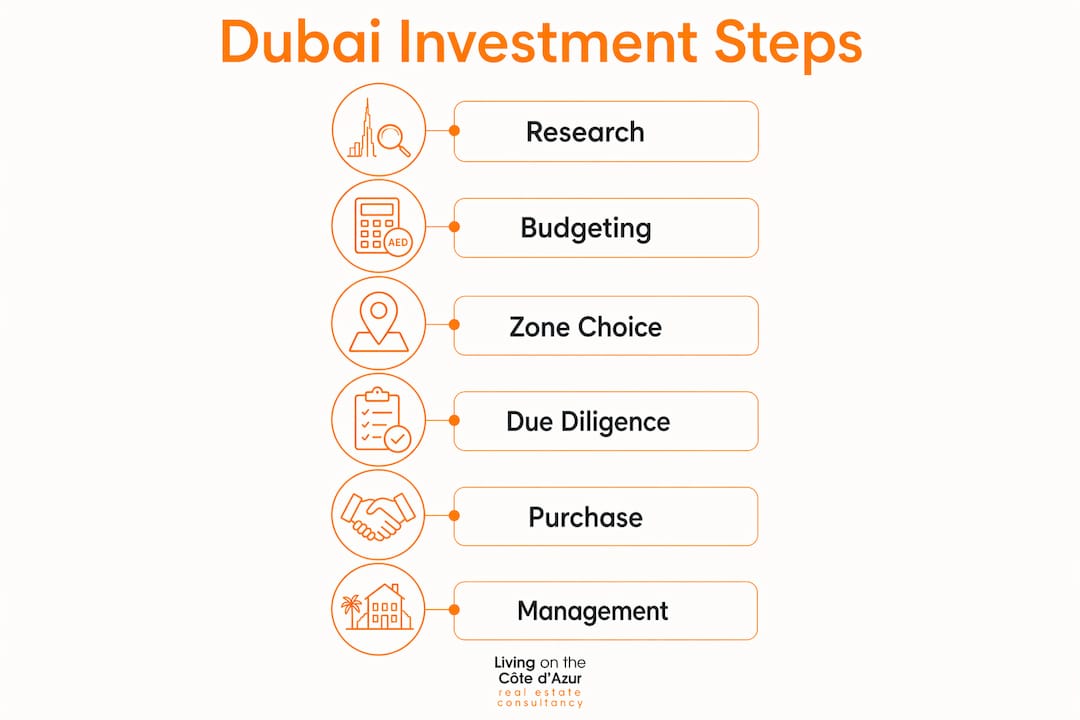
Step by step Dubai investments refer to the systematic process of acquiring property in Dubai, from initial budgeting and eligibility checks through to title deed transfer, registration, and ongoing asset management. The Dubai Land Department (DLD), the Real Estate Regulatory Authority (RERA), and the Dubai REST digital platform together form the regulatory backbone that every foreign investor must understand before committing capital. Entry into the market begins at AED 500,000, while a threshold of AED 2,000,000 unlocks the coveted 10-year Golden Visa. Dubai’s 0% capital gains and rental income tax for individuals makes it one of the most tax-efficient property markets globally, though net yields require careful modelling once service charges and management fees are factored in.
What preparatory steps are needed before investing in Dubai property?
Preparation is the single most consequential phase of the Dubai investment process. Investors who skip it face delays, unexpected costs, and in some cases, irrecoverable losses. Before viewing a single property, you must define your primary objective: capital growth, rental yield, or UAE residency. Objectives shape location, because areas differ substantially in yield profiles and liquidity.
Setting your budget and understanding thresholds
The minimum investment entry sits at AED 500,000 for standard ownership, while AED 2,000,000 or more qualifies you for the 10-year Golden Visa. That distinction matters enormously for long-term planning. Beyond the purchase price, acquisition costs for a ready property typically total 6–7% of the purchase price, comprising a 4% DLD transfer fee and a 2% brokerage commission, plus administrative charges. Budget for these from the outset rather than treating them as an afterthought.

Freehold versus leasehold zones
Dubai divides its property market into freehold and leasehold zones. Foreign nationals may only purchase in designated freehold areas such as Dubai Marina, Downtown Dubai, Palm Jumeirah, and Jumeirah Village Circle. Leasehold arrangements grant possession for a fixed term, typically 99 years, but do not confer full ownership rights. Verify a property’s freehold status through the Dubai REST app or the RERA portal before proceeding.
Documents and due diligence
Compile the following before approaching any agent or developer:
- Valid passport (and copies)
- Recent passport photographs
- Proof of source of funds (bank statements, audited accounts, or a letter from your financial institution)
- UAE bank account details (mandatory for the cashier’s cheque on transfer day)
- Proof of address in your home country
Verify that your chosen developer holds active RERA registration. Cross-reference the project on the Dubai REST platform to confirm freehold designation and escrow account status. Never rely solely on marketing materials.
Pro Tip: Check the developer’s track record on the RERA portal before signing anything. A developer with a history of delayed handovers is a quantifiable risk, not merely an inconvenience.
How do you execute a ready property purchase step by step?
Buying a completed, secondary-market property in Dubai follows a defined sequence. Deviating from it creates legal exposure and financial risk. The process typically takes 4–12 weeks from offer to title deed, depending on whether financing is involved.
Select your freehold zone and property type. Match the location to your objective. Dubai Marina and Downtown Dubai command premium prices but offer strong short-term rental demand. Jumeirah Village Circle and Business Bay typically deliver higher gross yields at lower entry prices.
Make an offer and sign Form F. Once you agree on a price, both parties sign the Memorandum of Understanding, known as Form F, which is the standard RERA contract. A deposit of 10% of the purchase price is paid at this stage and held in trust.
Obtain the No Objection Certificate (NOC). The seller requests the NOC from the original developer. NOC fees vary between AED 500 and AED 5,000 depending on the developer. This certificate confirms no outstanding service charges or liabilities on the property. Transfer cannot proceed without it.
Book the DLD trustee appointment. Both buyer and seller, or their authorised representatives, attend a DLD-registered trustee office. Title deed transfer is typically completed within 2–5 business days for cash purchases. The buyer presents a manager’s cheque for the purchase price and a separate cheque for the 4% DLD fee.
Receive the title deed. The DLD issues the new title deed in the buyer’s name. This document is the definitive proof of ownership in the UAE.
Complete post-transfer registrations. Register with DEWA (Dubai Electricity and Water Authority) for utilities, register the tenancy contract via Ejari if you plan to let the property, and notify the Owners’ Association. Arrange building insurance at this stage.
Pro Tip: Never wire funds directly to a seller’s personal bank account. Use trustee accounts or legal escrow arrangements exclusively. This single discipline eliminates the most common source of fraud in Dubai property transactions.
Common pitfalls at this stage include failing to check for outstanding service charge arrears, overlooking the NOC timeline when planning your transfer date, and underestimating the time required to open a UAE bank account as a non-resident.
How do you invest in off-plan properties step by step in Dubai?
Off-plan property, purchased directly from a developer before or during construction, offers lower entry prices and phased payment structures. The regulatory framework is well-defined, but the risks differ materially from ready property. Understand both before committing.
Regulatory checks before paying a dirham
Verify RERA project registration. Every legitimate off-plan project must be registered with RERA and carry a Trakheesi permit number. Confirm this on the RERA portal before attending any sales event.
Confirm the escrow account. Off-plan projects must hold a registered escrow account before accepting any payment. The absence of an escrow account is a serious red flag. Funds paid into escrow are released to the developer only upon verified construction milestones, protecting your capital throughout the build.
Pay the reservation deposit. Typically 5–10% of the purchase price, this secures your unit. Pay only into the project’s registered escrow account, never to a personal or corporate account outside this structure.
Sign the Sales and Purchase Agreement (SPA). Review the SPA carefully, paying particular attention to the handover date, penalty clauses for delays, and the specification schedule. Engage a UAE-qualified solicitor for this review.
Complete Oqood registration. Oqood is the DLD’s off-plan registration system. Registration must occur within 60 days of signing the SPA. This step creates a formal record of your ownership interest and is the legal equivalent of the title deed during the construction phase.
Make milestone payments. Construction-stage payments are released from escrow to the developer as verified milestones are reached. Retain all payment receipts and milestone confirmation notices.
Attend handover and complete snagging. At handover, conduct a thorough snagging inspection using a qualified surveyor. Document every defect in writing before signing the handover certificate. Developers are legally obliged to rectify snagging items within a defined period.
Convert Oqood to title deed. Once the unit is handed over and all payments are complete, the DLD converts your Oqood registration to a full title deed.
Key risks to monitor throughout the off-plan process:
- Handover delays of up to 12 months are not uncommon, even with reputable developers. Factor this into your cash flow planning.
- Changes to the unit specification or floor plan during construction, which must be documented and agreed in writing.
- Developer insolvency, which is mitigated but not eliminated by the escrow structure.
Pro Tip: Request the developer’s RERA completion percentage report at each milestone payment. This independent verification confirms that your money is funding real construction progress, not marketing costs.
How do financing and ownership structures affect your Dubai investment?
Financing decisions and ownership structures shape both your returns and your visa eligibility. Get these wrong and you may find yourself ineligible for the Golden Visa or exposed to unnecessary tax liability in your home country.
Cash versus mortgage financing
Cash purchases are simpler, faster, and carry no lender approval risk. Mortgage financing is available to non-residents, though loan-to-value ratios are typically lower than for UAE residents. Most UAE banks offer non-residents a loan-to-value ratio of around 50–60% for properties above AED 5,000,000. Budget for a larger deposit than you might expect from European or British lending norms.
Opening a UAE bank account
A UAE bank account is mandatory for the cashier’s cheque required on transfer day. Remote purchase via power of attorney is entirely feasible, but the bank account must be in place before transfer. Account opening for non-residents typically takes 2–4 weeks and requires in-person attendance at most major UAE banks, though some institutions now offer remote onboarding for high-net-worth clients.
Ownership structures: personal versus corporate
Consider the following ownership options:
- Personal ownership: The simplest structure. Title deed is in your name. Suitable for most individual investors.
- Special Purpose Vehicle (SPV) or holding company: Useful for investors holding multiple properties, seeking asset protection, or planning estate structuring. UAE free zone companies are a common vehicle. Seek specialist legal advice before using this structure.
- Power of attorney: If you cannot attend in person, a notarised and UAE-embassy-attested power of attorney allows a representative to sign on your behalf. This is standard practice for remote buyers.
Mortgaged properties and Golden Visa eligibility
Mortgaged properties can qualify for the Golden Visa, but the process requires an additional step. Mortgage buyers must obtain a No-Objection Certificate from their lender confirming the principal paid to date. This formal bank request typically takes several days. The paid principal, not the total property value, must meet the AED 2,000,000 threshold for visa eligibility.
Pro Tip: If Golden Visa eligibility is part of your plan, model the mortgage amortisation schedule carefully. You need the paid principal to reach AED 2,000,000, which may take years on a standard repayment schedule. A larger initial deposit accelerates this considerably.
Dubai’s 0% capital gains and rental income tax for individuals is a genuine structural advantage. However, your home country may tax overseas rental income or capital gains on disposal. Consult a tax adviser in both jurisdictions before completing your purchase. For investors building international real estate strategies, cross-border tax interaction is rarely simple.
How do you manage a Dubai property and maximise its returns?
Post-purchase management determines whether your investment delivers its projected returns or falls short. The administrative steps are straightforward, but the yield modelling requires discipline.
Utilities, tenancy, and service charges
Register with DEWA immediately after transfer to activate electricity and water. If you plan to let the property, register every tenancy contract through Ejari, the DLD’s tenancy registration system. Ejari registration is a legal requirement and protects both landlord and tenant. Pay service charges to the Owners’ Association on time; arrears can block future sales and NOC issuance.
Rental strategy: long-term versus short-term
- Long-term rental: Provides stable, predictable income. Regulated by the RERA Rental Index, which caps annual rent increases. Lower management intensity.
- Short-term holiday lets: Require a DTCM (Dubai Tourism and Commerce Marketing) permit. Gross yields can be materially higher in prime locations, but vacancy risk, management fees, and furnishing costs reduce net returns significantly.
Gross yields in Dubai range from 4–8%, but net yields are 1.5–2.5% lower after service charges and management fees. Model net yield from the outset, not gross yield. A property advertised at 7% gross may deliver 4.5–5.5% net, which remains competitive by international standards but requires accurate projection.
“The investors who succeed in Dubai are those who model net yields before they fall in love with a property. Gross yield figures are marketing tools. Net yield is the number that pays your bills.”
Golden Visa application post-purchase
Once your title deed is issued and the property value meets the AED 2,000,000 threshold, you may apply for the 10-year Golden Visa through the DLD’s investor visa portal. The visa extends to immediate family members, including spouse and children. This residency benefit is a material part of the total return for many investors and should be factored into the investment decision from the outset. For a detailed overview of Golden Visa programmes and their global equivalents, the landscape is broader than most investors realise.
Key takeaways
A successful Dubai property investment requires meticulous preparation, strict adherence to DLD and RERA processes, and disciplined net yield modelling from the first day of planning.
| Point | Details |
|---|---|
| Define your objective first | Capital growth, rental yield, and residency require different locations and property types. |
| Budget for total acquisition costs | Ready property costs 6–7% above purchase price in fees and commissions. |
| Escrow is non-negotiable for off-plan | Never pay an off-plan developer outside a RERA-registered escrow account. |
| Model net yields, not gross | Service charges and management fees reduce gross yields by 1.5–2.5 percentage points. |
| Golden Visa requires AED 2,000,000 paid | Mortgaged buyers need a lender NOC confirming principal paid to qualify. |
What I have learned from watching investors navigate Dubai real estate
I have observed a consistent pattern among investors who approach Dubai with confidence but insufficient preparation. They fixate on gross yield figures, overlook the escrow verification step for off-plan projects, and underestimate the time required to open a UAE bank account. These are not obscure pitfalls. They are the same mistakes repeated across market cycles.
The investors who perform best share one characteristic: they clarify their primary objective before selecting a property. A client focused on Golden Visa eligibility needs a different asset than one optimising for short-term rental income. Conflating the two leads to a property that serves neither goal particularly well.
I am also direct about the limitations of remote purchasing. It is entirely feasible, and the power of attorney framework is well-established. But remote buyers who skip the snagging inspection at handover consistently report more post-handover disputes than those who attend in person or send a qualified representative. The cost of a professional snagging surveyor is negligible relative to the cost of unresolved defects.
My strongest counsel is this: treat the escrow account verification as a non-negotiable first step for any off-plan purchase. The regulatory framework exists precisely because the market has seen developer failures. Use it. And when modelling returns, always work from net yield figures. The investment potential of Dubai is real and well-documented, but it rewards the disciplined investor, not the optimistic one.
— Ab Kuijer
How Livingonthecotedazur supports international property investors
Livingonthecotedazur works with high-net-worth investors who think beyond a single market. Our clients build curated portfolios that span prestige locations, from the French Riviera to the Gulf, and they expect the same level of rigour and discretion at every step. We provide access to off-market luxury properties that never reach public listings, alongside legal audit support, tax structuring guidance, and financing introductions. For investors whose Dubai acquisition forms part of a broader international portfolio, we bring the same transparency and precision that defines our work on the Côte d’Azur. Contact us to discuss how we can support your next acquisition.
FAQ
What is the minimum investment to buy property in Dubai?
The minimum entry threshold is AED 500,000 for standard property ownership. Investors who purchase at AED 2,000,000 or above qualify for the 10-year UAE Golden Visa.
Can foreign nationals buy freehold property in Dubai?
Foreign nationals may purchase freehold property in designated zones including Dubai Marina, Downtown Dubai, Palm Jumeirah, and Jumeirah Village Circle. Ownership outside these zones is restricted to leasehold arrangements.
How long does a ready property transfer take in Dubai?
Title deed transfer at a DLD-registered trustee office typically completes within 2–5 business days for cash purchases. Mortgage-financed transactions take longer due to lender approval and NOC requirements.
Is off-plan property safe to buy in Dubai?
Off-plan property is regulated by RERA, which mandates escrow accounts for all projects. Funds are released to developers only upon verified construction milestones. The primary risks are handover delays and specification changes, both of which should be addressed in the Sales and Purchase Agreement.
Do mortgaged properties qualify for the Dubai Golden Visa?
Yes, mortgaged properties qualify if the paid principal reaches AED 2,000,000. Investors must obtain a No-Objection Certificate from their lender confirming the principal paid, which is then submitted as part of the Golden Visa application through the Dubai Land Department.
Recommended
 //
//