
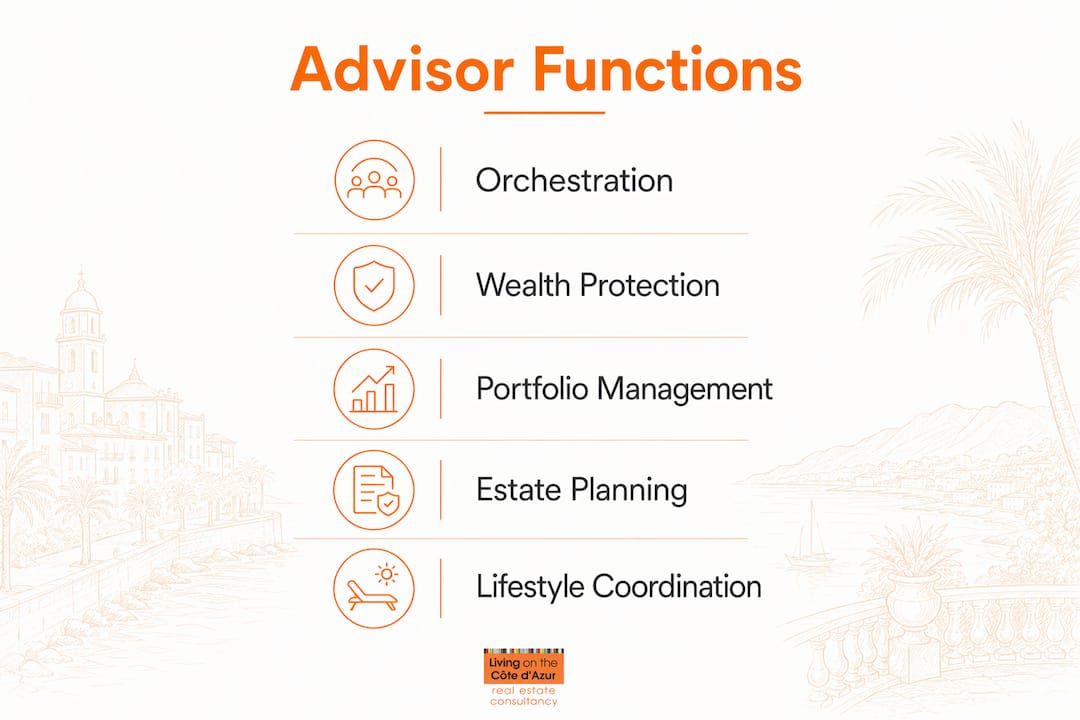
At its core, the role of an ultra-high net worth advisor is to act as a trusted orchestrator for every dimension of a client’s financial and personal world. These are not generalist planners who review a pension and rebalance a portfolio once a year. They are specialists who coordinate tax counsel, estate lawyers, investment managers, and lifestyle experts into a single, coherent strategy built around one family’s vision of wealth and legacy.
The ultra-high net worth (UHNW) segment is generally defined as households with financial assets exceeding $20 million, and the complexity of managing wealth at that scale demands a fundamentally different kind of advisory relationship. In the UK, where inheritance tax, trust law, and cross-border residency rules intersect with global investment ambitions, the advisor’s role carries particular weight. Understanding what these professionals actually do, and how to choose one wisely, is the first step for any family serious about preserving what they have built.

What does an ultra-high net worth advisor actually do?

The UHNW advisor’s primary function is to serve as the client’s lead strategist and coordinator, not merely an investment picker. Firms that genuinely serve UHNW clients deliver planning, investment management, and lending with real depth, rather than outsourcing everything and calling it service. The distinction matters because ultra-wealthy clients face challenges that no single discipline can resolve alone.
Core responsibilities typically span:
- Wealth management and financial planning: constructing long-term plans that account for business interests, property portfolios, and liquid assets simultaneously
- Tax optimisation: advising on inheritance tax mitigation, offshore structures, and UK-specific reliefs such as Business Property Relief and Agricultural Property Relief
- Estate and trust coordination: working alongside solicitors to establish trusts, family investment companies, and succession frameworks
- Investment oversight: setting asset allocation policy, selecting external managers, and monitoring performance against family objectives
- Lifestyle and concierge services: connecting clients with vetted specialists in private aviation, security, philanthropy, and household management
- Regulatory compliance: ensuring all structures meet FCA requirements and HMRC reporting obligations, including Common Reporting Standard disclosures
The advisor functions, in effect, as a general manager orchestrating specialists, bridging gaps between tax, legal, philanthropy, and investment experts rather than attempting to house every discipline internally. That orchestration role is what separates a true UHNW advisor from a well-resourced private banker.
How UHNW advisors protect wealth and reduce tax exposure
Wealth preservation at this level is not simply about avoiding losses. It is about structuring assets so that growth is retained across generations, tax liabilities are managed proactively, and capital is never unnecessarily eroded by avoidable events. Bespoke planning is the operative phrase: standard approaches designed for clients with £500,000 in savings simply do not translate to families with diversified global portfolios, operating businesses, and multiple properties across jurisdictions.
In the UK context, the most pressing challenges include:
- Inheritance tax (IHT) planning: the standard 40% rate above the nil-rate band makes trust structures, gifting programmes, and life assurance arrangements central to any UHNW estate plan
- Trust structures: discretionary trusts, bare trusts, and family investment companies each offer different tax and governance advantages depending on the family’s circumstances
- Non-domicile planning: for internationally mobile clients, the remittance basis and the UK’s evolving non-dom rules require careful, up-to-date advice
- Offshore bond wrappers: used to defer income tax on investment growth, particularly useful for clients with variable income profiles
- Charitable giving structures: donor-advised funds and charitable trusts can reduce IHT exposure while aligning with a family’s philanthropic values
- Business succession planning: structuring the transfer of a trading business to the next generation in a tax-efficient manner, often using Business Property Relief
Regulatory compliance runs through every one of these strategies. UK UHNW advisors operate under FCA authorisation and are bound by the Conduct of Business Sourcebook (COBS), which sets out suitability, disclosure, and client communication standards. Advisors who hold the Chartered Wealth Manager qualification from the Chartered Institute for Securities and Investment (CISI) or the Certified Financial Planner (CFP) designation bring a recognised standard of technical competence to this work.
Pro Tip: Never treat tax planning as a separate exercise from investment and estate planning. The most effective UHNW strategies are built as a single integrated framework, where a change in one area, such as selling a business, automatically triggers a review of trust structures, IHT exposure, and portfolio liquidity simultaneously.
How advisors build and manage complex UHNW portfolios
UHNW portfolios look fundamentally different from those of affluent retail investors. Concentrated private business holdings, direct property, co-investments, and illiquid alternative assets sit alongside listed equities and bonds, creating a complexity that demands specialist portfolio construction skills. 74% of UHNW-focused advisory firms offer alternative manager search and selection, compared with 68% for broader high-net-worth practices, reflecting how central alternatives are to this client tier.
Typical alternative asset classes in a UHNW portfolio include:
- Private equity: direct investments in unlisted companies or commitments to private equity funds, offering return potential uncorrelated with public markets
- Hedge funds: absolute return strategies that can reduce portfolio volatility during equity market drawdowns
- Real assets: direct property, infrastructure, and timberland, which provide inflation protection and income
- Private credit: lending to mid-market businesses, generating yield above investment-grade bonds
- Art, wine, and collectibles: tangible assets that carry cultural value alongside financial return, though liquidity is limited
The advisor’s role in portfolio management extends beyond selection. They set the investment policy statement, define risk parameters, and ensure that illiquid positions do not create cash-flow problems when a client needs liquidity for a property acquisition or a family event. For clients with legacy and luxury real estate as a core holding, integrating property into the broader asset allocation is a discipline in itself. The Côte d’Azur, for instance, represents both a lifestyle asset and a store of generational value, and a skilled advisor will model it accordingly within the family’s overall wealth picture.
Estate and trust planning: securing wealth across generations
Multi-generational wealth transfer is where the advisor’s legal and tax knowledge converges with their understanding of family dynamics. A technically perfect trust structure can unravel if the family has not agreed on governance principles, and a beautifully drafted family constitution means little if the underlying assets are structured inefficiently. The advisor’s job is to hold both dimensions together.
Key estate and trust planning techniques for UHNW families in the UK include:
- Discretionary trusts: allow trustees to distribute income and capital flexibly among beneficiaries, protecting assets from divorce, creditors, and IHT
- Family investment companies (FICs): a corporate structure that allows wealth to be transferred to the next generation while retaining control, increasingly popular since changes to trust taxation
- Deed of variation: allows beneficiaries to redirect an inheritance within two years of death, often used to skip a generation and reduce IHT
- Lasting powers of attorney: essential for ensuring that financial decisions can be made if a client loses capacity, particularly relevant for elderly patriarchs or matriarchs
- Family governance frameworks: written agreements that set out how family wealth is managed, how decisions are made, and how disputes are resolved
UHNW clients increasingly value documented decisions and rationale in their wealth strategies, ensuring that the thinking behind each structure is recorded and can be explained to the next generation. This transparency builds trust and creates a durable framework that survives the original advisor relationship. Livingonthecotedazur’s work with clients seeking Côte d’Azur legacy assets reflects exactly this principle: property acquired today should be structured from the outset with inheritance and succession in mind.
Why the advisor-client relationship matters more than investment returns
The depth of the relationship between a UHNW client and their advisor is, in many ways, the product itself. Sustainable client retention in the UHNW segment depends on the depth of that relationship and on bundled wealth management that addresses tax, estate, and family goals, not on investment returns alone. A client who trusts their advisor completely will weather a difficult market year; one who feels their advisor does not truly understand their family will leave at the first opportunity.
UHNW clients at a very high wealth level are not primarily motivated by yield. They think about legacy, family harmony, personal security, and the freedom that wealth provides. Advisors who understand this shift their conversations accordingly, asking about the client’s vision for the next generation rather than debating basis points. Clients at $25M+ increasingly seek advisors who coordinate non-financial needs like longevity planning and personal security, viewing wealth as a tool for multi-generational legacy rather than an end in itself.
Key traits of effective UHNW relationship management include:
- Deep listening: understanding the emotional and psychological drivers behind financial decisions, not just the numbers
- Proactive communication: bringing challenges and opportunities to the client before they become problems, not waiting for quarterly reviews
- Multi-generational engagement: building relationships with adult children and grandchildren so the advisory relationship survives a wealth transfer
- Conflict navigation: mediating family disagreements about wealth with discretion and authority
- Transparent fee communication: underpricing services to win clients erodes perceived value; excellence in communicating the challenges avoided and opportunities seized is what justifies a premium fee
Pro Tip: Document every significant advisory decision, including the alternatives you considered and why you chose the path you did. UHNW clients who can see the reasoning behind a strategy are far more likely to stay the course during periods of uncertainty, and far more likely to introduce the next generation to the same advisor.
How UHNW advisors coordinate lifestyle and concierge services
The most sophisticated UHNW advisory relationships extend well beyond finance. UHNW-focused practices are almost twice as likely as broader high-net-worth firms to offer concierge and lifestyle services such as private aviation advisory and household staff management. This is not a luxury add-on. For clients whose time is their scarcest resource, having a single trusted point of contact who can coordinate every dimension of their life is genuinely valuable.
Concierge services are best delivered through vetted external specialists, with the advisor acting as coordinator rather than attempting to build every capability in-house. The advisor’s value lies in knowing which specialist to call, negotiating on the client’s behalf, and ensuring that every provider meets the family’s standards of discretion and quality.
Typical lifestyle needs that UHNW advisors coordinate include:
- Private aviation and yacht management: sourcing, crewing, and maintaining aircraft and vessels, or advising on fractional ownership programmes
- Cybersecurity and personal protection: connecting clients with specialists in digital security, physical security, and travel risk management
- Household management: recruiting and managing domestic staff, overseeing property maintenance across multiple residences
- Philanthropy and impact investing: structuring charitable foundations, identifying causes aligned with family values, and measuring social impact
- Health and longevity planning: coordinating access to leading medical specialists, executive health programmes, and wellness retreats
- Property acquisition and management: for clients with international real estate ambitions, connecting them with trusted advisors in each market
For clients drawn to the French Riviera, where a villa in Saint-Tropez or a penthouse in Monaco represents both a lifestyle statement and a capital asset, the personalised real estate service that Livingonthecotedazur provides sits naturally within this broader advisory framework. Acquiring the right property in the right structure, with the right legal and tax advice, is itself an act of wealth management.
Key takeaways
A UHNW advisor’s defining value lies in coordinating every dimension of a client’s wealth, from tax and estate structures to lifestyle and legacy, within a single trusted relationship.
| Point | Details |
|---|---|
| Orchestration over execution | UHNW advisors coordinate specialists across tax, legal, and lifestyle rather than delivering every service in-house. |
| Alternatives are central | 74% of UHNW-focused firms offer alternative manager selection, reflecting how integral private equity and real assets are to this client tier. |
| Relationship depth drives retention | Sustainable client loyalty in the UHNW segment depends on bundled wealth management addressing tax, estate, and family goals, not investment returns alone. |
| Documentation builds trust | Recording the rationale behind every advisory decision creates a durable strategy that survives generational transitions. |
| Lifestyle coordination adds real value | UHNW-focused practices are almost twice as likely as broader HNW firms to offer concierge and lifestyle services, reflecting genuine client demand. |
FAQ
What is a high net worth advisor?
A high net worth advisor is a financial professional who specialises in managing the complex wealth needs of affluent clients, typically covering investment management, tax planning, estate structuring, and often lifestyle coordination. At the ultra-high net worth level, the role expands to include orchestrating a network of external specialists across legal, philanthropic, and personal security disciplines.
At what level of wealth should you engage a UHNW advisor?
The UHNW segment is generally defined as households with financial assets exceeding $20 million, and advisory services tailored to this tier typically become relevant at that threshold. Below that level, a qualified private client adviser or chartered financial planner will usually provide the depth of service required.
What are the red flags when choosing a financial advisor for UHNW clients?
Red flags include advisors who underprice their services to win business (which tends to erode perceived value over time), those who cannot demonstrate genuine depth in tax, estate, and investment planning rather than relying entirely on referrals, and any firm that cannot clearly articulate how it coordinates external specialists on the client’s behalf.
How are UHNW advisors typically paid?
Fee structures vary, but the most common models at this level are a percentage of assets under management, a fixed retainer for comprehensive advisory services, or a combination of both. Transparent fee communication is a marker of a trustworthy advisor; any reluctance to discuss compensation clearly is worth noting.
How does UHNW advisory differ from standard wealth management?
Standard wealth management focuses primarily on investment portfolios and financial planning. UHNW advisory extends to estate and trust structuring, multi-generational governance, tax mitigation across jurisdictions, and the coordination of lifestyle services, reflecting the far greater complexity of managing wealth at the highest levels.
Recommended
 //
//