
Interior design is the professional practice of planning a space so it works, is safe and looks right, distinct from decorating, which is mostly about surface choices like colour and soft furnishings. This guide walks through the core principles, the most popular styles, a room-by-room process, realistic budgets and when hiring a designer actually pays off.
TL;DR:
- Interior design involves technical space planning and safety considerations, especially for structural changes, unlike decorating, which focuses on surface aesthetics.
- Proper scale, balanced color ratios, layered lighting, tactile material contrast, and clear circulation are essential principles for achieving functional and attractive rooms.
- Costs vary by room, with mid-range budgets typically covering furniture, lighting, and textiles, and higher expenses stemming from bespoke or structural work.
- Hiring a designer is advisable for full renovations or structural modifications, with fees ranging from hourly to a percentage of the project cost, depending on scope.
- Common room issues like small rugs, poorly hung curtains, and uniform purchases are easily fixable and can significantly improve room harmony without added expense.
Table of Contents
- What is interior design, and how is it different from decorating?
- Core design principles to apply in any room
- Popular interior design styles and how to combine them
- How to design a room, step by step
- What does interior design actually cost?
- When should you hire an interior designer, and what will it cost?
- Common mistakes, pro tips and quick fixes
- Designing small spaces: what actually works
- Interior design for Côte d’Azur properties
- Sustainability and eco-friendly interior design practices
- Choosing materials and finishes that last
- Technology and tools used in interior design
- How interior design affects wellbeing and productivity
- Trends and future directions in interior design
- Author perspective: how we approach design projects for buyers
- Bringing your Riviera property to life
- Sources
- FAQ
What is interior design, and how is it different from decorating?
Interior design covers the planning, research and technical management of a space, not just the finishing touches. It’s the difference between someone who picks a nice sofa and someone who works out whether the wall behind it can even take a socket for the lamp you want beside it. According to the standard definition used across the profession, interior design involves space planning, lighting design, acoustics and building code compliance, alongside the aesthetic decisions most people associate with the word.
Decorators, by contrast, generally work with what’s already there. They choose paint, fabric, furniture and accessories to make a room feel finished, but they don’t reroute plumbing, move a wall, or calculate whether a kitchen extractor meets ventilation regulations. A decorator makes a room beautiful. A designer makes sure it’s beautiful and functions properly within the building it sits in.
The IIDA frames it as a discipline that blends art, science and business planning to produce a solution tied to the architecture of the space, addressing human need, safety and sustainability at the same time as aesthetics. That’s a broader remit than most homeowners expect, and it explains why professional design fees vary so widely depending on scope.
Within the field, several specialisms have developed, each with its own priorities and regulatory pressures:
- Residential design — the most familiar strand, covering homes, apartments and second residences, where lifestyle and personal taste drive most decisions.
- Commercial design — offices, retail and workspaces, where circulation, branding and productivity dictate layout more than personal preference.
- Hospitality design — hotels, restaurants and villas run as rentals, where guest experience and durability under heavy use both matter.
- Healthcare design — clinics and care facilities, where infection control, accessibility and wayfinding are legal requirements, not stylistic choices.
- Sustainable design — a specialism that now cuts across all the others, with material sourcing and energy performance increasingly built into the brief from day one, a shift reflected in how training providers now structure their curricula.
For most homeowners tackling a single room, none of this requires hiring a specialist. But the moment a project touches structural walls, plumbing runs, or load-bearing changes, that’s where the distinction between decorating and design stops being academic and starts being a safety issue.
Core design principles to apply in any room
Every well-designed room, whatever the style, rests on the same handful of principles. Get these right and the room reads as intentional even with modest furniture. Get them wrong and even expensive pieces look scattered.
- Scale and proportion. Furniture needs to relate to the room’s size and to itself. A rug that’s too small is the single most common scale mistake: it should sit under the front legs of your sofa at minimum, ideally extending far enough to define the whole seating area. Curtains have a similar rule, hung just above the window frame, or mounted close to the ceiling if you want to borrow height for a low room.
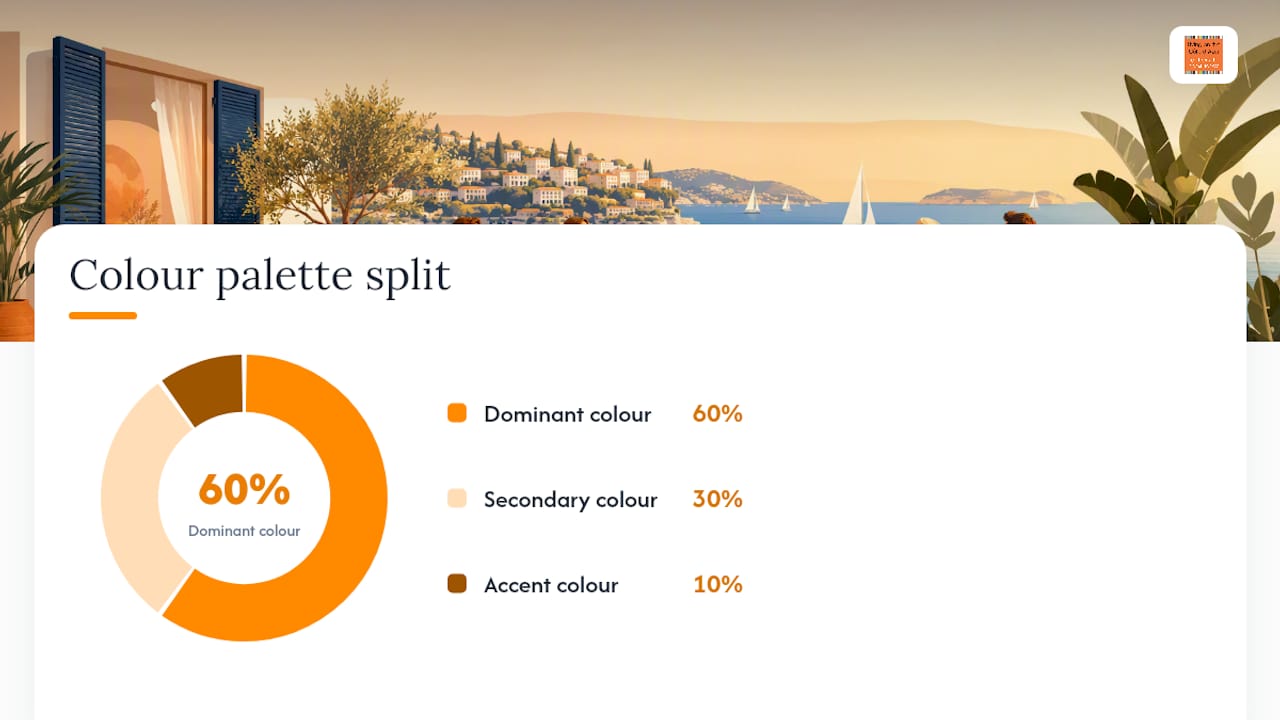
- The 60/30/10 colour rule. Pick a dominant colour for 60% of the room (usually walls and large furniture), a secondary colour for 30% (upholstery, curtains, rugs), and an accent for the remaining 10% (cushions, art, accessories). It’s a simple ratio, but it stops rooms looking either flat or chaotic.
- Layered lighting. A single overhead fixture flattens a room. Three layers, ambient, task and accent, do the opposite: ambient gives general illumination, task lighting supports reading or cooking, and accent lighting (a picture light, an uplighter behind a plant) adds depth after dark. Two table lamps and one accent light can transform a living room that’s relied on a single ceiling pendant for years.
- Texture and material contrast. A room built entirely from smooth, hard surfaces feels cold regardless of colour. Mixing a wool rug, a linen sofa, a timber table and a metal lamp base creates tactile variety that reads as considered rather than accidental.
- Layout and flow. Furniture should support how people actually move through a room, not just how it looks from the doorway. Leave at least 90cm of clear walking space through main routes and roughly 45cm between a coffee table and sofa for comfortable knee clearance.
Pro Tip: If you only fix one thing this year, fix the rug. A correctly sized rug does more to make a room feel finished than almost any other single purchase, and it’s the change most homeowners get wrong first.
Colour is worth dwelling on a moment longer, because it’s the principle most people default to first and yet it’s the one that causes the most regret. Choosing paint before furniture is a common misstep. It’s easier to match paint to a sofa you already love than to hunt for a sofa that matches a colour you painted on a whim eight months ago. Start with one anchor piece, whether that’s an existing rug, a piece of art or a sofa fabric, and build the palette outward from there.
Lighting deserves the same patience. Warm white bulbs (around 2700K to 3000K) suit most living and bedroom spaces, while cooler tones (4000K and above) work better in kitchens and bathrooms where task clarity matters more than atmosphere. Mixing colour temperatures within the same room, even subtly, is one of those errors that’s hard to name but easy to feel, the room just looks “off” without an obvious cause.
Popular interior design styles and how to combine them
Most homeowners don’t want to commit to one rigid style. They want to recognise what they like across several and blend the best of each. Here’s how to read the signatures of the styles that come up most often.
- Scandinavian — pale timber floors, white or soft grey walls, functional furniture with clean lines, and warmth added through wool throws and candles rather than colour.
- Mid-century modern — tapered wooden legs, organic curves, walnut and teak tones, and bold but limited accent colours like mustard or burnt orange.
- Contemporary — whatever is current right now, generally neutral palettes, minimal ornamentation and an emphasis on clean architectural lines over period detail.
- Japandi — a fusion of Japanese minimalism and Scandinavian warmth: low furniture, natural materials, muted earth tones and a strong emphasis on negative space.
- Bohemian — layered textiles, global patterns, plants, and a deliberate mismatch of eras and origins that reads as curated rather than cluttered.
- Coastal — light timber, linen, blues and sandy neutrals, with natural fibre textures like rattan and jute standing in for heavier upholstery.
- Industrial — exposed brick or concrete, black metal fixtures, leather and reclaimed wood, drawing on warehouse and loft aesthetics.
- Transitional — a deliberate middle ground between traditional and contemporary, pairing classic furniture silhouettes with a simplified, neutral palette.
Combining styles works best when one acts as the dominant framework and the second supplies accents rather than competing for attention. A Japandi base with a handful of bohemian textiles, a woven basket, a patterned cushion, a trailing plant, reads as calm with personality. Trying to give both styles equal weight in the same room usually produces visual noise, because Japandi’s restraint and bohemian’s abundance are pulling in opposite directions.
A safer rule of thumb: let architecture and fixed materials (flooring, cabinetry, structural beams) decide the dominant style, then use furniture and soft furnishings to introduce the secondary influence. If you’re furnishing a French Riviera villa with existing terracotta floors and exposed beams, a transitional or coastal base tends to sit more comfortably with those materials than a stark industrial scheme would. Living On The Cote d’Azur’s own interior design tips for villas cover this kind of material-led decision-making in more depth for buyers working with period Mediterranean properties.
How to design a room, step by step
Designing a room properly, whether you’re doing it yourself or briefing a professional, follows a fairly consistent sequence. Skipping steps is exactly how people end up with a beautiful sofa that doesn’t fit through the door.
- Write the brief before you buy anything. List who uses the room, what they do in it, and what’s currently frustrating about it. Designers consistently recommend identifying functionality before aesthetics, storage needs, workspace requirements, how many people need to sit comfortably, before a single item goes in a basket. A living room that needs to double as a home office has a completely different brief to one used purely for entertaining.
- Choose a springboard. Pick one item, a rug, a piece of art, an existing piece of furniture you’re keeping, that anchors the palette and style direction. Every other decision gets measured against it.
- Build a mood board. Pull together colours, materials and reference images in one place, whether that’s a physical board, Pinterest, or a simple folder of screenshots. This step exists to catch clashes early, before money is spent, not after.
- Measure the room properly. Note wall lengths, window and door positions, ceiling height, and the location of sockets and radiators. Sketch a rough floor plan, even a basic graph-paper version works, and test furniture placement on paper before it arrives.
- Plan the layout around circulation. Furniture should leave clear walking routes and logical groupings. A sofa and two chairs angled toward each other invites conversation; the same pieces lined up against opposite walls does not.
- Buy in this order: foundation furniture, then lighting, then textiles, then accessories. Sofas, beds and dining tables come first because everything else is scaled around them. Lighting comes second because it’s structural to how the room feels once furniture is in place. Textiles (rugs, curtains, cushions) come third, and accessories, the layer most people want to buy first, come last.
- Visualise before you commit. Retailer planning tools, mood boards and simple 3D mockups let you test scale and colour combinations without financial risk. IKEA’s design and visualisation tools are a genuinely useful free option for testing a layout before ordering anything, and they catch scale mistakes, an oversized sofa, a rug that’s too small, before they become expensive regrets.
- Install, then live with it for two weeks before finishing. Move furniture in, hang the lighting, and resist the urge to accessorise immediately. Rooms often reveal small adjustments, a lamp that needs to move six inches, a chair that blocks a doorway, only once they’re actually being used.
A practical budget rule sits underneath this whole process, and it’s worth knowing before you start buying: roughly 70% of spend goes on furniture, 20% on lighting and textiles, and 10% on accessories. That ratio holds up remarkably well across most mid-range room refurbishments, and it’s a useful check whenever a shopping list starts skewing too heavily toward decorative extras before the foundational pieces are settled.
Living On The Cote d’Azur’s interior design and styling guide walks through a longer version of this same sequence for readers furnishing a full property rather than a single room, which is a useful next step if you’re tackling more than one space at once.
What does interior design actually cost?
Budgets vary enormously by room, finish level and location, but mid-range refurbishment costs follow a reasonably predictable pattern across most Western European markets. The figures below assume a full refresh, furniture, lighting and textiles, rather than a single accent purchase.
| Room | Typical mid-range budget | What it usually covers |
|---|---|---|
| Living room | a mid-range budget typical for refurbishment in Western Europe | Sofa, armchairs, coffee table, rug, lighting layers, curtains |
| Bedroom | a moderate budget range typical for refurbishment | Bed, mattress, wardrobe, bedside lighting, soft furnishings |
| Kitchen (styling only, no structural work) | a commonly expected budget range | Lighting, bar stools, accessories, soft finishing touches |
| Home office | a typical budget range | Desk, ergonomic chair, task lighting, storage |
| Full property refresh (3 bed) | a broad typical budget range | All main rooms, furniture, lighting and textiles, excluding structural renovation |
These ranges sit within the mid-market band. Bespoke joinery, designer furniture brands and full structural work push costs considerably higher, while a phased approach using a mix of new and second-hand pieces can bring them down substantially.
A few practical ways to keep spend under control without the room looking compromised: buy foundational furniture new (sofas and beds take heavy daily use and cheap versions rarely age well), but treat side tables, occasional chairs and decorative objects as fair game for second-hand markets, auction sites or vintage dealers. Trade accounts with fabric and lighting suppliers, often accessible through a designer or project manager, can also shave a meaningful percentage off textile and lighting costs on larger projects. And buying in phases across several months, rather than furnishing an entire room in one sitting, avoids the “showroom” look that comes from everything arriving from the same catalogue at once.
When should you hire an interior designer, and what will it cost?
Hire a designer when the project involves structural changes, a full-property renovation, or when your own time is worth more than the fee. A single room refresh with no structural work is usually manageable without professional help if you’re willing to follow a proper process.
Designer fees generally fall into four models:
- Hourly rate — common for consultations or advice-only sessions, typically used when a homeowner wants a second opinion on layout or colour rather than full execution.
- Fixed fee — a set price for a defined scope, common for single-room projects with a clear brief and no likely change in scope.
- Percentage of project cost — often 10% to 20% of total spend, common for full-property renovations where the designer is managing trades and purchasing on the client’s behalf.
- Project management fee — a flat or hourly charge specifically for coordinating contractors, deliveries and installation, sometimes layered on top of a design fee for larger projects.
A single consultation session typically costs far less than full-service design, which makes it a reasonable starting point if you’re unsure whether you need ongoing help or just a layout sanity check.
Before hiring anyone, ask three questions at first contact: can they show a portfolio of projects similar in scale to yours, do they work with a fixed network of trades or source independently, and what’s included versus billed separately (site visits, revisions, sourcing trips). A designer who’s vague about the last question is worth treating cautiously, since scope creep is where most project budgets actually blow out.
Common mistakes, pro tips and quick fixes
Most rooms that feel “almost right” but not quite finished are suffering from one of a handful of repeat offenders, and nearly all of them are fixable without buying anything new.
- Rugs that are too small. This is the single most common error in home decor ideas. The fix costs nothing to diagnose: the rug should extend under the front legs of the sofa, not float in the middle of the floor like an island.
- Curtains hung at the wrong height. Mounted directly above the window frame, curtains make ceilings look lower. Hung close to the ceiling instead, the same window instantly reads taller.
- Buying everything from one catalogue in one order. Insiders in the trade consistently warn against this. Rooms that feel personal and layered are built slowly, mixing investment pieces with inexpensive, personally chosen accents gathered over months, not delivered in a single van on the same Tuesday.
- Skipping the grounding elements. A well-chosen rug or a single striking light fixture often does more to make a room feel complete than several smaller decorative purchases combined.
- Ignoring existing architecture. Painting over or covering original features, a fireplace surround, exposed beams, cornicing, to fit a trend usually costs more to reverse later than it saved at the time.
Pro Tip: Before buying anything new, walk the room with a tape measure and photograph it from the doorway. Nine times out of ten, the “missing piece” people think they need is actually a scale problem with something they already own.
Designing small spaces: what actually works
Small rooms punish bad scale decisions faster than large ones, but they respond just as quickly to the right fixes. Furniture with slimmer legs and visible floor space beneath it makes a room feel less crowded than the same footprint in a boxy, floor-hugging design. Multifunctional pieces, a storage ottoman doubling as a coffee table, a bed frame with drawers built in, earn their space twice over.
- Keep the palette light and continuous. Painting walls, trim and ceiling in closely related tones removes visual breaks that make a room feel chopped up.
- Use mirrors deliberately. Positioned to reflect a window or light source, a mirror can noticeably increase the sense of depth in a small room, not just brightness.
- Layer lighting even in tight spaces. A single overhead bulb in a small room is more noticeable, not less, so wall-mounted or plug-in lighting earns its keep here more than almost anywhere else.
- Prioritise circulation over furniture count. A small room with fewer, well-placed pieces and clear walking paths reads as considered; the same room crammed with “just one more” chair reads as cramped.
- Vertical storage frees the floor. Shelving that runs to the ceiling uses space a low sideboard never will, and draws the eye upward in the process.
Interior design for Côte d’Azur properties
The Mediterranean light changes everything about how a room reads. Materials and colours that look muted under grey European skies can look completely different under Riviera sun, which is why so many villas here lean on pale stone, limewash and natural linen rather than the darker, saturated palettes that suit northern climates.

Preserving original architectural character, terracotta tiled roofs, exposed stone, wrought-iron balconies, while adding modern comfort (air conditioning, insulation, updated bathrooms) is the balancing act that separates a well-renovated Riviera property from an over-modernised one. Buyers consistently pay a premium for villas that retain genuine period character alongside contemporary infrastructure, and thoughtful styling choices measurably affect resale value in a market where character and authenticity command real weight.
Living On The Cote d’Azur works with buyers across this exact challenge, connecting them with trusted renovation specialists and local trade contacts once a purchase completes, and helping coordinate project management for renovation and styling once the keys change hands.
- Choose stone, limewash and linen over synthetic finishes for both authenticity and better performance in high heat and coastal humidity.
- Retain original beams, shutters and stonework wherever structurally sound rather than replacing them outright.
- Prioritise ventilation and shade (shutters, pergolas, deep eaves) over air conditioning alone, both for comfort and for keeping period character intact.
- Work with local trades who understand regional building techniques and material sourcing, rather than importing a design vision that fights the climate.
Sustainability and eco-friendly interior design practices
Sustainability has moved from a niche add-on to a default expectation in professional design briefs, a shift reflected in how design training now integrates environmental considerations alongside technical planning as standard, rather than as an elective specialism.
In practice, this means favouring materials with lower environmental impact over their lifespan: FSC-certified timber, natural fibres like wool and linen over synthetic blends, and finishes like limewash or clay paint that avoid the volatile compounds found in some conventional paints. Furniture bought to last, rather than replaced every few years, is itself a sustainability decision; a well-made sofa reupholstered once is often a smaller environmental footprint than three cheaper replacements over the same period.
Second-hand and vintage sourcing plays a bigger role in sustainable design than most people assume. Beyond the cost savings covered earlier, buying pre-owned furniture avoids the manufacturing footprint of a new item entirely, and older solid-wood pieces are often better made than comparably priced new furniture.
Energy-conscious lighting choices matter too. LED fixtures, daylight-maximising layouts and warm-toned bulbs that reduce reliance on multiple light sources all cut running costs alongside their environmental benefit. None of this requires sacrificing style, in fact, natural materials and considered sourcing tend to produce warmer, more textural rooms than mass-produced alternatives.
Choosing materials and finishes that last
Durability and looks aren’t opposing goals, but they do require different questions at the point of purchase. For flooring, natural stone and hardwood cost more upfront but resist wear over decades, while engineered timber and quality vinyl offer a reasonable middle ground for busy households on tighter budgets.
Upholstery fabric is judged on a rub count (its abrasion resistance rating), and anything intended for daily family use should sit well above the minimum domestic threshold, roughly 10,000 rubs or higher for sofas that see regular use. Linen looks beautiful but creases and wears faster than a tightly woven wool or performance velvet in high-traffic rooms.
Worktops and hard surfaces follow a similar logic: natural stone (marble, granite) offers unmatched visual depth but requires sealing and care, while quartz composite delivers a similar look with far greater stain and scratch resistance for a busy kitchen.
The general rule worth applying across every material decision: spend more on anything that takes daily physical wear, flooring, worktops, seating fabric, and treat purely decorative surfaces as more flexible. A cheaper decorative tile in a low-traffic powder room is a reasonable compromise; the same shortcut on a family bathroom floor rarely ages well.
Technology and tools used in interior design
Design software has become genuinely accessible over the past few years, closing the gap between professional visualisation and what a homeowner can do at home on a laptop. Retailer-built tools have led that shift: free planning and visualisation tools now let anyone test furniture scale, colour combinations and room layouts before spending a penny, catching the kind of sizing mistakes that used to only surface once furniture arrived.
Professional designers typically work with more advanced software for 3D rendering and floor plans, but the underlying principle is the same one available to homeowners through free tools: visualise before you buy. A simple 3D mockup or even a to-scale paper cutout of a sofa footprint can prevent an expensive returns process.
Beyond visualisation, mood board apps and shared digital folders have replaced the old physical scrapbook for most people, making it easier to test a palette against real product images rather than paint swatches alone. For anyone running a design-adjacent business or promoting renovation work, visibility matters too, and specialist agencies offering search engine optimisation for interior design businesses have become part of how designers now build a client pipeline alongside portfolio work.
How interior design affects wellbeing and productivity
Rooms shape behaviour more than most people give them credit for. Poor lighting genuinely affects mood and energy levels over time, which is part of why layered lighting appears so consistently across professional advice rather than being purely aesthetic preference.
Clutter and poor storage provision create low-level cognitive friction, the small, repeated frustration of not being able to find things or put them away easily, that compounds over weeks into a room actively feeling stressful to be in. Conversely, a well-organised space with clear storage solutions and defined zones for specific activities tends to support focus rather than undermine it, which is why home office design increasingly borrows circulation and zoning principles from commercial workspace planning.
Natural light exposure and a connection to the outdoors, even something as simple as a clear sightline to a window from a desk or sofa, has a measurable effect on how comfortable a room feels to spend long periods in. This is one of the strongest arguments for prioritising window treatments and furniture placement around natural light sources rather than purely around wall space.
None of this demands an expensive intervention. Decluttering, fixing lighting layers and orienting furniture toward natural light are among the cheapest changes available, and they’re consistently the ones with the most noticeable effect on how a room actually feels to live in day to day.
Trends and future directions in interior design
Interior design moves in cycles, but a few current directions look set to stay relevant rather than fade within a season. Warmer, more tactile neutrals are replacing the stark white-and-grey palettes that dominated the previous decade, a shift toward rooms that feel lived-in rather than showroom-perfect.
Multifunctional furniture is becoming a permanent fixture rather than a small-space compromise, driven partly by hybrid working patterns that have made home offices a standard requirement rather than a bonus room. Curved silhouettes, in sofas, mirrors and lighting, continue gaining ground over the sharp, minimalist lines that defined contemporary design for years.
Material honesty, leaving natural grain, texture and imperfection visible rather than disguising it, has become a consistent thread across several styles simultaneously, from Japandi’s restraint to bohemian’s celebration of handmade objects. For readers wanting a closer look at how these shifts play out specifically in Riviera properties, Living On The Cote d’Azur’s interior design trends coverage tracks how these broader directions translate to the region’s architecture and light.
Author perspective: how we approach design projects for buyers
Design conversations ideally start the moment a buyer is choosing between two properties, not after the notaire appointment. Many buyers aren’t asking “what style do I want”, they’re asking “will this layout work for how we actually live, and what will it cost to make it feel like home.” Those are design questions disguised as property questions, and treating them separately wastes time and money.
What surprises most international buyers is how much a room’s potential depends on light orientation and existing architecture, not paint choices. When we walk a villa with a client, we’re already flagging which rooms will need real design investment and which will work with almost nothing changed.
— Ab Kuijer
Bringing your Riviera property to life
Buying the right villa is only half the picture. Finding the right villa is only half the picture. Connecting with trusted renovation specialists and furnishing with quality brands can streamline the process, especially in unfamiliar markets.
A typical engagement starts with the buyer agent service, where we search the entire Riviera market on your behalf, including off-market properties, before a single viewing takes place. From there, the full-service approach carries you through negotiation, notaire coordination and, when needed, post-purchase renovation and styling introductions. Our buyer broker fee sits at 2% for this full-service work.
If you’re weighing up a villa purchase and already thinking about what comes after the keys, consider discussing your property and interiors needs with specialist advisors.
Sources
- Interior design — Wikipedia
- What is Interior Design? | IIDA
- How to start decorating your home — The Guardian
- How to design your home interior: step-by-step guide — GenRoom
FAQ
What is the 3-5-7 rule in interior design?
It’s a decorating guideline for grouping objects, typically vases, books or ornaments, in odd-numbered clusters of three, five or seven, since asymmetrical groupings tend to look more natural than pairs or even numbers.
What exactly is an interior designer?
An interior designer is a trained professional who plans and manages interior spaces for safety, function and appearance, handling technical considerations like space planning, lighting and building codes, which sets the role apart from a decorator who focuses mainly on finishes.
How much should you pay an interior designer?
Fees depend on the model: hourly consultations are the cheapest entry point, fixed fees suit single rooms with a clear brief, and full-property renovations often run on a percentage of project cost, typically in the 10% to 20% range.
How do I become an interior designer in the UK?
Most professionals complete a recognised interior design qualification, then build a portfolio through supervised project work or an assistant role before working independently; joining a professional body helps establish credibility with clients early in a career.
Recommended
 //
//