
Nearly 40% of luxury property buyers on the Côte d’Azur overpay or select suboptimal locations by fixating solely on price, overlooking critical factors that determine long-term value and legacy potential. This guide reveals the essential pitfalls to avoid when acquiring premium French Riviera estates, equipping you with the knowledge to make confident, informed investment decisions that protect your wealth and secure your family’s future.
Table of Contents
- The High Stakes Of Luxury Real Estate On The Côte D’Azur
- Due Diligence And Legal Clarity: Avoiding Title And Compliance Pitfalls
- Understanding Market Dynamics And Location Nuances
- Legacy Investments And Wealth Transfer Strategies
- New Constructions And Sustainability: Risks And Opportunities
- Financial Considerations And Maximising ROI
- Common Misconceptions And Errors To Avoid In Côte D’Azur Luxury Real Estate
- Explore Côte D’Azur Luxury Real Estate With Expert Guidance
Key takeaways
| Point | Details |
|---|---|
| Due diligence prevents costly disputes | Comprehensive legal and technical audits reduce ownership risks by 15% and uncover hidden defects before purchase. |
| Market dynamics drive value | Understanding location-specific appreciation patterns and seasonal demand prevents poor investment choices affecting ROI. |
| Legacy planning reduces tax burden | Strategic wealth transfer structuring avoids inheritance liabilities up to 45% whilst preserving income for future generations. |
| Sustainability boosts property appeal | Eco-certified features command 7% price premiums and align with growing demand from discerning heirs and tenants. |
The high stakes of luxury real estate on the Côte d’Azur
The Côte d’Azur commands premium pricing with villas often above €2M, driven by global elites and digital millionaires seeking exclusive waterfront sanctuaries. This market operates differently from standard residential property. International high-net-worth individuals dominate transactions, viewing estates not merely as homes but as generational wealth vessels.
The Côte d’Azur investment appeal stems from its unique combination of Mediterranean climate, cultural prestige, and stable governance. Yet elevated property values mean mistakes carry substantial financial consequences. A misstep in due diligence or location selection can cost hundreds of thousands of euros in remediation or lost appreciation.
Legacy-focused investors prioritise three factors:
- Long-term capital appreciation over short-term speculation
- Rental income potential during family non-occupancy periods
- Wealth preservation and efficient generational transfer
Digital economy wealth holders increasingly channel cryptocurrency gains into tangible Riviera assets, seeking stability amidst market volatility. Properties near Monaco’s borders or Cap d’Antibes’ secluded coastal paths offer privacy and prestige that justify premium pricing. Understanding these dynamics separates prudent investors from those who overpay for superficial appeal.
Due diligence and legal clarity: avoiding title and compliance pitfalls
Comprehensive legal scrutiny protects your investment from ownership disputes and compliance issues that plague rushed purchases. Legal audits reduce 15% dispute risk by verifying clear title chains and identifying encumbrances before contracts exchange. French property law differs significantly from Anglo-Saxon systems, requiring specialised counsel familiar with Riviera transactions.
Mandatory technical inspections reveal structural defects invisible during viewings. Seismic surveys are particularly critical given the region’s geological activity. A villa appearing pristine may harbour foundation issues or non-compliant renovations that cost far more to remedy than initial purchase savings.
For new constructions, VEFA (Vente en l’État Futur d’Achèvement) contracts provide robust buyer protections:
- Ten-year structural warranties covering major defects
- Staggered payment schedules tied to construction milestones
- Legal recourse if developers fail to deliver as specified
Pro Tip: Engage a geometre-expert to verify exact property boundaries and identify any servitudes (rights of way) affecting future development plans or privacy.
Zoning regulations on the Côte d’Azur are complex and strictly enforced. A property marketed as suitable for commercial rental may lack proper permits, exposing you to fines and rental income loss. Luxury property due diligence encompasses title verification, technical surveys, zoning compliance, and financial projections to ensure every aspect withstands scrutiny.

Understanding market dynamics and location nuances
Properties overlooking the sea in Cap d’Antibes achieve 5-8% annual appreciation, yet neighbouring inland estates may stagnate or decline. Location specificity determines value trajectory more than any other single factor. Forty percent of buyers fixate on headline prices without analysing micro-market fundamentals, leading to regrettable purchases.
Seasonal rental demand creates significant ROI swings. Properties near Cannes experience peak occupancy during the Film Festival and summer yacht season, whilst winter months see sharp declines. Failing to account for these patterns can reduce projected income by 18%, undermining financial models.
| Location | Annual Appreciation | Peak Season | Rental Yield Potential |
|---|---|---|---|
| Cap d’Antibes | 5-8% | May-September | 3-5% |
| Monaco borders | 6-9% | Year-round | 2-4% |
| Menton | 3-5% | February (Lemon Festival), Summer | 4-6% |
| Saint-Tropez | 4-7% | June-August | 3-5% |
Micro-location factors profoundly impact value:
- Sea views versus hillside positions can mean €500K+ price differentials
- Proximity to marinas, golf courses, or cultural sites enhances rental appeal
- Access to international schools matters for family-oriented buyers
- Walking distance to villages like Èze or Saint-Paul-de-Vence adds lifestyle value
Understanding luxury home price drivers requires analysing comparable sales, rental histories, and planned infrastructure developments. A property near Nice’s expanding tram network may appreciate faster than static locations. Research planning permissions in surrounding parcels to avoid future view obstructions or character changes that diminish your estate’s exclusivity.
Legacy investments and wealth transfer strategies
Legacy-focused estates like Provençal mas (restored farmhouses) offer 3-5% rental yields and tax benefits whilst serving as family gathering places for generations. These properties transcend financial metrics, embedding your lineage in Riviera culture and creating emotional anchors for heirs. Yet without proper planning, inheritance tax can lead to 45% liabilities that force distressed sales.
French succession law mandates reserved portions for children, limiting testamentary freedom. International families must navigate both French regulations and their home country’s tax treaties. Structuring ownership through SCI (Société Civile Immobilière) entities can optimise tax efficiency and simplify multi-generational transfers.
Sustainability credentials increasingly matter to heirs who value environmental stewardship alongside financial returns. Eco-villas with solar arrays, geothermal systems, and green certifications appeal to younger generations whilst commanding premium rental rates from environmentally conscious tenants.
Key legacy planning considerations:
- Establish clear succession plans before purchase to avoid family disputes
- Consider usufruit (life interest) arrangements allowing parents to retain usage rights
- Document rental management procedures to maintain income continuity
- Select properties with timeless architectural appeal that transcends trends
Pro Tip: Purchase estates near cultural landmarks like Antibes’ Picasso Museum or Menton’s Jean Cocteau Museum to ensure enduring desirability regardless of market cycles.
Real estate inheritance strategies should integrate with broader wealth plans, considering diversification across asset classes whilst maintaining Riviera property as a stable core holding. Real estate investment strategies for legacy creation prioritise capital preservation and steady income over speculative gains.
New constructions and sustainability: risks and opportunities
Eco-luxury new constructions see 15% more demand as buyers recognise sustainability’s dual benefits: reduced operating costs and enhanced resale value. Off-plan purchases in developments like Sainte-Maxime’s beachside residences (from €1.2M, steps from Garonette sands) or Nice’s Mont Boron sea-view towers offer modern amenities and ten-year structural warranties.
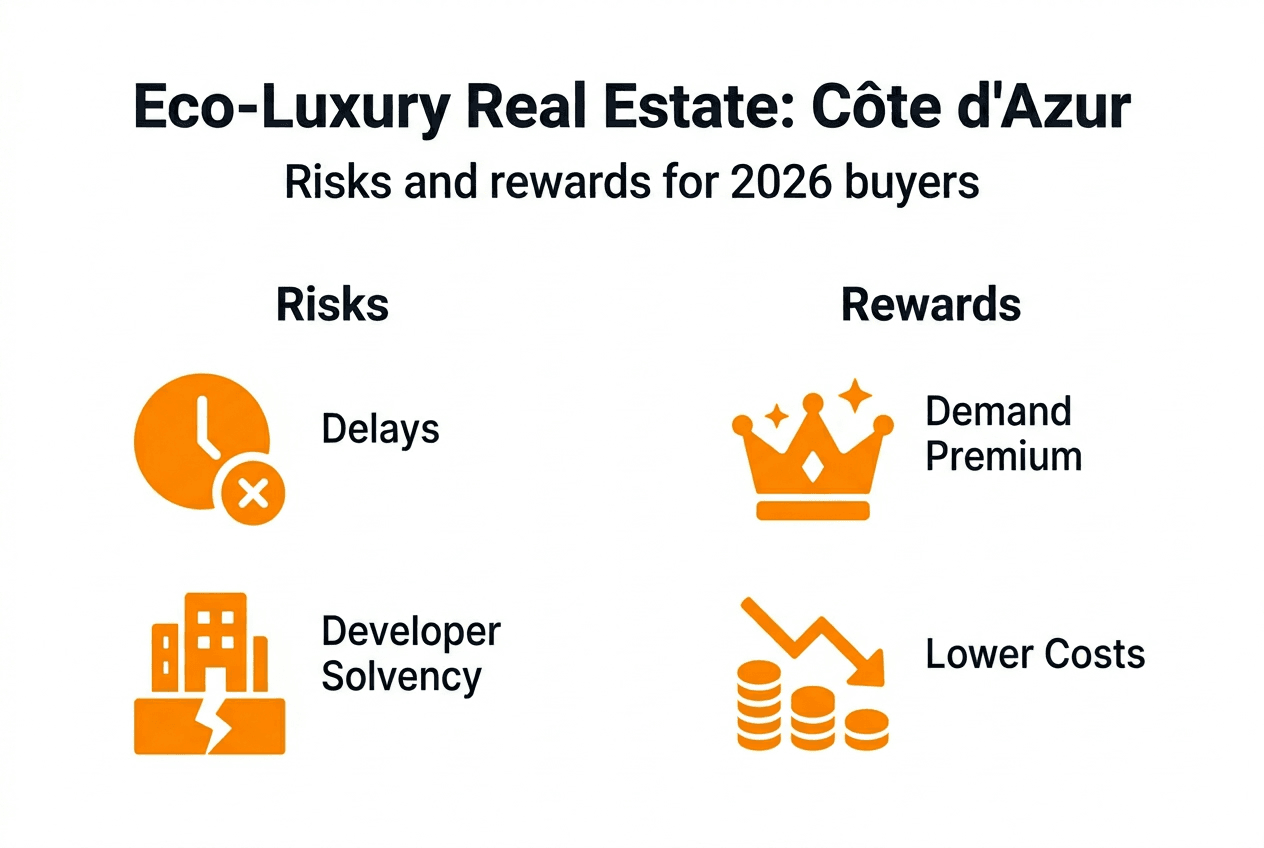
VEFA contracts protect buyers from construction delays and cost overruns, with payments released only as milestones complete. Zero-interest payment plans improve liquidity, allowing investors to deploy capital elsewhere whilst construction progresses. Lower notary fees (approximately 2-3% versus 7-8% for resales) provide additional savings.
| Feature | New Construction | Resale Property |
|---|---|---|
| Warranty Coverage | 10 years structural | Limited or none |
| Notary Fees | 2-3% | 7-8% |
| Energy Efficiency | A-rated, latest standards | Variable, often requires upgrades |
| Customisation | High (pre-completion) | Limited to renovations |
| Immediate Occupancy | No (12-24 month wait) | Yes |
Sustainability certifications like HQE (Haute Qualité Environnementale) or BREEAM can add approximately 7% value premiums due to lower utility costs and alignment with importance of sustainability principles. Solar panels, rainwater harvesting, and smart home systems appeal to tech-savvy buyers and reduce carbon footprints.
Risks include construction delays, developer solvency issues, and final specifications differing from marketing materials. Thoroughly vet developers’ track records and financial stability. Visit completed projects to assess build quality firsthand. New construction trends south France favour biophilic design integrating natural light, ventilation, and landscaping that blurs indoor-outdoor boundaries.
Financial considerations and maximising ROI
Ignoring seasonal rental calendars can reduce income by up to 18%, undermining return projections. Align availability with Cannes Film Festival (May), Monaco Grand Prix (May), and summer yacht season (June-August) to capture peak demand. Properties near Nice’s Promenade des Anglais or Antibes’ yacht marinas command premium nightly rates during these periods.
Zero-interest payment plans improve liquidity by 10-15%, allowing investors to retain capital for renovations or alternative investments during construction. This financial flexibility proves particularly valuable for buyers balancing multiple asset acquisitions or awaiting cryptocurrency liquidity events.
Strategic financial structuring considerations:
- Currency hedging to protect against euro fluctuations if income derives from other currencies
- Mortgage leverage at historically low rates (currently around 2.5-3.5% for prime borrowers)
- Tax-efficient rental structures through furnished lettings or SCI entities
- Reserve funds for maintenance, property management, and vacancy periods
Understanding rental demand cycles is crucial to maximising ROI. Winter months (November-March) see reduced occupancy except during Menton’s February Lemon Festival, requiring pricing adjustments or targeting long-term winter lets to northern Europeans seeking mild climate retreats.
Financing luxury real estate involves demonstrating income stability and asset diversification to French lenders. International buyers benefit from establishing local banking relationships early, as mortgage approval processes can extend 8-12 weeks. Some banks accept cryptocurrency holdings as collateral, though valuations apply significant haircuts due to volatility.
Common misconceptions and errors to avoid in Côte d’Azur luxury real estate
Widespread myths frequently trap investors who assume luxury markets operate identically to standard residential property. Price alone signals neither quality nor investment merit. A €5M villa may represent poor value if located in declining micro-markets or burdened with structural issues, whilst a €2.5M property in Cap d’Antibes could deliver superior appreciation and lifestyle benefits.
Assuming all waterfront properties appreciate equally: Proximity to marinas, beaches, and coastal paths matters more than simply “waterfront” classification. Properties facing busy roads or lacking direct sea views command significantly lower premiums.
Skipping technical due diligence to accelerate transactions: Pressure to act quickly, especially in competitive bidding situations, tempts buyers to waive surveys. Hidden defects typically cost 3-5 times more to remedy than comprehensive pre-purchase inspections.
Overlooking tax planning until after purchase: French property taxation, wealth taxes, and inheritance rules require advance structuring. Retroactive planning options prove limited and expensive.
Believing prestigious addresses guarantee rental income: Supply in prime locations like Saint-Tropez can exceed demand outside peak season. Properties lacking modern amenities or professional management struggle regardless of location cachet.
Ignoring luxury property appreciation patterns specific to each commune: Nice’s urban revival differs from Menton’s cultural renaissance or Antibes’ maritime heritage appeal, requiring tailored valuation approaches.
Common buyer assumptions miss critical factors distinguishing successful investments from disappointing ones. Legacy value derives from thoughtful property selection, rigorous due diligence, and strategic financial planning, not simply purchasing the most expensive available estate.
Explore Côte d’Azur luxury real estate with expert guidance
Navigating the French Riviera’s exclusive property market requires specialised knowledge and access to opportunities rarely advertised publicly. Living on the Côte d’Azur provides off-market luxury properties matching your precise legacy and lifestyle requirements, from restored Provençal estates to cutting-edge sustainable villas.
Our luxury property acquisition services handle every aspect: legal due diligence, technical surveys, negotiation, and transaction completion, ensuring your investment withstands scrutiny whilst securing optimal terms. We coordinate with specialist counsel, financial advisors, and property managers to implement real estate investment strategies tailored to your wealth preservation and growth objectives. Connect with our team to transform Riviera aspirations into tangible legacy assets.
FAQ
What are the most important legal checks before buying luxury property on the Côte d’Azur?
Verify clear legal title, zoning compliance, and contract specifics with expert French Riviera counsel before purchase. Technical and seismic survey reviews are mandatory to uncover structural issues not visible during viewings. Luxury property due diligence encompasses boundary verification, servitude identification, and permit validation to prevent costly post-purchase discoveries.
How does sustainability affect luxury property value on the French Riviera?
Eco-certified properties command up to 7% price premiums due to growing demand for sustainability and efficiency amongst discerning buyers. Sustainability features enhance legacy value and rental appeal, particularly for younger heirs who prioritise environmental responsibility alongside financial returns. New construction sustainability trends show increasing integration of solar, geothermal, and smart home technologies.
What financial strategies optimise rental income on the Côte d’Azur luxury market?
Align rental availability with seasonal and event-driven demand like Cannes Film Festival, Monaco Grand Prix, and summer yacht season to maximise occupancy and nightly rates. Utilise zero-interest payment plans to improve liquidity and reinvest for higher yields across your property portfolio. Luxury real estate financing structures should balance mortgage leverage with reserve funds for maintenance and vacancy periods.
How do inheritance laws affect luxury property ownership on the Côte d’Azur?
French succession law mandates reserved portions for children, limiting testamentary freedom and requiring advance planning to avoid forced sales. International families must navigate both French regulations and home country tax treaties to optimise transfer efficiency. Structuring ownership through SCI entities can reduce inheritance tax burdens whilst simplifying multi-generational transfers and maintaining family control over legacy estates.
Recommended
 //
//