
TL;DR:
- A secondary home is a property personally occupied for part of the year, distinct from an investment property. Proper planning of financing, tax, and ongoing costs is essential to avoid financial and legal pitfalls. Understanding usage patterns and classification criteria influences mortgage options, tax benefits, and long-term ownership success.
A secondary home is defined as a residential property distinct from your primary residence, purchased for personal use, occasional rental, or both. This buying secondary home guide covers every stage of the acquisition process, from assessing your finances and securing the right mortgage to understanding tax obligations and managing ongoing costs. The industry term is “second home” or “secondary residence,” and lenders, tax authorities, and insurers each treat it differently from your main home. Whether you are drawn to the sun-drenched shores of Saint-Tropez, the prestige of Monaco, or the white sands of Ibiza, the financial and legal groundwork you lay before purchase determines whether the property becomes a lasting asset or a costly burden.
What is the buying secondary home guide process, really?
Before you view a single property, you need to understand what separates a secondary home from an investment property. The distinction is not cosmetic. It shapes your mortgage rate, your tax position, and your insurance premiums from day one.
A secondary residence is a property you personally occupy for a meaningful portion of the year. An investment property, by contrast, is purchased primarily to generate rental income. Lenders, including those operating under Fannie Mae guidelines, treat these two categories very differently. Misunderstanding personal-use requirements can trigger a reclassification from second home to investment property, which raises your interest rate and tightens your tax position immediately.
The practical implication is significant. If you plan to rent your secondary home for extended periods while rarely visiting yourself, lenders will likely classify it as an investment property. That classification carries higher borrowing costs and stricter qualification criteria. Getting clarity on your intended usage pattern before you approach a lender is not optional. It is the foundation of the entire purchase.
What financial prerequisites must you meet before purchasing?
Financial readiness for a secondary home purchase goes well beyond qualifying for a loan. Buying a second home requires you to assess total affordability across two properties simultaneously, not just the new one in isolation.
The core budgeting factors to address before you proceed include:
- Total mortgage payments across both properties, stress-tested at a higher interest rate scenario
- Maintenance reserves of at least 1%–2% of the property’s value annually
- Property taxes, which vary significantly by region and can be substantial in prestige locations
- Insurance premiums, which are higher for secondary homes due to vacancy risk and location factors
- Utility costs during periods of non-occupancy, including heating, security, and grounds maintenance
- Property management fees if you will not be present to oversee the property yourself
Evaluating finances with a professional is the step most buyers skip, and it is the one that causes the most regret. The question is not whether you can qualify for the mortgage. The question is whether you can sustain two properties comfortably if your income dips, if rental income underperforms, or if a major repair arrives unexpectedly.
Your equity in your primary residence is a legitimate funding source. Many buyers use a home equity loan or line of credit against their main home to fund the deposit on a secondary property. This approach can be efficient, but it also means your primary home carries additional risk. Review that exposure carefully with a financial adviser before committing.

Pro Tip: Budget for at least six months of full carrying costs on your secondary home before you complete the purchase. Seasonal properties in particular can sit vacant for extended periods, and that gap must be funded from reserves, not assumptions.
How do mortgage options differ for secondary homes?
Financing a secondary residence is materially different from financing your primary home. Stricter qualification criteria apply across every lender category, and understanding them before you apply saves time and protects your credit profile.
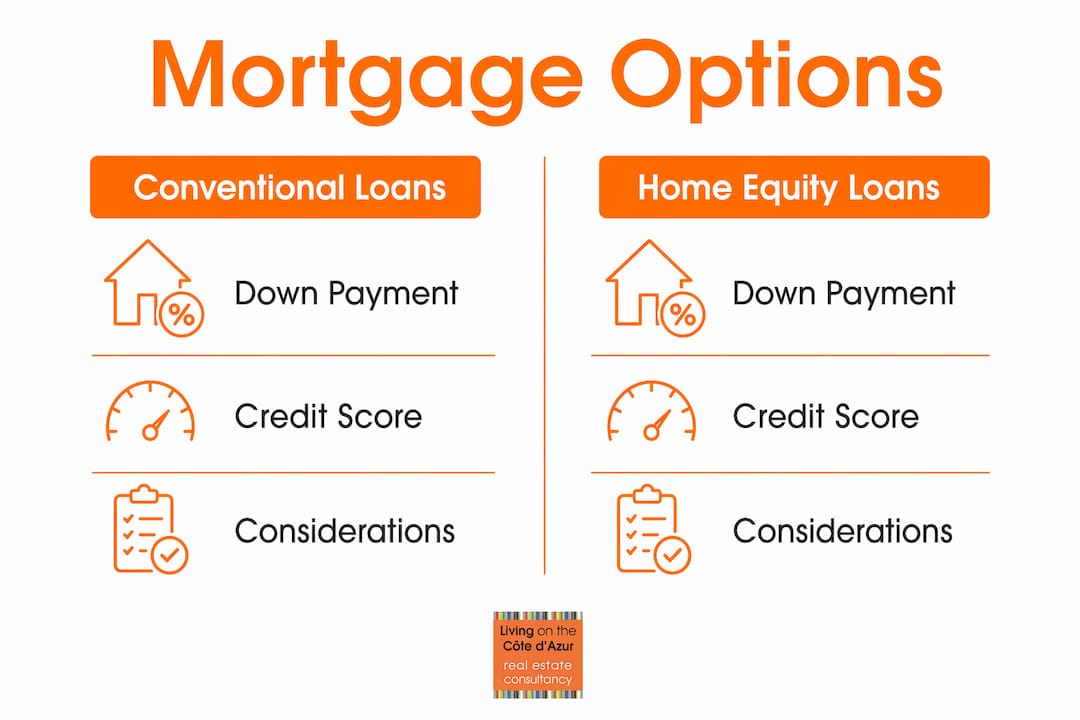
The three most common financing routes are conventional loans, home equity loans against your primary residence, and jumbo loans for higher-value properties. Each carries distinct requirements.
| Mortgage Type | Typical Down Payment | Credit Score Requirement | Key Consideration |
|---|---|---|---|
| Conventional loan | 10%–20% | 680+ | Standard route; requires proof of personal use |
| Jumbo loan | 20%–40% | 700–720+ | Required for high-value properties above conforming limits |
| Home equity loan | Varies (equity-based) | 620–680+ | Uses primary residence as collateral; adds risk to main home |
Down payments for second homes range from 10% to 40% depending on the lender, the property value, and your overall financial profile. That is a wider band than most buyers expect. A lender offering 10% down will typically require a higher credit score and lower debt-to-income ratio to compensate for the reduced equity buffer.
Lenders view second home mortgages as higher risk because borrowers may prioritise their primary residence in a financial crisis. To offset that risk, lenders require additional reserves and documented personal use of the property. Reserves typically mean two to six months of mortgage payments held in liquid accounts after closing.
One detail that catches buyers off guard: rental pool arrangements. If a resort or development requires you to place your property into a mandatory rental pool, that arrangement can invalidate your second-home mortgage classification entirely. Rental pool obligations must be reviewed against lender rules before you sign any purchase agreement.
Pro Tip: Approach at least three lenders and compare not just rates but reserve requirements and personal-use definitions. A specialist property finance adviser, such as those at JW Capital, can identify lenders whose criteria align with your specific usage plans.
What legal, tax, and regulatory rules apply to second homes?
The legal classification of your secondary home determines your tax position, your mortgage eligibility, and your reporting obligations. These three areas are tightly connected, and a decision made in one affects the others.
To qualify as a second home under Fannie Mae standards, a property must be single-unit and suitable for year-round occupancy. You must also use it personally for more than half the year. Properties that fail this test are reclassified as investment properties, which changes both the mortgage terms and the applicable tax rules.
Key legal and tax points to monitor throughout ownership:
- Mortgage interest deductibility applies to second homes if you use the property personally and your total mortgage debt stays within IRS or local tax authority limits. Mortgage interest deductions require consultation with a tax adviser to apply correctly.
- Rental income reporting is triggered once you rent the property for more than a threshold number of days per year. The exact threshold varies by jurisdiction.
- Personal-use day counting is the mechanism that determines whether your home is taxed as a residence or a rental property. Every day you or a family member occupies the property counts as personal use.
- Capital gains treatment on eventual sale depends on how the property was classified and used during ownership.
- Local property taxes in prestige locations such as the Côte d’Azur or Ibiza can be substantial and must be factored into your annual cost model from the outset.
Tax strategy must be planned around actual usage patterns since many deductions and reporting obligations depend on the ratio of rental days to personal-use days. A tax adviser who specialises in cross-border or multi-property ownership is not a luxury. For buyers acquiring property in France or Spain, it is a necessity.
What are the ongoing costs of owning a secondary home?
The purchase price is the beginning of the financial commitment, not the sum of it. Second-home budgeting failures most commonly stem from underestimating insurance, taxes, and seasonal vacancy costs. Treat these as primary cost centres, not afterthoughts.
| Cost Category | Typical Annual Range | Key Variable |
|---|---|---|
| Homeowners insurance | Higher than primary home | Location, hazard exposure, vacancy periods |
| Property taxes | Varies by region | Local authority rates and property classification |
| Maintenance and repairs | 1%–2% of property value | Age, condition, and climate of location |
| Property management | 8%–15% of rental income | Level of service and local market rates |
| Utilities (non-occupied periods) | Significant in larger properties | Size, climate control requirements, security systems |
Homeowners insurance on secondary homes costs more than on primary residences. Vacancy periods, exposure to coastal hazards, and features such as pools all push premiums upward. A property in a flood-prone or wildfire-adjacent area carries additional risk that standard policies may not cover without specific riders.
Looking ahead, federal insurance underwriting changes in 2026 are expected to raise premiums further due to severe weather events and revised deductible structures. Buyers acquiring coastal or rural secondary homes should model insurance costs at a higher rate than current quotes suggest. For luxury properties on the Côte d’Azur, specialist luxury home insurance policies are worth reviewing carefully.
Property management is the cost that surprises buyers most. If you cannot be present to oversee maintenance, handle tenant relations, or manage seasonal preparation, a professional management company is not optional. Fees of 8%–15% of rental income are standard, and that figure must be built into your return projections from the start.
Pro Tip: Request quotes from at least two specialist insurers who cover occasional-occupancy or holiday homes. Standard homeowners policies often exclude claims arising from extended vacancy, which is precisely the risk profile of a secondary home.
How do you execute the purchase process step by step?
A well-sequenced purchase process prevents the most common and costly mistakes in secondary home acquisition. Starting with a clear goal and budget and comparing lenders before viewing properties is the approach that consistently produces the best outcomes.
Set your goals and total budget. Define your intended use, whether personal retreat, occasional rental, or legacy investment. Establish a maximum purchase price that accounts for all ongoing costs, not just the mortgage. Explore location options on the Côte d’Azur to align your goals with the right market.
Secure mortgage preapproval from multiple lenders. Approach at least three lenders and compare rates, reserve requirements, and personal-use definitions. Preapproval confirms your borrowing capacity and strengthens your negotiating position.
Select a property aligned with your mortgage and usage rules. Confirm that the property meets lender classification criteria. Check for any mandatory rental pool obligations or occupancy restrictions that could affect your mortgage status.
Conduct thorough due diligence and inspections. Commission a full structural survey, review title documents, and verify planning permissions. For luxury properties, professional due diligence should include legal audits and tax position reviews.
Close with attention to legal and tax documentation. Work with a notary or solicitor experienced in the relevant jurisdiction. Confirm your tax reporting obligations before completion, not after. Review the legal considerations specific to your target market.
Aligning your rental and occupancy schedule with lender criteria before committing to a property is the single most effective way to prevent financing complications. Occupancy planning done in advance protects both your mortgage classification and your tax position throughout ownership.
Key takeaways
Successful secondary home acquisition depends on financial stress-testing, correct mortgage classification, and proactive tax planning before you commit to any property.
| Point | Details |
|---|---|
| Classify correctly from the start | Personal-use requirements determine mortgage type, tax treatment, and insurance premiums. |
| Budget beyond the mortgage | Insurance, taxes, maintenance, and management fees must be modelled as primary cost centres. |
| Compare at least three lenders | Down payment requirements range from 10%–40%; lender criteria vary significantly for second homes. |
| Plan tax strategy before purchase | Rental-day versus personal-use-day ratios govern deductions and reporting obligations throughout ownership. |
| Conduct full due diligence | Legal audits, structural surveys, and tax position reviews protect your investment before completion. |
What i have learned after years of advising second home buyers
The buyers who struggle most with secondary home ownership are not the ones who chose the wrong location. They are the ones who passed the lender’s qualification test and assumed that was sufficient proof of readiness.
Loan approval tells you what a lender is willing to risk. It tells you nothing about what you can comfortably sustain. I have seen buyers qualify for a mortgage on a beautiful property in Cannes or Saint-Raphaël, only to find themselves financially stretched within eighteen months because they had not modelled insurance increases, a management fee, and a quiet rental season simultaneously. The stress test you run yourself, before you apply, is more valuable than any lender’s approval letter.
The personal-use versus rental-income balance is also more nuanced than most guides acknowledge. Many buyers arrive with a plan to offset costs through short-term rentals, which is entirely reasonable. What they underestimate is how quickly rental activity can shift their property’s classification in the eyes of both lenders and tax authorities. I always advise clients to document their personal-use days meticulously from the first year of ownership. That record becomes your defence if a reclassification question ever arises.
Location flexibility is the final point I would press. Buyers often fixate on a single destination before they have fully explored the financial profile of that market. The second home trends shaping 2025 and beyond show that prestige markets on the Riviera continue to offer strong capital preservation alongside genuine lifestyle value. But the right location is the one that fits your usage pattern, your tax position, and your long-term goals. Start with those criteria, then find the place that satisfies them.
— Ab Kuijer
Discover exclusive secondary homes on the côte d’azur
For buyers seeking a secondary residence of genuine distinction, the Côte d’Azur remains one of Europe’s most enduring and prestigious markets. Livingonthecotedazur connects discerning buyers with over 100,000 properties across locations including Saint-Tropez, Monaco, and Cannes, with access to off-market luxury properties that never appear on public portals. Our team provides personalised guidance across every stage of acquisition, from financing and legal audits to tax optimisation and property management introductions. We also offer a detailed property acquisition guide tailored to international buyers. If you are ready to explore what the Riviera has to offer, we would welcome the conversation.
FAQ
What is the difference between a secondary home and an investment property?
A secondary home is a property you personally occupy for a significant portion of the year, while an investment property is purchased primarily to generate rental income. The distinction affects your mortgage rate, tax treatment, and insurance premiums.
How much deposit do you need for a secondary home mortgage?
Down payments for secondary home mortgages typically range from 10% to 40%, depending on the lender, the property value, and your credit profile. Higher-value properties generally require larger deposits.
Can you rent out a secondary home?
You can rent out a secondary home when you are not using it personally, but lenders require you to demonstrate personal use to maintain second-home mortgage classification. Excessive rental activity can trigger reclassification as an investment property.
What ongoing costs should you budget for when buying a second property?
The main ongoing costs include mortgage payments, homeowners insurance, property taxes, maintenance reserves of 1%–2% of property value annually, utility costs during vacancy, and property management fees if applicable.
Do you need a tax adviser before buying a secondary home?
Consulting a tax adviser before purchase is strongly recommended. Mortgage interest deductibility, rental income reporting, and capital gains treatment all depend on how the property is used and classified, and the rules vary by jurisdiction.
Recommended
 //
//