• English
  • German
  • Dutch
  • Italian
  • French
  • Arabic
  • Hebrew
  • Chinese
  • Polish
  • Home
  • News
  • Real estate market
  • Our services
  • FAQ
  • About us
Living on the Côte d’Azur
  • Existing properties
    • High-Value Properties
    • The Search Mandate
    • Greater Monaco area
    • Greater Nice area
    • Greater Cannes area
    • Greater Saint Raphael area
    • Greater Saint Tropez area
    • Greater Paris area
    • Use our Buyer Agent Service
    • Off market properties
    • Dubai
    • Interior design and styling
  • New constructions
    • Building a new villa
    • Monaco region
    • Nice region
    • Cannes region
    • Saint Raphael region
    • Saint Tropez region
    • Paris New Condos
    • New mountain ski chalets
    • Dubai
    • Interior design and styling
    • Capsule Tiny House
  • Budget search
    • € 0 – 300,000
    • € 300,000 – 750,000
    • € 750,000 – 1,500,000
    • € 1,500,000 – 3,000,000
    • € 3,000,000 – 6,000,000
    • € 6,000,000 – 10,000,000
    • € 10,000,000 and more
  • International
    • Ibiza real estate
    • Portugal real estate
    • United Arab Emirates
    • Mauritius Real Estate
    • Bali Real Estate
    • North Cyprus new construction
    • Crypto
  • Art
    • Tino Aiello – Ceramic Art
    • Karina Garzi – Bronze Art
  • Contact
    • Newsletter
    • Top 100 new on the market
    • Join the team!
    • Selling
    • Temporary Accommodation
    • Rent a villa for year
    • Download presentation
    • Your favorites
    • Your email alerts
  • Menu Menu

British investors now rank among the top non-resident buyers in France, joining North American and Asian elites drawn to the Côte d’Azur for luxury real estate. The region’s transparent legal structure and thriving property market make acquiring a legacy home both secure and desirable. Discover how international buyers navigate distinct legal steps, financial obligations, and unique property types to build wealth and secure long-term appreciation in the heart of the French Riviera.

Table of Contents

  • Non-resident Buying: Core Concepts Revealed
  • French Riviera Property Types And Appeal
  • Legal Steps And Contracts For Buyers
  • Tax, Costs And Financial Obligations
  • Common Risks And Critical Pitfalls To Avoid

Key Takeaways

PointDetails
Understanding Property AcquisitionNon-residents must navigate key procedural steps, including property selection, financial arrangements, and legal documentation while ensuring compliance with French regulations.
Role of the NotaireThe notaire is essential in property transfers, verifying titles, preparing documentation, and calculating taxes, making their involvement crucial for smooth acquisitions.
Financial ConsiderationsNon-resident buyers should anticipate higher down payments and additional costs, including notaire fees and taxes, which impact overall investment strategy.
Legal Risks and ComplexityInternational investors should be aware of potential contractual pitfalls and complex regulations that could affect their property ownership and financial planning.

Non-resident buying: core concepts revealed

Navigating property ownership in France demands strategic understanding for international investors. The French real estate market opens generously to global buyers, offering robust legal frameworks that protect foreign investment while maintaining transparent purchasing mechanisms.

Non-resident property acquisition in France involves several critical components. Buyers must comprehend key procedural steps: property selection, preliminary agreement negotiation, financial arrangements, and legal documentation. Unlike some nations with stringent foreign ownership restrictions, France welcomes international purchasers under consistent regulatory guidelines. International property laws vary significantly, but France maintains an open, structured approach for global investors.

The transaction process centres around the notaire, a government-authorised legal professional who plays a pivotal role in property transfers. The notaire verifies property titles, prepares official documentation, calculates applicable taxes, and ensures regulatory compliance. Non-residents will typically need to provide:

  • Valid international passport
  • Proof of financial capability
  • Documented income sources
  • Residence status documentation
  • Bank statements demonstrating transaction funds

Financial considerations differ for non-resident buyers. French banks may require higher down payments (typically 20-30% of property value) and impose more rigorous lending criteria compared to domestic purchasers. Interest rates and mortgage terms can also vary based on the buyer’s international financial profile.

Pro tip: Engage a bilingual legal specialist familiar with French property regulations to navigate complex administrative requirements and ensure smooth transaction processing.

French Riviera property types and appeal

The French Riviera presents a diverse and captivating property landscape that attracts global investors seeking exceptional real estate opportunities. From historic villas nestled in medieval villages to contemporary seafront apartments, the region offers an extraordinary spectrum of architectural styles and investment potential.

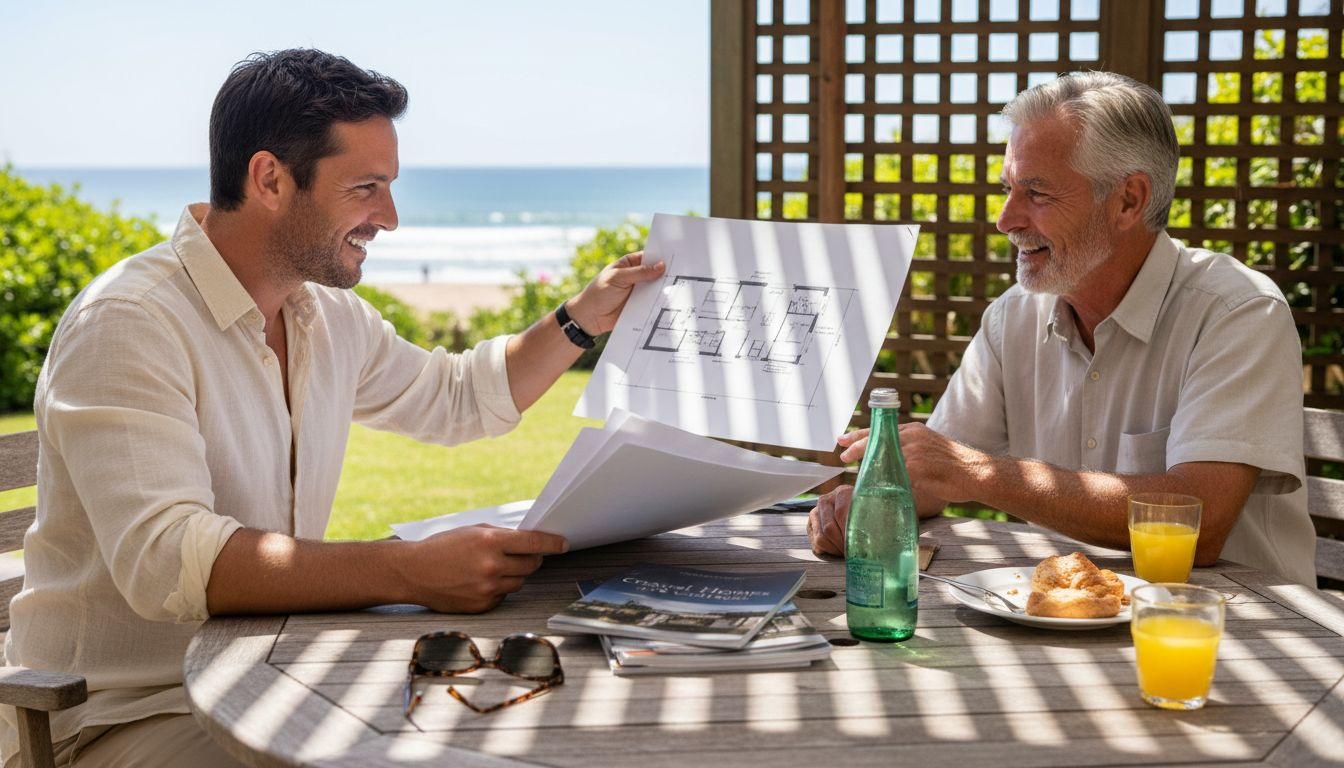
Agent displaying various French Riviera property types

Traditional property types in this prestigious coastal region encompass several distinctive categories. Provençal mas represent historic farmhouse-style properties featuring stone facades, terracotta roof tiles, and expansive grounds that connect buyers to the area’s rich agricultural heritage. Luxury villas dominate the most sought-after locations, particularly in prestigious enclaves like Saint-Tropez, Antibes, and Cap d’Antibes, where panoramic Mediterranean views and private amenities command premium valuations.

Modern property developments along the Côte d’Azur reflect sophisticated architectural trends. Contemporary seafront apartments in cities like Nice and Cannes offer sleek designs with cutting-edge sustainability features. These properties often include smart home technologies, energy-efficient systems, and communal facilities such as infinity pools, fitness centres, and private parking. Investors can choose from:

  • Restored historic townhouses in old town districts
  • Minimalist apartments with sea views
  • Spacious hillside estates with panoramic landscapes
  • Newly constructed eco-friendly complexes
  • Renovated heritage properties with modern interiors

Each property type carries unique investment characteristics. Coastal properties typically demonstrate higher appreciation rates, with prime locations in Saint-Tropez and Monaco borders showing consistent value growth. Proximity to cultural landmarks, accessibility, architectural quality, and sustainability credentials increasingly influence property valuations in this competitive market.

Below is a comparison of modern versus traditional property options in the French Riviera:

Property TypeMain Architectural FeaturesTypical LocationInvestment Appeal
Provençal MasStone, terracotta, rustic gardensRural villages, agricultural areasLong-term value, heritage charm
Luxury VillaPanoramic views, private amenitiesSaint-Tropez, Antibes, coastalHigh demand, strong appreciation
Contemporary ApartmentSleek design, sustainability featuresNice, Cannes, city centresPopular for rentals, modern living
Renovated TownhouseHistoric exteriors, modern interiorsOld town districtsCultural appeal, tourist interest

Pro tip: Conduct thorough architectural and structural assessments before purchasing, as historic properties may require substantial renovation investments to meet contemporary living standards.

Legal steps and contracts for buyers

Navigating the French property acquisition landscape requires a comprehensive understanding of the legal framework governing international real estate transactions. The process involves multiple critical stages, each designed to protect both the buyer and seller while ensuring transparent, legally binding agreements.

The initial stage of property purchase centres on the compromis de vente, a preliminary sales contract that establishes the fundamental terms of the transaction. This critical document outlines key details including property description, agreed purchase price, specific conditions precedent, and potential contingencies. Buyers typically have a 7-10 day cooling-off period after signing, during which they can withdraw without financial penalty, providing a crucial safeguard against hasty decision-making.

Formal legal documentation in French property transactions encompasses several essential elements:

  • Acte de vente (final deed of sale)
  • Property title search and verification
  • Land registry documentation
  • Detailed property condition reports
  • Tax compliance certificates
  • Proof of ownership transfer

Non-resident buyers must pay particular attention to specific legal requirements. These include comprehensive documentation demonstrating financial capability, valid international identification, and potentially securing specific permits depending on the property’s location and intended use. The notaire plays a pivotal role in this process, acting as an impartial government-authorised legal professional who validates the transaction, calculates applicable taxes, and ensures complete regulatory compliance.

Financial considerations extend beyond the purchase price. Buyers should anticipate additional expenses including:

  • Notaire fees (typically 7-8% of property value)
  • Registration taxes
  • Potential inheritance and transfer taxes
  • Legal documentation preparation costs
  • Potential currency exchange charges

Pro tip: Engage a bilingual legal specialist with specific expertise in French property law to review all documentation and provide comprehensive guidance throughout the transaction process.

Tax, costs and financial obligations

The financial landscape of French Riviera property investment requires meticulous planning and comprehensive understanding of the complex tax and cost structures. Navigating the intricate costs associated with property acquisition demands strategic financial preparation and expert guidance.
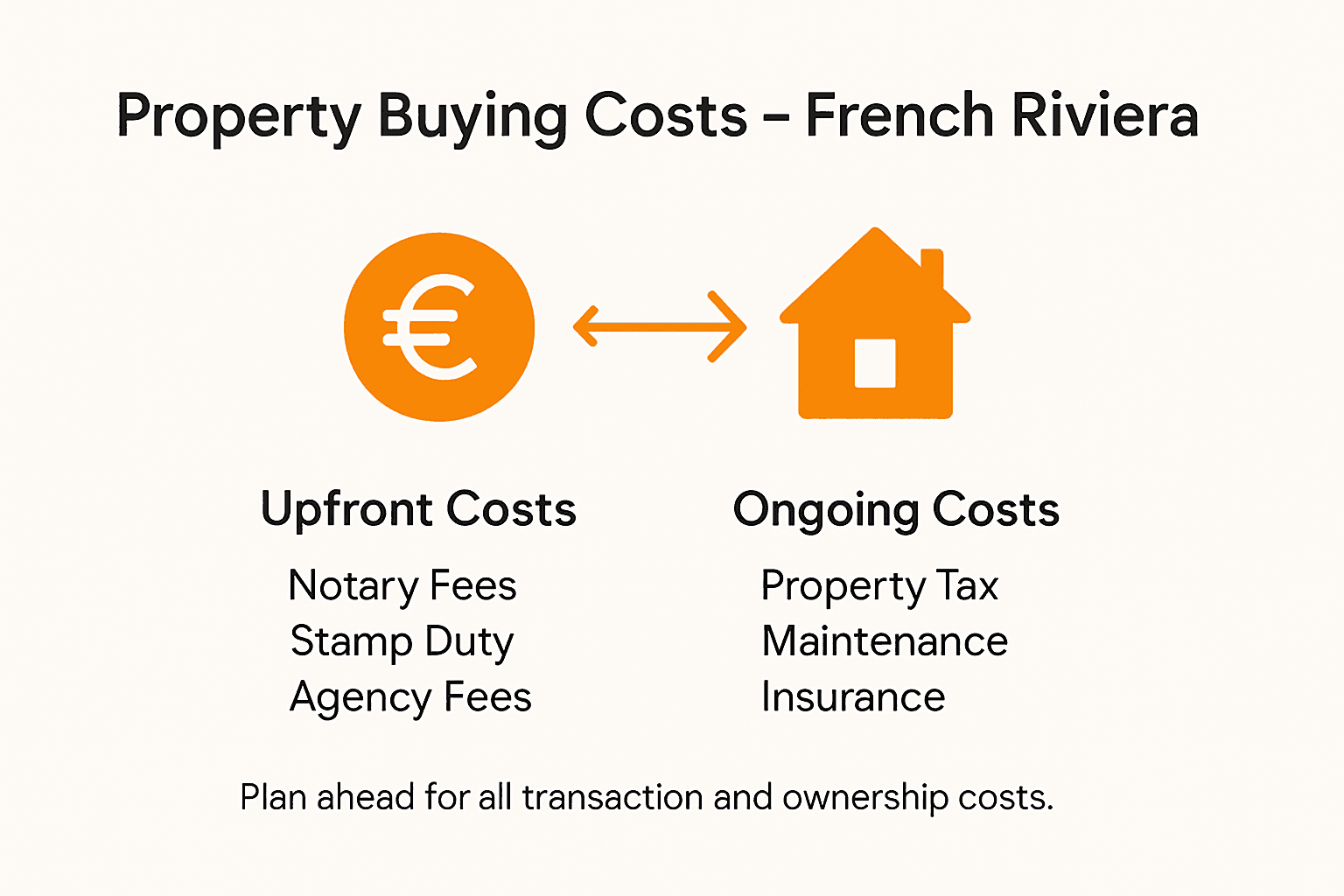
Infographic of property costs French Riviera

Initial transaction costs represent a significant financial consideration for international buyers. Acquisition expenses typically range between 7-8% of the property’s purchase price for resale properties, with lower percentages applicable to new construction developments. These costs encompass various mandatory fees including notaire charges, registration taxes, and administrative documentation expenses. Non-resident investors should anticipate additional financial requirements beyond the base property price.

Ongoing financial obligations for property owners in France include several critical tax considerations:

Here’s a summary of key tax and ongoing cost obligations for non-resident property owners in France:

Obligation TypeWho Pays ItTypical Amount/RateNotes for Non-Residents
Property Ownership TaxAll property ownersVaries by commune and sizePaid annually, required for all
Residential TaxOccupants or ownersCalculated by municipalitySome exemptions for non-residents
Wealth TaxHigh-value ownersProgressive, above €1.3mApplies to property valuations
Capital Gains TaxSellers of propertyBased on profit from saleAdditional rules for non-residents
Maintenance ExpensesAll property ownersVaries: repairs, upkeepOften higher for older properties
  • Taxe foncière (property ownership tax)
  • Taxe d’habitation (residential tax)
  • Impôt sur la Fortune Immobilière (wealth tax for high-value property portfolios)
  • Capital gains tax upon property sale
  • Potential inheritance tax implications

Non-resident financial arrangements often involve more complex banking and mortgage requirements. French financial institutions typically demand higher deposit percentages (20-30%) and may impose stricter lending criteria compared to domestic buyers. Currency exchange fluctuations and international transfer fees can further impact the overall financial strategy, necessitating sophisticated financial planning and potentially engaging specialised international banking services.

Additional financial considerations for international investors include:

  • Higher interest rates for non-resident mortgages
  • Potential double taxation agreements
  • Currency conversion charges
  • Professional valuation and legal consultation fees
  • Ongoing maintenance and property management expenses

Pro tip: Consult a specialised international tax advisor with expertise in French property regulations to develop a comprehensive financial strategy that optimises tax efficiency and minimises potential fiscal complications.

Common risks and critical pitfalls to avoid

International property investment in the French Riviera demands sophisticated awareness of potential challenges that can derail even the most meticulously planned acquisitions. Understanding the complex landscape of non-resident property risks represents a critical first step in protecting your investment strategy.

Legal and contractual complexities pose significant risks for international buyers. The compromis de vente, a preliminary sales contract, contains numerous nuanced clauses that can trap uninformed investors. Non-residents must pay exceptional attention to contract details, as the cooling-off period is strictly limited and withdrawal becomes exponentially challenging after initial agreement. Potential buyers should be particularly wary of:

  • Ambiguous property boundary definitions
  • Undisclosed structural limitations
  • Potential heritage protection restrictions
  • Zoning regulation complexities
  • Potential inheritance law implications

Financial risks extend beyond initial transaction costs. French property markets present unique challenges including complex tax structures, potential currency exchange fluctuations, and stringent banking requirements for international investors. Non-resident buyers often encounter higher deposit requirements, more rigorous financial scrutiny, and potentially less favourable mortgage terms compared to domestic purchasers.

Additional critical risk areas include:

  • Engaging the seller’s notaire without independent representation
  • Insufficient understanding of local property regulations
  • Underestimating renovation and maintenance expenses
  • Failing to conduct comprehensive property surveys
  • Overlooking potential rental restriction frameworks
  • Inadequate appreciation of local bureaucratic processes

Pro tip: Engage a bilingual legal specialist with specific expertise in French property law to conduct a comprehensive due diligence review, ensuring complete understanding of all contractual and regulatory nuances before finalising any property transaction.

Unlock the Secrets to Effortless Non-Resident Property Buying on the French Riviera

Investing in the French Riviera as a non-resident can be overwhelming with complex legal steps, financial obligations, and local market nuances. This article highlights key challenges such as navigating the compromis de vente, managing notaire fees, and understanding French tax responsibilities. If you seek to transform these challenges into confident, savvy investment moves, specialised guidance is essential. From securing the right financing to assessing historic Provençal mas or luxury villas with panoramic sea views, every detail matters.

At Living on the Côte d’Azur, we offer tailored support that bridges these critical gaps. Our team of bilingual experts excels at simplifying the legal complexities and financial strategies for non-resident buyers eager to join the 2025 surge in Côte d’Azur legacy investments. Whether you are drawn to timeless luxury estates, eco-friendly new builds, or heritage properties steeped in Mediterranean charm, we ensure your acquisition aligns perfectly with your vision and long-term goals.

Explore our comprehensive approach to luxury real estate on the French Riviera, connect with seasoned professionals, and empower your buying journey today. Discover how your next property can become an enduring family heirloom by contacting the Living on the Côte d’Azur team. Begin your legacy investment with confidence—let us guide you through every legal step and financial consideration for non-resident purchasers with expertise you can trust.

Frequently Asked Questions

What are the essential steps for non-residents to buy property in France?

Non-resident buyers should follow several key steps: selecting the property, negotiating a preliminary agreement (compromis de vente), securing financial arrangements, and preparing legal documentation with the help of a notaire.

What documentation do non-residents need to provide when purchasing property?

Non-residents typically need to present a valid international passport, proof of financial capability, documented income sources, residence status documentation, and bank statements indicating available transaction funds.

What financial considerations should non-residents be aware of when buying property?

Non-residents often face higher down payment requirements (20-30% of property value), stricter lending criteria, as well as ongoing costs like property ownership tax and maintenance expenses that should be planned for prior to purchase.

What are the potential risks when purchasing property as a non-resident?

Common risks include legal complexities in the sales contract, undisclosed property limitations, and challenging tax structures. Engaging a bilingual legal specialist is recommended to navigate these risks effectively.

by Ab Kuijer/3 January 2026/in Blog
https://www.livingonthecotedazur.com/wp-content/uploads/2026/01/1767446052372_image_1767446052111-1.jpg 768 1344 Ab Kuijer https://www.livingonthecotedazur.com/wp-content/uploads/2024/02/sitelogo150.png Ab Kuijer2026-01-03 14:15:062026-05-07 12:26:39Non-resident Property Buying: French Riviera Success

For Americans, there’s something magical about arriving in France for the first time. Many describe an immediate, almost inexplicable sense of ease – as if they’ve returned to a place they’ve always known, even amid the unfamiliar language and surroundings.

“It feels like coming home,” one visitor shared.
“Leaving always feels wrong,” said another.

This quiet pull is especially strong along the sun-soaked French Riviera (Côte d’Azur), where charming perched villages blend history, beauty, and a relaxed Mediterranean vibe that resonates deeply with so many from across the Atlantic.

Roots That Run Deep

French heritage threads through much of American history – from Louisiana’s Cajun communities to early settlers via Quebec and Huguenot lines. For those with even distant French ancestors, stepping onto French soil can feel like closing a circle.

A Rhythm That Fits Perfectly

The unhurried French way of life – lingering over meals, evening walks, no rush – quickly becomes addictive. Add the Riviera’s warm sea breezes and golden light, and it feels even more natural.

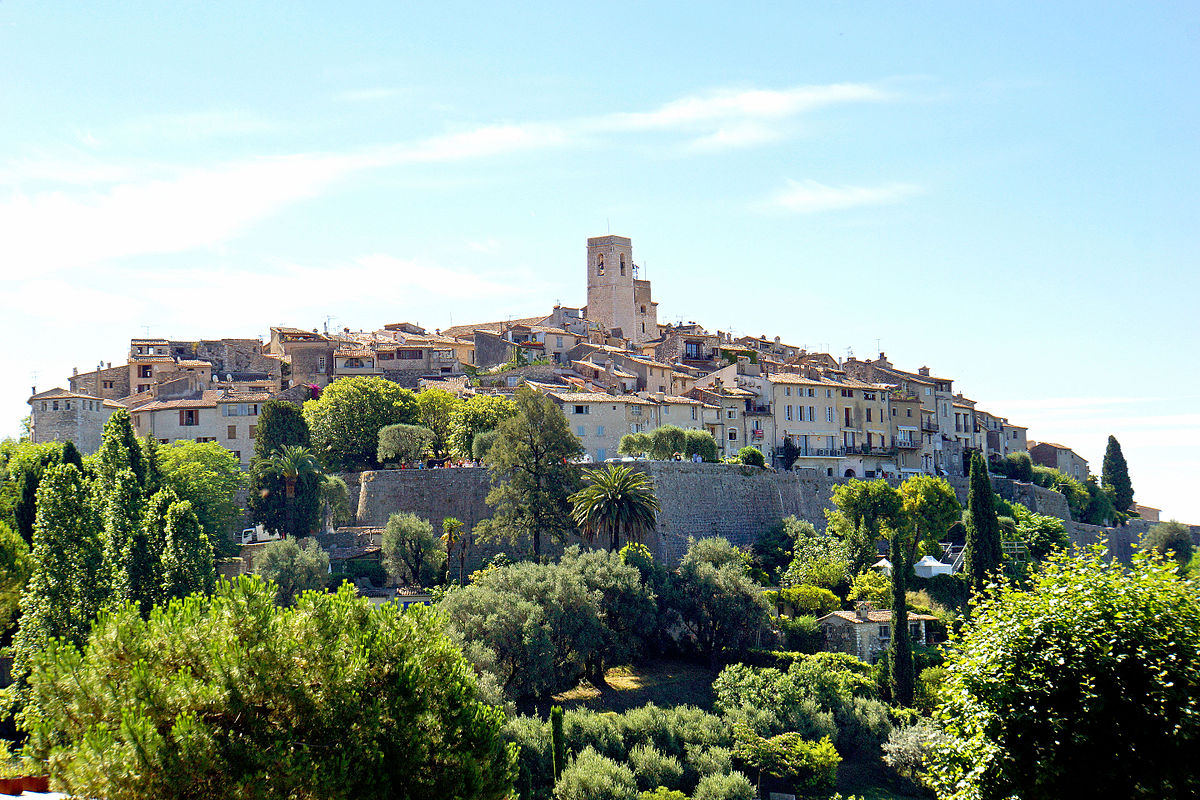
In places like Saint-Paul-de-Vence, watching locals play pétanque in shaded squares captures that effortless joy.

Panoramic view of Saint-Paul-de-Vence

Saint-Paul-de-Vence – Official tourism site: saint-pauldevence.com

Artistic streets of Saint-Paul-de-Vence

Beauty in the Everyday

France excels at making ordinary moments stunning, and the Riviera’s perched villages elevate this to art. Cliffside paths, flower-draped stone walls, and endless sea views turn simple strolls into highlights.

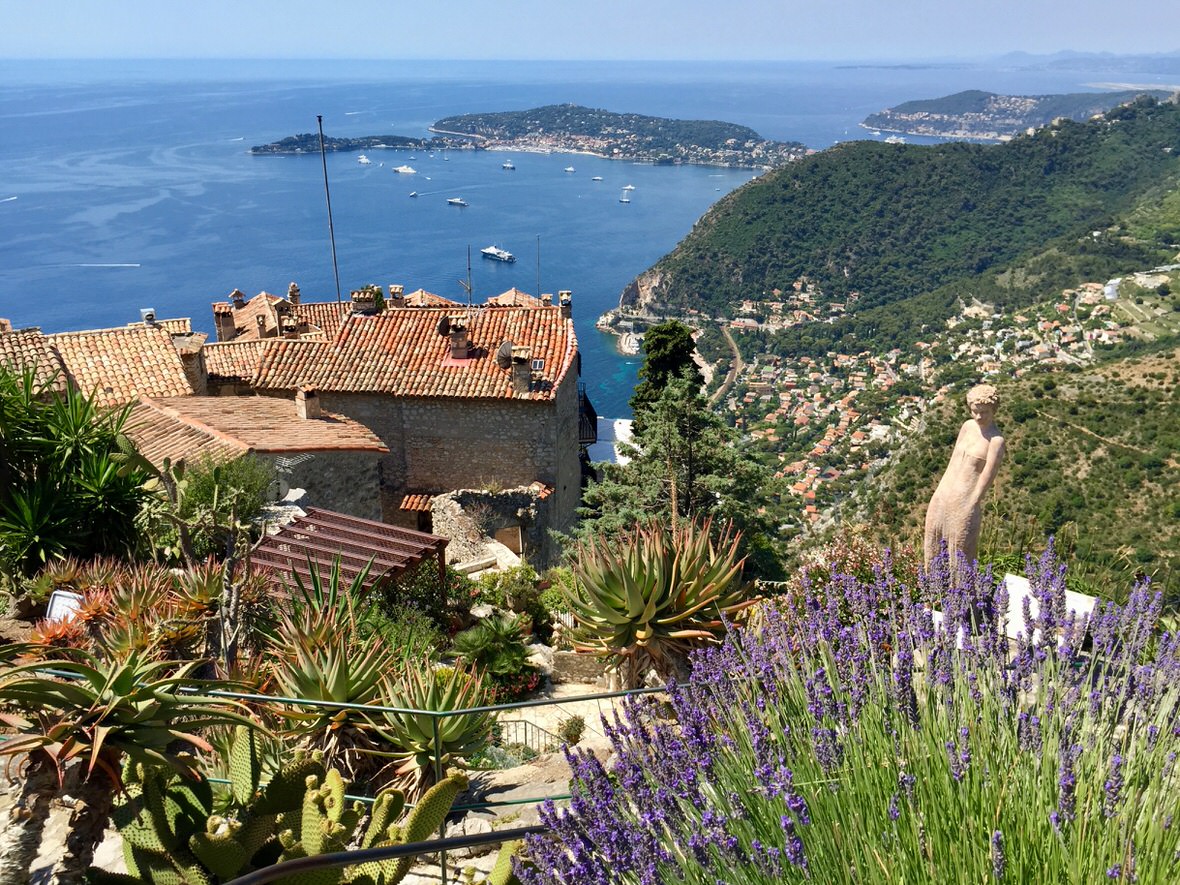
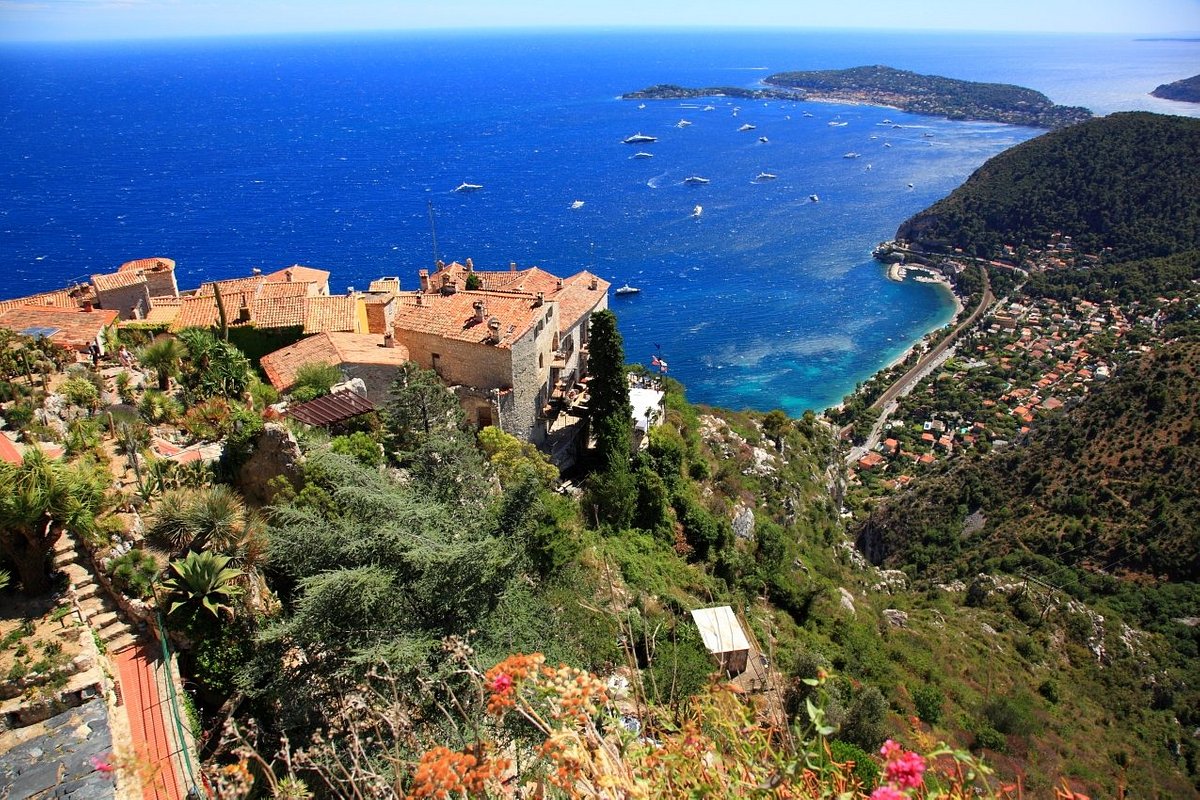
Èze, with its medieval lanes and exotic gardens overlooking the Mediterranean, embodies this daily magic.

Èze village overlooking the sea

Èze – Official tourism site: eze-tourisme.com

Exotic Garden of Èze

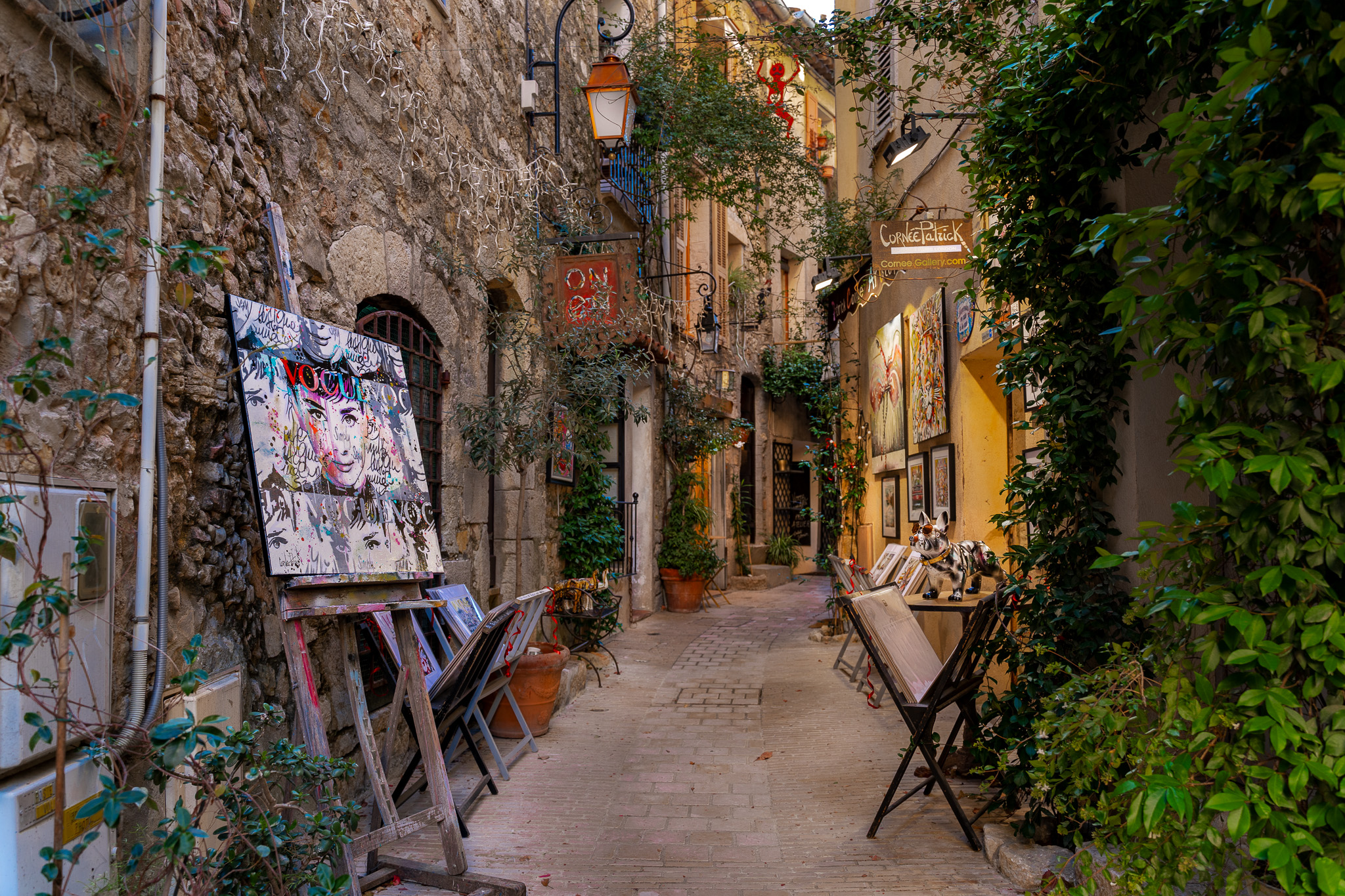
Nearby Mougins, Picasso’s final home, winds through artistic streets with gourmet hideaways and valley vistas.

Charming streets of Mougins

Mougins – Official tourism site: mouginstourisme.com

Flavors That Linger

French food redefines simple pleasures – flawless bread, rich butter, fresh seafood infused with herbs. On the Riviera, coastal catches and Provençal touches make every bite memorable.

A crisp rosé picnic overlooking the sea in Villefranche-sur-Mer, with its colorful bay and waterfront charm, becomes unforgettable.

Colorful bay of Villefranche-sur-Mer

Villefranche-sur-Mer – Tourism site: visitvillefranche.com

Walking Without Worry

In Antibes, ramble the old town’s ramparts or coastal paths for hours, feeling utterly at ease.

Ramparts of old Antibes

Antibes Juan-les-Pins – Official tourism site: antibesjuanlespins.com

Stirring Long-Held Dreams

Many Americans harbor fantasies of French life, and the Riviera makes them real. Expats thrive here for the climate, culture, and welcoming communities. Villages like Èze and Saint-Paul-de-Vence draw those seeking inspiration and tranquility.

Sunset over perched villages of the French Riviera

Practical Tips for Making the Riviera Your Home

If the dream is becoming serious, here are essential, up-to-date tips (as of late 2025) to help American expats settle smoothly on the Côte d’Azur:

  • Visa & Residency: U.S. citizens enjoy 90 days visa-free in any 180-day period. For longer stays, apply for a long-stay VLS-TS visa (often the “visiteur” category for retirees or those with passive income). You’ll need to prove roughly €1,400 net monthly income, accommodation, and health insurance. After arrival, validate the visa online and later apply for a multi-year residence permit. Detailed long-stay visa guide.
  • Healthcare: France’s public system (PUMA/CPAM) is world-class and available to legal residents, usually after a 3-month waiting period. Private international insurance is strongly recommended for the first months. Note: recent 2025 changes may introduce modest contributions for some non-EU retirees. Full expat healthcare guide.
  • Finding Property: Americans can buy or rent freely with no restrictions. Expect 7–10% in notary and transaction fees on purchases. The Riviera market remains strong for luxury and village homes – working with a trusted local agency makes all the difference. Buying property as an American.
  • Cost of Living: Higher than average France – budget €1,200–€2,000/month per person (excluding rent) for a comfortable lifestyle in Nice or nearby villages. Groceries, dining, and utilities are reasonable; property and dining out can add up in prime spots. Current cost breakdown for Nice.
  • Daily Essentials: Learn basic French (essential for paperwork), consider buying a car for village access, open a French bank account early, and connect with English-speaking expat groups in Nice or Antibes for support.

For countless Americans, France – particularly the enchanting villages of the French Riviera – isn’t merely a vacation spot. It’s where everything just clicks.

At Living on the Côte d’Azur, our boutique luxury real estate agency, we specialize in helping discerning clients find their perfect home in this magical region – from initial search to seamless settlement. Contact the team for more details.
[email protected]

“`

by Ab Kuijer/29 December 2025/in Blog
https://www.livingonthecotedazur.com/wp-content/uploads/2025/12/portrait-people-with-american-flag-celebrate-independence-day.jpeg 800 1200 Ab Kuijer https://www.livingonthecotedazur.com/wp-content/uploads/2024/02/sitelogo150.png Ab Kuijer2025-12-29 18:08:512025-12-29 18:12:46Why the French Riviera Feels Like Home to Many Americans

At the end of the year, we don’t look back; what’s gone is gone. And what you’ve received in terms of a new job, new insights, and new energy is a gift and should be cherished. The new year beckons; this will be the year in which we won’t be scared by the media again. It will be the year in which we preach positive energy and a zest for life.

Because those who enjoy life don’t fear the future. On the Côte d’Azur, Russians, Ukrainians, Chinese, Arabs, Indians, Americans, Germans, Italians, Belgians, Dutch, English, Swedes, and South Africans live side by side (sorry for those we’ve forgotten ;-)).

Every nationality with a second (or third) home shares the same desire: to enjoy the good things in life together in peace and respect. And, of course, in the most beautiful place on Earth.

It’s striking how many people living on the Côte d’Azur share this philosophy. Life is simply too short to mope around and worry. Your thoughts determine your future, so let’s all make it a great year!

Anyone considering a second home on the Côte d’Azur should realise that it’s truly a lifestyle change. You’ll feel better, eat better, and do more fun things. We’ve compiled a list for 2026 that will show you just how much fun life in the South of France can be!

Soar the Skies: Private Pilot License in Cannes

Channel your inner Maverick and earn your Private Pilot License (PPL) at Cannes-Mandelieu Airport. Stunning views of the Riviera guaranteed—no turbulence in paradise!

Book with Cannes Aviation Academy or Aéroclub Cannes.

Flying over the French Riviera

Get Hands-On with Clay: Pottery Courses in Vallauris

Vallauris, the pottery capital where Picasso once worked, is pure magic. Join champion potter Tino Aiello (7th-generation master!) for workshops—throw, shape, and glaze your own masterpieces. Perfect for unleashing creativity!

Contact Tino Aiello via Instagram or visit his atelier at 69 Bis Avenue Georges Clemenceau, Vallauris. More on courses here.

Pottery workshop Vallauris

Gallop in Style: Horse Riding in Villeneuve-Loubet

Trot along beaches or through lush trails at the massive Espace Azur Cheval center (26 hectares of horse heaven!). Lessons for beginners to pros—feel like royalty on horseback.

Book at Centre Équestre Villeneuve-Loubet.

Horse riding French Riviera
Beach horse riding Côte d'Azur

Shred the Slopes: Ski Lessons in Auron with ESF

Just 90 minutes from the coast, hit the powder in Auron! ESF instructors make learning (or perfecting) skiing or snowboarding epic fun—après-ski with Riviera vibes awaits back home.

Book ESF Auron lessons.

ESF ski lessons French Alps

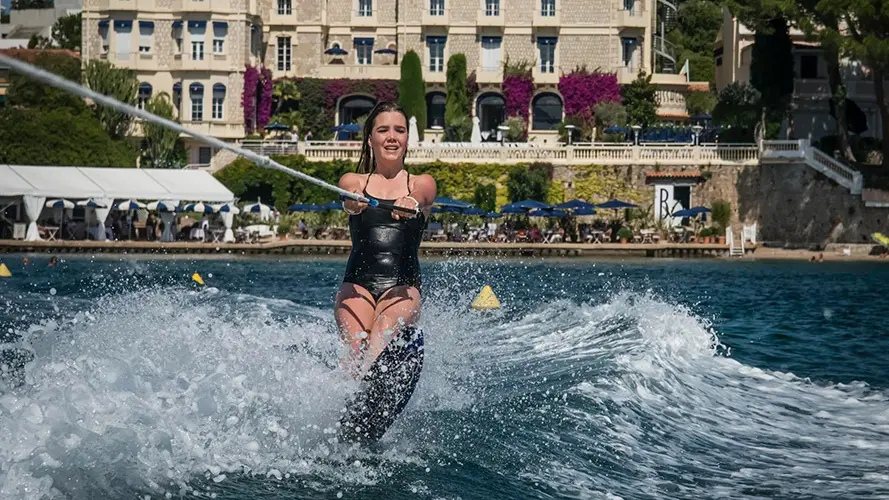
Glide Like a Pro: Waterskiing in Antibes

Birthplace of waterskiing (thanks, 1930s glamour!). Zip across the Med with expert instructors—wakeboarding bonus! Summer 2026 will be legendary.

Lessons at Belles Rives Water-Ski School or Cap d’Antibes Sports Nautiques.

Waterskiing Antibes

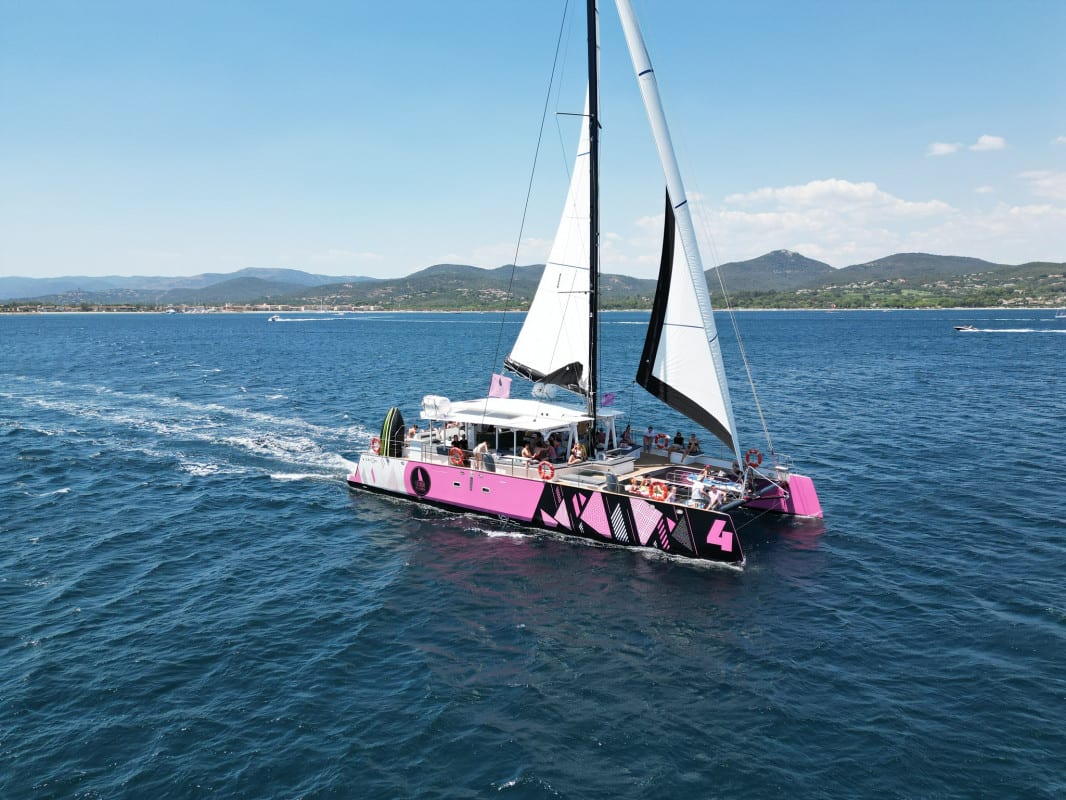
Catch the Wind: Sailing Courses in Sainte-Maxime

Hoist the sails in the Gulf of Saint-Tropez! From optimist dinghies to catamarans, the Club Nautique has year-round courses for all levels.

Enroll at Club Nautique Sainte-Maxime.

Sailing Gulf of Saint-Tropez

Swing for Glory: Golf Pro Lessons in Mougins

Aim to go pro on the stunning Royal Mougins course—private coaching with top pros amid pine forests and sea views. Fore!

Lessons via Prime Golf Academy at Royal Mougins or Royal Mougins Golf Club.

Golf swing Royal Mougins

Bonus Thrills to Add to Your 2026 Bucket List:

  • Create Your Signature Scent: Perfume Workshops in Grasse — Become an “apprentice perfumer” at Fragonard. Book here.
Perfume workshop Grasse Fragonard
  • Master Niçoise Cuisine: Cooking Classes in Nice — Market tours + hands-on Provençal magic. Les Petits Farcis is our fave!

The Côte d’Azur in 2026? Endless possibilities—from pilot wings to pottery triumphs. These experiences make living (or holidaying) here pure joie de vivre. Contact the team at Living on the Côte d’Azur to find your place under the sun. [email protected]

by Ab Kuijer/27 December 2025/in Blog
https://www.livingonthecotedazur.com/wp-content/uploads/2025/12/new-year-2026.jpeg 661 1000 Ab Kuijer https://www.livingonthecotedazur.com/wp-content/uploads/2024/02/sitelogo150.png Ab Kuijer2025-12-27 13:24:462025-12-31 13:59:09The best is yet to come for 2026 on the French Riviera!

Formula 1 drivers earn high incomes, travel constantly, and live under public attention. Many people wonder why so many of them choose the same place to live. The answer is practical, financial, and strongly linked to property ownership. Monaco offers a rare combination of tax efficiency, safety, location, and premium real estate that fits the needs of elite professionals. For F1 drivers, choosing Monaco is not about image; it is about having a stable home base that supports their career, privacy, and long-term financial plans.

We explain why Monaco has become the preferred residential choice for Formula 1 drivers and why the same factors also attract high-net-worth buyers from around the world.

Monaco as the World’s Most Elite Residential Address

Monaco is one of the smallest countries in the world, yet it holds one of the highest concentrations of wealth per square meter. This is largely due to its residential appeal. The principality has built its reputation on safety, financial stability, and strict urban planning. Every residential building is designed to meet high standards, and space is managed carefully due to limited land availability.

For wealthy residents, including F1 drivers, Monaco offers something very specific: a secure, controlled environment where daily life runs smoothly. Essential services, luxury shops, restaurants, healthcare, and marinas are all within a short distance. This allows residents to focus on work and personal life without unnecessary disruption.

Key residential characteristics of Monaco include:

  • Limited land supply, which protects property value
  • High-quality apartment buildings with concierge services
  • Strong regulations that preserve long-term standards
  • A stable legal and financial system

Around one in three residents is a millionaire, giving Monaco the highest millionaire density in the world.

Monaco’s Residential Appeal for High-Net-Worth Individuals

Formula 1 drivers live in Monaco for the same reasons as many entrepreneurs, investors, and executives. The principality is built around the needs of people with international careers. Residents value predictability, privacy, and quality housing, all of which Monaco provides.

Many high-net-worth individuals prefer Monaco because daily life is efficient. Security is visible but discreet, and residential buildings often include private parking, controlled access, and staff who manage day-to-day needs. This level of comfort is especially important for public figures who wish to live without constant attention.

Monaco attracts:

  • Professional athletes with global schedules
  • Business owners managing international assets
  • Investors focused on capital preservation
  • Families seeking a safe and stable place to live

These groups share similar expectations, which is why Monaco real estate remains consistently in demand.

Why Monaco Is the Preferred Home Base for F1 Drivers

F1 drivers spend much of the year traveling between race locations. What they need most from a home is stability. Monaco provides that stability through its policies, infrastructure, and residential environment.

Unlike larger cities, Monaco is compact. This reduces commuting time and daily stress. Drivers can train, rest, and prepare for races without long travel within the city. The presence of other professionals with similar lifestyles also creates a sense of normality.

Monaco works as a home base because it offers:

  • Predictable residency rules
  • Strong property ownership rights
  • Easy access to transport links
  • A calm living environment between races

This is why drivers often stay in Monaco for many years, even after retirement.

Tax Efficiency and Wealth Preservation

One of the main reasons F1 drivers live in Monaco is the absence of personal income tax for residents. For individuals earning large salaries and bonuses over a limited career span, this plays a major role in financial planning.

Living in Monaco allows drivers to manage earnings legally while maintaining compliance with international regulations. Property ownership also supports long-term wealth planning, as Monaco real estate has shown strong value retention over time.

Financial advantages include:

  • No personal income tax for residents
  • No capital gains tax for individuals
  • A stable fiscal environment

These factors explain why Monaco remains attractive for professionals with high and variable income.

Privacy, Security, and Exclusive Residential Living

F1 drivers are easily recognized worldwide. In Monaco, privacy is taken seriously. The country has one of the highest police-to-resident ratios globally, and residential security is built into everyday life.

Many luxury apartment buildings include:

  • 24/7 concierge and security staff
  • Controlled access points
  • Private underground parking
  • Discreet services for residents

This level of protection allows drivers and their families to live normally without constant public exposure. For public figures, this is often a deciding factor when choosing where to live.

Strategic Location for International Travel

Monaco’s location supports the demanding travel schedules of Formula 1 drivers. Nice International Airport is less than an hour away and offers frequent private and commercial flights across Europe and beyond.

From Monaco, drivers can reach most European race circuits quickly. This reduces travel fatigue and makes the racing season easier to manage. The ability to return home between races is a major benefit for physical recovery and personal time.

Location advantages include:

  • Direct access to major European cities
  • Short travel times to race venues
  • Strong transport links for private travel

This practical benefit reinforces Monaco’s role as a long-term base.

Monaco Real Estate: Built for Elite Residents

Monaco’s real estate market is shaped by one simple fact: space is extremely limited. The country has a fixed land area, strict building rules, and constant global demand. This combination has created a residential market focused on quality, safety, and long-term value rather than volume. In recent years, the average price of residential property has approached around €50,000–€52,000 per square meter, reflecting sustained global demand for Monaco real estate. Properties are mainly high-end apartments, many with sea views, terraces, and full-service facilities.

For F1 drivers, this type of housing fits their lifestyle. Apartments are easy to manage during long travel periods and offer strong security. Buildings often include concierge teams who handle deliveries, maintenance, and daily needs, which is useful for residents who are frequently away.

Common features of Monaco luxury properties include:

  • Secure entrances and staffed reception
  • Underground parking with private access
  • High-quality soundproofing and finishes
  • Proximity to ports, gyms, and services

Because supply remains low, Monaco real estate continues to attract buyers who value stability and long-term ownership.

Why F1 Drivers Choose Property Ownership Over Renting in Monaco

Many Formula 1 drivers prefer to buy property rather than rent. Ownership provides a sense of permanence and control, which is important for people with demanding careers. It also supports residency status and long-term planning.

Buying property in Monaco is often seen as a way to store wealth in a secure location. While prices are high, owners benefit from strong demand and limited supply. Over time, this has helped property values remain resilient.

Reasons ownership is preferred include:

  • Greater residential security
  • Long-term value protection
  • Stability during and after a racing career
  • Control over privacy and living standards

For drivers who plan to live in Monaco for several years, ownership often makes more financial sense than short-term renting.

Famous F1 Drivers and Monaco’s Long-Standing Residential Culture

Monaco’s connection with Formula 1 extends well beyond race week. Over several decades, many drivers have chosen to live here, creating a residential culture linked closely to the sport. This has reinforced Monaco’s reputation as the preferred base for F1 professionals.

Living among other drivers, team members, and industry figures creates a shared environment where privacy is respected. Residents understand the demands of the sport, which reduces unwanted attention.

This long-standing presence has made Monaco:

  • A trusted home base for drivers
  • A place where motorsport professionals blend into daily life
  • A location tied to Formula 1 beyond the circuit

This legacy continues to influence new drivers entering the sport.

Is Monaco Real Estate Accessible to Everyone?

Monaco is open to international buyers, but it is not accessible to everyone. The main limitation is cost. Property prices are among the highest globally, reflecting demand, safety, and limited supply.

There are no restrictions on foreign ownership, but buyers must meet financial requirements for residency, including accommodation and proof of funds. This keeps Monaco exclusive by design and protects its residential standards.

Important points to understand:

  • Foreigners can buy property in Monaco
  • Residency requires suitable housing
  • Property prices vary by area and building type
  • Demand remains strong year after year

This transparency helps buyers make informed decisions before entering the market.

Alternative Locations F1 Drivers Consider And Why Monaco Still Leads

While Monaco is the most popular choice, some drivers live elsewhere. These alternatives offer benefits, but they do not combine all the same advantages.

Switzerland

Switzerland appeals due to privacy and lifestyle quality. However, property ownership rules are more restrictive, and tax benefits are not as favorable for all residents.

Dubai

Dubai offers modern housing and no personal income tax. It suits drivers with business interests in the region, but the distance from European circuits makes it less practical during the season.

United Kingdom and Other European Countries

Some drivers live close to team headquarters in the UK or Europe. This can help with work access but often comes with higher public exposure and less residential privacy.

Monaco remains the leading choice because it balances tax structure, safety, location, and property value in one place.

Cost of Living vs Long-Term Value in Monaco

Living costs in Monaco are high, but many residents focus on long-term value rather than monthly expenses. Property prices reflect stability, demand, and a controlled market. Official statistics show average sale prices per square meter close to €52,000, after rising more than 40% over the past decade. Over time, this has helped Monaco maintain its position during economic shifts.

For buyers, this means:

  • Strong demand for resale properties
  • Limited risk of oversupply
  • High-quality living standards

For F1 drivers and investors, this balance makes Monaco appealing as both a home and a financial base.

Buying Property in Monaco With Expert Guidance

Purchasing property in Monaco requires local knowledge. Listings are limited, and many opportunities are not widely advertised. Working with specialists who understand the market is essential for access, pricing insight, and smooth transactions.

Living on the Côte d’Azur supports buyers through every stage of the process, from identifying suitable properties to completing the purchase. This is especially valuable for international clients who want clarity and confidence. Explore curated Monaco listings and personalized buying assistance with our Monaco property experts.

Frequently Asked Questions

Why do F1 drivers live in Monaco instead of other countries?

F1 drivers choose Monaco because it offers a rare mix of financial benefits, personal safety, and residential quality. The absence of personal income tax helps drivers manage high earnings, while strong security and privacy protect their personal lives. Monaco’s location also makes frequent travel during the racing season easier. For many drivers, no other country combines these advantages in a single place.

Do all Formula 1 drivers live in Monaco?

No, not all drivers live in Monaco. While many choose it as their main residence, others live in Switzerland, the United Kingdom, or Dubai due to personal or professional reasons. However, Monaco remains the most popular choice because it supports both career demands and long-term living needs.

Is Monaco tax-free for residents?

Monaco does not charge personal income tax on residents. This policy is one of the main reasons high earners, including F1 drivers, move there. Other taxes and living costs still apply, but income earned by residents is not taxed locally.

Can foreigners buy property in Monaco?

Yes, foreigners are allowed to buy property in Monaco. There are no nationality restrictions on ownership. Buyers must meet financial requirements and follow local purchase procedures, which makes professional support important.

Do you need to own property to live in Monaco?

Owning property is not required, but it is common. Many residents choose ownership because it supports residency applications and offers long-term value. Renting is possible, but availability is limited due to strong demand.

Key Facts That Explain Monaco’s Appeal to F1 Drivers

Below is a simple overview of the main factors that influence why Formula 1 drivers live in Monaco:

FactorWhy It Matters
Income taxNo personal income tax for residents
SecurityHigh police presence and safe living
LocationClose to European race circuits
PropertyLimited supply, strong long-term value
PrivacyControlled residential environment

These factors work together to make Monaco practical for elite professionals.

Why Monaco Remains the Preferred Home for F1 Drivers

Monaco offers stability in areas that matter most to Formula 1 drivers. Financial efficiency helps them manage short and intense careers. Strong security allows them to live without constant public pressure. The location supports demanding travel schedules, and the real estate market offers long-term value through limited supply and high demand.

This combination explains why Monaco continues to attract F1 drivers year after year. It is not chosen for image, but for practical living and long-term planning.

For buyers interested in the same residential advantages, Monaco remains one of the most secure and respected property markets in Europe. It supports their careers, protects their privacy, and offers housing that holds value over time. These same reasons attract investors, business leaders, and international buyers who want a stable and secure place to live.

With expert guidance and access to premium listings, owning property in Monaco becomes a clear and informed decision rather than a distant idea.

by Feline Kuijer/25 December 2025/in Blog
https://www.livingonthecotedazur.com/wp-content/uploads/2024/07/formula-1-monaco-gp-2022-sergi-2.jpg 534 800 Feline Kuijer https://www.livingonthecotedazur.com/wp-content/uploads/2024/02/sitelogo150.png Feline Kuijer2025-12-25 12:18:392025-12-25 12:18:50Why Do F1 Drivers Live in Monaco?
Foreigners can legally buy freehold property in Dubai with full ownership rights, clear laws, government registration, and strong legal protection for buyers. Buyers who invest in Dubai can enjoy tax free income, while investing in the French Riviera.

Table of contents

  • Can Foreigners Legally Buy Property in Dubai?
  • Dubai Property Ownership Laws for Foreign Nationals
    • When Did Dubai Allow Foreign Property Ownership?
    • Freehold Property Law
    • Who Regulates Property Ownership in Dubai?
  • Where Can Foreigners Buy Property in Dubai?
    • Approved Freehold Areas in Dubai
    • Popular Areas Among Foreign Buyers
  • Types of Properties Foreigners Can Buy in Dubai
    • Apartments, Villas, and Townhouses
    • Off-Plan vs Ready Properties
    • Can Foreigners Buy Commercial Property in Dubai?
  • Step-by-Step Process for Foreigners Buying Property in Dubai
    • Step 1 – Choosing the Right Property
    • Step 2 – Signing the Memorandum of Understanding
    • Step 3 – Dubai Land Department Transfer
  • Costs and Fees Foreign Buyers Should Expect
    • Dubai Land Department Fees
    • Agent Commission and Registration Fees
    • Service Charges and Ongoing Costs
  • Is Financing Available for Foreign Property Buyers in Dubai?
    • Can Foreigners Get a Mortgage in Dubai?
    • Cash Buyers vs Mortgage Buyers
  • Residency Visas Linked to Property Ownership
    • Property Investor Visa
    • Golden Visa Through Real Estate Investment
  • Is Buying Property in Dubai Safe for Foreigners?
    • Buyer Protections Under Dubai Law
    • Title Deeds and Ownership Security
  • Common Mistakes Foreign Buyers Should Avoid
  • Final Verdict

Buying property outside your home country often brings uncertainty. Many international buyers worry about ownership rights, legal protection, and whether their investment will truly be secure over time. Dubai frequently raises these questions because of its rapid growth and global appeal. This guide addresses those concerns clearly by explaining whether foreigners can legally buy property in Dubai, how ownership works, and which laws protect overseas buyers. The goal is to give you confidence and clarity before making any property decision.

Can Foreigners Legally Buy Property in Dubai?

Foreigners can legally buy property in Dubai, and this right is clearly defined under UAE law. Non-UAE nationals are allowed to purchase property on a freehold basis in designated areas approved by the Dubai government. Freehold ownership gives buyers full and permanent rights over the property, including the ability to sell, lease, or transfer ownership to heirs. These rights are not limited by time and do not depend on residency status. Both residents and non-residents can purchase property, which makes Dubai accessible to international investors, second-home buyers, and long-term planners.

Ownership is officially registered with the Dubai Land Department, which issues a title deed in the buyer’s name. This government-backed registration confirms legal ownership and provides strong protection for foreign buyers.

Dubai Property Ownership Laws for Foreign Nationals

Dubai’s real estate laws are structured to support transparency, buyer confidence, and long-term market stability. Foreign ownership is not informal or loosely regulated. Instead, it operates within a legal framework that clearly outlines where foreigners can buy and what rights they receive as owners.

When Did Dubai Allow Foreign Property Ownership?

Dubai opened its property market to foreign ownership in 2002, marking a major shift in the city’s development strategy. This decision transformed Dubai into an international real estate destination and encouraged large-scale residential and mixed-use projects designed for global buyers. Since then, the government has continued to refine regulations to protect investors, regulate developers, and ensure that all transactions are recorded through official channels. Over the years, additional safeguards such as escrow accounts for off-plan projects have further strengthened buyer confidence.

Freehold Property Law

Freehold property ownership allows foreigners to own property outright, including the land attached to it. This form of ownership provides full control over the asset without renewal requirements or ownership limits. Foreign owners can live in the property, rent it out, or sell it at any time. They can also pass the property to their heirs under UAE inheritance rules or through registered wills. This level of ownership security is one of the main reasons international buyers consider Dubai a long-term investment destination rather than a short-term opportunity.

Who Regulates Property Ownership in Dubai?

Property ownership in Dubai is regulated by the Dubai Land Department and the Real Estate Regulatory Agency. The Dubai Land Department is responsible for registering ownership, issuing title deeds, and recording transfers, while RERA oversees developers, brokers, and compliance with real estate laws. Every property transaction must be registered with these authorities, which helps prevent disputes and ensures that ownership records are accurate. This government oversight plays a key role in protecting foreign buyers and maintaining trust in the market.

Where Can Foreigners Buy Property in Dubai?

Foreign ownership is permitted only in specific areas designated as freehold zones. These zones are carefully planned and include many of Dubai’s most popular residential and investment districts. Buying within these areas ensures that foreign buyers receive full ownership rights recognized by law.

Approved Freehold Areas in Dubai

Freehold areas are locations where non-UAE nationals are legally allowed to purchase property with full ownership rights. These areas are clearly identified, and the freehold status of a property is confirmed during the transaction process. This system removes ambiguity and ensures that buyers know exactly what rights they are acquiring before completing a purchase.

Popular Areas Among Foreign Buyers

Several Dubai districts consistently attract international buyers due to their location, lifestyle offerings, and rental demand. Areas such as Dubai Marina, Downtown Dubai, Palm Jumeirah, Business Bay, and Jumeirah Village Circle are especially popular among foreign buyers. These locations offer a mix of residential comfort and investment potential, supported by strong infrastructure and ongoing demand. Buyers often choose based on whether their goal is personal use, rental income, or long-term value growth.

At Living on the Côte d’Azur, we work closely with international clients to identify Dubai properties that match their ownership goals, financial plans, and preferred locations. Local market knowledge plays an important role in helping foreign buyers make informed decisions in a fast-moving property market.

Types of Properties Foreigners Can Buy in Dubai

Foreign buyers in Dubai have access to a wide range of property types, which allows them to choose based on lifestyle needs, investment plans, or long-term residency goals. The market is designed to accommodate both end users and investors, with clear ownership rights attached to each property category. Understanding these options helps buyers make informed choices before entering the transaction process.

Apartments, Villas, and Townhouses

Foreigners can buy apartments, villas, and townhouses in approved freehold areas. Apartments are commonly chosen by investors due to lower entry costs and strong rental demand, especially in central districts and waterfront communities. Villas and townhouses attract families and long-term residents who prefer private living spaces and community environments. Ownership rights remain the same across all property types, provided the property is located within a designated freehold zone. The choice between these options usually depends on budget, intended use, and expected rental or resale value.

Off-Plan vs Ready Properties

Foreign buyers can purchase both off-plan and ready properties in Dubai. Off-plan properties are sold directly by developers before construction is completed. These properties often come with structured payment plans spread over several years, making them attractive to buyers looking for lower upfront costs. Ready properties, on the other hand, are completed units that allow immediate occupancy or rental income. While off-plan purchases may offer competitive pricing, ready properties provide instant ownership and reduced delivery risk. Both options are regulated by the Dubai Land Department, and off-plan developments are required to use escrow accounts to protect buyer payments.

Can Foreigners Buy Commercial Property in Dubai?

Foreign nationals are also allowed to buy commercial property in Dubai within approved freehold zones. This includes offices, retail units, and mixed-use properties. Commercial ownership appeals to buyers looking to establish businesses, earn rental income, or diversify their property portfolios. As with residential purchases, ownership must be registered with the Dubai Land Department, and the property must be located in an area open to foreign ownership. Commercial purchases follow similar legal procedures but may involve additional regulatory approvals depending on the business activity.

Step-by-Step Process for Foreigners Buying Property in Dubai

Dubai’s property buying process is structured and transparent, which helps foreign buyers understand each stage clearly. The process is designed to ensure legal protection, accurate registration, and smooth transfer of ownership from seller to buyer.

Step 1 – Choosing the Right Property

The process begins with selecting a property that meets both legal and financial criteria. Foreign buyers must ensure the property is located in a freehold area and that the seller holds a valid title deed. At this stage, buyers typically assess budget, location, developer reputation, and potential returns. Working with an experienced real estate advisor familiar with foreign buyer requirements helps avoid costly mistakes and ensures the property aligns with long-term goals.

Step 2 – Signing the Memorandum of Understanding

Once a property is selected, the buyer and seller sign a Memorandum of Understanding, often referred to as the MoU. This document outlines the agreed price, payment terms, and responsibilities of both parties. A deposit is usually paid at this stage, and the transaction terms become legally binding. The MoU serves as a formal agreement that protects both buyer and seller until the ownership transfer is completed.

Step 3 – Dubai Land Department Transfer

The final step involves transferring ownership at the Dubai Land Department. Both parties, or their authorized representatives, attend the transfer appointment, where payment is completed and ownership is officially registered. The buyer receives a title deed issued by the Dubai Land Department, confirming legal ownership. This government-issued document provides strong legal protection and marks the completion of the purchase.

At Living on the Côte d’Azur, we assist international buyers throughout this process, from property selection to title deed issuance, ensuring each step is handled smoothly and in line with Dubai’s legal requirements.

Costs and Fees Foreign Buyers Should Expect

While Dubai does not charge annual property taxes, foreign buyers should be aware of one-time and ongoing costs associated with property ownership. Understanding these costs upfront helps avoid surprises and supports accurate financial planning.

Dubai Land Department Fees

The Dubai Land Department charges a transfer fee at the time of purchase. This fee is calculated as a percentage of the property value and is paid during the ownership transfer. It covers registration and administrative costs and is required for the issuance of the title deed.

Agent Commission and Registration Fees

Buyers typically pay a real estate agency commission for professional services related to property selection, negotiation, and transaction support. Additional registration fees may apply depending on the type of property and the transaction structure. These fees are standard across the market and are regulated to maintain transparency.

Service Charges and Ongoing Costs

Property owners in Dubai are responsible for annual service charges, which cover maintenance of common areas, building management, and shared facilities. These charges vary depending on the property type, size, and location. While there is no annual property tax, service charges are an important factor to consider when calculating long-term ownership costs.

Fee Type2025 RateNotes
DLD Transfer4% (2% buyer/2% seller)Mandatory
Title DeedAED 4K-8K+5% VAT
Agency Commission2%Negotiable
Service ChargesAED 10-25/sqftAnnual

Is Financing Available for Foreign Property Buyers in Dubai?

Foreign buyers in Dubai have access to property financing through local and international banks, provided they meet eligibility requirements. Mortgage options are available for both residents and non-residents, although the terms may vary depending on residency status and income source. Lenders usually assess factors such as credit history, employment stability, and the value of the property being purchased. Financing makes Dubai property ownership accessible to a wider group of international buyers who prefer to manage capital rather than pay the full amount upfront.

Can Foreigners Get a Mortgage in Dubai?

Yes, foreigners can obtain mortgages in Dubai, even if they are not UAE residents. Non-resident buyers are typically offered loan-to-value ratios that are slightly lower than those available to residents, which means a higher down payment is required. Mortgage approval timelines are generally efficient, especially when documentation is prepared correctly. Many foreign buyers choose to work with property advisors who coordinate with mortgage specialists to ensure the process runs smoothly and without delays.

Cash Buyers vs Mortgage Buyers

Cash buyers benefit from faster transactions and simpler procedures, as there is no bank approval involved. Mortgage buyers, however, gain the advantage of leveraging financing while maintaining liquidity. Both options are common in Dubai, and the choice depends on individual financial strategy. Regardless of the payment method, ownership rights and legal protections remain the same once the property is registered with the Dubai Land Department.

Residency Visas Linked to Property Ownership

Property ownership in Dubai can also support long-term residency goals. The government offers residency visas linked to real estate investment, making Dubai attractive to buyers who want stability and access to local services.

Property Investor Visa

Foreigners who purchase property above a certain value may qualify for a property investor visa. This visa allows buyers to live in Dubai and renew their residency as long as they retain ownership of the qualifying property. The investor visa is popular among retirees, business owners, and families who want a legal residence option without employment sponsorship.

Golden Visa Through Real Estate Investment

Dubai’s Golden Visa program allows foreign property owners to obtain long-term residency if their investment meets specific value thresholds. This visa provides extended residency rights and offers greater flexibility for long-term planning. Many international buyers view this option as a strong incentive to invest in higher-value properties with lasting ownership benefits.

Is Buying Property in Dubai Safe for Foreigners?

Safety and legal protection are major concerns for overseas buyers, and Dubai addresses these through strict regulation and transparent procedures. Property transactions are overseen by government authorities, which reduces the risk of fraud and ownership disputes.

Buyer Protections Under Dubai Law

Dubai requires off-plan developments to use escrow accounts, ensuring that buyer funds are used solely for construction. Developers and brokers must be registered and licensed, and penalties apply for non-compliance. These measures protect buyers from unfinished projects and misleading practices.

Title Deeds and Ownership Security

Once a purchase is completed, ownership is recorded in the Dubai Land Department’s system, and a title deed is issued in the buyer’s name. This official document serves as legal proof of ownership and is recognized by courts and financial institutions. The centralized registration system adds an extra layer of security for foreign buyers.

Common Mistakes Foreign Buyers Should Avoid

Foreign buyers sometimes make avoidable errors due to lack of local knowledge. Purchasing property outside approved freehold zones, underestimating service charges, or failing to verify developer credentials can lead to complications. Another common mistake is focusing only on purchase price without considering long-term costs and resale demand. Working with experienced property advisors helps reduce these risks and ensures informed decision-making.

Final Verdict

Foreigners can confidently buy property in Dubai with full ownership rights, legal protection, and transparent processes. The city’s freehold laws, regulated market, and government oversight create a secure environment for international buyers. Whether purchasing for personal use, rental income, or long-term investment, Dubai provides a clear and accessible path to property ownership.

At Living on the Côte d’Azur, we support international buyers through every stage of the Dubai property journey, from selecting the right location to completing ownership registration. Our experience with overseas clients allows us to provide clear guidance that aligns with both local regulations and individual investment goals.

by Feline Kuijer/25 December 2025/in Blog
https://www.livingonthecotedazur.com/wp-content/uploads/2025/07/Dubai-South-Ellington-copy.jpg 960 1280 Feline Kuijer https://www.livingonthecotedazur.com/wp-content/uploads/2024/02/sitelogo150.png Feline Kuijer2025-12-25 12:08:512026-02-01 17:43:06Dubai Property Guide for International Buyers

Property investment in Ibiza has become a magnet for British buyers, with demand so strong that over 30 percent of foreign buyers in recent years have come from the United Kingdom. This Balearic hotspot draws investors with promises of sun, luxury, and strong returns, but beneath its appeal lies a complex legal and financial structure. Whether you are eyeing a villa or a boutique hotel, the following guide unpacks the realities of Ibiza property investment and helps decode the essential steps every British investor must consider.

Table of Contents

  • Ibiza Property Investment Defined And Debunked
  • Types Of Investment Opportunities In Ibiza
  • Performance And Trends In Ibiza’s Luxury Market
  • Legal, Tax, And Residency Advantages
  • Risks, Pitfalls, And Investor Safeguards

Key Takeaways

PointDetails
Understanding Legal RequirementsInvestors must obtain a Foreigner Identification Number (NIE) and conduct thorough legal due diligence to navigate local regulations effectively.
Diverse Investment OpportunitiesIbiza offers various property types, including luxury villas, boutique hotels, and wellness real estate, appealing to different investor profiles.
Market Trends and PerformanceThe luxury property market in Ibiza shows a consistent rise in property valuations, attracting high-net-worth individuals and international buyers.
Navigating Tax ObligationsInvestors should be aware of the complex tax structure and potential residency pathways that can enhance their investment strategy.

Ibiza Property Investment Defined and Debunked

Ibiza’s property market represents far more than just Mediterranean sunshine and coastal real estate. Astute investors recognise this Balearic island as a sophisticated investment landscape with nuanced opportunities and strategic potential. Understanding the complexities of property investment requires comprehensive legal due diligence, particularly when navigating local regulations that can dramatically impact investment outcomes.

Foreign property buyers must be prepared for a multifaceted approach to Ibiza real estate. Critical prerequisites include obtaining a Foreigner Identification Number (NIE), which is mandatory for international transactions. Potential investors should anticipate additional financial obligations, including:

  • Non-Resident Income Tax
  • Annual Wealth Tax
  • Property registration fees
  • Potential municipal taxes

The legal framework surrounding Ibiza property investments demands meticulous attention. Investors must carefully verify construction permits and property licenses to avoid potential financial risks such as unexpected fines or even potential property demolition orders. This complexity underscores the importance of engaging local legal expertise and conducting thorough due diligence before finalising any property transaction.

Pro Investment Tip: Engage a reputable local legal advisor specialising in Balearic property law who understands the intricate nuances of Ibiza’s real estate market and can provide comprehensive guidance throughout your investment journey.

Types of Investment Opportunities in Ibiza

Ibiza’s property market offers diverse investment opportunities that extend far beyond traditional residential real estate. Sophisticated investors can explore multiple strategic avenues, each with unique potential for generating returns and capitalising on the island’s dynamic economic landscape. Wellness real estate represents an emerging investment frontier that combines lifestyle appeal with significant financial potential.

The primary investment categories in Ibiza encompass:

  • Residential Properties
    • Luxury villas
    • Apartments in prime locations
    • Renovation projects in historic areas
  • Commercial Real Estate
    • Boutique hotels
    • Restaurant and hospitality venues
    • Wellness and retreat centres
  • Specialised Investment Sectors
    • Sustainable eco-properties
    • Wellness and health retreat developments
    • Remote working accommodation

Understanding the nuanced Ibiza property market requires comprehensive research and strategic planning. Investors seeking comprehensive insights should explore detailed guides about local real estate dynamics, which can provide critical information about market trends, legal considerations, and potential investment returns. Each investment category presents unique opportunities and challenges, making thorough due diligence essential for successful property acquisition.

To clarify the main property investment types in Ibiza and their typical investor profiles, see the comparison below:

Investment TypeTypical InvestorCapital OutlayReturn Potential
Luxury VillaHigh-net-worth individualsHighStrong capital appreciation
Boutique HotelHospitality groupsVery highConsistent rental yields
Eco-PropertySustainability-focused buyersMediumLong-term value growth
Apartment RenovationSmall-scale investorsLow to mediumModerate capital gains

Pro Investment Tip: Conduct extensive local market research, engage with regional real estate professionals, and visit potential investment properties in person to gain a comprehensive understanding of Ibiza’s dynamic property landscape.

Performance and Trends in Ibiza’s Luxury Market

Ibiza’s luxury property market continues to demonstrate remarkable resilience and attractiveness for high-end investors. Recent market analysis reveals a consistent upward trajectory in property valuations, with average asking prices experiencing a robust 5.86% increase throughout 2024, signalling sustained growth in the island’s premium real estate sector.

The luxury market’s performance can be categorised across several key dimensions:

  • Price Dynamics
    • Steady appreciation in property values
    • Premium for seafront and historic properties
    • Consistent demand from international buyers
  • Investment Segments
    • Ultra-luxury villas
    • Restored historic estates
    • Modern minimalist developments
  • Buyer Demographics
    • European high-net-worth individuals
    • Technology entrepreneurs
    • Creative industry professionals

The Balearic Islands’ real estate market maintains strong fundamental characteristics, with transaction volumes consistently surpassing long-term averages. This indicates a balanced and resilient market environment that continues to attract sophisticated international investors seeking both lifestyle enhancement and strategic financial opportunities. The sustained interest stems from Ibiza’s unique combination of natural beauty, cultural richness, and investment potential.

Agent discussing property plans on patio

Pro Investment Tip: Conduct comprehensive market research, engage local real estate experts, and analyse micro-location trends to identify the most promising investment opportunities within Ibiza’s dynamic luxury property landscape.

Legal, Tax, and Residency Advantages

Investing in Ibiza’s property market offers sophisticated investors a complex yet attractive legal and tax landscape with multiple strategic advantages. Property purchases involve nuanced tax considerations, including variable tax rates that investors must carefully navigate to optimise their financial strategy.

Key legal and tax advantages for international investors include:

  • Tax Structure
    • Transfer Tax range: 8-11% for second-hand properties
    • VAT: 10% for new property builds
    • Potential tax relief for long-term investments
  • Residency Pathways
    • Golden Visa programme for property investments
    • Non-lucrative residency options
    • Simplified registration processes
  • Investment Protection
    • Strong legal framework
    • Transparent property ownership regulations
    • Robust foreign investor protections

The Spanish legal system provides comprehensive safeguards for international property investors, ensuring transparent transactions and predictable regulatory environments. Investors can leverage multiple residency strategies, including investment-based visas that offer pathways to permanent residency and potential citizenship. These mechanisms not only provide legal security but also create opportunities for broader European mobility and strategic financial planning.

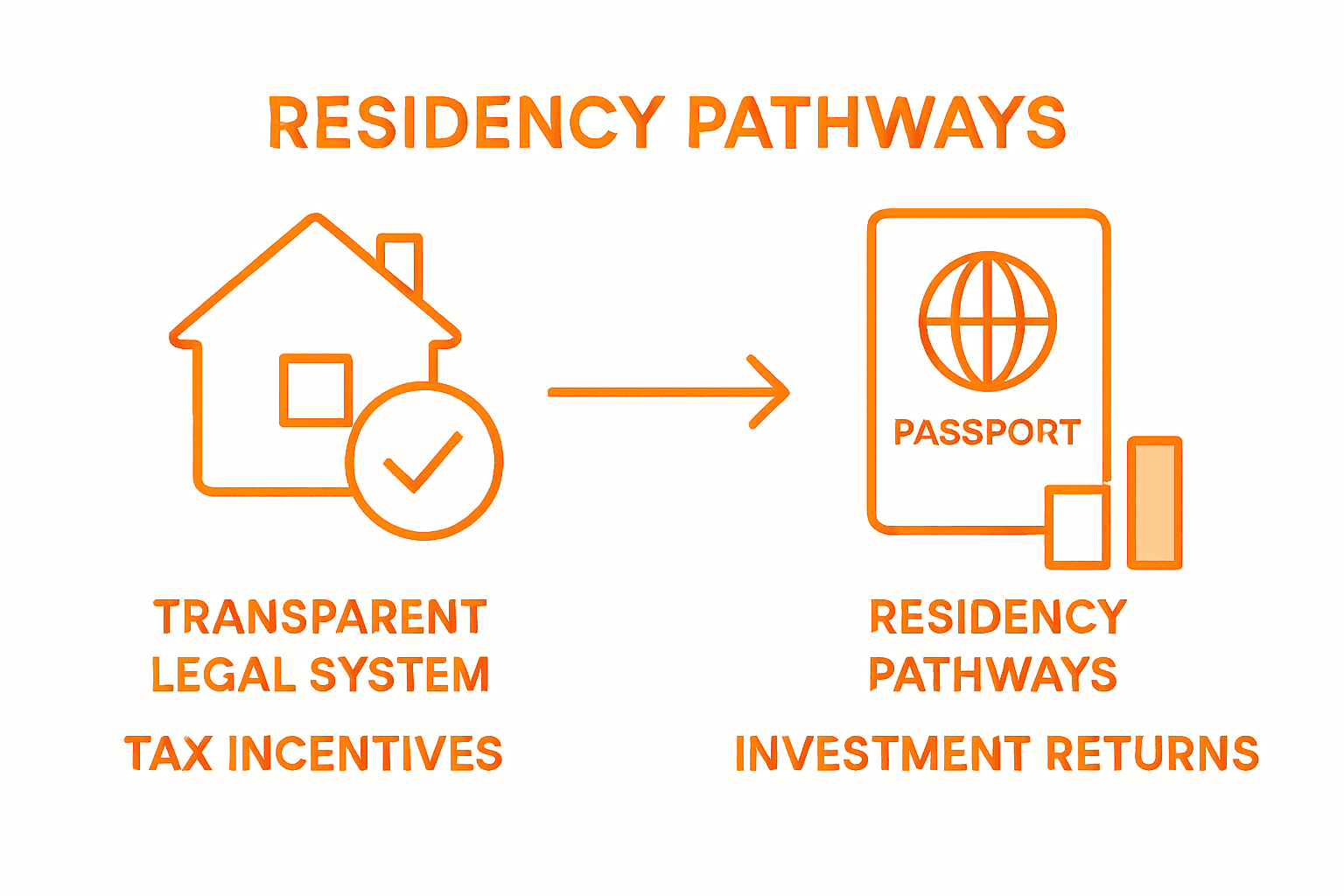
Ibiza legal, tax, residency investment infographic

For a concise reference on key legal and tax steps for foreign investors in Ibiza, consult the summary below:

RequirementPurposeTimeframeProfessional Needed
NIE NumberLegal ID for transactions1-3 weeksLegal adviser
Due DiligenceValidate permits & status2-4 weeksProperty lawyer
Tax RegistrationFulfil tax obligationsImmediateTax specialist
Title RegistrationSecure property rightsAt completionNotary/lawyer

Pro Investment Tip: Engage specialised legal counsel with expertise in Balearic property law to navigate complex tax structures and ensure comprehensive understanding of your specific investment scenario.

Risks, Pitfalls, and Investor Safeguards

Investing in Ibiza’s property market demands a sophisticated understanding of potential risks and strategic mitigation techniques. Investors must exercise rigorous legal due diligence to avoid significant financial complications, particularly regarding property permits and construction legalities that could potentially result in substantial financial penalties or property demolition.

Key risk categories for international property investors include:

  • Legal Risks
    • Unlicensed property constructions
    • Incomplete or fraudulent property documentation
    • Zoning regulation violations
  • Financial Risks
    • Hidden property taxation
    • Unexpected renovation costs
    • Market value fluctuations
  • Compliance Challenges
    • Non-resident tax obligations
    • Complex residency requirements
    • International transfer regulations

Foreign buyers must meticulously verify local tax obligations and property legal status to prevent future legal complications. This includes understanding Non-Resident Income Tax, Wealth Tax requirements, and comprehensive property background checks. Sophisticated investors recognise that thorough preliminary investigations can prevent costly mistakes and protect long-term investment strategies.

Pro Investment Tip: Engage a specialised local legal professional with expertise in Balearic property law to conduct comprehensive due diligence, ensuring complete transparency and minimising potential investment risks.

Discover the Ultimate Luxury Investment Journey Beyond Ibiza

Investing in Ibiza’s dynamic property market involves navigating complex legal requirements and discerning high-net-worth opportunities such as luxury villas, boutique hotels, and sustainable eco-properties. As the article highlights, thorough due diligence on legal permits and tax obligations is vital to minimise risks and unlock long-term capital appreciation. Whether your goal is to secure a legacy estate or to capitalise on sustained market growth, understanding these nuances sets the foundation for a resilient investment.

For those inspired by Ibiza’s allure but seeking to diversify or elevate their portfolio, the French Riviera offers unparalleled heritage properties and cutting-edge luxury developments designed for visionary investors. At Living on the Côte d’Azur, we specialise in guiding clients through this exquisite marketplace with expert knowledge of due diligence, market trends, and premium estate acquisitions. Explore our Buying Luxury Real Estate on the French Riviera services to experience tailor-made advice.

If you are ready to transition your Ibiza investment ambitions into actionable opportunities on the Riviera today, connect with our team for personalised insight and exclusive listings. Start your journey towards owning a legacy with confidence by contacting us at Living on the Côte d’Azur. The next remarkable chapter of your luxury investment story awaits.

Frequently Asked Questions

What are the legal requirements for investing in Ibiza property?

Investors must obtain a Foreigner Identification Number (NIE) to complete property transactions in Ibiza. Additionally, conducting thorough due diligence to verify permits and licences is crucial to avoid legal complications.

What types of investment opportunities are available in Ibiza?

Ibiza offers various investment options, including residential properties (luxury villas, apartments, renovation projects), commercial real estate (boutique hotels, restaurants), and specialised sectors like wellness and eco-properties.

How has the luxury property market in Ibiza performed recently?

The luxury property market in Ibiza has shown resilience, with average asking prices experiencing a 5.86% increase in 2024, indicating strong demand and ongoing growth within the premium sector.

What are the tax implications for foreign property investors in Ibiza?

Foreign investors should be aware of variable tax rates, including a transfer tax range of 8-11% for second-hand properties and a VAT of 10% for new builds. Understanding these obligations is vital for optimising financial strategies.

Recommended

  • Complete Guide to Investing in Ibiza Wellness Real Estate
  • Ibiza is always a good idea! – Living on the Côte d’Azur
  • Release your inner hippie and buy an Ibiza Property – Living on the Côte d’Azur
  • Welcome to Ibiza! Info about home, real estate costs and tourism – Living on the Côte d’Azur
by Ab Kuijer/21 December 2025/in Blog
https://www.livingonthecotedazur.com/wp-content/uploads/2025/12/1766235598350_image_1766235598104.jpg 768 1344 Ab Kuijer https://www.livingonthecotedazur.com/wp-content/uploads/2024/02/sitelogo150.png Ab Kuijer2025-12-21 08:32:152025-12-21 16:58:15Reasons to Invest in Ibiza: Beyond Sun and Sea

More than half of all British second home investors now look to French Alpine properties for dual-season rental returns. With both winter skiing and summer adventure drawing steady streams of visitors, savvy British buyers recognize the unmatched income potential these mountains provide. Understanding how to approach goals, site selection, regulations, management, and marketing in this unique market is key to maximizing returns from your Alpine investment.

Table of Contents

  • Step 1: Define Your Investment Goals For Dual-Season Returns
  • Step 2: Select Prime New Construction Sites Near Ski And Summer Hotspots
  • Step 3: Evaluate Legal Requirements And Secure Vat Rebate Eligibility
  • Step 4: Appoint Luxury Property Management For Seamless Guest Experience
  • Step 5: Optimise Marketing Strategies To Maximise Occupancy And Roi

Quick Summary

Key InsightExplanation
1. Define dual-season rental goalsEstablish clear investment objectives for both winter and summer rentals to enhance profitability.
2. Choose prime locations wiselySelect investment sites near ski lifts and summer attractions for maximum rental potential throughout the year.
3. Understand VAT rebate requirementsFamiliarise yourself with VAT rules and eligibility to recover costs, ensuring compliance with local regulations.
4. Hire expert property managementAppoint a knowledgeable management team to improve guest experiences and optimise rental income across seasons.
5. Develop targeted marketing strategiesImplement a robust digital marketing plan that highlights seasonal features and attracts diverse guests year-round.

Step 1: Define your investment goals for dual-season returns

Setting clear investment goals for your French Alpine property requires strategic thinking about both winter and summer rental potential. Maximising profitability across seasons demands a comprehensive approach to property investment.

First, understand that alpine properties offer unique opportunities for year round income. During winter months, skiing enthusiasts will drive strong rental demand for your chalet or apartment. Typically, this season runs from December through April, with peak periods around Christmas, New Year, and February half term. Summer presents a different but equally lucrative market, with hiking, mountain biking, and outdoor festivals attracting tourists from June through September.

To define your investment goals effectively, consider key metrics like potential occupancy rates and anticipated rental income. Investors should develop an operating budget that accounts for mountain specific costs and potential revenue streams across both seasons. Research local tourism trends, proximity to ski lifts and summer attractions, and potential property management costs.

Winter vs. summer ROI for Alpine properties

Pro tip: Create a detailed spreadsheet tracking potential winter and summer rental rates, accounting for peak and off peak periods to get a realistic view of your expected annual returns.

Here is a comparison of how winter and summer seasons influence rental potential for French Alpine property investments:

SeasonPrimary ActivitiesTypical OccupantsPeak Demand Periods
WinterSkiing, snowboardingSki enthusiasts, familiesDecember–April, holidays
SummerHiking, festivals, bikingOutdoor adventurersJune–September, festivals

Step 2: Select prime new construction sites near ski and summer hotspots

Choosing the right location for your French Alpine investment requires careful consideration of both winter and summer potential. Identifying top-performing areas involves understanding the unique characteristics that make certain mountain destinations truly exceptional.

Focus on regions that offer robust infrastructure and year-round appeal. Destinations like Val d’Isère and Chamonix stand out for their comprehensive amenities and diverse recreational opportunities. When selecting new construction sites, prioritise locations with proximity to ski slopes, vibrant resort atmospheres, and multiple seasonal activities. Look for areas that feature extensive ski networks during winter and transform into hiking, mountain biking, and outdoor festival destinations during summer months.

Careful site selection means examining factors beyond immediate scenic beauty. Investigate local tourism statistics, planned infrastructure developments, accessibility via airports and major highways, and the potential for consistent rental income across different seasons. Some regions offer additional benefits like proximity to national parks, established tourism networks, and emerging wellness and adventure tourism markets.

Pro tip: Schedule multiple site visits during different seasons to truly understand the location’s year round potential and verify the information provided by local real estate agents and tourism boards.

To help evaluate prime investment sites in the French Alps, consider these key regional factors:

RegionWinter FeaturesSummer AttractionsAccessibility
Val d’IsèreExtensive ski slopesMountain biking, hikingAirport, major highways
ChamonixDiverse snow sportsOutdoor festivals, climbingRail, road, air connections
Les Deux AlpesSnow parks, ski schoolsSummer glacier skiing, eventsRegional transport links

Step 3: Evaluate legal requirements and secure VAT rebate eligibility

Navigating the legal landscape of French Alpine property investment requires meticulous attention to detail and strategic financial planning. Understanding the intricacies of VAT rebates can significantly impact your overall investment returns and should be approached with careful consideration.

To qualify for VAT rebates on new construction properties in the French Alps, you must commit to renting out the property for a minimum of 20 years. This means creating a comprehensive rental strategy that maximises occupancy during both winter and summer seasons. The standard VAT rate for new builds is 20 per cent, but investors can reclaim most of this amount by adhering to specific rental commitments. Your property must be furnished and equipped to professional rental standards, with specific documentation proving its availability for tourist accommodation.

Working with a qualified French tax specialist or real estate lawyer who understands the nuanced regulations surrounding property investments is crucial. They can help you structure your investment to maximise VAT recovery, ensure compliance with local rental regulations, and navigate the complex paperwork required for international property ownership. Pay close attention to requirements such as minimum rental periods, permitted usage restrictions, and potential tax implications for foreign investors.

Pro tip: Maintain meticulous records of all rental income, expenses, and property-related documentation to support your VAT rebate claims and demonstrate ongoing compliance with French property investment regulations.

Step 4: Appoint luxury property management for seamless guest experience

Selecting the right property management team is crucial to maximising your French Alpine investment and ensuring exceptional guest experiences across both winter and summer seasons. Leveraging professional management services can transform your property investment into a reliable and profitable venture.

Property managers meeting in Alpine chalet

When appointing a luxury property management company, seek out specialists with deep local knowledge of the French Alpine region and proven expertise in managing high end rental properties. Look for teams that offer comprehensive services including marketing, guest communication, maintenance, cleaning, key management, and rapid response to guest needs. Their ability to handle complex logistics during peak winter and summer seasons will directly impact your rental income and property reputation.

Ensure your chosen management team understands the unique requirements of dual season rentals. They should have robust systems for marketing your property to both winter skiing enthusiasts and summer outdoor adventure seekers. This includes professional photography, strategic online listings, dynamic pricing strategies, and the ability to quickly adapt to seasonal demand fluctuations. A top tier management company will also handle complex tasks like coordinating maintenance, managing utility services, and ensuring your property meets all local rental regulations.

Pro tip: Request detailed performance reports and guest feedback summaries from potential management companies to assess their track record of maintaining high occupancy rates and guest satisfaction levels.

Step 5: Optimise marketing strategies to maximise occupancy and ROI

Creating a powerful marketing approach for your French Alpine property requires strategic thinking that captures the unique appeal of both winter and summer seasons. Understanding sophisticated marketing techniques can significantly enhance your property’s rental potential.

Focus on developing a comprehensive digital marketing strategy that showcases your property’s distinctive features across multiple platforms. Professional photography and videography are essential for highlighting the property’s unique attributes during different seasons. Create compelling visual narratives that demonstrate the versatility of your alpine investment winter ski access, summer hiking trails, and year round mountain experiences. Leverage targeted digital advertising on platforms frequented by luxury travellers including Instagram, specialised ski and travel websites, and international property rental platforms.

Develop a dynamic pricing strategy that reflects seasonal demand and local events. This means adjusting rates to capitalise on peak winter ski periods and summer festival seasons while maintaining competitive pricing during shoulder seasons. Consider offering attractive packages that bundle experiences such as ski passes, mountain guide services, or summer adventure activities. Build a strong online reputation by encouraging guest reviews, responding promptly to feedback, and maintaining an exceptional standard of property presentation and guest service.

Pro tip: Invest in professional content creation that tells a compelling story about your property unique location and the extraordinary experiences it offers potential guests.

Unlock Dual-Season Investment Success with Living on the Côte d’Azur

Investing in new construction in the French Alps offers a unique challenge: securing robust returns through both winter skiing seasons and vibrant summer tourism. This requires carefully balancing strategic location choices near ski lifts and hiking trails, navigating complex VAT rebate eligibility, and ensuring seamless year-round property management to maximise occupancy. The article highlights these pivotal goals while emphasising the need for expert guidance in legal frameworks and marketing optimisation.

At Living on the Côte d’Azur, we understand how luxury property investments demand a blend of heritage, lifestyle, and financial insight. Although our primary focus is the French Riviera, our expertise in navigating high-end developments, securing compliance, and crafting compelling legacy investments aligns perfectly with alpine ventures seeking lasting value. Whether you are looking to complement your alpine portfolio with Mediterranean luxury or explore eco-conscious new constructions that fuse sustainable design with exceptional ROI, our team is ready to guide you every step of the way.

Take control of your investment journey now. To discover how to maximise your property’s value across seasons and benefit from hands-on support with legal audits, tax optimisation, and premium marketing strategies, connect with our specialists today. Learn how to harmonise alpine dual-season investments with iconic Riviera opportunities by reaching out through our contact page. Begin creating your portfolio of enduring luxury that spans mountain peaks and sun-kissed shores.

Explore more on building your legacy and unlocking Riviera riches at Living on the Côte d’Azur where your vision becomes heritage.

Frequently Asked Questions

What are the investment goals for a dual-season return in French Alpine properties?

To achieve a dual-season return, set clear investment goals that focus on rental potential for both winter and summer. Consider factors such as occupancy rates and rental income by creating a detailed spreadsheet that compares expected returns for each season.

How do I select the best location for new construction in the French Alps?

Prioritise locations near ski slopes and summer attractions that demonstrate robust infrastructure and year-round appeal. Conduct research on local tourism trends and visit potential sites during different seasons to understand their seasonal potential.

What are the legal requirements for investing in French Alpine properties?

Investors should be aware of the legal landscape, particularly regarding VAT rebates, which require a commitment to renting the property for a minimum of 20 years. Compile all necessary documentation to ensure compliance and consider working with a qualified legal expert to navigate regulations and maximise VAT recovery.

How can I ensure exceptional guest experiences for winter and summer rentals?

To maintain high guest satisfaction, appoint a luxury property management team that offers comprehensive services tailored to both winter and summer needs. Ensure that they have expertise in local rental markets and can handle guest communication and maintenance efficiently for the best possible rental experience.

What marketing strategies can I implement to maximise occupancy?

Develop a strong digital marketing strategy that highlights your property’s unique features for both winter and summer seasons. Use professional photography and adjust pricing dynamically according to seasonal demand to attract potential guests and maximise your occupancy rates.

How can I track my financial performance for dual-season rental income?

Create a financial tracking system that records all rental income and expenses associated with your property. Regularly review your records to gauge occupancy rates and adjust your strategies as needed to enhance overall profitability.

Recommended

  • Secondary residences resisting the predicted real estate crisis – Living on the Côte d’Azur
  • Buying a new construction apartment in Monaco – Living on the Côte d’Azur
  • Top Locations High-Value Luxury Real Estate on the French Riviera
  • Time is money in 2022. Here’s to make more of both.
by Ab Kuijer/18 December 2025/in Blog
https://www.livingonthecotedazur.com/wp-content/uploads/2025/12/1766033416428_image_1766033415756.jpg 768 1344 Ab Kuijer https://www.livingonthecotedazur.com/wp-content/uploads/2024/02/sitelogo150.png Ab Kuijer2025-12-18 05:51:032026-05-07 12:19:01New Construction in French Alps for Dual-Season ROI

Over 50 percent of buyers looking at luxury properties in France find that navigating foreign financing requirements comes with unexpected hurdles. Securing a villa on the Côte d’Azur is more than just choosing the right view. Every step, from understanding strict banking standards to meeting complex documentation needs, demands careful planning. This guide brings clarity to the most critical steps, helping investors avoid costly mistakes and ensure a smooth path to owning their French Riviera dream.

Table of Contents

  • Step 1: Assess Your Financial Profile for Luxury Investment
  • Step 2: Explore Financing Options for Existing and New Properties
  • Step 3: Secure Pre-Approval and Collect Required Documentation
  • Step 4: Establish Legal Structures for Complex Acquisitions
  • Step 5: Finalize Transaction and Protect Your Riviera Asset

Quick Summary

Key PointExplanation
1. Assess Financial StabilityPrepare to demonstrate financial credibility with documentation like tax returns and income proof for mortgage approval.
2. Understand Financing OptionsSecure mortgages typically up to 70% property value; consider existing versus new property financing implications and costs.
3. Gather Comprehensive DocumentationCollect required documents meticulously, including tax returns, bank statements, and proof of income, to avoid application rejection.
4. Establish Legal StructuresUtilize legal entities like Société Civile Immobilière for asset protection and to facilitate property transfers and estate planning.
5. Protect Your InvestmentAfter acquisition, ensure comprehensive insurance, proper documentation, and strategic tax planning to maintain long-term asset value.

Step 1: Assess Your Financial Profile for Luxury Investment

Preparing to invest in a luxury property along the Côte d’Azur requires a strategic approach to understanding your financial landscape. Your goal is to demonstrate financial stability and credibility to potential lenders who will evaluate your ability to secure substantial mortgage financing.

French banks conduct rigorous assessments of non-resident investors, carefully examining income stability and existing financial obligations. Lenders typically finance 70 to 80 percent of the property’s value, requiring investors to provide a substantial 20 to 30 percent deposit. This means for a €2 million Riviera villa, you should be prepared to contribute between €400,000 and €600,000 upfront. Banks will closely analyze your debt-to-income ratio, ensuring that monthly mortgage payments do not exceed approximately 35 percent of your total income.

To strengthen your financial profile, gather comprehensive documentation including three years of tax returns, proof of consistent income, bank statements demonstrating liquid assets, and a detailed credit report. Be prepared for additional scrutiny as a non-resident investor, which might require supplemental documentation proving income sources outside of France. Professional guidance from our French mortgage specialist can help streamline this complex process and improve your chances of securing favourable financing terms.

Warning: Incomplete or inconsistent financial documentation can significantly delay or derail your luxury property acquisition. Meticulous preparation is not just recommended – it is essential.

Step 2: Explore Financing Options for Existing and New Properties

Navigating the financing landscape for luxury properties on the Côte d’Azur requires a nuanced understanding of the different investment opportunities available to non-resident buyers. Your strategic approach will determine the most advantageous path for acquiring your dream Mediterranean property.

Financing for luxury properties in France typically allows non-residents to secure mortgages up to 70 percent of the property value, with most loan terms structured around 15-year periods. For existing properties, you will encounter upfront costs including notary and registration taxes ranging from 7 to 8 percent on resale properties and approximately 2 percent on new builds. Estate agent fees typically represent an additional 4 to 6 percent of the total property value.

Woman signs mortgage in French office

Private banks in Monaco and Luxembourg have more flexible requirements for high-net-worth investors, though they may mandate maintaining €3 to €5 million in managed assets. New construction properties present unique advantages, including potential zero interest payment plans and more straightforward acquisition processes. For investors with company structures, establishing a Société Civile Immobilière (SCI) can provide additional financial flexibility, allowing you to grant company loans for property acquisition as an investment strategy.

Warning: Each financing option carries distinct tax implications and legal considerations. Professional consultation with a French real estate financial advisor is crucial to navigate these complex requirements and optimize your investment approach.

Step 3: Secure Pre-Approval and Collect Required Documentation

The journey to acquiring your luxury Côte d’Azur property begins with securing a mortgage pre-approval, a critical step that demonstrates your financial credibility to sellers and sets the foundation for your investment strategy. This process requires meticulous preparation and a comprehensive understanding of French lending requirements.

French banks assess borrowers through a rigorous evaluation of income stability, existing financial obligations, and debt-to-income ratios, typically allowing mortgage repayments up to 30 percent of monthly income. To initiate the pre-approval process, you will need to compile an extensive documentation portfolio including three to five years of tax returns, comprehensive proof of income from all sources, detailed bank statements, employment verification letters, and a thorough accounting of existing financial commitments.

Non-resident investors should anticipate additional scrutiny, with lenders requiring translated and authenticated documents that provide a clear financial snapshot. Your documentation must demonstrate consistent income, minimal existing debt, and sufficient liquid assets to cover the required 20 to 30 percent deposit. Professional translation services and a certified financial advisor familiar with international French mortgage requirements can significantly streamline this complex process.

Warning: Incomplete or inconsistent documentation can result in immediate rejection of your mortgage application. Ensure every document is current, accurately translated, and presents a transparent financial profile that meets the stringent requirements of French lending institutions.

Step 4: Establish Legal Structures for Complex Acquisitions

Investing in luxury real estate on the Côte d’Azur demands more than financial acumen it requires strategic legal structuring that protects your assets and optimizes your investment potential. Understanding the nuanced legal frameworks available will empower you to make informed decisions that align with your long-term financial objectives.

Complex property acquisitions in France offer multiple legal structures designed to provide flexibility in ownership and estate planning, with the Société Civile Immobilière (SCI) emerging as a particularly powerful vehicle for international investors. This legal entity allows for seamless share transfers, provides robust estate planning opportunities, and creates a flexible framework for joint ownership that can accommodate complex family or investment group scenarios.

Infographic compares luxury financing options

Cross-border investors must carefully navigate the intricate legal and tax implications of their chosen structure. Options range from establishing an SCI for personal property holdings to creating more sophisticated corporate entities like SARL or SAS that offer enhanced liability protection and potential tax advantages. Your selection should balance immediate investment goals with long-term strategic planning, taking into account factors such as inheritance laws, tax efficiency, and potential future property transfers. Professional consultation with legal experts specializing in French international property law is not just recommended but essential to ensure your chosen structure meets both your immediate needs and future financial strategies.

Warning: Improper legal structuring can result in significant tax penalties, reduced investment flexibility, and potential legal complications. Always engage specialized French legal counsel to design a bespoke solution tailored to your specific investment profile and objectives.

Step 5: Finalize Transaction and Protect Your Riviera Asset

Transitioning from property acquisition to securing your luxurious Côte d’Azur investment requires strategic planning and comprehensive financial protection. Your final steps will transform your Mediterranean dream from a potential investment into a tangible asset with long-term value and strategic importance.

Property ownership in France involves navigating complex tax landscapes, with specific considerations for wealth taxation and asset protection, beginning with understanding the Property Wealth Tax (IFI). This tax applies to net real estate wealth exceeding €1.3 million, with rates ranging from 0.5 to 1.5 percent. Primary residences receive a beneficial 30 percent allowance, providing some tax relief for owners planning to make the Riviera their home.

Beyond initial transaction costs, protecting your asset requires a multifaceted approach that includes comprehensive insurance coverage, thorough property documentation, and strategic tax planning. Engage a local notary to ensure all legal transfer documents are meticulously prepared, and consider establishing a long-term maintenance fund that accounts for potential renovation needs, property management expenses, and unexpected maintenance costs. Professional financial advisors specializing in French international real estate can help you structure your ownership to maximize tax efficiency and minimize potential future liabilities.

Warning: Failing to properly document and protect your luxury Riviera property can expose you to significant financial risks. Always work with local experts who understand the intricate legal and financial nuances of French real estate ownership.

Finance Your Dream Luxury Villa on the Côte d’Azur with Confidence

Navigating the complex world of financing luxury real estate on the Côte d’Azur can feel daunting. This article clearly outlines key challenges such as meeting French banks’ stringent deposit requirements, assembling comprehensive financial documentation, understanding legal structures like the Société Civile Immobilière, and managing tax implications including the Property Wealth Tax. Whether you are a non-resident investor planning to secure a 70 to 80 percent mortgage or seeking flexible financing options for new builds versus existing properties, the process demands strategic preparation and expert insight.

At Living on the Côte d’Azur, we understand these precise pain points and offer tailored guidance to help you unlock the full potential of your Riviera legacy investment. Our market expertise and deep knowledge of legal and financial frameworks empower you to confidently navigate complex transactions and safeguard your heirloom property. Start your journey with personalized support on financing luxury villas on the French Riviera in 2026 by connecting with our dedicated team.

Ready to transform your Côte d’Azur real estate ambitions into reality? Explore expert advice on financing strategies and legal structures by contacting us today. Discover how you can confidently secure your property and enjoy the timeless Riviera lifestyle. Reach out now through Contact Nice to Meet You and access bespoke insights at Living on the Côte d’Azur. Your ultimate Mediterranean investment awaits.

Frequently Asked Questions

How much of a deposit do I need to finance luxury real estate on the Côte d’Azur?

To finance luxury real estate on the Côte d’Azur, you typically need to provide a deposit of 20 to 30 percent of the property’s value. For a €2 million villa, this means preparing between €400,000 and €600,000 upfront.

What financial documentation is required to secure a mortgage for luxury properties?

You will need to gather three years of tax returns, proof of consistent income, bank statements showing liquid assets, and a credit report. Compile all documentation thoroughly to demonstrate your financial stability and improve your chances of approval.

How do I get pre-approved for a mortgage as a non-resident buyer?

To get pre-approved for a mortgage, you must compile extensive documentation including tax returns, proof of income, and bank statements. Start this process early as lenders will perform a rigorous evaluation of your financial profile.

What legal structures can I use for complex real estate acquisitions?

Consider establishing a Société Civile Immobilière (SCI) to streamline ownership and facilitate estate planning. Consulting with a legal expert can help you determine the best structure for your investment goals and personal circumstances.

What are the tax considerations for owning luxury real estate in France?

As an owner of luxury real estate, be aware of the Property Wealth Tax (IFI) which applies to real estate wealth exceeding €1.3 million, with rates between 0.5 to 1.5 percent. Plan for these obligations alongside regular property expenses to ensure financial preparedness.

How can I protect my luxury property investment after purchase?

To protect your investment, engage a local notary to prepare all legal documents and ensure they are compliant. Additionally, consider comprehensive insurance coverage and establishing a maintenance fund to manage renovation and upkeep needs.

Recommended

  • Luxury Property Acquisition: The Riviera Legacy
  • What Defines High-End Real Estate: Complete Guide
  • The Essential Guide to Luxury Real Estate Consultancy
  • Luxury Real Estate Buying Guide: Secure Your Riviera Legacy
  • Ultra-rich families with cash to spare piling into private debt – Future Family Office
by Ab Kuijer/13 December 2025/in Blog
https://www.livingonthecotedazur.com/wp-content/uploads/2025/12/1765589618714_image_1765589618537.jpg 768 1344 Ab Kuijer https://www.livingonthecotedazur.com/wp-content/uploads/2024/02/sitelogo150.png Ab Kuijer2025-12-13 02:34:162025-12-17 11:59:15How to Finance Luxury Real Estate on the Côte d’Azur

Buying a luxury estate in Cannes has become an appealing strategy for an investor looking for long term growth. With over sixteen percent of prime property buyers on the French Riviera now coming from outside France, understanding how to navigate this exclusive market has never mattered more. This guide helps you clarify your investment goals, decode market trends, and build a concrete path to property ownership on one of Europe’s most prestigious coastlines.

Table of Contents

  • Step 1: Define Your Luxury Investment Goals
  • Step 2: Assess Market Trends and Select Prime Locations
  • Step 3: Secure Financing and Prepare Legal Documents
  • Step 4: Engage Experts for Due Diligence and Property Tours
  • Step 5: Complete the Transaction and Verify Ownership

Quick Summary

Key PointExplanation
1. Define Your Investment GoalsClearly articulate your luxury investment goals to align property purchases with your financial objectives.
2. Research Market TrendsAnalyze local property trends and rental yields to identify the best locations for investment in Cannes.
3. Ensure Financial PreparednessSecure financing with international brokers and prepare necessary legal documents to facilitate a smooth transaction.
4. Engage Local ExpertsWork with bilingual advisors and legal experts to navigate the complexities of the Cannes real estate market effectively.
5. Verify Ownership ThoroughlyConduct thorough due diligence to verify ownership and ensure a clear title, protecting your investment in the process.

Step 1: Define Your Luxury Investment Goals

Defining your luxury investment goals in the French Riviera requires strategic clarity and nuanced understanding of your personal wealth trajectory. In real estate, particularly in a prestigious market like Cannes, goal-based investing strategies help align your financial objectives with targeted property acquisitions.

Understanding your specific investment motivations transforms a simple property purchase into a sophisticated wealth preservation strategy. Are you seeking a seasonal retreat that appreciates in value? A potential rental property generating consistent income during the Cannes Film Festival? Or perhaps a generational asset that becomes a family legacy? Research by economists like Sven Bienert emphasizes aligning investment decisions with individual financial goals and current market dynamics.

When mapping your luxury investment path, consider critical factors beyond aesthetic appeal: potential rental yields, property appreciation rates, tax implications, and long-term maintenance costs. Cannes offers unique opportunities for discerning investors who approach real estate with a comprehensive luxury real estate investment approach. Your goal should transcend mere ownership to creating a strategic asset that grows alongside your financial aspirations.

Step 2: Assess Market Trends and Select Prime Locations

Assessing market trends and identifying prime locations for your Cannes luxury estate requires sophisticated research and strategic insight. The French Riviera presents a nuanced landscape of investment opportunities, where understanding regional dynamics becomes crucial to your success. Global luxury real estate research from Knight Frank reveals critical patterns in premium property markets that can guide your investment strategy.

Infographic showing steps to buy in Cannes

Navigate the Cannes real estate market by examining several key factors: local price trajectories, rental potential, neighborhood prestige, and future development plans. The Croisette area and nearby Cap d’Antibes offer particularly compelling investment zones with consistent appreciation. Insights from global wealth reports suggest that strategic location selection can significantly impact long term property value growth, making meticulous research paramount.

Prepare to deep dive into micro market analysis. Attend local property exhibitions, consult specialized real estate advisors who understand the Cannes market intimately, and leverage 7 key luxury real estate trends for elite investors to refine your investment approach. Your goal is not just purchasing a property but securing a sophisticated asset with robust potential for appreciation and lifestyle enhancement.

Step 3: Secure Financing and Prepare Legal Documents

Securing financing and preparing legal documents for a luxury Cannes estate demands precision and strategic planning. Spatial economic analysis reveals the critical importance of comprehensive financial preparation in high-end real estate transactions, particularly in prestigious markets like the French Riviera. Your approach must blend financial sophistication with meticulous legal documentation to ensure a seamless investment process.

Notary and client reviewing property documents

Real estate economics research by experts like Sven Bienert underscores the necessity of aligning financing strategies with your specific investment goals. Work with specialized international mortgage brokers who understand the nuanced French property market. Prepare to provide extensive documentation including proof of funds, international banking statements, tax returns, and investment portfolio summaries. Non resident investors should anticipate additional scrutiny and potentially higher down payment requirements compared to local buyers.

Consider engaging a bilingual legal expert specializing in French property law to navigate the complex regulatory landscape. 7 Essential Luxury Real Estate Checklists for Elite Buyers can provide additional guidance through this intricate process. Your goal is creating a robust financial and legal framework that transforms your Cannes property acquisition from a transaction into a strategic wealth management milestone.

Step 4: Engage Experts for Due Diligence and Property Tours

Engaging the right experts transforms your Cannes property search from a transaction into a curated experience of discovery and strategic investment. Luxury real estate marketing trends now position estate agents as sophisticated experience managers, emphasizing the critical role of specialized professionals who understand the nuanced Riviera market.

Seek out professionals with deep local expertise who can provide comprehensive insights beyond standard property listings. Your ideal team should include a bilingual real estate advisor with proven connections in Cannes, a local property lawyer familiar with international transactions, and potentially a tax consultant specializing in French real estate investments. During property tours, pay attention to more than architectural details investigate neighborhood dynamics, future development plans, and potential appreciation trajectories. 7 Essential Luxury Real Estate Checklists for Elite Buyers can help you maintain a structured approach throughout this exploratory process.

Prepare for an immersive due diligence experience that goes beyond surface level inspections. Request comprehensive property history reports, verify legal ownership details, analyze potential renovation requirements, and understand local zoning regulations. Your goal is not just finding a property but identifying a strategic asset that aligns perfectly with your investment vision and lifestyle aspirations.

Step 5: Complete the Transaction and Verify Ownership

Completing your luxury Cannes property transaction requires meticulous attention to detail and strategic verification processes. Spatial econometric analysis underscores the critical importance of thorough ownership verification to protect your significant investment and ensure legal clarity.

Research by real estate economics experts like Sven Bienert highlights the multifaceted nature of property transactions in international markets. Engage a notaire specialized in French property law to conduct comprehensive title searches, verify property boundaries, check for any existing encumbrances or legal restrictions, and ensure a clean transfer of ownership. This process involves reviewing historical property records, confirming the seller’s legal right to sell, and examining any potential inheritance or co ownership complications that might impact your acquisition.

Prepare for the final transaction by organizing a comprehensive set of documents including your identification, proof of funds, mortgage agreements if applicable, and international transfer confirmations. 7 Essential Luxury Real Estate Checklists for Elite Buyers can provide additional guidance through this complex process. Your ultimate goal is transforming your Cannes property investment from a potential risk into a secure and prestigious asset that represents both financial strategy and lifestyle aspiration.

Secure Your Riviera Legacy with Expert Guidance from Living on the Côte d’Azur

Navigating the luxury real estate market in Cannes requires more than just desire—it demands a strategic approach to defining clear investment goals, analyzing prime locations, and handling complex financing and legal steps. Whether you seek a seasonal retreat, a high-yield rental during the Cannes Film Festival, or a multi-generational family legacy estate, the detailed insights from “How to Buy in Cannes: Secure Your Riviera Legacy Estate” highlight critical challenges such as title verification, market trend assessment, and expert due diligence.

Living on the Côte d’Azur offers tailored solutions designed to transform these challenges into opportunities. Our deep local expertise and curated network connect you with top-tier real estate advisors, bilingual legal experts, and specialized financial consultants who understand the nuances of the French Riviera luxury market. With our support, your Cannes property acquisition becomes a seamless journey from aspiration to a strategic investment asset that appreciates alongside your wealth.

Ready to turn your Riviera dreams into a lasting legacy? Discover how we can help you navigate the sophisticated landscape of luxury property buying by connecting with our team at Living on the Côte d’Azur. Explore our comprehensive guidance on securing your luxury estate through our expert checklists and ensure every step is aligned with your goals. Begin your Riviera journey today and secure your place among Cannes’ elite—visit Contact Nice to Meet You to make the first move.

Frequently Asked Questions

What are the key luxury investment goals for buying a property in Cannes?

Defining your luxury investment goals in Cannes involves understanding your specific motivations, such as whether you want a seasonal retreat, a rental property, or a generational asset. Assess your financial aspirations and ensure that your property acquisition aligns with those objectives.

How can I assess the market trends before purchasing a luxury estate in Cannes?

To assess market trends, analyze local price trajectories, rental potential, neighborhood prestige, and future development plans. Conduct thorough research or consult local real estate professionals to identify the most promising investment areas.

What financial preparations are necessary for buying property in Cannes?

Securing financing requires gathering extensive documentation, such as proof of funds and international banking statements. Work with an experienced mortgage broker familiar with the French market to develop a tailored financial strategy.

What aspects should I focus on during property tours in Cannes?

During property tours, pay attention to neighborhood dynamics, potential appreciation trajectories, and future developments rather than just the property’s architectural features. Discuss your findings with your real estate advisor to refine your investment strategy.

How important is due diligence when completing a property transaction in Cannes?

Due diligence is crucial for ensuring a smooth transaction and verifying property ownership. Gather comprehensive reports on property history, legal ownership, and zoning regulations to secure your investment effectively.

What documents do I need to prepare for the final property transaction in Cannes?

Prepare a comprehensive set of documents, including identification, proof of funds, and mortgage agreements if applicable. Organize these materials ahead of time to facilitate a seamless transaction process.

Recommended

  • Luxury Property Acquisition: The Riviera Legacy
  • Luxury Real Estate Buying Guide: Secure Your Riviera Legacy
  • Role of Buyer Agents in Luxury Real Estate: Complete Guide
  • What Defines High-End Real Estate: Complete Guide
by Ab Kuijer/11 December 2025/in Blog, Landingpage
https://www.livingonthecotedazur.com/wp-content/uploads/2025/12/1765434353588_image_1765434353400-2.jpg 768 1344 Ab Kuijer https://www.livingonthecotedazur.com/wp-content/uploads/2024/02/sitelogo150.png Ab Kuijer2025-12-11 07:27:452025-12-12 16:55:13How to Buy in Cannes: Secure Your Riviera Legacy Estate

The Côte d’Azur isn’t just a destination; it’s a dream woven from lavender fields, yacht-dotted harbors, and villas that have hosted royalty, artists, and visionaries. For those seeking a slice of this paradise—a property to call home, an investment to cherish, or a legacy to pass down—the journey begins with one pivotal question: How do you find the perfect property amid the French Riviera’s labyrinth of luxury listings and agencies on every corner of the street?

Living on the Côte d’Azur is a boutique luxury real estate agency nestled in the heart of the French Riviera that helps clients transform their aspirations into reality. We know that navigating the property market here can feel like decoding a Picasso—beautiful, yet bewildering.

The Fragmented World of Côte d’Azur Real Estate

With over 500 agencies dotting the landscape from Menton to La Croix Valmer, each boasting portfolios that range from a modest 20 listings to a robust 200, the options are as fragmented as a shattered mosaic. You might spend weeks hopping from one agent’s office to another, only to uncover overlaps, omissions, or—worse—properties that never see the light of day. It’s a system built on exclusivity, where information flows like fine Provençal wine: selectively, and often only to those already in the inner circle.

Living on the Côte d’Azur: Your Comprehensive Compass

Enter Living on the Côte d’Azur, the unrivaled portal that redefines efficiency in Riviera real estate. We’re not just another agency; we’re the comprehensive compass guiding you through this glittering maze. With access to over 5,000 properties sourced from the vast majority of local agencies, we don’t merely curate—we consolidate. Imagine having the Riviera’s entire inventory at your fingertips: from sleek contemporary apartments overlooking Monaco’s principality to sprawling estates in the Var hinterlands, complete with infinity pools that blend seamlessly into olive groves. Our database isn’t a static snapshot; it’s a living, breathing archive, updated in real-time to reflect the ebb and flow of the market.

Diving Deep: Access to Every Database

What sets us apart? It’s our unparalleled access to the undercurrents of the Côte d’Azur’s real estate ecosystem. While individual agencies guard their treasures like dragons over gold, we hold the keys to all the databases. Yes, you read that right—we can delve into every system, surfacing gems that aren’t advertised on glossy websites or whispered in open houses. These are the “off-market” properties, the Riviera’s best-kept secrets: a renovated 19th-century mas in the Luberon with truffle orchards, discreetly held back by its owner for the right buyer; or a seafront villa in Villefranche-sur-Mer, once the summer retreat of a Hollywood icon, now poised for a new chapter. In a market where 30-40% of high-end sales happen off the radar (according to recent insights from the Fédération Nationale des Agents Immobiliers, missing these opportunities could mean settling for second best—or worse, overpaying for visibility.

Off-Market Magic: Crafting Legacies, Not Just Listings

Off-market deals aren’t just about rarity; they’re about legacy. If you’re envisioning a family haven that spans generations—a chateau in Grasse where your children will learn the art of perfumery, or a beachside villa in Antibes that echoes with laughter for decades to come—you need more than a listing. You need insight. Traditional agencies might dangle one or two exclusives, but only after you’ve committed as a client. And even then, you’re blind to what the other agencies are hiding. It’s like playing real estate roulette with half the wheel obscured. At Living on the Côte d’Azur, we flip the script. As your singular starting point, we lay everything on the table: a bespoke dossier tailored to your desires, cross-referenced across agencies, and enriched with our insider network. No more fragmented searches; just a clear path to properties that resonate with your story.

The Dutch Touch: Straightforward Service in a World of Subtlety

Our edge? It’s woven into our DNA. Founded by Dutch expats who fell irretrievably for the Riviera’s charm, we bring a refreshing straightforwardness to a market often laced with Gallic subtlety. Don’t get us wrong—we adore the French flair: the art of lingering over an espresso at a corner café in Cannes, the subtle negotiations conducted over sunset aperitifs. But when it comes to service, we believe in plain-speaking efficiency. No hidden fees, no labyrinthine contracts, no “surprise” commissions that materialize like a sudden mistral wind. We’re Dutch, after all—practical, transparent, and unyieldingly client-focused. Our mantra? You deserve the best service the Côte d’Azur can offer, without the games. Flat-rate consultations, no-obligation viewings, and a commitment to full disclosure from day one. Because in a world of velvet ropes and whispered deals, clarity is the ultimate luxury.

Riviera Success Stories: From Dream to Deed

Some examples from our recent sales. Take that Dutch tech entrepreneur who dreamed of a winter escape that doubled as a creative sanctuary. Traditional searches yielded cookie-cutter condos in Nice’s Promenade des Anglais—stunning, yes, but soulless for his vision of a writer’s retreat. Through our aggregated access, we uncovered a real gem: a Le Corbusier-style waterfront villa in Mont Boron. Tucked behind bougainvillea walls, it boasted a private library overlooking the sea and a terraced garden perfect for al fresco brainstorming. Within weeks, the client was signing papers, his legacy secured for family gatherings under the stars.

Or consider a US financier eyeing a multi-generational estate. Agencies teased him with vineyard-adjacent farms, but our deep-dive into cross-agency databases revealed a 12th-century bastide near Fayence—complete with its own chapel and equestrian facilities—whispered about in private circles but never publicized. Today, it’s the heartbeat of his family’s French adventures.

These aren’t anomalies; they’re the norm when you start with us. Our platform isn’t just a database; it’s a narrative engine, weaving your preferences into the fabric of the Riviera’s offerings. Seeking eco-luxury? We’ll spotlight solar-powered villas in the Esterel mountains, where red porphyry rocks frame views of freighters gliding toward Golfe-Juan.

Craving coastal glamour? Picture penthouses in Juan-les-Pins, steps from jazz festivals that once enchanted Picasso. For the ultra-discerning, we navigate the superyacht enclaves, where properties come with helipads and sommelier-approved cellars. And for those building dynasties, our legacy property consultations factor in everything from tax implications (with links to expert advisors like KPMG France’s Riviera real estate guide) to heritage preservation, ensuring your Côte d’Azur chapter endures.

Beyond Bricks: Embracing the Riviera Lifestyle

But beyond the bricks and mortar, it’s the lifestyle that captivates. The Côte d’Azur isn’t merely a purchase; it’s an immersion. Mornings foraging for wild figs in the Maures foothills, afternoons sailing the Calanques, evenings at the Opéra de Nice under a canopy of stars. Our clients don’t just buy property—they join a tapestry of luminaries: from tech moguls in Silicon Beach outposts to artists channeling Matisse in sun-drenched studios. And we’re here to curate that entrée, connecting you to private clubs like the Eden Roc or bespoke experiences like private truffle hunts in the Alps-Maritimes.

Your Riviera Rhythm Starts Here

In an era where real estate feels increasingly commoditized, Living on the Côte d’Azur restores the romance without the runaround. We’re not gatekeepers; we’re guides, democratizing access to the Riviera’s elite enclaves. Whether you’re a first-time buyer dipping toes into Menton’s lemon groves or a seasoned collector hunting hidden troves, our 5,000+ portfolio—bolstered by all-agency database integration—ensures no stone is unturned. We’ve streamlined what was once a scavenger hunt into a seamless symphony, all underpinned by our Dutch-bred ethos of no-nonsense excellence.

As the sun sets on another flawless Riviera day, remember: the most effective way to claim your Côte d’Azur legacy isn’t through solitary agency pilgrimages or fleeting online scrolls. It’s through a partner who sees the full panorama. At Living on the Côte d’Azur, we don’t just find properties—we unearth possibilities, off-market and otherwise, to craft your perfect Riviera rhythm. Contact the team at Living on the Côte d’Azur for more details.

by Ab Kuijer/9 December 2025/in Blog
https://www.livingonthecotedazur.com/wp-content/uploads/2025/12/finding-and-buying-luxury-property-the-best-way-cote-azur.webp 768 1344 Ab Kuijer https://www.livingonthecotedazur.com/wp-content/uploads/2024/02/sitelogo150.png Ab Kuijer2025-12-09 10:48:392026-05-07 12:16:28Why Living on the Côte d’Azur is Your Ultimate Gateway
Page 11 of 79«‹910111213›»

Find The Best Property Deals

find best property deals french riviera

Information for buyers

  • The Buying Process
  • Legal Process 
  • Top Towns to Buy
  • Visa and residency

Popular Beaches

  • Beaches Cap Ferrat to Monaco
  • Beaches Nice
  • Beaches Antibes Juan les Pins
  • Beaches Cannes
  • Beaches Theoule sur Mer

Family Future Real Estate 3mln+

Our Full service network

  • How to use our services
  • Subscribe to our newsletter
  • Search, visit and buy
  • Full-service real estate
  • Buyer Agent service
  • Long-term rental service
  • AI Alarm and security system
  • New home, new kitchen
  • International relocation
  • Interior design and decoration
  • Landscaping and construction
  • Renovation and maintenance
  • Spa, jacuzzi, wellness
  • French mortgage loans
  • Foreign Exchange Money Saver
  • Emergency Telephone Numbers in France
  • City shirts, caps and more
  • For agencies

Online French Classes For Expats

Online French Classes For Expats in the French Riviera

A Word from our customers

More Sunny Destinations

Top 100 new on the market

Find your property by budget

  • € 0 – 300,000
  • € 300,000 – 750,000
  • € 750,000 – 1,500,000
  • € 1,500,000 – 3,000,000
  • € 3,000,000 – 6,000,000
  • € 6,000,000 – 10,000,000
  • € 10,000,000 and more

Most wanted areas

  • Nice
  • Antibes
  • Cannes
  • Mandelieu
  • Villefranche sur mer
  • Eze
  • Mougins
  • Ramatuelle
  • Saint Tropez
  • Sainte Maxime
  • Gassin
  • Grimaud
  • Paris

Dutch reviews

Discover more of us

  • French Riviera Music playlist 1
  • French Riviera Music playlist 2
  • French Riviera Music playlist 3
  • Youtube
  • Instagram
  • Instagram Interior Styling
  • Facebook Group
  • TikTok
  • Pinterest
  • City shirts, caps and more

AI powered Alarm and Security system

Take your existing alarm system to the next level. AI ​​reads all camera feeds and analyses the situation at lightning speed. In case of a serious alarm, camera recordings of the incident are shared with a local 24-hour manned alarm centre.


Accredited member of the Association of International Property Professionals (AIPP) — your guarantee of professional and ethical service for international real estate purchases.

The only real estate portal with a personal service.

The best properties from the best real estate agents.

Contact

Mail: [email protected]
WhatsApp: +33783579579

Property updates, alerts, news and events

Member of Funda Netherlands and founder of the Real Estate Legacy Network.
All information shown comes from third parties. No rights regarding price or location can be derived from this website.

© Copyright – Living on the Côte d’Azur | Home | Terms of use | Sitemap | Trusted partner of Apimo, Funda, La Boite Immo, Orisha, Twimmo

Scroll to top Scroll to top Scroll to top

This site uses cookies. By continuing to browse the site, you are agreeing to our use of cookies.

OKRead more

Cookie and Privacy Settings


How we use cookies

We may request cookies to be set on your device. We use cookies to let us know when you visit our websites, how you interact with us, to enrich your user experience, and to customize your relationship with our website.

Click on the different category headings to find out more. You can also change some of your preferences. Note that blocking some types of cookies may impact your experience on our websites and the services we are able to offer.

Essential Website Cookies

These cookies are strictly necessary to provide you with services available through our website and to use some of its features.

Because these cookies are strictly necessary to deliver the website, refusing them will have impact how our site functions. You always can block or delete cookies by changing your browser settings and force blocking all cookies on this website. But this will always prompt you to accept/refuse cookies when revisiting our site.

We fully respect if you want to refuse cookies but to avoid asking you again and again kindly allow us to store a cookie for that. You are free to opt out any time or opt in for other cookies to get a better experience. If you refuse cookies we will remove all set cookies in our domain.

We provide you with a list of stored cookies on your computer in our domain so you can check what we stored. Due to security reasons we are not able to show or modify cookies from other domains. You can check these in your browser security settings.

Other external services

We also use different external services like Google Webfonts, Google Maps, and external Video providers. Since these providers may collect personal data like your IP address we allow you to block them here. Please be aware that this might heavily reduce the functionality and appearance of our site. Changes will take effect once you reload the page.

Google Webfont Settings:

Google Map Settings:

Google reCaptcha Settings:

Vimeo and Youtube video embeds:

Privacy Policy

You can read about our cookies and privacy settings in detail on our Privacy Policy Page.

Terms of use
Accept settingsHide notification only