• English
  • German
  • Dutch
  • Italian
  • French
  • Arabic
  • Hebrew
  • Chinese
  • Polish
  • Home
  • News
  • Real estate market
  • Our services
  • FAQ
  • About us
Living on the Côte d’Azur
  • Existing properties
    • High-Value Properties
    • The Search Mandate
    • Greater Monaco area
    • Greater Nice area
    • Greater Cannes area
    • Greater Saint Raphael area
    • Greater Saint Tropez area
    • Greater Paris area
    • Use our Buyer Agent Service
    • Off market properties
    • Dubai
    • Interior design and styling
  • New constructions
    • Building a new villa
    • Monaco region
    • Nice region
    • Cannes region
    • Saint Raphael region
    • Saint Tropez region
    • Paris New Condos
    • New mountain ski chalets
    • Dubai
    • Interior design and styling
    • Capsule Tiny House
  • Budget search
    • € 0 – 300,000
    • € 300,000 – 750,000
    • € 750,000 – 1,500,000
    • € 1,500,000 – 3,000,000
    • € 3,000,000 – 6,000,000
    • € 6,000,000 – 10,000,000
    • € 10,000,000 and more
  • International
    • Ibiza real estate
    • Portugal real estate
    • United Arab Emirates
    • Mauritius Real Estate
    • Bali Real Estate
    • North Cyprus new construction
    • Crypto
  • Art
    • Tino Aiello – Ceramic Art
    • Karina Garzi – Bronze Art
  • Contact
    • Newsletter
    • Top 100 new on the market
    • Join the team!
    • Selling
    • Temporary Accommodation
    • Rent a villa for year
    • Download presentation
    • Your favorites
    • Your email alerts
  • Menu Menu

Buying property in France raises an early structural question that many buyers overlook: should you buy in your own name or through a company? For families, couples, and foreign buyers, this decision affects taxes, inheritance, control, and even how easily you can sell later. The Société Civile Immobilière (SCI) is one of the most widely used structures for holding French property, yet it is often misunderstood. This guide explains how an SCI works, where it fits, and where it creates risk, so you can decide with clarity before committing. If you are exploring opportunities through Living on the Côte d’Azur, this foundation will help you ask the right questions before moving forward.

What Is an SCI (Société Civile Immobilière)?

A Société Civile Immobilière (SCI) is a French civil company created to own and manage real estate. Instead of holding a property directly, the buyer becomes a shareholder in the company, and the company owns the property. This creates a clear separation between personal ownership and company ownership, which can be useful for joint ownership, inheritance planning, and structured investment.

An SCI must have at least two shareholders, who can be individuals or legal entities, including non-residents. The company is managed by a gérant, who is responsible for day-to-day decisions and administration. The SCI is registered with the Commercial Court, declared to the tax authorities, and recorded in the beneficial ownership register (RBE).

A key feature of an SCI is that it is usually fiscally transparent, meaning profits are taxed at the shareholder level under Income Tax (IR) unless the company opts for Corporate Tax (IS).

Why Buyers Use an SCI for French Property

An SCI is commonly used when more than one person owns a property. In France, shared ownership without a company falls under indivision, which can create legal and practical issues, especially if one owner wants to sell. An SCI offers more control and structure compared to indivision or alternatives like tontine, where ownership passes automatically to the surviving partner but lacks flexibility.

Typical use cases include:

  • Family property ownership, especially for second homes
  • Joint purchases by couples (married or unmarried)
  • Group investments with multiple shareholders
  • Long-term holding of unfurnished rental property

This structure is particularly relevant for foreign buyers and expats, as it allows ownership to be organised clearly across jurisdictions while aligning with French inheritance laws.

SCI vs Personal Ownership: Which Structure Fits Your Situation?

Choosing between personal ownership and an SCI depends on your goals. Each option has trade-offs in terms of cost, flexibility, and long-term planning.

Personal Ownership (Direct Ownership)

Buying in your own name is the simplest route. The buyer owns the property directly, without creating a company structure. This reduces administrative work and avoids ongoing compliance obligations.

This approach works well for:

  • Single buyers
  • Simple purchases with no shared ownership
  • Buyers who want minimal paperwork

However, it offers limited flexibility for transfer of property or structured inheritance planning.

SCI Ownership

With an SCI, ownership is divided into shares. Instead of selling the property itself, shareholders can transfer shares, which can simplify ownership changes over time.

This is useful for:

  • Families planning long-term ownership
  • Situations where ownership percentages may change
  • Structured inheritance planning using usufruct and bare ownership

The trade-off is increased administration and the need to comply with legal and tax reporting requirements.

Key Differences at a Glance

FactorPersonal OwnershipSCI Ownership
Setup complexityLowModerate
Ownership structureDirectShare-based
Transfer of ownershipProperty sale requiredShares can be transferred
Inheritance planningLimited flexibilityStructured planning possible
AdministrationMinimalOngoing compliance required

Pros of Using an SCI for French Property

An SCI can offer practical advantages when used in the right context. These benefits relate mainly to flexibility, long-term planning, and shared ownership.

Easier Transfer of Ownership

One of the main advantages of an SCI is the ability to transfer ownership gradually through shares rather than transferring the property itself. This makes it much easier to gift portions of the asset over time, whether for estate planning or family support. Instead of dealing with complex property transfers, shareholders can simply allocate shares, which simplifies legal processes and can also help reduce potential tax exposure when structured correctly.

Improved Inheritance Planning

An SCI is widely used for inheritance planning because it allows for more control over how assets are passed to the next generation. Mechanisms such as splitting ownership into usufruct (the right to use the property or receive income) and bare ownership (the underlying ownership rights) can be structured to suit family needs. This flexibility helps protect family interests, ensures smoother succession, and can reduce disputes among heirs while maintaining continuity of property management.

Avoidance of Indivision Conflicts

In standard joint ownership (indivision), decisions often require unanimous consent, which can lead to disagreements and delays. An SCI avoids this issue by establishing clear rules within its statutes for how decisions are made. Shareholders agree in advance on voting rights, management authority, and dispute resolution, making it easier to manage the property efficiently and avoid conflicts that commonly arise in shared ownership situations.

Flexible Ownership and Tax Structuring

An SCI allows for flexible distribution of ownership shares, meaning they can reflect each investor’s financial contribution or family arrangement rather than strict equal ownership. In addition, investors can choose between income tax (IR) and corporate tax (IS), depending on their financial goals. This flexibility makes the SCI particularly useful for long-term planning, as it can be tailored to suit both personal and financial strategies while keeping ownership structured and organized. How the Diagnostic de Performance Énergétique (DPE) impacts your company’s ability to generate income.

These advantages make the SCI a preferred tool for family property and long-term holding strategies.

Cons and Risks of an SCI You Must Understand

Despite its advantages, the SCI is not suitable for every buyer. Many of the drawbacks come from administrative requirements and tax implications.

Administrative and Setup Burden

Despite its benefits, an SCI comes with ongoing administrative responsibilities that should not be underestimated. Shareholders must maintain annual accounts, hold general meetings, and complete tax filings in accordance with French regulations. In addition, the initial setup involves legal drafting, registration, and publication fees, which can make the structure more costly and time-consuming compared to direct property ownership.

Restrictions on Activity and Rental Use

An SCI is classified as a civil company, which means it is generally restricted from engaging in commercial activities. This creates limitations when it comes to rental strategies. While long-term unfurnished rentals are allowed, furnished rentals and short-term or seasonal lettings are often restricted or subject to stricter rules. For buyers planning to generate income through holiday rentals or Airbnb-style arrangements, this can be a significant drawback.

Tax Risks Under Corporate Tax (IS)

While opting for corporate tax (IS) can provide short-term benefits such as reduced taxable income through depreciation, it may lead to less favorable outcomes in the long run. When the property is sold, capital gains are calculated differently, often resulting in a higher tax bill because the property’s book value has been reduced over time. This can offset earlier tax savings and make the overall structure less efficient for long-term investors focused on resale value.

Complexity for Non-Residents

For international buyers, using an SCI can introduce additional layers of complexity, particularly in relation to cross-border taxation and compliance requirements. Different reporting obligations, potential double taxation issues, and the need to coordinate between jurisdictions can make the structure harder to manage without professional guidance. For many non-residents, the biggest risk lies in choosing an SCI without fully understanding these implications, especially if their goal is short-term rental income or a quick resale.

For many buyers, the biggest mistake is choosing an SCI for the wrong reason, especially when the goal is short-term rental income or quick resale.

SCI Taxation Explained: IR vs IS (The Decision That Changes Everything)

One of the most important decisions when setting up an SCI is choosing how it will be taxed. This choice has long-term consequences and is difficult to reverse.

SCI Under Income Tax (IR – Impôt sur le Revenu)

Under the IR (Impôt sur le Revenu) regime, an SCI is considered fiscally transparent, meaning the company itself is not directly taxed on its income. Instead, any rental income generated by the property is passed through to the individual shareholders, who must declare their respective shares in their personal tax returns. Each shareholder is taxed according to their own income tax bracket, which can be beneficial depending on their financial situation. In addition, capital gains are taxed under the personal tax regime when the property is sold, often allowing for certain allowances and reductions over time. This structure is commonly chosen for family-owned properties or long-term investments, as it offers simplicity and can be more tax-efficient for holding and passing down assets.

SCI Under Corporate Tax (IS – Impôt sur les Sociétés)

Under the IS (Impôt sur les Sociétés) regime, the SCI is treated as a separate taxable entity, meaning the company itself is responsible for paying tax on its profits. One of the main advantages of this structure is the ability to deduct expenses more extensively, including property depreciation, which can significantly reduce taxable income in the short term and improve cash flow. However, this benefit comes with trade-offs. When profits are distributed to shareholders as dividends, they may be taxed again at the individual level, creating a layer of double taxation. Furthermore, when the property is eventually sold, capital gains are calculated differently, often resulting in a higher tax burden compared to the IR regime, as depreciation reduces the property’s book value. This structure is typically more suitable for investors focused on short- to medium-term financial optimization rather than long-term capital gains.

IR vs IS Comparison Table

FactorSCI under IRSCI under IS
Tax transparencyYesNo
Rental income taxShareholder levelCompany level
Capital gainsPersonal regimeCorporate regime
AccountingSimplerMore detailed
Long-term resaleOften more favorableCan be less favorable

SCI for Inheritance Planning and Family Property

One of the main reasons buyers choose an SCI is to manage family property across generations. Instead of transferring the property itself, shareholders can transfer shares in the company.

This allows:

  • Gradual transfer of ownership to children
  • Retention of control through usufruct
  • Division of value without physically splitting the property

This structure aligns with French inheritance laws, which can impose rules on how assets are distributed. The SCI provides flexibility within that legal framework. Understand the difference between holding assets for ROI vs. family legacy in our guide to curating high-value real estate.

Common Mistakes to Avoid When Using an SCI

Many issues arise from poor planning rather than the structure itself.

  • Choosing IS taxation without considering resale impact
  • Using an SCI for short-term or furnished rentals
  • Ignoring ongoing administrative requirements
  • Poorly drafted statutes that create disputes
  • No clear exit strategy

Avoiding these mistakes requires clarity about long-term goals from the beginning.

When an SCI Makes Sense (Real Use Cases)

An SCI works well in specific situations where structure and flexibility are needed.

  • A family second home shared across generations
  • Joint purchase by unmarried couples
  • Group investment with multiple shareholders
  • Long-term holding strategy with planned inheritance

In these cases, the SCI provides clear advantages over personal ownership.

When You Should Avoid an SCI

There are also situations where an SCI adds unnecessary complexity.

  • Single buyer with no shared ownership
  • Short-term investment or quick resale plans
  • Focus on furnished or seasonal rental income
  • Preference for minimal administration

In these cases, personal ownership is often more efficient.

Frequently Asked Questions (FAQs)

1. Can foreigners set up an SCI in France?

Yes. Foreign buyers and non-residents can create and own an SCI, provided it complies with French legal and tax requirements.

2. Is an SCI tax-efficient for rental income?

It depends on the tax regime. Under IR, income is taxed at the shareholder level. Under IS, the company pays tax, which may be less favorable on resale.

3. What is better: SCI under IR or IS?

There is no universal answer. IR is often preferred for long-term ownership, while IS may suit specific income strategies but can increase tax on sale.

4. Can you live in a property owned by an SCI?

Yes. Shareholders can occupy the property, but this must be structured correctly, especially if there are multiple shareholders.

5. Does an SCI reduce inheritance tax?

An SCI can help structure inheritance, but it does not automatically reduce taxes. The benefit comes from how shares are transferred over time.

Final Thoughts: Is an SCI the Right Structure for You?

An SCI company structure for French property offers flexibility, especially for joint ownership, inheritance planning, and long-term holding. However, it is not a universal solution. The benefits depend on your personal situation, tax position, and investment goals.

For buyers working with Living on the Côte d’Azur, the key is to decide early, before making an offer, whether an SCI aligns with your plan. With the right structure and professional guidance from a notaire and tax advisor, an SCI can be a useful tool. Without that clarity, it can create unnecessary cost and complexity.

by Ab Kuijer/14 May 2026/in Blog
https://www.livingonthecotedazur.com/wp-content/uploads/2026/04/SCI-Company-Structure-for-French-Property.webp 720 1200 Ab Kuijer https://www.livingonthecotedazur.com/wp-content/uploads/2024/02/sitelogo150.png Ab Kuijer2026-05-14 07:14:162026-04-13 12:23:00SCI Company Structure for French Property: Pros and Cons

Investing in French property can quickly become confusing once taxes, regulations, and recent reforms enter the picture. Many investors expect steady rental income, but end up paying more tax than planned or choosing the wrong structure. This is where LMNP (Loueur en Meublé Non Professionnel) stands out. It offers a clear way to reduce taxable income, improve returns, and build long-term value, if it’s set up correctly from the start. In this guide, you’ll understand how LMNP works, who qualifies, and how to use it effectively in 2026.

What Is LMNP in France (And Why Investors Use It)

LMNP stands for Loueur en Meublé Non Professionnel, renting out a furnished property without it being your primary professional activity. In France, rental income from furnished properties is taxed under BIC (Bénéfices Industriels et Commerciaux) rather than standard property income rules (revenus fonciers). This difference creates access to more deductions and, in many cases, significantly lower taxable income.

For many investors in France, LMNP is a practical way to generate income from:

  • Long-term furnished rentals
  • Student housing in cities like Lyon, Bordeaux, or Toulouse
  • Tourist rentals in coastal or alpine regions
  • Serviced residences such as senior living or business stays

The main reason investors choose LMNP is simple: it can significantly reduce taxable income, sometimes to zero for several years, while still generating real cash flow.

LMNP Eligibility Rules in 2026 (Clear Criteria + Edge Cases)

To qualify for LMNP status, you must meet at least one of the following conditions:

CriteriaThreshold
Annual rental incomeLess than €23,000
Income comparisonRental income is less than 50% of total professional income

If both thresholds are exceeded, the status automatically shifts to LMP (professional furnished rental), which comes with stricter tax rules and higher social charges. A major update in 2026 affects non-residents. Previously, only French income was considered, which pushed many foreign investors into LMP status by default. Now, worldwide income is included, making it easier to remain under LMNP.

Important points investors often miss:

  • Salary, business income, and freelance income all count as professional income
  • Rental income includes all furnished rental earnings before deductions
  • Crossing thresholds even once can trigger reclassification

Understanding these rules early helps avoid unexpected tax changes later.

What Qualifies as a Furnished Rental in France (Legal Requirements)

For a property to qualify as furnished under LMNP, it must contain a minimum set of items defined by Décret n°2015-981 of 31 July 2015. Without these, the rental is treated as unfurnished and falls under different tax rules.

Mandatory Furniture List (Simplified)

  • Bed with bedding
  • Table and seating
  • Cooking equipment (hob, oven or microwave)
  • Kitchen utensils and dishes
  • Storage furniture
  • Lighting
  • Cleaning equipment

How LMNP Taxation Works (Micro-BIC vs Real Regime)

LMNP income falls under the BIC system, offering two primary options that significantly impact your profitability. Selecting the right regime aligns taxation with your investment strategy, expenses, and administrative tolerance.

Micro-BIC Regime

The micro-BIC regime applies when annual rental income stays below €77,700 (as set by the 2024 Finance Law, applicable in 2026). It applies a flat tax allowance to gross revenue, so no detailed expense tracking is required. For properties classified as tourist rentals under official criteria, the allowance is 71%. For non-classified furnished rentals, it is 30%, capped at €15,000 of income. This regime suits small investments with few costs and no mortgage, where the flat allowance exceeds actual expenses.

Real Regime

The real regime allows deduction of actual expenses plus depreciation of the property and furniture. Eligible deductions include mortgage interest, property management fees, maintenance and repairs, insurance premiums, and local property tax (taxe foncière). Depreciation of the building (excluding land) typically runs over 20 to 40 years, furniture over 5 to 10 years, and renovations over 5 to 15 years.

For a property purchased at €200,000 with €160,000 attributable to the depreciable structure (excluding land), the annual depreciation deduction is approximately €4,000 assuming 40 years. This figure is illustrative; actual amounts depend on the notarial valuation of land versus building. Deficits created under the real regime can be carried forward against future LMNP income, but cannot offset other income categories.

Which Regime to Choose

Micro-BIC works well when actual costs are low and there is no loan. The real regime is more effective when the property carries a mortgage, renovation costs, or substantial furniture expenditure, situations where actual deductible outflows exceed the flat allowances. Most investors with financed properties benefit from the real regime.

Depreciation in LMNP (The Real Tax Engine)

Depreciation (amortissement) is the mechanism that makes LMNP particularly efficient under the real regime. It allows investors to deduct the cost of the property and furniture over time, reducing taxable income without reducing cash flow.

Unused depreciation is carried forward, it does not expire.

Depreciation categories under standard French accounting practice (Plan Comptable Général) typically include: building structure at 20–40 years, furniture at 5–10 years, and renovation works at 5–15 years. Land is not depreciable. The split between land and building value is normally determined at the time of purchase and should be documented carefully, as it directly affects the depreciable base.

2025 Reform: Depreciation Now Impacts Capital Gains

The Finance Law 2025 (Loi de Finances pour 2025) introduced a significant change to how accumulated depreciation is treated on resale of LMNP properties. Previously, depreciation reduced income tax only during the holding period with no effect on the capital gains calculation at exit. Under the new rules, previously deducted depreciation is added back into the taxable capital gain at the point of sale.

Before vs After Reform

Before 2025After 2025
Depreciation reduced income tax onlyDepreciation also affects resale tax
No impact on capital gainsIncreases taxable capital gain

Note: The implementing administrative guidance from the DGFiP on certain technical aspects of this reform was still being clarified as of April 2026. Investors planning a near-term exit should obtain specific professional advice on how the reform applies to their situation.

Investors who hold property for 22 or 30 years retain the benefit of long-term capital gains exemptions (see below), which substantially reduce the impact of the depreciation add-back. The reform primarily changes the economics of short- to mid-term exit planning.

Capital Gains Tax in LMNP

When an LMNP property is sold, the gain is taxed under the French individual capital gains regime (plus-values des particuliers) at 19% income tax plus 17.2% social contributions, giving a combined headline rate of 36.2%. Long-term exemptions apply progressively based on holding period (source: Article 150 U and following of the CGI):

Holding PeriodIncome Tax ReliefSocial Contribution Relief
Up to 5 yearsNoneNone
6–21 yearsProgressive taper begins at year 6Progressive taper begins at year 6
22 yearsFull exemption from income tax (19%)Partial relief
30 yearsFull exemptionFull exemption from social contributions (17.2%)

Because depreciation is now added back under the 2025 reform, the nominal gain is higher than under previous rules. The exemption schedule above still applies to the full gain including the depreciation component, so long-term investors retain meaningful protection.

LMNP vs LMP: The Critical Tax Status Difference

After understanding how LMNP works, the next step is to clearly separate it from LMP (Loueur en Meublé Professionnel), because crossing into LMP changes the entire tax structure. While both relate to furnished rentals, the tax consequences are very different. LMNP is designed for individuals whose rental activity remains secondary, while LMP applies when rental income becomes a dominant source of earnings.

The biggest difference lies in social charges and how profits are treated. Under LMNP, most investors pay standard social contributions at 17.2% on taxable income. Under LMP, rental income is treated as professional income and is subject to URSSAF contributions, which can range from around 20% to 30%. This alone can significantly reduce net returns.

Another important difference is capital gains treatment. LMNP follows the individual capital gains regime, which includes long-term tax reductions and full exemptions after 22 and 30 years. LMP, on the other hand, falls under a professional regime where these time-based exemptions do not apply in the same way, making resale less predictable from a tax perspective.

For most investors, LMNP remains the preferred option because it offers a balance between tax efficiency and flexibility. However, exceeding the income threshold or having rental income surpass total professional income can automatically shift the status to LMP. This is why tracking income levels each year is essential to avoid an unintended change in tax treatment.

LMNP for Non-Residents (2026 Major Changes Explained)

Before 2026, the classification calculation for non-residents used only French income as the reference point for the 50% rule. This meant many foreign investors earning more than €23,000 in French rental income were automatically pushed into LMP status, even if their global earnings were far higher.

The 2026 reform, as reflected in updated DGFiP guidance, now includes worldwide income when assessing the 50% threshold. This restores LMNP access for many non-resident investors who were previously excluded.

On social charges at resale, the position varies by residency:

  • EU, EEA, and Switzerland residents: generally subject to the prélèvement de solidarité at approximately 7.5% rather than full social contributions, following the CJEU Ruyter ruling and subsequent French legislative adjustments.
  • UK residents: the post-Brexit position remains subject to legal uncertainty. The UK is no longer automatically entitled to EU/EEA treatment. Non-resident UK investors should seek specific advice on their current social charge exposure before completing a transaction.
  • Non-EEA residents outside the UK and Switzerland: standard social contributions of 17.2% typically apply, producing a combined capital gains rate of approximately 36.2%. Verify against any applicable double tax treaty.

Social charge rates and treaty positions are subject to legislative and judicial change. The figures above reflect the general position as of April 2026 but are not a substitute for professional advice specific to your country of residence. Discover luxury homes with Living on the Cote d’Azur.

Administrative Setup (What You Must Do to Stay Compliant)

Setting up LMNP correctly is just as important as choosing the right property. Many investors overlook administrative steps, which can lead to penalties or missed tax advantages. The process begins shortly after the rental activity starts. Within 15 days, the investor must register the activity using the P0i form. This registration generates a SIRET number, which officially identifies the rental activity as a business under the BIC system.

Once registered, the investor must follow annual tax obligations. Those using the real regime must submit a detailed tax return, including form 2031, which outlines income, expenses, and depreciation. This is why many investors work with an accountant who understands LMNP, as proper accounting directly impacts tax savings.

Another ongoing obligation is the Cotisation Foncière des Entreprises (CFE), a local business tax that usually ranges between €100 and €300 per year, depending on the municipality. While the amount is relatively low, it is still a required payment that must be factored into overall costs.

For those renting properties on a short-term basis, additional rules apply. Tourist rentals often require a declaration to the local town hall using a specific form. In larger cities and high-demand areas, prior authorization may also be required. There are also limits, such as the 120-day rule for renting out a primary residence, which is strictly enforced in cities like Paris.
These administrative steps may seem minor, but they play a key role in maintaining compliance and ensuring that the LMNP structure remains valid over time.

LMNP Investment Strategies That Still Work in 2026

With the recent tax changes, the way investors approach LMNP has shifted. The focus is no longer on short-term gains but on building stable, long-term income while optimizing tax efficiency. One of the most effective strategies remains holding the property over an extended period. Since capital gains tax decreases over time and eventually disappears after 22 to 30 years, long-term ownership helps neutralize the impact of depreciation being added back at resale.

Another important factor is choosing the real regime and structuring the investment around it. Properties financed with a mortgage, combined with furniture and renovation costs, create a strong base for deductions and depreciation. This combination can significantly reduce taxable income during the early years of ownership.

Property type also plays a role in performance. Smaller units in urban areas often provide better rental yield due to consistent demand from students and young professionals. Serviced residences can also be attractive, especially when they offer stable rental income through commercial leases. In some cases, these properties allow VAT recovery on the purchase price, which can reduce the initial investment cost by up to 20%, provided certain conditions are met.

For investors considering short-term rentals, classification matters. Classified tourist properties benefit from higher tax allowances under the micro-BIC regime, while non-classified rentals face stricter limits and lower deductions. Making the right choice here directly affects profitability.

Overall, the most effective LMNP strategies in 2026 are those that combine long-term planning, proper tax regime selection, and careful property choice.

Risks and Mistakes That Reduce LMNP Profitability

While LMNP offers strong advantages, there are several common mistakes that can reduce returns or create unexpected tax issues.

Crossing LMNP → LMP unintentionally

One of the most frequent errors is crossing the income threshold and unintentionally switching to LMP status. This can happen quickly if rental income increases or if professional income decreases, and it often leads to higher social charges.

Ignoring the depreciation impact on resale

Another issue is underestimating the impact of the 2025 reform on resale. Many investors still assume that depreciation has no effect on capital gains, which is no longer the case. Without proper planning, this can lead to higher tax when selling the property.

Choosing the wrong tax regime

Choosing the wrong tax regime is also a recurring problem. Some investors remain in the micro-BIC system for simplicity, even when their expenses and depreciation would significantly reduce tax under the real regime. Over time, this can result in paying more tax than necessary.

Tourist rental misclassification

For tourist rentals, failing to obtain official classification reduces the available tax allowance from 71% to 30% under micro-BIC, with a significant impact on net income.

Finally, operational factors such as vacancy periods, maintenance costs, and property management fees are often underestimated. These elements directly affect net profitability and should be considered from the beginning.

LMNP vs Alternative Structures (SCI, Unfurnished, REITs)

LMNP is not the only way to invest in French real estate, and comparing it with other structures helps clarify when it is the right choice. One common alternative is holding property through an SCI (Société Civile Immobilière), especially when taxed under corporate tax. While this allows depreciation at the company level, profits are taxed differently, and extracting income can lead to additional taxation. This structure is often more suitable for investors building larger portfolios rather than individual property owners.

Unfurnished rentals follow a different tax system known as “revenus fonciers.” While simpler, this approach offers fewer deductions and does not include depreciation. As a result, taxable income is usually higher compared to LMNP, particularly for properties with financing or renovation costs.

Another option is investing in SCPI, which are real estate investment funds. These provide exposure to property markets without direct ownership or management responsibilities. However, returns are typically lower, and investors have less control over assets and strategy.

LMNP remains the preferred option for investors who want direct ownership, tax efficiency, and flexibility. However, choosing the right structure depends on long-term goals, income level, and the level of involvement the investor is willing to maintain.

Is LMNP Still Worth It After 2025–2026 Reforms?

The recent reforms have changed how investors approach LMNP, but they have not removed its value. The main shift is clear: LMNP is no longer a short-term tax advantage focused on quick resale. Instead, it works best as a long-term income and wealth strategy.

The biggest strength of LMNP remains intact, rental income can still be significantly reduced through depreciation and expenses under the real regime. For many investors, this means paying little to no tax on rental income for several years, especially when the property is financed. This alone continues to make LMNP one of the most efficient structures available in France.

What has changed is the exit phase. With depreciation now included in capital gains calculations, selling early can lead to higher taxes. However, the long-term exemptions are still in place. Investors who hold their property beyond 22 years benefit from a full exemption on income tax, and after 30 years, social contributions are also eliminated. This means the reform mainly affects short- to mid-term strategies, not long-term ones.

LMNP is still worth considering for investors who:

  • Plan to hold property over the long term
  • Want stable rental income with reduced taxation
  • Are you investing in high-demand rental markets
  • Are you ready to use the real regime with proper accounting

It may be less suitable for those looking for quick resale profits or those unwilling to manage the administrative side of the investment. The key takeaway is that LMNP remains strong, but success now depends more on planning and holding strategy than before.

Frequently Asked Questions

Can I switch from micro-BIC to the real regime after I have already started?

Yes, but timing rules apply. The switch must generally be made before 1 February of the tax year for which you want it to apply. Once on the real regime, you cannot switch back to micro-BIC for at least two years. If your costs and depreciation potential are significant, switching sooner rather than later is usually advisable.

Does secondhand or self-sourced furniture count toward the legal furnishing requirement?

Yes. The Décret n°2015-981 specifies the categories of items required, not their origin or cost. Secondhand, gifted, or self-assembled furniture satisfies the requirement provided it is functional and meets the minimum standard. However, the cost basis for depreciation will be the documented acquisition cost, and keep receipts.

Can non-residents set up LMNP?

Yes. The 2026 reform made this more accessible by including worldwide income in the eligibility calculation. Non-residents still need a French tax number (numéro fiscal) and must comply with the same registration and filing obligations as French residents. Social charges at resale vary by country of residence; see the Non-Residents section above.

What happens to unused depreciation if I sell the property?

Under the 2025 reform, previously deducted depreciation is added back into the capital gains calculation. Unused (carried-forward) depreciation that was never actually deducted is a more nuanced question; professional advice is recommended here, as the administrative guidance on this point was still being finalised as of April 2026.

Is LMNP available for all types of furnished property?

LMNP covers a wide range of furnished rental formats: long-term furnished lets, tourist rentals, student housing, and serviced residences. Each category has specific regulatory requirements beyond the furniture standard; for example, tourist rentals may require town hall declarations and, in controlled zones, prior authorisation. Purpose-built serviced residences (résidences de services) have their own VAT and lease structures. The eligibility criteria for LMNP status are the same regardless of property type, but the operational rules differ.

Final thought

LMNP remains one of the most tax-efficient structures available for direct property investment in France, particularly under the real regime. The 2025 reform changed the exit calculation but did not remove the fundamental advantage: the ability to hold a rental property and pay significantly reduced income tax on rental earnings over a long holding period.
The structure now rewards preparation more than before. Investors who model their exit scenarios at the point of acquisition, select the right tax regime, and maintain compliant accounting stand to benefit. Those who treat LMNP as a passive, set-and-forget structure face a higher risk of unexpected tax at the point of sale.

For high-demand French rental markets, urban centres, student cities, tourist zones, the combination of stable income and long-term tax efficiency continues to make LMNP a viable investment framework.

by Feline Kuijer/13 May 2026/in Blog
https://www.livingonthecotedazur.com/wp-content/uploads/2026/04/LMNP-in-France.webp 720 1200 Feline Kuijer https://www.livingonthecotedazur.com/wp-content/uploads/2024/02/sitelogo150.png Feline Kuijer2026-05-13 19:15:002026-05-12 09:24:42LMNP in France: The Tax Status That Can Transform Your Investment

I originally wrote this article for Dutch buyers, but I realize that many other countries inside and outside Europe are facing many of the same issues. The French Riviera has therefore become a healthy and safe haven for everyone seeking a better quality of life.

Tired of the Rat Race? Come to the South of France

As governments across Northern Europe and beyond continue making life more expensive, more regulated, and more stressful for working people, more families are quietly making a radical decision:

They sell their homes, leave the pressure behind, and start over somewhere warmer, healthier, and more human.

And honestly? It makes perfect sense.

The South of France is one of the last places in Western Europe where quality of life still comes first. A place where people still live instead of merely surviving. Where lunch is not eaten behind a laptop. Where neighbors still greet each other. Where sunshine changes not only the weather, but also the mentality.

A More Stable and Respectful Lifestyle

In many countries today, home ownership and savings increasingly feel like targets. Higher taxes, rising living costs, endless bureaucracy, and constant pressure make many people wonder what they are actually working for.

France offers a different balance.

Of course, there are taxes, but many international residents experience the system as more stable and less aggressive toward homeowners and families. Life here still revolves around enjoying your home, your meals, your health, and your time.

Healthcare That Still Feels Human

One of the biggest surprises for many expats is the healthcare system.

If you continue working remotely for a company abroad, you can often register for the French healthcare system via the Carte Vitale. Basic consultations and preventive healthcare are widely accessible and affordable.

In France, prevention is normal. Many people have regular blood tests to proactively monitor their health. Walk into a laboratory in the morning, and your results are often in your email the same day.

Compare that to countries where patients sometimes struggle for weeks just to convince a doctor to investigate symptoms.

Healthcare here still feels personal.

Food That Tastes Like Real Food Again

Food quality is another major difference.

In the South of France, tomatoes taste like tomatoes again. Strawberries smell like strawberries. Bread comes from real bakeries, not industrial factories.

Local markets are everywhere. Fresh fish, vegetables, cheeses, olive oils, and wines are part of daily life rather than luxury products.

Yes, Northern European supermarkets may look more modern. But many people increasingly feel disconnected from heavily processed foods, endless plastic packaging, and stressful shopping environments.

In Southern Europe, the biggest complaint at the supermarket is often that the cashier spends too much time chatting with customers.

Humanity still exists here.

Less Stress, More Life

One of the first things new arrivals notice is the reduction in stress.

Less traffic. Less rushing. Less pressure to constantly perform and optimize every second of the day.

People take time for lunch. Families eat together. Cafés stay full on weekday afternoons because life is not treated like a permanent competition.

Even the atmosphere on the roads feels calmer.

Outdoor Living Almost All Year Long

Life on the French Riviera happens outdoors.

Breakfast in the sun in January. A walk by the sea after work. Lunch on a terrace in February. Children are spending time outside instead of permanently behind screens.

The Mediterranean climate changes daily life in ways many people underestimate:

  • better mood,
  • more exercise,
  • healthier routines,
  • more social interaction,
  • and a slower, healthier rhythm.

Better Balance for Families and Children

Schools in France are also different in many ways.

Respect for teachers still matters. Children are introduced to multiple languages early. Sports, culture, discipline, and structure remain important parts of education.

And perhaps most importantly, children are still served proper warm lunches at school. With vegetables and fruits from local farmers. Eating together is also seen as part of education and social development — not simply a quick break between classes. I remember that our children learned how to use knife and fork at school. That’s why French families with children can go to restaurants without felling embarrased.

More Community, More Safety

Many villages and towns in the South of France still maintain something increasingly rare in modern society: community.

Neighbors know each other. People look after one another’s homes. Elderly people still sit outside and talk to passersby. Children still play outdoors independently.

There is still a feeling that society belongs to actual people rather than systems. Think about ‘Fete de la Musique‘ with artist performances from your local popstars. And ‘Fete de Voisin; where neighbours meet each other in the street; one baked a pie, the other one a pasta. Just good food and happy people.

More Home for Your Money

For the price of an average home in cities like London, Amsterdam, Munich, or many parts of the United States, you can often buy:

  • a villa with a swimming pool,
  • sea or mountain views,
  • outdoor terraces,
  • sunshine,
  • peace,
  • and a far better lifestyle.

All in places where millions of tourists spend fortunes just to stay for two weeks. Send us your budget and the number of bedrooms you need, and we ‘ll surprise you with a property selection.

Remote Work Changed Everything

More people than ever can now work remotely.

So why remain in grey weather, traffic, stress, and rising pressure if your laptop can work just as well under Mediterranean sunshine?

For many international families, combining an international income with the quality of life of the South of France is no longer a dream — it is already a reality.

The South of France Is Not a Vacation

It is a lifestyle upgrade.

Of course, no country is perfect. France has bureaucracy. Things sometimes move more slowly. People may spend ten minutes talking about family before discussing business.

But perhaps that is exactly the point.

In many countries, life increasingly revolves around systems.

In the South of France, life still revolves around people.

by Ab Kuijer/12 May 2026/in Blog
https://www.livingonthecotedazur.com/wp-content/uploads/2026/05/gent-preparing-luxury-home-showing-details.jpeg 559 1000 Ab Kuijer https://www.livingonthecotedazur.com/wp-content/uploads/2024/02/sitelogo150.png Ab Kuijer2026-05-12 15:26:212026-05-12 15:54:33No longer feeling happy at home? Come to the French Riviera!


TL;DR:

  • In the French Riviera, selecting the right renovation type is essential for maximizing property value and achieving strategic goals. Whole-home, partial, and targeted projects each serve different investor profiles, with interior and exterior upgrades providing varying returns based on scope and execution. Careful planning, expert supervision, and understanding buyer preferences ensure renovations enhance legacy, yield, and prestige in this discerning market.

Not every renovation adds equal value, and on the Côte d’Azur, where salt-kissed villas in Antibes command north of €5M and Cap d’Antibes estates change hands with the quiet authority of heirlooms, the wrong renovation choice can quietly erode returns rather than build them. Seasoned investors know the French Riviera rewards discernment above all else. Whether you are repositioning a Cannes pied-à-mer for elite seasonal lets, restoring a Provençal mas near Menton’s lemon-fragrant hillsides, or preparing a Monaco-border estate for the next generation, understanding precisely which renovation type serves your strategic objective is the difference between a prestige asset and an expensive gamble.

Table of Contents

  • How to evaluate renovation types for luxury property
  • Whole-home, partial, and targeted renovations: What are the differences?
  • Kitchen and interior renovation types that boost value
  • Exterior and kerb appeal renovations: Maximising first impressions and resale
  • Energy-efficiency renovations: ROI, comfort, and beyond
  • Summary comparison of renovation types and strategic recommendations
  • The uncomfortable truth about renovation ROI in luxury markets
  • Unlock lasting value with expert guidance
  • Frequently asked questions

Key Takeaways

PointDetails
Choose scope wiselyWhole-home and partial renovations serve different strategic investor goals.
Focus on kitchens and exteriorsMinor kitchen remodels and kerb appeal upgrades consistently deliver the best value uplift.
Energy efficiency isn’t always ROI-drivenComfort, noise, and resilience can justify energy retrofits in luxury homes even with long payback.
Balance customisation and market demandOver-customisation can limit buyer appeal—target broad market preferences in high-value regions like the Côte d’Azur.

How to evaluate renovation types for luxury property

Before a single contractor steps onto your terrace overlooking the Baie des Anges, the most important decision is defining scope. Renovations can be defined by how many and which subsystems you touch, impacting permitting and sequencing in ways that can double your budget or halve your timeline. Getting this framework right is foundational.

The key dimensions to assess are:

  • Scope: Are you touching one room, one system, or the entire structure from foundations to roofline?
  • System integration: Luxury estates bundle structure, envelope, HVAC, electrical, plumbing, and finishes into an interdependent organism. Changing one often compels changes to others.
  • Regulatory triggers: On the Riviera, historic designations, coastal protection laws, and energy performance directives can activate full permitting reviews even for seemingly modest upgrades.
  • Value uplift versus outlay: Every euro spent must be weighed against the uplift it delivers at point of sale or via rental yield, and those ratios differ considerably by renovation type.
  • Coordination complexity: Heritage estates and hillside villas near Èze or Saint-Paul-de-Vence involve logistical constraints, from narrow access roads to protected stone façades, that inflate costs and timelines.

Pro Tip: Before finalising any scope, commission a full technical survey alongside a property valuation assessment to establish a clear baseline. This prevents the most common investor mistake: spending on improvements that already exist implicitly in the market price.

Engaging qualified renovation supervision on the French Riviera from the outset is not a luxury overhead; it is a return-protection mechanism. With this strategic foundation, we can explore each major renovation type in detail.

Whole-home, partial, and targeted renovations: What are the differences?

The renovation landscape divides cleanly into three tiers of ambition, each serving a distinct investor profile.

Whole-home renovations cover at least three major subsystems under a single framework, while partial and targeted projects are more limited in scope and systemic reach. Here is how each translates into investor outcomes on the Riviera:

Renovation typeScopeDisruption levelTypical cost rangeBest for
Whole-homeAll or most systemsHigh€500K to €2M+Full repositioning, legacy creation
PartialSelected rooms or systemsMedium€100K to €500KYield improvement, targeted uplift
Targeted/single-systemOne system or elementLow€20K to €150KRapid resale prep, compliance

Whole-home renovation is the most transformative approach and the most capital-intensive. It suits investors acquiring a dated Riviera estate, perhaps a 1970s villa near Sainte-Maxime’s golf-green landscapes, who wish to redefine the asset entirely. Coordinated execution means less downtime overall, but the disruption is total during the works.

Partial renovation is arguably the most nuanced of the three. You might renovate only the kitchen and master suite of a Cannes apartment while leaving the structural shell untouched, or replace all glazing across a hilltop villa without touching the interior. Partial projects balance genuine value creation with manageable investment and are well-suited to investors who want to optimise yield from an already strong asset.

Targeted or single-system projects are surgical. Replacing a roof, upgrading HVAC, or installing smart home controls falls here. These improvements rarely make headlines in marketing brochures, but they protect value, satisfy discerning buyers during due diligence, and avoid costly compliance surprises.

Understanding real estate investment types on the Côte d’Azur clarifies which renovation scope aligns with your broader portfolio strategy, whether that is yield-driven acquisition or generational legacy building.

Kitchen and interior renovation types that boost value

Of all interior renovations, the kitchen consistently delivers the most measurable return. The logic is straightforward: international buyers touring a Riviera villa on a fragrant Saturday morning in Antibes, fresh from the Provençal market, immediately form an opinion in the kitchen. It is where lifestyle ambitions crystallise.

Kitchen remodels from minor cosmetic to full gut projects can add 5 to 15% to value, with minor updates retaining particularly strong ROI relative to outlay. The data reinforces this: minor kitchen remodels recoup over 112% of cost in resale value, making them one of the most capital-efficient choices available to luxury investors.

Kitchen renovation typeApproximate costValue upliftROI
Minor refresh (surfaces, hardware, paint)€15K to €40K5 to 8%90 to 112%
Mid-range remodel (new cabinetry, appliances)€60K to €120K8 to 12%75 to 95%
Full gut remodel (structural, bespoke fit-out)€150K to €400K10 to 15%55 to 75%

The distinction between structural and non-structural interior upgrades matters enormously. Structural renovations, those that remove walls, add kitchen square footage, or open living areas to terraces with sea views, tend to outperform cosmetic refreshes in absolute value terms, even when cosmetic projects win on percentage ROI.

Beyond kitchens, these interior projects consistently reward Riviera investors:

  • Bathroom upgrades: Master suites with spa-quality finishes attract premium seasonal lets and command higher sale prices among international buyers.
  • Flooring: Replacing outdated materials with Carrara marble, wide-plank French oak, or hand-laid terracotta is a signature detail that resonates deeply in this market.
  • Layout reconfiguration: Opening a closed living area to a panoramic terrace, a move especially impactful in Nice or Èze where views command a premium, can transform a property’s perceived value dramatically.

Pro Tip: In the luxury segment, the return on a kitchen renovation accelerates when the fit-out references the local character. Lacquered cabinetry in Riviera azure, locally sourced stone, and hand-crafted joinery whisper provenance in a way that generic international finishes never can.

For a detailed breakdown of how these strategies feed into broader ROI strategies on the Côte d’Azur, we recommend exploring this further alongside your investment planning.

Exterior and kerb appeal renovations: Maximising first impressions and resale

On the Côte d’Azur, first impressions carry the weight of destiny. A buyer arriving at your estate in Cap d’Antibes, catching a glimpse of bougainvillea cascading over a freshly rendered limestone façade as the sea shimmers beyond, has already made an emotional decision before stepping through the door.

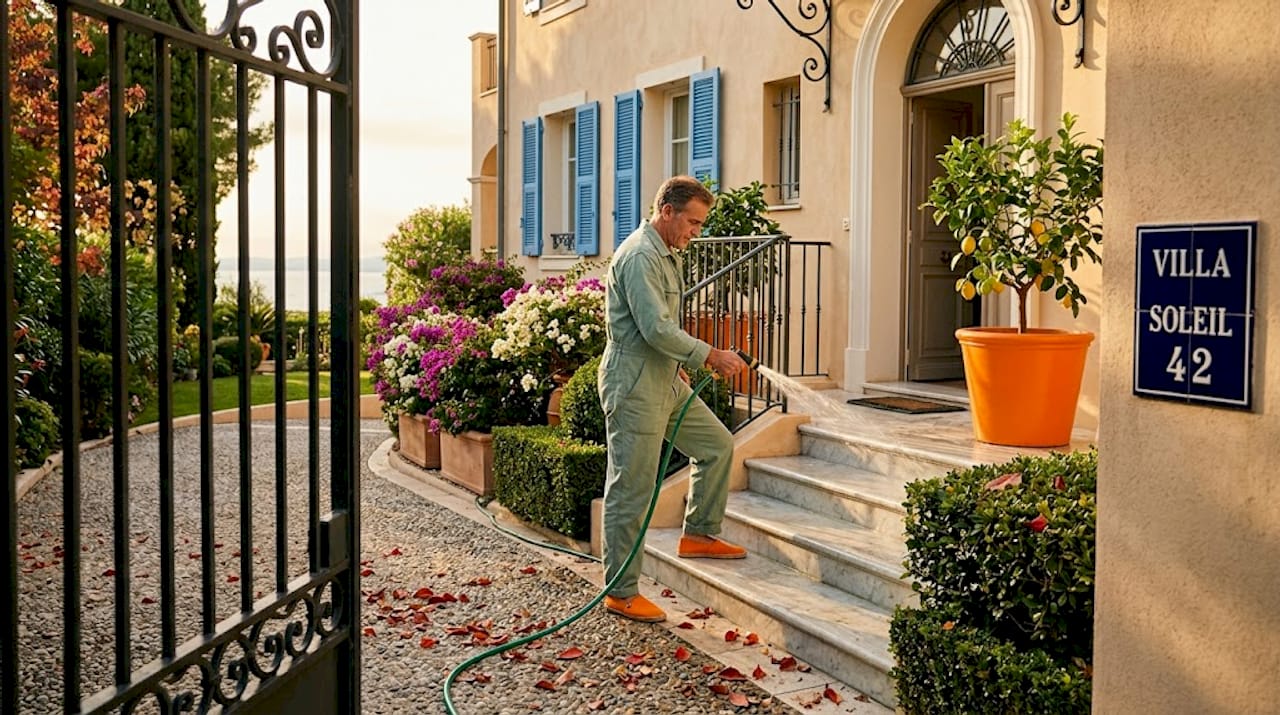
Gardener tending luxury villa entrance curb appeal

Curb-appeal and exterior replacements dominate high-ROI project rankings, consistently outperforming many interior upgrades on a pure return basis. For luxury Riviera properties, this effect is amplified because the external presentation directly signals value, care, and prestige to buyers who have very precise aesthetic expectations.

The highest-performing exterior renovation types include:

  • Façade restoration and rendering: Particularly powerful on older Provençal and Belle Époque properties; maintaining authenticity while refreshing the presentation is an art form in itself.
  • Entrance gates and driveways: Wrought-iron gates, stone pillars, and hand-laid cobbles communicate a sense of arrival that speaks directly to HNW buyer psychology.
  • Mediterranean landscaping: Olive groves, lavender borders, cypress allées, and sculpted box hedging frame a Riviera property with timeless natural opulence.
  • Exterior lighting design: Illuminating a villa’s architecture after dark transforms it from beautiful to extraordinary, and photographic impact in online listings is invaluable.
  • Windows and glazing: High-performance glazing that frames sea views while reducing noise is among the single most celebrated upgrades a Riviera buyer can experience during a viewing.

“A property on the Côte d’Azur is not merely a building; it is a tableau vivant. The exterior is its opening statement, and it must be immaculate, evocative, and unmistakably of this golden coast.”

For a compelling example of how a façade transformation repositions a luxury asset, the Croisette boulevard project in Sainte-Maxime illustrates this principle magnificently. Equally, understanding how to stage a luxury home for maximum value complements the exterior investment with a coherent presentation strategy. The art of curating high-value real estate begins at the garden gate.

Energy-efficiency renovations: ROI, comfort, and beyond

The Riviera enjoys an enviable climate of lavender-laced summer warmth and mild Mediterranean winters, which makes the financial payback calculus for energy-efficiency renovations more nuanced than in northern markets. Yet dismiss this category entirely, and you risk losing the most discerning buyers of 2026, who expect green certifications and low-carbon credentials as standard.

Energy-efficiency upgrades including insulation, HVAC, and windows deliver varying ROI, often justified more by comfort, acoustic performance, and kerb appeal than by pure energy-bill payback. For a hillside villa above Nice’s Château Hill, triple-glazed windows might reduce a buyer’s heating bill by a modest margin, but the silence they create, filtering out the hum of the city below while framing the Baie des Anges, is a genuinely priceless quality-of-life upgrade.

The primary energy-efficiency renovation types to consider include:

  • Building envelope insulation: Walls, roofs, and floors. Critical for older estates where thermal bridging is significant.
  • HVAC replacement: Moving from ageing systems to high-efficiency heat pumps or ducted reversible air conditioning improves comfort year-round and satisfies environmental due diligence.
  • Smart controls and automation: Integrated systems managing lighting, climate, security, and energy consumption are expected features in the luxury segment and attract premium-paying international tenants.
  • High-performance glazing: Particularly valuable on panoramic sea-view properties where large glazed surfaces dominate.
  • Solar arrays: Increasingly prevalent on eco-villas along the Riviera, aligning with legacy investor values and qualifying for green certifications that support capital value over time.

Pro Tip: When budgeting energy-efficiency renovations for a legacy asset, frame the ROI across a 15 to 25 year holding period rather than the typical 5 to 7 year resale horizon. This reframes the economics entirely and often justifies a more ambitious specification.

For investors building generational wealth, the intersection of sustainability and prestige is precisely where the most enduring high-value legacy assets are forged.

Summary comparison of renovation types and strategic recommendations

Renovation typeBest forYield impactResale impactComplexity
Whole-homeFull repositioning, legacy creationHighVery highVery high
PartialYield optimisation, targeted upliftMedium to highHighMedium
Kitchen (minor)Rapid resale prep, rental premiumMediumHighLow
Exterior and kerb appealLuxury buyer attraction, brand positioningMediumVery highLow to medium
Energy-efficiencyLong-term value, green certificationLow to mediumMedium to highMedium

ROI uplifts depend on property size, location, age, and project scope, with space-adding renovations outperforming in certain scenarios. For investors, the sequence of decision-making matters as much as the renovation type itself.

  1. Establish your investment objective first: Yield maximisation, legacy preservation, rapid resale, and compliance remediation each point to different renovation types.
  2. Commission baseline valuations and technical surveys before scoping any project to avoid over-capitalising relative to market ceilings.
  3. Sequence system upgrades logically: Structural and envelope work before finishes; HVAC before flooring. This is where experienced renovation supervision proves its worth.
  4. Engage with local planning authorities early on Riviera estates, especially those near coastal zones or with historic designations.
  5. Match the renovation aesthetic to your buyer profile: International buyers at the ultra-prime end want prestige finishes and local character, not generic luxury.

For inspiration drawn from exceptional assets already performing in this market, prime investment property examples on the Côte d’Azur offer a vivid reference point.

The uncomfortable truth about renovation ROI in luxury markets

We have seen what the data says. Now let us share what the data cannot quite capture.

In our experience curating Riviera properties across Cannes’ yacht-laden Croisette, Saint-Tropez’s Vieux Port, and the Menton hillsides where lemon groves spill towards the Italian border, the most dangerous renovation mistake is not underspending. It is overbuilding for your specific buyer pool.

A €400,000 bespoke kitchen in a villa that sits in a market of €3M buyers serves a narrower resale audience than the same villa with a €80,000 thoughtfully curated kitchen refresh. Ultra-custom finishes, however magnificent, can actually restrict the buyer pool rather than expand it. Prestige is not always synonymous with the most expensive specification.

There is also a peculiar trap in following renovation trend reports uncritically. What recouped 112% of cost in a North American suburban market may perform very differently in a Côte d’Azur estate where the buyer is a Geneva-based family seeking a summer sanctuary, not a first-time homeowner maximising equity in a starter property. Context is everything.

The wisest investors we work with treat renovation as a phased strategy rather than a single event. They invest in structural integrity and exterior presentation first, capturing the valuation premium that comes from impeccable presentation and sound infrastructure. Interior upgrades follow, calibrated to the actual buyer or tenant profile, not a generic luxury checklist. This phased discipline, executed with patience and precision, consistently outperforms the all-in whole-home transformation when return on capital is the governing metric.

Exploring the full spectrum of Côte d’Azur ROI strategies will sharpen this thinking further, particularly for investors managing multi-property portfolios across the Riviera.

Unlock lasting value with expert guidance

At Living on the Côte d’Azur, we do not simply list properties; we architect investment journeys for discerning global buyers who understand that a Riviera estate, renovated with precision and presented with elegance, is a legacy in stone. Whether you are searching for an off-market luxury property to reposition with a strategic renovation programme, or exploring the full range of luxury real estate investment options on the Côte d’Azur for the first time, our team brings intimate market knowledge and curatorial precision to every conversation. We accept cryptocurrency payments and operate across Nice, Cannes, Antibes, Saint-Tropez, and beyond. Discover what luxury real estate truly means in this extraordinary corner of the world, and let us help you forge your next heirloom.

Frequently asked questions

What is the difference between whole-home and partial renovation?

A whole-home renovation covers at least three major subsystems under coordinated planning, while partial renovation targets specific rooms or systems with less disruption and a narrower budget scope.

Which renovation type adds the most value in luxury real estate?

Minor kitchen remodels and exterior replacements top ROI rankings, making them the most capital-efficient choices for luxury properties preparing for resale or premium seasonal letting.

Do energy-efficiency renovations always pay off for high-end properties?

Energy-efficient upgrades may not offer quick ROI in mild climates like the Riviera, but they deliver measurable comfort, acoustic performance, and green certification benefits that attract premium buyers.

Do structural renovations add more value than cosmetic upgrades?

Adding space structurally yields a higher value uplift than cosmetic remodels in most scenarios, though minor cosmetic projects often win on percentage ROI relative to their outlay.

How does the Côte d’Azur real estate market influence renovation choices?

The region’s ultra-prime luxury segment prioritises kerb appeal, locally referenced interiors, and strict compliance with coastal and heritage regulations to attract the international buyers who drive the market’s most prestigious transactions.

Recommended

  • How to stage a luxury home: maximise value in 2026
  • High-net-worth real estate: Legacy, luxury, and ROI
  • 6 Key Examples of Luxury Buyer Trends for Elite Investors
  • Maximise your real estate ROI on the Côte d’Azur: proven strategies
by Ab Kuijer/12 May 2026/in Blog
https://www.livingonthecotedazur.com/wp-content/uploads/2026/05/1778302802869_Architect-reviewing-renovation-plans-in-villa-kitchen.jpeg 714 1280 Ab Kuijer https://www.livingonthecotedazur.com/wp-content/uploads/2024/02/sitelogo150.png Ab Kuijer2026-05-12 04:30:202026-05-12 11:46:23Renovation types to maximise luxury property value and ROI

TL;DR:

  • In 2026, French Riviera property values are increasingly driven by sustainability credentials and energy performance ratings. High-efficient homes with green features command premiums, while poorly rated assets face significant discounts or regulatory risks. Savvy investors prioritize eco-friendly legacy properties that combine prestige with responsible stewardship for long-term resilience.

The French Riviera has long seduced the world’s most discerning investors with its salt-kissed coastlines, lavender-laced hillsides, and an enduring promise of prestige. Yet in 2026, the rules have quietly shifted. Prestige alone no longer guarantees the returns it once did. A new force is reshaping valuations from Cap d’Antibes to the sun-drenched ramparts of Menton: sustainability credentials and energy performance ratings. For high-net-worth investors seeking legacy assets that reliably appreciate and elegantly transfer wealth to the next generation, understanding these shifts is no longer optional. It is essential.

Table of Contents

  • Why sustainability and energy ratings are reshaping luxury property values
  • Regional market shifts and new investment priorities for 2025
  • Identifying sustainable legacy properties: key features and pitfalls
  • Applying insights: practical strategies for 2026 acquisitions
  • Why legacy investments must go beyond prestige in 2025
  • Explore exclusive investment opportunities on the Côte d’Azur
  • Frequently asked questions

Key Takeaways

PointDetails
Energy rating drives valueFrench Riviera luxury property values in 2025 are strongly influenced by energy efficiency grades.
Sustainability is essentialLegacy investments must prioritise eco-features to secure long-term returns and resale appeal.
Regional differences matterEach Riviera city offers distinct opportunities for price growth and sustainable asset selection.
Avoid low-rated assetsWorst-rated dwellings are typically discounted and far less competitive for resale and legacy purposes.
Strategic acquisition pays offVerifying energy ratings and legacy credentials is crucial for optimal investment outcomes.

Why sustainability and energy ratings are reshaping luxury property values

For years, investing in French Riviera real estate meant prioritizing sea views, proximity to Monaco, and architectural grandeur. These remain important. But the market trends for Côte d’Azur reveal an unmistakable new hierarchy forming around energy performance.

France’s Diagnostic de Performance Énergétique, or DPE, grades every dwelling from A (most efficient) to G (least efficient). What was once a bureaucratic footnote is now a financial lever. Energy-efficiency ratings can affect property prices by up to 25%, with the worst-rated G properties sitting at a striking 25% discount relative to the D benchmark, according to notaire data compiled by Connexion France.

“A property’s energy grade is no longer a compliance detail. It is a pricing signal. Buyers at the top of the market now treat a poor DPE the way they once treated a compromised sea view — as a reason to walk away.”

The per-letter premium and discount pattern is remarkably consistent. A-rated and B-rated villas command notable premiums, while E, F, and G-rated properties face deepening discounts. For luxury assets valued at €3M to €10M, this translates to hundreds of thousands of euros in real price variation. The luxury market insights across the Riviera confirm this trend is accelerating, not softening.

Eco-features have simultaneously become status symbols among the global elite. A Cannes villa with rooftop solar arrays, a geothermal heating system, and EV charging infrastructure signals something beyond green compliance. It signals forward-thinking stewardship. It signals a property built for the next generation, not merely the current season.

Key sustainability signals driving premium valuations now include:

  • A or B DPE ratings as a baseline expectation for serious buyers
  • Solar photovoltaic arrays with battery storage, reducing grid dependency
  • Smart building management systems for remote climate and energy control
  • EV charging infrastructure, reflecting the lifestyle reality of luxury car ownership
  • Resource-efficient construction materials, particularly for new builds near Sainte-Maxime’s Nartelle shoreline and Nice’s Mont Boron heights
  • Green certifications, such as HQE (Haute Qualité Environnementale), for new constructions
DPE gradeApproximate price impact vs D benchmark
A+10% to +15%
B+5% to +10%
C+2% to +4%
DBaseline
E-5% to -10%
F-12% to -18%
GUp to -25%

Pro Tip: When evaluating any villa or apartment on the Riviera, request the full DPE report before engaging in price negotiations. A G-rated property may appear attractively priced, but factor in the full cost of retrofitting to a C or B grade before making any offer. Renovation budgets for energy upgrades on a large Riviera villa can reach €200,000 or more.

Regional market shifts and new investment priorities for 2025

The Côte d’Azur is not a single market. It is a constellation of micro-markets, each with its own character, growth trajectory, and legacy appeal. Reviewing the regional investment trends guide reveals just how differently each city is positioned for 2026.

Nice, where the Promenade des Anglais catches the afternoon light, and Cours Saleya erupts in color every morning market, remains one of the most liquid and internationally accessible Riviera markets. The city’s expanding tram network, rising demand for sustainably designed apartments on Mont Boron, and a growing digital-nomad and ultra-high-net-worth buyer base support steady 5% to 7% annual appreciation in premium segments.

Cannes, synonymous with the Festival de Cannes and the Croisette’s legendary yacht parade, commands exceptional rental yields during its famous festival calendar. Seasonal rental of a Croisette apartment during the film festival alone can generate yields that rival full-year lettings elsewhere. Securing annual returns above 5% is entirely achievable with the right asset and management strategy.

Monaco’s borders carry an almost mythic price premium. Properties in Beausoleil and Cap d’Ail sit within walking distance of the Principality yet remain under French tax jurisdiction, offering an elegant balance of prestige and fiscal efficiency.

Saint-Tropez, where Pampelonne’s turquoise shallows meet the Vieux Port’s unhurried fisherman traditions, caters to the most seasonal market on the Riviera. Legacy investors here look at total lifestyle value as much as yield, knowing that a perfectly positioned villa near Ramatuelle can hold its value through almost any economic cycle.

Here is a straightforward framework for evaluating city-specific investment potential:

  1. Assess the DPE profile of available stock in your target area before shortlisting properties.
  2. Research seasonal rental demand, particularly around local festivals (the Menton Lemon Festival, Cannes Film Festival, the Monaco Grand Prix, Nice Carnaval).
  3. Evaluate regeneration pipelines: new tram lines, marinas, and urban renewal projects signal long-term appreciation.
  4. Consult notaire transaction data for per-square-meter trends over the past 36 months.
  5. Verify infrastructure resilience, including flood zoning and proximity to protected natural areas.
CityAverage price per m² (prime)Sustainability momentumLegacy appeal
Monaco border€18,000 to €25,000+HighVery high
Cannes€8,000 to €14,000GrowingHigh
Nice€6,000 to €11,000HighHigh
Saint-Tropez€12,000 to €20,000ModerateVery high
Antibes€6,500 to €10,000GrowingHigh
Sainte-Maxime€5,500 to €9,000ModerateModerate

The broader second home trends for 2025 confirm that buyers are increasingly prioritising long-term value and sustainability credentials over headline luxury finishes alone. This is the market evolution that the most astute investors are already exploiting.

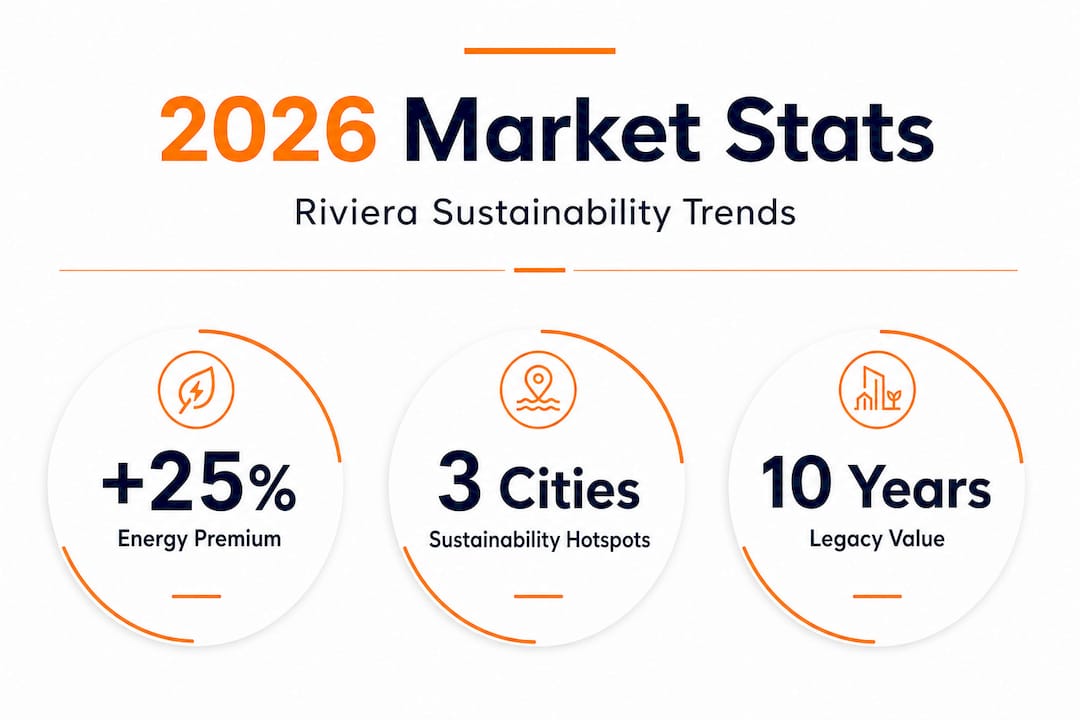
Infographic with Riviera market stats and sustainability highlights

Pro Tip: Look beyond the headline price-per-square-metre figure. A slightly lower-priced villa in Cap d’Antibes with an A DPE rating, solar installations, and strong rental history will outperform a grander property with a G rating over a ten-year legacy horizon.

Identifying sustainable legacy properties: key features and pitfalls

Recognizing a genuinely sustainable legacy asset is not simply a matter of taking a developer’s word for it. The key features of French Riviera real estate that command long-term premium valuations share a consistent set of qualities.

True eco-luxury properties demonstrate:

  • Solar photovoltaic arrays with battery storage, reducing annual energy costs substantially and insulating owners from grid price volatility
  • Heat pump systems replacing gas-fired heating, aligning with France’s progressive decarbonization policy trajectory
  • EV charging infrastructure is particularly relevant for buyers maintaining multiple luxury vehicles
  • Smart energy management systems that monitor, optimize, and report consumption remotely
  • Triple-glazed fenestration and high-performance thermal insulation, particularly important for Riviera properties designed for year-round habitation
  • Rainwater harvesting and water recycling systems are increasingly valued, given Mediterranean drought patterns
  • HQE or equivalent green certification, providing third-party validation of sustainability credentials

The price gap between a G-rated and a D-rated property of comparable size and location on the Riviera can now reach 25% according to French notaire data. On a €4M villa, that differential represents €1M in real value. This is not a marginal consideration. It is a defining investment variable.

Common pitfalls investors encounter include:

  • Accepting developer sustainability claims without independent verification. Always request third-party documentation.
  • Overlooking the cost of retrofitting older properties to meet current or forthcoming French energy regulations. France’s progressive tightening of rental restrictions on G and F-rated properties means these assets face growing income risk.
  • Confusing aesthetic sustainability (visible solar panels, bamboo flooring) with structural energy efficiency. True efficiency is measured in certified consumption figures, not decorative choices.
  • Underestimating planning restrictions in classified heritage zones along the Riviera, which can limit the extent of permissible retrofitting.

The strategies for lasting value in Riviera real estate consistently point to one truth: properties with robust eco-credentials are more liquid, more attractive to elite tenants, and more resilient through market corrections.

Pro Tip: Avoid any property rated E, F, or G unless you have a fully costed and architect-approved energy renovation plan with permits in place. France now restricts lettings of the worst-rated properties, and this regulation is tightening further.

Applying insights: practical strategies for 2026 acquisitions

Translating market intelligence into decisive, well-structured acquisitions requires a methodical approach. For legacy-focused investors, the French Riviera investment guide outlines a clear pathway.

Follow these acquisition steps for 2026:

  1. Define your legacy objective clearly. Is the primary purpose capital appreciation, elite seasonal rental income, intergenerational wealth transfer, or a combination of all three? This shapes every subsequent decision.
  2. Establish a shortlist by DPE grade first. Target A, B, or C-rated properties exclusively unless you have the budget and expertise to carry out a full energy renovation.
  3. Commission an independent technical survey covering structural integrity, energy systems, thermal performance, and compliance with current French building regulations.
  4. Conduct a full legal audit: title clarity, planning history, any outstanding charges, and the syndic records for copropriété (shared ownership) buildings.
  5. Model seasonal rental income based on actual comparable letting data for the neighbourhood, accounting for festival calendars and seasonal demand patterns.
  6. Engage a specialist notaire experienced in cross-border luxury transactions, particularly if you are acquiring via a holding structure or considering cryptocurrency-settled transactions.
  7. Plan the succession structure from day one, whether through a Société Civile Immobilière or another appropriate vehicle for tax-efficient legacy transfer.

Mistakes the majority of investors overlook include:

  • Failing to verify DPE documents independently, as self-declared or outdated certificates are not uncommon
  • Misinterpreting sustainability marketing claims from developers without checking against HQE or BREEAM certifications
  • Neglecting the rental regulation timeline: France’s restrictions on letting G and F-rated homes are tightening progressively
  • Underestimating notary fees and acquisition costs for resale versus new-build (VEFA) properties, where lower notary fees and ten-year structural warranties offer genuine financial advantages
  • Ignoring the broader latest luxury trends shaping tenant expectations for sustainably managed properties

Pro Tip: Always verify the DPE and any green certifications through an independent diagnostiqueur before signing any avant-contrat. Request the full diagnostic file, not just the summary label. For off-plan acquisitions, confirm the projected DPE grade is contractually binding within the VEFA terms.

Why legacy investments must go beyond prestige in 2025

Buyer checks energy report at dining table

We have observed, across decades of Riviera transactions and global property cycles, that the investors who build the most enduring legacies share one distinguishing quality: they resist the seduction of prestige alone.

The conventional wisdom was clear and seemingly unshakeable. A Belle Époque villa on a palm-lined avenue in Cap d’Antibes, or a penthouse apartment overlooking Monaco’s harbor, would hold its value by virtue of address. Location, name, and architectural drama were the only variables that truly mattered.

That logic is now incomplete. The evidence from Côte d’Azur market trends is unambiguous: energy performance has become a co-equal factor in luxury valuations. A trophy address with a G-rated energy profile is increasingly a liability, not just in resale price but in tenant desirability, regulatory risk, and the values of the heirs who will ultimately inherit it.

We believe the most enduring legacy assets in 2026 are those that marry opulent finishes with genuine sustainability credentials. A villa near Èze’s clifftop gardens, built with solar independence, triple-glazed terraces opening to the Méditerranée, and smart building systems managed remotely from anywhere in the world, is not simply a luxury property. It is a statement of intergenerational responsibility.

This is the new grammar of legacy on the Côte d’Azur. Prestige of address remains essential. But it must now be paired with the prestige of stewardship.

Explore exclusive investment opportunities on the Côte d’Azur

We invite you to explore what we believe is the finest curated selection of sustainable luxury assets on the Riviera. From off-market villas and estates available exclusively through our network, to the most comprehensive smart regional investment guide covering every Riviera micro-market, we are positioned to guide your acquisition with the expertise and discretion your ambitions deserve. Whether you are seeking a sun-drenched villa above Antibes’ cobalt bay or a prestige apartment within reach of Monaco’s lights, browse our full portfolio of villas and penthouses for sale and begin your legacy conversation with our team. Cryptocurrency transactions are welcome.

Frequently asked questions

How much can energy rating impact French Riviera luxury property prices?

Energy ratings affect prices by up to 25%, with G-rated properties discounted substantially relative to the D benchmark and A/B-rated assets commanding meaningful premiums.

What are the most sought-after sustainability features for legacy properties in 2026?

Solar panels with battery storage, smart energy management systems, EV charging infrastructure, and resource-efficient design are now baseline expectations for elite buyers seeking long-term asset quality.

Which Côte d’Azur locations offer the best balance of price growth and legacy potential?

Legacy-focused investors consistently favor Cannes for rental yield, the Monaco border area for prestige and fiscal efficiency, and Nice for liquidity and strong year-on-year appreciation in prime segments.

How can I verify a property’s energy rating before acquiring?

Request the full DPE diagnostic file from an independent, certified diagnostiqueur and ensure any projected ratings for off-plan purchases are contractually guaranteed within the VEFA agreement.

Are sustainable properties easier to resell on the French Riviera?

Absolutely. Properties with A and B DPE grades command premiums of up to 15% above the market baseline, attract stronger elite tenant demand, and face significantly fewer regulatory headwinds as French energy legislation tightens through 2026 and beyond.

Where do I find the Best French Property Deals?

Anyone looking for a great real estate deal can now visit the new website Best Property Deals French Riviera. The platform features properties offered at significantly below-market prices.

Recommended

  • French Riviera real estate tax: investor guide 2026
  • Why Choose French Riviera: The Complete 2025 Guide – Living on the Côte d’Azur
  • Luxury market trends on the Côte d’Azur: insights for 2026
  • 7 Key Features of French Riviera Real Estate for Investors
by Feline Kuijer/11 May 2026/in Blog
https://www.livingonthecotedazur.com/wp-content/uploads/2026/05/1778241682736_image.jpeg 720 1260 Feline Kuijer https://www.livingonthecotedazur.com/wp-content/uploads/2024/02/sitelogo150.png Feline Kuijer2026-05-11 02:00:202026-05-11 10:09:37French Riviera real estate market insights for 2026

Ibiza is evolving. Beyond its world-famous beach clubs and nightlife, the island has become one of the Mediterranean’s most desirable destinations for luxury real estate investment, second homes, and year-round living. In this exclusive market, the new Ibiza development in Santa Eulalia del Río stands out as one of the most refined residential projects currently available.

Located just steps from the marina and beaches, the project combines elegant contemporary architecture, premium finishes, spacious terraces, and the relaxed lifestyle that makes Ibiza so unique. For buyers looking for a high-end apartment in Ibiza with sea views, private pools, and walking distance to the marina, this is a rare opportunity.

The project offers only 20 exclusive residences with 2, 3, and 4-bedroom layouts designed around comfort, natural light, privacy, and Mediterranean luxury.

Prime Location in Santa Eulalia del Río

The project is perfectly positioned in one of Ibiza’s most sought-after residential areas: Santa Eulalia del Río. Known for its elegant marina, fine dining, relaxed atmosphere, and crystal-clear beaches, Santa Eulalia attracts an international clientele looking for sophistication without the crowds of Ibiza Town.

The residence is located only:

  • 150 meters from the marina
  • 200 meters from the beaches of Es Faralló and Sa Caleta
  • Close to restaurants, boutiques, supermarkets, beach clubs, and leisure facilities

Santa Eulalia is considered one of the island’s most desirable lifestyle destinations thanks to its luxury marina, gastronomy, family-friendly atmosphere, and authentic Mediterranean charm.

Contemporary Architecture Designed for Ibiza Living

This new construction in Ibiza has been created with a strong focus on modern elegance and seamless indoor-outdoor living. The flowing architecture, expansive glass terraces, and natural materials blend beautifully with Ibiza’s coastal environment.

Each apartment features:

  • Large open-plan living areas
  • Spacious terraces
  • Designer kitchens with premium appliances
  • High-end bathrooms
  • Bright interiors with abundant Mediterranean light
  • Smart home automation
  • Air conditioning and heating
  • Private pools for selected ground floor apartments and penthouses
  • Communal solarium with panoramic views

The development also includes landscaped gardens, swimming pools, underground parking, storage rooms, and pre-installation for electric vehicle charging.

High-End Finishes and Premium Specifications

This new construction in Ibiza has been designed to meet the expectations of luxury buyers seeking quality construction and refined finishes.

Highlights include:

  • PORCELANOSA or similar premium materials
  • Large-format porcelain flooring
  • Designer sanitary ware and faucets
  • Anthracite aluminum exterior carpentry
  • Solar-control glazing
  • Acoustic insulation between residences
  • Home automation systems
  • Premium kitchens with integrated appliances

The residences are designed to offer a luxurious yet relaxed lifestyle, equally suited for year-round living, holiday use, or high-end rental investment.

Available Apartments and Prices

Current availability includes several exceptional apartments and penthouses.

Ground Floor Apartments

Ground Floor A

  • 3 Bedrooms
  • 3 Bathrooms
  • Private outdoor space
  • Price: €1,325,000

Ground Floor B

  • 4 Bedrooms
  • 3 Bathrooms
  • Large terrace and private garden
  • Price: €1,520,000

Ground Floor C

  • 2 Bedrooms
  • 2 Bathrooms
  • Excellent entry-level luxury option
  • Price: €950,000

Ground Floor D

  • 3 Bedrooms
  • 3 Bathrooms
  • Spacious terrace areas
  • Price: €1,315,000

First Floor Apartment

First Floor A

  • 3 Bedrooms
  • 3 Bathrooms
  • Elevated terrace
  • Price: €970,000

Luxury Penthouse

Penthouse A

  • 3 Bedrooms
  • 3 Bathrooms
  • Exceptional terraces and panoramic views
  • Price: €1,790,000

Several other units are already reserved, blocked, or under offer, highlighting the strong demand for this exclusive Ibiza development.

Why Invest in Ibiza Real Estate Now?

Luxury property in Ibiza continues to attract international buyers thanks to:

  • Limited supply of new developments
  • Strong long-term capital growth
  • High-end rental demand
  • Excellent lifestyle and international accessibility
  • Increasing demand for premium second homes in the Mediterranean

Santa Eulalia specifically has become one of the island’s strongest investment locations due to its balance between luxury lifestyle and tranquility.

Ibiza offers buyers a rare combination of:

  • Prime marina location
  • Contemporary design
  • New-build energy efficiency
  • High-quality finishes
  • Spacious terraces and outdoor living
  • Exclusive boutique atmosphere

Private Visits Can Be Organised Now

Private visits and project presentations for Ibiza can now be organised. Contact us today to receive floor plans, full specifications, availability updates, and to organise a private viewing of this exceptional Ibiza development.

by Ab Kuijer/7 May 2026/in Blog
https://www.livingonthecotedazur.com/wp-content/uploads/2026/05/nieuwbouw-Ibiza-Eulalia.jpeg 667 1000 Ab Kuijer https://www.livingonthecotedazur.com/wp-content/uploads/2024/02/sitelogo150.png Ab Kuijer2026-05-07 17:16:042026-05-07 17:56:26New construction Ibiza Santa Eulalia del Río open for visits


TL;DR:

  • Legal expertise is crucial for French Riviera luxury property purchases due to complex inheritance laws, cross-border tax obligations, and title issues that require professional guidance. Engaging specialized legal counsel early ensures thorough due diligence, proper structuring, and protection of privacy, safeguarding long-term investments. Without such expertise, buyers risk costly legal disputes, inheritance complications, and compromised legacy planning.

Many high-net-worth buyers arrive on the French Riviera captivated by the salt-kissed air of Cap d’Antibes or the panoramic sweep of Baie des Anges from a Nice clifftop terrace, and assume that prestige alone simplifies the transaction. It does not. Luxury property acquisitions on the Côte d’Azur carry a web of legal obligations, cross-border inheritance rules, and title complexities that no handshake or swift bank transfer can resolve. What separates a triumphant legacy acquisition from a costly legal ordeal is almost always the quality of specialist legal counsel retained before a single document is signed.

Table of Contents

  • Why legal expertise is critical for French Riviera property purchases
  • Key legal services involved in property buying
  • How legal services protect your interests and investments
  • Navigating cross-border and succession law complexities
  • Best practices for luxury property transactions on the Riviera
  • Why robust legal process is the linchpin of lasting property legacies
  • Connect with experts for your French Riviera legal needs
  • Frequently asked questions

Key Takeaways

PointDetails
Specialist legal advice essentialEvery luxury buyer needs legal experts with French Riviera experience for true security and compliance.
Protect legacy and privacyProper legal structuring shields wealth, succession plans, and high-profile buyer confidentiality.
Mitigate cross-border risksExpert legal guidance navigates complex tax, residency, and inheritance laws for global investors.
Follow a structured transaction processAdhering to a clear, professional legal roadmap ensures a smooth, dispute-free property purchase.

Why legal expertise is critical for French Riviera property purchases

The French Riviera occupies a singular position in the global luxury property market, and that singularity extends well beyond its cerulean coastline and the heady fragrance of lavender drifting from the hills above Èze. France operates an entirely distinct legal framework governing property ownership, and its regulations bear almost no resemblance to those in the United Kingdom, the United States, or the Gulf states from which so many buyers originate. For an international investor accustomed to Anglo-Saxon conveyancing, the French system can feel like an entirely foreign language, because in many respects it is.

The French Riviera acquisition guide makes clear that the market attracts international buyers with complex cross-border financial and inheritance issues that require specialist handling from the outset. These are not abstract risks. They manifest as real financial losses, family disputes, and even compulsory sales if buyers proceed without proper guidance.

Several distinct legal complexities define this market:

  • Forced heirship laws under the French Civil Code restrict how you may distribute your estate, regardless of the instructions in your will.
  • Non-resident tax obligations differ markedly from those applicable to French fiscal residents, affecting both acquisition costs and rental income.
  • Boundary and planning disputes are more common than many buyers anticipate, particularly in older Riviera villages where cadastral maps may be outdated.
  • Co-ownership regimes (copropriété) in apartment buildings impose legally binding obligations on owners that must be thoroughly reviewed.
  • Mortmain and pre-emption rights held by local municipalities can derail a transaction at a late stage if not identified early.

Following the steps to successful property buying on the Côte d’Azur requires understanding that legal due diligence is not an administrative formality. It is the architecture of your investment’s security.

“The most expensive mistake a luxury buyer can make is treating legal counsel as an afterthought. On the Riviera, the legal landscape is as dramatic as the geography. Both demand respect.” — Living on the Côte d’Azur Advisory Team

The stakes for overlooking proper legal guidance are especially acute when estate planning and forced heirship rules intersect with multi-jurisdictional family structures. A villa in Cannes held in personal name, with heirs spread across three continents, is a succession challenge of considerable proportion.

Key legal services involved in property buying

Understanding the cast of legal professionals involved in a French Riviera transaction clarifies why the process demands both time and expertise. Legal professionals coordinate due diligence, contract drafting, compliance, and transfer of ownership across each stage of the acquisition journey.

The acquisition unfolds in clearly defined stages, each with its own legal deliverables:

  1. Pre-acquisition due diligence — Title searches, urban planning verifications, and checks for outstanding charges or legal encumbrances are conducted before any offer is formalised.
  2. Offer and preliminary contract (compromis de vente) — A legally binding preliminary agreement is drafted, typically accompanied by a 10% deposit. Legal review at this stage is essential, as the compromis de vente defines your rights and obligations.
  3. Regulatory and compliance clearances — Asbestos surveys, energy performance diagnostics, lead tests, and flood zone assessments are all legally mandated and must be reviewed by your legal team.
  4. Financing and ownership structure confirmation — Whether you are purchasing as an individual, via a Société Civile Immobilière (SCI), or through an international entity, the ownership structure has profound tax and succession implications.
  5. Final deed of sale (acte authentique) — Signed before a notaire, this is the moment legal title transfers. The notaire collects all transfer taxes and registration fees on behalf of the French state.
  6. Post-completion — Inscription at the land registry (cadastre) confirms your ownership. Any outstanding legal obligations, such as neighbourhood covenants or easements, become your responsibility from this point.

The notaire is a state-appointed public official whose role is to authenticate the transaction and ensure it complies with French law. However, the notaire’s duty of impartiality means they serve the transaction, not exclusively the buyer. This is precisely why engaging your own independent legal adviser, alongside exploring the due diligence essentials in depth, is a non-negotiable best practice for high-value acquisitions.

Legal stageKey professionalBuyer benefit
Due diligenceIndependent solicitorIdentifies hidden risks before commitment
Preliminary contractNotaire and solicitorProtects deposit and sets terms
Tax structuringTax lawyer or SCI specialistOptimises acquisition and succession costs
Final deedNotaireLegal transfer of ownership confirmed
Post-completionLand registryOwnership secured in public record

Pro Tip: Instruct your independent legal adviser and the notaire simultaneously, as early in the process as possible. Waiting until you have found your ideal property in Antibes or Sainte-Maxime to begin legal preparations costs valuable time and may expose your position unnecessarily.

You can explore the full purchase stages for luxury homes on the Côte d’Azur to align your timeline with each legal milestone.

How legal services protect your interests and investments

The practical value of specialist legal services becomes most vivid when you consider what can go wrong. Legal oversight detects title irregularities, compliance breaches, and ensures privacy protections for buyers in one of the world’s most scrutinised property markets.

Legal consultant drafting risk assessment report

Consider a scenario that we encounter more frequently than buyers imagine: a Cannes apartment presented as a private luxury residence is discovered, during due diligence, to carry an unregistered easement granting a neighbouring property access across the terrace. Without a meticulous title review, this would become the buyer’s burden. Or consider a Cap d’Antibes villa where building works completed five years prior lacked proper planning consent, creating retroactive liability that falls on the new owner.

Risk scenarioWithout legal servicesWith legal services
Hidden easement or servitudeBuyer inherits liability after completionIdentified pre-completion; renegotiation or withdrawal possible
Non-compliant building worksBuyer faces retrospective enforcementSeller required to regularise or price adjusted
Inheritance disputeEstate frozen pending litigationSuccession structured to match French law requirements
Privacy breach in documentationBuyer’s identity exposed in public filingsLegal structure provides anonymity and discretion
Unpaid charges on copropriétéBuyer assumes outstanding debtOutstanding charges revealed and cleared pre-sale

Privacy is a dimension of legal protection that particularly resonates with our clients: those who have built substantial wealth and wish to acquire their Riviera property without their identity or financial details becoming public knowledge. A well-structured acquisition, guided by experienced real estate privacy issues specialists, can employ holding structures that keep beneficial ownership appropriately discreet within the parameters of French law.

Pro Tip: If privacy is a priority, discuss ownership via a Société Civile Immobilière (SCI) with your legal adviser before viewing properties. The SCI structure must be established prior to the compromis de vente to be effective for your acquisition.

French property transactions for luxury assets often attract a level of public and professional scrutiny that buyers from other markets find surprising. In 2026, with anti-money laundering (AML) regulations having significantly tightened across the EU, both notaires and legal advisers are obligated to conduct enhanced due diligence on the source of funds. This is not an obstacle. It is part of the framework that maintains the Riviera’s extraordinary market integrity and your investment’s long-term legitimacy.

Navigating cross-border and succession law complexities

For the international buyer, whether arriving from London, Dubai, Singapore, or São Paulo, the Riviera’s succession law landscape is perhaps the most counterintuitive dimension of ownership. French forced heirship laws mandate that a portion of an estate passes automatically to children, which can disrupt legacy plans that seemed airtight under a buyer’s home jurisdiction.

Understanding forced heirship is vital. Under French law, children are “réservataires,” meaning they hold a reserved portion of the estate. For one child, this reserve is 50% of the estate. For two children, it rises to two-thirds. For three or more, it reaches three-quarters. Crucially, the EU Succession Regulation (Brussels IV), which came into force in 2015 and remains operative, allows non-French nationals to elect for the law of their nationality to govern their succession, but this election must be made formally and recorded correctly to be enforceable.

Key solutions that specialist legal advisers regularly deploy for international clients include:

  • Brussels IV nationality election — Formally electing for your home country’s succession law to govern your estate, recorded within your will or a specific declaration before a notaire.
  • Société Civile Immobilière (SCI) — Holding the property through an SCI allows shares to be transferred across generations with greater flexibility and can ease succession considerably.
  • Cross-border trusts — Where permissible and correctly structured, trusts established in common law jurisdictions can hold French property, though these must be carefully aligned with French fiscal law to avoid unintended tax consequences.
  • Donation-partage — A French mechanism enabling the structured gifting of property interests to heirs during your lifetime, reducing future estate exposure.

“On the Riviera, we work with families who have built wealth across continents. The beauty of expert legal structuring is that your estate plan does not have to choose between French law and your global intentions. The two can be harmonised.” — Living on the Côte d’Azur Advisory Team

Exploring offshore investment structures in conjunction with your French legal team ensures that your acquisition strategy is coherent across every jurisdiction where your wealth resides. This is not a luxury; it is a necessity for anyone acquiring a Menton estate or a Monaco-border villa as a generational asset.

Best practices for luxury property transactions on the Riviera

Bringing precision and intention to every stage of your acquisition is what separates an assured legacy purchase from an anxious series of reactive decisions. Following a structured, expert-led process dramatically reduces transaction time and post-completion disputes, protecting both capital and composure.

A practical chronological approach for discerning buyers includes the following:

  1. Engage independent legal counsel before you begin viewing properties. Agree your ownership structure, succession strategy, and privacy priorities in advance. Arriving at a viewing in Saint-Tropez already legally prepared means you can move decisively.
  2. Commission a comprehensive title search on any property of interest. Do not rely solely on the seller’s documentation. Independent title verification is the cornerstone of clean conveyancing.
  3. Review all technical diagnostic reports with your legal team. Energy performance, asbestos, lead, electrical compliance, and natural risk assessments are legally mandated disclosures. Each carries implications that deserve careful interpretation.
  4. Confirm your financing and ownership structure before signing the compromis de vente. Changing your structure after this point is costly and may create tax complications.
  5. Conduct a pre-completion inspection supported by your legal adviser. Confirm the property’s condition, vacant possession, and that all agreed works have been completed.
  6. Plan for post-completion obligations. Registering ownership, arranging appropriate insurance, and filing any required tax declarations should be coordinated by your legal team before the keys are handed over.

Explore the full step-by-step buying process to align your timeline with each legal milestone, and consider financing luxury property options that complement your tax and structuring strategy from the outset.

Infographic of Riviera luxury property legal steps

Pro Tip: Always verify that your chosen legal firm holds active membership of the French Bar (Barreau) or is a qualified notaire, and can demonstrate a portfolio of transactions involving comparable luxury assets and international buyers. References from previous high-net-worth clients, provided confidentially, are a legitimate request.

Why robust legal process is the linchpin of lasting property legacies

We have observed, across years of working alongside the most discerning buyers on the Côte d’Azur, a persistent and somewhat costly misconception: that the sophistication of the buyer renders exhaustive legal process unnecessary. The logic runs, broadly, that someone who has built a business empire or accumulated generational wealth surely understands risk. And they do. What they sometimes underestimate is how specifically calibrated French legal risk can be.

The Riviera’s prestige is not incidental. It is encoded in layers of planning law, architectural heritage restrictions, coastal access regulations, and succession statutes that have accumulated over decades. A transaction that appears luminously straightforward, perhaps a stone bastide above Èze with unobstructed sea views and a willing seller, can harbour cadastral ambiguities, disputed servitudes, or inheritance encumbrances invisible to any buyer without Côte d’Azur due diligence expertise.

The “buy cheap on legal fees, pay dearly later” reality is not merely financial. Public legal disputes over French properties erode the privacy and reputation that wealth has taken lifetimes to build. Family strife over a poorly structured succession can fracture relationships that no estate, however magnificent, is worth damaging. We believe, with conviction earned through experience, that rigorous legal process is not the bureaucratic shadow of a beautiful acquisition. It is the very foundation on which lasting luxury legacies are built.

Connect with experts for your French Riviera legal needs

At Living on the Côte d’Azur, we curate access to off-market luxury property opportunities and connect you with the specialist legal professionals who protect every dimension of your acquisition. Whether your ambition is a legacy-driven property investment to anchor your family’s future or a prestige villa positioned for elite seasonal rental returns, we navigate the full legal and lifestyle landscape with you. Our network spans international tax counsel, notaires with decades of luxury experience, and succession specialists who understand both French law and the global family structures our clients bring to the table. We welcome cryptocurrency as a payment method, reflecting our commitment to innovative, modern acquisition pathways. Speak to our Riviera experts today and let us protect your legacy from the very first step.

Frequently asked questions

Do I need a French notaire if I already have a solicitor in my home country?

Yes, a French notaire is legally required to oversee property transactions in France, even if you have overseas representation. Your notaire and independent solicitor work in parallel, with the notaire authenticating the final deed and coordinating due diligence and transfer of ownership.

How do French forced heirship laws impact international buyers?

French forced heirship law means a portion of your estate must pass to your children automatically, regardless of your will, which can disrupt carefully constructed inheritance strategies prepared under a different jurisdiction’s law.

Can legal services help with privacy and confidentiality for high-profile buyers?

Yes, specialist legal counsel can structure purchases through holding entities and documentation arrangements to maximise buyer privacy, as legal oversight ensures both title integrity and discretion throughout the transaction.

What are the main documents a legal expert will check in a luxury property deal?

Legal experts review title deeds, urban planning compliance, mandatory technical diagnostics, tax liability status, pending charges, and ownership structures, as professionals coordinate all these compliance and conveyancing elements before completion.

Is due diligence different for off-market or luxury properties?

Due diligence for luxury and off-market assets is considerably more rigorous, with enhanced privacy, title, and compliance reviews required, because legal oversight detects the nuanced irregularities that standard residential transactions rarely encounter.

Recommended

  • Privacy in Luxury Real Estate – Why It Matters on the Côte d’Azur
  • Luxury Real Estate Buying Guide: Secure Your Riviera Legacy
  • 7 Key Examples of Buyer Agent Services for Investors
  • Role of Buyer Agents in Luxury Real Estate: Complete Guide
  • Enjeux légaux de la location saisonnière en France 2026 | PerfectHost
by Ab Kuijer/6 May 2026/in Blog
https://www.livingonthecotedazur.com/wp-content/uploads/2026/05/1777788006671_Couple-with-solicitor-reviewing-property-documents.jpeg 714 1280 Ab Kuijer https://www.livingonthecotedazur.com/wp-content/uploads/2024/02/sitelogo150.png Ab Kuijer2026-05-06 04:00:452026-05-06 11:25:43How legal services protect luxury property buyers on the French Riviera

Choosing a destination on the French Riviera often leads people to the crowded promenades of Nice or the expensive boutiques of Cannes, but these spots sometimes lack the historic soul many travelers actually want. Vence provides the perfect answer to this problem by offering an authentic hilltop experience where history and art are part of daily life rather than just a museum display. This guide helps you find the most meaningful sites in this City of Art, from hidden chapels designed by world-famous painters to medieval squares where the water still flows from Roman-era springs.

Table of contents

  • The Historic Cité d’Arts of the French Riviera
    • The Matisse Chapel (Chapelle du Rosaire)
    • The Baroque Cathedral 
    • Masterpieces of Art and Architecture in Vence
    • Expert Insight for Property Search in Vence
  • The Medieval Heart: Walking the Vieille Ville
    • Place du Peyra and the Famous Fountain
    • The Ancient Ash Tree (Le Frêne)
    • Winding Alleys and Secret Squares
    • The Medieval Ramparts
  • Nature and Panoramic Perspectives
    • Baous of Vence
    • The Lubiane River Valley
    • Observation du Ciel Étoilé
  • Authentic Gastronomy and Local Life
    • Your Gateway to Vence Property
  • Strategic Day Trips from Vence
  • Practical Planning: Logistics and Insider Advice
    • When to Visit: Festivals and Seasonal Charms
  • Frequently Asked Questions
    • Is Vence worth visiting? 
    • What is the difference between Vence and Saint-Paul-de-Vence? 
    • Can you walk from Vence to Saint-Paul-de-Vence? 
  • Establishing Your Roots in the City of Art

The Historic Cité d’Arts of the French Riviera

Vence is a place where the light and landscape have drawn creators for centuries, earning it a reputation as a sanctuary for artists. Unlike the Italian city of Venice, which shares a similar name but a very different atmosphere, Vence is a fortified medieval town perched on a limestone plateau. It sits between the blue waters of the Mediterranean and the rugged peaks of the Alps, providing a peaceful environment that feels worlds away from the busy coast. For residents and visitors, the town offers a stable, year-round community that celebrates its heritage through festivals, open-air markets, and a preserved architectural style that has remained unchanged for hundreds of years.

The Matisse Chapel (Chapelle du Rosaire)

The Chapelle du Rosaire is widely considered the crown jewel of Vence’s artistic legacy. Built between 1947 and 1951, every single element of this small white building was designed by the legendary painter Henri Matisse. He referred to the chapel as his masterpiece of a lifetime, a space where he could combine his love for color, light, and simple form. When you step inside, the white walls are brought to life by the vibrant blue, green, and yellow light filtering through his large-scale stained-glass windows. The contrast of the bold black drawings on white ceramic tiles creates a feeling of calm that is rare to find in more traditional, ornate religious buildings.

The Baroque Cathedral 

Right in the center of the Old Town stands the Cathedral of Notre-Dame de la Nativité, which is actually the smallest cathedral in all of France. It was built on the site of a Roman temple dedicated to Mars, and you can still see Roman funeral stones built into the exterior walls. Inside, the most famous feature is a stunning mosaic titled Moses Saved from the Waters, created by Marc Chagall in 1979. Chagall lived in the region for many years and gifted this piece to the town, using bright blue and gold stones to tell the biblical story in his signature dream-like style. The cathedral also houses 15th-century carved wooden choir stalls that are some of the finest examples of gothic woodcraft in the country.

Masterpieces of Art and Architecture in Vence

SitePrimary FeatureArtist/Era
Chapelle du RosaireStained Glass & CeramicsHenri Matisse (1951)
Vence CathedralMoses MosaicMarc Chagall (1979)
Château de VilleneuveContemporary Art Exhibitions17th Century / Modern
Chapelle des Pénitents BlancsBaroque Architecture17th Century

Expert Insight for Property Search in Vence

Vence is not just a place to visit; it is a town where many people choose to build a permanent life because of its cultural depth and high quality of living. Finding the right home in a town with so much history requires a partner who knows every street and alley of the Vieille Ville. Living on the Côte d’Azur acts as your dedicated buyer’s agent, representing your interests to find properties that offer both historic charm and modern comfort. We help you avoid the common mistakes of buying in protected heritage zones and ensure that your investment puts you exactly where you want to be in this artistic community. From initial offer to the final deed, understanding the step-by-step buying process in France is crucial for securing a historic home in Vence without legal complications.

The Medieval Heart: Walking the Vieille Ville

Entering the Vieille Ville of Vence is like walking through a living history book where the walls have remained standing for nearly eight hundred years. You typically enter through one of the five original gateways, such as the 13th-century Portail Levis or the grand Porte du Peyra. Once inside, the streets become a maze of cool, shaded alleyways that were built to keep the heat out during the intense Mediterranean summers. The houses here are tall and thin, often featuring original stone carvings and brightly colored shutters. As you walk, you will see numbered grey panels that explain the history of the various towers and châteaus, making it easy to understand the layers of Roman and medieval history that define the town’s center.

Place du Peyra and the Famous Fountain

This historic square was once the site of a Roman forum and remains the social entrance to the old city. The Fontaine du Peyra, renovated in 1822, is a classified historical monument and a favorite subject for photographers. It is fed by the Foux spring, which has been the town’s primary water source since ancient times.

The Ancient Ash Tree (Le Frêne)

Located in the Place du Frêne just outside the city walls, this massive ash tree is one of the oldest living landmarks in the region. It was reportedly planted in 1538 to commemorate a visit by King François I and Pope Paul III. It offers a cool spot for reflection and a perfect view over the Lubiane valley below.

Winding Alleys and Secret Squares

The town is full of hidden gems like Place Vieille, which was once officially recognized as the smallest square in France. You can also wander down Rue du Marché, which serves as the traditional food market street, filled with the scents of fresh lavender, local honey, and warm bread from artisan bakeries.

The Medieval Ramparts

While much of the city has grown outward, the original 13th-century fortifications still encircle the historic core. Walking the perimeter allows you to appreciate the defensive architecture that once protected Vence from invaders, with several lookout points that offer glimpses of the surrounding olive groves and hills.

Nature and Panoramic Perspectives

Beyond the stone walls of the city, the landscape of Vence rises sharply toward the limestone cliffs known as Baous. These majestic mountains provide a rugged backdrop to the town and offer some of the best hiking trails on the Côte d’Azur. For those who enjoy heights, the Col de Vence is a high plateau located just a short drive above the town center. It is famous for its lunar landscape, characterized by grey rock formations and stunted vegetation. The air here is incredibly pure, and on a clear day, you can see the entire coastline from the Italian border all the way to Saint-Tropez. From initial offer to the final deed, understanding the step-by-step buying process in France is crucial for securing a historic home in Vence without legal complications.

Baous of Vence

The most popular hike for locals is the ascent to the Baou des Blancs. The trail starts near the town center and winds up the limestone cliff, rewarding hikers with a 360-degree view of the Mediterranean Sea and the snow-capped Alps. It is a moderate hike that takes about two to three hours and is a great way to see the town from above.

The Lubiane River Valley

If you prefer something less steep, the valley along the Lubiane River offers peaceful walking trails that follow the water’s edge. These paths are shaded by lush Mediterranean trees and provide a cooler alternative for outdoor exercise during the summer months.

Observation du Ciel Étoilé

Because of its elevation and lack of light pollution on the Col de Vence, the area is one of the premier spots in France for stargazing. Amateur astronomers often gather here at night to observe the Milky Way, and the local observatory occasionally hosts public events where you can use high-powered telescopes to see the planets.

Authentic Gastronomy and Local Life

The daily life in Vence is centered around the Place du Grand Jardin, a large, open square filled with plane trees and outdoor cafes. This is where the local Nissart spirit is most visible. Every Friday, the square hosts a massive Provencal market where you can find everything from handmade leather goods to the freshest local cheese and produce. A unique tradition in Vence is the continued use of the Foux fountains. You will often see a line of locals at the fountains in the Old Town, filling glass bottles with the clear mineral water that is famous for its health benefits and crisp taste. For properties valued over €1.3 million, navigating the French Property Wealth Tax (IFI) requires careful structural planning, especially for non-residents looking to invest in Vence’s luxury villa market.

Your Gateway to Vence Property

Living in a town that combines medieval heritage with world-class hiking and fresh mountain water is a dream for many. However, the real estate market in Vence is diverse, ranging from tiny studio apartments in 500-year-old buildings to sprawling modern villas in the hills of the Col de Vence. Living on the Côte d’Azur specializes in helping you find the right balance between these options. As a buyer’s agent, we provide the local knowledge needed to assess property values in different neighborhoods and handle the legal specifics of buying in a protected Vence. Our goal is to find you a home that allows you to fully embrace the sweet nest lifestyle that Vence has offered for centuries.

Strategic Day Trips from Vence

One of the greatest advantages of staying in Vence is its role as a central hub for exploring the perched villages of the back country. Just a five-minute drive or a pleasant forty-minute walk along the Chemin de Sainte-Colombe leads you to Saint-Paul-de-Vence. While Saint-Paul is world-famous for its art galleries and the Fondation Maeght, it can often feel like a museum. Returning to Vence afterward highlights the town’s authentic character, where local residents outnumber tourists. Another essential stop is Tourrettes-sur-Loup, known as the City of Violets. This medieval village is built onto a rocky spur and is famous for its artisanal workshops and the annual Violet Festival. For those willing to drive a bit further into the mountains, the village of Gourdon offers an Eagle’s Nest perspective with a breathtaking view of the entire Loup Valley.

Practical Planning: Logistics and Insider Advice

Reaching Vence is straightforward, though it requires a bit more planning than the coastal cities. There is a direct bus from Nice (the #9 or #400 line) that takes about an hour, providing a scenic climb into the hills. If you prefer the train, you can take a regional TER train to Cagnes-sur-Mer and then hop on a local bus for the final 15-minute ascent. For those driving, Vence offers several convenient parking options, including the Grand Jardin underground lot, which puts you right at the entrance of the Old Town. To avoid the heat and the largest groups, try to arrive before 10:00 AM, especially on market days, so you can see the town come to life before the midday sun hits the stone squares.

When to Visit: Festivals and Seasonal Charms

Vence is a year-round destination, but the experience changes significantly with the seasons. The summer highlight is undoubtedly the Nuits du Sud music festival, which transforms the Place du Grand Jardin into an open-air concert venue every July. In 2026, the 29th edition is scheduled for July 9th to 18th, featuring a diverse lineup of international and local artists. If you prefer a quieter experience, the autumn months offer mild weather and the famous Cinematographic Meetings in November. Winter in Vence is equally special, with traditional Christmas markets and the scent of woodsmoke from the ancient chimneys in the Old Town.

Festival / EventUsual TimingLocation
Nuits du SudJuly (9–18 July 2026)Place du Grand Jardin
Saint Elizabeth FeastEarly AugustVarious City Squares
Antiques FairRegular WeekendsPlace du Frêne
Christmas MarketDecemberVieille Ville

Frequently Asked Questions

Is Vence worth visiting? 

Absolutely. It offers a more authentic, lived-in feel than nearby Saint-Paul-de-Vence, along with world-class art like the Matisse Chapel and the Chagall mosaic.

What is the difference between Vence and Saint-Paul-de-Vence? 

Vence is a functional town with a larger local population and more affordable dining, while Saint-Paul is smaller, more manicured, and heavily focused on high-end art galleries.

Can you walk from Vence to Saint-Paul-de-Vence? 

Yes, there is a marked trail called the Chemin de Sainte-Colombe that connects the two towns in about 45–60 minutes. It offers beautiful views of the valley.

Establishing Your Roots in the City of Art

The enduring appeal of Vence lies in its ability to offer a sophisticated cultural life while remaining a welcoming Provencal community. If you have spent your vacation exploring the hidden squares and the heights of the Baous, you might find yourself considering a more permanent stay. The Vence real estate market is unique, offering everything from historic townhouses with original masonry to secluded villas with views of the Mediterranean. Living on the Côte d’Azur provides the specialized representation you need to navigate this market. We act as your local eyes and ears, finding homes that offer both the tranquility of the hills and the convenience of the town center, ensuring your transition to Riviera life is as seamless as a walk through the Place du Frêne.

by Feline Kuijer/4 May 2026/in Blog
https://www.livingonthecotedazur.com/wp-content/uploads/2026/01/Attractions-and-Things-to-Do-in-Vence.avif 1024 1536 Feline Kuijer https://www.livingonthecotedazur.com/wp-content/uploads/2024/02/sitelogo150.png Feline Kuijer2026-05-04 11:57:412026-02-23 17:38:00Top 10 Attractions and Things to Do in Vence


TL;DR:

  • New construction on the Côte d’Azur offers sustainability, customization, and structural protections for lasting legacy.
  • Eco-certified new builds provide significant energy savings, future-proofing, and resale premiums.
  • Modern new homes surpass older properties with warranties, lower fees, and advanced technological integration.

The Côte d’Azur has never been simply a destination. It is a declaration. For the global investor who thinks in decades rather than quarters, selecting new construction along this salt-kissed coastline requires far more than admiring a view from a sun-drenched terrace in Cap d’Antibes or counting superyachts from a Cannes Croisette penthouse. Sustainability credentials, customisation freedom, legal protections, and generational value all converge in ways that existing properties simply cannot replicate. We guide you through every advantage that matters most when the goal is not merely ownership, but a lasting heritage.

Table of Contents

  • Evaluating new construction: essential criteria for legacy investors
  • Sustainability and eco-certifications: future-proofing your investment
  • Customisation and technological edge: shaping modern luxury
  • Economic impact and community transformation: case studies on the Côte d’Azur
  • How new construction compares to existing property for legacy investments
  • Why new construction delivers more than luxury: an expert take
  • Explore luxury new construction opportunities on the Côte d’Azur
  • Frequently asked questions

Key Takeaways

PointDetails
Sustainability advantagesNew constructions achieve impressive eco-certifications and carbon savings, aligning with legacy-focused values.
Customisation potentialBuyers enjoy unmatched personalisation options and cutting-edge technology without extra renovation expenses.
Community and economic impactModern developments stimulate local economies, provide jobs, and transform regions, adding investor value.
Legacy investment edgeHigh-quality builds and future-proof features make new properties especially attractive for generational wealth planning.

Evaluating new construction: essential criteria for legacy investors

Before any investor commits capital to a new build, they must ask: what separates a luxury asset from a true legacy asset? On the Côte d’Azur in 2026, the answer is layered and richly nuanced. Understanding the benefits of new homes in this specific context is not a matter of aesthetics alone. It is about choosing an asset that your children and grandchildren will cherish, and that the market will continue to reward.

Legacy-focused buyers consistently prioritise four decision drivers:

  • Sustainability and energy performance, which dramatically reduce long-term costs and align with evolving regulatory standards
  • Customisation opportunities, enabling spaces to reflect individual vision without expensive post-purchase renovation
  • Technological integration, from smart climate controls to biometric security, which adds both daily comfort and measurable resale value
  • Legal and structural protections, particularly France’s VEFA (Vente en l’État Futur d’Achèvement) off-plan contracts, which shield buyers from construction overruns and include a ten-year structural warranty

Asset longevity is equally critical. A property in Menton, within walking distance of the legendary Lemon Festival and Val Rahmeh’s botanical gardens, will endure as a cultural and geographical prize. But a new build in Menton provides something an 18th-century mas cannot: a structure designed for the climate challenges and lifestyle expectations of the next fifty years. For those exploring international real estate investment, the Riviera’s combination of stable demand, limited supply, and extraordinary lifestyle continues to make it one of the most compelling arguments for new construction anywhere in Europe.

Properties on the Côte d’Azur appreciate at 5 to 8% annually on average, and new builds tend to lead that curve rather than follow it, driven by modern amenity expectations and strengthening environmental standards.

Sustainability and eco-certifications: future-proofing your investment

Sustainability is not a marketing phrase in 2026. It is a financial imperative. For the investor thinking generationally, a property with strong environmental credentials is one that will remain desirable, lettable, and legally compliant across decades of evolving regulation. Our portfolio of sustainable luxury properties on the Côte d’Azur reflects precisely this forward-thinking philosophy.

The region is already producing extraordinary proof of concept. The Canebiers-Villette eco-district in Cagnes-sur-Mer stands as a landmark example, where low-carbon construction methods have saved 8,500 tonnes of CO2 compared to conventional building techniques. The development features 65% greened surfaces, a geothermal energy system, and is actively targeting premier eco-certifications. This is the architecture of tomorrow, being built today, and buyers who secure a position now are doing so from a position of rare foresight.

FeatureStandard new buildEco-certified new build
Energy ratingBA or A+
Annual energy costsModerate reductionUp to 70% savings vs. older stock
CO2 footprintReducedNear-zero or carbon-offset
Regulatory complianceCurrent standardsFuture-proof for 20+ years
Resale premiumMarket average10 to 20% premium anticipated

“An eco-certified property on the Riviera is not simply a greener home. It is a more resilient investment, one that protects capital against tightening legislation and attracts the most sophisticated buyers in successive generations.”

Pro Tip: When evaluating any new build, always request the project’s energy performance certificate at pre-completion stage and confirm which certification body is involved. HQE (Haute Qualité Environnementale) and BBC-Effinergie labels are the most prestigious in France, and they translate directly into lettability and resale advantage.

Renewable energy integration, particularly solar arrays designed to complement the Riviera’s 300 days of annual sunshine, further reduces operating costs in a meaningful way. For heirs who value the planet as much as their portfolio, such a property is a true inheritance: beautiful, responsible, and built to endure.

Inspected solar panels on modern rooftop

Customisation and technological edge: shaping modern luxury

One of the most profound advantages of purchasing new construction is the ability to shape the property before it is finalised. On the Côte d’Azur, where discerning buyers have deeply personal visions of how luxury should feel and function, this is not a trivial benefit. New homes enable personalisation without the disruption and often significant cost of post-purchase renovation.

Consider what becomes possible when you engage with a development at the right stage:

  • Floor plan adjustments, converting a standard layout into an open-plan living and dining space that captures sea views from every angle
  • Material and finish selections, from hand-cut Provençal stone floors to custom cabinetry sourced from regional artisans in the hills above Grasse
  • Technology packages, specifying your preferred smart home platform, audio-visual infrastructure, and integrated climate control from the outset
  • Outdoor living configurations, designing terraces, pool surrounds, and landscaping to complement the natural backdrop, whether that is the lavender-laced hillsides near Èze or the pine-shaded tranquillity of Cap d’Antibes

To ensure you select luxury amenities that will serve both immediate enjoyment and long-term value, we suggest the following approach:

  1. Define your primary lifestyle use, whether it is a family sanctuary, a seasonal rental flagship, or a full-time residence, since different uses favour different configurations
  2. Engage with a technology specialist before construction is finalised, particularly for smart home systems, as retrofitting these later is costly and disruptive
  3. Request a detailed specification sheet from the developer covering all standard finishes, and negotiate upgrades during the contract stage, when leverage is greatest
  4. Consider biophilic design elements, such as living walls, natural materials, and generous glazing, since these have demonstrated a measurable positive effect on both wellbeing and resale interest

Pro Tip: Smart home technology is now expected, not exceptional, at the luxury end of the Riviera market. Buyers who specify fully integrated systems at new build stage typically command rental premiums of 12 to 18% compared to equivalently located properties that lack these features.

The intersection of personalisation and technology is where new construction most visibly outperforms its established counterpart. A villa above Saint-Tropez’s Pampelonne beach, finished precisely to your specification and equipped with the latest home automation, is not merely a home. It is an extension of identity, and an asset that commands attention in an elite rental market.

Economic impact and community transformation: case studies on the Côte d’Azur

Sophisticated investors understand that an asset’s value is inseparable from the health of its surrounding community. The Côte d’Azur’s most ambitious new construction projects are not only reshaping skylines; they are transforming local economies in ways that compound long-term property value.

The Parc Méridia eco-district in Nice is perhaps the most compelling example of this transformative vision. Spanning 64 hectares, the Parc Méridia development incorporates 5,430 housing units, of which 35% are designated as social housing, alongside 6,000 new jobs and 23 hectares of renatured green space. The project is anchored in principles of urban agriculture and circular economy, creating a self-sustaining neighbourhood that will only grow in prestige and desirability over time.

When a development of this scale succeeds, the surrounding area benefits directly. Demand for new construction properties in adjacent districts increases, transport and retail infrastructure improves, and the cultural life of the neighbourhood becomes richer and more vibrant. For the legacy investor, buying within or adjacent to transformational projects is akin to acquiring a stake in the city’s future.

ProjectLocationScaleKey benefits for investors
Parc MéridiaNice64ha, 5,430 unitsJobs growth, green space, circular economy
Canebiers-VilletteCagnes-sur-MerEco-district, CO2 savingEco-certifications, geothermal, 65% green surfaces
Mont Boron towersNiceSea-view residencesBiophilic design, panoramic Baie des Anges vistas
Sainte-Maxime waterfrontSainte-MaximeFrom €1.2MSteps from Garonette sands, ferry to Saint-Tropez

Demand for sustainable new builds across the region is forecast to spike by 15% in 2026, reflecting both growing buyer awareness and tightening French environmental regulations. The investors who position themselves now, during the early phases of these landmark developments, will benefit most from that momentum.

How new construction compares to existing property for legacy investments

The question every investor must eventually confront is a direct one: why choose new construction over a storied Provençal mas or a classic villa on the heights above Èze? The answer is not that existing properties lack charm. It is that new builds offer a constellation of structural advantages that existing stock simply cannot match.

New construction on the Côte d’Azur consistently delivers energy-efficient, modern amenities that are designed from the outset for the expectations of elite buyers. Consider the key distinctions:

  • Ten-year structural warranty (garantie décennale): new builds carry this protection automatically; existing properties do not
  • Lower notary fees: purchasing off-plan typically reduces notary costs to around 2 to 3% of the purchase price, versus 7 to 8% for existing properties
  • Zero-interest payment plans: many VEFA developers offer staged payment programmes that align with construction milestones, easing capital deployment
  • Energy performance: new builds meet current and anticipated standards, whereas many classic villas face costly upgrades under France’s evolving Diagnostic de Performance Énergétique requirements
  • No hidden renovation costs: what you specify is what you receive, with no unpleasant discoveries behind 1970s tiling or ageing electrical systems

To explore the advantages of existing property is also worthwhile, since heritage properties carry an irreplaceable romance. However, for the investor whose primary goal is legacy building, rental yield optimisation, and cost predictability across generations, new construction presents the more dependable instrument.

CriterionNew constructionExisting property
Structural warrantyTen yearsNone (unless recent)
Notary fees2 to 3%7 to 8%
Energy efficiencyA to B ratingOften E or below
CustomisationFull at build stagePost-purchase renovation required
Regulatory complianceFuture-proofPotential upgrade costs ahead

The decision, of course, is never purely financial. A restored farmhouse near Antibes, where Picasso once wandered the coastal sentiers, carries an emotional weight that a spreadsheet cannot capture. But emotion and legacy are not mutually exclusive with new construction. A perfectly realised new villa, finished to your specification, with your family’s values embedded in its materials and design, is equally an heirloom.

Why new construction delivers more than luxury: an expert take

There is a persistent assumption in the high-end property world that prestige is synonymous with age. That the most compelling asset on the Côte d’Azur must be a sun-bleached bastide or a belle époque jewel overlooking the sea from the corniche above Menton. We respectfully challenge that view.

The investors who have generated the most enduring wealth from Riviera property in recent years are not those who paid heritage premiums for properties requiring significant capital expenditure. They are those who recognised that a new build, designed with precision and acquired through an off-plan VEFA contract, compounds value in ways that old stone rarely replicates. The combination of energy performance, warranty protection, and customisation creates an asset that is simultaneously more comfortable, more lettable, and more compliant than its antique counterpart.

There is also a generational dimension that conventional advice frequently misses. When you pass a new build to your heirs, you pass them a property that will not require a six-figure renovation in the first decade of their ownership. You pass them an asset that already carries the values they care about, environmental responsibility, technological sophistication, and curated beauty. Reviewing the luxury market trends for 2026 makes this abundantly clear: the most ambitious buyers, from digital entrepreneurs investing in physical assets to established family offices diversifying portfolios, are gravitating towards new builds precisely because they understand the compounding logic.

The Riviera’s new construction renaissance is not a departure from tradition. It is tradition, reimagined for the world your heirs will actually inhabit.

Explore luxury new construction opportunities on the Côte d’Azur

We invite you to take the next step with confidence. Our curated portfolio of active new build listings spans the coastline from Menton’s lemon-scented promenades to Sainte-Maxime’s Nartelle beach sunsets, encompassing off-plan residences, beachside designer apartments, and sea-view towers designed for the most discerning global buyers. For those seeking something entirely bespoke, our off-market luxury properties service opens doors that rarely appear publicly. Browse our full range of luxury villas and penthouses and speak with our specialists to identify the new construction opportunity that will become your family’s most treasured inheritance.

Frequently asked questions

How do eco-certifications enhance the value of new construction investments?

Eco-certifications confirm that a property meets rigorous sustainability benchmarks, which drives resale premiums, reduces operating costs, and ensures the asset remains attractive to the most environmentally conscious buyers. Developments like the Canebiers-Villette eco-district demonstrate this through 8,500 tonnes of CO2 savings and geothermal energy integration.

Can new construction properties on the Côte d’Azur be customised extensively?

Yes, buyers engaging at the off-plan stage can shape layouts, finishes, and technology integrations without post-purchase renovation costs, since new builds allow personalisation as a structural part of the purchase process.

What community benefits do large new construction projects provide?

Landmark projects like Parc Méridia create 6,000 jobs and 23 hectares of renatured green space, strengthen local infrastructure, and generate the rising community desirability that elevates surrounding property values over the long term.

Is energy efficiency really a significant advantage for luxury buyers?

Absolutely. Energy-efficient new builds reduce annual running costs substantially, ensure compliance with increasingly stringent French environmental legislation, and command a clear premium from elite tenants and future purchasers alike.

How do new build homes on the Côte d’Azur compare to classic villas for legacy planning?

New builds provide ten-year structural warranties, lower notary fees, full customisation at build stage, and guaranteed energy performance ratings, whereas classic villas, however romantically appealing, frequently carry hidden renovation liabilities and energy compliance challenges that can erode a legacy portfolio’s efficiency over time.

Recommended

  • Guide to International Real Estate Investment in Côte d’Azur
  • Second home buyer tips: 3–5% growth legacy investments
  • Côte d’Azur real estate trends: Invest smarter in 2026
  • Why the Cote d’Azur is a must for investors in Europe
by Feline Kuijer/30 April 2026/in Blog
https://www.livingonthecotedazur.com/wp-content/uploads/2026/04/1777365221364_Retired-couple-reviews-new-apartment-view.jpeg 714 1280 Feline Kuijer https://www.livingonthecotedazur.com/wp-content/uploads/2024/02/sitelogo150.png Feline Kuijer2026-04-30 03:30:382026-04-30 12:34:51New construction benefits on the Côte d’Azur for legacy investors

The Côte d’Azur continues to prove that it is far more than a holiday destination—it is a lifestyle choice, an investment strategy, and for many international buyers, a long-term legacy decision.

According to the latest 2026 summer holiday barometer reported by Riviera Radio, Provence-Alpes-Côte d’Azur (PACA) is once again the number one destination for French holidaymakers. Around 20% of respondents planning a summer holiday in France selected the region as their preferred destination, placing it ahead of Occitanie and Brittany. The reasons are clear: sunshine, coastline, accessibility, security, and the emotional value of owning or spending time in one of Europe’s most prestigious regions.

In a world shaped by geopolitical uncertainty, rising travel costs, and changing lifestyle priorities, more people are choosing certainty over complexity. They want destinations that feel safe, connected, and timeless. The French Riviera delivers all three.

French Holidaymakers Are Staying Closer to Home

The 2026 tourism barometer also shows that over 70% of French residents planning a holiday this summer intend to stay within France. Rising fuel prices, uncertainty around international travel, and tighter household budgets have encouraged families to prioritize domestic destinations over long-haul trips.

Yet not all domestic destinations are equal.

Provence-Alpes-Côte d’Azur remains the strongest performer because it offers something unique: the combination of Mediterranean glamour and practical accessibility. From Nice to Cannes, Antibes to Saint-Tropez, buyers and holidaymakers can enjoy world-class beaches, luxury marinas, mountain villages, gastronomy, and international airports—all within a few hours of each other.

Unlike destinations that depend on one season, the Côte d’Azur functions year-round. This builds confidence not only among tourists but also among investors seeking properties with strong rental demand and stable long-term value.

International Visitors Continue to Choose the Côte d’Azur

While French residents rank PACA as their top domestic destination, international demand remains strong.

France welcomed more than 102 million international visitors in 2025, once again confirming its place as the world’s most visited country. Provence-Alpes-Côte d’Azur captured a major share of that demand, particularly along the coast, where international tourism often represents more than half of summer stays.

Visitors from the United States, the United Kingdom, Germany, Scandinavia, Italy, the Middle East, and increasingly Asia continue to see the French Riviera as one of Europe’s most desirable luxury destinations.

American buyers are especially active. Reports show more than 660,000 American stays on the Côte d’Azur in recent years, alongside thousands of second homes already owned by U.S. citizens. This is not simply tourism—it is long-term lifestyle investment.

For many international buyers, purchasing in the South of France is not about speculation. It is about preservation of wealth, family heritage, and access to a global lifestyle destination that remains stable regardless of political or economic cycles.

Real Estate Benefits from Tourism Confidence

Tourism and real estate are deeply connected.

When a destination becomes more desirable for holidays, it also becomes more attractive for second homes, relocation, retirement, and family investment structures. Buyers often begin as visitors.

A family that rents a villa in Mougins for two summers may decide to buy. A London entrepreneur spending weekends in a penthouse in Cannes may be eligible to transition to permanent residency. A Dutch family discovering Valbonne may start with a holiday apartment and later expand into a full relocation strategy.

This is why Provence-Alpes-Côte d’Azur consistently outperforms many other European markets in the premium real estate market.

Unlike purely speculative investment zones, the Riviera offers emotional ownership. Buyers are not just purchasing square meters—they are buying lifestyle, status, and generational continuity.

New Build Opportunities Create Strong Demand

New-build properties (VEFA) are particularly attractive in this environment.

Buyers want energy efficiency, modern design, security, low maintenance, and strong rental potential. They also want legal clarity and predictable delivery—especially international clients unfamiliar with the French resale market.

From contemporary villas near the Gulf of Saint-Tropez to elegant apartments in Nice, Cannes, and Antibes, new developments continue to attract buyers who want turnkey ownership with minimal risk.

For investors, this creates a powerful combination: strong tourism demand, premium resale value, and rental appeal in one of Europe’s most supply-constrained regions.

Developers also understand this shift. Projects are increasingly designed for international buyers seeking both luxury and practicality—private gardens, sea views, concierge services, and proximity to airports and international schools.

The Legacy Investment Mindset

Luxury property on the Côte d’Azur is no longer viewed purely as a second home purchase. It is increasingly positioned as a legacy asset.

Families, entrepreneurs, and international investors are asking a different question: not “What can I buy?” but “What should I preserve?”

A well-located villa in Cap d’Antibes, a sea-view apartment in Cannes, or a secure residence in Saint-Jean-Cap-Ferrat represents more than ownership. It represents stability, prestige, and intergenerational planning.

This is especially relevant in a period where global investors are seeking hard assets that retain both financial and emotional value.

The French Riviera answers that demand better than almost anywhere else in Europe.

Why the Côte d’Azur Wins Twice

The region holds a rare dual position.

For French residents, Provence-Alpes-Côte d’Azur is the preferred summer destination.

For international buyers, the Côte d’Azur remains one of Europe’s strongest prestige markets.

This means the region benefits from both domestic resilience and international capital—an unusually powerful combination in real estate.

When local demand supports lifestyle value and international demand supports premium pricing, the result is long-term market confidence.

That is why the Côte d’Azur continues to attract not only tourists, but also serious buyers.

It wins twice.

And for those looking beyond short-term trends toward lifestyle security, family legacy, and enduring value, South of France real estate remains one of the smartest decisions available today.

At Living on the Côte d’Azur, we see this every day: buyers who arrive for the sunshine and stay for the future.

by Ab Kuijer/29 April 2026/in Blog
https://www.livingonthecotedazur.com/wp-content/uploads/2026/04/holiday-french-riviera-property-buyers.jpg 571 1000 Ab Kuijer https://www.livingonthecotedazur.com/wp-content/uploads/2024/02/sitelogo150.png Ab Kuijer2026-04-29 09:40:342026-04-29 09:40:44Côte d’Azur: Top Summer Destination for Holidaymakers & Property Buyers
Page 3 of 79‹12345›»

Find The Best Property Deals

find best property deals french riviera

Information for buyers

  • The Buying Process
  • Legal Process 
  • Top Towns to Buy
  • Visa and residency

Popular Beaches

  • Beaches Cap Ferrat to Monaco
  • Beaches Nice
  • Beaches Antibes Juan les Pins
  • Beaches Cannes
  • Beaches Theoule sur Mer

Family Future Real Estate 3mln+

Our Full service network

  • How to use our services
  • Subscribe to our newsletter
  • Search, visit and buy
  • Full-service real estate
  • Buyer Agent service
  • Long-term rental service
  • AI Alarm and security system
  • New home, new kitchen
  • International relocation
  • Interior design and decoration
  • Landscaping and construction
  • Renovation and maintenance
  • Spa, jacuzzi, wellness
  • French mortgage loans
  • Foreign Exchange Money Saver
  • Emergency Telephone Numbers in France
  • City shirts, caps and more
  • For agencies

Online French Classes For Expats

Online French Classes For Expats in the French Riviera

A Word from our customers

More Sunny Destinations

Top 100 new on the market

Find your property by budget

  • € 0 – 300,000
  • € 300,000 – 750,000
  • € 750,000 – 1,500,000
  • € 1,500,000 – 3,000,000
  • € 3,000,000 – 6,000,000
  • € 6,000,000 – 10,000,000
  • € 10,000,000 and more

Most wanted areas

  • Nice
  • Antibes
  • Cannes
  • Mandelieu
  • Villefranche sur mer
  • Eze
  • Mougins
  • Ramatuelle
  • Saint Tropez
  • Sainte Maxime
  • Gassin
  • Grimaud
  • Paris

Dutch reviews

Discover more of us

  • French Riviera Music playlist 1
  • French Riviera Music playlist 2
  • French Riviera Music playlist 3
  • Youtube
  • Instagram
  • Instagram Interior Styling
  • Facebook Group
  • TikTok
  • Pinterest
  • City shirts, caps and more

AI powered Alarm and Security system

Take your existing alarm system to the next level. AI ​​reads all camera feeds and analyses the situation at lightning speed. In case of a serious alarm, camera recordings of the incident are shared with a local 24-hour manned alarm centre.


The only real estate portal with a personal service.

The best properties from the best real estate agents.

Property updates, alerts, news and events

Apple App Store

Google Play Store

Contact

Mail: [email protected]
WhatsApp: +33783579579< [/av_textblock][/av_one_third]

Member of Funda Netherlands and founder of the Real Estate Legacy Network.
All information shown comes from third parties. No rights regarding price or location can be derived from this website.

© Copyright – Living on the Côte d’Azur | Home | Terms of use | Sitemap | Trusted partner of Apimo, Funda, La Boite Immo, Orisha, Twimmo

[/av_one_full]

Scroll to top Scroll to top Scroll to top

This site uses cookies. By continuing to browse the site, you are agreeing to our use of cookies.

OKRead more

Cookie and Privacy Settings


How we use cookies

We may request cookies to be set on your device. We use cookies to let us know when you visit our websites, how you interact with us, to enrich your user experience, and to customize your relationship with our website.

Click on the different category headings to find out more. You can also change some of your preferences. Note that blocking some types of cookies may impact your experience on our websites and the services we are able to offer.

Essential Website Cookies

These cookies are strictly necessary to provide you with services available through our website and to use some of its features.

Because these cookies are strictly necessary to deliver the website, refusing them will have impact how our site functions. You always can block or delete cookies by changing your browser settings and force blocking all cookies on this website. But this will always prompt you to accept/refuse cookies when revisiting our site.

We fully respect if you want to refuse cookies but to avoid asking you again and again kindly allow us to store a cookie for that. You are free to opt out any time or opt in for other cookies to get a better experience. If you refuse cookies we will remove all set cookies in our domain.

We provide you with a list of stored cookies on your computer in our domain so you can check what we stored. Due to security reasons we are not able to show or modify cookies from other domains. You can check these in your browser security settings.

Other external services

We also use different external services like Google Webfonts, Google Maps, and external Video providers. Since these providers may collect personal data like your IP address we allow you to block them here. Please be aware that this might heavily reduce the functionality and appearance of our site. Changes will take effect once you reload the page.

Google Webfont Settings:

Google Map Settings:

Google reCaptcha Settings:

Vimeo and Youtube video embeds:

Privacy Policy

You can read about our cookies and privacy settings in detail on our Privacy Policy Page.

Terms of use
Accept settingsHide notification only