• English
  • German
  • Dutch
  • Italian
  • French
  • Arabic
  • Chinese
  • Polish
  • Home
  • News
  • Real estate market
  • Our services
  • FAQ
  • About us
Living on the Côte d’Azur
  • Existing properties
    • High-Value Properties
    • The Search Mandate
    • Greater Monaco area
    • Greater Nice area
    • Greater Cannes area
    • Greater Saint Raphael area
    • Greater Saint Tropez area
    • Greater Paris area
    • Use our Buyer Agent Service
    • Off market properties
    • Dubai
    • Interior design and styling
  • New constructions
    • Building a new villa
    • Monaco region
    • Nice region
    • Cannes region
    • Saint Raphael region
    • Saint Tropez region
    • Paris New Condos
    • New mountain ski chalets
    • Dubai
    • Interior design and styling
    • Capsule Tiny House
  • Budget search
    • € 0 – 300,000
    • € 300,000 – 750,000
    • € 750,000 – 1,500,000
    • € 1,500,000 – 3,000,000
    • € 3,000,000 – 6,000,000
    • € 6,000,000 – 10,000,000
    • € 10,000,000 and more
  • International
    • Ibiza real estate
    • Portugal real estate
    • United Arab Emirates
    • Mauritius Real Estate
    • Bali Real Estate
    • North Cyprus new construction
    • Crypto
  • Art
    • Tino Aiello – Ceramic Art
    • Karina Garzi – Bronze Art
  • Contact
    • Newsletter
    • Top 100 new on the market
    • Join the team!
    • Selling
    • Temporary Accommodation
    • Rent a villa for year
    • Download presentation
    • Your favorites
    • Your email alerts
  • Menu Menu

The French Riviera’s luxury property market defies conventional assumptions about stability and predictability. Whilst many presume elite real estate moves in steady, foreseeable patterns, 2026 reveals a landscape transformed by sustainability mandates, digital integration, and shifting generational priorities. High-net-worth investors navigating this evolution require clarity on emerging trends, legacy value preservation, and strategic positioning. This guide dissects the forces reshaping Côte d’Azur luxury investments, equipping discerning buyers with actionable intelligence to capitalise on opportunities whilst mitigating risks in an increasingly complex marketplace.

Table of Contents

  • Key takeaways
  • Understanding luxury market dynamics on the Côte d’Azur
  • Emerging trends transforming luxury real estate in 2025
  • Legacy investing: securing generational wealth through Côte d’Azur properties
  • Navigating market risks and opportunities in 2025
  • Explore exclusive Côte d’Azur luxury properties with expert guidance
  • Frequently asked questions

Key Takeaways

PointDetails
Sustainable luxury demandHigh demand for eco friendly luxury properties is reshaping offerings and pricing across the Côte d’Azur.
Technology as differentiatorTechnology integration elevates appeal and value through smart security, energy management and climate controls.
Legacy wealth strategyInvestors continue to prioritise generational wealth preservation through durable assets and steady yields.
Regional market dynamicsMicroclimates such as Monaco tax neutrality and Nice connectivity sustain buyer interest amidst global volatility.

Understanding luxury market dynamics on the Côte d’Azur

The Côte d’Azur remains a prime destination for luxury investment due to its enduring prestige and lifestyle appeal, yet 2026 introduces unprecedented complexity. Global capital flows respond to geopolitical tensions, currency fluctuations, and tax policy shifts across jurisdictions. Simultaneously, regional advantages maintain buyer magnetism: Monaco’s tax neutrality, Nice’s connectivity via international airports, and Cap d’Antibes’ unmatched privacy create microclimates of demand resilience.

Emerging buyer profiles reshape market expectations fundamentally. Digital entrepreneurs aged 35-50 prioritise remote work infrastructure and cryptocurrency transaction capability. Family offices seek properties offering 4-6% annual yields through elite seasonal lettings whilst preserving capital appreciation. Second-generation wealth inheritors demand sustainability credentials, viewing eco-certifications as portfolio risk mitigation rather than aesthetic preference.

Sustainability and technology function as critical market differentiators in 2026. Properties featuring solar arrays, geothermal systems, and water reclamation infrastructure command €500,000-€1.2M premiums over comparable estates. Smart security systems integrating facial recognition, automated climate controls responding to occupancy patterns, and AI-powered energy management separate trophy assets from standard luxury offerings.

Pro Tip: Evaluate properties through a dual lens of current lifestyle appeal and future-proofing potential. Estates accommodating retrofit for emerging technologies maintain value better than architecturally inflexible structures, particularly in heritage-protected zones where renovation permissions prove challenging.

Regional market dynamics vary significantly across Riviera municipalities. Menton’s proximity to Italian borders attracts cross-border professionals seeking French Riviera lifestyle advantages whilst maintaining Milan business ties. Antibes balances maritime heritage with modern infrastructure, offering Provençal market authenticity alongside yacht-dotted Port Vauban. Sainte-Maxime emerges as a value play, with beachfront properties priced 30-40% below Saint-Tropez equivalents whilst delivering comparable lifestyle amenities.

Key market forces shaping 2026 investments include:

  • European Central Bank rate policies influencing mortgage accessibility for international buyers
  • French inheritance law reforms affecting estate planning strategies for non-resident owners
  • Climate resilience requirements driving construction standard upgrades in coastal zones
  • Cryptocurrency adoption enabling seamless cross-border transactions for digital wealth holders
  • Lifestyle migration patterns as remote work normalisation sustains demand from Northern European buyers

Emerging trends transforming luxury real estate in 2025

Sustainability transitions from aspirational feature to baseline requirement in 2026. Eco-friendly construction incorporating passive house principles, triple-glazed windows, and natural ventilation systems reduces operational costs by 40-60% annually. Renewable energy adoption through rooftop solar installations and battery storage systems enables grid independence, particularly valuable during summer peak demand periods when Riviera electricity prices surge.
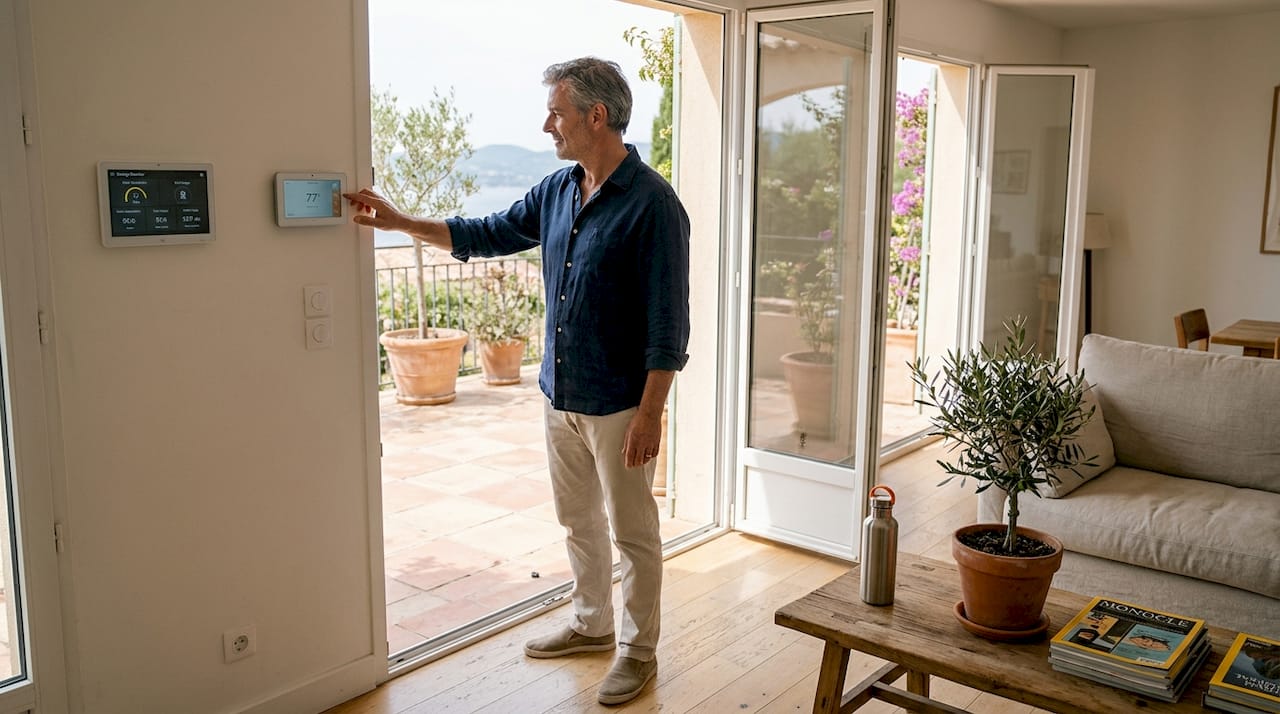
Owner adjusting eco-friendly luxury villa settings

Smart home integrations and digital solutions enhance security and comfort whilst providing quantifiable value metrics. AI-powered systems learn occupant preferences, adjusting lighting, temperature, and entertainment settings automatically. Virtual reality property tours enable international buyers to conduct detailed inspections remotely, compressing decision timelines from months to weeks. Biometric access controls and drone-based perimeter surveillance offer institutional-grade security without visible infrastructure compromising aesthetic appeal.

Traditional luxury property features versus 2026 expectations reveal stark contrasts:

Traditional luxury features2026 luxury expectations
Marble finishes and ornate detailsSustainable materials with carbon-negative certifications
Manual climate and lighting controlsAI-integrated systems with predictive algorithms
Standard security systemsBiometric access plus drone surveillance
Grid-dependent energySolar plus battery autonomy
Static architectural designModular spaces adapting to lifestyle changes

New luxury property types reshape emerging market segments fundamentally. Wellness-focused estates incorporate dedicated spa facilities, meditation gardens, and air purification systems addressing health-conscious buyers. Multi-generational compounds feature separate guest pavilions with independent access, accommodating extended family visits whilst preserving privacy. Live-work hybrids blend professional-grade office infrastructure with residential comfort, serving entrepreneurs requiring seamless business-leisure integration.

Investors evaluating trend adoption potential should follow this systematic approach:

  1. Assess property’s architectural flexibility for technology retrofits without compromising heritage character
  2. Calculate payback periods for sustainability upgrades through energy cost reductions and rental premium capture
  3. Verify local planning permissions for renewable energy installations in heritage-protected zones
  4. Evaluate proximity to fibre-optic infrastructure supporting bandwidth-intensive smart home systems
  5. Research comparable sales demonstrating premium valuations for certified sustainable properties

Pro Tip: Prioritise properties in municipalities offering tax incentives for energy-efficient retrofits. Nice, Cannes, and Antibes provide property tax reductions up to 15% for certified eco-renovations, improving investment returns whilst future-proofing assets.

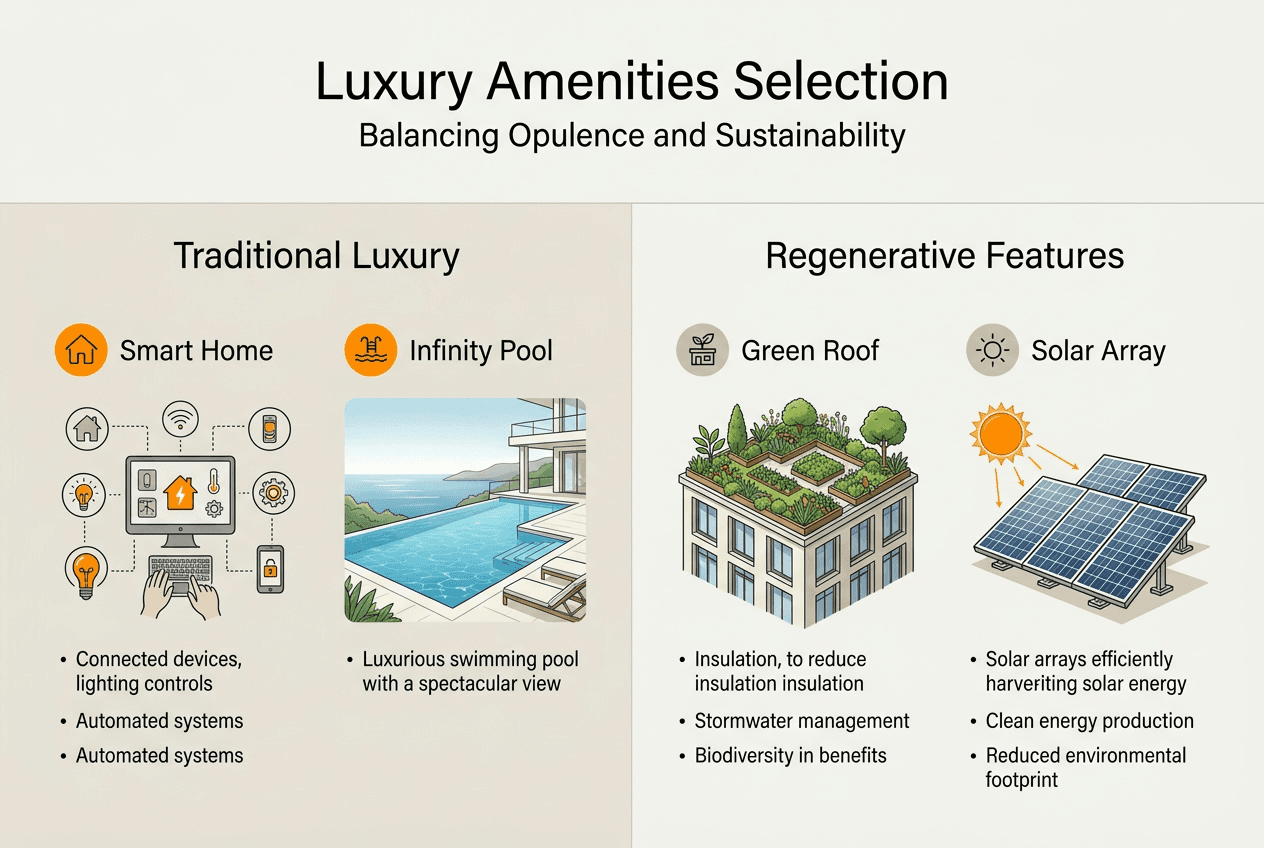
The integration of key Riviera property features with cutting-edge technology creates unprecedented buyer appeal. Infinity pools with automated water treatment and temperature regulation, outdoor kitchens featuring smart appliances, and landscaping with sensor-based irrigation systems blend Mediterranean lifestyle with operational efficiency. These enhancements attract premium tenants willing to pay €15,000-€25,000 weekly rates during peak season, generating yields that justify acquisition premiums.

Legacy investing: securing generational wealth through Côte d’Azur properties

Legacy investment within luxury real estate transcends simple asset acquisition, representing multi-generational wealth preservation strategies. Legacy-focused acquisitions remain popular, reflecting investors’ desire to create and preserve wealth across generations whilst providing family sanctuaries immune to market volatility. Côte d’Azur properties offer unique advantages: legal stability under French civil law, appreciation rates averaging 5-8% annually in prime locations, and rental income potential through elite seasonal lettings.

Factors supporting property appreciation on the Riviera include finite coastal land availability, stringent construction regulations limiting new supply, and sustained demand from global wealth holders seeking European lifestyle anchors. Monaco-adjacent properties in Roquebrune-Cap-Martin or Beausoleil capture prestige spillover whilst offering 40% cost savings versus Principality prices. Provençal mas in Mougins or Valbonne provide countryside tranquillity within 20 minutes of Cannes’ international connectivity.
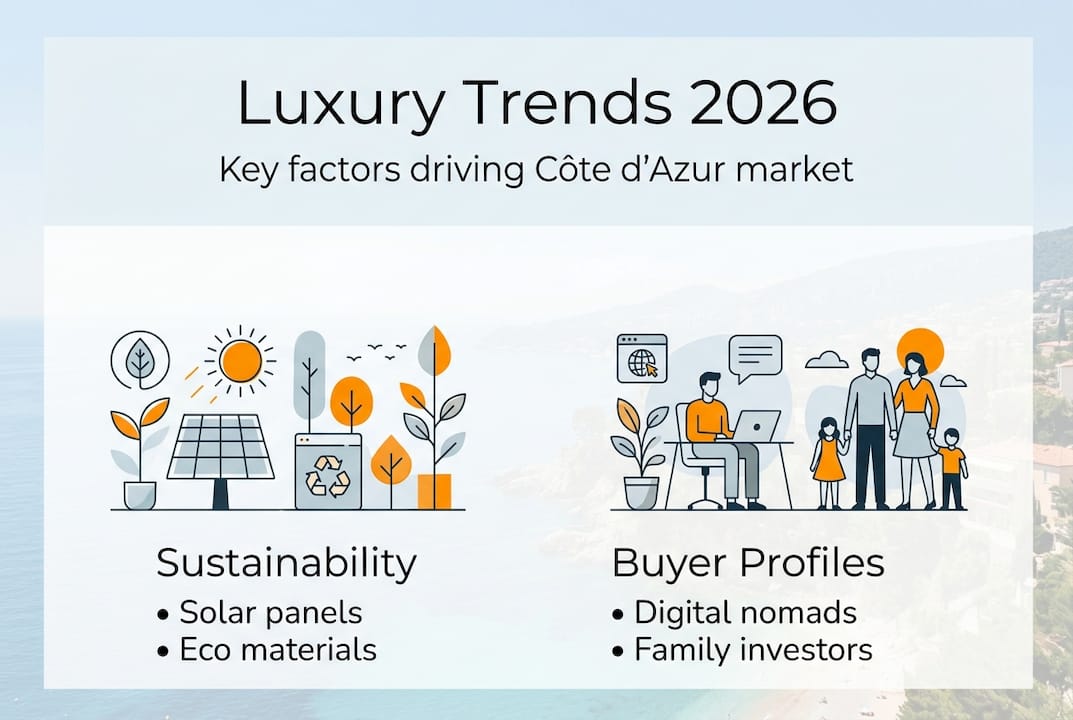
Infographic showing Côte d'Azur luxury trends

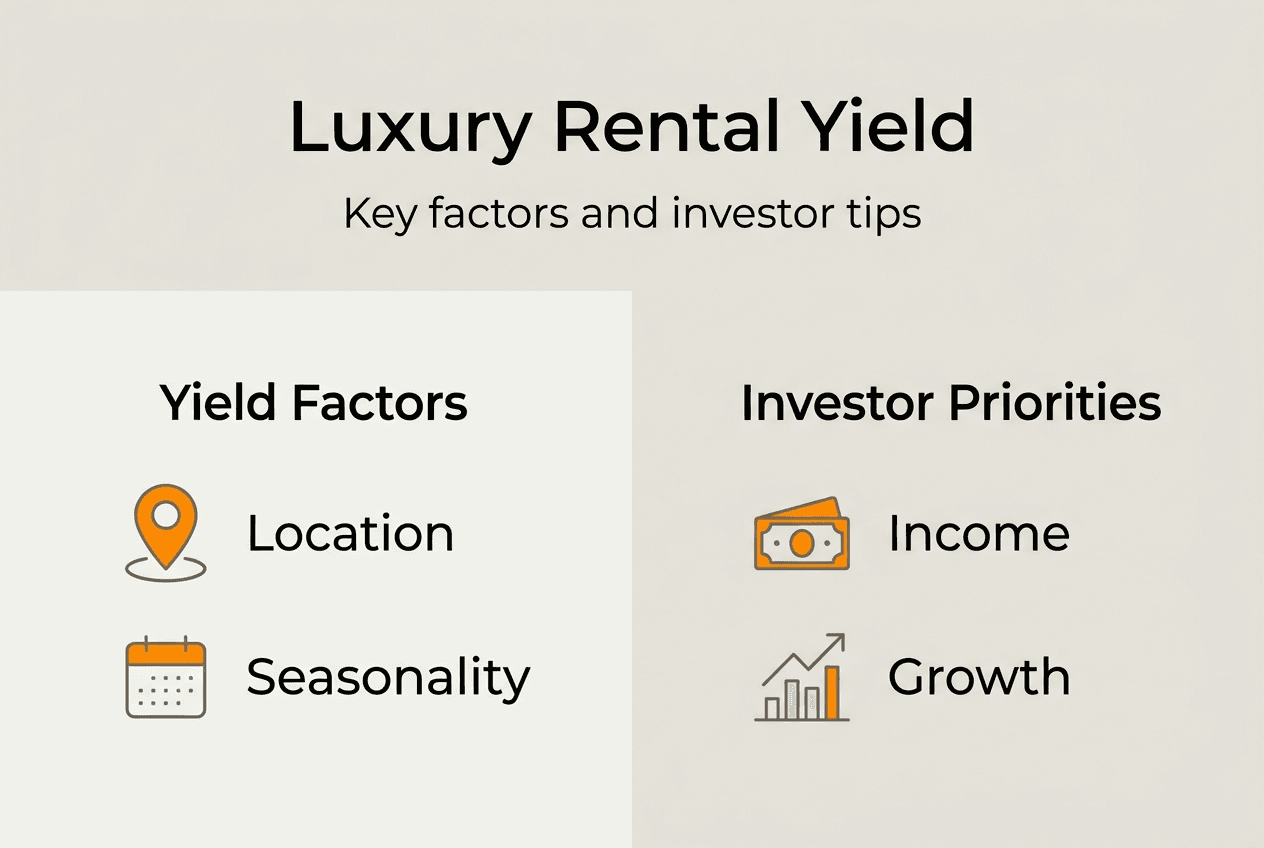
Income generation through seasonal lettings delivers 3-5% annual yields when professionally managed. Peak season rates for luxury villas reach €20,000-€40,000 weekly, with occupancy rates of 18-24 weeks annually generating €360,000-€960,000 gross income. Properly structured through French property management companies, these revenues offset holding costs whilst preserving capital appreciation potential.

French luxury property inheritance involves complex legal and tax considerations requiring specialist guidance. French forced heirship rules mandate minimum bequests to direct descendants, potentially conflicting with estate planning preferences. Société Civile Immobilière (SCI) structures enable flexible ownership transfer whilst providing tax optimisation opportunities. Non-resident owners face French inheritance tax on Riviera properties, with rates reaching 60% for distant relatives, necessitating advance planning through insurance policies or trust arrangements.

“Legacy properties on the Côte d’Azur function as family wealth anchors, providing tangible assets that appreciate steadily whilst offering lifestyle enjoyment across generations. The combination of capital preservation, income generation, and emotional value creates investment propositions unmatched by financial instruments.”

Strategic real estate investment approaches for legacy planning emphasise:

  • Acquiring properties in municipalities with stable governance and transparent legal frameworks
  • Selecting estates offering renovation potential to capture value appreciation through strategic improvements
  • Establishing SCI structures enabling gradual ownership transfer to heirs whilst maintaining control
  • Diversifying across property types to balance capital appreciation with income generation
  • Engaging French-qualified notaires and tax advisors experienced in international estate planning

Pro Tip: Consider properties with separate guest accommodations or staff quarters. These features enable rental income generation without compromising family use, whilst providing flexibility for multi-generational occupation as family circumstances evolve.

Curating high-value portfolios requires balancing emotional attachment with financial pragmatism. Properties delivering lifestyle enjoyment whilst appreciating steadily create optimal legacy outcomes. Estates in Èze offering panoramic sea views, walking distance to medieval village charm, exemplify this balance. Similarly, Cap d’Antibes properties combine coastal sentier access with privacy, attracting premium tenants and ensuring sustained appreciation.

Navigating market risks and opportunities in 2025

Economic and legislative risks impacting luxury properties demand vigilant monitoring in 2026. European Union tax harmonisation initiatives potentially affect non-resident ownership structures. French wealth tax reforms under discussion could alter holding cost calculations for high-value estates. Climate-related insurance premium increases in coastal zones add 0.3-0.8% annually to operational expenses, requiring factoring into return projections.

Opportunities emerge from shifting buyer demographics and asset class innovations. Digital entrepreneurs seeking cryptocurrency-friendly transactions represent growing market segments. Off-plan sustainable developments in Sainte-Maxime and Nice’s Mont Boron district offer structured investment advantages: VEFA contracts protecting buyers from cost overruns, ten-year construction warranties, reduced notary fees, and zero-interest payment plans during construction phases.

Due diligence and market analysis for Côte d’Azur investments require systematic approaches:

  1. Commission independent technical surveys assessing structural integrity, particularly for heritage properties requiring seismic compliance upgrades
  2. Verify title clarity through notaire research, identifying any servitudes or usage restrictions affecting property rights
  3. Analyse comparable sales within 500-metre radius over 24-month periods, adjusting for property-specific features
  4. Evaluate rental market depth through discussions with local agencies managing similar properties
  5. Model holding costs including property taxes, insurance, maintenance, and management fees against projected appreciation and rental income
  6. Assess municipality development plans for infrastructure projects potentially affecting property values positively or negatively

Price trends and transaction volumes for luxury estates reveal market dynamics:

LocationAverage €/m² 2026Transaction volume changeTypical property profile
Cap d’Antibes€18,500+8% year-on-yearWaterfront villas 300-600m²
Cannes Californie€14,200+12% year-on-yearHillside estates with sea views
Nice Mont Boron€11,800+15% year-on-yearContemporary apartments and villas
Saint-Tropez Peninsula€22,000+5% year-on-yearBeach-access properties
Èze€13,500+10% year-on-yearVillage properties with panoramas

Second home market dynamics in 2026 reflect sustained demand from Northern European buyers capitalising on remote work flexibility. British, German, and Scandinavian purchasers represent 40% of transactions above €3M, seeking properties offering year-round usability rather than purely summer residences. This trend favours locations with cultural amenities, international schools, and healthcare infrastructure supporting extended stays.

Elite investor behaviour patterns demonstrate increasing sophistication. Family offices conduct detailed financial modelling comparing Riviera property returns against alternative investments. Cryptocurrency wealth holders prioritise transaction speed and discretion, favouring platforms accepting digital currency payments. Multi-property portfolios balancing appreciation-focused trophy assets with income-generating rental properties become standard wealth management strategies.

Pro Tip: Monitor European Central Bank policy announcements closely. Rate reductions anticipated in late 2026 will likely trigger increased buyer activity as financing costs decrease, potentially compressing property selection timelines and intensifying competition for premium listings.

Explore exclusive Côte d’Azur luxury properties with expert guidance

Navigating 2026’s complex luxury market requires specialised expertise and exclusive access to off-market opportunities. Living on the Côte d’Azur connects discerning investors with carefully curated properties matching precise acquisition criteria, from Monaco-adjacent estates to Provençal mas offering legacy value. Our portfolio spans the Riviera’s most coveted locations, featuring luxury villas and penthouses with sustainability credentials, smart home integration, and income generation potential. We facilitate cryptocurrency transactions, providing seamless cross-border acquisition for digital wealth holders. Our advisors guide clients through due diligence, legal structuring, and portfolio optimisation, ensuring investments align with both lifestyle aspirations and financial objectives. Whether seeking trophy assets in Cap d’Antibes or value opportunities in emerging Sainte-Maxime, our team delivers bespoke solutions for sophisticated investors building generational wealth on the French Riviera.

Frequently asked questions

What are the top sustainable features luxury buyers seek in 2025?

Solar panel installations with battery storage systems top buyer priorities, enabling grid independence and reducing operational costs by 50-70% annually. Energy-efficient HVAC systems, triple-glazed windows, and natural ventilation designs maintaining comfort without excessive energy consumption follow closely. Smart climate controls learning occupant preferences and adjusting automatically demonstrate both environmental responsibility and technological sophistication. Sustainable materials including reclaimed wood, low-VOC finishes, and carbon-negative concrete appeal to environmentally conscious buyers. Properties holding LEED or BREEAM certifications command premiums of €400,000-€800,000 over comparable non-certified estates, reflecting market recognition of sustainability value.

How does technology enhance the value of luxury estates on the Côte d’Azur?

Integrated AI systems managing lighting, climate, security, and entertainment create seamless lifestyle experiences whilst reducing operational costs. Virtual reality tour capabilities enable international buyers to conduct detailed property inspections remotely, compressing decision timelines and expanding buyer pools. Automated security featuring facial recognition, drone surveillance, and real-time alerts provides institutional-grade protection without visible infrastructure compromising aesthetic appeal. Smart home technologies demonstrably reduce time-on-market by 15-25% whilst supporting rental premium capture of 10-18% compared to technologically basic properties. These systems particularly attract digital entrepreneurs and younger wealth inheritors expecting technology integration as baseline rather than premium feature.

What should investors consider for legacy planning with Côte d’Azur properties?

French inheritance laws mandate minimum bequests to direct descendants under forced heirship rules, requiring advance structuring to align with estate planning preferences. Société Civile Immobilière formations enable flexible ownership transfer whilst providing tax optimisation through gradual share gifting to heirs. Non-resident owners face French inheritance tax on Riviera properties at rates reaching 60% for distant relatives, necessitating insurance policies or trust arrangements mitigating tax exposure. Engaging notaires and tax advisors qualified in French law and experienced with international estate planning proves essential for structuring compliant, tax-efficient ownership. Properties selected should balance family lifestyle enjoyment with financial performance, ensuring emotional and economic value across generations.

Which Côte d’Azur locations offer the best value for luxury investors in 2026?

Sainte-Maxime emerges as a compelling value proposition, offering beachfront properties 30-40% below Saint-Tropez prices whilst delivering comparable lifestyle amenities and ferry access to the peninsula. Nice’s Mont Boron district combines sea views, proximity to international airport, and new sustainable developments with VEFA protections. Roquebrune-Cap-Martin captures Monaco prestige spillover at 40% discounts versus Principality prices whilst offering French tax advantages. Mougins and Valbonne provide Provençal authenticity within 20 minutes of Cannes connectivity, attracting families seeking village life with international school access. Each location offers distinct advantages depending on investor priorities regarding appreciation potential, rental yields, lifestyle preferences, and legacy planning objectives.

How do VEFA contracts protect buyers of new luxury developments?

Vente en l’État Futur d’Achèvement contracts legally bind developers to deliver properties matching specifications at agreed prices, protecting buyers from construction cost overruns. Payment schedules tie instalments to verified construction milestones, ensuring funds release only as work progresses satisfactorily. Ten-year structural warranties mandated under French law cover major defects, providing long-term security unavailable with resale properties. Completion guarantees through bank or insurance backing ensure project delivery even if developers encounter financial difficulties. Lower notary fees on new constructions, typically 2-3% versus 7-8% for resale properties, reduce acquisition costs significantly. Zero-interest payment plans during construction phases offered by many developers improve cash flow management for buyers, particularly those coordinating sales of existing properties with new acquisitions.

Recommended

  • High-end property explained: Côte d’Azur luxury guide 2026
  • Why Demand Luxury Apartments on the Côte d’Azur
  • Second Home Trends 2025: Shaping Riviera Legacies
  • Yacht Industry News — Daily Briefings | Seaventis — AI-Power
by Websols Servicedesk/24 March 2026/in Landingpage
https://www.livingonthecotedazur.com/wp-content/uploads/2026/03/1774311835296_Advisor-reviewing-luxury-Cote-d-Azur-market-1.jpeg 714 1280 Websols Servicedesk https://www.livingonthecotedazur.com/wp-content/uploads/2024/02/sitelogo150.png Websols Servicedesk2026-03-24 01:24:312026-05-07 12:45:11Luxury market trends on the Côte d’Azur: insights for 2026

Explore the ultimate list of luxury amenities for estates

Selecting the right luxury amenities for a Côte d’Azur estate is more than a matter of taste; it’s a strategic decision that shapes property value, lifestyle satisfaction, and legacy potential. High-net-worth investors face an abundance of options, from wellness sanctuaries and smart technology to bespoke entertainment spaces and advanced security systems. Each choice carries implications for resale appeal, maintenance commitments, and alignment with personal wealth preservation goals. This comprehensive guide distils the critical evaluation criteria and catalogues the premium amenities that define elite Riviera properties, empowering you to make informed decisions that honour both your vision and your family’s future.

Table of Contents

  • Key takeaways
  • How to evaluate luxury amenities for Côte d’Azur estates
  • Top luxury amenities redefining Côte d’Azur properties
  • Comparing luxury amenities: benefits and suitability
  • Discover exclusive Côte d’Azur luxury properties and investment guidance
  • Frequently asked questions

Key Takeaways

PointDetails
Evaluation frameworkEstablish a framework balancing lifestyle aspirations with investment pragmatism and clearly define whether you want a family sanctuary, a high yield rental, or a lasting wealth portfolio.
Four evaluation dimensionsAssess exclusivity, functionality, resale impact, and maintenance to determine suitability and value over time.
Core amenity categoriesPrioritise wellness facilities security systems entertainment spaces and smart technology as the main pillars of value.
Dual benefit strategySelect amenities that enhance lifestyle while strengthening market positioning and long term wealth preservation.
Legacy and resale impactEvaluate how features influence legacy potential and resale appeal.

How to evaluate luxury amenities for Côte d’Azur estates

Before you commit to any feature, establish a clear framework that balances lifestyle aspirations with investment pragmatism. Understanding luxury real estate key features is essential to investment success, particularly in a market as competitive and discerning as the French Riviera. Begin by defining your core objectives: are you seeking a family sanctuary for multi-generational gatherings, a high-yield seasonal rental, or a personal retreat that appreciates steadily over decades? Each goal demands a different amenity profile.

Next, assess four critical dimensions. Exclusivity measures how rare or distinctive the feature is within your target neighbourhood; a private spa might be standard in Cap d’Antibes yet exceptional in emerging enclaves like Sainte-Maxime. Functionality evaluates whether the amenity genuinely enhances daily living or serves as superficial decoration. Resale impact quantifies the feature’s appeal to future buyers, especially those seeking legacy properties that blend tradition with innovation. Maintenance considers ongoing costs, from staffing a concierge service to servicing smart climate systems, ensuring your investment remains sustainable.

Key amenity categories to explore include:

  • Wellness facilities: infinity pools, spa suites, saunas, hammams, and fitness studios that transform your estate into a personal retreat
  • Security systems: biometric access, integrated surveillance, and 24-hour monitoring that protect privacy and peace of mind
  • Entertainment spaces: private cinemas, wine cellars, tasting rooms, and outdoor kitchens designed for hosting
  • Smart technology: home automation, energy-efficient climate control, and integrated lighting that elevate convenience and sustainability

Pro Tip: Prioritise amenities that deliver dual benefits, enhancing both your lifestyle and the property’s market positioning. A spa suite with sustainable heating, for instance, appeals to wellness-focused buyers while reducing energy costs, amplifying long-term asset appreciation.

Top luxury amenities redefining Côte d’Azur properties

The Riviera’s most coveted estates share a constellation of features that transcend mere comfort, offering transformative experiences rooted in sensory delight and practical excellence. Wellness and smart home features top the list of sought-after luxury amenities, reflecting a global shift towards holistic living and environmental stewardship. These elements not only elevate daily routines but also signal to discerning buyers that your property embodies the pinnacle of contemporary luxury.

Wellness amenities have evolved from simple pools to immersive sanctuaries. Infinity pools overlooking the Baie des Anges or the Cap d’Antibes coastline create seamless visual continuity with the Mediterranean, whilst spa suites equipped with hammams, saunas, and hydrotherapy tubs offer year-round rejuvenation. Dedicated fitness studios with mirrored walls, climate control, and state-of-the-art equipment cater to health-conscious families and attract premium rental guests seeking active holidays. Outdoor yoga pavilions nestled among lavender and olive groves add a distinctly Provençal touch, blending wellness with the region’s natural beauty.

Estate wellness spa with infinity pool view

Security features have become non-negotiable for high-net-worth buyers who value discretion and safety. Biometric access controls, from fingerprint scanners to facial recognition systems, ensure only authorised individuals enter your estate. Integrated surveillance networks with discreet cameras, motion sensors, and remote monitoring via smartphone apps provide real-time oversight whether you’re in Monaco or Mumbai. Panic rooms and reinforced safe rooms offer ultimate peace of mind, whilst perimeter lighting and automated gates deter unwanted attention without compromising aesthetic elegance.

Entertainment spaces transform properties into social hubs. Private cinemas with acoustic panelling, tiered seating, and projection systems rival commercial theatres, perfect for family film nights or intimate screenings. Wine cellars with climate-controlled storage for hundreds of bottles, tasting counters, and sommelier-grade lighting celebrate the region’s viticultural heritage. Outdoor kitchens and bar areas with pizza ovens, grills, and refrigerated storage extend living spaces into terraces and gardens, ideal for hosting summer soirées under starlit skies.

Smart technology integrates seamlessly into luxury living. Home automation platforms control lighting, temperature, entertainment systems, and security from a single interface, whether you’re on-site or abroad. Energy-efficient climate control with zoned heating and cooling reduces environmental impact whilst maintaining perfect comfort in every room. Automated blinds and curtains adjust to sunlight, preserving interiors and enhancing privacy. Voice-activated assistants and integrated sound systems add convenience, whilst solar panels and battery storage align with the 2026 emphasis on sustainability, appealing to heirs who value ecological responsibility.

Additional luxury extras include bespoke landscaping with native Mediterranean flora, art galleries with museum-grade lighting and climate control, and concierge services that arrange everything from yacht charters to private chefs. These touches distinguish your estate from competitors, creating a narrative of exclusivity and care that resonates with legacy-minded investors.

Comparing luxury amenities: benefits and suitability

Once you’ve identified appealing features, a structured comparison clarifies which amenities deliver the highest returns relative to your investment and lifestyle goals. Comparative analysis helps identify the highest ROI amenities for legacy wealth properties, ensuring every euro spent enhances both enjoyment and asset value. The following table synthesises cost, maintenance, and ROI considerations across key categories:

Amenity categoryTypical cost (€)Annual maintenanceROI impactBest suited for
Wellness150,000–500,00010,000–30,000HighFamily estates, rental properties
Smart technology50,000–200,0005,000–15,000Very highAll property types
Security80,000–300,0008,000–20,000HighHigh-profile buyers, remote estates
Entertainment100,000–400,0005,000–12,000Medium-highSocial buyers, luxury rentals

Each category offers distinct advantages and trade-offs. Wellness amenities command substantial upfront investment but generate consistent appeal among health-conscious buyers and rental guests, particularly in spa-centric destinations like Menton or Èze. They require regular servicing, from pool filtration to spa equipment maintenance, yet the lifestyle benefits and market differentiation justify the commitment. Properties with comprehensive wellness facilities often achieve 8–12% higher valuations compared to similar estates without such features.

Smart technology delivers exceptional ROI with relatively modest initial costs and low ongoing maintenance. Systems integrate effortlessly into existing infrastructure, offering immediate convenience and energy savings. They appeal universally, from digital millionaires who appreciate cutting-edge innovation to families seeking effortless comfort. The sustainability angle, particularly solar integration and energy monitoring, aligns with 2026 eco-luxury trends, making these amenities future-proof investments.

Security features provide peace of mind and exclusivity, particularly for high-profile individuals or estates in secluded locations. Whilst costs can escalate with advanced biometric systems and 24-hour monitoring contracts, the protection of privacy and assets is invaluable. Security amenities rarely boost resale prices directly but prevent deal-breakers; their absence can deter cautious buyers, making them essential rather than optional.

Entertainment spaces offer medium-high ROI, especially in properties marketed for seasonal rentals or social gatherings. A private cinema or wine cellar becomes a memorable selling point, differentiating your estate in listings and viewings. Maintenance is generally light, limited to equipment servicing and climate control, making these features cost-effective over time. They suit buyers who prioritise lifestyle and hospitality, from families hosting multi-generational holidays to investors targeting affluent renters seeking unique experiences.

Pros and cons by category:

  • Wellness: Pros include universal appeal, lifestyle enhancement, and strong rental yields; cons involve high upfront costs and ongoing maintenance demands
  • Smart technology: Pros include affordability, energy savings, and future-proofing; cons are minimal, primarily limited to occasional software updates
  • Security: Pros include peace of mind and privacy protection; cons involve higher costs and potential complexity in system integration
  • Entertainment: Pros include memorable experiences and social appeal; cons include space requirements and niche buyer interest

Pro Tip: Combine complementary amenities to create a holistic luxury experience. Pairing a wellness spa with smart climate control and integrated lighting, for instance, maximises both functionality and market appeal, positioning your estate as a turnkey sanctuary that requires no compromise.

Discover exclusive Côte d’Azur luxury properties and investment guidance

With a refined understanding of luxury amenities and their strategic value, the next step is securing a property that embodies these features whilst aligning with your legacy vision. Living on the Côte d’Azur specialises in connecting discerning investors with off-market luxury real estate across the French Riviera, from Cap d’Antibes villas with infinity pools to Monaco-adjacent penthouses equipped with cutting-edge smart systems. Our portfolio includes estates that blend timeless elegance with contemporary amenities, ensuring your investment appreciates steadily whilst delivering unparalleled lifestyle satisfaction.

Beyond property access, we provide tailored luxury property acquisition guidance, navigating due diligence, legal audits, and financial structuring to protect your wealth and streamline transactions. Our expertise in investment strategies for legacy wealth ensures every amenity selection, customisation, and negotiation serves your long-term goals, transforming acquisitions into cherished heirlooms. Whether you seek a family sanctuary in Menton’s lemon-scented hills or a high-yield rental near Cannes’ Croisette, we connect your vision with reality. Contact us today to explore exclusive opportunities and secure your Riviera legacy.

Frequently asked questions

What are the must-have luxury amenities for Côte d’Azur estates?

Must-have amenities typically include wellness facilities such as infinity pools and spa suites, advanced security systems with biometric access, smart home automation for convenience and energy efficiency, and entertainment spaces like private cinemas or wine cellars. These features enhance daily living whilst supporting strong resale values and rental yields, making them essential for legacy-focused investors.

How do luxury amenities affect property resale value?

Premium amenities generally increase desirability and support higher resale prices by differentiating properties in a competitive market. Estates with comprehensive wellness, security, and smart technology features often achieve 8–15% higher valuations compared to similar properties lacking such amenities. They also attract a broader pool of discerning buyers, reducing time on market and strengthening negotiating positions.

Can I customise luxury amenities to suit my personal legacy goals?

Most luxury developments and bespoke estates allow extensive personalisation to align with legacy goals, from designing wellness sanctuaries that reflect family wellness traditions to integrating art galleries or music studios. Customising luxury property acquisition enhances lifestyle satisfaction and long-term property value, ensuring your estate becomes a cherished heirloom that resonates across generations. Tailored amenities also improve rental appeal, attracting guests who value unique, thoughtfully designed spaces.

Are sustainable amenities worth the investment in Côte d’Azur properties?

Sustainable amenities such as solar panels, energy-efficient climate control, and eco-friendly landscaping are increasingly valuable in 2026, appealing to environmentally conscious buyers and reducing operational costs. Properties with green certifications and renewable energy systems often achieve premium valuations and attract legacy-minded investors who prioritise ecological stewardship. These features also future-proof estates against rising energy costs and evolving regulations, making them sound long-term investments.

Recommended

  • 10 Must-Have Features on Your Luxury Property List – Living on the Côte d’Azur
  • 7 Essential Luxury Real Estate Checklists for Elite Buyers
  • 7 Examples of Luxury Property Features You Need to Know – Living on the Côte d’Azur
  • How to select luxury amenities for legacy investments 2026
by Websols Servicedesk/21 March 2026/in Landingpage
https://www.livingonthecotedazur.com/wp-content/uploads/2026/03/1774052172024_Estate-manager-on-terrace-with-luxury-amenities.jpeg 714 1280 Websols Servicedesk https://www.livingonthecotedazur.com/wp-content/uploads/2024/02/sitelogo150.png Websols Servicedesk2026-03-21 01:16:262026-03-21 01:16:29Explore the ultimate list of luxury amenities for estates

High-net-worth individuals and family offices seeking to acquire luxury property along the Côte d’Azur face a competitive market where strategic navigation separates successful legacy investments from costly missteps. This comprehensive guide walks you through every critical step, from initial preparation and expert engagement to financing, verification, and securing your Riviera estate for generational wealth. Whether you’re drawn to Cap d’Antibes’ private enclaves or Monaco-adjacent prestige, mastering these steps ensures your investment enhances both portfolio performance and family legacy.

Table of Contents

  • Preparing For Your Côte D’Azur Property Purchase
  • Step-By-Step Process For Acquisition And Specialist Engagement
  • Financing Luxury Property Purchases And Managing Transaction Mechanics
  • Verifying And Securing Your Côte D’Azur Luxury Investment For Legacy
  • Explore Exclusive Côte D’Azur Luxury Property Services
  • Frequently Asked Questions

Key takeaways

PointDetails
Strategic preparation maximises successClarifying investment goals and assembling expert teams creates competitive advantage in exclusive markets
Cash offers dominate competitive landscapeFull payment accelerates transactions and favours buyers in seller-driven Côte d’Azur market
Turnkey properties preferred for legacyModern move-in-ready estates align with UHNWI lifestyle whilst preserving long-term value
Private banks finance non-residents fullyUp to 100% lending available with currency hedging to mitigate USD/EUR exchange risks
Due diligence safeguards generational wealthLegal checks and estate planning secure ownership and align property with family office objectives

Preparing for your Côte d’Azur property purchase

Before you step into viewings or engage agents, clarify your wealth and legacy objectives. Are you seeking a family sanctuary for summer gatherings in Antibes’ yacht-dotted marinas, a rental investment yielding 2-4% annually, or a prestige asset for estate planning? Defining these goals shapes every subsequent decision, from location to property type. Understanding the 2026 luxury market dynamics is equally vital: France’s luxury real estate sector stands at €30 billion, with the Côte d’Azur demonstrating 3-5% annual growth in prime locations and yields of 2-4%, whilst Sotheby’s recorded 970 prestige sales totalling €1.95 billion in 2025, a 40% surge reflecting sustained elite demand.

Identify your preferred property profile early. Turnkey luxury villas with sea views, eco-certifications, and modern finishes command €2 million-plus premiums yet deliver immediate lifestyle value and lower maintenance risk compared to renovation projects. Explore regional trends to pinpoint hotspots: Cap d’Antibes offers seclusion amongst pine-scented coastal sentiers, whilst Nice’s Mont Boron towers provide Baie des Anges panoramas steps from Cours Saleya’s flower markets. Understanding what defines luxury on the Riviera, from biophilic design to ten-year warranties on new constructions, ensures you recognise genuine value.

Assembling your advisory dream team is non-negotiable. Engage luxury estate agents with deep Côte d’Azur networks, legal advisors experienced in French property law and cross-border transactions, and tax specialists who navigate wealth transfer structures for family offices. These experts coordinate due diligence, negotiate discreetly, and unlock off-market listings invisible to casual buyers. Their local knowledge spans everything from Menton’s lemon festival charm to Saint-Tropez’s Pampelonne beach allure, ensuring your choice aligns with lifestyle aspirations and investment benchmarks.

Pro Tip: Schedule initial consultations with at least three top-tier agents and two legal advisors to compare market access, fee structures, and strategic approaches before committing to representation.

Key preparation checklist:

  • Articulate investment goals: legacy sanctuary, rental yield, or prestige asset
  • Research 2026 market benchmarks: growth rates, yields, and transaction volumes
  • Identify turnkey versus renovation preferences based on risk tolerance
  • Assemble advisory team: agents, legal counsel, tax strategists
  • Establish budget parameters including financing and currency considerations

Step-by-step process for acquisition and specialist engagement

Once prepared, engage top-tier luxury property specialists who command access to the Riviera’s most exclusive inventory. For high-net-worth and family office buyers, networks like Sotheby’s and Savills or family office platforms such as MGS Monaco provide off-market opportunities and seamless coordination with financial and legal advisors. These specialists understand the nuances of discreet transactions, from negotiating with sellers who value privacy to structuring offers that reflect your strategic intent. Their relationships with developers and estate owners mean you view properties before public listings, gaining first-mover advantage in competitive micro-markets like Èze’s floral-festooned lanes or Cannes’ Croisette yacht-gazing boulevards.

Gaining off-market access transforms your search from reactive to proactive. Off-market properties often represent the finest estates, where owners prefer confidential sales to avoid publicity. Your specialist curates a shortlist aligned with your criteria, whether that’s a Provençal mas with solar arrays in the hills above Nice or a Monaco-adjacent penthouse with Lérins Island views. This exclusivity reduces competition and allows for tailored negotiations, often resulting in better pricing and terms than public auctions or open listings.

Coordinate comprehensive viewings that prioritise turnkey quality and lifestyle fit. Walk through properties with your advisory team, assessing everything from structural integrity to proximity to cultural landmarks like Antibes’ Picasso fortress or Menton’s Val Rahmeh botanical gardens. Evaluate finishes, energy efficiency, and potential for seasonal rentals if yield is a priority. Modern turnkey homes, especially new constructions with ten-year warranties and zero-interest payment plans, align seamlessly with UHNWI expectations for minimal hassle and maximum enjoyment. Your home hunting strategy should balance emotional appeal with hard data on appreciation potential and rental demand.

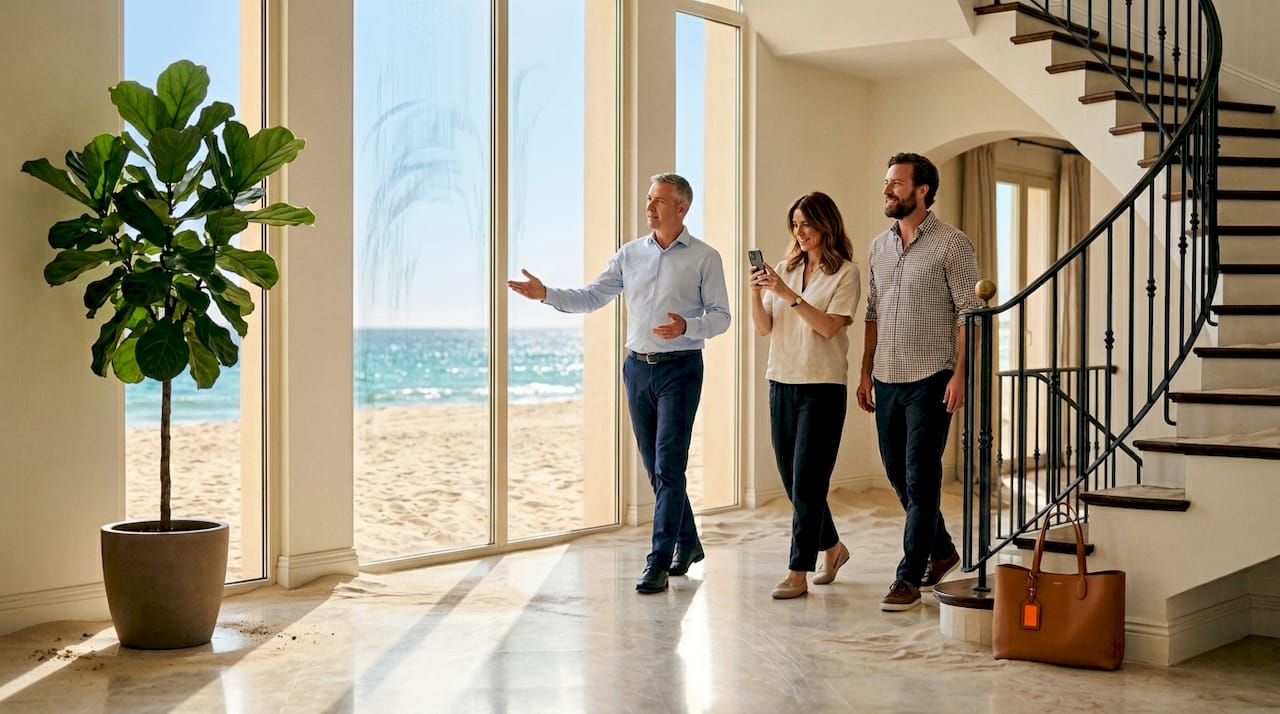
Advisor leading clients during villa walkthrough

Pro Tip: Request drone footage and virtual walkthroughs before in-person visits to shortlist efficiently, then schedule viewings during different times of day to assess light, noise, and neighbourhood activity patterns.

Acquisition process steps:

  1. Engage luxury estate agents with Côte d’Azur specialisation and off-market networks
  2. Coordinate with financial and legal advisors to align on budget, structure, and timeline
  3. Curate shortlist of turnkey properties matching investment and lifestyle criteria
  4. Conduct comprehensive viewings with advisory team, evaluating quality and location
  5. Prioritise modern estates offering warranties, energy efficiency, and legacy potential
  6. Negotiate discreetly through specialists, leveraging off-market exclusivity for favourable terms

Financing luxury property purchases and managing transaction mechanics

Cash offers dominate the Côte d’Azur’s luxury segment, delivering speed and seller confidence that financing contingencies cannot match. In a seller’s market where prime villas attract multiple bids, cash buyers gain preferential treatment, often securing properties before they reach broader circulation. If liquidity allows, paying in full eliminates loan approval delays, appraisal risks, and interest costs, accelerating your path from offer to ownership. This approach is particularly advantageous for family offices managing diversified portfolios where real estate represents a strategic allocation rather than a leveraged bet.

For buyers preferring to preserve capital or diversify investments, private banks offer financing up to 100% for non-residents, though 60-80% loan-to-value ratios are more common for luxury properties. These institutions assess your global wealth, not just income, enabling flexible structures tailored to cross-border investors. Interest rates in 2026 remain competitive as monetary policy eases, making leveraged purchases more attractive than in recent years. Work with your private banker to model scenarios: full cash versus partial financing, comparing opportunity costs of deployed capital against loan servicing and tax implications in your home jurisdiction.

Currency risk hedging is essential for USD or other non-euro investors. The EUR/USD exchange rate fluctuates, and a multi-million-euro purchase can see value swings of hundreds of thousands depending on timing. Forward contracts, options, or natural hedges through euro-denominated income streams mitigate this volatility. Your financial advisor should coordinate with currency specialists to lock in favourable rates or structure flexible hedging that adapts to market movements. This discipline protects your investment thesis from being undermined by macro factors beyond your control, ensuring the property’s intrinsic value and lifestyle benefits remain the focus.

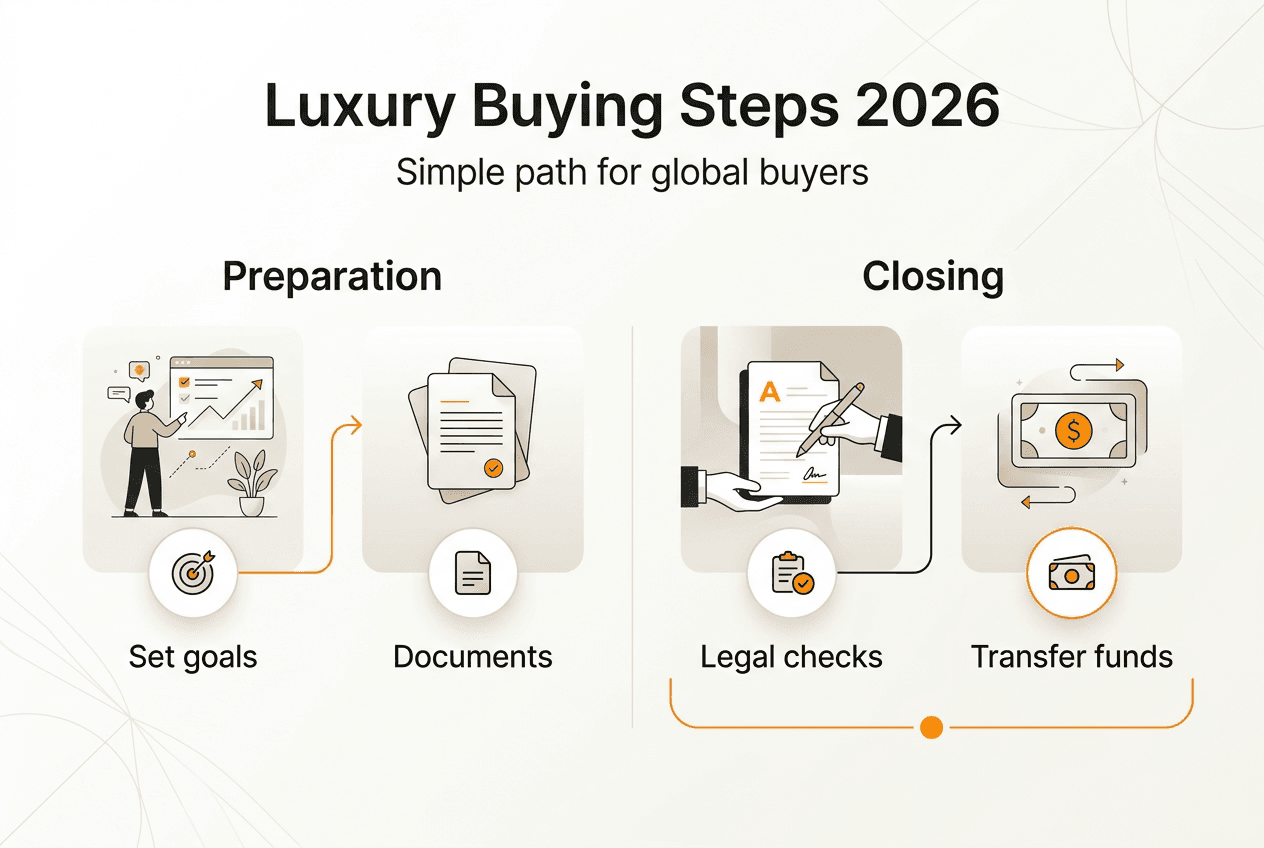
Understand France’s transaction timeline and legal mechanics. From accepted offer to completion typically spans 8-12 weeks, encompassing compromis de vente (preliminary contract), due diligence, notary processes, and final acte de vente signing. Budget for notary fees (approximately 7-8% of purchase price for resale properties, 2-3% for new builds), plus agent commissions if applicable. Coordinate financing approvals, legal checks, and tax structuring concurrently to avoid delays. Your advisory team orchestrates these moving parts, ensuring seamless progression from offer to ownership whilst you focus on planning your first Riviera summer in your new estate.

Pro Tip: Open a euro bank account early in the process to facilitate deposits, final payments, and ongoing property expenses, avoiding repeated currency conversion fees and exchange rate exposure.

Financing methodAdvantagesConsiderations
Full cash paymentSpeed, seller preference, no interest costsTies up liquidity, opportunity cost of capital
Private bank financingPreserves capital, leverages low rates, flexible structuresRequires global wealth assessment, servicing costs
Currency hedgingProtects against EUR exchange volatilityAdds complexity, requires specialist coordination

Key financing and transaction steps:

  • Evaluate cash versus financing based on liquidity and portfolio strategy
  • Engage private bank for non-resident lending up to 100% if preserving capital
  • Implement currency hedging to mitigate USD/EUR or other exchange risks
  • Coordinate legal, financial, and tax structures for efficient transaction flow
  • Budget for notary fees, agent commissions, and ongoing holding costs
  • Align timeline expectations: 8-12 weeks from offer to completion

Verifying and securing your Côte d’Azur luxury investment for legacy

Due diligence is the bedrock of secure ownership and long-term wealth preservation. Commission comprehensive legal checks on property title, ensuring no encumbrances, liens, or planning disputes cloud ownership. French law requires notaries to verify title clarity, but your independent legal advisor should cross-check cadastral records, zoning regulations, and any historical issues that might affect future development or resale. For coastal properties in Èze or Cap d’Antibes, confirm compliance with environmental protections and coastal setback rules that govern renovations and extensions.

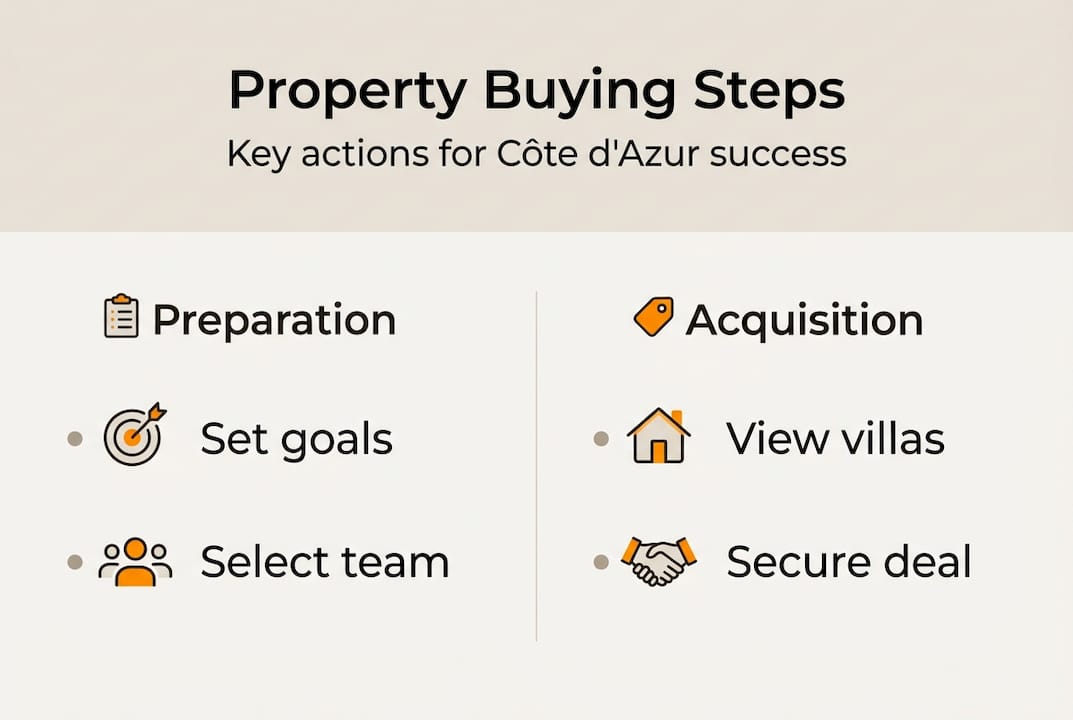
Infographic summarizing property buying steps

Compare the legacy and yield advantages of turnkey versus renovation properties. Turnkey modern estates favoured by UHNWI buyers offer immediate occupancy, predictable maintenance, and alignment with contemporary lifestyle expectations, from smart home systems to energy-efficient climate control. Renovation projects, whilst potentially offering character and customisation, introduce timeline risk, cost overruns, and regulatory hurdles that can delay enjoyment and strain budgets. For family offices prioritising legacy, turnkey properties provide stability and transferability, ensuring heirs inherit a fully functional, appreciating asset rather than an ongoing construction challenge.

Legal checks extend beyond title to encompass structural surveys, environmental assessments, and verification of declared rental income if purchasing an investment property. Engage independent surveyors to inspect foundations, roofing, plumbing, and electrical systems, particularly in older villas where hidden issues might lurk beneath charming facades. For properties marketed with rental yields, audit historical occupancy rates, management contracts, and guest reviews to validate projections. This rigour protects against overpaying for underperforming assets and ensures your investment thesis rests on solid evidence, not seller optimism.

Implement estate planning aligned with family office objectives. Structure ownership through entities that optimise tax efficiency, facilitate wealth transfer, and protect assets from future claims or jurisdictional changes. French law offers various holding structures, from Sociétés Civiles Immobilières (SCI) to offshore vehicles, each with distinct implications for inheritance tax, capital gains, and operational flexibility. Your tax advisors should model scenarios that balance immediate benefits against long-term legacy goals, ensuring the property serves multiple generations without triggering unnecessary fiscal burdens.

Document processes meticulously for ongoing portfolio management. Maintain digital and physical records of purchase contracts, due diligence reports, renovation receipts, and correspondence with advisors. This archive supports future refinancing, resale, or estate distribution, providing heirs with transparent provenance and simplifying transitions. For properties generating rental income, implement professional management systems that track bookings, maintenance, and financials, ensuring the asset performs as intended whilst you enjoy summers in Saint-Tropez’s Pampelonne beaches or winter escapes to Menton’s lemon-scented citadel rambles.

| Property type | Legacy advantages | Yield potential | Risk profile |
| — | — | — |
| Turnkey luxury villa | Immediate occupancy, low maintenance, lifestyle alignment | 2-4% annual rental yield | Low, predictable costs |
| Renovation project | Customisation, potential value-add through improvements | Variable, depends on execution | High, timeline and cost risks |
| New construction | Warranties, modern systems, energy efficiency | 2-4% yield, strong appreciation | Medium, developer reliability |

Verification and legacy planning steps:

  1. Commission comprehensive legal checks on title, planning, and property condition
  2. Engage independent surveyors for structural and environmental assessments
  3. Verify rental income claims through audits of occupancy and management records
  4. Structure ownership for tax efficiency and seamless wealth transfer to heirs
  5. Implement estate planning aligned with family office legacy objectives
  6. Document all processes for ongoing portfolio management and future transitions

Explore exclusive Côte d’Azur luxury property services

Navigating the Riviera’s luxury property landscape demands expertise, discretion, and access that only specialised platforms deliver. Discover off-market portfolios curated for high-net-worth investors, where turnkey estates and new constructions await beyond public view. Our acquisition strategies connect you with advisors who understand family office priorities, coordinating legal, financial, and lifestyle considerations seamlessly. Whether you’re drawn to Antibes’ coastal sentiers or Nice’s Baie des Anges panoramas, our network unlocks properties that enhance both portfolio performance and generational legacy. Explore investment frameworks tailored to 2026’s market dynamics, ensuring your Côte d’Azur acquisition becomes a cornerstone of enduring wealth.

Frequently asked questions

What are the advantages of buying turnkey luxury properties on the Côte d’Azur?

Turnkey properties offer immediate move-in readiness, eliminating renovation timelines and cost uncertainties that plague fixer-uppers. They align with UHNWI lifestyle expectations, featuring modern systems, energy efficiency, and warranties that protect your investment. For legacy planning, turnkey estates provide stable, transferable assets that heirs can enjoy without inheriting construction challenges, ensuring the property appreciates smoothly whilst serving family needs across generations.

How can non-resident investors finance luxury property purchases in France?

Private banks extend financing up to 100% for non-residents, assessing global wealth rather than local income, though 60-80% loan-to-value ratios are more typical for luxury properties. These flexible structures preserve capital for other investments whilst leveraging competitive 2026 interest rates. Currency hedging through forward contracts or options mitigates EUR exchange risk for USD or other non-euro investors, protecting purchase value from macro volatility and ensuring your investment thesis remains sound regardless of currency fluctuations.

Why is engaging luxury property specialists crucial for successful acquisition?

Specialists provide access to off-market listings, where the finest estates trade discreetly before reaching public platforms, reducing competition and enabling tailored negotiations. They coordinate complex legal, financial, and tax advisory, ensuring seamless transactions aligned with family office objectives. Their Côte d’Azur networks unlock exclusive opportunities in hotspots like Cap d’Antibes or Monaco borders, whilst their market intelligence guides pricing, timing, and strategic positioning for maximum legacy value.

What steps ensure the property purchase supports long-term wealth and legacy?

Thorough due diligence, including legal title checks, structural surveys, and environmental assessments, safeguards ownership from hidden liabilities and future disputes. Structuring ownership through tax-efficient entities facilitates wealth transfer and protects assets across generations. Estate planning aligned with family office goals ensures the property serves multiple heirs without triggering unnecessary fiscal burdens, whilst meticulous documentation supports ongoing portfolio management, refinancing, and eventual transitions, preserving both financial and emotional value for your family’s Riviera legacy.

Recommended

  • Property acquisition guide – Living on the Côte d’Azur
  • Master the stages of property purchase for luxury Côte d’Azur homes
  • How to Finance Luxury Real Estate on the Côte d’Azur
  • High-end property explained: Côte d’Azur luxury guide 2026
by Websols Servicedesk/20 March 2026/in Landingpage
https://www.livingonthecotedazur.com/wp-content/uploads/2026/03/1773974070107_Buyers-reviewing-Riviera-property-listings-in-apartment.jpeg 714 1280 Websols Servicedesk https://www.livingonthecotedazur.com/wp-content/uploads/2024/02/sitelogo150.png Websols Servicedesk2026-03-20 03:36:262026-03-20 03:36:29Steps to successful property buying on Côte d’Azur 2026

Many international buyers mistakenly believe that acquiring high-end property on the Côte d’Azur is complicated or restricted to French nationals. The reality surprises most: foreigners face no major barriers and can purchase luxury homes through a transparent, well-established notary process. This guide clarifies every step of buying mechanics, reveals current market dynamics with price benchmarks averaging €7,200 per square metre, and explores how sustainability and legacy investment strategies are reshaping the Riviera’s luxury landscape. You will discover practical tips to navigate rental regulations, planning restrictions, and opportunities in eco-luxury developments that combine timeless appeal with strong appreciation potential for generational wealth.

Table of Contents

  • How International Buyers Acquire High-End Properties In France
  • Market Dynamics And Price Benchmarks For Luxury Properties
  • Nuances And Opportunities In Sustainable And Legacy Luxury Property
  • Practical Tips To Navigate The Luxury Property Market On The Côte D’Azur
  • Discover Exclusive Luxury Properties And Expert Guidance On The Côte D’Azur

Key takeaways

PointDetails
No foreign buyer restrictionsInternational investors complete purchases through transparent notary processes with no ownership limitations
Strong price growthLuxury properties average €7,200/sqm with 3-5% annual appreciation and prime locations seeing double-digit gains
Sustainability premiumEco-luxury developments command higher valuations whilst older energy-inefficient properties trade at discounts
Legacy investment appealHigh-end Riviera estates offer tax-efficient wealth transfer with 3-5% annual yields via elite seasonal rentals

How international buyers acquire high-end properties in France

The international luxury buying steps begin with signing a compromis de vente, the preliminary sales agreement that commits both parties to the transaction. You will pay a deposit of 5-10% of the purchase price at this stage, securing your chosen property whilst due diligence unfolds. French law grants you a 10-day cooling-off period from the date you receive the contract, allowing you to withdraw without penalty if circumstances change or concerns arise.

Due diligence typically spans two to three months, during which your notary conducts comprehensive legal checks on title clarity, planning permissions, and any outstanding charges or easements. This period protects you from hidden liabilities and ensures the property’s legal status aligns with your investment goals. The buying process in south of France includes technical surveys for structural integrity and compliance with building regulations, particularly important for coastal villas exposed to salt air and seismic considerations.

Financing options for non-EU buyers require substantial down payments, typically 20-40% of the purchase price, with mortgage loans offering 60-80% loan-to-value ratios. However, cash purchases dominate the luxury segment, with over 70% of high-end transactions completed without financing. This reflects both the wealth profile of Riviera buyers and the complexity of securing international mortgages for properties exceeding €2 million.

Budget carefully for acquisition costs beyond the purchase price:

  • Notary fees: 7-8% for resale properties, 2-3% plus VAT for new constructions
  • Registration taxes and stamp duties included in notary fees
  • Agent commissions if applicable, typically 3-6% paid by seller
  • Technical surveys and legal due diligence: €2,000-€5,000
  • Currency transfer fees for international payments

One nuance that catches many buyers unprepared involves pre-emption rights, which grant neighbours and local authorities up to two months to exercise their right to purchase the property at the agreed price. Whilst rarely invoked for luxury estates, this 2-3 month delay can extend closing timelines and requires patience during the final stages.

Pro Tip: Engage notaries who specialise in international luxury transactions and maintain fluency in your language. Their expertise navigates French legal complexities whilst protecting your interests, and they often identify potential issues before they become costly obstacles.

Market dynamics and price benchmarks for luxury properties

Price levels across the Côte d’Azur vary dramatically based on location, views, and proximity to cultural landmarks. The average price sits at €7,200 per square metre for luxury properties, but this figure masks significant variation. Saint-Tropez commands up to €21,000 per square metre for waterfront villas near Pampelonne beach, whilst Menton’s hillside estates with lemon grove terraces start around €5,500 per square metre.

Cap d’Antibes epitomises the premium end, where Belle Époque villas with private beaches and mature gardens attract global elites seeking privacy and timeless elegance. These properties rarely appear on public listings, changing hands through discreet off-market transactions that preserve owner anonymity. Nice’s Mont Boron district offers panoramic Baie des Anges views from contemporary villas priced at €8,000-€12,000 per square metre, appealing to buyers who value proximity to the city’s cultural vibrancy and international airport.

The luxury market achieved €1.95 billion across 970 transactions in 2025, with the average deal reaching €2 million. Forecasts for 2026 project 3% growth driven by limited new supply and sustained international demand from North America, the Middle East, and Asia. High-net-worth individuals increasingly view Riviera property as a hedge against currency volatility and geopolitical uncertainty, with the region’s political stability and established legal framework providing reassurance.

Global events amplify the Côte d’Azur’s desirability and support price appreciation:

  • Cannes Film Festival in May draws entertainment industry elites and luxury brands
  • Monaco Grand Prix transforms the principality into a playground for automotive enthusiasts
  • Antibes Yacht Show showcases superyachts and attracts maritime investors
  • Nice Carnival and Menton Lemon Festival celebrate regional culture and heritage

These gatherings reinforce the Riviera’s status as a cultural epicentre where legacy wealth congregates, creating network effects that benefit property owners through rental demand and long-term appreciation. Prime locations near event venues see double-digit annual growth, outpacing the overall market’s 3-5% rise.

LocationAverage Price/sqmKey AppealAnnual Growth
Saint-Tropez€21,000Pampelonne beach lifestyle8-12%
Cap d’Antibes€18,000Privacy and Belle Époque estates10-15%
Monaco borders€16,000Tax efficiency and prestige7-10%
Nice Mont Boron€10,000City access with sea views5-8%
Menton hills€5,500Botanical heritage and value3-5%

Strict planning regulations constrain new construction, particularly along the coastline and hillside zones protected for environmental and aesthetic reasons. This supply limitation underpins price growth, as demand from international buyers consistently exceeds available inventory. Developers who navigate approval processes create substantial value, with new luxury apartments in Sainte-Maxime near Nartelle beach launching from €1.2 million and appreciating rapidly as construction completes.

Legacy investments via branded residences and sustainable properties outperform traditional luxury homes, combining location premiums with future-proof features that appeal to environmentally conscious heirs and tenants seeking wellness-oriented living spaces.

Nuances and opportunities in sustainable and legacy luxury property

Short-term rental regulations across Riviera municipalities demand careful compliance for investors planning to generate income from seasonal lets. Nice and Cannes require registration and limit change-of-use permissions, restricting how many days per year you can rent luxury properties to tourists. Antibes enforces similar rules, with penalties for unregistered rentals reaching €50,000 and potential property seizure for repeat violations.

These restrictions reshape investment strategies, favouring buyers who prioritise long-term appreciation over immediate rental yields. Legacy-focused investors welcome this shift, as it reduces neighbourhood turnover and preserves the exclusive character that attracted them initially. Properties in designated residential zones maintain higher values than those in tourist-heavy areas, where regulatory uncertainty creates pricing pressure.

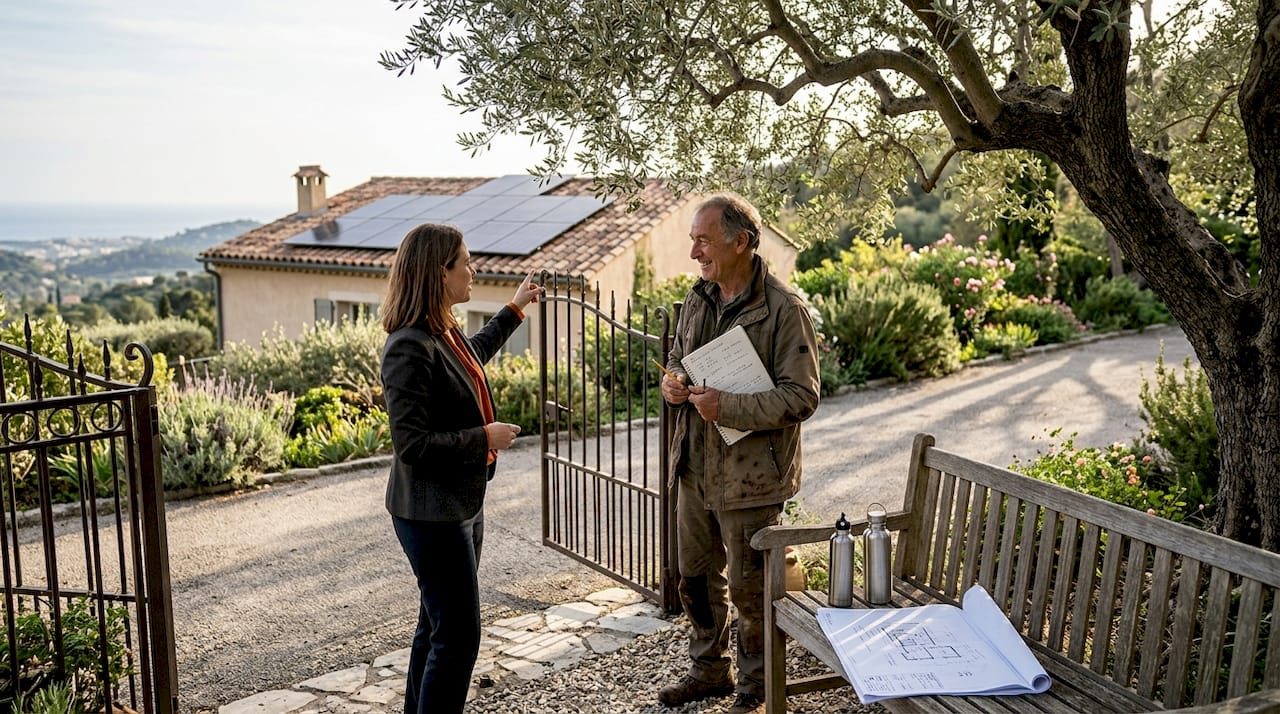
Consultant discusses villa’s sustainable features

Planning restrictions on coastal and hillside properties limit expansion possibilities, protecting the Riviera’s visual heritage from overdevelopment. You cannot add floors to existing villas in many communes, and extensions require approval that considers impact on neighbours’ views and environmental factors. Èze’s medieval village enforces particularly strict rules, preserving its floral-festooned lanes and Nietzsche trail vistas that draw visitors to gallery-hop and explore pebbled coves below.

Energy-inefficient older properties face market discounts as buyers increasingly prioritise sustainability and future regulatory compliance. France’s energy performance diagnostics classify properties from A (excellent) to G (poor), with the government planning to phase out rentals of F and G-rated homes by 2028. This creates opportunities for buyers willing to invest in renovations that improve insulation, install solar panels, and upgrade heating systems to modern heat pumps.

Sustainable luxury developments command premiums of 10-15% over comparable traditional properties, reflecting both construction costs and buyer preferences. These eco-villas feature:

  • Solar arrays generating surplus energy sold back to the grid
  • Rainwater harvesting systems for garden irrigation
  • Natural ventilation designs reducing air conditioning needs
  • Local stone and timber sourced from Provençal suppliers
  • Green certifications like HQE or BREEAM validating environmental claims

Legacy investors particularly favour properties combining prime location with sustainable features, recognising that future generations will demand environmental responsibility alongside luxury amenities. A restored Provençal mas near Saint-Agnès with modern eco-systems offers both heritage charm and forward-looking functionality, appealing to families seeking generational homes that honour the past whilst embracing the future.

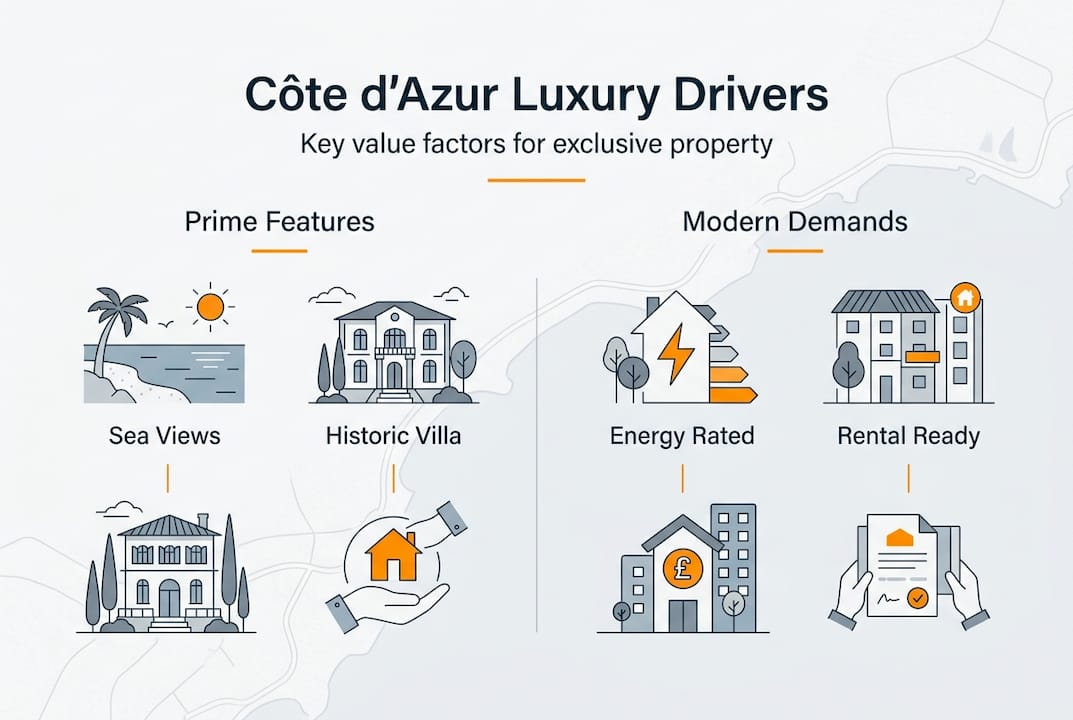
Infographic of Côte d’Azur luxury property drivers

Property TypeInitial Cost PremiumAnnual AppreciationEnergy CostsResale Advantage
Traditional luxuryBaseline3-5%HighDeclining demand
Sustainable luxury+10-15%5-8%LowStrong buyer interest
Eco-certified new build+15-20%7-10%MinimalPremium positioning

Pro Tip: Verify rental registrations and planning permissions during due diligence, requesting documentation from sellers and confirming status directly with local authorities. This prevents costly surprises and ensures your investment strategy aligns with regulatory reality.

Practical tips to navigate the luxury property market on the Côte d’Azur

Focus on off-market luxury listings to access exclusive properties before they reach public portals and trigger competitive bidding. These invisible luxury properties change hands through trusted networks of agents, notaries, and existing owners who value discretion. Building relationships with local specialists opens doors to Belle Époque villas in Cap d’Antibes or contemporary masterpieces overlooking Villefranche-sur-Mer’s deep-water bay, often at prices below comparable public listings.

Engage expert notaries familiar with international investment patterns and French regulations from your first property viewing. Their guidance prevents missteps around forced heirship rules, tax structuring, and cross-border wealth transfer that can complicate legacy planning. Notaries who regularly handle transactions for North American or Middle Eastern clients understand cultural expectations and communicate complex legal concepts in accessible language.

Conduct detailed due diligence on rental restrictions, planning permissions, and energy certifications before committing to purchase. Request copies of all relevant permits, particularly for properties with recent renovations or extensions that may lack proper approval. Verify that swimming pools, terraces, and outbuildings comply with current regulations, as retroactive compliance can cost tens of thousands of euros and delay your enjoyment of the property.

Consider sustainability as a priority to future-proof your investment and meet growing tenant and buyer demand for environmentally responsible properties. Even if you purchase a traditional villa, budget for energy improvements that reduce running costs and enhance marketability. Solar installations pay for themselves within 8-10 years through electricity savings and government incentives, whilst improving your property’s energy rating from D to B can increase value by 5-10%.

Build your portfolio with prime locations and eco-luxury features that support legacy wealth growth across generations:

  • Prioritise sea views and walking distance to cultural attractions
  • Select properties in municipalities with stable governance and clear planning policies
  • Invest in quality renovations using local craftsmen who understand Provençal building traditions
  • Maintain gardens with native Mediterranean plants requiring minimal water
  • Document all improvements and certifications for future buyers

Network with local specialists who understand the French Riviera luxury property market’s seasonal rhythms and buyer demographics. Attend Antibes Yacht Show receptions, Monaco Grand Prix hospitality events, and Cannes Film Festival property showcases to meet agents, developers, and fellow investors. These connections often surface pre-market opportunities and provide insights into emerging neighbourhoods before broader market recognition drives prices higher.

Pro Tip: Visit your target locations during different seasons to experience microclimates, tourist patterns, and community character. Menton’s winter warmth and lemon festival charm differ markedly from Saint-Tropez’s summer vibrancy, and your lifestyle preferences should guide location choices as much as investment metrics.

Discover exclusive luxury properties and expert guidance on the Côte d’Azur

We offer curated access to off-market, high-end properties tailored to discerning international investors seeking legacy homes on the French Riviera. Our portfolio spans Belle Époque villas in Cap d’Antibes, contemporary eco-luxury developments in Nice’s Mont Boron district, and restored Provençal mas near medieval villages like Èze and Saint-Agnès. Each property undergoes rigorous vetting for legal clarity, sustainability credentials, and appreciation potential before we present it to clients.

Our expert team guides you through acquisition complexities, ensuring seamless transactions that protect your interests whilst respecting the discretion high-net-worth families require. We coordinate with specialised notaries, conduct independent due diligence on planning permissions and energy certifications, and structure purchases to optimise tax efficiency and legacy planning. Our multilingual advisors understand cultural nuances and communicate in your preferred language, whether English, Arabic, Mandarin, or Russian.

Discover sustainable luxury options that preserve the Riviera’s heritage whilst delivering strong returns for generational wealth. We prioritise properties with solar installations, green certifications, and proximity to cultural landmarks that ensure enduring appeal. Our innovative approach includes accepting cryptocurrency payments, recognising that digital millionaires seek modern transaction methods alongside timeless real estate investments.

Pro Tip: Engage with us early in your property search to uncover exclusive opportunities and receive personalised investment advice tailored to your family’s legacy goals and lifestyle preferences.

FAQ

What defines high-end property on the Côte d’Azur?

High-end properties feature prime locations with sea views or proximity to cultural landmarks, premium construction using quality materials, and luxury amenities like infinity pools and landscaped gardens. These estates typically exceed €2 million in value and attract strong international demand from North America, the Middle East, and Asia. Properties in Cap d’Antibes, Saint-Tropez, and Monaco borders command the highest premiums due to scarcity and prestige.

Are there restrictions for foreign buyers of luxury homes in France?

No major restrictions exist for foreigners buying luxury property on the Côte d’Azur. You complete purchases through established legal and notary procedures identical to those for French nationals, with no ownership limitations or special permits required. Non-EU buyers may face stricter mortgage requirements, typically needing 20-40% down payments, but cash purchases dominate the luxury segment and avoid financing complications entirely.

How do sustainability and energy regulations impact luxury property values?

Properties not meeting energy efficiency standards often trade at discounts of 5-15% as buyers factor in renovation costs and future rental restrictions. France plans to phase out rentals of poorly rated properties by 2028, creating urgency for improvements. Sustainable developments with solar panels, green certifications, and low energy consumption command premiums of 10-20% and appeal strongly to legacy investors prioritising environmental responsibility for future generations.

What are typical fees and costs when buying a high-end property on the Côte d’Azur?

Buyers should budget 7-8% in fees for resale properties and 2-3% plus VAT for new constructions on top of the purchase price. These costs include notary fees, registration taxes, and stamp duties bundled together in the French system. Additional expenses cover technical surveys, legal due diligence, currency transfer fees for international payments, and potential agent commissions if applicable, typically adding another €5,000-€15,000 to total acquisition costs.

Recommended

  • Why Luxury Properties Appreciate on the Côte d’Azur
  • Luxury Home Prices: What Drives Côte d’Azur Value
  • Luxury Penthouses: Elevating Côte d’Azur Legacy
  • Côte d’Azur Luxury Property Management 2026: 15% Value Gain
by Websols Servicedesk/19 March 2026/in Landingpage
https://www.livingonthecotedazur.com/wp-content/uploads/2026/03/1773919162290_Sunlit-terrace-of-Cote-d-Azur-villa-with-sea-view.jpeg 714 1280 Websols Servicedesk https://www.livingonthecotedazur.com/wp-content/uploads/2024/02/sitelogo150.png Websols Servicedesk2026-03-19 12:20:362026-03-19 12:20:41High-end property explained: Côte d’Azur luxury guide 2026

Acquiring a luxury property on the Côte d’Azur demands more than capital, it requires strategic navigation through complex legal frameworks, market dynamics, and lifestyle considerations. In 2026, high-net-worth investors seek not merely residences but legacy assets that appreciate 5–8% annually whilst offering unparalleled Mediterranean living. This guide walks you through each critical stage, from defining your investment criteria to post-purchase stewardship, empowering you to make confident decisions that blend prestige with prudent wealth building. Whether you’re drawn to Cap d’Antibes’ secluded coastal paths or Nice’s vibrant Promenade des Anglais, understanding these stages transforms aspiration into ownership.

Table of Contents

  • Stage 1: Defining Your Criteria And Lifestyle Goals
  • Stage 2: Engaging Expert Advisors And Market Exploration
  • Stage 3: Due Diligence And Formal Offer Process
  • Stage 4: Completion And Post-Purchase Management
  • Explore Exclusive Luxury Properties And Expert Services On The Côte D’Azur
  • FAQ

Key takeaways

PointDetails
Preparatory stage sets foundationDefining precise criteria and lifestyle goals directs your search towards properties that align with legacy aspirations and investment horizons.
Legal and financial due diligence is criticalComprehensive inspections, title verification, and market valuation protect your investment before signing binding contracts.
Negotiation and acquisition require expert guidanceSpecialised agents and legal counsel navigate French property law nuances, ensuring favourable terms and smooth transactions.
Closing involves specific formalities in FranceThe notaire manages final contracts, tax payments, and registration, safeguarding your legal rights throughout completion.
Post-purchase management affects long-term valueStrategic property stewardship preserves and enhances your luxury asset’s appeal and return potential for future generations.

Stage 1: defining your criteria and lifestyle goals

Before exploring the Riviera’s sun-drenched villas and contemporary penthouses, you must crystallise what you truly seek from this investment. Defining clear criteria streamlines the search and ensures alignment with legacy goals. Your parameters shape every subsequent decision, from location to architectural style.

Consider these foundational elements:

  • Location preferences: Do you envision mornings on Antibes’ yacht-dotted marinas, or prefer Èze’s hilltop tranquillity with eagle-eye vistas over the Mediterranean? Proximity to Monaco’s prestige or Menton’s lemon-scented festivals influences both lifestyle and resale value.
  • Property type: A historic Belle Époque villa exudes timeless elegance, whilst a new-build penthouse in Nice’s Mont Boron delivers biophilic design and ten-year warranties. Each serves different aspirations.
  • Investment horizon: Are you securing a family sanctuary for generations, or planning seasonal rentals yielding 3–5% annually? Your timeline dictates renovation tolerance and management intensity.
  • Budget parameters: Beyond purchase price, factor in 5–7% transfer taxes for resale properties, annual property taxes, and potential VAT on new constructions. Transparent budgeting prevents surprises.
  • Lifestyle features: Privacy, security systems, infinity pools overlooking Baie des Anges, or walking distance to Cannes’ Croisette boutiques, these details transform a house into your Mediterranean haven.

Pro Tip: Create a weighted scorecard ranking must-haves versus nice-to-haves. This clarifies priorities when you encounter that breathtaking sea-view estate that stretches your budget but ticks every other box.

In 2026, sustainability matters. Eco-villas with solar arrays and green certifications appeal to heirs who value planetary stewardship alongside portfolio growth. Defining these criteria now saves months of misdirected viewings and positions you to act decisively when the ideal property emerges.

Agent and buyer inspect eco-villa solar panels

Stage 2: engaging expert advisors and market exploration

With your criteria mapped, assembling a trusted advisory team unlocks the Riviera’s most coveted opportunities. Engagement with specialised local agents reveals exclusive properties and smooths transaction complexities. These professionals navigate French property law, tax structures, and insider networks that casual buyers never access.

Your core team should include:

  • Luxury real estate agents: Select professionals with proven track records in high-value Riviera transactions. They access off-market listings, Belle Époque estates in Saint-Tropez, or contemporary villas near Monaco borders before public announcements.
  • Legal counsel: French property law differs significantly from common law systems. A bilingual avocat specialising in international acquisitions advises on ownership structures, inheritance implications, and contract terms.
  • Financial advisors: Tax-efficient structuring, whether through SCIs (Sociétés Civiles Immobilières) or direct ownership, impacts long-term wealth transfer. Advisors model scenarios considering your residency status and estate planning goals.
  • Market analysts: Understanding whether Cap d’Antibes commands €2M+ premiums for sea views versus hilltop alternatives informs negotiation strategies and realistic valuations.

Pro Tip: Interview multiple agents and request recent comparable sales data. The best advisors provide granular market insights, like how Sainte-Maxime’s beachside apartments appreciate differently than Nice’s urban towers.

Exploring the market involves both visible listings and private real estate sales channels. Attend exclusive viewings, walk neighbourhoods at different times, and experience local rhythms. Does the morning bustle at Cours Saleya’s flower market energise you, or do you prefer Saint-Agnès’ serene mountain trails? These visceral impressions guide decisions no spreadsheet captures.

Your chosen real estate agent becomes your Riviera interpreter, translating architectural nuances, neighbourhood dynamics, and regulatory considerations into actionable intelligence. This partnership transforms market complexity into strategic advantage.

Stage 3: due diligence and formal offer process

Identifying a promising property triggers the most critical phase: comprehensive due diligence. Due diligence and ‘compromis de vente’ are pivotal for securing property rights and mitigating risks. Skipping steps here jeopardises your entire investment, regardless of the property’s surface appeal.

Execute these investigations systematically:

  1. Physical property inspection: Commission structural surveys assessing foundation integrity, seismic resilience (crucial in hillside locations), and mechanical systems. For historic properties, evaluate restoration quality and hidden maintenance burdens.
  2. Legal title verification: Your avocat scrutinises land registry records, confirming clean title free from encumbrances, easements, or boundary disputes. French property history can be complex.
  3. Environmental assessments: Particularly for coastal estates, verify compliance with Loi Littoral restrictions and assess flood or erosion risks that climate change amplifies.
  4. Market value assessment: Analyse recent comparables within 500 metres, adjusting for view premiums, renovation standards, and unique features. This establishes your negotiation baseline.
  5. Regulatory compliance: Confirm planning permissions for any intended modifications, pool installations, or rental activities align with local urban plans.

Once satisfied, you submit a formal written offer through your agent. Negotiation ensues, potentially involving multiple rounds as seller and buyer align on price, included furnishings, and completion timelines. French sellers often expect respectful, justified offers rather than aggressive lowballing.

Upon agreement, both parties sign the compromis de vente (preliminary contract). This legally binding document outlines:

ElementDetails
Purchase priceFinal agreed amount in euros
DepositTypically 10% held in sequestration
Conditions precedentFinancing approval, planning permissions
Completion dateUsually 2-3 months from signing
Penalty clausesConsequences if either party withdraws

You have a statutory cooling-off period (délai de rétractation) of ten days post-signing to withdraw without penalty. Beyond this, forfeiting your deposit or facing legal action becomes likely if you abandon the purchase without valid contractual grounds.

Pro Tip: Ensure your compromis includes suspensive conditions protecting you if financing falls through or undisclosed structural issues emerge. Your avocat drafts these clauses to match your risk tolerance.

This stage demands patience and precision. Rushing due diligence to secure a coveted villa risks discovering costly surprises post-completion, when remedies become limited and expensive.

Stage 4: completion and post-purchase management

Approaching completion, the notaire (public notary) assumes centre stage. The closing process in France is governed by strict legal formalities requiring expert notaire guidance. Unlike agents who represent parties, notaires serve as impartial officers ensuring transaction legality and protecting all interests.

The notaire orchestrates:

  • Document preparation: Drafting the acte de vente (final deed of sale) incorporating all agreed terms, legal descriptions, and regulatory compliance confirmations.
  • Fund management: Holding your balance payment in secure accounts, disbursing to the seller only after registration completes.
  • Tax calculations: Computing transfer taxes (droits de mutation) around 5–7% for resale properties, or VAT for new constructions, ensuring accurate payment to authorities.
  • Title registration: Filing the acte with the land registry, establishing your legal ownership and protecting against future claims.
  • Post-sale formalities: Updating utility accounts, notifying tax authorities, and providing certified copies for your records.

You typically attend the signing appointment at the notaire’s office, though remote signing via power of attorney is possible for international buyers. Review the acte thoroughly beforehand; your avocat should flag any discrepancies from the compromis.

Upon completion, your focus shifts to stewardship. Luxury properties demand ongoing attention to preserve value and appeal. Consider these management approaches:

ApproachAdvantagesConsiderations
Private property managerPersonalised service, deep local knowledge, discreet handling of sensitive mattersHigher cost, requires vetting for reliability
Agency managementComprehensive services including rentals, maintenance coordination, emergency responseLess personalised, potential conflicts if agency also handles sales
Self-managementMaximum control, cost savings if you’re frequently presentTime-intensive, requires local contacts for trades and services

For properties generating rental income, professional management becomes essential. Agencies market to high-net-worth clientele, handle bookings, coordinate cleaning and maintenance, and ensure compliance with French rental regulations. They typically charge 15–25% of rental income but deliver hassle-free returns.

Regular maintenance preserves both aesthetic appeal and structural integrity. Schedule annual inspections of roofing, plumbing, and HVAC systems. For coastal properties, salt air accelerates corrosion; proactive treatments prevent expensive repairs. Landscaping maintenance keeps gardens lush, crucial for properties where outdoor spaces command premium valuations.

Insurance tailored to luxury properties protects against theft, natural disasters, and liability claims from guests or staff. French insurers offer policies covering high-value contents, art collections, and temporary vacancy periods.

Pro Tip: Establish relationships with trusted local tradespeople, electricians, plumbers, gardeners before you need them urgently. Your property manager or neighbours can provide recommendations, ensuring quality work at fair rates.

Long-term, consider enhancement projects that boost value: installing solar panels for energy independence, upgrading security systems with smart technology, or adding wellness facilities like saunas or home gyms that appeal to future buyers. These investments, aligned with 2026’s sustainability and wellness trends, position your property as a timeless legacy asset appreciating steadily whilst delivering exceptional lifestyle returns.

Explore exclusive luxury properties and expert services on the Côte d’Azur

Navigating the Riviera’s luxury market demands insider access and specialised expertise. Our platform connects you with off-market luxury properties that never reach public listings, from restored Provençal mas to contemporary sea-view penthouses. Each property undergoes rigorous vetting, ensuring you explore only the finest opportunities aligned with your legacy vision.

Browse our curated villa and penthouse listings spanning Menton’s botanical tranquillity to Saint-Tropez’s vibrant harbour energy. Whether you seek a family sanctuary or a high-yield seasonal rental, our portfolio represents the Riviera’s most coveted addresses. We accept cryptocurrency payments, recognising how digital wealth builders prefer transacting in their native assets.

Our luxury property acquisition services guide you through every stage outlined in this article, from initial criteria definition to post-purchase management. We coordinate legal counsel, financial advisors, and property managers, ensuring seamless transactions that protect your interests whilst honouring the Riviera’s unique regulatory landscape. Your legacy deserves this level of dedicated expertise.

FAQ

What is a ‘compromis de vente’ and why is it important?

The compromis de vente is a preliminary contract that legally binds both buyer and seller to the property transaction, typically requiring a 10% deposit held in sequestration. It outlines all sale terms, including price, completion date, and conditions precedent such as financing approval or planning permissions. This document protects your interests by formalising the agreement whilst allowing a ten-day cooling-off period for buyers to withdraw without penalty. Once this period expires, abandoning the purchase without valid contractual grounds risks forfeiting your deposit and potential legal action.

How do taxes impact luxury property purchases on the Côte d’Azur?

Transfer taxes (droits de mutation) typically amount to 5–7% of the purchase price for resale properties, paid at completion and covering registration and local authority fees. New constructions instead incur VAT at 20%, though reduced rates may apply to certain affordable housing schemes. Beyond acquisition, annual property taxes (taxe foncière) and residence taxes (if applicable) contribute to ongoing holding costs, varying by commune and property value. Engaging a financial advisor helps structure ownership to optimise tax efficiency, particularly for international buyers navigating French inheritance and wealth taxes.

What are the benefits of using a notaire in the French purchase process?

The notaire acts as an impartial legal officer appointed by the state, ensuring all contracts comply with French property law and protecting both buyer and seller interests equally. They manage critical tasks including title verification, fund transfers held in secure sequestration, tax calculations and payments to authorities, and final registration of your ownership with the land registry. Their involvement guarantees transaction legality and provides recourse if disputes arise post-completion. Unlike agents who represent specific parties, notaires’ neutral position offers assurance that your purchase proceeds correctly under French legal frameworks.

How long does the typical luxury property purchase process take on the Côte d’Azur?

From initial offer to completion, expect 2–4 months for most transactions, though complexity can extend timelines. The compromis de vente signing usually occurs 2–4 weeks after offer acceptance, followed by a 2–3 month period for financing finalisation, remaining due diligence, and notaire document preparation. Off-plan purchases of new constructions involve longer horizons, often 12–24 months from reservation to delivery, with staged payments aligned to construction milestones. Engaging experienced advisors and responding promptly to documentation requests keeps your transaction on schedule, whilst allowing sufficient time for thorough due diligence that protects your investment.

Can international buyers secure financing for Côte d’Azur luxury properties?

Yes, though requirements differ from domestic borrowers. French banks typically lend to international buyers with strong financial profiles, requiring 30–40% deposits for luxury properties versus 20% for residents. You’ll need to demonstrate stable income, existing assets, and creditworthiness through documentation translated into French. Some international private banks offer bespoke financing for high-net-worth clients purchasing Riviera properties, with terms reflecting your broader relationship. Alternatively, leveraging equity from existing properties or liquid assets in your home country may provide more flexible, faster financing. Your financial advisor can model scenarios comparing French mortgages against alternatives, optimising your capital efficiency whilst securing your dream Riviera estate.

Recommended

  • Property acquisition guide – Living on the Côte d’Azur
  • How to Finance Luxury Real Estate on the Côte d’Azur
  • Luxury real estate French Riviera: Villa or penthouse on the Côte d’Azur – Living on the Côte d’Azur
  • How to Buy in Cannes: Secure Your Riviera Legacy Estate
by Websols Servicedesk/18 March 2026/in Landingpage
https://www.livingonthecotedazur.com/wp-content/uploads/2026/03/1773793485498_Couple-reviewing-villa-purchase-above-Riviera-coast.jpg 768 1376 Websols Servicedesk https://www.livingonthecotedazur.com/wp-content/uploads/2024/02/sitelogo150.png Websols Servicedesk2026-03-18 01:24:572026-03-18 01:25:01Master the stages of property purchase for luxury Côte d’Azur homes

Selecting the right luxury amenities for a legacy property on the Côte d’Azur demands more than a catalogue of opulent features. High-net-worth investors seek a delicate equilibrium: modern comfort paired with sustainable, regenerative systems that preserve value across generations. In 2026, the most coveted estates blend spa-worthy indulgence with solar arrays, native gardens, and smart home automation, commanding premiums while safeguarding family wealth. This guide walks you through clarifying your investment goals, preparing your property for integration, executing a strategic amenity selection, and verifying quality to ensure your Riviera sanctuary becomes an heirloom, not merely a holding.

Table of Contents

  • Understanding Your Legacy Investment Goals And Property Context
  • Preparing Your Property For Luxury And Sustainable Amenities Integration
  • Executing Luxury Amenities Selection: Balancing Opulence With Sustainability
  • Verifying And Enhancing Your Luxury Amenities For Market Success
  • Explore Luxury Real Estate Offerings On The Côte D’Azur
  • What Luxury Amenities Are Essential For Legacy Investments On The Côte D’Azur?
  • How Important Is Sustainability When Selecting Luxury Real Estate Amenities?
  • What Are Regenerative Amenities And How Do They Differ From Traditional Sustainable Features?
  • How Can I Verify The Quality And Authenticity Of Luxury Sustainable Amenities In A Property?

Key takeaways

PointDetails
Balance luxury and sustainabilityAmenities should deliver modern comfort while incorporating regenerative, eco-friendly features that enhance long-term value.
Turnkey properties command premiumsRecently renovated, well-located estates with integrated amenities sell faster and at higher prices in competitive markets.
Legacy alignment is essentialDesign, amenities, and environmental impact must coalesce to protect family wealth and appeal to future buyers.
Smart tech and eco-systems attract buyersAutomation, spa facilities, and renewable energy installations resonate with today’s affluent, socially conscious investors.
Regenerative development boosts valueProperties fostering positive ecosystem and community outcomes outperform traditional luxury in resilience and market appeal.

Understanding your legacy investment goals and property context

Before you commission a wine cellar or infinity pool, pause to define your core legacy investment objectives. Are you securing a family retreat for decades, maximising seasonal rental yields, or positioning for resale within five years? Each goal shapes your amenity priorities. A multigenerational sanctuary demands robust, low-maintenance systems and timeless design, while a rental asset thrives on turnkey appeal and cutting-edge automation that wows jet-setting tenants.

The Côte d’Azur’s micro-markets further refine your strategy. Cap d’Antibes whispers exclusivity, its coastal sentiers and Provençal market hauls attracting buyers who value privacy and understated elegance. Monaco’s borders, by contrast, pulse with younger families drawn by prestige schools and yacht-gazing Croisette promenades, as evidenced by younger families moving to Monaco, influencing demand for child-friendly gardens and home offices. Nice’s Mont Boron sea-view towers cater to urbanites craving Baie des Anges panoramas within walking distance of Cours Saleya’s flower-fueled feasts.

Understanding buyer profiles is equally vital. Today’s affluent purchasers expect modern city-style turnkey properties, yet they crave regional authenticity: terracotta tiles, lavender-laced terraces, and Nietzsche trails in Èze’s floral-festooned lanes. The selection of luxury amenities should align with design and lifestyle preferences of your target demographic. Balancing these expectations with local culture ensures your estate resonates both emotionally and financially.

Pro Tip: Prioritise amenities that enhance everyday living and long-term market appeal based on demographic trends. A heated saltwater pool may delight families, while a biophilic spa pavilion captures the imagination of wellness-focused investors.

For deeper insights into aligning amenities with Riviera market dynamics, explore French Riviera luxury investment insights and comprehensive luxury real estate checklists. Detailed French Riviera property market data further illuminates buyer behaviour and price trajectories across communes.

Preparing your property for luxury and sustainable amenities integration

Your property’s foundation dictates which amenities flourish. Brand new or recently renovated properties attract the highest demand, commanding premiums and accelerating sales. If your estate predates 2020, commission a thorough structural and aesthetic audit. Outdated plumbing, inefficient HVAC, or crumbling facades undermine even the most lavish amenities, eroding buyer confidence and legacy value.

Architect and contractor discuss luxury renovation

Architectural design must support both aesthetic luxury and sustainable practices. Incorporate passive solar orientation to reduce energy loads, specify triple-glazed windows for thermal efficiency, and select local stone and timber that echo Provençal heritage while minimising carbon footprints. Preserve natural landscape elements, mature olive groves and native garrigue, to amplify ecological harmony and legacy appeal. A villa framed by centuries-old cypresses carries a narrative no new planting can replicate.

Follow these preparatory steps to ensure seamless amenity integration:

  1. Assess property condition through independent surveys covering structure, systems, and compliance with 2026 energy codes.
  2. Plan renovations that marry luxury finishes with sustainable infrastructure, such as underfloor heating powered by heat pumps.
  3. Integrate eco-friendly architectural elements like green roofs, rainwater harvesting, and solar panel arrays discreetly positioned to preserve sightlines.
  4. Select landscapes and amenities that respect topography and microclimates, ensuring low-maintenance beauty and resilience.
  5. Confirm local regulatory compliance, particularly for coastal zones and protected heritage areas, to avoid costly retrofits.

As one market observer notes:

The most liquid properties are those which are totally renovated and turn key and competitively priced, appealing to buyers seeking immediate enjoyment without renovation headaches.

This turnkey expectation extends to amenities. Buyers want to arrive, uncork a Bandol rosé on the terrace, and savour Pampelonne paddleboards within hours, not months of contractor chaos. By preparing your property’s bones and systems first, you create a canvas for amenities that dazzle without compromise.

For guidance on integrating sustainable luxury from the ground up, review luxury development in Riviera strategies. The regenerative development benchmark offers a framework for transforming properties into net-positive assets that enrich ecosystems and communities.

Executing luxury amenities selection: balancing opulence with sustainability

With goals clarified and property prepared, you’re ready to curate amenities that embody both indulgence and stewardship. Follow this step-by-step approach to harmonise opulence with regenerative impact.

Step 1: Identify core amenity categories. Luxury legacy properties on the Côte d’Azur typically feature smart home automation for climate, lighting, and security; spa facilities including hammams, saunas, and massage rooms; outdoor living spaces such as infinity pools, summer kitchens, and terraced gardens; and bespoke design elements like wine cellars, private cinemas, and art galleries.

Infographic contrasting luxury and regenerative amenities

Step 2: Evaluate sustainability credentials. For each category, assess energy efficiency ratings, renewable energy integration (solar thermal, photovoltaic, geothermal), water conservation systems (greywater recycling, drip irrigation), and native landscaping that supports pollinators and reduces maintenance. Prioritise suppliers with verifiable certifications: LEED, BREEAM, or Passive House standards.

Step 3: Compare typical luxury versus regenerative features. The table below illustrates how regenerative amenities elevate traditional luxury:

Amenity categoryTypical luxury featureRegenerative luxury feature
PoolChlorine infinity pool with heatingSaltwater pool with solar heating and biofilter ecosystem
LandscapingImported exotic plants with irrigationNative Mediterranean garden with rainwater harvesting
EnergyGrid electricity with backup generatorSolar array with battery storage and net-positive export
SpaElectric sauna and steam roomInfrared sauna and hammam powered by solar thermal
Home automationSmart lighting and climate controlAI-optimised energy management reducing consumption 30%

Step 4: Prioritise amenities with measurable environmental and social benefits. The integration of sustainable amenities is increasingly valued by high-net-worth individuals, driving demand and potentially increasing property values. Regenerative features, such as permaculture gardens that produce heirloom vegetables or greywater systems that nourish orchards, deliver tangible lifestyle enhancements while reducing operational costs.

Step 5: Consult architects and developers experienced in regenerative luxury. Their expertise ensures integration quality, from concealing solar panels within terracotta rooflines to designing spa pavilions that double as passive cooling towers. They navigate permitting complexities in heritage zones and coastal buffers, safeguarding your timeline and budget.

Pro Tip: Opt for regenerative luxury amenities that provide net-positive environmental impact and enhance property prestige. A villa that generates surplus energy or restores native habitats commands a narrative premium, appealing to institutional investors and socially conscious families alike.

For a comprehensive understanding of how amenities influence value, consult luxury real estate features and value analyses. Practical acquisition strategies are detailed in investing in French Riviera real estate guides. Broader trends in eco-conscious high-end living underscore the market shift towards sustainability.

Verifying and enhancing your luxury amenities for market success

Selection is only half the equation. Verifying quality and maintaining performance protects your legacy investment and market competitiveness. Begin by confirming that luxury amenities meet brand standards and hold sustainability certifications. Request documentation for LEED ratings, Energy Star appliances, and FSC-certified timber. Third-party inspections validate claims, ensuring your solar array delivers promised output and your greywater system complies with local health codes.

Maintenance plans focused on sustainability reduce long-term operational costs. Schedule annual servicing for heat pumps, solar inverters, and biofilter pools to preserve efficiency. Native landscaping requires less water and fertiliser than exotic imports, trimming annual expenses while enhancing biodiversity. Regenerative real estate reduces operational costs and improves resilience, increasing property value over time.

The table below compares costs and benefits of traditional versus sustainable and regenerative amenities over a ten-year horizon:

Amenity typeInitial cost premiumAnnual operating costTen-year total costResale value impact
Traditional luxury poolBaseline€5,000€50,000Neutral
Sustainable saltwater pool+15%€3,000€30,000 + premium+5% to 8%
Regenerative biofilter pool+25%€2,000€20,000 + premium+10% to 15%
Standard HVACBaseline€4,000€40,000Neutral
Heat pump with solar assist+30%€1,500€15,000 + premium+8% to 12%

Common verification steps include:

  • Review certifications from recognised bodies (LEED, BREEAM, Energy Star) to confirm sustainability claims.
  • Inspect installations with independent engineers to validate workmanship and performance specifications.
  • Confirm supplier credentials, ensuring manufacturers offer warranties and local service networks.
  • Assess ongoing operational impact through energy audits and water usage monitoring to identify optimisation opportunities.

Ongoing monitoring and upgrades keep your property market competitive and legacy-worthy. Smart home platforms track energy consumption in real time, alerting you to inefficiencies before they escalate. Periodic landscape assessments ensure native plantings thrive and evolve with microclimates. As battery storage technology advances, retrofitting older solar arrays with next-generation systems can boost self-sufficiency and appeal.

For step-by-step acquisition and verification guidance, consult the luxury real estate buying guide Riviera. Updated Riviera property market trends provide context for timing upgrades and positioning your estate for optimal resale.

Explore luxury real estate offerings on the Côte d’Azur

You’ve mastered the art of selecting, integrating, and verifying luxury amenities that honour legacy and sustainability. Now, translate that knowledge into action by discovering exclusive properties tailored to your vision. Living on the Côte d’Azur connects discerning buyers with off-market luxury properties Côte d’Azur that rarely surface on public listings, offering privacy, prestige, and first-mover advantage.

Benefit from expert advice on luxury property acquisition Riviera strategies that protect and enhance your investment value. Our specialists navigate legal audits, technical surveys, and financial forecasts, ensuring your acquisition is seamless and secure. Explore eco-luxury property French Riviera estates that epitomise the blend of elegance and environmental stewardship, from Sainte-Maxime’s beachside designer apartments to Monaco-adjacent villas with solar arrays and native gardens.

Pro Tip: Engage early with specialists to secure the best selection of turnkey and regenerative amenities properties. The most coveted estates move swiftly, often transacting before wider market awareness.

What luxury amenities are essential for legacy investments on the Côte d’Azur?

Essential amenities include smart home automation for climate, lighting, and security, ensuring modern convenience and energy efficiency. Spa facilities such as hammams, saunas, and massage rooms elevate daily wellness and attract high-net-worth tenants. Sustainable energy systems, particularly solar arrays with battery storage, reduce operational costs while signalling environmental commitment. Native landscaping featuring drought-tolerant Mediterranean species minimises maintenance and supports local biodiversity. Bespoke design elements like wine cellars and private cinemas add personal distinction, but only when aligned with overall legacy and resale goals.

How important is sustainability when selecting luxury real estate amenities?

Sustainability is increasingly demanded by buyers, often commanding a 10% to 15% premium and accelerating sales in competitive markets. Regenerative amenities reduce operating costs through lower energy and water consumption, enhancing long-term returns. They also appeal to institutional and socially conscious investors who prioritise environmental, social, and governance criteria. Properties with verifiable sustainability credentials differentiate themselves in listings, attracting a broader pool of qualified buyers and commanding stronger negotiating positions.

What are regenerative amenities and how do they differ from traditional sustainable features?

Regenerative amenities go beyond minimising harm to generating net-positive outcomes for ecosystems and communities. Traditional sustainable features reduce energy use or conserve water, aiming for neutrality. Regenerative systems, by contrast, restore habitats, sequester carbon, and enhance social well-being. Examples include permaculture gardens that produce food while enriching soil, biofilter pools that create aquatic ecosystems, and community-oriented spaces that foster local engagement. They transform the value chain, creating enduring systemic benefits rather than merely reducing environmental footprints, and position properties as catalysts for positive change.

How can I verify the quality and authenticity of luxury sustainable amenities in a property?

Request verifiable sustainability certifications such as LEED, BREEAM, or Passive House documentation to confirm claims. Engage third-party experts, including energy auditors and environmental engineers, for independent inspections and ongoing performance assessments. Review maintenance records to ensure systems have been serviced regularly and are operating at design specifications. Confirm supplier credentials, ensuring manufacturers offer warranties and local service networks for repairs and upgrades. Ongoing monitoring through smart home platforms and annual audits provides transparency and identifies optimisation opportunities, safeguarding your investment’s long-term value and market appeal.

Recommended

  • Emerging Luxury Market: Shaping 2026 Wealth Strategies
  • Real Estate Investment Strategies Shaping Legacy and Yield
  • 6 Key Examples of Luxury Buyer Trends for Elite Investors
  • Curating High-Value Real Estate: Legacy and ROI
by Websols Servicedesk/17 March 2026/in Landingpage
https://www.livingonthecotedazur.com/wp-content/uploads/2026/03/1773714600315_image.jpg 768 1344 Websols Servicedesk https://www.livingonthecotedazur.com/wp-content/uploads/2024/02/sitelogo150.png Websols Servicedesk2026-03-17 03:30:232026-05-07 12:44:44How to select luxury amenities for legacy investments 2026

Acquiring a luxury villa on the French Riviera is a dream for many high-net-worth individuals, yet the journey from desire to ownership involves navigating complex legal frameworks, financing structures, and regulatory compliance. International buyers face unique challenges, from understanding French notaire processes to managing currency risks and tax obligations. This comprehensive guide walks you through every critical step, ensuring your investment in eco-luxury real estate along the Côte d’Azur becomes a seamless reality, whether you seek a family legacy estate in Cap Ferrat or a high-yield rental property in Saint-Tropez.

Table of Contents

  • Defining Your Objectives And Preparing For Purchase
  • Navigating Legal And Regulatory Requirements In France
  • Financing Luxury Real Estate And Managing Costs Effectively
  • Executing The Purchase And Ensuring Investment Value
  • Explore Exclusive Luxury Real Estate Opportunities With Us

Key takeaways

PointDetails
Define objectives earlyClarify whether you seek residence, rental income, legacy transfer, or tax optimisation to guide property selection
Understand legal essentialsEvery French property transaction requires a notaire, with 7-8% transfer taxes on resales and 2% on new builds
Plan financing carefullyNon-residents can access mortgages up to 70% loan-to-value over 15-year terms with thorough documentation
Prioritise eco-luxury featuresSustainable properties with green certifications attract premium buyers and enhance long-term value
Engage expert advisorsProfessional guidance through legal, financial, and regulatory complexities optimises outcomes and protects investments

Defining your objectives and preparing for purchase

Before you step into the sun-drenched world of Riviera real estate, defining your objective early shapes everything from region and property type to tax strategy and holding structure. Are you seeking a private sanctuary for family summers in Antibes, a rental investment generating 3-5% annual yields, or a legacy asset for generational wealth transfer? Each goal demands distinct approaches. A residence prioritises lifestyle amenities like proximity to Cannes’ Croisette yacht-gazing or Menton’s lemon festival charm, whilst rental properties favour high-demand locations with strong seasonal markets.

Choosing your preferred location aligns with your priorities. Saint-Tropez offers Pampelonne paddleboard mornings and Vieux Port fisherman lore, commanding €20 million to €100+ million for clifftop estates. Cap Ferrat delivers unmatched privacy for those seeking seclusion amid botanical gardens and coastal sentiers. Eco-friendly property features are gaining significant value in luxury markets, with 2026’s sustainable villas incorporating solar arrays, green certifications, and biophilic design elements that appeal to environmentally conscious heirs.

Gathering required documentation early streamlines the process. Expect rigorous KYC and anti-money laundering checks, particularly for non-EU buyers. You will need valid identification, proof of funds, bank references, and source of wealth documentation. Establish tax planning frameworks and ownership structures with professional advisors before making offers. Consider whether direct ownership, an SCI (société civile immobilière), or offshore holding companies best serve your tax efficiency and succession goals. Pro Tip: Engage a bilingual tax advisor familiar with both your home jurisdiction and French regulations to identify double taxation treaties and optimise your structure from day one.

  • Clarify investment purpose: residence, rental yield, legacy, or tax optimisation
  • Select Riviera hotspots aligned with lifestyle preferences and investment returns
  • Prioritise properties with eco-luxury certifications and sustainable features
  • Compile documentation including identity papers, financial statements, and wealth source evidence
  • Establish legal ownership structures with cross-border tax expertise

Visit our luxury real estate buying guide riviera for deeper insights into regional market dynamics, or explore how to buy a second home france for practical acquisition strategies tailored to international investors.

Navigating legal and regulatory requirements in France

French property law operates with precision and formality, centred on the notaire’s mandatory role. Every French property sale is overseen by a government-appointed notaire, whose duty is to protect both parties and collect transfer taxes. This legal professional verifies title clarity, conducts land registry searches, ensures compliance with planning regulations, and calculates all taxes due. Unlike estate agents, the notaire remains impartial, safeguarding the transaction’s integrity rather than advocating for either buyer or seller.

The step-by-step legal purchase process unfolds methodically:

  1. Submit a formal offer (offre d’achat) through your agent or directly to the seller
  2. Negotiate terms and agree on price, completion timeline, and any conditions precedent
  3. Sign the preliminary contract (compromis de vente or promesse de vente) and pay a 10% deposit
  4. Enter a cooling-off period (délai de rétractation) of 10 days for buyers to withdraw without penalty
  5. Complete due diligence including surveys, environmental assessments, and title verification
  6. Arrange financing and obtain mortgage approval if applicable
  7. Sign the final deed (acte de vente) at the notaire’s office, transferring ownership officially
  8. Register the property with the land registry and receive the keys

Be aware of registration taxes: approximately 7-8% on resale properties, around 2% on new builds. These fees, combined with notaire charges (typically 1% of purchase price), agency commissions (3-5% in luxury markets), and legal costs, add substantial amounts to your acquisition budget. For a €5 million villa, expect €350,000 to €400,000 in additional costs on a resale property.

“The notaire system ensures transparency and legal certainty, providing international buyers with confidence that their French Riviera investment is secure and properly registered.”

Comply with KYC and anti-money laundering regulations rigorously, particularly as a non-EU buyer. French authorities scrutinise large cash transactions, cryptocurrency payments (which we facilitate), and funds originating from jurisdictions with weaker financial oversight. Prepare comprehensive documentation tracing your wealth’s origin, whether from business sales, inheritance, or investment portfolios. The role of a notary in real estate extends beyond paperwork to ensuring the transfer of ownership is official and legally binding, protecting your investment for generations.

Attorney reviewing KYC documents notary office

Our luxury real estate tax guide provides detailed breakdowns of French property taxation, wealth tax implications, and strategies for minimising your fiscal burden whilst maintaining full compliance.

Financing luxury real estate and managing costs effectively

Securing appropriate financing requires understanding mortgage options available to non-residents. French mortgages are available up to 70% loan-to-value for non-residents, typically on 15-year terms. Lenders assess your global income, existing assets, and creditworthiness across jurisdictions. Interest rates in 2026 remain competitive following recent easing cycles, though non-resident borrowers often face slightly higher rates than French nationals. Expect rigorous documentation requirements including three years of tax returns, bank statements, employment contracts, and proof of existing property ownership.

Infographic luxury property buying steps overview

Prepare for additional costs beyond the purchase price and registration taxes. Notaire fees, whilst regulated, vary based on property value and transaction complexity. Agency commissions in luxury markets typically range from 3% to 5%, often negotiable on higher-value transactions. Budget for immediate post-purchase expenses including property insurance (mandatory), utility connections, and initial maintenance or renovation works. Many buyers underestimate the cost of furnishing a luxury villa to rental-ready standards, which can exceed €200,000 for high-end properties.

Consider tax planning methods to convert expenses into deductible items. Renovation costs, furnishing investments, and concierge services may qualify as deductible expenses if you operate the property as a furnished rental (location meublée). This structure can significantly reduce your taxable income whilst building a premium asset. Pro Tip: Structure your purchase to complete before year-end if possible, allowing you to claim a full year’s depreciation and expense deductions in your first tax filing.

Cost categoryResale propertyNew buildNotes
Transfer taxes7-8%2%Lower on new constructions
Notaire fees~1%~1%Regulated scale, decreases with value
Agency commission3-5%3-5%Negotiable on high-value deals
Mortgage arrangement1-2%1-2%Includes valuation and legal fees
Annual property tax0.1-0.3%0.1-0.3%Based on cadastral value

Budget for ongoing costs including property maintenance, which averages 1-2% of property value annually for luxury estates. Eco-friendly upgrades, whilst requiring initial investment, often reduce long-term operating costs through energy efficiency and attract premium tenants willing to pay 10-15% above market rates for sustainable features. Swimming pool maintenance, garden upkeep, and security systems add €20,000 to €50,000 annually for substantial villas.

Explore our resources on how to finance luxury real estate for detailed mortgage strategies, or consult our luxury real estate tax guide to understand wealth tax implications and optimisation techniques specific to French Riviera properties.

Executing the purchase and ensuring investment value

Conducting thorough inspections and valuations before completing purchase agreements protects your investment and negotiating position. Commission independent surveys covering structural integrity, electrical systems, plumbing, and environmental factors like flood risk or soil stability. For coastal properties, assess seismic resilience and erosion risks, particularly relevant given the Riviera’s geological characteristics. Specialist valuers familiar with luxury markets provide accurate assessments, ensuring you pay fair market value rather than inflated asking prices.

Finalising your acquisition follows a precise sequence:

  1. Review all survey reports and negotiate price adjustments for identified issues
  2. Confirm mortgage approval and arrange funds transfer, accounting for currency exchange timing
  3. Verify all contractual conditions precedent have been satisfied
  4. Attend the final signing at the notaire’s office with valid identification
  5. Transfer the balance of funds, typically via bank transfer in euros
  6. Receive the signed acte de vente and property keys
  7. Register utilities in your name and activate insurance coverage
  8. Complete land registry formalities, ensuring your ownership is publicly recorded

Understanding luxury market pricing helps evaluate investment worth. The French Riviera, including Saint-Tropez, Cannes, and Cap Ferrat, commands a prime price range of €20 million to €100 million+ for clifftop villas, reflecting its status as a luxury real estate market. Properties with direct sea access, historical significance, or celebrity provenance command substantial premiums. Eco-friendly features serve as long-term value enhancers, with green-certified properties appreciating 5-8% annually compared to 3-5% for conventional luxury estates.

Post-purchase property management and renovations boost ROI significantly. Engage local property managers familiar with luxury rental markets if you plan seasonal letting. They handle guest relations, maintenance coordination, and regulatory compliance including tourist tax collection. Renovations should prioritise high-impact improvements: modernising kitchens and bathrooms, installing smart home technology, enhancing outdoor entertainment spaces, and upgrading to energy-efficient systems. A well-executed €500,000 renovation on a €5 million property can increase market value by €800,000 to €1 million whilst generating 15-20% higher rental income.

  • Commission comprehensive surveys covering structure, systems, and environmental risks
  • Negotiate price adjustments based on inspection findings
  • Verify all legal conditions are satisfied before final signing
  • Plan immediate post-purchase improvements to maximise value and rental potential
  • Engage professional property managers for hassle-free ownership

Discover finding the perfect French Riviera luxury property through our regional market analysis, or learn how to invest in French Riviera real estate with strategies tailored to international portfolios seeking both lifestyle and financial returns.

Explore exclusive luxury real estate opportunities with us

Navigating the complexities of French Riviera property acquisition demands local expertise, market intelligence, and discreet professional services. We specialise in connecting high-net-worth visionaries with invisible luxury real estate cote dazur off market opportunities that never reach public listings. Our portfolio spans from Menton’s lemon-scented citadel properties to Saint-Tropez’s Pampelonne beachfront estates, each representing legacy investments for families protecting their children’s futures.

Our luxury property acquisition riviera services provide tailored advice throughout your journey, from initial objective setting through post-purchase optimisation. We facilitate cryptocurrency payments for digital millionaires seeking seamless transactions, coordinate with notaires and tax advisors across jurisdictions, and identify eco-luxury properties that align with your values whilst delivering superior returns. Whether you seek a private sanctuary in Èze’s floral-festooned lanes or a rental investment near Antibes’ yacht-dotted marinas, our local knowledge and global connections ensure you acquire not just a home, but an heirloom.

Contact the Living on the Côte d’Azur team today to begin your personalised property search, access our exclusive off-market listings, and receive expert guidance that transforms complex international acquisitions into seamless, rewarding experiences.

FAQ

What are the key fees involved in buying luxury property in France?

Typical fees include approximately 7-8% transfer taxes and registration on resale properties, around 2% on new builds, plus notaire fees of roughly 1% and agent commissions of 3-5%. For a €5 million resale villa, budget €350,000 to €400,000 in additional costs beyond the purchase price. Being aware of these ensures better budgeting and prevents surprises during the acquisition process.

How long does the French luxury property buying process take?

The process typically takes three to six months from initial offer to final completion, factoring in legal checks, notaire formalities, and financing arrangements. Extra time is needed for KYC and compliance procedures, particularly for non-EU buyers who must provide comprehensive wealth source documentation. Off-plan purchases of new constructions may extend to 12-24 months depending on build schedules and VEFA contract terms.

Can non-EU buyers obtain mortgages in France for luxury homes?

Non-EU buyers may access mortgages up to 70% loan-to-value generally over 15-year terms, though lenders require thorough documentation including global income proof, tax returns, and existing asset statements. Securing financing demands professional advice to navigate currency risks, interest rate structures, and cross-border lending regulations. Visit our guide on how to finance luxury real estate for detailed mortgage strategies tailored to international buyers.

What benefits do eco-friendly properties offer in the luxury market?

Eco-luxury properties attract discerning buyers seeking sustainable living whilst offering potential tax advantages through energy-efficiency credits and green certifications. They command 10-15% rental premiums, appreciate faster than conventional properties (5-8% annually versus 3-5%), and position your investment for future regulatory changes favouring sustainable construction. Explore eco-friendly luxury real estate benefits to understand how green features enhance both lifestyle quality and long-term financial returns on the French Riviera.

Recommended

  • 7 Essential Steps for Buying Luxury Property in 2025
  • How to Buy Luxury Property: Your Step-by-Step Guide – Living on the Côte d’Azur
  • 7 Essential Luxury Real Estate Checklists for Elite Buyers
  • Luxury Real Estate Buying Guide: Secure Your Riviera Legacy
  • 7 Key Steps to Notary for International Documents in Ontario – My Mobile Notary
by Websols Servicedesk/16 March 2026/in Landingpage
https://www.livingonthecotedazur.com/wp-content/uploads/2026/03/1773621005888_Couple-reviewing-property-documents-French-Riviera-lounge.jpg 768 1376 Websols Servicedesk https://www.livingonthecotedazur.com/wp-content/uploads/2024/02/sitelogo150.png Websols Servicedesk2026-03-16 01:30:442026-03-16 01:30:48Key steps in international luxury property buying 2026

High-net-worth property investors often assume that disputes over luxury estates inevitably lead to protracted court battles, draining resources and exposing private affairs. This misconception overlooks arbitration as a private dispute resolution mechanism that offers confidentiality and efficiency compared to courts. In 2026, as global elites acquire Riviera villas commanding €2M+ premiums and cross-border transactions multiply, understanding arbitration becomes essential. This guide clarifies what real estate arbitration entails, how it protects your investment, and why it suits luxury property portfolios spanning Antibes, Monaco, and beyond.

Table of Contents

  • Understanding Real Estate Arbitration And Its Benefits
  • Common Arbitration Scenarios In Luxury Real Estate Transactions
  • The Arbitration Process Step-By-Step In Real Estate Disputes
  • Legal And Strategic Considerations For High-Net-Worth Property Investors
  • Explore Luxury Real Estate Opportunities With Expert Guidance
  • Frequently Asked Questions About Real Estate Arbitration

Key takeaways

PointDetails
Definition and purposeArbitration is a binding, private alternative to court litigation for resolving property disputes efficiently.
Speed and confidentialityProceedings typically conclude within months, shielding sensitive transaction details from public scrutiny.
Common applicationsPurchase agreement breaches, valuation disputes, and boundary conflicts in high-value estates.
Enforceable outcomesAwards are internationally binding under conventions, ensuring cross-border compliance.
Strategic draftingClear arbitration clauses prevent jurisdictional disputes and streamline resolution processes.

Understanding real estate arbitration and its benefits

Arbitration is a structured dispute resolution process where parties submit conflicts to a neutral arbitrator rather than pursuing litigation. Unlike court proceedings that unfold in public, arbitration hearings remain private, preserving the discretion high-net-worth families demand. The arbitrator, often a specialist in international property law, reviews evidence, hears arguments, and delivers a binding decision enforceable across jurisdictions.

Why does this matter for luxury real estate? Consider a Monaco-adjacent villa purchase where the seller disputes the buyer’s claim of structural defects. Court litigation might stretch over years, exposing valuation details and personal finances. Arbitration resolves the matter in months, with proceedings conducted behind closed doors. For digital millionaires managing portfolios across the Riviera, Dubai, and Bali, this efficiency protects both capital and reputation.

Key advantages include:

  • Cost control: Streamlined procedures reduce legal fees compared to multi-year court battles.
  • Expert arbitrators: Panels specialising in luxury property understand nuances like heritage restrictions in Èze or Monaco’s unique leasehold structures.
  • Finality: Awards are binding with limited appeal grounds, preventing endless litigation cycles.
  • Flexibility: Parties choose arbitration rules, language, and venue, tailoring the process to complex international deals.

In 2026, as sustainable builds with solar arrays and green certifications dominate Riviera demand, arbitration also addresses emerging disputes over eco-performance guarantees. When a Sainte-Maxime beachside apartment fails to meet promised energy ratings, arbitration delivers faster remedies than traditional courts.

Pro Tip: When acquiring real estate investment opportunities on the Côte d’Azur, insist on arbitration clauses drafted by specialists familiar with both French property law and international conventions to ensure enforceability.

Common arbitration scenarios in luxury real estate transactions

Luxury property deals involve intricate agreements where disputes can derail legacy investments. Arbitration addresses several recurring conflict types that high-net-worth investors encounter when building Riviera portfolios.

Purchase agreement breaches top the list. Imagine a buyer commits to a Cap d’Antibes estate, then market conditions shift and they attempt withdrawal. The seller seeks damages for lost opportunity costs and holding expenses. Arbitration clauses embedded in the purchase contract activate immediately, bypassing French court backlogs. The arbitrator evaluates contract terms, market data, and good faith efforts, delivering a decision within six months.

Client and lawyer reviewing property contract

Valuation disagreements arise frequently in cross-border transactions. A family office acquires a Provençal mas for legacy purposes, but the appraised value differs significantly from the agreed price due to heritage restrictions. Private real estate sales often include arbitration provisions to resolve such conflicts without jeopardising the transaction timeline or confidentiality.

Boundary and easement disputes plague properties with coastal access or shared amenities. A Menton villa owner discovers the neighbour’s renovation encroaches on their sea-view corridor. Rather than litigating publicly, arbitration delivers a tailored remedy, perhaps financial compensation or access modifications, preserving neighbourhood relationships crucial in tight-knit Riviera communities.

Dispute typeTypical durationPrimary issues
Purchase breach4 to 8 monthsDeposit forfeiture, damages, specific performance
Valuation conflict3 to 6 monthsAppraisal methodology, market comparables, heritage impact
Boundary dispute5 to 9 monthsSurvey accuracy, easement rights, encroachment remedies
Construction defect6 to 12 monthsWarranty claims, quality standards, completion delays

Construction defects in new builds also trigger arbitration. Nice’s Mont Boron towers promise biophilic design and ten-year warranties, yet a buyer identifies structural issues post-completion. The VEFA contract’s arbitration clause ensures the developer addresses defects without public litigation that could damage both parties’ reputations.

Pro Tip: Review the property acquisition guide to understand how arbitration clauses integrate with due diligence, ensuring your legal framework anticipates disputes before they arise.

The arbitration process step-by-step in real estate disputes

Navigating arbitration requires understanding its sequential stages, each designed to deliver faster, more confidential outcomes than court litigation.

  1. Filing the claim: The aggrieved party submits a notice of arbitration to the chosen institution, outlining the dispute, relief sought, and relevant contract clauses. For Riviera transactions, institutions like the International Chamber of Commerce or Swiss Chambers’ Arbitration Institution are common.

  2. Arbitrator selection: Parties agree on a sole arbitrator or a three-member panel. In luxury property cases, selecting arbitrators with expertise in French real estate law and international transactions ensures informed decision-making. If parties cannot agree, the institution appoints arbitrators per its rules.

  3. Preliminary hearing: The arbitrator establishes procedural timelines, evidence exchange protocols, and hearing dates. This stage sets expectations, often compressing what courts might take months to schedule into weeks.

  4. Evidence and submissions: Both sides present documentation, expert reports on property valuations or structural integrity, and witness statements. Unlike court discovery, arbitration limits evidence scope, reducing costs and time.

  5. Hearing: Parties argue their cases before the arbitrator, who questions witnesses and experts. Hearings are private, conducted in the agreed language, often English or French for Riviera deals.

  6. Award delivery: The arbitrator issues a written decision, typically within weeks of the hearing. The award details findings, legal reasoning, and remedies, binding both parties.

FactorArbitrationCourt litigation
Average timeframe6 to 12 months18 to 36 months
Cost rangeModerate to highHigh to very high
PrivacyConfidential proceedingsPublic hearings and records
Arbitrator expertiseSpecialists in property lawGeneralist judges
Appeal optionsVery limitedExtensive

Arbitration timelines are typically shorter than court litigation, often concluding within months, which is critical when acquiring properties appreciating 5 to 8% annually. Delays in resolving disputes can erode investment returns and complicate portfolio rebalancing.

Enforcement is streamlined under the New York Convention, ratified by over 160 countries. An arbitration award against a seller in Saint-Tropez is enforceable in Dubai or Mauritius, ensuring global investors can protect their interests across jurisdictions. This universality makes arbitration indispensable for family offices managing international legacy portfolios.

Infographic showing real estate arbitration steps

Pro Tip: Explore the property investment process in France to see how arbitration integrates with legacy wealth strategies, ensuring disputes do not derail multi-generational estate planning.

Legal and strategic considerations for high-net-worth property investors

Successful arbitration hinges on strategic planning during contract negotiation, not reactive engagement when disputes erupt. High-net-worth investors must address several legal nuances to maximise arbitration’s benefits.

Choice of law and venue: Arbitration clauses should specify governing law and arbitration seat. For a Cannes villa purchase, French substantive law might govern property rights, whilst the arbitration seat could be Geneva for neutrality. Misalignment creates enforcement risks, especially if the award contradicts local property regulations.

Institutional versus ad hoc arbitration: Institutional arbitration through bodies like ICC provides administrative support and vetted arbitrator lists, ideal for complex luxury deals. Ad hoc arbitration offers flexibility but requires parties to manage logistics, suitable only when both sides have sophisticated legal teams.

Confidentiality provisions: Whilst arbitration is inherently private, explicit confidentiality clauses prevent parties from disclosing proceedings or awards. For family offices protecting legacy reputations, this shields sensitive financial details from competitors or media.

Costs and fee structures: Arbitration involves institution fees, arbitrator compensation, and legal costs. Clauses can allocate costs to the losing party, incentivising good faith negotiation. Transparency about fee structures prevents disputes over arbitration expenses themselves.

Key drafting elements include:

  • Scope definition: Clearly delineate which disputes fall under arbitration to avoid jurisdictional challenges.
  • Arbitrator qualifications: Specify expertise requirements, such as experience in French Riviera property law or sustainable construction standards.
  • Emergency relief: Include provisions for interim measures, allowing parties to seek urgent remedies like property freezes pending final award.
  • Language and procedure: Designate the arbitration language and procedural rules to prevent delays from translation or procedural ambiguity.

“Drafting clear arbitration agreements is essential to avoid jurisdictional disputes and ensure enforceable awards. In luxury real estate, where transactions span multiple legal systems, bespoke arbitration clauses tailored to the property’s location and the parties’ jurisdictions are non-negotiable for protecting investments.”

Risks of weak arbitration provisions include unenforceable awards, parallel court proceedings, and protracted jurisdictional battles. A poorly drafted clause in a Monaco-adjacent property contract might leave parties litigating in both French courts and arbitration, doubling costs and time.

Strategic benefits extend beyond dispute resolution. Arbitration clauses signal professionalism and commitment to fair dealing, reassuring sellers and co-investors. For digital millionaires acquiring Riviera estates as legacy plays, demonstrating sophisticated legal frameworks attracts premium opportunities and financing partners.

Pro Tip: Consult specialists familiar with private real estate sales on the Riviera to tailor arbitration clauses that reflect both international best practices and local property customs, ensuring seamless dispute resolution.

Explore luxury real estate opportunities with expert guidance

Understanding arbitration empowers you to navigate luxury property transactions with confidence, knowing disputes can be resolved efficiently and discreetly. Living on the Côte d’Azur connects high-net-worth visionaries with premier Riviera estates, from Cap d’Antibes sanctuaries to Sainte-Maxime beachside apartments, all supported by legal frameworks designed for legacy investments. Our advisors specialise in luxury property acquisition on the Riviera, ensuring your contracts include robust arbitration provisions. Explore our property acquisition guide for insights on due diligence, or contact us to discuss bespoke strategies for your portfolio.

Frequently asked questions about real estate arbitration

What types of disputes are best suited for arbitration in luxury property deals?

Arbitration excels for purchase agreement breaches, valuation conflicts, boundary disputes, and construction defects where confidentiality and speed matter. Complex international transactions involving multiple jurisdictions particularly benefit from arbitration’s streamlined procedures and expert arbitrators.

Can arbitration be used for cross-border real estate disputes?

Yes, arbitration is ideal for cross-border disputes. Awards are enforceable internationally under the New York Convention, ratified by over 160 countries. This ensures a decision regarding a Riviera villa is binding in Dubai, Mauritius, or any other signatory jurisdiction, providing global investors with reliable recourse.

How long does real estate arbitration typically take?

Real estate arbitration generally concludes within six to twelve months, significantly faster than court litigation which can extend 18 to 36 months. The exact duration depends on case complexity, evidence volume, and arbitrator availability, but institutional rules impose strict timelines to prevent delays.

Is the arbitration decision binding and enforceable internationally?

Arbitration awards are binding with very limited appeal grounds, ensuring finality. Under the New York Convention, awards are enforceable across signatory countries, making them more reliable than court judgements which may face recognition challenges in foreign jurisdictions. This enforceability is crucial for luxury portfolios spanning multiple countries.

What should investors look for when drafting arbitration clauses?

Investors should specify governing law, arbitration seat, institutional rules, arbitrator qualifications, language, and cost allocation. Clauses must clearly define dispute scope and include provisions for emergency relief. Engaging legal specialists familiar with both local property law and international arbitration ensures clauses are enforceable and tailored to the transaction’s unique characteristics.

Recommended

  • Elite Guide to Off-Market Real Estate: Secure Riviera Gems – Living on the Côte d’Azur
  • Property acquisition guide – Living on the Côte d’Azur
  • Complete Guide to Investing in Ibiza Wellness Real Estate
  • Private Real Estate Sales – Creating Lasting Riviera Legacies
  • Real Estate Storytelling | Listing Marketing | Austin Real Estate
by Websols Servicedesk/15 March 2026/in Landingpage
https://www.livingonthecotedazur.com/wp-content/uploads/2026/03/1773534245195_Real-estate-arbitration-session-with-investors.jpg 768 1376 Websols Servicedesk https://www.livingonthecotedazur.com/wp-content/uploads/2024/02/sitelogo150.png Websols Servicedesk2026-03-15 01:27:092026-05-07 12:44:32What is real estate arbitration? A guide for investors

Luxury rental yield remains one of the most misunderstood metrics in French Riviera property investing, yet it holds the key to building generational wealth through strategic real estate. High-net-worth investors often focus solely on capital appreciation, overlooking how calculated rental returns transform Mediterranean villas into income-generating heirlooms. The Riviera’s unique luxury market, where yields range between 3% and 5.5%, demands a nuanced understanding that balances prestige with profitability. This guide clarifies luxury rental yield fundamentals, explores factors shaping Riviera returns, and reveals actionable strategies to maximise your investment legacy along the sun-drenched Côte d’Azur.

Table of Contents

  • Understanding Luxury Rental Yield: Definition And Importance
  • Factors Influencing Luxury Rental Yield On The French Riviera
  • Comparing Luxury Rental Yield With Other Investment Metrics
  • Maximising Luxury Rental Yield: Strategic Approaches For Investors
  • Explore Exclusive Luxury Properties On The French Riviera
  • Frequently Asked Questions

Key takeaways

PointDetails
Luxury rental yield definedAnnual rental income expressed as a percentage of property value, adjusted for premium market factors
Riviera yield rangeLuxury properties typically generate 3% to 5.5% depending on location, property type, and rental strategy
Key influencing factorsNeighbourhood prestige, seasonal demand, property segment, and clientele profile drive yield variations
Strategic maximisationCombining high-demand locations with tailored rental approaches optimises returns whilst preserving capital growth
Legacy investment valueModerate yields on appreciating assets create sustainable income streams for multi-generational wealth transfer

Understanding luxury rental yield: definition and importance

Rental yield measures the annual income your property generates relative to its purchase price or current market value. Calculate gross rental yield by dividing annual rental income by property value, then multiplying by 100. Net rental yield subtracts operating costs like maintenance, property management fees, and local taxes from rental income before applying the same calculation. This distinction matters enormously in luxury real estate, where premium amenities and concierge services create higher operational expenses.

Luxury rental yield differs fundamentally from mainstream property returns. Whilst standard residential properties might achieve 6% to 8% gross yields, prestigious Riviera estates typically deliver 3% to 5.5% returns because purchase prices reflect exclusivity, location premiums, and architectural distinction. A €4 million Cap d’Antibes villa generating €180,000 annually produces a 4.5% gross yield, yet its capital appreciation potential and legacy value far exceed higher-yielding suburban flats.

For legacy-focused investors, luxury rental yield serves three critical functions. First, it provides measurable income to offset holding costs and fund property enhancements. Second, it validates market positioning, confirming your estate attracts discerning tenants willing to pay premium rates. Third, it creates sustainable cash flow for wealth transfer, allowing heirs to maintain properties without depleting capital reserves.

The French Riviera market presents unique yield dynamics shaped by seasonal tourism patterns, international clientele, and limited inventory of truly exceptional properties. Understanding these nuances separates savvy investors from those chasing superficial metrics.

Pro Tip: Always calculate net yield using conservative expense estimates at 25% to 35% of gross rental income for luxury properties, accounting for premium maintenance standards and off-season vacancy periods.

Key considerations when evaluating luxury rental yield include:

  • Property management quality directly impacts tenant satisfaction and repeat bookings
  • Seasonal fluctuations require annual averaging for accurate yield assessment
  • Currency exchange rates affect international tenant affordability and demand
  • Local regulations governing short-term rentals can limit income potential

Factors influencing luxury rental yield on the French Riviera

Location governs luxury rental yield more than any other variable on the Côte d’Azur. Antibes exemplifies this principle, where strategic neighbourhood selection and rental strategy determine whether you achieve 3% or 5.5% returns. Cap d’Antibes commands premium rates for its pine-shaded privacy and yacht-accessible coves, whilst Vieil Antibes attracts culture seekers drawn to Picasso’s former haunts and Provençal market charm. Each micro-market serves distinct clientele with corresponding rate structures.

Property type creates yield variation across luxury segments. Beachfront villas with private pontoons generate higher weekly rates but face steeper maintenance costs and seasonal vacancy. Penthouse apartments in secured residences offer year-round appeal to business travellers and retirees, producing steadier occupancy with moderate yields. Renovated mas in Provençal hills attract families seeking authentic experiences, balancing lower nightly rates with extended summer bookings.

Villa manager reviews rental in beachfront luxury kitchen

Seasonal demand shapes Riviera rental economics profoundly. July and August command rates three to four times higher than November through March, compressing annual income into peak weeks. Savvy investors diversify by targeting shoulder-season events like Cannes Film Festival, Monaco Grand Prix, and Nice Carnaval to extend profitable periods. Understanding your property’s appeal across seasons determines realistic yield projections.

Local demographics influence tenant profiles and spending capacity. Antibes’ median household income and cosmopolitan population create year-round demand from relocating executives and semi-permanent residents. Compare this to Saint-Tropez, where ultra-high-net-worth holidaymakers dominate summer months but leave properties vacant nine months yearly, affecting average yields despite spectacular peak rates.

Pro Tip: Track Riviera investment trends quarterly to anticipate demand shifts from emerging wealthy demographics, particularly digital entrepreneurs and cryptocurrency investors seeking lifestyle properties.

Factors affecting luxury rental yield include:

  • Proximity to marinas, beaches, and cultural landmarks increases booking frequency
  • Property condition and modern amenities justify premium positioning
  • Professional photography and multilingual marketing expand tenant reach
  • Flexible cancellation policies during uncertain economic periods maintain occupancy
LocationTypical Yield RangePeak Season PremiumPrimary Clientele
Cap d’Antibes3.5% to 4.5%250% to 300%Ultra-high-net-worth families
Cannes Croisette4% to 5%200% to 250%Film industry, business elite
Nice Mont Boron4.5% to 5.5%150% to 200%Executives, retirees
Saint-Tropez Peninsula3% to 4%300% to 400%Celebrities, luxury holidaymakers
Èze Village4% to 5%180% to 220%Romance seekers, artists

Understanding key Riviera features helps you identify properties with inherent yield advantages, from historic architecture to contemporary eco-design elements that attract premium tenants.

Comparing luxury rental yield with other investment metrics

Luxury rental yield represents one dimension of property investment performance, best understood alongside capital appreciation and total return metrics. Capital growth measures property value increase over time, typically 5% to 8% annually for prime Riviera estates. Total return combines rental yield with capital appreciation, providing the complete picture of investment performance. A villa delivering 4% yield plus 6% annual appreciation generates 10% total return, outperforming many traditional investments whilst preserving tangible asset value.

Infographic of Riviera luxury rental yield factors

Each metric serves distinct investor priorities. Rental yield appeals to income-focused strategies, funding lifestyle expenses or reinvestment opportunities. Capital appreciation suits legacy building, where property value growth creates transferable wealth for heirs. Total return balances both objectives, ideal for investors seeking current income without sacrificing long-term appreciation potential.

The French Riviera market offers compelling total returns because limited coastal land and international demand drive sustained appreciation, whilst luxury tourism ensures rental income resilience. Investropa’s combined financial, legal, and local expertise helps investors navigate these dynamics with confidence.

MetricPrimary FocusRiviera AdvantageIdeal ForLimitation
Rental YieldCurrent incomeStable luxury tourism demandCash flow investorsIgnores capital growth
Capital AppreciationAsset value growthLimited coastal inventoryLegacy buildersNo immediate income
Total ReturnCombined performanceDual income and growthBalanced strategiesComplex calculation
Cash-on-Cash ReturnLeveraged incomeFavourable mortgage ratesFinanced purchasesDebt risk exposure

For legacy-focused investors, rental yield provides the sustainable income stream that allows families to retain properties across generations without liquidating assets. A €3 million estate generating €135,000 annually covers property taxes, insurance, and maintenance whilst funding periodic upgrades that preserve value. This self-sustaining model transforms real estate into true heirlooms rather than burdensome inheritances.

Expert guidance proves invaluable when balancing these metrics. Professional advisors help you align investment strategies with personal wealth goals, factoring in tax implications, currency considerations, and succession planning that affect long-term returns.

Pro Tip: Calculate total return over five-year periods minimum to smooth seasonal fluctuations and capture true Riviera property performance, accounting for both rental income and market appreciation cycles.

Maximising luxury rental yield: strategic approaches for investors

Achieving optimal luxury rental yields requires systematic planning that aligns property selection with market demand and operational excellence. Follow this strategic framework to enhance your Riviera investment returns whilst preserving the prestige that drives capital appreciation.

  1. Identify high-demand micro-markets through data analysis. Research occupancy rates, average daily rates, and seasonal patterns across Riviera neighbourhoods. Cap d’Antibes and Cannes Croisette consistently outperform for ultra-luxury, whilst Nice and Antibes offer stronger year-round occupancy. Match your property search to proven demand rather than personal preferences.

  2. Select property types with inherent yield advantages. Three to five-bedroom villas accommodate family groups willing to pay premium rates for space and privacy. Penthouses with rooftop terraces attract couples seeking romantic escapes. Properties with unique features like private beach access, infinity pools overlooking the Mediterranean, or historic architectural details command rate premiums that boost yields significantly.

  3. Develop tailored rental strategies based on property strengths. Beachfront estates suit short-term luxury lets during peak season, maximising nightly rates. Elegant apartments near business centres attract monthly corporate rentals with stable off-season income. Strategic approach determines success more than property price alone.

  4. Invest in professional property presentation and management. Luxury tenants expect flawless execution, from pre-arrival concierge services to daily housekeeping and maintenance responsiveness. Partner with established Riviera property managers who understand high-net-worth expectations and maintain relationships with luxury travel advisors who influence booking decisions.

  5. Optimise pricing dynamically based on market conditions. Implement revenue management systems that adjust rates for local events, competitor availability, and booking lead times. Cannes Film Festival weeks justify 400% premiums, whilst shoulder-season discounts maintain occupancy and property visibility.

  6. Enhance property appeal through strategic upgrades. Modern kitchens, spa-quality bathrooms, and smart home technology justify higher rates whilst reducing maintenance calls. Sustainable features like solar panels and electric vehicle charging appeal to environmentally conscious luxury travellers, an expanding demographic in 2026.

Common pitfalls include underestimating operational costs, neglecting off-season marketing, and pricing based on purchase price rather than market rates. Avoid these by consulting luxury buying guides before acquisition and maintaining realistic financial projections throughout ownership.

Pro Tip: Build relationships with luxury travel agencies and family offices that arrange extended Riviera stays for their clients, creating repeat booking streams that reduce marketing costs and vacancy periods.

Explore exclusive luxury properties on the French Riviera

Transforming rental yield knowledge into legacy wealth requires access to properties positioned for optimal returns. Living on the Côte d’Azur curates off-market luxury estates unavailable through conventional channels, connecting discerning investors with hidden gems that combine yield potential with appreciation certainty. Our portfolio spans luxury villas and penthouses across Cap d’Antibes, Cannes, and Monaco borders, each vetted for investment merit and legacy suitability. Whether you seek beachfront sanctuaries for family gatherings or sleek apartments generating consistent rental income, our expertise in investment strategies ensures your Riviera acquisition delivers both financial returns and lifestyle rewards. Contact our advisors to explore personalised opportunities that transform your vision into tangible Mediterranean heirlooms.

Frequently asked questions

What is the typical rental yield range for luxury properties on the French Riviera?

Luxury properties across the Côte d’Azur typically generate yields between 3% and 5.5% depending on location, property type, and rental strategy. Cap d’Antibes and Saint-Tropez tend toward the lower end due to higher purchase prices and seasonal demand, whilst Nice and Antibes apartments often achieve upper-range yields through year-round occupancy. These figures represent gross yields before deducting operational expenses, which typically consume 25% to 35% of rental income for luxury properties requiring premium maintenance standards.

How does luxury rental yield differ from standard rental yield?

Luxury rental yield accounts for premium property features, exclusive locations, and high-net-worth clientele expectations that standard calculations overlook. Whilst mainstream properties might achieve 6% to 8% yields, luxury estates deliver lower percentage returns because purchase prices reflect scarcity, prestige, and architectural distinction. However, absolute income amounts often exceed standard properties significantly. A 4% yield on a €5 million villa generates €200,000 annually, providing substantial cash flow whilst the property appreciates 5% to 8% yearly, creating superior total returns compared to higher-yielding but stagnant standard properties.

What factors should I prioritise to maximise rental yield on the French Riviera?

Prioritise location selection in proven high-demand neighbourhoods like Cap d’Antibes, Cannes Croisette, or Nice Mont Boron where occupancy remains strong year-round. Choose property types that match target clientele, whether families seeking villas or executives preferring serviced apartments. Develop tailored rental strategies that balance peak-season premiums with shoulder-season occupancy. Invest in professional property management and presentation that justify premium rates. Understanding local market dynamics and client profiles proves more valuable than property size or purchase price alone when optimising luxury rental returns.

Can I achieve both strong rental yield and capital appreciation on the Riviera?

Absolutely. The French Riviera’s unique market dynamics allow investors to capture both income and growth simultaneously. Properties in established luxury neighbourhoods appreciate 5% to 8% annually due to limited coastal inventory and sustained international demand, whilst generating 3% to 5.5% rental yields from robust tourism and executive relocation markets. This dual performance creates total returns exceeding 8% to 13% annually, outpacing traditional investments whilst providing tangible asset security. Strategic property selection in micro-markets with year-round appeal maximises this balance, transforming Riviera real estate into true legacy investments that deliver current income and future wealth transfer value.

How do seasonal fluctuations affect luxury rental yield calculations?

Seasonal demand creates dramatic rate variations across the Riviera calendar, with July and August commanding three to four times higher nightly rates than winter months. Calculate annual yield by totalling all rental income across twelve months, including both peak and off-season periods, then dividing by property value. Properties relying solely on summer lets may show impressive peak rates but deliver moderate annual yields due to extended vacancy. Diversify income by targeting shoulder-season events like Monaco Grand Prix, Cannes festivals, and Nice Carnaval. Year-round appeal through corporate rentals or retiree markets smooths seasonal volatility and produces more predictable yields for legacy planning purposes.

Recommended

  • Finding the perfect French Riviera luxury investment property
  • Luxury Real Estate Buying Guide: Secure Your Riviera Legacy
  • Luxury Development: Defining Modern Riviera Excellence
  • How to Find Off-Market Homes for Riviera Investment Success
by Websols Servicedesk/14 March 2026/in Landingpage
https://www.livingonthecotedazur.com/wp-content/uploads/2026/03/1773448230589_Couple-viewing-Mediterranean-from-luxury-apartment-balcony-1.jpg 768 1376 Websols Servicedesk https://www.livingonthecotedazur.com/wp-content/uploads/2024/02/sitelogo150.png Websols Servicedesk2026-03-14 01:30:592026-03-14 06:01:57What is luxury rental yield? Your Riviera investment guide

Build lasting relationships in luxury real estate 2026

Wealth opens doors, but trust turns keys. High-net-worth investors often discover that financial strength alone won’t secure the exclusive Côte d’Azur estates that become family heirlooms. Success in luxury property demands cultivating deep, lasting relationships built on discretion, personalised service, and shared legacy vision. This guide reveals proven strategies for building trusted networks with agents, partners, and fellow investors, transforming transactions into enduring collaborations that secure your family’s Riviera future.

Table of Contents

  • Why Trust Is The Cornerstone Of Relationship Building In Luxury Real Estate
  • Leveraging Elite Networking Events To Cultivate Meaningful Relationships
  • Practical Strategies For Building And Maintaining Luxury Real Estate Relationships
  • Understanding Legacy Goals: Tailoring Relationships For Lasting Impact
  • Explore Exclusive Luxury Real Estate Opportunities On The Côte D’Azur
  • Frequently Asked Questions

Key takeaways

PointDetails
Trust foundationBuilding trust through consistent communication and discretion leads to repeat business and exclusive referrals in luxury markets.
Elite networkingAttending high-level events like the Global Family Office Summit connects investors with decision-makers and unlocks off-market opportunities.
Personalised engagementTailoring service to individual legacy goals and providing exclusive insights strengthens client loyalty and satisfaction.
Transparent processesOpenly discussing fees, risks, and investment strategies reinforces credibility and fosters long-term confidence.
Legacy alignmentUnderstanding multi-generational wealth preservation goals positions advisors as trusted partners rather than transactional agents.

Why trust is the cornerstone of relationship building in luxury real estate

Trust isn’t merely important in Côte d’Azur luxury property, it’s everything. When high-net-worth individuals invest €5M in a Cap d’Antibes villa or secure a Monaco-border penthouse for their children’s future, they’re not buying square metres. They’re entrusting advisors with family legacy, confidential finances, and generational wealth preservation.

Building trust leads to repeat business and referrals in exclusive markets. Alessandro Ponzi, a respected voice in Monaco luxury property, emphasises that agents investing in genuine relationship building gain disproportionate access to repeat clients and insider referrals, the lifeblood of Riviera success.

“Trust isn’t built overnight. It’s cultivated through consistent communication, absolute discretion, and demonstrating you understand not just property values, but family values.”

High-net-worth clients prioritise three non-negotiables: confidentiality, personalised attention, and integrity. Financial terms matter, but they’re secondary to knowing their advisor respects privacy and genuinely comprehends their legacy aspirations. A digital entrepreneur seeking a Menton villa for seasonal family gatherings needs more than market data. They need an advisor who understands their vision of lemon-festival summers and Val Rahmeh botanical strolls with grandchildren.

Trust grows through reliability. Returning calls promptly, providing transparent risk assessments, and following through on promises, however small, compounds into unshakeable confidence. When you demonstrate understanding of a client’s unique goals, whether preserving inherited wealth in Provençal mas or securing prestige near Monaco’s Larvotto beaches, you transition from vendor to trusted partner.

Exploring personalised real estate luxury benefits reveals how tailored service elevates client satisfaction and deepens relationships. Personalised attention isn’t extravagance; it’s the minimum expectation in luxury markets where discretion and legacy understanding separate exceptional advisors from forgettable ones.

Leveraging elite networking events to cultivate meaningful relationships

Trust flourishes in face-to-face environments where handshakes carry weight and conversations reveal character. Elite networking events offer unparalleled opportunities to establish relationships that unlock exclusive deals and trusted collaborations.

Handshake at luxury networking event

The 27th Edition Global Family Office Investment Summit gathers 250+ influential family offices, royal families, entrepreneurs, and policymakers on the Côte d’Azur for strategic dealmaking. Such summits create rare environments where decision-makers gather, barriers lower, and meaningful connections form organically over Provençal cuisine and Croisette sunset views.

Attending these events signals market commitment. You’re not dabbling; you’re investing time and resources to engage seriously with the luxury property ecosystem. Participation grants access to:

  • Direct conversations with potential partners and co-investors exploring Riviera opportunities
  • Insider perspectives on emerging hotspots, from Èze’s gallery-lined lanes to Sainte-Maxime’s Nartelle beachfront developments
  • Off-market deal flow shared amongst trusted networks before public listings
  • Relationships with legal, financial, and technical experts essential for due diligence

Maximising networking effectiveness requires preparation. Research attendee profiles beforehand. Craft a personalised value proposition explaining how your expertise or investment focus complements others’ goals. A family office seeking sustainable eco-villas in Antibes benefits from connecting with advisors specialising in private real estate sales on the Riviera who understand green certifications and solar-array installations.

Follow up matters as much as first impressions. After the summit, send personalised notes referencing specific conversations. Share a curated market report on real estate trends by region relevant to their expressed interests. This transforms a brief introduction into an ongoing relationship.

Networking isn’t transactional. Approach events seeking to understand others’ goals and offer genuine value, whether sharing insights on Nice’s Mont Boron developments or introducing contacts in Monaco legal circles. Generosity builds goodwill that returns tenfold in referrals and collaborative opportunities.

Practical strategies for building and maintaining luxury real estate relationships

Theory inspires, but tactics deliver results. High-net-worth clients expect consistent, personalised engagement that demonstrates you’re not merely chasing commissions but genuinely invested in their long-term success.

High-net-worth individuals prioritise trust and discretion, leading to higher conversion rates for relationship-focused advisors. Cultivating strong bonds isn’t soft skill fluff; it’s strategic advantage translating directly into closed deals and multi-generational client loyalty.

A stepwise framework for relationship development:

  1. Initial contact: Personalise communication based on research into their background, investment history, and expressed goals
  2. Trust building: Demonstrate discretion, provide transparent fee structures, and share detailed risk assessments without sugar-coating challenges
  3. Personalised engagement: Tailor property recommendations to legacy aspirations, whether securing prestige near Cannes’ Croisette or privacy in Cap d’Antibes coastal sentiers
  4. Ongoing service: Maintain contact beyond transaction close with curated market updates, exclusive event invitations, and proactive portfolio reviews

Providing exclusive insights elevates perceived value. Share off-market opportunities through choosing the right real estate agent before they reach public listings. Offer early access to new constructions in Saint-Tropez or Monaco-adjacent plots with ten-year warranties and zero-interest payment plans.

Transparency reinforces credibility. Discuss potential risks openly, from seismic survey requirements to notary fee structures. Clients appreciate honesty about market volatility or property challenges far more than discovering hidden issues post-purchase. When you acknowledge a Menton villa’s renovation needs upfront, you build trust that survives inevitable transaction bumps.

MethodBenefitsChallenges
Personal meetingsDeepest trust building, reads body language and emotional cuesTime-intensive, requires geographical proximity
Exclusive eventsSignals prestige, creates memorable shared experiencesHigh cost, limited frequency
Digital engagementScalable, maintains contact between in-person interactionsLess personal, risk of generic communication
Client referralsPre-qualified leads with built-in trustDependent on existing relationship quality

Balance professional discretion with proactive updates. High-net-worth clients value privacy but despise information vacuums. A quarterly email sharing how to invest in French Riviera real estate trends, upcoming regulatory changes, or new sustainable developments in Antibes demonstrates ongoing value without intrusion.

Pro Tip: Create personalised market reports for each client highlighting properties and trends aligned with their specific legacy goals. A family focused on multi-generational wealth might receive analyses of Provençal mas appreciation rates and inheritance tax optimisation, whilst a digital entrepreneur seeking seasonal rental ROI gets data on Sainte-Maxime occupancy rates and Pampelonne beach visitor trends.

Understanding legacy goals: tailoring relationships for lasting impact

Surface-level transactions satisfy neither party in luxury real estate. Depth comes from understanding the “why” behind the “buy”, the legacy aspirations driving investment decisions.

Legacy goals vary widely amongst high-net-worth individuals. Some prioritise wealth preservation across generations, seeking properties appreciating 5–8% annually whilst offering tax-efficient transfer to heirs. Others value social prestige, desiring addresses near Monaco’s Larvotto or Cannes’ Palais des Festivals that signal status. Many seek family sanctuaries, estates where grandchildren will chase lavender-laced breezes and create memories against Mediterranean sunsets.

Alessandro Ponzi emphasises understanding family legacy as key to trust and relationship depth in luxury markets. When advisors grasp what truly matters to clients beyond financial returns, they position themselves as indispensable partners rather than replaceable vendors.

“Legacy isn’t about bricks and mortar. It’s about what those walls represent: continuity, security, identity. Understand a family’s story, and you’ll guide them to properties that become chapters in that narrative.”

Uncovering legacy goals requires thoughtful inquiry:

  • Attentive listening during initial consultations, noting emotional language and priorities beyond price points
  • Personalised questionnaires exploring family size, generational wealth transfer plans, and lifestyle aspirations
  • Multi-generational considerations, such as property features appealing to both current buyers and future heirs
  • Philanthropic angles, identifying clients valuing sustainable builds with solar arrays and green certifications

Tailoring communication to these goals elevates satisfaction. A client focused on heritage preservation receives property histories, architectural significance, and renovation potential maintaining character. An entrepreneur seeking ROI gets rental yield projections, occupancy data, and seasonal letting strategies for Nartelle beach apartments or Èze hilltop retreats.

Personalised portfolios aligned with legacy aspirations outperform generic investment packages. When you present a Monaco-border penthouse emphasising prestige and future value alongside a Provençal mas offering family sanctuary and tax-efficient transfer, you demonstrate understanding that transforms relationships.

Infographic legacy goals luxury real estate

Exploring curating high-value real estate for legacy ROI reveals how strategic property selection aligned with family goals enhances both financial returns and emotional satisfaction, cementing advisor-client bonds that endure generations.

Explore exclusive luxury real estate opportunities on the Côte d’Azur

You’ve discovered how trust, networking, and personalised engagement transform luxury property acquisition into legacy building. Now it’s time to apply these insights with partners who genuinely understand your vision.

Living on the Côte d’Azur offers curated access to invisible luxury real estate unavailable through public listings. Our portfolio connects high-net-worth families with off-market villas in Cap d’Antibes, Monaco-adjacent penthouses, and sustainable new constructions from Menton to Saint-Tropez. We specialise in luxury property acquisition on the Riviera, providing personalised advisory aligned with your legacy goals, whether preserving inherited wealth or creating family sanctuaries for generations.

Our advisors prioritise discretion, transparency, and long-term relationships over transactional gains. We accept cryptocurrency payments and connect luxury worlds beyond the Côte d’Azur, from Ibiza to Mauritius. Contact us to explore how we can support your Riviera property ambitions.

Frequently asked questions

What is relationship building in luxury real estate?

Relationship building involves cultivating trust, personalised service, and consistent engagement with clients and partners over extended periods. It prioritises understanding individual legacy goals and providing tailored solutions rather than generic property listings. In luxury markets like the Côte d’Azur, strong relationships unlock exclusive off-market deals, generate referrals, and secure repeat investments across generations.

How do networking events like the Global Family Office Summit benefit investors?

These gatherings bring together 250+ influential family offices, entrepreneurs, and decision-makers in environments fostering genuine connection and strategic collaboration. Attendees gain direct access to potential partners, insider market perspectives, and off-market opportunities shared within trusted networks. Face-to-face interactions at such summits build foundations for long-term relationships that transcend individual transactions.

What are effective ways to maintain strong client relationships over time?

Consistent personalised communication tailored to evolving legacy goals keeps relationships vibrant. Providing exclusive market insights, transparent updates on portfolio performance, and proactive recommendations demonstrates ongoing value beyond transaction close. Regular contact through curated reports, event invitations, and thoughtful check-ins maintains engagement whilst respecting clients’ desire for discretion and privacy.

Why is understanding legacy goals important in luxury real estate?

Legacy aspirations, whether wealth preservation, family heritage, or social prestige, drive high-net-worth investment decisions beyond financial returns. Advisors who grasp these deeper motivations tailor property recommendations and communication to align with what truly matters to clients. This personalised approach elevates satisfaction, strengthens emotional connections, and positions advisors as trusted partners rather than transactional vendors.

How does trust impact conversion rates in luxury property markets?

High-net-worth individuals prioritise trust and discretion when selecting advisors for significant family investments. Agents who cultivate genuine relationships through consistent communication, transparency, and demonstrated understanding of client goals achieve higher conversion rates and more repeat business. Trust reduces perceived risk in high-value transactions, making clients more comfortable committing to exclusive opportunities and referring trusted advisors to their networks.

Recommended

  • 7 Essential Steps for Buying Luxury Property in 2025
  • Emerging Luxury Market: Shaping 2026 Wealth Strategies
  • Personalised Real Estate Service: Luxury Benefits
  • Real Estate Investment Strategies Shaping Legacy and Yield
  • Role of chauffeur in luxury transport in 2026 (78% agree)
  • The Snyder Real Estate | LOOM Brand Designs
by Websols Servicedesk/13 March 2026/in Landingpage
https://www.livingonthecotedazur.com/wp-content/uploads/2026/03/1773364161553_Luxury-advisor-meeting-in-stylish-office.jpg 768 1376 Websols Servicedesk https://www.livingonthecotedazur.com/wp-content/uploads/2024/02/sitelogo150.png Websols Servicedesk2026-03-13 02:09:392026-03-13 02:09:43Build lasting relationships in luxury real estate 2026
Page 11 of 23«‹910111213›»

Find The Best Property Deals

find best property deals french riviera

Information for buyers

  • The Buying Process
  • Legal Process 
  • Top Towns to Buy
  • Visa and residency

Popular Beaches

  • Beaches Cap Ferrat to Monaco
  • Beaches Nice
  • Beaches Antibes Juan les Pins
  • Beaches Cannes
  • Beaches Theoule sur Mer

Family Future Real Estate 3mln+

Our Full service network

  • How to use our services
  • Subscribe to our newsletter
  • Search, visit and buy
  • Full-service real estate
  • Buyer Agent service
  • Long-term rental service
  • AI Alarm and security system
  • New home, new kitchen
  • International relocation
  • Interior design and decoration
  • Landscaping and construction
  • Renovation and maintenance
  • Spa, jacuzzi, wellness
  • French mortgage loans
  • Foreign Exchange Money Saver
  • Emergency Telephone Numbers in France
  • City shirts, caps and more
  • For agencies

Online French Classes For Expats

Online French Classes For Expats in the French Riviera

A Word from our customers

More Sunny Destinations

Top 100 new on the market

Find your property by budget

  • € 0 – 300,000
  • € 300,000 – 750,000
  • € 750,000 – 1,500,000
  • € 1,500,000 – 3,000,000
  • € 3,000,000 – 6,000,000
  • € 6,000,000 – 10,000,000
  • € 10,000,000 and more

Most wanted areas

  • Nice
  • Antibes
  • Cannes
  • Mandelieu
  • Villefranche sur mer
  • Eze
  • Mougins
  • Ramatuelle
  • Saint Tropez
  • Sainte Maxime
  • Gassin
  • Grimaud
  • Paris

Dutch reviews

Discover more of us

  • French Riviera Music playlist 1
  • French Riviera Music playlist 2
  • French Riviera Music playlist 3
  • Youtube
  • Instagram
  • Instagram Interior Styling
  • Facebook Group
  • TikTok
  • Pinterest
  • City shirts, caps and more

AI powered Alarm and Security system

Take your existing alarm system to the next level. AI ​​reads all camera feeds and analyses the situation at lightning speed. In case of a serious alarm, camera recordings of the incident are shared with a local 24-hour manned alarm centre.


Accredited member of the Association of International Property Professionals (AIPP) — your guarantee of professional and ethical service for international real estate purchases.

The only real estate portal with a personal service.

The best properties from the best real estate agents.

Contact

Mail: [email protected]
WhatsApp: +33783579579

Property updates, alerts, news and events

Member of Funda Netherlands and founder of the Real Estate Legacy Network.
All information shown comes from third parties. No rights regarding price or location can be derived from this website.

© Copyright – Living on the Côte d’Azur | Home | Terms of use | Sitemap | Trusted partner of Apimo, Funda, La Boite Immo, Orisha, Twimmo

Scroll to top Scroll to top Scroll to top

This site uses cookies. By continuing to browse the site, you are agreeing to our use of cookies.

OKRead more

Cookie and Privacy Settings


How we use cookies

We may request cookies to be set on your device. We use cookies to let us know when you visit our websites, how you interact with us, to enrich your user experience, and to customize your relationship with our website.

Click on the different category headings to find out more. You can also change some of your preferences. Note that blocking some types of cookies may impact your experience on our websites and the services we are able to offer.

Essential Website Cookies

These cookies are strictly necessary to provide you with services available through our website and to use some of its features.

Because these cookies are strictly necessary to deliver the website, refusing them will have impact how our site functions. You always can block or delete cookies by changing your browser settings and force blocking all cookies on this website. But this will always prompt you to accept/refuse cookies when revisiting our site.

We fully respect if you want to refuse cookies but to avoid asking you again and again kindly allow us to store a cookie for that. You are free to opt out any time or opt in for other cookies to get a better experience. If you refuse cookies we will remove all set cookies in our domain.

We provide you with a list of stored cookies on your computer in our domain so you can check what we stored. Due to security reasons we are not able to show or modify cookies from other domains. You can check these in your browser security settings.

Other external services

We also use different external services like Google Webfonts, Google Maps, and external Video providers. Since these providers may collect personal data like your IP address we allow you to block them here. Please be aware that this might heavily reduce the functionality and appearance of our site. Changes will take effect once you reload the page.

Google Webfont Settings:

Google Map Settings:

Google reCaptcha Settings:

Vimeo and Youtube video embeds:

Privacy Policy

You can read about our cookies and privacy settings in detail on our Privacy Policy Page.

Terms of use
Accept settingsHide notification only