• English
  • German
  • Dutch
  • Italian
  • French
  • Arabic
  • Chinese
  • Polish
  • Home
  • News
  • Real estate market
  • Our services
  • FAQ
  • About us
Living on the Côte d’Azur
  • Existing properties
    • High-Value Properties
    • The Search Mandate
    • Greater Monaco area
    • Greater Nice area
    • Greater Cannes area
    • Greater Saint Raphael area
    • Greater Saint Tropez area
    • Greater Paris area
    • Use our Buyer Agent Service
    • Off market properties
    • Dubai
    • Interior design and styling
  • New constructions
    • Building a new villa
    • Monaco region
    • Nice region
    • Cannes region
    • Saint Raphael region
    • Saint Tropez region
    • Paris New Condos
    • New mountain ski chalets
    • Dubai
    • Interior design and styling
    • Capsule Tiny House
  • Budget search
    • € 0 – 300,000
    • € 300,000 – 750,000
    • € 750,000 – 1,500,000
    • € 1,500,000 – 3,000,000
    • € 3,000,000 – 6,000,000
    • € 6,000,000 – 10,000,000
    • € 10,000,000 and more
  • International
    • Ibiza real estate
    • Portugal real estate
    • United Arab Emirates
    • Mauritius Real Estate
    • Bali Real Estate
    • North Cyprus new construction
    • Crypto
  • Art
    • Tino Aiello – Ceramic Art
    • Karina Garzi – Bronze Art
  • Contact
    • Newsletter
    • Top 100 new on the market
    • Join the team!
    • Selling
    • Temporary Accommodation
    • Rent a villa for year
    • Download presentation
    • Your favorites
    • Your email alerts
  • Menu Menu

Nearly 40% of luxury property buyers on the Côte d’Azur overpay or select suboptimal locations by fixating solely on price, overlooking critical factors that determine long-term value and legacy potential. This guide reveals the essential pitfalls to avoid when acquiring premium French Riviera estates, equipping you with the knowledge to make confident, informed investment decisions that protect your wealth and secure your family’s future.

Table of Contents

  • The High Stakes Of Luxury Real Estate On The Côte D’Azur
  • Due Diligence And Legal Clarity: Avoiding Title And Compliance Pitfalls
  • Understanding Market Dynamics And Location Nuances
  • Legacy Investments And Wealth Transfer Strategies
  • New Constructions And Sustainability: Risks And Opportunities
  • Financial Considerations And Maximising ROI
  • Common Misconceptions And Errors To Avoid In Côte D’Azur Luxury Real Estate
  • Explore Côte D’Azur Luxury Real Estate With Expert Guidance

Key takeaways

PointDetails
Due diligence prevents costly disputesComprehensive legal and technical audits reduce ownership risks by 15% and uncover hidden defects before purchase.
Market dynamics drive valueUnderstanding location-specific appreciation patterns and seasonal demand prevents poor investment choices affecting ROI.
Legacy planning reduces tax burdenStrategic wealth transfer structuring avoids inheritance liabilities up to 45% whilst preserving income for future generations.
Sustainability boosts property appealEco-certified features command 7% price premiums and align with growing demand from discerning heirs and tenants.

The high stakes of luxury real estate on the Côte d’Azur

The Côte d’Azur commands premium pricing with villas often above €2M, driven by global elites and digital millionaires seeking exclusive waterfront sanctuaries. This market operates differently from standard residential property. International high-net-worth individuals dominate transactions, viewing estates not merely as homes but as generational wealth vessels.

The Côte d’Azur investment appeal stems from its unique combination of Mediterranean climate, cultural prestige, and stable governance. Yet elevated property values mean mistakes carry substantial financial consequences. A misstep in due diligence or location selection can cost hundreds of thousands of euros in remediation or lost appreciation.

Legacy-focused investors prioritise three factors:

  • Long-term capital appreciation over short-term speculation
  • Rental income potential during family non-occupancy periods
  • Wealth preservation and efficient generational transfer

Digital economy wealth holders increasingly channel cryptocurrency gains into tangible Riviera assets, seeking stability amidst market volatility. Properties near Monaco’s borders or Cap d’Antibes’ secluded coastal paths offer privacy and prestige that justify premium pricing. Understanding these dynamics separates prudent investors from those who overpay for superficial appeal.

Due diligence and legal clarity: avoiding title and compliance pitfalls

Comprehensive legal scrutiny protects your investment from ownership disputes and compliance issues that plague rushed purchases. Legal audits reduce 15% dispute risk by verifying clear title chains and identifying encumbrances before contracts exchange. French property law differs significantly from Anglo-Saxon systems, requiring specialised counsel familiar with Riviera transactions.

Mandatory technical inspections reveal structural defects invisible during viewings. Seismic surveys are particularly critical given the region’s geological activity. A villa appearing pristine may harbour foundation issues or non-compliant renovations that cost far more to remedy than initial purchase savings.

For new constructions, VEFA (Vente en l’État Futur d’Achèvement) contracts provide robust buyer protections:

  • Ten-year structural warranties covering major defects
  • Staggered payment schedules tied to construction milestones
  • Legal recourse if developers fail to deliver as specified

Pro Tip: Engage a geometre-expert to verify exact property boundaries and identify any servitudes (rights of way) affecting future development plans or privacy.

Zoning regulations on the Côte d’Azur are complex and strictly enforced. A property marketed as suitable for commercial rental may lack proper permits, exposing you to fines and rental income loss. Luxury property due diligence encompasses title verification, technical surveys, zoning compliance, and financial projections to ensure every aspect withstands scrutiny.

Lawyer reviewing Côte d’Azur property boundary documents

Understanding market dynamics and location nuances

Properties overlooking the sea in Cap d’Antibes achieve 5-8% annual appreciation, yet neighbouring inland estates may stagnate or decline. Location specificity determines value trajectory more than any other single factor. Forty percent of buyers fixate on headline prices without analysing micro-market fundamentals, leading to regrettable purchases.

Seasonal rental demand creates significant ROI swings. Properties near Cannes experience peak occupancy during the Film Festival and summer yacht season, whilst winter months see sharp declines. Failing to account for these patterns can reduce projected income by 18%, undermining financial models.

LocationAnnual AppreciationPeak SeasonRental Yield Potential
Cap d’Antibes5-8%May-September3-5%
Monaco borders6-9%Year-round2-4%
Menton3-5%February (Lemon Festival), Summer4-6%
Saint-Tropez4-7%June-August3-5%

Micro-location factors profoundly impact value:

  • Sea views versus hillside positions can mean €500K+ price differentials
  • Proximity to marinas, golf courses, or cultural sites enhances rental appeal
  • Access to international schools matters for family-oriented buyers
  • Walking distance to villages like Èze or Saint-Paul-de-Vence adds lifestyle value

Understanding luxury home price drivers requires analysing comparable sales, rental histories, and planned infrastructure developments. A property near Nice’s expanding tram network may appreciate faster than static locations. Research planning permissions in surrounding parcels to avoid future view obstructions or character changes that diminish your estate’s exclusivity.

Legacy investments and wealth transfer strategies

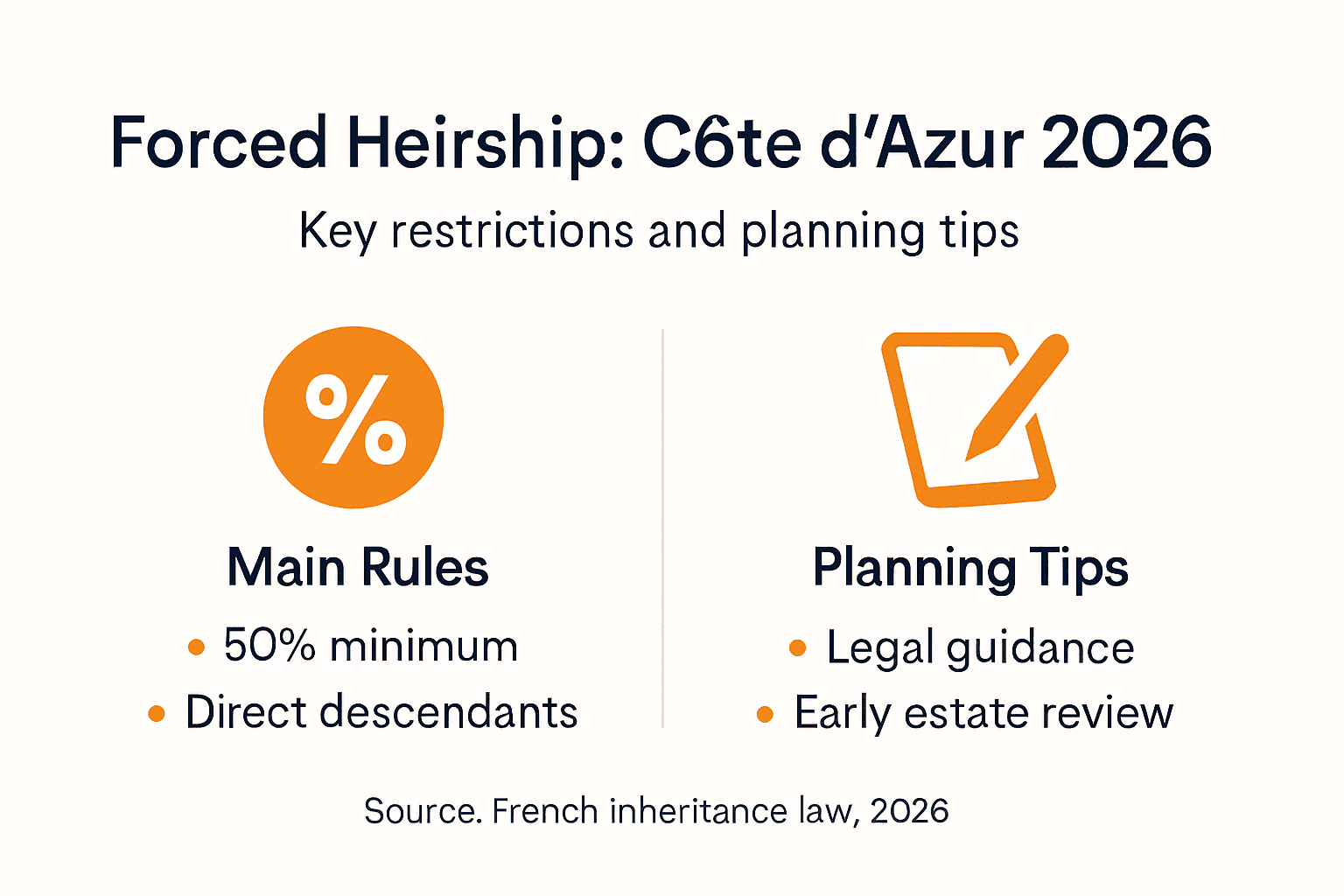
Legacy-focused estates like Provençal mas (restored farmhouses) offer 3-5% rental yields and tax benefits whilst serving as family gathering places for generations. These properties transcend financial metrics, embedding your lineage in Riviera culture and creating emotional anchors for heirs. Yet without proper planning, inheritance tax can lead to 45% liabilities that force distressed sales.

French succession law mandates reserved portions for children, limiting testamentary freedom. International families must navigate both French regulations and their home country’s tax treaties. Structuring ownership through SCI (Société Civile Immobilière) entities can optimise tax efficiency and simplify multi-generational transfers.

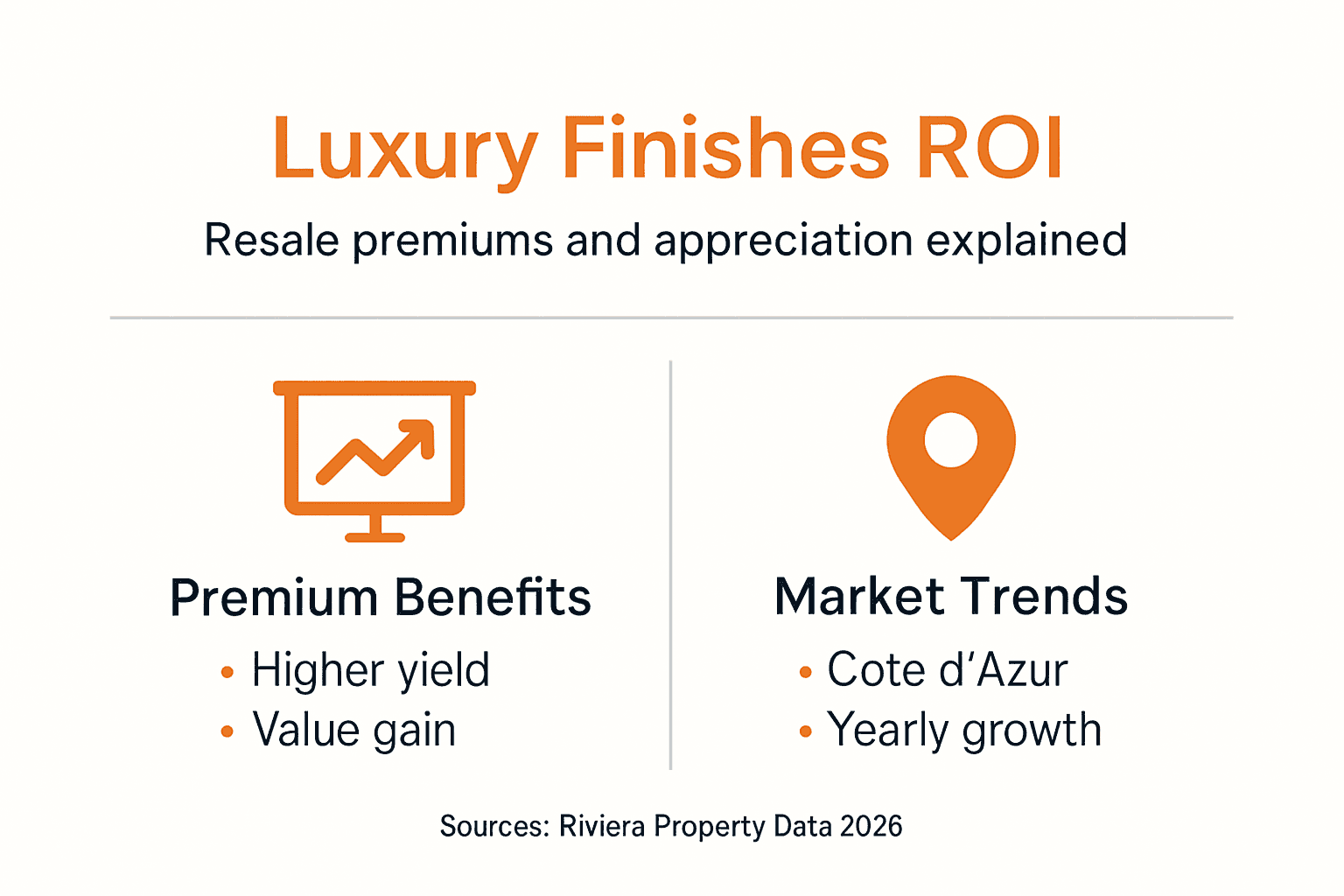
Sustainability credentials increasingly matter to heirs who value environmental stewardship alongside financial returns. Eco-villas with solar arrays, geothermal systems, and green certifications appeal to younger generations whilst commanding premium rental rates from environmentally conscious tenants.

Key legacy planning considerations:

  • Establish clear succession plans before purchase to avoid family disputes
  • Consider usufruit (life interest) arrangements allowing parents to retain usage rights
  • Document rental management procedures to maintain income continuity
  • Select properties with timeless architectural appeal that transcends trends

Pro Tip: Purchase estates near cultural landmarks like Antibes’ Picasso Museum or Menton’s Jean Cocteau Museum to ensure enduring desirability regardless of market cycles.

Real estate inheritance strategies should integrate with broader wealth plans, considering diversification across asset classes whilst maintaining Riviera property as a stable core holding. Real estate investment strategies for legacy creation prioritise capital preservation and steady income over speculative gains.

New constructions and sustainability: risks and opportunities

Eco-luxury new constructions see 15% more demand as buyers recognise sustainability’s dual benefits: reduced operating costs and enhanced resale value. Off-plan purchases in developments like Sainte-Maxime’s beachside residences (from €1.2M, steps from Garonette sands) or Nice’s Mont Boron sea-view towers offer modern amenities and ten-year structural warranties.
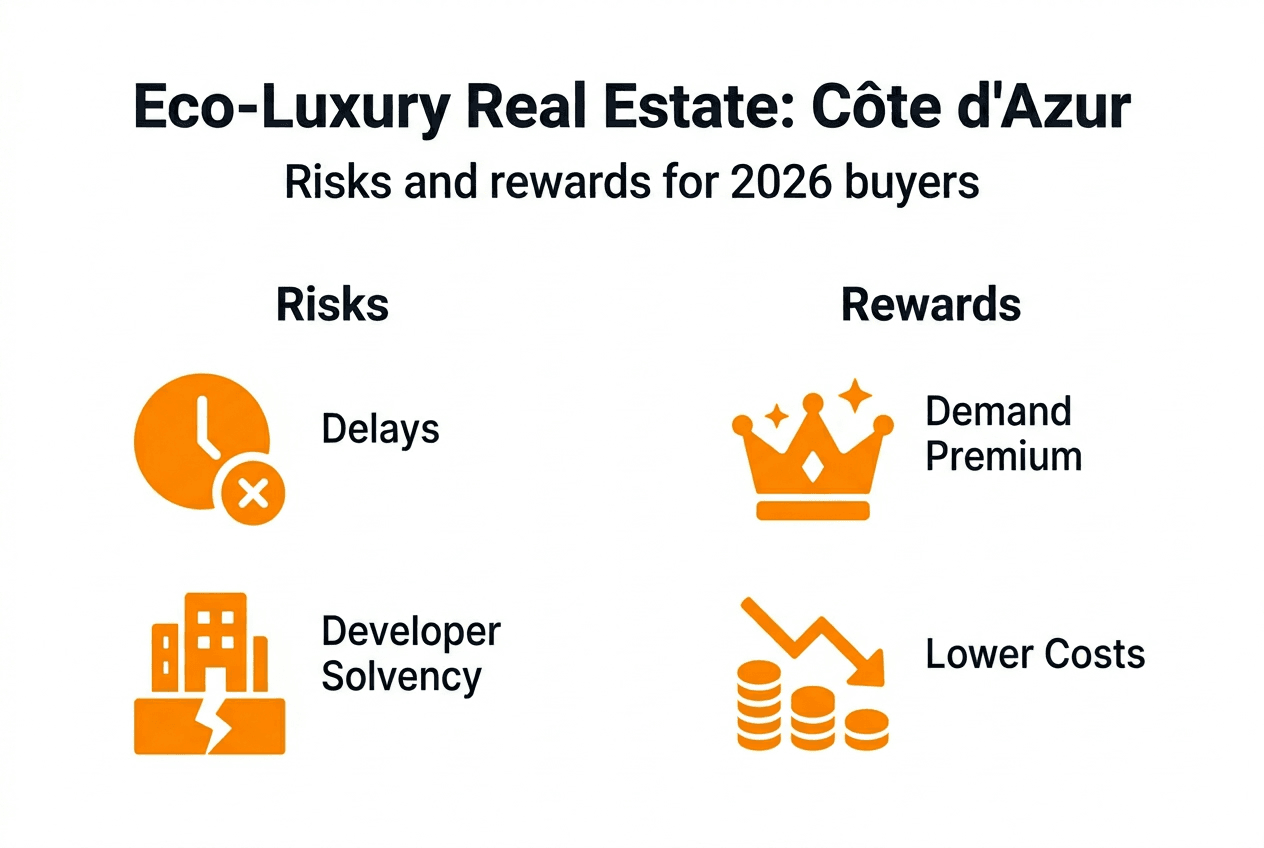
Infographic showing eco-luxury real estate risks and rewards

VEFA contracts protect buyers from construction delays and cost overruns, with payments released only as milestones complete. Zero-interest payment plans improve liquidity, allowing investors to deploy capital elsewhere whilst construction progresses. Lower notary fees (approximately 2-3% versus 7-8% for resales) provide additional savings.

FeatureNew ConstructionResale Property
Warranty Coverage10 years structuralLimited or none
Notary Fees2-3%7-8%
Energy EfficiencyA-rated, latest standardsVariable, often requires upgrades
CustomisationHigh (pre-completion)Limited to renovations
Immediate OccupancyNo (12-24 month wait)Yes

Sustainability certifications like HQE (Haute Qualité Environnementale) or BREEAM can add approximately 7% value premiums due to lower utility costs and alignment with importance of sustainability principles. Solar panels, rainwater harvesting, and smart home systems appeal to tech-savvy buyers and reduce carbon footprints.

Risks include construction delays, developer solvency issues, and final specifications differing from marketing materials. Thoroughly vet developers’ track records and financial stability. Visit completed projects to assess build quality firsthand. New construction trends south France favour biophilic design integrating natural light, ventilation, and landscaping that blurs indoor-outdoor boundaries.

Financial considerations and maximising ROI

Ignoring seasonal rental calendars can reduce income by up to 18%, undermining return projections. Align availability with Cannes Film Festival (May), Monaco Grand Prix (May), and summer yacht season (June-August) to capture peak demand. Properties near Nice’s Promenade des Anglais or Antibes’ yacht marinas command premium nightly rates during these periods.

Zero-interest payment plans improve liquidity by 10-15%, allowing investors to retain capital for renovations or alternative investments during construction. This financial flexibility proves particularly valuable for buyers balancing multiple asset acquisitions or awaiting cryptocurrency liquidity events.

Strategic financial structuring considerations:

  • Currency hedging to protect against euro fluctuations if income derives from other currencies
  • Mortgage leverage at historically low rates (currently around 2.5-3.5% for prime borrowers)
  • Tax-efficient rental structures through furnished lettings or SCI entities
  • Reserve funds for maintenance, property management, and vacancy periods

Understanding rental demand cycles is crucial to maximising ROI. Winter months (November-March) see reduced occupancy except during Menton’s February Lemon Festival, requiring pricing adjustments or targeting long-term winter lets to northern Europeans seeking mild climate retreats.

Financing luxury real estate involves demonstrating income stability and asset diversification to French lenders. International buyers benefit from establishing local banking relationships early, as mortgage approval processes can extend 8-12 weeks. Some banks accept cryptocurrency holdings as collateral, though valuations apply significant haircuts due to volatility.

Common misconceptions and errors to avoid in Côte d’Azur luxury real estate

Widespread myths frequently trap investors who assume luxury markets operate identically to standard residential property. Price alone signals neither quality nor investment merit. A €5M villa may represent poor value if located in declining micro-markets or burdened with structural issues, whilst a €2.5M property in Cap d’Antibes could deliver superior appreciation and lifestyle benefits.

  1. Assuming all waterfront properties appreciate equally: Proximity to marinas, beaches, and coastal paths matters more than simply “waterfront” classification. Properties facing busy roads or lacking direct sea views command significantly lower premiums.

  2. Skipping technical due diligence to accelerate transactions: Pressure to act quickly, especially in competitive bidding situations, tempts buyers to waive surveys. Hidden defects typically cost 3-5 times more to remedy than comprehensive pre-purchase inspections.

  3. Overlooking tax planning until after purchase: French property taxation, wealth taxes, and inheritance rules require advance structuring. Retroactive planning options prove limited and expensive.

  4. Believing prestigious addresses guarantee rental income: Supply in prime locations like Saint-Tropez can exceed demand outside peak season. Properties lacking modern amenities or professional management struggle regardless of location cachet.

  5. Ignoring luxury property appreciation patterns specific to each commune: Nice’s urban revival differs from Menton’s cultural renaissance or Antibes’ maritime heritage appeal, requiring tailored valuation approaches.

Common buyer assumptions miss critical factors distinguishing successful investments from disappointing ones. Legacy value derives from thoughtful property selection, rigorous due diligence, and strategic financial planning, not simply purchasing the most expensive available estate.

Explore Côte d’Azur luxury real estate with expert guidance

Navigating the French Riviera’s exclusive property market requires specialised knowledge and access to opportunities rarely advertised publicly. Living on the Côte d’Azur provides off-market luxury properties matching your precise legacy and lifestyle requirements, from restored Provençal estates to cutting-edge sustainable villas.

Our luxury property acquisition services handle every aspect: legal due diligence, technical surveys, negotiation, and transaction completion, ensuring your investment withstands scrutiny whilst securing optimal terms. We coordinate with specialist counsel, financial advisors, and property managers to implement real estate investment strategies tailored to your wealth preservation and growth objectives. Connect with our team to transform Riviera aspirations into tangible legacy assets.

FAQ

What are the most important legal checks before buying luxury property on the Côte d’Azur?

Verify clear legal title, zoning compliance, and contract specifics with expert French Riviera counsel before purchase. Technical and seismic survey reviews are mandatory to uncover structural issues not visible during viewings. Luxury property due diligence encompasses boundary verification, servitude identification, and permit validation to prevent costly post-purchase discoveries.

How does sustainability affect luxury property value on the French Riviera?

Eco-certified properties command up to 7% price premiums due to growing demand for sustainability and efficiency amongst discerning buyers. Sustainability features enhance legacy value and rental appeal, particularly for younger heirs who prioritise environmental responsibility alongside financial returns. New construction sustainability trends show increasing integration of solar, geothermal, and smart home technologies.

What financial strategies optimise rental income on the Côte d’Azur luxury market?

Align rental availability with seasonal and event-driven demand like Cannes Film Festival, Monaco Grand Prix, and summer yacht season to maximise occupancy and nightly rates. Utilise zero-interest payment plans to improve liquidity and reinvest for higher yields across your property portfolio. Luxury real estate financing structures should balance mortgage leverage with reserve funds for maintenance and vacancy periods.

How do inheritance laws affect luxury property ownership on the Côte d’Azur?

French succession law mandates reserved portions for children, limiting testamentary freedom and requiring advance planning to avoid forced sales. International families must navigate both French regulations and home country tax treaties to optimise transfer efficiency. Structuring ownership through SCI entities can reduce inheritance tax burdens whilst simplifying multi-generational transfers and maintaining family control over legacy estates.

Recommended

  • Guide to International Real Estate Investment in Côte d’Azur
  • Côte d’Azur 2026 Real Estate Rules: 50% Forced Heirship Explained
  • 7 Essential Real Estate Investment Tips for Côte d’Azur
  • How to Finance Luxury Real Estate on the Côte d’Azur
by Websols Servicedesk/10 March 2026/in Landingpage
https://www.livingonthecotedazur.com/wp-content/uploads/2026/03/1773139475397_Agent-and-clients-viewing-luxury-Riviera-villa-terrace.jpg 768 1376 Websols Servicedesk https://www.livingonthecotedazur.com/wp-content/uploads/2024/02/sitelogo150.png Websols Servicedesk2026-03-10 11:45:252026-05-07 12:44:10Avoid critical mistakes in Côte d’Azur luxury real estate 2026

French Riviera luxury real estate ROI guide 2026

Contrary to popular belief, French Riviera luxury real estate has not consistently outperformed equity markets over the past 15 years. Yet high-net-worth investors continue flocking to this sun-drenched coastline, seeking not only lifestyle prestige but also multi-generational wealth preservation. This guide unpacks the true ROI drivers for 2026, from forced heirship complexities to sustainability premiums, helping you align investment decisions with legacy goals and market realities.

Table of Contents

  • Introduction To The French Riviera Luxury Real Estate Market
  • Market Trends And ROI Fundamentals For 2026
  • Legacy Investment Considerations And Legal Frameworks
  • Sustainability And Eco-Friendly Investments On The Côte D’Azur
  • Comparing New Constructions With Historic Villas
  • Common Misconceptions And Reality Checks
  • Practical Guide To ROI Analysis And Decision Making
  • Explore Luxury Real Estate Opportunities With Living On The Côte D’Azur
  • Frequently Asked Questions

Key takeaways

| Point | Details |
|——-|———||
| Capital growth and rental yields | Luxury villas appreciate 5% to 8% annually, with rental yields of 3% to 5% in prime locations like Nice and Cannes. |
| Legal and tax complexities | Forced heirship reserves 50% of estates for heirs; rental income tax jumped from 17% to 40% for lettings above €23,000. |
| Sustainability premium | Eco-certified properties see 15% higher demand and sell faster, whilst poor energy ratings extend market time by 20%. |
| Asset class comparison | New constructions offer 10-year warranties and lower notary fees; historic villas deliver prestige and legacy value but higher renovation costs. |

Introduction to the French Riviera luxury real estate market

The 2026 French Riviera luxury property market remains a seller’s domain, driven by constrained ultra-luxury villa supply and persistent demand from global elites. High-net-worth individuals and multi-generational family offices now dominate acquisitions, prioritising legacy-focused investments that transcend transactional returns. Sustainability and energy efficiency have evolved from nice-to-haves into non-negotiable value determinants.

Typical investors include digital millionaires seeking lifestyle assets with solid ROI, established families preserving wealth through Monaco-adjacent estates, and family offices channelling inherited capital into Provençal mas or contemporary eco-villas. The Riviera’s unique appeal lies in its fusion of Mediterranean lifestyle, international prestige, and robust legal frameworks for wealth transfer.

Key geographic hubs shape investment profiles. Cap d’Antibes offers unmatched privacy for ultra-high-net-worth buyers. Monaco borders deliver prestige and tax efficiency for residents. Nice and Cannes balance lifestyle amenities with rental yield potential. Menton and Èze attract heritage seekers valuing authenticity and botanical tranquillity. Understanding how to invest strategically across these submarkets is essential for optimised returns.

Investor priorities in 2026 include:

  • Multi-generational legacy planning through real estate trusts and structured ownership
  • Sustainability certifications that enhance resale value and attract premium tenants
  • Transparent ROI analysis factoring in French tax changes and inheritance law
  • Access to off-market properties avoiding competitive bidding wars

Market trends and ROI fundamentals for 2026

Understanding current market behaviour and quantitative benchmarks allows you to forecast realistic returns. Ultra-luxury villas in sought-after locations like Cap d’Antibes and Monaco borders appreciate 5% to 8% annually, driven by scarcity and sustained elite demand. Seasonal rental income typically generates 3% to 5% yields for well-positioned properties in Nice, Cannes, and Antibes, though tax changes have compressed net returns.

Analyst reviews luxury market trend data

Market velocity reveals critical insights. Properties with high energy performance certificates sell within 45 to 75 days, whilst listings with poor energy ratings linger longer, impacting liquidity. Buyers increasingly demand eco-luxury finishes, solar arrays, and biophilic design elements, reshaping what constitutes a premium asset.

Cash transactions dominate the ultra-luxury segment. Over 70% of purchases above €5 million proceed without mortgage financing, insulating investors from interest rate volatility but requiring substantial liquid capital. This equity-only dynamic favours established wealth and family office structures over leveraged speculators.

Key ROI drivers for 2026 include:

  • Appreciation tied to location scarcity and lifestyle appeal rather than speculative flipping
  • Rental yields moderated by higher taxation but supported by strong seasonal tourism
  • Liquidity influenced by energy ratings and property condition
  • Value premiums for sustainability features and concierge-ready amenities

Selecting the perfect investment property requires balancing these factors against your capital allocation and legacy timeline. Properties in established neighbourhoods with proven rental demand offer stability, whilst emerging eco-developments near Sainte-Maxime promise growth potential.

For data-driven insights into luxury rental performance, scrutinise historical occupancy rates, average nightly rates, and seasonal demand patterns. Winter months see lower occupancy outside ski-adjacent regions, whilst summer commands premium pricing from May through September.

Legacy investment considerations and legal frameworks

French inheritance law profoundly shapes ROI for multi-generational investors. The 50% forced heirship rule mandates reserving half your estate for direct heirs, constraining testamentary freedom. This affects how you structure ownership through SCI entities, life insurance wrappers, or offshore trusts to optimise wealth transfer efficiency.

Recent tax changes have further complicated legacy planning. Rental income tax rates surged from 17% to 40% for furnished lettings above €23,000 annually, dramatically reducing net yields. Family offices now favour long-term capital appreciation over short-term rental strategies, holding properties for decades to maximise compound growth and minimise tax drag.

Legacy asset types popular in 2026 include:

  • Provençal mas in Grasse or Valbonne, offering authentic heritage and renovation upside
  • Monaco-adjacent villas in Roquebrune-Cap-Martin, combining tax efficiency with proximity to financial hubs
  • Eco-certified new builds in Sainte-Maxime, delivering sustainability credentials for environmentally conscious heirs
  • Historic estates in Antibes with established gardens and cultural significance

Pro Tip: Engage French inheritance and tax specialists within your first property evaluation phase. Early structuring through SCI vehicles or usufruct arrangements can preserve 15% to 25% more wealth for heirs versus reactive post-purchase planning.

Sustainability considerations now intersect with legacy value. Properties with poor energy ratings face regulatory pressure for costly retrofits, eroding long-term returns. Conversely, investing in solar arrays, geothermal systems, and green certifications protects estate value against tightening environmental standards. Wealth preservation strategies increasingly incorporate climate resilience and energy independence as core pillars.

For detailed guidance on navigating French inheritance law and structuring family office acquisitions, consult advisers familiar with cross-border estate planning. Understanding forced heirship implications before signing purchase agreements prevents costly restructuring later.

Sustainability and eco-friendly investments on the Côte d’Azur

Sustainability has transitioned from niche preference to mainstream demand driver in 2026. Eco-certified properties enjoy 15% higher buyer interest and shorter market times, reflecting growing awareness among high-net-worth investors. Properties with poor energy performance certificates languish 20% longer on listings, signalling liquidity risk for sellers.

The market now distinguishes between surface-level greenwashing and substantive sustainability. Buyers seek tangible features: solar photovoltaic systems generating 8-12 kW, greywater recycling infrastructure, locally sourced natural materials, and smart home automation optimising energy use. These elements command premiums of €200,000 to €500,000 on ultra-luxury villas whilst reducing ongoing operational costs.

Key sustainability investments enhancing ROI include:

  • High-performance insulation and triple-glazed windows meeting Passivhaus standards
  • Heat pumps and geothermal systems replacing fossil fuel heating
  • Native landscaping with drought-resistant Mediterranean species reducing water consumption
  • EV charging infrastructure anticipating regulatory mandates and buyer preferences

New developments in Nice’s Mont Boron and Sainte-Maxime’s Garonette beachfront integrate biophilic design principles, maximising natural light and ventilation whilst minimising environmental footprint. These properties attract younger ultra-high-net-worth buyers, digital entrepreneurs, and family offices with ESG investment mandates.

Sustainability also mitigates regulatory risk. France continues tightening energy performance standards, with penalties for non-compliant rental properties. Investing in properties with strong energy ratings future-proofs your portfolio against forced upgrades and potential rental restrictions.

For comprehensive analysis of 2026 market sustainability trends, review regional data on certification uptake, buyer willingness to pay green premiums, and projected regulatory timelines. Properties achieving A or B energy ratings consistently outperform C-rated comparables by 8% to 12% in capital appreciation.

Comparing new constructions with historic villas

Choosing between new builds and heritage properties requires balancing warranties, costs, legacy value, and personal lifestyle preferences. Each asset class offers distinct advantages and trade-offs impacting long-term ROI.

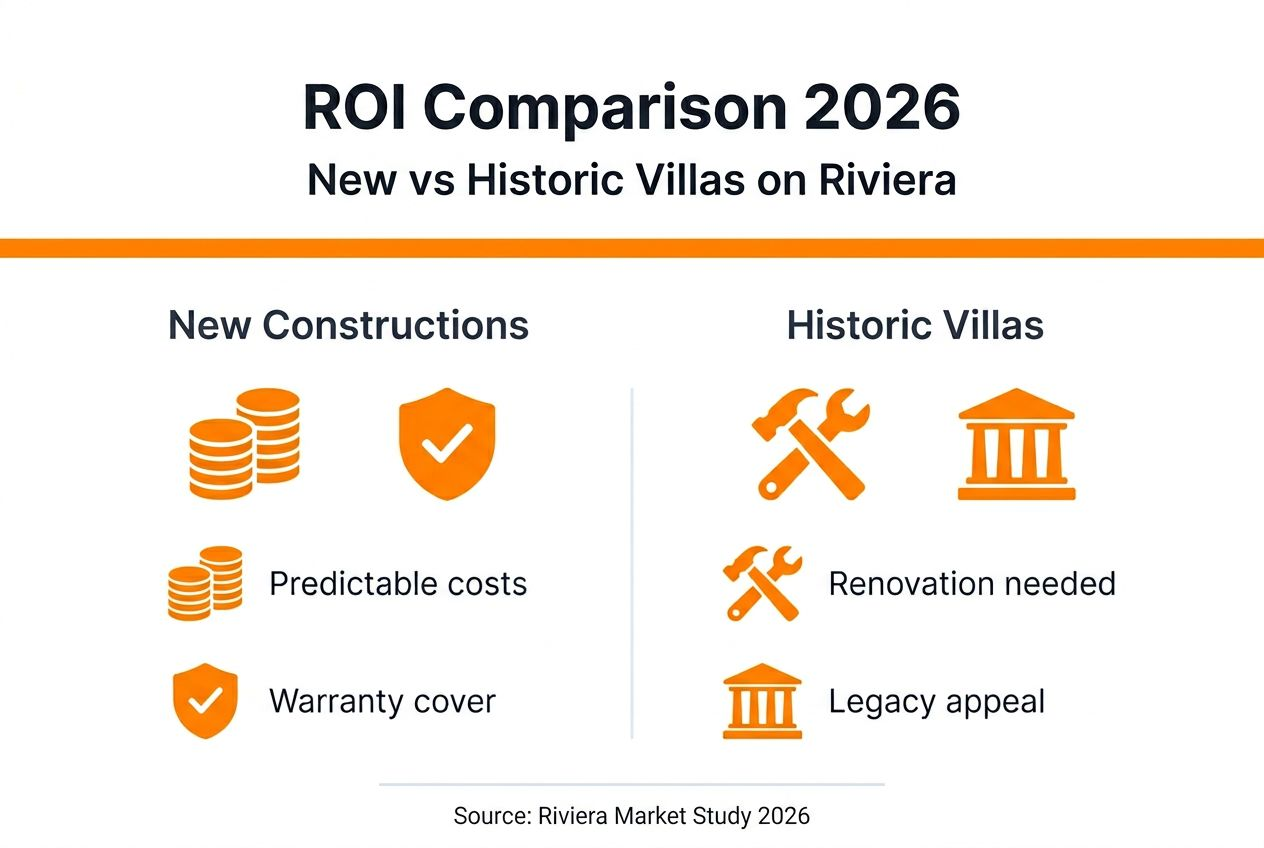
Infographic comparing new and historic villa ROI

FeatureNew constructionsHistoric villas
Warranty protection10-year structural guaranteeNone; buyer assumes all risks
Notary fees2% to 3% on purchase price7% to 8% on purchase price
Energy ratingTypically A or B certifiedOften D to F; requires retrofitting
Legacy prestigeModern aesthetic; limited heritageEstablished provenance and cultural significance
Maintenance costsLow for first decadeHigh; ongoing restoration and compliance
Payment flexibilityZero-interest staged payments during constructionFull equity or traditional mortgage

New constructions like those in Sainte-Maxime and Nice deliver financial predictability. VEFA contracts shield buyers from construction overruns, staged payments ease cash flow, and lower notary fees save €150,000 to €300,000 on a €5 million purchase. Ten-year warranties cover structural defects, eliminating surprise repair costs.

Historic villas in Antibes, Èze, or Menton offer irreplaceable authenticity. Established gardens, architectural heritage, and proximity to cultural landmarks create legacy value that appreciates beyond pure market metrics. However, renovation costs can exceed 25% of purchase price, and energy compliance retrofits add €100,000 to €400,000 for older properties.

Investor profiles align with asset classes:

  • New builds suit pragmatic investors prioritising cash flow predictability and minimal maintenance
  • Historic villas attract legacy-focused families valuing heritage and willing to absorb higher carrying costs
  • Family offices often diversify, holding both new eco-villas for rental income and heritage estates for multi-generational use

Pro Tip: For new constructions, verify developer financial stability and project insurance before committing. For historic villas, commission comprehensive structural surveys and heritage compliance audits to quantify true renovation costs upfront.

Navigating luxury property acquisition requires understanding these trade-offs within your broader wealth strategy. New builds offer turnkey convenience; historic estates demand patient capital and active stewardship.

Common misconceptions and reality checks

Several persistent myths distort investor expectations about French Riviera luxury real estate. Confronting these misconceptions with data ensures realistic ROI planning.

Myth one: Riviera property always outperforms financial markets. Reality reveals luxury real estate underperformed equities over the past 15 years when accounting for transaction costs, carrying expenses, and opportunity cost of capital. Properties excel at wealth preservation and lifestyle benefits but rarely match stock market compound returns.

Myth two: Short-term luxury rentals generate effortless passive income. Recent tax changes obliterate this narrative. With rental income taxation jumping from 17% to 40% for annual receipts above €23,000, net yields compress significantly. Factor in property management fees (15% to 25% of gross rent), maintenance, and vacancy periods, and returns often fall below 2% net.

Myth three: All Riviera locations appreciate equally. Micro-location drives performance. Cap d’Antibes and Monaco borders command persistent premiums, whilst secondary towns like Fréjus or La Napoule lag. Proximity to amenities, sea views, and energy ratings create 30% to 50% valuation gaps between comparable properties.

Key realities for 2026 investors:

  • Luxury real estate works best as portfolio diversification, not core growth engine
  • Legacy value and lifestyle benefits justify investment beyond pure financial returns
  • Tax and legal complexities require professional guidance to optimise ROI
  • Sustainable properties outperform non-compliant assets in both appreciation and liquidity

“Successful Riviera investment balances financial pragmatism with emotional connection. Properties should serve family needs across decades, not merely chase speculative gains.”

For evidence-based investment strategies, scrutinise historical transaction data, rental yield benchmarks, and tax impact models. Avoid basing decisions on anecdotal success stories or outdated pre-tax-change assumptions. Detailed analysis from market trend reports provides essential context for realistic planning.

Practical guide to ROI analysis and decision making

Implementing rigorous ROI analysis transforms intuition into actionable investment strategy. Follow this framework to evaluate luxury properties systematically.

Step one: Calculate comprehensive ROI

  1. Project annual capital appreciation using 5% to 8% benchmarks for prime locations
  2. Estimate gross rental income based on comparable seasonal rates and occupancy
  3. Subtract rental income tax at 40% for receipts above €23,000
  4. Deduct property management (20% of gross), maintenance (1.5% of property value), and insurance
  5. Factor in notary fees, renovation costs, and opportunity cost of capital
  6. Calculate net annual return as percentage of total invested capital

Step two: Complete legal and tax due diligence

  • Verify clear title through notaire searches and cadastral records
  • Assess forced heirship implications for your succession plan
  • Model estate tax liability under French and home country rules
  • Review energy performance certificate and retrofit cost estimates
  • Confirm zoning allows intended rental or commercial use

Step three: Evaluate neighbourhood and demand factors

  • Cap d’Antibes: Maximum privacy, limited supply, ultra-high-net-worth buyer pool
  • Monaco borders: Tax efficiency for residents, financial hub proximity
  • Nice and Cannes: Strong rental demand, lifestyle amenities, airport access
  • Menton and Èze: Heritage appeal, lower entry prices, slower appreciation

Pro Tip: Weight liquidity alongside appreciation potential. Properties selling within 60 days offer flexibility for rebalancing portfolios, whilst illiquid assets lock capital for years.

Step four: Assess risk factors

  • Regulatory risk: Energy performance mandates tightening; non-compliant properties face rental restrictions
  • Market liquidity risk: Ultra-luxury segment narrows buyer pool; selling may require 12 to 18 months
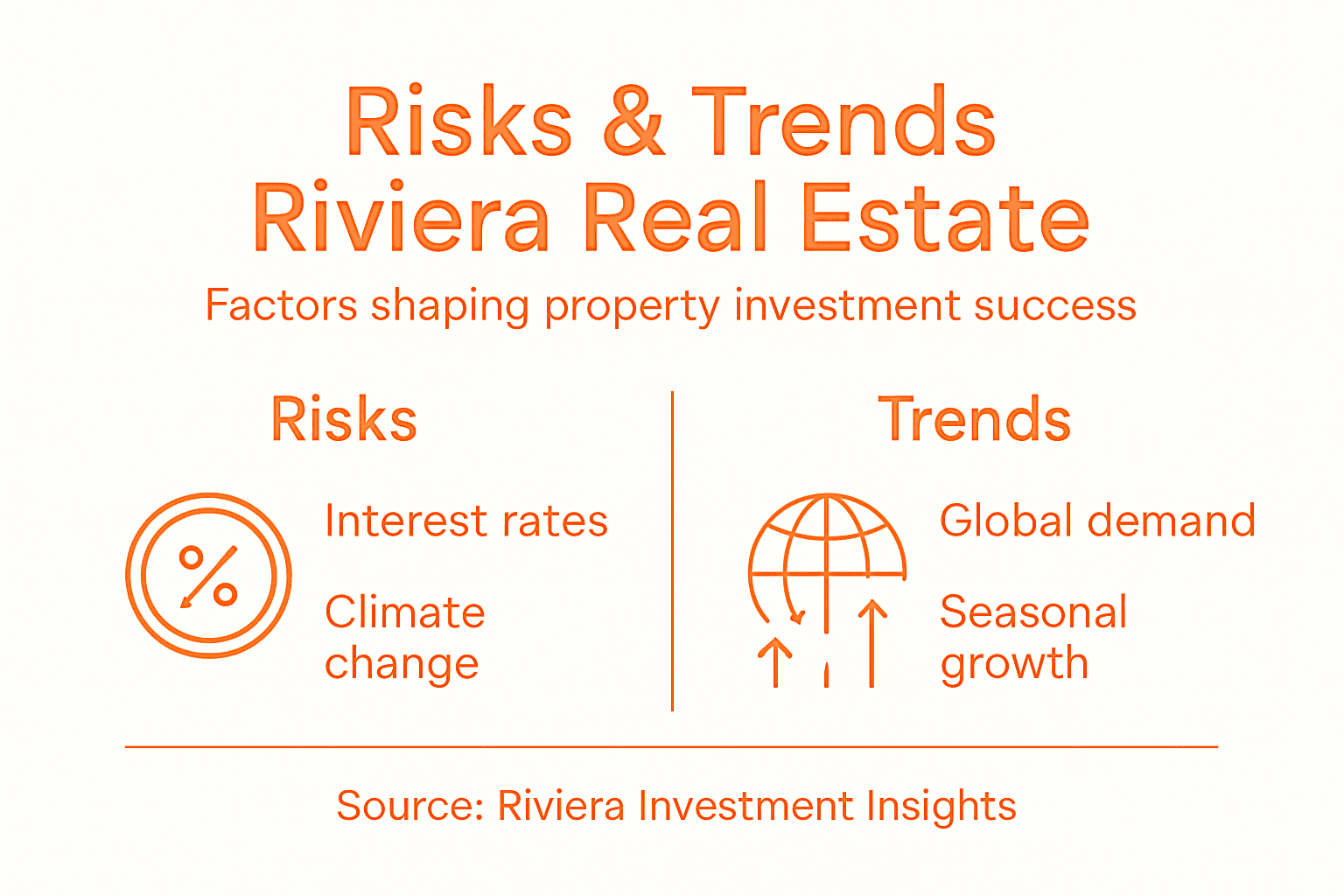
  • Sustainability risk: Climate change impacts coastal properties; flood and wildfire zones require enhanced insurance
  • Tax policy risk: France’s fiscal environment remains unpredictable; future tax increases could further compress yields

For wealth preservation strategies and legacy planning, align property acquisition with multi-generational goals. Building Riviera wealth requires patience and strategic holding periods of 10 to 20 years to maximise compound appreciation.

Explore prime investment property examples showcasing diverse asset classes, from Provençal mas to contemporary eco-villas. Each property type serves distinct investor profiles and legacy objectives.

Explore luxury real estate opportunities with Living on the Côte d’Azur

Living on the Côte d’Azur connects discerning investors with exclusive off-market properties across the Riviera’s most coveted locations. Our curated portfolio spans heritage villas in Antibes, eco-certified new builds in Sainte-Maxime, and Monaco-adjacent estates designed for multi-generational legacy. We accept cryptocurrency payments, serving digital millionaires seeking seamless global transactions.

Our advisers specialise in legacy-focused investment strategies, navigating forced heirship complexities, tax optimisation, and sustainability certifications. Access off-market luxury opportunities unavailable through public listings, avoiding competitive bidding wars.

Whether you seek a villa or penthouse for family retreats or rental income, our team delivers tailored guidance aligned with your wealth preservation goals. Connect with our experts today to begin your luxury property acquisition journey.

Pro Tip: Engaging specialised advisers early in your property search maximises ROI through strategic negotiation, legal structuring, and access to exclusive inventory.

Frequently asked questions

What is forced heirship and how does it affect my French Riviera property investment?

Forced heirship requires reserving 50% of your estate for direct heirs under French law. This constrains testamentary freedom and necessitates careful ownership structuring through SCI entities or trusts to optimise wealth transfer. Consult inheritance specialists before purchasing to align property holding structures with your succession plan.

How do sustainability features influence luxury property ROI on the Côte d’Azur?

Eco-certified properties enjoy 15% higher buyer demand and sell faster in 2026, whilst poor energy ratings extend market time by 20%. Sustainability investments like solar arrays and high-performance insulation deliver value premiums of €200,000 to €500,000 whilst reducing operational costs. Green features also mitigate regulatory risk from tightening energy standards.

What are the risks of investing in historic villas compared to new constructions?

Historic villas require substantial renovation budgets, often exceeding 25% of purchase price, and lack warranties covering structural defects. Energy compliance retrofits add €100,000 to €400,000 for older properties. New constructions offer 10-year warranties, lower notary fees (2% to 3% versus 7% to 8%), and superior energy ratings, delivering financial predictability and reduced maintenance risk.

Why have rental income profits from luxury short-term lettings declined recently?

Rental income taxation increased from 17% to 40% for furnished lettings above €23,000 annually, dramatically compressing net yields. Combined with property management fees of 15% to 25% and maintenance costs, net rental returns often fall below 2%. Investors now prioritise long-term capital appreciation over short-term rental strategies to optimise after-tax ROI.

Recommended

  • Why Choose French Riviera: The Complete 2025 Guide – Living on the Côte d’Azur
  • Finding the perfect French Riviera luxury investment property
  • How to Invest in French Riviera Real Estate for 2025 Gains – Living on the Côte d’Azur
  • 7 Key Features of French Riviera Real Estate for Investors
by Websols Servicedesk/7 March 2026/in Landingpage
https://www.livingonthecotedazur.com/wp-content/uploads/2026/03/1772883445761_image.jpg 768 1344 Websols Servicedesk https://www.livingonthecotedazur.com/wp-content/uploads/2024/02/sitelogo150.png Websols Servicedesk2026-03-07 12:38:192026-03-07 12:38:24French Riviera luxury real estate ROI guide 2026

Navigating the French Riviera’s luxury property market demands expertise. International investors face legal complexities, market volatility, and high-stakes financial decisions when pursuing legacy estates worth millions. A specialised real estate adviser transforms these challenges into strategic opportunities, guiding you through due diligence, sustainability considerations, and innovative payment solutions. This guide reveals how advisers protect your capital whilst maximising ROI potential on the Côte d’Azur.

Table of Contents

  • Introduction To The Role Of A Real Estate Adviser In Luxury Property
  • Key Due Diligence And Legal Frameworks In French Riviera Real Estate
  • Legacy Investment Strategies And Sustainability Considerations
  • New Construction Vs. Existing Luxury Properties: Adviser Guidance On Decision-Making
  • Addressing Common Misconceptions About Real Estate Advisers
  • Maximising ROI And Legacy Value Through Adviser Expertise
  • Conclusion: Transforming Investment Potential With A Riviera Real Estate Adviser
  • Discover Exclusive Riviera Luxury Properties With Expert Guidance
  • What Role Does A Real Estate Adviser Play In Managing Legal Risks On The French Riviera?
  • How Do Real Estate Advisers Incorporate Sustainability Into Investment Planning?
  • Can Real Estate Advisers Facilitate Cryptocurrency Payments In Luxury Transactions?
  • What Distinguishes New Construction Advisement From Existing Property Guidance?

Key takeaways

PointDetails
Due diligence expertiseAdvisers conduct legal audits, technical surveys, and title verification to safeguard investments
Legacy planning focusProperties selected for multi-generational wealth transfer with tax-efficient structures
Sustainability integrationEco-certifications enhance long-term appreciation and rental appeal
New vs. established propertiesAdvisers assess warranties, location prestige, and ROI across property types
Risk mitigationExpert guidance prevents costly errors and optimises transaction outcomes

Introduction to the role of a real estate adviser in luxury property

A specialised real estate adviser serves as your strategic partner in the complex French Riviera luxury market. Their expertise spans legal frameworks, financial structuring, and hyper-local market intelligence that casual buyers simply cannot access. You need someone who understands that villas on the French Riviera command premiums exceeding €2 million when positioned correctly.

These professionals navigate three critical domains. Legal compliance ensures your purchase adheres to French property law whilst protecting against title defects. Financial analysis forecasts appreciation trends, rental yields, and tax implications specific to your investor profile. Market positioning unlocks off-market properties and negotiates favourable terms through established networks.

The Riviera’s exclusivity demands insider knowledge. Advisers identify properties near Cannes’ Croisette yacht marinas or Cap d’Antibes’ private coastal paths where location alone justifies premium pricing. They understand seasonal rental patterns tied to Monaco’s Grand Prix or Cannes Film Festival, helping you maximise occupancy rates.

Pro Tip: Choose advisers with verifiable track records in your target price range. Request case studies showing how they protected client investments during market corrections.

Your adviser becomes indispensable when evaluating:

  • Title clarity and ownership history across French jurisdictions
  • Technical surveys assessing seismic resilience and structural integrity
  • Comparative market analysis for properties in Èze, Antibes, or Saint-Tropez
  • Negotiation strategies for bespoke contract terms

International buyers especially benefit from luxury real estate buying expertise that bridges cultural and regulatory gaps. Your adviser translates notary processes, explains VEFA contract protections, and coordinates with local attorneys to ensure seamless transactions. This partnership transforms a daunting process into a confident investment journey.

Key due diligence and legal frameworks in French Riviera real estate

Due diligence on the Côte d’Azur requires forensic attention to detail. Your adviser initiates comprehensive title searches to confirm clean ownership chains and identify any easements or liens. They commission technical diagnostics covering asbestos, lead, energy performance, and natural risk zones. These investigations prevent costly surprises that could derail your legacy plans.

Assistant reviews French Riviera property paperwork

French VEFA contracts for new constructions offer robust buyer protections. The developer provides a ten-year structural warranty covering major defects, plus two-year guarantees on equipment and one-year coverage for finishing issues. Your adviser scrutinises payment schedules, ensuring funds release aligns with construction milestones. They verify that developers maintain mandatory completion insurance protecting your deposit if projects stall.

Seismic assessments matter along the Mediterranean coast. Properties near Nice or Menton sit in moderate seismic zones requiring earthquake-resistant construction standards. Advisers evaluate building certifications and retrofit histories, especially for heritage estates you might restore. Eco-certifications like HQE or BREEAM signal superior energy efficiency, translating to lower operating costs and higher resale values.

Over 80% of high-net-worth investors rely on advisers for legal and financial due diligence, recognising that specialist knowledge prevents six-figure mistakes. International buyers from jurisdictions with different property laws particularly depend on this guidance.

Pro Tip: Request full diagnostic reports in English with professional translations. Insist on independent surveyors, not those recommended by sellers.

Critical diligence checkpoints include:

  • Title verification: Confirming seller authority and clean ownership history
  • Planning permissions: Validating existing structures and future development rights
  • Boundary surveys: Establishing precise property limits and access rights
  • Environmental compliance: Checking protected species habitats or coastal zone restrictions
Due Diligence ElementTypical TimelineCost Range
Title search2-3 weeks€800-€1,500
Technical diagnostics1-2 weeks€1,200-€2,500
Notary legal review3-4 weeks1% of purchase price
Seismic/structural survey2-3 weeks€2,000-€5,000

Your adviser coordinates these specialists whilst maintaining transaction momentum. They flag concerns early, renegotiate terms when defects emerge, and ensure you invest wisely in French Riviera properties with complete transparency. This protective layer shields your capital from regulatory pitfalls and undisclosed liabilities.

Legacy investment strategies and sustainability considerations

Legacy properties serve generations, not just portfolios. Your adviser identifies estates suitable for wealth transfer structures that minimise inheritance taxes whilst preserving family sanctuaries. They evaluate properties in Monaco-adjacent zones or restored Provençal mas offering 3-5% annual yields through elite seasonal rentals. These assets anchor your family’s European presence for decades.

Sustainability drives modern legacy value. Eco-certifications directly influence property appreciation and investor desirability on the Riviera. Properties with solar arrays, geothermal heating, and greywater systems command premium rents from environmentally conscious tenants. They also future-proof against tightening energy regulations that could devalue inefficient estates.

Advisers structure ownership through French SCI entities or offshore holding companies depending on your tax residency. These vehicles facilitate smooth inheritance transfers whilst potentially reducing notary fees and capital gains exposure. They coordinate with wealth managers to align property acquisitions with broader estate planning objectives.

Legacy-focused strategies include:

  • Identifying properties near international schools in Nice or Antibes for multi-generational use
  • Evaluating rental management companies specialising in luxury lets during Cannes Film Festival or Monaco Yacht Show
  • Assessing renovation potential for heritage villas requiring modernisation
  • Structuring ownership to optimise tax treatment across your jurisdictions

Your adviser maps out:

  1. Initial acquisition through tax-efficient ownership structures
  2. Renovation or certification upgrades to maximise sustainability ratings
  3. Rental strategy balancing family use with income generation
  4. Long-term appreciation forecasts based on infrastructure developments
  5. Succession planning ensuring seamless generational transfers

They connect you with eco-luxury properties featuring biophilic design and net-zero energy certifications. These estates appeal to the next generation’s values whilst delivering robust financial returns. Your adviser also monitors emerging hotspots like Sainte-Maxime where beachside developments near Nartelle Beach offer ground-floor opportunities before mass appreciation.

Strategic real estate investment thinking transforms properties into heirlooms. Your adviser ensures each acquisition serves both your immediate lifestyle aspirations and your family’s century-long prosperity. They balance rental income optimisation with maintaining property character that makes estates truly irreplaceable.

New construction vs. existing luxury properties: adviser guidance on decision-making

Choosing between new builds and established estates requires nuanced analysis. Your adviser weighs multiple factors specific to Riviera market dynamics and your investment timeline. Each option carries distinct advantages that skilled guidance helps you navigate effectively.

New constructions offer compelling protections. VEFA contracts include ten-year structural warranties and often feature zero-interest payment plans spreading costs across construction phases. Notary fees run lower at approximately 2-3% versus 7-8% for existing properties. Modern eco-certifications like HQE ensure superior energy efficiency, reducing operating costs by 30-40% compared to older estates.

Over 10% of luxury transactions incorporate cryptocurrency payments in 2026, with advisers facilitating secure digital currency transfers for off-plan purchases. This innovation appeals to digital entrepreneurs seeking portfolio diversification.

Existing estates counter with established prestige. Properties on Cap d’Antibes’ coastal sentiers or Èze’s gallery-lined lanes carry irreplaceable location cachet. You gain immediate occupancy rather than waiting 18-24 months for construction completion. Heritage villas offer renovation opportunities to customise whilst preserving architectural character.

Pro Tip: For new builds, verify developer completion rates and financial stability. Request independent valuations confirming off-plan pricing aligns with projected delivery-date market values.

Comparison FactorNew ConstructionExisting Estate
Warranties10-year structural guaranteeLimited to recent renovations
Notary fees2-3% of purchase price7-8% of purchase price
Eco-certificationsModern HQE/BREEAM standardsOften requires retrofitting
Occupancy timeline18-24 months post-purchaseImmediate availability
CustomisationDesign input during constructionRenovation required
Location prestigeEmerging neighbourhoodsEstablished prime zones

Your adviser evaluates:

  • ROI projections factoring appreciation rates and rental yield potential
  • Lifestyle fit considering your occupancy patterns and family needs
  • Market timing advantages for off-plan purchases in rising neighbourhoods
  • Renovation budgets versus turnkey convenience

They guide you through new construction opportunities in Sainte-Maxime’s beachside developments or Nice’s Mont Boron towers with Baie des Anges panoramas. Alternatively, they identify heritage properties requiring strategic acquisition approaches that unlock hidden value through sympathetic restoration.

Cryptocurrency payment facilitation represents another adviser advantage. They liaise with legal specialists ensuring blockchain transfers comply with French property law whilst maintaining transaction security. This flexibility attracts international buyers holding digital assets who seek seamless conversion into tangible Riviera real estate.

Addressing common misconceptions about real estate advisers

Many investors mistakenly view advisers as glorified sales agents. This misunderstanding costs millions. Advisers function as strategic consultants whose fiduciary duty protects your interests, not developers’ margins. They prevent catastrophic errors that casual buyers often overlook until closing.

One pervasive myth suggests experienced investors don’t need advisers. Reality contradicts this. Over 80% of high-net-worth buyers depend on advisers for legal and financial due diligence precisely because stakes escalate with property values. A €5 million Cap d’Antibes villa demands exponentially more scrutiny than standard residential purchases.

Some believe advisers simply connect buyers with listings. True professionals offer far more. They access off-market properties never reaching public portals. They negotiate terms that shave 5-10% off asking prices through established relationships with sellers and developers. They coordinate multilingual legal teams ensuring contracts protect your position.

Another misconception holds that sustainability considerations are optional luxuries. Wrong. Eco-certifications now directly impact resale values and rental demand. Properties lacking energy efficiency face obsolescence as regulations tighten. Advisers ensure your investment meets evolving standards that preserve long-term appreciation.

Common misconceptions advisers correct:

  • “Legal processes are straightforward”: French property law contains nuances around matrimonial regimes, inheritance rules, and tax treaties that vary by buyer nationality
  • “Any lawyer suffices”: Specialist real estate notaries with international transaction experience prevent costly oversights
  • “Market data is publicly available”: Advisers access proprietary databases tracking off-market sales and neighbourhood appreciation trends
  • “Cryptocurrency payments are risky”: When properly structured through compliant channels, digital currency transactions offer security and flexibility

Consider this testimonial:

“Our adviser identified a title defect the seller’s notary missed. That discovery saved us from inheriting a boundary dispute that would have cost €300,000 to resolve. The advisory fee proved the best money we spent.”

Advisers prevent disasters through meticulous verification. They flag problematic clauses in pre-contracts, challenge inflated valuations with comparative market analysis, and ensure technical diagnostics meet international standards. Their expertise transforms complex acquisitions into smooth, confident transactions.

Sceptics who bypass professional guidance often face costly corrections post-purchase. Undisclosed easements restrict property use. Inadequate surveys miss structural defects requiring six-figure repairs. Tax inefficiencies drain returns through poor ownership structures. Your adviser’s proactive diligence eliminates these pitfalls before they materialise.

Maximising ROI and legacy value through adviser expertise

Your adviser unlocks premium returns through strategic market positioning. They identify properties near seasonal event epicentres where rental demand spikes during Monaco Grand Prix, Cannes Film Festival, or Saint-Tropez’s summer season. These locations generate occupancy rates exceeding 80% at daily rates topping €2,000, dramatically improving cash-on-cash returns.

Location analysis drives value creation. Properties within walking distance of Antibes’ Port Vauban yacht marinas or Menton’s Val Rahmeh botanical gardens command sustained premiums. Over 10% of luxury deals now use cryptocurrency, with advisers facilitating secure digital payments that appeal to tech entrepreneurs seeking portfolio diversification.

Advisers employ sophisticated yield optimisation strategies:

  • Timing purchases during market corrections when sellers accept below-market offers
  • Structuring rental management agreements that maximise net income after fees
  • Identifying value-add opportunities through strategic renovations boosting property classifications
  • Leveraging currency fluctuations for international buyers purchasing in euros

They balance immediate rental income against long-term legacy preservation. A Saint-Tropez villa near Pampelonne Beach might generate €150,000 annually through premium lets whilst appreciating 6-8% yearly. Your adviser forecasts these dual returns, ensuring properties serve both generations and cash flow needs.

Seasonal rental strategies require local expertise. Advisers know that Cannes properties peak during May’s film festival, whilst Sainte-Maxime estates perform best July through August when families dominate bookings. They connect you with elite property managers who maintain luxury standards between tenancies, protecting your asset’s condition and reputation.

Innovative payment methods expand buyer pools. Advisers facilitate cryptocurrency transactions through compliant legal channels, attracting digital-native investors holding Bitcoin or Ethereum. This flexibility positions your property for quicker sales should you eventually exit, as payment optionality appeals to broader demographics.

International investment strategies your adviser employs include currency hedging, tax-loss harvesting through renovation deductions, and strategic timing around French fiscal year cycles. They monitor regional real estate trends to anticipate appreciation patterns before mass market recognition drives prices higher.

Your adviser’s network delivers competitive advantages. They access pre-market listings where motivated sellers accept favourable terms. They negotiate bulk services discounts for property management, insurance, and maintenance contracts. These marginal gains compound into substantial ROI improvements over your holding period.

Conclusion: transforming investment potential with a Riviera real estate adviser

Specialised advisers transform French Riviera luxury property acquisitions from risky ventures into calculated legacy investments. Their comprehensive due diligence protects your capital against legal pitfalls and structural defects that casual buyers overlook. Strategic guidance on sustainability certifications ensures properties appreciate steadily whilst appealing to environmentally conscious tenants and future buyers.

The Côte d’Azur’s complexity demands professional navigation. From VEFA contract protections on new builds to heritage estate valuations, advisers bring decades of market intelligence that individual research cannot replicate. They facilitate innovative payment methods including cryptocurrency transactions, positioning your portfolio at the forefront of real estate evolution.

Legacy planning expertise ensures properties serve multiple generations through tax-efficient structures and multi-use strategies balancing family enjoyment with rental income. Your adviser’s local networks unlock off-market opportunities in Cap d’Antibes, Èze, and Saint-Tropez where location premiums justify investment thresholds.

Engaging a specialised Riviera adviser converts overwhelming decisions into confident steps toward securing your family’s Mediterranean sanctuary. Their partnership delivers peace of mind knowing every contract clause, every survey finding, and every market opportunity aligns with your wealth preservation and growth objectives.

Discover exclusive Riviera luxury properties with expert guidance

Our advisers specialise in uncovering off-market luxury properties across the Côte d’Azur’s most coveted locations. We tailor acquisition strategies aligning with your legacy aspirations and ROI objectives, whether you seek a Monaco-adjacent estate or a sustainable new build near Antibes’ coastal paths. Our team provides comprehensive investment strategies covering due diligence, financing structures, and rental optimisation. We accept traditional and cryptocurrency payments, offering flexibility for digital entrepreneurs. Connect with us to transform your Riviera investment vision into a protected, profitable reality that serves your family for generations.

What role does a real estate adviser play in managing legal risks on the French Riviera?

Advisers ensure title clarity by conducting exhaustive ownership history searches and verifying seller authority to transact. They review contracts for problematic clauses around easements, boundary disputes, or undisclosed liens that could compromise your ownership rights. Over 80% of high-net-worth investors rely on advisers specifically for this legal protection layer.

They coordinate technical surveys assessing seismic resilience, asbestos presence, and energy performance ratings. Environmental compliance checks verify properties don’t violate coastal zone restrictions or protected species habitats. This comprehensive risk management prevents costly post-purchase surprises that could undermine your investment thesis.

How do real estate advisers incorporate sustainability into investment planning?

Advisers evaluate properties for existing eco-certifications like HQE or BREEAM that signal superior energy efficiency and lower operating costs. They recommend estates with solar arrays, geothermal heating, and water recycling systems that attract premium tenants whilst future-proofing against tightening regulations.

Sustainability certifications directly influence property appreciation and investor desirability on the Riviera. Your adviser forecasts how green features enhance long-term asset value and rental appeal, ensuring your legacy investment aligns with next-generation environmental priorities. They also identify renovation opportunities to upgrade existing properties to modern efficiency standards.

Can real estate advisers facilitate cryptocurrency payments in luxury transactions?

Yes, advisers guide investors through secure cryptocurrency payment processes for French Riviera luxury purchases. Over 10% of luxury transactions incorporate digital currency in 2026, particularly for off-plan developments and off-market estates.

They liaise with legal and financial experts ensuring blockchain transfers comply with French property law and anti-money-laundering regulations. Your adviser coordinates with notaries to structure transactions protecting both parties whilst maintaining cryptocurrency’s speed and security advantages. This innovation appeals to digital entrepreneurs seeking seamless conversion of blockchain assets into tangible Riviera real estate.

What distinguishes new construction advisement from existing property guidance?

New construction advisement focuses on VEFA contract scrutiny, developer financial stability verification, and construction milestone monitoring. Advisers ensure payment schedules align with completion stages and that ten-year structural warranties protect your investment. They also negotiate design customisations during pre-construction phases.

Existing property guidance emphasises heritage value assessment, renovation potential evaluation, and immediate location prestige analysis. Advisers identify properties in established prime zones like Cap d’Antibes where scarcity drives sustained appreciation. They coordinate technical surveys for older structures and estimate retrofit costs to modern efficiency standards. Both approaches require distinct expertise that generalist agents rarely possess.

Recommended

  • Luxury Real Estate Buying Guide: Secure Your Riviera Legacy
  • How to Find Off-Market Homes for Riviera Investment Success
  • Elite Guide to Off-Market Real Estate: Secure Riviera Gems – Living on the Côte d’Azur
  • Wealth Building Through Real Estate: Riviera Legacy Moves
  • NOUS CONCEVONS LA SÉCURITÉ – The Beam
by Websols Servicedesk/6 March 2026/in Landingpage
https://www.livingonthecotedazur.com/wp-content/uploads/2026/03/1772798830433_image.jpg 768 1344 Websols Servicedesk https://www.livingonthecotedazur.com/wp-content/uploads/2024/02/sitelogo150.png Websols Servicedesk2026-03-06 13:08:592026-03-06 13:09:04Real estate adviser: secure Riviera luxury investments

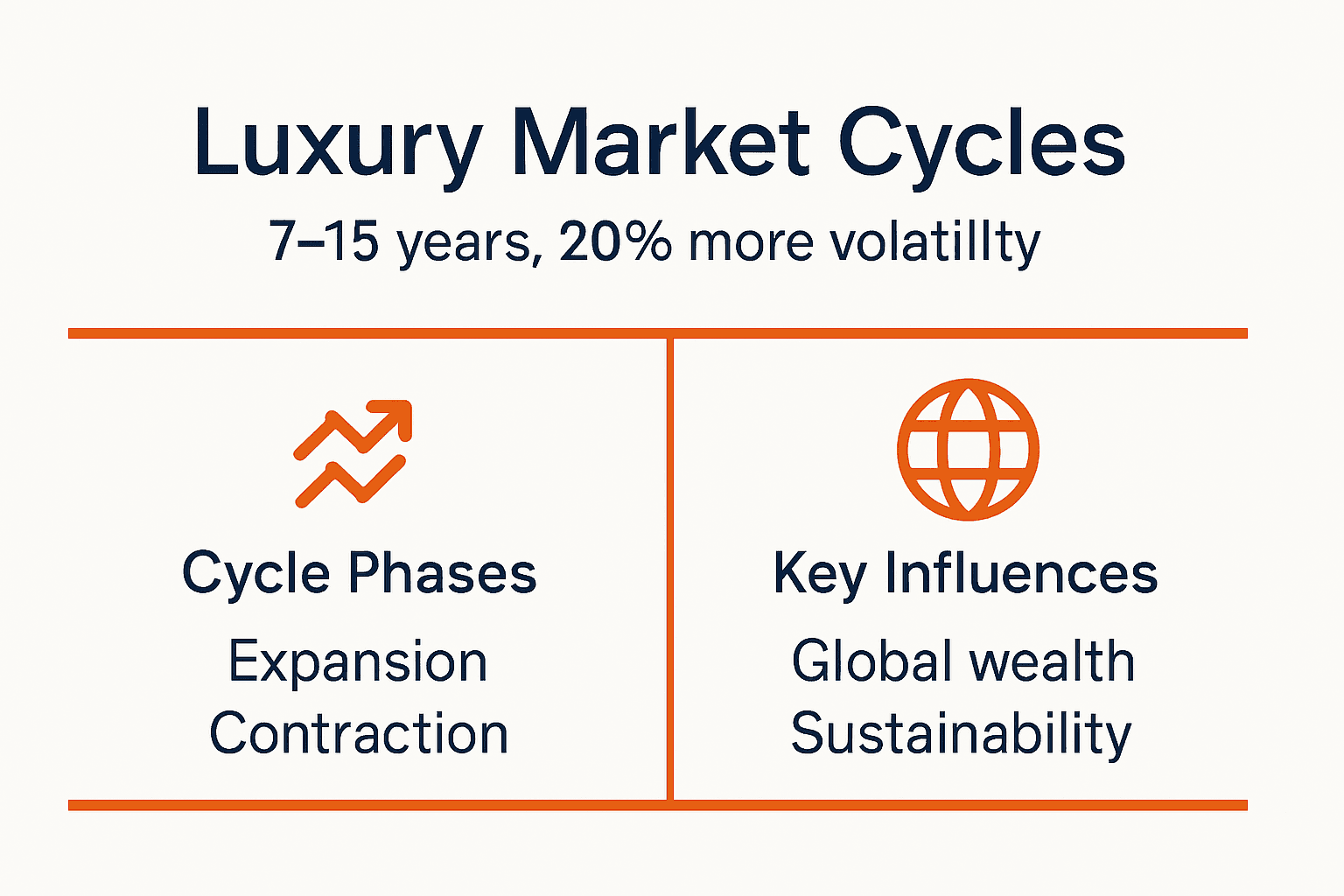
Luxury property markets move differently from mass real estate. While general housing cycles span 18 to 20 years, French Riviera estates follow shorter 7 to 15 year patterns with roughly 20% higher volatility. Understanding these rhythms helps you time acquisitions for optimal legacy returns and rental yields in Cannes, Antibes, or Monaco borders.

Table of Contents

  • Luxury Market Cycle Fundamentals
  • Market Cycle Impact On French Riviera Real Estate
  • Common Misconceptions About Luxury Market Cycles
  • Legacy Investment Strategies Aligned With Market Cycles
  • Sustainability’s Role In Luxury Market Cycles
  • New Construction And Market Cycle Risk Mitigation
  • Summary And Practical Investor Takeaways
  • Explore Exclusive Luxury Real Estate Opportunities On The French Riviera

Key takeaways

PointDetails
Cycle duration and phasesLuxury markets complete expansion, peak, contraction, and trough phases in 7 to 15 years, driven by global wealth flows.
Appreciation potentialFrench Riviera properties historically appreciate 5 to 8% annually, with sea-view villas commanding €2M+ premiums.
Sustainability influenceEco-certified luxury homes see 15% higher demand and stronger yields, aligning with 2026 investor priorities.
Legacy timing advantageBuying during trough phases secures lower entry prices and 3 to 5% rental yields for wealth preservation.
New construction protectionVEFA contracts, ten-year warranties, and lower notary fees mitigate cyclical risks in off-plan Riviera builds.

Luxury market cycle fundamentals

Luxury real estate operates on distinct timelines compared to broader housing markets. A full cycle typically lasts 7 to 15 years, progressing through four phases: expansion, peak, contraction, and trough. During expansion, global wealth creation fuels demand and prices rise steadily. Peaks arrive when credit tightens or geopolitical uncertainty reduces buyer liquidity. Contractions last 1 to 3 years, marked by falling transaction volumes and selective price corrections. Troughs offer strategic entry points where fundamentals remain strong but sentiment lags.

Three primary forces drive these cycles. Global wealth flows concentrate purchasing power among high-net-worth individuals who respond swiftly to currency shifts, tax policy changes, or equity market gains. Interest rate movements directly impact financing costs and opportunity costs for cash buyers. Broader economic growth influences business profits, bonus pools, and family office allocations. Unlike mass-market housing tied to population growth and mortgage availability, luxury cycles depend on discretionary decisions by a smaller, wealthier buyer pool.

This concentration creates volatility. When markets turn, luxury properties often experience sharper price swings than entry-level homes. However, recoveries can be equally rapid once confidence returns. The best seasons to buy property on the French Riviera often align with trough phases when motivated sellers meet patient legacy investors.

Pro Tip: Track global wealth indices and central bank policy calendars to anticipate cycle shifts. Cap d’Antibes prices often move three to six months after major monetary policy announcements in the US or Eurozone.

Key cycle characteristics:

  • Expansion: 3 to 5 years of rising prices and increasing transaction volumes
  • Peak: 6 to 12 months of record valuations and fierce bidding
  • Contraction: 1 to 3 years of falling sales and selective price reductions
  • Trough: 1 to 2 years of stabilised pricing and renewed buyer interest

Market cycle impact on French Riviera real estate

The Côte d’Azur luxury segment reflects global wealth dynamics while maintaining unique regional characteristics. Historical data shows annual appreciation averaging 5 to 8% for prime properties with Mediterranean views, eco-luxury features, or proximity to Monaco. Price peaks coincide with economic expansion phases when digital entrepreneurs, family offices, and emerging-market fortunes seek European havens. Favourable financing conditions amplify demand, particularly for estates priced above €5 million.

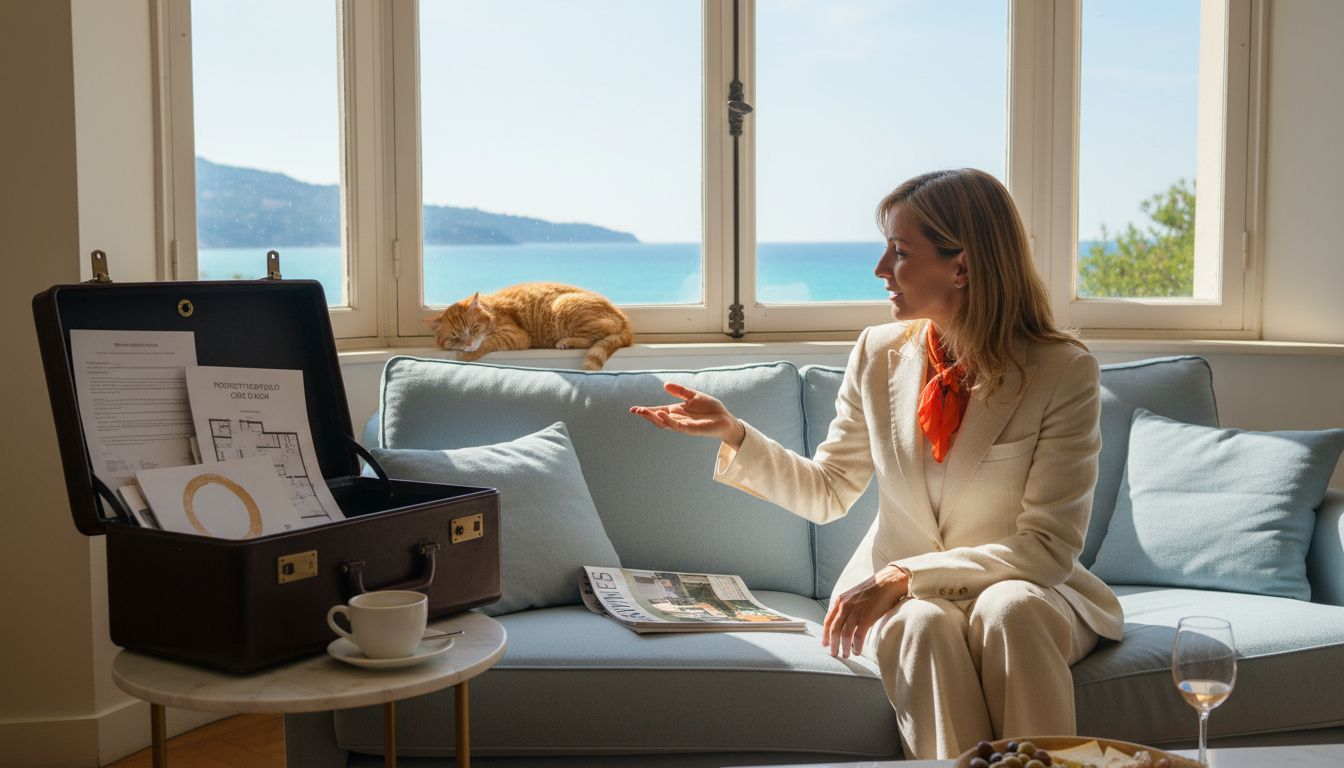
Agent showing details in Riviera home

Contractions arrive swiftly. Liquidity compression among ultra-high-net-worth buyers triggers 1 to 3 year downturns where transaction volumes fall 30 to 40%. Prices typically correct 10 to 20% in less-prestigious zones whilst Cap d’Antibes or Èze hilltop villas hold value better. Recovery begins when wealth accumulation resumes and currency alignments favour euro-denominated assets.

Regional events influence micro-cycles. Cannes Film Festival weeks and summer regattas drive rental demand, sustaining 3 to 5% annual yields for well-positioned properties. Menton’s Lemon Festival and Nice Carnaval attract seasonal buyers who convert tourist experiences into acquisition decisions. Antibes’ yacht shows introduce international fortunes to Provençal lifestyle, creating demand spikes during expansion phases.

Cycle phaseAverage durationPrice movementRental yield
Expansion3 to 5 years+5% to +8% annually3% to 4%
Peak6 to 12 months+2% to +5%4% to 5%
Contraction1 to 3 years-10% to -20%3% to 4%
Trough1 to 2 yearsFlat to +2%4% to 5%

Eco-certified villas outperform generic luxury during all phases. Solar arrays, rainwater systems, and green building certifications attract environmentally conscious buyers willing to pay premiums. These properties achieve 4 to 6% rental yields in peak seasons, particularly in Sainte-Maxime where Nartelle beach proximity meets sustainability standards.

Regional demand drivers:

  • Monaco proximity: Properties within 10km command 20 to 30% premiums
  • Sea views: Direct Mediterranean vistas add €2M+ to comparable inland estates
  • Cultural access: Walking distance to galleries, festivals, or yacht clubs increases desirability
  • Sustainability: LEED or HQE certification boosts resale value 8 to 12%

Common misconceptions about luxury market cycles

Many investors assume luxury real estate provides stable, predictable returns. Reality differs sharply. Volatility in luxury segments runs approximately 20% higher than mass-market housing due to concentrated buyer pools and discretionary purchase timing. A €10 million villa may lose €2 million in value during contractions whilst recovering that amount plus appreciation gains within 18 months of cycle reversal.

Another misconception treats luxury cycles as longer and more stable than general real estate patterns. Evidence shows the opposite: shorter durations and faster transitions between phases. Whilst UK housing cycles historically span 18 years, French Riviera luxury completes full rotations in 7 to 15 years. This acceleration stems from rapid wealth creation among tech entrepreneurs and emerging-market billionaires who enter and exit markets swiftly.

Downturns receive exaggerated pessimism. Contractions tend to be sharp, dropping prices 10 to 20% in 12 to 24 months, but recoveries arrive faster than in mass markets. Legacy investors who buy during troughs secure properties at optimal prices with immediate rental yield potential. Saint-Tropez waterfront estates purchased in 2020 delivered 12 to 18% total returns by 2023 as post-pandemic wealth surged into Mediterranean havens.

Sustainability increasingly reshapes cycle behaviour. Properties lacking eco-credentials face longer marketing periods and steeper discounts during contractions. Conversely, VEFA off-plan projects with solar installations and biophilic design attract buyers throughout all phases. This trend will intensify through 2026 as family offices prioritise environmental, social, and governance criteria in legacy portfolios.

Pro Tip: Avoid chasing peak-phase gains. Investors who buy during late expansion often experience immediate paper losses. Target trough acquisitions in prestigious zones like Cap d’Antibes where fundamental appeal outlasts temporary sentiment shifts.

Debunked assumptions:

  • Luxury markets are stable: Volatility exceeds mass markets by 20%
  • Cycles are predictable: Global wealth shocks create irregular patterns
  • Hold forever strategy works: Active cycle timing improves total returns
  • All luxury assets perform equally: Location, sustainability, and heritage create wide variance

Legacy investment strategies aligned with market cycles

Strategic legacy investors synchronise acquisitions with cycle phases to maximise wealth preservation and intergenerational transfer. Buying during trough phases delivers dual benefits: lower entry prices and immediate rental yields that fund property maintenance whilst appreciation builds. A €5 million Antibes villa purchased at trough with 4% rental yield generates €200,000 annually whilst potentially appreciating €250,000 to €400,000 as expansion resumes.

Cycle-aware acquisition steps:

  1. Identify trough signals: falling transaction volumes, rising inventory, motivated sellers
  2. Prioritise eco-certified properties with sustainability credentials that enhance resilience
  3. Conduct legal audits for title clarity and seismic surveys for structural integrity
  4. Structure acquisitions through family trusts or holding companies for tax-efficient wealth transfer
  5. Plan rental management to achieve 3 to 5% yields during ownership consolidation

Balanced returns combine appreciation with income. French Riviera estates historically deliver 5 to 8% annual price growth alongside 3 to 5% rental yields, producing 8 to 13% total returns over full cycles. This balance preserves capital during contractions whilst positioning heirs to benefit from long-term Mediterranean demand. Menton properties near Val Rahmeh botanical gardens or Èze village offer stable rental appeal through cultural tourism regardless of cycle phase.

Wealth transfer planning requires early integration. French inheritance law mandates forced heirship rules that complicate estate distribution. Establishing structures before acquisition allows seamless transfer whilst minimising French succession duties. Legacy investment strategies in France should address tax treaties, beneficial ownership transparency, and multi-generational governance.

Diversification across cycle phases and property types reduces concentration risk. Combining peak-phase sales of appreciated assets with trough-phase acquisitions of undervalued estates creates natural portfolio rebalancing. Mixing Nice Promenade penthouses with Sainte-Maxime beachside villas spreads geographic and stylistic exposure.

Legacy-optimised characteristics:

  • Timeless locations: Cap d’Antibes, Monaco borders, Cannes Croisette command enduring premiums
  • Architectural heritage: Belle Époque villas and Art Deco masterpieces appreciate above generic luxury
  • Rental fundamentals: Proximity to beaches, yacht clubs, and cultural venues sustains yields
  • Future-proof design: Eco-luxury features align with heir values and regulatory trends

Sustainability’s role in luxury market cycles

Environmental standards increasingly shape luxury market dynamics on the French Riviera. Demand for sustainable-built properties rose 15% from 2024 to 2026 as wealth creators prioritise climate-conscious investments. Green certifications like HQE or LEED act as value enhancers during expansion phases and risk hedges during contractions. Buyers pay 8 to 12% premiums for certified homes whilst these properties experience 5 to 8% smaller price drops when markets turn.

Infographic showing luxury market cycle basics

Long-term rental yields favour eco-luxury. Tenants willing to pay €15,000 to €30,000 monthly for Cannes or Antibes estates increasingly demand solar installations, energy-efficient climate control, and sustainable materials. Properties meeting these criteria achieve occupancy rates 10 to 15 percentage points higher than comparable non-certified homes, translating to 4 to 6% net yields versus 3 to 4% for standard luxury.

Investor priorities reflect generational wealth transfer. Digital entrepreneurs and family offices managing inherited capital view sustainability as essential to portfolio longevity. A €10 million investment in a Saint-Tropez eco-villa protects principal value whilst aligning with heir values around environmental stewardship. This dual mandate drives competitive bidding for certified properties even during late-cycle phases.

Sustainability featureDemand premiumYield advantageCycle resilience
Solar energy systems+8% to +10%+0.5% to +1%-3% to -5% contraction impact
Green building certification+10% to +12%+1% to +1.5%-5% to -7% contraction impact
Water conservation tech+5% to +7%+0.3% to +0.5%-2% to -4% contraction impact
Biophilic design elements+6% to +9%+0.5% to +0.8%-4% to -6% contraction impact

Sustainability integrates with heritage investment goals. Provençal mas restored with eco-materials and solar arrays preserve architectural character whilst meeting modern performance standards. These properties appeal to legacy buyers seeking timeless assets that honour tradition and embrace innovation. Nice’s Mont Boron developments blend Mediterranean views with cutting-edge sustainability, creating heirlooms for climate-aware generations.

Eco-luxury investment advantages:

  • Premium pricing power throughout cycle phases
  • Higher rental yields from quality-focused tenants
  • Reduced operational costs through energy efficiency
  • Enhanced resale appeal to values-driven buyers

New construction and market cycle risk mitigation

Off-plan luxury acquisitions on the Côte d’Azur offer structural protections against cycle volatility. Ten-year warranties cover construction defects, foundation issues, and major structural elements, shielding buyers from unexpected costs that can erode returns during market downturns. VEFA contracts (vente en l’état futur d’achèvement) further reduce risk by staging payments to construction milestones rather than requiring full capital at signing.

Eco-luxury design enhances market appeal regardless of cycle phase. Sainte-Maxime beachside apartments from €1.2 million incorporate solar arrays, rainwater harvesting, and biophilic elements that attract sustainability-focused buyers. These features command premiums during expansion whilst maintaining value during contractions. Nice’s emerging Mont Boron towers blend Baie des Anges panoramas with LEED certification, positioning properties for long-term appreciation.

Financial structures ease acquisition timing. Lower notary fees on new construction (2 to 3% versus 7 to 8% for resales) reduce upfront costs. Zero-interest payment plans spread capital deployment across 18 to 36 months, allowing investors to dollar-cost-average into markets regardless of cycle position. This flexibility proves valuable when acquiring during uncertain transition phases between trough and expansion.

New builds mitigate financial downturns through guaranteed completion dates and fixed pricing. Unlike resale transactions where sellers may withdraw if markets rise, VEFA contracts lock purchase terms. Buyers secure 2026 pricing for 2028 delivery, capturing appreciation during construction. If contraction arrives before completion, ten-year warranties and modern specifications support value retention better than ageing resale inventory.

New construction cycle advantages:

  • Warranty protection reduces post-acquisition maintenance risks
  • VEFA contracts spread payment obligations across construction timeline
  • Eco-certifications attract premium buyers throughout cycles
  • Lower fees improve total acquisition costs by 4 to 6%
  • Fixed pricing captures expansion-phase appreciation before completion

Summary and practical investor takeaways

Luxury market cycles on the French Riviera follow distinct 7 to 15 year patterns with expansion, peak, contraction, and trough phases driven by global wealth flows, interest rates, and economic growth. Understanding these rhythms allows high-net-worth investors to time acquisitions strategically, targeting trough-phase purchases where entry prices optimise legacy returns and rental yields reach 4 to 5%. Historical appreciation of 5 to 8% annually combines with rental income to produce 8 to 13% total returns over complete cycles.

Sustainability emerged as a critical factor reshaping cycle behaviour. Eco-certified properties command 8 to 12% premiums, experience smaller price drops during contractions, and achieve higher rental yields through quality tenant demand. Family offices and digital entrepreneurs increasingly view green credentials as essential to portfolio resilience and intergenerational wealth transfer. French Riviera investing success requires integrating environmental standards into acquisition criteria alongside traditional location and architectural quality factors.

Legal due diligence protects capital throughout market cycles. Title audits, structural surveys, and VEFA contract reviews prevent costly surprises that compound during downturns. Ten-year warranties on new construction provide tangible risk mitigation whilst lower notary fees improve overall economics. Wealth transfer planning through trusts or holding companies enables tax-efficient legacy transitions aligned with French inheritance law.

Essential action points:

  • Monitor cycle indicators: track transaction volumes, inventory levels, and wealth flow data
  • Target trough acquisitions: prioritise periods of price stabilisation and motivated sellers
  • Emphasise sustainability: demand eco-certifications that enhance yields and cycle resilience
  • Verify legal foundations: conduct thorough title, structural, and contractual due diligence
  • Plan succession early: structure ownership for efficient intergenerational wealth transfer

Explore exclusive luxury real estate opportunities on the French Riviera

Living on the Côte d’Azur connects global visionaries with off-market luxury properties unavailable through conventional channels. Our portfolio spans eco-certified villas in Cap d’Antibes, Monaco-adjacent estates, and Cannes Croisette penthouses designed for legacy wealth preservation. Expert market cycle guidance helps you identify optimal acquisition windows whilst legal and financial teams navigate French property law, VEFA contracts, and wealth transfer structures. Discover luxury villas and penthouses for sale that combine Mediterranean lifestyle with strategic investment fundamentals. Accept traditional currencies or cryptocurrency for seamless international transactions aligned with digital-age wealth management.

Frequently asked questions

What is the luxury market cycle and why does it matter?

The luxury market cycle is a 7 to 15 year pattern of expansion, peak, contraction, and trough phases affecting French Riviera property prices and demand. It matters because understanding these rhythms helps investors maximise returns by timing acquisitions to trough phases where entry prices and rental yields optimise legacy wealth preservation.

How do luxury market cycles on the French Riviera differ from general real estate cycles?

French Riviera luxury cycles are shorter, completing rotations in 7 to 15 years versus 18 to 20 years for mass markets, with approximately 20% higher volatility. They respond faster to global wealth flows, geopolitical shifts, and currency movements because buyer pools are smaller and more concentrated among high-net-worth individuals making discretionary purchase decisions.

What indicators signal a good time to buy in the luxury market cycle?

Trough phases marked by stabilised or slightly falling prices, rising inventory, and improved buyer liquidity represent optimal acquisition windows. Watch for macroeconomic signals like declining interest rates, strengthening euro-dollar exchange rates, and regional demand drivers such as Cannes Film Festival attendance or Monaco yacht show activity that predict cycle reversals.

How does sustainability impact luxury real estate investments?

Sustainability drives 15% higher demand for eco-certified properties and enhances long-term rental yields by 1 to 1.5 percentage points through quality tenant attraction. Green-certified homes experience 5 to 8% smaller price drops during contractions and command 8 to 12% premiums during expansion phases, making environmental credentials essential for cycle-resilient legacy portfolios.

Recommended

  • Emerging Luxury Market: Shaping 2026 Wealth Strategies
  • 6 Key Examples of Luxury Buyer Trends for Elite Investors
  • 7 Top Luxury Real Estate Markets to Invest In – Living on the Côte d’Azur
  • 7 Types of Investment Risk in Real Estate for Luxury Buyers
by Websols Servicedesk/5 March 2026/in Landingpage
https://www.livingonthecotedazur.com/wp-content/uploads/2026/03/1772677217764_image.jpg 768 1344 Websols Servicedesk https://www.livingonthecotedazur.com/wp-content/uploads/2024/02/sitelogo150.png Websols Servicedesk2026-03-05 03:20:332026-03-05 03:20:38Luxury market cycles: 7-15 years, 20% higher volatility

Eco-certified luxury properties on the Côte d’Azur achieve 75% occupancy compared to 60% for non-certified estates, a 15-percentage-point advantage reshaping investor priorities in 2026. Selecting the right luxury property management criteria on the Côte d’Azur is no longer optional for high-net-worth families seeking legacy wealth preservation and optimised rental yields. This article equips you with actionable insights spanning sustainability practices, smart technology integration, comparative management models, and legacy-focused strategies to maximise ROI whilst securing heirlooms for generations.

Table of Contents

  • Key Selection Criteria For High-End Property Management
  • Sustainable And Technology-Driven Property Management
  • Models Of Property Management: Comparative Overview
  • Legacy-Focused Property Management Strategies
  • New Construction Opportunities And Management
  • Summary Comparison And Situational Recommendations
  • Explore Luxury Property Management Solutions With Living On The Côte D’Azur

Key Takeaways

| Point | Details |
|——-|———||
| Sustainability Premium | Properties with eco-certifications command 15% higher asset value and cut energy costs by 40%. |
| Smart Tech Efficiency | IoT integration reduces maintenance response times by 40%, boosting tenant retention. |
| Professional Management ROI | Expert firms increase net rental yield by 3% despite 10-12% fees. |
| Legacy Yield | Tax-efficient structures deliver 3-5% annual rental income supporting intergenerational wealth. |
| Crypto Advantage | Digital payment acceptance accelerates booking processes by 20% for modern investors. |

Key Selection Criteria for High-End Property Management

Choosing property management on the Côte d’Azur demands precision. Your criteria must align with legacy goals, ROI targets, and the evolving demand for luxury apartments on the Côte d’Azur. Start with sustainability credentials. Eco-luxury certifications drive 15% property value appreciation, making green credentials non-negotiable for long-term asset growth. Properties with solar arrays, water recycling systems, and biophilic design outperform traditional estates in occupancy and resale.

Smart technology separates average management from excellence. Seek firms deploying IoT sensors for climate control, security, and predictive maintenance. These systems slash response times by 40%, keeping properties pristine and tenants satisfied. Legacy investors must evaluate legal expertise too. Firms experienced in French succession law and cross-border tax structures facilitate smoother wealth transfer, halving transaction delays through meticulous due diligence.

Fee structures require scrutiny. Management fees ranging 10-12% may seem steep, but they deliver net yield improvements of 3% by optimising occupancy and minimising vacancies. Cryptocurrency acceptance signals forward-thinking management, with crypto payments boosting booking speed by 20% amongst digital millionaires seeking seamless transactions.

Pro Tip: Prioritise managers offering quarterly performance reports with occupancy analytics, maintenance logs, and yield projections to maintain transparency and accountability.

Key evaluation points include:

  • Sustainability certifications and energy performance ratings
  • Smart home technology integration depth
  • Track record with high-net-worth client portfolios
  • Legal expertise in estate planning and tax optimisation
  • Acceptance of innovative payment methods

Sustainable and Technology-Driven Property Management

Sustainability is rewriting luxury property economics. Eco-practices elevate property values by 15% whilst slashing energy costs up to 40%, creating a dual advantage for investors focused on luxury property appreciation factors on Côte d’Azur. Solar panel installations, geothermal heating, and greywater systems transform operating expenses whilst appealing to environmentally conscious tenants. These features resonate deeply with heirs inheriting properties, ensuring your legacy aligns with next-generation values.

Technician adjusts smart system in eco-savvy villa

Smart home systems deliver operational brilliance. Automated climate control adjusts to occupancy patterns, reducing waste. Security systems with facial recognition and remote monitoring provide peace of mind for absentee owners. Maintenance sensors detect leaks or HVAC issues before they escalate, cutting repair costs by 30%. Management firms leveraging these technologies respond 40% faster to maintenance requests, preserving property condition and tenant satisfaction.

Biophilic design elements, living green walls, natural stone, and floor-to-ceiling windows overlooking Mediterranean vistas, increase repeat bookings by 15%. Guests and long-term tenants crave spaces that merge indoor comfort with outdoor serenity. Properties in Èze village or Cap d’Antibes featuring these elements command premium rents whilst maintaining high occupancy.

Cryptocurrency integration addresses a practical need. Digital millionaires prefer frictionless transactions. Properties accepting Bitcoin or Ethereum for deposits and rent payments report 20% faster booking confirmations, reducing vacancy periods. This innovation positions your asset at the forefront of luxury hospitality trends.

Pro Tip: Specify green certifications like HQE or BREEAM in management contracts to guarantee sustainability claims are verifiable and marketable.

Market Insight: Eco-certified properties achieve 75% average occupancy versus 60% for non-certified counterparts, translating to €50,000+ additional annual income on a €3M villa.

  • Solar and geothermal systems reduce annual energy costs by €15,000-€25,000
  • Smart locks and climate control cut utility waste by 25%
  • Biophilic design increases rental rates by 10-12%
  • Crypto payment options attract under-45 high-net-worth demographic

Models of Property Management: Comparative Overview

Three management models dominate the Côte d’Azur luxury market, each with distinct financial and operational profiles. Professional firms charge 10-12% fees but boost net yields by 3%, offsetting costs through superior occupancy rates and reduced legal disputes. These firms handle tenant screening, maintenance coordination, and compliance, sparing owners from day-to-day headaches. Their networks secure premium tenants willing to pay top euro for impeccably managed properties.

Self-management appeals to hands-on investors near the property. However, data reveals self-managed estates earn 20-30% less net rental income due to longer vacancy periods and amateur marketing. Legal risks multiply without professional guidance. French rental law is labyrinthine; one misstep in lease terms or eviction procedures triggers costly litigation.

Hybrid models split responsibilities. Owners retain marketing and tenant selection whilst outsourcing maintenance and accounting for 8-10% fees. This approach suits experienced investors comfortable with administrative tasks but lacking local contractor networks. Performance sits between self and full professional management, balancing control with efficiency.

Eco-certified properties under professional property management advantages achieve 75% occupancy, a stark contrast to 60% for non-certified or self-managed assets. This 15-point gap represents €40,000-€60,000 annual income difference on a €2.5M property. Crypto payment adoption, increasingly offered by professional firms, accelerates bookings by 20%, further tightening occupancy gaps.

Management ModelAnnual FeeNet Yield ImpactAvg OccupancyLegal Support
Self-Managed0%Baseline55-60%None
Hybrid8-10%+1.5%65-70%Limited
Professional10-12%+3%75-80%Comprehensive

Selecting the right model demands clarity on your priorities:

  1. Legacy and hands-off investors: Professional firms deliver maximum yield and legal protection
  2. Cost-sensitive experienced owners: Hybrid balances fees with moderate support
  3. Local resident investors: Self-management viable only with strong French legal knowledge
  4. Sustainability-focused portfolios: Professional firms with eco-credentials are essential

Legacy-Focused Property Management Strategies

Legacy wealth preservation transforms property management from operational task to strategic asset. Properties structured for real estate inheritance strategies on the Côte d’Azur deliver 3-5% annual rental yield whilst optimising tax efficiency for heirs. Provençal mas renovations or Monaco-adjacent apartments offer distinct advantages. The former provides pastoral charm with agricultural tax benefits; the latter grants prestige and minimal income tax exposure.

Tax-efficient structures improve returns by up to 30% compared to direct ownership. SCI (Société Civile Immobilière) frameworks distribute ownership shares amongst family members, reducing succession duties whilst maintaining centralised management. Professional firms versed in these structures guide estate planning integration, ensuring your property management aligns with inheritance objectives. Legal audits catch title defects or easement issues early, halving transaction delays when transferring ownership.

Sustainability practices resonate powerfully with heirs. Millennials and Gen Z inheritors prioritise environmental responsibility. Properties with green certifications and renewable energy systems face minimal resistance during succession discussions. These features preserve family unity around shared values whilst protecting asset value. Management firms facilitating this alignment become invaluable partners in intergenerational wealth continuity.

Rental income consistency matters for legacy planning. Professional management maintains 75%+ occupancy through strategic marketing and tenant retention programmes. This reliable cash flow supports family trusts or educational funds without forced property sales during market downturns. Properties in Antibes’ Cap or Cannes’ Californie neighbourhood combine rental performance with long-term appreciation, the ideal legacy formula.

Pro Tip: Establish management continuity clauses in contracts, ensuring the same firm serves your heirs post-succession to maintain property knowledge and tenant relationships.

  • SCI structures reduce estate taxes by 20-30%
  • Legal audits prevent 50% of common succession disputes
  • Sustainable properties align with 80% of under-40 heir preferences
  • Professional management maintains income during ownership transitions

New Construction Opportunities and Management

New luxury construction surged 15% in demand during 2026, driven by buyer confidence in 10-year warranties and zero-interest payment plans. These off-plan gems in Sainte-Maxime, steps from Nartelle beach, or Nice’s Mont Boron sea-view towers blend biophilic design with cutting-edge amenities. New luxury build trends on the Côte d’Azur prioritise sustainability from foundation pour, embedding solar arrays and smart systems during construction rather than retrofitting.

VEFA contracts (Vente en État Futur d’Achèvement) protect investors from cost overruns and construction delays through staged payments and legal guarantees. These contracts specify completion dates and quality standards, giving buyers recourse if developers falter. Lower notary fees, roughly 2-3% versus 7-8% for resales, improve acquisition economics. Zero-interest payment plans spread costs across construction phases, preserving liquidity for portfolio diversification.

Biophilic design integration distinguishes 2026’s new builds. Living walls in lobbies, natural stone facades, and floor plans maximising sea views create spaces that enhance well-being. These properties attract premium tenants and achieve faster lease-ups. Management firms specialising in new constructions understand these features’ marketing value, commanding higher rents whilst maintaining occupancy.

Lifestyle amenities influence buyer decisions. Infinity pools overlooking the Baie des Anges, private beach access in Cap d’Antibes, or rooftop yoga pavilions in Èze village transform properties into experiential investments. Management strategies for new builds emphasise these lifestyle elements in marketing materials, targeting affluent families and executives seeking Riviera living anchored by modern convenience.

  • 10-year structural warranties eliminate major repair risks
  • Zero-interest plans improve cash flow during acquisition
  • VEFA contracts cap buyer risk at 5% total cost exposure
  • Biophilic design increases rental premiums by 12-15%
  • Lower notary fees save €140,000 on a €2M property

Summary Comparison and Situational Recommendations

Synthesising these insights clarifies optimal paths for diverse investor profiles. The table below distils financial and operational differences across management models, enabling data-driven decisions aligned with your legacy and ROI objectives.

CriteriaSelf-ManagedHybridProfessional
Annual Fee0%8-10%10-12%
Net Yield vs Baseline0%+1.5%+3%
Avg Occupancy55-60%65-70%75-80%
Legal Risk ReductionNone25%50%
Sustainability IntegrationOwner dependentModerateComprehensive
Crypto Payment OptionsRareOccasionalCommon

For legacy-focused investors prioritising wealth transfer and tax efficiency, compare luxury property management models and select professional firms with estate planning expertise. These firms navigate French succession law complexities whilst maintaining rental income continuity for trusts or beneficiaries. The 3% net yield improvement and 50% legal risk reduction justify fees, especially on properties exceeding €3M where disputes become costlier.

Eco-conscious investors should mandate sustainability certifications and smart technology integration in management contracts. Professional firms deliver the infrastructure and expertise to maintain eco-credentials, crucial for the 15% value premium these properties command. Seek firms offering quarterly sustainability reports documenting energy savings and carbon reduction, valuable for ESG-focused family offices.

Experienced investors valuing autonomy may explore hybrid models if residing near the property or possessing strong French legal knowledge. Accept that 20-30% lower net income is the autonomy price. Self-management suits only those treating property ownership as active occupation rather than passive investment. For distant or time-constrained owners, professional management remains optimal despite fees.

Pro Tip: Balance control with professional support by selecting firms offering tiered service packages, allowing you to retain tenant approval rights whilst delegating operations.

  • Legacy wealth families: Professional management for tax efficiency and legal protection
  • Eco-focused portfolios: Certified firms with smart tech and sustainability reporting
  • Hands-on local investors: Hybrid models for moderate fees with selective support
  • Absentee owners: Full professional management to maximise occupancy and minimise legal exposure

Explore Luxury Property Management Solutions with Living on the Côte d’Azur

Implementing these strategies requires local expertise and market access. Living on the Côte d’Azur delivers bespoke property management integrating sustainability, technology, and legacy planning for high-net-worth investors. Our team maximises occupancy through strategic marketing whilst ensuring seamless wealth transfer aligned with your family’s objectives. Benefit from exclusive access to off-market luxury real estate options unavailable through traditional channels, including eco-certified villas in Cap d’Antibes and new-build penthouses in Nice’s Mont Boron.

Partner with specialists who understand your legacy vision. We navigate French legal frameworks, optimise tax structures, and deploy smart technologies that preserve asset value for generations. Explore tailored real estate investment strategies for legacy wealth building designed for families seeking Riviera heirlooms that appreciate 5-8% annually.

Pro Tip: Partnering with a specialised local firm unlocks hidden value through contractor networks, legal connections, and market intelligence, reducing investment risk by 30-40%.

Frequently Asked Questions

What are the top criteria for selecting a luxury property manager on the Côte d’Azur?

Prioritise sustainability credentials like HQE or BREEAM certifications, smart technology integration for maintenance efficiency, transparent fee structures balanced against yield improvements, and legal expertise in French succession and tax law. These factors ensure 75%+ occupancy, lower operating costs by 40%, and smooth wealth transfer for legacy investors.

How does smart home technology improve ROI in luxury property management?

IoT systems reduce maintenance response times by 40%, preventing minor issues from becoming costly repairs. Automated climate control and security systems cut utility waste by 25% whilst enhancing tenant satisfaction. This combination boosts occupancy rates by 10-15%, directly increasing annual rental income by €30,000-€50,000 on premium properties.

What are the benefits of legacy-focused property management?

Legacy-focused property management benefits include 3-5% annual rental yield with tax-advantaged structures like SCI frameworks reducing estate duties by 20-30%. Legal audits cut transaction delays by 50%, facilitating smoother ownership transfers. Sustainability practices align with heir values, ensuring 80% of next-generation owners embrace rather than liquidate inherited properties.

Why should investors consider new construction luxury properties on the Côte d’Azur?

Demand for new luxury construction surged 15% due to 10-year warranties eliminating major repair risks and zero-interest payment plans improving acquisition cash flow. VEFA contracts cap buyer risk exposure at 5% of total cost. Biophilic design and integrated smart systems command 12-15% rental premiums whilst achieving faster lease-ups in competitive markets.

Recommended

  • Côte d’Azur Property Lifestyle Value: 8% Legacy Wealth
  • Why Luxury Properties Appreciate on the Côte d’Azur
  • Luxury Property Management: Safeguarding Côte d’Azur Legacies
  • Why Demand Luxury Apartments on the Côte d’Azur
by Websols Servicedesk/4 March 2026/in Landingpage
https://www.livingonthecotedazur.com/wp-content/uploads/2026/03/1772596643432_image-1.jpg 768 1344 Websols Servicedesk https://www.livingonthecotedazur.com/wp-content/uploads/2024/02/sitelogo150.png Websols Servicedesk2026-03-04 04:58:532026-03-04 06:02:38Côte d’Azur Luxury Property Management 2026: 15% Value Gain

Think you can craft a pristine estate plan for your Côte d’Azur villa and bypass French inheritance law? Many high-net-worth international investors discover too late that forced heirship mandates at least 50% of estate assets must pass to direct heirs, regardless of wills or trusts. Understanding the intricate French legal frameworks governing luxury property ownership, taxation, and legacy protection is essential for securing your Riviera investment and safeguarding your family’s future wealth in 2026.

Table of Contents

  • Introduction To Côte D’Azur Luxury Real Estate Regulations
  • French National Laws Governing Property Purchases
  • Inheritance And Legacy Planning Under French Law
  • Tax Regulations Affecting Foreign Luxury Property Owners
  • Local Municipality And Environmental Regulations
  • VEFA Contracts And Protections For New Construction Buyers
  • Due Diligence And Risk Mitigation For Luxury Property Investments
  • Common Misconceptions On Côte D’Azur Property Regulations
  • Conclusion And Practical Next Steps For Investors
  • Explore Expert Services For Côte D’Azur Luxury Real Estate

Key Takeaways

PointDetails
Forced Heirship ImpactFrench law mandates approximately 50% minimum estate inheritance to direct heirs, restricting will-based planning.
VEFA Contract BenefitsOff-plan purchases include 10-year warranties and staged payments, reducing financial and construction risks.
Property Tax ObligationsAnnual luxury property tax ranges from 0.5% to 1.5% of cadastral value, directly affecting investment returns.
Local Regulatory ComplexityCoastal zoning and environmental protections impose strict permits and sustainability requirements on renovations.
Due Diligence PriorityComprehensive legal audits and technical surveys are critical to secure clear title and protect legacy investments.

Introduction to Côte d’Azur Luxury Real Estate Regulations

The Côte d’Azur luxury real estate market reached unprecedented heights in 2026, with sea-view villas commanding premiums exceeding €2 million beyond comparable inland properties. International buyers now represent over 40% of transactions above €3 million, drawn by the Riviera’s timeless elegance and appreciation rates consistently hovering between 5% and 8% annually. Yet this golden investment opportunity comes wrapped in layers of French national law and hyper-local municipal regulations that can confound even sophisticated global investors.

Why does regulatory complexity matter so profoundly here? The French legal system differs fundamentally from Anglo-Saxon common law traditions, particularly around property ownership structures, inheritance protocols, and tax obligations. A villa purchase in Cap d’Antibes operates under entirely different succession rules than a comparable estate acquisition in London or Miami. These distinctions directly impact your ability to transfer wealth across generations, a cornerstone of luxury real estate buying strategies for families seeking heirloom properties rather than transient investments.

For high-net-worth individuals focused on legacy protection, understanding both national frameworks and local Provençal traditions is non-negotiable. Your investment isn’t merely real estate; it’s a family sanctuary designed to weather market volatility while appreciating steadily. The regulatory landscape shapes everything from initial purchase mechanics to long-term wealth preservation:

  • National laws govern ownership structures, notarial requirements, and forced heirship rules
  • Municipal codes dictate building permits, environmental compliance, and coastal protection standards
  • Tax frameworks at multiple levels affect annual carrying costs and estate transfer efficiency
  • Contractual protections like VEFA agreements shield off-plan buyers from construction overruns

Mastering these regulatory dimensions transforms uncertainty into strategic advantage, enabling you to secure Riviera properties that serve your family for generations while optimizing fiscal outcomes.

French National Laws Governing Property Purchases

Every French property transaction revolves around the notaire, a state-appointed legal officer whose role is mandatory for authenticating property transactions ensuring legal clarity. Unlike estate agents or solicitors in other jurisdictions, notaires serve as impartial guarantees of contract validity and title transfer legitimacy. They conduct exhaustive title searches, verify seller ownership, calculate precise tax obligations, and register the deed with land registry authorities. For luxury acquisitions often involving complex ownership structures or cross-border elements, the notaire becomes your regulatory anchor point, ensuring compliance across all dimensions.

French purchase contracts follow a distinctive two-stage structure that protects buyers while maintaining transaction certainty. The preliminary contract, or compromis de vente, commits both parties and typically includes a 10-day cooling-off period for buyers. During this window, you retain full withdrawal rights without penalty, providing space for final due diligence reviews. The second stage, the acte de vente, represents the definitive sale executed before the notaire, transferring legal ownership and triggering tax payments.

Key contractual elements under French law include precise property descriptions referencing cadastral records, clear price specifications, detailed condition disclosures, and explicit timelines for completion. Unlike jurisdictions where buyers negotiate directly with sellers, French protocols mandate notarial oversight at every stage, reducing scope for disputes but requiring patience with formal procedures.

Navigating these mechanics successfully demands methodical attention:

  1. Engage bilingual legal counsel familiar with cross-border transactions before signing preliminary agreements.
  2. Verify notaire credentials and request detailed fee breakdowns, as costs typically range from 7% to 8% of purchase price for resale properties.
  3. Arrange financing pre-approval, since French banks require extensive documentation for foreign buyers seeking mortgages.
  4. Schedule comprehensive property surveys covering structural integrity, energy efficiency ratings, and compliance with current building codes.
  5. Review all title documents with your attorney, confirming absence of liens, easements, or historical claims that could cloud ownership.

Pro Tip: Budget an additional 2% to 3% beyond notaire fees for expert advisory services, technical inspections, and translation costs. These expenditures protect investments worth millions and prevent costly surprises during closing.

Inheritance and Legacy Planning under French Law

Forced heirship represents the most striking departure from Anglo-Saxon estate planning norms, and it directly constrains how you transfer Côte d’Azur property to future generations. French civil law guarantees direct descendants a reserved portion of your estate, typically ranging from 50% for one child to 75% for three or more. This forced heirship law mandates approximately 50% minimum inheritance to heirs regardless of wills, fundamentally limiting testamentary freedom.

Family reviews forced heirship paperwork together

Contrast this with will-based systems where property owners enjoy near-total discretion over asset distribution. In France, you cannot disinherit children or allocate your entire estate to charity, a spouse, or favored heirs. The reserved portion passes by operation of law, not by choice. Only the quotité disponible, the freely disposable portion, remains subject to your preferences. For a single child, you control just half your estate; for two children, only one-third.

SystemTestamentary FreedomHeir ProtectionsPlanning Flexibility
Forced Heirship (France)Restricted to 25-50%Strong statutory guaranteesLimited; requires creative structuring
Will-Based (US/UK)Near-complete discretionMinimal; depends on jurisdictionExtensive; full asset allocation control

Inheritance tax rates escalate steeply based on beneficiary relationship proximity. Spouses and PACS partners benefit from full exemptions. Direct descendants face progressive rates from 5% on amounts below €8,072 to 45% above €1,805,677, after applying a €100,000 per-child allowance. Siblings, nieces, nephews, and unrelated beneficiaries encounter rates reaching 60%, making strategic planning essential for wealth preservation.

Optimizing legacy transfer within these constraints requires sophisticated strategies:

  • Establish SCI structures (Société Civile Immobilière) to hold property, enabling gradual gifting of shares across years to maximize allowances
  • Utilize démembrement de propriété, separating usufruct and bare ownership to reduce taxable estate value while retaining property use rights
  • Consider tontine clauses for married couples, allowing survivor to retain full property ownership outside estate calculations
  • Coordinate with tax-efficient jurisdictions if you maintain residency outside France, potentially reducing exposure

Pro Tip: Expert legal guidance is essential for crafting legacy strategies compliant with forced heirship rules. Engage advisors with dual expertise in French succession law and international tax treaties to navigate cross-border complexities.

These regulations aren’t obstacles; they’re parameters within which strategic families build enduring wealth structures that honor both legal requirements and personal values.

Tax Regulations Affecting Foreign Luxury Property Owners

Beyond inheritance levies, Côte d’Azur property ownership triggers annual fiscal obligations that directly impact investment returns and long-term holding strategies. Property tax can range from 0.5% to 1.5% annually on luxury estate cadastral values, with actual rates determined by municipal budgets and property classifications. Villas in exclusive enclaves like Cap d’Antibes or Saint-Jean-Cap-Ferrat typically face the upper end of this spectrum due to premium locations and enhanced municipal services.

Cadastral values, the basis for property tax calculations, often lag significantly behind market values, providing modest relief. However, luxury properties benefit less from this discount than modest homes, since recent constructions and major renovations trigger reassessments at contemporary valuations. Factor these annual costs into your real estate investment tips analysis, as they compound over holding periods measured in decades.

Wealth tax considerations add another layer for high-net-worth owners. While France abolished its general wealth tax in 2018, it retained the Impôt sur la Fortune Immobilière (IFI) targeting real estate assets exceeding €1.3 million. Rates graduate from 0.5% to 1.5% based on total real estate wealth, with your worldwide property portfolio potentially included if you qualify as a French tax resident. Foreign owners maintaining non-resident status face IFI only on French properties, creating strategic residence planning opportunities.

Estate transfer taxes, detailed in the previous section, vary dramatically by beneficiary relationship:

  • Spouses and civil partners: 0% (full exemption)
  • Children and direct descendants: 5% to 45% after €100,000 allowance per child
  • Siblings: 35% to 45% after €15,932 allowance
  • Other relatives and unrelated beneficiaries: 55% to 60%

Optimizing your tax position requires proactive planning well before succession events. Consider establishing holding structures that distribute ownership across family members during your lifetime, utilizing annual gift allowances to progressively transfer assets while minimizing tax incidence. French law permits tax-free gifts of €100,000 per parent to each child every 15 years, providing powerful wealth transfer mechanisms when deployed systematically.

For properties generating rental income, particularly through seasonal luxury lettings common along the Riviera, income tax obligations apply according to your residency status and rental activity classification. Non-professional landlords face progressive income tax rates up to 45%, plus social charges of 17.2%, on net rental proceeds. Professional landlords may access different regimes with distinct tax treatments and deduction rules.

These fiscal realities don’t diminish the Côte d’Azur’s investment appeal; they simply demand informed navigation to preserve returns and optimize generational wealth transfer.

Local Municipality and Environmental Regulations

Beyond national frameworks, each Côte d’Azur municipality enforces zoning codes, building permits, and environmental protections that profoundly shape property development possibilities. Coastal communes face particularly strict oversight designed to preserve the Riviera’s iconic landscapes from overdevelopment. Environmental protections around Cap d’Antibes restrict modifications to preserve natural heritage, limiting everything from exterior color palettes to vegetation removal.

Plan Local d’Urbanisme (PLU) documents govern what you can build, renovate, or modify on any given parcel. These comprehensive zoning plans specify permitted uses, maximum building heights, setback requirements from property lines, and architectural style guidelines. In historic districts like Vieux Nice or Èze’s medieval village, regulations become even more granular, often requiring traditional materials and construction methods to maintain aesthetic continuity.

Obtaining building permits for significant renovations or new construction involves navigating a multi-stage bureaucratic process:

  • Submit detailed architectural plans, structural engineering reports, and environmental impact assessments to the local maire (mayor’s office)
  • Await initial review, typically requiring 1 to 3 months for straightforward projects but extending to 6+ months for complex developments
  • Address any objections or modification requests from municipal planning departments or neighboring property owners
  • Secure final permit approval before commencing work, with violations risking demolition orders and substantial fines

Environmental regulations impose additional constraints aimed at protecting the Mediterranean coastline’s fragile ecosystems. Loi Littoral (Coastal Law) prohibits construction within 100 meters of the shoreline in most circumstances, severely limiting new beachfront development. Existing properties benefit from grandfather provisions but face strict rules for renovations that might increase building footprints or alter coastal views.

Sustainability mandates reflect 2026’s heightened environmental consciousness. New constructions must achieve minimum energy efficiency ratings, typically RT 2020 or equivalent standards, incorporating solar panels, advanced insulation, and water conservation systems. Renovations triggering permits often require upgrades to contemporary environmental performance levels, adding costs but enhancing long-term property values and rental appeal to eco-conscious luxury tenants.

Infographic about key forced heirship regulations

Pro Tip: Engage local architects with established municipal relationships early in your planning process. Their familiarity with specific commune requirements and personal connections with planning officials can streamline approvals and prevent costly redesigns.

Navigating these eco-luxury property regulations successfully transforms regulatory requirements into competitive advantages, positioning your property at the intersection of heritage preservation and contemporary sustainability values that define 2026’s luxury market.

VEFA Contracts and Protections for New Construction Buyers

Purchasing off-plan properties through VEFA (Vente en l’État Futur d’Achèvement) contracts offers compelling advantages for investors seeking modern luxury residences with minimal construction risk. These specialized agreements include a mandatory 10-year warranty and staged payments, significantly reducing buyer exposure compared to traditional resale acquisitions or unregulated development purchases.

VEFA contracts operate under strict legal frameworks established by French civil code, providing buyers with robust protections. Developers cannot demand full payment upfront; instead, payments follow construction milestones. Typically, you pay 5% upon reservation, 30% upon foundation completion, additional tranches as structure and exterior finish, with the bulk released only upon final delivery and keys handover. This staged approach aligns financial risk with tangible construction progress, protecting you if developers encounter difficulties.

The 10-year structural warranty (garantie décennale) represents the cornerstone buyer protection, covering major defects affecting building integrity or habitability. Separate shorter-term warranties address non-structural issues and aesthetic finishes. For luxury buyers investing €2 million or more in new Sainte-Maxime apartments or Mont Boron penthouses, these guarantees provide peace of mind unmatched in resale markets.

FeatureVEFA New ConstructionResale Property
Purchase PriceOften 10-15% below equivalent resaleMarket rate
Notaire Fees~2-3% (reduced rate)~7-8% (standard rate)
Structural Warranty10 years mandatoryNone (as-is basis)
Payment StructureStaged by milestonesLump sum at closing
Customization OptionsExtensive (finishes, layouts)Limited to post-purchase renovation

Beyond risk mitigation, VEFA purchases unlock financial advantages:

  • Lower notaire fees, since reduced-rate calculations apply to new construction transactions
  • Zero-interest payment plans during construction, effectively financing part of your acquisition without debt costs
  • Customization opportunities to specify finishes, fixtures, and sometimes layout modifications before construction completion
  • Immediate appreciation potential as construction completes and market values reflect finished property rather than plans

Properties acquired through VEFA also align perfectly with 2026’s sustainability priorities. New developments incorporate cutting-edge energy efficiency, smart home technologies, and biophilic design elements that command rental premiums and attract environmentally conscious luxury tenants. These residences aren’t merely investments; they’re launchpads for Riviera lifestyles encompassing yacht excursions from Antibes’ Port Vauban or afternoon gallery strolls through Cannes’ Suquet district.

When evaluating VEFA buyer protections, verify developer financial stability, review insurance coverage documentation, and confirm construction timelines include buffer periods for weather delays. These due diligence steps ensure your off-plan acquisition delivers the promised luxury experience without surprises.

Due Diligence and Risk Mitigation for Luxury Property Investments

No matter how attractive a Côte d’Azur property appears, skipping rigorous due diligence exposes you to risks that can undermine investment returns and legacy planning objectives. Comprehensive legal audits and technical surveys are crucial to secure clear titles and structural safety, protecting your substantial capital commitment.

Execute these essential due diligence steps systematically:

  1. Verify legal title through notaire records, confirming seller ownership is absolute and unencumbered by liens, mortgages, or historical claims.
  2. Review all servitudes (easements) recorded against the property, understanding rights of way, utility access, or view protections that might limit future development.
  3. Commission structural engineering surveys examining foundations, load-bearing walls, roofing systems, and drainage infrastructure for defects or deferred maintenance.
  4. Assess energy efficiency ratings and environmental compliance, particularly for older properties requiring costly upgrades to meet rental standards.
  5. Analyze local market comparables, verifying asking price aligns with recent transactions for similar properties in the micromarket.
  6. Forecast financial performance across multiple scenarios, incorporating property taxes, maintenance reserves, potential rental income, and appreciation assumptions.
  7. Engage tax advisors to model ownership structures optimizing fiscal outcomes based on your residency, citizenship, and estate planning goals.
  8. Confirm zoning compliance and future development rights, ensuring your intended property use aligns with PLU designations.

For waterfront properties or hilltop estates, additional technical considerations emerge. Coastal erosion assessments verify shoreline stability over decades. Slope stability analyses for properties on dramatic terrain like Èze’s cliffs ensure foundations remain secure despite seismic activity or soil movement. These specialized surveys cost thousands of euros but prevent million-euro mistakes.

Financial forecasting must account for 2026’s evolving market dynamics. Interest rate trends, following years of increases, show signs of stabilization, potentially enhancing borrowing affordability for leveraged acquisitions. However, economic uncertainty in global markets creates cautious buyer sentiment that could moderate near-term appreciation rates. Conservative projections assuming 3% to 5% annual growth provide buffer against disappointment while capturing the Riviera’s long-term upward trajectory.

Engaging expert advisors with deep Côte d’Azur market knowledge accelerates due diligence while improving quality. Local attorneys understand municipal quirks that generic legal counsel might miss. Specialized surveyors familiar with Provençal construction techniques identify issues invisible to generalists. These relationships, cultivated over years, become invaluable assets in your investment toolkit.

Risk mitigation isn’t about paranoia; it’s about informed confidence. Thorough due diligence transforms uncertainty into clarity, enabling you to proceed with acquisitions backed by comprehensive understanding rather than hopeful assumptions.

Common Misconceptions on Côte d’Azur Property Regulations

Despite extensive information availability, persistent myths about French property law continue tripping up international luxury investors, sometimes with expensive consequences. Debunking these misconceptions equips you with accurate knowledge essential for sound decision-making.

The most dangerous misunderstanding concerns forced heirship. Many foreign investors incorrectly believe forced heirship can be overridden by wills, but it is legally binding regardless of testamentary documents. You cannot simply draft a will allocating your entire Riviera estate to a favorite charity or second spouse while disinheriting children from a first marriage. French law guarantees direct descendants their reserved portion, period. Attempts to circumvent these rules through complex offshore structures often fail under judicial scrutiny, triggering costly litigation and family conflicts.

MisconceptionReality
Wills override forced heirshipForced heirship is mandatory; wills control only the freely disposable portion
VEFA contracts increase riskVEFA provides superior protections through staged payments and 10-year warranties
Inheritance tax rates are uniformRates vary dramatically from 0% for spouses to 60% for distant relatives
Coastal properties face no restrictionsLoi Littoral imposes strict building limitations within 100 meters of shoreline

VEFA contracts suffer from misplaced skepticism. Some investors perceive off-plan purchases as inherently riskier than acquiring completed properties, fearing developer bankruptcies or construction delays. Yet VEFA’s structured payment schedules and mandatory insurance protections actually reduce financial exposure compared to lump-sum resale purchases. The staged approach ensures you’ve paid only for work completed at each milestone, while developer insurance guarantees project completion even if the original builder fails.

Inheritance tax rates create confusion because they depend entirely on beneficiary relationships rather than estate size alone. Investors mistakenly assume flat rates apply universally, leading to nasty surprises when distant relatives or unrelated beneficiaries face 60% levies. Proper planning accounts for these variations, structuring transfers to maximize allowances and minimize tax incidence.

Environmental regulations on inheritance misconceptions catch buyers off guard. Purchasers often assume property ownership grants unlimited renovation rights, only to discover that historic district designations or Loi Littoral constraints severely restrict modifications. Due diligence must include thorough review of applicable zoning overlays and environmental protections before assuming development potential.

Common errors include:

  • Assuming Anglo-Saxon legal concepts translate directly to French civil law
  • Neglecting to budget for annual property taxes when calculating investment returns
  • Overlooking municipal permit requirements for seemingly minor renovations
  • Failing to coordinate estate planning across multiple jurisdictions for tax-efficient outcomes

Correcting these misconceptions isn’t pedantic; it’s essential protection for your investment capital and legacy objectives. Knowledge transforms regulatory complexity from threatening obstacle into navigable terrain.

Conclusion and Practical Next Steps for Investors

Navigating Côte d’Azur luxury real estate regulations demands patience, expert guidance, and systematic attention to French legal frameworks that differ fundamentally from Anglo-Saxon traditions. Yet mastery of these rules unlocks investment opportunities combining lifestyle enchantment with solid financial returns and multi-generational wealth preservation. Properties appreciating 5% to 8% annually while serving as family gathering places epitomize legacy investments that honor both financial prudence and emotional values.

Your practical path forward begins with assembling a trusted advisory team before initiating property searches. Engage bilingual attorneys specializing in international real estate transactions, tax advisors with cross-border expertise, and local notaires recommended by experienced expatriate investors. These relationships provide the foundation for confident decision-making throughout your acquisition journey.

Key action steps include:

  • Research target municipalities, understanding specific PLU requirements and lifestyle offerings that align with your family’s preferences
  • Establish financial parameters incorporating all costs: purchase price, notaire fees, annual property taxes, maintenance reserves, and potential renovation budgets
  • Develop preliminary estate planning strategies addressing forced heirship constraints and tax optimization opportunities
  • Visit properties personally, experiencing neighborhoods at different times to assess fit with your lifestyle vision
  • Commission comprehensive due diligence for shortlisted properties before committing through preliminary contracts

The Côte d’Azur’s appeal transcends investment returns. Your property becomes the backdrop for sun-drenched family summers, the setting where grandchildren learn to sail in Antibes’ turquoise waters or hike Èze’s Nietzsche path discovering Mediterranean vistas. These experiential dimensions, combined with sound financial fundamentals and regulatory compliance, create the heirloom investments that define legacy real estate.

Approach your acquisition with the confidence that comes from thorough preparation. The regulations exist to protect property rights and preserve the Riviera’s timeless character. By embracing rather than resisting these frameworks, you position yourself to secure not merely real estate, but a piece of paradise that serves your family’s dreams for generations ahead.

Explore Expert Services for Côte d’Azur Luxury Real Estate

Navigating French property regulations and securing your ideal Riviera estate requires specialized expertise and exclusive market access. Living on the Côte d’Azur connects international investors with comprehensive advisory services covering legal compliance, tax optimization, and luxury real estate features that define the region’s most coveted properties. Our platform provides curated access to off-market listings, from Cap d’Antibes waterfront villas to Sainte-Maxime’s newest sustainable developments, each vetted for regulatory compliance and investment potential.

Our luxury property acquisition services guide you through every transaction stage, from initial due diligence through final notarial closing, while our legacy planning specialists craft real estate investment strategies optimizing wealth transfer within forced heirship constraints. Whether you seek a family sanctuary appreciating steadily or a high-yield rental property, our team transforms complex regulations into strategic advantages. Explore our portfolio today and discover properties that become heirlooms.

FAQ

What is forced heirship and how does it affects foreign investors?

Forced heirship mandates that approximately 50% to 75% of your estate must pass to direct descendants regardless of will provisions. Foreign investors cannot override this by simply creating wills, requiring strategic planning through ownership structures and lifetime gifting to optimize legacy outcomes within legal constraints.

How do VEFA contracts protect buyers of new builds on the Côte d’Azur?

VEFA contracts enforce staged payments aligned with construction milestones, ensuring you pay only for completed work at each phase. They include a mandatory 10-year structural warranty covering major defects, plus developer insurance guaranteeing project completion even if the original builder encounters financial difficulties, significantly reducing your investment risk.

What local environmental rules impact luxury property renovations?

Coastal zones face strict Loi Littoral restrictions prohibiting most construction within 100 meters of shoreline and requiring extensive permits for modifications to preserve natural heritage. Renovations typically require sustainability upgrades meeting contemporary energy efficiency standards, municipal architectural approvals, and sometimes environmental impact assessments depending on project scope and location.

Recommended

  • Real Estate Inheritance: Safeguarding Your Côte d’Azur Legacy
  • Guide to International Real Estate Investment in Côte d’Azur
  • Second Home Trends 2025: Shaping Riviera Legacies
  • How to Finance Luxury Real Estate on the Côte d’Azur
by Websols Servicedesk/3 March 2026/in Landingpage
https://www.livingonthecotedazur.com/wp-content/uploads/2026/03/1772516288867_image.jpg 768 1344 Websols Servicedesk https://www.livingonthecotedazur.com/wp-content/uploads/2024/02/sitelogo150.png Websols Servicedesk2026-03-03 06:38:502026-03-03 06:38:54Côte d’Azur 2026 Real Estate Rules: 50% Forced Heirship Explained

Properties adorned with luxury finishes boost resale value by up to 25% on the Côte d’Azur, transforming acquisitions into legacy assets. Yet discerning investors often struggle to decode what separates genuine luxury craftsmanship from superficial embellishments. This guide clarifies the materials, artistry, and sustainability benchmarks defining premium finishes, equipping you to maximize ROI and secure heirloom estates in 2026’s competitive Riviera market. Master the framework that separates transient trends from timeless value.

Table of Contents

  • Introduction To Luxury Finishes In Real Estate
  • Defining Luxury Finishes: Materials And Craftsmanship
  • Value Impact And ROI Of Luxury Finishes
  • Legacy Value Through Premium Craftsmanship
  • Sustainability Trends In Luxury Finishes
  • Common Misconceptions About Luxury Finishes
  • Comparative Framework: Luxury Vs Standard Finishes
  • Case Studies Of ROI From Luxury Finishes
  • Explore Côte D’Azur Luxury Real Estate Investments
  • Frequently Asked Questions

Key Takeaways

PointDetails
Value PremiumLuxury finishes deliver 15-25% resale premiums and 3% higher rental yields in Côte d’Azur properties.
Craftsmanship PrimacyArtisanal techniques and rare materials outweigh price tags in determining long-term value retention.
Sustainability AppealEco-luxury finishes with LEED or WELL certifications capture 30% increased buyer demand in 2026.
Legacy FoundationHeirloom-quality materials and bespoke design create intergenerational wealth through steady 5-8% annual appreciation.
Evaluation FrameworkFive dimensions—material quality, craftsmanship, exclusivity, sustainability, certifications—guide informed investment decisions.

Introduction to Luxury Finishes in Real Estate

Luxury finishes in real estate transcend aesthetics to become strategic investment components that drive financial performance and legacy value. In 2026’s Côte d’Azur market, where villas command €2M+ premiums for sea views and eco-conscious design, understanding these finishes separates astute investors from speculative buyers. They represent the intersection of superior materials, artisanal craftsmanship, and exclusivity that discerning high-net-worth individuals prioritize when securing family estates.

Grasping luxury finishes empowers investors to identify properties offering both immediate rental yields and multi-generational appreciation. This knowledge becomes particularly vital as digital millionaires channel cryptocurrency gains into tangible Riviera assets that promise ROI through seasonal letting and capital growth. The challenge lies in distinguishing genuine luxury from marketed illusions, especially when evaluating off-plan developments in hotspots like Cap d’Antibes or Monaco-adjacent plots.

This comprehensive examination explores five critical dimensions that define luxury finishes:

  • Material quality and provenance, from exotic hardwoods to natural stones
  • Artisanal craftsmanship techniques ensuring durability and uniqueness
  • Exclusivity factors that preserve desirability across market cycles
  • Sustainability credentials meeting evolving buyer expectations
  • Certification standards validating green luxury claims

Mastering these elements transforms property assessment from subjective guesswork into confident, data-informed acquisition strategy. Common investor challenges include overvaluing cosmetic upgrades, underestimating maintenance requirements, and misreading market signals around eco-luxury trends. The framework presented here addresses each pitfall while illuminating pathways to properties that appreciate steadily, rent at premium rates, and transition seamlessly between generations.

Defining Luxury Finishes: Materials and Craftsmanship

Authentic luxury finishes begin with materials sourced for rarity, longevity, and aesthetic distinction. Exotic hardwoods and natural stones with durability exceeding 30 years form the foundation of premium interiors on the Riviera. Think Brazilian walnut flooring that darkens beautifully over decades, Carrara marble countertops from historic Italian quarries, or hand-hewn limestone from Provence’s ancient quarries. These materials carry inherent value through scarcity and time-tested performance.

Craftsmanship elevates raw materials into investment-grade features. Artisanal techniques such as hand-carved wood inlays, custom bronze metalwork, and traditionally troweled Venetian plaster transform spaces into singular expressions. A master artisan’s signature on cabinetry or tilework guarantees uniqueness that mass production cannot replicate. This human element resonates powerfully with buyers seeking properties that tell stories and reflect personal identity.

Artisan crafting luxury wood finishes

The relationship between craftsmanship quality and property longevity cannot be overstated. Superior workmanship ensures finishes withstand Mediterranean humidity, salt air, and intense sunlight without degrading. When driving factors behind luxury home prices are analyzed, durability emerges as a silent value multiplier. A villa with hand-laid terracotta tiles and mortise-and-tenon joinery requires minimal intervention for generations, reducing total ownership costs while maintaining pristine presentation.

Exclusivity stems from both material scarcity and artisan availability. Limited-edition stone batches, bespoke hardware forged by renowned metalsmiths, and commissioned art glass installations create differentiation impossible to duplicate. This exclusivity protects value during market downturns, as discerning buyers recognize irreplaceable features. Understanding luxury property terms helps investors articulate these distinctions during acquisitions and resales.

Pro Tip: Verify material origin certificates and request artisan portfolios during property viewings. Authentic luxury finishes come with documented provenance, including quarry sources for stone, forest management certifications for wood, and artisan credentials. This documentation not only validates quality but becomes a selling asset when transitioning the property to future buyers or heirs seeking assurance of heirloom status.

Value Impact and ROI of Luxury Finishes

Properties with luxury finishes yield 15-25% resale value premiums and 3% higher rental yields across the Côte d’Azur, transforming initial investment into compounding returns. A €4M villa with bespoke finishes in Antibes’ Cap appreciates to €5M-€5.2M over five years, while comparable properties with standard finishes plateau at €4.5M. This premium reflects buyer willingness to pay for authenticity, exclusivity, and reduced future renovation needs.

Annual appreciation rates tied to superior craftsmanship consistently outpace broader market trends. While generic luxury properties appreciate 3-4% annually, those featuring artisanal finishes achieve 5-8% growth as documented in luxury property appreciation factors. This differential compounds dramatically over holding periods. A €3M investment appreciating at 7% reaches €4.2M in five years, versus €3.65M at 4%, creating €550K in additional wealth.

Infographic outlining luxury finishes ROI points

Rental yield improvements from premium finishes reach approximately 3% above market rates. Elite clientele seeking seasonal Riviera rentals actively filter for properties showcasing museum-quality interiors and eco-luxury features. A Cannes penthouse commanding €15K weekly versus €10K for standard luxury units generates €260K annually instead of €200K, purely through finish differentiation. Over a decade, this €60K annual premium delivers €600K in additional income.

Financial benefits justifying luxury finish investments include:

  • Enhanced marketability reducing time-on-market by 30-40% during sales cycles
  • Premium positioning attracting international buyers less sensitive to price fluctuations
  • Reduced depreciation as quality materials maintain aesthetics without costly updates
  • Stronger negotiating position during economic uncertainty when buyers prioritize certainty
  • Higher appraisal values supporting favorable financing terms for purchasers

Durability amplifies ROI by deferring major capital expenditures. Standard finishes require replacement every 10-15 years at costs reaching €200K-€500K for Riviera estates. Luxury finishes maintain integrity for 30+ years, eliminating these expenses while the property continues appreciating. Exclusivity sustains demand across cycles, as truly unique properties attract buyers even during market contractions. Market demand for authenticated luxury remains inelastic, insulating investments from broader volatility.

Legacy Value through Premium Craftsmanship

Heirloom-quality finishes form the bedrock of intergenerational wealth strategies on the Côte d’Azur. When families channel inheritance into restored Provençal mas featuring hand-hewn beams, original terra-cotta floors, and artisan ironwork, they acquire assets that appreciate while serving as gathering places for descendants. Craftsmanship adds 5-8% yearly property appreciation, creating durable wealth that survives market turbulence and currency fluctuations.

This appreciation stems from craftsmanship’s intrinsic scarcity. As master artisans age without successors, their work becomes increasingly rare and coveted. A villa featuring tilework by a renowned ceramicist or woodwork by a fourth-generation ebeniste gains value not despite age but because of it. The property embodies irreplaceable human skill, positioning it as cultural artifact and financial asset simultaneously.

Investor mindset prioritizing heritage over quick returns aligns perfectly with legacy and ROI through craftsmanship. High-net-worth families recognize that properties passing to grandchildren must offer more than square meters and views. They must carry stories, demonstrate taste, and reflect values. A Monaco-adjacent estate with commissioned murals, bespoke cabinetry, and sustainable materials becomes a teaching tool about quality, patience, and stewardship.

Bespoke finishes appeal powerfully to next-generation buyers valuing authenticity and sustainability. Millennials and Gen Z heirs inheriting wealth seek properties aligning with environmental values while maintaining luxury standards. Eco-luxury villas featuring reclaimed wood, low-VOC finishes, and energy-efficient systems satisfy both criteria. These properties command premiums from buyers willing to pay for alignment between assets and identity.

“Premium craftsmanship transforms properties from mere investments into family legacies, delivering consistent 5-8% annual appreciation while serving as tangible expressions of heritage and values across generations.”

Key legacy advantages include:

  • Tax-efficient wealth transfer as appreciating real assets rather than liquid holdings
  • Emotional anchoring creating family continuity and shared identity
  • Rental income funding maintenance without depleting principal
  • Protection against inflation through tangible asset ownership
  • Flexibility to adapt usage across generations without compromising value

Sustainability Trends in Luxury Finishes

Eco-luxury property trends show 30% increased demand for finishes combining environmental responsibility with uncompromising aesthetics in 2026. LEED Gold and WELL certifications no longer represent niche preferences but mainstream expectations among Côte d’Azur buyers. Properties lacking green credentials face pricing disadvantages as sustainability becomes inseparable from luxury positioning.

Green certification benefits extend beyond environmental virtue signaling to tangible financial advantages. LEED-certified villas achieve faster sales, higher appraisals, and premium rental rates. The certification process validates material sourcing, indoor air quality, energy efficiency, and water conservation, providing buyers objective assurance of claims. WELL certification focuses on occupant health through lighting quality, acoustic performance, and material toxicity standards, appealing to wellness-focused buyers.

Sustainability influences property desirability through multiple channels. Eco-conscious luxury finishes reduce operational costs via energy-efficient systems and durable materials requiring less frequent replacement. A Saint-Tropez estate with solar-integrated roof tiles, greywater recycling, and natural ventilation systems operates at 40% lower cost than conventional luxury properties, enhancing net rental yields. Lower operating expenses translate directly to higher NOI and valuation multiples.

Maintenance savings from sustainable finishes compound over ownership periods. Low-VOC paints maintain color longer, bamboo flooring resists humidity better than traditional hardwoods, and recycled glass countertops require minimal sealing. These materials reduce annual maintenance budgets by 20-30% while maintaining pristine condition. For investors holding properties 10-20 years, these savings total hundreds of thousands of euros.

Changing buyer demographics accelerate eco-luxury demand:

  • Digital entrepreneurs valuing environmental alignment alongside financial returns
  • Families prioritizing health and air quality for children’s wellbeing
  • Retirees seeking low-maintenance, high-efficiency properties for aging in place
  • International buyers from markets where green building is standard expecting similar quality
  • Institutional investors requiring ESG compliance in real estate portfolios

The intersection of luxury and sustainability creates competitive advantage. Properties marketed as eco-luxury command 10-15% premiums while appealing to expanding buyer pools, reducing market risk and improving liquidity.

Common Misconceptions about Luxury Finishes

Investors frequently equate price with luxury quality, assuming expensive materials guarantee superior value. Luxury finishes are not defined by price alone; craftsmanship and maintenance requirements prove equally critical. A €50K marble installation executed poorly delivers less value than €30K limestone installed by master craftsmen. The artisan’s skill in material selection, cutting, and placement determines longevity and aesthetic success far more than raw material cost.

  1. Misconception: All expensive finishes automatically qualify as luxury investments. Reality reveals that true luxury requires documented provenance, artisan credentials, and durability testing. Costly but poorly sourced materials fail performance standards, requiring premature replacement that destroys ROI. Verify material certifications, installation credentials, and warranty terms before accepting finish quality claims.

  2. Misconception: Luxury finishes require no specialized maintenance to preserve value. Premium materials demand expert care protocols. Exotic hardwoods need specific humidity levels and cleaning products. Natural stone requires periodic sealing with compatible compounds. Neglecting these requirements accelerates deterioration, transforming luxury assets into liabilities. Budget 1-2% of property value annually for specialized maintenance when evaluating total ownership costs.

  3. Misconception: Trendy finishes deliver equivalent returns to timeless luxury choices. Fashion-forward materials and colors date properties, limiting buyer appeal and necessitating expensive updates. Classic materials like marble, hardwood, and limestone remain desirable across decades, while contemporary synthetics lose value as trends shift. Prioritize materials with centuries of proven appeal over novelty when seeking legacy assets.

Successful due diligence on luxury finishes requires looking beyond surface appearances to underlying quality indicators. Examine joinery tightness, material consistency, and installation precision. Request maintenance records demonstrating proper care. Investigate artisan reputations and material sourcing through independent verification rather than relying solely on developer claims.

Pro Tip: During property viewings, ask specific questions revealing finish authenticity. Inquire about stone quarry locations, wood forest management certifications, artisan training backgrounds, and warranty coverage specifics. Genuine luxury providers answer confidently with documentation, while superficial luxury marketers deflect or provide vague responses. This questioning immediately separates authentic quality from marketing narratives.

Comparative Framework: Luxury vs Standard Finishes

A structured evaluation framework empowers investors to assess properties systematically across five investment-relevant dimensions. Material quality examines sourcing, rarity, and performance characteristics. Craftsmanship evaluates artisan skill levels and installation precision. Exclusivity measures uniqueness and replicability. Sustainability assesses environmental credentials and operational efficiency. Certifications validate claims through independent third-party verification.

This five-dimension approach from evaluating luxury real estate effectively transforms subjective impressions into objective assessments. Each dimension receives scoring based on documented evidence rather than marketing claims. Properties scoring highly across all dimensions justify premium pricing and promise superior long-term performance. Those excelling in only one or two dimensions may offer value but require realistic return expectations.

DimensionLuxury FinishesStandard Finishes
Material QualityRare, documented provenance; 30+ year durability; exotic hardwoods, natural stonesCommon materials; 10-15 year lifespan; engineered products, basic tiles
CraftsmanshipHand-executed by master artisans; bespoke details; traditional techniquesFactory-produced or basic installation; standard patterns; minimal customization
ExclusivityLimited availability; custom commissions; artisan signaturesMass-produced; readily available; interchangeable with market inventory
SustainabilityLEED/WELL certified; low-VOC; reclaimed/responsibly sourced; energy-efficientBasic efficiency; standard materials; minimal environmental credentials
CertificationsThird-party validated; forest stewardship; artisan guild membershipsLimited documentation; generic warranties; no independent verification

Practical application tips for buyers employing this framework:

  • Score each dimension 1-10 during property tours, creating comparable data across multiple acquisitions
  • Require documentation supporting high scores, rejecting subjective claims without evidence
  • Weight dimensions according to personal priorities, emphasizing sustainability for legacy estates or craftsmanship for immediate resale value
  • Engage independent experts to verify scores in unfamiliar material categories or artisan specialties
  • Compare scores against asking prices to identify undervalued opportunities or overpriced properties

This systematic approach eliminates emotional decision-making and anchoring biases. A €5M villa scoring 9/10 across dimensions justifies its price, while a €6M property scoring 6/10 signals overvaluation. The framework becomes particularly valuable when evaluating off-plan developments where physical inspection is impossible, forcing reliance on specifications and reputation.

Case Studies of ROI from Luxury Finishes

Cap d’Antibes villa data demonstrate 7% CAGR and 3% rental yield premiums over 8 years for properties featuring bespoke luxury finishes versus comparable standard-finish estates. A €4.5M acquisition in 2018 with hand-laid limestone floors, custom bronze fixtures, and artisan-painted ceilings reached €7.8M valuation by 2026, while neighboring standard properties appreciated only to €6.2M. Annual rental income averaged €225K versus €150K for standard comparables, driven by elite clientele specifically seeking authenticated luxury.

Bespoke finishes correlate directly with superior financial performance across multiple metrics. Properties featuring commissioned artwork, custom cabinetry, and rare materials maintain occupancy rates 15-20% above market averages during shoulder seasons. This consistency stems from differentiation that commands loyalty among repeat luxury renters. A Cannes waterfront apartment with Murano glass installations and hand-knotted silk rugs achieves 85% annual occupancy versus 65% market average, translating to €120K additional revenue over five years.

Market hotspots benefit disproportionately from luxury finish investments. Monaco-adjacent properties and Cap d’Antibes estates see the strongest premiums, as buyer pools in these locations specifically seek uncompromising quality. A Monaco border villa with €800K in luxury finishes commands €3M premium over equivalent square footage with standard finishes, representing 375% return on finish investment alone.

LocationAvg Annual AppreciationRental Yield PremiumFinish Investment ROI
Cap d’Antibes7.2%+3.1%340-380% over 8 years
Monaco Borders6.8%+2.8%310-350% over 8 years
Cannes Croisette6.3%+2.4%280-320% over 8 years
Saint-Tropez Peninsula5.9%+2.2%250-290% over 8 years

Real-world proof validates luxury finish investment thesis across market conditions. During 2020-2021 pandemic uncertainty, luxury-finish properties maintained values while standard inventory declined 8-12%. This resilience reflects buyer flight to quality during uncertainty, with authenticated luxury serving as safe haven. The pattern repeated during 2023 rate increases, when luxury-finish villas sold at ask or above while standard properties languished with price reductions.

Explore Côte d’Azur Luxury Real Estate Investments

Transform these insights into legacy assets through expert guidance focused on premium-finish properties across the Riviera. Our curated portfolio emphasizes estates meeting the five-dimension luxury framework, from Cap d’Antibes villas with artisan detailing to Monaco-adjacent new constructions featuring LEED certification and ten-year warranties. Understanding luxury real estate fundamentals positions you to capitalize on 2026’s unique market conditions, where easing rates and sustainable development converge.

Navigate luxury property acquisition complexities with specialists who verify finish authenticity, negotiate artisan documentation, and structure cryptocurrency transactions seamlessly. Our team conducts independent material provenance verification, artisan credential checks, and maintenance protocol development ensuring your investment maintains heirloom status across generations. We connect digital millionaires with off-plan opportunities in Sainte-Maxime and Nice’s Mont Boron, where sustainable luxury meets innovative payment flexibility.

Develop comprehensive real estate investment strategies balancing immediate rental yields with multi-generational appreciation. Whether channeling inheritance into restored Provençal estates or diversifying cryptocurrency gains into tangible Riviera assets, our approach prioritizes authenticated luxury finishes delivering measurable ROI and enduring family value.

Frequently Asked Questions

What defines luxury finishes in Côte d’Azur real estate?

Luxury finishes combine rare materials with artisanal craftsmanship and documented provenance, distinguishing them from standard high-end installations. Exotic hardwoods from certified sustainable forests, natural stones from historic quarries, and custom metalwork by guild-certified artisans exemplify this category. The defining characteristic is irreplicability, as true luxury finishes cannot be mass-produced or readily sourced, creating inherent scarcity that preserves value across market cycles and generations.

How do luxury finishes affect property maintenance requirements?

Premium materials demand specialized care protocols to maintain performance and aesthetics over decades. Exotic hardwoods require climate-controlled environments and specific cleaning products, while natural stone needs periodic sealing with compatible compounds. Budget 1-2% of property value annually for expert maintenance, including artisan-level repairs that preserve finish integrity. This investment protects the 15-25% resale premium luxury finishes command, making specialized care financially rational for legacy-focused owners.

Can eco-friendly certifications truly enhance luxury property value?

LEED Gold and WELL certifications deliver measurable financial benefits beyond environmental virtue, with certified properties achieving 10-15% price premiums and 30% faster sales in 2026. These third-party validations provide objective assurance of material quality, energy efficiency, and occupant health standards that buyers increasingly prioritize. Operational cost savings of 20-40% enhance rental yields, while growing ESG investor requirements expand buyer pools, reducing market risk and improving liquidity for certified luxury estates.

How do I differentiate genuine luxury finishes from marketing claims?

Demand documentation including material origin certificates, artisan credentials, and independent quality verification during property evaluations. Authentic luxury providers readily supply quarry sources for stone, forest management certifications for wood, and artisan portfolio evidence. Ask specific questions about installation techniques, warranty coverage, and maintenance requirements. Evasive or vague responses signal superficial luxury positioning, while confident detailed answers with supporting documentation indicate genuine quality worth premium pricing.

What ROI should I expect from luxury finish investments on the Riviera?

Data shows 15-25% resale value premiums and 3% higher rental yields for luxury-finish properties versus standard comparables across the Côte d’Azur. Annual appreciation rates of 5-8% for artisan-quality finishes exceed broader market growth of 3-4%, compounding significantly over holding periods. Cap d’Antibes case studies demonstrate 340-380% return on finish investment over eight years, combining appreciation, rental premiums, and maintenance cost savings. These returns justify initial finish premiums while creating durable intergenerational wealth through properties that serve as both family sanctuaries and appreciating assets.

Recommended

  • Luxury Penthouses: Elevating Côte d’Azur Legacy
  • Luxury Home Prices: What Drives Côte d’Azur Value
  • Why Luxury Properties Appreciate on the Côte d’Azur
  • Why Demand Luxury Apartments on the Côte d’Azur
by Websols Servicedesk/1 March 2026/in Landingpage
https://www.livingonthecotedazur.com/wp-content/uploads/2026/03/1772350286920_image.jpg 768 1344 Websols Servicedesk https://www.livingonthecotedazur.com/wp-content/uploads/2024/02/sitelogo150.png Websols Servicedesk2026-03-01 08:32:452026-03-01 08:32:50Luxury Finishes Definition: 25% ROI Boost Côte d’Azur 2026

Protecting your property investment along the Côte d’Azur requires much more than simply buying in a beautiful location. Without the right approach, unforeseen risks, missed tax opportunities, and poorly timed decisions can erode your gains and threaten the legacy you want to build. The good news is that there are actionable methods proven to safeguard and grow your real estate wealth for future generations. From choosing timeless locations with constrained supply, to conducting rigorous due diligence and maximising your tax efficiency, this list reveals the strategies that successful investors rely on. Discover practical insights that will help you avoid costly surprises and create lasting value from your property investment.

Table of Contents

  • 1. Choose Timeless Locations for Long-Term Value
    • What Makes a Location Truly Timeless
    • Assessing Local Job Markets and Infrastructure
  • 2. Conduct Rigorous Due Diligence Before Purchase
    • The Essential Due Diligence Framework
    • Streamlining Your Investigation Period
  • 3. Leverage Tax-Efficient Structures for Investments
    • Understanding Ownership Structures
    • Maximising Deductions Through Structure
  • 4. Prioritise Sustainable and Eco-Friendly Properties
    • Why Sustainability Protects Your Investment
    • Implementing Sustainability in Your Portfolio
  • 5. Maximise ROI with Elite Seasonal Letting
    • Understanding Seasonal Demand Patterns
    • Optimising Your Listing for Maximum Bookings
  • 6. Plan for Legacy and Multi-Generational Transfer
    • Why Legacy Planning Matters for Real Estate
    • Implementing Multi-Generational Transfer Strategies

Quick Summary

TakeawayExplanation
1. Invest in Timeless LocationsChoose properties with scarce land and regulatory constraints to ensure long-term value growth.
2. Conduct Thorough Due DiligencePerform comprehensive checks to uncover hidden risks, including title verification and property inspections.
3. Opt for Tax-Efficient StructuresUtilize company structures or trusts to minimise tax liabilities and facilitate wealth transfer to heirs.
4. Prioritise Sustainable PropertiesEco-friendly real estate reduces operating costs and attracts premium rental rates, safeguarding your investment against climate risks.
5. Maximise Returns with Seasonal LettingImplement strategic seasonal pricing to attract affluent tenants and significantly increase rental yields in peak periods.

1. Choose Timeless Locations for Long-Term Value

Location determines everything in real estate wealth preservation. A property in the right place appreciates steadily whilst mediocre locations stagnate, regardless of renovation quality or amenities.

Timeless locations share specific characteristics that protect your investment across market cycles. These areas possess scarce buildable land or regulatory constraints that prevent oversupply, which naturally sustains property values year after year.

What Makes a Location Truly Timeless

The strongest investment locations combine multiple factors working together. Consider proximity to quality amenities, low crime rates, strong local economies, and consistent population growth. Understanding location factors for real estate appreciation helps you identify markets with enduring appeal.

Key characteristics to assess:

  • Scarce land supply limits new development, protecting existing property values
  • Population demographics favour young professionals and families seeking lifestyle upgrades
  • Infrastructure investment like improved transport connectivity drives long-term demand
  • Job market strength ensures sustained rental demand and resident stability
  • Local economic diversity reduces vulnerability to single-industry downturns

Properties in locations with limited buildable land appreciate 5-8% annually, whilst unrestricted areas risk saturation and value stagnation.

On the Côte d’Azur, villages like Saint-Paul-de-Vence, Èze, and Roquebrune-Cap-Martin exemplify this principle. Medieval village classifications and strict conservation laws prevent the overdevelopment that undermines value elsewhere. Similarly, Beaulieu-sur-Mer and Cap-d’Ail benefit from geography itself, where clifftop positioning and coastal scarcity naturally limit supply.

For serious wealth preservation, focus on locations where sustainable demand meets constrained supply. This dynamic creates the conditions for reliable, long-term appreciation without speculation.

Assessing Local Job Markets and Infrastructure

A thriving job market keeps residents anchored and attracts newcomers, sustaining rental demand. Track regional employment trends, corporate headquarters relocations, and emerging industries in your target area.

Infrastructure improvements signal future growth. New transport links, hospital expansions, or educational institutions indicate development momentum that benefits property values over the coming decade.

Professional tip: Visit local tourism offices and regional economic development websites for Côte d’Azur villages. Check for planned infrastructure projects, employment statistics, and demographic forecasts before committing capital. This due diligence reveals whether a location will sustain value through inevitable market cycles.

2. Conduct Rigorous Due Diligence Before Purchase

Skipping due diligence feels like saving time. In reality, it costs you thousands in hidden liabilities, structural defects, and legal complications that emerge after you own the property.

Due diligence is a systematic process that examines every aspect of a property before your money changes hands. This protects you from title defects, tax issues, physical damage, zoning restrictions, and encumbrances that could derail your investment or legacy plans.

The Essential Due Diligence Framework

A comprehensive approach covers legal, financial, and physical dimensions. Each area reveals potential risks that could impact your wealth preservation strategy or rental income potential.

Your due diligence checklist should include:

  • Title verification confirming clear ownership and identifying any liens or claims
  • Property inspection by independent surveyors assessing structural integrity and systems
  • Zoning and regulatory compliance confirming permitted use and future development restrictions
  • Tax assessment review understanding local and regional obligations
  • Environmental screening identifying contamination or hazardous materials
  • Encumbrances and easements checking for rights others hold over the property

Thorough due diligence during the investigation period allows you to negotiate repairs, request price adjustments, or withdraw offers without penalty, protecting your investment entirely.

On the Côte d’Azur, properties in villages like Grasse, Mougins, and Valbonne may have historical designations or conservation restrictions affecting renovation rights. A property survey reveals these constraints before you commit capital.

For luxury coastal properties in Menton, Beaulieu-sur-Mer, or Cap-d’Ail, environmental assessments identify coastal erosion risks, flood exposure, or marine contamination that could impact long-term value or insurability.

Streamlining Your Investigation Period

Modern technology accelerates the due diligence process without sacrificing thoroughness. Comprehensive property assessment checklists help you track each inspection phase systematically.

Organise your findings logically. Assign specialists to each area—legal counsel for title and contracts, certified surveyors for structural assessments, tax advisers for financial implications. This parallel approach compresses your investigation timeline significantly.

Document everything. Photograph conditions, retain written reports, and compile findings in one location. This creates a complete record protecting your interests and supporting negotiation decisions.

Professional tip: Request the vendor’s existing survey reports, building permits, and historical renovation records immediately. These documents accelerate your assessment and often reveal maintenance patterns or previous issues affecting current value.

3. Leverage Tax-Efficient Structures for Investments

How you own your property matters as much as which property you own. The structure you choose determines your tax liability, deduction eligibility, and how efficiently wealth transfers to your heirs.

Tax efficiency isn’t about avoiding taxes—it’s about paying only what you legally owe and nothing more. The right ownership structure can save you tens of thousands annually whilst protecting your assets and facilitating legacy planning.

Understanding Ownership Structures

Your primary choice lies between personal ownership and company structures. Each offers distinct advantages depending on your circumstances, property portfolio, and long-term wealth goals.

Personal ownership provides simplicity but limits deductions and exposes assets to personal liability. Company ownership offers mortgage interest relief, capital gains advantages, and isolation of assets, though with additional complexity and compliance requirements.

Structures worth considering include:

  • Individual ownership for single properties with straightforward circumstances
  • Limited companies offering liability protection and tax deduction opportunities
  • Special Purpose Vehicles (SPVs) isolating individual properties and enabling reinvestment without personal tax events
  • Holding companies managing multiple properties across different jurisdictions
  • Joint venture structures distributing ownership and tax obligations appropriately

Strategic ownership structures optimise tax outcomes annually whilst protecting assets from personal liability and enabling efficient wealth transfer across generations.

On the Côte d’Azur, foreign investors purchasing properties in Nice, Cannes, or Antibes benefit particularly from SPV structures. These isolate assets, simplify currency management, and enable efficient reinvestment of rental income without triggering personal tax events in your home jurisdiction.

For legacy investors building multi-property portfolios across villages like Mougins, Valbonne, and Grasse, holding companies provide layered tax advantages whilst keeping administrative burden manageable.

Maximising Deductions Through Structure

Strategic tax planning for property investments reveals how ownership structure impacts deductible expenses. Company structures allow full mortgage interest relief, whereas individual ownership faces restrictions in many jurisdictions.

Business structures also enable strategic depreciation timing and reinvestment planning. You capture deductions year by year whilst reinvesting profits tax-efficiently into additional acquisitions.

Professional tip: Consult a French tax adviser and your home jurisdiction’s tax authority before purchasing. Understanding both perspectives reveals the optimal structure for your specific situation, potentially saving hundreds of thousands over your investment lifetime.

4. Prioritise Sustainable and Eco-Friendly Properties

Sustainable properties aren’t a luxury trend anymore. They’re where serious wealth preservation happens, offering lower operating costs, higher rental premiums, and resilience against climate and regulatory risks.

Eco-friendly real estate attracts discerning tenants willing to pay premium rents whilst reducing your long-term exposure to rising energy costs and environmental regulations. Properties with strong environmental credentials appreciate faster and retain value longer through market cycles.

Why Sustainability Protects Your Investment

Energy-efficient buildings reduce operating costs by 30–70% annually compared to conventional properties. This translates directly to stronger rental yields and lower vacancy rates as tenant demand for sustainable features intensifies.

Climate resilience matters increasingly. Properties designed to withstand flooding, extreme heat, and coastal erosion protect your legacy from climate-related losses that could devastate less prepared investments.

Key sustainability benefits include:

  • Lower operating costs through energy efficiency and renewable integration
  • Premium rental rates commanded by environmentally conscious tenants
  • Regulatory compliance ahead of tightening building standards
  • Tax incentives available for certified sustainable improvements
  • Enhanced resale value driven by transparent ESG reporting and certifications

Energy-efficient properties with renewable energy systems qualify for certifications like LEED and WELL, attracting investment-grade tenants and commanding 15–25% rental premiums.

On the Côte d’Azur, properties in Mougins, Valbonne, and Opio increasingly feature solar arrays, heat recovery systems, and water conservation technology. Buyers in Saint-Paul-de-Vence and Grasse value restored heritage properties with modern sustainable retrofits, merging timeless charm with contemporary efficiency.

Coastal properties in Antibes, Cap-d’Ail, and Théoule-sur-Mer benefit from climate-adaptive design addressing sea-level rise and storm intensity whilst maintaining their prestige appeal.

Implementing Sustainability in Your Portfolio

Sustainable luxury property investment strategies guide you through identifying and acquiring properties with strong environmental performance. Prioritise properties with existing certifications or those requiring modest upgrades to achieve compliance.

When evaluating acquisitions, request energy audits and environmental assessments. These documents reveal upgrade costs and potential energy savings, helping you calculate true operating expenses and rental potential.

New construction properties on the Riviera increasingly meet 2025 net-zero standards. Off-plan purchases in developments like Sainte-Maxime’s beachside designer apartments include ten-year warranties and integrated renewable systems, eliminating retrofit uncertainty.

Professional tip: Prioritise properties with transparent ESG reporting and third-party sustainability certifications when acquiring investment properties. These credentials simplify tenant acquisition, justify premium rents, and provide documented evidence of value protection for future sales.

5. Maximise ROI with Elite Seasonal Letting

Seasonal letting transforms your Riviera property from dormant asset into consistent income generator. Properties in prime locations command premium nightly rates during peak seasons, often delivering 8–12% annual yields whilst preserving capital appreciation.

The difference between ordinary rental income and exceptional returns lies in strategic pricing, professional presentation, and targeting the right clientele. Elite seasonal lettings attract affluent international guests willing to pay substantially for premium experiences.

Understanding Seasonal Demand Patterns

The Côte d’Azur experiences distinct seasonal peaks that dramatically influence rental rates and occupancy. Summer dominates, but shoulder seasons (April–May and September–October) command surprisingly strong demand from discerning travellers.

Winter transforms certain villages into exclusive retreats. Cannes, Nice, and Antibes attract festive season visitors, whilst Menton’s lemon festival and Grasse’s fragrance heritage draw niche audiences year-round.

Seasonal letting opportunities include:

  • Summer months attracting families and couples seeking Mediterranean escapes
  • Winter holidays drawing festive season travellers to established resort areas
  • Festival seasons capitalising on cultural events and celebrations
  • Golf and leisure attracting sports enthusiasts to hinterland properties
  • Conference periods targeting business travellers in larger centres

Properties with strategic seasonal pricing aligned to local demand peaks and cultural events achieve 40–60% higher annual rental yields than standard fixed-rate lettings.

Villages like Saint-Paul-de-Vence, Mougins, and Valbonne attract creative professionals and luxury seekers during spring and autumn, whilst Beaulieu-sur-Mer and Cap-d’Ail thrive during summer months when yacht owners visit nearby marinas.

Optimising Your Listing for Maximum Bookings

Strategic pricing using real market data ensures you capture maximum revenue during peak periods whilst maintaining occupancy during slower months. Professional photography and compelling descriptions matter enormously for attracting quality tenants.

High-quality online listings with strong headlines and detailed descriptions attract bookings rapidly. Market through social media platforms and property management software to expand reach beyond traditional channels.

Maintain consistent guest care and responsiveness. Premium properties demand premium service, so quick responses and attentive management justify higher nightly rates and secure repeat bookings.

Professional tip: Implement dynamic pricing that adjusts nightly rates based on seasonal demand, local events, and occupancy forecasts. This data-driven approach maximises revenue during peak periods whilst filling vacant dates during slower seasons at competitive rates.

6. Plan for Legacy and Multi-Generational Transfer

Real estate is your family’s greatest wealth asset—and without proper planning, it can become your greatest liability. Strategic legacy planning ensures your Riviera properties strengthen rather than strain future generations.

Trillions of pounds will transfer across generations by 2048. Properties purchased today become the foundation of your children’s and grandchildren’s financial security. Thoughtful planning transforms real estate from a potential source of family conflict into a lasting source of pride and prosperity.

Why Legacy Planning Matters for Real Estate

Without clear succession strategies, properties create disputes, tax complications, and administrative nightmares for heirs. Proper transfer structures protect assets whilst minimising tax exposure and ensuring smooth transitions across generations.

Your heirs inherit not just property but also responsibilities, mortgages, and tax obligations. Clear instructions and organised ownership structures prevent misunderstandings and costly legal battles that can force property sales at unfavourable times.

Essential legacy planning elements include:

  • Trusts and wills avoiding probate delays and establishing clear succession intentions
  • Tax-efficient structures minimising inheritance and gift taxes across jurisdictions
  • Powers of attorney enabling successors to manage properties if you become incapacitated
  • Clear documentation of property values, mortgages, and management instructions
  • Financial education preparing heirs to maintain and grow the portfolio
  • Multi-jurisdictional planning addressing French, British, and home country regulations

Strategic estate planning protects real estate assets from taxation and disputes, enabling families to sustain financial strength whilst securing lasting legacies through carefully structured transfers.

On the Côte d’Azur, properties in Nice, Cannes, and Antibes often span decades of family history. Villages like Saint-Paul-de-Vence and Mougins attract legacy investors specifically seeking properties to pass to future generations, knowing these timeless locations appreciate reliably.

Implementing Multi-Generational Transfer Strategies

Comprehensive property transfer planning addresses legal, financial, and personal dimensions simultaneously. Work with specialists understanding both French inheritance laws and your home jurisdiction’s tax implications.

Establish clear ownership structures before situations become urgent. Trusts, holding companies, and SPVs created intentionally offer far greater flexibility than attempting reorganisation during crisis or illness.

Communicate openly with intended beneficiaries about your intentions. Financial education helps heirs understand the value of their inheritance and prepares them to steward properties responsibly.

Professional tip: Engage a cross-border estate planner when acquiring Côte d’Azur properties as investments. They’ll structure ownership to optimise inheritance taxation in both France and your home country, potentially saving your family hundreds of thousands in unnecessary taxes.

Below is a comprehensive table summarising the key strategies, insights, and practices discussed throughout the article, focusing on real estate investment and management in timeless locations.

TopicDetailsBenefits
Selecting LocationsFocus on areas with scarce land and strong infrastructure investment. Evaluate economic diversity and demographics.Ensures long-term property value appreciation and demand consistency.
Due DiligenceInspect property title, zoning compliance, environmental conditions, and structural integrity.Protects against legal complications and unexpected liabilities.
Ownership StructuresConsider individual ownership, SPVs, or holding companies for tax-efficient investments.Optimises tax outcomes and facilitates legacy planning.
SustainabilityPrioritise eco-friendly properties with energy-efficient systems and climate-adaptive designs.Reduces operating costs, increases rental yield, and aligns with evolving market standards.
Seasonal LettingsAlign pricing with peak demand periods and local events; use professional property presentation techniques.Maximises rental income and occupancy rates.
Legacy PlanningEstablish trusts, clear ownership documentation, and financial education for heirs.Ensures smooth multi-generational property transfer and avoids family disputes.

Preserve Your Wealth on the French Riviera with Trusted Expertise

The challenge of protecting and growing your real estate wealth on the Côte d’Azur requires more than intuition. From choosing timeless locations with constrained supply to conducting rigorous due diligence and leveraging tax-efficient structures, each step demands precision and insider knowledge. You want a property that will not only appreciate steadily but serve as a lasting legacy for your family — all while maximising returns through sustainable features and elite seasonal letting.

At Living on the Côte d’Azur, we understand these priorities because we specialise in securing luxury investments that combine heritage value with modern innovation. Whether your focus is an eco-luxury villa in Cap d’Antibes, an off-plan opportunity with net-zero credentials, or a legacy estate in Saint-Paul-de-Vence, our portfolio and expertise guide you through every critical decision. Discover how to navigate tax structures, environmental certifications and seasonal rental strategies in one trusted place.

Take the first step now. Explore how our Savvy Investor’s Compass aligns with the expert wealth preservation tips shared here. Connect with our team of specialists ready to tailor your investment strategy and protect your family’s future. Visit Living on the Côte d’Azur – Contact Nice to Meet You to start this journey.

Enhance your due diligence efforts with our insights on strategic tax planning for property investments. Learn about building legacy wealth through next-generation transfers and eco-friendly properties. Your paradise on the French Riviera awaits, but the time to secure it is today.

Frequently Asked Questions

What factors should I consider when choosing a location for wealth preservation in real estate?

To preserve wealth through real estate, select locations with scarce land supply, robust job markets, and strong infrastructure. Prioritise areas with consistent population growth and low crime rates to enhance your investment stability.

How can I effectively conduct due diligence before purchasing a property?

Conducting thorough due diligence involves confirming title verification, performing a comprehensive property inspection, and reviewing zoning compliance. Allocate at least 30 days for this process to identify potential risks and negotiate better terms before finalising your purchase.

What ownership structure is best for maximising tax efficiency in real estate investments?

Opt for ownership structures such as limited companies or Special Purpose Vehicles (SPVs), as they can provide mortgage interest relief and better isolation of assets. Consult a tax adviser to determine which structure aligns with your long-term wealth goals and potentially save tens of thousands annually.

How do sustainable and eco-friendly properties contribute to wealth preservation?

Investing in sustainable properties reduces operating costs significantly and attracts premium tenants, enhancing your rental yields. Consider properties with energy-efficient systems, as these can lower costs by up to 70% annually while retaining value through market cycles.

What strategies can I use to maximise rental income through seasonal letting?

To maximise your rental income, implement dynamic pricing that adjusts rates based on seasonal demand and local events. This approach can potentially increase your annual yields by 40% to 60% compared to standard fixed-rate lettings, especially during peak seasons.

How can I plan for the multi-generational transfer of my real estate investments?

Create a comprehensive legacy plan that includes trusts and clear documentation of your properties’ values and management instructions. Engage a cross-border estate planner to establish effective ownership structures that minimise taxes and ensure smooth transitions for your heirs.

Recommended

  • 7 Types of Investment Risk in Real Estate for Luxury Buyers
  • 7 Essential Real Estate Investment Tips for Côte d’Azur
  • Wealth Building Through Real Estate: Riviera Legacy Moves
  • How to Leverage Real Estate Equity for Lasting Wealth
by Websols Servicedesk/26 February 2026/in Landingpage
https://www.livingonthecotedazur.com/wp-content/uploads/2026/02/1772088885925_image.jpg 768 1344 Websols Servicedesk https://www.livingonthecotedazur.com/wp-content/uploads/2024/02/sitelogo150.png Websols Servicedesk2026-02-26 07:55:122026-05-07 12:43:036 Expert Tips for Wealth Preservation in Real Estate

Every investor knows the stakes are higher when legacy and lifestyle are on the line. Real estate offers unique advantages such as tangible stability, reliable income, and sustained capital appreciation that few asset classes can match. For high-net-worth buyers, wealth building through property creates generational security—especially on the Côte d’Azur, where global demand and premium locations ensure enduring value. Discover how strategic ownership in Cannes, Nice, or Cap-d’Ail can protect your capital and provide sophisticated avenues for long-term wealth growth.

Table of Contents

  • Defining Wealth Building Through Real Estate
  • Luxury Property Types and Investment Strategies
  • Legal, Tax and Financial Considerations
  • Protecting Generational Wealth and Legacy
  • Risks, Market Trends and What to Avoid

Key Takeaways

PointDetails
Wealth Building Through Real EstateReal estate offers stability and dual income through appreciation and rental revenue, making it a key vehicle for generational wealth.
Property Types and Investment StrategiesDiverse luxury property categories cater to varying investor goals; understanding these helps make strategic choices.
Legal and Tax ConsiderationsNavigating tax obligations and legal structures is crucial for wealth protection and efficient ownership in the French market.
Market Risks and MitigationUnderstanding market dynamics and potential risks can prevent costly investment mistakes; due diligence is essential for successful acquisitions.

Defining Wealth Building Through Real Estate

Wealth building through real estate transcends simple property ownership—it’s about creating generational security through tangible assets that appreciate and produce income. For discerning investors seeking to protect their legacy, real estate remains unmatched among wealth-building vehicles.

Unlike volatile markets, real estate offers concrete stability. You own something physical, something that cannot disappear overnight. This tangibility provides psychological reassurance alongside financial returns.

Real estate investment remains effective for long-term wealth accumulation, offering multiple income streams simultaneously. Your property generates rental revenue while the underlying asset appreciates.

Consider the core advantages:

  • Inflation protection: Property values and rental income rise with inflation, preserving purchasing power across decades
  • Leverage advantage: You control substantial assets with modest capital, amplifying returns on your invested funds
  • Tax efficiency: Depreciation deductions, mortgage interest write-offs, and capital gains strategies reduce your tax burden
  • Consistent income: Monthly rental payments create reliable cash flow independent of market cycles
  • Capital appreciation: Historical Riviera properties appreciate 5–8% annually, doubling value in 10 years

The Côte d’Azur exemplifies this principle perfectly. Mediterranean villas and exclusive apartments don’t just shelter families—they build wealth systematically. Property in Cannes, Nice, or Cap-d’Ail commands premium valuations because global buyers recognise the dual benefit: lifestyle and financial security.

Real estate portfolios integrate profitability with risk management, allowing sophisticated investors to balance capital growth with consistent yields. You’re not gambling; you’re building.

The mathematics are compelling. A €2 million villa appreciating at 6% annually gains €120,000 in value whilst generating €120,000 in annual rental income during peak seasons. That’s €240,000 in total wealth creation yearly—without touching your principal investment.

For families with substantial capital, real estate becomes the cornerstone of generational wealth transfer. Unlike stocks or bonds, property endures. Your children inherit not just financial assets, but tangible legacy—a Mediterranean sanctuary with proven income potential.

Real estate builds wealth through dual mechanisms: appreciation and income. This combination creates resilience that markets alone cannot match.

The Riviera positions you at the intersection of global demand and limited supply. Wealthy families from every continent compete for addresses here, ensuring consistent demand and steady appreciation.

Pro tip: Begin your wealth-building journey by identifying a secondary residence that generates 4–6% annual rental yields whilst appreciating steadily, ensuring your legacy asset works for you immediately rather than merely holding value.

Luxury Property Types and Investment Strategies

The Riviera presents distinct property categories, each serving different wealth-building objectives. Understanding which type aligns with your goals separates casual buyers from strategic wealth builders.

Mediterranean villas remain the cornerstone of Riviera investment. These properties command premium valuations because they offer privacy, gardens, and direct sea access—luxuries that apartments cannot replicate. A restored villa in Mougins or Cap-d’Ail typically appreciates faster than comparable urban properties.

Agent unlocking villa on Riviera coast

Beachfront apartments attract different investors entirely. Properties along Cannes’ Croisette or Nice’s Promenade des Anglais generate exceptional seasonal rental income. You’re trading privacy for accessibility and consistent occupancy rates.

Town houses in perched villages like Saint-Paul-de-Vence or Èze appeal to lifestyle buyers and renovation enthusiasts. These properties often require restoration but reward investors with authentic Provençal character that modern apartments cannot match.

Here is a side-by-side overview of popular luxury Riviera property types and their strategic roles:

Property TypePrimary BenefitTypical Investor Profile
Mediterranean VillaStrong capital appreciationLong-term wealth builders
Beachfront ApartmentHigh seasonal rental incomeIncome-focused short-term buyers
Village Town HouseLifestyle and restorationRenovation enthusiasts
Golf-adjacent PropertyLifestyle plus steady yieldsInvestors prioritising enjoyment

Understanding how to evaluate luxury properties helps you identify which category suits your investment timeline and income objectives.

Consider your investment priorities:

  • Capital appreciation focus: Mountain villas in Cabris or Roquefort-les-Pins appreciate steadily with minimal management
  • Rental income priority: Beachfront apartments in Cannes, Antibes, or Menton generate €15,000–€25,000 monthly during summer
  • Lifestyle balance: Golf-adjacent properties in Mandelieu-la-Napoule combine personal enjoyment with 4–5% annual yields
  • Legacy planning: Larger estates in Valbonne or Mougins provide space for extended families whilst maintaining investment value

Your strategy should match your timeline. Short-term investors (5–7 years) prioritise rental-generating properties in high-demand locations. Long-term wealth builders (15+ years) select undervalued villas in emerging neighbourhoods with strong appreciation potential.

The dual-income strategy remains optimal for Riviera investors. Purchase a villa that appreciates whilst financing a beachfront apartment generating monthly rentals. This approach balances growth and cash flow simultaneously.

The most successful Riviera investors own multiple property types, diversifying between appreciation assets and income-generating properties across different market segments.

Market dynamics favour property owners who understand seasonal patterns. Summer months flood the Riviera with wealthy holidaymakers willing to pay premium rates. Properties positioned for this influx outperform those marketed year-round at lower rates.

Propertyies in villages like Peymeinade or Saint-Jean-Cap-Ferrat offer growth potential because they’re less saturated than famous locations yet increasingly attract international buyers seeking authentic Riviera experiences beyond mainstream tourist zones.

Pro tip: Acquire your primary property in an established location with proven rental demand, then deploy capital gains into emerging villages where appreciation potential remains untapped—building wealth through strategic geographic diversification.

Legal, Tax and Financial Considerations

Purchasing luxury Riviera property involves more than finding the perfect vista—it requires navigating complex legal structures, tax obligations, and financial strategies that protect your wealth across generations.

France imposes specific regulations on foreign property ownership. Unlike some European nations, France permits non-residents to purchase real estate without restrictions, but your obligations shift significantly once you own property here.

Understanding tax aspects of real estate investments across European markets helps you structure acquisitions efficiently. French property tax, wealth tax implications, and inheritance considerations demand strategic planning before purchase.

Consider these financial dimensions:

  • Acquisition costs: Notary fees (7–8%), land registration, and legal services add €140,000–€160,000 to a €2 million purchase
  • Annual property tax: Taxe foncière ranges from 0.5–1.5% of cadastral value yearly
  • Rental income taxation: Generated income faces standard income tax rates (45% marginal rate for high earners)
  • Wealth tax threshold: Properties exceeding €1.3 million trigger wealth tax obligations for French residents
  • Inheritance planning: Without proper structuring, heirs face 60% taxation on property transfers

Foreign investors frequently structure acquisitions through companies or trusts to reduce tax exposure. A French company holding property generates different tax treatment than personal ownership, potentially reducing annual obligations by 30–40%.

Cross-border investment frameworks outline how different jurisdictions treat property ownership and income generation. Your residency status determines which tax rules apply—non-resident versus resident status creates vastly different outcomes.

Due diligence extends beyond price negotiation. Verify property titles rigorously, confirm no outstanding debt encumbers the asset, and audit building permits for renovations completed previously. A single undocumented modification can trigger substantial fines from French authorities.

Professional legal counsel isn’t optional—it’s essential. One overlooked tax classification costs more than quality advice prevents.

Inheritance planning demands attention immediately upon purchase. Without proper structures, your children face inheritance taxes consuming 40–60% of property value. Strategic planning reduces this to 5–15% through legitimate mechanisms.

Currency considerations matter for international buyers. Property prices display in euros, but acquisition costs, ongoing taxes, and future sales involve currency risk. Hedging strategies protect against unfavourable exchange movements across transaction phases.

Finance your purchase strategically. French mortgages for non-residents exist but carry higher rates (4–5.5%) than resident buyers receive. Many international investors prefer cash purchases to avoid complications, though leveraging debt can enhance returns when rental yields exceed borrowing costs.

Pro tip: Engage a French notaire and international tax advisor simultaneously during due diligence—their combined expertise identifies structural inefficiencies before you commit capital, potentially saving €200,000+ in taxes across your ownership timeline.

Protecting Generational Wealth and Legacy

Legacy planning through real estate transcends financial transactions. You’re orchestrating how your family flourishes across generations, ensuring values persist alongside wealth.

Most families fail at wealth transfer because they treat it as an afterthought. Property purchased without inheritance structures creates chaos for heirs—forcing them to navigate probate, inheritance taxes, and potential disputes over assets worth millions.

Real estate strategies to build generational wealth emphasise structured ownership through trusts and funds. These mechanisms protect assets whilst enabling smooth wealth transfer. A Côte d’Azur villa placed in a properly structured trust passes to heirs with minimal tax friction.

Structured ownership provides multiple benefits:

  • Asset protection: Trusts shield property from creditors and legal claims
  • Tax efficiency: Proper structures reduce inheritance taxes from 60% to 5–15%
  • Probate avoidance: Trusts bypass lengthy court processes, enabling immediate family access
  • Control persistence: You dictate how heirs use property, preserving your vision across decades
  • Privacy maintenance: Trust structures keep wealth details confidential, unlike public probate records

Different structures serve different purposes. A simple will works for modest estates but fails spectacularly for multimillion-pound properties across multiple jurisdictions. Trusts, holding companies, and family offices provide sophisticated protection for substantial wealth.

Education strengthens legacy planning. When children understand property as an investment vehicle—not merely inherited treasure—they protect and grow assets intelligently. Riviera properties offer tangible lessons in supply-demand economics, market cycles, and wealth multiplication.

Strategic real estate investments provide tangible assets with appreciation potential and steady cash flow. Properties positioned to generate rental income during peak seasons teach heirs about income streams whilst funding property maintenance and taxes.

Consider these protection mechanisms:

  • French inheritance law limitations: Local law restricts how aggressively you can direct asset distribution
  • Double taxation risk: Property ownership across multiple countries triggers overlapping tax obligations
  • Currency exposure: Wealth held in euros faces exchange-rate fluctuations affecting pound-sterling or dollar heirs
  • Market timing considerations: Property values fluctuate; purchasing timing affects inherited value

Generational wealth protection requires professional guidance. One structural oversight costs more than comprehensive planning prevents.

Your legacy encompasses more than financial figures. Properties in Saint-Paul-de-Vence or Mougins become family anchors—places where generations gather, celebrate, and reconnect with heritage. This emotional wealth matters alongside financial security.

Timing matters profoundly. Property acquired today appreciates for thirty years before transfer, multiplying initial value substantially. Early acquisition maximises appreciation benefit whilst allowing decades for tax-efficient structuring.

Pro tip: Establish your property holding structure now through a French notaire, then gradually transfer assets during your lifetime using annual gifting allowances—reducing inheritance-tax burden whilst enabling heirs to understand assets before inheriting control.

Risks, Market Trends and What to Avoid

Riviera real estate attracts global wealth, but not every property appreciates. Understanding market risks separates successful investors from those who lose millions through preventable mistakes.

Infographic shows Riviera real estate risks and trends

Interest rates directly impact property valuations. When borrowing costs rise, buyers disappear, pushing prices downward. The Riviera experienced this during 2022–2023 as European Central Bank rate increases cooled demand. Properties priced aggressively during low-rate periods become vulnerable when conditions shift.

Market volatility and value stabilisation uncertainty require careful analysis before committing capital. Properties purchased at peak valuations can take years to recover if broader economic conditions deteriorate unexpectedly.

Avoid these common pitfalls:

  • Overpaying for location prestige: Famous addresses command premium prices that don’t justify returns; emerging villages offer better appreciation potential
  • Ignoring renovation requirements: Cosmetic appeal masks structural defects costing €300,000+ in concealed repairs
  • Neglecting market cycles: Buying at peaks rather than troughs dramatically reduces wealth-building outcomes
  • Underestimating holding costs: Property tax, insurance, and maintenance drain 2–3% annually from capital
  • Assuming permanent rental demand: Economic downturns destroy seasonal occupancy rates rapidly

Climate risks increasingly threaten Riviera properties. Rising sea levels, flooding, and extreme weather events affect coastal valuations long-term. Environmental and regulatory risks mean properties without resilience features face declining values whilst eco-certified properties appreciate steadily.

Properties below 300 metres elevation near the sea face regulatory restrictions within twenty years. Insurance costs climb sharply for flood-prone locations. Forward-thinking investors select elevated properties with comprehensive climate resilience instead.

Rental market saturation damages returns. Cannes and Antibes beaches attract so many short-term rentals that occupancy rates dropped from 80% to 55% between 2019 and 2024. Villages like Mougins and Valbonne maintain stronger occupancy because fewer properties compete for bookings.

Property selection determines wealth outcomes. One poor acquisition wastes a decade’s appreciation potential across your entire portfolio.

Foreign exchange exposure undermines returns for International buyers. A villa appreciating 6% annually whilst sterling weakens 8% creates negative total returns. Hedging strategies protect wealth across currency movements.

Due diligence gaps create catastrophic losses. Properties with undisclosed structural issues, contaminated soil, or legal encumbrances become unsellable liabilities. Professional surveys and legal audits cost €5,000–€8,000 but prevent million-pound disasters.

Below is a summary of key risks Riviera property investors should assess before purchase:

Risk FactorPotential ImpactMitigation Approach
Market TimingLower appreciation or negative returnsBuy during market dips, not peaks
Climate ExposureDecreased value, higher insuranceSelect elevated, resilient properties
Rental Market SaturationReduced occupancy and rental incomeTarget less crowded villages
Foreign Exchange Fluct.Erodes capital gains for non-euro investorsUse hedging or multi-currency accounts

Pro tip: Purchase properties in secondary villages with emerging international appeal rather than saturated famous locations; emerging areas provide 7–9% appreciation whilst maintaining lower entry prices and stronger rental demand than overcrowded destinations.

Elevate Your Legacy With Riviera Real Estate Expertise

Building wealth through real estate is no ordinary investment journey. It requires navigating complex legal landscapes, optimising tax efficiency and strategically selecting iconic Riviera properties that deliver both capital appreciation and dependable rental income. If your goal is to craft a lasting family legacy rooted in the unique allure of the Côte d’Azur, you need a partner who understands how to transform these challenges into opportunities.

At Living on the Côte d’Azur, we specialise in connecting discerning buyers like you with high-value properties that double as enduring heirlooms. Whether you seek Mediterranean villas with eco-luxury finishes, income-generating beachfront apartments or off-plan masterpieces, our insider knowledge ensures your acquisition aligns with your wealth-building vision and estate planning goals. Explore our insights on buying luxury real estate on the French Riviera and discover how our tailored guidance can protect your capital and maximise returns amid shifting market conditions.

Ready to secure your family’s future through the Riviera’s timeless beauty and investment resilience? Start your wealth-building journey with us now by reaching out through Contact Nice to Meet You. Let us help you navigate generational wealth protection and seize legacy investment opportunities today.

Frequently Asked Questions

What are the main advantages of investing in real estate for wealth building?

Investing in real estate offers advantages such as inflation protection, leverage benefits, tax efficiency, consistent rental income, and capital appreciation.

How does leverage work in real estate investments?

Leverage allows investors to control substantial assets with a relatively small amount of their own capital, thereby amplifying potential returns on their investments.

What tax considerations should I be aware of when investing in real estate?

Investors should consider acquisition costs, annual property taxes, rental income taxation, and inheritance planning to ensure effective tax efficiency and compliance with local regulations.

How can I protect my generational wealth through real estate?

Wealth protection can be achieved through structured ownership, such as using trusts, which provide benefits like asset protection, tax efficiency, and allowing for smoother transfers of wealth to heirs.

Recommended

  • Luxury Real Estate Buying Guide: Secure Your Riviera Legacy
  • Luxury Property Acquisition: The Riviera Legacy
  • How to Find Off-Market Homes for Riviera Investment Success
  • Real Estate Investment Strategies Shaping Legacy and Yield
  • Affittare casa senza stress | Top Eventi Immobiliare
by Websols Servicedesk/25 February 2026/in Landingpage
https://www.livingonthecotedazur.com/wp-content/uploads/2026/02/1771979371856_image.jpg 768 1344 Websols Servicedesk https://www.livingonthecotedazur.com/wp-content/uploads/2024/02/sitelogo150.png Websols Servicedesk2026-02-25 01:31:392026-05-07 12:42:39Wealth Building Through Real Estate: Riviera Legacy Moves

Buying luxury property on the Côte d’Azur is far more than finding a stunning view. With international buyers setting new standards for both sustainability and long-term value, it is easy to feel overwhelmed by choice. The stakes are high: every decision from property type to payment method shapes your investment’s success, family legacy, and future income potential.

You want to secure assets that appreciate, perform in the rental market, and reflect the values of elite buyers. The good news is there are key strategies proven to build enduring wealth on the Riviera. You will discover exactly how top investors preserve legacy, unlock sustainable value, and confidently navigate new digital trends in luxury real estate.

This guide highlights the practical, step-by-step insights you need for a purchase that delivers lasting returns and stands out in the French Mediterranean market.

Table of Contents

  • 1. Prioritising Sea View and Eco-Friendly Properties
  • 2. Seeking Sustainable Builds with Long-Term Value
  • 3. Preferring Legacy-Focused Family Investments
  • 4. Using Cryptocurrency and Digital Payments
  • 5. Investing in Off-Plan New Developments
  • 6. Maximising Rental Income and ROI Strategies

Quick Summary

TakeawayExplanation
1. Invest in Sea View Eco-PropertiesCoastal properties with eco-friendly features command premium pricing and higher rental yields, appealing to conscious buyers.
2. Prioritise Sustainable New ConstructionsNew builds with energy-efficient technologies offer better long-term value and appeal to international buyers looking for modern standards.
3. Focus on Legacy InvestmentsCoastal properties provide tangible assets for family wealth preservation, offering stability and emotional connections across generations.
4. Explore Cryptocurrency Payment OptionsUsing cryptocurrency streamlines property transactions, providing speed and transparency, particularly attractive to international buyers.
5. Maximise Rental Income Through Strategic ManagementImplementing high-end amenities and professional management significantly increases rental yields and occupancy rates for luxury properties.

1. Prioritising Sea View and Eco-Friendly Properties

The most discerning luxury investors understand that location and sustainability work together to create properties that appreciate consistently whilst delivering exceptional lifestyle returns. Sea view villas on the Côte d’Azur command premium valuations because they combine scarcity, aesthetic appeal, and sustained demand from global affluent buyers seeking seasonal retreats.

Why sea views matter for your investment portfolio:

  • Mediterranean vistas increase property values by 25-40% compared to inland equivalents
  • Coastal properties maintain stronger rental demand across summer and winter seasons
  • Salt-air locations attract international clientele willing to pay premium rates
  • Water-adjacent estates provide natural privacy barriers and exclusive appeal

Eco-friendly luxury represents the evolution of refined living. Properties featuring sustainable certifications, solar panels, water recirculation systems, and organic landscaping appeal directly to today’s wealth-conscious buyers who recognise that environmental stewardship protects both planet and profit.

Integrating ecological design into sea view properties creates a compelling investment advantage. Green-certified coastal villas typically achieve 3-5% higher annual rental yields because affluent renters increasingly prioritise sustainable amenities. You’re not simply selling views; you’re offering conscience-aligned luxury.

Eco-luxury property investments on the French Riviera demonstrate how solar installations, heat recovery systems, and certified sustainable materials enhance both property valuations and long-term returns. Properties combining Mediterranean vistas with environmental responsibility attract multigenerational wealth seekers planning legacy purchases.

Key investment considerations for sea view eco-properties:

  1. Verify environmental certifications (EU Energy Performance Certificates, Green Building Standards)
  2. Assess salt-air durability of sustainable materials in coastal conditions
  3. Confirm renewable energy systems align with regional grid infrastructure
  4. Review rental demand data for comparable green-certified coastal estates
  5. Calculate maintenance costs for sustainable systems over 20-year ownership horizons

Properties combining exceptional sea views with genuine eco-credentials command premium pricing because they deliver dual investor appeal: aesthetic luxury and future-proofed environmental compliance.

You’ll notice that markets increasingly favour sea view properties featuring transparent sustainability credentials. Buyers aged 35-55 with significant wealth expect their coastal retreats to reflect modern environmental values whilst delivering measurable financial performance.

Pro tip: Request independent environmental audits before purchasing any eco-property, as sustainability claims require verification; certified third-party assessments provide protection against misleading green marketing while confirming genuine systems supporting your rental income potential.

2. Seeking Sustainable Builds with Long-term Value

Sustainable new construction on the Côte d’Azur represents the future of wealth preservation for discerning investors. Climate-resilient properties built with modern environmental technologies command stronger valuations because they address both current buyer preferences and future regulatory requirements that will inevitably increase property standards across Europe.

Why sustainable builds outperform traditional luxury properties over time:

  • Energy-efficient systems reduce operational costs by 30-50% annually
  • Properties meeting green certifications appreciate faster than conventional estates
  • Regulatory compliance reduces future renovation expenses and uncertainty
  • International buyers increasingly demand eco-credentials as non-negotiable features
  • Lower carbon footprints align with wealth-preservation strategies for conscientious families

New construction allows you to integrate sustainability from foundation upwards, unlike renovated properties requiring retrofitting. Off-plan purchases on the Riviera increasingly feature climate-resilient and sustainable practices that balance opulence with environmental responsibility, directly enhancing market value and rental appeal.

The financial case strengthens substantially when examining long-term ownership horizons. Properties with renewable energy systems, advanced insulation, and water conservation technologies attract premium seasonal renters willing to pay 20-35% more for homes reflecting their values. You’re building equity whilst generating superior yields.

Key advantages of sustainable new builds for legacy investors:

  1. Ten-year structural warranties protecting your capital investment
  2. Pre-installed renewable systems requiring minimal future capital outlay
  3. Energy performance certifications simplifying future sales or refinancing
  4. Lower insurance premiums for climate-resilient construction
  5. Enhanced appeal to multigenerational wealth-transfer buyers prioritising sustainability

New sustainable properties offer the rare combination of modern comfort, investment security, and environmental stewardship that today’s elite investors increasingly demand as non-negotiable.

The Côte d’Azur’s 2026 development pipeline includes numerous off-plan sustainable estates in prime locations. Properties in Sainte-Maxime, Mandelieu-la-Napoule, and Antibes feature zero-interest payment structures and lower notary fees, making entry into eco-luxury more accessible without compromising financial returns.

Pro tip: Request detailed lifecycle costings for all renewable systems and sustainability features before committing capital; understanding 20-year maintenance expenses and replacement cycles ensures your rental income projections remain accurate as operational costs evolve.

3. Preferring Legacy-Focused Family Investments

Elite families increasingly view luxury real estate as the cornerstone of multigenerational wealth preservation. Unlike volatile securities, physical properties on the Côte d’Azur provide tangible assets that strengthen family bonds whilst generating reliable income across decades.

Why family offices prioritise real estate for legacy building:

  • Properties offer tangible control over family wealth without intermediaries
  • Real estate generates stable income streams across market cycles
  • Physical assets create emotional connections anchoring family identity
  • Coastal estates become family sanctuaries where generations gather and create memories
  • Appreciated property values compound tax-efficiently when structured properly

Family offices worldwide now recognise that real estate investments underpin legacy preservation and intergenerational wealth transfer more effectively than diversified portfolios. A villa in Mougins or Cannes becomes more than an investment; it transforms into a family heirloom.

You’re establishing a foundation your children and grandchildren will inherit with meaningful appreciation. Properties acquired today at €2-4 million appreciate 5-8% annually, multiplying to €6-12 million over two decades. Your heirs receive an asset generating €150,000-300,000 in annual rental yields whilst living in Mediterranean paradise during summer months.

Key elements of legacy-focused property strategies:

  1. Select properties in established markets with proven appreciation (Nice, Antibes, Cannes)
  2. Establish clear succession planning through proper legal structures
  3. Choose properties suitable for multi-family enjoyment and rental income
  4. Prioritise locations with strong international rental demand
  5. Document property maintenance and upgrade histories for heirs

Ultra-high-net-worth families use coastal estates as pivotal legacy assets ensuring preservation, income generation, and intergenerational control across generations.

Consider structuring acquisitions through family trusts or holding companies, allowing seamless transfer to children whilst maintaining operational flexibility. Properties with proven seasonal rental income ranging from €50,000-150,000 annually demonstrate genuine asset productivity to future inheritors.

Pro tip: Engage specialised property lawyers familiar with French inheritance law before purchasing; understanding succession tax implications and structuring your ownership correctly can preserve 15-25% more wealth for your heirs whilst maintaining uninterrupted family enjoyment.

4. Using Cryptocurrency and Digital Payments

Digital-savvy investors increasingly use cryptocurrency to acquire luxury properties on the Côte d’Azur, recognising blockchain transactions offer speed, transparency, and privacy advantages unavailable through traditional banking channels. This payment method appeals directly to international ultra-high-net-worth individuals seeking efficient alternatives to conventional financing.

Why cryptocurrency payments accelerate luxury property acquisition:

  • Transactions settle within days rather than weeks of traditional wire transfers
  • Blockchain technology creates immutable records reducing fraud risk
  • Direct peer-to-peer transfers eliminate intermediary banking delays
  • Digital currencies facilitate borderless transactions for international buyers
  • Smart contracts automate escrow arrangements and milestone-based payments

The integration of cryptocurrencies and blockchain technologies into real estate transactions transforms property investment from administrative burden into streamlined digital process. You can structure property acquisitions with cryptocurrency whilst maintaining traditional financing flexibility through hybrid payment structures.

Your property purchase unfolds faster when eliminating traditional banking intermediaries. A €3 million villa acquisition completes in 7-10 days using crypto payments versus 30-45 days with conventional transfers. You gain immediate title ownership whilst accessing the same legal protections and asset appreciation benefits.

Practical advantages for Riviera property investors:

  1. Acquire properties whilst preserving capital efficiency across diversified holdings
  2. Execute international purchases without currency conversion delays
  3. Structure payments to align with your global wealth-management strategy
  4. Benefit from transparent transaction records reducing audit complexity
  5. Access properties reserved exclusively for crypto-enabled buyers

Cryptocurrency payments in luxury real estate now reflect growing adoption of digital asset integration amongst sophisticated investors globally, particularly those managing substantial international portfolios.

Our platform accepts Bitcoin, Ethereum, and established stablecoins for qualifying property acquisitions. Sellers increasingly welcome crypto payments recognising their efficiency advantages. Properties ranging from €1.5 million Mediterranean villas to €8 million contemporary estates now facilitate digital currency transactions.

Pro tip: Consult specialised tax advisers before committing cryptocurrency to property purchases; understanding capital gains implications, French tax regulations, and optimal timing for conversions ensures your digital asset deployment maximises wealth efficiency whilst maintaining full compliance.

5. Investing in Off-Plan New Developments

Off-plan property acquisitions represent one of the most strategic wealth-building opportunities for sophisticated investors on the Côte d’Azur. VEFA contracts lock in purchase prices years before completion, allowing you to benefit from construction appreciation whilst maintaining payment flexibility throughout the building phase.

Why off-plan investments outperform established properties:

  • Purchase prices 15-25% below completed property valuations
  • Flexible payment schedules aligned with construction milestones
  • Ten-year structural warranties protecting your capital investment
  • Lower notary fees reducing acquisition costs by €50,000-150,000
  • Priority selection of premium units within prestigious developments

New developments on the Riviera increasingly feature biophilic design, sustainable systems, and contemporary architecture attracting international luxury renters. Off-plan purchases from developers like those in Sainte-Maxime and Mandelieu-la-Napoule offer zero-interest payment plans spanning 5-7 years before completion.

Your timing advantage becomes substantial when analysing financial returns. Purchase a penthouse today at €2.8 million through VEFA structure, complete payments over 6 years, and take possession when market conditions have appreciated the identical property to €3.6 million. You’ve secured appreciation gains without deploying full capital upfront.

Key benefits of off-plan acquisition strategies:

  1. Lock prices during early sales phases when discounts reach maximum
  2. Stagger capital deployment across construction timeline
  3. Benefit from completed building appreciation between purchase and handover
  4. Access properties unavailable through resale market
  5. Achieve superior rental yields through modern amenities and efficiency

Off-plan investments provide rare combinations of price certainty, flexible financing, and appreciation potential unavailable through established property acquisitions on the Riviera.

Developers increasingly offer furnished turnkey options, meaning your property generates seasonal rental income immediately upon completion. Properties in prime locations like Cap d’Antibes, Cannes, and Nice feature design by renowned architects, ensuring lasting appeal and premium positioning within luxury rental markets.

When evaluating prime investment property examples for Riviera buyers, off-plan units consistently demonstrate superior returns due to their modern systems, efficiency advantages, and contemporary aesthetic appeal to international renters.

Pro tip: Request detailed phasing schedules, payment structures, and builder completion guarantees before committing to off-plan purchases; understanding penalty clauses, contingencies, and your exit options if timelines slip ensures your capital remains protected whilst maintaining investment flexibility.

6. Maximising Rental Income and ROI Strategies

Elite investors recognise that strategic rental management transforms coastal properties from lifestyle assets into income-generating wealth engines. Villas on the Côte d’Azur generating €100,000-300,000 annually in seasonal lettings demonstrate how sophisticated positioning attracts premium-paying clientele willing to pay luxury premiums for curated experiences.

Why rental strategy separates successful investors from average property owners:

  • High-end amenities command 20-35% premium rental rates versus comparable properties
  • Exclusive services attract corporate executives and affluent vacationers
  • Professional management optimises occupancy rates to 85-95% annually
  • Smart home technologies enhance tenant experiences and operational efficiency
  • Tailored marketing targets affluent demographics willing to pay premium nightly rates

Focusing on maximising luxury rental property returns requires understanding your target tenant profile. Properties in Cannes command €800-2,500 nightly during summer whilst attracting corporate retreats at €5,000-8,000 weekly during off-season. Strategic pricing aligned with demand patterns unlocks significantly higher annual yields.

Your property’s location, amenities, and presentation directly determine rental premium. A villa featuring heated infinity pool, spa facilities, and smart home automation attracts international renters generating €180,000-250,000 annually versus comparable properties yielding €80,000-120,000.

Essential strategies for maximising rental income:

  1. Install contemporary smart home systems enhancing guest experiences
  2. Maintain immaculate grounds and professional housekeeping standards
  3. Offer concierge services arranging yacht charters, helicopter tours, and dining
  4. Photograph properties professionally highlighting Mediterranean vistas and lifestyle
  5. Price dynamically responding to seasonal demand fluctuations
  6. Target affluent demographics through luxury travel platforms and networks

Properties targeting corporate executives and celebrities through exclusive positioning and premium amenities generate substantially higher yields than mass-market rental approaches.

Professional management companies specialising in Riviera luxury properties handle guest screening, maintenance coordination, and revenue optimisation. Their expertise typically increases annual yields by 25-40% through superior marketing and operational excellence.

Consider properties generating 8-12% annual returns on acquisition cost. A €3 million villa yielding €240,000-360,000 annually provides superior returns compared to traditional equity markets whilst preserving capital appreciation potential.

Pro tip: Invest in professional photography, videography, and drone cinematography showcasing your property’s unique features; luxury renters book based on visual presentation, and exceptional visual marketing directly translates to 30-50% higher nightly rates and superior occupancy throughout the year.

Below is a comprehensive table summarising the key strategies and considerations discussed throughout the article regarding luxury property investments on the Côte d’Azur.

TopicDetailsBenefits/Considerations
Prioritising Sea View PropertiesProperties with Mediterranean views achieve higher valuations compared to inland equivalents and maintain strong rental demand year-round.Scenic locations attract international affluent buyers willing to pay a premium for exclusivity and aesthetic appeal.
Emphasising Eco-Friendly FeaturesFeatures like solar energy, sustainable materials, and environmental certifications directly appeal to today’s wealth-conscious buyers.Green properties yield higher rental income due to their alignment with modern environmental values.
Choosing Sustainable New BuildsOff-plan properties built with modern sustainability standards ensure compliance with future regulations and offer immediate cost advantages.Energy-efficient designs reduce operational costs, enhancing both appreciation rates and income generation potential.
Encouraging Legacy InvestmentsCoastal properties double as familial sanctuaries and investment assets, ideal for wealth preservation over generations.Strong rental yields and potential for appreciation ensure enduring value for heirs.
Leveraging Cryptocurrency PaymentsAdopting blockchain for transactions simplifies cross-border property acquisitions while offering quick settlements and increased fraud protection.Digital payments enhance flexibility and efficiency, attracting tech-savvy investors.
Focusing on Rental Income StrategiesHigh-end property management optimises rental returns through premium pricing, bespoke services, and targeted marketing.Enhanced income potential while preserving the property as a luxury lifestyle asset.

Elevate Your Investment Journey with Living on the Côte d’Azur

Navigating the evolving luxury real estate landscape requires more than insight; it demands a trusted partner who understands the synergy of sea views, eco-luxury, and legacy-focused assets that can appreciate steadily and generate strong rental returns. Whether you are drawn to climate-resilient new builds or legacy estates crafted for multigenerational wealth preservation, the real challenge lies in identifying properties that embody timeless elegance while meeting rigorous sustainability and financial benchmarks.

At Living on the Côte d’Azur, we are uniquely positioned to guide elite investors through this complex terrain. Our curated portfolio highlights exclusive villas and off-plan developments blending Mediterranean vistas with verified eco-friendly features—catering especially to discerning buyers seeking heirlooms rather than mere homes. With our innovative acceptance of cryptocurrency payments, we make acquiring your future-proof investment seamless and efficient.

Discover how to transform your luxury property goals into reality with expert legal audits, bespoke succession planning, and tailored ROI strategies that deliver both heritage and prosperity. Take the first step toward securing your place in the Riviera’s prestigious market by contacting us today. Explore our expert insights and reach out via Contact Nice to Meet You and learn how our dedication to legacy and innovation can elevate your investment.

Experience the luxury of certainty in an unparalleled setting. Act now to access unrivalled service and opportunities that only Living on the Côte d’Azur provides.

Frequently Asked Questions

What are the key trends in luxury property investments for elite buyers?

Luxury buyers are focusing on properties with sea views, eco-friendly features, and sustainable builds to ensure long-term appreciation and compliance with future regulations. Prioritising these characteristics can enhance both financial returns and lifestyle appeal.

How can I maximise rental income from my luxury property?

To maximise rental income, invest in high-end amenities and professional property management. Implementing smart home technologies and offering tailored concierge services could potentially increase rental yields by 20-35% compared to similar properties without these features.

What should I consider when investing in off-plan luxury developments?

When investing in off-plan properties, evaluate purchase prices, payment flexibility, and the developer’s reputation. Aim to secure properties priced 15-25% lower than their expected completed values, allowing you to benefit from appreciation over time with staggered capital deployment.

How do eco-friendly features impact property value?

Eco-friendly features can increase property values and rental yields by appealing to environmentally conscious buyers. Properties with sustainable certifications often achieve rental yields of 3-5% higher than their traditional counterparts.

What strategies can I employ for legacy-focused property investments?

Focus on acquiring properties in established markets with proven appreciation rates and consider creating clear succession plans to ease intergenerational transfer. Selecting homes suitable for multi-family enjoyment can enhance emotional connections while generating consistent rental income.

Recommended

  • Emerging Luxury Market: Shaping 2026 Wealth Strategies
  • 7 Essential Luxury Real Estate Checklists for Elite Buyers
  • 7 Key Property Buyer Agent Benefits for Luxury Investors
  • 7 Essential Steps for Buying Luxury Property in 2025
by Websols Servicedesk/24 February 2026/in Landingpage
https://www.livingonthecotedazur.com/wp-content/uploads/2026/02/1771916017218_image.jpg 768 1344 Websols Servicedesk https://www.livingonthecotedazur.com/wp-content/uploads/2024/02/sitelogo150.png Websols Servicedesk2026-02-24 07:54:052026-02-24 07:54:126 Key Examples of Luxury Buyer Trends for Elite Investors
Page 12 of 23«‹1011121314›»

Find The Best Property Deals

find best property deals french riviera

Information for buyers

  • The Buying Process
  • Legal Process 
  • Top Towns to Buy
  • Visa and residency

Popular Beaches

  • Beaches Cap Ferrat to Monaco
  • Beaches Nice
  • Beaches Antibes Juan les Pins
  • Beaches Cannes
  • Beaches Theoule sur Mer

Family Future Real Estate 3mln+

Our Full service network

  • How to use our services
  • Subscribe to our newsletter
  • Search, visit and buy
  • Full-service real estate
  • Buyer Agent service
  • Long-term rental service
  • AI Alarm and security system
  • New home, new kitchen
  • International relocation
  • Interior design and decoration
  • Landscaping and construction
  • Renovation and maintenance
  • Spa, jacuzzi, wellness
  • French mortgage loans
  • Foreign Exchange Money Saver
  • Emergency Telephone Numbers in France
  • City shirts, caps and more
  • For agencies

Online French Classes For Expats

Online French Classes For Expats in the French Riviera

A Word from our customers

More Sunny Destinations

Top 100 new on the market

Find your property by budget

  • € 0 – 300,000
  • € 300,000 – 750,000
  • € 750,000 – 1,500,000
  • € 1,500,000 – 3,000,000
  • € 3,000,000 – 6,000,000
  • € 6,000,000 – 10,000,000
  • € 10,000,000 and more

Most wanted areas

  • Nice
  • Antibes
  • Cannes
  • Mandelieu
  • Villefranche sur mer
  • Eze
  • Mougins
  • Ramatuelle
  • Saint Tropez
  • Sainte Maxime
  • Gassin
  • Grimaud
  • Paris

Dutch reviews

Discover more of us

  • French Riviera Music playlist 1
  • French Riviera Music playlist 2
  • French Riviera Music playlist 3
  • Youtube
  • Instagram
  • Instagram Interior Styling
  • Facebook Group
  • TikTok
  • Pinterest
  • City shirts, caps and more

AI powered Alarm and Security system

Take your existing alarm system to the next level. AI ​​reads all camera feeds and analyses the situation at lightning speed. In case of a serious alarm, camera recordings of the incident are shared with a local 24-hour manned alarm centre.


Accredited member of the Association of International Property Professionals (AIPP) — your guarantee of professional and ethical service for international real estate purchases.

The only real estate portal with a personal service.

The best properties from the best real estate agents.

Contact

Mail: [email protected]
WhatsApp: +33783579579

Property updates, alerts, news and events

Member of Funda Netherlands and founder of the Real Estate Legacy Network.
All information shown comes from third parties. No rights regarding price or location can be derived from this website.

© Copyright – Living on the Côte d’Azur | Home | Terms of use | Sitemap | Trusted partner of Apimo, Funda, La Boite Immo, Orisha, Twimmo

Scroll to top Scroll to top Scroll to top

This site uses cookies. By continuing to browse the site, you are agreeing to our use of cookies.

OKRead more

Cookie and Privacy Settings


How we use cookies

We may request cookies to be set on your device. We use cookies to let us know when you visit our websites, how you interact with us, to enrich your user experience, and to customize your relationship with our website.

Click on the different category headings to find out more. You can also change some of your preferences. Note that blocking some types of cookies may impact your experience on our websites and the services we are able to offer.

Essential Website Cookies

These cookies are strictly necessary to provide you with services available through our website and to use some of its features.

Because these cookies are strictly necessary to deliver the website, refusing them will have impact how our site functions. You always can block or delete cookies by changing your browser settings and force blocking all cookies on this website. But this will always prompt you to accept/refuse cookies when revisiting our site.

We fully respect if you want to refuse cookies but to avoid asking you again and again kindly allow us to store a cookie for that. You are free to opt out any time or opt in for other cookies to get a better experience. If you refuse cookies we will remove all set cookies in our domain.

We provide you with a list of stored cookies on your computer in our domain so you can check what we stored. Due to security reasons we are not able to show or modify cookies from other domains. You can check these in your browser security settings.

Other external services

We also use different external services like Google Webfonts, Google Maps, and external Video providers. Since these providers may collect personal data like your IP address we allow you to block them here. Please be aware that this might heavily reduce the functionality and appearance of our site. Changes will take effect once you reload the page.

Google Webfont Settings:

Google Map Settings:

Google reCaptcha Settings:

Vimeo and Youtube video embeds:

Privacy Policy

You can read about our cookies and privacy settings in detail on our Privacy Policy Page.

Terms of use
Accept settingsHide notification only