• English
  • German
  • Dutch
  • Italian
  • French
  • Arabic
  • Chinese
  • Polish
  • Home
  • News
  • Real estate market
  • Our services
  • FAQ
  • About us
Living on the Côte d’Azur
  • Existing properties
    • High-Value Properties
    • The Search Mandate
    • Greater Monaco area
    • Greater Nice area
    • Greater Cannes area
    • Greater Saint Raphael area
    • Greater Saint Tropez area
    • Greater Paris area
    • Use our Buyer Agent Service
    • Off market properties
    • Dubai
    • Interior design and styling
  • New constructions
    • Building a new villa
    • Monaco region
    • Nice region
    • Cannes region
    • Saint Raphael region
    • Saint Tropez region
    • Paris New Condos
    • New mountain ski chalets
    • Dubai
    • Interior design and styling
    • Capsule Tiny House
  • Budget search
    • € 0 – 300,000
    • € 300,000 – 750,000
    • € 750,000 – 1,500,000
    • € 1,500,000 – 3,000,000
    • € 3,000,000 – 6,000,000
    • € 6,000,000 – 10,000,000
    • € 10,000,000 and more
  • International
    • Ibiza real estate
    • Portugal real estate
    • United Arab Emirates
    • Mauritius Real Estate
    • Bali Real Estate
    • North Cyprus new construction
    • Crypto
  • Art
    • Tino Aiello – Ceramic Art
    • Karina Garzi – Bronze Art
  • Contact
    • Newsletter
    • Top 100 new on the market
    • Join the team!
    • Selling
    • Temporary Accommodation
    • Rent a villa for year
    • Download presentation
    • Your favorites
    • Your email alerts
  • Menu Menu

Choosing where and how to invest in the Côte d’Azur means balancing financial ambition with the desire to secure enduring legacy assets. Investors face a practical challenge: each Riviera hotspot serves a unique investment profile, whether aiming for premium rental yields in Cannes or prioritising sustainable new builds in Saint-Jean-Cap-Ferrat. This guide reveals the steps affluent families need to assess investment goals, verify luxury estate authenticity and capture the long-term capital appreciation that sets truly exceptional properties apart.

Table of Contents

  • Step 1: Assess Investment Goals And Riviera Hotspots
  • Step 2: Select And Verify Luxury Properties For Legacy
  • Step 3: Secure Sustainable New Builds Through Due Diligence
  • Step 4: Optimise Seasonal Letting For Wealth Preservation
  • Step 5: Review Returns And Safeguard Future Assets

Quick Summary

Key InsightExplanation
1. Define your investment goals clearlyIdentify specific financial objectives to shape your property search approach. Consider rental income, capital appreciation, or family legacy needs.
2. Assess Riviera hotspots based on profilesUnderstand the unique characteristics of different regions to match them with your investment strategy and financial goals effectively.
3. Rigorous verification for legacy propertiesConduct thorough due diligence on potential properties to ensure they meet investment standards, including authenticity and structural integrity.
4. Sustainable builds yield long-term benefitsFocus on new eco-friendly properties that offer both modern efficiencies and strong appreciation potential to attract high-end tenants.
5. Establish annual performance metricsRegularly monitor rental yields, property values, and expenses to ensure the long-term viability and profitability of your investment.

Step 1: Assess investment goals and Riviera hotspots

Before you begin searching for your Côte d’Azur property, you need absolute clarity on what success looks like for your investment. Are you seeking annual rental income, long-term capital appreciation, or a family retreat that doubles as a legacy asset? Your answer shapes everything that follows.

Start by defining your financial objectives with precision.

  • Annual yield targets: Do you need 3-5% returns from seasonal lets, or are you comfortable with 1-2% growth for pure appreciation?
  • Investment timeline: Are you holding for five years, twenty years, or passing this to your heirs?
  • Currency exposure: Should your asset hedge against your home currency, or does Euro exposure work for your portfolio?
  • Lifestyle integration: Will you use the property seasonally, or is it purely investment capital in stone?

Your investment profile determines which Riviera hotspot makes sense. A London-based family needing rental income has different priorities than a Silicon Valley entrepreneur seeking legacy wealth preservation.

Once you’ve mapped your financial goals, assess the geography that aligns with them. The Côte d’Azur isn’t monolithic—each village and town offers distinct characteristics. Understanding how to invest in French Riviera real estate helps you evaluate locations strategically.

Consider these location categories:

  1. Prestige zones (Cannes, Monaco borders, Cap d’Antibes): Higher entry prices, stronger capital appreciation, exclusive clientele
  2. Emerging villages (Tourrettes-sur-Loup, Saint-Paul-de-Vence, Valbonne): Lower acquisition costs, solid rental demand, authentic Provençal charm
  3. Coastal retreats (Théoule-sur-Mer, Beaulieu-sur-Mer, Menton): Sea views command premiums, seasonal tourism creates rental peaks
  4. Hinterland escapes (Grasse, Mougins, Cabris): Lower price points, growing digital nomad appeal, cultural richness

Each category serves different investor profiles. A property in Cannes might appreciate 6-8% annually but require €2M+ investment. A restored farmhouse in Grasse could deliver 4-5% returns at half the cost.

Woman researching Cannes property listings

To aid your decision-making, here is a comparison of Riviera property zones and their investment profiles:

Area TypeInvestor ProfileTypical Entry PricePotential Return
Prestige ZonesHigh-net-worth, global€2M+6-8% annually
Emerging VillagesValue-focused, rental income€1M+4-5% annually
Coastal RetreatsLifestyle, seasonal letting€1.5M+3-6% annually
Hinterland EscapesHeritage, steady income€900k+4-5% annually

Pro tip: Match your annual cash flow needs to village seasonality. Mediterranean coastal towns peak June through August, whilst mountain villages like Grasse see steadier year-round demand from workshop owners and art enthusiasts.

Step 2: Select and verify luxury properties for legacy

You’ve defined your investment objectives. Now comes the critical work of finding properties that align with your wealth preservation goals and will genuinely appreciate over decades. Property selection isn’t about emotional attachment—it’s about rigorous verification of authenticity, provenance, and long-term market position.

Begin by understanding what makes a property legacy-worthy. Properties in prime locations with timeless appeal command consistent demand from global clientele. Locations like Saint-Jean-Cap-Ferrat and Cap d’Antibes maintain their prestige across market cycles because of their scarcity, coastal positioning, and established luxury reputation.

When evaluating potential acquisitions, focus on these essential verification points:

  • Structural integrity: Commission independent surveys to assess foundation condition, roof integrity, and any seismic vulnerabilities
  • Title clarity: Verify ownership history and confirm there are no encumbrances or legal disputes attached to the property
  • Market authenticity: Confirm the property’s verified provenance and authentic condition, especially for renovated estates
  • Neighbourhood trajectory: Research zoning plans, upcoming infrastructure changes, and whether the area attracts your target rental demographic
  • Tax efficiency: Understand French inheritance laws and whether the property structure suits your legacy objectives

A property is only as valuable as its verification. Rigorous due diligence today prevents costly surprises when you pass the asset to your heirs.

Specialist advisers can provide luxury estate authenticity verification and detailed market assessments. This professional guidance strengthens your confidence in the longevity of your investment through comprehensive checks and bespoke analysis.

You should also evaluate the property’s rental potential during your ownership period. Calculate realistic seasonal occupancy rates for your location and cross-reference them against comparable properties. A villa in Cannes might command €5,000 weekly in July but struggle to attract €1,500 in April.

Consider these property characteristics that enhance legacy value:

  1. Historic significance: Period estates with documented pedigree often appreciate faster than modern constructions
  2. Architectural distinctiveness: Unique design elements (Italian Renaissance features, traditional Provençal style) attract discerning tenants and preserve appeal
  3. Land size and privacy: Larger properties with gated entrances maintain exclusivity and command premium positioning
  4. Modern amenities: Updated kitchens, heating systems, and smart home technology don’t cheapen legacy appeal—they enhance it

Don’t rush this step. View multiple properties across different seasons and price points. Walk the gardens at different times of day. Speak with neighbours about water pressure, noise levels, and neighbourhood stability. These details reveal whether a property will genuinely serve your family for generations.

Pro tip: Request a detailed property condition report in writing from independent surveyors, not the agent. This document becomes invaluable evidence should disputes arise during inheritance or when your heirs eventually sell.

Step 3: Secure sustainable new builds through due diligence

Sustainable real estate represents the future of Côte d’Azur investing. New builds with genuine eco-credentials offer you the dual advantage of modern efficiency and appreciation potential. However, greenwashing is rampant—not every property claiming sustainability actually delivers environmental responsibility or the financial benefits that follow.

Your due diligence must go beyond marketing claims. You’re verifying that a new build genuinely incorporates the features that justify premium pricing and attract discerning tenants willing to pay higher rates.

Start by examining the property’s certifications and technical specifications:

  • Energy performance certificates: Request the Diagnostic de Performance Énergétique (DPE) rating. Properties rated A or B command 15-20% rental premiums over standard properties
  • Building materials: Confirm that insulation meets modern standards and that heating systems use renewable sources (solar thermal, heat pumps, biomass)
  • Water management: Look for rainwater harvesting, grey water recycling, and smart irrigation systems
  • Environmental certifications: Verify HQE (Haute Qualité Environnementale) or similar French standards that indicate third-party verification
  • Construction timeline: Confirm the builder has realistic delivery schedules and sufficient working capital

Sustainable properties demonstrate 5-8% higher long-term capital appreciation and consistently attract premium rental clientele seeking environmental responsibility alongside luxury.

Understanding sustainable real estate due diligence practices ensures you’re evaluating genuine eco-performance rather than superficial green features. This rigorous approach protects both your investment returns and your legacy values.

Also investigate the tax incentives available for energy-efficient properties in France. The government offers deductions and accelerated depreciation schedules that reduce your effective acquisition cost. Your accountant should quantify these benefits before you commit capital.

Verify the developer’s track record carefully. Research their previous projects—do completed properties maintain their value? Have owners encountered construction delays or quality issues? Speak directly with existing residents if possible.

Evaluate the property’s long-term operational costs. A villa with solar panels and smart building management systems should deliver annual utility savings of 40-50% compared to conventional properties. Calculate the payback period for these systems based on realistic energy prices.

Here’s a summary of key factors influencing sustainable new build investments:

ConsiderationBusiness ImpactRisk Mitigation
Energy CertificationAttracts premium tenantsEnsure DPE rating A/B
Water Management FeaturesLowers ongoing costsVerify grey water systems
Developer Track RecordSustains asset valueReview past project history
Construction TimelineReduces financing uncertaintyConfirm builder guarantees

Consider the property’s resale position within five to ten years. Will your heirs inherit an asset with appreciated value, or will sustainability features feel dated? Modern, timeless design combined with genuine eco-performance ages better than trendy elements.

Pro tip: Request the developer’s building warranty and defects liability insurance in writing. New sustainable properties should carry ten-year structural warranties and comprehensive cover for renewable energy systems—this protects you during your holding period and adds significant appeal when your heirs eventually sell.

Step 4: Optimise seasonal letting for wealth preservation

Your Côte d’Azur property is now secured. Now you unlock its wealth-generation potential through strategic seasonal letting. This income stream protects your asset’s value during market cycles whilst delivering 3-5% annual yields that compound over decades.
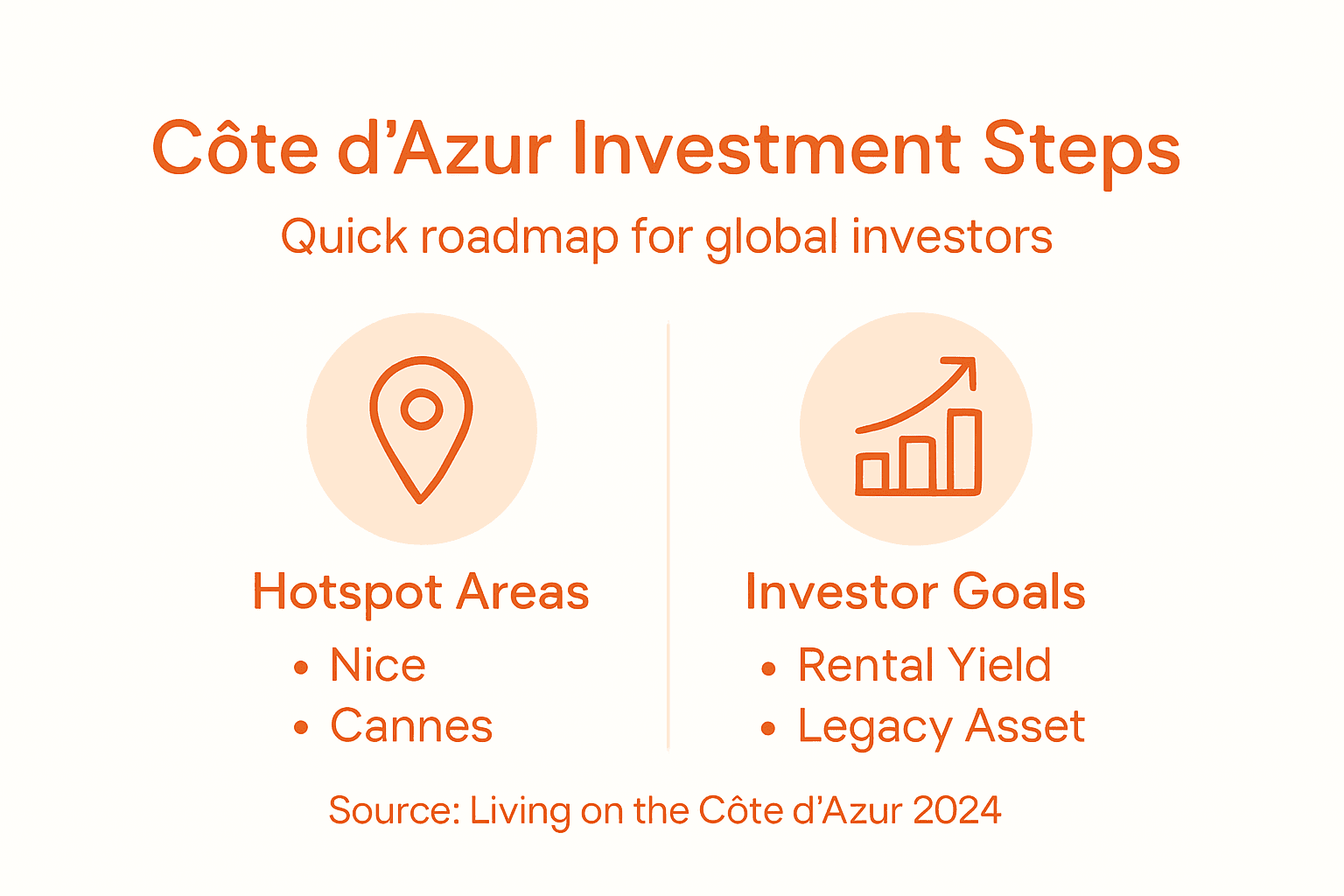
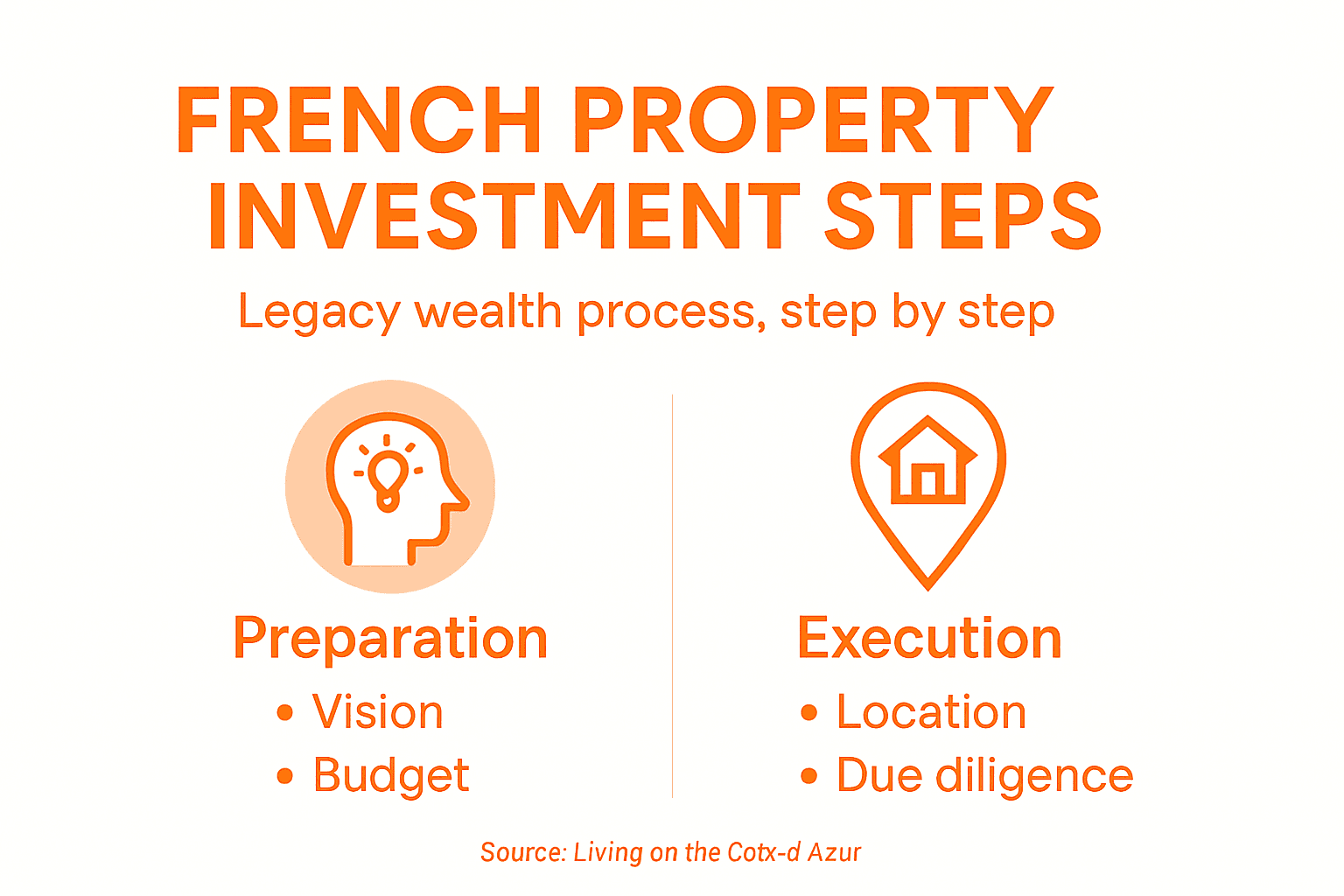
Infographic showing Côte d'Azur investment roadmap

Seasonal rental income transforms your property from a static asset into a dynamic wealth-preservation tool. However, maximising returns requires professional management and strategic positioning within the luxury market.

Understand your property’s rental window and positioning strategy.

  • Peak season positioning: High-end properties in Cannes, Nice, and Saint-Tropez command premium nightly rates (€500-€2,000+) during June through August and over Christmas
  • Shoulder season strategy: April-May and September-October attract families and smaller groups willing to pay 40-60% of peak rates
  • Winter demand: Properties near Menton with lemon festival attractions or Grasse with workshop access draw consistent off-season bookings
  • Niche markets: Hiking enthusiasts seek mountain villages; art collectors target gallery-rich towns; wellness tourists prefer properties near spas

Professional concierge and property management services are not luxuries—they’re essential investments that protect your asset, maximise bookings, and maintain the premium positioning your property commands.

Investing in seasonal rental trends and opportunities ensures you understand market dynamics and can price your property competitively whilst maintaining luxury positioning. This knowledge directly influences your annual returns and long-term wealth preservation.

Select a professional property management company that specialises in luxury short-term rentals. They handle guest screening, housekeeping coordination, maintenance scheduling, and damage assessments. This professional layer protects both your asset and your rental income.

Evaluate management fees carefully. Most charge 20-30% of gross rental income, but this includes staffing, marketing, guest communication, and liability insurance. Calculate net returns after management fees before purchasing a property.

Price your property strategically based on comparable properties, not emotional attachment. Research similar villas in your area and note their nightly rates, booking calendars, and guest reviews. Dynamic pricing platforms automatically adjust rates based on demand—higher prices during peak weeks, competitive rates during slower periods.

Invest in professional photography and videography. Luxury travellers book based on visual appeal and lifestyle narrative. Drone footage of gardens, pool views, and coastal vistas significantly increases booking rates and justifies premium pricing.

Develop a maintenance schedule that keeps the property in flawless condition between guests. Small issues compound into guest complaints and negative reviews. Regular inspections, seasonal deep cleaning, and preventative repairs protect your asset’s long-term value.

Pro tip: Structure your letting calendar strategically—block out two to three weeks annually for deep maintenance and family use. This prevents burnout of furnishings, allows you to enjoy your asset, and demonstrates to potential buyers that the property is genuinely maintained rather than continuously rented to degradation.

Step 5: Review returns and safeguard future assets

Your investment is generating income and appreciating in value. Now you need a systematic approach to monitor performance, track returns, and ensure the asset remains positioned for your heirs’ benefit. This final step transforms your Côte d’Azur property from an active investment into a truly protected legacy.

Begin by establishing clear metrics for tracking performance annually.

  • Rental yield calculation: Track gross rental income, subtract management fees, property taxes, insurance, and maintenance costs, then calculate net yield as a percentage of acquisition price
  • Capital appreciation tracking: Record property valuations annually through professional appraisals. Compare against purchase price and market benchmarks for your village or town
  • Tax efficiency review: Meet with your accountant annually to review depreciation schedules, deductible expenses, and whether your ownership structure remains optimal
  • Asset condition monitoring: Commission professional inspections every two years to identify maintenance needs before they become expensive problems
  • Market positioning: Stay informed about comparable property sales in your area to understand whether your asset is appreciating in line with the market

Annual performance reviews prevent small issues from becoming inheritance headaches. A property that’s actively monitored and well-maintained doubles in value far faster than one left to deteriorate.

Understanding how legacy and ROI strategies work together helps you balance current income with future inheritance value. The most successful investors maximise today’s returns while ensuring tomorrow’s asset remains valuable for their heirs.

Document everything meticulously. Maintain a property file containing purchase agreements, renovation receipts, maintenance records, rental agreements, and appraisals. This documentation protects you during tax audits and makes the inheritance transfer infinitely easier for your heirs.

Review your insurance coverage annually. Does your policy adequately cover the property’s current value? As the property appreciates, standard insurance policies often lag behind. Underinsured properties leave your heirs exposed to catastrophic loss.

Consider succession planning as part of your overall strategy. Will your heirs inherit the property outright, or does your will specify they sell it and distribute proceeds? Discuss these decisions with a French inheritance specialist and your family. Clear expectations prevent future conflicts.

Monitor market shifts in your location. Are new infrastructure projects improving accessibility? Are seasonal rental trends changing? Is your village attracting new demographics? Understanding these shifts helps you decide whether to hold the property long-term or sell at an optimal moment.

Pro tip: Schedule an annual review meeting with your property manager, accountant, and estate planner simultaneously. This coordinated approach ensures all parties understand the asset’s performance, tax position, and succession strategy, preventing costly miscommunications that often plague inheritance transfers.

Elevate Your Côte d’Azur Investment Into a Lasting Legacy

Navigating the complex journey of international real estate investment in the Côte d’Azur requires more than desire; it demands precision, due diligence, and a strategic eye for legacy creation. This guide uncovers the critical challenge of securing properties that not only offer strong rental yields and capital appreciation but also serve as heirlooms — assets that protect your family’s future while adapting to the evolving luxury landscape. From verifying title clarity and structural integrity to embracing sustainable new builds with eco-credentials, your goals to preserve wealth and generate income are at the forefront.

At Living on the Côte d’Azur, we understand these ambitions intimately. Our curated portfolio highlights prestige zones like Cap d’Antibes and Monaco borders alongside emerging, authentic Provençal villages, carefully matched to your investment profile. Whether you seek seasonal letting advantages driven by Mediterranean allure or sustainable properties with 10-year warranties, our team guides you through every step with expertise honed for digital millionaires and discerning families alike.

Take confident action today and transform your Riviera dreams into tangible value by connecting with our specialists. Discover how to optimise your legacy strategy with unrivalled insight on Buying Luxury Real Estate on the French Riviera, and explore bespoke opportunities within our exclusive portfolio. Start your journey to lasting wealth and lifestyle harmony now by reaching out via Living on the Côte d’Azur Contact Page — your gateway to heirloom properties that grow in value and character over generations.

Frequently Asked Questions

What are the key factors to consider when investing in Côte d’Azur real estate?

To invest wisely in Côte d’Azur real estate, focus on your investment goals, such as desired rental yield or long-term appreciation. Assess geographical location, property type, and market trends to align with your objectives and maximize returns.

How do I verify the authenticity and value of a luxury property in Côte d’Azur?

To verify a luxury property’s authenticity and value, conduct thorough inspections for structural integrity and request independent surveys. Ensure clarity of title and review the property’s market position to safeguard your investment.

What are the benefits of investing in sustainable new builds in Côte d’Azur?

Sustainable new builds typically offer modern efficiency and can command higher rental premiums. Look for properties with solid energy performance certificates, as they demonstrate long-term value appreciation and attract environmentally conscious tenants.

How can I optimise my property for seasonal letting in Côte d’Azur?

To optimise your property for seasonal letting, research peak rental times and price your property competitively compared to similar listings. Engage professional property management services to handle bookings and maintain high standards, ensuring maximum occupancy and revenue throughout the year.

What steps should I take to review my investment returns in Côte d’Azur?

To review your investment returns, establish metrics such as rental yield and annual capital appreciation. Perform regular assessments of property condition and tax efficiency to ensure your investment remains viable and safeguarded for future generations.

How can I ensure my investment in Côte d’Azur real estate is a legacy asset for my heirs?

To secure your investment as a legacy asset, maintain meticulous records and monitor the market regularly to adjust your strategy accordingly. Discuss succession planning with trusted advisers to clarify inheritance intentions and avoid future disputes.

Recommended

  • 7 Essential Real Estate Investment Tips for Côte d’Azur
  • How to Finance Luxury Real Estate on the Côte d’Azur
  • 7 Types of Real Estate Investments for Savvy Investors
  • How to Evaluate Luxury Real Estate for Smarter Investments
by Websols Servicedesk/23 February 2026/in Landingpage
https://www.livingonthecotedazur.com/wp-content/uploads/2026/02/1771829543030_image.jpg 768 1344 Websols Servicedesk https://www.livingonthecotedazur.com/wp-content/uploads/2024/02/sitelogo150.png Websols Servicedesk2026-02-23 07:52:582026-02-23 07:53:03Guide to International Real Estate Investment in Côte d’Azur

Luxury hospitality on the Côte d’Azur is no longer defined by ornate finishes or grand price tags. For discerning investors focused on legacy and long-term value, what matters most is authentic human connection and deeply personalised service. As high-net-worth individuals seek properties that blend privacy, sustainability, and emotional resonance, understanding this new standard becomes critical. Discover how modern luxury transforms real estate into opportunities for family wealth preservation and lasting significance.

Table of Contents

  • What Defines Luxury Hospitality Today
  • Types of Luxury Hospitality Experiences Explained
  • Hallmarks of Exceptional Guest Service
  • Costs, Value, and Market Implications
  • Evolving Trends in Luxury Hospitality Spaces

Key Takeaways

PointDetails
Personalised Experiences MatterModern luxury hospitality focuses on creating meaningful moments and emotional connections rather than merely providing expensive amenities.
Service Quality is CrucialExceptional service, characterised by anticipatory actions and cultural understanding, distinguishes high-end properties from ordinary ones.
Memorable Experiences Drive DemandGuests value unique, curated experiences over material luxuries, making properties that offer authenticity and local integration more desirable.
Sustainability is ExpectedToday’s affluent travellers demand visible sustainability practices, making eco-friendly operations a critical aspect of property appeal and value.

What Defines Luxury Hospitality Today

Luxury hospitality has shifted dramatically over the past decade. It’s no longer about merely offering expensive furnishings or haute cuisine—though these elements remain important. Today’s definition centres on authentic human connection and personalised experiences that resonate deeply with discerning guests.

The modern luxury guest expects far more than comfort. They seek meaningful moments curated specifically for them, whether that’s remembering their preferred pillow firmness or arranging a private sunrise excursion to avoid crowds. This shift reflects a fundamental truth: wealth doesn’t impress the wealthy—understanding does.

The Pillars of Contemporary Luxury Hospitality

Creating emotional connections through exceptional service forms the foundation of today’s luxury hospitality. Beyond this, the sector has evolved to encompass:

  • Premium service quality that anticipates needs before guests voice them
  • Personalised experiences tailored to individual preferences and cultural backgrounds
  • Authenticity over manufactured grandeur—genuine hospitality rather than performed luxury
  • Sustainability integration demonstrating commitment to the planet alongside opulence
  • Workforce excellence requiring highly trained, culturally aware staff

What sets ultra-luxury properties apart isn’t merely high price tags. Rather, it’s the seamless integration of premium brand attributes with unique, status-enhancing experiences that elevate a stay into a transformative journey.

The Experience Economy Reshapes Expectations

Guests with substantial means increasingly value irreplaceable memories over material extravagance. A private chef preparing dinner using ingredients from a local market creates far greater impact than standard fine dining. Exclusive access to cultural experiences—a private museum tour, a master class with a renowned artisan—resonates more profoundly than gilded fixtures.

For high-net-worth individuals considering second homes or seasonal retreats on the Côte d’Azur, understanding this evolution matters enormously. Properties that offer genuine luxury hospitality—whether through on-site concierge services, curated local partnerships, or bespoke guest experiences—command premium valuations and attract discerning long-term renters.

Service Excellence as the True Differentiator

Notice the pattern: every element traces back to service quality and intentionality. The five-star property distinguishes itself through staff trained in emotional intelligence, cultural sensitivity, and genuine problem-solving—not simply protocol adherence.

This manifests in tangible ways:

  1. Staff who speak your language and understand your cultural expectations
  2. Flexible policies that prioritise guest satisfaction over rigid rules
  3. Anticipatory service—staff noticing subtle preferences and acting accordingly
  4. Local expertise shared genuinely, not from scripted talking points
  5. Accountability from ownership to housekeeping—no silos between departments

Why This Matters for Your Investment

If you’re evaluating luxury properties on the Riviera as heritage investments or seasonal rental opportunities, this distinction is critical. Properties marketed as “luxury” but lacking genuine hospitality infrastructure will underperform. Conversely, homes offering authentic curated experiences—whether through partnerships with local guides, private chef arrangements, or exclusive access networks—generate stronger rental yields and attract higher-calibre clientele.

Luxury hospitality today rewards substance over spectacle, authenticity over artifice, and guest outcomes over property opulence. This principle applies equally to residential luxury and commercial hospitality.

Luxury hospitality today means creating irreplaceable memories through personalised service and authentic experiences, not merely showcasing expensive materials or high price points.

Pro tip: When evaluating Côte d’Azur properties for investment, assess the existing service infrastructure and local relationships—these intangible assets often determine rental success and guest satisfaction more than marble countertops or beachfront positioning.

Types of Luxury Hospitality Experiences Explained

Luxury hospitality isn’t a single offering. It encompasses a diverse range of experiences, each designed for different preferences and travel goals. Understanding these categories helps you identify which model aligns best with your property investment or seasonal retreat needs.

The Primary Categories

Luxury hospitality spans multiple formats, each with distinct characteristics and guest appeal. The main types include:

  • Ultra-luxury hotels and resorts featuring expansive amenities, Michelin-starred dining, and comprehensive wellness facilities
  • Boutique hotels emphasising intimate, personalised experiences with curated local connections
  • Private villas and estates offering complete exclusivity, privacy, and bespoke service arrangements
  • Luxury cruise experiences combining travel, accommodation, and curated destination access
  • Exclusive private clubs providing members-only access to premium facilities and experiences

Each category maintains unwavering commitment to exceptional service, yet approaches guest engagement differently.

Ultra-Luxury Hotels and Resorts

These properties command premium pricing through expansive grounds, world-class infrastructure, and comprehensive service teams. Think beachfront resorts with private beach clubs, championship golf courses, and multiple restaurants operated by celebrity chefs.

Waitress serving guest in luxury restaurant

Guests expect seamless coordination across departments—spa, dining, activities, concierge—with zero friction or delays. The properties themselves become destinations rather than merely providing accommodation.

Boutique Hotels: Personality Meets Precision

Boutique properties reject the standardised approach entirely. Instead, they craft distinctive character reflecting local culture, architecture, and culinary traditions. Often housed in heritage buildings, converted palaces, or architecturally significant structures, boutique hotels limit guest numbers to maintain intimacy.

A 40-room boutique property on the Côte d’Azur might feature individually designed suites, a chef sourcing ingredients from village markets, and staff who know regular guests by name across seasons.

Private Villas and Estates

For high-net-worth individuals, private villa experiences represent the pinnacle of controlled luxury. You govern every aspect—guest selection, service protocols, activity schedules, privacy levels.

Infographic showing luxury hospitality pillars

Estate ownership enables personalised hospitality management through dedicated concierge services, private chefs, and bespoke experience curation. Properties rented seasonally generate strong returns whilst remaining personal family sanctuaries.

Luxury Cruises and Mobile Experiences

Small-ship luxury cruises (200-500 passengers maximum) provide bespoke guest experiences combining travel, accommodation, and curated destination access. Unlike mass-market cruising, these vessels access boutique ports, offer expedition-style adventures, and maintain crew-to-guest ratios approaching 1:1.

Which Model Suits Your Riviera Investment?

Consider your objectives carefully. Boutique hotel ownership requires hospitality expertise and constant operational involvement. Private villa ownership offers passive income through seasonal lettings whilst retaining personal use flexibility.

Resorts demand significant capital but attract corporate groups and destination-driven travellers. Villas attract discerning individuals seeking privacy and personalisation—typically commanding higher nightly rates with lower occupancy requirements for profitability.

Each luxury hospitality format creates distinct guest experiences and investment characteristics—choose based on your operational capacity and target clientele, not merely property aesthetics.

Pro tip: Before acquiring a Côte d’Azur property for luxury hospitality, analyse comparable properties’ occupancy rates and guest reviews within your chosen category—market positioning and service infrastructure matter far more than architectural grandeur alone.

The following table summarises how luxury hospitality categories differ for investors:

Hospitality FormatOperational ComplexityTarget ClienteleTypical Return Profile
Ultra-luxury hotelsVery highCorporate and leisure groupsStable, high volume
Boutique hotelsHighCultural/lifestyle explorersModerate, niche market
Private villas & estatesModerateAffluent families, celebritiesHigh margins, lower volume
Luxury cruisesVery highTravellers seeking mobilityPremium pricing, high costs
Exclusive private clubsModerateMembers, repeat guestsSubscription and event-based

Hallmarks of Exceptional Guest Service

Exceptional guest service separates truly luxurious properties from merely expensive ones. It’s the difference between a stay guests endure and one they treasure for decades. The hallmarks of this service level are tangible, measurable, and absolutely learnable.

Consistency Across Every Touchpoint

Quality and consistency characterise exceptional luxury service across all guest interactions. From arrival logistics to departure farewells, every moment reflects the same high standard.

Consistency means:

  • Every staff member delivers identical service quality standards
  • Protocols remain unchanged whether the guest is a celebrity or first-time visitor
  • Morning coffee temperature matches yesterday’s precision
  • Room cleanliness maintains identical standards across all guest areas
  • Communication tone remains warm and professional in every interaction

This reliability builds trust. Guests relax when they know what to expect.

Meticulous Attention to Detail

Luxury hospitality lives in the minutiae. A perfectly ironed pillowcase. Fresh flowers positioned precisely. Guest preferences documented and remembered across seasons.

Details communicate respect. They whisper “we noticed you.” A guest’s preferred newspaper stocked in their suite before arrival. The wine selection adjusted based on previous tasting notes. Bath products replaced before depletion becomes noticeable.

Emotional Connection and Personalisation

Surpassing expectations through personalised interactions creates the emotional foundation of luxury service. Staff must move beyond scripted interactions to genuine human connection.

This happens through:

  • Learning guest names and personal details before arrival
  • Remembering preferences without requiring guests to repeat them
  • Anticipating needs rather than responding to requests
  • Celebrating milestones guests mention casually
  • Understanding cultural backgrounds and adapting service accordingly

The “Home-from-Home” Feeling

True luxury service creates genuine belonging. Guests shouldn’t feel like transient visitors but like welcomed family members inhabiting their own sanctuary.

This requires staff training focused on warmth alongside professionalism. A maid who remembers your routine and adjusts quietly around your schedule. A concierge who becomes your trusted local guide rather than information dispenser.

Staff Excellence as Service Foundation

No property delivers exceptional guest service without exceptional staff. Employees embodying luxury hospitality must demonstrate:

  • Genuine care for guest wellbeing and satisfaction
  • Polished execution without appearing robotic or over-rehearsed
  • Rapid problem-solving without escalating trivial concerns
  • Cultural awareness and multilingual capability
  • Initiative to exceed expectations independently

Why This Matters for Your Investment

Properties commanding premium nightly rates consistently deliver these hallmarks. When evaluating Côte d’Azur properties for investment, assess staff training infrastructure and management philosophy. Beautiful architecture alone attracts one-time visitors. Exceptional service generates repeat guests and referrals—the foundation of profitable luxury hospitality.

Exceptional guest service isn’t a luxury amenity—it’s the core product that determines whether guests return and recommend your property.

Pro tip: When acquiring a property for luxury hospitality lettings, budget aggressively for staff recruitment, training programmes, and retention—investing 15-20% more in personnel typically yields 30-40% higher guest satisfaction scores and booking premiums.

Costs, Value, and Market Implications

Luxury hospitality commands premium pricing because guests willingly exchange significant capital for authenticity, exclusivity, and transformative experiences. Understanding the cost-value relationship is essential for investors evaluating property opportunities on the Côte d’Azur.

The Global Market Expansion

The luxury hospitality market is expanding rapidly, projected to grow from USD 93.4 billion in 2022 to USD 238.5 billion by 2028. This growth trajectory reflects fundamental shifts in how affluent consumers prioritise spending.

This expansion signals:

  • Increasing demand amongst global high-net-worth individuals for premium experiences
  • Growing willingness to invest in exclusivity and personalisation
  • Evolving definitions of luxury beyond material goods
  • Stronger market fundamentals for property investments in prestige locations
  • Higher rental yields for properties offering authentic hospitality

The Côte d’Azur captures significant share of this growth, attracting international investors seeking both personal use and commercial returns.

Cost Structure and Profitability Analysis

Operating luxury hospitality properties requires substantial upfront and ongoing investment. Staff recruitment and training consume 25-35% of operational budgets. Maintenance standards for premium properties demand triple the investment of standard accommodation.

Yet the margins justify these costs. Premium pricing strategies reflect evolving luxury definitions, with guests paying nightly rates of €500-€5,000+ for authentic experiences.

The Value Exchange: Why Guests Pay Premium Rates

Affluent travellers understand a fundamental truth: exceptional experiences are finite. A weekend at an exclusive Riviera villa with a private chef cannot be replicated through conventional hotels. This scarcity commands premium pricing.

Guests justify luxury costs through:

  • Uniqueness: Bespoke experiences unavailable elsewhere
  • Status symbolism: Exclusive access signals discernment and achievement
  • Service quality: Personalised attention from highly trained professionals
  • Privacy and security: Complete discretion and controlled environments
  • Emotional resonance: Transformative moments shared with loved ones

Investment Implications for Côte d’Azur Properties

Properties positioned within the luxury hospitality spectrum command higher valuations and rental premiums than conventional real estate. A villa offering authentic hospitality infrastructure—curated local partnerships, trained concierge services, private chef arrangements—attracts clientele willing to pay significantly more than properties lacking these elements.

For heritage investments, understanding property valuation dynamics ensures informed decision-making. Properties generating consistent rental income through hospitality management typically appreciate 5-8% annually whilst producing 3-5% annual yields from lettings.

Market Shift: Experience Over Opulence

Younger affluent generations increasingly prioritise meaningful experiences over material extravagance. This shift reshapes investment strategy. Properties must offer curated local access, cultural immersion, and authentic engagement—not merely marble surfaces and square footage.

Investors adapting to this evolution position properties for sustained demand and premium pricing.

The luxury hospitality market rewards authentic experiences and personalised service far more than material opulence—this shift favours well-managed properties over impressive but hollow properties.

Pro tip: When calculating potential returns from Côte d’Azur luxury properties, factor in a 20-25% premium to nightly rates for properties offering genuine hospitality infrastructure versus standard luxury rentals, and project 65-75% annual occupancy rates for well-positioned, professionally managed properties.

Evolving Trends in Luxury Hospitality Spaces

Luxury hospitality is transforming rapidly. The industry that once revolved around marble floors and Michelin stars has shifted fundamentally. Today’s affluent travellers want something entirely different—and properties must adapt accordingly.

The Shift from Opulence to Authenticity

Current luxury hospitality emphasises personalisation and authentic experiences over traditional material extravagance. Younger wealth—particularly digital millionaires and generational wealth holders—prioritise emotional connection and uniqueness above all else.

This represents a seismic industry shift. A guest staying at a property with ordinary design but exceptional local partnerships may rate their experience higher than one in an architecturally stunning but impersonal villa.

Data-Driven Personalisation as Competitive Necessity

Modern luxury properties leverage advanced guest data systems to anticipate preferences before arrival. Software tracks dietary requirements, preferred room temperatures, entertainment choices, and activity interests across multiple visits.

Top-tier properties now offer:

  • Pre-arrival customisation based on historical preferences
  • Real-time activity recommendations using artificial intelligence
  • Personalised dining menus developed from guest history
  • Curated cultural itineraries matching individual interests
  • Surprise elements tailored to guest preferences and milestones

This requires investment in technology infrastructure alongside traditional hospitality training.

Sustainability as Luxury Standard

Luxury travellers increasingly demand conscientious sustainability practices alongside high-end comfort. Solar arrays, water recycling systems, and organic gardens have become expected rather than exceptional.

Younger affluent guests specifically seek properties demonstrating environmental commitment. A villa powered by renewable energy with locally sourced dining commands premium rates and attracts repeat bookings.

Immersive Cultural Integration

Modern luxury isn’t about isolation—it’s about authentic integration with local culture. Guests want private access to artisan workshops, intimate dinners with local chefs, and curated introductions to community figures rather than sterile tourist activities.

This trend particularly benefits Côte d’Azur properties with established local relationships. Access to village markets, private artisan experiences, and genuine cultural engagement creates differentiation impossible to replicate through property amenities alone.

Exclusivity Redefined

Exclusivity no longer means marble-laden grandeur. It means controlled access, intimate experiences, and personalised attention. A 12-guest private villa with exceptional service outranks a 200-room resort in luxury hierarchy.

Properties offering:

  1. Limited guest numbers per season
  2. Customised experience calendars
  3. Dedicated staff assignments
  4. Privacy-first architectural design
  5. Bespoke service protocols

command significantly higher nightly rates than larger properties.

Market Implications for Côte d’Azur Investors

Emerging luxury market shifts are reshaping 2026 wealth strategies, favouring properties with authentic local integration, sustainability credentials, and personalisation infrastructure over purely architectural grandeur.

Properties lacking these elements face declining competitiveness. Those adapting rapidly capture expanding market segments willing to pay premium rates for genuinely differentiated experiences.

Here is a quick reference for how emerging trends are shaping guest preferences in luxury hospitality:

TrendGuest ExpectationEffect on Property Strategy
Authentic experiencesGenuine local engagementBuild community partnerships
Data-driven serviceAnticipation of personal needsInvest in guest profile technology
SustainabilityVisible eco-friendly practicesAdopt renewable energy and sourcing
ExclusivityLimited guest access and privacyLimit guest numbers, offer bespoke care
Cultural immersionUnique insider accessCurate local artisan and chef events

Luxury hospitality’s future belongs to properties offering authentic experiences, local cultural integration, and personalised service—not to those showcasing expensive materials or conventional amenities.

Pro tip: When evaluating Côte d’Azur properties for hospitality investment, prioritise locations with established local partnerships, existing staff trained in personalisation protocols, and demonstrated sustainability infrastructure over properties requiring complete operational rebuilding.

Elevate Your Riviera Investment through Authentic Luxury Hospitality

The article reveals a critical truth for savvy investors and discerning buyers alike: true luxury hospitality transcends opulence and surface-level service. Today’s affluent guests crave personalised experiences, authentic cultural immersion, and impeccable service sensibility that build emotional connections rather than mere visual grandeur. This shift demands that property investments on the Côte d’Azur focus on service infrastructure, local partnerships, and sustainability integration to unlock superior rental yields and enduring legacy value.

At Living on the Côte d’Azur we understand these evolving nuances. Our portfolio is tailored for visionary buyers seeking more than just a home—heirlooms crafted with lasting appeal across generations. Whether you seek eco-luxury villas in Cap d’Antibes, historic Provençal mas opportunities, or architecturally iconic new builds in Nice or Sainte-Maxime, we provide expert guidance that illuminates every aspect of due diligence and market positioning. Our unique blend of seasoned expertise and cutting-edge innovation—including cryptocurrency payment options—ensures your investment captures authentic luxury hospitality’s true potential.

Unlock the power of bespoke hospitality on the French Riviera with Living on the Côte d’Azur. Discover how integrating exceptional service, cultural engagement, and sustainability into your property elevates value and guest experience alike. Explore our insights on buying luxury real estate on the French Riviera, dive into legacy investment strategies, and inquire about premium properties that promise both financial returns and a lifestyle rich in emotional resonance.

Are you ready to transform your Riviera real estate vision into a legacy defined by genuine luxury hospitality? Connect with us today to take the first step: Contact Us. Your future in the paradise of the Côte d’Azur awaits.

Frequently Asked Questions

What is the modern definition of luxury hospitality?

The modern definition of luxury hospitality revolves around authentic human connection and personalised experiences rather than just opulent furnishings or fine dining. Guests now seek meaningful moments that resonate deeply with them.

How do emotional connections play a role in luxury hospitality?

Emotional connections through exceptional service form the foundation of luxury hospitality. This involves anticipating guests’ needs and preferences, providing a personalised service experience that creates lasting memories.

What differentiates ultra-luxury properties from standard luxury hotels?

Ultra-luxury properties distinguish themselves through highly personalised service, seamless integration of premium experiences, and genuine hospitality, rather than just high price tags or extravagant decor.

Why is sustainability important in luxury hospitality today?

Sustainability has become integral in luxury hospitality, as modern guests increasingly prefer properties demonstrating environmental commitment alongside high-end comfort. This reflects a desire for authentic luxury that cares for the planet.

Recommended

  • Ultra-Luxury Explained: Beyond Prestige and Investment
  • What is an Ultra Luxury Villa? This is High-End Living – Living on the Côte d’Azur
  • Luxury Property Terms: Meaning in Cannes and Beyond
  • Understanding What Is Luxury Real Estate Marketing – Living on the Côte d’Azur
by Websols Servicedesk/22 February 2026/in Landingpage
https://www.livingonthecotedazur.com/wp-content/uploads/2026/02/1771743102581_image.jpg 768 1344 Websols Servicedesk https://www.livingonthecotedazur.com/wp-content/uploads/2024/02/sitelogo150.png Websols Servicedesk2026-02-22 07:52:292026-02-22 07:52:34Definition of Luxury Hospitality: Beyond Opulence and Service

Selecting the right luxury property on the Côte d’Azur requires more than bold vision and keen market insight. The transfer of property ownership in France involves a labyrinth of legal, administrative, and financial requirements, where even experienced investors can fall prey to common misconceptions about property transactions. By understanding the true complexity of French property transfers, you gain the clarity needed to protect your investment, secure long-term value, and create a sustainable legacy for generations.

Table of Contents

  • What Property Transfer Entails And Misconceptions
  • Types Of Property Transfer In France
  • Legal Structures And Key Steps Involved
  • Tax, Costs And Succession Planning Essentials
  • Risks, Liabilities And Avoiding Pitfalls
  • Sustainable And Legacy-Focused Transfer Strategies

Key Takeaways

PointDetails
Engage Professional AssistanceAlways consult with a specialised French property lawyer to navigate the complexities of property transfer and mitigate potential legal pitfalls.
Understand Ownership StructuresFamiliarise yourself with the different types of ownership, such as Freehold and Société Civile Immobilière, to optimise financial and tax strategies.
Tax and Succession PlanningImplement strategic tax planning and succession strategies to protect assets and ensure long-term wealth preservation.
Proactive Risk ManagementConduct thorough due diligence to identify potential risks and engage bilingual legal specialists to facilitate smooth transactions.

What Property Transfer Entails and Misconceptions

Property transfer represents a complex legal journey through administrative, financial, and bureaucratic landscapes, particularly when navigating the intricate French property market. Understanding property ownership transfer requires comprehensive knowledge beyond simplistic assumptions about real estate transactions.

The process involves multiple critical stages that demand meticulous attention and professional guidance. Key components of property transfer include:

  • Preliminary agreement preparation
  • Comprehensive legal documentation review
  • Title verification and historical research
  • Financial compliance checks
  • Notarial oversight and authentication

Many buyers mistakenly believe property transfer is a straightforward transaction that can be completed without professional intervention. Common misconceptions about property transactions often lead to significant legal and financial risks. Particularly in the French system, the notary plays a pivotal role in ensuring legal compliance and protecting both buyer and seller interests.

The complexity of property transfer extends beyond mere paperwork. Investors must understand that each transaction involves nuanced legal interpretations, potential tax implications, and strict regulatory requirements. French property law demands precise documentation, with each document carrying specific legal weight and potential consequences if improperly managed.

Pro tip: Always engage a specialised French property lawyer to navigate the intricate legal landscape and prevent potential transfer complications.

Types of Property Transfer in France

Property ownership in France presents a nuanced landscape of diverse transfer mechanisms, each carrying distinct legal and financial implications. Types of property ownership reveal a complex framework that sophisticated investors must carefully navigate to optimise their strategic objectives.

The primary property transfer types in the French legal system encompass:

  • Freehold Ownership (Pleine Propriété)
    • Full legal rights and control
    • Unlimited duration
    • Complete transferability
  • Leasehold Ownership (Bail Emphytéotique)
    • Limited duration usage rights
    • Typically 18-99 years
    • Restricted transferability
  • Joint Ownership (Copropriété)
    • Shared property rights
    • Collective decision-making
    • Complex management structures

Corporate structures offer another sophisticated avenue for property transfer, with the Société Civile Immobilière (SCI) emerging as a particularly strategic vehicle for international investors. This legal entity allows multiple shareholders to collectively own and manage property, providing enhanced flexibility in inheritance planning and potential tax optimisation.

Corporate property ownership structures can significantly mitigate personal liability and provide more sophisticated wealth management opportunities.

Each transfer mechanism demands meticulous understanding of its unique legal framework. Factors such as inheritance laws, tax implications, and potential restrictions must be comprehensively evaluated before selecting the most appropriate ownership model for individual investment strategies.

Family reviews inheritance documents at home

To illustrate the main property transfer methods in France and their practical implications, see the table below:

Ownership TypeDurationTransferabilityStrategic Advantages
Freehold (Pleine Propriété)UnlimitedFully transferableMaximal control and equity
Leasehold (Bail Emphytéotique)Fixed (18–99 years)Restricted transferabilityLower upfront costs, fixed-term
Joint Ownership (Copropriété)Unlimited/sharedRequires consensusShared responsibility, diversity
Corporate (SCI)Linked to company lifespanFlexible via sharesInheritance, tax optimisation

Pro tip: Consult a specialised French property lawyer to thoroughly analyse which ownership structure best aligns with your specific financial and legacy objectives.

Legal Structures and Key Steps Involved

The French property transfer process represents a meticulously structured legal journey, governed by precise procedural requirements. Unlike more informal property markets, France mandates a comprehensive framework that protects both buyer and seller through rigorous legal protocols.

The key steps in property transfer involve multiple critical stages:

  1. Preliminary Agreement (Promesse de Vente)
    • Initial binding contract
    • Specifies sale conditions
    • Includes potential contingencies
  2. Due Diligence Period
    • Comprehensive property investigation
    • Title verification
    • Structural and legal compliance checks
  3. Notarial Verification
    • Official documentation review
    • Tax implications assessment
    • Legal compliance confirmation

Notarial involvement is perhaps the most distinctive feature of French property transfers. The notaire serves as an impartial legal professional who ensures all transactional elements meet strict regulatory standards, acting beyond a mere administrative role to provide comprehensive legal protection.

The notarial system in France transforms property transfer from a simple transaction into a thoroughly documented and legally sanctioned event.

Understanding these intricate legal structures requires sophisticated comprehension of French Civil Code provisions. International investors must recognise that each stage involves complex legal nuances, potential pre-emption rights, and mandatory registration processes that differ significantly from other global property markets.

Pro tip: Engage a bilingual French property lawyer specialising in international transactions to navigate the complex legal landscape and mitigate potential transactional risks.

Tax, Costs and Succession Planning Essentials

Navigating the intricate landscape of French property taxation requires sophisticated strategic planning, particularly for international investors seeking to optimise property transfer taxation. The French tax system presents a complex framework of financial considerations that extend far beyond simple property acquisition.

Key tax considerations for property investors include:

  • Transfer Duties
    • Typically 5-6% of property value
    • Payable at time of purchase
    • Varies by property type and location
  • Capital Gains Tax
    • Progressive tax rates
    • Exemptions after 22 years of ownership
    • Reduced rates for long-term investments
  • Inheritance Tax Implications
    • Rates between 5-45% depending on relationship
    • Potential tax treaty considerations
    • Strategic ownership structure critical

Succession Planning emerges as a crucial element for high-net-worth investors. The Société Civile Immobilière (SCI) represents a sophisticated vehicle for asset protection and tax efficiency, allowing investors to strategically manage inheritance and minimise tax liabilities.

Effective succession planning transcends mere financial management—it’s about preserving generational wealth and creating a lasting legacy.

Non-resident investors face additional complexity, with specific tax regimes that demand intricate understanding of French fiscal regulations. The interplay between international tax laws and French property taxation requires careful navigation to ensure optimal financial outcomes.

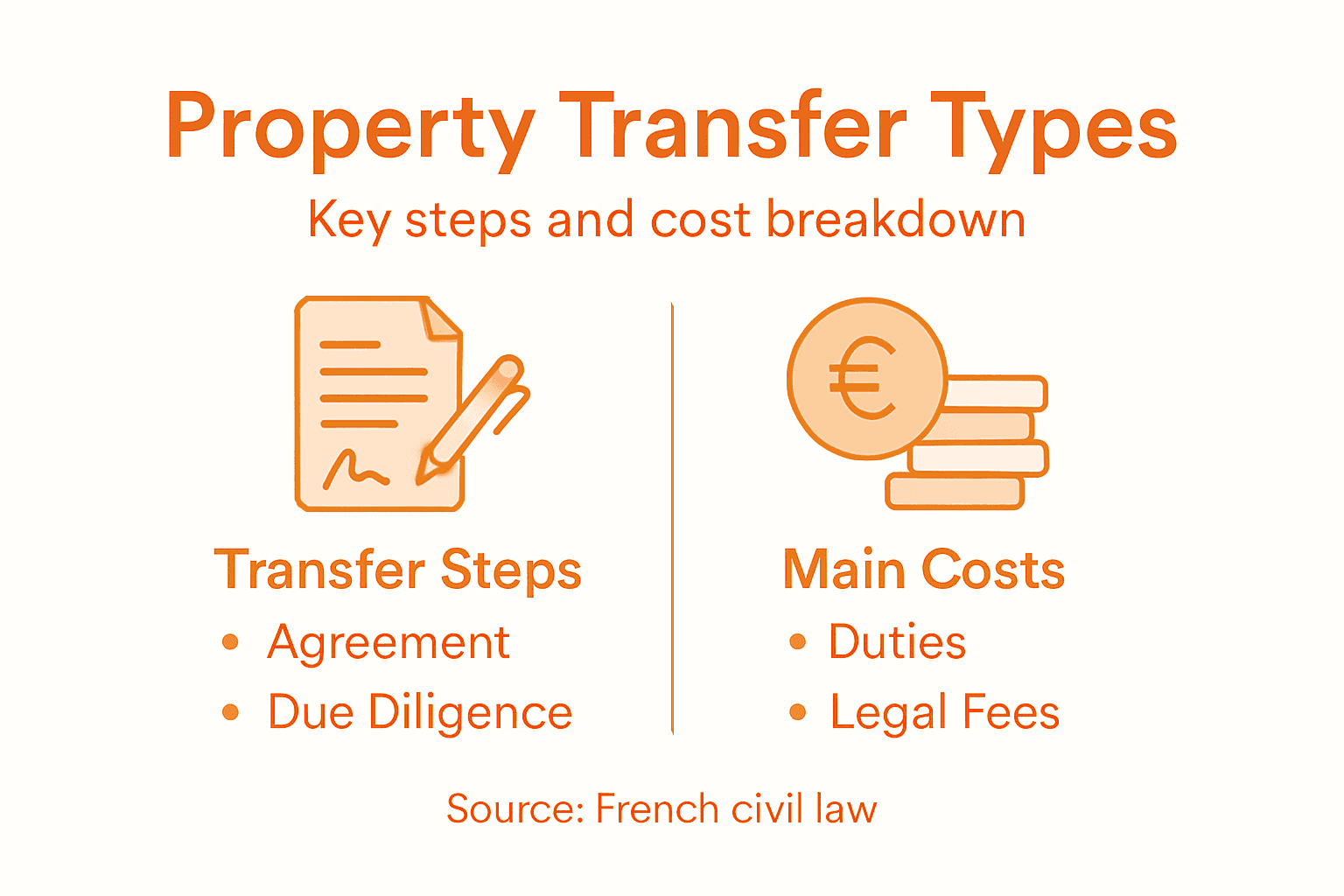
Infographic on types and costs of property transfer

Here’s a summary of the most prominent tax costs and succession factors for property investors in France:

Tax/Planning AspectTypical Rates/ConditionsLong-Term BenefitKey International Issue
Transfer Duty5–6% of property valueSecure transaction recordsVariable by property location
Capital Gains TaxProgressive, exemptions after 22 yearsFavourable for long holdingsResidency rules and treaties
Inheritance Tax5–45% based on relationshipAsset protection via planningCross-border complexity
Succession PlanningSCI vehicle aids efficiencyPreserves generational wealthRequires specialist advice

Pro tip: Consult a specialist international tax advisor with expertise in French property law to develop a comprehensive succession and tax mitigation strategy tailored to your specific financial circumstances.

Risks, Liabilities and Avoiding Pitfalls

Property transfers in France involve complex legal landscapes fraught with potential risks that demand meticulous management. International investors must navigate an intricate terrain of potential legal and financial challenges that could significantly impact their investment strategy.

Critical risks investors must anticipate include:

  • Documentation Risks
    • Incorrect property title records
    • Undisclosed legal encumbrances
    • Incomplete ownership history
  • Financial Vulnerabilities
    • Hidden property liens
    • Potential inheritance disputes
    • Unexpected tax complications
  • Structural Challenges
    • Boundary demarcation issues
    • Unresolved property modifications
    • Potential structural defect liabilities

The French legal system provides robust frameworks for risk mitigation, but investors must proactively engage professional expertise. Professional legal counsel becomes crucial in identifying potential pitfalls before they escalate into costly disputes or financial setbacks.

Understanding potential risks is not about fear, but strategic preparation and intelligent investment protection.

International investors face additional layers of complexity, including cross-border regulatory nuances and potential language barriers that can obscure critical legal details. Comprehensive due diligence becomes paramount, requiring exhaustive investigation of property histories, potential legal restrictions, and precise documentation verification.

Pro tip: Invest in a comprehensive property survey and engage a bilingual legal specialist to conduct an exhaustive due diligence review before finalising any property transfer.

Sustainable and Legacy-Focused Transfer Strategies

Property transfers on the Côte d’Azur now transcend mere financial transactions, emerging as sophisticated mechanisms for sustainable wealth preservation. Discerning investors recognise that true legacy encompasses environmental stewardship, financial prudence, and intergenerational strategic planning.

Key sustainable transfer strategies include:

  • Eco-Conscious Property Adaptation
    • Retrofitting for energy efficiency
    • Preserving historical architectural elements
    • Minimising environmental footprint
  • Generational Wealth Structuring
    • Strategic inheritance planning
    • Tax-efficient asset transfer
    • Transparent family governance models
  • Long-Term Value Creation
    • Prioritising resilient property investments
    • Supporting green infrastructure
    • Maintaining property value through sustainable improvements

Family governance plays a pivotal role in legacy planning, requiring nuanced communication and strategic alignment. The Société Civile Immobilière (SCI) remains an elegant vehicle for managing complex multi-generational property transfers while maintaining fiscal efficiency and familial harmony.

Legacy is not inherited—it is carefully cultivated through intentional, forward-thinking strategies that balance financial wisdom with ethical considerations.

International investors must look beyond immediate returns, considering how their property investments contribute to broader environmental and social sustainability. This holistic approach transforms property from a mere asset into a meaningful intergenerational legacy.

Pro tip: Engage a multi-disciplinary advisory team specialising in sustainable property transfer to develop a comprehensive strategy that balances financial, legal, and environmental considerations.

Secure Your French Riviera Legacy with Confidence

Navigating the complexities of property transfer in France demands more than just enthusiasm. The article highlights the intricate legal frameworks, tax considerations and risk factors that can overwhelm even seasoned investors. Whether you are aiming to protect your family wealth or optimise your investment through sophisticated ownership structures like the Société Civile Immobilière, understanding every detail is essential to forge a lasting legacy along the Côte d’Azur.

At Living on the Côte d’Azur, we connect discerning buyers with luxury properties that are not just homes but heirlooms for future generations. Our expertise extends beyond breathtaking villas and eco-luxury estates to include thorough guidance on legal due diligence, tax-efficient strategies and seamless property transfer processes. Discover how to transform your vision of sustainable and legacy-focused investment into reality with our local insights and international savvy.

Are you ready to turn complex property transfer challenges into your strategic advantage? Explore how we guide you through every crucial step in the Riviera’s elite market on Buying Luxury Real Estate on the French Riviera and learn about the art of Legacy Investments that protect your fortune for generations to come. Start your journey today by contacting our specialised team via Nice to Meet You and secure your place in the timeless landscape of the French Riviera.

Frequently Asked Questions

What are the key stages involved in the property transfer process?

The key stages in property transfer include preparing a preliminary agreement, conducting a due diligence period, and notarial verification to ensure legal compliance.

How do property ownership types impact my investment strategy?

Different property ownership types, such as freehold, leasehold, joint ownership, and corporate structures like SCI, offer varied legal rights, duration, and transferability, influencing strategic financial decisions.

What tax implications should I consider when transferring property?

Key tax implications include transfer duties (typically 5-6% of property value), capital gains tax rates, and inheritance tax, which may vary depending on relationships and property types.

Why is it essential to engage a specialised property lawyer when transferring property?

Engaging a specialised property lawyer is crucial to navigate complex legal frameworks, ensure compliance with regulations, and mitigate potential risks associated with property transfers.

Recommended

  • Expert Guide to Buying in Monaco for Legacy Investment
  • Mortgage Planning for Luxury Buyers: Protecting Legacy
  • The concept of Ultra Luxury on the French Riviera – Living on the Côte d’Azur
  • Luxury Property Acquisition: The Riviera Legacy
by /19 February 2026/in Landingpage
https://www.livingonthecotedazur.com/wp-content/uploads/2026/02/1771483177055_image.jpg 768 1344 https://www.livingonthecotedazur.com/wp-content/uploads/2024/02/sitelogo150.png 2026-02-19 07:40:062026-02-19 07:40:13Property Transfer Explained: Wealth, Legacy and Law

Owning a luxury property on the Côte d’Azur comes with more than breathtaking views—it offers strategic property equity that can reshape your family’s financial future. For many discerning European and Middle Eastern investors, transforming a residence into a lasting legacy starts with understanding how your asset’s true value can be harnessed. This guide gives you a clear, actionable path to assess, structure, and grow your real estate equity with confidence, safeguarding your wealth across generations.

Table of Contents

  • Step 1: Assess Your Property and Equity Potential
  • Step 2: Evaluate Strategic Equity Release Options
  • Step 3: Structure Tax-Efficient Financing Solutions
  • Step 4: Reinvest Equity in High-Growth Opportunities
  • Step 5: Verify Returns and Legacy Safeguards

Quick Summary

Main InsightExplanation
1. Assess Property Equity PotentialEvaluate your property’s worth using professional appraisals and market insights to understand equity growth possibilities.
2. Explore Equity Release OptionsUse innovative strategies like lifetime mortgages or partial sales to unlock your property’s financial potential while retaining some ownership.
3. Structure Tax-Efficient FinancingImplement tax optimisation strategies tailored for real estate to maximise returns and comply with regulations.
4. Reinvest in High-Growth OpportunitiesDiversify your investments into promising markets or projects to maximise returns on released equity.
5. Establish Legacy SafeguardsRegularly review performance metrics and legal frameworks to ensure sustainable wealth preservation and facilitate generational wealth transfer.

Step 1: Assess Your Property and Equity Potential

Understanding your property’s true equity potential is the foundational first step in transforming real estate from a simple dwelling into a powerful financial instrument. Your Côte d’Azur property isn’t just bricks and mortar—it’s a strategic asset with remarkable wealth generation capabilities.

To effectively assess your property’s equity potential, you’ll want to follow a systematic approach that combines professional valuation techniques with strategic market insights. The Royal Institution of Chartered Surveyors valuation guidelines recommend several critical evaluation methods:

  • Professional Property Appraisal: Engage a certified valuer specialising in Côte d’Azur luxury real estate
  • Comparative Market Analysis: Review recent sales of similar properties in your specific microregion
  • Structural Assessment: Evaluate your property’s physical condition and potential renovation value
  • Location Premium Calculation: Factor in unique geographical advantages like sea views or proximity to exclusive districts

Your equity assessment should also consider broader market dynamics. Municipal property valuation processes suggest tracking annual property value trends, which can dramatically impact your potential equity growth. Pay special attention to factors like infrastructure developments, tourism potential, and regional economic indicators.

Strategic property equity isn’t just about current value—it’s about understanding potential future appreciation.

The most successful property investors approach equity assessment as a comprehensive financial strategy. This means looking beyond simple market value and considering elements like rental yield potential, tax implications, and long-term regional development plans.

Pro tip: Request a professional valuation during off-peak seasons when assessments tend to be more conservative and provide a more realistic equity baseline.

Step 2: Evaluate Strategic Equity Release Options

Unlocking your property’s financial potential requires a sophisticated approach to equity release strategies. This step will guide you through the most intelligent mechanisms for transforming your Côte d’Azur real estate into a dynamic financial instrument that works strategically for your wealth objectives.

Modern equity release strategies have evolved far beyond traditional approaches. Innovative housing equity mechanisms offer sophisticated options tailored to different investor profiles:

  • Lifetime Mortgage Options: Retain property ownership while accessing equity
  • Home Reversion Plans: Sell a portion of your property while maintaining residency rights
  • Structured Financing: Create complex equity arrangements with professional investors
  • Partial Sale Strategies: Release equity without completely divesting your asset

Emerging equity financing trends reveal multiple sophisticated approaches to unlocking property value. Understanding these nuanced strategies allows you to optimise your financial position while maintaining flexibility and control over your valuable Riviera asset.

Strategic equity release is about intelligent capital deployment, not just immediate financial gain.

Successful equity release requires a holistic approach that considers your long-term financial goals, tax implications, and potential future property value appreciation. Each strategy offers unique advantages, and the optimal choice depends on your specific financial landscape, risk tolerance, and investment objectives.

Here is a summary of common equity release approaches and their typical investor suitability:

StrategyOwnership RetainedSuitable ForKey Consideration
Lifetime MortgageFullSenior homeownersNo repayments until property sale
Home Reversion PlanPartialRisk-averse investorsReduced future appreciation share
Structured FinancingVariesSophisticated investorsComplex agreements, higher returns
Partial SaleSharedInvestors seeking liquidityBalances ownership and cash access

Pro tip: Consult a specialised tax advisor who understands international property equity strategies to maximise your financial outcomes and minimise potential fiscal complications.

Step 3: Structure Tax-Efficient Financing Solutions

Transforming your Côte d’Azur property investment into a tax-optimised financial strategy requires sophisticated planning and nuanced understanding of international fiscal frameworks. This crucial step will guide you through creating a robust financing structure that maximises your returns while maintaining complete legal compliance.

Real estate investment tax structures offer multiple strategic approaches to minimise your tax liability:

  • Hybrid Financing Models: Combine debt and equity for optimal tax efficiency
  • Corporate Structure Strategies: Utilise legal entities to streamline tax management
  • International Investment Vehicles: Leverage cross-border financing options
  • Depreciation and Capital Allowance Optimisation: Strategically manage tax deductions

Federal and subnational tax policy frameworks reveal sophisticated methods for sustainable equity leveraging. Understanding these intricate mechanisms allows you to create a financing solution that not only protects your investment but actively enhances your financial positioning.

Tax efficiency is not about avoiding obligations, but strategically aligning your investment with intelligent fiscal planning.

Successful tax-efficient financing requires a holistic approach that integrates legal expertise, financial strategy, and a deep understanding of international property investment regulations. The most effective structures are those that provide flexibility, protection, and strategic tax advantages tailored to your specific investment goals.

Advisor structuring real estate tax strategy

Pro tip: Engage a specialist international tax advisor with proven expertise in French Riviera real estate investments to design a bespoke financing strategy.

Step 4: Reinvest Equity in High-Growth Opportunities

Transforming your existing property equity into strategic, high-performance investments requires a sophisticated approach that balances risk, potential returns, and long-term wealth generation. Your Côte d’Azur real estate represents more than a physical asset—it’s a dynamic financial instrument capable of generating exponential growth through intelligent reinvestment strategies.

Private equity real estate funds offer sophisticated mechanisms for leveraging your existing equity across diverse investment landscapes:

  • Value-Add Property Investments: Target underperforming assets with significant transformation potential
  • Opportunistic Redevelopment Projects: Identify properties requiring strategic repositioning
  • Institutional-Grade Asset Diversification: Spread investment across multiple high-potential markets
  • Emerging Market Real Estate Portfolios: Explore innovative investment territories with strong growth trajectories

Real estate private equity strategies reveal nuanced approaches for generating substantial returns despite market volatility. The most successful investors understand that reinvestment is not about chasing momentary gains, but constructing a robust, adaptable investment ecosystem.

Intelligent equity reinvestment transforms passive assets into active wealth generation vehicles.

The art of reinvestment lies in meticulous research, strategic diversification, and a forward-thinking approach that anticipates market shifts while maintaining a disciplined investment philosophy. Your goal is to create a dynamic portfolio that generates consistent returns and builds generational wealth.

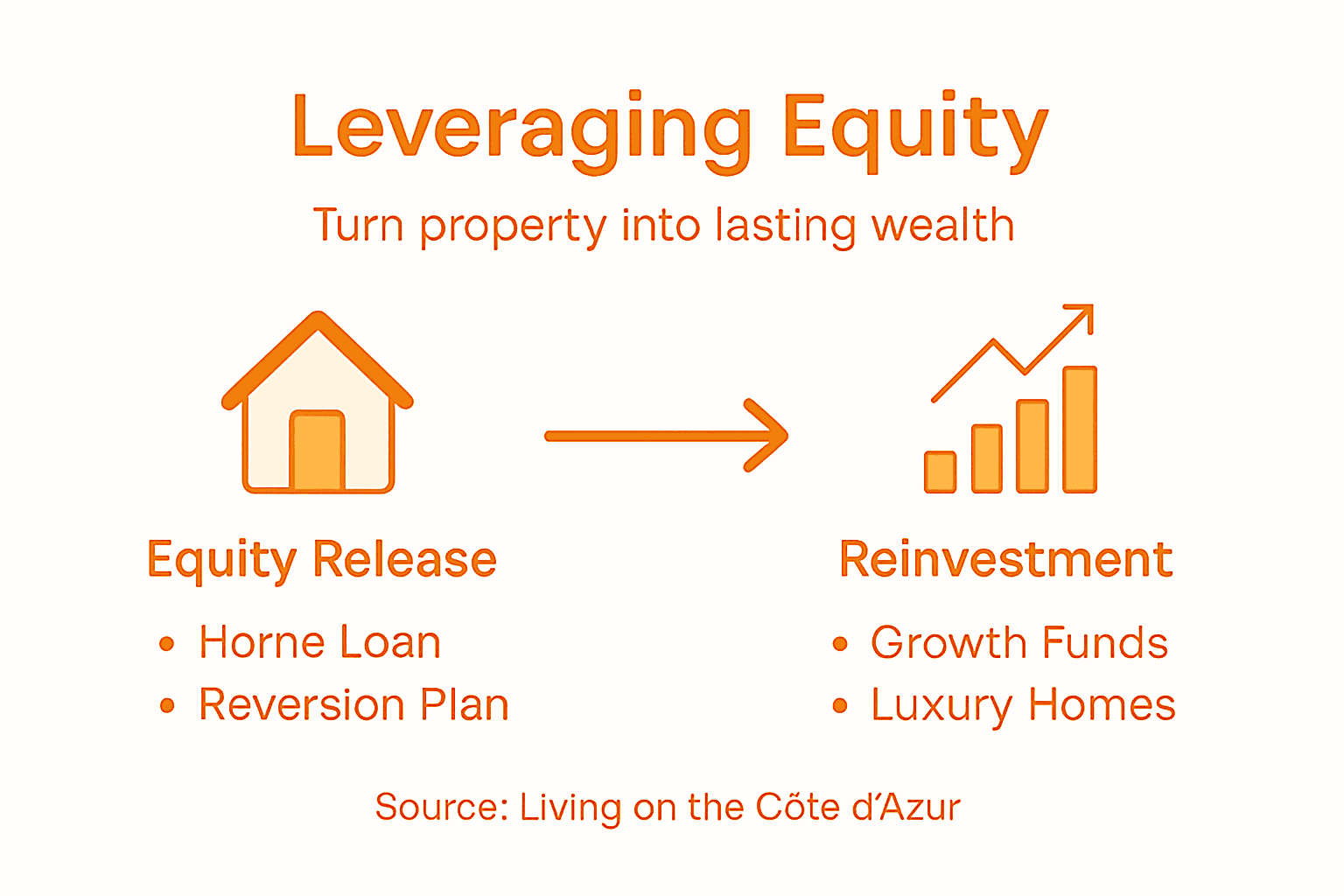
Infographic illustrating equity reinvestment steps

This table contrasts popular high-growth reinvestment opportunities for released property equity:

Investment OpportunityExpected RiskTypical Return Profile
Value-Add Property InvestmentsMediumModerate to high
Opportunistic RedevelopmentHighVery high, less stable
Institutional Asset DiversificationLow to mediumConsistent, diversified
Emerging Market Real EstateHighPotentially high, volatile

Pro tip: Allocate no more than 20-25% of your total equity into higher-risk, high-reward investment vehicles to maintain a balanced and resilient investment strategy.

Step 5: Verify Returns and Legacy Safeguards

Ensuring your real estate investment delivers sustainable wealth requires meticulous verification and strategic legacy planning. This crucial step transforms your Côte d’Azur property from a mere asset into a robust, multi-generational financial instrument that protects and grows your family’s prosperity.

Long-term real estate returns analysis reveals critical strategies for comprehensive performance verification:

  • Performance Tracking Systems: Implement rigorous monitoring mechanisms
  • Periodic Professional Valuations: Conduct independent expert assessments
  • Comparative Market Analysis: Benchmark against regional investment benchmarks
  • Risk-Adjusted Return Calculations: Evaluate performance beyond simple appreciation metrics

Strategic legacy wealth preservation demands a holistic approach that extends far beyond traditional investment metrics. The most sophisticated investors understand that true wealth preservation requires proactive management, legal structuring, and forward-thinking estate planning.

Legacy wealth is not inherited—it is meticulously crafted through intelligent, intentional strategy.

Successful legacy safeguarding integrates legal protection, tax efficiency, and continuous performance evaluation. Your goal is to create a resilient investment framework that not only generates returns but also provides clear, protected pathways for intergenerational wealth transfer.

Pro tip: Establish an annual comprehensive review process that includes financial performance analysis, legal structure assessment, and strategic realignment to maintain your investment’s long-term vitality.

Unlock the Full Potential of Your Côte d’Azur Real Estate Equity Today

The article “How to Leverage Real Estate Equity for Lasting Wealth” explores the challenge of transforming your property into a lasting legacy and a dynamic wealth generator. If you are a discerning investor seeking to navigate complex equity release options, tax-efficient financing, and smart reinvestment strategies, you need a partner who understands both the luxury lifestyle and the financial sophistication that the French Riviera demands. Key pain points such as optimising your property’s strategic value, maintaining ownership control, and ensuring generational legacy are central to your goals.

At Living on the Côte d’Azur, we specialise in guiding high-net-worth visionaries towards exceptional luxury properties that are not just homes but family legacies. Whether you are interested in iconic new constructions with eco-luxury finishes, acquiring heritage estates in Cap d’Antibes for privacy, or exploring tax-smart investments near Monaco’s prestigious borders, our portfolio and expertise bridge lifestyle and strategic wealth creation. We accept cryptocurrency payments and cater to digital millionaires eager to secure stones that appreciate and yield strong seasonal rental returns.

Take action now to transform your equity into enduring wealth with personalised advice on structured financing and reinvestment strategies that align with your ambitions. Discover how to protect your family’s future with eco-conscious legacy investments or explore our latest listings offering unparalleled entry to one of Europe’s most coveted real estate markets. Begin your journey with us by contacting the expert team at Living on the Côte d’Azur to unlock the true financial power of your property today. Don’t miss this chance to invest in more than a home—invest in a legacy.

Frequently Asked Questions

How can I assess my property’s equity potential?

Understanding your property’s equity potential starts with a professional property appraisal and a comparative market analysis. Engage a certified valuer and review recent sales of similar properties in your area to establish a solid baseline. Additionally, assess any structural issues that might enhance or limit your property’s value.

What are the most common equity release options for real estate?

The most common equity release options include lifetime mortgages, home reversion plans, structured financing, and partial sales. Evaluate these strategies based on your financial needs and investment goals, as each option offers different benefits and risks. For instance, a lifetime mortgage allows you to retain full ownership while accessing cash.

How can I create a tax-efficient financing solution for my property?

To create a tax-efficient financing solution, consider hybrid financing models that combine debt and equity, along with establishing a corporate structure to streamline tax management. Consult with a tax expert to formulate a plan that maximises deductions and minimises liabilities, ensuring your investments align with your long-term wealth objectives.

What should I focus on when reinvesting equity from my property?

When reinvesting equity, focus on high-growth opportunities such as value-add property investments or institutional-grade asset diversification. Research each option thoroughly and allocate a portion of your equity into higher-risk, high-reward opportunities, like emerging market real estate, while maintaining a balanced portfolio.

How can I verify the returns on my real estate investments?

To verify returns on your real estate investments, implement a performance tracking system that includes periodic professional valuations and comparative market analyses. Conduct regular reviews every year to assess performance metrics and risk-adjusted returns, ensuring you stay informed about your investment’s profitability.

What steps can I take to safeguard my wealth for future generations?

To safeguard your wealth for future generations, develop a robust legacy plan that includes legal protections, tax efficiency, and continuous performance evaluation of your investments. Establish an annual comprehensive review to realign strategies with your long-term financial goals and maintain your property’s value for heirs.

Recommended

  • Luxury Property Acquisition: The Riviera Legacy
  • Expert Guide to Buying in Monaco for Legacy Investment
  • What Defines High-End Real Estate: Complete Guide
  • 7 Essential Luxury Real Estate Checklists for Elite Buyers
by /18 February 2026/in Landingpage
https://www.livingonthecotedazur.com/wp-content/uploads/2026/02/1771398607816_image.jpg 768 1344 https://www.livingonthecotedazur.com/wp-content/uploads/2024/02/sitelogo150.png 2026-02-18 08:10:582026-05-07 12:41:20How to Leverage Real Estate Equity for Lasting Wealth

Securing a luxury property on the French Riviera is a considerable investment, but the risks you face extend far beyond the prestige of a prime address. High-value real estate is subject to market volatility, legal complexities, and unique resale challenges that can undermine even the most impressive portfolio if overlooked. If you want to protect your wealth and achieve sustainable returns, you need more than intuition or luck on your side.

This list will show you the critical threats facing luxury real estate buyers and investors, from how financial shocks can disrupt property values to the legal intricacies unique to markets like France and Monaco. Armed with strategies sourced from global research and expert practice, you’ll discover exactly how informed investors sidestep common pitfalls and turn uncertainty into opportunity.

Continue below for actionable guidance tailored to high-net-worth property decisions—each insight aimed at giving you the confidence and control to safeguard your next luxury purchase.

Table of Contents

  • Market Fluctuation Risk: Managing Changing Property Values
  • Liquidity Risk: Ensuring Smooth Asset Exit Strategies
  • Legal and Regulatory Risk: Navigating Ownership Laws
  • Environmental Risk: Mitigating Climate and Location Impact
  • Construction Risk: Safeguarding New Build Investments
  • Seasonal Rental Risk: Maximising Reliable Income Streams
  • Legacy Transfer Risk: Protecting Family Wealth Across Generations

Quick Summary

Key InsightDetailed Explanation
1. Monitor Economic IndicatorsRegularly track economic indicators that signal potential shifts in property values to make informed investment decisions.
2. Build a Diversified Property PortfolioDiversification across various property types can help mitigate market fluctuation risks in luxury real estate.
3. Engage Local Legal ExpertsHire bilingual legal specialists to navigate complex local regulations effectively and protect your investment.
4. Conduct Environmental Risk AssessmentsUndertake thorough environmental impact assessments to understand the potential long-term climatic vulnerabilities of a property.
5. Develop Comprehensive Estate PlansEstablish detailed estate plans that include tax-efficient strategies to ensure smooth legacy transfers and preserve family wealth.

1. Market Fluctuation Risk: Managing Changing Property Values

Luxury real estate investments on the French Riviera require sophisticated understanding of market dynamics and potential value fluctuations. Successful investors recognise that property values are not static but constantly evolving ecosystems influenced by complex economic factors.

Understanding market fluctuation risk involves recognising several critical elements:

  • Economic indicators that signal potential shifts
  • Global financial trends impacting regional property markets
  • Local development plans affecting property valuations

Recent research investigating real estate uncertainty highlights how financial conditions can dramatically amplify market volatility. These uncertainty shocks can significantly impact property prices and investment liquidity, especially in high-value luxury markets.

Market fluctuations are not random events but predictable patterns for the astute investor.

Strategic investors mitigate these risks through diversification and careful analysis. This means not just examining current property values but understanding broader economic trends, local infrastructure developments, and potential future growth zones.

Key strategies for managing market fluctuation risk include:

  1. Conducting comprehensive market research
  2. Tracking economic indicators regularly
  3. Building a diversified property portfolio
  4. Maintaining financial flexibility

Geographical positioning becomes crucial in managing market risks. Properties near strategic locations like Monaco or emerging luxury developments tend to demonstrate more resilient value trajectories.

Pro tip: Engage local real estate experts who understand micro-market trends and can provide granular insights into potential value fluctuations.

2. Liquidity Risk: Ensuring Smooth Asset Exit Strategies

Luxury real estate investments require more than just acquiring prestigious properties they demand sophisticated exit strategies that protect your financial interests. Understanding liquidity risk becomes paramount when navigating high-end property markets where transactions can be complex and time-sensitive.

Global research on real estate liquidity reveals critical insights into managing asset exit challenges. Luxury properties are not standardised commodities but unique investments requiring nuanced approach.

Key factors influencing liquidity include:

  • Market demand fluctuations
  • Economic stability
  • Property location and characteristics
  • Global investment sentiment
  • Local regulatory environments

Successful luxury property investors treat exit strategies as crucial as initial purchase decisions.

Understanding transaction risks means recognising that high-value properties have unique marketability constraints. Unlike standard financial assets luxury real estate requires more sophisticated selling approaches.

Strategic liquidity management involves:

  1. Maintaining comprehensive property documentation
  2. Understanding market valuation trends
  3. Building network with specialised luxury real estate agents
  4. Keeping property in premium condition
  5. Monitoring economic indicators

The French Riviera market demands particular attention. Geographical positioning and property quality significantly impact potential resale opportunities.

Pro tip: Develop relationships with international luxury real estate networks to create multiple potential exit pathways for your investment.

3. Legal and Regulatory Risk: Navigating Ownership Laws

Luxury real estate investments in the French Riviera require sophisticated understanding of complex legal landscapes. International buyers must navigate intricate ownership regulations that can significantly impact their investment security and potential returns.

Graduate research on international property laws highlights the critical importance of comprehensive legal due diligence for high-net-worth investors. The regulatory environment is not just a bureaucratic hurdle but a fundamental aspect of protecting your investment.

Key legal considerations for luxury property investors include:

  • Foreign ownership restrictions
  • Tax implications
  • Inheritance regulations
  • Property transfer protocols
  • Local versus international legal frameworks

Understanding legal nuances is not optional it is essential for successful international property investment.

The French property market presents unique regulatory challenges for international buyers. Each region has specific requirements that can dramatically affect ownership rights and investment potential.

Strategic approaches to managing legal risks involve:

  1. Engaging local legal expertise
  2. Conducting comprehensive title searches
  3. Understanding inheritance laws
  4. Verifying zoning and usage restrictions
  5. Assessing potential future regulatory changes

Property ownership structures can vary significantly between different regions of the French Riviera. Monaco and Nice have distinctly different legal frameworks that require specialised knowledge.

Pro tip: Invest in a bilingual legal specialist who understands both international property law and local French regulatory nuances to navigate potential legal complexities.

4. Environmental Risk: Mitigating Climate and Location Impact

Luxury real estate investments require sophisticated understanding of environmental risks that extend far beyond traditional property assessments. The French Riviera presents unique geographical challenges that sophisticated investors must carefully evaluate.

Global real estate megatrends increasingly emphasise environmental considerations as critical investment factors. Climate change is transforming how high-net-worth investors approach property selection.

Key environmental risk factors include:

  • Sea level rise potential
  • Coastal erosion rates
  • Extreme weather probability
  • Ecological preservation zones
  • Regional climate change projections

Environmental risks are not future concerns they are present investment realities.

The Mediterranean coastline presents specific environmental vulnerability challenges. Properties near coastal zones require more nuanced risk assessment strategies.

Strategic environmental risk mitigation involves:

  1. Conducting comprehensive environmental impact assessments
  2. Evaluating long-term climate resilience
  3. Understanding local ecological preservation regulations
  4. Assessing infrastructure adaptability
  5. Reviewing historical environmental data

Location-specific environmental dynamics play a crucial role in determining property long-term value and sustainability. Elevation microclimates and geological stability become paramount considerations.

Pro tip: Engage specialised environmental consultants who can provide detailed climate risk assessments specific to your potential property location.

5. Construction Risk: Safeguarding New Build Investments

Luxury real estate investments in new developments demand sophisticated risk management strategies. Understanding construction risks is paramount to protecting your significant financial commitment and ensuring project success.

Advanced risk analysis frameworks reveal complex challenges inherent in luxury property development. Sophisticated investors must navigate multiple potential pitfalls during construction phases.

Critical construction risk factors include:

  • Design specification variations
  • Material quality inconsistencies
  • Regulatory compliance challenges
  • Project timeline disruptions
  • Contractor reliability

Construction risks are not mere possibilities they are probable investment challenges.

The French Riviera presents unique construction risk management requirements. Local building regulations and geographical complexities demand expert navigation.

Strategic approaches to mitigating construction risks involve:

  1. Conducting comprehensive due diligence
  2. Verifying contractor credentials
  3. Implementing rigorous quality control measures
  4. Establishing clear contractual protections
  5. Maintaining ongoing project monitoring

Local expertise becomes crucial in managing potential construction complications. Understanding regional building nuances can significantly reduce investment risks.

Pro tip: Engage a local bilingual project manager with extensive experience in French Riviera luxury real estate developments to provide comprehensive oversight and risk mitigation.

6. Seasonal Rental Risk: Maximising Reliable Income Streams

Luxury real estate investments on the French Riviera require sophisticated strategies for managing seasonal income variations. Understanding and mitigating rental market fluctuations is crucial for maintaining consistent financial performance.

Recent research on housing market seasonality reveals complex patterns that dramatically impact rental income potential. Global events and changing travel trends create unprecedented challenges for property investors.

Key factors influencing seasonal rental risks include:

  • Tourism cycle variations
  • Regional event calendars
  • Economic stability
  • International travel trends
  • Local hospitality market dynamics

Seasonal income is not about chance it is about strategic planning.

The French Riviera presents unique seasonal rental market characteristics. Sophisticated investors must understand nuanced income generation strategies.

Strategic approaches to maximising rental income involve:

  1. Diversifying tenant demographic profiles
  2. Implementing flexible leasing terms
  3. Developing targeted marketing strategies
  4. Creating year-round property appeal
  5. Leveraging digital booking platforms

Local market expertise becomes essential in navigating seasonal rental complexities. Understanding regional tourism patterns can significantly enhance income predictability.

Pro tip: Develop a comprehensive annual rental strategy that includes both peak and off-peak marketing approaches to ensure consistent income throughout the year.

7. Legacy Transfer Risk: Protecting Family Wealth Across Generations

Luxury real estate investments represent more than property acquisitions they are strategic vehicles for intergenerational wealth preservation. Understanding the complex dynamics of legacy transfer becomes crucial for high-net-worth families seeking to secure their financial heritage.

Global real estate wealth transfer trends reveal sophisticated strategies for navigating inheritance complexities. Successful legacy planning transcends simple asset transfer.

Critical considerations for legacy wealth transfer include:

  • Tax efficiency strategies
  • Inheritance legal frameworks
  • International property ownership regulations
  • Generational wealth preservation techniques
  • Trustee and estate planning mechanisms

Legacy is not about transferring assets it is about transferring opportunities.

The French Riviera presents unique inheritance landscape considerations. Sophisticated investors must understand nuanced legal and financial implications.

Strategic approaches to protecting family wealth involve:

  1. Establishing comprehensive estate plans
  2. Creating international trust structures
  3. Understanding cross-border inheritance regulations
  4. Implementing tax-efficient transfer mechanisms
  5. Maintaining detailed property documentation

Legal expertise becomes paramount in managing complex legacy transfer risks. Proactive planning can significantly mitigate potential wealth erosion.

Pro tip: Engage multinational legal specialists who understand both French inheritance laws and international wealth transfer regulations to create robust legacy protection strategies.

Below is a comprehensive table summarising the key risks and strategies related to luxury real estate investments on the French Riviera as discussed in the article.

Risk FactorDescriptionRecommended Strategies
Market Fluctuation RiskThe dynamic ecosystem of property values influenced by economic indicators and regional developments.Conduct detailed market research, monitor economic trends, diversify portfolios, and consult local real estate experts.
Liquidity RiskChallenges in securing timely property sale exits due to unique market constraints.Maintain thorough property documentation, network with specialised agents, and understand market trends.
Legal and Regulatory RiskComplex ownership laws and tax implications affecting international buyers.Engage local legal experts, conduct title searches, and remain informed about zoning and inheritance regulations.
Environmental RiskConsequences of climate change and specific regional environmental dynamics.Conduct climate resilience assessments and leverage expert local ecological insights.
Construction RiskFeasibility concerns in new property developments due to material and regulatory issues.Perform due diligence, enforce quality control, and hire experienced local project managers.
Seasonal Rental RiskIncome variability due to fluctuating tourism cycles and seasonal demand.Develop demographic-targeted strategies, offer flexible leases, and capitalise on digital platforms.
Legacy Transfer RiskComplex legal frameworks related to intergenerational wealth transfer.Implement comprehensive estate plans, establish international trusts, and collaborate with experienced wealth advisors.

Mastering Investment Risks with Living on the Côte d’Azur

Navigating the complex landscape of luxury real estate investment risks such as market fluctuations, liquidity challenges, and legal intricacies demands more than instinct. Whether you are focused on legacy wealth preservation, new developments with ten-year warranties, or coastal properties that require environmental foresight, the right guidance is essential to secure your position in the French Riviera’s elite market.

At Living on the Côte d’Azur, we specialise in connecting visionary buyers with high-value properties that not only offer strong returns but also protect multigenerational wealth. Our expertise spans detailed legal audits, tailored financial forecasts, and access to exclusive eco-luxury villas in hotspots like Cap d’Antibes or Monaco borders — places prized for their resilience and prestige. You can explore insightful strategies for managing these risks while immersing yourself in the unique Riviera lifestyle.

Ready to transform property risks into lasting rewards? Discover tailored solutions at Contact Nice to Meet You and learn how our seasoned experts provide the savvy investor’s compass for buying luxury real estate. Dive deeper into legacy investment opportunities by visiting Legacy Investments – Forging Fortunes for Generations and explore new construction advantages on the Côte d’Azur through New Constructions on the Côte d’Azur – Tomorrow’s Icons Today.

Take control of your luxury investment journey now. Connect with us to ensure your Riviera property not only survives but thrives amid investment risks.

Frequently Asked Questions

What are the main types of investment risk in luxury real estate?

Understanding the main types of investment risk in luxury real estate includes market fluctuation risk, liquidity risk, legal and regulatory risk, environmental risk, construction risk, seasonal rental risk, and legacy transfer risk. Assess each type to prepare your investment strategy effectively.

How can I manage market fluctuation risk when investing in luxury properties?

To manage market fluctuation risk, conduct comprehensive market research, monitor economic indicators, and build a diversified property portfolio. Regularly review market trends to adapt your investment decisions.

What steps should I take to ensure effective exit strategies for luxury real estate?

Implement effective exit strategies by maintaining thorough property documentation, networking with specialised luxury real estate agents, and understanding market valuations. Regularly assess the property’s condition to retain its market value.

How do I navigate legal and regulatory risks when purchasing luxury properties?

Navigate legal and regulatory risks by engaging local legal experts, conducting comprehensive title searches, and understanding relevant inheritance laws. Verify zoning regulations before making any property acquisition decisions.

What environmental factors should I consider before investing in luxury properties?

Consider potential environmental risks, such as sea level rise, extreme weather, and local ecological preservation zones. Conduct environmental impact assessments to evaluate the long-term viability of your investment.

How can I ensure a reliable income stream from seasonal rentals of luxury properties?

To maximise your rental income, diversify your tenant profiles, develop targeted marketing strategies, and implement flexible leasing terms. Create year-round property appeal to attract tenants, irrespective of the season.

Recommended

  • Luxury Property Acquisition: The Riviera Legacy
  • 法国里维埃拉的极致奢华理念 – Living on the Côte d’Azur
  • Role of Buyer Agents in Luxury Real Estate: Complete Guide
  • The concept of Ultra Luxury on the French Riviera – Living on the Côte d’Azur
by /17 February 2026/in Landingpage
https://www.livingonthecotedazur.com/wp-content/uploads/2026/02/1771300886818_image.jpg 768 1344 https://www.livingonthecotedazur.com/wp-content/uploads/2024/02/sitelogo150.png 2026-02-17 05:02:062026-05-07 12:40:597 Types of Investment Risk in Real Estate for Luxury Buyers

Choosing the French Riviera for your next property investment signals a bold pursuit of legacy, lasting value, and world-class lifestyle. For discerning European and American investors, this iconic coastline offers much more than picturesque vistas—prime properties in Saint-Tropez, Cannes, and Nice deliver excellent capital appreciation and rental yields according to recent market analysis. This guide helps refine your investment vision, identify prestigious locations, and navigate the key steps so your acquisition becomes a powerful wealth-building asset for generations to come.

Table of Contents

  • Step 1: Define Your Investment Vision And Budget
  • Step 2: Select Prestigious Riviera Locations
  • Step 3: Conduct Legal And Technical Due Diligence
  • Step 4: Secure Financing And Optimise Tax Benefits
  • Step 5: Complete Purchase And Verify Legacy Value

Quick Summary

Key PointExplanation
1. Define your vision and budgetAssess your financial capabilities and investment objectives to create a precise investment budget.
2. Choose strategic locationsInvest in prestigious areas like Saint-Tropez and Nice to maximise potential returns and lifestyle benefits.
3. Conduct thorough due diligencePerform comprehensive legal and technical checks to protect your investment and understand property regulations.
4. Secure financing wiselyExplore financing options and tax benefits to optimize your investment structure and manage costs effectively.
5. Verify legacy value post-purchaseAssess long-term appreciation and rental potential to ensure your property remains a sound investment for future generations.

Step 1: Define your investment vision and budget

Defining your investment vision and budget represents the cornerstone of successful property investment on the French Riviera. This critical step transforms your property aspirations from abstract dreams into a strategic financial roadmap.

Begin by conducting a comprehensive self-assessment of your financial capabilities and investment objectives. Consider factors such as your current wealth portfolio, risk tolerance, and long-term financial goals. Ask yourself key questions: Are you seeking a seasonal rental property, a permanent residence, or a potential legacy asset for future generations?

Your investment strategy should align with several crucial elements:

  • Determine your total investment budget with precision
  • Assess potential rental income scenarios
  • Calculate potential tax implications
  • Research local market growth trends

Understand that the French Riviera offers diverse investment opportunities, from €1M seafront villas in Saint-Tropez to €500K apartments in Nice. Each location presents unique value propositions.

Your property investment should be a calculated decision, not an emotional purchase.

Consider working with a financial advisor who specialises in international real estate investments. They can help you navigate complex financial landscapes and maximise your investment potential.

Professional insight: Allocate approximately 10-15% of your total budget for additional expenses such as legal fees, renovation costs, and unexpected market fluctuations.

Step 2: Select prestigious Riviera locations

Selecting the right location is paramount in your French Riviera property investment journey. This step transforms geographical preferences into strategic wealth-building opportunities across the most coveted coastline in Europe.

Consultant and client tour French Riviera location

The French Riviera offers a constellation of prestigious investment destinations, each with unique characteristics. Prime coastal properties in specific locations present varying potential for capital appreciation and rental yields. Your selection should balance lifestyle appeal with financial performance.

Consider these top-tier locations for your investment strategy:

  • Saint-Jean-Cap-Ferrat: Exclusive peninsula with ultra-luxury properties
  • Cannes: International film festival destination with strong rental markets
  • Nice: Cosmopolitan city offering diverse property types
  • Saint-Tropez: Iconic location attracting high-net-worth international buyers
  • Monaco borders: Prestige and potential tax advantages

Each location demands meticulous research into:

  1. Local property market trends
  2. Potential rental income
  3. Infrastructure development
  4. Proximity to amenities
  5. Future growth potential

The most successful property investments are those that combine emotional resonance with financial intelligence.

Beyond financial metrics, consider the lifestyle and community each location offers. The French Riviera is not just about property – it’s about acquiring a piece of a world-renowned lifestyle.

Professional insight: Always visit potential locations during different seasons to understand the authentic character and ensure your investment aligns with both your financial goals and personal preferences.

Here is a summary comparing notable French Riviera investment locations:

LocationCore AppealTypical Property TypeInvestment Potential
Saint-Jean-Cap-FerratUltra-exclusive peninsulaLuxury villasHigh capital appreciation
CannesInternational eventsPenthouses and waterfront flatsRobust seasonal rentals
NiceCultural and business hubCity apartments and townhousesStable long-term growth
Saint-TropezCelebrity hotspotPrestige villasHigh-end buyer demand
Monaco bordersTax and luxury advantagesApartments, luxury residencesUnique tax/investment appeal

Step 3: Conduct legal and technical due diligence

Legal and technical due diligence represents the critical safeguard that transforms your property investment from a potential risk into a secure opportunity. This comprehensive investigation ensures you understand every nuanced aspect of your potential French Riviera property.

Legal due diligence in French real estate involves a meticulous verification process that protects your investment interests. The process requires deep understanding of French property regulations, ownership structures, and contractual complexities.

Key components of comprehensive due diligence include:

  • Property ownership chain verification
  • Zoning and construction regulation compliance
  • Structural integrity assessment
  • Environmental standard evaluations
  • Potential liability investigations

Your technical investigation should focus on:

  1. Comprehensive building surveys
  2. System functionality checks
  3. Potential renovation requirements
  4. Historical maintenance records
  5. Compliance with local building codes

Thorough due diligence is your financial shield against unexpected property complications.

Professional involvement is crucial. Technical due diligence requires experienced local professionals who understand the intricate French real estate landscape and can provide nuanced insights specific to your investment location.

Professional insight: Allocate sufficient budget and time for a comprehensive due diligence process, typically requiring 4-6 weeks and representing approximately 1-2% of your total property investment value.

Step 4: Secure financing and optimise tax benefits

Securing robust financing and strategically navigating tax benefits represent the financial cornerstone of your French Riviera property investment journey. This critical step transforms your investment from a mere transaction into a sophisticated wealth management strategy.

Infographic showing French property investment steps

Taxation strategies for real estate investors offer remarkable opportunities for international buyers seeking to optimise their financial positioning. Understanding the nuanced French fiscal landscape can significantly enhance your investment’s long-term performance.

Key financial considerations include:

  • Exploring international tax treaty protections
  • Assessing non-resident investment structures
  • Understanding local property tax implications
  • Evaluating rental income tax deductions
  • Investigating wealth tax (IFI) regulations

Financing strategies require careful navigation:

  1. Research French bank lending criteria
  2. Prepare comprehensive financial documentation
  3. Understand acquisition cost structures
  4. Explore mortgage options for non-residents
  5. Consider legal investment vehicles

Smart financing is the bridge between property ownership and wealth generation.

Legal structuring for property investments becomes crucial, with strategies like Société Civile Immobilière (SCI) offering significant tax efficiency and estate planning advantages.

Professional insight: Budget for approximately 7-8% in additional acquisition costs, and consider consulting a French tax specialist who understands international investment frameworks.

The following table summarises additional key costs in French Riviera property investments:

Cost TypeTypical % of BudgetExample Inclusions
Acquisition Costs7-8%Stamp duty, notary, processing
Due Diligence1-2%Surveys, legal checks
Extra Expenses10-15%Renovation, unforeseen issues
Ongoing MaintenanceAnnual, variesRepairs, community charges

Step 5: Complete purchase and verify legacy value

Completing your French Riviera property purchase represents the pinnacle moment where strategic planning transforms into tangible asset ownership. This crucial stage bridges your investment vision with long-term wealth preservation and generational opportunity.

Property purchase processes for international investors involve meticulous legal procedures that safeguard your investment interests. The engagement of a notaire becomes paramount in navigating the complex transactional landscape of French real estate.

Key elements of finalising your purchase include:

  • Comprehensive documentation verification
  • Notarial deed preparation
  • Final property inspection
  • Transfer of ownership registration
  • Settlement of acquisition costs

Legacy value verification requires systematic evaluation:

  1. Assess historical property appreciation rates
  2. Analyse regional growth potential
  3. Review potential rental market dynamics
  4. Evaluate inheritance and ownership transfer implications
  5. Project long-term financial performance

A property is not just an asset, but a potential generational wealth vehicle.

Legacy wealth structuring strategies offer sophisticated mechanisms like Société Civile Immobilière (SCI) to protect and seamlessly transfer your investment across generations.

Professional insight: Schedule a comprehensive property assessment within 12 months of purchase to document baseline condition and establish a maintenance strategy that preserves your asset’s long-term value.

Elevate Your French Riviera Investment into a Lasting Legacy

Investing in property on the French Riviera is more than a purchase it is a deliberate step towards securing enduring wealth and creating a sanctuary that transcends generations. This article highlights the crucial challenges of defining your financial vision, selecting prestigious locations, and mastering due diligence to transform your investment into a family heirloom. You understand the importance of navigating complex legal frameworks and optimising tax structures to protect and grow your asset value amidst market fluctuations.

At Living on the Côte d’Azur, we specialise in guiding savvy international investors through every phase of this journey. Our portfolio features exceptional luxury estates that promise both strong seasonal rental returns and solid capital appreciation. Whether you seek a villa in Cap d’Antibes for privacy or a refined apartment near Monaco borders for prestige our expertise in legacy investments and new sustainable constructions ensures your property becomes an enduring financial and lifestyle asset. With our innovative approach including cryptocurrency payment options and tailored concierge services you gain unmatched access to the Riviera’s most coveted addresses and expert insights on legal and tax optimisation.

Are you ready to transform your French Riviera property aspirations into a timeless legacy? Discover how to master every step of purchasing prestige real estate with confidence. Visit Living on the Côte d’Azur today to explore exclusive listings and connect with specialists who understand the art of marrying luxury with wealth preservation. Take action now and secure a future where elegance and financial wisdom ripple through generations.

Frequently Asked Questions

What are the first steps to master the property investment process in France?

Starting the property investment process in France involves defining your investment vision and budget. Conduct a thorough self-assessment of your financial situation and investment goals to create a clear strategy.

How can I assess the rental income potential of a property in France?

To assess rental income potential, research local market trends, compare similar properties, and calculate possible rental yields based on current rental prices. This will help you estimate expected income and evaluate whether the investment aligns with your financial goals.

What legal considerations should I keep in mind during the property acquisition process in France?

Key legal considerations include verifying the property ownership chain, ensuring compliance with local zoning regulations, and having a comprehensive structural inspection done. Engage a legal professional to guide you through these complexities and protect your interests.

What financing options are available for foreign investors in French property?

Foreign investors can explore various financing options, including mortgages tailored for non-residents and leveraging local banking relationships. Prepare all necessary financial documentation to streamline the approval process, which typically takes 4-6 weeks.

How can I optimise tax benefits for my property investment in France?

Optimising tax benefits involves understanding local property tax laws, exploring rental income deductions, and investigating international tax treaties. Consult a tax specialist to develop a personalised strategy for your investment that maximises the available tax advantages.

What steps should I take after completing my property purchase in France?

After completing your property purchase, conduct a thorough assessment within the first year to document the property’s condition and establish a maintenance plan. This proactive approach helps ensure the long-term value of your investment.

Recommended

  • Luxury Property Acquisition: The Riviera Legacy
  • A Legacy of Luxury: High-End investment in the French Riviera – Living on the Côte d’Azur
  • Luxury Real Estate Buying Guide: Secure Your Riviera Legacy
  • The Essential Guide to Luxury Real Estate Consultancy
  • Hoe verdien je passief inkomen – Ondernemers Plaza Online
by /16 February 2026/in Landingpage
https://www.livingonthecotedazur.com/wp-content/uploads/2026/02/1771210723568_image.jpg 768 1344 https://www.livingonthecotedazur.com/wp-content/uploads/2024/02/sitelogo150.png 2026-02-16 03:59:342026-02-16 03:59:38Master the Property Investment Process France for Legacy Wealth

Investing in luxury property on the French Riviera is a dream for many, but the real challenge lies in protecting your wealth while securing a high-value asset. A single oversight—whether legal, structural, or financial—can turn an idyllic purchase into an ongoing liability. The risks are higher for international investors dealing with local regulations, complex ownership structures, and varying market dynamics.

The right guidance can make all the difference. This list reveals proven strategies to help you safeguard your investment, minimise risks, and maximise your returns. You will discover actionable information about ownership clarity, technical inspections, and rental profit calculations—all tailored to the unique demands of Riviera real estate.

Each step unlocks a new layer of confidence, preparing you to move forward with clarity and peace of mind. The following insights are designed to help you make smart decisions and avoid costly mistakes in one of the world’s most exclusive markets.

Table of Contents

  • 1. Assess Title And Legal Clarity
  • 2. Evaluate Technical And Structural Surveys
  • 3. Analyse Seasonal Rental Roi Estimates
  • 4. Review Tax Implications And Wealth Transfer
  • 5. Prioritise Eco-Friendly Features And Certifications
  • 6. Inspect Local Amenities And Prestige Hotspots
  • 7. Secure Reliable Property Management Solutions

Quick Summary

TakeawayExplanation
1. Verify Legal OwnershipConduct thorough title searches to ensure clear ownership history and absence of liens. This safeguards your investment from future complications.
2. Conduct Technical SurveysEngage qualified professionals for detailed building surveys to assess structural integrity and potential maintenance costs, protecting your investment.
3. Analyse Seasonal Rental ReturnsEvaluate peak seasons, local events, and property amenities to forecast rental income effectively, maximising your property’s revenue potential.
4. Understand Tax ImplicationsCollaborate with tax consultants to navigate local and international regulations, ensuring tax-efficient investment and wealth transfer strategies.
5. Consider Eco-Friendly FeaturesPrioritise sustainable design and certifications that enhance your property’s value and appeal to environmentally conscious buyers and tenants.

1. Assess Title and Legal Clarity

When investing in luxury properties on the French Riviera, understanding legal ownership structures is your first critical step. Securing a clear and marketable property title protects your substantial investment and prevents potential future complications.

Legal due diligence involves a comprehensive investigation that goes far beyond a simple property inspection. You need to ensure:

  • Verified ownership history
  • Absence of existing liens or encumbrances
  • Compliance with local zoning regulations
  • Clear transfer rights from the current owner

Proper legal verification is the foundation of a secure international property investment.

Cross-border real estate transactions require meticulous legal title searches that detect potential risks. Global investors often choose to hold properties through legal entities to optimise expenses and enhance confidentiality.

Engaging local legal experts who understand jurisdiction-specific nuances is paramount. These professionals can navigate complex regulatory frameworks, verify documentation, and ensure your investment meets all legal requirements.

Professional Advice: Allocate at least 3-5% of your property budget for comprehensive legal due diligence to safeguard your investment and prevent future legal complications.

2. Evaluate Technical and Structural Surveys

Before finalising your luxury Riviera investment, a comprehensive technical survey is your critical shield against hidden property risks. Understanding the structural integrity of your potential property protects your substantial financial commitment.

Technical Due Diligence involves a meticulous examination that goes beyond surface appearances. Building surveys reveal critical insights into a property’s true condition and potential maintenance challenges.

Key areas a professional survey will investigate include:

  • Structural foundation stability
  • Roof and exterior wall conditions
  • Mechanical and electrical system functionality
  • Potential water damage or structural weaknesses
  • Compliance with current building regulations

A thorough technical survey transforms potential hidden risks into transparent investment intelligence.

For older or unique luxury properties on the French Riviera, these surveys become even more crucial. Qualified surveyors can identify potential repair needs that might significantly impact your investment’s long-term value and maintenance costs.

The comprehensive technical assessment process helps you understand not just the current condition but also anticipate future maintenance requirements. This proactive approach allows you to budget effectively and negotiate purchase terms more strategically.

Professional Advice: Allocate approximately 0.5-1% of the property’s value for a comprehensive technical survey, viewing it as an essential investment protection strategy rather than an additional expense.

3. Analyse Seasonal Rental ROI Estimates

Understanding the potential rental returns of your French Riviera property requires more than basic number crunching. Seasonal rental analysis transforms your luxury investment from a static asset into a dynamic revenue generator.

Investors seeking optimal performance must dive deep into precise rental income forecasting. A robust ROI strategy considers multiple variables that influence your property’s earning potential.

Key factors impacting seasonal rental performance include:

  • Peak tourist seasons (summer versus winter)
  • Local event calendars
  • Regional tourism trends
  • Property location and amenities
  • Marketing positioning

Strategic seasonal analysis can transform your property from a cost centre to a profit powerhouse.

Typical luxury rental ROI on the French Riviera ranges between 8% to 15% annually. These figures fluctuate based on property type location and management efficiency. Advanced forecasting technologies now enable investors to predict occupancy rates and adjust pricing strategies with unprecedented accuracy.

Technology platforms specialising in short-term rental analytics can help you model potential scenarios and optimise your investment approach. Sophisticated algorithms consider micro-market trends local events and historical performance data.

Professional Advice: Invest in professional rental management services that provide dynamic pricing algorithms and comprehensive seasonal performance tracking to maximise your property’s revenue potential.

4. Review Tax Implications and Wealth Transfer

Navigating the complex landscape of tax strategy is crucial when investing in luxury French Riviera properties. Wealth transfer planning represents far more than a financial transaction it is a sophisticated approach to preserving generational prosperity.

International investors must understand that comprehensive tax administration involves intricate strategies beyond simple asset ownership.

Key considerations for tax-efficient property investment include:

  • Capital income tax structures
  • Inheritance tax regulations
  • International wealth transfer mechanisms
  • Legal entity ownership strategies
  • Cross-border tax coordination

Intelligent tax planning transforms real estate from a simple asset into a generational wealth preservation instrument.

Dynastic wealth management requires a multifaceted approach that goes beyond traditional investment paradigms. High-net-worth individuals must carefully design strategies that legally minimise tax exposure while maintaining asset flexibility.

French property investment demands nuanced understanding of local and international tax frameworks. Professional tax advisers specialising in international real estate can help you navigate these complex regulatory environments ensuring optimal financial efficiency.

Professional Advice: Engage specialised international tax consultants who understand both French and your home country’s tax regulations to create a comprehensive wealth transfer strategy.

5. Prioritise Eco-Friendly Features and Certifications

Luxury real estate on the French Riviera is evolving beyond aesthetic appeal towards sustainable environmental responsibility. Eco-conscious investments are no longer a trend but a critical consideration for discerning global investors.

The modern luxury property buyer demands more than beautiful views they seek sustainable design principles that align with global environmental standards.

Key eco-friendly features to prioritise include:

  • Solar panel installations
  • Renewable energy systems
  • Sustainable construction materials
  • Water conservation technologies
  • Energy-efficient appliances
  • Low-carbon building techniques

Sustainable luxury represents the intersection of opulence environmental stewardship and intelligent investment strategy.

Green certifications have become powerful indicators of a property’s long-term value and environmental performance. International standards like LEED Leadership in Energy and Environmental Design provide robust frameworks for assessing a property’s ecological credentials.

Investors should look beyond initial aesthetics and evaluate the property’s ecological footprint. Sustainable design features not only reduce environmental impact but also potentially increase property value and attract environmentally conscious tenants or buyers.

Professional Advice: Request comprehensive environmental performance documentation and third-party green certifications during your property evaluation to ensure your luxury investment meets contemporary sustainability standards.

6. Inspect Local Amenities and Prestige Hotspots

A luxury property investment transcends mere bricks and mortar it represents entry into an exclusive lifestyle ecosystem. Strategic location analysis determines not just your property value but your entire living experience on the French Riviera.

The Côte d’Azur offers a constellation of prestigious communities each with unique character and remarkable amenities. Discerning investors understand that neighbourhood context dramatically influences long-term property appreciation.

Key amenities to evaluate include:

  • Proximity to Michelin-starred restaurants
  • Access to private marina facilities
  • Exclusive golf and tennis clubs
  • International schools
  • High-end healthcare facilities
  • Cultural institutions and museums
  • Boutique shopping districts

A truly exceptional property is defined by its relationship to surrounding excellence.

Microlocations matter profoundly. A property just metres from a world-class venue can command substantially higher rental and resale values. Consider villages like Saint-Jean-Cap-Ferrat Saint-Paul-de-Vence and Èze which offer extraordinary lifestyle propositions beyond standard real estate metrics.

Prioritise properties within walking distance of iconic Mediterranean experiences. Investigate local infrastructure transport links cultural events and seasonal attractions that elevate a property from merely beautiful to genuinely exceptional.

Professional Advice: Conduct granular neighbourhood research by spending at least one full week experiencing the local environment before making your investment decision.

7. Secure Reliable Property Management Solutions

Luxury property ownership on the French Riviera demands more than investment it requires sophisticated management expertise. Your international asset needs professional guardianship that understands both local nuances and global standards.

Luxury property management transforms your real estate from a passive asset into an actively curated investment ecosystem. Global investors require comprehensive solutions that transcend traditional caretaking.

Critical management services should include:

  • 24/7 property monitoring
  • Advanced security systems
  • Regular maintenance scheduling
  • Professional cleaning services
  • Financial reporting and transparency
  • Rental market optimisation
  • Emergency response protocols

Exceptional property management bridges the gap between ownership and seamless performance.

Technological integration has revolutionised property management. Smart home technologies now enable remote monitoring advanced security protocols and real-time financial tracking ensuring your Mediterranean investment remains protected and profitable.

Choosing a management partner requires careful vetting. Look for organisations with proven international experience demonstrable technological capabilities and transparent communication frameworks.

Professional Advice: Request comprehensive portfolio performance reports and technology integration capabilities before committing to any property management service.

Below is a comprehensive table summarising the key insights and strategies discussed throughout the article on investing in luxury properties on the French Riviera.

AspectKey DetailsRecommendations
Legal AssessmentEnsure clear ownership, verify documentation, and comply with local regulations to secure your investment.Allocate 3–5% of the budget for due diligence and engage local legal experts.
Technical SurveysAssess property structure, mechanical systems, and compliance with building codes.Invest 0.5–1% of property value in detailed technical evaluation.
Rental ROI AnalysisEvaluate seasonal rental income potentials based on location, events, and amenities.Employ rental management services using analytical technologies for optimal revenue.
Tax ImplicationsPlan for tax efficiency, focusing on wealth transfer and inheritance regulations.Hire international tax consultants for tailored strategies.
Eco-Friendly FeaturesConsider properties with energy-efficient systems and sustainable designs.Request evidence of green certifications and environmental compliance.
Location BenefitsAssess local amenities and features, such as schools, healthcare, and leisure facilities.Experience the neighbourhood personally before committing.
Property ManagementIncorporate high-standard management services for better property care and value maintenance.Vet firms with a robust portfolio and technological capabilities.

This table provides a summarised overview of essential considerations when investing in high-end real estate properties.

Elevate Your Luxury Investment with Trusted Expertise on the Côte d’Azur

Investing in a luxury property on the French Riviera requires meticulous attention to every detail from legal title clarity to eco-friendly certifications and rental ROI forecasting. The challenges of securing a clear title, understanding tax implications, and ensuring sustainable value can be overwhelming for global buyers. At Living on the Côte d’Azur, we connect discerning investors with properties that not only promise prestige but also legacy and enduring financial returns.

Our platform offers exclusive access to vetted estates in premier locations like Cap d’Antibes and Monaco borders, where expert legal and technical due diligence complements your investment goals. Discover how eco-conscious design and comprehensive property management solutions transform your investment into a heritage asset that thrives across seasons. Step confidently towards securing your future with estate treasures that appreciate while aligning with your values.

Ready to master the art of luxury real estate investment on the French Riviera Explore our curated portfolio and expert insights at Living on the Côte d’Azur. Let us guide you through every essential on your journey with trusted services and visionary properties that resonate with your ambitions.

Frequently Asked Questions

What legal ownership structures should I assess before purchasing a luxury investment property?

To secure your investment, assess verified ownership history, check for any liens or encumbrances, and ensure compliance with local zoning regulations. Engage with local legal experts who can provide insights on jurisdiction-specific nuances, enabling you to make a well-informed decision.

How can I evaluate the structural integrity of a luxury property?

Conduct a comprehensive technical survey to uncover any hidden risks associated with the property. This examination should include the assessment of the foundation, roof condition, and compliance with current building regulations, allowing you to budget for necessary repairs or maintenance.

What factors influence the rental return on my luxury investment property?

Several factors, such as peak tourist seasons, local event calendars, and property location, can significantly impact your rental return. Perform a detailed seasonal rental analysis to optimise your property’s earning potential by considering these elements in your forecasting.

How should I plan for tax implications when investing in luxury properties?

Understand the complexities of tax structures, including capital income tax and inheritance tax regulations, to ensure a tax-efficient investment strategy. Work with specialised international tax consultants who can help you navigate these regulations and create a robust wealth transfer strategy.

What eco-friendly features should I prioritise in a luxury property?

Focus on sustainable features such as solar panel installations and energy-efficient appliances when evaluating a luxury property. Request environmental performance documentation to ensure that your investment meets modern sustainability standards and aligns with eco-conscious buyer expectations.

How can I find reliable property management solutions for my luxury investment?

Seek property management services that offer comprehensive solutions, including regular maintenance and financial reporting. Vet potential management partners by reviewing their experience and technology capabilities to ensure they can effectively manage your property.

Recommended

  • Luxury Property Acquisition: The Riviera Legacy
  • 法国里维埃拉的极致奢华理念 – Living on the Côte d’Azur
  • The concept of Ultra Luxury on the French Riviera – Living on the Côte d’Azur
  • 7 Essential Luxury Real Estate Checklists for Elite Buyers
  • Immobilienmakler Vorderer Odenwald | Haus verkaufen mit Lauria Immobilien
by /15 February 2026/in Landingpage
https://www.livingonthecotedazur.com/wp-content/uploads/2026/02/1771125275023_image.jpg 768 1344 https://www.livingonthecotedazur.com/wp-content/uploads/2024/02/sitelogo150.png 2026-02-15 04:14:522026-02-15 04:14:547 Essentials for a Luxury Investment Property Checklist

Every seasoned investor knows that acquiring a luxury estate in Saint-Tropez is more than a simple purchase. It demands both vision and careful financial preparation. Whether you seek robust seasonal rental income or aspire to build a multigenerational legacy, clarity and planning are key. This guide reveals the most vital steps, from defining your investment objectives to assembling expert advisors and navigating the intricate French property market with confidence.

Table of Contents

  • Step 1: Define Your Investment Vision And Prepare Finances
  • Step 2: Research Saint Tropez’s Prime Property Hotspots
  • Step 3: Engage Expert Advisors And Conduct Due Diligence
  • Step 4: Negotiate Terms And Maximise Legal Protection
  • Step 5: Secure Your Purchase And Verify Transfer Completion

Quick Summary

Key InsightExplanation
1. Define Your Investment VisionClarify your objectives, whether income, legacy, or lifestyle, to guide your investment strategy.
2. Research Prime MicrozonesIdentify key Saint-Tropez areas to maximise appreciation potential and lifestyle benefits.
3. Engage Expert AdvisorsAssemble a team including legal and tax specialists to navigate the complexities of property acquisition.
4. Master Negotiation SkillsProtect your investment by negotiating precise terms and understanding legal frameworks thoroughly.
5. Ensure Robust Closing ProceduresVerify all documents and financial transfers for a seamless ownership transition after purchasing.

Step 1: Define your investment vision and prepare finances

Transforming a Saint-Tropez property dream into reality begins with crystallising your precise investment strategy. Your journey starts by understanding exactly what you want from this Riviera investment – whether that’s generating seasonal rental income, creating a family legacy asset, or securing a personal Mediterranean retreat.

First, conduct a comprehensive financial assessment that examines your current economic landscape. This means reviewing personal financial health with meticulous attention. Your preparation should include:

  • Checking current credit ratings
  • Calculating available investment capital
  • Determining preferred investment horizon (short/medium/long-term)
  • Understanding potential tax implications
  • Evaluating potential rental yield percentages

Each property on the Côte d’Azur represents more than a transaction – it’s a strategic wealth management decision. Professional investors understand that Saint-Tropez real estate isn’t just about purchasing stones, but acquiring a generational financial instrument.

Here is a summary of key Saint-Tropez property investment strategies and their main objectives:

Investment ApproachPrimary ObjectiveTypical Investor Profile
Seasonal rental strategyGenerate robust rental incomeIncome-focused
Family legacy asset creationLong-term wealth preservationMultigenerational planners
Private retreat acquisitionLifestyle and personal enjoymentSecond-home seekers

The most successful property investors treat their real estate portfolio like a sophisticated investment strategy, not an emotional purchase.

Prepare comprehensive documentation demonstrating financial readiness. This includes recent bank statements, investment portfolios, and proof of funds. Many high-net-worth buyers collaborate with financial advisors specialising in international property investments to ensure comprehensive preparation.

Professional advice: Consider engaging a specialist French property financial advisor who understands international investment structures and can provide nuanced guidance on your Saint-Tropez investment strategy.

Step 2: Research Saint Tropez’s prime property hotspots

Unlocking the potential of Saint-Tropez’s property market demands strategic research and insider knowledge. Your mission is to identify prime investment locations that offer exceptional value, lifestyle appeal, and robust potential for appreciation.

Begin by understanding the distinctive microzones within Saint-Tropez. Each neighbourhood presents unique characteristics affecting property value. Key investment zones include:

  • Ramatuelle: Ultra-exclusive area near Pampelonne Beach
  • Saint-Tropez Old Town: Historic district with premium heritage properties
  • La Bouillabaisse: Prestigious waterfront neighbourhood
  • Les Parcs de Saint-Tropez: Secure, gated residential communities
  • Grimaud: Adjacent area offering more affordable options with excellent potential

Evaluate each location through multiple lenses – rental potential, capital appreciation, accessibility, and lifestyle amenities. Professional investors look beyond surface aesthetics and analyse deeper market dynamics.

Woman researching property listings in sunny Saint Tropez

This table compares Saint-Tropez’s prime microzones by character and investment outlook:

MicrozoneUnique AttributeCapital Appreciation Potential
RamatuelleUltra-exclusive, near beachesVery High
Old TownHistoric, premium artefactsHigh
La BouillabaissePrestigious waterfront settingHigh
Les Parcs de Saint-TropezSecure, gated communitiesMedium-High
GrimaudAffordable, strong potentialMedium

Strategic property selection in Saint-Tropez is about understanding micro-market trends, not just chasing glamorous addresses.

Utilise digital resources, consult local experts, and conduct comprehensive due diligence. Virtual property tours, detailed neighbourhood analysis, and discussions with seasoned local agents will provide nuanced insights into investment opportunities.

Pro tip: Schedule multiple site visits during different seasons to understand neighbourhood dynamics, tourist flows, and potential rental market variations.

Step 3: Engage expert advisors and conduct due diligence

Navigating the intricate landscape of Saint-Tropez property acquisition requires assembling a world-class advisory team who understand the nuanced French real estate ecosystem. Your success hinges on selecting professionals with deep local expertise and proven track records in luxury property transactions.

Begin by conducting comprehensive property investigations that reveal potential risks and opportunities. Your expert advisory team should typically include:

  • French legal specialist with international property transaction experience
  • Local tax consultant understanding expatriate investment structures
  • Certified property valuation expert
  • Architectural inspector specialising in heritage and luxury properties
  • Independent financial advisor with cross-border investment knowledge

Each professional plays a critical role in uncovering hidden complexities that could impact your investment. Rigorous document verification ensures you understand every contractual nuance, potential liability, and regulatory requirement.

Exceptional due diligence transforms potential pitfalls into strategic advantages – it’s your shield against unexpected complications.

Beyond technical assessments, your advisors should provide contextual insights about neighbourhood dynamics, future development plans, and potential investment trajectories. Their collective wisdom transforms a simple property purchase into a sophisticated wealth management strategy.

Pro tip: Request comprehensive written reports from each advisor and schedule a collaborative review session to synthesise their findings into a holistic investment perspective.

Step 4: Negotiate terms and maximise legal protection

Navigating the sophisticated Saint-Tropez property market requires masterful negotiation skills and comprehensive legal strategy. Your objective is to craft an ironclad transaction framework that protects your investment while securing optimal financial and contractual conditions.

Real estate negotiation tactics demand a strategic approach combining market intelligence, emotional intelligence, and precise legal understanding. Critical negotiation elements include:

  • Establishing clear price parameters
  • Defining precise property condition expectations
  • Identifying potential contingency clauses
  • Structuring tax-efficient ownership mechanisms
  • Protecting against unforeseen transfer complications

Engaging a bilingual legal specialist becomes paramount in French property transactions. These professionals understand nuanced local regulations, ensuring your interests remain comprehensively protected throughout the negotiation process.

Masterful negotiation transforms a standard property purchase into a strategic wealth preservation instrument.

Beyond financial terms, sophisticated investors focus on contractual subtleties that safeguard long-term interests. This includes understanding inheritance laws, potential rental restrictions, and future development possibilities that might impact property value.

Infographic shows Saint Tropez property buying steps

Pro tip: Request a comprehensive clause-by-clause contract review from a specialist French property lawyer, ensuring every legal nuance is meticulously examined before signing.

Step 5: Secure your purchase and verify transfer completion

The culmination of your Saint-Tropez property acquisition journey requires meticulous attention to final transaction details. Your objective is to transform a complex legal process into a seamless ownership transfer that protects your substantial investment.

Understand the real estate closing process as a strategic sequence of critical verification steps. Key actions include:

  • Confirming comprehensive property documentation
  • Verifying accurate fund transfer mechanisms
  • Conducting final property condition inspection
  • Ensuring precise deed registration
  • Obtaining official ownership certificates

In the French property market, notarial authentication plays a pivotal role. A certified French notary will meticulously review all documentation, ensuring legal compliance and secure ownership transfer. This professional becomes your ultimate guardian of transactional integrity.

The final moments of property acquisition are where dreams transform into legally recognised assets.

Beyond paperwork, your closing process involves complex financial choreography. This includes coordinating international fund transfers, managing tax implications, and securing precise registration of your new property within French legal frameworks.

Pro tip: Request a comprehensive closing dossier that includes authenticated copies of all transaction documents, ensuring you have an impeccable record of your Saint-Tropez property acquisition.

Secure Your Saint-Tropez Investment with Expert Guidance from Living on the Côte d’Azur

Purchasing a property in Saint-Tropez is more than acquiring real estate — it is about crafting a lasting legacy that spans generations. The complex process of defining your investment vision, researching prime hotspots, engaging expert advisors, and securing robust legal protection requires trusted partners who understand the nuances of the French Riviera market. Whether your goal is to build a family sanctuary or generate seasonal rental income, navigating financial readiness and meticulous due diligence can feel overwhelming without seasoned support.

At Living on the Côte d’Azur, we connect you to luxurious properties that promise timeless appreciation and access to exclusive locales such as Ramatuelle and Saint-Tropez Old Town. We provide unparalleled insights into market trends and legal intricacies, helping you transform your Riviera dream into a shrewd long-term investment. Explore how to confidently enter the market, safeguard your purchase, and embrace the vibrant lifestyle of the Côte d’Azur with our curated portfolio and expert resources.

Ready to embark on your Saint-Tropez property journey with the guidance of specialists attuned to your ambitions? Discover more about buying luxury real estate on the French Riviera and learn how to maximise your investment returns while establishing your family legacy. Start today by visiting Living on the Côte d’Azur to unlock exclusive opportunities and secure your place in this Mediterranean paradise.

Frequently Asked Questions

How do I define my investment vision for purchasing a property in Saint Tropez?

To define your investment vision, start by determining what you want from the property, such as seasonal rental income, a family legacy asset, or a personal retreat. Conduct a financial assessment to understand your current financial health and establish your investment goals.

What are the key property hotspots I should research in Saint Tropez?

Research prime investment locations such as Ramatuelle, Saint-Tropez Old Town, and La Bouillabaisse. Evaluate each area based on factors like rental potential, capital appreciation, and lifestyle amenities to identify the best fit for your investment strategy.

What professionals should I engage for assistance with my Saint Tropez property purchase?

Engage a team that includes a French legal specialist, a local tax consultant, and a certified property valuation expert. Their combined expertise will help navigate legal complexities and ensure a secure investment process.

How should I negotiate terms in my property transaction in Saint Tropez?

Begin negotiations by establishing clear price parameters and addressing property condition expectations. Structure the agreement to include contingency clauses and tax-efficient ownership mechanisms to protect your investment.

What is involved in the closing process when purchasing a property in Saint Tropez?

The closing process involves confirming property documentation, verifying fund transfers, and conducting final property inspections. Ensure all legal requirements are met through notarial authentication to secure your ownership officially.

How can I ensure my property acquisition in Saint Tropez protects my investment?

To protect your investment, seek comprehensive document verification and ensure all legal nuances are addressed in your contracts. Keep records of all transactions and request a detailed closing dossier for future reference.

Recommended

  • Why Buy in Saint-Tropez: Complete Guide 2025
  • Luxury Property Terms: Meaning in Cannes and Beyond
  • Luxury Real Estate Buying Guide: Secure Your Riviera Legacy
  • How to Buy in Cannes: Secure Your Riviera Legacy Estate
  • News – mi KALMA
by /14 February 2026/in Landingpage
https://www.livingonthecotedazur.com/wp-content/uploads/2026/02/1771032144791_image.jpg 768 1344 https://www.livingonthecotedazur.com/wp-content/uploads/2024/02/sitelogo150.png 2026-02-14 02:23:102026-05-07 12:40:44How to Purchase in Saint Tropez: Secure Your Riviera Legacy

Securing a luxury property in France often requires more than just abundant capital. High-net-worth buyers face a landscape where traditional mortgage solutions simply do not align with complex international wealth profiles. As elite investors look to the French Riviera for sustainable living and profitable seasonal rentals, specialised mortgage structures are redefining what it means to finance exclusive real estate. This article offers a clear overview of bespoke mortgage products designed for savvy buyers seeking strong returns and lasting legacy.

Table of Contents

  • Luxury Mortgages Defined For High-End Buyers
  • Types Of Mortgage Solutions For Elite Properties
  • Key Criteria And Documentation For Approval
  • Legal, Tax, And Cross-Border Considerations
  • Protecting Legacy Through Strategic Financing
  • Common Pitfalls And Risk Mitigation Strategies

Key Takeaways

PointDetails
Luxury Mortgages Cater to High-Net-Worth IndividualsThese specialised financial products address unique wealth profiles, offering higher loan amounts and tailored terms for premium real estate investments.
Asset-Based Lending Enhances FlexibilityLenders evaluate total net worth instead of just income, allowing wealthy buyers greater flexibility in property financing.
Rigorous Documentation is EssentialA comprehensive documentation process is crucial, including global income verification and detailed asset declarations, to secure luxury mortgages.
Strategic Risk Mitigation is KeyWealthy investors should implement diverse strategies to navigate market volatility and regulatory complexities in luxury real estate investments.

Luxury Mortgages Defined for High-End Buyers

Luxury mortgages represent sophisticated financial instruments specifically designed for high-net-worth individuals seeking premium real estate investments. Unlike standard residential loans, these specialised mortgage products offer complex structuring tailored to the unique financial profiles of wealthy buyers on the French Riviera.

Traditional mortgage models become inadequate when addressing high-end real estate transactions. Luxury mortgages distinguish themselves through several critical characteristics:

  • Higher loan amounts exceeding €1 million
  • More flexible qualification criteria
  • Customised repayment structures
  • Lower interest rates for prime borrowers
  • Enhanced privacy and confidentiality protocols

Wealthy international buyers require mortgage solutions that transcend conventional banking approaches. These specialised financial products consider comprehensive wealth indicators beyond simple income documentation. Private banks and exclusive financial institutions analyse global asset portfolios, investment histories, and potential future earnings to determine mortgage eligibility.

Asset-based lending emerges as a primary mechanism for luxury mortgage approvals. Instead of solely examining annual income, lenders evaluate total net worth, including international investments, business holdings, and liquid financial instruments. This approach allows high-net-worth individuals greater flexibility in securing substantial property investments.

Pro tip: Work with specialised mortgage advisors who understand international wealth structures and can navigate complex cross-border financial regulations.

Types of Mortgage Solutions for Elite Properties

Luxury property investments demand sophisticated mortgage solutions that transcend traditional lending frameworks. Specialised mortgage structures provide high-net-worth individuals with tailored financial instruments designed to accommodate complex wealth profiles and international investment strategies.

The primary mortgage solutions for elite properties include:

  • Jumbo Loans: Exceptional financing for properties exceeding standard lending limits
  • Portfolio Loans: Customised lending arrangements retained by private financial institutions
  • Wealth Management Loans: Integrated financial products linking mortgage financing with comprehensive wealth strategies
  • Interest-Only Mortgages: Flexible payment structures allowing strategic capital allocation

Private banking institutions increasingly recognise that wealthy international buyers require nuanced financial approaches. Underwriting flexibility becomes paramount, with lenders evaluating comprehensive financial ecosystems rather than isolated income streams. This means analysing global investment portfolios, business holdings, potential future earnings, and liquid asset structures.

Advisor discusses mortgage solutions with couple

Mortgage solutions for elite properties often incorporate sophisticated risk assessment models. Lenders develop bespoke financing packages that might include variable interest rates, extended repayment terms, and unique collateral arrangements. These financial products are meticulously crafted to align with the complex financial landscapes of high-net-worth property investors.

Here’s a comparison of luxury mortgage types and their strategic purpose for elite property buyers:

Mortgage TypeStrategic PurposeBest Suited For
Jumbo LoanEnables acquisition of high-value assetsBuyers need large financing
Portfolio LoanOffers tailored flexibility and privacyInvestors with complex wealth
Wealth Management LoanIntegrates property finance with assetsClients using wealth services
Interest-Only MortgageMaximises liquidity for other investmentsBuyers seeking capital agility

Pro tip: Engage specialised mortgage advisors with international expertise to navigate the intricate landscape of elite property financing.

Key Criteria and Documentation for Approval

Mortgage approval for luxury properties demands an intricate and comprehensive documentation process that goes far beyond standard residential lending requirements. Gathering essential documents represents a critical step in demonstrating financial credibility and securing high-value property financing.

The key documentation criteria for elite property mortgages typically include:

  • Personal Identification: Government-issued passports, international identification documents
  • Financial Verification: Comprehensive global income statements
  • Asset Documentation: Detailed investment portfolios and liquid asset declarations
  • Credit History: International credit reports from multiple jurisdictions
  • Property Valuation: Professional appraisals and comprehensive property assessments

High-net-worth borrowers must prepare an extensive financial narrative that transcends traditional income verification. Lenders will meticulously examine global revenue streams, including business earnings, investment returns, inheritance structures, and potential future income projections. This holistic approach allows financial institutions to construct a nuanced understanding of the borrower’s comprehensive financial ecosystem.

International mortgage approvals require sophisticated risk assessment methodologies. Private banking institutions demand rigorous documentation that demonstrates financial stability, including multiple years of tax returns, bank statements from various global accounts, and comprehensive asset declarations. Transparency becomes paramount, with lenders seeking complete visibility into the borrower’s financial landscape.

Pro tip: Engage a specialised international financial consultant who can help curate and present your financial documentation in a manner most attractive to luxury property lenders.

Legal, Tax, and Cross-Border Considerations

International luxury property investments require sophisticated navigation of complex legal and tax landscapes. Cross-border real estate transfers involve intricate mechanisms that demand comprehensive strategic planning to mitigate potential financial risks and compliance challenges.

Key cross-border legal considerations include:

  • Jurisdictional Differences: Variations in legal systems affecting property rights
  • Tax Treaty Implications: Mechanisms to prevent double taxation
  • Inheritance Regulations: Complex succession planning requirements
  • Reporting Obligations: International financial disclosure mandates
  • Residency Status: Impact on tax liabilities and property ownership

Multinational property investments necessitate a nuanced understanding of diverse legal frameworks. Civil law jurisdictions like France operate fundamentally differently from common law systems, creating unique challenges for international buyers. These differences significantly impact inheritance rights, property transfer mechanisms, and tax structures, requiring expert legal guidance to navigate effectively.

Wealth preservation strategies must account for sophisticated international tax planning. High-net-worth individuals must carefully structure their property investments to minimise tax liabilities while maintaining compliance across multiple jurisdictions. This involves sophisticated techniques such as establishing international trusts, leveraging tax treaties, and creating comprehensive estate plans that protect generational wealth transfer.

Pro tip: Engage a specialised international tax attorney with expertise in cross-border property investments to develop a comprehensive legal and tax mitigation strategy.

Protecting Legacy Through Strategic Financing

Luxury real estate investments transcend mere property acquisition, representing sophisticated mechanisms for strategic wealth preservation. Intelligent financing strategies enable high-net-worth families to safeguard generational assets while maintaining flexibility and controlling long-term financial trajectories.

Key strategic financing approaches include:

  • Phased Ownership Transfers: Gradual asset distribution strategies
  • Foundation Retention: Maintaining institutional control mechanisms
  • Diversified Investment Portfolios: Balancing risk across multiple asset classes
  • Sophisticated Tax Structuring: Minimising liability through expert planning
  • Generational Wealth Vehicles: Creating sustainable financial ecosystems

Intergenerational wealth management requires nuanced financial engineering that goes beyond traditional investment models. Wealthy families must develop comprehensive strategies that protect not just monetary value, but also preserve cultural and symbolic capital associated with their property investments. This holistic approach ensures that luxury assets remain more than mere financial instruments—they become enduring family legacies.

Infographic on legacy financing strategies for luxury

Successful legacy protection demands a multifaceted approach integrating financial sophistication with strategic governance. By implementing carefully designed financing structures, high-net-worth individuals can create resilient wealth transfer mechanisms that withstand market volatilities while maintaining the intrinsic value of their luxury property investments.

Pro tip: Consult a multi-jurisdictional wealth preservation specialist who can design bespoke financial strategies tailored to your specific family legacy objectives.

Common Pitfalls and Risk Mitigation Strategies

Luxury real estate investments demand sophisticated approaches to risk management strategies. Navigating the complex landscape of high-value property acquisitions requires comprehensive understanding of potential vulnerabilities and proactive mitigation techniques.

Primary risk categories for luxury property investors include:

  • Market Volatility Risks: Potential value fluctuations in premium markets
  • Regulatory Complexity: Evolving international property legislation
  • Liquidity Challenges: Limited buyer pools for ultra-high-end properties
  • Operational Risks: Maintenance and management of sophisticated assets
  • Geographic Concentration: Exposure to localised economic shifts

Strategic diversification emerges as a crucial risk mitigation approach. Wealthy investors must develop nuanced investment strategies that spread risk across multiple jurisdictions, property types, and market segments. This approach helps create resilient investment portfolios capable of withstanding localised economic disruptions and market volatilities.

Technologically advanced risk assessment tools now enable more sophisticated due diligence processes. High-net-worth investors can leverage complex analytical frameworks that incorporate machine learning algorithms, predictive market modelling, and comprehensive legal risk mapping. These advanced techniques provide deeper insights into potential investment vulnerabilities, allowing for more informed decision-making and proactive risk management.

The following table highlights common luxury property investment risks and effective mitigation strategies:

Risk CategoryExample ScenarioMitigation Strategy
Market VolatilitySudden value drop in luxury marketDiversification across regions
Regulatory ComplexityChanging property laws abroadRegular legal reviews
Liquidity ChallengesFew buyers for expensive homesFlexible sale terms, wide network
Operational RisksHigh maintenance costsProfessional asset management

Pro tip: Implement a dynamic risk assessment protocol that continuously monitors global economic indicators and updates your investment strategy in real-time.

Elevate Your Legacy with Bespoke Mortgage Planning on the French Riviera

Navigating the intricate landscape of luxury mortgages to protect your family legacy is a challenge that demands more than conventional financing solutions. The article highlights crucial pain points such as securing flexible, high-value loan structures, addressing complex international documentation, and managing cross-border legal and tax implications. At Living on the Côte d’Azur, we understand that luxury real estate is not just about acquisition but safeguarding generational wealth with precision and vision.

Our portfolio offers refined access to the French Riviera’s premium properties where strategic mortgage planning aligns seamlessly with your legacy goals. Whether exploring prized estates in Antibes, or new eco-luxury constructions near Saint-Tropez, we connect discerning investors to exclusive opportunities enhanced by expert guidance on financial and legal complexities. Trust us to guide you through due diligence, market insights, and bespoke financing tailored to protect your family’s heritage while maximising long-term returns.

Ready to transform your luxury property vision into a legacy for generations? Discover our curated selection and expert advice at Living on the Côte d’Azur. Contact us now to secure your place in the Riviera paradise where your heirlooms begin their story.

Frequently Asked Questions

What are luxury mortgages and how do they differ from traditional mortgages?

Luxury mortgages are sophisticated financial products designed for high-net-worth individuals seeking premium real estate. They differ from traditional mortgages by offering higher loan amounts, flexible qualification criteria, customised repayment structures, and enhanced privacy protocols.

What documents are typically required for luxury property mortgage approval?

Luxury property mortgage approval often requires extensive documentation, including personal identification (such as government-issued passports), financial verification (global income statements), detailed asset documentation, international credit reports, and professional property valuations.

How can high-net-worth individuals protect their legacy through mortgage planning?

High-net-worth individuals can protect their legacy through strategic financing approaches such as phased ownership transfers, diversified investment portfolios, and sophisticated tax structuring. These strategies ensure that luxury assets remain enduring family legacies while managing financial and tax implications effectively.

What are the common risks associated with luxury real estate investments, and how can they be mitigated?

Common risks in luxury real estate investments include market volatility, regulatory complexity, liquidity challenges, operational risks, and geographic concentration. Effective risk mitigation strategies involve diversification, regular legal reviews, and employing professional asset management to safeguard investments.

Recommended

  • Luxury Property Acquisition: The Riviera Legacy
  • The concept of Ultra Luxury on the French Riviera – Living on the Côte d’Azur
  • Role of Buyer Agents in Luxury Real Estate: Complete Guide
  • What Defines High-End Real Estate: Complete Guide
by /13 February 2026/in Landingpage
https://www.livingonthecotedazur.com/wp-content/uploads/2026/02/1770969228791_image-1.jpg 768 1344 https://www.livingonthecotedazur.com/wp-content/uploads/2024/02/sitelogo150.png 2026-02-13 08:55:032026-05-07 12:40:29Mortgage Planning for Luxury Buyers: Protecting Legacy

Every discerning investor knows that shaping a lasting legacy requires more than just acquiring assets. For high-net-worth individuals from North America and Europe, Monaco presents a rare blend of political stability, prestigious neighbourhoods, and a favourable tax environment that elevates property investment to a strategic wealth preservation tool. By aligning your real estate choices with personal and financial assessment, you build the foundation for generational prosperity while benefiting from one of the most exclusive markets in the world.

Table of Contents

  • Step 1: Define Your Monaco Wealth And Legacy Goals
  • Step 2: Select Prime Neighbourhoods And Property Types
  • Step 3: Engage Trusted Advisors And Perform Due Diligence
  • Step 4: Secure Financing And Optimise Payment Structures
  • Step 5: Complete Legal Formalities And Verify Property Quality

Quick Summary

Key InsightExplanation
1. Define clear wealth goalsThoroughly assess personal and financial factors to establish robust goals for wealth and legacy in Monaco.
2. Select prime neighbourhoodsChoose neighbourhoods based on investment benefits, property types, and long-term family needs for successful legacy investment.
3. Engage expert advisorsCollaborate with local advisors for comprehensive legal, financial, and market insights to ensure informed decisions in property acquisitions.
4. Conduct thorough due diligencePerform extensive checks on property ownership, encumbrances, and compliance to safeguard your investment.
5. Finalise legal formalitiesVerify property documentation and structural integrity before completion to ensure a secure investment.

Step 1: Define your Monaco wealth and legacy goals

Defining your wealth and legacy goals in Monaco represents a strategic roadmap for generational financial success. The principality offers unique opportunities for high-net-worth individuals seeking to preserve and grow their family’s wealth through intelligent real estate investment.

To craft a robust legacy strategy, begin by conducting comprehensive personal and financial assessment. This involves understanding your long-term objectives, risk tolerance, and family dynamics. Comprehensive wealth management approaches reveal crucial insights into creating sustainable investment frameworks.

Key considerations for defining your Monaco wealth goals include:

  • Assessing current financial portfolio
  • Determining investment time horizons
  • Identifying specific family wealth transfer objectives
  • Understanding Monaco’s unique tax and legal environment
  • Evaluating potential real estate investment strategies

Successful legacy planning transcends mere financial metrics. It requires establishing clear family communication mechanisms and aligning generational expectations. Monaco’s sophisticated legal infrastructure supports comprehensive wealth preservation strategies that balance financial growth with family harmony.

Effective legacy planning is about creating a sustainable framework that protects and nurtures your family’s financial future across generations.

By meticulously defining your wealth goals, you transform real estate from a simple asset into a powerful intergenerational wealth preservation tool. Monaco’s strategic location, political stability, and favourable tax environment make it an exceptional platform for building a lasting financial legacy.

Professional tip: Engage a Monaco-based family office or wealth management expert who understands the nuanced local investment landscape to refine your legacy strategy.

Step 2: Select prime neighbourhoods and property types

Selecting the right neighbourhood and property type in Monaco is crucial for establishing a strategic legacy investment. Your choice will directly impact potential appreciation, rental yields, and long-term family wealth preservation.

Agent and clients review Monaco map

Monaco’s real estate landscape offers diverse options across distinctive districts. Property prices reflect neighbourhood nuances with each area presenting unique investment characteristics. Understanding these micro-market dynamics is essential for making informed decisions.

Key neighbourhoods to consider include:

  • Carré d’Or: Ultra-premium location with highest prestige
  • Larvotto: Beachfront properties commanding top prices
  • Jardin d’Exotique: More affordable but increasingly attractive
  • Monte-Carlo: Cultural hub with exceptional investment potential

Property types range from compact apartments to expansive penthouses and standalone villas. Your selection should align with specific investment goals, considering factors like:

Here’s a quick comparison of Monaco’s prime neighbourhoods for legacy property investment:

NeighbourhoodPrestige & AppealKey Investment BenefitTypical Property Types
Carré d’OrUltra-exclusive, iconicExceptional value retentionLuxury flats, penthouses
LarvottoSeafront, vibrant lifestyleHigh rental demand, top pricesBeachfront apartments
Jardin d’ExotiqueRising profile, quieter areaGreater affordability, growthSpacious apartments, villas
Monte-CarloCultural and social centreStrong capital appreciationClassic flats, modern suites
  • Potential rental income
  • Capital appreciation prospects
  • Maintenance requirements
  • Family usage intentions

Strategic property selection transcends mere location – it’s about matching assets to your generational wealth vision.

Consider working with local experts who understand Monaco’s intricate property ecosystem. They can provide granular insights into emerging neighbourhoods and property trends that might not be immediately apparent to international investors.

Professional tip: Prioritise properties in neighbourhoods with strong infrastructure, proximity to amenities, and demonstrated historical price stability for consistent long-term value.

Step 3: Engage trusted advisors and perform due diligence

Successful property investment in Monaco requires meticulous due diligence and strategic advisory support. Your objective is to navigate the principality’s complex real estate landscape with precision and confidence.

Legal advisors are crucial for transaction structuring and understanding Monaco’s intricate property regulations. These specialists offer comprehensive insights that protect your investment and ensure regulatory compliance.

Key advisory professionals to engage include:

To guide your property purchase, here’s a summary of Monaco’s real estate advisory professionals and their contributions:

Professional TypeCore ExpertiseValue to Investors
Real Estate LawyersMonaco legal compliance & transactionRisk mitigation, secure deals
Tax ConsultantsFiscal optimisation, cross-border taxStructure for tax efficiency
Property Valuation ExpertsIndependent property assessmentAccurate market value
Investment StrategistsWealth preservation & portfolio adviceMaximised long-term returns
  • Real Estate Lawyers: Specialising in Monaco property transactions
  • Tax Consultants: Experts in Monaco’s unique fiscal environment
  • Property Valuation Specialists: Providing independent asset assessments
  • Investment Strategists: Offering portfolio-specific guidance

Due diligence involves a multi-layered investigation of potential investments:

  1. Verify complete property ownership history
  2. Assess potential legal encumbrances
  3. Review construction permits and regulatory compliance
  4. Evaluate potential risks and market positioning
  5. Analyse historical price trends and future appreciation potential

Comprehensive due diligence transforms property acquisition from a transaction into a strategic wealth management decision.

The Monaco real estate market demands nuanced understanding. Local experts can help you navigate government pre-emptive rights, complex public domain leases, and other jurisdiction-specific considerations that might not be immediately apparent to international investors.

Professional tip: Allocate sufficient budget for professional advisory services, viewing them as an essential investment rather than an additional expense in your Monaco property acquisition journey.

Step 4: Secure financing and optimise payment structures

Navigating Monaco’s sophisticated financial landscape requires strategic planning and a nuanced approach to property investment financing. Your goal is to structure a payment strategy that maximises financial flexibility while minimising potential tax implications.

Infographic on key Monaco buying steps

Monaco’s mortgage landscape offers unique financing options with specific considerations for high-net-worth investors. Understanding these parameters is crucial for developing an intelligent investment approach.

Key financing considerations include:

  • Down Payment Requirements: Typically 30%-50% of property value
  • Loan-to-Value Ratios: Generally between 50%-70%
  • Loan Term Options: Ranging from 5 to 25 years
  • Interest-Only Provisions: Available for qualifying investors

Payment structure strategies to consider:

  1. Evaluate international financing options
  2. Explore interest-only mortgage arrangements
  3. Consider multi-currency payment strategies
  4. Assess potential tax-efficient financing methods
  5. Review anti-money laundering compliance requirements

Intelligent financing transforms property acquisition from a simple transaction into a sophisticated wealth management strategy.

International buyers must navigate complex regulatory environments, ensuring compliance while maintaining financial flexibility. Specialist financial advisors can help structure approaches that protect your investment and optimise your financial position.

Professional tip: Develop a comprehensive financial strategy that considers not just the immediate acquisition costs, but long-term liquidity and potential investment returns.

Step 5: Complete legal formalities and verify property quality

The final stage of your Monaco property investment involves meticulously navigating legal complexities and ensuring the absolute quality and authenticity of your chosen asset. This critical phase transforms your investment from a potential opportunity into a secure, verified legacy asset.

Legal formalities in Monaco require comprehensive documentation and strategic verification processes. Your objective is to conduct a thorough examination that protects your investment and confirms the property’s integrity, value, and compliance with local regulations.

Key legal verification steps include:

  • Title Search: Confirming complete ownership history
  • Property Documentation: Reviewing all official certificates
  • Regulatory Compliance: Verifying building permits and zoning regulations
  • Structural Integrity: Commissioning professional property inspections

Detailed verification process:

  1. Request comprehensive property history documentation
  2. Engage independent legal counsel specialising in Monaco real estate
  3. Conduct thorough technical and structural property assessments
  4. Verify all municipal and national regulatory requirements
  5. Complete final property transfer documentation

Rigorous legal verification is the foundation of a secure and valuable property investment.

Monaco’s highly regulated property market demands exceptional attention to detail. Working with local experts who understand the nuanced legal landscape ensures a smooth, compliant transaction that protects your significant investment.

Professional tip: Allocate sufficient time and resources for comprehensive legal verification, viewing it as an essential investment protection strategy rather than an administrative burden.

Transform Your Monaco Legacy Investment Into A Lasting Riviera Treasure

The expert guide to buying in Monaco highlights the vital challenge of defining precise wealth and legacy goals while navigating the principality’s unique legal and real estate landscape. Readers face crucial decisions around property selection, financing, and due diligence to ensure generational wealth preservation. At Living on the Côte d’Azur, we understand that luxury real estate on the French Riviera is not merely a purchase but a commitment to legacy, combining strategic investment with timeless family sanctuaries that appreciate year after year.

Your vision of Monaco property as an heirloom deserves a partner who shares your appreciation for legacy, luxury, and innovation. Our exclusive portfolio aligns perfectly with your objectives, offering premium properties in Monaco-adjacent locations and across the Côte d’Azur that blend prestige, sustainability, and high yield potential. With options to invest using cryptocurrency and expert insights into eco-luxury villas, new constructions, and historic estates, we elevate your journey beyond a transaction to a sophisticated wealth strategy.

Explore how our deep Riviera expertise can illuminate your next steps—from mastering due diligence to optimising payment structures—with trusted advisors and bespoke property selections. Begin your voyage to secure a legacy asset by connecting with us today. Discover personalised guidance and access world-class listings at Living on the Côte d’Azur contact page and learn more about our unique approach to buying luxury real estate on the French Riviera. Make your Monaco investment a lasting family treasure by reaching out now and taking the first step towards an unparalleled lifestyle and legacy.

Frequently Asked Questions

What are the key steps to define my wealth and legacy goals in Monaco?

Defining your wealth and legacy goals in Monaco involves conducting a thorough personal and financial assessment. Begin by evaluating your long-term objectives, risk tolerance, and family dynamics to create a solid framework for your investment strategy.

How can I select the right neighbourhood for legacy investment in Monaco?

To select the right neighbourhood for legacy investment in Monaco, assess property characteristics such as prestige, appreciation potential, and rental yields. Focus on key areas like Carré d’Or or Larvotto, and consider how these neighbourhoods align with your long-term financial objectives.

Why is engaging trusted advisors essential when buying property in Monaco?

Engaging trusted advisors is critical as they provide specialised knowledge of Monaco’s complex real estate laws and market intricacies. Ensure you consult with professionals such as real estate lawyers and tax consultants to safeguard your investment and ensure compliance with local regulations.

What financing options should I consider when purchasing property in Monaco?

When purchasing property in Monaco, explore financing options that suit high-net-worth investors, such as down payment requirements of 30%-50% and loan-to-value ratios between 50%-70%. Assess the potential for interest-only mortgage arrangements to enhance your financial flexibility.

How can I ensure the legal integrity of my property investment in Monaco?

To ensure the legal integrity of your property investment in Monaco, conduct a detailed title search and verify all necessary property documentation. Engaging independent legal counsel and performing structural inspections will help confirm the authenticity and compliance of your chosen asset.

What due diligence steps should I take before finalising a property purchase in Monaco?

Before finalising a property purchase in Monaco, perform due diligence by verifying ownership history, assessing legal encumbrances, and reviewing zoning regulations. Allocate time to conduct these checks thoroughly to secure your investment and identify any potential risks.

Recommended

  • Buying a new construction apartment in Monaco – Living on the Côte d’Azur
  • Why Choose Monaco Real Estate: Complete Guide – Living on the Côte d’Azur
  • Luxury Property Acquisition: The Riviera Legacy
  • Luxury Home Prices: What Drives Côte d’Azur Value
  • How to Source Investment Properties for Maximum ROI | Bold Street AI
by /12 February 2026/in Landingpage
https://www.livingonthecotedazur.com/wp-content/uploads/2026/02/1770857211967_image.jpg 768 1344 https://www.livingonthecotedazur.com/wp-content/uploads/2024/02/sitelogo150.png 2026-02-12 01:48:152026-02-12 01:48:21Expert Guide to Buying in Monaco for Legacy Investment
Page 13 of 23«‹1112131415›»

Find The Best Property Deals

find best property deals french riviera

Information for buyers

  • The Buying Process
  • Legal Process 
  • Top Towns to Buy
  • Visa and residency

Popular Beaches

  • Beaches Cap Ferrat to Monaco
  • Beaches Nice
  • Beaches Antibes Juan les Pins
  • Beaches Cannes
  • Beaches Theoule sur Mer

Family Future Real Estate 3mln+

Our Full service network

  • How to use our services
  • Subscribe to our newsletter
  • Search, visit and buy
  • Full-service real estate
  • Buyer Agent service
  • Long-term rental service
  • AI Alarm and security system
  • New home, new kitchen
  • International relocation
  • Interior design and decoration
  • Landscaping and construction
  • Renovation and maintenance
  • Spa, jacuzzi, wellness
  • French mortgage loans
  • Foreign Exchange Money Saver
  • Emergency Telephone Numbers in France
  • City shirts, caps and more
  • For agencies

Online French Classes For Expats

Online French Classes For Expats in the French Riviera

A Word from our customers

More Sunny Destinations

Top 100 new on the market

Find your property by budget

  • € 0 – 300,000
  • € 300,000 – 750,000
  • € 750,000 – 1,500,000
  • € 1,500,000 – 3,000,000
  • € 3,000,000 – 6,000,000
  • € 6,000,000 – 10,000,000
  • € 10,000,000 and more

Most wanted areas

  • Nice
  • Antibes
  • Cannes
  • Mandelieu
  • Villefranche sur mer
  • Eze
  • Mougins
  • Ramatuelle
  • Saint Tropez
  • Sainte Maxime
  • Gassin
  • Grimaud
  • Paris

Dutch reviews

Discover more of us

  • French Riviera Music playlist 1
  • French Riviera Music playlist 2
  • French Riviera Music playlist 3
  • Youtube
  • Instagram
  • Instagram Interior Styling
  • Facebook Group
  • TikTok
  • Pinterest
  • City shirts, caps and more

AI powered Alarm and Security system

Take your existing alarm system to the next level. AI ​​reads all camera feeds and analyses the situation at lightning speed. In case of a serious alarm, camera recordings of the incident are shared with a local 24-hour manned alarm centre.


Accredited member of the Association of International Property Professionals (AIPP) — your guarantee of professional and ethical service for international real estate purchases.

The only real estate portal with a personal service.

The best properties from the best real estate agents.

Contact

Mail: [email protected]
WhatsApp: +33783579579

Property updates, alerts, news and events

Member of Funda Netherlands and founder of the Real Estate Legacy Network.
All information shown comes from third parties. No rights regarding price or location can be derived from this website.

© Copyright – Living on the Côte d’Azur | Home | Terms of use | Sitemap | Trusted partner of Apimo, Funda, La Boite Immo, Orisha, Twimmo

Scroll to top Scroll to top Scroll to top

This site uses cookies. By continuing to browse the site, you are agreeing to our use of cookies.

OKRead more

Cookie and Privacy Settings


How we use cookies

We may request cookies to be set on your device. We use cookies to let us know when you visit our websites, how you interact with us, to enrich your user experience, and to customize your relationship with our website.

Click on the different category headings to find out more. You can also change some of your preferences. Note that blocking some types of cookies may impact your experience on our websites and the services we are able to offer.

Essential Website Cookies

These cookies are strictly necessary to provide you with services available through our website and to use some of its features.

Because these cookies are strictly necessary to deliver the website, refusing them will have impact how our site functions. You always can block or delete cookies by changing your browser settings and force blocking all cookies on this website. But this will always prompt you to accept/refuse cookies when revisiting our site.

We fully respect if you want to refuse cookies but to avoid asking you again and again kindly allow us to store a cookie for that. You are free to opt out any time or opt in for other cookies to get a better experience. If you refuse cookies we will remove all set cookies in our domain.

We provide you with a list of stored cookies on your computer in our domain so you can check what we stored. Due to security reasons we are not able to show or modify cookies from other domains. You can check these in your browser security settings.

Other external services

We also use different external services like Google Webfonts, Google Maps, and external Video providers. Since these providers may collect personal data like your IP address we allow you to block them here. Please be aware that this might heavily reduce the functionality and appearance of our site. Changes will take effect once you reload the page.

Google Webfont Settings:

Google Map Settings:

Google reCaptcha Settings:

Vimeo and Youtube video embeds:

Privacy Policy

You can read about our cookies and privacy settings in detail on our Privacy Policy Page.

Terms of use
Accept settingsHide notification only