• English
  • German
  • Dutch
  • Italian
  • French
  • Arabic
  • Chinese
  • Polish
  • Home
  • News
  • Real estate market
  • Our services
  • FAQ
  • About us
Living on the Côte d’Azur
  • Existing properties
    • High-Value Properties
    • The Search Mandate
    • Greater Monaco area
    • Greater Nice area
    • Greater Cannes area
    • Greater Saint Raphael area
    • Greater Saint Tropez area
    • Greater Paris area
    • Use our Buyer Agent Service
    • Off market properties
    • Dubai
    • Interior design and styling
  • New constructions
    • Building a new villa
    • Monaco region
    • Nice region
    • Cannes region
    • Saint Raphael region
    • Saint Tropez region
    • Paris New Condos
    • New mountain ski chalets
    • Dubai
    • Interior design and styling
    • Capsule Tiny House
  • Budget search
    • € 0 – 300,000
    • € 300,000 – 750,000
    • € 750,000 – 1,500,000
    • € 1,500,000 – 3,000,000
    • € 3,000,000 – 6,000,000
    • € 6,000,000 – 10,000,000
    • € 10,000,000 and more
  • International
    • Ibiza real estate
    • Portugal real estate
    • United Arab Emirates
    • Mauritius Real Estate
    • Bali Real Estate
    • North Cyprus new construction
    • Crypto
  • Art
    • Tino Aiello – Ceramic Art
    • Karina Garzi – Bronze Art
  • Contact
    • Newsletter
    • Top 100 new on the market
    • Join the team!
    • Selling
    • Temporary Accommodation
    • Rent a villa for year
    • Download presentation
    • Your favorites
    • Your email alerts
  • Menu Menu

Over 70 percent of Italians own their home, making Italy one of the strongest homeownership markets in all of Western Europe. For the american buyer searching for luxury or investment property, that level of stability adds an extra layer of confidence and opportunity. Understanding why Italy continues to attract global attention unlocks pathways to enduring value, lifestyle appeal, and unique real estate advantages you may not find anywhere else.

Table of Contents

  • Italy Real Estate: Defining The Opportunity
  • Luxury Hotspots: Tuscany, Amalfi Coast, And Beyond
  • Navigating The Italian Buying Process
  • Legal, Tax, And Ownership Essentials
  • Comparing Italy To Other Luxury Markets

Key Takeaways

PointDetails
Market PotentialItaly’s real estate market is valued at approximately $10.2 trillion, with significant growth projected over the next decade, attracting both domestic and foreign investors.
Luxury Investment RegionsKey areas for investment include Tuscany, Amalfi Coast, Milan, and Rome, each offering unique properties and high appreciation potential.
Understanding the ProcessPurchasing property in Italy requires navigating distinct legal and financial requirements, making local expertise essential for foreign buyers.
Competitive AdvantageItaly offers lower property prices compared to other luxury markets like Paris and Monaco, along with a rich cultural heritage that enhances long-term investment value.

Italy Real Estate: Defining the Opportunity

Italy’s real estate market represents an extraordinary investment landscape with remarkable potential for discerning investors. According to PwC, the market was valued at approximately 10.2 trillion US dollars in 2023, with sustained growth projections over the next decade. This robust market is driven by strategic factors including foreign investment, urban planning initiatives, and sustainable development projects.

The residential sector dominates Italy’s property market, accounting for over half of all transactions. En Wikipedia highlights that Italy boasts one of the highest homeownership rates in Western Europe, reaching an impressive 72%. In April 2025, the average residential property price peaked at approximately 2,099 euros per square meter, signaling strong market resilience and appreciation potential.

Key opportunities for international investors include:

  • Tuscany: Historic villas and countryside estates
  • Amalfi Coast: Luxury seafront properties with stunning Mediterranean views
  • Milan: Premium urban apartments in Italy’s financial hub
  • Rome: Historic properties with significant cultural and architectural value

Successful investment requires understanding local regulations, tax implications, and regional market dynamics. Partnering with experienced local real estate professionals who understand the nuanced Italian property landscape can provide critical insights and smooth transaction processes.

Luxury Hotspots: Tuscany, Amalfi Coast, and Beyond

Luxury real estate in Italy represents a captivating investment landscape that extends far beyond traditional markets. PwC highlights that regions like Tuscany and the Amalfi Coast are attracting significant foreign investor attention, driven by their exceptional scenic beauty, rich cultural heritage, and high-quality property offerings. These destinations are not merely real estate markets, but curated experiences that blend lifestyle appeal with substantial investment potential.
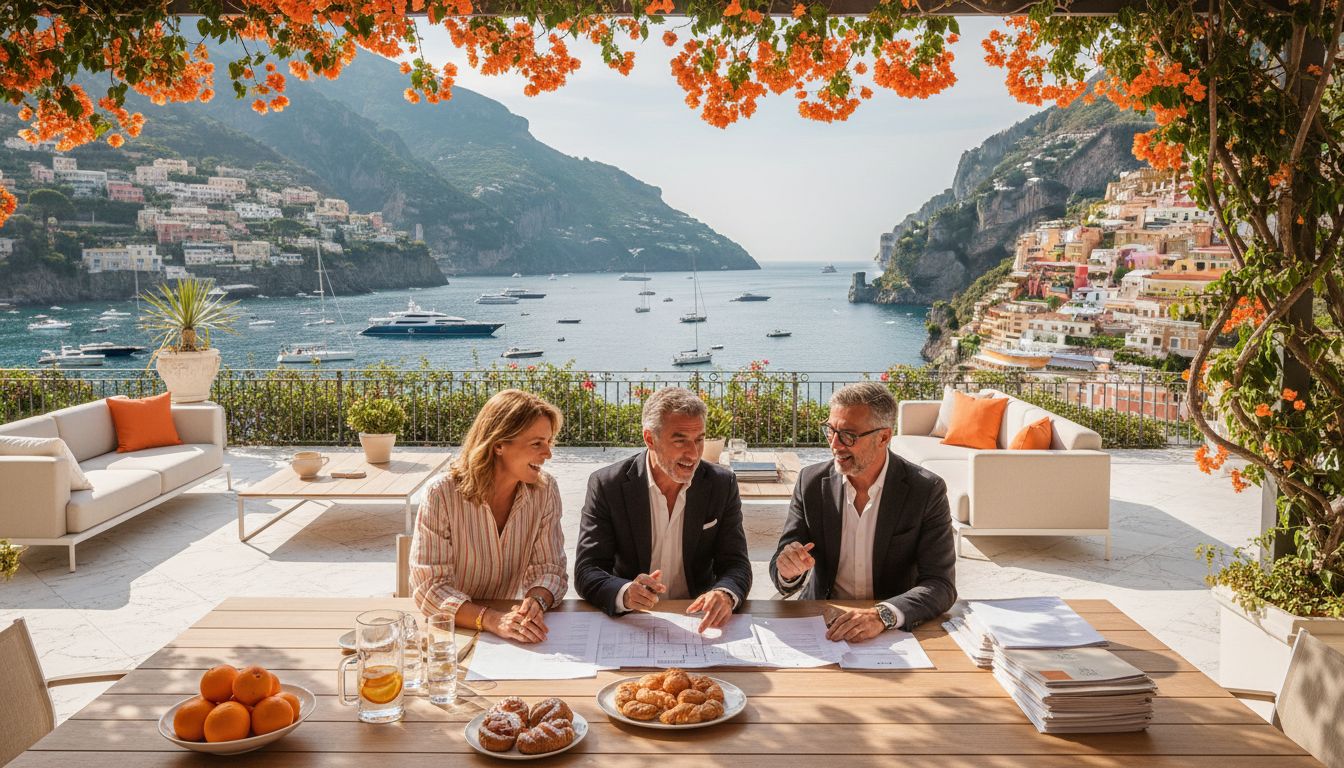
Amalfi Coast luxury

Reuters reports an intriguing shift in investor dynamics, with professionals redirecting focus from Milan’s cooling market to Rome’s emerging opportunities. Last year, property investors channeled 1.7 billion euros into Roman projects, demonstrating the dynamic nature of Italy’s luxury real estate landscape.

Key Luxury Investment Regions:

  • Tuscany: Renowned for:
    • Historic villas with expansive countryside views
    • Proximity to world-class wineries
    • Potential for significant appreciation
  • Amalfi Coast: Featuring:
    • Stunning Mediterranean waterfront properties
    • Limited inventory driving value
    • Strong rental income potential
  • Rome: Offering:
    • Urban luxury apartments
    • Historic architectural treasures
    • Growing investment momentum

Successful luxury property investment in Italy requires deep understanding of regional nuances, legal frameworks, and market trends. Sophisticated investors recognize that these properties represent more than real estate transactions—they are gateways to a timeless Italian lifestyle, blending historical charm with modern investment strategies.

Navigating the Italian Buying Process

Purchasing real estate in Italy involves a nuanced and structured approach that demands careful preparation and understanding of local legal frameworks. The Italian property acquisition process differs significantly from other European markets, requiring international buyers to navigate unique administrative and financial requirements with precision and expertise.

Key Steps in the Italian Real Estate Acquisition Process:

  • Preliminary Research:
    • Obtain a codice fiscale (tax identification number)
    • Open an Italian bank account
    • Secure legal representation familiar with Italian property law
  • Property Selection:
    • Conduct thorough due diligence
    • Verify property ownership and legal status
    • Assess potential restrictions on foreign ownership
  • Transaction Stages:
    • Submit formal offer (proposta d’acquisto)
    • Negotiate and sign preliminary contract (compromesso)
    • Complete final notarized deed (rogito)

Financial considerations play a critical role in the Italian property purchase journey. Foreign investors should anticipate additional costs beyond the purchase price, including registration taxes, stamp duties, and potential cadastral fees. These expenses can range from 9% to 15% of the property’s value, depending on whether the buyer is purchasing a primary residence or an investment property.

Successful navigation of the Italian real estate market requires patience, local expertise, and a comprehensive understanding of regional variations. Working with experienced local professionals who can guide you through bureaucratic intricacies, translate legal documents, and provide insights into regional market dynamics is not just recommended—it’s essential for a smooth and legally compliant property acquisition in Italy.

Legal, Tax, and Ownership Essentials

Navigating the complex landscape of Italian property ownership demands a comprehensive understanding of the legal and fiscal frameworks that govern real estate transactions. Practice Guides highlights the critical importance of the IMU (Imposta Municipale Unica), a municipal property tax that represents a fundamental consideration for property owners across Italy. The tax calculation involves a nuanced process, with the taxable basis determined by the cadastral income (including a 5% increase) and multiplied by property-specific coefficients.

Estatefy provides deeper insights into the multifaceted tax landscape that international investors must navigate. Beyond the IMU, property owners must budget for additional expenses such as the TARI (waste disposal tax), which is calculated based on property size and occupancy. These ongoing financial obligations underscore the importance of comprehensive financial planning when investing in Italian real estate.

Key Legal and Tax Considerations:

  • Ownership Structures:
    • Direct personal ownership
    • Corporate entity ownership
    • Joint ownership options
  • Tax Obligations:
    • IMU municipal tax (0% to 1.14% annually)
    • TARI waste disposal tax
    • Capital gains tax on property sales
    • Potential inheritance and gift tax implications
  • Foreign Investor Protections:
    • Equal property rights for international buyers
    • No significant restrictions on foreign ownership
    • Bilateral tax treaties with many countries

Successful property ownership in Italy extends far beyond the initial purchase. Investors must maintain meticulous records, understand local tax regulations, and potentially engage professional tax advisors who specialize in Italian real estate. The complexity of the system demands a proactive approach, with careful attention to changing regulations, local municipal variations, and potential tax optimization strategies that can significantly impact long-term investment returns.

Comparing Italy to Other Luxury Markets

Italy emerges as a distinctive player in the global luxury real estate landscape, offering unique advantages that set it apart from other premier investment destinations. PwC highlights Italy’s competitive edge, emphasizing the remarkable combination of cultural heritage, scenic beauty, and comparatively attractive property prices that distinguish it from other European luxury markets.

Reuters provides additional insight into Italy’s evolving real estate dynamics, noting particular opportunities in cities like Rome, where property prices remain more accessible compared to other southern European capitals such as Lisbon or Athens. This affordability, coupled with significant urban renewal efforts and increased public investment, positions Italian markets as uniquely compelling for discerning investors.

Comparative Market Advantages:

  • Price Competitiveness:
    • Lower entry points compared to Paris
    • More accessible than Monaco
    • Competitive pricing relative to Swiss markets
  • Investment Quality:
    • Rich historical property portfolios
    • Strong cultural preservation
    • Potential for significant appreciation
  • Lifestyle Factors:
    • Unparalleled culinary experiences
    • World-renowned art and architecture
    • Diverse geographical landscapes

While markets like London, Paris, and Monaco represent traditional luxury real estate strongholds, Italy offers a nuanced investment environment. The combination of lower acquisition costs, robust cultural infrastructure, and diverse regional opportunities creates a compelling alternative for international investors seeking both financial returns and exceptional living experiences.
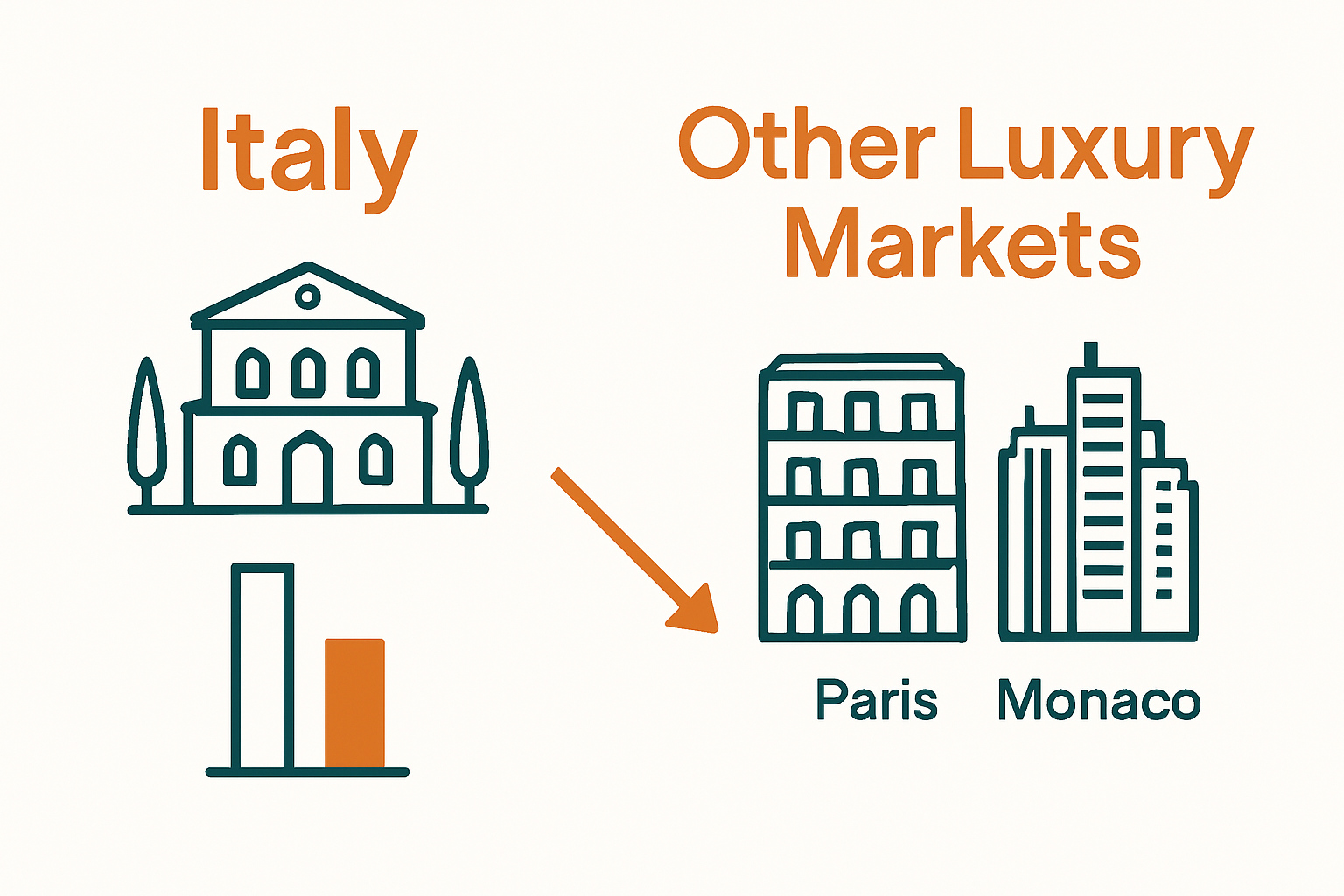
Infographic comparing Italy vs Paris and Monaco property prices

Experience Timeless Luxury Beyond Italy in the Heart of the French Riviera

The challenges of navigating Italy’s rich but complex real estate market demand expert guidance and a trusted partner who understands not only legal frameworks and tax codes but also the lifestyle and legacy that come with owning a luxury property. From Tuscany’s historic villas to Rome’s growing investment momentum, the emotional pull of Italian estates is clear. Yet for the discerning investor seeking to expand or diversify with similarly prestigious yet distinct opportunities, the French Riviera offers an alluring alternative filled with eco-luxury villas, breathtaking sea views, and lifestyle experiences that match Italy’s charm with modern sophistication.

At Living on the Côte d’Azur, we specialize in unlocking the secrets of the Côte d’Azur legacy investments. Whether you desire a private sanctuary in Cap d’Antibes, a modernist estate with sweeping sea views, or an off-plan gem in Saint-Tropez designed for both comfort and financial growth, our expertise makes the buying process effortless and rewarding. Discover how seamless luxury real estate acquisitions are when you have seasoned local experts by your side, guiding you through every legal, financial, and lifestyle detail.

Ready to embark on your next luxury property journey that blends legacy, lifestyle, and lucrative returns? Explore how your Italian real estate aspirations can translate into a breathtaking Côte d’Azur legacy. Contact the team today at Living on the Côte d’Azur to unlock your gateway to French Riviera paradise. Learn more about how we simplify the buying process through our tailored services here and experience the art of legacy investing like never before.

Frequently Asked Questions

What are the key opportunities for international investors in Italian real estate?

Key opportunities for international investors include historic villas and countryside estates, luxury seafront properties, premium urban apartments, and historic properties with significant cultural and architectural value.

How does the buying process for real estate in Italy differ from other countries?

The buying process in Italy involves obtaining a tax identification number, conducting thorough due diligence on property status, and signing a preliminary and final contract before registration. Understanding local legal frameworks is essential.

What additional costs should investors consider when purchasing property in Italy?

Investors should budget for registration taxes, stamp duties, and potential cadastral fees, which may range from 9% to 15% of the property’s value, depending on the type of property.

What legal and tax obligations do property owners face in Italy?

Property owners in Italy must consider municipal property taxes (IMU), waste disposal taxes (TARI), potential capital gains tax, and be aware of inheritance and gift tax implications as part of their ownership responsibilities.

Recommended

  • Things to know before buying property in the South of France
  • 法国里维埃拉的极致奢华理念 – Living on the Côte d’Azur
  • Ibiza is reinventing itself and has a bright future – Living on the Côte d’Azur
  • Build Your Dream Home and Boost Value on the Côte d’Azur
by /29 November 2025/in Landingpage
https://www.livingonthecotedazur.com/wp-content/uploads/2025/11/1764411492635_image_1764411492569.jpg 768 1344 https://www.livingonthecotedazur.com/wp-content/uploads/2024/02/sitelogo150.png 2025-11-29 11:18:542026-05-07 12:12:59Why Consider Italy Real Estate: Complete Guide

Over 60 percent of luxury property buyers now seek homes designed with health and wellness in mind. For the american investor, Ibiza’s real estate market stands out by merging upscale living with holistic well-being. From advanced air purification to eco-friendly architecture, this island is redefining what it means to live well while creating new opportunities for those who value both investment potential and a higher quality of life.

Table of Contents

  • Ibiza Wellness Real Estate Defined
  • Varieties of Wellness-Optimized Properties
  • Key Features of Holistic Estate Living
  • Legal Framework and Purchase Requirements
  • Market Trends and Financial Implications
  • Lifestyle Benefits Beyond the Investment

Key Takeaways

PointDetails
Emerging Wellness MarketIbiza is shifting its focus towards wellness real estate, creating an investment opportunity that integrates health-optimized living environments.
Diverse Property TypesThe market features various property categories, including residential communities, standalone homes, and holistic resorts, each tailored to different wellness philosophies.
Lifestyle InvestmentPurchasing wellness real estate in Ibiza is not just about acquiring property; it represents an investment in a transformative lifestyle that emphasizes holistic health and well-being.
Legal ConsiderationsInvestors must be aware of specific legal requirements, such as obtaining a Foreigner’s Identification Number (NIE) and consulting with licensed real estate professionals in the area.

Ibiza Wellness Real Estate Defined

Ibiza is transforming from its legendary party destination into a sophisticated wellness sanctuary, creating a unique real estate investment landscape. Wellness real estate represents properties specifically designed to optimize human health and wellbeing through intentional architectural design, strategic location, and integrated lifestyle amenities. According to wellnessresortsocimi, these properties go beyond traditional real estate by incorporating holistic elements that support physical, mental, and spiritual wellness.

In the context of Ibiza, wellness real estate encompasses multiple property types, including:

  • Luxury retreats with integrated meditation spaces
  • Eco-friendly villas with organic gardens
  • Sustainable residences featuring advanced air and water filtration systems
  • Properties with dedicated yoga and fitness studios
  • Homes designed to maximize natural light and promote circadian rhythm alignment

The core philosophy behind Ibiza wellness real estate is creating environments that actively contribute to inhabitants’ overall quality of life. These properties are not merely living spaces but comprehensive wellness ecosystems that support holistic health. Architectural designs prioritize elements like natural ventilation, sound insulation, ergonomic layouts, and seamless indoor-outdoor transitions that connect residents with Ibiza’s stunning natural landscape.

holistic home interior

Investors in Ibiza wellness real estate are purchasing more than property – they are investing in a transformative lifestyle experience. By selecting these meticulously designed spaces, buyers gain access to an emerging market that combines luxury real estate with scientifically backed wellness principles, positioning Ibiza as a global leader in health-optimized living environments. Why Buy in Ibiza: Complete Guide for Investors provides deeper insights into the strategic opportunities in this unique real estate sector.

Varieties of Wellness-Optimized Properties

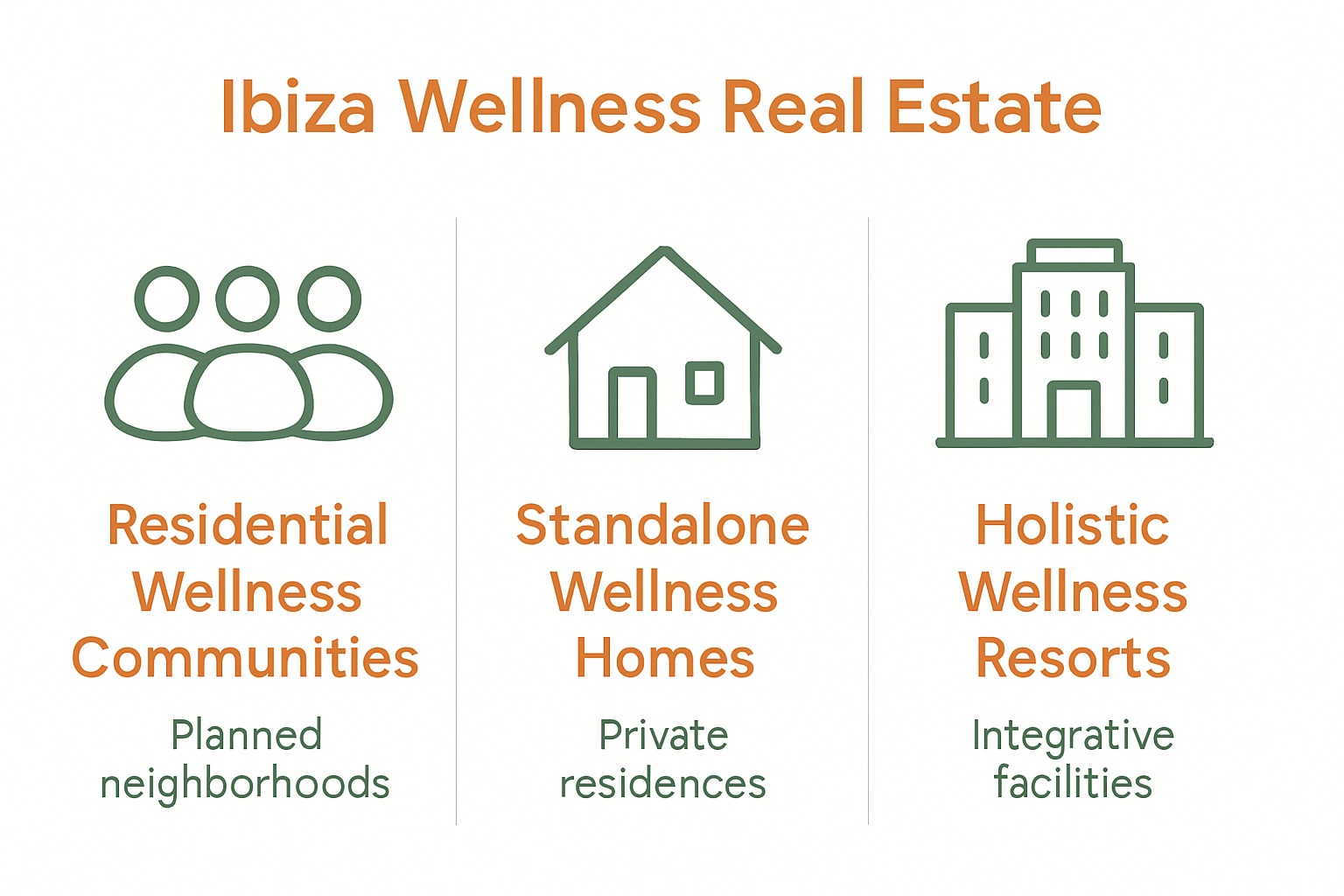
Ibiza’s wellness real estate market offers diverse property types that cater to different wellness philosophies and lifestyle preferences. Wellnessresortsocimi categorizes these properties into three primary classifications: residential wellness communities, standalone wellness homes, and holistic wellness resorts. Each category represents a unique approach to integrating health and lifestyle design into real estate investments.

Residential wellness communities are comprehensive developments that offer shared wellness amenities and collective health-focused infrastructure. These properties typically feature:

  • Communal meditation and yoga spaces
  • Shared organic gardens and farm-to-table dining experiences
  • Integrated fitness centers with professional wellness coaching
  • Group wellness programming and collaborative health workshops
  • Advanced environmental design promoting community interaction and mental well-being

Standalone wellness homes represent individualized approaches to health-optimized living. These properties are meticulously designed to support personal wellness through:

  • Advanced air and water purification systems
  • Biophilic architectural designs maximizing natural light and ventilation
  • Private meditation and exercise spaces
  • Smart home technologies tracking environmental and personal health metrics
  • Ergonomic layouts supporting physical and mental restoration

Holistic wellness resorts in Ibiza offer the most immersive wellness experience, combining luxury accommodations with comprehensive health transformation programs.

VIDEO:video_content] These properties blur the lines between residential real estate and wellness retreats, providing investors with opportunities to create transformative living environments that support comprehensive physical, mental, and spiritual well-being. [Why Buy in Ibiza: Complete Guide for Investors offers additional insights into the strategic potential of these unique real estate investments.

Key Features of Holistic Estate Living

Holistic estate living in Ibiza represents a revolutionary approach to residential design that goes far beyond traditional real estate concepts. Wellnessresortsocimi highlights that holistic estates are meticulously crafted environments designed to nurture physical, mental, and spiritual well-being through intentional architectural and lifestyle integration. These properties transform living spaces from mere shelters into comprehensive wellness ecosystems that actively support residents’ optimal health and personal growth.

The key architectural and design features of holistic estates in Ibiza include:

  • Biophilic design principles that seamlessly integrate natural elements
  • Advanced environmental control systems monitoring air quality, humidity, and light
  • Spaces that encourage movement and physical activity
  • Natural material selections supporting physiological and psychological comfort
  • Strategic layouts promoting mental clarity and stress reduction

Beyond physical design, holistic estates offer integrated wellness services that distinguish them from traditional residential properties. These services typically encompass personalized health monitoring, nutrition consultations, fitness coaching, mental wellness workshops, and access to cutting-edge wellness technologies. Residents experience a comprehensive approach to living where every architectural element and service is purposefully designed to support their holistic well-being, transforming daily life into a continuous wellness journey.

Investors are increasingly recognizing holistic estates as more than just real estate investments – they represent lifestyle investments with potential long-term health and financial benefits. The concept of Ultra Luxury on the French Riviera provides additional context about how advanced residential concepts are reshaping luxury real estate markets, offering discerning buyers opportunities to invest in properties that genuinely enhance quality of life.

Legal Framework and Purchase Requirements

Purchasing wellness real estate in Ibiza involves navigating a complex legal landscape that requires careful attention to local regulations and foreign investment protocols. Victorvillarabogados emphasizes the critical first step for international buyers: obtaining a Foreigner’s Identification Number (NIE), which is mandatory for any property transaction in Spain. This unique identification serves as the legal foundation for real estate investments, enabling foreign investors to open bank accounts, sign contracts, and complete property purchases.

Key legal requirements for foreign investors in Ibiza include:

  • Obtaining a valid NIE number from Spanish authorities
  • Providing a valid passport and proof of financial capability
  • Completing comprehensive property title searches
  • Securing appropriate visa documentation
  • Understanding national defense property acquisition regulations
  • Registering the property with local municipal authorities

Ibicasa highlights the importance of working exclusively with licensed real estate professionals in the Balearic Islands. The region has implemented stringent regulations to protect investors, requiring estate agents to maintain specific professional certifications and adhere to transparent transaction protocols. These regulations ensure that international buyers receive professional guidance throughout the complex property acquisition process, minimizing potential legal risks and providing additional layers of investor protection.

Beyond standard legal requirements, wellness real estate investments in Ibiza demand additional due diligence. Investors must carefully review zoning regulations, potential environmental restrictions, and specific wellness property development guidelines. Consulting with local legal experts who specialize in real estate transactions becomes crucial, as they can provide nuanced insights into local market dynamics and potential investment challenges. Why Buy in Ibiza: Complete Guide for Investors offers comprehensive perspectives on navigating these intricate legal considerations while maximizing investment potential in Ibiza’s unique real estate market.

Market Trends and Financial Implications

The wellness real estate market in Ibiza is experiencing a transformative economic shift, with investors recognizing the significant financial potential of health-optimized properties. Wellnessresortsocimi reveals that wellness-focused real estate is emerging as a high-value investment category, demonstrating robust growth and attractive returns that extend beyond traditional property investment metrics. This market segment represents a strategic convergence of lifestyle optimization and financial opportunity, appealing to sophisticated investors seeking both personal well-being and economic performance.

Key financial trends in Ibiza’s wellness real estate market include:

  • Projected annual appreciation rates of 6-8% for holistic properties
  • Increased rental yields due to high demand from wellness-focused travelers
  • Premium pricing for properties with integrated health and wellness amenities
  • Lower maintenance costs through sustainable design and advanced technologies
  • Potential tax incentives for environmentally conscious property developments

Beyond direct financial returns, wellness real estate in Ibiza offers nuanced economic advantages. These properties attract a discerning international clientele willing to pay premium rates for comprehensive wellness experiences, creating multiple revenue streams through short-term rentals, wellness retreats, and potential property appreciation. The market demonstrates resilience by catering to a growing global trend of health-conscious consumers who view real estate as an investment in personal and financial well-being.

Infographic comparing Ibiza's three wellness property types with icons and features.

Investors should approach this market with a holistic perspective, understanding that the value extends beyond traditional financial metrics. Why Buy in Ibiza: Complete Guide for Investors provides deeper insights into the strategic potential of this emerging real estate category, highlighting how wellness properties represent not just a financial asset, but a lifestyle investment with potential long-term economic and personal benefits.

Lifestyle Benefits Beyond the Investment

Wellness real estate in Ibiza transcends traditional property ownership, offering a transformative lifestyle experience that fundamentally reimagines personal well-being. Wellnessresortsocimi emphasizes that holistic living environments provide far-reaching benefits that extend well beyond financial considerations, creating spaces that actively support and enhance residents’ physical, mental, and emotional health through intentional design and integrated wellness services.

Key lifestyle advantages of Ibiza wellness properties include:

  • Stress reduction through carefully designed environmental elements
  • Enhanced social connectivity with like-minded wellness-focused communities
  • Improved physical health through integrated fitness and nutrition support
  • Mental clarity and emotional balance promoted by mindful architectural designs
  • Access to cutting-edge wellness technologies and personalized health programs
  • Opportunities for personal growth and holistic self-development

Beyond individual benefits, these properties create a comprehensive ecosystem that supports total lifestyle transformation. Residents experience a seamless integration of health, leisure, and personal development, with each architectural and service element carefully curated to support optimal human performance. The environment becomes an active participant in one’s wellness journey, offering continuous opportunities for physical regeneration, mental restoration, and spiritual exploration.

Investors ultimately discover that wellness real estate in Ibiza represents more than a property purchase – it’s an investment in personal potential and life quality. Why Buy in Ibiza: Complete Guide for Investors provides additional perspectives on how these unique properties offer a profound reimagining of lifestyle, where every moment becomes an opportunity for personal growth and holistic well-being.

Elevate Your Investment Portfolio with Wellness Real Estate Insights

Navigating the evolving landscape of Ibiza wellness real estate requires more than just a purchase-it demands a vision for holistic living and strategic investment. This market challenges you to consider wellness ecosystems, sustainable design, and legal complexities like obtaining your NIE number. You want to secure not just a property but a lifestyle that nurtures physical, mental, and spiritual wellbeing while achieving strong financial appreciation in a thriving global hub.

At Living on the Côte d’Azur, we understand that luxury real estate is more than architecture-it is a legacy and an experience. Our expertise in legacy investments and new constructions on the Côte d’Azur can guide you through intricate legal frameworks and dynamic market trends similar to those in Ibiza. Benefit from our deep knowledge of discerning global investors who seek properties that combine timeless elegance with wellness-focused innovation.

Discover how to transform your Ibiza real estate ambitions into a prosperous, health-enhancing reality by connecting with experts who specialize in heritage assets and futuristic builds. Ready to explore this new frontier in luxury living and investment? Take the next step with us and uncover unparalleled opportunities by visiting Contact the team at Living on the Côte d’Azur to schedule a personalized consultation. Embrace the future of wellness real estate today and secure your place in the world’s most coveted markets.

Frequently Asked Questions

What is wellness real estate?

Wellness real estate refers to properties designed to enhance human health and well-being through thoughtful architectural design and integrated lifestyle amenities.

What types of wellness properties are available in Ibiza?

Ibiza offers various wellness properties including luxury retreats with meditation spaces, eco-friendly villas with organic gardens, and sustainable homes featuring advanced air filtration systems.

What legal requirements should international buyers be aware of when investing in wellness real estate?

International buyers must obtain a Foreigner’s Identification Number (NIE), provide a valid passport, and complete thorough property title searches among other legal requirements to purchase property.

How can investing in wellness real estate benefit my lifestyle?

Investing in wellness real estate can reduce stress, improve physical health, and enhance social connections by providing a living environment that supports holistic well-being through intentional design and integrated wellness services.

Recommended

  • Welcome to Ibiza! Info about home, real estate costs and tourism – Living on the Côte d’Azur
  • Ibiza is reinventing itself and has a bright future – Living on the Côte d’Azur
  • Release your inner hippie and buy an Ibiza Property – Living on the Côte d’Azur
  • Why Buy in Ibiza: Complete Guide for Investors – Living on the Côte d’Azur
by /28 November 2025/in Landingpage
https://www.livingonthecotedazur.com/wp-content/uploads/2025/11/1764296378628_image_1764296378517.jpg 768 1344 https://www.livingonthecotedazur.com/wp-content/uploads/2024/02/sitelogo150.png 2025-11-28 03:20:182025-11-28 03:20:21Complete Guide to Investing in Ibiza Wellness Real Estate

Most american luxury homebuyers quickly realize that advice from a standard real estate agent only scratches the surface. In this exclusive market, clients expect more than just property listings and basic guidance. True luxury real estate consultancy delivers deep market insights, bespoke investment strategies, and discretion for high-net-worth individuals, a segment that now influences trillions in global property assets. Discover how expert consultants transform complex transactions into seamless, strategic wealth-building experiences.

Table of Contents

  • Defining Luxury Real Estate Consultancy Services
  • Core Functions And Tailored Client Support
  • Key Differences: Luxury Vs. Standard Brokerage
  • Legal Obligations And Regulatory Compliance
  • Cost Structures And Typical Fee Models

Key Takeaways

PointDetails
Luxury real estate consultancy provides comprehensive strategic guidanceIt offers personalized services including market analysis, investment strategies, and risk assessment tailored to high-net-worth individuals.
Client-centric approach is paramountEach consultancy service is crafted to align with clients’ unique financial goals and lifestyle aspirations, ensuring tailored investment strategies.
Distinction from standard brokerageLuxury consultancy focuses on holistic wealth management and personalized client engagement, going beyond basic property transactions.
Legal and regulatory compliance is crucialConsultants navigate complex legal requirements, including cross-border transactions and tax obligations, protecting client interests effectively.

Defining Luxury Real Estate Consultancy Services

Luxury real estate consultancy represents a specialized advisory service that transcends traditional property transactions, offering sophisticated clients comprehensive strategic guidance in high-end property markets. According to Savills, these services provide “advisory and analysis to help clients make informed decisions regarding commercial and residential properties” with a particular focus on exclusive, premium real estate segments.

At its core, luxury real estate consultancy involves a multifaceted approach that goes beyond simple buying and selling. Consultants conduct exhaustive market research, perform detailed property valuations, assess investment risks, and develop strategic recommendations tailored to discerning high-net-worth individuals. As Real Estate Business Review highlights, these firms “assist clients in making informed decisions about property investments, developments, and pricing strategies, aligning real estate strategies with broader business goals”.

Key services within luxury real estate consultancy typically include:

  • Comprehensive market analysis and trend forecasting
  • Portfolio optimization and strategic investment planning
  • Global property sourcing and due diligence
  • Tax efficiency and wealth management advisory
  • Lifestyle and legacy property investment strategies

The distinguishing factor of luxury real estate consultancy lies not just in transactional expertise, but in delivering a holistic, personalized approach that considers each client’s unique financial landscape, aesthetic preferences, and long-term objectives. Learn more about high-value luxury real estate locations on the French Riviera to understand the nuanced world of premium property investments.

Core Functions and Tailored Client Support

Luxury real estate consultancy operates through a sophisticated array of specialized services designed to meet the complex needs of high-net-worth clients. Relux Leaders emphasizes that these consultants provide “comprehensive market analysis, personalized investment strategies, detailed property valuations, risk mitigation, transaction management, and development consulting” – a multifaceted approach that goes far beyond traditional real estate transactions.

Client-centric support represents the cornerstone of luxury real estate consultancy, where each engagement is meticulously crafted to align with the client’s unique financial objectives and lifestyle aspirations. According to Rise Infra Ventures, these firms assist clients by “finding the best luxury properties, providing market analysis, handling legal paperwork, and offering financial planning” with an unwavering commitment to securing profitable and strategic investments.

The core functions of luxury real estate consultancy typically encompass:

  • Strategic property portfolio development
  • Comprehensive global market intelligence
  • Personalized investment risk assessment
  • Seamless transaction management
  • Cross-border property acquisition support
  • Advanced financial and tax optimization strategies

What distinguishes top-tier luxury real estate consultancy is the ability to transform complex property transactions into seamless, strategic wealth-building opportunities.

luxury property consultation Learn more about luxury real estate tax strategies to understand how expert consultancy can optimize your international property investments and create lasting financial value.

Key Differences: Luxury vs. Standard Brokerage

Unlike standard real estate brokerage, luxury real estate consultancy represents a transformative approach to property transactions that transcends traditional sales models. Agent Fire highlights that luxury real estate agents distinguish themselves through “premium services such as immersive virtual and augmented reality tours, strategic brand partnerships, and targeted international marketing outreach” – a sophisticated ecosystem that fundamentally reimagines client engagement.

The differentiation matrix between luxury and standard brokerage extends far beyond technological capabilities, encompassing a holistic suite of white-glove services. Where standard brokers typically focus on transactional efficiency, luxury consultants craft comprehensive strategies that integrate global market insights, personalized wealth management perspectives, and nuanced understanding of each client’s unique lifestyle and investment objectives.

Key distinguishing characteristics include:

  • Hyper-personalized client relationship management
  • Advanced technological integration (VR property tours, global connectivity)
  • International network and cross-border expertise
  • Discretion and confidentiality as a core service principle
  • Comprehensive wealth preservation and strategic investment planning
  • Lifestyle and asset curation beyond traditional property transactions

Ultimately, luxury real estate consultancy transforms property acquisition from a simple transaction into a sophisticated, strategic wealth management experience.

Learn more about high-value luxury real estate features to understand the nuanced world of premium property investments and consultative excellence.

Legal Obligations and Regulatory Compliance

In the realm of luxury real estate consultancy, navigating the complex landscape of legal and regulatory requirements is paramount to protecting client interests and maintaining professional integrity. RICS serves as a global professional body that establishes critical standards for professionals working in the built environment, ensuring comprehensive compliance and ethical practices across international real estate transactions.

Regulatory frameworks in luxury real estate consultancy extend far beyond traditional transactional guidelines. According to Real Estate Business Review, these firms play a crucial role in “assisting clients in navigating legal, financial, and market-related uncertainties by implementing robust risk management strategies and ensuring compliance with relevant regulations”.

Key legal and regulatory considerations include:

  • Cross-border transaction compliance
  • International tax reporting requirements
  • Anti-money laundering (AML) protocols
  • Foreign investment regulations
  • Property ownership transfer legalities
  • Contractual transparency and disclosure obligations
  • Client confidentiality and data protection standards

The intricate nature of luxury real estate consultancy demands an unwavering commitment to legal precision and regulatory excellence. Learn more about luxury real estate tax strategies to understand how expert consultants help clients navigate the complex legal landscape of high-end property investments.

Cost Structures and Typical Fee Models

Luxury real estate consultancy fee structures represent a sophisticated approach to valuing complex, high-end advisory services. Savills highlights that these fees are “typically structured based on the scope and complexity of services provided,” reflecting the intricate nature of advisory and analytical support required by discerning clients in the luxury real estate market.

The fee models in luxury real estate consultancy are far from standardized, instead offering tailored pricing strategies that align with the unique demands of each client’s investment portfolio. According to Rise Infra Ventures, consulting firms may charge fees based on “services such as market research, property evaluation, legal support, and investment strategies, with costs varying depending on the level of expertise and services required”.

Typical fee structures in luxury real estate consultancy include:

  • Retainer-based pricing for ongoing strategic advisory
  • Percentage-based fees tied to property transaction value
  • Hourly rates for specialized consultation services
  • Project-based fixed fee arrangements
  • Performance-linked compensation models
  • Tiered pricing based on complexity of service requirements
  • Comprehensive package pricing for full-spectrum advisory support

Understanding the nuanced pricing landscape is crucial for high-net-worth clients seeking exceptional consultative expertise.

INFOGRAPHIC:infographic_content] [Learn more about luxury real estate tax strategies to gain insights into how professional consultancy can optimize your investment approach and financial outcomes.

Elevate Your Luxury Real Estate Journey on the French Riviera

Navigating the world of luxury real estate consultancy is about more than just buying property. It is about making informed, strategic investments that honor your financial goals and lifestyle aspirations. From expert market analysis and personalized portfolio planning to seamless transaction management and legal compliance, the challenges of acquiring prime luxury villas on the Côte d’Azur demand tailored guidance. Whether you are seeking a legacy estate in Èze, a modern mansion in Cannes, or a new sustainable build in Saint-Tropez, understanding these complexities is key to transforming a high-value property purchase into a lasting family heirloom.

At Living on the Côte d’Azur we provide a comprehensive gateway for high-net-worth visionaries who desire more than homes. We offer exclusive insights, market intelligence, and hands-on support that align perfectly with the sophisticated strategies outlined in The Essential Guide to Luxury Real Estate Consultancy. Explore how our expertise in luxury villas French Riviera 2025 trends and Côte d’Azur legacy investments can empower your journey through this vibrant market.

Ready to take your investment beyond transactions and into timeless legacy? Discover unparalleled consultancy and bespoke property opportunities by connecting with our expert team today. Start your journey to the French Riviera’s most coveted estates by contacting Living on the Côte d’Azur. For a closer look at high-value investment locations and insights into luxury real estate tax strategies, visit our site and arrange your personalized consultation now.

Frequently Asked Questions

What services does luxury real estate consultancy provide?

Luxury real estate consultancy offers a wide range of services, including comprehensive market analysis, portfolio optimization, global property sourcing, tax efficiency advisory, and personalized investment strategies tailored to high-net-worth clients.

How does luxury real estate consultancy differ from standard brokerage?

Luxury real estate consultancy focuses on delivering a holistic, personalized approach that includes strategic planning and wealth management, whereas standard brokerage emphasizes transactional efficiency and property sales.

What should I consider when hiring a luxury real estate consultant?

When hiring a luxury real estate consultant, consider their experience in high-end markets, the complexity of the services they offer, their understanding of legal and regulatory requirements, and their ability to provide personalized support tailored to your financial goals.

What are the typical fee structures for luxury real estate consultancy?

Fee structures in luxury real estate consultancy vary and can include retainer-based pricing, percentage-based fees, hourly rates for specialized services, project-based fixed fees, and performance-linked compensation models.

Recommended

  • The concept of Ultra Luxury on the French Riviera – Living on the Côte d’Azur
  • 法国里维埃拉的极致奢华理念 – Living on the Côte d’Azur
  • 精品房地产的力量 – Living on the Côte d’Azur
  • The Power of a Boutique in Real Estate – Living on the Côte d’Azur
  • Understanding Luxury Fragrance Defined: A Deep Dive
  • What Defines a Luxury Dress: Complete Breakdown
by /27 November 2025/in Landingpage
https://www.livingonthecotedazur.com/wp-content/uploads/2025/11/1764230858765_image_1764230858662-1.jpg 768 1344 https://www.livingonthecotedazur.com/wp-content/uploads/2024/02/sitelogo150.png 2025-11-27 09:08:212025-12-05 17:17:12The Essential Guide to Luxury Real Estate Consultancy

Most american investors are surprised to learn that Portugal’s property market is projected to see an 8 percent investment growth by 2025, outpacing many traditional European favorites. With its strategic location, favorable tax structures, and diverse real estate options, Portugal has quickly become a focus for those seeking international property opportunities. This guide reveals what makes Portugal stand out, offering clear insights for americans exploring the potential rewards and essential considerations in this dynamic market.

Table of Contents

  • Portugal Real Estate Investment Fundamentals
  • Key Types of Properties and Markets
  • Legal and Tax Benefits for Investors
  • Risks, Costs, and Due Diligence Essentials
  • Comparing Portugal to Other European Destinations

Key Takeaways

PointDetails
Strategic Investment LocationPortugal offers a stable real estate market, attractive tax policies, and opportunities for appreciation, making it a prime choice for international investors.
Diverse Property MarketInvestors can choose from various property categories, including urban apartments and coastal villas, catering to different investment strategies and preferences.
Favorable Legal FrameworkThe legal system in Portugal favors foreign investment with protections, streamlined processes, and multiple tax incentives, essential for maximizing returns.
Market Risk AwarenessInvestors should astutely assess risks like market volatility and regulatory changes, emphasizing the importance of diligent market research and local expertise.

Portugal Real Estate Investment Fundamentals

Portugal represents a strategic and compelling real estate investment destination that combines attractive market conditions, favorable tax policies, and significant potential for appreciation. Understanding the core fundamentals of this market requires examining several critical factors that make Portugal uniquely positioned for international investors seeking exceptional opportunities.

The Portuguese real estate landscape offers multiple compelling advantages for investors. Golden Visa programs have historically been a significant draw, allowing non-EU investors to secure residency through property investments ranging from €250,000 to €500,000 in specific regions. These programs create a dual benefit of potential property appreciation and legal residency pathways. Key investment attractions include:

  • Stable and growing real estate market with consistent appreciation rates
  • Attractive tax incentives through Non-Habitual Resident (NHR) tax regime
  • Strategic geographic location connecting Europe, Africa, and transatlantic markets
  • Relatively affordable property prices compared to other Western European destinations
  • Strong rental market potential, especially in urban centers like Lisbon and Porto

Investors should carefully evaluate regional variations within Portugal’s real estate market. Coastal regions and major metropolitan areas like Lisbon and Porto demonstrate higher appreciation potential and stronger rental yields compared to rural locations. Urban centers attract international professionals, digital nomads, and tourists, creating robust demand for high-quality residential and investment properties.

Navigating the Portuguese real estate market requires understanding legal frameworks, tax implications, and investment structures. Working with local real estate experts can provide critical insights into market nuances, investment strategies, and potential opportunities that might not be immediately apparent to international investors. Comprehensive due diligence, understanding local regulations, and developing a strategic long-term perspective are essential for successful Portuguese real estate investments.

Key Types of Properties and Markets

Portugal’s real estate market offers a diverse range of property types and investment opportunities that cater to different investor profiles and preferences. Macedo Vitorino highlights the robust housing market, which has seen consistent growth and increasing appeal to international investors seeking strategic assets.

Investment Property Categories provide multiple entry points for investors:

  • Urban Apartments: High-demand properties in Lisbon and Porto
  • Coastal Villas: Premium properties in Algarve and coastal regions
  • Renovation Projects: Historic properties with potential value appreciation
  • New Development Complexes: Modern residential and mixed-use developments
  • Rural Estates: Agricultural and countryside properties with unique investment potential

The Portuguese market demonstrates remarkable regional diversity. Iberian Property emphasizes that metropolitan areas like Lisbon and Porto consistently outperform other regions in terms of investment returns. Urban centers attract international professionals, digital nomads, and tourists, creating robust demand for high-quality residential and commercial properties.

Investors should conduct comprehensive market research and understand nuanced regional differences. While coastal and metropolitan regions offer higher rental yields and appreciation potential, emerging markets like Silver Coast and interior districts present unique opportunities for strategic long-term investments. Consulting local real estate experts and conducting thorough due diligence remain critical steps in navigating Portugal’s complex and dynamic property landscape.

Legal and Tax Benefits for Investors

Portugal has strategically designed its legal and tax framework to attract international real estate investors, creating a remarkably welcoming environment for foreign capital. Macedo Vitorino highlights the country’s sophisticated legal infrastructure that provides substantial incentives for property investment, making it an exceptionally attractive destination for global investors seeking both financial returns and residency opportunities.

Key Tax Incentive Programs for international investors include:

  • Non-Habitual Resident (NHR) Tax Regime: Offers significant tax advantages for new residents
  • Golden Visa Program: Provides residency through real estate investment
  • Urban Rehabilitation Tax Benefits: Reduced tax rates for property restoration projects
  • Capital Gains Tax Exemptions: Potential tax relief for certain property transactions
  • Inheritance and Property Transfer Tax Advantages: Favorable rates compared to other European markets

The legal framework surrounding real estate investments in Portugal is designed to be transparent and investor-friendly. Foreign investors enjoy robust property rights, straightforward registration processes, and comprehensive legal protections that ensure secure and predictable investment environments. The government has implemented multiple mechanisms to simplify property acquisition, including streamlined bureaucratic processes and English-language support for international buyers.

Portugal real estate office

Investors should carefully navigate the nuanced legal landscape by consulting local experts who can provide detailed guidance on tax optimization strategies. While the overall framework is investor-friendly, understanding specific requirements for different investment types, potential tax implications, and regional variations remains crucial for maximizing returns and ensuring full compliance with Portuguese legal and financial regulations.

Risks, Costs, and Due Diligence Essentials

Real estate investments in Portugal require comprehensive risk assessment and strategic planning. Idealista reports an 8% decline in commercial property investment during the first half of 2023, highlighting the critical importance of understanding market dynamics and potential investment challenges.

Key Investment Risks that investors must carefully evaluate include:

  • Market Volatility: Potential fluctuations in property values
  • Interest Rate Sensitivity: Impact of changing economic conditions
  • Regulatory Changes: Potential modifications to tax and residency policies
  • Currency Exchange Risks: Fluctuations affecting international investments
  • Regional Market Variations: Differences in investment performance across Portugal

Iberian Property emphasizes the critical role of trust and delivery in successful real estate investments. Comprehensive due diligence involves a multifaceted approach, including thorough property inspections, legal document verification, market research, and financial analysis. Investors should budget for additional costs such as property transfer taxes, legal fees, registration expenses, and potential renovation or maintenance requirements.

To mitigate risks effectively, international investors should engage local experts, including real estate attorneys, tax consultants, and property managers who understand the nuanced Portuguese market.

A strategic approach involves conducting extensive research, maintaining financial flexibility, diversifying investment portfolios, and developing a long-term perspective that accounts for potential market fluctuations and economic shifts.

Comparing Portugal to Other European Destinations

Portugal distinguishes itself from other European real estate markets through a unique combination of economic attractiveness, technological innovation, and strategic positioning. Coherent Market Insights highlights Portugal’s emergence as a burgeoning tech hub, attracting startups and established companies, which significantly enhances its real estate investment appeal compared to traditional European markets.

Competitive Advantages that set Portugal apart from other European destinations include:

  • Lower property acquisition costs compared to Western European capitals
  • More favorable tax incentives for international investors
  • Rapidly growing technology and innovation ecosystem
  • High quality of life and attractive lifestyle opportunities
  • Robust legal framework protecting foreign investments
  • Strategic geographic location bridging Europe and global markets

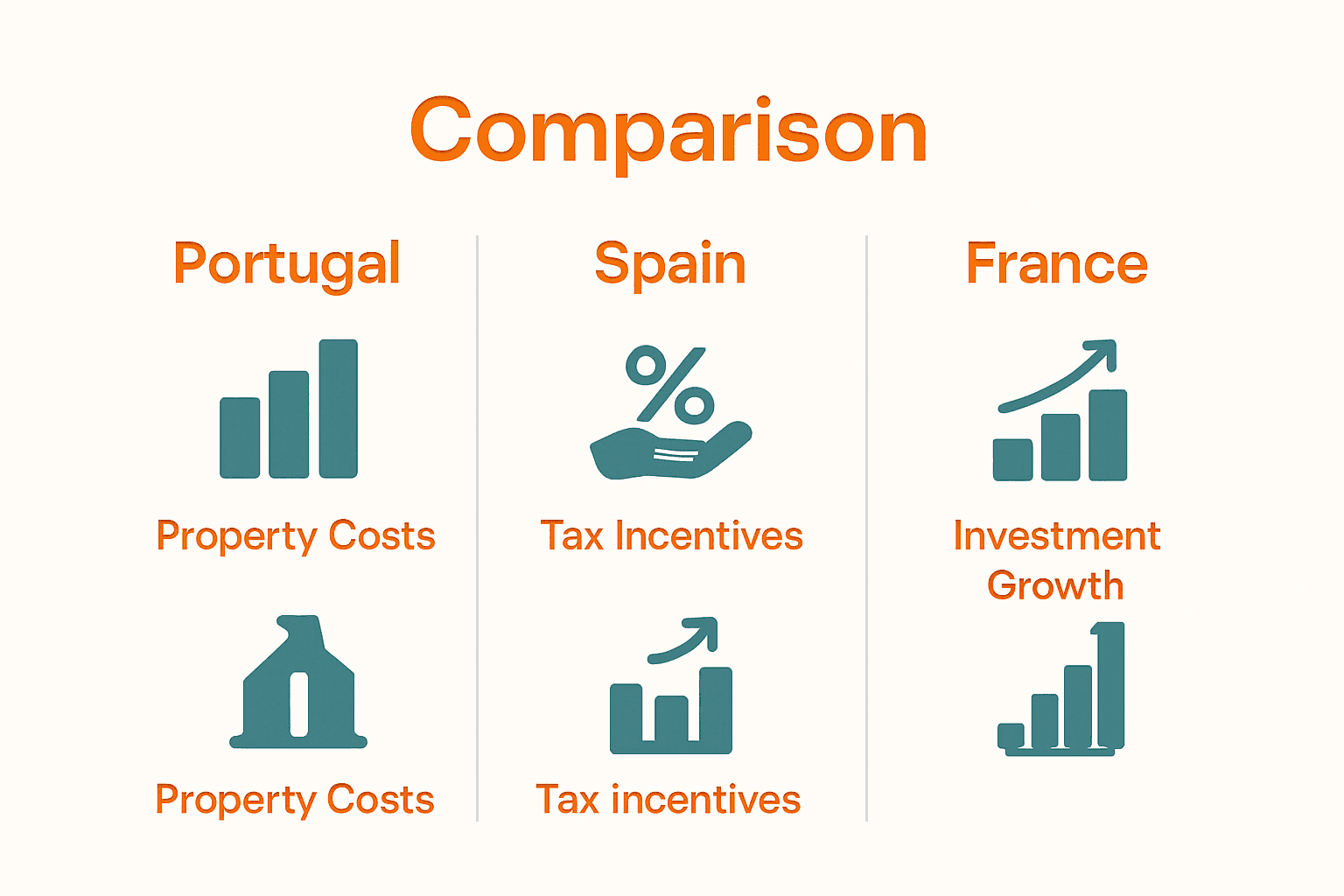
Iberian Property projects an impressive 8% growth in Portuguese real estate investment by 2025, reaching 82.5 billion euros. This growth trajectory outpaces many traditional European real estate markets, driven by favorable economic conditions, decreasing interest rates, and a dynamic investment environment. Unlike saturated markets in countries like Spain, France, and Italy, Portugal offers more competitive entry points and potentially higher returns for discerning international investors.

The Portuguese market offers a compelling alternative to other European destinations by combining affordability, strategic innovation, and a progressive regulatory environment. Investors seeking opportunities beyond traditional real estate markets will find Portugal’s blend of economic stability, technological advancement, and lifestyle quality particularly attractive. The country’s commitment to sustainable development, smart city initiatives, and international business integration positions it as a forward-thinking investment destination in the European real estate landscape.

Comparison of Portuguese, Spanish, and French real estate investment advantages

Unlock Your Global Legacy Through Strategic Real Estate Investments

Investing in Portugal real estate offers enticing prospects but also demands careful navigation through regional variations, legal frameworks, and tax incentives. If you seek properties that are not just assets but future family heirlooms, understanding market dynamics—from Portugal’s Golden Visa program to regional rental yields—is essential. Just as the French Riviera remains the premier destination for discerning investors looking for luxury villas and lasting legacies, Portugal stands as a gateway to rewarding international real estate ventures.

At Living on the Côte d’Azur, we specialize in guiding visionary investors through the complexities of luxury property acquisition—whether your focus is on the vibrant Riviera coastline or expanding your portfolio across Europe. Benefit from our expertise to craft investments with enduring value, backed by thorough due diligence and intimate market knowledge. Ready to turn your real estate ambitions into tangible legacy assets like those on the French Riviera Our team is here to help you seize emerging opportunities with confidence.

Discover how your next legacy investment can transcend borders. Connect with our experts today by visiting Contact Living on the Côte d’Azur. Explore our insights and prepare to embark on your journey toward timeless luxury and strategic growth.

Frequently Asked Questions

What are the benefits of the Golden Visa program in Portugal?

The Golden Visa program allows non-EU investors to obtain residency through property investments ranging from €250,000 to €500,000. This program provides dual benefits of potential property appreciation and legal residency.

How does the Non-Habitual Resident (NHR) tax regime work for investors?

The NHR tax regime offers significant tax advantages for new residents, enabling foreign investors to benefit from reduced tax rates on certain income types for up to ten years.

What types of properties offer the best investment potential in Portugal?

Urban apartments, coastal villas, renovation projects, new development complexes, and rural estates are some key categories that present strong investment opportunities, particularly in metropolitan areas like Lisbon and Porto.

What risks should investors consider when investing in Portuguese real estate?

Investors should evaluate market volatility, interest rate sensitivity, regulatory changes, currency exchange risks, and regional market variations to navigate potential challenges in the property market.

Recommended

  • Why Choose Portugal for Luxury Homes: Complete Guide – Living on the Côte d’Azur
  • Portugal is rolling out the red carpet for innovators – Living on the Côte d’Azur
  • 7 Top Luxury Real Estate Markets to Invest In – Living on the Côte d’Azur
  • How to Buy Property in Dubai: A Step-by-Step Guide – Living on the Côte d’Azur
  • Comment investir dans l’immobilier parisien efficacement – LPI: La parisienne immobilière agence immobilière Paris 19
by /26 November 2025/in Landingpage
https://www.livingonthecotedazur.com/wp-content/uploads/2025/11/1764163530283_image_1764163530220.jpg 768 1344 https://www.livingonthecotedazur.com/wp-content/uploads/2024/02/sitelogo150.png 2025-11-26 14:26:212025-11-26 14:26:26Why Invest in Portugal Real Estate: Complete Guide

Over 30 percent of american buyers are actively seeking luxury real estate in the French Riviera, drawn by unmatched waterfront views and strong investment potential. This region stands out for its blend of lifestyle appeal, legal security, and market resilience, making it a prime choice for those wanting both a retreat and a smart asset. Whether your focus is on panoramic vistas, innovative amenities, or long-term legacy planning, Riviera properties reveal why they capture attention from investors worldwide.

Table of Contents

  • 1. Prime Waterfront And Panoramic View Locations
  • 2. Unmatched Luxury Villas And Modern Amenities
  • 3. Legal Security And Due Diligence For Buyers
  • 4. Strong Roi And Rising Market Trends In 2025
  • 5. Sustainable And Eco-Friendly Property Innovations
  • 6. Legacy Potential: Heirloom Estates And Tax Benefits
  • 7. Blending Lifestyle And Investment Across Top Riviera Cities

Quick Summary

TakeawayExplanation
1. Invest in waterfront locationsFocus on properties with unobstructed sea views for maximum appreciation and rental potential.
2. Prioritize luxury amenitiesLook for modern features such as smart home technology and eco-friendly designs to enhance property value.
3. Conduct thorough due diligenceEngage local legal experts to navigate the complex purchasing process and protect your investment.
4. Explore legacy and tax benefitsUtilize corporate structures like SCI for flexible ownership and tax optimization across generations.
5. Analyze city-specific opportunitiesInvestigate each Riviera city’s unique characteristics to tailor your investment strategy and lifestyle choices.

1. Prime Waterfront and Panoramic View Locations

The French Riviera represents the pinnacle of luxury real estate, with waterfront and panoramic view locations offering unparalleled investment potential. These coveted properties are not just homes they are strategic assets that combine breathtaking scenery with exceptional financial value.

Key Location Highlights:

Saint Jean Cap Ferrat stands out as a premier destination for investors seeking exceptional waterfront real estate. This exclusive peninsula offers some of the most stunning Mediterranean views, with properties that command premium prices and attract high end international buyers. Paloma Beach Saint Jean Cap Ferrat Transformation exemplifies the ongoing development and value appreciation in this region.

Cap dAil presents another remarkable opportunity for investors, featuring dramatic cliffside properties with sweeping ocean perspectives. Properties in this area benefit from proximity to Monaco while offering more competitive pricing and stunning architectural possibilities. The Kempinski Cap dAil project demonstrates how strategic developments can drive local real estate values.

Strategic Investment Considerations:

  • Prioritize locations with unobstructed sea views
  • Consider properties with multiple perspective angles
  • Research upcoming infrastructure and tourism developments
  • Evaluate potential rental income from premium locations

Successful Riviera real estate investments require understanding the unique micromarkets within each coastal region. Waterfront and panoramic view properties represent more than aesthetic appeal they are financial instruments that appreciate consistently in one of the worlds most desirable locations.

Investors should conduct thorough due diligence, examining not just the property itself but the broader landscape of local amenities, transportation access, and future development potential. The right panoramic view property can serve as both a personal sanctuary and a robust long term investment vehicle.

2. Unmatched Luxury Villas and Modern Amenities

Luxury villas on the French Riviera represent more than just real estate they are sophisticated lifestyle investments that combine architectural excellence with cutting edge technology. These properties offer discerning investors an opportunity to own remarkable spaces that blend historical charm with contemporary functionality.

Strategic Luxury Features:

Savills research highlights the evolving landscape of luxury properties, showcasing contemporary villas in Saint Jean Cap Ferrat that feature extraordinary amenities like infinity pools and panoramic roof terraces. These design elements are not mere aesthetic choices but strategic investment considerations that significantly enhance property value.

The 4 bedroom Provencal villa with pool exemplifies the pinnacle of modern luxury living. These properties go beyond traditional real estate offerings by integrating smart home technologies, energy efficient systems, and architectural designs that maximize natural light and sea views.

Key Investment Considerations:

  • Prioritize properties with integrated smart home technologies
  • Look for sustainable design features
  • Evaluate potential for rental income
  • Consider proximity to premier amenities

Modern Amenities Defining Luxury:

Today sophisticated investors seek properties that offer more than square footage. The concept of ultra luxury real estate on the French Riviera encompasses comprehensive lifestyle experiences. These villas often include features such as home theaters, wine cellars, private gyms, expansive outdoor entertainment areas, and state of the art security systems.

For international investors, the French Riviera represents a unique market where architectural innovation meets timeless elegance. Luxury villas in areas like Mougins offer not just a home but a statement of refined living. The exclusive new build villas in Mougins demonstrate how modern design principles can transform traditional Mediterranean architecture into contemporary masterpieces.

3. Legal Security and Due Diligence for Buyers

Navigating the complex legal landscape of French Riviera real estate requires strategic expertise and meticulous preparation. International investors must understand the nuanced legal framework that governs property transactions in this prestigious region, where protecting your investment begins with comprehensive due diligence.

Critical Legal Considerations:

The French real estate legal system presents unique challenges for international buyers. Purchasing property involves multiple critical steps that demand expert navigation. Investors should prioritize working with specialized local legal professionals who understand the intricacies of French property law, including the Compromis de Vente (initial purchase agreement) and the final Acte de Vente (property transfer deed).

Recommended Due Diligence Steps:

  • Verify complete property ownership history
  • Conduct thorough title search
  • Review all existing property encumbrances
  • Assess potential inheritance and tax implications
  • Understand local zoning regulations

Special investment structures like Societe Civile Immobiliere (SCI) offer additional legal protection for foreign investors. These corporate entities can provide tax advantages and facilitate smoother property ownership transitions across generations. An SCI allows multiple investors to share ownership while creating a robust legal framework for real estate investment.

Legal Protection Strategies:

Buyers should engage bilingual legal professionals who specialize in French Riviera real estate transactions. These experts can help navigate potential pitfalls such as restricted renovation permissions, protected historical property classifications, and complex local building regulations. Understanding these nuances prevents costly legal complications and ensures a secure investment.

Mortgage considerations also play a crucial role in legal security. Non resident investors must work with specialized international mortgage brokers who understand French lending requirements. Proper financing structures can provide additional layers of legal and financial protection, transforming your property acquisition from a transaction into a strategic wealth management decision.

4. Strong ROI and Rising Market Trends in 2025

The French Riviera real estate market represents a sophisticated investment landscape where strategic positioning meets exceptional financial potential. In 2025, savvy investors are discovering that this iconic region offers more than aesthetic appeal it delivers robust and consistent return on investment across multiple property categories.

Investment Performance Dynamics:

Luxury real estate in the French Riviera continues to demonstrate remarkable resilience and appreciation potential. Properties in premier locations like Saint Jean Cap Ferrat and Cannes consistently outperform traditional investment vehicles, offering investors a compelling combination of lifestyle enhancement and financial growth.

Key Investment Considerations:

  • Target properties in emerging micromarkets
  • Prioritize locations with tourism potential
  • Consider properties requiring strategic renovation
  • Evaluate long term rental income possibilities
  • Focus on sustainable and technologically advanced properties

Market Segment Opportunities:

Investors can capitalize on several distinct market segments. Waterfront villas remain the most prestigious investment class, with properties featuring modern amenities and panoramic views commanding premium prices. New construction projects in areas like Mougins and Cap dAil present opportunities for early market entry and potential value appreciation.

Rental market dynamics further enhance investment potential. High demand from international travelers and corporate clients creates robust short term and long term rental opportunities. Strategic investors can expect annual rental yields ranging from 4% to 6% in prime locations, supplementing property value appreciation.

Strategic Investment Approach:

Successful investors in the French Riviera real estate market understand that timing market entry and selecting the right property are crucial. Diversifying investment across different property types microlocations and leveraging professional local expertise can mitigate risks and maximize potential returns. The key is viewing real estate not just as a transaction but as a comprehensive wealth management strategy.

5. Sustainable and Eco-Friendly Property Innovations

The French Riviera is transforming sustainable luxury real estate from a niche concept into a mainstream investment strategy. Innovative eco friendly properties are no longer just environmentally responsible they represent the cutting edge of premium real estate development.

Sustainable Design Principles:

Modern luxury properties in the region are integrating advanced green technologies that dramatically reduce environmental impact while enhancing property value. These innovations go beyond traditional energy efficiency, incorporating comprehensive sustainable design philosophies that address water conservation, renewable energy generation, and ecological preservation.

Key Sustainable Features:

  • Solar panel integration
  • Rainwater harvesting systems
  • Advanced thermal insulation
  • Smart home energy management
  • Native landscape design
  • Recycled and locally sourced building materials

Investment Potential:

Eco friendly properties are demonstrating superior market performance. Investors who prioritize sustainable design can expect higher property valuations, reduced operational costs, and increased attractiveness to environmentally conscious tenants and buyers. These properties are not just an environmental statement but a strategic financial decision.

Technological innovations are driving sustainable luxury. Geothermal heating systems, photovoltaic glass, green roofs, and integrated smart home technologies transform traditional Mediterranean architecture into state of the art ecological havens. These properties offer investors a unique combination of technological sophistication and environmental responsibility.

Strategic Sustainability Approach:

Successful investors in the French Riviera understand that sustainability is no longer optional. Properties with comprehensive green certifications and advanced ecological features are becoming the standard for premium real estate. By focusing on properties that integrate cutting edge sustainable technologies, investors position themselves at the forefront of a rapidly evolving luxury real estate market.

6. Legacy Potential: Heirloom Estates and Tax Benefits

The French Riviera offers sophisticated investors an extraordinary opportunity to transform real estate investments into generational wealth assets. Legacy properties in this region represent more than physical structures they are strategic financial instruments designed to preserve and transfer family wealth across generations.

Strategic Wealth Preservation:

Investors can leverage specialized legal structures like Societe Civile Immobiliere (SCI) to create robust property ownership frameworks. These corporate entities provide exceptional flexibility for transferring real estate assets, offering significant tax optimization and inheritance planning advantages.

Legacy Investment Strategies:

  • Utilize SCI corporate structures
  • Implement strategic estate planning
  • Consider multi generational ownership models
  • Explore tax efficient transfer mechanisms
  • Protect assets through professional legal frameworks

Tax Optimization Approaches:

French property laws offer unique opportunities for international investors seeking to minimize tax liabilities while preserving family wealth. By carefully structuring property ownership and understanding nuanced inheritance regulations, investors can create sophisticated wealth transfer strategies that protect assets and minimize tax burdens.

The concept of ultra luxury real estate investment extends beyond immediate financial returns. Heirloom estates in premier locations like Saint Jean Cap Ferrat or Cannes represent investments that appreciate not just monetarily but culturally and emotionally.

Generational Investment Philosophy:

Successful legacy planning transforms real estate from a transactional asset into a multigenerational story. Properties in the French Riviera offer unique opportunities to create family narratives that span decades embodying both financial wisdom and emotional significance. By selecting properties with timeless architectural value and strategic locations, investors can craft a lasting heritage that transcends mere financial metrics.

7. Blending Lifestyle and Investment Across Top Riviera Cities

The French Riviera offers discerning investors a unique opportunity to transform real estate investments into comprehensive lifestyle experiences. Each city along this iconic coastline presents distinctive investment characteristics that blend financial potential with extraordinary living environments.

Strategic City Selection:

Top locations for high value luxury real estate demonstrate how different Riviera cities offer unique investment propositions. Saint Tropez attracts yacht owners and celebrity clientele. Monaco provides tax advantaged investment opportunities. Cannes appeals to film industry professionals and international business travelers.

Lifestyle Investment Considerations:

  • Evaluate city specific rental markets
  • Analyze tourism and event driven demand
  • Consider proximity to cultural attractions
  • Research local infrastructure developments
  • Understand micromarket economic trends

Investment City Profiles:

Mougins represents a strategic investment hub blending artistic heritage with modern luxury. Nice offers diverse property options ranging from historic apartments to contemporary seafront developments. Saint Jean Cap Ferrat provides exclusive waterfront properties with exceptional appreciation potential.

Buying high end luxury real estate requires understanding each city unique market dynamics. Antibes offers charming old town properties alongside modern marina developments. Èze provides cliffside estates with breathtaking Mediterranean perspectives.

Holistic Investment Philosophy:

Successful Riviera investors view properties as lifestyle assets that transcend traditional real estate metrics. A legacy of luxury investment means selecting properties that offer not just financial returns but also extraordinary living experiences. Each city presents a distinctive narrative potential transforming your investment into a multigenerational story of sophistication and cultural richness.

Below is a comprehensive table summarizing the key topics and strategies discussed throughout the article about French Riviera real estate investment.

TopicDescriptionKey Considerations
Prime LocationsThe French Riviera offers prime waterfront and panoramic view properties with high investment potential.Unobstructed sea views, proximity to major amenities, infrastructure developments
Luxury VillasLuxury villas feature modern amenities and architectural excellence combining charm with technology.Integrated smart home tech, sustainable design, rental income potential
Legal and Due DiligenceNavigating the legal landscape requires specialized knowledge to protect investments.Property ownership history, local zoning laws, specialized legal assistance
Market Trends 2025The region promises robust returns and strong market resilience.Emerging micromarkets, long-term rental income, sustainable properties
Sustainable InnovationsEco-friendly properties integrate advanced green technologies.Solar panels, rainwater systems, eco-certifications
Legacy EstatesProperties offer structures for wealth preservation and tax benefits.Societe Civile Immobiliere (SCI), estate planning, tax-efficient transfers
City Specific InvestmentsEach Riviera city offers unique lifestyle and investment opportunities.Rental markets, cultural attractions, local economic trends

Unlock the True Potential of French Riviera Real Estate with Expert Guidance

Navigating the vibrant and competitive French Riviera market can feel overwhelming. From securing legal clarity with the Compromis de Vente and understanding tax benefits like VAT on new builds, to identifying eco-luxury villas poised for strong appreciation, discerning investors face many challenges. You want a seamless buying experience that safeguards your investment while capturing the timeless appeal of panoramic sea views, sustainable design, and promising rental yields.

At Living on the Côte d’Azur, we specialize in connecting you with premier legacy properties and emerging hotspots like Cap d’Ail, Saint Jean Cap Ferrat, and Cannes. Our in-depth expertise in due diligence, market trends, and tailored wealth preservation strategies turns your purchase into a multigenerational treasure. Discover the finest luxury villas with smart home features or explore off-plan new constructions designed for both comfort and strong ROI.

Take the first step toward securing your Riviera legacy by partnering with experts who understand both the emotional and financial heartbeat of these exclusive estates. Visit Contact Nice to Meet You to start your personalized consultation. Ready to access insider insights on buying luxury real estate on the French Riviera in 2025 Then explore Buying High End Luxury Real Estate on the French Riviera to better prepare for your investment journey. Remember the time to act is now as the market surges with international interest transforming properties into heirlooms for generations.

Frequently Asked Questions

What are the key location features to consider when investing in French Riviera real estate?

Investing in French Riviera real estate requires focusing on locations with unobstructed sea views and proximity to upcoming infrastructure developments. Prioritize areas where potential rental income can be maximized, particularly in high-demand zones within the coastal regions.

How can I ensure legal security when purchasing property in the French Riviera?

To ensure legal security, work with knowledgeable legal professionals who specialize in local property laws. Conduct thorough due diligence, including verifying ownership history and understanding local zoning regulations, to protect your investment effectively.

What types of modern amenities should I look for in luxury villas on the French Riviera?

Look for luxury villas with integrated smart home technologies, energy-efficient systems, and amenities such as infinity pools and home theaters. These features not only enhance lifestyle but can also significantly increase property value.

How do I assess the return on investment (ROI) of properties in the French Riviera?

Assess the ROI by evaluating property appreciation trends, potential rental income, and market demand in desirable locations. Consider targeting properties in emerging micromarkets as they often yield higher returns within a few years.

What sustainable property features are valuable for investors on the French Riviera?

Investors should prioritize properties with advanced sustainable features such as solar panels, rainwater harvesting systems, and smart energy management technologies. These eco-friendly innovations can lead to higher property valuations and reduced operational costs.

How can I turn my real estate investment into a multi-generational asset?

To create a multi-generational asset, utilize corporate structures like Societe Civile Immobiliere (SCI) that facilitate property ownership transfers. Implement strategic estate planning to ensure tax optimization and to preserve family wealth across generations.

Recommended

  • Exploring Property for Sale in Paris: Your Dream Home Awaits – Living on the Côte d’Azur
  • Buying high-end luxury real estate on the French Riviera – Living on the Côte d’Azur
  • Dubai properties move into a more European style of living – Living on the Côte d’Azur
  • The Kempinski Cap d’Ail: Catalyst for Rising Real Estate Prices
by Ab Kuijer/25 November 2025/in Landingpage
https://www.livingonthecotedazur.com/wp-content/uploads/2025/11/1764040113430_image_1764040113324.jpg 768 1344 Ab Kuijer https://www.livingonthecotedazur.com/wp-content/uploads/2024/02/sitelogo150.png Ab Kuijer2025-11-25 04:08:492025-11-26 16:40:187 Key Features of French Riviera Real Estate for Investors

The French Riviera continues to attract global buyers who want a secure investment, a steady rental base, and a lifestyle that supports long stays and remote work. Yet 2025–2026 comes with new factors: restrained supply, high global mobility, wealth migration into Europe, and increased demand for prime homes with outdoor space and year-round usability. Many overseas buyers enter the Riviera market without understanding how price bands differ between areas, how rental laws influence returns, or how interest rates impact borrowing in France. This guide breaks down the key market trends so buyers can make confident decisions and avoid costly mistakes.

Market Overview & Key Price Benchmarks

The Riviera’s property values remain supported by limited supply and constant overseas demand. According to Investropa, average prices in 2025 are:

  • Nice: €5,400–€7,500 per m²
  • Cannes: €8,000–€14,000 per m²
  • Saint-Jean-Cap-Ferrat: €20,000–€45,000 per m²

Even with global uncertainty, year-on-year price movement has stayed relatively firm. Data from aaariviera.com indicates that premium coastal towns maintained slight growth, while mid-market inland areas saw softer price shifts. Buyers should note that waterfront properties remain the strongest performers due to limited buildable land and consistent lifestyle demand. Investors must compare districts carefully, as micro-locations significantly impact long-term value.

Second-Home vs Full-Time Residency vs Rental Investor

The Riviera appeals to three strong buyer segments. Second-home owners keep demand high in prime areas like Cap Ferrat, Cannes and Villefranche, where views and prestige outweigh price sensitivity. Full-time residents prefer Nice, Antibes and residential hillsides where schools and services are nearby. Rental investors typically target properties with strong international demand and easier rental rules, often near the beach or transport hubs. Each group affects pricing differently, so buyers must match their goals, enjoyment, relocation or income, to the right districts to maximise results.

Impact of Global Mobility, Hybrid Work and Ultra-Wealthy Buyers

Remote work and flexible business travel have made long stays more common, increasing demand for spacious homes, terraces, studies and pool access. The Riviera also attracts families relocating from the US, UK, Switzerland, Nordics and the Middle East who want long-term security without sacrificing convenience. Ultra-wealthy buyers increase competition in the villa market, especially in Cap d’Antibes, Mougins, and the Cap Ferrat peninsula, where trophy homes rarely come to market. Their purchases stabilise prices at the top end and push older homes with large grounds into renovation cycles that drive regional renewal.

Supply, Scarcity & New Construction Dynamics

Limited land has always shaped the Riviera market. According to TheSuperPrime.com, locations such as Saint-Jean-Cap-Ferrat, Villefranche, and Cannes Californie face geographical constraints that restrict new building. Much of the coastline is protected, hillside areas cannot be expanded, and zoning laws limit height and density. This scarcity sustains long-term property values and protects investors from oversupply, which is common in other European resort markets. As a result, buyers must often choose between renovating older homes or purchasing recent constructions that offer modern features but carry a higher price per square metre.

Emerging Zones Beyond the Riviera Core

Areas just outside the most expensive zones are gaining attention. Parts of the Var hinterland, the hills around Nice, and newly improved coastal areas near Menton offer better entry prices while staying within reach of major hubs. Alpes-Maritimes lakeside zones also provide attractive opportunities for full-time residents seeking quieter environments. These markets are expected to grow as buyers shift from traditional hotspots in search of more space, privacy, and improved value. Investors who identify these zones early often benefit from stronger appreciation over five to ten years.

Role of New-Build vs Historic Renovation in Pricing and Demand

New-build homes offer energy efficiency, security, and contemporary layouts, making them appealing to younger buyers and foreign families. However, because land is scarce, supply remains low, and pricing can be significantly higher. Historic villas and Belle-Époque buildings give access to character, space, and prestige, but often require structural upgrades that increase overall cost. Buyers should evaluate renovation feasibility carefully, especially in protected zones where permissions are stricter. Both categories perform well depending on buyer goals, but long-term value tends to favour locations rather than property age.

Rental Yields, Income Potential & Investment Case

The Riviera attracts millions of visitors every year, giving investors dependable rental potential. Short-term rental yield is stronger in cities like Nice and Cannes, where tourism and business events create year-round demand. Long-term leasing is popular for families and professionals, especially around international schools. Villas offer higher weekly rates but also higher operational costs. Investors must check local rental rules, as some zones require permits for furnished rentals. Understanding which areas allow flexible rental structures is essential for protecting income expectations and long-term strategy.

Table: Typical Rental Yields in the French Riviera

Property TypeRegionTypical Gross YieldMain Risk
1–2 bed flatNice city centre3.5%–5.0%Rental permit restrictions
Luxury apartmentCannes Croisette2.0%–3.0%High entry price
3–4 bed villaAntibes / Biot3.0%–4.5%Seasonal vacancy
Prestige villaCap Ferrat / Villefranche1.5%–2.5%Very high maintenance costs

Price Trends & Forecasts for 2026

Forecasts suggest price stability across the Riviera, with stronger growth focused on premium segments. Investors should expect the ultra-prime zones to remain competitive due to steady international demand and extremely low supply. Middle-market areas may experience small adjustments tied to economic factors, but remain attractive for long-term buyers. Riviera values tend to correct slowly due to persistent demand from lifestyle-driven buyers.

Anticipated Growth Across Premium Zones vs Middle Markets

Prime neighbourhoods such as Cannes Californie, Cap d’Antibes, and Eze-sur-Mer are expected to maintain strong values due to their international appeal. Middle-market areas like Menton, Le Cannet and Saint-Laurent-du-Var may see more moderate growth as buyers seek value beyond the high-demand coast. The contrast highlights the importance of strategic property selection rather than focusing solely on price.

Effects of Interest Rates, Taxation & Global Capital Flows

According to analysis from Destination-Riviera.com, interest rate movements influence the mid-market more than the top tier. The luxury segment relies heavily on cash buyers or high-net-worth financing, making it less sensitive to lending costs. Taxation changes remain a consideration, especially for non-residents facing wealth tax, but high-end buyers often adjust their structure rather than abandoning purchases. Global capital flows, particularly from the US, Middle East and Europe, will continue to drive demand for secure, lifestyle-oriented assets.

Which Sub-Markets May Outperform in 2026

Waterfront homes, energy-efficient new-builds, and eco-luxury developments are expected to see higher buyer interest. Off-plan properties in Nice Grand Arénas, Cannes Bocca and redevelopment zones near Monaco may offer stronger medium-term appreciation due to transport upgrades and urban renewal projects. Buyers looking for long-term stability may prefer established premium districts, while investors seeking growth should explore areas benefiting from infrastructure development.

Regulatory, Tax & Risk Factors Every Investor Must Consider

French Riviera real estate remains a safe asset, but every buyer needs a clear understanding of the rules that can influence returns. Rental regulations continue to evolve, especially in high-tourism areas, and investors must know how these changes affect both short-term and long-term strategies. Tax obligations also differ for non-residents, and even small oversights in ownership structure can create unexpected costs during inheritance or resale. Market risks exist as well, ranging from pricing pressure in high-competition areas to environmental considerations along the coastline. A well-informed approach helps investors protect both value and rental ability.

New rental regulations in tourist zones (Nice, Cannes) and their impact

Recent reporting from Le Monde explains that cities like Nice and Cannes introduced stricter controls on short-term rentals due to pressure on local housing. These include limits on secondary-home rentals, stricter registration processes, and neighbourhood-specific caps. Investors who rely on platforms like Airbnb must check whether their property falls under zones that require special permits. These rules do not stop rental income, but they do push buyers to choose areas with stable regulations or shift to long-term furnished rentals. Understanding local restrictions before purchase prevents losing income potential after signing the deed.

Wealth tax, foreign-buyer rules and estate planning issues

France applies a property-based wealth tax (IFI) to owners whose real estate assets exceed €1.3 million. Non-residents are taxed only on property located in France, but they still must declare annually. Buyers also need to consider inheritance rules, as French forced-heirship laws may override wills from other countries unless structured correctly. Ownership via SCI, joint purchase, or certain cross-border structures can help manage succession and tax exposure. While foreign buyers face no restrictions on purchasing, understanding the legal landscape protects long-term ownership and avoids complications when passing properties to heirs.

Market risk: overpricing, macro-economic headwinds, climate issues

Some Riviera districts face inflated asking prices due to intense buyer competition, especially in premium waterfront zones. Buyers who enter without proper valuation guidance risk paying above long-term value. Broader economic factors, such as shifts in interest rates or slower global growth, may influence mid-market homes more than ultra-prime villas. Climate factors also play a role; coastal erosion, flood zones and hillside stability should be reviewed through expert diagnostics. Although these issues do not reduce demand, they shape which properties remain resilient and which may face future risk.

How Living On The Côte d’Azur Supports Your Investment Strategy

Living On The Côte d’Azur helps foreign buyers make confident, informed decisions by combining local knowledge with international experience. Our team identifies properties that suit both lifestyle expectations and long-term investment logic, ensuring clients do not fall into common pitfalls such as overpaying, missing key diagnostics or misunderstanding rental rules. We help evaluate each home based on micro-location, renovation feasibility, rental opportunity, and future resale value, giving clients a clearer view of which assets hold their ground in changing markets.

We also provide access to off-market villas, private listings, and discreet seller networks that typical buyers never see. For overseas clients, we coordinate everything: legal introductions, financing support, due diligence preparation, and negotiation. Acting as a buyer-agent, we manage viewings, documentation, and contract steps to prevent delays or hidden issues. International investors benefit from our regional networks, multilingual support, and experience working with families, entrepreneurs, and UHNW clients seeking a secure foothold on the Riviera.

by Feline Kuijer/24 November 2025/in Landingpage
https://www.livingonthecotedazur.com/wp-content/uploads/2024/02/sitelogo150.png 0 0 Feline Kuijer https://www.livingonthecotedazur.com/wp-content/uploads/2024/02/sitelogo150.png Feline Kuijer2025-11-24 08:10:052025-11-24 11:34:58French Riviera Property Market 2025–2026: What Buyers & Investors Need to Know

Over ninety percent of american luxury property investors search for more than just a spectacular view when looking at the French Riviera. As demand keeps rising for seafront homes and heritage villas, destinations like Cannes, Nice, and Saint-Tropez offer a blend of timeless charm, financial potential, and elite amenities. Exploring these celebrated Mediterranean markets gives buyers the chance to enter a world where every investment weaves together prestige, lifestyle, and long-term value.

Table of Contents

  • Cannes: Where Prestige Meets Prime Seafront Homes
    • Location And Lifestyle Significance
    • Investment Highlights
    • Strategic Investment Considerations
  • Nice: Urban Living With Timeless Riviera Charm
    • Location And Investment Potential
    • Investment Highlights
    • Urban Living Characteristics
    • Strategic Considerations For Investors
  • Antibes: Privacy, Picasso, And Waterfront Estates
    • Location And Strategic Significance
    • Investment Landscape
    • Unique Investment Characteristics
    • Cultural And Economic Advantages
  • Èze: Medieval Romance And Hilltop Legacy Villas
    • Location And Unique Investment Characteristics
    • Investment Landscape
    • Cultural And Architectural Heritage
    • Strategic Investment Considerations
  • Saint-Tropez: Beachside Glamor, New Build Icons
    • Location And Investment Landscape
    • Investment Opportunities
    • Strategic Considerations
    • Market Dynamics
  • Monaco Borders: Exclusive Access And Tax Benefits
    • Investment Landscape
    • Strategic Investment Zones
    • Tax And Financial Advantages
    • Investment Characteristics
  • Menton: The Quiet Gem For Heritage Investments
    • Location And Strategic Significance
    • Investment Landscape
    • Heritage Investment Characteristics
    • Strategic Considerations

Quick Summary

TakeawayExplanation
1. Cannes offers unique luxury real estateThe city provides prestigious seafront properties, attracting global investors seeking high-value investments.
2. Nice combines urban living with charmThis vibrant city features historic and modern properties, enhancing investment potential due to its cultural and architectural richness.
3. Antibes ensures privacy and cultural depthInvestments in this area allow access to artistic heritage while providing prime waterfront opportunities for property buyers.
4. Èze promises exclusive historical investmentsThe medieval village offers luxury real estate that appreciates in value while preserving its rich cultural significance.
5. Menton represents understated investment eleganceThis tranquil city offers unique historic properties with long-term appreciation potential, ideal for investors valuing cultural heritage.

1. Cannes: Where Prestige Meets Prime Seafront Homes

Cannes stands as a pinnacle of luxury real estate investment along the French Riviera, offering discerning investors an unparalleled opportunity to secure seafront properties in one of Europe’s most prestigious destinations. Since the early 1900s, this iconic city has been a magnet for European nobility and wealthy individuals, transforming from a quiet coastal town to a global hub of sophistication and elegance.

Location and Lifestyle Significance

What sets Cannes apart is its extraordinary blend of historical charm and modern luxury. The city’s legendary La Croisette beachfront strip epitomizes exclusivity, featuring 5-star branded hotels, iconic buildings, high-end retail, and entertainment venues that attract international elite.

Investors drawn to Cannes will discover a real estate market characterized by remarkable stability and appreciation. Properties here are not just homes but statements of prestige and cultural significance. The annual Cannes Film Festival transforms the city into a global stage, ensuring continued international attention and potential rental income for property owners.

Investment Highlights

The real estate landscape in Cannes offers multiple investment avenues:

  • Seafront villas with panoramic Mediterranean views
  • Luxury apartments near the famous Palais des Festivals
  • Restored historic properties in prime neighborhoods
  • Modern developments with state-of-the-art amenities

When considering a villa for sale in Cannes, investors should focus on properties that combine classic French Riviera architecture with contemporary design. Sea view properties, particularly those located near La Croisette or in exclusive areas like Le Cannet, represent the most promising investment opportunities.

Strategic Investment Considerations

Successful investment in Cannes requires understanding its unique market dynamics. The city attracts a global clientele during events like the film festival, creating significant potential for short-term luxury rentals. Properties with flexible living spaces, modern security features, and proximity to cultural venues tend to appreciate faster and command premium rental rates.

“Cannes represents more than a destination; it is a lifestyle investment that transcends traditional real estate metrics.”

Whether you are seeking a permanent residence, a vacation home, or a strategic investment property, Cannes offers an exceptional blend of cultural richness, architectural beauty, and financial potential. Your seafront home here is not just a property but a gateway to one of the world’s most coveted lifestyle experiences.

2. Nice: Urban Living With Timeless Riviera Charm

Nice stands as the quintessential French Riviera destination where urban sophistication meets Mediterranean charm, offering investors a remarkable blend of cultural richness and strategic real estate opportunities. As the fifth largest city in France, Nice presents a compelling investment landscape that goes far beyond traditional coastal property markets.

Location and Investment Potential

The city’s strategic positioning provides investors with multiple advantages. Its proximity to major events and conferences enhances property value and potential rental income, as noted by Platform Markets, making it an attractive destination for year round tourism and business activities.

Nice is not just a city but a living canvas of architectural and cultural experiences. The Joia Méridia futuristic city project represents a prime example of the city’s forward thinking urban development, signaling significant potential for property appreciation and innovative living spaces.

Investment Highlights

Key investment opportunities in Nice include:

  • Historic apartments in the Old Town (Vieux Nice)
  • Modern sea view condominiums along the Promenade des Anglais
  • Renovated bourgeois style buildings with contemporary interiors
  • New development projects with smart city amenities

Urban Living Characteristics

Nice offers a unique urban living experience characterized by:

  • Mediterranean climate with 300 days of sunshine annually
  • Rich cultural heritage including world class museums and galleries
  • Excellent transportation infrastructure
  • Proximity to international airports
  • Vibrant culinary and arts scene

Strategic Considerations for Investors

When exploring real estate in Nice, investors should focus on properties that balance historical charm with modern amenities. The city’s urban landscape allows for diverse investment strategies, from luxury apartments to boutique residential developments.

“Nice represents a sophisticated intersection of historical elegance and contemporary urban living.”

The potential for interior design transformation adds another layer of investment appeal, allowing property owners to create uniquely personalized spaces that reflect the city’s cosmopolitan spirit.

With its dynamic urban environment and timeless Riviera charm, Nice offers discerning investors an opportunity to secure properties that are not just real estate investments, but gateways to an exceptional Mediterranean lifestyle.

3. Antibes: Privacy, Picasso, and Waterfront Estates

Antibes represents a premier destination for discerning real estate investors seeking a harmonious blend of cultural heritage, exceptional privacy, and Mediterranean sophistication. Strategically positioned between Nice and Cannes, this coastal gem offers an unparalleled investment landscape that combines artistic legacy with prime waterfront opportunities.

Location and Strategic Significance

According to Platform Markets, Antibes attracts global decision makers through prestigious events like Platform Global, enhancing its appeal as a strategic investment destination. The city’s unique positioning provides investors with a rare combination of cultural depth and economic potential.

Investment Landscape

Antibes presents multiple compelling real estate investment avenues:

  • Historic properties near the Picasso Museum
  • Luxury waterfront estates in Cap d’Antibes
  • Renovated Mediterranean style villas
  • Modern apartments with sea views

Unique Investment Characteristics

What sets Antibes apart is its extraordinary balance of privacy and accessibility. The city offers investors a sophisticated environment that goes beyond traditional real estate markets. Properties here are not just structures but gateways to a lifestyle defined by artistic heritage and Mediterranean elegance.

The two-bedroom apartment market represents a particularly attractive segment for investors looking to enter the Antibes real estate scene. These properties offer a perfect blend of compact luxury and potential rental income.

Cultural and Economic Advantages

Antibes boasts significant advantages for property investors:

  • Proximity to international airports
  • Rich artistic heritage linked to Picasso
  • Strong tourism and event infrastructure
  • Protected maritime environment

“Investing in Antibes means acquiring a piece of Mediterranean history and future potential.”

The city’s connection to art particularly distinguishes it from other Riviera locations. The Picasso Museum, housed in the Château Grimaldi, symbolizes the area’s cultural richness and attracts international attention, indirectly supporting property values.

For investors seeking a location that offers privacy, cultural depth, and strong appreciation potential, Antibes emerges as an exceptional choice. Your investment here transcends traditional real estate acquisition it represents a gateway to a lifestyle defined by Mediterranean sophistication and artistic legacy.

4. Èze: Medieval Romance and Hilltop Legacy Villas

Èze stands as a breathtaking testament to the French Riviera’s most exclusive and timeless real estate landscape. Perched dramatically above the Mediterranean coastline, this medieval village offers discerning investors an unparalleled opportunity to own a piece of living history combined with extraordinary investment potential.

Location and Unique Investment Characteristics

Nestled between Nice and Monaco, Èze represents the pinnacle of ultra luxury real estate investment on the Côte d’Azur. Its extraordinary geographical positioning provides investors with panoramic Mediterranean views and a sense of absolute privacy that cannot be replicated elsewhere.

Investment Landscape

Eze’s real estate market offers remarkable opportunities for sophisticated investors:

  • Historic stone villa conversions
  • Renovated medieval property portfolios
  • Cliffside estates with unobstructed sea views
  • Boutique luxury residences with architectural significance

Cultural and Architectural Heritage

What distinguishes Èze from other Mediterranean destinations is its extraordinary blend of historical integrity and contemporary luxury. The village maintains strict architectural preservation guidelines, ensuring that every property represents a genuine piece of French cultural heritage.

Strategic Investment Considerations

Investors in Èze are not merely purchasing real estate they are acquiring a lifestyle defined by exclusivity and timeless elegance. Properties here represent more than financial assets they are generational investments that appreciate both monetary and cultural value.

“In Èze, every stone tells a story of Mediterranean sophistication.”

The luxury lifestyle connection extends beyond property boundaries. Residents enjoy proximity to world class dining, boutique shopping, and cultural experiences that elevate real estate ownership to an art form.

For investors seeking a property that transcends traditional real estate metrics, Èze offers an extraordinary proposition. Your investment here is not just about square footage it is about securing a legacy property in one of the most magnificent locations on the Mediterranean coastline.

5. Saint-Tropez: Beachside Glamor, New Build Icons

Saint-Tropez represents the ultimate convergence of luxury real estate, artistic heritage, and Mediterranean sophistication. This legendary destination continues to attract global investors seeking properties that transcend traditional real estate acquisitions and represent lifestyle investments with unparalleled prestige.

Location and Investment Landscape

Beyond its world renowned beaches and celebrity status, Saint-Tropez offers discerning investors a complex and nuanced real estate market characterized by exceptional quality and strategic value. The region provides multiple investment pathways for those understanding its unique economic ecosystem.

Investment Opportunities

Key real estate investment segments in Saint-Tropez include:

  • Waterfront villas with private beach access
  • Contemporary architectural masterpieces
  • Renovated historic properties in central village
  • New construction projects with cutting edge design
  • Exclusive estates near Pampelonne Beach

Strategic Considerations

Investors drawn to Saint-Tropez understand that acquiring property here means more than purchasing square footage. These properties represent cultural artifacts embedded with Mediterranean lifestyle and potential for significant appreciation.

The rustic French style transformation presents unique opportunities for investors looking to personalize and enhance property value through intelligent design interventions.

Market Dynamics

Saint-Tropez real estate maintains remarkable resilience due to several key factors:

  • Limited developable land
  • International reputation
  • Strong tourism infrastructure
  • Consistent demand from high net worth individuals

“In Saint-Tropez, every property tells a story of Mediterranean elegance.”

While other destinations may experience market fluctuations, Saint-Tropez remains a consistently attractive investment destination for those seeking properties that combine architectural beauty, cultural significance, and potential financial appreciation.

For investors willing to navigate its sophisticated market, Saint-Tropez offers more than a real estate investment it provides an opportunity to become part of a legendary Mediterranean narrative.

6. Monaco Borders: Exclusive Access and Tax Benefits

The regions surrounding Monaco represent a strategic investment landscape where luxury real estate meets extraordinary financial advantages. These border areas offer discerning investors a unique opportunity to access Monaco adjacent properties with significant economic and lifestyle benefits.

Investment Landscape

Investors exploring the Monaco border regions gain access to a nuanced real estate market that combines proximity to the principality with more flexible acquisition opportunities. The Monaco real estate market provides sophisticated investors with multiple strategic entry points beyond traditional boundaries.

Strategic Investment Zones

Key areas surrounding Monaco include:

  • Beausoleil
  • Cap dAil
  • Roquebrune Cap Martin
  • La Turbie
  • Saint Roman

Tax and Financial Advantages

Properties in these border regions offer compelling financial strategies for high net worth individuals. The luxury real estate tax landscape presents unique opportunities for strategic wealth management and potential tax optimization.

Investment Characteristics

Border region properties provide multiple strategic advantages:

  • Proximity to Monaco infrastructure
  • Lower property acquisition costs
  • Potential tax efficiency
  • Access to world class amenities
  • Strong appreciation potential

“Investing near Monaco means accessing a lifestyle of exceptional potential.”

The exclusive real estate buying process requires sophisticated understanding of local market dynamics, legal frameworks, and strategic positioning.

For investors seeking to optimize their Mediterranean real estate portfolio, the Monaco border regions represent a sophisticated approach to luxury property acquisition that balances financial strategy with lifestyle aspirations.

7. Menton: The Quiet Gem for Heritage Investments

Menton represents an extraordinary opportunity for sophisticated investors seeking a distinctive Mediterranean real estate destination that combines historical significance with understated elegance. Nestled at the French Riviera southernmost point, this city offers a unique investment landscape characterized by architectural heritage and remarkable potential for appreciation.

Location and Strategic Significance

Positioned near the Italian border, Menton presents investors with a rare combination of cultural richness and strategic real estate value. The city embodies a tranquil alternative to more commercialized Riviera destinations, offering discerning investors an opportunity to acquire properties with exceptional long term potential.

Investment Landscape

Key investment opportunities in Menton include:

  • Restored historic Mediterranean villas
  • Elegant Belle Epoque properties
  • Citrus estate conversions
  • Seafront apartments with architectural significance
  • Properties with botanical garden views

Heritage Investment Characteristics

Menton distinguishes itself through properties that tell a story. The city boasts architectural styles ranging from Baroque to Art Deco, providing investors with opportunities to acquire assets that represent living historical artifacts.

Strategic Considerations

Investors attracted to Menton understand that acquiring property here means more than a financial transaction. These investments represent a connection to Mediterranean cultural heritage, with potential for significant long term appreciation.

“In Menton, every property whispers stories of Mediterranean elegance.”

For those considering unique real estate opportunities, Menton offers a nuanced approach to property investment that goes beyond traditional market metrics.

While other Riviera destinations compete for attention, Menton remains a quiet gem waiting to be discovered by investors who appreciate subtlety, historical depth, and authentic Mediterranean charm.

Below is a comprehensive table summarizing the main real estate investment opportunities and characteristics of various premier locations along the French Riviera discussed in the article.

LocationInvestment HighlightsKey Considerations
CannesSeafront villas, luxury apartments, modern developmentsStability and appreciation, cultural significance
NiceHistoric Old Town apartments, Promenade des Anglais condosStrategic urban investment potential, cultural richness
AntibesWaterfront estates, historic properties near Picasso MuseumPrivacy, cultural heritage, strong appreciation potential
ÈzeHistoric stone villa conversions, cliffside estatesExclusivity, architectural heritage, long-term value
Saint-TropezWaterfront villas, contemporary buildings, renovated historic sitesResilience, celebrity appeal, unique enhancement opportunities
Monaco BordersProximity to Monaco, diverse real estate marketsTax benefits, strategic positioning, lower acquisition costs
MentonRestored villas, Belle Epoque properties, seafront apartmentsHistorical depth, long-term appreciation, tranquility

Discover Your Perfect Legacy on the French Riviera Today

Navigating the luxury real estate markets of the French Riviera can feel overwhelming when seeking a property that is not just an investment but a treasured heirloom. Whether drawn to Cannes’s prestigious seafront villas, Nice’s blend of urban charm and innovation, or Èze’s timeless hilltop estates, discerning investors face challenges like securing legal clarity, understanding tax benefits, and identifying properties with lasting value and cultural significance. The goal is clear: find a residence that offers both exceptional lifestyle and steady appreciation amid the vibrant 2025 market.

At Living on the Côte dAzur, we specialize in transforming these complexities into clear pathways tailored just for you. Our expertise in luxury villas French Riviera 2025 and Côte dAzur legacy investments empowers you to approach buying with confidence and nuanced insight. From exclusive listings near Monaco borders to historic properties in Antibes and Menton, our team guides you through every step with personalized advice and in-depth knowledge.

Ready to turn your Riviera dreams into enduring reality? Explore the journey of buying luxury real estate on the French Riviera by visiting Buying Luxury Real Estate on the Côte dAzur and embracing our expert guidance. Start your conversation with our team at Contact Nice to Meet You to unlock unparalleled opportunities. Don’t wait to secure your slice of this azure paradise and craft a legacy that will inspire generations.

Frequently Asked Questions

What are the best cities on the French Riviera for real estate investment?

Cannes, Nice, Antibes, Èze, Saint-Tropez, Monaco borders, and Menton are the top cities for discerning investors. Each location offers unique investment opportunities tailored to various preferences and lifestyle aspirations.

How do I evaluate the potential of a property in these cities?

Evaluate properties based on location, proximity to cultural venues, rental income potential, and architectural significance. Assess market trends and compare similar properties to gauge appreciation potential over a 1-2 year timeline.

What types of properties should I consider investing in?

Focus on luxury apartments, seafront villas, historical properties, and modern developments depending on your investment goals. For example, waterfront villas can yield high rental returns, especially in peak tourist seasons.

Are there any specific tax benefits for investing in the Monaco border areas?

Investing in properties near Monaco may offer various tax advantages, including lower property acquisition costs compared to Monaco itself. Consult your financial advisor to explore these opportunities before making an investment decision.

What should I look for in a real estate agent when investing in the French Riviera?

Select a real estate agent with extensive local knowledge, a strong track record in luxury properties, and expertise in the specific cities you are interested in. A good agent can provide insights into market fluctuations and help you navigate the buying process effectively.

How can I ensure my investment appreciates over time in these cities?

To maximize appreciation, choose properties with desirable features, such as modern amenities, scenic views, and historical significance. Research market activity regularly and be prepared to hold the property for several years to capitalize on long-term value increases.

Recommended

  • Exploring Property for Sale in Paris: Your Dream Home Awaits – Living on the Côte d’Azur
  • PAL-V and Doroni will dominate the skies in Dubai and the Gulf – Living on the Côte d’Azur
  • Dubai properties move into a more European style of living – Living on the Côte d’Azur
  • Most wanted: Two-bedroom apartment on the French Riviera
by /24 November 2025/in Landingpage
https://www.livingonthecotedazur.com/wp-content/uploads/2025/11/1763950223449_image_1763950222988.jpg 768 1344 https://www.livingonthecotedazur.com/wp-content/uploads/2024/02/sitelogo150.png 2025-11-24 03:10:532026-05-07 12:11:587 Best French Riviera Cities for Discerning Investors

Buying property in France as a foreign buyer can be straightforward if you understand how lending rules work, especially since European banks assess affordability differently than in markets like the U.S. or U.K. Rather than focusing on future appreciation or projected rental income, French lenders prioritise financial stability, documented earnings, and long-term repayment capacity. For international buyers looking at second homes or investment properties, understanding mortgage rules early in the buying process helps prevent delays, reduces surprise costs, and ensures you choose a property that matches your financing capability. This guide explains key requirements, costs, and mortgage types used in France.

Why Foreign Buyers Need to Specialise in French Mortgage Rules

Foreign buyers often assume mortgage approvals work similarly across Europe, but France follows stricter debt-to-income formulas and requires detailed proof of earnings. Mortgage access is especially relevant for non-residents purchasing holiday homes, rental properties, or luxury villas because financing can reduce tax exposure and free capital for other investments. France has a strong banking framework that encourages stability rather than high leverage, meaning buyers should calculate borrowing power before choosing a property. Understanding these rules early helps investors target homes matched to their budget, and avoid situations where a purchase agreement is signed without secure financing in place.

How French mortgages differ from U.S./U.K./Swiss systems

Banks in France usually cap debt levels at around one-third of verified income, whereas some foreign markets allow higher leverage based on assets or expected future earnings. Rental income projections are often discounted or excluded entirely at the application stage, and refinancing is less common than in Anglo-American markets. This creates a more conservative lending environment where financial proof carries more weight than speculative value.

Importance for non-residents and investors

International buyers must show a reliable financial history through documented earnings and bank statements. For investors, a French mortgage provides predictable repayments and may reduce taxable estate exposure. For holiday buyers, financing helps preserve cash while securing property in sought-after regions.

How mortgage access affects purchase strategy in France

Pre-approval is essential because offers to purchase carry a legal commitment. Choosing a property without confirmed borrowing capacity can make withdrawal costly or legally complicated.

Eligibility, Conditions & What Lenders Require in France

Mortgage approval in France is based on stable income, clean financial history, and clear documentation rather than simply offering a large deposit. Lenders assess applicant profile, residency, and age because repayment terms are typically shorter and capped by retirement age. Non-resident buyers may face stricter deposit requirements and documentation checks, particularly when purchasing property for investment rather than personal use. Preparing documents early and ensuring translations are certified helps speed up approval, especially for applicants earning income outside the EU.

Key borrower criteria: age, employment, income, residence status

Banks favour applicants with long-term employment, predictable earnings, and limited existing debts. Age matters because mortgage terms usually must end by retirement age, meaning buyers in their 50s may receive shorter terms. Self-employed applicants may need extra proof, such as audited accounts and tax history.

Deposit amount, loan-to-value (LTV) limits for non-residents

Foreign buyers often receive LTV ratios around 50%–70%, depending on profile and bank. Residents with strong financial histories may qualify for higher LTV options, but non-EU buyers are typically offered lower leverage.

Supporting documentation for foreign buyers

Banks may ask for tax returns, salary slips, bank statements, proof of identity, translated documents, and a property dossier. Power of attorney may be required if signing remotely.

What if you don’t meet the criteria? Alternatives like guarantors, a French partner,  and higher equity

Buyers unable to qualify based on income may contribute more equity, involve a co-borrower, or use private banking services focused on wealth-backed finance. Some buyers choose all-cash purchases to avoid delays and refinance later if conditions improve.

Types of French Mortgages & Which Suits Your Situation

Different mortgage formats serve different goals. Buyers planning long-term ownership typically select fixed-rate loans because they provide predictable repayment schedules, while investors planning renovations or short-term ownership may choose flexible financing options. France offers fewer interest-only products compared to Anglo-American markets, and these loans often require premium financial profiles. Understanding available mortgage types helps foreign buyers match their purchase strategy to their financial structure.

Fixed-rate loans

Fixed-rate mortgages are the most common in France, offering stable monthly payments throughout the term. They appeal to buyers seeking predictability rather than refinancing risk.

Variable-rate & capped rate loans

Variable-rate loans shift based on financial markets, while capped variants limit maximum potential increases. These appeal to buyers expecting future rate adjustments or early repayment.

Interest-only or partial amortisation loans (less common)

Available mostly through private banks, these require strong income, assets or collateral. They appeal to high-net-worth buyers managing liquidity.

Bridge finance & short-term loans for renovations or buy-to-let

Short-term financing helps buyers who plan to upgrade or resell. Banks assess renovation scope and exit strategy.

Interest Rates, Fees & Total Cost of Borrowing in France

The cost of financing involves more than the interest rate. Buyers should account for mandatory insurance, legal fees, mortgage taxes and bank processing charges. French banks must disclose the total cost using a legally required annual percentage measure, helping borrowers compare options transparently. Non-resident borrowers may face higher rates or added due-diligence requirements if income is earned outside the EU. Understanding these costs helps set realistic expectations and prevents budget surprises at signing.

Typical rate ranges for non-resident borrowers in 2026

Rates vary depending on income, credit history and property type. Buyers with strong financial profiles may secure competitive terms, while seasonal-use homes or high-risk borrowers may face higher pricing.

Upfront costs: notaire fees, guarantee fees, dossier fees

Transactions include legal costs for the property purchase as well as bank fees. Some loans require mortgage guarantees rather than traditional collateral.

Ongoing costs: insurance, mortgage tax, maintenance

Home insurance is often mandatory. Long-term budgeting should include taxes, building fees, service charges and repairs.

Example Financing Breakdown

Cost CategoryEstimate RangeNotes
Interest RateProfile-dependentBased on income stability
Notary Fees~7%–8%Mainly taxes, not legal labour
Bank Fees0.5%–1%Setup + processing
InsuranceVariesRequired by the lender

How Currency Exchange and Cross-Border Financing Impact French Mortgages

Foreign buyers earning income in currencies like USD, GBP, AED or CHF face additional considerations when borrowing in euros. Since monthly repayments are fixed in euros, a currency shift can impact affordability if a buyer’s home currency drops in value. Some lenders allow hedging tools or multi-currency accounts to reduce this risk, while private banking desks may offer loans structured around global asset portfolios rather than simple salary proof. Buyers should evaluate long-term exchange trends, especially when borrowing over 15–20 years, since short-term exchange gains can mislead affordability calculations if not reviewed carefully.

Options for non-Euro income (hedging, currency planning, multi-currency loans)

Buyers earning in non-euro currencies can work with currency brokers or private banks to lock rates or fix periodic conversions. This reduces exposure to sudden fluctuations that could raise repayment costs. Some buyers choose to convert larger sums upfront to avoid monthly exchange volatility, while others rely on automatic scheduled conversions. Multi-currency mortgages are less common but may be available through specialist lenders serving cross-border investors.

Importance of considering global portfolio exposure

Borrowing in euros can diversify financial risk if assets are held in other currencies. For some buyers, financing in France can preserve liquidity for investments abroad, but only when repayment obligations remain manageable under different market scenarios.

Mortgage Process Step-by-Step for Buying Property in France

The mortgage process in France is structured and documentation-driven. Foreign buyers are encouraged to seek pre-approval before making a formal offer because accepted offers carry legal weight once signed with the notary. After selecting a property, lenders conduct financial checks, property valuations, and underwriting before issuing a binding offer. Completion occurs only after a cooling-off period, and funds are released directly to the notary before final deed execution. Following each step in order reduces delays and protects the buyer from signing commitments without secured financing.

Step 1: Pre-approval and document gathering

Buyers prepare income records, bank statements, ID verification, and translated documents. Pre-approval guides budget planning before property visits.

Step 2: Property selection and offer acceptance

Once a property is chosen, both parties sign a preliminary contract with conditions tied to mortgage approval.

Step 3: Formal loan application, appraisal & underwriting

Banks assess affordability and may request valuations or additional proof.

Step 4: Signing the loan agreement & conditions precedent

The bank issues a binding offer followed by a mandatory reflection period before signing.

Step 5: Final drawdown & mortgage registration

Funds are transferred to the notary, and the loan is registered against the property title.

Special Considerations for Luxury & Investment Properties

High-value properties often involve stricter underwriting conditions because the market segment is more sensitive to liquidity and resale timing. Lenders may require stronger financial history, larger deposits, or proof of global assets for buyers financing estates, waterfront villas, or newly renovated homes. Investors using rental income must present verified financial data rather than projections alone. Luxury buyers planning seasonal stays may also structure loans to minimise wealth tax exposure. With higher budgets, lenders may require property surveys, income audits, or banking relationships before approving funds.

Minimum loan sizes, higher scrutiny, proof of rental income

Prestige properties often start above €1M purchase price, and some banks impose minimum loan amounts. Income must be proven through official documentation rather than expected rental revenue.

Multi-property portfolios, fundraising, seasonal homes

Buyers expanding a French portfolio must show existing mortgage performance and debt ratios. Seasonal homes may require additional insurance and maintenance planning.

Tax implications when property is rented vs personal use

Different accounting rules apply for rental activity, particularly if income is declared in France. Buyers may choose financing to support depreciation, deductible interest, or rental structure options.

How Living on the Côte d’Azur Supports Your Mortgage Application

International buyers often need assistance handling paperwork and liaising with French institutions due to language requirements and detailed documentation rules. Living on the Côte d’Azur helps clients coordinate banking appointments, manage translations, prepare financial files, and connect with private banks serving foreign buyers. Our network includes lenders familiar with high-value assets, cross-border finance, and international tax circumstances. We assist buyers before they choose a property, ensuring they build a budget aligned with mortgage capacity rather than selecting a home first and risking delays or rejections.

  • Direct coordination with lending teams
  • Help prepare documents and legal records
  • Suitable for luxury buyers purchasing remotely
by Ab Kuijer/23 November 2025/in Landingpage
https://www.livingonthecotedazur.com/wp-content/uploads/2024/10/1024px-Eze_und_Cap_Ferrat-Grande_Corniche.jpg 543 1024 Ab Kuijer https://www.livingonthecotedazur.com/wp-content/uploads/2024/02/sitelogo150.png Ab Kuijer2025-11-23 22:22:272025-11-24 11:35:19French Mortgages for Overseas Buyers: What You Should Understand Before You Commit

Selling or buying a property is often driven by emotion, but long-term value depends on strategic features that appeal to both lifestyle and future resale potential. Buyers want homes that are functional, efficient, and visually appealing, while sellers want upgrades that justify higher valuation without unnecessary expense. The key is understanding which property characteristics deliver measurable returns and which features simply add decoration without financial benefit. In this guide, we break down how location, layout, construction quality, sustainability and market timing influence value, helping both investors and homeowners make smarter decisions based on real drivers rather than trends.

Location & External Context – The First Value Drivers

Location remains the most powerful value factor because it affects long-term appreciation, rental appeal and resale demand. Homes positioned in desirable zones benefit from proximity to lifestyle amenities, access routes and social reputation. A villa with strong views or a penthouse close to beaches can command a higher price because buyers associate these attributes with convenience and exclusivity. Even when interiors require renovation, a property in a prime area usually retains value better than a newer home in a less desirable setting. This is why valuations often increase fastest where land supply is limited and demand from international and domestic buyers remains steady.

Premium neighbourhoods, views & prestige zones

Properties in sought-after districts tend to hold value because buyers see them as safer long-term investments. Areas known for prestige, architectural heritage or waterfront access often experience higher demand, especially from high-income buyers seeking status and comfort. Sea-view villas typically command pricing premiums due to limited availability and lifestyle appeal. Even modest homes in elite zones can outperform larger homes in secondary locations because buyers prioritise address over size when planning future resale or rental returns.

Walkability, schools, transport & amenities

Homes near grocery stores, parks, medical services and public transport usually draw more interest, especially when targeting families or international relocations. Proximity to quality schools, airports and business districts increases practicality, reducing commute time and enhancing day-to-day convenience. These elements attract buyers who plan full-time living or long-term occupancy rather than occasional holiday use. Properties lacking these access points may take longer to sell or require price adjustments to appeal to a broader audience.

Exposure to natural features (sea views, hillsides) & zoning constraints

Some areas gain value due to natural surroundings such as coastal cliffs, mountain panoramas or forest borders. However, these zones may come with building restrictions, erosion risks or height limits, which protect views but reduce expansion flexibility. Buyers should weigh beauty against practical use and future planning possibilities. A scenic location with strong zoning protection may maintain value due to limited construction, but properties requiring structural upgrades in difficult landscapes could incur higher costs.

Table: Location Factor vs Uplift Impact

Location FeatureTypical Value ImpactKey Reason
Waterfront/sea viewHighLimited supply, lifestyle appeal
Near airport/transitMedium-HighConvenience for residents & tourists
Historic districtMediumCultural heritage, tourism appeal
Rural with no servicesLowLimited utility, resale challenges

Core Property Attributes That Drive Value

While location influences demand, the physical attributes of a home determine how buyers experience the space. Properties with flexible layouts, durable materials, and outdoor living areas often perform better in modern markets. Homes designed for multi-use living, office space, guest suites, and entertainment areas appeal to a wider range of buyers and support higher asking prices. Renovating kitchens, upgrading bathrooms, and improving lighting can improve perceived value, but unnecessary customisation may limit appeal. The goal is functionality, comfort, and clean design rather than extreme personalization.

Size, layout flexibility & functional zoning

A well-designed layout can increase value even if the total square footage is modest. Buyers pay more for usable rooms, good flow, and spaces that support modern living needs such as remote work or guest hosting. Layout matters more than raw size, especially when expansion options are limited. Open rooms, integrated storage, and clear zoning help buyers imagine long-term occupancy.

Quality of finishes, materials & craftsmanship

Properties built with durable flooring, stone surfaces, solid wood, and quality fixtures retain value longer than those with budget finishes. Buyers evaluate long-term maintenance, structural reliability, and ease of upkeep before committing. Using higher-grade materials can elevate resale potential, especially in luxury markets where craftsmanship signals authenticity and long-term care.

Outdoor living, private gardens, terraces & pools

Outdoor amenities raise value because leisure space influences how people enjoy a home. Terraces, rooftop areas, landscaped gardens, and functional pool setups attract buyers who prioritise comfort and privacy. Pools can increase demand in warm climates, especially when designed for low maintenance. However, oversized pools and extensive lawn upkeep may reduce appeal for buyers concerned with running costs.

Value Impact Table: Core Features

FeatureTypical ImpactNotes
New kitchenMedium-HighPractical + visual improvement
Renovated bathroomsMediumComfort & hygiene appeal
Large terraceHighOutdoor living demand
High-end flooringMediumLong-term durability

Modern Systems, Sustainability & Smart Features

Modern buyers pay attention to energy use, convenience, and long-term running costs. Homes with upgraded insulation, efficient cooling systems, solar power, and smart automation often sell faster and attract premium pricing in competitive markets. These features show commitment to sustainability and help reduce monthly bills, making them appealing to primary residents and investors.

Energy efficiency (dual glazing, insulation, solar) & running cost savings

Energy-efficient upgrades reduce heat loss, lower electricity bills, and improve comfort levels. Features like double-glazed windows, improved exterior insulation, and solar panels add quantifiable value by cutting operating costs and increasing long-term sustainability.

Smart home tech, high-speed connectivity & future-proof installations

Upgrades such as automated lighting, remote access control, high-speed fibre internet, and monitored security systems improve practicality and resale appeal. Remote access technology appeals to international buyers who manage homes abroad or rent properties seasonally.

Maintenance ease, durability & low-maintenance design for high-end buyers

Ultra-luxury homes benefit from materials and systems that reduce ongoing work, such as stone façades, rainwater drainage planning, and automated irrigation. Buyers value reliability and cost control, especially when managing multiple homes or employing staff.

Market Timing, Demand & Scarcity Factors

Market conditions influence how quickly a property gains value. When demand rises faster than supply, prices climb, especially for rare home types like waterfront villas or hillside plots. Understanding buyer demographics helps predict which attributes matter most. For example, remote-work demand increases interest in homes with office space, while international buyers may prioritise views and travel access.

Rare property types (villas, waterfront, hillside estates) and scarcity value

Properties in categories that cannot be reproduced, like beachfront villas, retain value due to limited land supply. Scarcity increases demand even during market cooling phases.

Demographic trends: family buyers, international buyers, remote-work demand

Different groups focus on different features. Families look for space and schools, remote workers seek quiet rooms and connectivity, while global investors may prioritise holiday income potential.

Adaptive reuse and potential for conversion / up-zoning

Properties that allow expansion or future reclassification may experience higher long-term returns. Conversions such as turning an attic into a bedroom or updating historic buildings for modern use can support resale pricing.

Features That Can Reduce Value or Stall Sales: Beware the Pitfalls

Some features decrease value because they create ongoing work, introduce risk or limit broad buyer appeal. Sellers often spend heavily on personal taste upgrades that later reduce interest. Homes with dark interiors, unused rooms, or dated layouts may require price adjustments to attract offers.

Outdated layouts, closed-off rooms, poor natural light

Older homes with fragmented layouts may feel smaller or inconvenient. Opening partitions, upgrading lighting or adding large windows can significantly improve perceived space.

Over-customisation for niche tastes or extreme décor

Bold interior themes may appeal to a limited audience. Neutral, modern finishes often sell faster and give buyers flexibility.

High-maintenance elements (large lawn, oversized pool, heavy servicing)

Features that cost a lot to maintain discourage investors or second-home buyers who want simple management.

Checklist for Buyers & Sellers: Prioritising Value-Adding Features

To assess value, buyers should evaluate both visible features and long-term practicality. Sellers can increase resale potential by improving function and appeal rather than pursuing trend-driven renovations.

Top Value-Adding Features (Luxury Market)

  • Private outdoor space
  • Renovated kitchen and bathrooms
  • Strong internet and technology setup
  • Efficient insulation + updated systems
  • Functional layout with guest capacity

Table: Feature Category vs Value Impact

CategoryImpactInspection Tip
Energy EfficiencyHighCheck insulation + heating
Outdoor SpaceHighEvaluate privacy + sun exposure
Kitchen & BathsMedium-HighFocus on finishes, plumbing
Smart TechMediumVerify system compatibility

How Living on the Côte d’Azur Uses These Value Drivers for Luxury Inventory

Our agency evaluates properties based on long-term market appeal, structural quality, and lifestyle value. When helping sellers list a luxury home, we assess upgrades that increase buyer interest while avoiding unnecessary expenses. For international buyers, we highlight features that align with personal use and future resale, whether they are purchasing villas, waterfront homes, or city apartments. This strategic approach helps clients protect investment value and make informed decisions based on proven market factors instead of trends.

by Jolanda Kuijer/23 November 2025/in Landingpage
https://www.livingonthecotedazur.com/wp-content/uploads/2025/09/image_1757226376859.jpg 768 1408 Jolanda Kuijer https://www.livingonthecotedazur.com/wp-content/uploads/2024/02/sitelogo150.png Jolanda Kuijer2025-11-23 22:19:232025-11-24 11:36:34Property Features That Increase Value: What Smart Buyers and Sellers Focus On

Ultra-high-net-worth buyers continue to choose the French Riviera because it offers privacy, coastal luxury, and long-term value in a market that stays attractive regardless of short-term economic shifts. Buyers interested in waterfront estates, gated villas, and secure hillside homes often compare the region to Monaco, Miami, Dubai, or the Balearic Islands, yet the Riviera stands out due to its blend of heritage architecture, marina access, international events, and strategic links to major business hubs. For buyers planning family relocation, second homes, or European bases, the region offers fine dining, international schools, private flight access, and investment-grade properties that retain value over generations. Understanding why UHNW demand remains strong helps buyers identify where to focus their search and which areas deliver the best long-term advantages.

What Makes the French Riviera a Magnet for Global High-Net-Worth Investors?

The French Riviera has been connected to elite travel and luxury lifestyles for over a century, starting with aristocratic tourism and growing into a modern hub for private wealth, finance, and high-end property ownership. Today, UHNW buyers from the US, the Middle East, Europe, and Asia invest here because homes act as both private retreats and stable long-term assets. The Riviera combines heritage coastal towns with contemporary estates, offering a range of investment profiles from beachfront apartments to hilltop villas near Monaco. Compared to markets such as Dubai or Miami, the Riviera offers a more established cultural environment and stronger historical prestige, while offering more space and privacy than major European capitals or the Balearic Islands. This balance keeps demand consistent even in slower global cycles.

Why global buyers choose the Riviera over other luxury markets:

  • Historical luxury identity with global recognition
  • Long-term value supported by limited development space
  • Mix of private estates, marinas, and high-end hospitality
  • Multi-national ownership diversity
  • Year-round tourism and cultural events

How Strong Is the Luxury Real Estate Market on the French Riviera?

Luxury real estate on the Riviera continues to show price resilience because demand outweighs supply in key areas like Cap Ferrat, Villefranche-sur-Mer, and Cap d’Antibes. Many UHNW buyers prefer trophy properties near the sea with high architectural standards, private access, and long-term renovation potential. Values remain strong due to construction limits, protected coastlines, and geographic restrictions that make new building scarce. The market draws foreign demand across price brackets above €5M and remains attractive due to both lifestyle and multi-generational ownership trends rather than short-term speculation. International wealth continues to support liquidity, especially as foreign buyers diversify assets across Europe.

Price resilience in prime areas (Cap Ferrat, Antibes, Cannes, Villefranche)

Prime districts offer some of the highest prices in France outside Monaco because they combine security, prestige, and panoramic views. Cap Ferrat and Villefranche include villas with private access, landscaped plots, and heritage architecture that retain value over decades. Cannes attracts buyers seeking proximity to events and marinas, while Antibes appeals to families and long-term residents looking for larger land parcels. Prices stay high due to strict planning rules and very limited space for new developments.

Supply limits + geographical scarcity driving long-term value

The coastline and protected natural zones restrict new construction, making existing villas more desirable. Hillside plots and narrow coastal stretches leave limited room for expansion, which increases competition for waterfront estates. Buyers value this scarcity because it supports price stability even when other global markets soften.

Cross-border demand from US, Middle East, UK, Swiss, Nordic, and Gulf buyers

Demand comes from varied nationalities, reducing reliance on one economic region. The US, UK, Switzerland, and Gulf states drive high-value transactions, while Northern Europeans purchase secondary homes for long-term stays. This mix supports resilience and reduces market dependency on a single country.

Sample Pricing & Demand Comparison by Micro-Market

AreaPrice TierTypical BuyerMain Appeal
Cap FerratVery HighUHNW / legacy buyersWaterfront estates + privacy
Cannes (Croisette)HighInvestors + seasonal buyersEvents + rental potential
Antibes / Cap d’AntibesHighFamilies + long staysLarger plots + beaches
VillefrancheVery HighInternational villa buyersPanoramic views + marina access

Why Do UHNWs Prefer Villas, Waterfront Estates & Private Domains?

UHNW buyers often purchase private villas because these properties offer more space, independent access, and greater privacy compared to city penthouses or dense apartment zones. Villas with sea views, landscaped gardens, pools, guest houses, and secure driveways allow families to stay for extended periods without relying on public services. These homes are often positioned on elevated land to provide privacy from nearby roads and public beaches. Buyers also choose estates that support staff accommodation, private security systems, and large outdoor living areas suitable for international guests. These preferences shape the market, driving demand for limited coastal properties.

Large plots, privacy, gated estates, panoramic sea views

Homes with secure fencing, private entry roads, parking for multiple vehicles, and uninterrupted views attract high-value buyers who prioritize personal space. Elevated plots reduce visibility from public spaces and create a retreat-style setting ideal for seasonal or year-round use.

Architectural value: contemporary villas vs Belle Époque heritage homes

Some buyers seek modern villas with clean design and advanced home systems, while others choose restored historic estates with unique craftsmanship. Both styles hold value, though heritage villas may require more maintenance and approvals for renovations.

Proximity to marinas, private beaches & helicopter access

Areas near ports, yacht moorings, and helipads appeal to buyers who travel frequently or maintain large vessels. Locations near Saint Jean Cap Ferrat, Cannes, or Monaco offer easier access to international travel routes.

How Does the Region Support Privacy, Security & Discretion?

The Riviera provides natural privacy due to its geography, with elevated roads, gated properties, and limited through-access along the coastline. Many luxury zones include long driveways, tree coverage, and controlled parking, making estates less visible to the public. Buyers who need discretion value legal structures that support private ownership, controlled staff access, and onsite security systems. The region compares favorably to Italy, Spain, and Caribbean islands where public access rules or dense coastal zones reduce privacy. Private concierge services, off-market listings, and discrete property transactions further support UHNW needs.

Why the Riviera is strong for privacy:

  • Limited coastline access points
  • Gated roads near prime villas
  • Private staff services and security
  • Reduced public foot traffic in upper hillside areas

What Lifestyle Factors Influence UHNW Relocation to the Riviera?

UHNW buyers choose the Riviera because it offers luxury living paired with cultural depth and community services rather than being solely a resort destination. Dining, art, schools, marinas, healthcare, and year-round weather support long stays. The area attracts professionals and families who want a balanced lifestyle that supports business travel, education, and leisure. This flexibility makes it suitable for seasonal or permanent relocation, especially when compared to destinations focused purely on vacation stays.

Michelin dining, design hotels, international schools

Buyers appreciate access to fine dining, luxury hospitality, and education that supports global relocation. International schools make the Riviera suitable for families staying full-time rather than visiting occasionally.

Cultural events: Cannes Film Festival, Monaco GP, yacht shows

Major events draw global visitors and high-spending clientele, supporting luxury tourism and short-term rental demand. These events also create investment cycles aligned with seasonal visitors.

Wellness, climate & year-round coastal living

The coastal climate supports outdoor living across multiple seasons. Walking routes, beaches, and wellness services attract second-home buyers who want long stays rather than occasional visits.

Why UHNW Buyers Value Proximity to Monaco & Global Mobility Hubs

Buyers interested in finance, business hubs, and international networking choose the Riviera because Monaco offers access to banks, corporate headquarters, investment offices, and events. Luxury buyers often own multiple properties across Europe and need fast access to airports, marinas, and private flight terminals. Nice Airport provides year-round international flights and private jet facilities, while helicopter transfers support travel between Monaco and nearby destinations. Cross-border access to Italy and Switzerland offers additional travel options.

Key mobility advantages:

  • 10–30 minutes from Monaco depending on area
  • Direct flights to US, Middle East, UK, and major EU cities
  • Road links to Italy + Alpine regions for seasonal travel

How Do UHNW Buyers Approach Investment Strategy in 2026?

UHNW buyers view Riviera property as a long-term asset rather than a short trading opportunity. Many prefer homes that balance personal use with investment security, especially in areas that hold value due to limited land supply and historical prestige. Buyers often hold multiple properties across regions, using the Riviera for lifestyle while leveraging other European hubs for financial or tax benefits. Some buyers focus on trophy assets that represent generational heritage, while others prioritize modern villas that support rental income and resale flexibility. Evaluating goals early helps investors match purchases to usage, travel habits, and liquidity expectations.

Trophy assets vs wealth preservation homes

Trophy properties include waterfront estates or landmark villas purchased for long-term heritage value rather than income. These may remain in families for decades and function as legacy assets. Wealth preservation homes focus on secure locations with stable resale demand, appealing to buyers who want protection against inflation or currency shifts. Both property types support financial planning but serve different roles in a portfolio.

Rental income during major global events

Cannes Film Festival, Monaco Grand Prix, yacht shows, and luxury conferences attract premium renters who look for villas with concierge services. Homes with the right amenities may generate significant revenue during peak demand, though long-term rental goals should align with local regulations. Properties near ports or cultural venues often perform better during event seasons.

Multi-jurisdiction portfolios: Riviera + Monaco + Switzerland

Some UHNW buyers hold properties across multiple financial jurisdictions to balance tax, residency, lifestyle, and corporate interests. A Riviera villa may serve as a seasonal home, while Monaco addresses business needs and Switzerland supports banking or tax residency. This structure provides flexibility across borders.

What Are the Main Risks UHNW Buyers Should Consider?

Luxury property carries risks that differ from conventional real estate due to high acquisition costs, complex ownership structures, and strict zoning rules. Ultra-prime zones may reach price ceilings where further appreciation is slower due to limited buyer pools. Heritage villas may require approvals for structural changes that add both cost and time. Coastal properties must comply with protective regulations that limit expansion, especially near beaches and cliffside plots. Larger estates may require longer sales periods because the buyer pool for €30M+ homes is smaller and more selective. Buyers should evaluate risks early and plan ownership strategies with legal and financial advisors.

Primary risk considerations:

  • Limited buyer pool for ultra-prime listings
  • Slow renovation approval in protected areas
  • High maintenance and security costs
  • Long exit timelines for large estates

How Does The French Riviera Compare to Other Global Luxury Property Markets (2026)?

The Riviera remains a competitive destination compared to markets like Monaco, Miami, and Marbella due to its blend of culture, privacy, and long-term value. Monaco attracts buyers focused on tax relocation and finance, while Miami appeals to business travel and modern developments. Marbella offers lower entry costs and resort-style communities but may have higher pricing volatility. The Riviera sits between these markets, offering heritage charm, international connectivity, and high resale strength backed by decades of elite presence.

MarketAvg Ultra-Prime PricingTax ClimateBuyer ProfileStability
French RivieraVery highModerateUHNW lifestyle + long-term holdingStrong
MonacoExtremely highFavourableTax relocation + financeVery strong
MarbellaMid-highModerateHoliday investorsStrong
MiamiMid-highNo state taxGlobal business + lifestyleVolatile

Why Do UHNW Families Choose the Riviera for Multi-Generational Living?

UHNW families often look for homes that offer year-round usability rather than short holiday stays. Larger villas provide space for extended family, private staff, security teams, and guests without sacrificing privacy. International schools, medical services, and transport access make the region suitable for relocation rather than occasional visits. Families often use properties as seasonal bases, combining remote work, education, and leisure. Estate layouts support private gyms, wellness areas, cinema rooms, and gardens that help families stay longer without relying on external venues.

Family priorities include:

  • Space for long stays and guests
  • Proximity to airports and marinas
  • Secure environments for children
  • Private staff accommodation

How Living on the Côte d’Azur Assists UHNW Buyers

Living on the Côte d’Azur works with UHNW clients seeking discreet access to luxury properties across the Riviera and Monaco markets. We collaborate with private sellers, developers, and local agencies to access homes not listed publicly. Our experience with international families allows us to support complex transactions involving multiple decision-makers, corporate ownership, or offshore structures. We connect clients with local legal partners, tax advisers, currency specialists, and relocation support to manage the entire process confidentially. Our multilingual team assists with viewings, remote tours, documentation, and after-sales needs.

What we support:

  • Off-market villa sourcing and private introductions
  • Legal and financial coordination
  • Viewing trips for overseas clients
  • Assistance with staff, renovation, and rental partners

FAQs: UHNW Buyers on the French Riviera

Is the Riviera still a smart investment in 2026?

Yes, demand remains strong due to limited supply and continued foreign interest.

Which areas offer the highest price ceilings?

Cap Ferrat, Villefranche, Cap d’Antibes, and waterfront segments of Cannes.

Are waterfront homes protected from future restrictions?

Some are subject to coastal limitations, so buyers should confirm zoning before renovation.

Do UHNW buyers prefer new builds or heritage estates?

Both have demand; modern homes offer easy upkeep while heritage villas offer prestige.

Which buyers dominate the market today?

Europe, the US, and Gulf countries lead the ultra-prime segment, with increasing demand from Asia.

by Jolanda Kuijer/23 November 2025/in Landingpage
https://www.espacos-portugal.com/l/-11214/-214617272_ID2720b101-0000-0500-0000-000017b91806.jpg 600 0 Jolanda Kuijer https://www.livingonthecotedazur.com/wp-content/uploads/2024/02/sitelogo150.png Jolanda Kuijer2025-11-23 13:16:092025-11-24 11:36:22Why UHNW Buyers Choose the French Riviera in 2026
Page 20 of 23«‹1819202122›»

Find The Best Property Deals

find best property deals french riviera

Information for buyers

  • The Buying Process
  • Legal Process 
  • Top Towns to Buy
  • Visa and residency

Popular Beaches

  • Beaches Cap Ferrat to Monaco
  • Beaches Nice
  • Beaches Antibes Juan les Pins
  • Beaches Cannes
  • Beaches Theoule sur Mer

Family Future Real Estate 3mln+

Our Full service network

  • How to use our services
  • Subscribe to our newsletter
  • Search, visit and buy
  • Full-service real estate
  • Buyer Agent service
  • Long-term rental service
  • AI Alarm and security system
  • New home, new kitchen
  • International relocation
  • Interior design and decoration
  • Landscaping and construction
  • Renovation and maintenance
  • Spa, jacuzzi, wellness
  • French mortgage loans
  • Foreign Exchange Money Saver
  • Emergency Telephone Numbers in France
  • City shirts, caps and more
  • For agencies

Online French Classes For Expats

Online French Classes For Expats in the French Riviera

A Word from our customers

More Sunny Destinations

Top 100 new on the market

Find your property by budget

  • € 0 – 300,000
  • € 300,000 – 750,000
  • € 750,000 – 1,500,000
  • € 1,500,000 – 3,000,000
  • € 3,000,000 – 6,000,000
  • € 6,000,000 – 10,000,000
  • € 10,000,000 and more

Most wanted areas

  • Nice
  • Antibes
  • Cannes
  • Mandelieu
  • Villefranche sur mer
  • Eze
  • Mougins
  • Ramatuelle
  • Saint Tropez
  • Sainte Maxime
  • Gassin
  • Grimaud
  • Paris

Dutch reviews

Discover more of us

  • French Riviera Music playlist 1
  • French Riviera Music playlist 2
  • French Riviera Music playlist 3
  • Youtube
  • Instagram
  • Instagram Interior Styling
  • Facebook Group
  • TikTok
  • Pinterest
  • City shirts, caps and more

AI powered Alarm and Security system

Take your existing alarm system to the next level. AI ​​reads all camera feeds and analyses the situation at lightning speed. In case of a serious alarm, camera recordings of the incident are shared with a local 24-hour manned alarm centre.


Accredited member of the Association of International Property Professionals (AIPP) — your guarantee of professional and ethical service for international real estate purchases.

The only real estate portal with a personal service.

The best properties from the best real estate agents.

Contact

Mail: [email protected]
WhatsApp: +33783579579

Property updates, alerts, news and events

Member of Funda Netherlands and founder of the Real Estate Legacy Network.
All information shown comes from third parties. No rights regarding price or location can be derived from this website.

© Copyright – Living on the Côte d’Azur | Home | Terms of use | Sitemap | Trusted partner of Apimo, Funda, La Boite Immo, Orisha, Twimmo

Scroll to top Scroll to top Scroll to top

This site uses cookies. By continuing to browse the site, you are agreeing to our use of cookies.

OKRead more

Cookie and Privacy Settings


How we use cookies

We may request cookies to be set on your device. We use cookies to let us know when you visit our websites, how you interact with us, to enrich your user experience, and to customize your relationship with our website.

Click on the different category headings to find out more. You can also change some of your preferences. Note that blocking some types of cookies may impact your experience on our websites and the services we are able to offer.

Essential Website Cookies

These cookies are strictly necessary to provide you with services available through our website and to use some of its features.

Because these cookies are strictly necessary to deliver the website, refusing them will have impact how our site functions. You always can block or delete cookies by changing your browser settings and force blocking all cookies on this website. But this will always prompt you to accept/refuse cookies when revisiting our site.

We fully respect if you want to refuse cookies but to avoid asking you again and again kindly allow us to store a cookie for that. You are free to opt out any time or opt in for other cookies to get a better experience. If you refuse cookies we will remove all set cookies in our domain.

We provide you with a list of stored cookies on your computer in our domain so you can check what we stored. Due to security reasons we are not able to show or modify cookies from other domains. You can check these in your browser security settings.

Other external services

We also use different external services like Google Webfonts, Google Maps, and external Video providers. Since these providers may collect personal data like your IP address we allow you to block them here. Please be aware that this might heavily reduce the functionality and appearance of our site. Changes will take effect once you reload the page.

Google Webfont Settings:

Google Map Settings:

Google reCaptcha Settings:

Vimeo and Youtube video embeds:

Privacy Policy

You can read about our cookies and privacy settings in detail on our Privacy Policy Page.

Terms of use
Accept settingsHide notification only