• English
  • German
  • Dutch
  • Italian
  • French
  • Arabic
  • Chinese
  • Polish
  • Home
  • News
  • Real estate market
  • Our services
  • FAQ
  • About us
Living on the Côte d’Azur
  • Existing properties
    • High-Value Properties
    • The Search Mandate
    • Greater Monaco area
    • Greater Nice area
    • Greater Cannes area
    • Greater Saint Raphael area
    • Greater Saint Tropez area
    • Greater Paris area
    • Use our Buyer Agent Service
    • Off market properties
    • Dubai
    • Interior design and styling
  • New constructions
    • Building a new villa
    • Monaco region
    • Nice region
    • Cannes region
    • Saint Raphael region
    • Saint Tropez region
    • Paris New Condos
    • New mountain ski chalets
    • Dubai
    • Interior design and styling
    • Capsule Tiny House
  • Budget search
    • € 0 – 300,000
    • € 300,000 – 750,000
    • € 750,000 – 1,500,000
    • € 1,500,000 – 3,000,000
    • € 3,000,000 – 6,000,000
    • € 6,000,000 – 10,000,000
    • € 10,000,000 and more
  • International
    • Ibiza real estate
    • Portugal real estate
    • United Arab Emirates
    • Mauritius Real Estate
    • Bali Real Estate
    • North Cyprus new construction
    • Crypto
  • Art
    • Tino Aiello – Ceramic Art
    • Karina Garzi – Bronze Art
  • Contact
    • Newsletter
    • Top 100 new on the market
    • Join the team!
    • Selling
    • Temporary Accommodation
    • Rent a villa for year
    • Download presentation
    • Your favorites
    • Your email alerts
  • Menu Menu

For international buyers seeking a second home or investment property, Portugal presents a rare combination of lifestyle appeal, legal accessibility, and market value. With experience-based guidance by Living on the Côte d’Azur, you can explore how Portuguese property fits your global portfolio, whether you are buying for family use, rental income or residency benefits. But understanding the laws, tax rules and regional performance is crucial. In this guide, we share how foreign buyers gain ownership freedom, benefit from strong growth potential, and leverage high quality of life, all while avoiding common pitfalls.

Legal and Ownership Freedom for International Buyers

Portugal is highly accessible to foreign buyers: there are no major restrictions on non-EU citizens acquiring property, and full ownership rights are recognised under Portuguese law. Title registration processes are clear and investor-friendly frameworks support international purchase at all value levels. By comparison, some other European jurisdictions impose minimum investment thresholds, residency requirements, or limitations on certain types of ownership for foreigners. Portugal remains one of the few markets where you can buy a luxury villa, a downtown apartment in Lisbon or a coastal resort home without needing to form a local company, and with transparent legal protections enforced by Portuguese courts and registries.

No major restrictions on foreigners purchasing property in Portugal

Any non-resident individual or legal entity (subject to due diligence) may purchase real estate in Portugal. Ownership rights cover use, leasing, renovation, resale and inheritance. Many buyers value the simplicity of acquiring property under the same title system used by locals, avoiding layered structures or hidden barriers.

Clear title processes, investor-friendly frameworks

Portugal offers centralized property registries, digital title searches and independent legal representation. Purchase costs and taxes are published transparently, and lawyers or notaries regularly assist foreign clients. These processes minimise surprise liabilities and simplify cross-border buying compared to some other Mediterranean markets.

Comparisons with restrictions in other European countries

In some EU countries, foreign buyers face limitations on areas, price bands or must partner with locals. Portugal offers a more open regime. Buyers from outside the EU can own property, lease it, and even apply for residency visa programs. The legal clarity and ownership freedom rank highly with international investors seeking flexibility across borders.

Attractive Value & Growth Potential in the Portuguese Property Market

Portugal currently offers competitive prices compared to Western European peers, giving buyers entry into prime locations at lower cost per square metre. Over time, the market has shown consistent growth, driven by international demand, tourism, remittance flows and limited coastal supply. Key regions, Lisbon, Porto and the Algarve, offer strong yields, especially for short-stay holiday rental properties, making them a compelling choice for buyers seeking both lifestyle and investment returns. With favourable market dynamics and significant cross-border buying, Portugal presents a compelling value proposition for high-net-worth individuals.

Current price levels vs Western Europe

Prime Lisbon apartments and coastal villas often trade at lower per-square-metre rates than comparable homes in Paris, Nice or London. This gap offers international buyers an opportunity to secure high-quality properties at relative discount levels, with similar lifestyle appeal and access to global travel markets.

Historical growth trends and forecasts

In recent years, Portugal’s major cities and coastal zones have delivered steady price appreciation, supported by foreign demand, infrastructure investment and renovation of historical neighbourhoods. Forecasts from major property consultancies suggest continued moderate growth over the next five years, especially in under-supplied zones and second-home locations.

High rental yields in key regions (Lisbon, Porto, Algarve)

Property portals such as Idealista show average gross rental yields in the 4–6% range for prime apartments in Lisbon, and holiday villas in the Algarve frequently achieve higher seasonal yields. For example, a beach-front villa in the Algarve may produce strong summer income while also driving long-term value appreciation.

RegionTypical Entry Price per m²Gross Rental Yield*Key Risk Factor
Lisbon€5,000–€8,0004–5%Regulation of short-term rentals
Porto & North€3,500–€6,0004–6%Infrastructure lag
Algarve (resort)€6,000–€10,000+5–7%Seasonality of demand

Gross yield before costs. Yields vary by property type, condition, and location.

Lifestyle, Climate & Quality of Life Advantages

Portugal attracts international buyers because it offers pleasant weather, coastal living, strong healthcare access, and a relaxed lifestyle at a lower cost than most Western European countries. Many foreign residents find day-to-day life convenient because English is widely spoken in major cities and expat hubs, making integration easier for non-Portuguese speakers. The country also offers diverse living environments, from city apartments in Lisbon to beachfront villas in the Algarve and quiet countryside homes in regions like Alentejo. This variety gives overseas buyers flexibility when deciding how their property fits personal, family or investment goals.

Enjoyable Mediterranean climate, safety, English-speaking infrastructure

Portugal’s climate allows year-round outdoor living, which is a major draw for northern and central European residents seeking sunshine. Safety rankings are also consistently high, giving families confidence when relocating or investing long-term. English is commonly spoken in tourist zones, expat neighbourhoods, international schools and service industries, helping foreign homeowners manage daily life, renovations, legal matters and property rentals with fewer language barriers.

Coastal, urban, and countryside options for diverse buyer profiles

Lifestyle choices vary by region: coastal resorts offer quick access to beaches and golf communities, Lisbon provides culture and business opportunities, and rural areas offer privacy, large plots and lower cost of ownership. Buyers looking for investment-driven purchases often choose Lisbon or Porto, while those seeking family or retirement homes turn to the Algarve or Silver Coast. This range of environments gives buyers flexibility to prioritise personal use or financial return.

Portugal’s ranking in expat satisfaction, peace, and cost-of-living indexes

Portugal frequently appears in high positions across expat satisfaction surveys, peace indexes, and affordability reports. These rankings reflect quality healthcare, safe streets, and a relatively moderate cost of living compared to other premium destinations in Europe. Buyers choosing Portugal for long-term stays often cite these factors as part of their decision, particularly when planning remote work, semi-retirement or seasonal living.

Tax Incentives, Residency & Investment Programs

Tax policy and residency frameworks strongly influence where international buyers choose to purchase property. Portugal offers well-structured schemes that support relocation, long-term stays and attractive taxation for qualifying groups. While some programs have changed recently, the country still provides multiple routes for buyers to benefit financially and legally when acquiring real estate. Each program carries different requirements, investment thresholds, and benefits, so foreign buyers should review these options with a legal adviser or tax specialist before making a purchase.

Non-Habitual Resident (NHR) tax regime & recent changes

The NHR program historically offered reduced tax rates for certain foreign income categories, which attracted high-earning expats and remote professionals. Recent reforms have tightened eligibility and reduced some tax advantages, but NHR remains relevant for individuals receiving specific types of income or relocating permanently. It continues to appeal to buyers seeking a base in Europe with structured tax treatment, especially retirees and entrepreneurs.

D7 and other visa routes for property buyers

The D7 visa is designed for individuals with passive or remote income who wish to live in Portugal without major business activity. Unlike investment-based visas, it focuses on personal income and lifestyle rather than the property value purchased. It supports residency for those planning long-term stays, including digital workers, retirees and self-funded applicants. Other routes include work visas, student visas, and residency through entrepreneurship.

How changes to the Golden Visa scheme affect property buyers

Portugal’s Golden Visa previously allowed residency through purchasing property above specific investment thresholds. Recent changes removed traditional real estate purchases from eligibility, shifting focus to investment funds, cultural projects, and other capital categories. Buyers interested in residency must now consider alternatives beyond direct property purchases, although property can still form part of a broader investment strategy.

Rental & Investment Potential: Short-Term and Long-Term Returns

Portugal’s popularity as a tourism and relocation destination supports rental demand year-round. Cities such as Lisbon and Porto attract international students, professionals, and corporate relocations, while coastal regions supply seasonal demand for holiday rentals. Buyers targeting consistent occupancy may prefer long-term tenants in cities, while investors prioritising high seasonal earnings may choose resort hubs. Understanding the market profile of each region helps buyers choose properties that match their financial goals.

Strong tourist demand in Lisbon, Porto, Algarve

Major urban and coastal regions experience high occupancy during peak travel seasons, giving investors the ability to secure strong rental performance. Luxury homes near beaches attract premium rates from international visitors, especially during summer months or local events. These areas often show stable year-to-year demand, supporting long-term revenue expectations.

Long-term rental market for expats and locals

While holiday rentals can be profitable, long-term rentals provide consistent income with lower operational effort. City-based demand includes executives, students, diplomats, and newcomers transitioning to permanent homes. These tenants often prefer furnished apartments in central areas with access to public transport, shops and international schools.

Comparison table: region / average yield / key risk

RegionAvg YieldDemand DriverKey Risk
Lisbon4–5%Corporate & tourismLicensing restrictions
Porto4–6%Students & expatsJob market dependence
Algarve5–7%Seasonal tourismSeasonality & regulation
Silver Coast3–4%Low-cost retirementLower liquidity

Safe, Transparent Environment and Political Stability

Portugal’s long-term stability makes it a strategic choice for international buyers concerned about asset security. The country benefits from a democratic system, rule-of-law purchasing processes, and transparent public institutions that support property ownership. Foreigners enjoy legal protections similar to local citizens, and professional services, lawyers, notaries, and surveyors, are regulated to protect buyers. For UHNW individuals, political consistency reduces risk around long-term property planning and cross-border ownership.

How to Choose the Right Region & Property Type for Maximum Benefit

Each region in Portugal serves different buyer profiles, price bands and investment strategies. Urban regions appeal to those seeking business access and strong rental performance, while coastal destinations attract lifestyle-driven buyers. More affordable inland areas provide potential for future appreciation or larger plots of land. Matching your goals to the location ensures a more successful acquisition.

Lisbon metropolitan region – urban investment and value growth

Lisbon offers strong economic activity, international schools, infrastructure and a deep rental market. Buyers seeking appreciation and tenant demand often target neighborhoods with renovation potential or new developments near transit hubs.

Algarve & coastal resorts – holiday home and rental hotspot

The Algarve offers beaches, golf communities, resorts and gated villa zones. Buyers seeking seasonal residences or holiday rental income often choose this region for predictable demand and access to leisure activities.

Porto & Northern Portugal – value buys and future appreciation

Porto offers more competitive pricing than Lisbon while supporting a growing economy, cultural attractions and tourism sector. This region suits buyers seeking long-term value opportunities or entry-price advantages.

RegionEntry Price (Approx.)Ideal Buyer ProfileStrength
LisbonHigherInvestors, executives, familiesGrowth + rentals
AlgarveMid-HighVacation buyers, retireesLifestyle + seasonal income
PortoLower-MidFirst-time foreign buyersValue + appreciation

Risks & Considerations: What Buyers Should Be Aware Of

Buying in Portugal brings benefits, but investors should review financial and regional factors carefully. Transaction costs can be significant due to taxes and legal fees, especially when acquiring high-value homes. Regulations for short-term rentals vary by municipality and may impact projected income. Buyers purchasing in fast-growing coastal zones should also investigate building permits, zoning rules and insurance coverage, particularly for waterfront homes. Seeking due diligence and legal representation helps reduce risk and avoid costly issues.

How Living on the Côte d’Azur Supports Cross-Border Investments in Portugal

Many international buyers explore Portugal as part of a broader property portfolio that may include France, Spain, Italy or Monaco. Living on the Côte d’Azur assists such buyers by offering personalised property sourcing, advisory connections and region-specific insights. We support clients in comparing Portugal to other EU destinations, arranging expert partners for legal and tax matters, and identifying homes that match lifestyle and investment goals. Our cross-border approach is suitable for global buyers seeking safe, long-term assets across Southern Europe.

by Ab Kuijer/22 November 2025/in Landingpage
https://www.espacos-portugal.com/l/-11214/-214617272_ID2720b101-0000-0500-0000-000017b91804.jpg 600 0 Ab Kuijer https://www.livingonthecotedazur.com/wp-content/uploads/2024/02/sitelogo150.png Ab Kuijer2025-11-22 21:16:062025-11-24 11:36:48Benefits of Buying Property in Portugal: Why International Buyers Are Choosing Portuguese Real Estate

For buyers, investors, or luxury travellers with limited time on the French Riviera, experiencing the coastline from a helicopter offers a dramatic advantage: instant perspective, reduced travel time, and a memorable arrival that often creates an emotional connection to the location. Picture sweeping aerial views of marinas, villa-lined cliffs, and the Mediterranean blue beneath your feet, this is more than a sightseeing flight; it’s a lifestyle preview of what coastal living here can offer. For property clients of Living on the Côte d’Azur, combining a helicopter tour with a villa visit can make your decision faster and more confident.

Why a Helicopter Tour Over the French Riviera Should Be on Your List

A helicopter ride gives you access to views and viewpoints that are impossible from road or sea. Sweeping across the coastline, marinas, and luxury estates, it presents the scale of the Riviera in minutes instead of hours. High-net-worth travellers value such tours because they save time, reduce traffic delays, and deliver stylish arrivals at isolated estates or helipads. From the air you see how properties sit in context, proximity to the sea, hillside driveways, marina access, information that drives decisions. This elevated perspective helps buyers assess value, location and lifestyle fit quickly.

Key benefits:

  • Unique aerial viewpoint of coast, villas & marinas
  • Faster access between Monaco, Nice, Cannes
  • Helps assess terrain, views and location who matters most
  • Creates emotional impact and sets tone for property visits

What Tour Options Are Available and How to Choose the Right One

Helicopter tours for luxury clients on the Riviera vary in duration, route, and exclusivity, so selecting the right option depends on your budget, time, and purpose. Short scenic flights lasting about 10-15 minutes might link Monaco and Cap d’Antibes, giving a taste of sea view estates. Extended panoramic tours covering Nice, Cannes, and the Esterel mountains last 30-45 minutes and show a broader area for property scouts. Private charters provide personalised departure points, custom routes, and discreet scheduling for high-profile buyers. Matching your objective, viewing villas, property access, or unique arrival, to flight style helps ensure you get value.

Comparison Table of Tour Options

Tour TypeDurationTypical DeparturePrice Range*Ideal For
Scenic Short Flight10–15 minsMonaco-Heli, Cap d’Antibes€300-€600Quick location overview
Extended Panoramic Tour30–45 minsNice, Cannes€1,000-€2,500Property scouting + views
Private Charter & VIP45-120 minsClient’s chosen heliport€3,000+Exclusive arrival + tailored route

*Indicative prices for 2026; actual costs vary by operator and season.

Top Departure Hubs & Routes to Consider

Several key heliports serve high-value clients on the Riviera, making departure and arrival flexible for property viewings or luxury transfers. Monaco Heliport, Cannes Heliport, and Nice Airport’s heli-terminal are primary hubs. Routes highlight iconic areas: Monaco to Nice offers cliff, sea and city views; Cannes & Lérins Islands highlight festivals, marinas and coastal islands; Alps + coast routes combine mountain peaks and turquoise sea in one flight. Depending on your base or property location, selecting the correct departure point and route maximises efficiency and experience.

Monaco to Nice route – iconic landmarks

Flying from Monaco to Nice allows you to track the coastline from luxury palaces and superyachts to seaside villas, offering a continuous view of elite residential zones along the Mediterranean.

Cannes & Lérins Islands route – film festival coast

This route takes you past Cannes’ Croisette, yacht harbors, and the Lérins archipelago, giving a sense of the event-driven luxury environment that supports premier villa value.

Alps and coastal mix – mountain + sea aerial views

For clients exploring luxury homes inland and on the coast, combined flights showing the Esterel mountains, pine-clad hills, and sea colours allow comparison of terrain, access, and building opportunities in one ride.

What to Know Before You Book: Safety, Weather & Booking Tips

Safety and logistics matter significantly when dealing with high-profile properties, foreign buyers, and luxury clients. Verified operators such as Monacair, Heli Air Monaco, and Azur Helicopter maintain modern fleets and rigorous maintenance records. Weather on the Riviera can change quickly; fog, wind, or low visibility may delay flights, so it’s prudent to reserve with flexible scheduling. Helipad access at villas or private properties may require permission, so plan that. For group bookings or private charters, confirm luggage limits, camera policies for high-end equipment, and ensure seats offer optimal views for decision-making.

Booking checklist:

  • Choose an operator with a luxury client experience
  • Verify helipad access or arrange pickup
  • Check window seat allocation for views/photos
  • Confirm cancellation policy for weather delays
  • Review camera/equipment policies for estate visits

How to Make the Most of Your Helicopter Experience

For luxury property buyers or guests, the helicopter ride can be more than transport, it becomes a memorable part of the experience. To maximise value, select seats on the right side (port or starboard depending on route) for best lighting and views. Pair the flight with a villa or yacht visit to create a seamless luxury day. Many operators offer extras: champagne on board, personalised welcome, or private landings at estate helipads. These enhancements strengthen emotional impact and make the experience more memorable.

Recommended extras:

  • Champagne toast upon landing
  • Private helipad arrival or yacht transfer
  • Scenic photography during the flight
  • Personalized commentary about key luxury properties
  • Time-synchronised villa walkthrough after landing

Cost vs Value: What to Expect & How to Compare

Helicopter tours on the French Riviera vary in price depending on duration, departure point, aircraft type, and whether the flight is shared or private. Short flights are often priced per seat, while longer private charters are billed by route and time. For buyers exploring properties or planning a luxury stay, private flights provide more control over timing, landing sites, and routes. Flights departing from Monaco or Nice are often higher-priced due to the convenience and demand from international arrivals. When comparing value, consider seasonality, peak event dates, passenger limitations, and whether the tour highlights specific areas you plan to explore in person.

Typical Duration & Price Overview

DurationTypical Price RangeFormatBest Use Case
10–12+ minutes€250–€500+ per personShared seatCoastal highlights, first-time experience
20–25+ minutes€700–€1,400+Shared or semi-privateProperty scouting + scenic routes
30–45+ minutes€1,200–€2,500+PrivateCustom routes, villa previews
60–120+ minutes€3,000–€7,500+Private charterCross-coast tours, landings, Monaco/Italy links

Prices reflect estimated 2025–2026 rates and fluctuate by operator and season.

Sustainability & Environmental Considerations for Aerial Tours

Helicopter activity along the Riviera is regulated to balance aviation demand with noise and coastal protection. Certain low-altitude zones restrict traffic during peak seasons to reduce disturbance near waterfront homes and protected wildlife. Weather and wind conditions may shift flight paths to minimize impact on residential areas. Some operators use fuel-efficient aircraft or offset carbon emissions, which may appeal to environmentally conscious travellers. When choosing a provider, review their safety record, environmental policies, and compliance with local airspace rules. Eco-aware booking helps protect coastal areas while supporting responsible tourism.

How to choose a responsible operator:

  • Check flight altitude policies near residential zones
  • Choose companies using newer, lower-emission fleets
  • Avoid unnecessary repeat circuits over protected coves
  • Select operators with transparent environmental commitments

FAQs

When is the best time of day to fly?

Morning and early sunset flights offer the clearest visibility and softer light for photography.

Which departure hub is best for property buyers?

Monaco Heliport is ideal for buyers focusing on ultra-luxury zones; Nice is best for broader coast tours.

Are tours safe for children or older travellers?

Yes, most operators allow passengers of all ages, though mobility considerations should be discussed before booking.

Can drones replace helicopter tours?

Drones offer close-range visuals but lack the panoramic scale of helicopter flights and face restrictions along the coastline.

How far in advance should I book a private charter?

During peak events such as Cannes Film Festival or Monaco GP, book several weeks ahead; off-season bookings are more flexible.

by Jolanda Kuijer/22 November 2025/in Landingpage
https://www.livingonthecotedazur.com/wp-content/uploads/2025/08/french-riviera-real-estate.jpeg 676 1200 Jolanda Kuijer https://www.livingonthecotedazur.com/wp-content/uploads/2024/02/sitelogo150.png Jolanda Kuijer2025-11-22 12:21:132025-11-24 11:36:58Best French Riviera Helicopter Tours: Luxury Aerial Experiences on the Côte d’Azur

Every year, thousands of american investors set their sights on the French Riviera, attracted by a market where luxury properties can appreciate at impressive rates. This region offers unique opportunities for those who want more than a beautiful view, combining strong demand with diverse investment benefits. Understanding how to define clear goals and select the right Riviera locale is the first step to making informed decisions and tapping into the proven potential of this coveted area.

Table of Contents

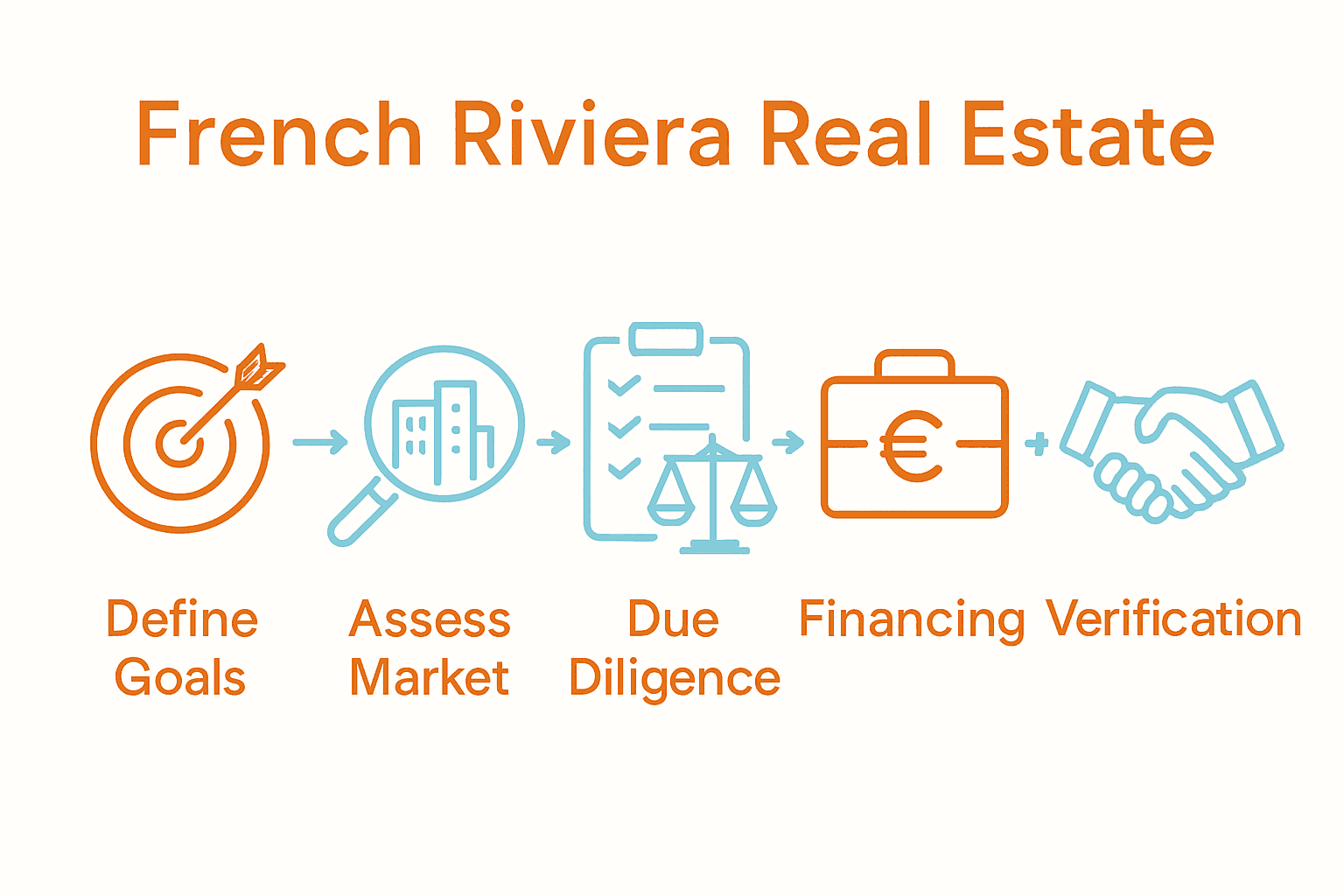
  • Step 1: Define Investment Goals And Select Target Riviera Locales
  • Step 2: Assess Market Trends And Identify High-Potential Properties
  • Step 3: Evaluate Legal Requirements And Secure Expert Due Diligence
  • Step 4: Secure Optimal Financing And Structure Your Transaction
  • Step 5: Verify Property Quality And Finalize Your Riviera Investment

Quick Summary

Key InsightExplanation
1. Define clear investment goalsIdentify whether your aim is rental income, appreciation, or a vacation home to guide your strategy.
2. Research market trends rigorouslyAnalyze indicators like sales data and rental yields to find high-potential properties in the Riviera.
3. Ensure legal compliance and due diligenceConsult a French real estate attorney to navigate ownership structures and tax implications effectively.
4. Explore diverse financing optionsAssess local and international lending sources and prepare necessary documentation to secure favorable terms.
5. Conduct thorough property inspectionsHire certified professionals to evaluate property quality and compliance with local regulations before finalizing your investment.

Step 1: Define investment goals and select target Riviera locales

Successful real estate investment in the French Riviera begins with crystal clear objectives and strategic locale selection. According to the INREV 2024 Investment Intentions Survey, core European markets like France remain top investment destinations for sophisticated investors seeking long-term value.

To define your investment strategy, start by evaluating your primary motivations. Are you seeking rental income, long-term appreciation, a vacation home, or a potential generational asset? The 2025 Investment Intentions Survey highlights that diversification benefits and consistent income return are driving real estate investment decisions. Luxury properties in targeted Riviera locations like Cannes, Nice, Saint Tropez, and Antibes offer exceptional potential across these investment objectives.

Your investment approach should consider multiple factors: local market trends, property type, potential rental yields, and personal usage preferences. Understanding the types of luxury properties available will help refine your selection process. Pro tip: Work with local experts who understand nuanced market dynamics and can provide granular insights into specific micromarkets within the Riviera region.

The next step involves deep research and potentially visiting prospective locations to understand their unique characteristics and investment potential.

French Riviera property meeting

Step 2: Assess market trends and identify high-potential properties

Navigating the French Riviera real estate market requires strategic insight and meticulous research. According to INREV, France has emerged as the most preferred European investment location, signaling exceptional opportunities for discerning property investors along the Côte d’Azur.

To identify high-potential properties, start by analyzing key market indicators: recent sales data, price per square meter trends, rental yield potential, and neighborhood development plans. Exploring luxury property types in targeted Riviera locations will help you understand the nuanced investment landscape. Focus on emerging neighborhoods in Saint Tropez, Antibes, and Cannes that demonstrate consistent appreciation and strong infrastructure growth.

Pro tip: Leverage local real estate networks and engage professional market analysts who can provide granular insights into micromarket dynamics. Comprehensive second home purchasing guides can help you navigate complex investment strategies and understand regional specifics.

With a clear market assessment in hand, you are now prepared to move forward with detailed property evaluation and financial planning.

Step 3: Evaluate legal requirements and secure expert due diligence

Successful French Riviera property investment demands rigorous legal examination and professional expertise. According to INREV, comprehensive due diligence is critical in navigating complex international real estate transactions and protecting your investment interests.

Begin by engaging a specialized French real estate attorney who understands the nuanced legal landscape of the Côte d’Azur. Key areas of focus should include property ownership structures, taxation implications, inheritance regulations, and potential restrictions on foreign property purchases. Understanding the types of luxury properties available will help you select the most appropriate legal framework for your investment.

Pro tip: Consider establishing a Societe Civile Immobiliere (SCI), a legal structure that can offer significant tax advantages and simplified property management for international investors. Comprehensive second home purchasing guides can provide additional insights into navigating these complex legal considerations.

With robust legal groundwork established, you are now prepared to move forward with confident investment strategies and precise financial planning.

Step 4: Secure optimal financing and structure your transaction

According to the INREV 2025 Investment Intentions Survey, strategic investment allocation requires thoughtful financial structuring across core, value-added, and opportunity styles. For French Riviera real estate investments, this means developing a nuanced financing approach that aligns with your specific investment objectives.

Begin by exploring multiple financing options, including local French bank mortgages, international lending institutions, and specialized real estate investment vehicles. Understanding the types of luxury properties available will help you determine the most appropriate financing strategy. Non resident investors should prepare comprehensive documentation, including proof of income, credit history, and detailed investment plans to secure favorable lending terms.

Pro tip: Consider working with a specialized French mortgage broker who understands the intricacies of international real estate financing. Comprehensive second home purchasing guides can provide additional insights into navigating complex financial structures and tax implications.

With a solid financial strategy in place, you are now prepared to move forward with confident property acquisition and investment implementation.

Step 5: Verify property quality and finalize your Riviera investment

According to the INREV 2024 Investment Intentions Survey, strategic property investment requires meticulous evaluation across residential, industrial, and office sectors. For French Riviera real estate, this translates to a comprehensive verification process that ensures your investment meets the highest quality standards.

Conduct a thorough property inspection with certified professionals who specialize in luxury Riviera real estate. Explore the latest luxury real estate trends for elite investors to understand current market expectations. Key areas of focus should include structural integrity, potential renovation requirements, environmental certifications, and compliance with local building regulations. Request comprehensive technical surveys that detail the property’s condition, including detailed reports on electrical systems, plumbing, roof structure, and potential seismic vulnerabilities.

Pro tip: Leverage off-market real estate resources to gain access to premier properties that might not be publicly listed. Consider engaging a local property expert who can provide nuanced insights into the specific micromarket and potential future value appreciation.

With a comprehensive property verification completed, you are now prepared to proceed with the final stages of your French Riviera real estate investment.

Infographic visualizing five key steps to French Riviera investments

Unlock Lasting Value in French Riviera Real Estate with Expert Guidance

Navigating the complex landscape of luxury real estate investment on the French Riviera demands more than ambition. The key challenges resonate deeply in defining clear investment goals, identifying high-potential properties, mastering legal requirements, and structuring optimal financing. This journey is about transforming your vision into an enduring legacy. Whether you seek a coveted villa in Cannes or a sustainable eco-luxury estate in Saint Tropez, understanding the nuances of local markets and legal frameworks is essential for lasting success.

At Living on the Côte d’Azur, we specialize in turning these complexities into opportunities. Our expertise guides discerning investors through every step from initial market insights and legal due diligence to securing the perfect property that appreciates in value and becomes a generational heirloom. Ready to transform your French Riviera investment dreams into reality? Explore our personalized approach and connect with our dedicated team to start your journey today.

Discover how our tailored solutions can unlock your ideal luxury investment by contacting us now at Living on the Côte d’Azur. Act now to gain exclusive access to off-market gems and expert market analysis that ensure your Riviera legacy thrives.

Frequently Asked Questions

What are the key investment goals to consider when investing in French Riviera real estate?

To invest successfully in French Riviera real estate, clarify your primary objectives, such as seeking rental income, long-term appreciation, or a vacation home. Define these goals to guide your property selection process based on your financial strategy.

How can I assess market trends for high-potential properties in the French Riviera?

Analyze market indicators such as recent sales data, price per square meter trends, and rental yield potential. This will help you identify emerging neighborhoods that exhibit consistent appreciation and strong infrastructure development.

What legal requirements should I review before investing in French Riviera property?

Engage a local real estate attorney to understand ownership structures, tax implications, and any restrictions on foreign purchases. Conduct thorough research on the legal aspects to protect your investment and ensure a smooth transaction process.

How do I secure financing for a property investment in the French Riviera?

Explore various financing options, including local bank mortgages and international lending institutions. Prepare comprehensive documentation such as proof of income and detailed investment plans to improve your chances of securing favorable lending terms.

What steps should I take to verify property quality before finalizing a purchase in the French Riviera?

Conduct a complete property inspection with certified professionals to assess structural integrity, potential renovation needs, and compliance with local regulations. This verification process will help ensure that your investment meets high-quality standards and reduces unexpected future costs.

How can I effectively research local real estate experts for insights into the French Riviera market?

Network within local real estate communities and seek referrals for professionals experienced in the French Riviera market. Engaging experts can provide you with valuable insights into specific micromarkets and enhance your investment strategy.

Recommended

  • A Legacy of Luxury: High-End investment in the French Riviera – Living on the Côte d’Azur
  • Things to know before buying property in the South of France
  • Buying high-end luxury real estate on the French Riviera – Living on the Côte d’Azur
  • How to Invest in Paris Real Estate for Lasting Value – Living on the Côte d’Azur
  • Comment investir dans l’immobilier parisien efficacement – LPI: La parisienne immobilière agence immobilière Paris 19
by /22 November 2025/in Landingpage
https://www.livingonthecotedazur.com/wp-content/uploads/2025/11/1763783471171_image_1763783470965.jpg 768 1344 https://www.livingonthecotedazur.com/wp-content/uploads/2024/02/sitelogo150.png 2025-11-22 04:51:502025-11-22 04:51:54How to Invest in French Riviera Real Estate for Lasting Value

Many international buyers compare Cannes and Antibes before choosing where to buy a luxury home because both cities offer attractive coastal views, strong rental demand, and proximity to key destinations like Monaco and Nice Airport. The decision often depends on lifestyle preferences, long-term goals, and available property types. Cannes offers a polished atmosphere with global branding built on film festivals, designer shopping, and waterfront residences that attract investors who want a high-status address. Antibes appeals to buyers seeking a quieter coastal lifestyle with historic charm, marinas, and larger villa plots, particularly around the sought-after Cap d’Antibes. Understanding the differences between the two locations helps buyers choose an area that fits their personal use and long-term investment plans.

What Are the Main Differences Between Cannes and Antibes for Luxury Property Investors?

Cannes and Antibes attract different types of buyers due to differences in location, infrastructure, and cultural appeal. Cannes is well-known for international events, luxury hotels, and a modern waterfront lined with penthouses and designer boutiques. The city appeals to buyers who value prestige, visibility, and short-term rental demand from global travelers. Antibes, especially Cap d’Antibes, offers a more residential environment with spacious villas, beaches, and historic streets that suit families and second-home owners seeking privacy. Transport access is strong in both locations, with Cannes close to international yachting events and Antibes positioned centrally between Nice and Cannes for easy regional travel. The choice depends on whether a buyer prefers a lively city atmosphere or a calmer coastal lifestyle.

Key differences at a glance:

  • Cannes: luxury branding, events, prime rentals, polished beachfront
  • Antibes: larger homes, privacy, marina lifestyle, historic center
  • Cannes suits investors focused on rental turnover
  • Antibes suits long-term living and villa buyers

How Do Current Property Prices Compare in Cannes and Antibes?

Pricing depends on the neighborhood, property type, and distance to the sea. Cannes often carries higher prices near La Croisette and the Montfleury area due to limited supply and global prestige. Apartments with terraces or sea views in major festival zones achieve strong resale value because of tourism branding and international buyers. Antibes has a wider mix of pricing, ranging from luxury villas on Cap d’Antibes to more affordable apartments in residential streets near the old town. Villas tend to be more spacious in Antibes, while Cannes offers more high-rise luxury residences.

LocationAvg Price/m² (Apartments)Avg Price/m² (Luxury Villas)Notes
Cannes (Croisette, Palm Beach)HighVery HighStrong global branding
Cannes (Californie-Pezou)Mid-HighVery HighHillside views, premium homes
Antibes (Cap d’Antibes)Very HighVery HighExclusive villas, limited supply
Antibes (Vieil Antibes)Mid-HighHighHistoric center + marina

These pricing bands help investors compare cost versus long-term demand before choosing a location.

Which Districts in Cannes Lead the Market?

Premium districts in Cannes are concentrated near La Croisette, the waterfront, and hillside areas with open views. La Croisette is known for its luxury residences facing the sea, close to hotels, retail, and entertainment spaces that attract wealthy visitors during events. Californie-Pezou is popular for spacious hillside villas overlooking the bay, providing privacy while remaining near city facilities. Palm Beach attracts buyers who want beach access without the dense crowds of the main boulevard. These neighborhoods support high resale values due to international interest, limited supply, and consistent rental demand from festival and business tourism.

Which Districts in Antibes Offer Value & Prestige?

Antibes offers premium options with a different character than Cannes. Cap d’Antibes, a peninsula between Antibes and Juan-les-Pins, is known for luxury villas surrounded by pine trees, beaches, and private estates, attracting buyers wanting space and discreet living. Vieil Antibes appeals to those who want walkable streets, markets, and marina access near Port Vauban, one of Europe’s largest yacht harbors. Residential neighborhoods outside the center offer better value for buyers who want larger homes without paying peak waterfront prices. These areas give long-term potential because they mix lifestyle appeal with strong demand from international second-home owners.

What Rental Yields and Demand Patterns Exist in Each Market?

Cannes has strong seasonal rental demand due to international festivals, luxury events, and corporate travel, which pushes nightly rates higher during peak periods. Short-term rentals do well in areas close to La Croisette and convention centers, especially for properties with terraces, sea views, and modern interiors. Antibes performs well with longer stays, particularly from families, retirees, marina visitors, and digital workers who stay beyond typical tourist seasons. Properties near beaches or historic areas perform strongly in summer, while larger villas attract long-term renters looking for comfort and outdoor space.

LocationRental Demand TypeYield RangeBest Property TypeNotes
Cannes (Croisette)Seasonal + festivalModerate–HighLuxury apartmentsHigher nightly rates
Cannes (Hillside Areas)Long-stay premiumModerateVillasEvent rental potential
Antibes (Cap d’Antibes)Seasonal luxuryHighLarge villasPrivate estates
Antibes (Old Town)Year-round mixedModerate–HighApartmentsWalkable lifestyle appeal

Buyers looking for steady occupancy choose areas with tram access, marinas, business zones, and beaches.

How Does Foreign Buyer Activity Differ in Cannes vs Antibes?

Foreign buyers enter Cannes and Antibes for different reasons, which shape pricing and demand in both markets. Cannes attracts buyers from the United States, Middle East, Switzerland, and the UK who want a recognizable address near events, luxury hotels, and branded retail areas, often choosing penthouses and sea-view apartments that can double as holiday homes and seasonal rentals. Antibes attracts buyers from France, Northern Europe, Italy, and Switzerland who want larger homes, calmer surroundings, and marina access. Some buyers finance their purchase through international private banks or cross-border lenders, while others purchase in cash to speed the process. Living on the Côte d’Azur works with many foreign buyers and helps them understand regional markets, compare luxury options, and secure private listings that do not appear online, especially around Cap d’Antibes and Cannes’ waterfront.

Typical Foreign Buyer Patterns

LocationCommon Buyer OriginPreferred BudgetProperty Styles
CannesUS, UAE, UK, SwissHighPenthouses, sea-view apartments
AntibesFrance, the Nordics, Italians, SwissMid–HighVillas, marina-area homes

What Are the Investment Risks and Growth Drivers for Each?

Investment performance in Cannes and Antibes depends on infrastructure, tourism strength, and market confidence. Cannes benefits from global events such as the Film Festival and luxury business conferences, which support rental rates and maintain demand for properties near La Croisette. Future development projects, marina upgrades, and transport improvements help maintain long-term value. Antibes sees growth from marina expansions, new residential roads, and rising demand from buyers seeking calm coastal living near Monaco without premium pricing. Risks in Cannes include limited supply, driving high entry prices, and the possibility of regulatory changes affecting short-term rentals. In Antibes, risks may include zoning limits, renovation needs in older homes, and slower short-term rental cycles compared to Cannes event peaks.

Growth vs Risk Overview

CategoryCannesAntibes
Growth DriverFestivals + luxury brandingMarina + lifestyle demand
Main RiskHigh entry pricesRenovation + zoning limits
Trend TypeSeasonal + global eventsLong-term residential

Which Location Aligns Best With Your Investment or Lifestyle Objective?

Choosing between Cannes and Antibes depends on whether a buyer prioritizes lifestyle benefits, rental income, or long-term stability. Investors focused on short-term gains may choose Cannes, especially if they want strong demand during large events and the ability to generate higher nightly rates. Those who want to live in the area full-time or use the property as a second home may prefer Antibes for its quieter environment, larger villa plots, and marina access. Families often choose Antibes because of its schools, green spaces, and walkable neighborhoods. Buyers focused on resale may find Cannes more liquid in the luxury segment because properties near La Croisette attract international interest.

Which Location Fits Your Goals?

Your GoalBest Fit
High seasonal rental incomeCannes
Family-oriented livingAntibes
Luxury villa lifestyleAntibes (Cap d’Antibes)
International events + prestigeCannes
Long-term value + privacyAntibes
Walkable beaches + nightlifeCannes

How Living on the Côte d’Azur Can Help You Choose Between Cannes and Antibes

Foreign buyers often compare several neighborhoods across the Riviera before deciding where to purchase, and our role is to provide guidance based on market trends, budgets, and personal lifestyle needs. Living on the Côte d’Azur works across multiple agencies and private networks, which gives clients access to listings that are not published on standard portals. We assist with area comparisons, price evaluations, and legal steps through multilingual partners. Clients outside France rely on our support to organise viewings, negotiate with sellers, and review technical reports, especially for higher-value homes near Cap d’Antibes or Cannes waterfront. Our assistance continues after the purchase with help connecting renovation teams, rental partners, and management services.

Cannes vs Antibes: Key Questions Answered

Is Antibes cheaper than Cannes for luxury homes?

Generally, yes, especially when comparing waterfront apartments. Cannes tends to have higher prices due to events, branding, and demand from international buyers.

Which city has higher rental yields?

Cannes offers stronger short-term returns during event seasons, while Antibes provides stable long-term occupancy from families and second-home users.

Are there restrictions for foreign buyers in either location?

Foreigners can purchase property in both cities without residency, though rental rules and zoning may differ by district.

Which city has higher resale potential in the next 5 years?

Cannes tends to perform well in high-luxury segments near La Croisette, while Antibes offers value growth from lifestyle migration and marina-driven demand.

by Jolanda Kuijer/21 November 2025/in Landingpage
https://www.allyoucanpost.com/uploads/ad/cannes-appartement-4-5-pieces-en-dernier-etage-avec-vue-mer-a-vendre-66619542638c432f7b483a1b-1760955159-1444233209.jpg 600 0 Jolanda Kuijer https://www.livingonthecotedazur.com/wp-content/uploads/2024/02/sitelogo150.png Jolanda Kuijer2025-11-21 10:49:342025-11-24 11:37:15Cannes vs Antibes: Where Should You Buy Luxury Property on the French Riviera?

Nice continues to draw the attention of international buyers due to its Mediterranean lifestyle, proximity to the airport, and cultural appeal. Many investors seek a location that combines a high quality of life with steady demand from tourism, business events, and long-term residents. Nice offers this balance while also benefiting from strong domestic demand from French citizens who live and work there year-round. Buyers often compare Nice to nearby areas such as Monaco or Cannes, but Nice typically provides a more balanced entry price, wider housing stock, and deeper rental demand. These factors make the market useful for buyers seeking long-term stability, both for personal use and investment returns.

Why Is Nice an Important Real Estate Market in France?

Nice holds strategic value due to its role as a major coastal city, regional hub, and tourism center on the French Riviera. Its population has grown steadily over the past decade, driven by retirees, international residents, and professionals. The city hosts significant cultural events, museums, beaches, marinas, universities, and healthcare facilities, which support local housing demand beyond seasonal tourism. It is also located along a luxury corridor that connects Monaco, Villefranche-sur-Mer, Nice, Antibes, and Cannes, creating constant interest from buyers who want coastal homes with easy access to high-end neighborhoods. Nice Airport also plays a major role, offering direct flights to major global cities, which strengthens both short-term and long-term demand.

Key factors supporting demand include:

  • Major airport with international routes
  • Strong tourism sector and event calendar
  • University population and business centers
  • Growing foreign buyer demand for second homes
  • Lower prices compared to Monaco or Saint-Tropez
  • Rich cultural and lifestyle attractions

What Are the Current Property Prices in Nice in 2025?

Property prices vary depending on neighborhood, building condition, age, and access to sea views or city convenience. The overall average price per square meter in central Nice tends to be lower than Monaco or Cannes, making it attractive for buyers seeking a balance between affordability and long-term value. Waterfront areas typically command premium pricing due to demand from both international buyers and locals who want views and easy access to beaches. Interior neighborhoods offer more spacious homes at lower price points, appealing to families or long-term residents rather than holiday renters.

Property TypeAverage Price per m²Typical BuyerNotes
Standard Apartments€5,000–€6,000Locals & expatsCommon across central Nice
Luxury Waterfront Apartments€8,500–€15,000+Foreign & premium buyersPromenade des Anglais, Carré d’Or
Villas€10,000–€20,000+High-net-worth buyersMont Boron, Cap de Nice
Suburban Neighborhoods€3,500–€4,500FamiliesHigher space, lower cost

Prices shift based on view, condition, outdoor space, and proximity to transit or marinas.

What Are the Most Expensive Neighborhoods in Nice?

Premium districts are centered around seaside locations, historic architecture, and high demand from international buyers who value privacy, security, and access to cultural attractions. Mont Boron attracts buyers looking for villas with panoramic views and larger land plots. The Carré d’Or area is favored for its proximity to beaches, shopping streets, and hotels, making it popular for apartments used part-time or as second homes. Cimiez appeals to buyers interested in historic buildings, gardens, and residential streets rather than tourist areas.

High-value areas to consider:

  • Mont Boron – villas, sea views, exclusive hillside
  • Carré d’Or – central luxury apartments, beach access
  • Cap de Nice – coastal homes with high privacy
  • Cimiez – elegant architecture, calm streets

These areas command higher resale potential due to limited supply and constant demand from international buyers.

Which Areas Offer Best Value for Long-Term Growth?

Value-focused neighborhoods tend to be away from the immediate waterfront while offering good transport access, retail areas, and renewed urban projects. Saint-Roch appeals to young professionals and students due to tram access and the developing housing stock. Pasteur offers lower purchase prices, attracting buyers seeking long-term rental demand rather than luxury. Madeleine provides access to both hillside and coastal routes, offering mixed housing options at a lower cost.

Areas often considered valuable opportunities:

NeighborhoodWhy It Stands OutPrice LevelBest For
Saint-RochNear tram + campusModerateRentals & starter homes
PasteurAffordable entryLowLong-term investors
MadeleineMixed stock, coastal road accessLower-midFamilies & commuters

These districts may see steady long-term growth as the city develops infrastructure and housing upgrades.

How Have Prices in Nice Changed Over the Past 5 Years?

Prices in Nice have shown gradual growth driven by tourism, local demand, and interest from European buyers seeking coastal homes with long-term value. The market performs differently compared to major business hubs like Paris or Lyon because Nice is influenced more by leisure, aviation access, and seasonal travel. Over the past five years, demand from foreign buyers has stayed strong, especially during periods when other destinations saw slower activity. Price changes also follow renovation policies, energy rules, and availability of premium waterfront homes, which remain limited and therefore hold high resale values.

YearAvg Price/m²Market TrendNotes
2020~€5,000StableTravel restrictions lowered transactions
2021~€5,200Moderate riseTourism recovery begins
2022~€5,350Higher demandForeign buyers return
2023~€5,500Continued growthLuxury segment expands
2024~€5,650Strong premium salesLow supply in top areas

Compared to Paris, Nice grows more steadily rather than rapidly, making it attractive for long-term ownership.

What Rental Yields Can Investors Expect in Nice?

Rental yields depend on location, type of tenant, and whether the property serves long-stay renters or seasonal guests. Near waterfront areas, furnished rentals can command higher rates, especially during summer or major events. Neighborhoods near universities, tech hubs, and hospitals tend to support long-term rentals with lower vacancy. Investors should plan based on realistic occupancy rather than peak-season rates. Homes with balconies, sea views, and renovated interiors often attract better nightly rates, while larger apartments in residential districts suit families and students.

AreaAvg RentYield %Tenant TypeNotes
Carré d’OrHigh3–5%Tourists & second-home buyersSeasonal demand peak
Mont BoronVery High3–4%Premium rentersLuxury segment
Saint-RochModerate5–6%Long-term tenantsStudent-friendly
Villefranche BorderHigh4–6%International rentersMarina & coastal appeal

Properties near landmarks, tram routes, or beaches tend to attract consistent demand.

Which Property Types Perform Best in Nice?

Different property types attract different buyers, so performance depends on how the home will be used. Apartments near beaches or the city center tend to be easier to rent throughout the year. Villas close to the Monaco corridor attract wealthy buyers who want privacy, security, and views, often using homes as holiday residences rather than rentals. New-build developments appeal to buyers who want modern systems and lower maintenance, while historic buildings attract those who value character but may require renovation. Every type serves a different investment strategy and buyer profile.

Apartments (City Center, Carré d’Or, Promenade des Anglais)

Apartments in central Nice appeal to investors seeking high occupancy and easy resale due to strong demand from both locals and international buyers. Areas like the Promenade des Anglais and Carré d’Or attract seasonal tenants who want beachfront access, while the city center supports year-round demand from students and working residents. These homes often require lower maintenance than villas and can be managed remotely through property managers. Investors choose apartments when they want consistent turnover, simple upkeep, and access to buildings with shared facilities such as lifts, security staff, or underground parking.

Luxury Villas (Mont Boron, Cap de Nice, Villefranche Border)

Villas in these districts draw buyers who want exclusivity, views, and proximity to Monaco. These properties typically serve as second homes, family retreats, or long-term holdings rather than frequent rentals due to high purchase prices and privacy expectations. Plots tend to be larger, with pools, gardens, and secure access points, making them attractive to high-net-worth individuals seeking homes that remain desirable over decades. These properties have a limited supply, which supports long-term value even during market fluctuations. Buyers often evaluate these homes based on privacy, land zoning, and future renovation potential.

New Developments vs. Historic Buildings (pros & cons)

New developments provide modern electrical systems, lifts, energy efficiency, and reduced maintenance costs. They often come with warranties and clearer documentation, making them easier for international buyers who want lower risk. However, they may have higher service fees and may lack the architectural charm found in older buildings. Historic homes offer unique style, larger rooms, and period details but may require renovation to meet energy regulations, especially for rentals. Choosing between the two depends on budget, long-term goals, and willingness to manage restoration projects.

Comparison Table

FeatureNew BuildsHistoric Buildings
MaintenanceLowHigher
Energy RatingsBetterVaries
Architecture StyleModernCharacter features
Resale DemandYoung professionalsLuxury buyers
Purchase PriceHigher per m²Varies widely

How Does Tourism Affect Property Demand in Nice?

Tourism plays a major role in shaping demand for property in Nice because the city attracts millions of visitors through cruise ports, international flights, and cultural events such as the Nice Carnival and nearby Monaco Grand Prix. This ongoing activity keeps hotels booked and increases demand for furnished rentals, especially in areas near beaches, marinas, and historic districts. Owners who purchase homes in Nice may use them privately while renting them during peak seasons to generate income. Short-term rental pricing tends to rise during major events, while long-term rentals benefit from students, remote workers, and retirees who live in the city throughout the year. Tourism also drives demand for waterfront properties where visitors seek sea views and easy beach access.

Tourism Demand Drivers in Nice

  • Cruise ship arrivals boost seasonal apartment demand
  • Airport expansion brings direct flights from major international hubs
  • Cultural festivals keep demand steady beyond the summer season
  • Proximity to Monaco attracts high-spending visitors
  • Conference tourism (tech, health, culture events) supports long-stay furnished rentals

How Do Foreign Buyers Influence the Market in Nice?

Foreign buyers strongly influence pricing in coastal districts because they often purchase in higher price brackets than local buyers, especially near the promenade, marinas, and hillside luxury areas. Buyers from Italy, Switzerland, the United Kingdom, Scandinavia, the United States, and the UAE often look for second homes that combine lifestyle benefits with long-term value. Many prefer renovated apartments with sea views or villas near Monaco, where international communities are established. Financing plays a role too, as non-resident buyers sometimes use cross-border lending or international banks rather than standard domestic loans. Living on the Côte d’Azur assists these clients by providing access to off-market listings, area guidance, and coordination across agencies to help them compare options efficiently.

Typical foreign buyer profiles in Nice

NationalityPreferred Property TypeBudget RangeKey Attraction
ItaliansCity apartments & villasMid–HighProximity + lifestyle
BritishHoliday apartmentsMidBeach access
Swiss & NordicsSea-view luxuryHighWinter escape
AmericansLarge apartments & villasHighLong stays
UAE BuyersWaterfront penthousesHigh–UltraStatus + privacy

What Are the Legal and Tax Rules That Impact Buyers in Nice?

Foreigners can purchase homes in Nice without residency, but purchases still follow French ownership laws, taxation rules, and property standards. Buyers must prepare for purchase taxes, annual property taxes, and potential wealth taxes if their total assets exceed government thresholds. Rental rules differ depending on whether a property is used as short-term accommodation or long-stay housing. In high-tourism zones, permits may be required, and buyers should confirm legality before listing a home online. Energy regulations also affect resale and rental value because homes with lower efficiency ratings may face pricing pressure or renovation requirements later. Living on the Côte d’Azur helps buyers connect with bilingual notaries, accountants, and legal advisers to ensure compliance throughout the transaction.

Key areas that matter for investors

  • Residency is not required for ownership
  • Tourist districts may need rental authorisation
  • Wealth tax applies to large property portfolios
  • Energy certification rules impact pricing and rental approval
  • Legal documents and contracts are issued in French

What Are the Major Development & Infrastructure Projects Shaping Future Value?

Ongoing upgrades across Nice influence long-term property demand by improving transport access, public spaces, and new residential districts. Recent investments include tram line extensions that link neighborhoods previously considered too far from the city center, making them more appealing to year-round residents. Port renovations and waterfront planning add value to surrounding properties as public access, marina facilities, and commercial areas expand. Eco-districts aim to modernise housing supply with greener construction and better utilities. Expansion toward the Monaco corridor may raise interest in hillside homes that offer sea views without reaching Monaco-level prices. Buyers working with Living on the Côte d’Azur often review upcoming zoning changes before choosing an area, since future development can influence resale opportunity.

Future value drivers

  • New transit routes increase residential mobility
  • Waterfront upgrades support demand for luxury apartments
  • Eco-district construction raises standards for new housing
  • Expansion near Monaco strengthens high-end demand
  • Public space upgrades support tourism and long-stay living

What Risks Should Investors Consider Before Buying in Nice?

Nice has strong long-term appeal, but buyers should consider financial, regulatory, and environmental factors before committing. Areas close to beaches and cliffs may face erosion or flood risk depending on elevation and building structure. Tourist regulations may tighten in certain zones, affecting short-term rental income. Premium neighborhoods may experience price pressure if buyers overpay due to limited supply, especially when competing for waterfront listings. Apartments with shared facilities may carry higher association fees due to maintenance expenses such as lifts, security, pools, or heritage restoration. Working with a local expert helps identify which areas offer stability and which may require deeper research before purchase.

Potential risk factors

  • Coastal erosion and environmental zoning rules
  • Rental licensing requirements in tourist areas
  • Rising HOA fees in older buildings
  • Overpricing in high-competition luxury zones
  • Currency changes for non-Euro buyers

Is Now a Good Time to Buy Property in Nice? Market Forecast for 2025–2026

Nice remains attractive due to its international appeal, strong tourism base, and transport access. Price growth may stay steady rather than rapid, especially in central neighborhoods supported by local demand. Luxury homes near Monaco or sea-view locations may continue rising due to limited supply. Mortgage conditions depend on European interest rates, though some buyers rely on cash rather than borrowing. Foreign interest is expected to remain high because Nice offers a more accessible price range than Monaco while providing similar lifestyle benefits. Buyers who want long-term use combined with rental flexibility often choose Nice as a balanced entry point on the Riviera.

Market outlook highlights

  • Stable growth expected in coastal areas
  • Strong demand from foreign buyers in the luxury segments
  • Investment appeal increases with direct airport access
  • Renovated homes outperform older stock in resale value

How Living on the Côte d’Azur Supports Foreign Buyers Looking for Property in Nice

Many international buyers search for a home in Nice while living abroad, which can make it difficult to compare areas, confirm legal requirements, and access the best listings. Living on the Côte d’Azur helps buyers by gathering properties from multiple agents, private owners, and off-market sources to create more choice than a single agency can offer. We arrange private visits, share local guidance on districts, and coordinate with trusted bilingual notaries so clients feel supported through each step. After purchase, we help connect buyers with renovation teams, designers, rental services, and trusted partners, which makes long-distance ownership easier and more practical.

How we assist:

  • Private access to premium and off-market homes
  • Help comparing neighborhoods and price conditions
  • Legal and document support through bilingual partners
  • On-ground viewing and purchase coordination
  • Guidance on year-round or seasonal rental strategies

FAQs About the Nice Real Estate Market

Is Nice cheaper than Cannes or Monaco?

Generally, yes, especially compared to Monaco, where prices are much higher. Nice offers a broader range of homes and more entry-level coastal options.

Can foreigners buy property in Nice?

Yes, foreign ownership is allowed without residency, though legal documents are issued in French.

Are short-term rentals still profitable?

They can be, especially near beaches and festival zones, but some areas require rental permissions.

What is the best area for holiday homes?

Carré d’Or, Promenade des Anglais, and Mont Boron are popular due to views, access, and high resale demand.

by Jolanda Kuijer/21 November 2025/in Landingpage
https://www.livingonthecotedazur.com/wp-content/uploads/2025/11/Nice-Opera.jpeg 750 1000 Jolanda Kuijer https://www.livingonthecotedazur.com/wp-content/uploads/2024/02/sitelogo150.png Jolanda Kuijer2025-11-21 10:25:312025-11-24 11:37:26Nice France Real Estate Market Analysis for 2025: Prices, Trends & Investment Insights

Over 40 percent of property buyers in Dubai are foreign nationals, and more americans are considering this market every year. The city’s open ownership rules and attractive investment returns draw interest, but the process still requires careful planning. With clear steps, you can navigate financial and legal hurdles, making your american property dream in Dubai both practical and possible without unnecessary stress.

Table of Contents

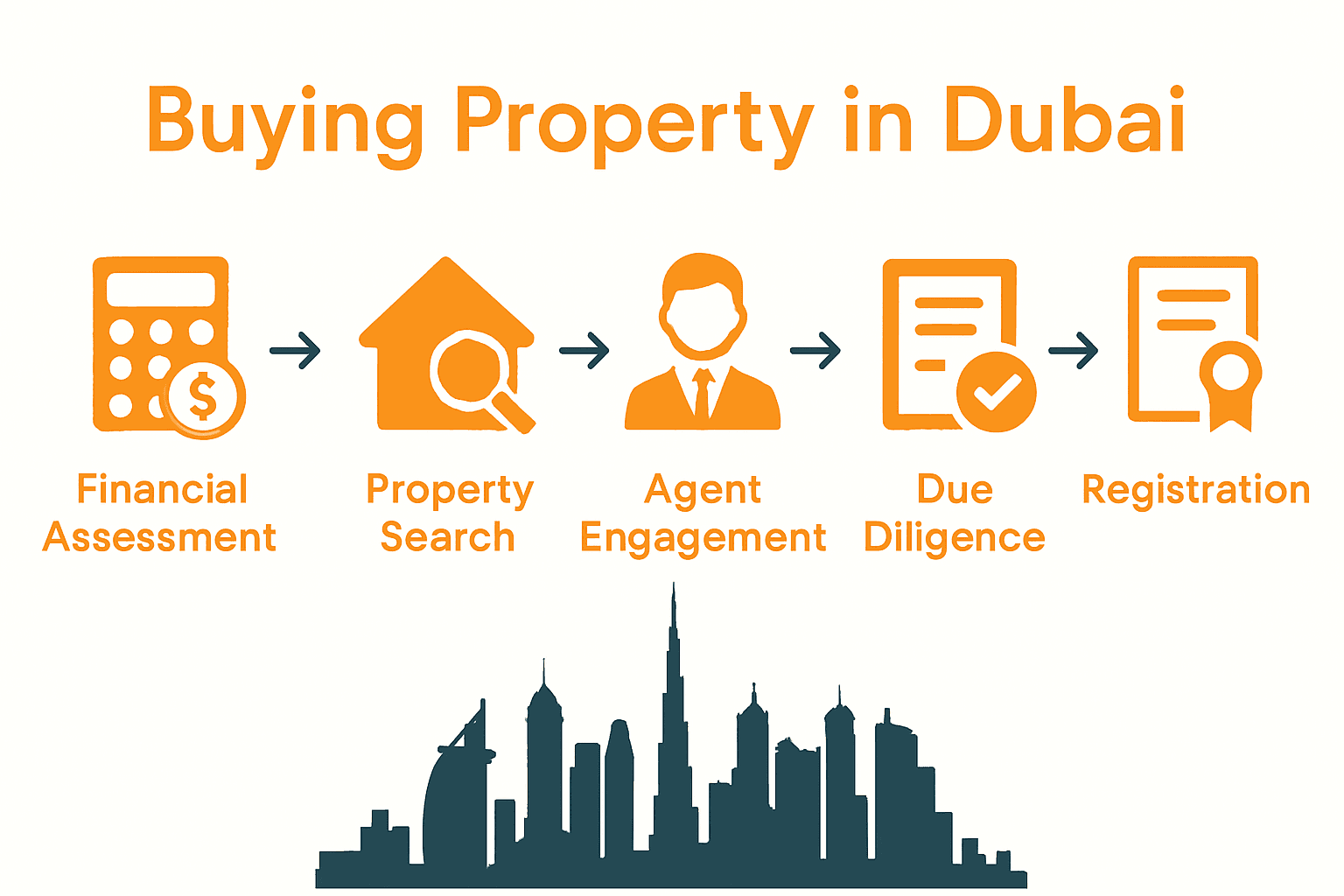
  • Step 1: Assess Financial Capacity And Residency Options
  • Step 2: Identify Desired Property Type And Location
  • Step 3: Engage Trusted Agents And Legal Advisors
  • Step 4: Complete Due Diligence And Secure Financing
  • Step 5: Verify Compliance And Register Your Property

Quick Summary

Essential InsightClarification
1. Assess Financial CapacityGather financial documents to understand your readiness for property investment in Dubai. This includes bank statements, income proof, and tax returns.
2. Explore Residency OptionsResearch various visa pathways related to property ownership, including golden visas for significant investments, to align with your long-term stay plans.
3. Engage Professionals EarlyBuild a network of trusted real estate agents and legal advisors to navigate the complexities of the Dubai property market effectively.
4. Conduct Thorough Due DiligenceVerify property legitimacy and developer credentials through the Dubai Land Department to protect your investment against potential risks.
5. Complete Property RegistrationEnsure proper registration of your property with the Dubai Land Department to secure your legal ownership rights and finalize the acquisition process.

Step 1: Assess Financial Capacity and Residency Options

Buying property in Dubai starts with understanding your financial landscape and navigating the nuanced residency requirements. Your goal in this step is to evaluate your financial readiness and determine the most strategic property ownership approach that aligns with your investment objectives.

According to Dubailand, foreign nationals have significant property ownership opportunities in designated areas of Dubai. You can acquire freehold property with complete ownership rights extending to both land and buildings without time restrictions. This means you are not limited by temporary ownership constraints and can invest with long term confidence.

To effectively assess your financial capacity, start by gathering critical financial documents. This includes recent bank statements, proof of income, tax returns from the past two years, and a comprehensive overview of your current assets and liabilities. Consider consulting with a local financial advisor who specializes in Dubai real estate to help you understand mortgage options, potential investment returns, and tax implications specific to your situation.

Pro Tip: Calculate your budget conservatively and factor in additional costs like property registration fees, transfer charges, and potential renovation expenses.

Once you have a clear financial picture, explore residency options that complement your property investment. Dubai offers several visa pathways for property investors, including golden visas for substantial real estate investments. Research these options carefully to understand how property ownership might intersect with your residency goals and potential long term stay in the emirate.

In the next step, you will begin identifying specific property types and locations that match your investment strategy and financial capacity. Your financial groundwork now sets the stage for targeted, strategic property hunting in Dubai’s dynamic real estate market.

Step 2: Identify Desired Property Type and Location

With your financial groundwork established, the next crucial phase is pinpointing the perfect property type and location that matches your lifestyle and investment goals. This step transforms your real estate vision from abstract concept to tangible opportunity.

Estatefy highlights the diversity of Dubai’s property market, which encompasses apartments, villas, townhouses, penthouses, and commercial properties. Each property type offers unique advantages depending on your specific needs. Apartments might appeal to urban professionals seeking convenience, while spacious villas could attract families wanting more privacy and room to grow.

According to 11prop, location plays a pivotal role in property desirability. Areas like Dubai Marina and Jumeirah Lakes Towers are particularly attractive due to their proximity to transportation, amenities, and quality schools. Consider your primary objectives carefully. Are you seeking a primary residence, an investment property, or a potential rental opportunity?

Dubai apartment viewing

Pro Tip: Create a detailed checklist of must have features and nice to have amenities before beginning your property search.

Research each neighborhood thoroughly. Examine factors such as future development plans, infrastructure projects, community amenities, accessibility to key city centers, and potential appreciation rates. Some neighborhoods offer modern high rise living, while others provide more traditional residential experiences.

Your next step will involve connecting with local real estate professionals who can provide granular insights into specific properties and neighborhoods that align with your identified preferences and investment strategy.

Step 3: Engage Trusted Agents and Legal Advisors

Your property journey in Dubai now moves into a critical phase of building a professional support network that will guide you through complex real estate transactions. This step is about assembling a team of experts who can navigate the intricacies of Dubai’s property market with precision and insight.

Dubailand recommends an essential preliminary step before any property commitment: visiting the Dubai Land Department and Real Estate Regulatory Agency to verify project details and developer credentials. This proactive approach ensures you have independent validation of the property and developer background before making significant financial decisions.

Start by researching and interviewing real estate agents who specialize in your desired property type and location. Look for professionals with proven track records, deep local market knowledge, and transparent communication styles. Seek recommendations from expatriate networks, online forums, and professional real estate associations in Dubai. A great agent will not just show you properties but will provide strategic insights about market trends, potential investment returns, and neighborhood dynamics.

Pro Tip: Request and verify professional licenses for any real estate agent or legal advisor you consider working with in Dubai.

Simultaneously, engage a local legal advisor who understands foreign property ownership regulations. They will help you review contracts, understand ownership structures, verify property titles, and ensure all legal requirements are met. Your legal advisor acts as a critical safeguard against potential pitfalls in the property acquisition process.

In the next step, you will begin the exciting process of property viewing and evaluation, armed with the professional guidance and market insights from your carefully selected team of experts.

Step 4: Complete Due Diligence and Secure Financing

With your professional team in place, you are now ready to dive deep into comprehensive due diligence and navigate the critical financing landscape of Dubai’s real estate market. This stage transforms your property vision from a potential opportunity into a concrete investment strategy.

Dubailand emphasizes the importance of meticulous verification, recommending that buyers carefully examine the developer’s registration, project approval status, and escrow account details through the Dubai Land Department. This step is crucial in ensuring the legitimacy and financial stability of your potential property investment.

Begin by conducting a thorough property investigation. Request and review comprehensive documentation including title deeds, property history, any existing encumbrances, and current market valuation reports. Your legal advisor should help you scrutinize these documents for any potential red flags or legal complications that might impact your ownership rights.

Pro Tip: Request a comprehensive property condition report and verify all structural and legal aspects before proceeding with any financial commitment.

Simultaneously, explore financing options tailored to foreign investors in Dubai. This might involve engaging with local banks specializing in real estate loans for international buyers, understanding mortgage requirements, and comparing interest rates and loan terms. Consider factors such as down payment requirements, loan duration, and potential processing fees specific to non resident investors.

In the next step, you will transition from research and preparation to the exciting phase of making formal property offers and negotiating purchase terms armed with your comprehensive due diligence and strategic financial planning.

Step 5: Verify Compliance and Register Your Property

You have now reached the final critical stage of solidifying your property ownership in Dubai. This step transforms your investment from a potential acquisition into a legally recognized asset with full protection under local real estate regulations.

Dubailand emphasizes the crucial requirement of registering your property with the Dubai Land Department to obtain your official title deed. This registration is the definitive legal mechanism that confirms and protects your ownership rights in the emirate.

Infographic showing 5 steps to buying property in Dubai

Initiate the registration process by gathering all necessary documentation. This typically includes your signed purchase agreement, proof of payment, identification documents, and any additional certificates required by the Dubai Land Department. Your legal advisor will be instrumental in ensuring you have compiled the complete set of required paperwork and that each document meets the specific regulatory standards.

Pro Tip: Allocate sufficient time for the registration process and maintain multiple copies of all submitted documentation for your personal records.

Work closely with your real estate agent and legal advisor to navigate the registration procedures. They will help you understand the specific fees associated with property registration, assist in completing the necessary forms, and guide you through any potential administrative complexities. Be prepared to pay registration fees and transfer charges as part of finalizing your property acquisition.

With your property now officially registered, you have successfully completed the comprehensive journey of acquiring real estate in Dubai. Your next steps involve planning for property management, potential rental strategies, or personal occupation of your new investment.

Elevate Your Investment Journey From Dubai to the Côte d’Azur

Navigating the complex stages of purchasing property in Dubai requires sharp financial insight and trusted local expertise. The challenge lies not only in securing your ideal home but also ensuring your investment offers lasting security and growth potential. This article’s step-by-step guide highlights the importance of thorough due diligence, verifying developer credentials, and understanding residency pathways — all critical to making confident decisions.

At Living on the Côte d’Azur, we understand that discerning buyers like you seek more than just a property. You pursue a timeless legacy in one of the world’s most coveted luxury markets. Just as Dubai dazzles with its dynamic real estate opportunities, the French Riviera invites you to explore heirloom-quality estates with soaring appreciation and unparalleled lifestyle experiences. Our expert guidance covers everything from acquiring a luxury villa with eco-friendly features to navigating French legal audits and maximizing investment returns.

Take the next step toward securing your legacy in the azure paradise. Discover how to translate the savvy buying blueprint you admired for Dubai into a refined Riviera investment with our personalized support. Connect with our team today at Living on the Côte d’Azur and unlock access to exclusive listings and insider insights. Ready to elevate your property aspirations into a family treasure that spans generations? Visit Contact Nice to Meet You to start your journey now.

Frequently Asked Questions

What are the initial steps to assess my financial capacity for buying property in Dubai?

To assess your financial capacity, gather essential documents such as bank statements, proof of income, and tax returns from the past two years. Analyze your current assets and liabilities to create a comprehensive financial overview before setting a budget.

How do I determine the best property type and location for my investment in Dubai?

Identify the property type that aligns with your needs, such as apartments, villas, or commercial properties. Research popular neighborhoods and consider factors like accessibility, amenities, and potential appreciation rates to finalize your choice.

What should I look for when engaging real estate agents and legal advisors in Dubai?

Look for agents with a strong track record and local market knowledge, and verify their professional licenses. Choose legal advisors who specialize in foreign property ownership regulations to ensure you meet all legal requirements and protect your investment.

How do I conduct due diligence before finalizing a property purchase in Dubai?

Conduct thorough property investigations by reviewing documentation such as title deeds and market valuations. Work with your legal advisor to identify any legal complications and ensure the property meets all necessary standards before proceeding with the purchase.

What documents are required for property registration in Dubai?

Prepare documents like your signed purchase agreement, proof of payment, and identification documents for the property registration process. Ensure you consult with your legal advisor to gather all necessary paperwork to facilitate a smooth registration.

How long does the property registration process take in Dubai?

The property registration process can vary, but it typically takes a few days to a couple of weeks to complete. Allocate enough time by starting the registration as soon as you finalize your purchase agreement to ensure you meet all necessary deadlines.

Recommended

  • A Dummy’s Guide to Buying Property in Dubai and Getting a Visa – Living on the Côte d’Azur
  • The World’s Largest Visa Application Center Opens in Dubai – Living on the Côte d’Azur
  • Hire a curator for Dubai Luxury Real Estate – Living on the Côte d’Azur
  • Why People Invest in Dubai Real Estate – Living on the Côte d’Azur
  • 10 важных шагов: чеклист покупки недвижимости в болгарии – SunliteBG
  • Как подготовить документы на покупку квартиры: пошаговое руководство – SunliteBG
by /21 November 2025/in Landingpage
https://www.livingonthecotedazur.com/wp-content/uploads/2025/11/1763686389244_image_1763686389087.jpg 768 1344 https://www.livingonthecotedazur.com/wp-content/uploads/2024/02/sitelogo150.png 2025-11-21 01:54:082025-11-21 01:54:13How to Buy Property in Dubai: A Step-by-Step Guide

Buying property in France as a foreign investor involves more than price negotiations and location research; legal compliance is a crucial step before ownership can legally transfer. One requirement that surprises many non-French buyers is the mandatory package of diagnostic reports provided with almost every property sale. These surveys protect buyers from hidden defects, structural issues, environmental risks, and outdated systems that could later lead to costly renovations. For overseas buyers who cannot always inspect homes in person, these reports act as the technical foundation of informed purchasing decisions, especially when evaluating older villas or waterfront properties on the French Riviera.

What Are French Property Diagnostic Surveys and Why Are They Required?

French property diagnostic surveys are legal reports assessing safety, energy performance, environmental risks, and compliance of a property before sale. They form part of the Dossier de Diagnostic Technique (DDT), a mandatory document package attached to both the compromis de vente and final deed. The goal is to ensure buyers clearly understand the condition of the property before committing, preventing disputes once ownership transfers. These surveys help identify issues such as low energy ratings, asbestos in historic villas, outdated electrical installations, pests, or structural concerns. For luxury coastal properties, they also provide essential insights into soil stability, moisture exposure, and environmental risk mapping relevant to resale, renovation, and insurance.

Which Diagnostic Reports Are Legally Required When Selling a Property in France? (DDT Package Overview)

France requires a set of mandatory surveys before a property can be legally sold. These reports vary based on property age, location, installation type, and historical use. Sellers must provide most diagnostics before a buyer signs the compromis, and updated versions are required if they expire before the acte de vente. These obligations apply regardless of whether a property is purchased as a holiday home, rental asset, or primary residence, making them highly relevant to overseas buyers who may not be familiar with French compliance standards.

DPE:  Energy Performance Report

The DPE measures energy efficiency and assigns a rating from A to G. Poor ratings may restrict future rental permissions or lower resale demand, especially after 2025 rules limiting rental of low-rated properties.

Asbestos (Amiante) Inspection

Required for buildings with construction prior to July 1997. Essential for older Riviera villas where renovation is planned.

Lead (Plomb) Report for Pre-1949 Buildings

Identifies lead in paintwork, common in historical apartments and heritage façades.

Electrical Installation Report

Assesses outdated or unsafe wiring systems, common in older city-centre apartments.

Gas Installation Report

Covers internal gas safety and risks, including leaks and aging equipment.

Termite & Parasite Survey

Applies in regions where termites are declared present, relevant across coastal southern France.

Septic Tank / Sanitation Compliance

Required for properties not connected to mains sewage, especially rural homes or hillside estates.

Natural & Industrial Risk Report (ERNMT / ESRIS / ERP)

Details flood zones, seismic classification, coastal risks, and industrial proximity, important for cliffside and waterfront properties.

Surface Area Certification (Loi Carrez or Surface Habitable)

Ensures a legally measured living area, preventing overstated square meters often found in attic conversions or terraces.

Mandatory Diagnostic Summary Table

Diagnostic ReportRequired ForWho PaysValidity PeriodNotes
DPE Energy RatingAll propertiesSeller10 yearsAffects rental rights
AsbestosBuilt pre-1997SellerLifetime if no changeNeeded before renovations
Lead (Plomb)Pre-1949Seller6 yearsRequired for health safety
ElectricalInstallations >15 yearsSeller3 yearsImpacts renovations
GasGas systems >15 yearsSeller3 yearsMay impact insurance
Termite ReportTermite-listed zonesSeller6 monthsApplies across Riviera
Septic TankNon-mains sanitationSeller3 yearsBuyer must upgrade if it fails
Natural RisksRisk-mapped areasSeller6 monthsMandatory for coastal zones
Loi CarrezApartmentsSellerUnlimited (unless modified)Applies to shared buildings

Which Diagnostic Surveys Are Optional but Recommended for Buyers?

Mandatory surveys focus on regulatory compliance, but overseas investors purchasing high-value homes often require deeper inspections. Luxury villas, hillside estates, and waterfront properties may hide structural issues that legal diagnostics do not cover. Optional surveys help reveal long-term renovation needs, infrastructure aging, and environmental exposure that can affect future rental or resale strategy. These reports also give peace of mind to international buyers purchasing remotely or through power-of-attorney, where physical inspection is limited.

Full structural survey & load-bearing analysis

Ideal for older properties or those undergoing conversion, this provides a deep assessment beyond mandatory checks.

Roof & façade condition check for older villas

Coastal climates cause faster wear; roofing issues are common in historic Riviera homes.

Geotechnical ground study

Crucial for hillside builds in Eze, Villefranche, or Théoule where soil stability affects foundations.

Pool, security & equipment inspections

Helpful for villas with heated pools, lifts, smart systems, and extensive outdoor landscaping.

Sea-edge erosion risk for waterfront properties

Essential for estates on Cap Ferrat, Cap d’Antibes, and the Cannes coastline areas exposed to salt corrosion.

When Must These Surveys Be Completed During the Buying Process?

Diagnostic surveys fit into precise steps of the French transaction process. Sellers must have mandatory diagnostics completed before signing a compromis, which prevents post-sale disputes. Buyers may commission additional inspections before final signing if they want deeper due-diligence, especially for renovations or rentals. Technical evaluations may also be needed before applying for planning permission, such as pool construction or major structural work.

Seller obligations before listing vs before compromís

Many sellers obtain diagnostics before listing, but they are legally required before the preliminary contract is signed.

Buyer due diligence before final signing

Foreign buyers often request independent technical surveys to verify renovation costs and long-term feasibility.

Surveys needed for renovation permits or major works

Local authorities may require updated reports when submitting planning applications.

Process Timeline:

Search → Offer → Compromis de Vente → Diagnostics Finalised → Notary Checks → Acte de Vente

Who Pays for French Property Diagnostic Surveys?

In most cases, mandatory surveys are the seller’s responsibility. This ensures transparency and prevents sellers from passing issues to buyers without disclosure. Buyers, however, often commission additional technical inspection reports, such as engineering assessments, pool analysis, or structural diagnostics, especially for investment-grade or ultra-prime villas. For new builds, developers must provide a separate set of compliance certificates instead of traditional diagnostics, covering energy performance, completion standards, and structural guarantees. Buyers should always ask for these documents before signing.

What Are Common Issues Found in Diagnostic Surveys and How Should Buyers React?

Diagnostics are not designed to block sales but to inform decision-making. Results often provide leverage during negotiation, especially where energy ratings are low, extensions are illegal, or installations require costly upgrades. For older Riviera villas, common findings relate to asbestos remnants, wiring, outdated plumbing, and moisture exposure due to sea air. Rural homes frequently present sanitation compliance issues requiring full system replacement. Understanding the scale and cost of repairs helps buyers decide whether to request seller contributions, a lower price, or budget for post-purchase works.

Poor DPE energy rating (G–F classes)

May limit future rental eligibility and affect resale demand.

Outdated electrical systems in older apartments

Common in pre-1970 buildings and costly to modernise due to concealed wiring.

Asbestos in historic Riviera villas

Often present in insulation and roofing; requires certified removal.

Illegal extensions or undeclared space

May require retroactive planning requests or demolition.

Septic system failures in countryside homes

Buyers may need to upgrade within 1 year of purchase.

Defect Impact Table

Issue FoundTypical Cost to FixImpact on Price & Negotiation
Low DPE rating€10K–€70KLower rental demand + energy upgrade cost
Electrical overhaul€8K–€40KSafety and insurance impact
Asbestos removal€5K–€60KHealth risk + renovation cost
Septic tank replacement€8K–€25KMandatory compliance
Roof refurbishment€12K–€80KEssential for long-term value

Special Rules for Luxury, Coastal & Historic Properties

Protected architecture (Cannes, Villefranche, Saint-Jean-Cap-Ferrat)

Heritage classifications may restrict demolition, façade redesign, or window replacement.

Risk zones for hillside or cliff-side estates

Structural checks are essential where erosion or shifting soil affects foundations.

Waterfront humidity, salt corrosion & foundations

Properties exposed to sea spray can suffer hidden structural decay requiring deep inspection.

How Living on the Côte d’Azur Assists Foreign Buyers With Diagnostics

Our role is to support foreign buyers by coordinating diagnostic reports, booking certified surveyors, reviewing findings with legal professionals, and ensuring documents are received on time for notary review. For clients viewing remotely, we help verify repair estimates, organise post-purchase upgrades, and assess whether survey results justify negotiation or price adjustments. We also work with bilingual experts who specialise in luxury coastal properties, offering clarity on compliance before final commitment.

by Feline Kuijer/20 November 2025/in Landingpage
https://www.livingonthecotedazur.com/wp-content/uploads/2024/12/high-value-property.jpg 673 1200 Feline Kuijer https://www.livingonthecotedazur.com/wp-content/uploads/2024/02/sitelogo150.png Feline Kuijer2025-11-20 21:15:562025-11-24 11:37:36French Property Diagnostic Surveys: Complete Guide for Overseas Buyers (2026)

Buying French real estate appeals to international buyers who want long-term stability, a cultural lifestyle, and access to a strong property market with consistent demand from tourism and international residents. Many foreign buyers look for a safe place to store wealth, especially during periods when other markets feel uncertain. France benefits from strong global recognition, established legal protections for ownership, and high demand in major areas like Paris and the French Riviera. These factors help reduce the fear of buying abroad because buyers feel more confident about long-term value, potential rental income, and the ability to resell when market conditions are suitable.

What Makes France an Attractive Market for International Property Investors?

France appeals to foreign investors because it offers strong lifestyle benefits and a steady market backed by consistent demand from residents, tourism, and international buyers. Unlike speculative markets that rely heavily on rapid price swings, French property holds value due to local demand, regulated sales processes, and limited supply in popular regions.

How steady are market trends, long-term prices, and rental returns in France?

France has a well-regulated real estate market with stable price growth over many years, even during global downturns. Many investors choose cities like Paris for long-term appreciation, while coastal regions such as Cannes, Nice, and Saint-Tropez attract seasonal rental demand and high-net-worth buyers who value location over price per square meter. Rental returns are usually higher in areas with strong tourism, universities, or long-stay expat communities. Even though yields may be moderate compared to risky markets, buyers value the reliability of a regulated environment, clear purchase laws, and strong domestic demand that helps protect property values over time.

Which regions are most popular for foreign buyers and why?

Foreign interest is spread across multiple regions depending on lifestyle, investment goals, and price range. Paris draws investors who want culturally rich city living, strong capital appreciation, and steady rental demand. The French Riviera appeals to those seeking sunshine, sea views, marinas, and an international social scene, with places like Cannes, Antibes, Villefranche-sur-Mer, and Saint-Jean-Cap-Ferrat known for high-end villas and apartments. Other areas like Provence, Bordeaux, Lyon, and ski resorts such as Chamonix and Courchevel attract buyers who want lower prices, vineyards, nature, or seasonal holiday income. Each region offers different investment benefits, from rental potential to luxury resale value.

How do lifestyle and tourism impact property demand in France?

Tourism plays a major role in keeping the French property market active. Millions of visitors travel each year for beaches, mountains, cultural landmarks, festivals, and food experiences. Areas with steady tourism can provide strong seasonal revenue, especially along the Mediterranean coastline and ski regions. Some investors look for homes they can use privately while renting to travelers when they’re away, while others buy purely as investment properties. Lifestyle demand also comes from expats, retirees, digital workers, and families who relocate for education. These long-stay occupants support furnished rentals, private schooling, healthcare services, and international communities, creating ongoing demand for housing in major regions.

Can Foreigners Buy Property in France? What Are the Legal & Tax Considerations?

Foreign citizens can freely purchase property in France without needing residency or citizenship, which gives international buyers flexibility when choosing homes for personal use or investment. While ownership is open, taxes, inheritance laws, and purchase regulations still apply, so buyers should plan to avoid unexpected costs. 

Are there nationality or residency restrictions on buying property in France?

France does not restrict property ownership based on nationality, which means buyers from any country can purchase homes, land, or investment property, whether they live in France or not. This helps attract international interest because a buyer can purchase a holiday home, rental apartment, or luxury villa without first applying for residency. Ownership rights are protected under French law, and property can be held personally or through a legal entity, depending on financial strategy. However, property ownership alone does not give the right to live in France permanently, so investors who want residency must apply through visa and immigration channels separately.

How do non-residents handle taxes, inheritance rules, and ownership structures?

Foreign buyers must understand that France has its own tax rules covering acquisition, resale, rental income, and inheritance. Property can be passed on to heirs, but French inheritance laws determine how assets are distributed unless strategic planning is done in advance. Some buyers set up structures such as an SCI (Société Civile Immobilière) to simplify shared ownership or succession arrangements, while others buy directly under their personal names. Non-residents also need to consider annual property taxes, plus capital gains tax if the home is later sold. Working with legal professionals familiar with international clients helps prevent errors that could affect future costs and estate planning.

Can foreign buyers get financing or a mortgage in France?

Foreign buyers can apply for mortgages through French banks, international private banks, or lenders that specialise in non-resident financing. Approval usually depends on income, credit history, and total debt levels, with banks preferring borrowers who keep financial documents organized and transparent. Loan-to-value ratios are often lower for non-residents than for French citizens, meaning buyers may need a higher deposit. Currency exchange is also an important factor because payments might be made in euros while income is earned in another currency. Many overseas clients secure financing before property hunting so they can make stronger offers when negotiating with sellers.

What Are the Step-by-Step Stages of Buying Property in France as a Foreigner?

Foreign buyers follow a structured process that begins with research and viewing properties before making a formal offer. After agreeing on terms with the seller, both parties sign a preliminary contract that confirms intent and outlines terms while giving time to finalise checks, arrange financing, and gather required documents. 

How do you find and view suitable properties from abroad?

Foreign buyers often start by researching areas online, contacting local agencies, or working with buyer agents who specialize in assisting international clients. Real estate platforms help identify available homes, but many high-value listings remain private, especially in areas where owners prefer discretion. Virtual viewings, video tours, and detailed property reports allow buyers to review options remotely before flying to France for final inspections. Buyers who want the best deals usually build relationships with agents who understand their criteria, budget, and preferred lifestyle so they can receive new listings before they reach public markets.

Why should you engage an English-speaking lawyer or notary for your purchase?

A notary is required in every French property sale because they handle legal documents, ownership checks, and registration. Foreign buyers benefit from a bilingual lawyer or adviser because contracts, diagnostics, and technical reports are often written in French. Legal professionals help ensure that title records are correct, debts on the property are cleared, boundaries are accurate, and the sale contract protects the buyer. They can also assist with power-of-attorney signing if the buyer cannot travel for every appointment. Using experts reduces mistakes and gives buyers clear confidence that the transaction is handled correctly.

What happens at the “Offre d’Achat” stage when making an offer?

Once a buyer selects a property, they present an offer that outlines price, conditions, and time limits. The seller may accept, reject, or respond with a counter-offer. Written offers help both sides show serious intent and move toward signing formal contracts, but they are not the final agreement. This stage helps set expectations about deposit amounts, included items (such as furniture or parking), and estimated completion timing. If the offer is accepted, both parties start preparing documents for the preliminary contract while the buyer finalises financing and due diligence checks.

What is the “Compromis de Vente” and why is it important?

The preliminary contract confirms the buyer’s intention to purchase and the seller’s intention to sell under agreed conditions. It includes details such as price, property boundaries, diagnostics, fixtures, and any legal clauses that allow withdrawal under specific circumstances. After signing, the buyer usually has a mandatory cooling-off period to review documents and confirm funding. During this stage, the deposit is placed in a secure account handled by the notary or agent. This agreement creates legal responsibility, so buyers should review every clause carefully before committing.

What happens at the “Acte de Vente” and how is ownership transferred?

The final signing transfers ownership from seller to buyer. Before signing, the notary verifies that all taxes, paperwork, and mortgage documents are complete. On the day of signing, funds are released, keys are handed over, and the deed is officially registered. Buyers may attend in person or sign through a representative using the power of attorney. After registration, official ownership documents are issued, though the final government-stamped version may arrive later. This final stage completes the purchase and allows the buyer to take full possession of the property.

How Much Does It Really Cost to Buy a House in France (Including Hidden Fees)?

The cost of buying a French property includes more than the listing price, with buyers responsible for taxes, registration fees, legal services, and possible agency commissions depending on how the property is advertised. Older homes usually have higher registration fees, while new developments often benefit from reduced charges.

What are the upfront fees, taxes, and professional costs involved?

Buying property in France includes more than just the purchase price. Buyers should budget for agency fees, notary fees, registration tax, surveys, and legal support. Costs vary depending on whether the home is old or new and whether agency fees are included in the listing price. The table below gives a general idea of typical expenses:

Cost TypeApprox. RangeNotes
Notary + Registration Fees6%–8%Lower for new-builds (~2–3%)
Agency Fees3%–6%Sometimes included in the listing price
Mortgage & Bank Fees0.5%–1.5%Depends on the lender
Legal / TranslationVariesHigher for foreign clients
Diagnostic ReportsIncluded by the sellerMandatory by law

These costs help protect buyers legally and ensure the sale is properly registered.

What ongoing costs should buyers expect after purchase?

Annual expenses include property tax, wealth tax for higher asset values, home insurance, utilities, maintenance, service charges for apartments, and rental management if the home is let seasonally. Costs depend on location, building type, and amenities such as swimming pools, lifts, security staff, or concierge services. Investors who rent out their homes must also track revenue for tax purposes and possibly hire property managers to handle guests, check-ins, cleaning, and marketing.

How do costs differ between old and new properties or by region?

New homes often cost more upfront per square meter but have lower taxes and reduced repair costs. Older homes may offer more character and prime locations but require more renovation and maintenance. Coastal towns, major cities, and ski resorts generally command higher costs due to global demand and limited supply. Smaller towns and rural areas may provide larger homes at lower prices, making them attractive for long-term living rather than rental returns.

How Should You Evaluate Investment Potential – Yield, Risk & Exit Strategy?

Assessing a property in France goes beyond liking the area or finding a good price. Investors often look at long-term demand, rental income, resale conditions, and how easy it will be to sell in the future. Many foreign buyers choose areas where buyers return year after year, such as Cannes, Nice, Antibes, and Paris. Others look at student rental income in places like Lyon or Bordeaux. It helps to define whether the goal is capital growth, lifestyle use, rental revenue, or a combination of these. Buyers who plan usually make better financial decisions because they compare areas, understand future resale challenges, and calculate a realistic outlook instead of relying only on short-term trends.

What rental yields are attainable and where?

Rental yields differ depending on location, seasonal demand, and whether the property is used for long-stay tenants or short-term guests. Coastal areas like Cannes and Nice benefit from festival seasons, conferences, cruise tourism, and summer travel, which raises nightly rates for furnished rentals. Meanwhile, Paris attracts year-round demand from students, professionals, and business travelers. Ski resorts like Chamonix and Courchevel generate income in winter and sometimes in summer for hiking and sports. Buyers should run numbers based on real occupancy rates rather than peak season pricing. A steady rental plan can help cover yearly costs while still allowing private use during holidays.

What factors increase value (location, condition, tourism appeal, renovation potential)?

Several elements influence both short-term rental appeal and long-term resale value. Homes near beaches, marinas, transit, international schools, or historic districts often hold value better than remote areas with limited infrastructure. Renovated homes with modern systems, air conditioning, and energy-efficient upgrades tend to attract buyers faster and reduce future repair bills. Unique views, balconies, parking, or access to private beaches raise long-term demand. Properties needing renovation can offer lower initial prices, but owners must calculate realistic improvement costs before purchase. With luxury homes, buyers often pay for lifestyle benefits such as privacy, concierge access, private pools, and proximity to cultural hubs or event venues.

What are the risks (market cycles, currency exchange, regulatory change, rental restrictions)?

Buying property in any country involves financial risks, and France is no exception. Market cycles may shift based on interest rates, global events, or local housing regulations. Currency exchange affects foreign buyers who earn in a different currency, especially when repaying a euro-based mortgage. New rental rules may change how short-term rentals operate in certain cities, particularly in tourist-heavy zones where local governments protect permanent housing supply. Climate exposure matters too, especially near coastlines or older buildings that require upgrades for safety and insurance compliance. Planning ahead helps reduce risk, but investors should always prepare for long-term ownership rather than fast profits.

How Can Working with a Specialist Buyer-Agent or Property Advisor Help You?

Buying a home in France from overseas can feel complicated without local support, especially when listings are spread across many agencies and private networks. A buyer agent focuses on the buyer’s interests by searching across multiple sources instead of representing one seller. This approach helps foreign buyers access better options, including off-market villas, new developments, and homes not published publicly for privacy reasons. A buyer agent also coordinates visits, negotiates directly with local agents, and keeps communication clear between lawyers, notaries, and banks. This is especially helpful for buyers with limited French language skills or those purchasing high-value property that requires discretion.

How our services support international buyers

Our platform assists foreign buyers by connecting them to verified listings, helping them compare properties across regions, and arranging private viewings. We support clients through each stage, including financing guidance, legal coordination, property checks, and long-distance signatures. Many overseas clients request help with renovation teams, interior design, rental setup, and resale planning, so we connect them with trusted local partners. We also provide access to properties that may not appear on public real estate portals, especially luxury homes owned by private individuals. Our goal is to simplify the purchase process so clients can focus on choosing the right home rather than managing paperwork.

What trust factors should foreign buyers look for?

Foreign buyers often prefer agents who speak multiple languages, understand international tax concerns, and have experience dealing with non-resident clients. Credentials, past sales, market knowledge, and verified partnerships with lawyers or notaries give confidence that transactions are handled correctly. Transparency about fees, communication methods, and expected timelines also matters. Buyers should feel comfortable asking detailed questions and receiving clear answers backed by real experience rather than general marketing claims. A team that works with clients before and after the sale tends to provide smoother results, especially for investment-focused buyers who need ongoing assistance.

What Are the Key Questions You Should Ask Before Committing?

Smart buyers often prepare a checklist long before signing a contract. Asking the right questions early protects buyers from unexpected costs, long renovation delays, or legal issues. Buyers who do deeper research usually feel more confident after signing.

Do you understand the local market micro-region?

Prices can vary widely even within the same city. Two apartments in Nice might differ in value simply due to street location, proximity to the Promenade des Anglais, or access to parking. Researching micro-areas helps avoid overpaying and reveals hidden value spots.

Have you verified legal title, diagnostics & energy performance?

Sellers must provide diagnostic surveys covering energy rating, asbestos, gas, electricity, pests, and structural risks. Reviewing these helps plan future costs and repairs.

Is the tax structure efficient for your situation?

Different ownership structures affect inheritance and annual tax costs. Planning ahead prevents issues later.

Are you clear on financing and currency exposure?

If income is not in euros, buyers should track exchange impact before committing to loans or payments.

Do you have local professionals supporting you?

A strong team, lawyer, notary, and property manager, keeps the buying process smooth, especially when living abroad.

Conclusion – Is Investing in French Real Estate Right for You Now?

France suits buyers who want stable value, cultural lifestyle, legal protection, and international appeal rather than short-term speculation. The market has strong tourism, reliable demand for rentals, and premium coastal and city locations that stay attractive over time. Foreign buyers should review taxes, legal structures, rental rules, and financial plans with professionals so they enter the market with clear expectations. A well-chosen property can serve as a holiday home, income asset, and long-term investment. If you want guidance in finding listings, comparing regions, or arranging private visits, our team can help you plan your purchase with confidence and clear information at every stage.

FAQ

Can I buy property in France without living there?

Yes, ownership is allowed without residency status, and buyers from any country can purchase homes.

Do I need to speak French to invest in France?

No, but legal documents are usually in French, so many non-residents work with bilingual lawyers.

Are short-term rentals legal in tourist regions?

Rules vary by city. Some areas require permits or limit distribution to protect the local housing supply.

Can non-residents apply for French mortgages?

Yes, but they may need higher deposits and more documentation.

What happens to the property if I pass away?

French inheritance laws apply unless structured differently through legal planning or entities.

by Feline Kuijer/20 November 2025/in Landingpage
https://www.livingonthecotedazur.com/wp-content/uploads/2024/10/1024px-Real_Monte_Carlo_Casino.jpeg 567 850 Feline Kuijer https://www.livingonthecotedazur.com/wp-content/uploads/2024/02/sitelogo150.png Feline Kuijer2025-11-20 09:30:472025-11-24 11:37:42Why Invest in French Real Estate as a Foreign Buyer

Buying a home in France is a significant step for overseas buyers, yet many underestimate the differences between the French system and their own. This often leads to delays, financial pressure, or long-term legal issues that could have been avoided with the right preparation. The 2025–2026 market is expected to be influenced by additional factors, including stricter rental rules, tighter lending checks, and higher demand in coastal regions. This guide explains the mistakes foreign buyers repeat most often, backed by insights from trusted sources and our own experience working with international clients at Living on the Côte d’Azur. Understanding these pitfalls early will protect your investment and make your purchase far smoother.

Mistake #1 – Misunderstanding the French Purchase Process & Legal Framework

Many buyers arrive expecting a similar buying process to the UK, US, or Nordic markets, but France follows a structured legal route that must be respected at every stage. Missing key moments, such as the compromis de vente and the acte de vente, create confusion during the transaction because each document carries binding obligations. Sources like Estatefy and Your Overseas Home highlight how often foreign buyers sign without reading, assuming the notaire will correct all issues automatically. Buyers also overlook how residency status or nationality can influence inheritance or ownership rights. Understanding these steps early avoids delays and ensures buyers do not enter into contracts they later wish to renegotiate or abandon.

Mistake #2 – Underestimating Total Cost & Hidden Charges

Foreign buyers often focus solely on the purchase price without seriously calculating the additional expenses linked to buying a home in France. Notaire fees, agency commissions, survey costs, and insurance add up quickly, especially in higher-value transactions in popular Riviera areas. FrenchEntrée notes that overseas buyers frequently ignore currency conversion costs, a major issue when transferring large sums from non-euro countries, which can shift the actual price significantly. Running costs are also easy to underestimate, from maintenance to rising energy expenses. Without a full budget plan, buyers risk exceeding their limits or compromising on essential renovations that affect long-term comfort and property value.

Mistake #3 – Insufficient Due Diligence, Surveys & Location Checks

Many foreigners assume that the mandatory diagnostic reports provide a complete picture of the property, but diagnostics only cover specific technical points. They do not replace full structural checks, boundary control, or zoning research. Your Overseas Home reports that buyers frequently discover issues after they sign because they didn’t commission deeper surveys. Climate, noise, or neighbourhood activity can also vary at different times of the year, yet many buyers visit only once and miss seasonal changes that affect liveability. Proper due diligence ensures there are no hidden renovation needs or restrictive zoning rules that limit extensions, parking, or rental plans.

Mistake #4 – Ignoring Financing Requirements & Currency Exposure

A major misconception is assuming that finding a property guarantees mortgage approval. FrenchTaxOnline explains that non-resident borrowers face stricter conditions because banks must confirm financial stability, income reliability, and debt ratios under French rules. Without early preparation, buyers fail to meet lender expectations for deposits or documentation. Another issue is underestimating exchange-rate exposure for buyers earning in USD, GBP, CHF, or other currencies, which can create fluctuations in monthly payments or cash requirements. Preparing all bank statements, proof of income, identification, and residency documentation early is essential for avoiding delays or rejected applications.

Mistake #5 – Neglecting Tax, Inheritance & Ownership Structure Issues

France operates under a strict inheritance system known as réserve héréditaire, which affects how assets are passed to heirs. Many foreigners purchase property without understanding how this rule applies to non-residents, leading to conflicts later. High-value homes can also trigger wealth tax (IFI), which many buyers do not anticipate before completing their purchase. Euronews has highlighted common mistakes where buyers incorrectly purchase through foreign companies, creating unexpected tax exposure and complicating future sales. Understanding your tax footprint in France is essential before signing, especially for buyers with multiple properties in different countries.

Mistake #6 – Emotional Buying Without Resale or Rental Strategy

A common mistake is falling in love with a particular villa or apartment without assessing whether the property holds strong resale demand. Buyers may overspend on features that appeal personally but don’t matter to the wider market. Remote locations with limited transport links or rising maintenance costs can reduce long-term appeal. Buyers also ignore rental restrictions in some Riviera zones, assuming they can rent commercially without permits. A smart strategy compares lifestyle needs with long-term value, ensuring buyers choose a property that performs well both personally and financially.

How Living on the Côte d’Azur Helps Avoid These Mistakes

Our team works closely with international buyers who want clarity and confidence when purchasing in France. We assist with bilingual communication, introduce vetted notaires and surveyors, and provide realistic assessments of hidden costs and renovation requirements. Living on the Côte d’Azur also guides buyers through financial planning, rental rules, and future resale value to ensure that the property meets both lifestyle and investment goals. With our network of local experts and access to off-market listings, foreign buyers reduce risk and gain a clear path from first viewing to final signing.

by Feline Kuijer/20 November 2025/in Landingpage
https://www.livingonthecotedazur.com/wp-content/uploads/2023/10/towfiqu-barbhuiya-jpqyfK7GB4w-unsplash.jpg 534 800 Feline Kuijer https://www.livingonthecotedazur.com/wp-content/uploads/2024/02/sitelogo150.png Feline Kuijer2025-11-20 07:57:192025-11-24 11:37:51French Property Buying Mistakes Foreigners Should Avoid in 2025–2026

Portugal’s luxury property market is drawing global attention, with a remarkable 31 percent year-over-year rise in revenue from North American buyers alone. Investors are keen on the rare blend of stunning ocean views, historic homes, and modern amenities found in Lisbon, Porto, and the Algarve. Portugal now offers more than just beautiful homes. It promises a strategic European foothold with competitive pricing, robust residency programs, and a lifestyle that rivals the world’s most coveted destinations.

Table of Contents

  • Portugal’s Luxury Home Market Defined
  • Prime Destinations For Luxury Homes In Portugal
  • Key Features Of The Portuguese Luxury Market
  • Legal Requirements And Buyer Protections
  • Tax, Investment, And Lifestyle Advantages
  • Comparing Portugal To Other Riviera Destinations

Key Takeaways

PointDetails
Investment OpportunityPortugal’s luxury real estate market is gaining recognition, with prime locations such as Lisbon, Porto, and the Algarve offering attractive investment potential.
Golden Visa ProgramThe Golden Visa Program incentivizes international buyers by providing residency permits for property investments over €500,000, particularly attracting investors from Brazil, China, and the Middle East.
Market GrowthThe luxury property market exhibits strong resilience with annual appreciation rates of 5-8%, making it a strategic choice for long-term capital growth.
Legal FrameworkForeign investors can own property in Portugal, but must navigate legal requirements including obtaining tax identification and contractual protections to ensure secure transactions.

Portugal’s Luxury Home Market Defined

Portugal’s luxury real estate landscape represents a compelling investment opportunity for discerning high-net-worth individuals seeking exceptional property assets in a strategic European location. The Portuguese luxury home market has rapidly transformed from a hidden gem to an internationally recognized destination for sophisticated real estate investments.

The market is characterized by several distinctive features that set it apart from other European luxury destinations. Prime locations like Lisbon, Porto, and the Algarve region offer unique propositions for investors, featuring properties that blend historical architectural charm with modern amenities. These areas provide a rare combination of:- Stunning ocean and coastal views- Historic renovated properties with contemporary upgrades- Strategic proximity to major European cities- Competitive pricing compared to other Western European luxury markets

Investors are increasingly drawn to Portugal’s Golden Visa Program, which offers residency permits for significant real estate investments. This program has been a significant catalyst in attracting international buyers, particularly from Brazil, China, and Middle Eastern countries. The program allows investors who purchase properties valued at €500,000 or higher to potentially obtain Portuguese residency, creating a powerful incentive for luxury real estate acquisition.

The Portuguese luxury market demonstrates remarkable resilience and growth potential. According to Living on the Côte d’Azur’s analysis of global luxury markets, Portugal ranks among the top emerging destinations for high-end real estate investments. With annual appreciation rates ranging between 5-8% in premium locations, the market offers not just a home, but a strategic financial asset for forward-thinking investors seeking both lifestyle enhancement and potential long-term capital growth.

lisbon luxury apartment

Prime Destinations for Luxury Homes in Portugal

Portugal’s luxury real estate market offers an exceptional array of prime destinations that cater to discerning international investors seeking remarkable property investments. According to Idealista, the most sought-after locations for high-end properties include Lisbon, the Algarve, and Porto, with American investors showing particularly strong interest in these regions.

Three standout destinations emerge as premier luxury real estate havens:

  1. Lisbon: The capital city represents the epicenter of Portugal’s luxury property market
  • Historic neighborhoods like Chiado and Príncipe Real
  • Modern developments with stunning architectural designs
  • Excellent infrastructure and international connectivity
  • Strong rental potential and appreciation rates
  1. Algarve: A Mediterranean paradise for luxury home seekers
  • Vale do Lobo resort exemplifies high-end property development
  • Research indicates nearly 50% of new luxury developments sell within weeks
  • Spectacular coastal properties with ocean views
  • World-class golf resorts and amenities
  1. Porto: Northern Portugal’s emerging luxury market
  • Blend of traditional architecture and contemporary design
  • Rapidly growing international appeal
  • More affordable luxury options compared to Lisbon
  • Emerging tech and business hub

For investors seeking a comprehensive overview of global luxury real estate opportunities, explore our guide to top luxury markets, which provides additional insights into international property investment strategies. These prime Portuguese destinations offer not just homes, but lifestyle experiences that combine historical charm, modern amenities, and exceptional investment potential for sophisticated buyers.

Key Features of the Portuguese Luxury Market

Luxury real estate in Portugal represents a sophisticated and strategically positioned market that has captured international investor attention through its unique combination of economic resilience and premium property offerings. According to Idealista, the market is characterized by limited supply in prime locations such as Cascais, Estoril, and Lisbon, which continues to drive property value appreciation.

Key distinguishing features of the Portuguese luxury real estate market include:

  • Scarcity and Value Appreciation

    • Limited inventory in premium locations
    • Consistent upward trajectory in property values
    • Strong demand from international investors
    • Resilient pricing even during economic fluctuations
  • Economic Impact and Sustainability
    Research from The Portugal News reveals the market’s substantial economic significance: between 2021 and 2023, high-end real estate generated over 7.2 billion in national production and sustained more than 94,000 full-time jobs. This demonstrates the sector’s robust contribution to Portugal’s economic ecosystem.

  • Investment Attractiveness
    The Portuguese luxury market offers unique advantages for discerning investors:

    • Competitive pricing compared to other Western European markets
    • Favorable tax regulations
    • Strong rental potential
    • Potential for permanent residency through investment

For investors seeking comprehensive insights into global luxury real estate strategies, explore our exclusive real estate buying guide, which provides nuanced perspectives on international property investments. The Portuguese luxury market stands out as a compelling destination that combines historical charm, economic stability, and exceptional investment potential for sophisticated global investors.

Legal Requirements and Buyer Protections

Navigating the legal landscape of Portuguese luxury real estate requires careful understanding of specific requirements and protections designed to safeguard international investors. According to Portugal Buyers Agent, foreigners can legally own property in Portugal, but must first complete several critical preliminary steps to ensure a smooth and secure transaction.

Key Legal Prerequisites for Foreign Investors:

  1. Tax Identification
  • Obtain a NIF (Número de Identificação Fiscal)
  • Essential for all financial transactions in Portugal
  • Can be acquired before property purchase
  • Demonstrates commitment to legal compliance
  1. Contractual Protections
  • Sign a Promissory Contract (Contrato Promessa de Compra e Venda)
  • Typically requires a deposit (usually 10-30% of property value)
  • Provides legal framework and protection for both buyer and seller
  • Finalizes property transfer at official notary
  1. Documentation Requirements
  • Valid passport
  • Proof of international funds
  • Comprehensive property survey
  • Legal due diligence report

Research from Brevitas highlights critical tax obligations investors must understand:

  • IMT (Property Transfer Tax)
  • Stamp Duty
  • Annual property taxes
  • Potential capital gains tax implications

For investors seeking comprehensive guidance through this complex process, explore our exclusive real estate buying guide, which provides detailed insights into international property investments. Understanding these legal requirements ensures a secure and transparent path to owning a luxury property in Portugal’s vibrant real estate market.

Tax, Investment, and Lifestyle Advantages

Portugal presents a compelling proposition for international luxury real estate investors, offering a unique blend of financial incentives and exceptional quality of life. According to Portugal Buyers Agent, the country provides attractive tax advantages that make it an increasingly popular destination for discerning global investors.

Tax Advantages for Real Estate Investors:

  • Flat 28% tax rate on rental income for non-residents
  • Potential reductions under the Alojamento Local regime
  • Competitive capital gains tax structures
  • Transparent and predictable taxation framework

Investment Potential:
Research from Brevitas highlights the exceptional opportunities in Portugal’s Golden Triangle, characterized by:

  • High-yield real estate investments
  • Moderate transaction costs
  • Strong potential for property value appreciation
  • Robust rental market for luxury properties

Lifestyle Advantages:
Beyond financial considerations, Portugal offers an unparalleled living experience:

  • Mediterranean climate with 300+ days of sunshine
  • Exceptional safety rankings globally
  • World-class healthcare system
  • Vibrant expatriate community
  • Rich cultural heritage and modern infrastructure

For investors seeking comprehensive insights into maximizing their international property investments, explore our exclusive real estate buying guide, which provides nuanced strategies for sophisticated global investors. Portugal emerges not just as a destination, but as a lifestyle choice that seamlessly combines financial prudence with extraordinary living experiences.

Comparing Portugal to Other Riviera Destinations

The Portuguese luxury real estate market has emerged as a compelling alternative to traditional Mediterranean destinations, offering unique advantages that distinguish it from other Riviera locations. According to Idealista, the market has witnessed a remarkable 31% year-over-year increase in revenue from North American buyers in Q2 2025, signaling its growing global appeal.

Comparative Market Advantages:

  1. Cost Efficiency
  • Lower entry prices compared to French Riviera and Monaco
  • More competitive property valuations
  • Higher potential return on investment
  • Larger property sizes for equivalent budget
  1. Investment Climate
  • More stable and predictable market dynamics
  • Research indicates limited supply in prime locations driving consistent property value appreciation
  • Less market volatility compared to traditional Mediterranean hotspots
  • More transparent regulatory environment
  1. Lifestyle Differentiators
  • More relaxed immigration policies
  • Lower cost of living
  • Equally stunning coastal landscapes
  • Comprehensive Golden Visa program
  • English-speaking population

While other Mediterranean destinations offer their unique charm, Portugal presents a holistic investment proposition. When building your dream home and maximizing property value, Portugal stands out as a strategic choice for sophisticated international investors seeking both lifestyle and financial opportunities.

Infographic comparing Portugal and French Riviera luxury properties: prices, residency, lifestyle.

Discover the Ultimate Luxury Real Estate Experience Beyond Portugal

Investing in luxury homes in Portugal means navigating a unique market filled with opportunities for lifestyle enhancement and strategic growth. Yet finding the perfect property that combines historical charm, prime location, and future value appreciation demands expert insight. With Portugal’s special features such as the Golden Visa program, rising property values, and coveted coastal destinations like the Algarve and Lisbon, buyers face complex decisions around legal compliance, tax strategies, and choosing the ideal neighborhood.

At Living on the Côte d’Azur, we understand these high-stakes challenges and transform them into seamless acquisitions. While your eyes are set on Portugal’s luxury real estate, imagine expanding your portfolio with sustainable, high-value estates on the French Riviera that offer both timeless appeal and financial resilience. Our expertise guides you through comprehensive property due diligence, market insights, and legacy investment opportunities, helping you secure your dream property with confidence and clarity.

Are you ready to elevate your luxury home journey and access curated real estate opportunities crafted for discerning investors? Explore our exclusive real estate buying guide and connect with our team to unlock the next level of sophistication. Reach out today at contact nice to meet you to discover how expert guidance can turn your vision into a legacy.

Frequently Asked Questions

What makes Portugal’s luxury home market unique compared to other European destinations?

Portugal’s luxury home market is unique due to its prime locations, competitive pricing, and a blend of historical charm and modern amenities. This combination, along with stunning coastal views and proximity to major European cities, makes it an appealing choice for investors.

How does the Golden Visa Program benefit luxury home investors in Portugal?

The Golden Visa Program allows investors to obtain residency through real estate investments of €500,000 or more, making it an attractive incentive for foreign buyers looking for residency benefits while investing in luxury housing.

What are the economic advantages of investing in luxury real estate in Portugal?

Investing in luxury real estate in Portugal offers competitive pricing compared to other Western European markets, strong rental potential, favorable tax regulations, and the possibility of permanent residency, making it an appealing investment for discerning buyers.

What are the essential legal requirements for foreign investors purchasing luxury homes in Portugal?

Foreign investors must obtain a NIF (tax identification number), sign a Promissory Contract, and provide necessary documentation such as a valid passport and proof of funds. Understanding these legal requirements is vital for a secure transaction.

Recommended

  • What is an Ultra Luxury Villa? This is High-End Living – Living on the Côte d’Azur
  • 7 Top Luxury Real Estate Markets to Invest In – Living on the Côte d’Azur
  • 法国里维埃拉的极致奢华理念 – Living on the Côte d’Azur
  • 精品房地产的力量 – Living on the Côte d’Azur
  • Eco-Luxury Safari Explained: Complete Namibia Guide – Namibia Luxury Safaris | Book Your 2025/2026 Adventure Today
  • Как подготовить документы на покупку квартиры: пошаговое руководство – SunliteBG
by /20 November 2025/in Landingpage
https://www.livingonthecotedazur.com/wp-content/uploads/2025/11/1763600880149_image_1763600880045.jpg 768 1344 https://www.livingonthecotedazur.com/wp-content/uploads/2024/02/sitelogo150.png 2025-11-20 02:09:432025-11-20 02:09:48Why Choose Portugal for Luxury Homes: Complete Guide
Page 21 of 23«‹1920212223›»

Find The Best Property Deals

find best property deals french riviera

Information for buyers

  • The Buying Process
  • Legal Process 
  • Top Towns to Buy
  • Visa and residency

Popular Beaches

  • Beaches Cap Ferrat to Monaco
  • Beaches Nice
  • Beaches Antibes Juan les Pins
  • Beaches Cannes
  • Beaches Theoule sur Mer

Family Future Real Estate 3mln+

Our Full service network

  • How to use our services
  • Subscribe to our newsletter
  • Search, visit and buy
  • Full-service real estate
  • Buyer Agent service
  • Long-term rental service
  • AI Alarm and security system
  • New home, new kitchen
  • International relocation
  • Interior design and decoration
  • Landscaping and construction
  • Renovation and maintenance
  • Spa, jacuzzi, wellness
  • French mortgage loans
  • Foreign Exchange Money Saver
  • Emergency Telephone Numbers in France
  • City shirts, caps and more
  • For agencies

Online French Classes For Expats

Online French Classes For Expats in the French Riviera

A Word from our customers

More Sunny Destinations

Top 100 new on the market

Find your property by budget

  • € 0 – 300,000
  • € 300,000 – 750,000
  • € 750,000 – 1,500,000
  • € 1,500,000 – 3,000,000
  • € 3,000,000 – 6,000,000
  • € 6,000,000 – 10,000,000
  • € 10,000,000 and more

Most wanted areas

  • Nice
  • Antibes
  • Cannes
  • Mandelieu
  • Villefranche sur mer
  • Eze
  • Mougins
  • Ramatuelle
  • Saint Tropez
  • Sainte Maxime
  • Gassin
  • Grimaud
  • Paris

Dutch reviews

Discover more of us

  • French Riviera Music playlist 1
  • French Riviera Music playlist 2
  • French Riviera Music playlist 3
  • Youtube
  • Instagram
  • Instagram Interior Styling
  • Facebook Group
  • TikTok
  • Pinterest
  • City shirts, caps and more

AI powered Alarm and Security system

Take your existing alarm system to the next level. AI ​​reads all camera feeds and analyses the situation at lightning speed. In case of a serious alarm, camera recordings of the incident are shared with a local 24-hour manned alarm centre.


Accredited member of the Association of International Property Professionals (AIPP) — your guarantee of professional and ethical service for international real estate purchases.

The only real estate portal with a personal service.

The best properties from the best real estate agents.

Contact

Mail: [email protected]
WhatsApp: +33783579579

Property updates, alerts, news and events

Member of Funda Netherlands and founder of the Real Estate Legacy Network.
All information shown comes from third parties. No rights regarding price or location can be derived from this website.

© Copyright – Living on the Côte d’Azur | Home | Terms of use | Sitemap | Trusted partner of Apimo, Funda, La Boite Immo, Orisha, Twimmo

Scroll to top Scroll to top Scroll to top

This site uses cookies. By continuing to browse the site, you are agreeing to our use of cookies.

OKRead more

Cookie and Privacy Settings


How we use cookies

We may request cookies to be set on your device. We use cookies to let us know when you visit our websites, how you interact with us, to enrich your user experience, and to customize your relationship with our website.

Click on the different category headings to find out more. You can also change some of your preferences. Note that blocking some types of cookies may impact your experience on our websites and the services we are able to offer.

Essential Website Cookies

These cookies are strictly necessary to provide you with services available through our website and to use some of its features.

Because these cookies are strictly necessary to deliver the website, refusing them will have impact how our site functions. You always can block or delete cookies by changing your browser settings and force blocking all cookies on this website. But this will always prompt you to accept/refuse cookies when revisiting our site.

We fully respect if you want to refuse cookies but to avoid asking you again and again kindly allow us to store a cookie for that. You are free to opt out any time or opt in for other cookies to get a better experience. If you refuse cookies we will remove all set cookies in our domain.

We provide you with a list of stored cookies on your computer in our domain so you can check what we stored. Due to security reasons we are not able to show or modify cookies from other domains. You can check these in your browser security settings.

Other external services

We also use different external services like Google Webfonts, Google Maps, and external Video providers. Since these providers may collect personal data like your IP address we allow you to block them here. Please be aware that this might heavily reduce the functionality and appearance of our site. Changes will take effect once you reload the page.

Google Webfont Settings:

Google Map Settings:

Google reCaptcha Settings:

Vimeo and Youtube video embeds:

Privacy Policy

You can read about our cookies and privacy settings in detail on our Privacy Policy Page.

Terms of use
Accept settingsHide notification only