• English
  • German
  • Dutch
  • Italian
  • French
  • Arabic
  • Chinese
  • Polish
  • Home
  • News
  • Real estate market
  • Our services
  • FAQ
  • About us
Living on the Côte d’Azur
  • Existing properties
    • High-Value Properties
    • The Search Mandate
    • Greater Monaco area
    • Greater Nice area
    • Greater Cannes area
    • Greater Saint Raphael area
    • Greater Saint Tropez area
    • Greater Paris area
    • Use our Buyer Agent Service
    • Off market properties
    • Dubai
    • Interior design and styling
  • New constructions
    • Building a new villa
    • Monaco region
    • Nice region
    • Cannes region
    • Saint Raphael region
    • Saint Tropez region
    • Paris New Condos
    • New mountain ski chalets
    • Dubai
    • Interior design and styling
    • Capsule Tiny House
  • Budget search
    • € 0 – 300,000
    • € 300,000 – 750,000
    • € 750,000 – 1,500,000
    • € 1,500,000 – 3,000,000
    • € 3,000,000 – 6,000,000
    • € 6,000,000 – 10,000,000
    • € 10,000,000 and more
  • International
    • Ibiza real estate
    • Portugal real estate
    • United Arab Emirates
    • Mauritius Real Estate
    • Bali Real Estate
    • North Cyprus new construction
    • Crypto
  • Art
    • Tino Aiello – Ceramic Art
    • Karina Garzi – Bronze Art
  • Contact
    • Newsletter
    • Top 100 new on the market
    • Join the team!
    • Selling
    • Temporary Accommodation
    • Rent a villa for year
    • Download presentation
    • Your favorites
    • Your email alerts
  • Menu Menu


TL;DR:

  • International diversification reduces risk exposure from domestic policy, currency fluctuations, and market cycles.
  • Luxury real estate offers inflation hedging, income, and long-term appreciation with low correlation to equities.
  • Genuine resilience comes from owning geographically and thematically uncorrelated assets aligned with specific family goals.

The most persistent myth in wealth management is that staying close to home means staying safe. Yet for high-net-worth families watching domestic policy shifts, currency pressures, and market cycles erode carefully built portfolios, that assumption is increasingly costly. Investing internationally in luxury real estate reduces exposure to single-market risks and introduces assets that perform along entirely different rhythms. This article maps the case for international diversification, the practical steps to build a resilient global portfolio, and the nuanced lessons that even seasoned investors often overlook.

Table of Contents

  • Why diversification matters for the wealthy
  • How global luxury property strengthens your portfolio
  • Key challenges and how to overcome them
  • Tailoring your global real estate strategy
  • What most investors miss about international diversification
  • Connect with premier global real estate expertise
  • Frequently asked questions

Key Takeaways

PointDetails
Mitigate single-market risksInternational property spreads exposure, protecting wealth from home market shocks.
Unlock stable income and growthPrime global real estate generates reliable rental yields and can offer capital appreciation.
Tailor strategy to family goalsMatch markets and property types to legacy, lifestyle, or prestige objectives for optimal impact.
Factor in local risksAddress legal, tax, and geopolitical challenges with professional guidance and research.
Follow substance, not trendsBuilding true portfolio resilience means prioritising fundamentals over chasing market fads.

Why diversification matters for the wealthy

Concentrated wealth is vulnerable wealth. A family whose holdings exist predominantly within a single jurisdiction faces the full force of that country’s inflation cycles, regulatory overhauls, and currency swings simultaneously. There is no buffer, no counterbalance. This is not theory; it is the lived experience of families caught by sudden capital controls in emerging economies, or by punishing stamp duty adjustments in mature markets.

The benefits of international property ownership are perhaps most visible when a domestic market softens and an internationally diversified estate holds its ground. Currency shifts that punish domestic assets can actually serve as an amplifier for foreign-denominated holdings. A villa purchased along the Côte d’Azur in euros, for instance, may appreciate in both asset value and currency conversion terms when sterling weakens.

What is equally compelling is how international diversification addresses different motivations depending on the investor’s background. Consider these distinct regional philosophies:

  • Asian HNWIs prioritise legacy and generational wealth transfer, seeking estates that anchor family identity across decades
  • European investors weigh tax efficiency and lifestyle alignment, often channelling capital into France, Portugal, or Italy for both quality of life and fiscal advantage
  • Middle Eastern buyers pursue prestige and branded residences in recognised global capitals, treating property as a marker of international standing

“The most resilient portfolios we see are not simply large. They are geographically and thematically diverse, with international property serving as both an anchor and a growth engine in the same breath.”

This is the foundation upon which intelligent international strategy is built: not simply accumulating more assets, but ensuring each asset class and location behaves differently from the others. That uncorrelated behaviour is the true engine of resilience.

How global luxury property strengthens your portfolio

Once the rationale for diversification is clear, the next question is why luxury real estate specifically earns its place. The answer lies in a combination of qualities that no other asset class replicates precisely.

Prime international property in supply-constrained locations, think Cap d’Antibes, central Monaco, or the historic centre of Menton with its lemon-perfumed promenades, does not simply track economic cycles. It often moves against them. When equity markets experience sharp corrections, trophy properties in irreplaceable locations have historically held value or corrected modestly before recovering strongly. Luxury real estate provides inflation hedging, reliable cash flow from high-end rentals, and capital appreciation in prime locations where supply is fundamentally limited by geography and planning law.

Retired couple enjoying luxury Lisbon balcony

Consider the following comparison for a clearer picture:

Asset classInflation hedgeIncome yieldCapital appreciationLiquidityCorrelation to equities
International luxury real estateStrong3 to 5% elite lets5 to 8% in prime zonesLow to mediumLow
Domestic propertyModerate2 to 4%2 to 5%LowModerate
Global equitiesWeak1.5 to 3% dividendVariableHighN/A
Government bondsWeak2 to 4%LowHighLow to negative
GoldStrongNoneVariableHighVery low

The table illustrates a compelling reality. International luxury real estate occupies a rare position: it offers genuine inflation protection, meaningful income through seasonal and long-term elite lets, and capital appreciation often running at 5 to 8% annually in locations like the French Riviera, all whilst maintaining a low correlation to equity markets.
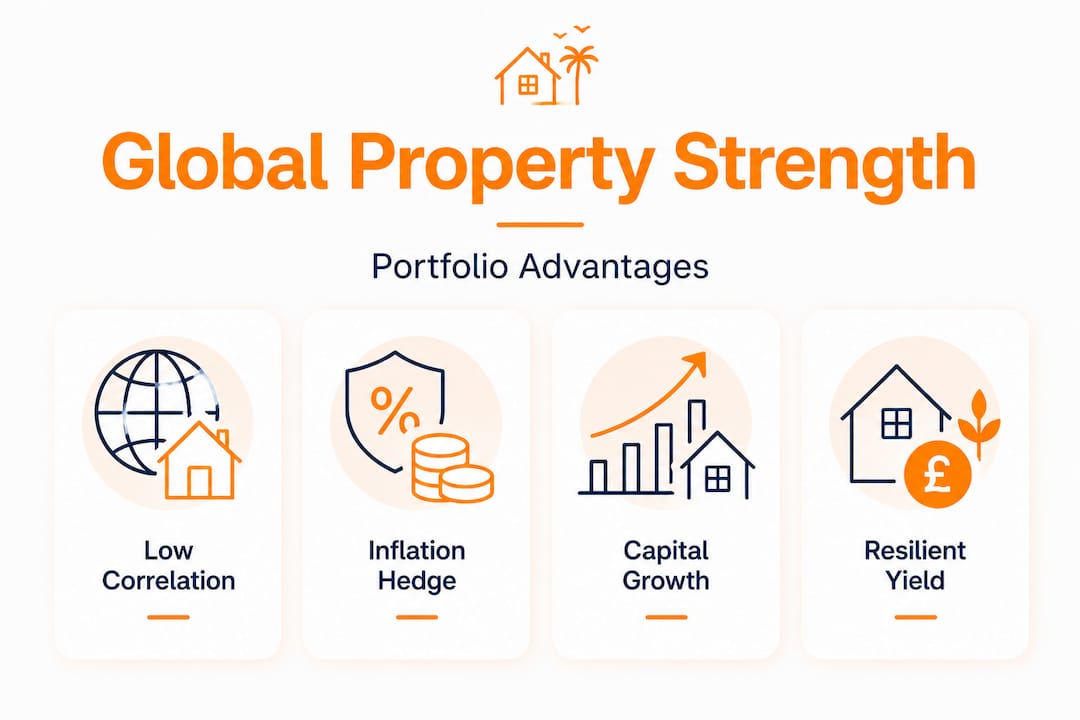
Infographic showing luxury property portfolio advantages

Pro Tip: Look beyond the headline yield figure. Properties in Antibes or Sainte-Maxime that generate 4% net rental income during the summer Cannes Film Festival season or the Saint-Tropez regattas may command significantly higher occupancy premiums during peak cultural events. Seasonal demand from global elites attending these events creates rental pricing power that standard yield calculations rarely capture in full.

When you evaluate luxury real estate across markets, the due diligence process should account not only for current yield but for the structural supply constraints that protect future capital value. The limited buildable land along the Riviera coastline, for example, creates a scarcity dynamic that underpins long-term appreciation fundamentally.

Key challenges and how to overcome them

Understanding the rewards is only half the story. International property investing introduces a specific set of challenges that require both intellectual honesty and practical preparation to navigate confidently.

The principal risks, as identified by experienced international investors, include currency fluctuations, legal and tax complexities, geopolitical instability, higher management costs, and financing difficulties in unfamiliar markets. Each of these is real. None of them is insurmountable with the right expertise alongside you.

Here is how we approach each:

  • Currency risk: Structure acquisitions in currencies that either align with income streams or offer natural hedging. Holding a euro-denominated Riviera property whilst drawing income from European sources creates natural balance. Currency forwards and options provide additional protection for larger positions.
  • Legal and tax complexity: Each jurisdiction has its own conveyancing rules, ownership structures, and inheritance law. In France, the VEFA contract (Vente en l’État Futur d’Achèvement) protects buyers of new constructions from cost overruns and developer default, a critical protection for off-plan acquisitions in developments from Nice’s Mont Boron towers to Sainte-Maxime’s beachside residences. Always engage a local notaire and an independent legal adviser familiar with cross-border estate planning.
  • Geopolitical exposure: Favour markets within stable, well-regulated jurisdictions. France, Portugal, and Italy offer EU-backed legal frameworks. Dubai provides a transparent freehold ownership model supported by robust government oversight. Emerging markets may offer superior yields but require elevated risk tolerance and careful due diligence.
  • Management costs: Distance creates friction. Partner with specialist property management firms in each location, ideally those with an established client roster of similarly positioned international owners. This is particularly pertinent for seasonal let properties where presentation standards and occupancy optimisation are revenue-critical.
RiskImpactRecommended countermeasure
Currency fluctuationPortfolio value erosionMatched currency structures, hedging instruments
Legal and tax complexityOwnership disputes, tax penaltiesLocal notaire, cross-border tax adviser
Geopolitical instabilityAsset accessibility, forced salesStable jurisdictions, political risk insurance
Management challengesRental income loss, property neglectSpecialist international property managers
Financing difficultiesAcquisition failure, poor termsLocal mortgage brokers, private banking relationships

Pro Tip: Engage specialists early, before you identify a specific property. A thorough understanding of the luxury property tax landscape in your target market, combined with proper advance structuring, can reduce your effective acquisition cost substantially. We always advise clients to consult a cross-border tax adviser six to twelve months before their intended purchase, not the week contracts are exchanged.

Understanding the key steps in international luxury property buying at the earliest stage saves both time and capital. Preparation is the most underrated luxury in international acquisition.

Tailoring your global real estate strategy

Now that you are prepared for the risks, the essential task is building a strategy that honours your family’s specific aspirations, not simply following a template designed for someone else’s circumstances.

The most effective international real estate strategies we encounter share one quality: they begin with precise clarity about objectives. A family seeking to establish a legacy estate in Provence to anchor multigenerational gatherings has fundamentally different needs from a family office targeting maximum yield from a portfolio of seasonal lets in Ibiza and the Côte d’Azur. Both are legitimate and achievable. They simply require different property types, different market selections, and different ownership structures.

Different HNWI profiles pursue distinct international strategies based on their core motivations. Aligning your family’s priorities with the right market is the first and most consequential decision in the process. Here is the framework we recommend:

  1. Define your primary objective. Is this a legacy asset, a yield-generating investment, a lifestyle base, or a prestige marker? Clarity here shapes every subsequent decision.
  2. Identify the markets that serve that objective. Cap d’Antibes for ultra-private sea-view estates, Monaco borders for prestige and tax efficiency, Sainte-Maxime or Saint-Tropez for premium seasonal rental income, Menton for botanical serenity and emerging appreciation potential.
  3. Assess your risk appetite and liquidity requirements. Trophy assets in the most recognised locations offer the greatest capital resilience but the lowest liquidity. More diversified holdings across two or three locations balance prestige with flexibility.
  4. Choose the appropriate ownership structure. Direct ownership, SCI (Société Civile Immobilière) in France, or a cross-border trust all carry distinct tax and inheritance implications. Structure before you sign.
  5. Select the right property type. Provençal mas for generational legacy, new-construction eco-villas with solar arrays and green certifications for heirs who value sustainability alongside yield, or branded residences in managed developments for hands-off income generation.
  6. Build your advisory team. Local notaire, international tax adviser, specialist property manager, and a global real estate strategy partner who understands both the market and your portfolio context.

The process sounds deliberate because it must be. Reactive acquisitions driven by market excitement rather than strategic alignment tend to underperform. The families who benefit most from international diversification are those who invest time in frameworks before they invest capital in assets.

What most investors miss about international diversification

Having outlined the strategies and the risks, we feel compelled to share the insight that separates genuinely resilient portfolios from merely large ones. It is the insight that most experienced investors either resist or discover too late.

The majority of HNWIs, even those who consider themselves diversified, remain significantly overweight in their home market. Research consistently shows that approximately 70% of family office real estate holdings are domestic, with only the most internationally oriented portfolios, typically Swiss or Hong Kong-based family offices, achieving genuine geographic spread. This is not a rational allocation. It is home bias at work.

Home bias is the deeply human tendency to favour the familiar. It feels safer because you understand the system, you know the market, you speak the language. But familiarity is not the same as security. In fact, concentrating capital in a single jurisdiction magnifies the very tail risks that wealthy families are most exposed to: sudden regulatory change, currency debasement, political disruption.

The families who embraced international diversification in earnest a decade ago, placing assets along the Côte d’Azur, in Lisbon’s historic palaces, or in Dubai’s waterfront towers, did not merely outperform financially. They created structures that gave future generations genuine choices. A Riviera estate does not simply generate rental income during the Cannes Film Festival season or the Monaco Grand Prix weekend. It provides a physical base from which heirs can build European lives if domestic conditions change, a freedom that cannot be bought retrospectively.

Resilience does not come from owning more of the same. It comes from owning assets that are genuinely uncorrelated, that rise and fall under different influences, and that serve multiple functions across generations. Follow the evolving trends among luxury buyers closely, but do not simply follow the crowd. The most powerful diversification moves are often the ones made before consensus forms around them.

Connect with premier global real estate expertise

At Living on the Côte d’Azur, we exist precisely at this intersection of aspiration and intelligence. Our portfolio spans the salt-kissed terraces of Cap d’Antibes, the lemon-scented boulevards of Menton, and extends to Ibiza, Dubai, Bali, Portugal, and Mauritius, each market curated for its unique investment character. Whether you are drawn to invisible luxury real estate available exclusively off-market, or seeking to understand what luxury real estate truly represents as an asset class, we bring insider knowledge and a discreet, personalised approach. For families intent on building high-net-worth legacy and meaningful ROI, we invite you to begin a conversation with our team today.

Frequently asked questions

What makes international luxury real estate a unique investment?

It offers uncorrelated returns and portfolio resilience, combining inflation hedging, reliable rental cash flow, and capital appreciation in prime locations where supply is structurally constrained.

How do I manage legal and tax risks in global property?

Engage local legal experts and a cross-border tax adviser before identifying a specific property, as thorough due diligence across legal and tax regimes is the single most effective risk mitigation strategy available to international buyers.

Which international locations offer the best opportunities?

Emerging markets like Dubai excel for yield whilst traditional hubs such as the Côte d’Azur, Lisbon, and London offer a combination of prestige, capital stability, and lifestyle value that continues to attract the most discerning global buyers.

How do international holdings support family legacy goals?

They create multigenerational wealth anchors that combine geographic currency diversification with real-world utility, giving heirs both financial resilience and the freedom to establish lives across multiple jurisdictions should circumstances ever require it.

Recommended

  • 7 Essential Steps for Buying Luxury Property in 2025
  • High-net-worth real estate: Legacy, luxury, and ROI
  • Emerging Luxury Market: Shaping 2026 Wealth Strategies
  • Wealth Building Through Real Estate: Riviera Legacy Moves
  • Luxury airport travel: real benefits, options, and expert insights
by Websols Servicedesk/2 May 2026/in Landingpage
https://www.livingonthecotedazur.com/wp-content/uploads/2026/05/1777475362155_Investor-reviewing-international-luxury-property-listings.jpeg 714 1280 Websols Servicedesk https://www.livingonthecotedazur.com/wp-content/uploads/2024/02/sitelogo150.png Websols Servicedesk2026-05-02 02:00:172026-05-07 12:55:29Diversify wealth through global luxury property


TL;DR:

  • The most exclusive French Riviera estates are traded privately, emphasizing privacy, heritage, and trust.
  • Exclusivity can command a premium but risks undervaluation if managed poorly or over-restricted.
  • Successful investors blend private access with open-market data for balanced, lasting legacy properties.

The most coveted estates on the French Riviera rarely appear on property portals. They move quietly, exchanged between trusted parties over private conversations in Cannes penthouse suites or during regattas off Antibes’ sun-drenched coast. For the serious investor, this invisible market is not a rumour; it is the very architecture of how generational wealth is built in stone and sea view. Understanding how exclusivity operates, where it creates value, and where it introduces risk, is the essential compass for anyone seeking not merely a property on the Côte d’Azur, but a lasting legacy.

Table of Contents

  • Understanding exclusivity in luxury real estate
  • How exclusivity influences price, access, and legacy value
  • Exclusive sales versus open-market exposure: Pros and cons
  • Best practices for acquiring exclusive French Riviera properties
  • Why the best legacy properties balance exclusivity with transparency
  • Unlock exclusive French Riviera investments
  • Frequently asked questions

Key Takeaways

PointDetails
Exclusivity definedExclusivity refers to private property sales accessible only to select, vetted buyers.
Value tradeoffsExclusive sales protect privacy and brand but may limit price discovery if not managed expertly.
Hybrid strategies winTop investors combine private access with open-market insight for the best legacy returns.
Expert access mattersSpecialist agents, strong networks, and due diligence are critical to secure the most desirable Riviera properties.

Understanding exclusivity in luxury real estate

With this premise, it is crucial to define what exclusivity actually means in Côte d’Azur real estate, and why it remains so desirable.

An exclusive listing is a property marketed through a single agent or a tightly restricted network, with the seller’s identity and transaction details protected. An off-market property goes further still: it is never publicly advertised, surfacing only through curated introductions between qualified buyers and discreet sellers. These are not the same thing, though the terms are often used interchangeably. Knowing the distinction matters enormously when buying exclusive real estate in one of the world’s most competitive luxury corridors.

Why do sellers on the Riviera choose this path? Privacy is the most immediate answer. A high-profile vendor in Cap d’Antibes or along the Monaco border does not wish to broadcast their circumstances, their timeline, or their property’s perceived vulnerabilities to the open market. Exclusivity also controls the narrative: the villa is presented as rare and desirable rather than as an asset sitting on a public portal accumulating days on market.

For buyers, the appeal is equally compelling. Consider what exclusivity actually offers:

  • First access to properties before competing buyers are even aware they exist
  • Confidential negotiation without the scrutiny of public bidding wars
  • Curated provenance, where a property’s history and ownership enhance its story and long-term value
  • Alignment with legacy goals, since the most storied estates tend to trade privately, preserving their character across generations
  • Relationship-driven transactions that reward credibility and trust over raw financial firepower alone

That said, a contrarian perspective deserves honest consideration. As noted in analysis on open-market dynamics, open-market exposure establishes true value through competitive tension, while private channels risk information asymmetry and potentially suboptimal pricing for one or both parties. Exclusivity is a double-edged privilege, and understanding both edges is what separates astute investors from those who simply pay a premium for the feeling of being chosen.

“On the Côte d’Azur, exclusivity is not merely a marketing strategy. It is a philosophy of stewardship, ensuring that exceptional properties pass to buyers who will honour their legacy rather than simply capitalise on their address.”

How exclusivity influences price, access, and legacy value

With the meaning and motivation for exclusivity clear, let us explore how these unique dynamics play out in actual investment decisions and outcomes on the Riviera.

The relationship between exclusivity and price is nuanced. A well-managed exclusive sale, handled by a specialist agent with a cultivated network of pre-qualified buyers, can secure a meaningful premium. Riviera properties in prime positions, whether overlooking the Baie des Anges from Nice’s Mont Boron or set among Menton’s lemon-scented botanical gardens, typically appreciate at 5 to 8% annually when positioned correctly. Exclusivity amplifies this trajectory by preserving the property’s mystique and limiting supply perception.

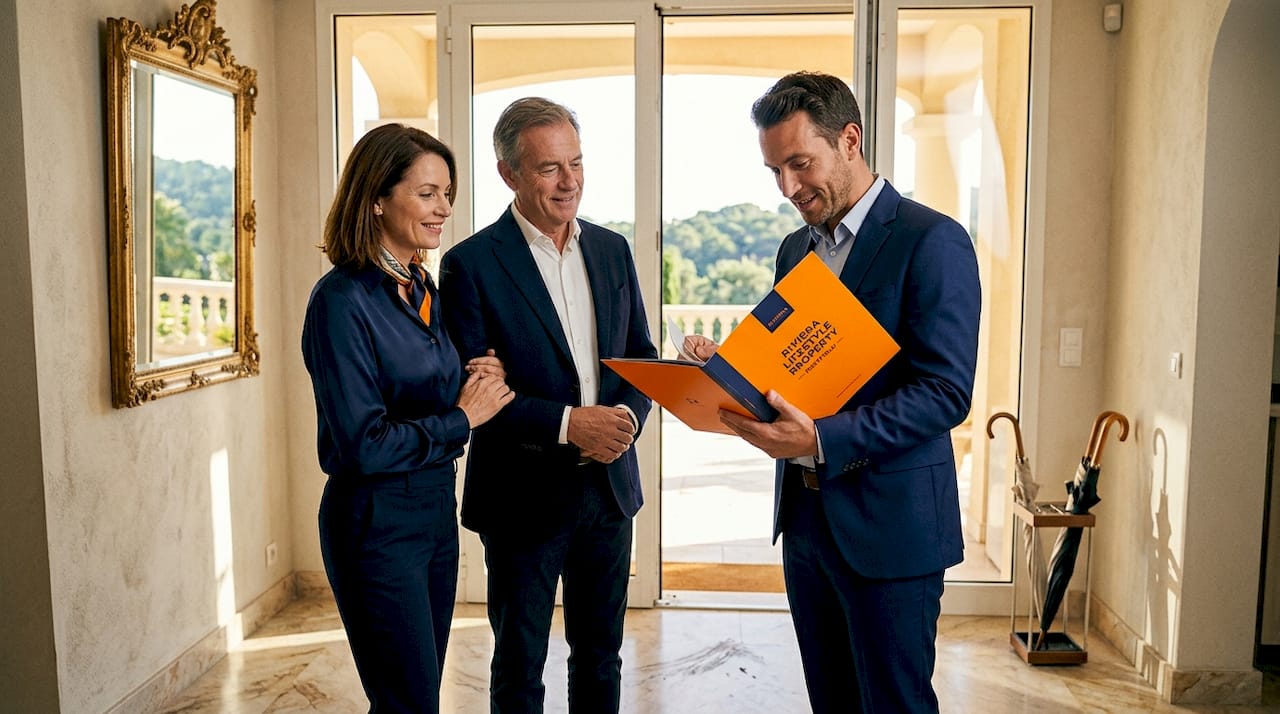
Couple viewing luxury villa with agent

However, a poorly managed private sale, one that reaches too few qualified buyers or lacks a credible benchmark against comparable open-market transactions, risks undervaluation. The seller may believe they are protecting their privacy while inadvertently leaving significant capital on the table.

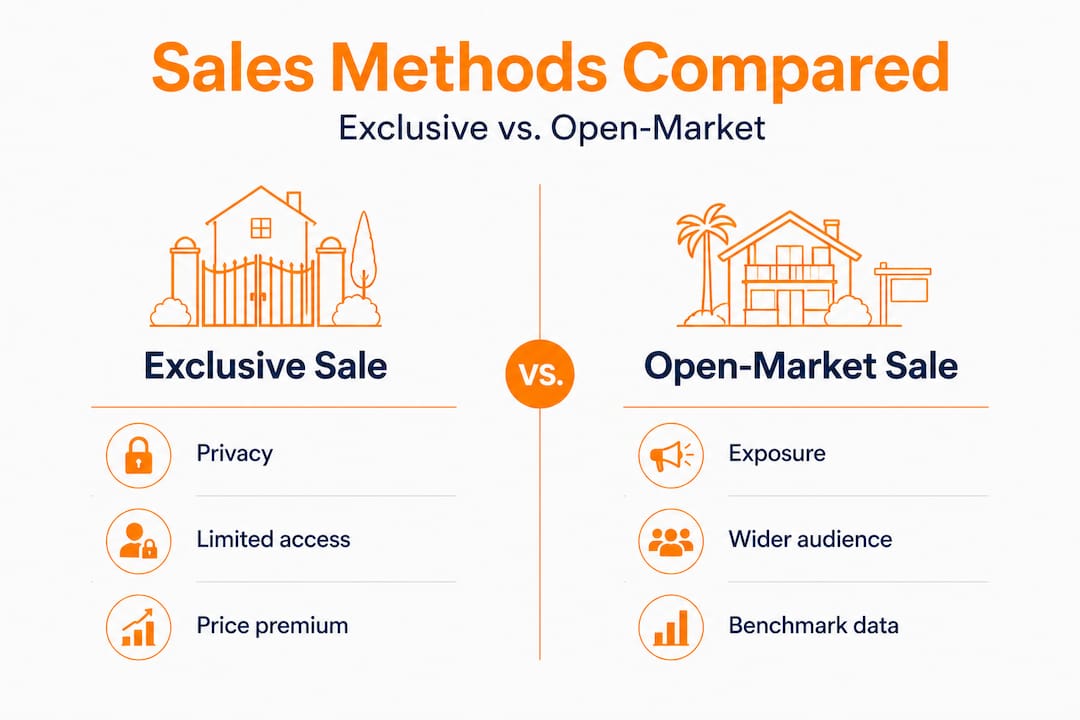
Here is how exclusive and open-market sales compare across key investment metrics:

FactorExclusive / off-market saleOpen-market sale
PrivacyHighestLimited
Buyer poolCurated, smallBroad, competitive
Price discoveryLimited, relationship-drivenStrong, benchmark-driven
Days on marketTypically shorterVariable
Legacy provenanceEnhancedNeutral
Negotiation controlSeller-favouredBuyer-competitive
Risk of undervaluationModerate to highLow

For legacy properties specifically, exclusivity adds a dimension that no open portal listing can replicate: provenance. An estate in Èze that has changed hands three times in eighty years, always privately, carries a story that enriches both its cultural value and its investment case. Heirs and future buyers will pay for that continuity of character.

Pro Tip: Engage an agent who operates across both exclusive and open channels simultaneously. This gives you intelligence on private opportunities while keeping you calibrated to real-time open-market pricing, so you never overpay simply because you lacked a comparable reference point. The advantages of working with a skilled buyer’s agent on the Riviera are rarely more apparent than in the exclusive segment.

Exclusive sales generate an estimated 5 to 12% price premium when managed by specialist agents with verified buyer networks, though this figure narrows or reverses when the private process is mismanaged or the buyer pool is too restricted.

Infographic comparing exclusive and open-market luxury home sales

Exclusive sales versus open-market exposure: Pros and cons

Armed with insight into exclusivity’s impact on value and access, the crucial question for investors is whether to prioritise off-market or open exposure.

The honest answer is that neither approach is universally superior. Each serves a different objective, and the wisest investors understand when to deploy each strategy.

Benefits of exclusive and off-market sales:

  • Complete control over who views the property and on what terms
  • Ability to curate the buyer experience, staging introductions as private events rather than open viewings
  • Brand protection for high-profile sellers who cannot afford association with a prolonged or failed sale
  • Speed, since pre-qualified buyers in established networks tend to move decisively
  • Preservation of the property’s market freshness, avoiding the stigma of visible days-on-market accumulation

Drawbacks of exclusive sales:

  • Reduced competitive tension, which can suppress the final sale price
  • Risk of information asymmetry where one party operates without full market context
  • Dependence on the agent’s network quality, meaning a weak network produces a weak outcome
  • Potential legal and valuation complications if the agreed price lacks open-market substantiation

Advantages of open-market listings:

  • Maximum exposure to the widest possible pool of qualified buyers
  • Transparent price discovery through competitive interest
  • Clearer legal and valuation benchmarks for mortgage and inheritance purposes
  • Greater buyer confidence, since public listings are subject to standard due diligence frameworks

Disadvantages of open-market listings for luxury properties:

  • Loss of privacy for sellers with public profiles
  • Risk of overexposure, where a property perceived as lingering on the market loses desirability
  • Potential brand damage if the listing is associated with distressed circumstances
  • Unsuitable for properties with sensitive ownership histories or high-profile occupants

For a thorough grounding in the mechanics of private transactions, our off-market property guide outlines the legal and structural frameworks that govern these deals in France. If you are seeking active Riviera off-market deals, the landscape in 2026 is particularly rich, with demand for sustainably designed villas and Monaco-adjacent plots accelerating sharply. For those ready to act, understanding the full process of securing exclusive property is the essential first step.

The most sophisticated investors we work with do not choose between these approaches ideologically. They choose contextually, based on the asset, the seller’s priorities, and the market cycle.

Best practices for acquiring exclusive French Riviera properties

Once you have weighed exclusivity versus reach, mastering the acquisition process becomes essential. Here are expert strategies for success.

  1. Build your network before you need it. The Riviera’s exclusive property market is relationship-driven to its core. Attend the Cannes Film Festival circuit, the Monaco Yacht Show, or the regattas that animate Antibes’ harbour each summer. These are not merely social occasions; they are the informal exchanges where introductions to exceptional off-market opportunities begin.

  2. Engage a specialist agent with verified private network access. Not all luxury agents are equal. The agent who posts listings on public portals is not the same professional who receives a discreet call about a Cap d’Antibes villa before it is offered elsewhere. Seek those with demonstrable access to the invisible inventory. Our elite off-market guide outlines the specific criteria to apply when vetting agents for private market access.

  3. Establish proof of funds early and clearly. In exclusive transactions, sellers and their representatives screen buyers before sharing property details. Arrive with a credible financial profile, whether that is a bank letter, a statement from your family office, or documentation of your cryptocurrency holdings if you intend to transact digitally. Ambiguity about financial readiness ends conversations before they begin.

  4. Prepare for fast, discreet negotiations. Exclusive deals rarely linger. When a Provençal mas near Saint-Tropez or a sea-view tower apartment in Nice’s Mont Boron is offered privately, the expectation is that a serious buyer responds with intention, not hesitation. Have your legal and financial advisers on standby.

  5. Conduct thorough due diligence regardless of the private setting. This is where investors sometimes falter. The exclusivity of a transaction does not reduce the obligation to commission legal audits for title clarity, technical surveys for structural integrity, and independent valuations to benchmark the agreed price against real market data. The discreet nature of an off-market deal can create pressure to move quickly and quietly, but rigorous due diligence is non-negotiable.

  6. Avoid over-valuing secrecy for its own sake. Some buyers become so entranced by the idea of an off-market find that they suspend commercial judgement. If a property’s private status is the primary reason for its appeal rather than its location, quality, or investment fundamentals, that is a warning signal rather than a selling point. As the open-market debate highlights, private deals can obscure rather than reveal true value.

Pro Tip: When you receive access to an exclusive listing, commission a rapid but thorough comparative market analysis using publicly available Riviera transaction data. This takes 48 to 72 hours and gives you an independent pricing anchor before entering negotiations, protecting you from the information asymmetry that private deals can introduce.

Why the best legacy properties balance exclusivity with transparency

Having discussed actionable tactics, it is worth re-examining the broader philosophy that underpins lasting success as a high-value Riviera investor.

We have observed, across many years and many transactions, that the investors who build the most enduring legacies do not subscribe to either extreme. Pure secrecy and full transparency are both philosophically appealing and practically limiting. The truth, as it so often does on this coast, lies somewhere more nuanced and more interesting.

The finest legacy assets we know of were sourced through relationships, that much is consistent with the exclusive model. But they were also benchmarked rigorously against open-market evidence. A Menton estate acquired at a fair price validated by comparable transactions is a far stronger legacy asset than one acquired in haste at an inflated figure simply because it was presented as uniquely private.

Ignoring open-market intelligence entirely while pursuing off-market deals risks what the transparency debate identifies as the central danger: paying a premium not for genuine value but for the illusion of privilege. Equally, an investor who insists on open-market exposure for every acquisition will systematically miss the Riviera’s most extraordinary properties, those passed between families, between friends, between people who trust each other with something irreplaceable.

The hybrid approach, where exclusive access is the entry point and open-market benchmarking is the validation tool, is what distinguishes sophisticated exclusive property strategies from speculative ones. It preserves both discretion and intellectual honesty. It treats exclusivity as a mechanism for access, not as a substitute for judgement. And it ensures that when a property becomes part of your family’s story, it does so on terms that will withstand scrutiny across generations.

Unlock exclusive French Riviera investments

If you are ready to apply these principles and discover rare opportunities, expert assistance awaits. At Living on the Côte d’Azur, our team specialises in accessing and negotiating exclusive Riviera deals for discerning clients who seek not transactions, but heirlooms. We maintain curated relationships with sellers, notaires, and specialist advisers across the Riviera’s most coveted addresses, from the salt-kissed ramparts of Antibes to the lemon-festival lanes of Menton. Explore our current invisible luxury real estate portfolio, deepen your understanding of what defines luxury real estate on this extraordinary coast, or speak with our advisers about legacy and luxury ROI to position your capital with both precision and poetry.

Frequently asked questions

What are off-market luxury properties?

Off-market luxury properties are privately marketed homes not publicly advertised, available only to select buyers via trusted networks, offering utmost privacy and exclusivity. They represent some of the finest assets on the Riviera, traded outside public channels to preserve the seller’s discretion and the property’s prestige.

Does exclusivity mean a higher sale price?

Exclusivity can boost perceived value and secure a meaningful price premium when managed by a specialist with a strong qualified-buyer network, though insufficient competition or a restricted buyer pool may limit true market pricing. The outcome depends entirely on execution quality.

How can investors access exclusive property deals?

Investors should build relationships with specialist agents, prove financial readiness clearly and early, and be prepared for discreet, rapid deal processes that reward credibility over hesitation. Social engagement at Riviera events, from the Cannes Croisette to Monaco’s yacht-lined quays, opens doors that portals never could.

Are there risks in buying off-market?

Yes, the primary risks include limited market data for price comparison, potential overvaluation due to information asymmetry, and pressure to move quickly without adequate due diligence. A rigorous independent valuation alongside any private acquisition is essential, not optional.

Recommended

  • The Exclusive Real Estate Buying Guide – Living on the Côte d’Azur
  • High-net-worth real estate: Legacy, luxury, and ROI
  • Luxury Real Estate Explained: Key Features and Value – Living on the Côte d’Azur
  • Personalised Real Estate Service: Luxury Benefits
  • Why real estate concierge services elevate Maui luxury | Pacific Island Partners
by Websols Servicedesk/1 May 2026/in Landingpage
https://www.livingonthecotedazur.com/wp-content/uploads/2026/05/1777605880554_Real-estate-agent-reviewing-portfolio-at-corner-office-1.jpeg 714 1280 Websols Servicedesk https://www.livingonthecotedazur.com/wp-content/uploads/2024/02/sitelogo150.png Websols Servicedesk2026-05-01 07:01:442026-05-04 02:00:20How exclusivity shapes luxury real estate value


TL;DR:

  • The most valuable Riviera properties are acquired privately to protect privacy and legacy.
  • Off-market transactions rely on trusted intermediaries, NDAs, and discreet due diligence.
  • Building relationships and maintaining reputation are key to successful discreet property acquisitions.

The most consequential property acquisitions on the French Riviera rarely appear on any public listing. They move through private networks, sealed by trust and mutual discretion, exchanging hands between parties who understand that genuine wealth operates quietly. For high-net-worth investors who are serious about legacy creation, generational wealth transfer, and portfolio diversification, this invisible layer of the market is not a curiosity. It is the destination. This article guides you through every dimension of discreet property buying on the Côte d’Azur, from understanding why privacy matters to selecting the right partners and positioning acquisitions for lasting family value.

Table of Contents

  • Why discretion matters in luxury real estate
  • How discreet buying works: Off-market explained
  • Choosing the right partners for discreet acquisitions
  • Strategic advantages: Portfolio growth and legacy creation
  • What most guides miss about discreet buying
  • Begin your discreet property journey
  • Frequently asked questions

Key Takeaways

PointDetails
Discretion maximises legacyPrivate buying ensures your investments remain confidential and secure for future generations.
Success relies on partnershipsSelecting trustworthy intermediaries is crucial to protecting privacy and accessing exclusive assets.
Off-market deals offer exclusivityMany premier Côte d’Azur estates are accessible only through relationship-driven, confidential channels.
Strategic buying enhances portfoliosDiscreet acquisitions contribute significantly to long-term growth and diversification.

Why discretion matters in luxury real estate

The salt-kissed coastline stretching from Menton’s lemon-scented citadel to the yacht-dotted marinas of Antibes has always attracted those with refined tastes and serious capital. Yet the Riviera’s most coveted estates, the stone-walled bastides above Èze, the Belle Époque villas overlooking the Baie des Anges in Nice, the secluded domaines near Cap d’Antibes, seldom grace the pages of open property portals. They are held in a separate, far more curated world.

Privacy in this market is not vanity. It is strategy. When a high-profile individual purchases property through public channels, they immediately expose themselves to scrutiny: commercial rivals, the press, and opportunistic litigants can all trace asset movements. For a family office managing multigenerational wealth, that exposure is simply not acceptable.

Invisible luxury real estate on the Côte d’Azur represents a curated body of properties that never surface through conventional channels, and there are compelling reasons why buyers at the very top of the market seek them out exclusively.

The core motivations are worth naming clearly:

  • Legacy protection: A family’s real estate portfolio, when publicly visible, invites challenges to estate planning and succession structures. Discretion preserves the integrity of those arrangements.
  • Security and personal safety: Senior executives, royalty, and digital entrepreneurs who invest in stone need to know that their primary or secondary residence cannot be easily located by the wrong parties.
  • Exclusive market access: Off-market buying grants access to properties that are often superior in condition, provenance, and rarity precisely because motivated sellers choose privacy over the highest possible public price.
  • Portfolio balance: Acquiring complementary assets quietly allows investors to rebalance holdings without triggering market speculation or influencing asset valuations.

“The invisible market is where true Riviera heritage changes hands. Properties with extraordinary provenance, soul, and value find their next custodians not through portals, but through trust.”

Private real estate sales on the Riviera are increasing in frequency precisely because sophisticated buyers recognise that the competitive noise of public listings undermines both privacy and pricing intelligence.

Pro Tip: Before approaching any property professional, define your privacy requirements in writing. Know which details, your name, your nationality, your intended use structure, you are prepared to share at which stage of a negotiation. This clarity will protect you and signal seriousness to the intermediaries who matter.

How discreet buying works: Off-market explained

Off-market transactions function on a principle of selective disclosure. Rather than broadcasting a property to thousands of potential buyers simultaneously, the seller, through a trusted intermediary, presents the opportunity to a curated shortlist of pre-qualified prospects. The transaction unfolds in confidence, governed by legal instruments that protect all parties.

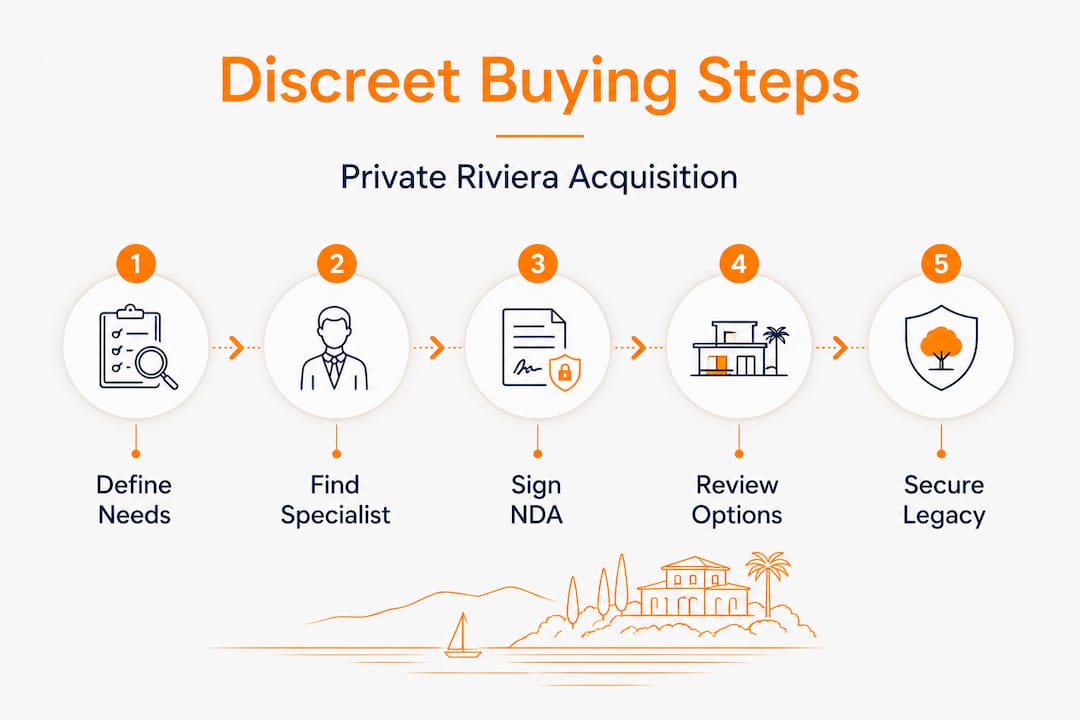
Understanding the mechanics is essential before you engage. Here is a clear breakdown of how the process typically unfolds:

  1. Mandate agreement: The seller grants a discreet mandate to a specialist intermediary. This document defines the agreed asking price, conditions of sale, and confidentiality obligations.
  2. Non-disclosure agreement (NDA): Before any property details are revealed to a prospective buyer, a formal NDA is signed. This is non-negotiable in the premium segment and confirms the buyer’s commitment to confidentiality.
  3. Curated presentation: The intermediary shares detailed information, plans, photographs, and in some cases private viewing access, under the terms of the NDA.
  4. Legal and technical due diligence: A specialist notaire (the French notary with legal authority over property transfers) conducts title searches, verifies planning permissions, and confirms the absence of charges or liens on the property.
  5. Closing: The compromis de vente (preliminary sale contract) is signed privately, followed by the acte authentique (final deed) before the notaire, typically within two to three months.

Guidance on purchasing luxury homes confidentially in southern France underscores that this process demands experienced professionals at each stage. A single misstep in the NDA or due diligence phase can unravel the entire transaction.

StageKey instrumentWho is responsible
MandateDiscreet mandate agreementSeller and intermediary
QualificationNon-disclosure agreementBuyer and intermediary
Due diligenceTitle and planning auditNotaire and buyer’s agent
Preliminary contractCompromis de venteNotaire
CompletionActe authentiqueNotaire

Infographic outlines discreet property acquisition steps

A widely cited observation among Riviera specialists is that in the ultra-prime segment above €5 million, a very significant proportion of completed transactions never appear on public platforms. Some estimates place this figure as high as 60 to 70 percent of total transaction volume in this bracket. This is the market within the market, and it rewards those who are prepared.

Our curated portfolio of French Riviera villa options includes properties that have never been publicly listed, presented exclusively to qualified buyers through our confidential process.

Pro Tip: Always instruct your legal counsel to review the NDA before signing. Some NDAs include clauses that prevent you from viewing comparable properties elsewhere during the exclusivity period. Understanding these constraints early protects your flexibility.

The property acquisition guide we provide outlines the full legal timeline for purchasing in France, including cooling-off periods and tax structuring options specific to non-resident buyers.

Choosing the right partners for discreet acquisitions

The quality of your acquisition depends almost entirely on the quality of your team. On the Côte d’Azur, where relationships between families, intermediaries, and legal professionals span generations, choosing the wrong partner can close more doors than it opens.

When selecting your buyer’s agent and legal counsel, assess them against these criteria:

  • Track record in off-market transactions: Ask directly how many confidential mandates they have managed in the past 24 months. Vague answers are a warning signal.
  • Notaire relationships: In France, the notaire holds extraordinary legal authority over property transfers. Your buyer’s agent should have established, respectful relationships with notaires across key Riviera municipalities, from Nice and Cannes to Antibes and Menton.
  • Conflict of interest clarity: A buyer’s agent who simultaneously holds the seller’s mandate cannot serve you fully. Clarify their role before proceeding.
  • Discretion protocols: Ask how client information is stored, who within their organisation has access to your details, and whether they use encrypted communications.

The question of boutique versus large agency is worth examining honestly:

FactorBoutique agencyLarge international firm
Access to private mandatesOften superior, relationship-drivenBroader but more commercialised
DiscretionTypically higher, smaller teamVariable, greater internal exposure
Personalised serviceDeeply tailoredOften systematised
Legal and tax guidanceSpecialist networkIn-house but generalist
Response speedAgile and directCan be bureaucratic

Approaches and strategies for discreet property acquisition on the French Riviera consistently point to one truth: personal reputation matters more than office size. A boutique specialist who has spent fifteen years building relationships in Cap d’Antibes will access opportunities that no international firm’s automated portal ever will.

Watch carefully for these warning signs when assessing a potential partner:

  • Pressure to sign an exclusivity agreement before you have seen credible credentials
  • Vague answers about the legal structure of a proposed transaction
  • Reluctance to provide references from completed off-market deals
  • Any suggestion that due diligence can be abbreviated to save time

Privacy in luxury real estate is a sophisticated discipline, not a marketing phrase. The professionals who genuinely practise it are few, and they are selective about who they work with. Your own preparation and credibility matter as much as theirs.

Pro Tip: Request at least two references from buyers who have completed off-market transactions with any agent you are considering. Speak to those buyers directly, not through the agent, to understand the real quality of service and discretion delivered.

Strategic advantages: Portfolio growth and legacy creation

Discretion in property acquisition is not merely a defensive posture. It is an offensive strategy that creates genuine competitive advantage for investors who think in decades rather than months.

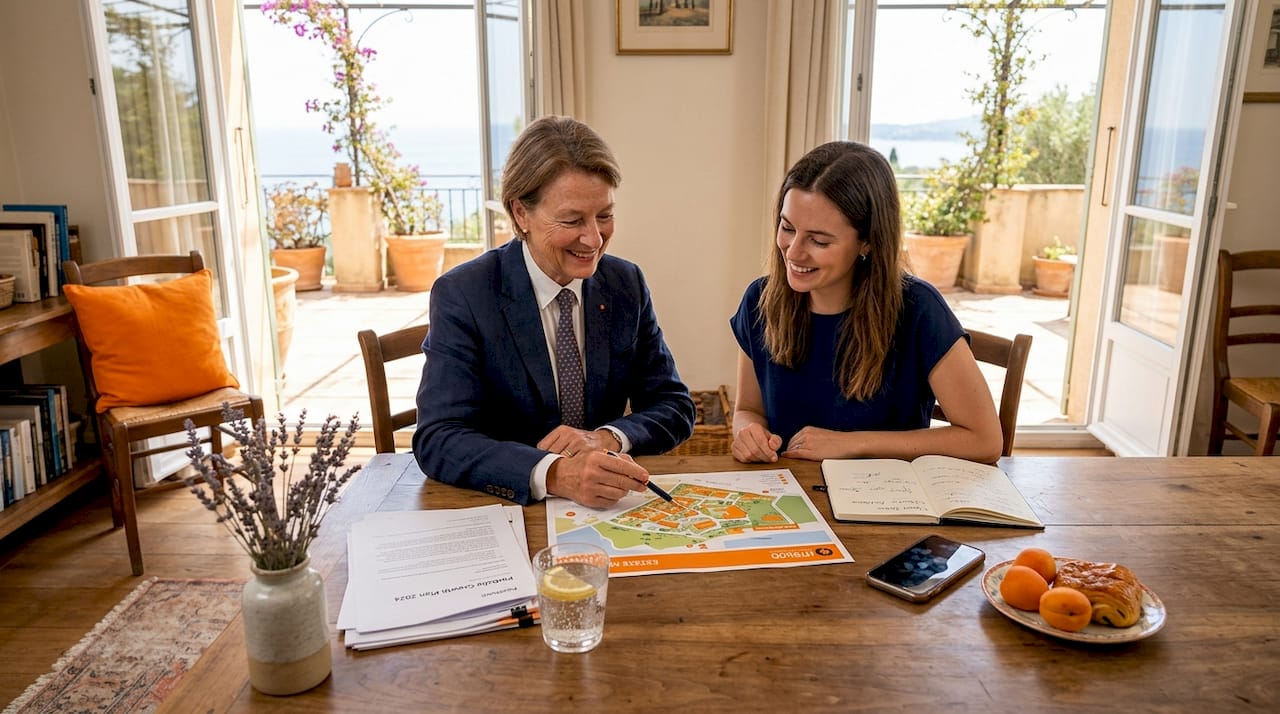
Advisor and client planning property portfolio

When you operate within the private Riviera market, you encounter a category of asset that simply does not exist in public listings. Consider the Provençal mas, a lovingly restored farmhouse perched above the perfume hills near Grasse, whose owners have held it for four generations and will only consider a buyer who respects its heritage. Or the Belle Époque villa at the Monaco border, offered to a single carefully chosen buyer at a price that reflects a relationship rather than a bidding war. These are properties with soul, and they anchor family legacies in ways that a newly developed apartment, however beautiful, cannot replicate.

The lasting Riviera legacies that our clients create through discreet acquisitions share several defining characteristics:

  • Rarity: Off-market properties frequently carry provenance, architectural distinction, or location qualities unavailable in the open market.
  • Tax efficiency: Structuring ownership through an SCI (Société Civile Immobilière, a French civil property company), or through appropriate international holding vehicles, allows families to manage inheritance and gifting with material tax savings across generations.
  • Yield potential: Riviera estates in the €3 million to €10 million bracket let at elite seasonal rates during the Cannes Film Festival, summer regattas, and the Monaco Grand Prix period, generating annual yields of 3 to 5 percent net. That income, combined with 5 to 8 percent annual capital appreciation in prime locations, creates a powerful compounding effect over a twenty-year horizon.
  • Sustainability alignment: The next generation of heirs increasingly values properties with solar arrays, water recycling systems, and green certifications. Acquiring eco-conscious estates today positions the family portfolio ahead of regulatory and values shifts.

“A property purchased with care for future generations is not simply a financial asset. It is a statement of intent: a commitment to beauty, stability, and belonging that money alone cannot manufacture.”

Family offices managing South of France assets typically structure acquisitions across two or three properties in complementary microclimates. A private villa above Eze for summer months, a pied-à-terre near Nice’s Promenade des Anglais for spring and autumn cultural seasons, perhaps a coastal retreat near Sainte-Maxime for relaxed access to the Gulf of Saint-Tropez. Together, these holdings create a diversified legacy portfolio that serves the family residentially, financially, and emotionally.

Understanding the benefits of new home purchase alongside existing estate acquisition is equally valuable. New constructions on the Riviera now offer ten-year structural warranties, VEFA contract protections against cost overruns, and lower notary fees, all compelling complements to a legacy strategy anchored in historic or resale stock.

Pro Tip: When structuring a multigenerational acquisition, instruct a French tax specialist alongside your notaire from the very first meeting. The SCI structure, when properly configured, can reduce inheritance tax liabilities substantially and simplify the transfer of ownership interests between family members over time.

What most guides miss about discreet buying

We have observed, across many years of facilitating confidential acquisitions on the Riviera, that most published guidance treats off-market buying as a procedural matter. Follow the steps, sign the documents, close the deal. What these guides consistently underestimate is the role of personal reputation.

The invisible property market on the Côte d’Azur is genuinely relationship-driven, not just in the sense that warm introductions help, but in the deeper sense that sellers and their intermediaries actively research prospective buyers before agreeing to share confidential details. Your reputation for completing transactions cleanly, for honouring confidentiality obligations, and for treating both properties and their heritage with respect, circulates in this community long before you arrive at a negotiating table.

Patience is the other undervalued currency. The buyers who secure the most extraordinary off-market properties are rarely those who arrive with the largest cheque and demand immediate access. They are the ones who build relationships over a season, return for the Menton Lemon Festival and the Cannes yacht regattas, engage genuinely with the culture and community of the Riviera, and signal, through behaviour rather than words, that they are worthy custodians of something rare. The most beautiful estates on this coastline are not sold. They are entrusted.

Begin your discreet property journey

We built Living on the Côte d’Azur for precisely the investor you are: someone who values privacy, thinks in generations, and understands that the finest Riviera properties are found not on portals but through trusted relationships. Our team operates at the intersection of discretion and expertise, facilitating confidential acquisitions from Monaco to Saint-Tropez for clients who treat real estate as heritage, not simply as yield. We also welcome cryptocurrency payments, because we know that the most forward-thinking wealth is sometimes the most discreetly held. When you are ready to move, discover invisible luxury listings through our private catalogue, explore high-net-worth property advice crafted for legacy investors, or simply enquire discreetly and let us begin a conversation in complete confidence.

Frequently asked questions

What is an off-market property?

An off-market property is not publicly advertised and is sold through private networks, ensuring maximum confidentiality and selectivity for both buyer and seller.

Who should represent me in a discreet property transaction?

Specialist buyer’s agents and experienced notaires are essential for confidential transactions, and selecting professionals with a verified track record in discreet property acquisition ensures your privacy and interests are fully protected throughout.

How do off-market deals benefit my legacy planning?

Off-market deals allow you to acquire rare, heritage-rich assets with complete privacy, enabling optimised succession and lasting Riviera legacies through efficient tax and ownership structuring.

Is buying discreetly slower than a public purchase?

Discreet purchases may require more time due to relationship-building and thorough due diligence, but as guidance on purchasing confidentially confirms, the privacy, exclusivity, and quality of asset secured make that investment of time entirely worthwhile.

Recommended

  • Real Estate Inheritance: Safeguarding Your Côte d’Azur Legacy
  • The invisible luxury real estate properties on the Cote d’Azur – Living on the Côte d’Azur
  • Unlock offshore property investments on the Côte d’Azur
  • Guide to International Real Estate Investment in Côte d’Azur
by Websols Servicedesk/1 May 2026/in Landingpage
https://www.livingonthecotedazur.com/wp-content/uploads/2026/05/1777475300545_Professional-reviewing-confidential-property-paperwork.jpeg 714 1280 Websols Servicedesk https://www.livingonthecotedazur.com/wp-content/uploads/2024/02/sitelogo150.png Websols Servicedesk2026-05-01 02:00:182026-05-01 02:00:23Discreet property buying: building legacy on the Côte d’Azur


TL;DR:

  • International buyers on the French Riviera have diverse motivations including investment, lifestyle, and long-term legacy.
  • Types of buyers range from investors and lifestyle seekers to Golden Visa applicants, each with specific property preferences.
  • Experienced buyer agents provide crucial off-market access, legal guidance, and negotiation support for global investors.

Types of international property buyers: who invests and why

The global luxury property market rewards those who understand it deeply. Knowing precisely who is buying, what drives their decisions, and where they are focusing their capital is not merely academic. It is the difference between a shrewd acquisition and a missed opportunity. On the French Riviera, where salt-kissed villas command multi-million-euro premiums and prestige is written into every stone, the landscape of international buyers has never been richer or more varied. We explore the key buyer profiles, their core motivations, and how each connects to the most coveted addresses from the Côte d’Azur to Mauritius.

Table of Contents

  • What defines an international property buyer?
  • The five main types of international property buyers
  • How each buyer type invests: motivations and property choices
  • Regional differences: Where international buyers are investing
  • The role of agencies and buyer agents for international investors
  • A new era for international property buyers: What most overlook
  • Connect with the French Riviera’s exclusive property market
  • Frequently asked questions

Key Takeaways

PointDetails
Five key buyer typesThe international market is led by investors, lifestyle buyers, expats, entrepreneurs, and mobility seekers.
Motivations shape property choiceBuyers’ goals—from ROI to lifestyle—directly influence which assets they prefer and where they buy.
Regional trends matterHotspots like the Côte d’Azur, Portugal, and Mauritius attract different types of high-net-worth buyers.
Expert agents are crucialNavigating complex luxury markets is easiest with local buyer agents who open doors to exclusive properties.
Strategy blends enjoyment and legacyTop buyers merge personal use and investment to maximise returns and family legacy.

What defines an international property buyer?

An international property buyer is anyone who acquires real estate outside their country of primary residence or fiscal domicile. Yet that definition barely scratches the surface. What truly distinguishes one international buyer from another is the constellation of ambitions, constraints, and lifestyle aspirations they bring to the table.

Several criteria frame the profile of any serious international buyer:

  • Investment goals: Capital appreciation, rental income, portfolio diversification, or a blend of all three
  • Residency intentions: Short-stay holiday use, long-term relocation, or purely asset-driven ownership
  • Wealth level and liquidity: Ultra-high-net-worth individuals command different opportunities than affluent second-home seekers
  • Country of origin: Tax treaties, currency strength, and geopolitical stability all shape buying behaviour
  • Timeline: Some buyers move swiftly on off-market deals; others orchestrate purchases over years

The French Riviera crystallises why these distinctions matter. International buyers are drawn to stable economies, favourable tax regimes, and lifestyle benefits that few regions in the world can replicate. Cap d’Antibes offers absolute privacy among fragrant pines; Monaco’s borders radiate prestige that appreciates at a pace most asset classes envy.

Notable trends are sharpening demand further. The steps to buying luxury property have become more transparent in 2026, with digital title searches, crypto-friendly transactions, and remote notary signings reducing friction for overseas buyers. Eco-luxury finishes and biophilic architecture are no longer nice extras; they are non-negotiable for many discerning purchasers. Properties appreciating at 5 to 8% annually, particularly along the coastline from Nice’s Baie des Anges panoramas to Menton’s lemon-scented ramparts, continue to outperform most European benchmarks.

Pro Tip: Before classifying yourself within any buyer segment, map your personal objectives against a five-year horizon. The clearest investors we work with arrive with a short list of priorities rather than a long list of wishes.

The five main types of international property buyers

With a framework in place, we can identify the five dominant buyer types that shape the luxury international market. Each is distinct in motivation, yet all share an appetite for quality, stability, and long-term value.

  1. Investor-buyers treat property as a high-performing asset class. Their focus is capital growth and yield, often targeting seasonal rentals in prime coastal locations or city-centre penthouses that attract corporate lets.
  2. Lifestyle buyers place personal enjoyment and family legacy at the heart of every decision. These are the families who envision summers in Antibes, children exploring Picasso’s fortress, and winters skiing the nearby Alps.
  3. Citizenship and Golden Visa seekers use property acquisition as a pathway to mobility, residency rights, and, in some cases, full citizenship. Strategic selection of jurisdiction is everything for this group.
  4. Business owners and entrepreneurs seek European bases that offer operational convenience, favourable tax structures, and proximity to international airports and yachting hubs. Nice Côte d’Azur Airport, serving over 14 million passengers annually, is a decisive advantage.
  5. Expats and retirees want permanence and peace, a home that replaces their country of origin with something sun-blessed and culturally rich. Menton’s Val Rahmeh botanical gardens and the tranquil ramparts of Èze speak directly to this longing.

“Europe attracts high-net-worth individuals, entrepreneurs and second-home seekers from across the globe,” reflecting the breadth and depth of the international appetite for prime real estate on this continent.

What is fascinating is that these categories are increasingly porous. A technology entrepreneur purchasing a Cap d’Antibes villa may simultaneously be a lifestyle buyer, a Golden Visa seeker, and an investor planning seasonal lets at €30,000 per week. The top luxury real estate markets in the $571B European sector reward those who think in multiple dimensions at once.

Buyers discussing property investment in café

How each buyer type invests: motivations and property choices

Describing each buyer type sets the stage for understanding what they typically purchase and why the French Riviera satisfies so many of these ambitions simultaneously.

Investor-buyers gravitate towards new-build apartments in sought-after addresses such as Nice’s Mont Boron sea-view towers or Sainte-Maxime’s beachside designer residences from €1.2M. Their appetite for VEFA contracts (off-plan purchase agreements) is driven by lower notary fees, staged payment plans, and the protection of a ten-year structural warranty. Seasonal rental yields of 3 to 5% in prime Riviera locations make the numbers compelling.

Lifestyle buyers lean towards character-rich villas: a Provençal mas restored with oak floors and infinity pools overlooking the Estérel massif, or a Belle Époque estate where jasmine climbs whitewashed walls. High-net-worth buyers on the French Riviera often target villas or penthouses that offer both strong ROI and genuine family legacy value.

Golden Visa seekers focus on jurisdictions with clear, accessible thresholds. Portugal’s programme has historically attracted significant flows, while new structures in Italy and the broader EU continue to evolve.

Business owners prefer penthouses and secure residences close to Monaco, Cannes, and Nice, where proximity to global business events, the Festival de Cannes, or MIPIM conferences is a genuine asset.

Expats and retirees often choose established villages or coastal towns, prioritising community, healthcare access, and cultural richness over pure yield.

Buyer typePreferred assetRisk appetitePrimary origin markets
Investor-buyerNew-build, penthouseMedium to highMiddle East, Asia, North America
Lifestyle buyerVilla, estate, masLow to mediumUK, Northern Europe, USA
Golden Visa seekerApartment, villaLowChina, Russia, Middle East
Business ownerPenthouse, townhouseMediumUSA, Gulf states, Asia
Expat/retireeVillage house, flatLowUK, Germany, Scandinavia

Understanding these preferences also informs how we present opportunities across our top 7 luxury markets, ensuring every buyer finds a property that speaks precisely to their vision.

Regional differences: Where international buyers are investing

Understanding what buyers seek also depends on their region. Elite buyers are not a monolithic group; geography shapes motivation as profoundly as any financial metric.

The French Riviera remains the gold standard. Saint-Tropez’s Pampelonne beach draws ultra-wealthy buyers who value absolute seclusion paired with legendary summer culture. Cannes attracts business-oriented buyers who relish Croisette yacht-gazing and the prestige of an address synonymous with global glamour. Antibes and its Cape offer the rare union of boating culture, Provençal market life, and genuine coastal wilderness along the sentiers du littoral.

Beyond the Riviera, Portugal, Mauritius, and Ibiza are among the most sought-after destinations for international buyers looking beyond France’s borders. Portugal offers non-habitual resident tax advantages, golden residency structures, and properties at relative value compared to the Riviera. Mauritius provides Indian Ocean lifestyle appeal with favourable ownership structures for foreign nationals. Ibiza resonates with lifestyle-first buyers, entrepreneurs, and digital nomads who value connectivity with privacy.

DestinationAverage buyer spendPrimary motivation
French Riviera€2M to €15M+Legacy, lifestyle, yield
Portugal (Algarve, Lisbon)€500K to €3MTax efficiency, residency
Mauritius€400K to €2MLifestyle, fiscal neutrality
Ibiza€1M to €8MLifestyle, exclusivity
Dubai€800K to €10M+Tax-free yield, mobility

Emerging markets are gaining ground, but the established prestige of the Côte d’Azur means it retains unparalleled resilience. During Cannes Film Festival, Antibes’ Grand Prix week, or Menton’s celebrated Lemon Festival, demand for short-term luxury lets spikes dramatically, reinforcing the region’s dual appeal as both a personal sanctuary and a high-performance investment.

Pro Tip: Buyers comparing the Côte d’Azur with emerging alternatives should weigh not just entry price but exit liquidity. The Riviera’s global name recognition means a resale market that operates even in volatile conditions.

The role of agencies and buyer agents for international investors

To make the most of these insights, buyers need the right partners beside them. In a market where the finest properties rarely appear on public portals, the agency relationship is not a convenience. It is a strategic advantage.

Experienced agencies and buyer agents fulfil several critical functions:

  • Off-market sourcing: The most prestigious villas in Cap d’Antibes or the most coveted penthouses above Monaco change hands quietly, introduced only to trusted networks
  • Legal and structural navigation: French property law, notarial process, and international tax implications require expert coordination, particularly for non-EU buyers
  • Negotiation expertise: Skilled agents understand seller psychology, market positioning, and the leverage points that protect buyer interests without fracturing relationships
  • Due diligence management: Title clarity, seismic surveys, planning restrictions, and coastal access rights demand specialist attention
  • Crypto and alternative payment facilitation: As international buyer agents increasingly encounter digital-asset wealth, forward-thinking agencies have built infrastructure to accept cryptocurrency with full legal compliance

“Experienced buyer agents in the French Riviera provide inside market access and negotiation advantages for foreign investors,” an advantage that translates directly into better assets at fairer prices.

The value of comprehensive buyer agent services extends well beyond the purchase. Ongoing property management, seasonal letting introductions, and portfolio reviews ensure that an investment continues to perform across market cycles. For buyers approaching the Riviera for the first time, a trusted agent does not simply open doors. They illuminate a world that would otherwise remain invisible.

A new era for international property buyers: What most overlook

Conventional segmentation tells only part of the story. The buyers we encounter most often today are hybrids: a Dubai-based founder who wants a family legacy in Nice while generating seasonal income; a London entrepreneur channelling inherited capital into a Provençal mas that will appreciate tax-efficiently across generations. These motivations do not fit neatly into any single category, and the investors who thrive are those who embrace that complexity rather than resist it.

What many overlook is the power of ownership advantages on the Côte d’Azur that compound over time: consistent capital appreciation, lifestyle experiences that money genuinely cannot manufacture elsewhere, and the emotional currency of handing a Riviera estate to the next generation. Off-market deals, in particular, remain the most underused tool available to serious buyers. The finest properties are never announced; they are introduced.

Our advice is always the same: blend personal use with flexible investment planning from day one. A property that delights your family through summer can just as elegantly generate elite rental income during Cannes’ festival season or Antibes’ autumn regatta. The two ambitions are not in tension. Expertly managed, they are perfectly aligned.

Connect with the French Riviera’s exclusive property market

Whether you are ready to purchase a villa or penthouse along the luminous coastline or exploring the broader case to invest on the Côte d’Azur, we are your most trusted guide through this singular market. Our curated portfolio spans the Riviera’s most coveted addresses, from Menton’s citadel-view terraces to Saint-Tropez’s Pampelonne-adjacent retreats, and extends to our global network across Portugal, Mauritius, Ibiza, Dubai, and Bali. For those seeking something truly extraordinary, our invisible luxury listings provide access to off-market properties that never reach the open internet. Reach out today and let us introduce you to the assets that define tomorrow’s legacy.

Frequently asked questions

Who are the most common international buyers on the French Riviera?

High-net-worth individuals from Europe, the Middle East, and North America dominate, motivated by investment, lifestyle, and legacy goals. The Riviera’s global prestige means it attracts buyers from virtually every affluent region in the world.

What is the main motivation for luxury property investors?

Investors most often seek capital growth, stable yields, family legacy, and personal enjoyment. Buyers target properties for their ability to satisfy financial and emotional goals simultaneously.

Which destinations are rising for international real estate buyers?

Portugal, Mauritius, and Ibiza are seeing increased attention as luxury property hotspots, offering strong lifestyle appeal and investment structures that complement a Riviera portfolio.

How do buyer agents assist overseas investors?

They provide market intelligence, access to off-market properties, and expert negotiation support. Experienced agents offer exclusive access and negotiation advantages that translate into significantly better acquisition terms.

Are there benefits to owning property on the Côte d’Azur as a foreigner?

Yes, foreign buyers enjoy stable markets, legacy opportunities, and unique lifestyle benefits. The Côte d’Azur offers investment security and lifestyle appeal that few regions worldwide can genuinely match.

Recommended

  • Benefits of international property ownership: Côte d’Azur
  • 6 Key Examples of Luxury Buyer Trends for Elite Investors
  • Why Invest in Portugal Real Estate: Complete Guide
  • Key steps in international luxury property buying 2026
by Websols Servicedesk/27 April 2026/in Landingpage
https://www.livingonthecotedazur.com/wp-content/uploads/2026/04/1777009769540_image-1.jpeg 720 1260 Websols Servicedesk https://www.livingonthecotedazur.com/wp-content/uploads/2024/02/sitelogo150.png Websols Servicedesk2026-04-27 12:00:172026-04-27 12:36:10Types of international property buyers: who invests and why


TL;DR:

  • Proper legal and tax structuring, such as using SCIs, is essential for building wealth and legacy on the Côte d’Azur.
  • Understanding French inheritance laws and tax exemptions helps protect assets across generations.
  • Diversifying properties by location, type, and rental strategy enhances portfolio resilience and rental income.

Acquiring a magnificent villa above the Côte d’Azur coastline, where the salt-kissed air mingles with the scent of Provençal lavender, is a profound moment. Yet the uncomfortable truth is that many high-net-worth investors mistake the act of purchase for the act of strategy. On the French Riviera, where prestige properties consistently appreciate 5–8% annually and seasonal rental demand peaks during Cannes Film Festival, Monaco Grand Prix weekends, and Saint-Tropez’s golden summer months, the real wealth is built not in the acquisition itself, but in how that acquisition is legally framed, tax-optimised, and woven into a generational legacy plan from the very first signature.

Table of Contents

  • Understanding key tax structures for luxury portfolios
  • Legal frameworks and ownership structures
  • Portfolio diversification and seasonal rental strategy
  • Safeguarding and optimising your legacy
  • Our perspective: true legacy requires structure, foresight, and local expertise
  • Connect with Côte d’Azur luxury portfolio advisors
  • Frequently asked questions

Key Takeaways

PointDetails
Understand IFI taxThe IFI applies to worldwide real estate assets over €1.3M and requires careful structuring for new residents.
Choose the right legal entityUsing an SCI or other legal structure helps optimise inheritance and unlocks greater flexibility.
Diversify for incomeStrategically diversify portfolio properties and rental profiles to maximise seasonal yields and legacy value.
Plan for future generationsLegacy planning and compliance ensure your portfolio benefits your family and protects against legal pitfalls.

Understanding key tax structures for luxury portfolios

Having set the stage for strategic property portfolio structuring, we now turn to the tax landscape you must navigate with precision and foresight. France’s fiscal framework for high-value real estate is sophisticated, and underestimating it can quietly erode the returns that drew you to the Riviera in the first place.

The Impôt sur la Fortune Immobilière (IFI) is the cornerstone tax that every serious investor must understand. It applies to worldwide real estate net assets exceeding €1.3M and is levied annually on French tax residents. Rates progress from 0.5% to 1.5%, meaning a portfolio valued at €5M could trigger a recurring annual liability of approximately €50,000 before any deductions. That figure alone should sharpen your focus on structuring.

There is, however, a notable exemption that works powerfully in favour of newly arriving residents. As confirmed by Expats in France, the IFI applies to worldwide real estate above €1.3M, but new French tax residents are exempt from including foreign properties for their first five years of residency. This window is a rare and valuable opportunity to reposition global holdings before full IFI exposure takes effect.

Key IFI thresholds at a glance

Net asset valueIFI rate
Up to €800,0000%
€800,001 to €1,300,0000.5%
€1,300,001 to €2,570,0000.7%
€2,570,001 to €5,000,0001%
€5,000,001 to €10,000,0001.25%
Above €10,000,0001.5%

The Société Civile Immobilière (SCI) is the structuring vehicle of choice for most discerning investors. It is a French civil property company that holds real estate, enabling multiple shareholders to own property collectively without the rigidity of direct ownership. Our detailed luxury real estate tax guide explores the full mechanics, but in essence, an SCI separates the individual from the asset, creating fiscal buffers and inheritance pathways that direct ownership simply cannot replicate.

Key advantages of an SCI structure include:

  • Inheritance simplification: Shares in an SCI can be gifted incrementally to heirs, taking advantage of French gift tax allowances every fifteen years.
  • IFI optimisation: Loans held within the SCI reduce the taxable net asset value, lowering annual liability.
  • Rental income flexibility: The SCI can elect for corporation tax or income tax treatment, depending on which is more favourable for your overall fiscal position.
  • Reduced notary friction: Transferring shares is less costly than transferring property directly, protecting more wealth at each generational handover.

Understanding how these structures interact with seasonal rental returns is equally important. Our property tax guide clarifies how rental income generated through an SCI is taxed differently from income earned personally, and our real estate tax investor guide provides updated 2026 guidance for those entering the market now.

Statistic callout: Properties structured correctly through an SCI can reduce effective inheritance costs by up to 40% compared to direct ownership, making the legal setup cost a highly efficient investment in itself.

Legal frameworks and ownership structures

Understanding tax is only one pillar. Legal ownership choices shape both your legacy protection and your portfolio’s long-term flexibility, and on the Côte d’Azur, where property values regularly exceed €3M for sea-view estates, every structural decision carries significant consequence.

Notary discussing inheritance documents

Direct ownership, the most common approach among first-time French property buyers, is straightforward but carries limitations. Your estate enters the French succession system in full, subject to forced heirship rules that reserve portions of inheritance for biological children regardless of your wishes. For investors with blended families, international heirs, or complex cross-border portfolios, this can create disputes that take years and considerable legal fees to resolve.

The SCI, as confirmed by Expats in France, offers a cleaner structure for optimisation. Shares are distributed among family members over time, each transfer potentially falling below the threshold for inheritance tax. It is elegant, efficient, and entirely legal when managed with proper governance.

Ownership structure comparison

StructureInheritance controlTax optimisationRental flexibilitySetup cost
Direct ownershipLowLimitedSimpleMinimal
SCI (income tax)HighModerateGoodModerate
SCI (corporation tax)HighStrong for yieldExcellentModerate
Offshore holding companyVery highComplexModerateHigh

For those with portfolios spanning multiple countries, including those investing simultaneously in Ibiza, Bali, or Mauritius alongside the Riviera, cross-border structuring becomes essential. Understanding how to finance luxury real estate in tandem with your structure can protect capital flows across jurisdictions.

The numbered steps for establishing a sound ownership framework are as follows:

  1. Engage a notaire and a tax attorney before signing any preliminary agreement. French property law operates through notaires, but their role is neutral; they do not advocate for your interests specifically.
  2. Determine your residency intentions clearly. Will you become a French tax resident? For how long? This directly dictates which IFI exemptions apply.
  3. Select your SCI tax regime based on rental income projections and anticipated holding period.
  4. Document all shareholder agreements within the SCI statutes, covering succession, decision-making rights, and exit mechanisms.
  5. Review forced heirship implications for your specific family situation, particularly given France’s acceptance of the EU Succession Regulation, which can allow non-French citizens to elect the law of their nationality to govern inheritance.

We strongly recommend consulting resources on forced heirship regulations before finalising any ownership structure, and our dedicated guide on real estate inheritance provides essential reading for families with complex succession needs.

Pro Tip: Register your SCI before purchasing your first Riviera property. Retroactively transferring a directly owned property into an SCI triggers additional taxes and fees that can amount to several percentage points of the property’s value.

Portfolio diversification and seasonal rental strategy

Once your legal structure is firmly in place, strategic diversification becomes the engine that drives both income and resilience. The Côte d’Azur is not a monolithic market; it is a constellation of distinct micro-markets, each with its own seasonal rhythm, buyer profile, and rental premium.

Consider how the geography itself dictates opportunity. Cap d’Antibes, where the scent of pine and sea salt mingles above hidden coves, commands some of the highest privacy premiums on the Riviera. A secluded villa here appeals to ultra-high-net-worth renters seeking discretion during the Cannes Film Festival or the Monaco Grand Prix, often letting at €50,000 or more per week during peak season. Meanwhile, Sainte-Maxime’s sun-bleached Nartelle beach draws a younger family market, with properties from €1.2M generating strong seasonal returns during the long summer months, particularly for those who want the buzz of a ferry ride to Saint-Tropez without the Tropezien price tag.

As noted by Expats in France, the IFI applies to worldwide real estate above €1.3M, exempting foreign properties for new residents during the first five years, which means thoughtful diversification across international markets during this window can reduce overall IFI exposure while building yield across multiple jurisdictions.

“The most enduring portfolios we have curated on the Riviera blend at least one legacy anchor property, held for appreciation and family use, with one or two yield-focused assets positioned for elite seasonal lets.”

Key diversification considerations for a robust Riviera portfolio:

  • Blend legacy and yield assets: A grand Provençal mas near Menton, immersed in the lemon-scented calm of Val Rahmeh’s botanical gardens, functions as a family sanctuary. A sleek designer apartment in Nice’s Mont Boron neighbourhood, with panoramic Baie des Anges views, generates consistent short-term rental income.
  • Vary property types: Mix standalone villas, off-plan new constructions with ten-year warranties, and smaller apartments across locations such as Cannes and Antibes to reduce market concentration risk.
  • Align rental profiles with demand peaks: The Riviera’s calendar of festivals, regattas, and cultural events, from the Menton Lemon Festival in February to the Cannes Film Festival in May and the summer sailing regattas off Antibes, creates predictable peaks for premium lettings.
  • Consider proximity to Monaco: Properties within easy reach of Monaco consistently command higher annual appreciation rates, often at the upper end of the 5–8% range.

Explore the full range of investment options on the Côte d’Azur on our portal, and consult our international investment guide if you are balancing Riviera assets with holdings in Dubai or Portugal.

Pro Tip: For seasonal lets generating over €23,000 per year, consider registering as a non-professional furnished rental operator (LMNP) to access beneficial tax depreciation allowances. Our financing tips for the French Riviera cover how leverage can amplify net returns under this regime.

Safeguarding and optimising your legacy

Effective diversification sets the stage for sustainable legacy. But securing it for generations requires continuous attention, disciplined reporting, and proactive optimisation at every stage of the portfolio’s life.

French inheritance law, with its deeply ingrained forced heirship provisions, is the first frontier to address. Under these rules, children hold an absolute right to a reserved portion of an estate, regardless of a will’s instructions. For a client with three children, each child is entitled to one quarter of the estate by law. Structuring through an SCI, or electing the law of your nationality under the EU Succession Regulation, gives you meaningfully greater control over how and when wealth transfers.

A clear, sequenced approach to legacy safeguarding includes the following steps:

  1. Draft a French-law-compliant will alongside your home country will, ensuring both are coordinated rather than contradictory.
  2. Use lifetime gifting within the SCI to transfer shares incrementally, taking full advantage of France’s €100,000 per parent per child gift tax allowance, renewable every fifteen years.
  3. Conduct annual portfolio valuations to maintain accurate IFI declarations and identify opportunities to restructure loans within the SCI, reducing net taxable assets.
  4. Review rental performance against benchmarks at least twice yearly, comparing occupancy rates, average weekly rates, and net yields against Riviera market data.
  5. Engage a specialist family office or wealth manager familiar with both French and international succession law, particularly if your heirs reside across different jurisdictions.

Legacy portfolio health indicators

IndicatorTarget benchmarkReview frequency
Annual capital appreciation5–8%Annually
Seasonal rental yield3–5% netBi-annually
IFI liability as % of portfolioBelow 1%Annually
Gift allowances utilisedMaximum availableEvery 15 years
SCI share transfers completedOn scheduleAs planned

Infographic showing portfolio health indicators

Explore our specialist resources on inheritance strategies for the Côte d’Azur and our guide to curating high-value real estate for families seeking to preserve prestige assets across generations. For a complete picture of how legacy and yield interact within a sophisticated portfolio, our legacy luxury ROI resource offers unrivalled depth.

Pro Tip: Never treat your portfolio as static. Review your SCI’s shareholder register, outstanding loans, and rental strategy every two years to capture new tax efficiencies and align with evolving French fiscal regulations, particularly as 2026 brings renewed legislative attention to high-value property taxation.

Our perspective: true legacy requires structure, foresight, and local expertise

We have observed, across many years and many pristine Riviera terraces, that the investors who build truly enduring portfolios share one quality: they resist the seduction of the acquisition alone. The view from a Cap d’Antibes clifftop villa is intoxicating. The numbers on an off-plan Mont Boron apartment are compelling. But neither the view nor the numbers protect your children’s future without the right legal architecture supporting them.

What we find most often overlooked is not the tax rate or the notaire’s fee. It is the cumulative cost of generic advice. A lawyer unfamiliar with French forced heirship nuances, or a financial adviser who does not understand SCI governance, can cost a family millions over a single generation. The Riviera is not a market for generalist strategies.

Our view is firm: the structure you choose on day one will determine whether your portfolio is a gift to your heirs or a burden. Local expertise, genuine legal nuance, and a long-term vision for legacy luxury ROI are not optional additions to your investment strategy. They are the investment strategy.

Connect with Côte d’Azur luxury portfolio advisors

Insights are powerful, but personalised support can make all the difference when structuring a portfolio designed to last generations. At Living on the Côte d’Azur, we connect discerning investors with advisors who specialise in exactly this: the convergence of legacy planning, elite seasonal rental strategy, and optimal legal structuring. Discover the world of invisible luxury real estate through our off-market portfolio, or explore the fundamentals of what constitutes a truly robust holding in our guide to luxury portfolio essentials. When you are ready to take the next step, we invite you to speak with our Côte d’Azur advisors who live and breathe this market every day.

Frequently asked questions

What is the IFI tax and who must pay it?

The IFI is the French real estate wealth tax, applied to worldwide net assets exceeding €1.3M for French tax residents. However, as confirmed by Expats in France, new residents benefit from a five-year exemption on foreign-held properties, making the timing of residency a critical planning element.

How does setting up an SCI benefit luxury property investors?

An SCI simplifies inheritance by allowing shares to be transferred incrementally to heirs, while also helping to optimise tax outcomes through loan deductions that reduce net IFI-taxable assets, making it one of the most efficient vehicles for Côte d’Azur portfolio holders.

What factors should I consider for seasonal rental income?

Prime location relative to the Riviera’s key events calendar, such as the Monaco Grand Prix, the Cannes Film Festival, and summer regattas, combined with the right property type and a professional letting management arrangement, are the most powerful drivers of consistent seasonal yield.

How do inheritance laws affect my portfolio on the Côte d’Azur?

French forced heirship rules reserve a statutory portion of your estate for biological children, which can complicate succession for families with complex structures. Properly structuring holdings through an SCI or electing an alternative national succession law under EU regulations significantly mitigates these risks and preserves your wishes for future generations.

Recommended

  • Real Estate Investment Strategies Shaping Legacy and Yield
  • What is a luxury portfolio? Essentials for legacy investors
  • High-net-worth real estate: Legacy, luxury, and ROI
  • Curating High-Value Real Estate: Legacy and ROI
by Websols Servicedesk/27 April 2026/in Landingpage
https://www.livingonthecotedazur.com/wp-content/uploads/2026/04/1777264307653_Advisor-reviewing-luxury-property-portfolio.jpeg 714 1280 Websols Servicedesk https://www.livingonthecotedazur.com/wp-content/uploads/2024/02/sitelogo150.png Websols Servicedesk2026-04-27 07:15:132026-04-27 07:15:17How to structure luxury property portfolios for legacy and yield


TL;DR:

  • The right buyer agent in the French Riviera offers exclusive market access, personalized advice, and strong regional connections.
  • Exceptional agents prioritize integrity, discretion, thorough due diligence, and a genuine understanding of client needs.
  • Effective negotiation and human rapport are crucial for securing high-value luxury properties successfully.

The Côte d’Azur casts a spell unlike anywhere else on earth. Salt-kissed air drifts over Cap d’Antibes, lavender-laced breezes curl through Èze’s floral lanes, and the Baie des Anges shimmers at the feet of Monaco’s glittering frontier. For international investors seeking to place multimillion-euro assets in this sun-soaked paradise, the choice of buyer agent is arguably the single most consequential decision you will make. The right professional transforms an intimidating acquisition into a seamless, joyful passage. The wrong one can cost you far more than their fee. Understanding what truly separates the finest agents from the rest is where every great Riviera investment story begins.


Table of Contents

  • Understanding the role of a buyer agent in luxury real estate
  • Proven market expertise and regional connections
  • Integrity, discretion, and aligned client advocacy
  • Specialised negotiation skills and due diligence
  • How to evaluate and choose your buyer agent
  • What most guides miss: the human element in luxury property deals
  • Connect with top buyer agents for your Côte d’Azur investment
  • Frequently asked questions

Key Takeaways

PointDetails
Expertise and connectionsTop buyer agents combine deep market knowledge with exclusive access to off-market properties.
Client-first advocacyIntegrity, confidentiality, and unwavering client loyalty set the best agents apart in luxury transactions.
Sharp negotiation skillsAdvanced negotiation and due diligence safeguard buyer investments and maximise property value.
Comprehensive assessmentEvaluating an agent’s qualities, reputation, and process ensures a successful, stress-free luxury property purchase.

Understanding the role of a buyer agent in luxury real estate

Many buyers approach the French Riviera market assuming that any licensed agent will do. In reality, the distinction between a selling agent and a dedicated buyer agent is vast, particularly when assets are valued at €3M, €8M, or beyond. Knowing what buyer agents do is the essential starting point for any serious investor.

A buyer agent works solely for you. They carry no obligation to the seller, no incentive to inflate the price, and no loyalty to a particular development or vendor. As established in the industry, buyer agents act exclusively on behalf of the buyer, ensuring their best interests are protected throughout the transaction. In the context of a €5M villa above Cannes or a penthouse overlooking Monaco, that singular loyalty is not a luxury — it is a necessity.

The advantages of working with a buyer agent in the luxury segment extend well beyond simple property search. The finest professionals provide:

  • Exclusive market access: Off-market villas and discreet private sales that never appear on public portals
  • Price intelligence: Granular knowledge of what comparable properties have actually sold for, not merely listed at
  • Legal navigation: Guidance through France’s specific conveyancing procedures, notarial obligations, and foreign buyer regulations
  • Currency and financing coordination: Liaising with private bankers, wealth managers, and currency specialists on your behalf
  • Lifestyle curation: Matching properties not just to your budget but to your vision — whether that is a family sanctuary above Antibes or a prestige residence at Monaco’s border

For international buyers, particularly those arriving from Dubai, London, Singapore, or New York, the complexity multiplies. Cultural nuances, language barriers, and unfamiliar legal frameworks all create friction. A seasoned buyer agent smooths every crease.

Pro Tip: Select agents with a proven track record specifically in the segment and geography you are targeting. An agent brilliant in central Nice may lack the intimate connections needed for a private Cap d’Antibes estate.


Proven market expertise and regional connections

The Côte d’Azur luxury market is not one market. It is a constellation of distinct micro-markets, each with its own price behaviour, buyer profile, and seasonal rhythm. Cannes during the Film Festival commands different dynamics from Menton during the Fête du Citron. Saint-Tropez at peak summer is an entirely different beast from the same village in October, when the Vieux Port returns to fisherman lore and the real deals surface quietly.

Buyer agents in luxury real estate who possess genuine regional expertise can read these rhythms with precision. They know which sellers become motivated after a slow summer letting season. They understand which hillside above Èze will command a 15% premium in five years due to planning constraints. This intelligence is not available in any brochure. It accumulates over years of presence, relationships, and attentive observation.

“The best buyer agents have inside access to off-market properties and long-standing relationships with trusted local contacts.” — French Riviera luxury: why experienced buyer agents matter

Off-market access is particularly decisive for high-net-worth buyers. Many of the finest estates between Menton and Saint-Tropez are never publicly listed. Owners of a certain standing prefer quiet, private transactions. Only agents embedded within the correct social and professional networks will hear about these opportunities first.

Clients and agent at Côte d'Azur villa

FactorAgent with robust networkAgent without robust network
Off-market accessRegular and exclusiveRare or nonexistent
Negotiating positionStrong, informed by real dataWeak, reliant on asking price
Speed to opportunityFast, often pre-marketSlow, reactive to listings
Seller relationshipsLong-standing, trustedTransactional and limited
Local intelligenceDeep and currentSurface-level or outdated

The types of luxury buyer agent services available vary considerably. Some agents offer portfolio-wide searches across the entire Riviera. Others specialise in specific areas such as the Cannes hinterland, the Antibes peninsula, or the Sainte-Maxime coastline. Understanding which model serves your acquisition goals is essential before signing any mandate.

Expertise and access are just the start. Equally critical are the personal and professional qualities enabling agents to serve high-net-worth clients at the level they deserve.


Integrity, discretion, and aligned client advocacy

In a market where a single transaction can represent an individual’s or family’s most significant financial commitment, integrity is not merely desirable. It is non-negotiable. The finest buyer agents on the Riviera carry a reputation built over years of doing what they say, saying what they mean, and placing client outcomes above their own commercial interests.

The core ethical qualities that distinguish truly exceptional buyer agents include:

  • Unconditional transparency: Sharing unflattering truths about a property’s weaknesses, legal position, or realistic resale prospects, even when doing so might complicate a deal
  • Fee clarity: Presenting commission structures openly, with no hidden referral arrangements or undisclosed third-party payments
  • Long-term thinking: Recommending against a purchase that does not genuinely serve your goals, even if it means losing a deal
  • Confidentiality protocols: Safeguarding your identity, financial capacity, and acquisition motivations throughout the process

As the French Riviera market operates at this level, discretion and client advocacy are paramount qualities in buyer agents operating at the highest tier. For a buyer who is a CEO, a royal family member, or a digital entrepreneur reinvesting cryptocurrency gains into stone, the idea that their name, budget, or intentions might circulate freely in the market is deeply problematic. The best agents build walls, not gossip networks.

To assess whether an agent truly advocates for you rather than for the deal, consider:

  • Ask directly how they handled a situation where a client’s ideal property had a serious flaw. A great agent recounts turning a client away from a flawed asset. An average one recalls how they negotiated through it.
  • Review the advantages of a buyer agent structure carefully and ask your agent to explain any area that feels ambiguous.
  • Seek out benefits for luxury investors documented in testimonials from previous international or high-profile clients.

Pro Tip: Ask agents directly for references from international or high-profile clients who have completed transactions similar to yours. A professional at this level will have them readily available and will be proud to share them.


Specialised negotiation skills and due diligence

Negotiation in luxury real estate is an art form of its own. The dynamics bear little resemblance to a standard residential transaction. Sellers of prestige properties often have deep emotional attachments, strong financial positions, and sometimes a preference for a specific buyer profile over a marginally higher offer. The best buyer agents understand this and negotiate accordingly.

The negotiation tactics that characterise top-tier buyer agents include:

  1. Building rapport with the selling side to understand motivation beyond price
  2. Presenting the buyer as the ideal cultural and lifestyle match for the property, where applicable
  3. Leveraging comparable transaction data to anchor price expectations with authority
  4. Timing offers strategically around seasonal pressures, market cycles, or personal circumstances
  5. Structuring terms creatively, using deposit schedules, condition precedents, or completion timelines as negotiating tools

Due diligence is where fortunes are genuinely protected. Top agents’ due diligence uncovers details that can influence millions in price, or make or break a deal entirely. A structurally compromised villa above Menton, a disputed boundary line in a Sainte-Maxime coastal plot, or an undisclosed planning restriction on a Saint-Tropez mas can each represent a catastrophic error without thorough investigation.

The structured due diligence process for a Côte d’Azur luxury acquisition should include:

  1. Title audit: Verification of clean ownership, absence of liens, and historical legal clarity
  2. Cadastral review: Confirming plot boundaries and any rights of way or servitude
  3. Building permits: Checking all constructions are properly authorised and compliant
  4. Technical surveys: Structural integrity assessment, particularly for older Provençal properties
  5. Environmental checks: Flood zone status, seismic risk classification, and coastal restriction zones
  6. Rental and planning permissions: Confirming seasonal letting rights if rental income is part of the investment thesis
Due diligence stepRisk mitigated
Title auditOwnership dispute or undisclosed debt
Cadastral reviewBoundary encroachment or access rights loss
Building permit checkDemolition order or fines for illegal construction
Technical surveyStructural failure post-purchase
Environmental checkFlooding risk or restriction on renovations
Rental permission reviewLoss of anticipated rental yield

The key buyer agent services provided by elite professionals coordinate all of these steps with trusted notaires, surveyors, and legal specialists, presenting you with a clear, consolidated risk picture before any commitment is made. Savvy international buyer agents on the Riviera routinely save clients sums that dwarf their professional fees through diligence alone.


How to evaluate and choose your buyer agent

Armed with an understanding of the qualities that define excellence, the process of selecting your agent becomes considerably more focused. It is not about choosing the agent with the most polished website or the grandest claimed portfolio. It is about verifying substance with precision.

Your agent evaluation checklist should cover:

  • Regional track record: Can they demonstrate completed transactions in your specific target area within the past 24 months?
  • Network evidence: Can they name the notaires, surveyors, and legal specialists they work with regularly?
  • Client references: Are testimonials from comparable international or high-net-worth buyers available and verifiable?
  • Fee transparency: Is the mandate structure clear, written, and free of conflicts of interest?
  • Communication style: Do they respond promptly, communicate in your language, and demonstrate genuine listening?
  • Off-market access: Can they articulate specific examples of off-market opportunities they have secured for clients?

Red flags deserve equal attention. Walk away from any agent who:

  • Pressures you to move quickly without adequate due diligence time
  • Cannot provide clear references or avoids the question
  • Represents both buyer and seller in the same transaction without full disclosure
  • Lacks specific knowledge of French property law or tax implications for foreign buyers
  • Charges fees structured primarily around transaction volume rather than client outcomes

As selecting the right agent can significantly impact deal success and long-term satisfaction, the evaluation stage deserves the same rigour you would apply to the property itself. Use a trusted buyers agent resource to benchmark your shortlisted candidates against proven criteria.

Decision factorWhat to look forGreen flagRed flag
Local expertiseTransactions in your target areaNamed recent dealsVague claims only
DiscretionConfidentiality approachWritten protocolsCavalier attitude
Fee structureTransparencyClear written mandateEvasive answers
NetworkNamed specialistsSpecific contactsGeneric references

Even with all criteria met, the difference between good and great buyer agents often comes down to personal approach — explored in our perspective below.


What most guides miss: the human element in luxury property deals

We have accompanied enough extraordinary clients through transformative acquisitions to say this with conviction: the technical credentials matter enormously, and yet they are rarely what determines whether an experience becomes genuinely exceptional or merely adequate.

The agents who delivered the finest outcomes for our clients — whether securing a private Cap d’Antibes estate before it ever reached the market, or guiding a family through a complex cross-border acquisition in time for a Menton summer — shared one quality above all others. They genuinely cared. Their curiosity about a client’s life, their instinct for what a family truly needed rather than what they said they wanted, and their ability to absorb pressure without transmitting it created relationships built on trust rather than transaction.

Chemistry matters. Communication cadence matters. An agent who communicates with warmth and clarity during a stressful due diligence process is worth more than a technically brilliant one who leaves you anxious and uninformed. When reviewing your expert opinions on buyer agents, look beyond the credentials. Ask yourself whether you felt heard in your first conversation. That feeling rarely lies.


Connect with top buyer agents for your Côte d’Azur investment

Securing a legacy property on the French Riviera — whether a clifftop villa above Èze, a sea-view penthouse on Nice’s Mont Boron, or a discreet estate at the Monaco frontier — begins with placing your confidence in the right hands. At Living on the Côte d’Azur, we curate relationships with buyer agents who embody every quality explored in this article: expertise, integrity, discretion, and a genuine passion for the Riviera life. Explore our curated selection of luxury properties on the Côte d’Azur, learn more about our experienced buyer agents, or take the first and most important step and connect with top agents who will champion your vision from first conversation to final signature.


Frequently asked questions

What is the main duty of a luxury property buyer agent?

A luxury property buyer agent exclusively represents the buyer’s interests, managing negotiations, advising on value and risks, and ensuring — as industry practice confirms — that buyers are protected throughout every stage of the transaction.

Why do high-net-worth buyers need off-market access?

Off-market access gives buyers first choice of exclusive properties before they reach wider audiences. As noted by Riviera specialists, the best buyer agents maintain long-standing relationships that unlock opportunities simply unavailable to the general market.

How can I verify an agent’s integrity and discretion?

Request testimonials from previous high-profile or international clients and ask direct questions about their confidentiality procedures. At the highest level, discretion and client advocacy should be documented in the agent’s working mandate, not merely promised verbally.

What negotiation skills are important in luxury property buying?

Top agents employ tailored strategies that go beyond price alone, addressing timing, terms, and relationship dynamics. Their thorough due diligence can uncover details worth millions in adjusted price or avoided risk.

What are red flags when choosing a buyer agent?

Lack of verifiable regional experience, evasive answers about fee structures, an inability to name specific professional contacts, and pressure to proceed without adequate due diligence are all serious warning signs that an agent may not be operating fully in your interests.

Recommended

  • Role of Buyer Agents in Luxury Real Estate: Complete Guide
  • Master the stages of property purchase for luxury Côte d’Azur homes
  • 7 Key Examples of Buyer Agent Services for Investors
  • How to choose a real estate agent on the French Riviera – Living on the Côte d’Azur
by Websols Servicedesk/27 April 2026/in Landingpage
https://www.livingonthecotedazur.com/wp-content/uploads/2026/04/1777260663687_image.jpeg 720 1260 Websols Servicedesk https://www.livingonthecotedazur.com/wp-content/uploads/2024/02/sitelogo150.png Websols Servicedesk2026-04-27 07:14:192026-04-27 07:14:22Qualities of the best buyer agents for Côte d’Azur luxury


TL;DR:

  • Italian villas are historic symbols of civilizational prestige rooted in Renaissance architecture and noble lineage.
  • They offer low rental yields but high capital appreciation, cultural value, and multigenerational legacy.
  • Ownership emphasizes privacy, heritage preservation, and authentic Italian lifestyle over immediate financial returns.

Not all luxury villas are created equal. While Monaco-border estates and Cap d’Antibes retreats inspire breathless admiration, Italian villas occupy an entirely singular position in the global property firmament. They are not simply homes. They are stone-bound chronicles of civilisation, shaped by Renaissance aristocracy, softened by cypress-lined gardens, and defined by an architectural opulence that no new build can replicate. For high-net-worth investors who seek more than yield, who measure wealth in centuries rather than quarters, understanding precisely what distinguishes Italian villas is the first step towards one of the most profound legacy investments available in 2026.

Table of Contents

  • Foundations of Italian villa prestige
  • Comparing financial profiles: Italian villas vs. other luxury assets
  • Lifestyle and legacy: beyond investment
  • Practical steps for high-net-worth buyers in 2026
  • Italian villas: what most guidebooks won’t tell you
  • Explore exceptional legacy opportunities
  • Frequently asked questions

Key Takeaways

PointDetails
Heritage and lifestyle valueItalian villas offer a blend of cultural prestige, privacy, and history unmatched by other luxury properties.
Balanced investment returnsLuxury villas yield lower returns compared to city properties but provide stable value and rental income potential.
Restoration boosts legacyRenovations can raise villa values by 10–20% while preserving irreplaceable heritage.
Tax regimes for HNWIsItaly’s flat tax options attract wealthier buyers seeking efficient legacy planning.

Foundations of Italian villa prestige

To appreciate why Italian villas command the reverence they do, you must first understand where they come from. The Italian villa tradition stretches back to ancient Rome, but it was the Renaissance, particularly the 15th and 16th centuries, that crystallised the form we recognise today. Florentine banking families, Venetian merchant princes, and Papal nobility commissioned architects such as Palladio and Michelozzo to create estates that announced power, taste, and permanence in one graceful composition. These were not retreats from the world. They were declarations of it.

The architectural hallmarks that survive today are irreplaceable. Consider the defining features found across key features in Italian estates: the loggia (an open-sided gallery that frames garden vistas like a living painting), hand-painted frescoes adorning vaulted ceilings, geometrically planted gardens aligned with seasonal light, and stone facades that grow more distinguished with every passing decade. These elements cannot be sourced from a catalogue or specified in a VEFA contract. They exist because generations of craftsmen, patrons, and guardians chose to protect them.

This heritage creates a prestige value that is fundamentally different from the prestige of a sleek Monaco-adjacent penthouse or a Sainte-Maxime beachside apartment. It is earned through centuries, not marketing budgets.

“Historic villas offer prestige but lower yields, with luxury Varenna villas on Lake Como yielding as little as 0.5% gross, compared to urban properties exceeding 6%. However, restoration boosts value 10–20%, and flat tax regimes continue to attract high-net-worth individuals despite bureaucracy being higher than in Spain.” — Danilo Romolini, Italian luxury real estate specialist

What this means in practice is that the acquisition of a historic Italian villa is not purely a yield play. It is a capital appreciation story, a cultural stewardship story, and, above all, a legacy story. Restoration, when executed with expertise and sensitivity, meaningfully increases both financial value and what we might call historical capital, the rare intangible that makes a property genuinely irreplaceable.

Key architectural and cultural distinguishing features of Italian villas include:

  • Frescoes and original decorative artwork, often by named Renaissance or Baroque artists, adding authenticated artistic value
  • Loggias and colonnaded terraces, providing indoor-outdoor living that predates every biophilic design trend by five centuries
  • Formal Italian gardens, geometrically precise, often containing centuries-old olive trees or grapevines with documented provenance
  • Stone and terracotta construction, materials that regulate temperature naturally and improve aesthetically over time
  • Aristocratic ownership histories, some estates having passed through noble families for generations, providing compelling narratives for discerning buyers and their heirs

These qualities form the bedrock upon which Italian villa prestige is built. No competing European luxury asset class, whether a French Riviera Belle Époque mansion or an Andalusian cortijo, carries quite the same density of civilisational heritage per square metre.

Comparing financial profiles: Italian villas vs. other luxury assets

Understanding the roots of Italian villa prestige, we now explore how these foundations play out economically compared to other luxury investments. The financial picture is nuanced, and any investor who approaches Italian villas expecting the same metrics as urban rental portfolios will be surprised. Knowingly so, in the best sense.

Italian rental yields average 7.27% nationally in Q3 2025, with cities like Palermo reaching 8.51% and Catania 9.19%. These are compelling urban figures. Luxury villas, however, occupy a different universe: Tuscany averages 4.84% gross and 3.33% net, while Lake Como averages 4.6% gross and 3.1% net. The gap is significant and intentional.

Property typeGross yieldNet yieldTypical buyer profile
Italian urban apartment (Palermo)8.51%5.5–6.5%Income-focused investor
Tuscany luxury villa4.84%3.33%Legacy and lifestyle buyer
Lake Como luxury villa4.60%3.10%Ultra-HNW legacy buyer
Varenna historic villa~0.5%NegligiblePrestige and heritage buyer
French Riviera villa (comparable)3.5–5%2.5–3.5%International elite buyer

What the table reveals is not a weakness in Italian luxury villa investment. It reveals a different value proposition entirely. For families channelling inherited capital into multi-generational assets, the net yield is one metric among several, and often not the most important one.

€4.84% gross yield in Tuscany may seem modest beside urban alternatives, but when paired with capital appreciation driven by scarcity (there are a finite number of historic villas), plus the premium commanded by carefully restored properties, the total return calculation changes materially.

Villa owner sorting legal documents

Short-term luxury rentals represent the most effective income strategy for Italian villa owners in 2026. A restored Chianti farmhouse with a private pool and authenticated frescoes can command €15,000 to €30,000 per week during peak summer season, accommodating eight to twelve guests who seek an experience utterly unavailable in any hotel. Operated for eight to ten peak weeks annually, such a property can generate meaningful income while remaining a private family retreat for the remainder of the year. This seasonal model, familiar to anyone who studies our luxury rental yield guide, is well-established across the Mediterranean arc.

Pro Tip: When assessing Italian villa investments, calculate yield on total cost of ownership including restoration, not just acquisition price. A thoughtfully restored villa will outperform a neglected comparable property on both income and capital grounds within five years.

Italy’s flat tax regime, available to new residents and structured to attract high-net-worth individuals, further adjusts the net return calculation in favour of discerning buyers. Our Italy real estate guide outlines how this regime works in practical terms for non-resident investors considering primary or secondary villa ownership.

Lifestyle and legacy: beyond investment

While yields and costs are tangible, the true legacy of an Italian villa lies deeper, within the lifestyle and heritage they preserve. This is the dimension that spreadsheets cannot capture and that separates this asset class from every alternative.

Privacy is among the most valued commodities in 2026 for ultra-high-net-worth families. A Tuscan estate of ten hectares, shielded by cypress allées and rolling vineyards, offers a form of seclusion that no gated development can engineer. The landscape itself becomes a protective perimeter. Lake Como villas offer a different but equally precious privacy, framed by water and mountains, accessible only by boat or winding road, the kind of retreat that has attracted European aristocracy for two centuries and continues to attract the world’s most discerning owners.

“The decision to acquire a historic Italian villa is rarely purely financial. It is most often the recognition that certain things cannot be created again, only stewarded.” — A perspective shared consistently by specialists in Italian heritage property

Multi-generational value is the defining characteristic that makes Italian villas resonate with elite investor buyer trends in 2026. When a family acquires a property with a documented history stretching back centuries, they are not purchasing a home. They are joining a lineage. The estate becomes the anchor point for family gatherings, the backdrop for milestones, and ultimately the most tangible form of wealth transfer available to any generation.

The lifestyle advantages of Italian villa ownership extend well beyond the property boundaries:

  • Cultural immersion in communities where festivals, harvests, and seasonal traditions have remained largely unchanged for generations
  • Culinary provenance, with many estates producing their own olive oil, wine, or citrus, creating an authentic connection to the land that resonates deeply with families who value sustainability
  • Conservation stewardship, whereby villa owners contribute to the preservation of Italian cultural heritage, sometimes qualifying for state restoration grants that further enhance the property’s financial profile
  • Community prestige, because in the villages and towns surrounding historic estates, villa ownership carries a social recognition that no urban apartment can confer

In 2026, we observe a clear shift among ultra-HNW buyers away from purely yield-oriented luxury property towards what might be called experience-rich assets. Italian villas sit at the apex of this category. Authenticity, privacy, heritage, and lifestyle return are the metrics that matter most to buyers who already have financial security and are now building something more enduring.

Practical steps for high-net-worth buyers in 2026

After understanding both tangible and intangible advantages, let’s break down a step-by-step approach for securing the right Italian villa investment in 2026.

  1. Engage a specialist local agent with verifiable transaction history in the specific region you are targeting. Tuscany, Lake Como, Puglia, and the Amalfi Coast each have distinct micro-markets, regulations, and valuation dynamics. A Florentine agent’s expertise does not transfer automatically to a Lecce acquisition.

  2. Commission a full legal title audit before any offer. Italian property law is layered, and historic villas may carry agricultural use restrictions, heritage listing obligations (vincoli), or unresolved inheritance claims from earlier ownership transfers. These are manageable with the right legal counsel, but they must be identified early.

  3. Conduct a thorough structural and restoration survey. Many historic villas present beautifully but carry deferred maintenance. Understanding the true cost of bringing a property to its optimal condition is essential to accurate investment modelling. Remember: restoration boosts value 10–20%, but only when executed professionally.

  4. Assess flat tax eligibility. Italy’s flat tax regime for new residents can be transformative for high-net-worth buyers, bureaucracy and taxes being higher than in Spain, yet offset meaningfully by this structure. Work with a specialist Italian tax adviser to model the full fiscal picture before acquisition.

  5. Model seasonal rental income conservatively. High-end short-term rentals deliver the best income performance for Italian villas, but revenue projections should be based on verified comparable transactions, not aspirational peak-week rates.

Acquisition stageKey actionSpecialist required
Pre-offerLegal title audit and heritage status checkItalian property lawyer
Offer stageStructural and restoration surveyCertified geometra or architect
Financial planningFlat tax regime assessmentItalian tax adviser
Post-acquisitionRental management strategyLuxury villa management company
OngoingHeritage grant applications (if applicable)Specialist restoration consultant

Pro Tip: Consider acquiring a villa that has already been partially restored and is generating seasonal rental income. This reduces both financial risk and the time before your investment begins working. You can then phase further restoration using income generated by the property itself.

For those who value cross-border portfolio diversification, exploring regional investment patterns across Italy, the French Riviera, and other Mediterranean markets reveals how Italian villas complement rather than compete with other luxury assets.

Italian villas: what most guidebooks won’t tell you

We have guided clients through acquisitions across the Mediterranean arc for many years, and the lesson that recurs most consistently is this: the buyers who achieve the most satisfaction, and often the strongest long-term returns, are those who stopped trying to make Italian villas fit a conventional investment model.

Infographic summarizing uniqueness of Italian villas

The common myth is that modest yields indicate a weak investment. In reality, the scarcity of authentically historic, well-located Italian villas creates a supply constraint that drives long-term capital appreciation in ways that higher-yielding urban properties rarely match. The families we work with who purchased Tuscan estates a decade ago have not merely preserved wealth. They have created the kind of family mythology that money alone cannot buy.

Emotional value and legacy consistently outweigh yield for ultra-HNW families at a certain stage of wealth accumulation. When financial security is established, the question shifts from “what will this return?” to “what will this mean?” Italian villas answer the second question with extraordinary eloquence.

We have seen clients who initially approached restoration projects with trepidation transform hesitant acquisitions into defining family assets, with the restored villa becoming the backdrop for weddings, the venue for multigenerational summer gatherings, and ultimately a gift to children that carries more meaning than any financial instrument. Our prime investment case studies illustrate how this principle applies across Mediterranean legacy markets, including the Côte d’Azur.

The guidebooks focus on yields. We focus on what endures.

Explore exceptional legacy opportunities

At Living on the Côte d’Azur, we curate legacy investments across the world’s most prestigious markets, from Cap d’Antibes to Lake Como, from Tuscany’s rolling hillsides to the sun-warmed terraces of Puglia. If Italian villas have captured your imagination, our legacy and luxury ROI guide offers a thorough framework for evaluating these extraordinary assets alongside other elite opportunities. For those newer to the category, what luxury real estate represents at this level of the market is a useful foundation. We welcome cryptocurrency payments and work exclusively with buyers who see property as an heirloom, not merely a transaction. Connect with our team to begin your curated search.

Frequently asked questions

What are the main tax advantages for high-net-worth buyers of Italian villas?

Italy’s flat tax regime offers significant advantages for qualifying new residents, effectively offsetting the higher tax and bureaucracy that otherwise make Italy more complex than Spain for property acquisition.

How do restoration projects affect Italian villa investment value?

Professionally executed restoration can increase villa values by 10–20% while adding significant heritage appeal and rental premium for legacy-focused buyers.

Are luxury Italian villas a high-yield investment?

Tuscany and Lake Como villas yield 3.1–4.84% gross, which is modest compared to urban alternatives, but high-end short-term seasonal rentals can substantially offset holding costs.

What lifestyle benefits come with owning an Italian villa?

Owners gain unrivalled privacy, deep cultural prestige, and a multi-generational legacy asset that appreciates in meaning and value with every passing generation, well beyond what any yield metric can quantify.

Recommended

  • Villa Management: Safeguarding Legacy and Value
  • 7 Key Features in Italian Estates Every Manager Should Know – Living on the Côte d’Azur
  • Why Consider Italy Real Estate: Complete Guide
  • 7 Types of Luxury Properties Savvy Investors Should Know – Living on the Côte d’Azur
by Websols Servicedesk/27 April 2026/in Landingpage
https://www.livingonthecotedazur.com/wp-content/uploads/2026/04/1777255295551_Italian-villa-and-courtyard-activity-scene.jpeg 715 1280 Websols Servicedesk https://www.livingonthecotedazur.com/wp-content/uploads/2024/02/sitelogo150.png Websols Servicedesk2026-04-27 07:13:512026-05-07 12:54:43Why Italian villas are unique: legacy, luxury, and value


TL;DR:

  • Effective luxury property deals focus on structuring fees, timing, and legal setup rather than just price.
  • Separating agency fees from the purchase price reduces notary fees, property taxes, and long-term costs.
  • Building relationships with local agents, understanding market nuances, and early structuring maximize long-term value.

Seasoned investors know that the finest properties on the French Riviera are not simply purchased. They are orchestrated. From a clifftop villa above Èze where the Nietzsche trail winds below, to a discreet maison on the sun-drenched fringes of Cap d’Antibes, every transaction carries layers of financial complexity that go far beyond the headline price. The assumption that a sharp offer wins the day is, frankly, incomplete. The most sophisticated buyers we work with understand that structuring a deal intelligently, particularly around fee separation and tax positioning, delivers lasting value that price haggling alone never could. What follows is the insider’s guide to doing exactly that.

Table of Contents

  • Understanding the true cost of luxury property purchases
  • Expert negotiation tactics for luxury real estate deals
  • Minimising long-term property taxes and ownership costs
  • Applying negotiation strategies in exclusive markets
  • A fresh perspective on luxury property negotiation
  • Discover premium property solutions on the French Riviera
  • Frequently asked questions

Key Takeaways

PointDetails
Agency fee separationSplitting agency fees from the purchase price can significantly reduce notary fees and long-term property taxes.
Strategic negotiation tacticsExpert strategies focus on structuring deals to optimise tax efficiency and ownership costs, not just price.
Exclusive market nuanceNegotiation approaches on the French Riviera differ from standard practices due to unique local regulations.
Practical applicationApplying expert negotiation advice allows luxury buyers to unlock hidden savings and benefits from their transactions.

Understanding the true cost of luxury property purchases

Most buyers arrive at the negotiating table focused entirely on the purchase price. That focus, while natural, misses the broader financial picture. A luxury property purchase on the French Riviera involves several distinct cost layers, and understanding each one gives you far greater control over your final outlay.

The headline costs break down as follows:

  • Purchase price: The agreed value between buyer and seller, which sets the commercial tone of the transaction.
  • Agency fees: Typically 3% to 6% of the purchase price, depending on the mandate arrangement. These can be structured separately from the purchase price.
  • Notary fees: In France, notary fees (frais de notaire) range between 7% and 8% of the taxable purchase base. These fees cover registration taxes, land registry costs, and the notary’s own remuneration.
  • Annual property taxes: The taxe foncière, which is calculated based on the registered cadastral value of the property.
  • Wealth tax (IFI): The Impôt sur la Fortune Immobilière applies to net real estate assets exceeding €1.3 million held in France, making strategic structuring essential for high-value acquisitions.

Here is where the crucial distinction lies. If agency fees are folded into the purchase price, the notary calculates fees and taxes on the full combined sum. If agency fees are treated as a separate line item paid directly by the buyer, the notary bases calculations on the reduced property value alone. On a €1 million property carrying €60,000 in agency fees, basing notary fees on €940,000 rather than €1,000,000 saves approximately €5,000 immediately. That is not a rounding error. That is real capital preserved.

Cost componentApproximate rateCalculated on
Notary fees7% to 8%Taxable purchase base
Agency fees3% to 6%Purchase price or separate
Taxe foncièreVariable by communeCadastral value
IFI wealth tax0.5% to 1.5%Net real estate assets

Exploring luxury property investment trends reveals just how significantly these cost differentials compound over time, particularly when properties appreciate at 5% to 8% annually as Riviera estates consistently do. Understanding market value insights for each specific micromarket, whether Cannes, Nice’s Mont Boron quarter, or the Monaco borderlands, sharpens your ability to benchmark a fair price before any negotiation begins.

Pro Tip: Request a full written breakdown of all fees from your notary and agent before signing the compromis de vente. A clear fee schedule is not merely courteous; it is the foundation of every smart negotiation.

The compound effect of these savings extends beyond closing day. A lower registered purchase base reduces annual property tax liabilities and, in many cases, recalibrates the IFI assessment. Early structuring is not an afterthought. It is the deal itself.

Expert negotiation tactics for luxury real estate deals

With costs clearly mapped, the negotiation itself becomes a precise instrument rather than a blunt conversation about price. The most effective luxury buyers we advise approach Riviera transactions using a layered strategy that addresses price, fee structure, timing, and relationship simultaneously.

Here is a practical sequence used by experienced investors:

  1. Commission your own market analysis first. Before presenting any offer, establish the property’s true value independently. Agents, however skilled, represent sellers. Your own data, drawn from comparable recent transactions in Antibes or Sainte-Maxime, gives you authority at the table.
  2. Separate the agency fee in writing from the outset. Make this a condition of your offer letter. By establishing early that agency fees are a distinct buyer-paid cost rather than embedded in the purchase price, you set the notary’s calculation base correctly from day one.
  3. Time your offer strategically. Properties listed before the summer season, when sellers anticipate peak rental income, command premium prices. Offers submitted in late autumn or early winter, after the Cannes Film Festival energy dissipates and the Croisette empties, often encounter more motivated sellers and greater flexibility.
  4. Negotiate inclusions and extras to offset price. Furnishings, yachting berth rights, pool maintenance contracts, and existing rental management agreements all carry real monetary value. Folding these into the deal rather than reducing the headline price preserves the seller’s face while improving your total value received.
  5. Use financing as leverage. A buyer with pre-arranged luxury property financing moves more quickly than a buyer who needs approval. Sellers of prime properties value certainty. Demonstrating financial readiness can be worth a 2% to 3% concession in itself.

“The cleverest buyers are not the ones who argue hardest about the price. They are the ones who restructure the entire deal so the headline figure becomes almost secondary.”

Conventional approachExpert approach
Negotiate purely on headline priceNegotiate price, fee structure, inclusions, and timing together
Accept agency fees within purchase priceSeparate agency fees to reduce notary base
Submit offer without market dataPresent comparative market analysis with offer
Ignore seasonal timingTarget autumn and winter for motivated sellers
Overlook legal structuringConsider SCI or corporate entity for long-term ownership

The step-by-step investment guide we curate for serious buyers illustrates how these tactics interact. No single lever works in isolation. The art lies in applying all of them simultaneously, with the confidence of someone who has done it before.

Pro Tip: When negotiating on properties above €2 million, ask your notary whether the purchase can be structured via a Société Civile Immobilière (SCI). This French property holding company can offer significant inheritance and tax planning advantages for international buyers.

Minimising long-term property taxes and ownership costs

The purchase negotiation shapes not only what you pay on closing day but what you pay for decades thereafter. This is a dimension that many buyers, even experienced investors, underestimate until their first taxe foncière bill arrives.

The key mechanisms for minimising long-term tax costs are closely connected to the decisions made during negotiation:

  • Registered purchase base: The lower the taxable base (achieved partly through fee separation), the lower the cadastral recalculation for annual property taxes.
  • SCI structure: Holding a French luxury property through an SCI can facilitate tax-efficient transfer to heirs, reduce IFI exposure, and, in some configurations, allow deduction of debt against the property’s IFI valuation.
  • Furnished rental status (LMNP): Properties let furnished to short-term guests under the Loueur en Meublé Non Professionnel regime benefit from favourable depreciation allowances, which can significantly offset taxable rental income.
  • Green certification and eco-renovation: Properties with certified energy performance improvements may qualify for reduced local taxes in certain communes. The 2026 wave of eco-villas with solar arrays across the Riviera is not merely an aesthetic choice; it carries measurable fiscal advantage.

On a €2 million villa in the hills above Menton, where the lemon-scented terraces cascade toward the Italian border, the IFI liability alone could reach €15,000 annually if poorly structured. That same property, held within an appropriately geared SCI with a partial mortgage, could see notary fee savings at acquisition and a substantially reduced ongoing IFI burden. The difference, compounded over a ten-year hold, exceeds the sum most buyers spend negotiating the purchase price down.

Tax adviser guiding luxury property client

Consulting our French Riviera property tax guide before signing any preliminary agreement is one of the most valuable steps any international buyer can take. French tax law rewards those who plan early and penalises those who restructure after acquisition, when options narrow considerably.

Pro Tip: Engage a French tax adviser (conseiller fiscal) who specialises in non-resident property owners. International buyers face a distinct set of rules around withholding taxes on rental income, capital gains on eventual sale, and treaty interactions with their home jurisdiction. General advice from a non-specialist carries real financial risk at this level.

Browsing our curated portfolio of Riviera luxury homes gives you a tangible sense of how different property types, from penthouse residences in Nice overlooking the Baie des Anges to private estates near Antibes, carry different tax profiles from the outset.

Applying negotiation strategies in exclusive markets

The principles above are universal in theory. In practice, each Riviera micromarket has its own cadence, its own seller psychology, and its own timing rhythms that reward the prepared buyer.

Here is a clear process for applying these strategies in the field:

  1. Research comparable sales data for your chosen area. Saint-Tropez’s Pampelonne hinterland sells differently from Antibes’ Cap properties. Understand what factors drive luxury home prices locally, including sea view premiums, proximity to private beaches, and walk-to-village desirability.
  2. Engage a specialist agent with exclusive mandates. Many of the finest properties on the Côte d’Azur never reach the open market. A trusted agent with deep local relationships is your gateway to these invisible transactions.
  3. Prepare your fee separation request in writing before viewing. When you express serious interest in a property, confirm in your initial written communication that agency fees will be invoiced separately from the purchase price. Establishing this early prevents complications at the notary stage.
  4. Conduct full due diligence before submitting an offer. Commission a technical survey for structural integrity, a legal title audit to confirm ownership clarity, and a review of any planning restrictions (servitudes) affecting the land.
  5. Present a clean, conditional offer with a financing proof attached. Sellers of prestige properties in Èze, Cannes, and Monaco’s surrounding communes respond to seriousness. An offer with pre-approved financing, clear conditions, and a professionally drafted letter of intent signals that you are not a speculative enquiry.

Specific market considerations to bear in mind:

  • Sainte-Maxime: Ferry-accessible from Saint-Tropez and increasingly sought-after for its Nartelle beach sunsets and golf residences, this market has seen consistent price growth from buyers priced out of Saint-Tropez itself. Off-plan opportunities here, from €1.2 million, attract buyers who value agency fee structures applied correctly from the VEFA (off-plan) contract stage.
  • Nice’s Mont Boron: A quietly prestigious neighbourhood where buyers ascend above the Promenade des Anglais to find sea-view residences with relative privacy. Timing negotiations for late autumn, after the summer crowds dissolve, consistently yields better outcomes.
  • Cap d’Antibes: Perhaps the most discreet address on the entire coastline. Sellers here are rarely motivated by urgency, which means relationship-building with the right agent is more valuable than any single negotiation tactic.

Pro Tip: Build a genuine long-term relationship with two or three specialist agents on the Riviera. The best off-market deals reach buyers who are known, trusted, and ready to act. A transactional approach to agents almost always means arriving too late or paying too much.

A fresh perspective on luxury property negotiation

We have observed, across hundreds of transactions on the Riviera and beyond, a persistent pattern among buyers who focus almost exclusively on reducing the headline price. They feel they have won when the seller accepts €50,000 less than asking. But if agency fees remain embedded in the purchase price and notary calculations apply to the full sum, a significant portion of that “saving” simply redistributes to the French tax authorities.

The uncomfortable truth is that price negotiation, while satisfying, is the most visible and therefore the most contested part of any deal. The structural decisions, how fees are invoiced, how the acquisition vehicle is configured, and how the cadastral base is established, are less visible and therefore more negotiable. Sellers are not emotionally attached to your notary bill.

This is where the most enduring value lives. A buyer who saves €5,000 in notary fees at acquisition, reduces annual property taxes, and structures an efficient IFI position outperforms the price-focused buyer over any meaningful hold period. Explore our investment property guide to see how this philosophy applies across property types and markets. True negotiation mastery on the Côte d’Azur is not about being the most aggressive voice in the room. It is about being the most informed one.

Infographic showing luxury property negotiation tips

Discover premium property solutions on the French Riviera

At Living on the Côte d’Azur, we connect discerning global buyers with properties that transcend the ordinary. From invisible luxury properties that never appear on public portals, to legacy estates designed to shelter family wealth across generations, our curated portfolio reflects the full depth of what the Riviera offers. We accept cryptocurrency payments and work alongside trusted legal and tax advisers to ensure every acquisition is structured for maximum long-term value. Discover what luxury real estate truly means at this level, and explore our bespoke approach to high-net-worth legacy investment on the world’s most coveted coastline.

Frequently asked questions

How does separating agency fees from the purchase price affect my tax burden?

Separating agency fees reduces the taxable base used to calculate notary fees and property taxes, potentially saving thousands on a single luxury acquisition and lowering ongoing annual tax liabilities tied to the registered property value.

What is the typical notary fee percentage on the French Riviera?

Notary fees in France typically range between 7% and 8% of the taxable purchase price, covering registration taxes, land registry costs, and the notary’s professional fees.

What negotiation tip delivers the most value in luxury property deals?

Structuring agency fees separately from the purchase price consistently delivers immediate savings on notary fees and generates compounding long-term benefits through lower annual property taxes and a more favourable IFI position.

Are negotiation strategies different in exclusive markets like the French Riviera?

Yes, entirely. Local legal structures such as the SCI, commune-specific tax rules, seasonal market dynamics, and access to off-market properties all require tailored negotiation tactics that differ substantially from standard residential market approaches.

Recommended

  • French Riviera luxury: why experienced buyer agents matter
  • Role of Buyer Agents in Luxury Real Estate: Complete Guide
  • The Essential Guide to Using a Buyers Agent – Living on the Côte d’Azur
  • 7 Key Examples of Buyer Agent Services for Investors
by Websols Servicedesk/27 April 2026/in Landingpage
https://www.livingonthecotedazur.com/wp-content/uploads/2026/04/1777255344538_Luxury-buyer-reviewing-property-documents.jpeg 715 1280 Websols Servicedesk https://www.livingonthecotedazur.com/wp-content/uploads/2024/02/sitelogo150.png Websols Servicedesk2026-04-27 07:13:312026-04-27 07:13:34Expert negotiation strategies for luxury property buyers


TL;DR:

  • Côte d’Azur’s stability relies on strict land use laws, cultural prestige, and year-round demand.
  • Legacy properties can be heritage estates or sustainable new builds, each offering unique long-term value.
  • Thorough due diligence, strategic ownership structures, and ongoing legal and environmental assessments are essential.

Not all luxury properties are created equal. Across the salt-kissed corniches of the Côte d’Azur, where morning light gilds the terracotta rooftops of Èze and lavender-laced breezes drift from the hills above Antibes, a fundamental truth separates astute investors from those who merely buy beautiful homes: location alone does not guarantee generational wealth. The modern Riviera market demands precision, foresight, and a strategic layering of legal, environmental, and lifestyle considerations. Whether you are channelling inherited capital into a Provençal mas near Menton or acquiring an off-plan sea-view residence above Nice’s Baie des Anges, the difference between a trophy property and a true family heirloom lies in how intelligently you approach the acquisition.

Table of Contents

  • Why the Côte d’Azur remains the gold standard for legacy property
  • Choosing the right property type: Heritage villas vs. sustainable new builds
  • Critical due diligence: What most investors overlook
  • Maximising long-term wealth: Smart holding and legacy strategies
  • What most luxury real estate guides don’t tell you about family wealth
  • Expert support for your Côte d’Azur legacy property journey
  • Frequently asked questions

Key Takeaways

PointDetails
Côte d’Azur’s legacy appealThe region’s stability, cachet and scarcity make it prime for multigenerational wealth.
Choosing the right propertyAssess heritage vs new builds for long-term goals and sustainability priorities.
Due diligence is criticalUnderestimating legal and environmental checks can risk both value and legacy.
Smart structuring safeguardsFlexible ownership and succession planning are key to preserving family wealth.

Why the Côte d’Azur remains the gold standard for legacy property

Few regions on earth offer the constellation of attributes that make the Côte d’Azur so singularly resilient as a legacy investment destination. The combination of a protected coastline, strict planning regulations that limit new supply, year-round Mediterranean climate, and an internationally mobile elite clientele creates an environment where prime properties have consistently appreciated 5 to 8% annually. That figure is not marketing prose; it reflects decades of transaction data from Cap d’Antibes to the Monaco border, where scarcity and prestige feed one another in perpetual equilibrium.

The benefits of the French Riviera extend well beyond sunshine. Infrastructure investment continues to elevate connectivity, with improved rail links and Nice Côte d’Azur Airport handling over 14 million passengers annually, ensuring that your estate is never more than a short transfer from London, Geneva, or Dubai. International schools, world-class medical facilities, and a calendar of cultural events from Cannes’ celebrated film festival to Menton’s intoxicating Fête du Citron provide the lifestyle scaffolding that makes families choose to stay, season after season.

What does this mean for the discerning investor? Consider the following data, which illustrates the current landscape:

Market indicator2024 figure2026 projection
Average prime villa price (sea view)€4.2M€4.8M
Demand growth for sustainable buildsBaseline+15%
Average seasonal rental yield (prime stock)3.2%4.1%
New prime supply added annuallyUnder 2% of stockUnder 2% of stock
Off-plan buyer enquiries (year on year)Stable+22%

What sets Côte d’Azur legacy assets apart from comparable luxury markets in Tuscany, Marbella, or Mykonos?

  • Protected land classification limits speculative overdevelopment, preserving the exclusivity of existing prime stock
  • Franco-European legal frameworks offer robust title protection and inheritance mechanisms not available in many competing markets
  • Cultural and emotional cachet built over more than a century of aristocratic and artistic residency creates intangible premiums that outlast economic cycles
  • Multi-season rental demand from the Monaco Grand Prix and Cannes film festival in spring through to the summer regatta circuit and autumn culinary festivals ensures year-round income potential

Pro Tip: When evaluating a Côte d’Azur property, prioritise those with unique provenance. An Art Deco villa once associated with a celebrated painter, or a Belle Époque residence with documented aristocratic lineage, consistently commands premiums that purely amenity-driven properties cannot match.

Choosing the right property type: Heritage villas vs. sustainable new builds

Having established the region’s enduring value as a legacy investment arena, the most consequential choice facing any discerning buyer is the one between a classic heritage estate and a visionary new construction. Both offer compelling legacy potential; understanding which suits your family’s goals is the art.

AttributeHeritage villasSustainable new builds
Architectural cachetExceptional, timelessContemporary, growing with time
Energy efficiencyRequires upgradingBuilt to 2026 green standards
Maintenance complexityHigh, specialist requiredMinimal in early decades
Purchase costsHigher notary feesLower notary fees (VEFA contract)
Buyer protectionStandard warranties10-year structural warranty
Payment structureFull sum at completionStage payments, zero-interest plans
Legacy narrativeProven historical prestigePioneering sustainability story

Heritage villas, particularly the grand Belle Époque residences of Cap d’Antibes or the Provençal mas nestled between Menton’s lemon groves and the medieval village of Saint-Agnès, carry an irreplaceable romantic weight. They are stones layered with story, and for families who prize cultural continuity alongside financial return, they remain unrivalled. The exclusive villas and penthouses we present frequently include such properties, each one a living archive of Riviera history.

Gardener sweeping at sunlit heritage villa entrance

Sustainable new builds, however, represent the future of legacy thinking. Off-plan residences in Sainte-Maxime, steps from the amber sands of Nartelle Beach, or the biophilic towers rising above Nice’s Mont Boron offer 10-year structural warranties, dramatically reduced notary fees under VEFA contracts, and energy systems that will not burden future generations with costly retrofits. Thoughtful legacy home design in these developments incorporates solar arrays, grey-water recycling, and natural ventilation, responding directly to the 15% surge in demand for new properties with green credentials that we observe across 2026 buyer enquiries.

How should you assess the true legacy potential of either type? Follow these steps:

  1. Commission an architectural survey that evaluates both current condition and the structural adaptability needed for multi-generational use
  2. Review planning permissions and any heritage designation that could restrict future modifications or additions
  3. Assess energy performance ratings and calculate the cost of bringing a heritage property to modern efficiency standards
  4. Examine the micro-location for flood risk, coastal erosion projections over a 30-year horizon, and proximity to infrastructure corridors
  5. Model rental income scenarios for both family use calendars and peak seasonal letting, factoring in property management costs

Critical due diligence: What most investors overlook

Once you are confident in your preferred property type, the work of truly protecting your investment begins. Due diligence on the Côte d’Azur carries nuances that even experienced luxury investors from London, Geneva, or Singapore frequently underestimate.

The most commonly overlooked checks include:

  • Title history and boundary disputes: Historic properties along the Riviera often carry fragmented ownership records. Engage a notaire with specific expertise in Alpes-Maritimes land registry disputes, not merely a generalist
  • Coastal law compliance (Loi Littoral): Properties within 100 metres of the shoreline are governed by strict regulations that can prohibit extensions, additions, or even terrace modifications. Violations discovered post-purchase can result in mandatory demolition orders
  • Seismic resilience assessment: While rarely discussed in sales presentations, parts of the Riviera sit within seismic zone classifications that affect insurance premiums and structural requirements for renovations
  • Environmental risk registers: Rising sea levels and increased frequency of extreme weather events make coastal flood mapping an essential part of your technical survey, particularly for ground-floor residences in low-lying areas near Antibes or Saint-Tropez’s Vieux Port
  • Historic renovation compliance: Any previous renovations on heritage properties must be verified against planning permissions. Unauthorised works, even those completed decades ago, transfer liability to the buyer at completion

“The most expensive sentence in Côte d’Azur property is ‘we assumed it was fine.’ Due diligence is not bureaucracy; it is the foundation upon which every generation of your family will build their lives and their wealth.”

Understanding financing strategies is equally critical before committing. With French mortgage rates easing through 2026, structuring your acquisition financing correctly can significantly alter both the short-term cost and the long-term tax efficiency of your holding. We recommend also reviewing property search guidance that maps micro-market dynamics region by region, because the investment logic for a Cap d’Antibes villa differs materially from that of a Cannes Croisette penthouse or a hillside retreat above Èze’s gallery-lined lanes.

Pro Tip: Before signing any preliminary contract, demand a complete renovation and land use history dating back at least 30 years. This single document can reveal unauthorised extensions, boundary encroachments, or planning disputes that would otherwise remain invisible until they become your liability.

Infographic luxury property generational wealth factors

Maximising long-term wealth: Smart holding and legacy strategies

With thorough due diligence complete, your focus must turn to structuring the ownership in a way that protects, grows, and seamlessly transfers your asset across generations. This is where the difference between a beautiful property and a truly generational legacy is written.

The principal structuring options, each carrying distinct advantages, are:

  1. Personal ownership: The simplest structure, suitable for single-generation use, though it exposes the asset to French succession law and potentially significant inheritance tax obligations for non-resident heirs
  2. Société Civile Immobilière (SCI): A French civil property company that allows shares to be transferred to heirs over time, often using annual gift allowances to reduce or eliminate inheritance tax over a planned timeline. This structure is used by the majority of sophisticated multi-generational Riviera owners
  3. Corporate ownership through a holding company: Relevant for buyers who wish to integrate the property within a broader international wealth structure, often used alongside trust arrangements in common law jurisdictions
  4. Trust and foundation structures: For families domiciled in the UK, Channel Islands, or other common law jurisdictions, overlaying a trust onto a French SCI can provide an additional layer of succession protection and creditor insulation

France’s annual gift allowance of €100,000 per parent per child, renewable every 15 years, represents one of the most tax-efficient legacy and ROI strategies available to property-holding families. Used consistently from the moment of acquisition, a family can transfer substantial equity to the next generation without triggering a single euro of gift tax.

The question of family use versus rental yield is not binary; it is a balance that evolves with your family’s needs. A thoughtfully curated property for family wealth can serve as a private sanctuary during Cannes’ film festival in May, host the extended family through July and August on Pampelonne’s sun-drenched shores, and then generate 4 to 5% annual yield through elite seasonal lets for the remaining calendar. The key actions to avoid legacy erosion are:

  • Never allow a property to remain operationally neglected. Regular maintenance preserves both asset value and rental desirability
  • Review your ownership structure every five years to account for changes in French tax law or your personal family circumstances
  • Maintain a ring-fenced reserve fund for major capital works, ideally 1 to 1.5% of property value annually
  • Document family protocols for shared use, particularly where multiple heirs will eventually co-own the asset, to prevent disputes that can force a sale at inopportune moments

What most luxury real estate guides don’t tell you about family wealth

We have seen many families arrive on the Côte d’Azur with the unshakeable conviction that a prestigious address is sufficient armour against the erosion of wealth. It is not. The most painful conversations we have had over the years have been with heirs discovering that a celebrated family villa was held in a structure so misaligned with French succession law that the eventual tax bill rivalled the original purchase price.

Location, however extraordinary, is a necessary but insufficient condition for legacy success. The families who have truly built enduring wealth through Riviera property share a different characteristic: they treated their acquisition as the first chapter of a long-term strategy, not as the conclusion of one. They engaged cross-border advisors, revisited their structures as laws evolved, and remained as attentive to the estate’s governance as to its gardens.

The uncomfortable truth is that adaptability outlasts prestige. An understanding of high-end property that remains static will eventually be overtaken by changing tax frameworks, shifting climate risks, and the evolving preferences of the next generation. The families we admire most are those who hold their stone with conviction and their strategy with flexibility.

“A Riviera estate is not an end point. It is a living instrument, and the families who play it with skill are those who revisit the score with every generation.”

Expert support for your Côte d’Azur legacy property journey

At Living on the Côte d’Azur, we exist precisely for the moment when aspiration meets complexity. Our team provides curated access to off-market luxury properties that never appear on public portals, offering our clients a quiet advantage in one of the world’s most competitive prime markets. From the lemon-scented ramparts of Menton to the yacht-dotted harbour of Antibes, we know where the true legacy assets reside. Our legacy luxury real estate advisory service brings together legal structuring expertise, due diligence specialists, and a deep network of trusted notaires, architects, and wealth advisors. We also accept cryptocurrency payments, welcoming digital-era investors who understand that the finest stones deserve the most forward-thinking approach. Speak with us today.

Frequently asked questions

What makes a property a true legacy asset on the Côte d’Azur?

A legacy asset combines rarity, enduring architectural character, a prime and protected location, and an ownership structure specifically designed to facilitate smooth succession and sustained multi-generational wealth growth.

Is it better to buy a historic villa or invest in a new sustainable build for family wealth?

Both carry genuine legacy potential: historic villas deliver timeless prestige and cultural cachet, while sustainable new builds offer modern efficiency, lower ongoing costs, and 10-year structural warranties that reduce the burden on future heirs. Your choice should align with your family’s long-term lifestyle and financial goals.

What is the most common mistake luxury investors make in the region?

Bypassing advanced due diligence and assuming that a prestigious address guarantees retained value is the single most costly error we witness, often resulting in hidden liabilities or ownership structures that erode returns across generations.

How can I balance family use and rental yield in a luxury property?

A well-structured ownership model, combined with a carefully managed seasonal calendar, allows families to enjoy the property during peak personal periods while generating consistent elite rental yields during the remaining months, often achieving 3 to 5% annually.

Can Living on the Côte d’Azur help with off-market opportunities and discreet transactions?

Yes. Our specialists provide tailored access to exclusive properties not publicly listed and facilitate entirely confidential transactions for clients who value both privacy and precision in their acquisition process.

Recommended

  • 6 Expert Tips for Wealth Preservation in Real Estate
  • Real Estate Investment Strategies Shaping Legacy and Yield
  • High-net-worth real estate: Legacy, luxury, and ROI
  • 6 Key Examples of Luxury Buyer Trends for Elite Investors
by Websols Servicedesk/27 April 2026/in Landingpage
https://www.livingonthecotedazur.com/wp-content/uploads/2026/04/1777255322097_Couple-reviewing-luxury-property-documents.jpeg 715 1280 Websols Servicedesk https://www.livingonthecotedazur.com/wp-content/uploads/2024/02/sitelogo150.png Websols Servicedesk2026-04-27 07:13:042026-04-27 07:13:07Luxury property tips for building generational wealth


TL;DR:

  • Multiple ownership models, including sole, fractional, and corporate structures, suit different family goals.
  • The right ownership structure enhances legacy transfer, sustainability, privacy, and tax efficiency.
  • Expert guidance ensures optimal property management, legal compliance, and long-term wealth preservation.

Few assumptions in the world of high-value real estate are more costly than the belief that owning a luxury villa means owning it alone. On the Côte d’Azur, where salt-kissed air mingles with the scent of mimosa and estates command views from Cap d’Antibes to the sun-bleached ramparts of Menton, the landscape of villa ownership has grown far more sophisticated than a single deed and a set of keys. For family offices and high-net-worth investors who think in generations rather than quarters, understanding the full spectrum of ownership models is not merely academic. It is the foundation upon which lasting legacies are built.

Table of Contents

  • What is luxury villa ownership?
  • Sole ownership: Control, privacy, and legacy
  • Fractional ownership: Sustainable, flexible, and rising in popularity
  • Company and trust structures for luxury villa ownership
  • Comparing key luxury villa ownership models
  • Why the right ownership model shapes your legacy and your family’s future
  • Explore tailored luxury villa opportunities
  • Frequently asked questions

Key Takeaways

PointDetails
Ownership model impacts legacyChoosing the right ownership model directly influences your ability to build and transfer generational wealth.
Fractional is rising for sustainabilityFractional ownership addresses underutilisation and cost-sharing while supporting environmental and social sustainability trends.
Structuring brings flexibilityUsing companies or trusts can tailor your villa investment for privacy, succession, and cross-border needs.
Comparison is keySide-by-side evaluation of ownership models is essential before committing capital for legacy or ROI.

What is luxury villa ownership?

Understanding what defines a luxury villa is the natural starting point for any investor approaching this market with intention. On the French Riviera, a luxury villa is far more than a premium address. It is typically a property offering an exceptional combination of architectural distinction, privacy, sweeping natural vistas, and access to curated lifestyle amenities. Think of an infinity pool overlooking the Baie des Anges from Nice’s Mont Boron, or a Belle Époque stone manor set within manicured grounds above Èze village, its terraced gardens cascading toward the Mediterranean like a living watercolour.

The range of luxury property types available to sophisticated investors today is broader than ever. Provençal mas, contemporary biophilic villas with solar arrays, Belle Époque residences near Monaco, and newly developed off-plan residences in Sainte-Maxime all qualify, each carrying distinct investment profiles. What unites them is the promise of appreciating assets in a market that has historically returned 5 to 8% annually for well-positioned properties.

Three primary motivations drive acquisition decisions at this level:

  • Legacy and heritage: Securing a generational home that will carry family identity across decades, anchoring children and grandchildren to a place of beauty and belonging.
  • Lifestyle and enjoyment: Seasonal retreats that offer proximity to Cannes’ glamorous Croisette, the Lérins islands, the Antibes Yacht Show, and Menton’s celebrated Lemon Festival.
  • Investment and ROI: Properties generating 3 to 5% annual rental yields through elite seasonal lets, particularly in peak summer and festival periods.

The critical misconception we observe again and again is that sole ownership is the only credible route. In reality, a closer look at luxury real estate key features reveals that the most forward-thinking investors are exploring structures that optimise every dimension of their holding, from tax efficiency to environmental footprint.

“The finest legacy investments are not simply purchased; they are architected with precision, patience, and a clear vision for the generations who will inherit them.”

Sole ownership: Control, privacy, and legacy

Sole ownership remains the most instinctive choice for discerning buyers on the Riviera, and with good reason. Browsing villas for sale in the French Riviera reveals an extraordinary range of properties suited to this model, from intimate four-bedroom retreats in Cap d’Antibes to sweeping Cap Ferrat estates with private sea access. The appeal is elemental: absolute control, uncompromised privacy, and the freedom to personalise every detail of the property without negotiation.

The strengths of sole ownership are considerable:

  • Complete creative autonomy: You commission the architect, select the finishes, install the wine cellar, landscape the terraces. The property becomes an extension of your family’s identity.
  • Unrestricted access: No booking systems, no shared calendars, no compromise. The villa is available precisely when you want it, whether for a Cannes Film Festival gathering in May or a quiet December sojourn.
  • Generational transfer: Sole ownership allows straightforward inheritance planning, particularly when the property is held in a single jurisdiction with clear French succession laws applied.
  • Tangible legacy: For family offices, a solely owned Riviera estate is both a financial asset and an emotional anchor, something children will gather around and grandchildren will cherish.

The drawbacks, however, deserve honest consideration. The upfront financial commitment is significant, often exceeding €3 million for premium locations. Year-round maintenance costs, including staff, insurance, pool upkeep, and security, run to tens of thousands annually regardless of occupancy. When a family uses the villa for only six to eight weeks per year, the remaining months represent a considerable underutilisation of capital.

From a sustainability perspective, the sole ownership model can inadvertently contribute to empty villas consuming energy and resources without corresponding benefit. This is not a minor detail in 2026, where eco-conscious heirs and institutional family offices are increasingly scrutinising the environmental footprint of their portfolio assets.

Pro Tip: If you pursue sole ownership, engage a Riviera-based property management firm immediately. Consistent professional management protects the asset, maintains rental readiness, and ensures the property generates income during your absence rather than quietly deteriorating.

Fractional ownership: Sustainable, flexible, and rising in popularity

One of the fastest-rising models among sophisticated European and international buyers is fractional ownership, and its rise is no accident. As fractional real estate gains credibility with family offices and digital wealth holders, the structure is reshaping expectations about access, sustainability, and flexibility.

Fractional ownership divides a property into a defined number of equity shares, typically between four and twelve, with each shareholder holding legal title to their fraction. Each owner enjoys usage rights proportional to their share, usually managed through a points-based booking system that allocates prime seasons equitably. The structure means that a €4 million villa in Saint-Tropez, steps from Pampelonne’s turquoise shallows, becomes accessible from €800,000, a threshold that significantly broadens the pool of eligible investors without diluting the quality of the asset.

Team discussing villa fractional ownership shares

The sustainability argument is compelling. As fractional ownership research confirms, this model suits sustainable luxury property goals by optimising usage, avoiding the phenomenon of empty villas consuming resources, and distributing maintenance responsibilities equitably among owners. For heirs who care as deeply about the planet as their portfolio, this is a meaningful differentiator.

FeatureSole ownershipFractional ownership
Entry costHigh (full purchase)Moderate (fraction only)
Annual maintenanceSole responsibilityShared among co-owners
Usage flexibilityUnrestrictedPoints/calendar system
SustainabilityRisk of underuseOptimised occupancy
Legacy transferStraightforwardRequires co-owner agreement
LiquidityStandard marketGrowing, but variable

The edge cases deserve attention. Booking fairness, particularly during peak Riviera seasons such as the Cannes Film Festival in May or the Monaco Grand Prix, must be governed by a clear and legally binding points system. Shared maintenance in villas requires a well-drafted co-ownership agreement that specifies cost allocation, decision-making authority, and exit procedures. Resale liquidity, while improving as the model attracts more high-net-worth buyers, remains somewhat less predictable than whole ownership.

“Fractional ownership is not a compromise; it is a considered strategy for investors who value intelligence over convention.”

For next-generation owners, many of whom already operate across multiple time zones and value flexibility as fiercely as prestige, fractional ownership in an eco-luxury property on the Riviera represents the ideal convergence of values and returns.

Pro Tip: Insist on a professionally managed fractional structure with a dedicated operating company overseeing bookings, maintenance, and financial accounts. This removes friction between co-owners and keeps the investment performing cleanly.

Company and trust structures for luxury villa ownership

For family offices and investors with cross-border wealth, holding a Riviera villa within a company or trust structure is not merely a tax strategy; it is a sophisticated expression of long-term thinking. The most HNW real estate legacy strategies now routinely incorporate these vehicles as standard practice rather than niche arrangements.

The primary advantages of this approach are compelling and far-reaching:

  1. Liability limitation: Holding property within a company ring-fences personal assets from any claims associated with the property, protecting the wider family estate.
  2. Smooth succession: Shares in a holding company can be transferred to heirs without triggering a formal property transaction, bypassing certain inheritance taxes and simplifying the transfer process considerably.
  3. Privacy preservation: Corporate ownership removes the individual’s name from public property registries, which matters greatly to clients who value discretion.
  4. Cross-border inheritance efficiency: For non-French residents, a carefully structured holding arrangement can optimise the application of inheritance rules under EU succession regulations, an important consideration for clients with assets in multiple jurisdictions.
  5. Income structuring: Rental income from elite seasonal lets can flow through the company structure in a tax-efficient manner, particularly when the holding entity is established in a jurisdiction with favourable treaty arrangements with France.

Common legal vehicles include the French Société Civile Immobilière (SCI), commercial holding companies, family foundations, and common law trusts for clients from the United Kingdom or Commonwealth jurisdictions. Each carries distinct characteristics regarding taxation, governance, and succession, and the right choice depends entirely on the family’s nationality, existing wealth structure, and long-term intentions for the asset.

The drawbacks are real: initial legal and accounting fees are notable, ongoing compliance requires professional management, and annual reporting obligations must be met with precision. For a €5 million villa in a Monaco-adjacent commune, however, the cost of proper structuring is typically a fraction of the inheritance tax exposure it mitigates.

Pro Tip: Never establish a company or trust structure without coordinating between a French notaire, an international tax adviser, and a specialist in the jurisdiction of your holding entity. The interaction between French property law and international succession rules is nuanced and demands expert guidance.

Comparing key luxury villa ownership models

Every investor arrives at the decision table with a unique combination of priorities: perhaps it is the certainty of legacy transfer, or the efficiency of shared costs, or the prestige of unencumbered sole possession. A structured comparison across the models we have explored provides the clarity needed to match strategy to aspiration. For a broader view of how these fit into a diversified portfolio, exploring real estate investment types is a valuable next step.

FactorSole ownershipFractional ownershipCompany/trust structure
Upfront costHighestModerateHigh (plus legal setup)
Ongoing costsSole responsibilitySharedManagement and compliance
Usage freedomUnrestrictedPoints-allocatedUnrestricted (if structured correctly)
Legacy suitabilityHighModerateVery high
SustainabilityRisk of underuseOptimisedDepends on usage
Tax efficiencyStandardShared liabilityHigh potential
PrivacyModerateLowerHigh
Succession simplicityModerateComplexHigh (with proper structure)

When advising family offices on which model to prioritise, we consider several practical factors that tables alone cannot capture:

  • Intended annual usage: Fewer than eight weeks per year suggests fractional or company structures to avoid dead capital.
  • Number of family members involved: Multiple heirs point strongly toward trust or SCI structures to prevent future disputes.
  • Environmental values: Next-generation heirs who prioritise sustainability will favour fractional arrangements in certified eco-villas.
  • Rental income ambitions: Investors seeking consistent 3 to 5% yields should consider how each structure affects rental income declaration and reinvestment.
  • Jurisdiction of primary residence: This determines which succession laws apply and which holding vehicles are most efficient.

The Riviera market rewards those who think beyond the transaction. Whether the dream is a golden-stone mas above Antibes, fragrant with thyme and lavender, or a sleek biophilic penthouse in Nice with panoramic views from the Baie des Anges, the ownership model you choose shapes not just your experience but your family’s relationship with that property for generations.

Why the right ownership model shapes your legacy and your family’s future

We have worked with investors across every profile imaginable on the Côte d’Azur, from digital founders converting cryptocurrency gains into stone to multigenerational family offices restructuring inherited estates. Our most consistent observation is this: the investors who regret their decisions are almost never the ones who chose the wrong villa. They are the ones who chose the wrong ownership structure.

Tradition carries enormous weight in this market. Sole ownership feels correct, prestigious, and permanent. But we have seen beautifully positioned estates fall into dispute because succession was never properly engineered. We have seen fractional arrangements flourish when co-owners were well matched and governance was clear. We have seen SCI structures save families extraordinary sums in inheritance costs, freeing capital to acquire additional Riviera assets.

The future of legacy building on the Riviera lies in investment strategies for legacy and yield that blend traditional prestige with forward-thinking flexibility. Hybrid approaches, perhaps sole ownership of a primary estate combined with fractional stakes in additional Riviera properties, are becoming more common and more effective. Periodic reviews of your ownership structure, particularly as family circumstances and tax legislation evolve, are not optional extras. They are part of responsible stewardship.

Infographic comparing villa ownership models and benefits

Do not follow the crowd. Customise your ownership model to your family’s values, your heirs’ ambitions, and the lifestyle the Riviera genuinely offers. That alignment, between structure and soul, is where real legacy begins.

Explore tailored luxury villa opportunities

https://www.livingonthecotedazur.com/contact-nice-to-meet-you/

If this exploration of ownership models has sharpened your thinking, the next step is to translate insight into action with expert guidance. At Living on the Côte d’Azur, we offer privileged access to off-market villa opportunities that never appear on public portals, curated specifically for family offices and legacy-minded investors. Our team understands the intersection of legacy real estate strategies and Riviera market dynamics intimately, and we welcome cryptocurrency acquisitions as part of our forward-thinking approach. Explore our full range of luxury real estate options and begin building the legacy your family deserves.

Frequently asked questions

What is the main benefit of fractional ownership for villas?

Fractional ownership allows investors to share costs and usage, promoting sustainability by reducing villa vacancy and spreading maintenance obligations among co-owners whilst offering a lower entry point than whole ownership.

How can company or trust structures optimise villa succession planning?

Holding villas in a company or trust can simplify transfer across generations, provide meaningful tax efficiency, and protect privacy, all of which are essential priorities for family offices managing cross-border estates.

Are fractional shares easy to resell in the Côte d’Azur market?

Liquidity for fractional shares can vary depending on the specific structure and co-owner agreements, but resale is becoming progressively easier as these ownership models attract growing numbers of high-net-worth buyers on the Riviera.

What are the main challenges of sole villa ownership?

The principal drawbacks are the high upfront purchase cost, considerable annual maintenance obligations, and full management responsibility, even during extended periods when the property remains unoccupied.

Which ownership type is best for building a family legacy?

This depends entirely on family goals, existing wealth structures, and the number of heirs involved, though both sole ownership and company or trust models are typically best suited to long-term legacy building and intergenerational transfer.

Recommended

  • Real Estate Investment Strategies Shaping Legacy and Yield
  • High-net-worth real estate: Legacy, luxury, and ROI
  • Villa Management: Safeguarding Legacy and Value
  • Luxury home acquisition workflow for legacy living 2026
by Websols Servicedesk/27 April 2026/in Landingpage
https://www.livingonthecotedazur.com/wp-content/uploads/2026/04/1777255389963_Investor-reviewing-villa-contract-in-airy-living-space.jpeg 715 1280 Websols Servicedesk https://www.livingonthecotedazur.com/wp-content/uploads/2024/02/sitelogo150.png Websols Servicedesk2026-04-27 07:12:402026-04-27 07:12:43Luxury villa ownership models for smart legacy investment
Page 5 of 24«‹34567›»

Find The Best Property Deals

find best property deals french riviera

Information for buyers

  • The Buying Process
  • Legal Process 
  • Top Towns to Buy
  • Visa and residency

Popular Beaches

  • Beaches Cap Ferrat to Monaco
  • Beaches Nice
  • Beaches Antibes Juan les Pins
  • Beaches Cannes
  • Beaches Theoule sur Mer

Family Future Real Estate 3mln+

Our Full service network

  • How to use our services
  • Subscribe to our newsletter
  • Search, visit and buy
  • Full-service real estate
  • Buyer Agent service
  • Long-term rental service
  • AI Alarm and security system
  • New home, new kitchen
  • International relocation
  • Interior design and decoration
  • Landscaping and construction
  • Renovation and maintenance
  • Spa, jacuzzi, wellness
  • French mortgage loans
  • Foreign Exchange Money Saver
  • Emergency Telephone Numbers in France
  • City shirts, caps and more
  • For agencies

Online French Classes For Expats

Online French Classes For Expats in the French Riviera

A Word from our customers

More Sunny Destinations

Top 100 new on the market

Find your property by budget

  • € 0 – 300,000
  • € 300,000 – 750,000
  • € 750,000 – 1,500,000
  • € 1,500,000 – 3,000,000
  • € 3,000,000 – 6,000,000
  • € 6,000,000 – 10,000,000
  • € 10,000,000 and more

Most wanted areas

  • Nice
  • Antibes
  • Cannes
  • Mandelieu
  • Villefranche sur mer
  • Eze
  • Mougins
  • Ramatuelle
  • Saint Tropez
  • Sainte Maxime
  • Gassin
  • Grimaud
  • Paris

Dutch reviews

Discover more of us

  • French Riviera Music playlist 1
  • French Riviera Music playlist 2
  • French Riviera Music playlist 3
  • Youtube
  • Instagram
  • Instagram Interior Styling
  • Facebook Group
  • TikTok
  • Pinterest
  • City shirts, caps and more

AI powered Alarm and Security system

Take your existing alarm system to the next level. AI ​​reads all camera feeds and analyses the situation at lightning speed. In case of a serious alarm, camera recordings of the incident are shared with a local 24-hour manned alarm centre.


Accredited member of the Association of International Property Professionals (AIPP) — your guarantee of professional and ethical service for international real estate purchases.

The only real estate portal with a personal service.

The best properties from the best real estate agents.

Contact

Mail: [email protected]
WhatsApp: +33783579579

Property updates, alerts, news and events

Member of Funda Netherlands and founder of the Real Estate Legacy Network.
All information shown comes from third parties. No rights regarding price or location can be derived from this website.

© Copyright – Living on the Côte d’Azur | Home | Terms of use | Sitemap | Trusted partner of Apimo, Funda, La Boite Immo, Orisha, Twimmo

Scroll to top Scroll to top Scroll to top

This site uses cookies. By continuing to browse the site, you are agreeing to our use of cookies.

OKRead more

Cookie and Privacy Settings


How we use cookies

We may request cookies to be set on your device. We use cookies to let us know when you visit our websites, how you interact with us, to enrich your user experience, and to customize your relationship with our website.

Click on the different category headings to find out more. You can also change some of your preferences. Note that blocking some types of cookies may impact your experience on our websites and the services we are able to offer.

Essential Website Cookies

These cookies are strictly necessary to provide you with services available through our website and to use some of its features.

Because these cookies are strictly necessary to deliver the website, refusing them will have impact how our site functions. You always can block or delete cookies by changing your browser settings and force blocking all cookies on this website. But this will always prompt you to accept/refuse cookies when revisiting our site.

We fully respect if you want to refuse cookies but to avoid asking you again and again kindly allow us to store a cookie for that. You are free to opt out any time or opt in for other cookies to get a better experience. If you refuse cookies we will remove all set cookies in our domain.

We provide you with a list of stored cookies on your computer in our domain so you can check what we stored. Due to security reasons we are not able to show or modify cookies from other domains. You can check these in your browser security settings.

Other external services

We also use different external services like Google Webfonts, Google Maps, and external Video providers. Since these providers may collect personal data like your IP address we allow you to block them here. Please be aware that this might heavily reduce the functionality and appearance of our site. Changes will take effect once you reload the page.

Google Webfont Settings:

Google Map Settings:

Google reCaptcha Settings:

Vimeo and Youtube video embeds:

Privacy Policy

You can read about our cookies and privacy settings in detail on our Privacy Policy Page.

Terms of use
Accept settingsHide notification only