• English
  • German
  • Dutch
  • Italian
  • French
  • Arabic
  • Chinese
  • Polish
  • Home
  • News
  • Real estate market
  • Our services
  • FAQ
  • About us
Living on the Côte d’Azur
  • Existing properties
    • High-Value Properties
    • The Search Mandate
    • Greater Monaco area
    • Greater Nice area
    • Greater Cannes area
    • Greater Saint Raphael area
    • Greater Saint Tropez area
    • Greater Paris area
    • Use our Buyer Agent Service
    • Off market properties
    • Dubai
    • Interior design and styling
  • New constructions
    • Building a new villa
    • Monaco region
    • Nice region
    • Cannes region
    • Saint Raphael region
    • Saint Tropez region
    • Paris New Condos
    • New mountain ski chalets
    • Dubai
    • Interior design and styling
    • Capsule Tiny House
  • Budget search
    • € 0 – 300,000
    • € 300,000 – 750,000
    • € 750,000 – 1,500,000
    • € 1,500,000 – 3,000,000
    • € 3,000,000 – 6,000,000
    • € 6,000,000 – 10,000,000
    • € 10,000,000 and more
  • International
    • Ibiza real estate
    • Portugal real estate
    • United Arab Emirates
    • Mauritius Real Estate
    • Bali Real Estate
    • North Cyprus new construction
    • Crypto
  • Art
    • Tino Aiello – Ceramic Art
    • Karina Garzi – Bronze Art
  • Contact
    • Newsletter
    • Top 100 new on the market
    • Join the team!
    • Selling
    • Temporary Accommodation
    • Rent a villa for year
    • Download presentation
    • Your favorites
    • Your email alerts
  • Menu Menu


TL;DR:

  • New construction in Côte d’Azur offers full design flexibility and modern energy standards.
  • VEFA legal framework ensures buyer protections with staged payments and long-term warranties.
  • Tax incentives like the 2026 Relance Logement scheme suit certain portfolios but limit luxury rent potential.

There is a quiet orthodoxy in luxury real estate circles that insists only a Provençal mas or a Belle Époque villa can carry the weight of a family legacy. We believe that orthodoxy deserves a second look. Along the Côte d’Azur in 2026, a new generation of off-plan residences — biophilic terraces above Sainte-Maxime’s Nartelle sands, sea-view towers on Nice’s Mont Boron ridge, sun-drenched retreats near Cap Ferrat — are redefining what it means to build lasting wealth. This guide unpacks new construction property for high-net-worth and international investors: the terminology, the legal framework, the tax landscape, and the strategic moves that separate visionary buyers from the crowd.

Table of Contents

  • What is new construction property? Core concepts for investors
  • Key advantages and risks of new construction property
  • Understanding French tax incentives for new construction in 2026
  • Selecting, acquiring, and maximising value: the new build investor journey
  • Why true legacy is often forged in new builds
  • Explore luxury new builds — elevate your Côte d’Azur legacy
  • Frequently asked questions

Key Takeaways

PointDetails
New build definitionNew construction on the Côte d’Azur uses VEFA contracts with staged ownership and delivery.
Tax incentivesThe 2026 Relance Logement scheme offers major tax deductions, especially for rental-focused investors.
Legacy strategy fitLuxury new builds in prime locations blend control, capital preservation, and generational appeal.
Risk managementStaged payments and French legal protections de-risk new construction compared to older properties.

What is new construction property? Core concepts for investors

In the French market, new construction property refers to any residential building completed within five years of its first sale or occupancy. For investors, the most relevant vehicle is off-plan purchase, where you acquire a property before or during construction. This is where the French legal framework known as VEFA (Vente en l’État Futur d’Achèvement) becomes your essential companion.

VEFA is not merely a purchase contract. It is a structured, legally protected acquisition journey with clear stages and robust buyer safeguards. Per VEFA mechanics, the process begins with a reservation contract and a deposit of 5 to 10% of the purchase price, followed by the signing of the authentic deed at a notary. Staged payments are then released as each construction milestone is met, all secured by a bank guarantee. Crucially, the buyer owns the land from the moment the deed is signed, with ownership of the building transferring progressively as construction advances.

Key buyer protections under VEFA:

  • A mandatory 10-day reflection period after signing the reservation contract
  • Staged payments secured by a financial institution’s guarantee
  • A one-year garantie de parfait achèvement (perfect completion warranty) post-delivery
  • A two-year garantie biennale covering equipment and fixtures
  • A ten-year garantie décennale protecting against structural defects
StageActionInvestor note
ReservationSign contract, pay deposit5-10% of price, refundable in certain cases
Notary deedFormalise purchaseLand ownership transfers here
ConstructionStaged paymentsEach tied to verified milestone
DeliveryFinal payment, inspectionSnagging list submitted within 30 days
Post-deliveryWarranty period begins1, 2, and 10-year cover applies

Pro Tip: Always instruct an independent French property lawyer to review the reservation contract before signing. The notary acts for both parties and cannot replace your personal legal counsel.

For those evaluating the full range of luxury investment options along the Riviera, VEFA offers a uniquely controlled entry point. Lower notary fees (roughly 2 to 3% versus 7 to 8% for existing properties) and zero-interest staged payment plans further enhance the financial case. These are not incidental benefits — for a €3M apartment above the azure sweep of Sainte-Maxime bay, the saving on acquisition costs alone can be substantial.

Key advantages and risks of new construction property

Once you have grasped the mechanics, the strategic calculus becomes clearer. New construction on the Côte d’Azur carries a suite of advantages that are particularly compelling for legacy-focused investors.

Advantages worth noting:

  • Full customisation of layouts, finishes, and smart-home integration
  • Compliance with the latest RT2020 energy standards, reducing future maintenance costs
  • Biophilic design elements — living walls, natural materials, panoramic glazing — that command premium resale prices
  • Staged payment plans that manage capital exposure across a multi-year timeline
  • Lower notary fees and, frequently, ten-year structural warranties at no additional cost

The VEFA reservation deposit structure, typically €2,500 to 10% of the purchase price, also grants a 10-day reflection window, giving sophisticated investors room to pause, consult advisors, and proceed with confidence.

Risks to assess carefully:

  • Delivery delays are not uncommon; build in a six to twelve-month buffer on projected occupancy
  • Price premiums over comparable existing stock, though partly offset by lower notary fees
  • Rental income is deferred until completion, affecting short-term yield forecasting
  • Rent caps under certain fiscal schemes (more on this shortly) may limit luxury-segment returns
FactorNew constructionHistoric villa
CustomisationHighLow to medium
Maintenance costsLow initiallyPotentially high
Acquisition costs2-3% notary fees7-8% notary fees
Structural warranty10-year decennialNone by default
Rental potentialHigh (post-delivery)Immediate
Prestige cachetEmergingEstablished

Locations such as Sainte-Maxime — where ferry rides to Saint-Tropez and Nartelle beach sunsets frame daily life — and Cap Ferrat consistently outperform the broader market for capital appreciation. We have seen specific off-plan projects in these corridors appreciate 12 to 18% between reservation and delivery, even before rental income is considered.
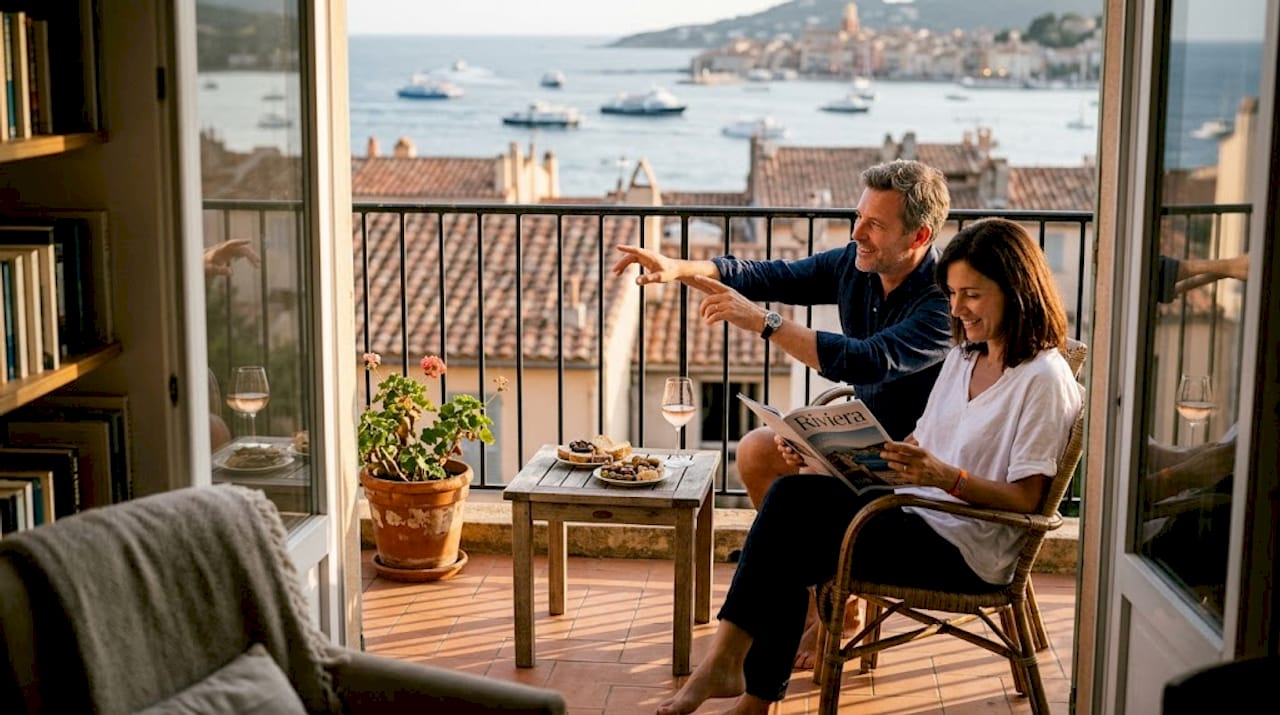
Couple relaxing on Côte d’Azur balcony at sunset

Pro Tip: When comparing new build versus historic property for a legacy portfolio, weight the ten-year structural warranty heavily. For a property intended to serve your children and grandchildren, eliminating early structural liability is worth more than the prestige of aged stone alone.

For a sharper read on where 2026 luxury market trends are heading, sustainable and biophilic new builds are recording a 15% demand spike. Tomorrow’s trophy assets are being poured today.
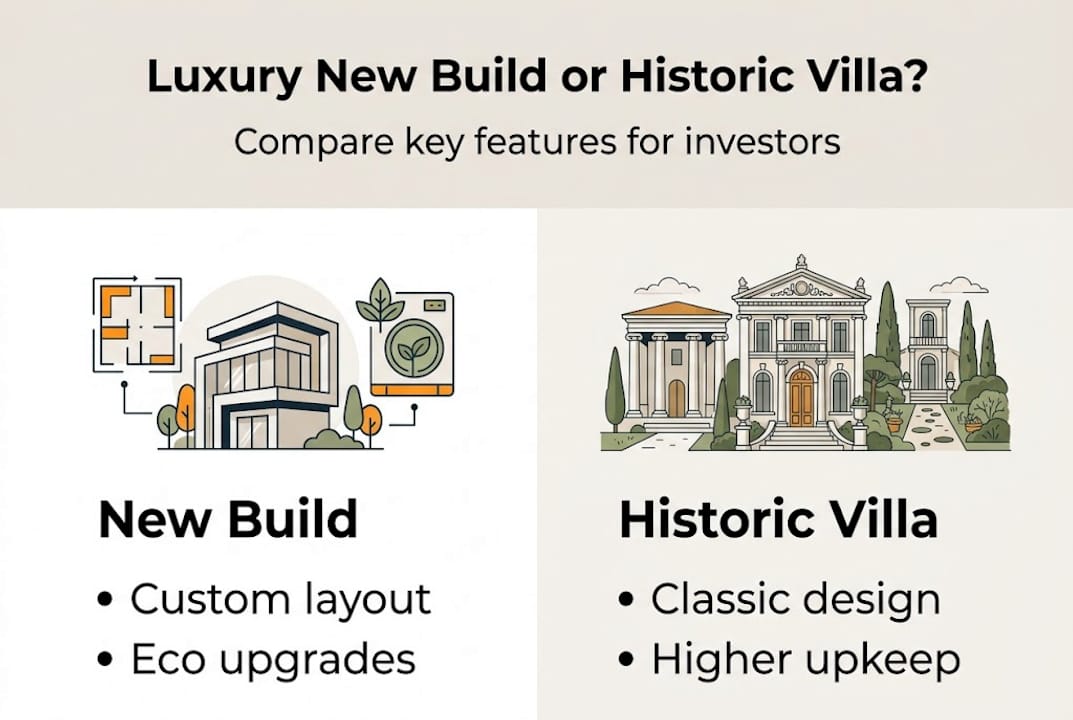
Infographic comparing new builds and historic villas

Understanding French tax incentives for new construction in 2026

With the pros and cons clearly mapped, understanding the 2026 tax landscape is pivotal for modelling your return on investment and long-term legacy strategy.

The most significant current scheme is the Relance Logement framework (also known as the Jeanbrun scheme), running from 2026 to 2028. Key parameters:

  1. Applicable to new VEFA properties rented unfurnished as a tenant’s primary residence
  2. Annual amortisation deduction of 3.5% to 5.5% on 80% of the purchase price, excluding land value
  3. Rent capped at €14.49 per square metre in qualifying zones
  4. Maximum annual deduction capped between €8,000 and €12,000 depending on zone and income thresholds
  5. Deficit on rental income can be carried forward and offset against future rental revenues
Scheme elementDetail
Scheme nameRelance Logement / Jeanbrun
Active period2026 to 2028
Amortisation rate3.5% to 5.5% per annum
Rent cap (zone A)€14.49/m²
Annual deduction cap€8,000 to €12,000
Deficit carryforwardYes, against future rental income

Here is the nuance that traditional advisors often gloss over: for ultra-high-net-worth buyers targeting luxury seasonal lets, this scheme’s rent cap sits well below Riviera market rates. A prestige apartment near Cannes’s Croisette or Antibes’s Cap coastal paths can command multiples of €14.49 per square metre during the summer season. The Relance Logement scheme therefore suits investors building diversified portfolios with a mix of mid-market and premium assets, or those prioritising tax-efficient wealth transfer over maximum short-term yield. The demand for luxury apartments in uncapped seasonal rental markets remains exceptionally robust, offering an alternative income strategy entirely outside this fiscal framework.

Selecting, acquiring, and maximising value: the new build investor journey

Tax considerations shape financial outcomes, but execution is where enduring value is created. Here is how seasoned investors approach each phase.

  1. Search and shortlist: Focus on developers with proven Côte d’Azur track records. Assess location for both lifestyle and liquidity. Sainte-Maxime’s proximity to Saint-Tropez, Nice’s Promenade des Anglais, and Menton’s lemon-festival charm all attract distinct buyer profiles.
  2. Reservation: Engage a French notary and an independent legal adviser simultaneously. Review the reservation contract for delivery penalties, force majeure clauses, and escrow conditions.
  3. Due diligence: Commission a technical audit of the developer’s financial standing and prior project delivery history. Verify the bank guarantee instrument before transferring any funds.
  4. Staged payments: Monitor construction milestones against the contractual schedule. Each payment release should be triggered by verified progress, not calendar dates alone.
  5. Handover: Conduct a detailed snagging inspection within 30 days of delivery. Lodge all defects formally in writing to activate the one-year perfect-completion warranty.
  6. Asset management: Decide early between seasonal luxury letting (uncapped, higher yield) and long-term tenancy (potentially Relance-eligible, steadier income). Position the asset with professional property management for immediate rental activation.

“For HNWI legacy investments, prioritise VEFA luxury villas in Sainte-Maxime and Cap Ferrat for appreciation over yields; the Relance scheme suits rental-focused strategies but caps rents below luxury market rates.”

Pro Tip: Build a clause into your reservation contract specifying financial penalties for delivery delays exceeding six months. Developers will often agree to this during negotiation, and it aligns their incentives with yours.

For a curated view of legacy and ROI strategies and a complete international investment guide tailored to the Riviera, we have assembled the frameworks that our most discerning clients rely upon. Whether your focus is Antibes’s yacht-dotted marina lifestyle or the botanical serenity of Menton’s Val Rahmeh gardens, the right new build in the right location becomes far more than a financial instrument. It becomes a family story, told in light and stone.

Why true legacy is often forged in new builds

Step back from the conventional narrative for a moment. The Riviera’s most celebrated estates — feted in auction house catalogues and whispered about at Cannes regattas — are historic, yes. But heritage is not the only path to legacy. We have worked with clients who shaped genuinely generational wealth through precisely targeted new construction acquisitions, choosing location and design intent over age and patina.

The ability to specify a property from the ground up — its orientation to catch Èze’s morning light, its terrace engineered for Baie des Anges panoramas, its energy systems future-proofed for the heirs who will inherit it — is a form of creative legacy rarely available in the resale market. Traditional advisors, wedded to the prestige of period properties, often underestimate how powerfully design control and capital protection compound over decades. New builds on the Côte d’Azur are not a compromise. In the right hands, they are a declaration.

Explore luxury new builds — elevate your Côte d’Azur legacy

If you are ready to consider what a thoughtfully chosen new build could mean for your portfolio and your family’s future, we are here to guide each step. At Living on the Côte d’Azur, we curate access to the most compelling off-plan opportunities across the Riviera, from biophilic apartments above Sainte-Maxime’s sands to prestige sea-view residences near Nice. We also accept cryptocurrency payments, placing us firmly in the world of forward-thinking, digitally fluent investors. Explore what defines luxury real estate in this market, refine your understanding of legacy investment strategies, or simply contact our team to begin a conversation that could shape your family’s next chapter.

Frequently asked questions

What legal protections do buyers have for new construction property in France?

Buyers benefit from a 10-day withdrawal period, staged payments secured by bank guarantees, and post-delivery warranties covering perfect completion, equipment, and structural integrity for up to ten years.

Can I maximise rental returns with a luxury new build under the 2026 Relance Logement scheme?

The Relance scheme caps rents at €14.49/m², which suits mid-market portfolios and tax-optimisation strategies but typically falls short of luxury seasonal rental rates achievable on the open Riviera market.

How do staged payments and delivery risks work in French new construction?

Payments are released at verified construction milestones, with bank guarantees securing buyer funds against non-completion; land ownership transfers at deed signing, reducing exposure throughout the build phase.

Is it better to invest in new construction or a historic villa for long-term legacy?

New builds offer full design control, lower acquisition costs, and ten-year structural warranties, while historic villas deliver established prestige; the right choice depends on your family’s priorities, with luxury investors comparing customisation benefits against heritage cachet.

Recommended

  • Côte d’Azur real estate trends: Invest smarter in 2026
  • Invest in New Construction in French Alps for Dual-Season ROI
  • High-net-worth real estate: Legacy, luxury, and ROI
  • Finding the perfect French Riviera luxury investment property
  • Why buy condos in Panama City: value and growth
by Websols Servicedesk/22 April 2026/in Landingpage
https://www.livingonthecotedazur.com/wp-content/uploads/2026/04/1776581757936_Architect-reviewing-blueprints-in-luxury-new-build.jpeg 715 1280 Websols Servicedesk https://www.livingonthecotedazur.com/wp-content/uploads/2024/02/sitelogo150.png Websols Servicedesk2026-04-22 03:30:592026-04-22 03:31:04New construction property: unlock luxury investment potential


TL;DR:

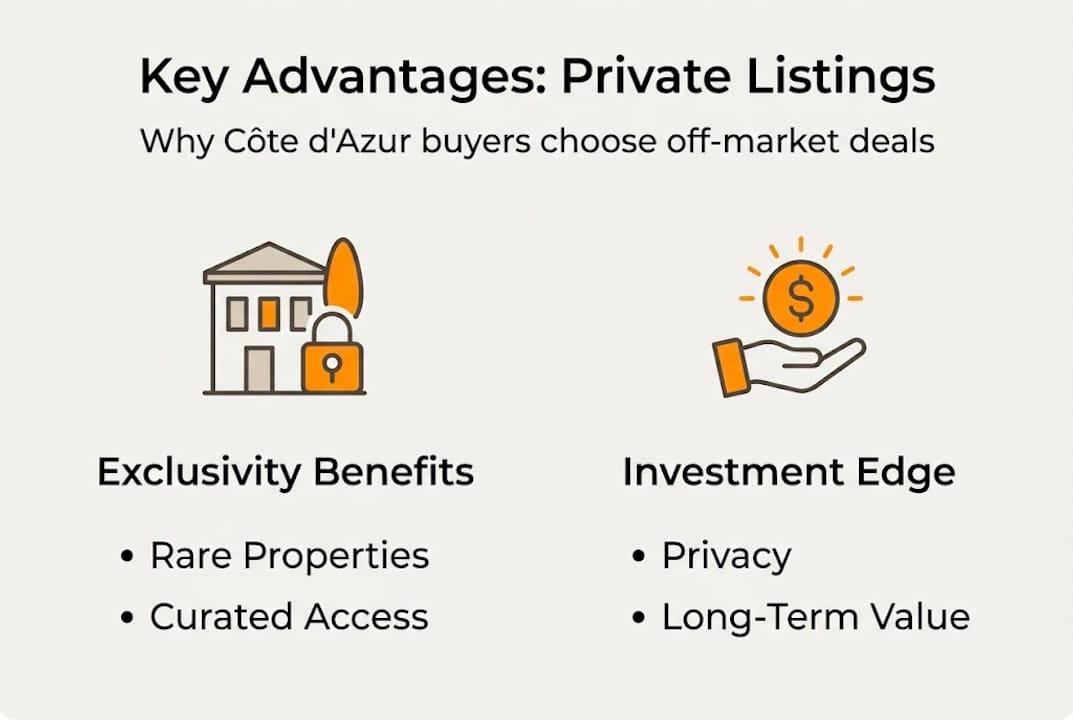
  • Private listings offer discretion, access to unique properties, and limited competition on the Côte d’Azur.
  • They are essential for securing rare, high-value estates and protecting family legacies.
  • Strategic use of private listings can enhance investment returns through better negotiation and targeted acquisitions.

Most buyers exploring the Côte d’Azur luxury property market assume that what appears on the major portals represents the full picture. It does not. The finest estates, the most coveted Cap d’Antibes headland villas, the Monaco-adjacent penthouses with sweeping Baie des Anges panoramas — these rarely surface on public listings at all. For high-net-worth investors and family offices who view Riviera property as both a lifestyle statement and a generational asset, understanding the private listings landscape is not merely advantageous. It is essential. This guide reveals precisely why the world’s most sophisticated buyers operate almost exclusively in this discreet and richly rewarding space.

Table of Contents

  • What are private listings and why do they matter?
  • Exclusive access and greater choice: The core appeal
  • Discretion, privacy, and legacy protection
  • Maximising return on investment through private listings
  • A fresh perspective: Rethinking your luxury property strategy
  • Explore exclusive investment opportunities with Living on the Côte d’Azur
  • Frequently asked questions

Key Takeaways

PointDetails
Access to exclusivityPrivate listings grant entry to rare, prestigious properties that public portals cannot offer.
Confidentiality and privacyTransactions protect buyers’ identity and sensitive financial strategies from unwanted attention.
Enhanced investment returnsReduced competition and off-market deals boost negotiating power and long-term ROI.
Legacy protectionConfidential acquisitions support generational wealth transfer and strategic estate planning.

What are private listings and why do they matter?

A private listing, sometimes called an off-market property, is one that is never publicly advertised on open portals, property aggregators, or general real estate platforms. Instead, it circulates quietly through an elite network of brokers, family offices, private banks, and trusted advisers. The seller’s identity, the property details, and the asking price remain protected from general public exposure throughout.

This is not secrecy for its own sake. As noted by specialists in privacy in luxury real estate, private listings protect sellers from unwanted scrutiny and preserve the exclusivity that defines truly elite properties. Sellers of a historic Provençal mas or a Belle Époque villa above Menton’s lemon-scented promenade have no desire to see their home become a subject of public curiosity or media attention.

For buyers, the experience is equally curated. Rather than scrolling through hundreds of listings, you receive a precisely filtered shortlist of properties that match your profile, presented confidentially and with full discretion. The off-market property advantages extend beyond mere privacy; they reshape the entire acquisition process.

Here is how private listings differ from public ones at a glance:

FeaturePrivate listingPublic listing
AdvertisingNonePortals, aggregators, press
Buyer poolCurated network onlyOpen to all
Seller privacyFully protectedMinimal protection
Negotiation environmentLow competitionHigh competition
Property profileOften unique or historicVaried, standardised

The key characteristics of a private listing include:

  • Strictly controlled circulation within trusted professional networks
  • No public photography or address disclosure before agreement
  • Sellers who prioritise discretion over maximum exposure
  • Buyers who are pre-qualified and vetted before introduction
  • Bespoke viewing arrangements, often outside standard hours

On the Côte d’Azur, where Saint-Tropez harbour-front properties and Cannes Croisette penthouses carry both financial and social significance, this level of discretion is not a luxury. It is the standard.

Exclusive access and greater choice: The core appeal

The most compelling reason elite investors gravitate towards private listings is remarkably straightforward: the finest properties simply never reach the open market. A restored stone bastide perched above Èze’s floral lanes, a beachfront compound steps from Pampelonne’s crystalline waters, a light-flooded penthouse with unobstructed views across the Baie des Anges from Mont Boron — these assets are exchanged quietly, between people who know people.

Elite buyers access unique properties with bespoke features through private listings that simply cannot be replicated on public portals. Think of a Cap d’Antibes villa with its own private coastal path leading to a secluded cove, or a Monaco-adjacent estate with a dedicated deep-water berth. These defining characteristics make certain properties irreplaceable and their owners deeply reluctant to expose them to the open market.

Woman researches off-market Riviera villa

The comparison in quality and character between private and public listings is stark:

Property typePrivate listing availabilityPublic listing availability
Historic villas and masFrequently availableRarely available
Monaco-adjacent plotsFrequently availableAlmost never
Beachfront compoundsFrequently availableOccasionally
Standardised new buildsOccasionallyCommonly available

Accessing this world requires positioning yourself within the right networks. Engaging an exclusive real estate buying guide mindset means building relationships with specialist brokers long before you intend to buy. These relationships, cultivated over time, are what earn you the first look at a Sainte-Maxime villa before it is ever offered elsewhere.

The broader benefits of private listing access include:

  • First-mover advantage on genuinely rare properties
  • Curated shortlists aligned with your lifestyle and investment criteria
  • Direct introductions to sellers, enabling honest dialogue
  • Access to properties with unique architectural or historical value
  • Reduced time wasted on unsuitable public listings

Pro Tip: Position yourself as a serious buyer by having your financial proof of funds prepared and your acquisition criteria clearly defined before approaching specialist brokers. Those who demonstrate readiness receive priority introductions on the most coveted private properties.

The Riviera’s seasonal rhythm also plays a role. Around Cannes Film Festival or the Monaco Grand Prix, discretion reaches its zenith. Sellers who may consider offers during this period do so only through the closest professional connections, making your network your single most valuable asset.

Discretion, privacy, and legacy protection

Beyond the immediate thrill of exclusive access, there is a deeper and more enduring reason why private listings resonate so profoundly with family offices and wealth managers: legacy protection.

When you acquire a Riviera estate as a generational asset, the transaction carries weight far beyond its market value. The property becomes part of a family narrative, a sanctuary that may pass through several generations of heirs. Exposing such an acquisition to public scrutiny introduces risk; competitors learn of your strategy, media attention can distort valuations, and the intimate character of the transaction is lost entirely.

“Discreet off-market transactions shield personal information and strategies from public exposure, preserving both the integrity of the deal and the long-term interests of the buyer’s family.”

The principles of invisible luxury real estate on the Côte d’Azur are built on exactly this understanding. The most experienced agents operate as trusted confidants, not merely as intermediaries. They manage introductions, control information flow, and ensure that every step of the process reflects the gravitas that legacy acquisitions deserve.

Consider the layers of protection that private listings provide:

  • Buyer identity remains unknown to the wider market throughout negotiation
  • Property address and imagery are withheld until formal agreement is reached
  • Financial terms are never disclosed publicly
  • The seller’s motivation remains private, preventing speculative pressure from third parties
  • Post-completion, ownership details are managed with maximum discretion

For families channelling inherited capital into Provençal real estate or establishing Riviera assets as the cornerstone of a multi-generational portfolio, these protections are not peripheral. They are foundational. A restored mas above Menton’s Val Rahmeh gardens or a Belle Époque residence in Èze’s perfumed streets carries cultural and emotional value that demands the same respect as its financial worth. Privacy in luxury real estate is the silent architecture behind every great legacy acquisition.

Maximising return on investment through private listings

Private listings do not merely offer privacy and exclusivity. They offer measurably superior financial outcomes for investors who approach them strategically.

The arithmetic is compelling. When you acquire a property through the open market, you are competing against every other qualified buyer who spotted the same listing. Prices are bid upward, vendors hold stronger positions, and concessions are rare. In the private sphere, the dynamics invert. Fewer buyers means less competition, and less competition means genuine negotiating leverage.

Off-market deals deliver better negotiation positions, reduced competition, and higher value-add potential compared with publicly listed properties. On the Côte d’Azur, where prime property appreciates at 5 to 8% annually and seasonal rental yields on elite lets can reach 3 to 5%, acquiring at a favourable entry price amplifies every dimension of return.

Here is a structured approach to maximising ROI through private listings:

  1. Build your specialist network early, ideally six to twelve months before your target acquisition window
  2. Define your value-add criteria, whether renovation potential, planning permissions, or repositioning for seasonal lets
  3. Move swiftly once introduced; private listings rarely wait, and hesitation signals a lack of seriousness to the selling agent
  4. Engage independent legal and technical due diligence specialists who work discreetly and efficiently
  5. Consider properties with eco-upgrade potential; 2026’s demand for sustainable builds is growing at 15%, and green certification adds measurable resale premium

A notable advantage: Properties acquired off-market and subsequently renovated with eco-luxury finishes, solar arrays, or biophilic design features consistently outperform publicly purchased equivalents in both resale value and elite rental income. A Sainte-Maxime villa acquired privately and upgraded for discerning seasonal tenants can yield substantially above market averages during the summer regattas and Pampelonne season.

Pro Tip: When evaluating a private listing’s ROI potential, look beyond the headline price. Assess planning flexibility, rental ceiling based on comparable elite lets in the area, and the scope for sustainable renovation. These three factors, combined with a favourable entry price, define a truly exceptional high-net-worth real estate strategy.

The most astute family office investors we work with treat private listings not as a transaction channel but as a strategic asset class within their broader portfolio.

A fresh perspective: Rethinking your luxury property strategy

Here is the uncomfortable truth that most buyers learn too late: the public property market on the Côte d’Azur is, by definition, what sophisticated investors have already passed on. What remains publicly available has either been deemed unsuitable by those with first access or priced to account for the competition that public exposure creates.

Infographic of main private listing advantages

Conventional wisdom suggests that wider market visibility benefits buyers by maximising their choice. We would argue precisely the opposite. Visibility benefits sellers. It creates the competitive pressure that drives prices upward and erodes the negotiating position of even the most determined acquirer.

The elite buyers and family offices who shape the Riviera’s most significant property transactions invest first in relationships, then in property. They cultivate specialist advisers, engage with curated platforms offering exclusive real estate strategies, and position themselves as credible partners in discreet transactions long before any specific property appears. This reorientation, from reactive searching to proactive relationship building, is the single most transformational shift any serious Riviera investor can make.

Explore exclusive investment opportunities with Living on the Côte d’Azur

At Living on the Côte d’Azur, we have built our reputation on precisely this private market intelligence. Our portfolio of invisible luxury real estate spans the full arc of the Riviera, from Menton’s lemon-festival season to Saint-Tropez’s Vieux Port, with opportunities curated exclusively for buyers who view property as legacy rather than transaction. Whether you are a family office seeking generational assets, a digital entrepreneur exploring high-net-worth real estate with cryptocurrency, or a wealth manager building a diversified Riviera portfolio, we offer bespoke, fully confidential introductions to the market’s most compelling private opportunities. Explore our French Riviera luxury listings and begin a conversation today.

Frequently asked questions

How are private listings different from regular property listings?

Private listings are not advertised publicly, offering unique properties and confidentiality, often accessible only through specialised agents with established networks and vetted client relationships.

Can private listings improve my chances of finding rare luxury properties?

Yes. Elite buyers access unique properties via private listings, including historic villas, penthouses, and bespoke estates that are never offered on public portals.

Are transactions for private listings more secure and discreet?

Private listing transactions typically provide enhanced confidentiality, with discreet off-market transactions protecting both buyers’ and sellers’ personal information throughout the acquisition process.

What strategies maximise ROI from private listings?

Reducing buyer competition through private listings improves negotiating power, and off-market deals deliver superior negotiation positions and value-add opportunities compared with publicly marketed properties.

Recommended

  • 7 Top Off-Market Property Advantages for Riviera Investors
  • Privacy in Luxury Real Estate – Why It Matters on the Côte d’Azur
  • Advantages of Buying an Existing Property in the French Riviera – Living on the Côte d’Azur
  • Off-market acquisition: secure exclusive Côte d’Azur property
by Websols Servicedesk/21 April 2026/in Landingpage
https://www.livingonthecotedazur.com/wp-content/uploads/2026/04/1776738736359_Buyer-reviewing-Cote-d-Azur-private-listings-1.jpeg 715 1280 Websols Servicedesk https://www.livingonthecotedazur.com/wp-content/uploads/2024/02/sitelogo150.png Websols Servicedesk2026-04-21 07:02:362026-04-24 02:00:40Private listings: 5 key advantages for Côte d’Azur buyers


TL;DR:

  • Choosing the right ownership structure like an SCI is crucial for privacy, inheritance, and tax benefits.
  • Due diligence on legal, planning, and title issues safeguards investment and future legacy.
  • Understanding France’s tax, inheritance laws, and future regulations ensures long-term property value.

Securing a villa above the sun-drenched corniches of the Côte d’Azur is one of the most powerful wealth decisions a discerning investor can make. The salt-kissed air, the lavender-laced breezes rolling down from the arrière-pays, and the promise of 5 to 8% annual appreciation make this coastline irresistible. Yet the very prestige that draws global elites to Cap d’Antibes, Monaco’s borders, and the citrus-scented lanes of Menton also conceals a labyrinth of legal complexity. One misstep in ownership structure, tax planning, or contractual detail can quietly erode both returns and the generational legacy you intend to build. This guide illuminates every critical legal consideration so that your investment stands as firm as the limestone cliffs above Èze.

Table of Contents

  • Understanding ownership structures and their ROI impact
  • Critical due diligence before signing
  • Mastering property taxes, inheritance, and succession laws
  • Key contractual clauses and compliance essentials
  • Future-proofing your French Riviera investment
  • The uncomfortable truths of Côte d’Azur legacy investment
  • Secure your Côte d’Azur legacy with expertise
  • Frequently asked questions

Key Takeaways

PointDetails
Choose the right structureYour legal ownership form impacts privacy, tax, and inheritance outcomes.
Complete due diligenceCheck title, planning, and compliance before signing to avoid later risk.
Plan for taxes and legacyUnderstand French succession laws and taxes to safeguard ROI for future generations.
Prioritise contract detailInsist on robust clauses for compliance and dispute resolution in all agreements.
Anticipate regulatory shiftsStay ahead by monitoring sustainability trends and tax law evolution for lasting value.

Understanding ownership structures and their ROI impact

Choosing how you hold a French luxury property is arguably the single most consequential decision in your acquisition journey. It shapes your tax exposure, your privacy, your heirs’ experience, and ultimately how cleanly and profitably you can exit. Most international buyers default to direct personal ownership, which is straightforward but rarely optimal for high-value estates.

The Société Civile Immobilière (SCI) is France’s most favoured vehicle for holding real estate. It separates the property from your personal patrimony, simplifies multi-party ownership, and creates elegant succession pathways. A related structure, the SARL de famille (family limited liability company), suits investors who intend to generate rental income, offering access to the régime micro-BIC and favourable depreciation rules. Both structures carry reporting obligations, but the advantages in legacy planning and tax and legacy outcomes are substantial.

FeatureDirect ownershipSCISARL de famille
PrivacyLowHighMedium
Inheritance planningComplexSimplifiedModerate
Rental income taxStandard IRIR or ISMicro-BIC eligible
Ease of resaleSimpleModerateMore complex
Wealth tax exposureFullPartial relief possiblePartial relief possible

Key advantages of the SCI that seasoned investors prize:

  • Identity shielding: shareholding is not publicly searchable in the same way as direct title
  • Gift-splitting: shares can be gifted progressively to heirs, reducing inheritance tax over time
  • Flexible governance: a gérant (manager) can act without requiring all shareholders’ consent
  • Mortgage compatibility: French lenders are well accustomed to financing via SCI

For those building a luxury portfolio across multiple Riviera addresses, the SCI also consolidates management elegantly. You can read a detailed breakdown of SCI in France explained to understand reporting thresholds and share transfer mechanics before committing.

Pro Tip: An SCI can be transparent for income tax (IR) or opaque (IS), and this election is largely irrevocable. IS may reduce annual tax on rental profits, but it triggers a corporate-level capital gains tax on sale. Always model both scenarios across a ten-year horizon before deciding.

Now that you appreciate the consequences of ownership choice, the next step is to master due diligence.

Critical due diligence before signing

No amount of architectural splendour, from a Cannes waterfront villa to a Provençal mas restored in warm terracotta, excuses a failure to scrutinise the legal foundations beneath it. The French acquisition process involves two key stages: the compromis de vente (preliminary contract) and the acte de vente (final deed). Between these two moments lies your window to uncover every risk.

Failing to review zoning and title is one of the most common and costly errors international buyers make. Here is a structured sequence we recommend:

  1. Obtain the titre de propriété: Verify that the seller holds unencumbered, clean title with no undisclosed mortgages or liens.
  2. Request the certificat d’urbanisme: This reveals planning constraints, protected zones, and approved building rights, critical near coastal areas in Nice or Saint-Tropez.
  3. Commission a diagnostic technique: French law mandates a dossier of technical surveys covering asbestos, lead, energy performance, and natural risk exposure such as seismic or flood zones.
  4. Verify building permits: Any extension or renovation completed without a valid permis de construire creates potential demolition or regularisation liability.
  5. Check cadastral boundaries: Discrepancies between cadastral plans and physical fencing are common in older Antibes and Menton estates.
  6. Assess true market value: Compare listed price against recent comparable sales, particularly for off-market and private sale transactions where pricing can drift from market reality.

‘Overlooking legal paperwork can jeopardise your legacy investment.’

The notaire is a state-appointed officer, not your personal advocate. Appoint your own independent legal counsel alongside the notaire to scrutinise every clause in your specific interest. This dual layer of oversight is standard practice for any acquisition above €2 million.

Notaire and legal counsel verifying property documents

Once due diligence is underway, attention must turn to the region’s tax landscape.

Mastering property taxes, inheritance, and succession laws

French property taxation is layered and nuanced, and the consequences of misunderstanding it can silently diminish the ROI you project on paper. For non-resident investors, the exposure is particularly significant.

TaxRate / detailKey note
Acquisition tax (droits de mutation)5.8% approx. of purchase pricePaid at completion
Taxe foncièreVaries by communeAnnual; can be €8,000 to €30,000+ on luxury estates
IFI (Impôt sur la Fortune Immobilière)0.5% to 1.5% above €1.3M netApplies to non-residents on French assets
Capital gains tax (non-residents)19% + 7.5% social chargesTapered relief after year 5

French succession law introduces forced heirship rules that may conflict with your home country’s estate planning. Under EU Succession Regulation 650/2012, non-EU nationals may elect their home country’s succession law to govern their French estate, a provision that many investors overlook until it is too late. Explore the full implications of French succession law before structuring ownership.

Strategies to minimise tax whilst protecting your legacy:

  • Démembrement de propriété (usufruct split): Separating usufruct (life use) from bare ownership (nue-propriété) reduces inheritance tax by discounting the transferred value
  • Progressive gifting: Donating SCI shares up to the €100,000 per parent per child allowance every 15 years is a powerful, legal tax mitigation
  • Life insurance (assurance-vie): A French-law policy sits outside the estate and passes to named beneficiaries free of succession tax up to generous thresholds
  • Timing capital gains: Holding beyond 22 years eliminates capital gains tax entirely, making long-term Riviera ownership exponentially more rewarding

Review the Riviera tax guide and understand capital gains tax mechanics before committing to any exit timeline.

Having understood tax and succession issues, focus next shifts to contractual protection and regulatory compliance.

Key contractual clauses and compliance essentials

The compromis de vente is not a formality. It is a binding contract that defines your legal position for the months between signature and completion. Within it lie clauses that can either shield your capital magnificently or expose you to penalties you never anticipated.

Critical clauses to scrutinise in every luxury transaction:

  • Conditions suspensives (suspensive conditions): Ensure finance and survey conditions are worded precisely, so you retain the right to withdraw without penalty if your mortgage or technical checks fall short
  • Penalty clauses: Standard French contracts include a 10% deposit forfeiture if you withdraw without valid grounds; negotiate the quantum and triggers carefully
  • Warranties on hidden defects (vices cachés): Sellers may attempt to limit their exposure; always ensure these warranties are preserved for estate acquisitions with complex histories
  • Force majeure terms: Particularly relevant for off-plan VEFA purchases in Sainte-Maxime or Nice’s Mont Boron, where construction timelines can shift
  • Dispute resolution jurisdiction: Specify whether disputes will be resolved by French courts or via international arbitration, particularly when foreign entities hold the property

The compromis and acte de vente carry specific legal obligations for both parties, and the property contract guide from French public services clarifies your statutory rights at each stage.

Compliance is equally non-negotiable. Anti-money laundering (AML) regulations require all parties to identify beneficial owners of purchasing structures. Offshore vehicles must be declared, and French authorities have materially strengthened their scrutiny of high-value real estate transactions since 2024. Your real estate broker should be fluent in these requirements and able to guide you through the documentation chain without delay.

Pro Tip: Always request a full list of charges and syndic meeting minutes for apartments in Cannes or Nice. Unresolved co-ownership disputes or deferred maintenance levies become your liability from the moment you sign.

With legal risks addressed through robust contracts, strategic investors should now consider how to future-proof both investment and legacy.

Future-proofing your French Riviera investment

The Côte d’Azur is not immune to the regulatory and environmental forces reshaping premium real estate globally. In 2026, sustainable builds are commanding measurable premiums, and the direction of travel is clear.

Statistic: Demand for sustainable luxury properties on the Côte d’Azur has risen by 15% year-on-year, with green-certified estates commanding up to 20% price premiums over comparable non-certified stock.

Key considerations for long-term legal and financial resilience:

  • Green certifications: Properties with BBC, HQE, or BREEAM certification face lighter future regulatory risk and attract elite tenants willing to pay seasonal premiums of 15 to 25%
  • Energy performance diagnostics (DPE): From 2028, properties rated F or G will be legally unlettable in France; acquisitions must be assessed for upgrade costs now
  • Coastal protection laws (Loi Littoral): Strict rules govern construction and extension within 100 metres of the coastline, directly affecting renovation plans for Saint-Tropez and Antibes properties
  • Digital and cryptocurrency compliance: As more buyers transact in digital assets, French regulations on crypto-funded acquisitions are evolving; structures must be compliant from day one
  • Monitoring emerging market trends: Biophilic design, smart-home integration, and wellness amenities now influence valuation and insurance categorisation

The rise of green prime markets globally confirms what we observe locally: eco-credentials are no longer a lifestyle bonus but a value imperative. Review your luxury tax planning strategy to incorporate the cost of green upgrades into your total acquisition budget from the outset.

Having examined core and emerging legal considerations, it is time to reflect on the broader perspective borne of experience.

The uncomfortable truths of Côte d’Azur legacy investment

We have guided hundreds of high-net-worth families through acquisitions from Menton’s lemon-scented ramparts to the Croisette’s most coveted addresses, and one truth surfaces repeatedly: overconfidence in international advisors is the most expensive mistake a Riviera buyer makes.

London or Geneva-based lawyers are brilliant at what they do. But French property law has local dialects, unwritten customs between notaires, and commune-level planning quirks that only years of transacting on this coastline can reveal. An advisor who does not know the specific PLU (local urban plan) of Antibes or the co-ownership governance of a Cannes seafront building will miss risks that a local expert would spot immediately.

We also see investors underestimate the importance of relationship capital. In a market where the finest properties rarely appear online, the legacy and ROI outcomes consistently favour those who work with embedded local networks.

‘The biggest risks are the ones you don’t know exist until they impact your legacy.’

Align with professionals who have genuine roots here. It is not merely prudent. It is the decisive investment edge.

Secure your Côte d’Azur legacy with expertise

We believe that every exceptional estate on the French Riviera deserves an equally exceptional acquisition strategy. Whether your vision is a sun-drenched Cap d’Antibes villa, a Monaco-border penthouse, or an off-market property hidden from public search, we offer the local depth and international reach to make it yours, legally sound and legacy-ready. Our specialists align ownership structures, tax planning, and contractual protections with your high-net-worth strategies from day one. We also accept cryptocurrency, ensuring your digital wealth transitions seamlessly into stone. Speak with one of our experts today and take the first step towards a Riviera legacy built to endure.

Frequently asked questions

What is the best ownership structure for luxury real estate in France?

Many high-net-worth investors use a Société Civile Immobilière (SCI) for privacy and inheritance, but the right choice depends on personal tax and legacy goals. The ownership structure you select will shape your tax exposure and succession pathway for decades.

Are there any hidden tax traps for non-residents investing on the Côte d’Azur?

Non-residents may face capital gains and wealth taxes, plus strict succession laws; expert planning helps avoid costly surprises. French property taxation is complex and requires specialist advice tailored to your residency and asset structure.

How do I future-proof my luxury property investment in the South of France?

Focus on properties with green certifications and prepare for evolving local regulations to protect long-term value and compliance. Sustainable luxury properties on the Côte d’Azur are already delivering up to 20% gains over comparable non-certified stock.

Recommended

  • Luxury Real Estate Buying Guide: Secure Your Riviera Legacy
  • Luxury Property Acquisition: The Riviera Legacy
  • 7 Essential Steps for Buying Luxury Property in 2025
  • Luxury Development: Defining Modern Riviera Excellence
by Websols Servicedesk/21 April 2026/in Landingpage
https://www.livingonthecotedazur.com/wp-content/uploads/2026/04/1776493323494_image.jpeg 720 1260 Websols Servicedesk https://www.livingonthecotedazur.com/wp-content/uploads/2024/02/sitelogo150.png Websols Servicedesk2026-04-21 03:30:452026-04-21 03:30:49Legal considerations for luxury Riviera real estate 2026


TL;DR:

  • Successful luxury transactions on the French Riviera require thorough legal, tax, and due diligence preparation.
  • Structuring ownership through entities like SCI and ongoing asset management are key to legacy building.
  • Engaging experienced advisors and verifying all documentation minimizes risks and ensures long-term value.

Few arenas demand as much precision, foresight, and elegant composure as a luxury real estate transaction on the French Riviera. From the salt-kissed terraces of Cap d’Antibes to the lemon-scented ramparts of Menton, the estates that line this storied coastline are more than addresses — they are heirlooms in waiting. Yet for high-net-worth investors, the path from aspiration to ownership is lined with legal intricacies, tax considerations, and compliance obligations that can confound even seasoned buyers. This guide walks you through every critical stage, from foundational prerequisites to legacy verification, so your acquisition becomes precisely what it should be: a defining investment for generations.

Table of Contents

  • Essential prerequisites for managing luxury transactions
  • Step-by-step transaction process for luxury estates
  • Common pitfalls and troubleshooting
  • Verifying legacy outcomes and securing ROI
  • What smart investors really do differently
  • Discover unrivalled luxury and investment strategy
  • Frequently asked questions

Key Takeaways

PointDetails
Preparation is vitalProper groundwork minimises risk and assures smooth luxury real estate transactions.
Follow clear stepsStructured, step-by-step management streamlines the process and protects your interests.
Avoid common pitfallsExpert advice and rigorous due diligence help steer clear of costly mistakes.
Secure legacy and ROIFinal verification and strategic management maximise returns and safeguard assets for future generations.

Essential prerequisites for managing luxury transactions

Before a single offer is made, the groundwork you lay will determine how smoothly — and profitably — your transaction concludes. Think of it as building the foundations of a Belle Époque villa: skip a step, and the entire structure is compromised.

As unique legal, tax, and compliance considerations define luxury property transactions, engaging the right advisors from the outset is not optional. It is essential. You will need a French notaire (a state-appointed legal officer), a specialist property lawyer, and ideally a bilingual financial advisor who understands cross-border wealth structures.

Financial pre-approval comes next. Whether you are financing through a French mortgage, international bank transfer, or even cryptocurrency — we welcome all three — having confirmed liquidity signals seriousness to sellers and accelerates negotiations. Riviera sellers at the €3M to €15M price point do not entertain speculative enquiries.

Title verification is equally non-negotiable. Your legal team must audit the acte de propriété (title deed), confirm there are no outstanding mortgages or servitudes (easements), and verify planning permissions for any recent modifications. One oversight here can freeze an acquisition for months.

Essential due diligence checklist

  • Proof of funds or mortgage pre-approval letter
  • Verified identity documents (passport, residence permit)
  • Property title deed and cadastral plan
  • Diagnostics immobiliers (mandatory technical reports covering energy rating, asbestos, lead, and electrics)
  • Urban planning certificate confirming construction compliance
  • Records of all past renovations and permissions
DocumentPurposeWho provides it
Acte de propriétéConfirms legal ownershipSeller’s notaire
Cadastral planDefines property boundariesLand registry
Diagnostics immobiliersFlags structural or environmental risksCertified diagnostician
Urban planning certificateConfirms zoning complianceLocal mairie
Proof of fundsDemonstrates buyer credibilityBuyer’s bank

Our luxury property buying guide details precisely how to navigate each document category. And if you prefer an expert to handle this choreography on your behalf, using a buyer agent remains one of the most underutilised advantages available to international buyers.

Pro Tip: Arrange your financial and legal advisors before you begin viewing properties. In competitive micro-markets like Èze Village or the Monaco border zone, desirable estates can receive multiple offers within days of listing.

Step-by-step transaction process for luxury estates

With prerequisites firmly in place, the transaction itself follows a structured and legally defined sequence. France’s property acquisition framework is rigorous, and for good reason: it protects both buyer and seller at every stage.

There are structured acquisition steps that govern luxury property purchases in France, and understanding them transforms what can feel overwhelming into a manageable, even satisfying, progression.

The core transaction sequence

  1. Initial enquiry and viewing — Engage through a trusted agency or off-market network. Attend viewings with your buyer agent to assess condition, location, and lifestyle alignment.
  2. Offer submission — Submit a written offer (offre d’achat) specifying price and conditions. This is not legally binding but signals intent.
  3. Negotiation and reservation — Price and terms are negotiated. For new builds, a contrat de réservation (VEFA reservation contract) is signed at this stage.
  4. Compromis de Vente — The preliminary sales agreement, binding on both parties. A deposit of 5–10% is paid. You have a 10-day statutory cooling-off period as a buyer.
  5. Due diligence period — Typically 60 to 90 days. Legal checks, mortgage finalisation, and compliance verifications are completed.
  6. Acte Authentique — The final deed, signed before a notaire. Ownership transfers officially, and remaining funds are released.
StageTypical timeframeKey action
Offer to Compromis1 to 4 weeksNegotiate, instruct notaire
Compromis to Acte60 to 90 daysDue diligence, mortgage
Acte signing1 dayTransfer of funds and keys

For internationally mobile buyers navigating this from London, Dubai, or Singapore, our guide on international buying steps addresses the nuances specific to non-resident purchasers. The property acquisition guide offers additional depth on each contractual milestone.

Pro Tip: Never sign the Compromis de Vente without your own legal counsel reviewing it independently. Clauses relating to conditions precedent (conditions suspensives) — particularly those tied to mortgage approval — can make or break your position if circumstances shift.

Common pitfalls and troubleshooting

Even with a clear roadmap, luxury transactions carry the potential for setbacks that catch unprepared buyers off guard. We have observed these patterns across hundreds of Riviera acquisitions, from Cannes’ Croisette-facing penthouses to Antibes’ walled-estate retreats.

Client and surveyor inspecting luxury property

Professional guidance reduces risks of costly oversight during transactions — and nowhere is that truer than in the French Riviera’s layered regulatory environment.

The most common pitfalls we see

  • Overlooking local tax obligations: Taxe foncière, taxe d’habitation for secondary residences, and capital gains tax on future resale all require advance planning.
  • Misjudging timeframes: Buyers often underestimate how long administrative processes take, particularly when municipal planning records are incomplete.
  • Skipping independent inspections: The mandatory diagnostics cover legal minimums, but structural surveys and pool condition reports are not included. Commission them separately.
  • Underestimating transaction costs: Notaire fees, agency commissions, and registration taxes can add 7–10% to your purchase price on existing properties. Budget for this from the outset.
  • Currency exposure: For buyers transacting in sterling, dollars, or dirhams, exchange rate movements between offer and completion can alter effective costs by tens of thousands of euros.

“The buyers who encounter the fewest surprises are those who treat due diligence not as a formality, but as the most valuable investment they make before signing anything.”

Strategies for avoiding mistakes in luxury buying and ensuring your successful transaction steps include appointing a buyer agent with Riviera-specific expertise who can identify red flags before they become contractual crises.

Pro Tip: Always obtain a separate structural survey from an independent expert bâtiment (building surveyor), even for properties that appear immaculate. Hillside villas above Nice or Èze can be subject to subsidence or drainage issues invisible to the untrained eye.

Verifying legacy outcomes and securing ROI

The final stage of a successful luxury acquisition is often the most overlooked: confirming what you now own, and building a strategy to protect and grow it across generations. This is where a transaction becomes a legacy.

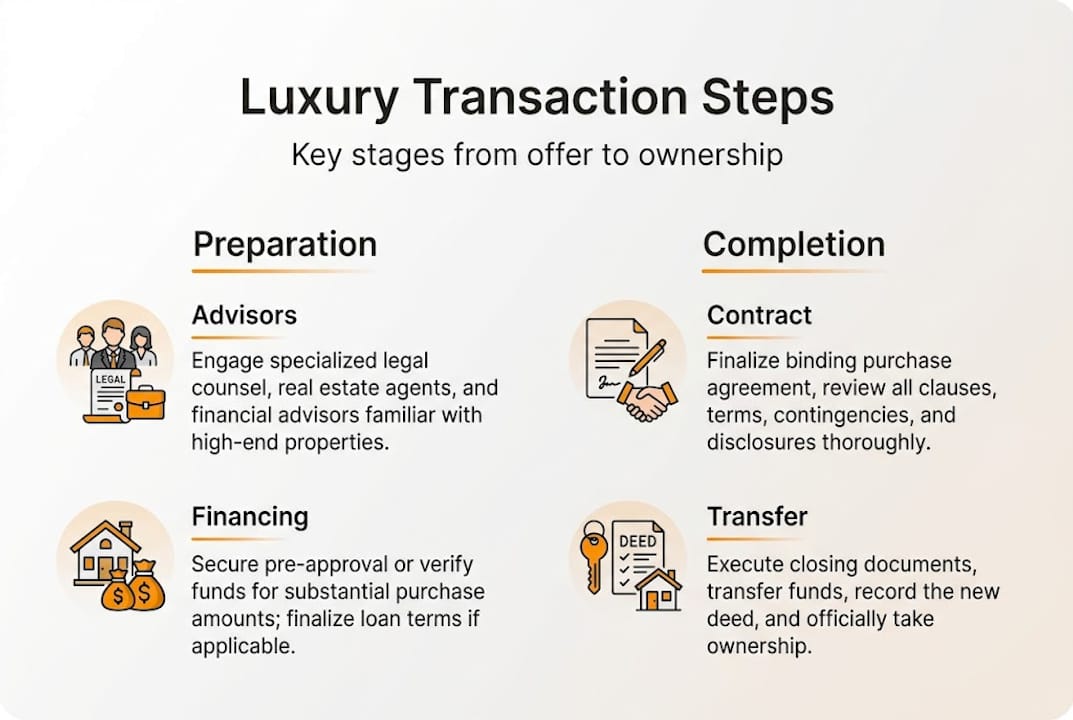
Infographic showing luxury property transaction steps

Post-transaction asset management and ongoing oversight are the foundations of genuine legacy-building in real estate, not merely the act of purchase.

Steps to secure and grow your investment

  1. Confirm title registration — Ensure the acte authentique is formally registered with the Service de la publicité foncière (land registry). You should receive a registered copy within a few weeks of signing.
  2. Instruct a property management specialist — For seasonal lettings around the Cannes Film Festival, Antibes Jazz Festival, or Monaco Grand Prix, professional management ensures maximum yield with zero operational burden.
  3. Review your rental pricing strategy annually — Riviera rental demand shifts with calendar events and global travel patterns. Properties near Sainte-Maxime’s Nartelle beach or Saint-Tropez’s Pampelonne coastline command a premium during summer.
  4. Establish trust or SCI structures — A Société Civile Immobilière (SCI) is a French property holding company that facilitates tax-efficient wealth transfer to heirs. Combined with appropriate trust provisions in your home jurisdiction, it is a cornerstone of intelligent legacy planning.
  5. Monitor capital appreciation — Riviera properties have historically appreciated 5–8% annually in prime locations. Review your portfolio’s market position every 18–24 months.
StrategyPrimary benefitTimeframe
SCI structureTax-efficient inheritanceSet up pre-purchase ideally
Professional lettings3–5% annual rental yieldOngoing
Annual valuation reviewTracks capital growthEvery 12–24 months
Trust provisionsIntergenerational asset transferLong-term

Our investment strategies for legacy resource explores the most effective frameworks available to international buyers holding Riviera assets.

Pro Tip: If you intend to let your property seasonally, inform your notaire before completion. Certain ownership structures are far easier to establish at the point of purchase than to retrofit afterwards.

What smart investors really do differently

After years of guiding discerning clients through acquisitions from Menton’s Val Rahmeh-adjacent villas to the Monaco borderlands, one truth stands out clearly. The investors who build enduring wealth do not simply follow the steps: they reframe what success means before they begin.

The most impactful shift is moving from a transaction mindset to a legacy mindset. It changes which properties you pursue, which legal structures you prioritise, and how you define a satisfying return. A villa yielding 4% annually while appreciating 7% and serving as a family sanctuary across three generations is worth far more than a purely transactional asset yielding 6%.

Off-market properties deserve particular attention. The finest Riviera estates — those never listed publicly, changing hands between discerning families — consistently outperform the open market in both quality and long-term value. Access to these opportunities requires relationships, not algorithms.

Ongoing diligence, too, is underestimated. Reviewing your advanced investment strategies and asset structures every few years ensures your wealth adapts to regulatory changes and family circumstances. Legacy is not a destination. It is a discipline.

Discover unrivalled luxury and investment strategy

The Côte d’Azur rewards those who approach it with both passion and precision. Whether you are drawn to the kaleidoscopic energy of Nice’s Cours Saleya, the chapel-crowned cliffs of Èze, or the yacht-studded marina of Antibes, we connect you to estates that transcend the ordinary. Our portfolio of French Riviera villas for sale spans every coveted enclave, from off-plan icons to centuries-old mas. Explore our thinking on legacy luxury ROI and discover why the world’s most forward-thinking investors are focusing on wealth-building on the Riviera. Your heirloom awaits. Reach out to our team today.

Frequently asked questions

What makes a luxury real estate transaction on the French Riviera different from standard property deals?

Luxury transactions involve more stringent legal checks, complex tax implications, and often require experienced advisors to ensure full compliance and long-term asset protection.

What documents are essential for property due diligence?

Key documents include the property title deed, cadastral plan, mandatory technical diagnostics, an urban planning certificate, and records of past renovations. Verifying property titles and documentation is a foundational step that no buyer should skip.

How can investors avoid hidden costs and legal issues?

Engage expert buyer agents, commission independent structural surveys, and budget for notaire fees and taxes from the outset. Professional guidance reduces risks of costly oversights that surface only after contracts are signed.

What steps confirm transaction closure and asset transfer?

Final registration of the acte authentique with the land registry confirms legal ownership, followed by establishing an SCI or trust structure for post-transaction asset management and legacy preservation.

Recommended

  • How to Buy Luxury Property: Your Step-by-Step Guide – Living on the Côte d’Azur
  • 7 Essential Steps for Buying Luxury Property in 2025
  • Key steps in international luxury property buying 2026
  • Luxury home acquisition workflow for legacy living 2026
  • Step by step property buying guide for Australian first-timers 2026 | Elite Wealth Creators
by Websols Servicedesk/20 April 2026/in Landingpage
https://www.livingonthecotedazur.com/wp-content/uploads/2026/04/1776650633091_Luxury-estate-agent-meeting-with-clients-1.jpeg 715 1280 Websols Servicedesk https://www.livingonthecotedazur.com/wp-content/uploads/2024/02/sitelogo150.png Websols Servicedesk2026-04-20 07:03:542026-04-23 02:00:33Luxury real estate transactions: step-by-step guide 2026


TL;DR:

  • Legacy property acquisition focuses on creating lasting family wealth and sustainability.
  • Preparation, expert legal and financial team assembly, and off-market access are vital.
  • Post-purchase planning and stewardship are crucial to maintaining property value across generations.

Acquiring a luxury home on the Côte d’Azur is one of the most rewarding decisions a discerning investor can make. It is also one of the most intricate. Between cross-border tax structures, off-market sourcing, sustainability certifications, and succession planning, even seasoned buyers can find the process overwhelming. The stakes are simply too high for ambiguity. Whether you are drawn to a stone-clad villa above Èze’s flower-festooned lanes or a sea-view residence overlooking Cannes’ Croisette, this guide distils the entire acquisition workflow into clear, purposeful stages, built specifically for those whose vision extends far beyond ownership and into the realm of generational legacy.

Table of Contents

  • Understanding legacy-focused luxury home acquisition
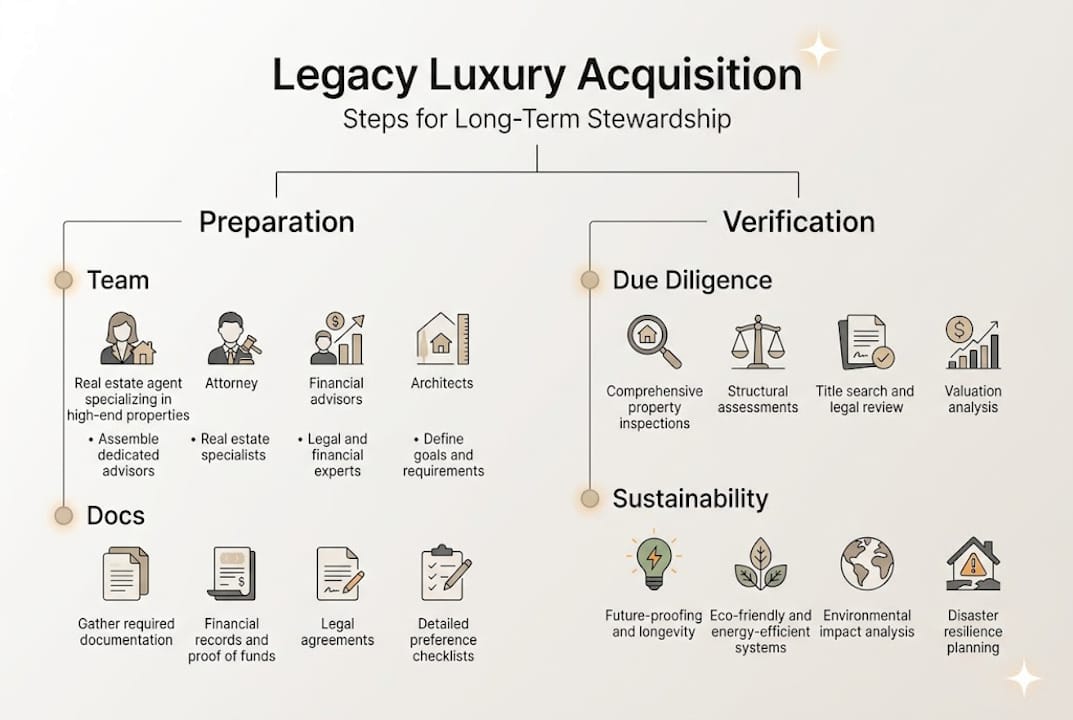
  • Preparation: Prerequisites for a seamless acquisition
  • Step-by-step luxury home acquisition workflow
  • Verification and legacy proofing your investment
  • An insider’s perspective on legacy property acquisition
  • Secure your Côte d’Azur legacy with expert guidance
  • Frequently asked questions

Key Takeaways

PointDetails
Legacy-first mindsetSuccessful luxury acquisitions prioritise long-term family wealth and sustainability credentials.
Preparation secures advantageMeticulous organisation of finance and paperwork unlocks access to superior, often off-market, options.
Stepwise execution mattersFollowing a structured workflow mitigates errors and preserves property value.
Verification protects legacyContinuous due diligence and legacy planning defend your estate for generations.

Understanding legacy-focused luxury home acquisition

Now that we’ve outlined the big picture, let’s clarify the unique focus of legacy-driven luxury home acquisition.

In luxury real estate, the word legacy carries genuine weight. It describes a philosophy of acquisition rooted not in quick capital gains, but in the creation of enduring family wealth, cultural heritage, and environmental stewardship. A legacy property is one that appreciates reliably, transfers cleanly across generations, and stands as a physical expression of its owner’s values. As key features of luxury real estate reveal, legacy property investment seeks wealth preservation across generations and emphasises sustainability, setting it apart from purely transactional purchases.

Infographic showing legacy home acquisition overview

The distinction matters enormously. A speculative buyer may pursue a Sainte-Maxime apartment for short-term Pampelonne-adjacent rental yields, then exit within five years. A legacy buyer seeks a Cap d’Antibes estate that will anchor family summers for decades, carry eco-credentials that satisfy future heirs, and transfer through succession with minimal fiscal erosion. The mindset, and therefore the workflow, is fundamentally different.

PriorityLegacy acquisitionTransactional acquisition
Time horizonGenerational3 to 7 years
Primary goalWealth preservation and heritageCapital appreciation or yield
SustainabilityCentral criterionSecondary consideration
Legal structureSuccession-optimisedStandard ownership
Location focusPrestige and privacyYield and liquidity

For a property to qualify as a genuine legacy asset within our luxury portfolio essentials, it must satisfy a precise set of criteria:

  • Prime, irreplaceable location such as Monaco-border plots or Cap d’Antibes coastal sentiers
  • Robust construction quality with seismic resilience surveys and verified building history
  • Unambiguous legal title with clean ownership records and no encumbrances
  • Eco-credentials including HQE (Haute Qualité Environnementale) or equivalent green certifications
  • Succession-ready ownership structure such as an SCI (Société Civile Immobilière) holding company

Pro Tip: Prioritise requesting environmental impact certifications, particularly BBC Effinergie or HQE labels, before any offer is considered. These credentials not only protect your sustainability values but are increasingly required by the most discerning heirs.

Preparation: Prerequisites for a seamless acquisition

With legacy principles established, the next step is ensuring you have everything in place to act confidently.

The Côte d’Azur luxury market moves swiftly, and the most coveted properties rarely linger. Preparation is not a formality. It is a competitive advantage. Effective financing and preparation often unlock superior off-market opportunities, placing prepared buyers in a privileged position before a property is ever publicly listed.

Begin by assembling your core documentation and professional team. No serious negotiation proceeds without both.

Document or resourcePurposeNotes
Passport and proof of addressIdentity verificationNotarised copies required
Proof of funds or mortgage pre-approvalCredibility with vendorsEssential for off-market access
Tax residency certificateFrench fiscal complianceConsult your tax advisor
Source of funds declarationAnti-money laundering complianceMandatory for transactions above €500,000
Sustainability checklistEco-due diligenceTailored to your legacy criteria

Your advisory team should include at minimum:

  • A French notaire specialising in luxury and cross-border transactions
  • An independent avocat (property lawyer) to review contracts and protect your interests
  • A wealth tax consultant familiar with French IFI (Impôt sur la Fortune Immobilière) obligations
  • A technical surveyor experienced in Riviera construction and seismic assessments
  • A trusted acquisition agent with verified off-market access

The figures here are striking. An estimated 60 to 70 per cent of prime Côte d’Azur luxury homes change hands off-market, meaning they are never advertised publicly. Without the right relationships and the right preparation, a substantial portion of the finest legacy properties are simply invisible to unprepared buyers. Understanding how to finance luxury property before your search begins is not optional. It is the price of entry.

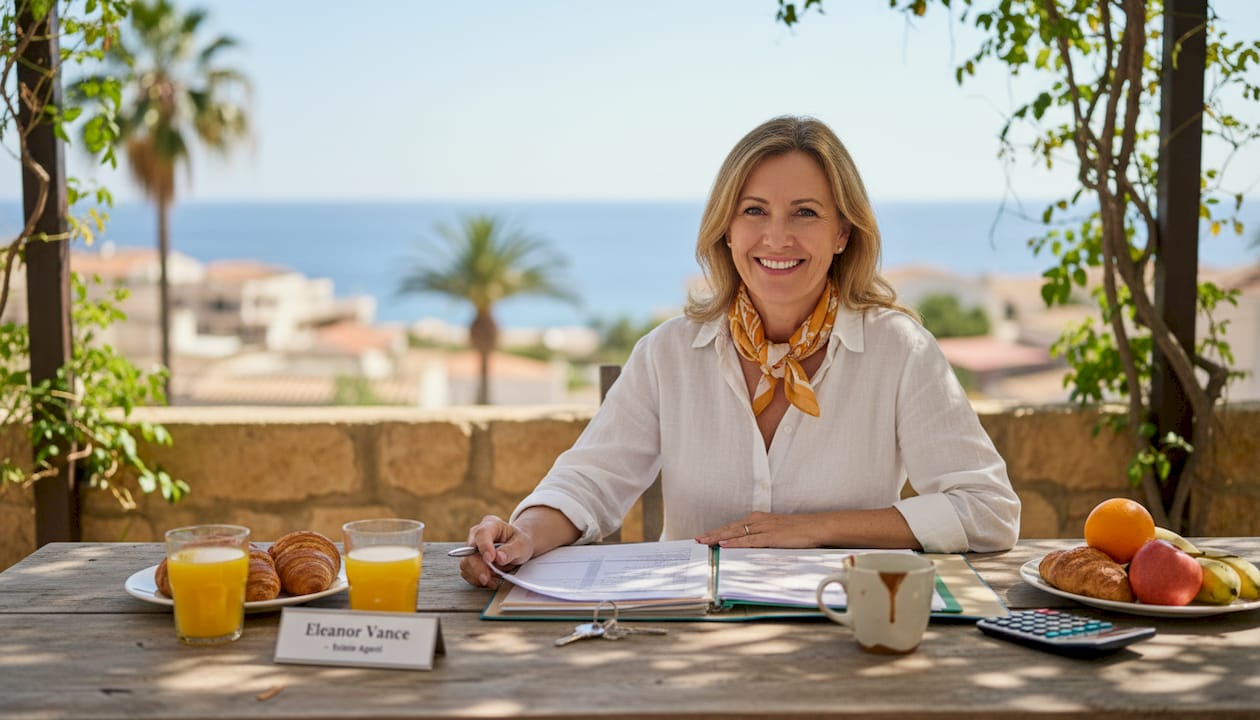
Agent preparing legacy property paperwork at desk

Sustainability due diligence deserves equal emphasis. Request energy performance diagnostics (DPE ratings), check for any environmental protection orders on the land, and verify that planned renovations comply with the local Plan Local d’Urbanisme (PLU). These checks protect your investment against future regulatory shifts.

Step-by-step luxury home acquisition workflow

Once your foundation is solid, it’s time to walk through the complete acquisition process.

The acquisition process requires strict sequence for optimal legal and financial outcomes. Skipping steps, even with the best intentions, creates vulnerabilities that can surface years later and undermine the very legacy you are building.

  1. Define your legacy brief — Articulate your location priorities, sustainability requirements, succession structure, and budget ceiling before any viewing.
  2. Engage your acquisition team — Appoint your notaire, avocat, and agent. Brief them fully on your legacy objectives.
  3. Access off-market inventory — Your agent opens doors to discreet listings. Explore the full scope of off-market property advantages before committing to any publicly listed property.
  4. Conduct structured viewings — Visit shortlisted properties at different times of day. Assess orientation, natural light, sea views, and neighbourhood character.
  5. Commission technical surveys — Engage your surveyor for structural, seismic, and environmental assessments. Never negotiate price before this stage.
  6. Submit a Letter of Intent or Offre d’Achat — A written offer signals seriousness and locks in your position.
  7. Sign the Compromis de Vente — This preliminary contract binds both parties. Your avocat reviews every clause before signature.
  8. Complete due diligence — Title searches, urban planning certificates, and environmental compliance checks occur during this 60 to 90 day window.
  9. Finalise financing — Confirm your mortgage facility or cryptocurrency payment arrangement with your financial institution.
  10. Sign the Acte Authentique — The final notarised deed transfers ownership. You receive the keys.

Pro Tip: Secure mortgage pre-approval or a formal proof of crypto holdings before beginning your property search. Vendors and their agents treat pre-approved buyers with far greater seriousness, particularly for off-market introductions.

Legal caution: International buyers must verify cross-border compliance at every stage. French property law, inheritance law, and IFI tax obligations interact in ways that differ significantly from UK, Swiss, or UAE frameworks. Never sign a preliminary contract without independent legal counsel reviewing the terms.

Verification and legacy proofing your investment

With your new property secured, it’s crucial to validate every detail and prepare for generational continuity.

Legacy-proofing includes succession planning and environmental risk mitigation, two disciplines that most buyers address far too late, if at all. The moment of acquisition is precisely when this work must begin.

Conduct the following verification checks before considering the process complete:

  • Ownership structure review — Confirm your SCI or personal ownership is correctly structured for your nationality, residency, and succession wishes
  • Environmental compliance audit — Verify the property meets current French environmental standards and has no outstanding compliance orders
  • Legacy documentation assembly — Compile building permits, historic title deeds, and renovation records into a single dossier for heirs
  • Succession planning integration — Work with your avocat and notaire to inscribe the property within your broader estate plan
  • Insurance and ongoing management — Appoint a luxury property manager to maintain standards and protect value between family visits
RiskVerification stepBenefit
Title disputesIndependent title searchClean transfer to heirs
Environmental liabilityDPE and ecological auditRegulatory compliance
Succession complexitySCI structure reviewTax-efficient generational transfer
Structural deteriorationAnnual technical surveyPreserved capital value
Rental complianceLocal PLU and rental licence checkOptimised seasonal yield

Ongoing management is not a luxury add-on. It is central to the legacy proposition. A Menton villa that hosts lemon festival guests each February, or a Cannes pied-à-terre occupied during the Film Festival, must be maintained to the highest standard year-round. Partnering with a specialist manager protects both the asset and its reputation. Explore how to invest in French Riviera real estate for enduring, lasting value across every season.

An insider’s perspective on legacy property acquisition

Having reviewed verification best practices, let’s reveal what the brochures rarely mention: the legacy aspect few address.

Most luxury buyers invest enormous energy in the acquisition itself. The search, the negotiation, the thrill of the Acte Authentique. Then they stop. And that is precisely where legacy value quietly erodes.

We have seen it consistently across our years curating high-value real estate on the Riviera. A stunning Cap d’Antibes villa, acquired with impeccable taste, held in personal ownership without an SCI, passed to multiple heirs under French forced heirship rules, and suddenly fractured into a legal dispute that diminishes both its value and its emotional significance for the family.

“The greatest threat to a legacy property is not market volatility. It is the absence of a plan for the generation that inherits it.”

Sustainability oversight follows the same pattern. A buyer who secures an eco-villa in 2026 but fails to maintain its green certifications across the following decade risks both regulatory penalties and a dramatic reduction in its premium when the next generation eventually sells. The Riviera’s most enduring estates are those whose owners treat post-acquisition stewardship as seriously as the purchase itself. Our genuine counsel: invest as much time in your succession and sustainability plan as you invest in your initial search.

Secure your Côte d’Azur legacy with expert guidance

For hands-on assistance and exclusive high-value listings, here’s your next step.

The workflow outlined here is your compass, but navigating the Côte d’Azur’s most coveted properties requires intimate local knowledge and privileged access. We connect discerning buyers with an exceptional selection of French Riviera villas, from Monaco-border estates to Sainte-Maxime’s sun-drenched beachside residences. Our acquisition specialists guide you through every stage, combining legal precision with lyrical understanding of what makes a property truly generational. For those seeking the rarest opportunities, our curated off-market property collection brings the finest estates to your attention before they ever reach the open market. Speak with us today.

Frequently asked questions

What makes a property ‘legacy-worthy’ on the Côte d’Azur?

A legacy-worthy property combines prime location, proven longevity, eco-certification, and robust legal documentation. As legacy portfolio essentials confirm, the focus is firmly on generational wealth and sustainability rather than short-term yield.

How long does the luxury home acquisition process typically take?

With proper preparation, acquiring a luxury home on the Côte d’Azur usually takes 3 to 6 months from search to signature. Expert guidance and prerequisites streamline the timeline significantly for prepared buyers.

What is the biggest pitfall for international buyers?

The most common mistake is neglecting local legal and tax requirements, which leads to unexpected costs and complications. Cross-border compliance must be addressed before signing any preliminary contract.

Are off-market properties genuinely better for legacy buyers?

Off-market properties often offer greater privacy, exclusivity, and legacy potential than publicly listed homes. Off-market buying advantages are especially significant for buyers seeking irreplaceable, discreetly held Riviera estates.

Recommended

  • Luxury Property Acquisition: The Riviera Legacy
  • 7 Essential Steps for Buying Luxury Property in 2025
  • Mortgage Planning for Luxury Buyers: Protecting Legacy
  • Luxury Real Estate Buying Guide: Secure Your Riviera Legacy
  • Top Asset Protection Methods 2026 for Secure Homes – Safes and Security Direct
by Websols Servicedesk/20 April 2026/in Landingpage
https://www.livingonthecotedazur.com/wp-content/uploads/2026/04/1776391317579_image-2.jpeg 720 1260 Websols Servicedesk https://www.livingonthecotedazur.com/wp-content/uploads/2024/02/sitelogo150.png Websols Servicedesk2026-04-20 02:30:282026-04-20 02:30:32Luxury home acquisition workflow for legacy living 2026


TL;DR:

  • Effective luxury staging emphasizes privacy, craftsmanship, outdoor living, and cultural resonance.
  • Preparation involves repairs, decluttering, and highlighting architectural features for maximum impact.
  • Stunning photography and atmospheric showings are essential to attract international high-net-worth buyers.

Selling a luxury estate on the Côte d’Azur is never simply a transaction. It is a carefully choreographed performance, where every room, every scent of jasmine drifting through an open terrace door, and every curated objet d’art either elevates or diminishes the perceived value of your property. In a market where villas command €2M+ premiums and discerning buyers arrive from Monaco, London, Dubai, and beyond, the gap between a well-staged estate and an under-prepared one can translate to hundreds of thousands of euros. This guide walks you through the precise steps to stage your Côte d’Azur property with the authority and elegance it deserves, from foundational preparation to the final photography that seals the deal.

Table of Contents

  • Understanding the luxury market mindset
  • Preparation: laying the foundations for high-impact staging
  • Step-by-step: executing a luxury staging transformation
  • Maximising appeal: photography, showings and ongoing adjustments
  • Why true luxury staging on the Côte d’Azur means selling an experience
  • Explore next steps for your luxury property on the Côte d’Azur
  • Frequently asked questions

Key Takeaways

PointDetails
Know your buyersUnderstand what motivates high-net-worth individuals in the Côte d’Azur to stage effectively.
Perfect your preparationThoroughly assess, declutter, and enhance before any design work to build a strong base.
Use expert-led techniquesIncorporate tailored, locality-inspired staging and invest in professional visuals for maximum appeal.
Adapt and refineContinuously improve and update staging based on market trends and buyer feedback.

Understanding the luxury market mindset

Before a single piece of furniture is repositioned or a single artwork is selected, you must understand precisely who is walking through your door. Luxury buyers on the French Riviera are not simply purchasing square metres with a sea view. They are acquiring a lifestyle, a legacy, and a statement about who they are in the world. These are individuals who have experienced the finest hotels from Cap d’Antibes to Bali, who have strolled the Croisette during the Cannes Film Festival, and who can instantly sense when a property feels authentic versus merely expensive.

What drives their decisions? Our experience tells us these priorities consistently rise to the top:

  • Privacy and exclusivity: Gated access, mature landscaping, and a sense of seclusion from the outside world.
  • Seamless lifestyle integration: Spa facilities, wine cellars, chef’s kitchens, and smart home systems that feel intuitive rather than intrusive.
  • Provenance and craftsmanship: Hand-laid Provençal stone floors, bespoke joinery, and materials that carry a story.
  • Outdoor living: Infinity pools overlooking the Baie des Anges, shaded terraces fragrant with lavender, and al fresco dining spaces that feel as polished as the interior.
  • Cultural resonance: Art collections, architectural references to Riviera heritage, and a sense of place that could not exist anywhere else on earth.

As noted in our own guide to luxury real estate marketing, the narrative surrounding a property is as powerful as its physical attributes. Buyers at this level respond to luxury home buyer preferences that go far beyond square footage. Indeed, luxury buyers prioritise bespoke design, privacy, and seamless integration of lifestyle amenities above almost everything else.

“A luxury home staged without cultural intelligence is simply an expensive house. The Riviera buyer wants to feel the life they are about to inherit.”

Understanding the essential luxury features that resonate with this audience is the single most important investment you can make before staging begins. Every subsequent decision, from furniture selection to scent, should flow from this understanding.

Preparation: laying the foundations for high-impact staging

With a clear picture of your buyer’s psychology, the next step is rigorous preparation. Even the most spectacular Cap d’Antibes villa will fail to command its premium if buyers encounter a dripping tap, a sun-bleached terrace cushion, or a kitchen that feels dated. Preparation is not glamorous, but it is where staging investments are either protected or wasted.

Begin with an honest audit of your property’s strengths and weaknesses. Walk through each room as a buyer would, noting anything that interrupts the sense of effortless opulence. Then address these areas systematically:

  • Structural and cosmetic repairs: Repaint walls in sophisticated, neutral tones. Replace worn fixtures with polished brass or brushed nickel alternatives.
  • Decluttering at a luxury level: This does not mean empty rooms. It means editing ruthlessly so that every object earns its place. Remove personal photographs, excess furniture, and anything that anchors the space to one person’s taste.
  • Architectural highlighting: If your estate has original Provençal stonework, vaulted ceilings, or panoramic glazing, ensure these features are unobstructed and lit to perfection.
  • Garden and pool preparation: The Riviera lifestyle is lived outdoors. Manicure hedges, clean pool tiles, and dress terraces with high-quality outdoor furniture.

Staging can deliver up to 10% higher sale prices for luxury properties, making pre-staging investment one of the most reliable returns available to a seller. The real estate statistics consistently confirm that prepared homes outperform unprepared ones across all price brackets, and the effect is magnified at the luxury end.

Pro Tip: Commission a professional property survey before staging begins. Identifying hidden issues early protects you from renegotiations after a buyer’s survey, and signals confidence to serious purchasers.

Preparation taskPriority levelEstimated timeframe
Structural repairs and repaintingHigh2 to 4 weeks
Decluttering and deep cleaningHigh1 to 2 weeks
Garden and pool restorationHigh1 to 3 weeks
Fixture and fitting upgradesMedium1 to 2 weeks
Lighting assessment and upgradesMedium1 week

Familiarise yourself with French Riviera design principles and keep our luxury property checklists close at hand throughout this phase.

Step-by-step: executing a luxury staging transformation

With your foundations secure, the creative work begins. This is where a Côte d’Azur estate is transformed from a beautiful property into an irresistible vision of a life well lived. The approach is methodical, room by room, but always guided by a single overarching question: what story does this space tell?

  1. Reception and entrance hall: First impressions are formed in seconds. Use sculptural lighting, a statement artwork, and a single fragrant arrangement of white roses or olive branches to signal arrival into something extraordinary.
  2. Principal reception rooms: Arrange furniture to encourage conversation and frame views. Every sofa grouping should draw the eye toward the terrace or the sea. Layer textures with linen, silk, and natural stone accessories.
  3. Kitchen and dining areas: Luxury buyers expect professional-grade appliances and surfaces that feel pristine. Style the kitchen with a curated selection of high-end cookware and a simple bowl of Provençal lemons, a nod to Menton’s celebrated Fête du Citron.
  4. Master suite: This is a sanctuary. Dress the bed in hotel-grade linens, add a single orchid, and ensure the en-suite is styled with spa-quality towels and artisan toiletries.
  5. Outdoor and entertaining spaces: Dress the pool terrace as if a private dinner is about to begin. Candles, quality tableware, and a chilled bottle of rosé communicate the effortless Riviera lifestyle buyers are purchasing.

Strategic lighting, artwork, and premium furnishing distinctively boost viewing appeal in luxury homes, according to top staging experts. Explore lifestyle staging trends to stay ahead of what sophisticated buyers expect in 2026.

Agent preparing luxury home showing details

Pro Tip: Commission a local Riviera artist to create a bespoke piece for the principal reception room. It adds provenance, supports the cultural narrative, and gives buyers something to remember long after the viewing ends.

Staging elementMainstream approachLuxury approach
FurnitureNeutral rental piecesCurated, bespoke or designer items
ArtworkGeneric printsOriginal or signed pieces with provenance
LightingStandard overhead lightingLayered ambient, accent and task lighting
Outdoor spacesBasic garden furnitureFully dressed entertaining and dining areas
ScentAir freshenerNatural botanicals and artisan candles

Review our guide to signature property features for further inspiration on what elite buyers notice first.

Maximising appeal: photography, showings and ongoing adjustments

Your estate is now staged to perfection. The next challenge is capturing and communicating that perfection to buyers who may be viewing from Zurich, Singapore, or New York before they ever set foot on the Riviera. This is where presentation strategy becomes as important as the staging itself.

Homes with professional photography generate up to 39% more interest online, making this one of the highest-return investments a seller can make. For a Côte d’Azur estate, we recommend:

  • Drone footage: Aerial perspectives that capture the relationship between the property, the coastline, and the surrounding landscape are essential at this price point.
  • Golden hour photography: Schedule shoots for early morning or late afternoon when the Riviera light is at its most flattering and the sea takes on that iconic azure shimmer.
  • Virtual tours: International buyers increasingly expect immersive 3D walkthroughs before committing to a viewing trip.
  • Seasonal adaptation: If your property is listed across multiple seasons, refresh photography to reflect the changing character of the Riviera, from the mimosa-scented February air to the vibrant energy of summer regattas in Antibes.

Private showings deserve the same attention. Brief your agent thoroughly, ensure the property is at its most atmospheric, and consider hosting a discreet cocktail viewing for a select group of qualified buyers. Post-showing, gather feedback systematically and adapt. Perhaps the master suite needs warmer lighting, or the terrace requires a more dramatic table setting. Agility is a virtue in the luxury market.

Understanding home staging costs helps you allocate budget wisely across photography, furnishing, and ongoing adjustments. Work closely with buyer agents who understand the expectations of ultra-high-net-worth clients, and ensure your marketing luxury homes strategy is calibrated to reach the right audience globally.

Infographic showing luxury home staging steps

Why true luxury staging on the Côte d’Azur means selling an experience

We have guided many exceptional properties through the staging and sale process, and one truth emerges consistently: the most technically perfect staging can still fall flat if it lacks soul. Standard staging advice will tell you to declutter, neutralise, and depersonalise. On the Côte d’Azur, we believe the opposite instinct is often more powerful.

Elite buyers are not searching for a blank canvas. They are searching for a life they have not yet lived but can already feel. The scent of wild thyme drifting through a Provençal mas near Èze. The particular quality of light on a terrace above Saint-Tropez’s Vieux Port at dusk. These sensory details, woven into the staging narrative, are what transform a viewing into a decision.

What defines high-end real estate at this level is not the price per square metre. It is the emotional and cultural authority of the property. Stage with provenance, stage with aspiration, and stage with an intimate understanding of the Riviera life your buyer is about to claim as their own.

Explore next steps for your luxury property on the Côte d’Azur

Staging is the art of possibility, and we are here to help you realise every last euro of your estate’s potential. Whether you are preparing a sun-drenched villa above Cannes for sale, exploring off-market luxury properties for your next acquisition, or building a high-net-worth real estate portfolio designed to appreciate across generations, our team brings the local expertise and global reach your ambitions require. We accept cryptocurrency payments and offer discreet, bespoke guidance at every stage. Speak to our experts today and let us help you position your Côte d’Azur estate for the extraordinary outcome it deserves.

Frequently asked questions

What are the most important rooms to stage in a luxury property?

The main reception area, master suite, and outdoor entertaining spaces create the strongest impact in luxury showings. Strategic spaces like reception and master suites drive first impressions for luxury buyers above all others.

How much should I invest in staging a high-end home?

Expert guidance recommends investing 1 to 2% of property value in staging for the best return. Average staging investments yield strong ROI, particularly for luxury segments where presentation commands a premium.

Does home staging guarantee a faster sale?

While no outcome is guaranteed, expert staging consistently reduces time on market for premium homes. Well-staged homes typically sell faster and closer to asking price than their unstaged counterparts.

Should I use local designers for staging my Côte d’Azur estate?

Local designers understand regional tastes and can tailor staging to appeal to international buyers seeking authentic Riviera flair. Regional expertise enhances staging effectiveness for luxury coastal homes in ways that generalist designers simply cannot replicate.

Recommended

  • 7 Essential Steps for Buying Luxury Property in 2025
  • Defining luxury lifestyle: modern opulence and legacy in 2026
  • Côte d’Azur real estate trends: Invest smarter in 2026
  • Luxury home acquisition workflow for legacy living 2026
  • SteraM Flats | Cómo Hacer que Su Casa Destaque en un Mercado Competitivo
  • Maximise your NSW home’s value: landscaping explained
by Websols Servicedesk/18 April 2026/in Landingpage
https://www.livingonthecotedazur.com/wp-content/uploads/2026/04/1776471509600_Designer-staging-luxury-Riviera-living-room-1.jpeg 714 1280 Websols Servicedesk https://www.livingonthecotedazur.com/wp-content/uploads/2024/02/sitelogo150.png Websols Servicedesk2026-04-18 02:19:512026-05-07 12:51:30How to stage a luxury home: maximise value in 2026


TL;DR:

  • High-net-worth real estate emphasizes legacy, scarcity, and location over simple price appreciation.
  • Sustainable features and precise ownership structures enhance long-term value and privacy.
  • The highest-value properties serve as long-term capital preservation assets for families and institutions.

Most people assume luxury real estate is simply a matter of price. The higher the figure, the more exclusive the asset. Yet for high-net-worth individuals and family offices, the distinction runs far deeper than a price tag. True high-net-worth real estate is defined by capital resilience, generational legacy, and the kind of scarcity that no developer can manufacture. Along the Côte d’Azur, where lavender-laced breezes drift across sun-warmed stone and the Mediterranean shimmers at every turn, these principles converge in a market unlike any other. This article explores what truly separates elite property from standard luxury, and why legacy, sustainability, and location are the real currencies of wealth preservation.

Table of Contents

  • Defining high-net-worth real estate: Assets, clients, and property types
  • Capital preservation and legacy: Why location and exclusivity matter
  • Sustainability and eco-features: Enhancing value retention
  • Edge cases: Hybrid uses, privacy, and institutional scenarios
  • Why legacy, sustainability, and privacy redefine luxury real estate
  • Explore luxury investment opportunities on the Côte d’Azur
  • Frequently asked questions

Key Takeaways

PointDetails
Prime location mattersHigh-net-worth real estate thrives in exclusive areas such as the Côte d’Azur.
Legacy drives decisionsFamily offices and HNWIs prioritise capital preservation and generational wealth transfer.
Sustainability boosts valueEco-features and energy efficiency are now essential for maximising ROI in luxury properties.
Hybrid ownership risingPrivacy-centric and institutional models offer flexibility for elite investors.

Defining high-net-worth real estate: Assets, clients, and property types

High-net-worth real estate is not simply a category of expensive homes. It is a distinct asset class built around a specific client profile. HNWIs hold liquid assets of at least $1 million, while ultra-high-net-worth individuals (UHNWIs) command $30 million or more in investable wealth. For these buyers, property is rarely a primary residence alone. It is a portfolio instrument, a family sanctuary, and often, a statement of permanence in an uncertain world.

The properties themselves span a curated spectrum. Clifftop villas above Èze, where Nietzsche once walked in contemplative solitude. Penthouse residences overlooking Nice’s Baie des Anges, with Château Hill framing the horizon at dusk. Provençal estates near Antibes, their stone walls etched with centuries of history. Each represents a different expression of the same underlying truth: scarcity and prestige command premiums that standard luxury cannot replicate.

Infographic showing HNWI real estate categories and motivations

Property typeBuyer profilePrimary motivationTypical value range
Prime villaHNWILifestyle and capital growth€2M to €10M
Legacy estateUHNWIGenerational transfer€10M and above
Standard luxury flatAffluent buyerRental yield€500K to €2M
Eco-certified residenceHNWI/UHNWISustainability and retention€3M to €15M

The motivations of HNW buyers are equally varied. Some seek privacy, drawn to Cap d’Antibes’ secluded coastal sentiers or the hushed lanes of Menton near the Italian border. Others prioritise prestige, acquiring Monaco-adjacent plots where address alone carries extraordinary value. Many, particularly family offices, are guided by emerging luxury market intelligence, identifying locations before demand peaks.

The Côte d’Azur commands a 22.7% share of Europe’s luxury real estate market, a figure that reflects both the region’s enduring prestige and the structural scarcity of its finest addresses. Understanding luxury buyer trends reveals that buyers in 2026 are increasingly motivated by long-term value rather than short-term yield, reshaping how the finest properties are priced, positioned, and acquired. Tracking luxury market trends on the Riviera is essential for any investor seeking to act with precision.

Capital preservation and legacy: Why location and exclusivity matter

For family offices and generational investors, the Côte d’Azur is not merely a beautiful place to own property. It is one of the most reliable instruments of capital preservation available anywhere in the world. French Riviera luxury assets prioritise capital preservation over yield, a philosophy that distinguishes this market from yield-chasing strategies in less resilient locations.

Family discussing legacy real estate investments

The logic is elegant in its simplicity. Fixed supply, relentless international demand, and a lifestyle proposition that transcends economic cycles create an environment where values hold firm even when broader markets falter. Appreciation driven by scarcity and HNWI demand consistently outperforms standard residential benchmarks, with prime Riviera properties appreciating between 5% and 8% annually over the long term.

Investment typeAnnual appreciationVolatilityLegacy suitability
Riviera prime villa5% to 8%LowExcellent
European luxury flat3% to 5%MediumGood
Global REIT4% to 7%HighLimited
Monaco-adjacent plot6% to 10%Very lowOutstanding

Legacy planning on the Riviera follows a clear hierarchy of priorities:

  1. Acquire in locations with structural scarcity, such as Cap d’Antibes or the Monaco border.
  2. Prioritise properties with architectural distinction and historical provenance.
  3. Structure ownership through tax-efficient vehicles suited to cross-border wealth transfer.
  4. Generate 3% to 5% annual yields through elite seasonal lets during Cannes Film Festival, regattas, and summer.
  5. Reinvest rental income into property improvements that enhance long-term capital value.

Exploring wealth preservation tips specific to the Riviera reveals strategies that mainstream financial advisers rarely discuss. Our annual growth guide outlines how to position acquisitions for maximum resilience across market cycles.

“The finest Riviera estates are not purchased. They are inherited, curated, and passed forward as living expressions of a family’s values.”

Pro Tip: When evaluating a Riviera property for legacy purposes, assess the ratio of land value to build value. In prime coastal zones, land scarcity means the land itself often represents 70% or more of total value, making it far more resilient than the structure above it. This insight shapes how to invest in Riviera real estate with genuine long-term confidence.

Sustainability and eco-features: Enhancing value retention

Sustainability has moved from a desirable feature to a defining criterion in high-net-worth real estate. Sustainable properties are increasingly demanded by HNWIs, with eco-certified assets demonstrating superior long-term value retention compared to conventionally built equivalents. This is not simply an ethical preference. It is a financial imperative.

The Côte d’Azur’s 2026 new-build renaissance reflects this shift vividly. Sainte-Maxime’s beachside residences, steps from Nartelle’s golden sands, incorporate solar arrays, geothermal heating, and biophilic design principles as standard. Nice’s Mont Boron developments offer panoramic sea views alongside LEED-equivalent certifications that future-proof asset values for decades. Eco-features now enhance legacy and resilience in ways that purely aesthetic upgrades cannot replicate.

The most sought-after sustainable features in 2026 include:

  • Solar energy systems integrated into roof and facade design without compromising architectural beauty
  • Geothermal heating and cooling, reducing energy dependence and operational costs significantly
  • Rainwater harvesting and greywater recycling systems, particularly valued in the Riviera’s warm climate
  • LEED or HQE certification (Haute Qualité Environnementale, France’s leading green building standard)
  • Smart home energy management platforms that monitor and optimise consumption in real time
  • Native landscaping using drought-resistant Mediterranean species, reducing water use and maintenance costs

Finding the perfect Riviera property now means understanding how these features interact with local planning regulations and resale dynamics. The key Riviera features that drive value retention are increasingly those that align financial performance with environmental responsibility.

Pro Tip: Many buyers focus on visible eco-features such as solar panels while overlooking insulation standards and thermal performance ratings. A property with superior thermal mass and passive cooling, common in well-restored Provençal stone architecture, can outperform a modern eco-certified build on both energy costs and lasting real estate value over a 20-year horizon.

Edge cases: Hybrid uses, privacy, and institutional scenarios

Not every high-net-worth acquisition fits a neat template. Some of the most sophisticated ownership structures on the Côte d’Azur operate at the intersection of income generation, privacy, and institutional purpose. Hybrid ownership models combine revenue generation with privacy, and institutional use for foundations, creating asset configurations that standard real estate frameworks rarely address.

Consider the following real-world scenarios that illustrate the breadth of high-net-worth property utilisation:

  1. The privacy estate: A UHNWI acquires a secluded Cap d’Antibes villa primarily for personal security and discretion. The property generates no rental income but appreciates steadily, functioning as a private reserve of capital outside the financial system’s visibility.
  2. The foundation asset: A family office transfers a Menton estate into a philanthropic foundation structure. The property hosts cultural events during the Lemon Festival season, generating goodwill and tax advantages while preserving the asset within the family’s broader wealth architecture.
  3. The hybrid income property: A Cannes penthouse overlooking the Croisette operates as a private residence for 4 months annually and a premium short-let during the Film Festival and MIPIM, generating yields that offset carrying costs entirely.
  4. The institutional portfolio holding: A sovereign wealth fund acquires a portfolio of Saint-Tropez villas near Pampelonne, managed as a collective asset for senior personnel accommodation and client entertainment, with values tracked separately from liquid holdings.

These scenarios share a common thread. Illiquid property assets are frequently excluded from formal net worth calculations, meaning the true wealth represented by a Riviera estate often exceeds what financial statements reveal. Exploring prime Riviera investment examples illuminates how sophisticated buyers structure these arrangements for maximum efficiency.

“Privacy is not merely a lifestyle preference for HNWIs. It is a strategic asset class in its own right, one that commands a premium no yield calculation can fully capture.”

Understanding the full range of real estate strategies available to institutional and private buyers is essential before committing to any single ownership model.

Why legacy, sustainability, and privacy redefine luxury real estate

We have observed, across years of curating the finest Riviera acquisitions, that the investors who build the most enduring wealth are rarely those chasing the highest short-term yield. They are the ones who ask a different question entirely: what will this property mean to my family in 30 years?

The mainstream real estate conversation remains fixated on yield metrics and market timing. Yet luxury real estate at the highest level operates on a different logic. Capital preservation and sustainability trends consistently outpace short-term income strategies over a decade or more. Privacy, so often treated as a lifestyle amenity, is in fact a structural value driver that insulates assets from speculative volatility.

Our contrarian view is this: legacy first, yield second. A Provençal mas restored to architectural perfection near Antibes, or a sea-view estate above Èze where the salt-kissed air carries the scent of wild rosemary, will outlast any yield-optimised investment strategy. The stone endures. The view endures. The family memory endures. That is the true measure of a high-net-worth acquisition.

Explore luxury investment opportunities on the Côte d’Azur

We invite you to move beyond the theoretical and into the tangible. Our curated portfolio of French Riviera villas and penthouses spans the most prestigious addresses on the coast, from Monaco’s gilded borders to Saint-Tropez’s sun-drenched Vieux Port. Each listing is selected for its legacy potential, capital resilience, and lifestyle distinction. For those ready to structure a Riviera legacy acquisition with precision and confidence, our specialists are available to guide every step. Explore our luxury portfolio essentials and discover how the Côte d’Azur can become the cornerstone of your family’s enduring wealth story. We also accept cryptocurrency payments, making access as seamless as the lifestyle itself.

Frequently asked questions

How are high-net-worth real estate assets classified?

They are classified by targeting HNWIs with liquid assets over $1 million and UHNWIs over $30 million, typically located in prime areas such as the Côte d’Azur where scarcity and prestige underpin sustained value.

Why do high-net-worth individuals prefer legacy and capital preservation?

Legacy and capital preservation reduce volatility and favour long-term family wealth over short-term yield. French Riviera assets prioritise this approach, making them particularly resilient across economic cycles.

Does sustainability increase ROI in luxury real estate?

Yes. Sustainable properties attract growing HNWI demand, with eco-certified assets demonstrating superior long-term value retention and stronger appeal to legacy-focused buyers.

What are hybrid ownership models in high-net-worth real estate?

Hybrid models combine privacy with revenue generation or institutional uses for foundations, and often exclude illiquid property assets from formal net worth calculations, making them highly flexible wealth instruments.

Recommended

  • Curating High-Value Real Estate: Legacy and ROI
  • Real Estate Investment Strategies Shaping Legacy and Yield
  • Wealth Building Through Real Estate: Riviera Legacy Moves
  • Luxury Property Acquisition: The Riviera Legacy
  • A Brutally Honest Guide to Real Estate PPC
by Websols Servicedesk/17 April 2026/in Landingpage
https://www.livingonthecotedazur.com/wp-content/uploads/2026/04/1776385532137_Advisor-reviewing-blueprints-in-luxury-villa-1.jpeg 714 1280 Websols Servicedesk https://www.livingonthecotedazur.com/wp-content/uploads/2024/02/sitelogo150.png Websols Servicedesk2026-04-17 02:26:092026-05-07 12:50:16High-net-worth real estate: Legacy, luxury, and ROI


TL;DR:

  • Successful Côte d’Azur investments require clear ROI, risk, liquidity, and tax considerations.
  • Micro-market dynamics and event-driven demand create high-yield opportunities in locations like Cannes and Nice.
  • Long-term outperformance depends on strategic maintenance, legal structuring, and choosing authentic, undiscovered enclaves.

The Côte d’Azur remains one of the world’s most compelling arenas for elite property investment, yet selecting the right asset is rarely straightforward. Between the sun-drenched cliffs of Cap d’Antibes and the yacht-lined quays of Cannes, every choice carries enormous consequence. For high-net-worth individuals and family offices, the central challenge is not finding luxury property; it is identifying which investments will deliver superior returns, preserve capital across generations, and anchor a living legacy. This guide cuts through the complexity and gives you a clear, strategic framework for maximising ROI on the French Riviera in 2026 and beyond.

Table of Contents

  • Establishing your ROI criteria: what elite investors must consider
  • Leveraging market dynamics: where the highest ROI opportunities emerge
  • Maximising rental and capital returns: strategies that outperform
  • Optimising maintenance, tax and risk: protecting your returns long term
  • The overlooked keys to outperformance other investors miss
  • Unlock exclusive Riviera opportunities with us
  • Frequently asked questions

Key Takeaways

PointDetails
Set clear ROI criteriaDefine your target returns, risk tolerance, and legacy intent before choosing Côte d’Azur investments.
Leverage market timingUtilise events, local policies, and prime rental seasons to achieve higher rental yields and resale values.
Implement advanced strategiesUse value-add refurbishments, event-led rentals, and expert management to outperform market averages.
Protect returns long termProactively manage tax, maintenance, and risk to maximise sustainable net profit over time.

Establishing your ROI criteria: what elite investors must consider

Every outstanding investment decision begins with a precise definition of what success looks like. Before you fall in love with a panoramic sea view in Èze or a Belle Époque villa steps from the Croisette, you need a structured set of criteria that removes emotion from the equation without removing ambition.

Start with your target return range. Most elite investors on the Côte d’Azur are working within a dual mandate: they want meaningful capital appreciation, typically 5 to 8% annually in prime locations, alongside rental income that offsets carrying costs. The two objectives are compatible but require different property profiles. A sleek new-build apartment near Nice’s Mont Boron commands strong short-term rental income. A historic estate near Menton, fragrant with lemon groves and heritage, may appreciate more slowly but holds generational meaning that no yield figure captures.

Risk tolerance is the second pillar. Riviera markets are liquid compared to many European luxury destinations, but they are not immune to cyclical softening. Assess your time horizon honestly. A three-year hold strategy demands different asset selection than a thirty-year legacy position.

Liquidity and marketability also vary sharply by micro-location. Properties near Monaco borders or within walking distance of Cannes’s Palais des Festivals attract a global pool of buyers and tenants, shortening void periods dramatically. Less central enclaves may offer quieter charm and stronger privacy, yet require a patient hand.

Fiscal structure is often underweighted at the selection stage. French inheritance law, the Impôt sur la Fortune Immobilière (IFI), and non-resident tax treatment all shape net yield in meaningful ways. Reviewing Riviera investment trends before committing capital is a practical first step.

  • Define a minimum acceptable net yield before viewing properties
  • Map inheritance and succession planning needs before acquisition
  • Assess short-let licensing status at the commune level
  • Identify whether the property qualifies for LMNP (non-professional furnished rental) status
  • Factor in annual IFI exposure and how it scales with portfolio growth

Pro Tip: Family offices consistently outperform private buyers by weighting legacy value explicitly in their scoring models. Assign a numerical score to succession suitability alongside yield, and you will make faster, more confident decisions.

Leveraging market dynamics: where the highest ROI opportunities emerge

Once your investment criteria are clear, finding the best pockets of opportunity requires a pulse on market shifts. The Riviera is not a monolith. It is a mosaic of micro-markets, each with its own supply constraints, demand drivers, and regulatory climate.

Agent reviews local real estate rental map

Cannes is the archetype of event-driven yield. During the Cannes Film Festival in May, and again during the Cannes Lions and MIPIM conferences, weekly rental rates for premium properties surge to levels that can generate six weeks’ worth of annual income in a single fortnight. The Croisette and the Californie hillside are the epicentres. Antibes and Juan-les-Pins absorb the overflow, with discerning renters seeking the quieter Provençal markets and Cap d’Antibes coastal walks as an alternative to the festival frenzy.

Nice rewards investors who understand its evolving profile. The city blends Promenade des Anglais glamour with a thriving cultural core, and its growing tech and digital economy is attracting younger ultra-high-net-worth residents who demand both lifestyle and connectivity. The new home benefits South of France are particularly compelling here, where VEFA off-plan contracts offer lower notary fees and a ten-year structural warranty.

Sainte-Maxime is perhaps the most underrated market on the arc. Nartelle beach sunsets, ferry access to Saint-Tropez, and a permissive short-let environment make it a powerful yield engine at a more accessible price point than its glamorous neighbour across the bay.

“Permissive short-let rules and relentless demand drive yields measurably higher on the Riviera than in Paris. The market here rewards those who move with conviction.”

The data supports this confidence. The France luxury residential real estate market projects rental revenue growth at 4.80%, with Riviera second-home markets offering particular rental upside due to permissive short-let rules compared to Paris.

LocationPeak rental periodApproximate gross yieldKey driver
CannesMay to September, festival weeks5 to 7%Film Festival, MIPIM, Lérins kayaks
NiceYear-round, Carnival in February4 to 6%Tech growth, Promenade lifestyle
AntibesJune to August4 to 5.5%Yacht season, Picasso Museum allure
Sainte-MaximeJuly to August4 to 6%Beach proximity, Saint-Tropez ferry
MentonSpring, Lemon Festival3.5 to 5%Heritage tourism, border proximity

The full picture on Côte d’Azur market trends for 2026 confirms that sustainable new-builds and sea-view positions are the two most consistent premium drivers across all locations.

Maximising rental and capital returns: strategies that outperform

With market intelligence in hand, you can implement the ROI strategies that consistently outperform the averages. The gap between a good Riviera investment and a great one usually comes down to execution rather than selection.

  1. Event-led leasing. Structure your rental calendar around the Riviera’s extraordinary event season. The Cannes Film Festival, Nice Carnival, Monaco Grand Prix, and Antibes Yacht Show are not just cultural spectacles; they are yield amplifiers. Booking confirmed festival lets twelve months in advance locks in premium pricing before the market fills.
  2. Seasonal pricing strategy. Deploy dynamic pricing through a professional luxury property manager. July and August command peak rates, but shoulder-season pricing in May, June, and September can be optimised to reduce void periods without sacrificing rate integrity.
  3. Proactive maintenance and curated presentation. Properties that are impeccably maintained and styled to the level of a five-star residence command consistently higher rental rates and shorter vacancy windows. The investment in quality presentation typically returns three to four times its cost in premium pricing power.
  4. Value-add refurbishment. Eco-luxury upgrades, solar arrays, smart home systems, and biophilic interiors are no longer optional for the top tier of the market. In 2026, sustainable credentials actively support both rental premiums and capital values.
  5. Portfolio diversification across micro-markets. Spreading holdings across Cannes, Nice, and Sainte-Maxime smooths income volatility and captures different demand peaks throughout the year.

Rental ROI on premium Riviera properties runs at 4 to 7% annually, enhanced by peak events like the Cannes Film Festival. Exploring curated luxury investment options is the most direct route to identifying assets built for this performance tier.

Pro Tip: To reach 7% or above, combine a premium sea-view property with confirmed festival bookings, a professional local manager, and a sustainable specification. Each element alone adds incremental yield; together they compound into significantly superior returns. A deeper look at understanding luxury rental yields reveals exactly how the best-performing properties are structured.

ApproachTypical gross yieldCapital growth potentialEffort level
Standard buy-to-let2 to 3%ModerateLow
Event-optimised luxury let5 to 7%StrongMedium
Value-add eco-refurbishment6 to 7%+Very strongHigh

Optimising maintenance, tax and risk: protecting your returns long term

Of course, growing returns is only half the equation; preserving yield is equally vital on the Côte d’Azur. The most sophisticated investors treat cost management and legal structure with the same rigour they apply to acquisition.

Smart French Riviera villa maintenance is a proactive discipline, not a reactive one. Properties left to deteriorate between lets suffer rate erosion, booking cancellations, and costly emergency repairs that typically outstrip the cost of a well-managed annual maintenance programme. A trusted local management partner, one who understands the expectations of elite international tenants, is an asset in its own right.

Tax planning for non-resident owners deserves particular focus. France’s fiscal framework is nuanced, and the difference between a well-structured ownership vehicle and a poorly planned direct acquisition can represent tens of thousands of euros annually in avoidable tax.

  • Explore SCI (Société Civile Immobilière) structures for holding and transferring property between generations
  • Consider LMNP status to access favourable depreciation allowances on furnished rentals
  • Review Riviera tax strategies with a specialist before exchanging contracts
  • Factor in taxe foncière and taxe d’habitation when modelling net yield
  • Use a bilateral tax treaty if available in your country of residence to avoid double taxation
  • Plan for IFI thresholds as your portfolio appreciates, since values above €1.3M attract progressive rates

Legal risk is a more subtle erosion factor. Cross-border owners face complexity around power of attorney, co-ownership disputes, and planning regulations for renovation or extension. Engaging a bilingual notaire and an international property lawyer from the outset is not overcautious; it is the mark of a seasoned investor.

Pro Tip: Ensure your property insurance policy is specifically calibrated for luxury short-let use. Standard homeowner policies frequently exclude commercial rental activity, leaving high-value assets exposed. Explore real estate tax strategies alongside your insurance review for a fully protected position.

The overlooked keys to outperformance other investors miss

We have observed, across hundreds of transactions on the Côte d’Azur, a consistent pattern among investors who achieve exceptional long-term results. They almost never buy the loudest property in the room.

The most trophy-conscious buyers gravitate to celebrated addresses at elevated prices, compressing future upside. Meanwhile, quieter enclaves such as the hillside villages above Menton or the discreet residential streets behind Antibes’s old town offer genuine scarcity, authenticity, and the kind of provenance that the next generation will treasure. These are the assets that anchor building a legacy portfolio in the truest sense.

“The investors who build real multi-generational wealth on the Riviera are not the ones chasing headlines. They are the ones who understand that the right estate, held patiently within the right structure, compounds far beyond any short-term yield calculation.”

Succession planning and local alliances are the two most underweighted variables we encounter. An estate held without a coherent inheritance structure creates friction and cost for heirs. A portfolio managed without trusted local partners loses yield silently, one missed booking or deferred repair at a time. These are not glamorous considerations, but they are the foundation of enduring, profitable ownership.

Unlock exclusive Riviera opportunities with us

The strategies in this guide reflect what we witness every season at Living on the Côte d’Azur: disciplined, visionary investors building returns and legacies simultaneously. If you are ready to act on these principles, we offer access to off-market luxury properties that never reach the open market, alongside curated Côte d’Azur investment options structured for maximum yield and succession clarity. We accept cryptocurrency and work with global family offices from Dubai to Mauritius. To begin a conversation about your specific investment objectives, we warmly invite you to speak with our experts today.

Frequently asked questions

What is a good rental ROI for luxury property on the Côte d’Azur?

Premium Riviera properties typically deliver a rental ROI of 4 to 7% annually, with top yields concentrated during peak event periods such as the Cannes Film Festival and Monaco Grand Prix.

Which Côte d’Azur markets offer the best investment upside?

Locations that allow flexible short-term lets and host major events, particularly Cannes and Nice, tend to generate the highest rental and resale growth, supported by projected rental revenue growth of 4.80% across the French luxury market.

How can investors protect ROI from unexpected costs?

Expert maintenance programming, professional local management, and careful tax and legal planning all work together to preserve and grow net returns over time.

Is it better to prioritise capital appreciation or rental yield in 2026?

Balancing both is the smartest approach; legacy-focused investors should target properties positioned to perform strongly in both capital and rental return dimensions, particularly those with sustainable specifications and sea views.

Recommended

  • 7 Essential Real Estate Investment Tips for Côte d’Azur
  • Guide to International Real Estate Investment in Côte d’Azur
  • How to select prime Côte d’Azur real estate in 2026
  • Benefits of international property ownership: Côte d’Azur
by Websols Servicedesk/16 April 2026/in Landingpage
https://www.livingonthecotedazur.com/wp-content/uploads/2026/04/1776330265456_Two-professionals-reviewing-Riviera-investment-details.jpeg 715 1280 Websols Servicedesk https://www.livingonthecotedazur.com/wp-content/uploads/2024/02/sitelogo150.png Websols Servicedesk2026-04-16 13:50:222026-04-16 13:50:26Maximise your real estate ROI on the Côte d’Azur: proven strategies


TL;DR:

  • The French Riviera offers resilient luxury real estate with strong appreciation potential for legacy investors.
  • Proper structuring, tax planning, and off-market sourcing are essential for maximizing investment returns and inheritance efficiency.
  • Ongoing active management and tailored strategies ensure long-term wealth preservation and successful generational transfer.

The French Riviera does not merely attract wealth — it curates it. From the sun-gilded cliffs of Cap d’Antibes to the yacht-studded horizon of Cannes’ Croisette, this coastline represents one of the world’s most enduring stores of value. Yet for every investor who secures a prestige asset that appreciates gracefully and funds future generations, another pays too much, structures poorly, and faces avoidable tax exposure. This guide offers a clear, step-by-step framework for defining luxury real estate investment on the Riviera — from clarifying your legacy objectives to executing a compliant, high-yield acquisition strategy.

Table of Contents

  • Understand the investment landscape and define your objectives
  • Structuring your acquisition: Legal, tax, and ownership vehicles
  • Sourcing, evaluating and securing the right property
  • Maximise ROI with tax optimisation and rental strategies
  • Legacy planning and wealth transfer: Safeguarding your investment for generations
  • Our perspective: What most guides miss about legacy real estate investments
  • Next steps: Secure your Riviera legacy asset with expert guidance
  • Frequently asked questions

Key Takeaways

PointDetails
Strategic structuringChoosing the right legal and tax structure is crucial for maximising ROI and ensuring legacy transfer.
Thorough due diligenceMeticulous evaluation and access to off-market deals safeguard your investment and yield.
Tax optimisationActive tax planning and specialist advice dramatically boost post-acquisition returns.
Legacy protectionProactive succession planning prevents future disputes and excessive taxes for heirs.

Understand the investment landscape and define your objectives

The French Riviera luxury property market occupies a category of its own. Demand from global elites remains structurally robust, with prime villas commanding €2M or more for sea views, eco-luxury finishes, and proximity to Monaco’s border. Properties in hotspots such as Cap d’Antibes, Èze, and the Menton hinterland have historically appreciated 5 to 8% annually, making them compelling vehicles for building a luxury portfolio that transcends a single generation.

Before viewing a single property, however, you must define what this investment means to you. A legacy purchase is fundamentally different from a pure-yield play or a lifestyle acquisition. Legacy investors prioritise intergenerational wealth transfer, long holding periods, and capital preservation. Yield-focused buyers weight seasonal rental income and management efficiency. Most sophisticated investors blend both.

RequirementDetails
Minimum investmentTypically €1.5M for entry-level luxury; €3M+ for prime legacy assets
Legal structureDirect ownership, SCI, or corporate vehicle
Tax residencyNon-residents subject to IFI from €1.3M net French real estate value
FinancingFrench mortgages available; leverage can reduce IFI base
Rental licensingRequired for seasonal lets above certain thresholds

Before engaging an agent, ask yourself these defining questions:

  • What is your intended holding period — five years, twenty, or indefinitely?
  • Will the property serve personal use, pure rental, or a blend of both?
  • How liquid must this asset remain within your broader portfolio?
  • Which family members will be involved, and how will ownership transfer to heirs?
  • Are you seeking immediate yield, long-term capital growth, or both?

Clarity on these points shapes every subsequent decision, from ownership structure to property selection.

Structuring your acquisition: Legal, tax, and ownership vehicles

With clear objectives in hand, the next essential step is to select the ideal structure to safeguard your wealth and meet your legacy goals. The choice of ownership vehicle is not a formality — it is the architectural foundation upon which your entire investment rests.

Notaire works with legal code and documents

Direct personal ownership is the simplest route, but it offers the least flexibility for inheritance and can expose your estate to French succession law. A Société Civile Immobilière (SCI) is a French civil property company that holds the asset on behalf of shareholders. It facilitates smoother inheritance by transferring shares rather than property, can reduce notarial costs, and allows you to manage IFI impact more strategically. Corporate structures, often used by institutional buyers, offer privacy and liability separation but introduce greater administrative complexity.

StructureFlexibilityPrivacyInheritanceTax efficiency
Personal ownershipLowLowComplexLimited
SCIHighMediumSimplifiedStrong
Corporate (SARL/SAS)MediumHighModerateVariable

Leverage is a powerful tool here. Structuring via French SCI and securing a French mortgage reduces your net taxable asset value for IFI purposes, since outstanding debt on taxable properties is deductible. This is not tax avoidance — it is intelligent architecture.

Pro Tip: Engage a French notaire and a cross-border tax specialist simultaneously, not sequentially. Cross-border tax strategies must be considered before the purchase deed is signed, not after. Retroactive restructuring is costly and often impossible.

Sourcing, evaluating and securing the right property

Once you’ve established the optimal structure, success depends on finding and vetting the right property in this competitive market. The most coveted Riviera assets rarely appear on public portals. They circulate quietly through trusted networks — a Cap d’Antibes villa whispered between private bankers, a Sainte-Maxime waterfront residence offered exclusively to known buyers before Nartelle beach season begins.

Accessing these opportunities requires relationships. We work with a curated network of agents, notaires, and private vendors to surface assets that never reach the open market. Understanding the investment process overview is the first step to knowing where to look.

Here is the acquisition process, step by step:

  1. Shortlist and view — Identify properties aligned with your objectives and structure; conduct initial visits with an advisor present.
  2. Submit an offer — Negotiate price, conditions, and any included fixtures or furnishings.
  3. Due diligence — Commission legal title checks, planning permission audits, and a technical survey for structural integrity.
  4. Sign the compromis de vente — The pre-contract binds both parties; a 10% deposit is typically required.
  5. Finalise completion — The acte authentique is signed before a notaire, and ownership transfers.

Avoid these red flags at every stage:

  • Unclear title history or unresolved planning disputes
  • Properties with undeclared extensions or illegal structures
  • Vendors reluctant to provide full diagnostic reports
  • Rental income claims unsupported by documented accounts

Seasonal rental strategies are most effective when the property’s legal status for short-term letting is confirmed during due diligence, not discovered after closing. This is a detail that separates informed investors from costly surprises. Explore how using seasonal rentals can blend income and personal enjoyment across the calendar year.

Maximise ROI with tax optimisation and rental strategies

After acquisition, ongoing optimisation separates average from elite returns and underpins generational wealth preservation. The Riviera’s rental calendar is among the most lucrative in Europe. Summer weeks in Saint-Tropez or Antibes command extraordinary nightly rates, while Cannes Film Festival and the Monaco Grand Prix create premium short windows that sophisticated owners capitalise on.

Infographic shows Riviera investment step overview

Understanding your tax obligations is non-negotiable. IFI applies progressively from 0.5% to 1.5% on net French real estate above €1.3M. On sale, non-residents face a capital gains rate of 19% plus 17.2% social charges — a combined 36.2% on second home disposals. Understanding net capital gains calculations, including allowable deductions for renovation and holding period abatements, can meaningfully reduce your effective rate.

Seasonal rental strategies require careful calibration. Renting your Riviera property during the Cannes Film Festival or the Menton Lemon Festival generates exceptional short-term income, while reserving shoulder seasons for personal use preserves the lifestyle value that makes these assets irreplaceable. A well-managed villa near Antibes’ Provençal markets or overlooking Sainte-Maxime’s Nartelle sands can realistically yield 3 to 5% annually on top of capital appreciation.

Pro Tip: Do not wait until your first tax return to engage specialists. A comprehensive success guide for Riviera investors integrates tax planning, rental management, and estate strategy from day one. The difference in after-tax returns over a decade is substantial.

Legacy planning and wealth transfer: Safeguarding your investment for generations

With your asset generating returns, the final step ensures the investment is truly legacy-proof. French succession law applies to French-situated property regardless of your nationality or domicile, and it imposes strict reserved heir rules that can frustrate estate plans designed under other legal systems.

Inheritance planning must align with your chosen structure from the outset. SCIs facilitate smoother succession by allowing share transfers rather than direct property conveyance, reducing notarial fees and enabling gradual gifting strategies. This is where structure and legacy planning converge most powerfully.

Common mistakes that undermine legacy intentions include:

  • Holding property in personal name without a will aligned to French law
  • Failing to account for French inheritance tax between non-direct heirs
  • Neglecting to update ownership structures after major life events such as divorce or remarriage
  • Assuming a foreign trust will be recognised under French property law

The most expensive error in luxury property succession is not the tax itself — it is the family dispute that arises when structure and intent were never formally aligned. Early, bespoke planning through a property investment process tailored to your family’s circumstances is the single most valuable investment you will make alongside the property itself.

The Riviera is not merely a backdrop for wealth — it is a vessel for it. Estates in Menton’s hilltop villages or along Èze’s ancient ramparts carry a timeless quality that financial instruments simply cannot replicate. Structured well, they become heirlooms.

Our perspective: What most guides miss about legacy real estate investments

Most investment guides focus on acquisition mechanics and tax rates. What they rarely address is the psychological and structural discipline required to maintain a legacy asset over decades. We have observed that the investors who achieve the finest outcomes are not necessarily those who buy the most prestigious addresses. They are those who remain actively engaged with their asset’s legal, fiscal, and family context year after year.

Market appreciation of 5 to 8% annually is a compelling headline. But the true compounding effect comes from integrated strategy — bespoke ownership structures, proactive tax management, and rental programmes calibrated to both income and personal enjoyment. Passive ownership on the Riviera is a myth.

Our investing success perspective is grounded in one conviction: the Riviera rewards those who treat their property as a living investment, not a static asset. Laws evolve, family circumstances shift, and rental markets respond to new realities. The investors who thrive are those who adapt with intention, guided by specialists who understand both the salt-kissed allure of this coastline and the rigour required to protect what it represents.

Next steps: Secure your Riviera legacy asset with expert guidance

Armed with a blueprint, it is time to turn intention into action with the Riviera’s leading luxury property specialists. At Living on the Côte d’Azur, we offer access to investment options on the Côte d’Azur that span curated listings, new constructions, and exclusive off-market real estate opportunities that never surface publicly. Our network spans Monaco’s borders to Menton’s lemon-scented lanes, and our expertise bridges lifestyle aspiration with financial rigour. Whether you are acquiring your first Riviera estate or expanding a multi-generational portfolio, we invite you to speak with a Riviera property expert and begin the conversation that transforms ambition into legacy.

Frequently asked questions

What is the minimum investment for luxury real estate on the French Riviera?

Luxury properties typically start above €1.5 million, but legacy-tier assets in prime locations such as Cap d’Antibes or Monaco’s border may command significantly higher capital.

How can non-residents minimise French wealth tax (IFI) liability?

By using debt and the SCI structure, non-residents can reduce the IFI base for properties exceeding €1.3M in net value, meaningfully lowering annual exposure.

What is the capital gains tax rate for non-residents selling a secondary home in France?

Non-residents face a combined CGT rate of 36.2%, comprising 19% capital gains tax plus 17.2% social charges on second home disposals.

Do off-market properties offer higher ROI?

Off-market assets often carry less competition and unique provenance, enabling more favourable pricing and stronger legacy and ROI potential over the long term.

How can I pass my French Riviera property to my heirs efficiently?

Structuring via SCI and aligning your estate plan with French succession law early allows smoother succession and reduces both notarial costs and the risk of family disputes.

Recommended

  • Comprehensive Guide to French Riviera Investing Success
  • Finding the perfect French Riviera luxury investment property
  • Luxury Real Estate Buying Guide: Secure Your Riviera Legacy
  • How to Invest in French Riviera Real Estate for Lasting Value
by Websols Servicedesk/16 April 2026/in Landingpage
https://www.livingonthecotedazur.com/wp-content/uploads/2026/04/1776299227178_Advisor-reviews-real-estate-plans-near-sea-1.jpeg 714 1280 Websols Servicedesk https://www.livingonthecotedazur.com/wp-content/uploads/2024/02/sitelogo150.png Websols Servicedesk2026-04-16 02:27:232026-04-16 02:27:56Step-by-step guide to luxury real estate investment in the French Riviera


TL;DR:

  • The Côte d’Azur luxury market is undergoing a structural shift driven by legacy wealth, sustainability, and digital assets.
  • Off-market properties and new-build estates are increasingly preferred for privacy, sustainability, and investment advantages.
  • Long-term, patient investors focusing on legal clarity, sustainability, and diversification outperform in this cyclical market.

Many high-net-worth investors assume the Côte d’Azur luxury property market moves at the unhurried pace of a Provençal afternoon. That assumption is quietly costing fortunes. The French Riviera is experiencing a profound structural shift in 2026, driven by legacy-focused capital, sustainability mandates, and a new generation of digital wealth seeking stones that appreciate rather than screens that depreciate. From Menton’s lemon-scented hillsides to the yacht-dotted waters off Antibes, the signals are unmistakable. This article maps four defining trends reshaping the market, offering you the intelligence to act with precision, confidence, and generational vision.

Table of Contents

  • Context: The evolution of luxury property in 2025
  • Trend 1: Rising demand for new-build luxury and sustainable estates
  • Trend 2: Off-market and invisible luxury properties
  • Trend 3: Legacy investments and multi-generational estate planning
  • Trend 4: Navigating volatility and emerging risk factors
  • Unlocking real value: What elite investors miss in Côte d’Azur trends
  • Get bespoke insight and access to Côte d’Azur luxury investments
  • Frequently asked questions

Key Takeaways

PointDetails
Legacy drives demandMulti-generational estate planning is increasingly central to luxury buying decisions on the Côte d’Azur.
Off-market access mattersInvisible luxury listings offer privacy and exclusivity but require trusted networks to secure.
New-builds see surging interestSustainable and newly built estates are outperforming historic villas in investor appeal and ROI.
Volatility requires strategyCôte d’Azur luxury market cycles are more turbulent, making risk management essential for wealthy investors.

Context: The evolution of luxury property in 2025

The Côte d’Azur has always attracted the world’s most discerning buyers, yet the forces shaping demand today are unlike anything seen in previous decades. Since 2020, a confluence of remote-work freedom, post-pandemic wealth consolidation, and easing European interest rates has redirected extraordinary capital toward tangible, legacy-grade assets. The sun-drenched terraces of Cap d’Antibes and the clifftop villages above Èze are no longer simply holiday destinations. They are portfolio cornerstones.

Historically, luxury market cycles last 7 to 15 years and carry roughly 20% higher volatility than mainstream prime markets. Understanding this rhythm is the first advantage an informed investor holds over a reactive one. The Riviera entered its current growth phase around 2021, meaning the window for optimal entry remains open but is narrowing for the most sought-after micro-locations.

Buyer demographics have shifted considerably. Ultra-high-net-worth individuals from the Gulf, Southeast Asia, and the Americas now sit alongside traditional European buyers, all competing for a finite supply of prestige addresses. We track these movements closely through our 2026 luxury market insight resources, which reveal accelerating demand in Monaco-border communes and the hillside villages above Nice.

Buyer originShare of inquiries 2022Share of inquiries 2026
European58%44%
Middle East and Gulf14%22%
Americas16%19%
Asia Pacific12%15%

Key shifts defining the current cycle include:

  • Legacy intent: Buyers increasingly purchase for generational transfer, not short-term gain
  • Cryptocurrency adoption: Digital-asset wealth is flowing directly into stone, with crypto-friendly portals accelerating transactions
  • Yield consciousness: Elite seasonal rental yields of 3 to 5% are attracting portfolio diversifiers
  • Eco-premium: Green certifications now command measurable price premiums across the emerging luxury market

This is not a market standing still. It is a market rewriting its own rules.

Trend 1: Rising demand for new-build luxury and sustainable estates

The first trend reshaping investor choices is the remarkable surge in appetite for newly constructed, sustainability-led properties. Demand for new houses on the Côte d’Azur has climbed by 15%, driven by buyers who want the prestige of the Riviera without the maintenance burden of a century-old mas. New construction in the South of France is rising steadily, with developers in Sainte-Maxime, Nice’s Mont Boron district, and the hills above Cannes delivering projects that blend biophilic design with serious investment credentials.

Homeowner reviews new-build sustainable estate documents

The financial case is compelling. New-builds purchased under VEFA contracts offer a ten-year structural warranty, lower notary fees of approximately 2 to 3% versus the 7 to 8% typical of resale, and staged payment plans that preserve liquidity. For investors managing complex portfolios, these structural advantages are not trivial.

FeatureHistoric villaNew-build estate
Notary fees7 to 8%2 to 3%
Structural warrantyNoneTen years
Energy ratingOften D or EA or B
Seasonal rental appealHigh prestigeHigh yield
Legacy transfer easeComplexStreamlined

Sustainability is no longer a niche preference. It is a core pricing driver. Solar arrays, rainwater harvesting, and green certifications now feature in the most sought-after new houses demand surge projects. Heirs who inherit these properties benefit from lower running costs and stronger resale positioning in a market where eco-credentials will only grow in importance.

Seasonal rental performance is another decisive factor. A new-build villa steps from Sainte-Maxime’s Nartelle beach, with a ferry ride to Saint-Tropez’s Pampelonne shores, commands premium summer rates from a clientele that expects modern infrastructure. Older properties, however charming, increasingly struggle to match those yields without significant capital investment.

Pro Tip: When evaluating a new-build, request the developer’s VEFA contract and verify the ten-year Dommage-Ouvrage insurance is in place before signing. This single document protects your investment from structural defects and is non-negotiable for serious legacy buyers. Review second home trends to understand which locations are generating the strongest off-plan demand right now.

Trend 2: Off-market and invisible luxury properties

Beyond new-builds, privacy-driven acquisitions are disrupting the traditional property market in ways that rarely appear in public data. The most extraordinary Riviera estates never reach a listing portal. They move silently between trusted networks, exchanged in conversations held over lunch at a Cannes Croisette terrace or during a private viewing in an Antibes fortified garden.

Off-market luxury properties grant exclusive access to investors with the right relationships. These invisible listings represent some of the finest addresses on the Riviera, from sprawling Cap d’Antibes estates with private sea access to Monaco-adjacent penthouses with panoramic views over the principality’s glittering harbour.

Why do sellers choose discretion? The reasons are consistent across our experience:

  • Privacy protection: Ultra-high-net-worth families avoid publicising their asset movements
  • Price integrity: Off-market transactions prevent speculative bidding that distorts valuations
  • Speed and certainty: Vetted buyers transact faster with fewer complications
  • Legacy sensitivity: Estate disposals tied to succession planning require absolute confidentiality

For buyers, the opportunity is real but the barrier to entry is trust. Agents who operate in this space do not advertise their most sensitive mandates. They protect them.

“The finest properties on the Côte d’Azur are never found; they are introduced. Your network is your most valuable asset in this market.”

Understanding elite buyer trends reveals that the most active acquirers in 2026 are not browsing portals. They are cultivating relationships with agents who hold discreet mandates across Menton, Èze, and the hills above Nice.

Pro Tip: Before approaching an off-market acquisition, commission an independent legal audit to verify title clarity and confirm there are no servitudes or planning restrictions attached to the land. A luxury penthouse or clifftop estate that appears flawless on first viewing may carry legal complexities that only a thorough due-diligence process will surface.

Trend 3: Legacy investments and multi-generational estate planning

Privacy and exclusivity are just the beginning. The most sophisticated investors arriving on the Côte d’Azur in 2026 are not simply buying property. They are architecting family wealth structures designed to endure across generations. Legacy investors seek multi-generational security and diversified portfolios that balance capital appreciation with tax-efficient wealth transfer.

The Riviera is uniquely suited to this ambition. French property held through a Société Civile Immobilière structure allows phased gifting of shares to heirs, reducing inheritance tax exposure whilst retaining family control of the asset. A restored Provençal mas near Menton or a Monaco-adjacent plot becomes not merely a home but a financial instrument etched in stone.

Structuring a legacy acquisition typically follows these steps:

  1. Define the generational objective: Capital preservation, rental income, or lifestyle use?
  2. Select the legal ownership structure: Personal ownership, SCI, or international holding company
  3. Commission technical and legal due diligence: Title clarity, seismic resilience, planning permissions
  4. Assess rental yield potential: Elite seasonal lets on the Riviera generate 3 to 5% annually
  5. Plan the succession mechanism: Phased share gifting, trust structures, or direct inheritance
ApproachCapital growthYieldTax efficiencyGenerational transfer
Single-owner investmentHighModerateLimitedComplex
SCI family structureHighModerateStrongStreamlined
Multi-property portfolioVery highStrongVariableFlexible

Review the full property acquisition steps before committing capital, and explore the top markets for investment to identify which Riviera communes offer the strongest combination of appreciation and yield. For broader context, our investment strategies guide maps the full spectrum of approaches available to discerning buyers.

Pro Tip: Properties appreciating at 5 to 8% annually in prime Riviera micro-locations can double in value within a generation. The compounding effect of location prestige, scarcity, and global demand makes early acquisition the most powerful legacy decision you can make.

Trend 4: Navigating volatility and emerging risk factors

With legacy strategies taking centre stage, savvy investors must still navigate heightened volatility and risk with clear eyes. The Côte d’Azur is not immune to macro forces. Luxury property markets experience cycles of 7 to 15 years, with volatility running approximately 20% above mainstream prime markets. Knowing where you stand in the cycle is not optional intelligence. It is foundational.

Emerging risk factors in 2026 include:

  • Geopolitical capital flows: Sanctions and currency controls can redirect or restrict buyer pools rapidly
  • Climate and insurance risk: Coastal properties face rising insurance premiums as climate assessments tighten
  • Regulatory change: French property tax reforms and rental regulation updates require ongoing legal monitoring
  • Liquidity risk: Ultra-prime assets can take 12 to 24 months to transact at full value in a cooling cycle
Risk category2020 severity2026 severityMitigation
GeopoliticalLowModeratePortfolio diversification
Climate and insuranceLowModerate to highCoastal survey and insurance audit
RegulatoryModerateModerateLocal legal counsel
LiquidityLowLow to moderateLong-term holding horizon

Infographic showing real estate risks and strategies

The most resilient portfolios we observe are those positioned across multiple Riviera micro-markets. A combination of a Cannes Croisette-adjacent apartment, a Menton hillside villa, and an off-plan Sainte-Maxime estate creates natural diversification across lifestyle, yield, and appreciation profiles. Our market cycles for 2026 analysis and emerging markets overview provide the granular data needed to position intelligently within this cycle.

Risk management on the Riviera is ultimately about time horizon. Investors who hold prime assets through a full cycle consistently outperform those who attempt to time micro-corrections.

Unlocking real value: What elite investors miss in Côte d’Azur trends

Here is what years of working with the world’s most discerning buyers has taught us: the investors who achieve the most enduring returns are rarely the most aggressive. They are the most patient and the most networked. Conventional wisdom says buy the best location and wait. We say that is necessary but insufficient.

What separates a legacy estate from a depreciating asset is the intelligence gathered before the offer is made. Too many buyers focus on the view from the terrace and overlook the legal architecture beneath the title. Too many chase the visible market and miss the invisible one, where the finest properties in Èze, Antibes, and Cap Ferrat change hands quietly, years before any public listing could capture them.

We also observe that sustainability credentials are systematically underweighted in buyer due diligence. An eco-certified villa in Menton with solar infrastructure and a strong energy rating is not merely a greener choice. It is a structurally superior asset for the next generation. Explore buyer trend examples to see how the most informed investors are repositioning their portfolios around these realities right now.

Get bespoke insight and access to Côte d’Azur luxury investments

If these trends have sharpened your thinking, we invite you to go further. At Living on the Côte d’Azur, we connect discerning investors with curated opportunities that never reach the open market. Our team holds discreet mandates across the Riviera’s most prestigious addresses, and we accept cryptocurrency payments for clients who prefer seamless, modern transactions. Whether you are seeking to access invisible luxury properties, understand the full spectrum of luxury real estate features, or explore all available investment options on the Côte d’Azur, our expertise is your most valuable asset. Reach out today and let us introduce you to your family’s next heirloom.

Frequently asked questions

What makes the Côte d’Azur property market unique for legacy investors?

The Côte d’Azur offers rare privacy, multi-generational appeal, and consistent global demand, making it ideal for estate planning. Legacy investors benefit from a finite supply of prestige addresses that appreciate reliably across full market cycles.

How do investors access off-market Côte d’Azur luxury properties?

Off-market properties are available exclusively to investors with trusted agent relationships and vetted networks, bypassing public listings entirely. Building those relationships before you need them is the single most important step.

Are new-builds a better investment than historic villas?

New-builds attract sustainability-focused buyers and offer lower entry costs through reduced notary fees and ten-year warranties. Historic villas carry unmatched prestige, but new construction rising across the Riviera is closing the yield gap rapidly.

How volatile is the Côte d’Azur luxury market compared to others?

The luxury sector operates on 7 to 15-year cycles with approximately 20% higher volatility than mainstream prime markets, rewarding investors who hold through complete cycles rather than reacting to short-term corrections.

Recommended

  • How to select prime Côte d’Azur real estate in 2026
  • Luxury market trends on the Côte d’Azur: insights for 2026
  • 7 Essential Real Estate Investment Tips for Côte d’Azur
  • Second Home Trends 2025: Shaping Riviera Legacies
by Websols Servicedesk/15 April 2026/in Landingpage
https://www.livingonthecotedazur.com/wp-content/uploads/2026/04/1776212307357_Agent-reviews-Cote-d-Azur-real-estate-property-plans.jpeg 715 1280 Websols Servicedesk https://www.livingonthecotedazur.com/wp-content/uploads/2024/02/sitelogo150.png Websols Servicedesk2026-04-15 02:20:252026-04-15 02:20:28Côte d’Azur real estate trends: Invest smarter in 2026
Page 8 of 23«‹678910›»

Find The Best Property Deals

find best property deals french riviera

Information for buyers

  • The Buying Process
  • Legal Process 
  • Top Towns to Buy
  • Visa and residency

Popular Beaches

  • Beaches Cap Ferrat to Monaco
  • Beaches Nice
  • Beaches Antibes Juan les Pins
  • Beaches Cannes
  • Beaches Theoule sur Mer

Family Future Real Estate 3mln+

Our Full service network

  • How to use our services
  • Subscribe to our newsletter
  • Search, visit and buy
  • Full-service real estate
  • Buyer Agent service
  • Long-term rental service
  • AI Alarm and security system
  • New home, new kitchen
  • International relocation
  • Interior design and decoration
  • Landscaping and construction
  • Renovation and maintenance
  • Spa, jacuzzi, wellness
  • French mortgage loans
  • Foreign Exchange Money Saver
  • Emergency Telephone Numbers in France
  • City shirts, caps and more
  • For agencies

Online French Classes For Expats

Online French Classes For Expats in the French Riviera

A Word from our customers

More Sunny Destinations

Top 100 new on the market

Find your property by budget

  • € 0 – 300,000
  • € 300,000 – 750,000
  • € 750,000 – 1,500,000
  • € 1,500,000 – 3,000,000
  • € 3,000,000 – 6,000,000
  • € 6,000,000 – 10,000,000
  • € 10,000,000 and more

Most wanted areas

  • Nice
  • Antibes
  • Cannes
  • Mandelieu
  • Villefranche sur mer
  • Eze
  • Mougins
  • Ramatuelle
  • Saint Tropez
  • Sainte Maxime
  • Gassin
  • Grimaud
  • Paris

Dutch reviews

Discover more of us

  • French Riviera Music playlist 1
  • French Riviera Music playlist 2
  • French Riviera Music playlist 3
  • Youtube
  • Instagram
  • Instagram Interior Styling
  • Facebook Group
  • TikTok
  • Pinterest
  • City shirts, caps and more

AI powered Alarm and Security system

Take your existing alarm system to the next level. AI ​​reads all camera feeds and analyses the situation at lightning speed. In case of a serious alarm, camera recordings of the incident are shared with a local 24-hour manned alarm centre.


Accredited member of the Association of International Property Professionals (AIPP) — your guarantee of professional and ethical service for international real estate purchases.

The only real estate portal with a personal service.

The best properties from the best real estate agents.

Contact

Mail: [email protected]
WhatsApp: +33783579579

Property updates, alerts, news and events

Member of Funda Netherlands and founder of the Real Estate Legacy Network.
All information shown comes from third parties. No rights regarding price or location can be derived from this website.

© Copyright – Living on the Côte d’Azur | Home | Terms of use | Sitemap | Trusted partner of Apimo, Funda, La Boite Immo, Orisha, Twimmo

Scroll to top Scroll to top Scroll to top

This site uses cookies. By continuing to browse the site, you are agreeing to our use of cookies.

OKRead more

Cookie and Privacy Settings


How we use cookies

We may request cookies to be set on your device. We use cookies to let us know when you visit our websites, how you interact with us, to enrich your user experience, and to customize your relationship with our website.

Click on the different category headings to find out more. You can also change some of your preferences. Note that blocking some types of cookies may impact your experience on our websites and the services we are able to offer.

Essential Website Cookies

These cookies are strictly necessary to provide you with services available through our website and to use some of its features.

Because these cookies are strictly necessary to deliver the website, refusing them will have impact how our site functions. You always can block or delete cookies by changing your browser settings and force blocking all cookies on this website. But this will always prompt you to accept/refuse cookies when revisiting our site.

We fully respect if you want to refuse cookies but to avoid asking you again and again kindly allow us to store a cookie for that. You are free to opt out any time or opt in for other cookies to get a better experience. If you refuse cookies we will remove all set cookies in our domain.

We provide you with a list of stored cookies on your computer in our domain so you can check what we stored. Due to security reasons we are not able to show or modify cookies from other domains. You can check these in your browser security settings.

Other external services

We also use different external services like Google Webfonts, Google Maps, and external Video providers. Since these providers may collect personal data like your IP address we allow you to block them here. Please be aware that this might heavily reduce the functionality and appearance of our site. Changes will take effect once you reload the page.

Google Webfont Settings:

Google Map Settings:

Google reCaptcha Settings:

Vimeo and Youtube video embeds:

Privacy Policy

You can read about our cookies and privacy settings in detail on our Privacy Policy Page.

Terms of use
Accept settingsHide notification only