• English
  • German
  • Dutch
  • Italian
  • French
  • Arabic
  • Chinese
  • Polish
  • Home
  • News
  • Real estate market
  • Our services
  • FAQ
  • About us
Living on the Côte d’Azur
  • Existing properties
    • High-Value Properties
    • The Search Mandate
    • Greater Monaco area
    • Greater Nice area
    • Greater Cannes area
    • Greater Saint Raphael area
    • Greater Saint Tropez area
    • Greater Paris area
    • Use our Buyer Agent Service
    • Off market properties
    • Dubai
    • Interior design and styling
  • New constructions
    • Building a new villa
    • Monaco region
    • Nice region
    • Cannes region
    • Saint Raphael region
    • Saint Tropez region
    • Paris New Condos
    • New mountain ski chalets
    • Dubai
    • Interior design and styling
    • Capsule Tiny House
  • Budget search
    • € 0 – 300,000
    • € 300,000 – 750,000
    • € 750,000 – 1,500,000
    • € 1,500,000 – 3,000,000
    • € 3,000,000 – 6,000,000
    • € 6,000,000 – 10,000,000
    • € 10,000,000 and more
  • International
    • Ibiza real estate
    • Portugal real estate
    • United Arab Emirates
    • Mauritius Real Estate
    • Bali Real Estate
    • North Cyprus new construction
    • Crypto
  • Art
    • Tino Aiello – Ceramic Art
    • Karina Garzi – Bronze Art
  • Contact
    • Newsletter
    • Top 100 new on the market
    • Join the team!
    • Selling
    • Temporary Accommodation
    • Rent a villa for year
    • Download presentation
    • Your favorites
    • Your email alerts
  • Menu Menu


TL;DR:

  • The Côte d’Azur luxury market is undergoing a structural shift driven by legacy wealth, sustainability, and digital assets.
  • Off-market properties and new-build estates are increasingly preferred for privacy, sustainability, and investment advantages.
  • Long-term, patient investors focusing on legal clarity, sustainability, and diversification outperform in this cyclical market.

Many high-net-worth investors assume the Côte d’Azur luxury property market moves at the unhurried pace of a Provençal afternoon. That assumption is quietly costing fortunes. The French Riviera is experiencing a profound structural shift in 2026, driven by legacy-focused capital, sustainability mandates, and a new generation of digital wealth seeking stones that appreciate rather than screens that depreciate. From Menton’s lemon-scented hillsides to the yacht-dotted waters off Antibes, the signals are unmistakable. This article maps four defining trends reshaping the market, offering you the intelligence to act with precision, confidence, and generational vision.

Table of Contents

  • Context: The evolution of luxury property in 2025
  • Trend 1: Rising demand for new-build luxury and sustainable estates
  • Trend 2: Off-market and invisible luxury properties
  • Trend 3: Legacy investments and multi-generational estate planning
  • Trend 4: Navigating volatility and emerging risk factors
  • Unlocking real value: What elite investors miss in Côte d’Azur trends
  • Get bespoke insight and access to Côte d’Azur luxury investments
  • Frequently asked questions

Key Takeaways

PointDetails
Legacy drives demandMulti-generational estate planning is increasingly central to luxury buying decisions on the Côte d’Azur.
Off-market access mattersInvisible luxury listings offer privacy and exclusivity but require trusted networks to secure.
New-builds see surging interestSustainable and newly built estates are outperforming historic villas in investor appeal and ROI.
Volatility requires strategyCôte d’Azur luxury market cycles are more turbulent, making risk management essential for wealthy investors.

Context: The evolution of luxury property in 2025

The Côte d’Azur has always attracted the world’s most discerning buyers, yet the forces shaping demand today are unlike anything seen in previous decades. Since 2020, a confluence of remote-work freedom, post-pandemic wealth consolidation, and easing European interest rates has redirected extraordinary capital toward tangible, legacy-grade assets. The sun-drenched terraces of Cap d’Antibes and the clifftop villages above Èze are no longer simply holiday destinations. They are portfolio cornerstones.

Historically, luxury market cycles last 7 to 15 years and carry roughly 20% higher volatility than mainstream prime markets. Understanding this rhythm is the first advantage an informed investor holds over a reactive one. The Riviera entered its current growth phase around 2021, meaning the window for optimal entry remains open but is narrowing for the most sought-after micro-locations.

Buyer demographics have shifted considerably. Ultra-high-net-worth individuals from the Gulf, Southeast Asia, and the Americas now sit alongside traditional European buyers, all competing for a finite supply of prestige addresses. We track these movements closely through our 2026 luxury market insight resources, which reveal accelerating demand in Monaco-border communes and the hillside villages above Nice.

Buyer originShare of inquiries 2022Share of inquiries 2026
European58%44%
Middle East and Gulf14%22%
Americas16%19%
Asia Pacific12%15%

Key shifts defining the current cycle include:

  • Legacy intent: Buyers increasingly purchase for generational transfer, not short-term gain
  • Cryptocurrency adoption: Digital-asset wealth is flowing directly into stone, with crypto-friendly portals accelerating transactions
  • Yield consciousness: Elite seasonal rental yields of 3 to 5% are attracting portfolio diversifiers
  • Eco-premium: Green certifications now command measurable price premiums across the emerging luxury market

This is not a market standing still. It is a market rewriting its own rules.

Trend 1: Rising demand for new-build luxury and sustainable estates

The first trend reshaping investor choices is the remarkable surge in appetite for newly constructed, sustainability-led properties. Demand for new houses on the Côte d’Azur has climbed by 15%, driven by buyers who want the prestige of the Riviera without the maintenance burden of a century-old mas. New construction in the South of France is rising steadily, with developers in Sainte-Maxime, Nice’s Mont Boron district, and the hills above Cannes delivering projects that blend biophilic design with serious investment credentials.

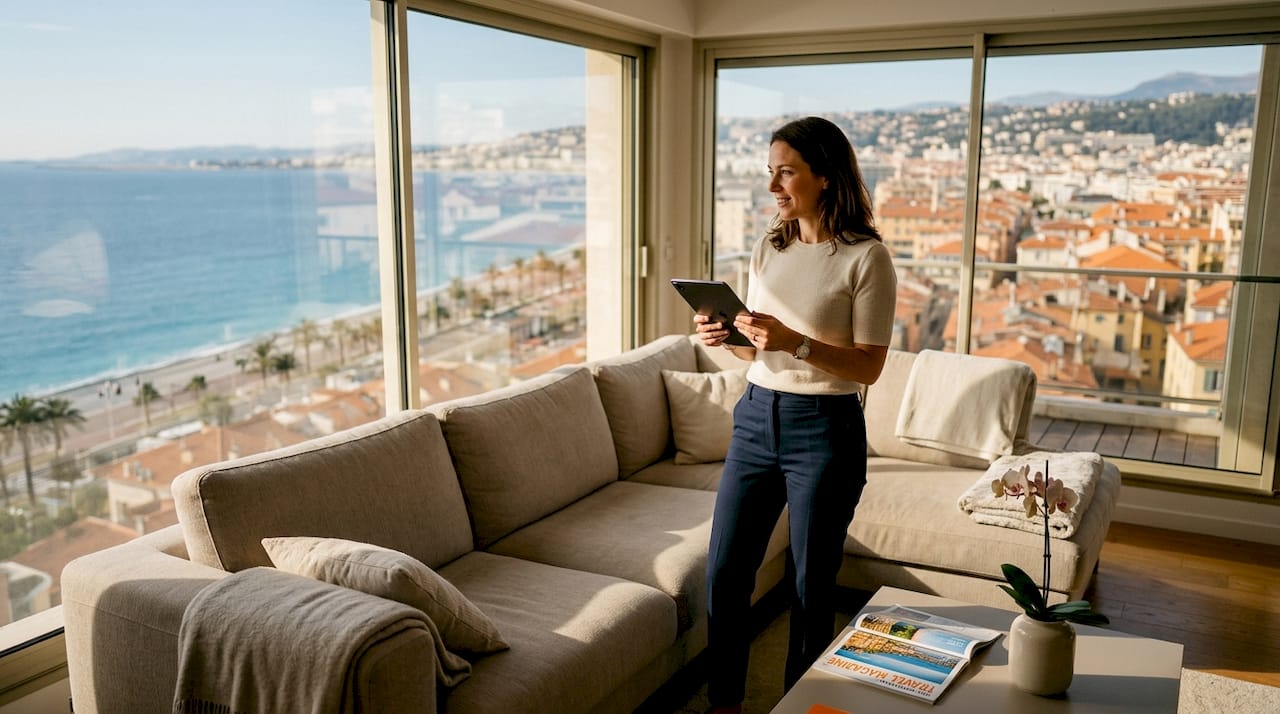
Homeowner reviews new-build sustainable estate documents

The financial case is compelling. New-builds purchased under VEFA contracts offer a ten-year structural warranty, lower notary fees of approximately 2 to 3% versus the 7 to 8% typical of resale, and staged payment plans that preserve liquidity. For investors managing complex portfolios, these structural advantages are not trivial.

FeatureHistoric villaNew-build estate
Notary fees7 to 8%2 to 3%
Structural warrantyNoneTen years
Energy ratingOften D or EA or B
Seasonal rental appealHigh prestigeHigh yield
Legacy transfer easeComplexStreamlined

Sustainability is no longer a niche preference. It is a core pricing driver. Solar arrays, rainwater harvesting, and green certifications now feature in the most sought-after new houses demand surge projects. Heirs who inherit these properties benefit from lower running costs and stronger resale positioning in a market where eco-credentials will only grow in importance.

Seasonal rental performance is another decisive factor. A new-build villa steps from Sainte-Maxime’s Nartelle beach, with a ferry ride to Saint-Tropez’s Pampelonne shores, commands premium summer rates from a clientele that expects modern infrastructure. Older properties, however charming, increasingly struggle to match those yields without significant capital investment.

Pro Tip: When evaluating a new-build, request the developer’s VEFA contract and verify the ten-year Dommage-Ouvrage insurance is in place before signing. This single document protects your investment from structural defects and is non-negotiable for serious legacy buyers. Review second home trends to understand which locations are generating the strongest off-plan demand right now.

Trend 2: Off-market and invisible luxury properties

Beyond new-builds, privacy-driven acquisitions are disrupting the traditional property market in ways that rarely appear in public data. The most extraordinary Riviera estates never reach a listing portal. They move silently between trusted networks, exchanged in conversations held over lunch at a Cannes Croisette terrace or during a private viewing in an Antibes fortified garden.

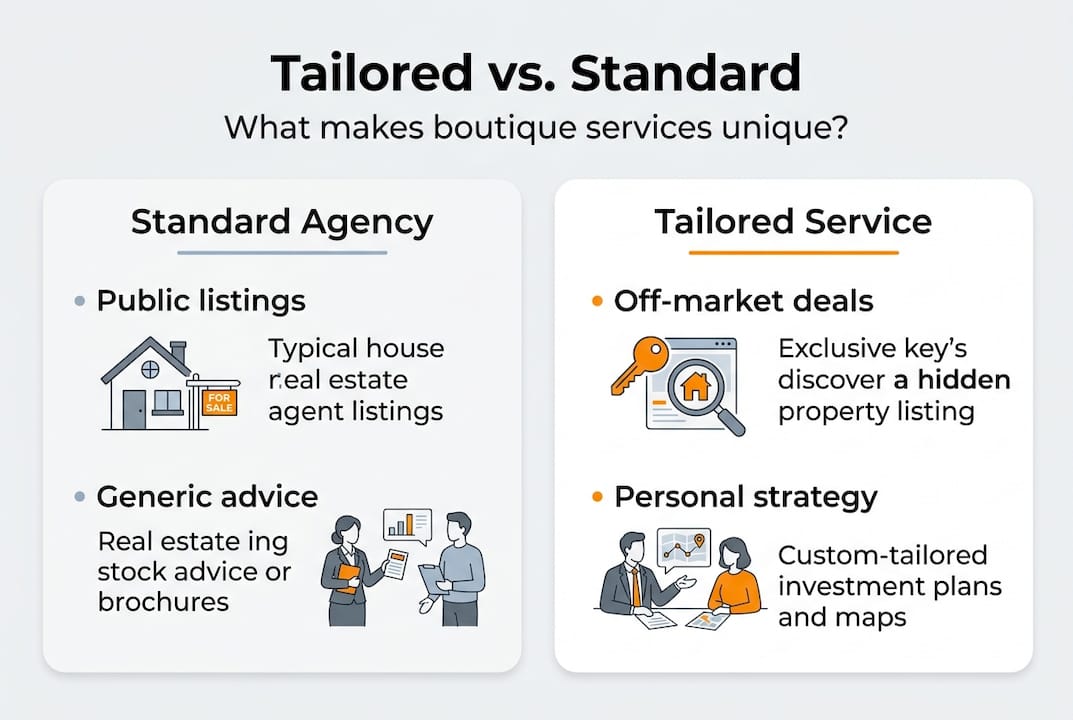
Off-market luxury properties grant exclusive access to investors with the right relationships. These invisible listings represent some of the finest addresses on the Riviera, from sprawling Cap d’Antibes estates with private sea access to Monaco-adjacent penthouses with panoramic views over the principality’s glittering harbour.

Why do sellers choose discretion? The reasons are consistent across our experience:

  • Privacy protection: Ultra-high-net-worth families avoid publicising their asset movements
  • Price integrity: Off-market transactions prevent speculative bidding that distorts valuations
  • Speed and certainty: Vetted buyers transact faster with fewer complications
  • Legacy sensitivity: Estate disposals tied to succession planning require absolute confidentiality

For buyers, the opportunity is real but the barrier to entry is trust. Agents who operate in this space do not advertise their most sensitive mandates. They protect them.

“The finest properties on the Côte d’Azur are never found; they are introduced. Your network is your most valuable asset in this market.”

Understanding elite buyer trends reveals that the most active acquirers in 2026 are not browsing portals. They are cultivating relationships with agents who hold discreet mandates across Menton, Èze, and the hills above Nice.

Pro Tip: Before approaching an off-market acquisition, commission an independent legal audit to verify title clarity and confirm there are no servitudes or planning restrictions attached to the land. A luxury penthouse or clifftop estate that appears flawless on first viewing may carry legal complexities that only a thorough due-diligence process will surface.

Trend 3: Legacy investments and multi-generational estate planning

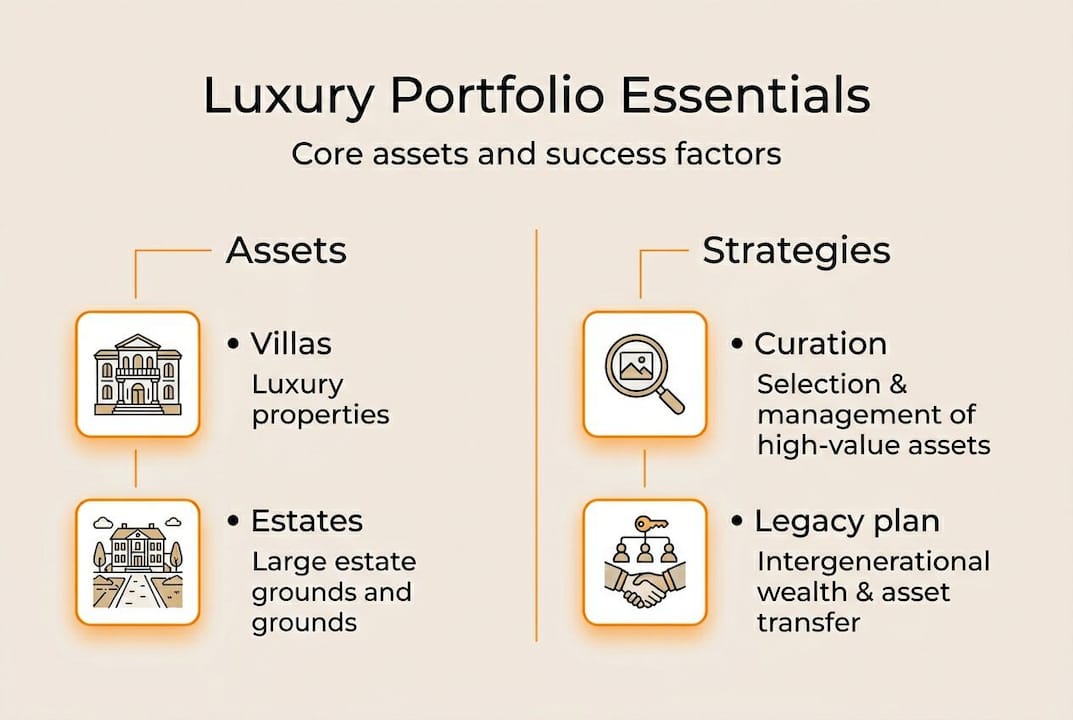
Privacy and exclusivity are just the beginning. The most sophisticated investors arriving on the Côte d’Azur in 2026 are not simply buying property. They are architecting family wealth structures designed to endure across generations. Legacy investors seek multi-generational security and diversified portfolios that balance capital appreciation with tax-efficient wealth transfer.

The Riviera is uniquely suited to this ambition. French property held through a Société Civile Immobilière structure allows phased gifting of shares to heirs, reducing inheritance tax exposure whilst retaining family control of the asset. A restored Provençal mas near Menton or a Monaco-adjacent plot becomes not merely a home but a financial instrument etched in stone.

Structuring a legacy acquisition typically follows these steps:

  1. Define the generational objective: Capital preservation, rental income, or lifestyle use?
  2. Select the legal ownership structure: Personal ownership, SCI, or international holding company
  3. Commission technical and legal due diligence: Title clarity, seismic resilience, planning permissions
  4. Assess rental yield potential: Elite seasonal lets on the Riviera generate 3 to 5% annually
  5. Plan the succession mechanism: Phased share gifting, trust structures, or direct inheritance
ApproachCapital growthYieldTax efficiencyGenerational transfer
Single-owner investmentHighModerateLimitedComplex
SCI family structureHighModerateStrongStreamlined
Multi-property portfolioVery highStrongVariableFlexible

Review the full property acquisition steps before committing capital, and explore the top markets for investment to identify which Riviera communes offer the strongest combination of appreciation and yield. For broader context, our investment strategies guide maps the full spectrum of approaches available to discerning buyers.

Pro Tip: Properties appreciating at 5 to 8% annually in prime Riviera micro-locations can double in value within a generation. The compounding effect of location prestige, scarcity, and global demand makes early acquisition the most powerful legacy decision you can make.

Trend 4: Navigating volatility and emerging risk factors

With legacy strategies taking centre stage, savvy investors must still navigate heightened volatility and risk with clear eyes. The Côte d’Azur is not immune to macro forces. Luxury property markets experience cycles of 7 to 15 years, with volatility running approximately 20% above mainstream prime markets. Knowing where you stand in the cycle is not optional intelligence. It is foundational.

Emerging risk factors in 2026 include:

  • Geopolitical capital flows: Sanctions and currency controls can redirect or restrict buyer pools rapidly
  • Climate and insurance risk: Coastal properties face rising insurance premiums as climate assessments tighten
  • Regulatory change: French property tax reforms and rental regulation updates require ongoing legal monitoring
  • Liquidity risk: Ultra-prime assets can take 12 to 24 months to transact at full value in a cooling cycle
Risk category2020 severity2026 severityMitigation
GeopoliticalLowModeratePortfolio diversification
Climate and insuranceLowModerate to highCoastal survey and insurance audit
RegulatoryModerateModerateLocal legal counsel
LiquidityLowLow to moderateLong-term holding horizon

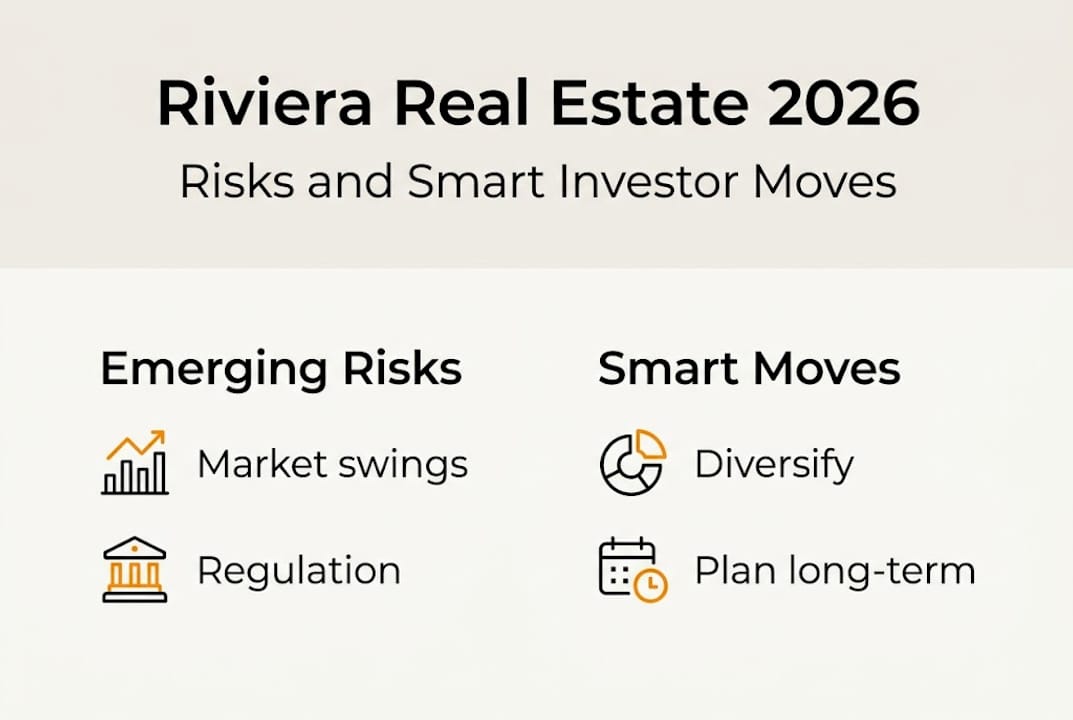
Infographic showing real estate risks and strategies

The most resilient portfolios we observe are those positioned across multiple Riviera micro-markets. A combination of a Cannes Croisette-adjacent apartment, a Menton hillside villa, and an off-plan Sainte-Maxime estate creates natural diversification across lifestyle, yield, and appreciation profiles. Our market cycles for 2026 analysis and emerging markets overview provide the granular data needed to position intelligently within this cycle.

Risk management on the Riviera is ultimately about time horizon. Investors who hold prime assets through a full cycle consistently outperform those who attempt to time micro-corrections.

Unlocking real value: What elite investors miss in Côte d’Azur trends

Here is what years of working with the world’s most discerning buyers has taught us: the investors who achieve the most enduring returns are rarely the most aggressive. They are the most patient and the most networked. Conventional wisdom says buy the best location and wait. We say that is necessary but insufficient.

What separates a legacy estate from a depreciating asset is the intelligence gathered before the offer is made. Too many buyers focus on the view from the terrace and overlook the legal architecture beneath the title. Too many chase the visible market and miss the invisible one, where the finest properties in Èze, Antibes, and Cap Ferrat change hands quietly, years before any public listing could capture them.

We also observe that sustainability credentials are systematically underweighted in buyer due diligence. An eco-certified villa in Menton with solar infrastructure and a strong energy rating is not merely a greener choice. It is a structurally superior asset for the next generation. Explore buyer trend examples to see how the most informed investors are repositioning their portfolios around these realities right now.

Get bespoke insight and access to Côte d’Azur luxury investments

If these trends have sharpened your thinking, we invite you to go further. At Living on the Côte d’Azur, we connect discerning investors with curated opportunities that never reach the open market. Our team holds discreet mandates across the Riviera’s most prestigious addresses, and we accept cryptocurrency payments for clients who prefer seamless, modern transactions. Whether you are seeking to access invisible luxury properties, understand the full spectrum of luxury real estate features, or explore all available investment options on the Côte d’Azur, our expertise is your most valuable asset. Reach out today and let us introduce you to your family’s next heirloom.

Frequently asked questions

What makes the Côte d’Azur property market unique for legacy investors?

The Côte d’Azur offers rare privacy, multi-generational appeal, and consistent global demand, making it ideal for estate planning. Legacy investors benefit from a finite supply of prestige addresses that appreciate reliably across full market cycles.

How do investors access off-market Côte d’Azur luxury properties?

Off-market properties are available exclusively to investors with trusted agent relationships and vetted networks, bypassing public listings entirely. Building those relationships before you need them is the single most important step.

Are new-builds a better investment than historic villas?

New-builds attract sustainability-focused buyers and offer lower entry costs through reduced notary fees and ten-year warranties. Historic villas carry unmatched prestige, but new construction rising across the Riviera is closing the yield gap rapidly.

How volatile is the Côte d’Azur luxury market compared to others?

The luxury sector operates on 7 to 15-year cycles with approximately 20% higher volatility than mainstream prime markets, rewarding investors who hold through complete cycles rather than reacting to short-term corrections.

Recommended

  • How to select prime Côte d’Azur real estate in 2026
  • Luxury market trends on the Côte d’Azur: insights for 2026
  • 7 Essential Real Estate Investment Tips for Côte d’Azur
  • Second Home Trends 2025: Shaping Riviera Legacies
by Websols Servicedesk/15 April 2026/in Landingpage
https://www.livingonthecotedazur.com/wp-content/uploads/2026/04/1776212307357_Agent-reviews-Cote-d-Azur-real-estate-property-plans.jpeg 715 1280 Websols Servicedesk https://www.livingonthecotedazur.com/wp-content/uploads/2024/02/sitelogo150.png Websols Servicedesk2026-04-15 02:20:252026-04-15 02:20:28Côte d’Azur real estate trends: Invest smarter in 2026


TL;DR:

  • Offshore real estate on the Côte d’Azur combines scarcity, prestige, and consistent appreciation, attracting discerning investors.
  • The French property buying process involves clear legal steps, including offers, notaire involvement, and final deed signing.
  • Proper structuring and local expert guidance are essential for tax efficiency and successful legacy planning.

Purchasing prestige real estate on the Côte d’Azur is, for many international investors, perceived as a labyrinthine affair. Currency complexities, unfamiliar legal frameworks, and the sheer opulence of the market can feel overwhelming at first glance. Yet the reality is far more elegant. With the right structure, seasoned advisors, and a clear understanding of each milestone, acquiring a sun-drenched villa above Èze or a sea-view apartment near Nice’s Baie des Anges becomes not just achievable, but deeply rewarding. This guide walks you through every essential layer of offshore property investment on the Riviera, from legal clarity to generational legacy planning.

Table of Contents

  • Clarifying the appeal: Why invest offshore on the Côte d’Azur?
  • Understanding the offshore purchasing process step-by-step
  • Mastering tax, legal, and regulatory hurdles as a non-resident
  • Securing your legacy: Structuring offshore ownership for generational wealth
  • Our take: Why strategic expertise transforms offshore property outcomes
  • Connect with Côte d’Azur’s luxury property specialists
  • Frequently asked questions

Key Takeaways

PointDetails
Côte d’Azur’s investment valueThe region offers rare prestige, legacy potential, and robust demand for luxury property.
Straightforward purchase processOffshore buyers can expect a sequenced and secure process, typically completed in 2-3 months.
Wealth tax implicationsThe IFI tax applies to high-value property and can be managed through strategic deductions.
Legacy-focused structuringAppropriate ownership vehicles and estate structuring maximise protection and generational planning.
Expert advice is crucialEngaging local and cross-border experts ensures regulatory compliance and access to exclusive opportunities.

Clarifying the appeal: Why invest offshore on the Côte d’Azur?

The Côte d’Azur is not merely a destination. It is a statement. From the lemon-scented ramparts of Menton to the yacht-lined quays of Antibes, this stretch of coastline has commanded the attention of the world’s most discerning investors for generations. Salt-kissed air, lavender-laced breezes, and an unrivalled quality of life make it one of the few places on earth where lifestyle and legacy converge so naturally.

For high-net-worth investors, offshore property here serves a dual purpose. It is simultaneously a wealth preservation vehicle and a deeply personal asset, one that can be enjoyed during Cannes’ legendary film festival season, passed to the next generation, or let discreetly to elite clientele for yields of 3 to 5% annually. Unlike many global property markets, the Côte d’Azur has demonstrated consistent resilience, with prime properties appreciating at 5 to 8% annually even through periods of broader economic turbulence.

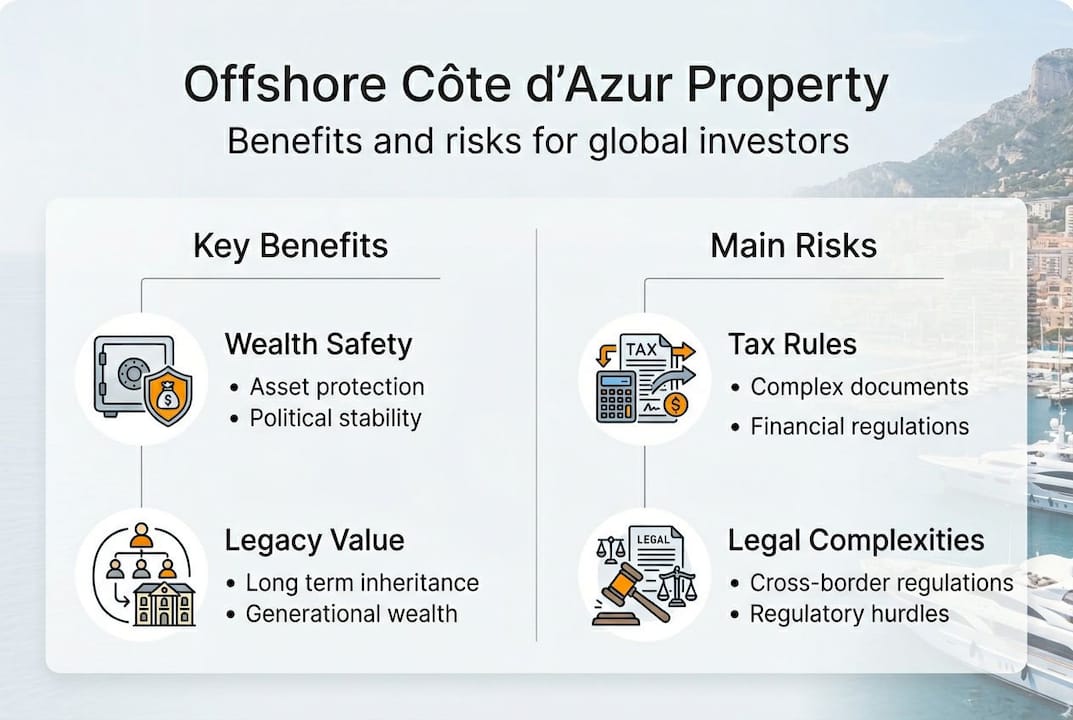
Infographic showing offshore Côte d’Azur property pros and cons

What distinguishes this market from comparable luxury hotspots in Dubai or Bali is its combination of scarcity and prestige. Supply of prime seafront and hillside properties is genuinely finite. Cap d’Antibes offers extraordinary privacy behind stone walls draped in bougainvillea; the Monaco border corridor commands some of Europe’s highest per-square-metre values. These are not merely homes. They are heirlooms etched in stone.

The top criteria our clients prioritise when considering offshore acquisition here include:

  • Exclusivity and scarcity: Properties that cannot be replicated, in locations that will not be overdeveloped
  • Lifestyle integration: Proximity to Antibes’ Provençal markets, Sainte-Maxime’s Nartelle beach sunsets, or Menton’s celebrated Fête du Citron
  • Generational transferability: Assets structured to pass cleanly to heirs with minimal tax friction
  • Rental income potential: Elite seasonal lets that generate income while the property appreciates

“A Riviera estate is not a purchase. It is a promise made to future generations, a piece of the Mediterranean sun preserved in stone and light.”

Pro Tip: If you are evaluating offshore locations, compare net yield after local tax, not gross rental income. The Côte d’Azur’s combination of capital appreciation and rental demand makes it exceptionally competitive on a net basis.

Understanding the offshore purchasing process step-by-step

Once the decision to invest is made, clarity on the purchase journey becomes your most valuable asset. The French property acquisition process is structured, transparent, and well-protected by law. It simply requires familiarity.

The key buying steps for international investors are as follows:

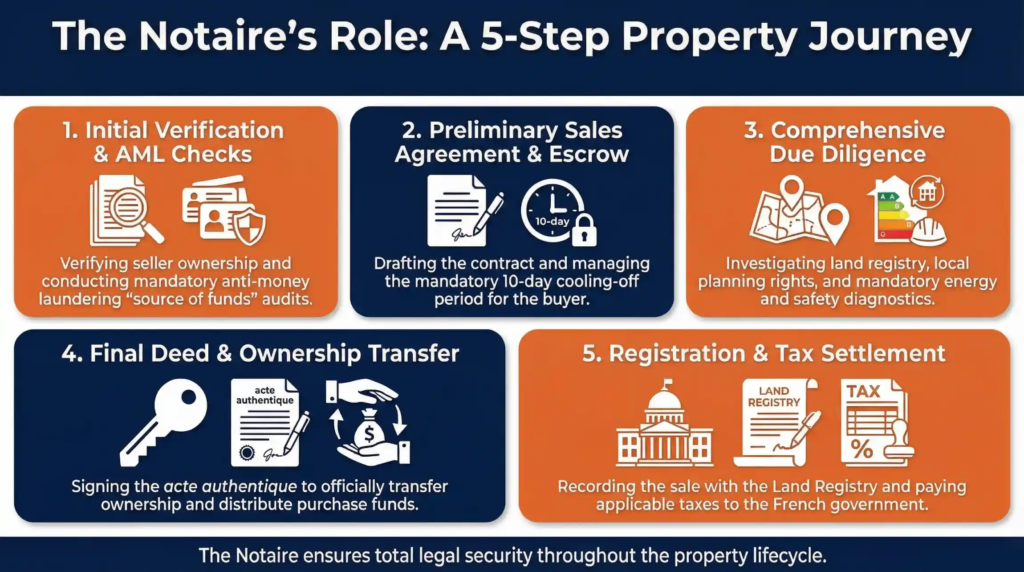
  1. Offer acceptance: Negotiate and agree on price and key terms with the seller
  2. Appoint a notaire: The notaire (a state-appointed legal officer who oversees the transaction) is mandatory in French property law and protects both parties
  3. Sign the compromis de vente: This is the preliminary contract, a legally binding agreement that locks in the terms, followed by a 10-day statutory cooling-off period for the buyer
  4. Pay the deposit: Typically 5 to 10% of the purchase price, held in escrow by the notaire
  5. Notaire due diligence: The notaire conducts title searches, verifies planning permissions, and checks for charges or encumbrances. This phase takes 2 to 3 months in most cases
  6. Sign the acte authentique: The final deed of sale, signed before the notaire, at which point funds are transferred and keys are handed over

The table below compares the two key contracts in the French purchase process:

ContractStageLegal effectBuyer protection
Compromis de ventePreliminaryBinding on both parties10-day cooling-off period
Acte authentiqueFinalTransfers full ownershipTitle guarantee via notaire

Pro Tip: International buyers should always appoint their own independent legal counsel alongside the notaire. The notaire is neutral by law, but a bilingual solicitor working exclusively in your interest adds an invaluable layer of protection. Our property acquisition guide outlines exactly how to assemble the right team.

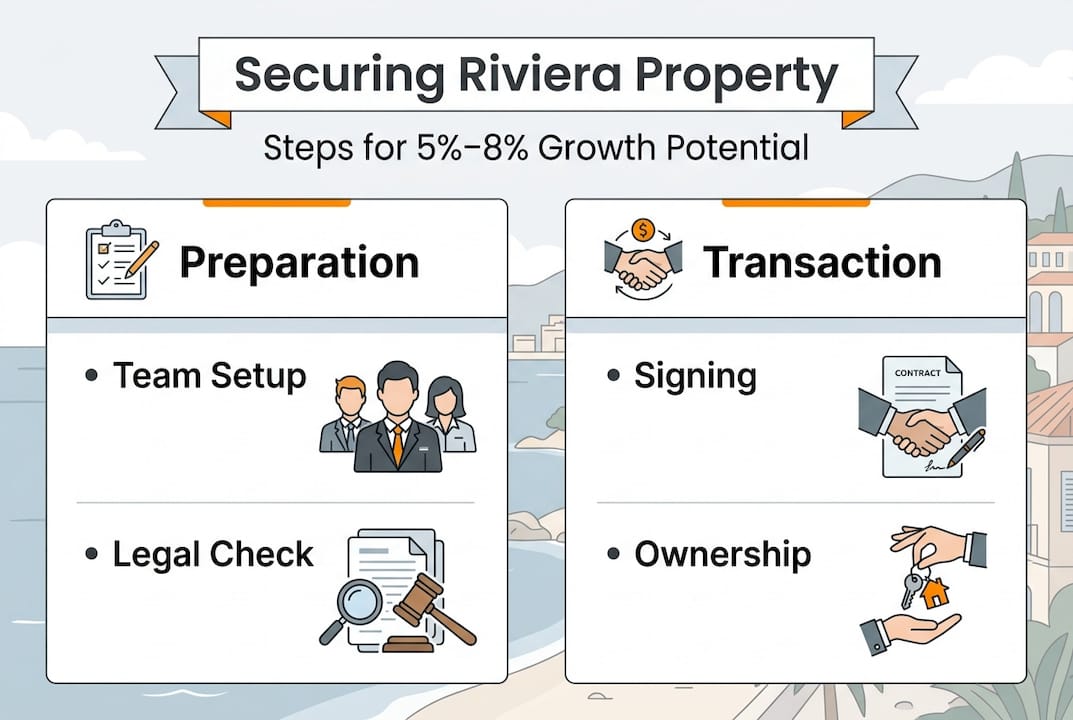
We also strongly recommend assembling what we call a dream team for your purchase: a trusted agent, a bilingual notaire, a tax adviser familiar with your home country’s treaty with France, and a currency specialist to manage exchange rate exposure.

Mastering tax, legal, and regulatory hurdles as a non-resident

For non-resident investors, the French tax landscape requires careful navigation. The most significant levy to understand is the IFI, or Impôt sur la Fortune Immobilière, France’s real estate wealth tax. The IFI applies to non-residents on French property held with a net value exceeding €1.3 million, with progressive rates from 0.5% to 1.5% applied to the taxable base.

Investor reviewing real estate tax forms in kitchen

Important deductions exist. Mortgage debt secured against the French property reduces the taxable base directly. For those designating a French property as their primary residence, a 30% abatement applies. These allowances can meaningfully reduce the effective IFI burden.

The table below outlines the IFI rate bands as they apply in 2026:

Net property valueIFI rate
Up to €800,0000%
€800,001 to €1,300,0000.5%
€1,300,001 to €2,570,0000.7%
€2,570,001 to €5,000,0001%
€5,000,001 to €10,000,0001.25%
Above €10,000,0001.5%

Beyond IFI, non-residents must also consider:

  • Taxe foncière: An annual land and property tax payable by the owner
  • Capital gains tax: On disposal, non-resident sellers face French capital gains tax at 19%, plus social levies, though tapering reliefs reduce this significantly after 22 years of ownership
  • Rental income tax: Rental income sourced in France is taxable in France, typically at 20% for non-residents under the flat-rate regime
  • Reporting obligations: Non-residents must file an annual French tax return if they earn French-source income or hold assets above the IFI threshold

Legal structures such as the SCI (Société Civile Immobilière, a French civil property company) can offer advantages in estate planning and income distribution, though they carry their own compliance requirements. Our French Riviera tax guide and luxury real estate tax strategies provide deeper analysis for investors at every stage of planning.

Securing your legacy: Structuring offshore ownership for generational wealth

Beyond acquisition and tax compliance lies the most enduring question of all: how will this asset serve your family in 20 or 50 years? The answer lies in how you structure ownership from day one.

French succession law includes forced heirship rules, meaning a portion of your estate is legally reserved for direct descendants regardless of your wishes. For international investors, this can conflict with structures designed under common law or trust-based systems. The key is to address this before signing the acte authentique, not after.

The main ownership structures available to offshore buyers include:

  • Direct personal ownership: Simple and transparent, but subject to French succession law and potentially higher inheritance tax
  • SCI (Société Civile Immobilière): Allows shares in the company to be gifted progressively to heirs, reducing inheritance tax liability over time and offering flexibility in income distribution
  • Holding via a foreign company: Can offer certain advantages but is increasingly scrutinised by French tax authorities and requires specialist advice
  • Life insurance policies (assurance vie): A powerful and tax-efficient tool for passing wealth to nominated beneficiaries outside the standard succession framework

“The most elegant legacy is one that arrives without friction. Structuring your Riviera estate correctly today is the greatest gift you can give those who will inherit it tomorrow.”

Double taxation treaties between France and many investor home countries (including the United Kingdom, the United States, and the UAE) can mitigate the risk of being taxed twice on the same asset or income. Understanding how these treaties interact with your personal tax residency is essential. Our guide on property transfer and legacy explores these intersections in detail.

Pro Tip: Gifting SCI shares to children during your lifetime, rather than bequeathing the property directly, can dramatically reduce inheritance tax through France’s generous abatement system, which allows €100,000 per parent per child every 15 years. Understanding what a luxury portfolio looks like in practice helps frame these decisions within a broader wealth strategy.

Our take: Why strategic expertise transforms offshore property outcomes

We have guided clients from London, Dubai, Singapore, and São Paulo through acquisitions on the Riviera, and one pattern emerges consistently. The investors who achieve the best outcomes are not necessarily those who conduct the most exhaustive due diligence independently. They are the ones who invest in the right relationships early.

The Côte d’Azur luxury market is, by design, opaque. The finest properties rarely appear on public portals. They circulate quietly among trusted networks, exchanged between advisors who have spent decades earning access. Knowing which notaire in Antibes moves quickly, which architect in Èze understands biophilic design, or which off-market estate in Cap d’Antibes is about to become available: this is knowledge that no online search can replicate.

We believe the most critical investment any offshore buyer can make is in mastering the investment process with locally embedded, internationally fluent advisors. Structure matters. Timing matters. But relationships, built on trust and genuine expertise, are what transform a transaction into a legacy.

Connect with Côte d’Azur’s luxury property specialists

Your Riviera legacy begins with a conversation. At Living on the Côte d’Azur, we offer access to off-market luxury properties that never reach public listings, alongside personalised guidance that bridges your compliance obligations with your lifestyle aspirations. Whether you are seeking a sun-drenched villa above Saint-Tropez’s Pampelonne shores or a sleek sea-view residence near Nice’s Promenade des Anglais, our specialists tailor every step of your property acquisition on the Riviera to your unique vision. We also accept cryptocurrency payments, reflecting our commitment to serving the next generation of digital wealth creators. Speak to one of our experts and take the first step towards your Riviera heirloom.

Frequently asked questions

How long does buying property on the Côte d’Azur typically take for international investors?

The purchase process usually takes 2 to 3 months from offer acceptance to closing, encompassing due diligence, the compromis de vente, and the final signing of the acte authentique.

What are the main taxes for non-residents buying French property valued above €1.3 million?

The IFI real estate wealth tax applies, with progressive rates between 0.5% and 1.5%, alongside deductions for mortgages and a 30% allowance for primary residences.

What documents should offshore buyers prepare before starting the purchasing process?

You will need valid identification, certified proof of funds, and, for legal entities, full company documentation along with authorised representative credentials.

Can property purchases be structured for inheritance or family trusts in France?

Yes, structures such as the French SCI and life insurance policies are widely used to manage succession planning, subject to French inheritance law and applicable double taxation treaties.

Recommended

  • Why the Cote d’Azur is a must for investors in Europe
  • Benefits of international property ownership: Côte d’Azur
  • Guide to International Real Estate Investment in Côte d’Azur
  • 7 Essential Real Estate Investment Tips for Côte d’Azur
by Websols Servicedesk/14 April 2026/in Landingpage
https://www.livingonthecotedazur.com/wp-content/uploads/2026/04/1776138623671_image.jpeg 720 1260 Websols Servicedesk https://www.livingonthecotedazur.com/wp-content/uploads/2024/02/sitelogo150.png Websols Servicedesk2026-04-14 05:52:052026-05-07 12:50:02Unlock offshore property investments on the Côte d’Azur


TL;DR:

  • Côte d’Azur luxury properties appreciate faster due to limited supply and global demand.
  • Owning property there offers long-term appreciation, income, and legacy-building opportunities.
  • Proper structuring and tax strategies enhance returns and simplify inheritance for international investors.

There is a persistent misconception that owning luxury property on the Côte d’Azur is purely a statement of personal success. In reality, the most astute investors we work with view their Riviera estate as a cornerstone of a broader financial architecture: a living asset that appreciates, generates income, shelters wealth across generations, and carries the kind of timeless glamour that no stock portfolio can replicate. From the lemon-scented promenades of Menton to the yacht-dotted marinas of Antibes, this coastline offers something genuinely rare. This article unpacks the strategic, tax, and legacy advantages that make international property ownership here one of the most compelling moves available to high-net-worth individuals today.

Table of Contents

  • Why the Côte d’Azur attracts global property investors
  • Appreciation, value growth, and legacy building
  • Income generation: Making seasonal rentals work for you
  • Taxation and structuring for optimisation and protection
  • A fresh perspective on global property wealth
  • Your next step: Secure Côte d’Azur property advantages
  • Frequently asked questions

Key Takeaways

PointDetails
High appreciation potentialCôte d’Azur luxury properties consistently outperform standard markets in value growth.
Income and ROISeasonal rentals offer strong returns and growing demand for international owners.
Tax and legacy advantagesOptimal structuring and local tax laws enable wealth protection and generational transfer.
Diversified portfolioInternational property ownership spreads risk across assets and geographies.

Why the Côte d’Azur attracts global property investors

The French Riviera is not simply beautiful. It is structurally scarce. Hemmed between the Maritime Alps and the Mediterranean, the coastline cannot expand. New land is not forthcoming. That fundamental constraint, combined with relentless international demand, creates a property market that behaves differently from almost anywhere else in Europe.

Luxury properties appreciate at rates higher than standard markets, driven by limited supply, sustained demand from high-net-worth individuals globally, and continued infrastructure investment across the region. The figures are striking: the France luxury real estate market is valued at €30 billion, with rental growth projected at 17%, powered by concentrated demand in Nice, Cannes, and Monaco.

For investors who hold only domestic assets, this matters enormously. International ownership introduces currency diversification, exposure to a separate economic cycle, and access to a rental audience that is genuinely global. The Côte d’Azur is not seasonal in the way that many assume. Demand stretches from the Cannes Film Festival in May through the summer regattas, the Nice Carnival in February, and the Menton Lemon Festival, which draws visitors well into spring.

What makes this market essential for investors is the convergence of lifestyle prestige and financial resilience. Consider what the region offers:

  • Privacy and exclusivity: Cap d’Antibes and the Monaco border provide discretion that few European locations can match
  • Year-round demand: Events, climate, and culture sustain occupancy beyond the summer peak
  • Infrastructure investment: The TGV, Nice Côte d’Azur Airport, and ongoing urban regeneration protect long-term values
  • International rental audience: Tenants are typically HNWI themselves, commanding premium nightly rates
  • Lifestyle utility: Owners enjoy personal use while the asset works financially during letting periods

The market value on the French Riviera reflects all of this. Properties here are not priced on local wages or domestic sentiment. They are priced on global appetite, and that appetite shows no sign of softening.

Appreciation, value growth, and legacy building

Having established the Côte d’Azur’s international allure, we shift focus to the long-term value and generational power of owning property in the region.

The numbers tell a compelling story, but the real argument for Riviera ownership is what it means across time. Wealth preservation in real estate is not simply about avoiding loss. It is about building something that compounds quietly, year after year, while also serving the family who owns it.

Man arranging photos at Côte d'Azur home

Asset typeAnnual appreciationRental yieldResale liquidity
Côte d’Azur luxury villa5 to 8%3 to 5%High (global buyer pool)
French mainstream residential1 to 3%2 to 3%Moderate
European luxury average3 to 5%2 to 4%Moderate to high
Equities (broad index)6 to 8%VariableVery high

The distinction is not just yield. It is resilience. During periods of market volatility, Riviera luxury property has historically held its value far better than equities or mainstream residential assets, precisely because its buyer pool is international and its supply is fixed.

“A Riviera estate is not a transaction. It is a chapter in a family’s story, a sanctuary that appreciates in meaning as much as in value, and a financial anchor that holds firm when other markets drift.”

For inheritance and legacy strategies, the Côte d’Azur offers particular advantages. Restored Provençal farmhouses near Valbonne or Monaco-adjacent plots can be structured to pass efficiently between generations, minimising friction and maximising continuity.

Pro Tip: Consider holding your Riviera property through an SCI (Société Civile Immobilière), a French civil property company. An SCI allows you to transfer shares in the company to heirs rather than the property itself, which can significantly reduce inheritance tax exposure and simplify succession planning across multiple beneficiaries.

Income generation: Making seasonal rentals work for you

Once you understand the generational benefits, it is equally important to realise how your asset can actively generate income every year.

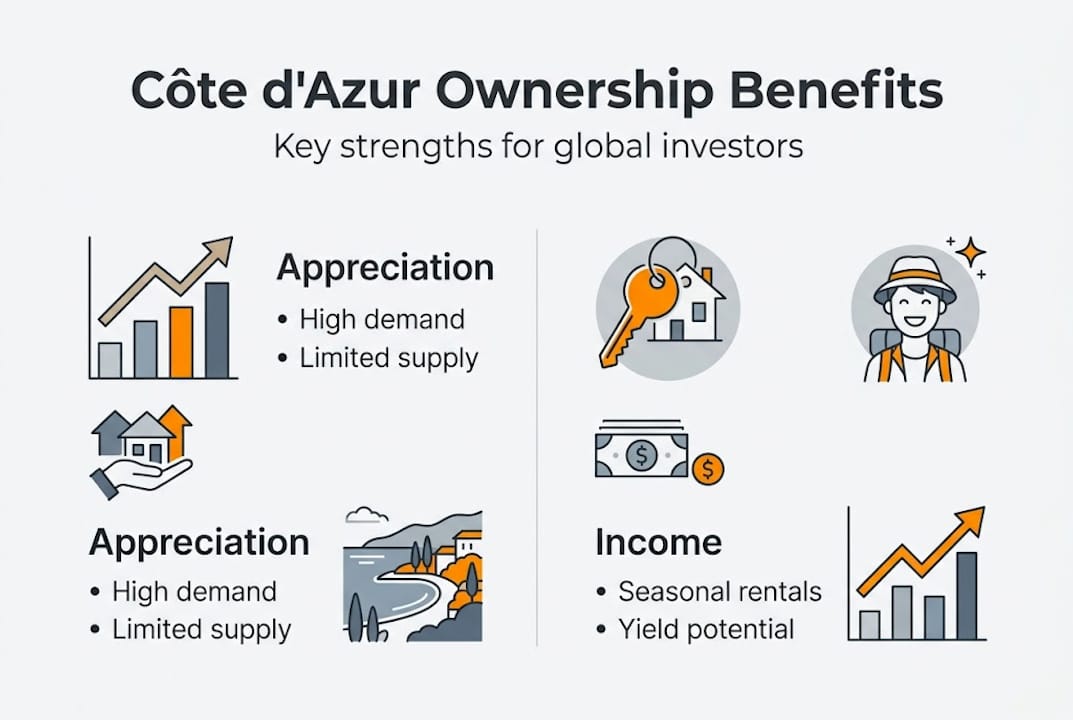
Infographic on Riviera property advantages

The Côte d’Azur is one of Europe’s most lucrative seasonal rental markets, and the projected 17% rental growth in the French luxury segment reflects a structural shift: the world’s wealthiest travellers increasingly prefer private villa rentals over hotel suites. Your property, positioned correctly, sits at the heart of that shift.

DestinationAverage weekly luxury rental (summer)Annual yield potentialPeak season length
Côte d’Azur (Cannes, Antibes)€15,000 to €50,0003 to 5%May to October
Tuscany, Italy€8,000 to €25,0002 to 4%June to September
Algarve, Portugal€5,000 to €18,0003 to 4%July to August
Ibiza, Spain€10,000 to €40,0003 to 5%June to September

The Riviera’s advantage is its extended season. A villa near Pampelonne in Saint-Tropez or overlooking the Croisette in Cannes commands premium rates not just in July and August, but across the Festival season, the Grand Prix weekend in Monaco, and the autumn shoulder months when discerning travellers seek quieter luxury.

To maximise your seasonal income, focus on these key drivers:

  1. Location precision: Proximity to marinas, beaches, and event venues directly influences nightly rates
  2. Presentation and amenities: Infinity pools, private terraces, and concierge services attract the highest-paying tenants
  3. Professional management: A dedicated local management partner ensures occupancy, maintenance, and guest experience
  4. Strategic pricing: Dynamic pricing aligned with event calendars captures peak premiums
  5. Digital visibility: Listings on curated luxury platforms reach the right audience globally

Pro Tip: Explore the LMNP (Loueur en Meublé Non Professionnel) furnished rental regime if you are a non-resident investor. It allows you to offset depreciation of the property and furnishings against rental income, often reducing your French taxable income significantly and improving net yield.

For a full breakdown, our international property investment guide covers structuring options in detail, and our real estate investment tips page offers practical guidance tailored to the Riviera market.

Taxation and structuring for optimisation and protection

Income and growth are only meaningful when the right structure and tax strategy are in place. Let us clarify what investors need to know.

French taxation for non-resident property owners is nuanced, but it is far from punitive when navigated correctly. The key instrument to understand is the IFI (Impôt sur la Fortune Immobilière), France’s wealth tax on real estate. As confirmed by the IFI threshold for non-residents, the tax applies only to French real estate assets exceeding €1.3 million in net value, and non-residents are assessed solely on their French holdings, not their global wealth. Deductions are available for mortgages secured against the property, which makes leverage a particularly effective tool for reducing IFI exposure.

On capital gains, the position is equally structured. The capital gains taper relief works as follows: the standard rate is 19% income tax plus 17.2% social charges, but relief accrues progressively with each year of ownership. Full exemption from income tax is reached after 22 years; full exemption from social charges after 30 years. For long-term legacy holders, this is a powerful incentive to hold rather than sell.

The principal holding structures available to international investors include:

  • Personal ownership: Simple, direct, but exposes the full estate to French inheritance rules
  • SCI (IR regime): Preserves capital gains taper relief, facilitates share-based succession, and allows transparent income reporting
  • SCI (IS regime): Suitable for investors prioritising depreciation deductions over capital gains treatment
  • Foreign company ownership: Possible but subject to anti-avoidance rules and annual reporting obligations

Our French property tax guide and capital gain tax details page offer deeper reading on each scenario. The consistent message from experienced advisers is this: structure early, before acquisition, because restructuring after purchase carries its own tax costs.

A fresh perspective on global property wealth

Most guides stop at the mechanics. We believe the deeper truth about international property ownership is this: the Côte d’Azur is one of the very few places on earth where lifestyle utility and financial performance genuinely reinforce each other rather than compete.

Seasoned investors we work with do not separate the pleasure of watching the Baie des Anges turn gold at dusk from the satisfaction of knowing that view is also appreciating at 5 to 8% annually. They are the same experience. The salt-kissed terraces of Èze, the lavender-laced lanes of the arrière-pays, the Croisette at dawn before the crowds arrive: these are not indulgences. They are the lived dimension of an asset that also performs.

What newcomers often underestimate is the compounding advantage of experienced local advisers. The tax optimisation strategies, the SCI structuring, the LMNP elections, the event-driven rental calendars: none of these are especially complex, but they require someone who knows this market intimately. Our real estate investment strategies reflect years of working with investors who came for the lifestyle and stayed for the returns. The Côte d’Azur rewards patience, precision, and the wisdom to act before the next wave of global demand arrives.

Your next step: Secure Côte d’Azur property advantages

For those genuinely ready to realise the benefits discussed, professional support and curated opportunities make all the difference.

We offer access to luxury villas and penthouses across the French Riviera, including off-market estates that never reach public listings. Our portfolio spans legacy-grade properties in Cap d’Antibes, Cannes, Nice, and Sainte-Maxime, each selected for appreciation potential, rental income capacity, and generational appeal. We also accept cryptocurrency payments, making acquisition seamless for digital-asset investors.

Explore our top investment options or speak with an expert who understands both the financial architecture and the Riviera lifestyle you are investing in. Your heirloom awaits.

Frequently asked questions

How does international property ownership diversify my portfolio?

It introduces exposure to a separate market, currency, and asset class, reducing concentration risk while adding a tangible, income-generating asset that behaves independently of domestic equities or bonds.

What is the IFI and how does it affect non-resident owners?

The IFI is France’s wealth tax on real estate; non-residents pay only on French assets exceeding €1.3 million in net value and can access deductions for mortgages secured against those assets.

Can I fully avoid capital gains tax as an international owner?

Full exemption is achievable over time: the capital gains taper eliminates income tax after 22 years of ownership and social charges after 30 years, making long-term holding a genuinely tax-efficient strategy.

Can international owners rent their Côte d’Azur property for income?

Absolutely. Seasonal rentals are highly lucrative on the Riviera, with 17% rental growth projected in the French luxury market and sustained demand from high-net-worth tenants throughout the extended event season.

Recommended

  • Guide to International Real Estate Investment in Côte d’Azur
  • Benefits of property investment on French Riviera 2026
  • Why the Cote d’Azur is a must for investors in Europe
  • Real Estate Inheritance: Safeguarding Your Côte d’Azur Legacy
  • Cape Royale: Is This Sentosa Cove Gem Worth the Investment? | Aesthetic Havens
by Websols Servicedesk/13 April 2026/in Landingpage
https://www.livingonthecotedazur.com/wp-content/uploads/2026/04/1776039813257_Couple-enjoying-Cote-d-Azur-balcony-morning.jpeg 714 1280 Websols Servicedesk https://www.livingonthecotedazur.com/wp-content/uploads/2024/02/sitelogo150.png Websols Servicedesk2026-04-13 02:25:012026-04-13 02:25:06Benefits of international property ownership: Côte d’Azur


TL;DR:

  • Modern luxury emphasizes quiet elegance, personalized experiences, and sustainable, legacy-focused properties.
  • Ultra-high-net-worth individuals prioritize time, privacy, wellness, and curated environments over material possessions.
  • Sustainability and regenerative strategies are central to luxury real estate, shaping long-term legacy and impact.

The old image of luxury, all gold-plated excess and conspicuous logos, has quietly retired. What replaced it is far more interesting, and far more personal. Today’s high-net-worth individuals are rewriting the rules of opulence, measuring wealth not in square footage alone but in the quality of time spent, the depth of experience curated, and the legacy left behind. From salt-kissed villas above the Côte d’Azur to regenerative estates in Bali and Mauritius, the modern luxury lifestyle is a living philosophy. This guide explores what that philosophy looks like in 2026 and how it shapes the most important investment decisions you will ever make.

Table of Contents

  • How luxury lifestyle is defined in 2026
  • Luxury lifestyle mechanics: What matters most to HNWIs
  • Legacy, sustainability, and the circular economy in luxury living
  • Personalised and experiential: Defining features of luxury in property
  • Why the definition of luxury lifestyle will keep evolving
  • Curating your luxury lifestyle legacy
  • Frequently asked questions

Key Takeaways

PointDetails
Luxury is experience-basedToday’s luxury is measured by experiences, wellness, and quality time, not material display.
Legacy and sustainabilityModern luxury living prioritises legacy, regenerative practices, and responsible wealth stewardship.
Personalisation is keyAffluent clients demand bespoke, tailored amenities and services in all luxury investments.
Quiet luxury dominatesStealth wealth and understated elegance are preferred by HNWIs and family offices.
Premium property is a foundationLuxury real estate anchors lifestyles, delivers exclusivity, and supports multigenerational goals.

How luxury lifestyle is defined in 2026

For decades, luxury was a performance. The right watch, the right address, the right car visible from the street. That era has not disappeared entirely, but it has been profoundly rebalanced. Luxury has shifted from conspicuous consumption to ‘quiet luxury’, prioritising quality time, deep experiences, and wellness over visible status signals. This is not a minor adjustment. It is a generational shift in values.

The concept of ‘quiet luxury’ is particularly revealing. It describes a sensibility where the finest things are recognised by those who know, not broadcast to those who don’t. A Provençal mas restored with reclaimed stone and biophilic interiors speaks volumes to a discerning eye without announcing itself to the street. The same principle applies to travel, dining, and personal services.

Traditional luxuryModern luxury
Conspicuous displayUnderstated excellence
Brand visibilityBespoke personalisation
Ownership as statusExperience as currency
Short-term indulgenceLong-term legacy
Generic premiumCurated and tailored

Personalisation is now the standard, not the exception. 75% of HNWIs prefer brands offering tailored experiences, a figure that reflects a deeper truth: the truly wealthy have moved beyond off-the-shelf solutions entirely. They expect their world to be shaped around them.

What this means in practice:

  • Time is the ultimate luxury asset, and anything that protects it commands a premium.
  • Privacy is non-negotiable, from gated Cap d’Antibes estates to secluded Ézian retreats above the Mediterranean.
  • Wellness encompasses physical, mental, and environmental health, not merely a spa membership.
  • Sustainability signals long-term thinking and aligns with legacy values.
  • Experience over ownership: the memory of a private Cannes Film Festival evening or a dawn sail from Antibes’ marina outweighs any object.

“True luxury in 2026 is invisible to those who don’t belong to it, and unmistakable to those who do.”

Understanding elite luxury buyer trends reveals that the most sophisticated investors are no longer buying properties purely as assets. They are acquiring contexts for living, environments that reflect and reinforce who they are and who they intend to become.

Luxury lifestyle mechanics: What matters most to HNWIs

Once the philosophy is understood, the mechanics become clearer. High-net-worth individuals do not simply spend more. They spend differently, with a precision that reflects both their values and their understanding of time as a finite resource.

BCG defines luxury tiers from aspirational consumers to a ‘beyond money’ ultra-wealthy segment, with ultra HNWIs driving 37% of total luxury market value. This top tier is not buying more of the same. They are seeking entirely different categories of experience, service, and environment.

Consumer tierPrimary luxury driverProperty priority
AspirationalBrand recognitionPremium postcode
Established HNWIPersonalisationCurated amenities
Ultra-HNWIMeaning and legacyRegenerative, private estates

The mechanics of luxury living at the highest level follow a recognisable pattern:

  1. Time optimisation: Private aviation, concierge medicine, and dedicated household staff eliminate friction from daily life.
  2. Wellness infrastructure: Biohacking suites, cryotherapy, circadian lighting, and organic gardens are now standard in premier properties.
  3. Location as sanctuary: Whether a Monaco-adjacent penthouse or a hillside villa above Saint-Tropez’s Vieux Port, the address must offer both prestige and genuine peace.
  4. Frictionless living: Affluent consumers focus on repeatable upgrades in experiences and services that optimise time, with premium locations enabling seamless, frictionless daily life.
  5. Curated social access: The right neighbours, the right marina, the right cultural calendar, from Cannes’ Croisette regattas to Menton’s Lemon Festival, matter enormously.

Pro Tip: When selecting luxury amenities for a property purchase, prioritise features that serve your actual lifestyle over those that photograph well. Wellness infrastructure and privacy architecture retain value across generations; trend-driven additions rarely do.

The role of home has also evolved. A premier property is no longer merely a residence. It is the operational centre of a life lived at the highest level, the place where family gathers, where health is maintained, and where the next generation’s values are quietly formed. Choosing the right location, whether overlooking Baie des Anges from Nice’s Mont Boron or gazing across Sainte-Maxime’s Nartelle beach at golden dusk, is therefore one of the most consequential decisions in any investment strategy for legacy.

Man sorting mail in modern luxury kitchen

Legacy, sustainability, and the circular economy in luxury living

The most sophisticated luxury conversation in 2026 is not about what you own. It is about what you leave behind. Legacy has become the organising principle for a growing cohort of ultra-wealthy families, and it is reshaping property investment in profound ways.

Modern luxury for HNWIs and family offices now involves curated, bespoke ecosystems prioritising healthspan, circular economy principles, and legacy through sustainable assets. The Côte d’Azur, with its extraordinary concentration of historic estates, eco-conscious new builds, and culturally rich communities, sits at the very centre of this movement.

Infographic: key pillars of modern luxury

Regenerative strategies now trump mere sustainability for legacy-focused ultra-wealthy clients. The distinction matters. Sustainability means doing less harm. Regeneration means actively restoring and improving, whether that is a restored Provençal mas with solar arrays and natural water management, or a biophilic villa above Èze whose gardens support local biodiversity.

Key principles shaping legacy-driven property investment:

  • Responsible wealth transfer: Structuring property ownership through family offices or trusts to maximise tax efficiency across generations.
  • Circular economy integration: Choosing materials, construction methods, and operational systems that reduce waste and energy consumption over the long term.
  • Philanthropic alignment: Many ultra-HNWIs tie their property portfolios to charitable foundations, supporting local communities from Antibes to Menton.
  • Green certification: Properties with recognised sustainability credentials command growing premiums and attract premium seasonal tenants.
  • Cultural stewardship: Preserving architectural heritage while integrating modern performance standards is itself a form of legacy.

Pro Tip: When considering sustainable property investment on the Riviera, look beyond solar panels. Properties with passive cooling design, rainwater harvesting, and certified organic grounds deliver measurably lower running costs and significantly stronger appeal to the next generation of elite tenants and buyers.

The Côte d’Azur’s Riviera property sustainability credentials are strengthening rapidly. New developments from Sainte-Maxime to Nice’s Mont Boron are incorporating biophilic design, VEFA contracts with ten-year warranties, and zero-interest payment plans that make curating high-value property more accessible to family offices thinking across decades rather than years. For those committed to wealth building in the Riviera, the convergence of sustainability, prestige, and legacy potential has never been more compelling.

Personalised and experiential: Defining features of luxury in property

If legacy is the why of modern luxury investment, personalisation is the how. The benchmark for any truly luxurious property in 2026 is the degree to which it can be shaped around the specific rhythms, values, and aspirations of its owner.

Exclusivity, personalisation, and experience are the top priorities for today’s affluent buyers, with 75% of HNWIs wanting brands and properties that offer genuinely tailored experiences. This is not about bespoke kitchen handles. It is about environments architected for how you actually live.

The contrast between ‘quiet luxury’ and bold statement homes is instructive. A Cap d’Antibes villa with understated stone facades, private coastal sentiers, and a wellness pavilion overlooking the sea says everything through restraint. A Monaco-border penthouse with panoramic glass and a private pool makes a different, equally valid declaration. Both are expressions of personalised luxury. Neither is wrong. What matters is the alignment between the property and the life being lived within it.

Features that define truly personalised luxury properties in 2026:

  • Wellness architecture: Dedicated spa suites, infrared saunas, and meditation gardens designed as permanent features, not afterthoughts.
  • Smart home integration: Circadian lighting, climate optimisation, and security systems that anticipate rather than react.
  • Culinary infrastructure: Professional-grade kitchens, kitchen gardens, and wine cellars that support a genuine food culture.
  • Private outdoor living: Whether Pampelonne-adjacent terraces or lavender-scented gardens above Menton, outdoor space is treated as a primary room.
  • Connectivity and retreat: High-performance technology infrastructure alongside genuine acoustic and visual privacy.

“A property that fits your life perfectly is not a luxury. It is a necessity. The luxury is finding it.”

Our personalised real estate service is built on this understanding. A well-constructed luxury investment portfolio in 2026 will reflect not just financial goals but the full texture of the life you are building. Staying across emerging luxury trends ensures that the properties you select today will appreciate not only in value but in relevance.

Why the definition of luxury lifestyle will keep evolving

We have observed, across years of working with visionary buyers from Nice to Dubai and Bali to Mauritius, that the greatest mistake any investor can make is to treat luxury as a fixed destination. It is not. It is a moving standard, shaped by generational values, environmental realities, and the quiet revolution in what fulfilment actually means.

The buyers who arrive at the Côte d’Azur today are not seeking what their parents sought. They want estates that honour the land, homes that support their health, and assets that will mean something to their children. Investment and lifestyle excellence are now measured in meaning, not merely in material. The numbers still matter, and Riviera properties appreciating at 5 to 8% annually remain exceptional instruments of wealth. But the conversation has grown richer.

Personalisation, sustainability, and wellness will persist as the defining forces of luxury living. Regenerative, legacy-conscious approaches will set the new benchmark. Those who understand what buyers seek in luxury today will be best positioned to make decisions that resonate across generations.

Curating your luxury lifestyle legacy

The principles explored here, quiet luxury, personalisation, regenerative sustainability, and legacy-driven investment, find their most powerful expression in the right property, in the right location, acquired with the right guidance. At Living on the Côte d’Azur, we connect discerning families and family offices with invisible luxury real estate across the French Riviera and beyond, from off-market Cap d’Antibes estates to biophilic new builds above Sainte-Maxime’s Nartelle beach. Understanding precisely what luxury real estate features define genuine long-term value is our expertise. We invite you to begin your property acquisition on the Riviera with a conversation that starts not with listings, but with your legacy.

Frequently asked questions

What are the main differences between traditional and modern luxury lifestyles?

Traditional luxury focused on display and status signals, while modern luxury values meaning, wellness, personalisation, and sustainability, with ‘quiet luxury’ now the defining sensibility for the world’s most discerning individuals.

Why are experiences and time now considered luxury assets?

Affluent consumers prioritise experiences, time-saving services, and premium locations because genuine scarcity now lies in unique moments and protected time, not in objects that can simply be purchased.

How does sustainability fit into luxury real estate investment?

Sustainability is now a baseline expectation, with legacy-driven buyers selecting properties that go further, embracing regenerative strategies that actively restore environments and support long-term stewardship rather than merely minimising harm.

What makes a property part of a luxury lifestyle portfolio?

Luxury properties anchor experiences, provide genuine privacy, and enable frictionless living, whilst also serving a broader legacy or impact goal that extends the investment’s meaning well beyond its financial return.

Recommended

  • Emerging Luxury Market: Shaping 2026 Wealth Strategies
  • How to select luxury amenities for legacy investments 2026
  • Ultra-Luxury Explained: Beyond Prestige and Investment
  • Luxury Penthouses: Elevating Côte d’Azur Legacy
  • Maldives – Martin Bissig
by Websols Servicedesk/12 April 2026/in Landingpage
https://www.livingonthecotedazur.com/wp-content/uploads/2026/04/1775953138105_Couple-relaxing-in-luxury-city-penthouse.jpeg 714 1280 Websols Servicedesk https://www.livingonthecotedazur.com/wp-content/uploads/2024/02/sitelogo150.png Websols Servicedesk2026-04-12 02:20:392026-05-07 12:49:28Defining luxury lifestyle: modern opulence and legacy in 2026


TL;DR:

  • The Côte d’Azur offers exclusive, scarce properties with lasting prestige and appreciation potential.
  • Investment success depends on location, rarity, amenities, and off-market access for discretion and advantage.
  • Preferred properties include villas, penthouses, and historic estates aligned with legacy and income goals.

The Côte d’Azur does not simply offer property. It offers permanence. From the lemon-scented ramparts of Menton to the yacht-studded marinas of Antibes, every square metre of this sun-gilded coastline carries a story worth owning. Yet with demand consistently outpacing supply, and global wealth flowing ever more deliberately into this corner of the Mediterranean, the challenge is not finding a luxury property. It is knowing precisely which type of investment will honour your legacy, reward your heirs, and generate the seasonal returns a discerning portfolio demands. This guide is your compass.

Table of Contents

  • Key criteria for selecting luxury real estate investments
  • Top luxury property types: Villas, penthouses, estates, and more
  • Comparing investment options: Yield, appreciation, and risk
  • Matching investment options to legacy and rental goals
  • Accessing exclusive and off-market opportunities on the Côte d’Azur
  • Our perspective: Legacy is built on selectivity and regional expertise
  • Explore luxury real estate opportunities with us
  • Frequently asked questions

Key Takeaways

PointDetails
Define your criteriaClarify your goals around legacy, yield, and exclusivity before investing.
Know your optionsVillas, penthouses, new builds, and estates each offer distinct advantages in the Côte d’Azur.
Compare metricsUse data on appreciation, yield, and risk to guide your selection.
Seek exclusivityOff-market and networked deals deliver the best chance of securing rare and rewarding properties.
Engage expertsLocal advisors give you a critical edge in accessing and evaluating luxury investments.

Key criteria for selecting luxury real estate investments

Having set the stage, we now detail the precise criteria that set premier legacy investments apart. Not every property that commands a premium qualifies as a true legacy asset. On the Côte d’Azur, luxury real estate is defined by an intersection of scarcity, prestige address, and the kind of timeless glamour that neither market cycles nor shifting trends can erode.

When we evaluate properties for our clients, we apply a rigorous framework built around five pillars:

  • Location and rarity: Cap d’Antibes, the hills above Èze, and the Monaco border corridor represent finite, irreplaceable addresses.
  • Rental potential: High-season demand from Cannes Film Festival guests, Monaco Grand Prix visitors, and Saint-Tropez regulars drives exceptional short-term yields.
  • Historical appreciation: Prime Riviera addresses have appreciated 5 to 8% annually, outperforming many European counterparts.
  • Amenities and lifestyle: Infinity pools, private access to the sea, and proximity to Michelin-starred dining are not luxuries here. They are expectations.
  • Off-market access: The finest estates rarely appear on public portals. Trusted local networks unlock what the open market never sees.

“Value retention and rental yields are major drivers for legacy property selection on the French Riviera.”

Balancing legacy ambitions with seasonal income is an art. A Cap d’Antibes villa that shelters your family in August can generate €30,000 or more per week during peak season when managed correctly. The benefits of Riviera property extend well beyond personal enjoyment.

Pro Tip: Always request a rental history and a forward projection from a specialist before committing. Properties with proven seasonal demand command stronger resale premiums and attract elite tenants year after year.

Top luxury property types: Villas, penthouses, estates, and more

With clear criteria in mind, let us break down each major investment property type available to you on the Riviera.

Villas and penthouses remain the most sought-after assets for luxury investors, prized for their privacy, exclusivity, and consistent appreciation. Each type, however, serves a distinct investment profile.

  • Villas: The quintessential Riviera asset. Generous grounds, private pools, and sea views make them ideal for families and legacy planning. A well-positioned villa in Sainte-Maxime, steps from Nartelle beach, can attract premium summer rentals while appreciating steadily over decades.
  • Penthouses: Urban prestige distilled into a single floor. Nice’s Mont Boron penthouses offer Baie des Anges panoramas and five-star building amenities, appealing to international buyers who prize convenience alongside opulence.
  • Historic estates and Provençal mas: Restored farmhouses and period estates carry cultural gravitas that newer builds cannot replicate. They command rental prestige and tell a story that resonates deeply with discerning tenants.
  • New constructions: Off-plan developments in Sainte-Maxime and Nice offer ten-year structural warranties, zero-interest payment plans, and lower notary fees. Energy efficiency and biophilic design are standard, not optional.
  • Plots and land: The most patient play. Securing a plot above Èze or near the Monaco border creates long-term value that a carefully designed bespoke villa will eventually crystallise.
Property typeEntry costAvg. appreciationRental yield
Villa€2M+6 to 8% p.a.4 to 6%
Penthouse€1.5M+5 to 7% p.a.5 to 7%
Historic estate€3M+4 to 6% p.a.3 to 5%
New construction€1.2M+5 to 8% p.a.5 to 8%
Plot/land€500K+3 to 5% p.a.N/A

Pro Tip: Explore prime investment property examples to benchmark what genuine value looks like across each category before you negotiate.

Comparing investment options: Yield, appreciation, and risk

Having described each main investment type, it is time for a side-by-side comparison to inform your strategy.

Numbers tell a story that sentiment alone cannot. Villas often lead on long-term appreciation, while penthouses and new builds tend to deliver stronger short-term yields, particularly in the first years after completion when demand is freshest.

Manager in luxury penthouse with city view

Property typeSeasonal yieldLong-term appreciationLiquidityRisk level
VillaHighVery highModerateLow to medium
PenthouseVery highHighHighLow
Historic estateModerateHighLowMedium
New constructionHighHighModerateLow
Plot/landNoneModerateVery lowMedium to high

Key observations from this comparison:

  • Penthouses in Nice and Cannes offer the highest liquidity, meaning you can exit the investment more readily if your circumstances change.
  • Villas at Cap d’Antibes or above Èze consistently outperform on ten-year appreciation, making them the cornerstone of any legacy-focused portfolio.
  • New constructions carry the lowest structural risk, backed by VEFA contracts that protect buyers from cost overruns and construction delays.
  • Historic estates reward patience. Their prestige and rarity mean that the right buyer, when found, will pay a significant premium.

A standout metric worth noting: the 2026 forecast points to a 15% demand spike for sustainable new builds across the Riviera, driven by eco-conscious buyers and tightening energy regulations. Properties with green certifications and solar installations are not simply fashionable. They are financially advantageous.

The key takeaway is this: no single property type dominates across all metrics. The optimal choice depends entirely on whether you prioritise capital preservation, income generation, or the intangible wealth of a family sanctuary that endures across generations. Review appreciation rates by property type to ground your expectations in real data.

Matching investment options to legacy and rental goals

After reviewing the numbers, let us align the investment opportunities with your personal legacy and income ambitions.

Every investor arrives at the Côte d’Azur with a different vision. Some seek a family seat that will shelter grandchildren during Menton’s Lemon Festival for decades to come. Others want a high-performing asset that generates income during the Cannes Film Festival season and the Monaco Grand Prix, then appreciates quietly in between. Many want both.

Here are the primary scenarios we guide our clients through:

  1. Legacy protection: Invest in a villa or historic estate in a finite, prestigious address. Prioritise title clarity, long-term structural integrity, and succession planning from day one. A Provençal mas near Antibes, restored to modern standards, can transfer to heirs with significant tax efficiency.
  2. Seasonal rental income: Penthouses and modern villas with premium amenities generate the strongest short-term returns. Seasonal rentals offer high returns but require active management and a trusted local letting partner.
  3. Hybrid strategy: A new construction in Sainte-Maxime, steps from the Garonette sands, can serve as a family retreat in spring and autumn while generating elite rental income across the summer peak.

“The most resilient Riviera portfolios we have seen are not the largest. They are the most deliberately chosen.”

For succession and exit planning, we recommend engaging a French notaire and a wealth adviser familiar with cross-border estate law from the outset. Integrating your Riviera asset into a broader portfolio requires understanding how it interacts with your existing holdings across markets such as Dubai, Ibiza, or Mauritius. Explore types of real estate investments and consult our international investment guide to build a strategy that serves every generation.

Accessing exclusive and off-market opportunities on the Côte d’Azur

Unlocking the true potential of luxury investment means going beyond the public market.

The most extraordinary properties on the Côte d’Azur are never listed publicly. They change hands through whispered introductions, trusted advisers, and relationships cultivated over years. This is not a quirk of the market. It is a feature that protects both seller and buyer, ensuring that transactions of significant scale proceed with the discretion they deserve.

Off-market luxury properties offer greater discretion and access to unique deals that the open market simply cannot replicate. The advantages are considerable:

  • Privacy: No public exposure of the transaction, the price, or the parties involved.
  • Reduced competition: Without a public listing, you negotiate without the pressure of competing bids driving the price skyward.
  • Early access to new builds: Developers frequently offer preferred pricing and unit selection to trusted networks before any public launch.
  • Unique assets: The rarest estates, the most coveted plots above Èze, the Belle Époque villas overlooking the Baie des Anges, these rarely surface publicly.

“In our experience, the properties that create the most enduring legacies are the ones that were never advertised.”

Building access to this invisible market requires genuine relationships with local agents, notaires, developers, and family offices who operate at the highest level of the Riviera market. We have spent years cultivating precisely these connections.

Pro Tip: Follow the steps to successful buying before you begin your search. Understanding the legal and financial process in advance positions you to move decisively when a rare off-market opportunity presents itself.

Our perspective: Legacy is built on selectivity and regional expertise

We believe the real secret to generational success lies not in following fleeting trends, but in the disciplined refusal to be distracted by them. The conventional wisdom that broader diversification always reduces risk does not hold in prime luxury real estate. On the Côte d’Azur, over-diversification across too many property types or too many locations can dilute the very exclusivity that drives appreciation.

The investors who build true legacies here choose fewer properties, chosen with greater care. They rely on local intelligence that no algorithm or market report can replicate. They understand that a single, perfectly positioned villa above Èze, or a penthouse commanding the Baie des Anges, carries more generational weight than a scattered portfolio of average assets.

The timeless appeal of Côte d’Azur investing is not accidental. It is the product of scarcity, beauty, and a global community of buyers who recognise that certain addresses simply cannot be replicated. We have seen this truth play out across decades. Trust the address. Trust the network. Trust the expertise of those who live and breathe this market every day.

Explore luxury real estate opportunities with us

Ready to put your strategy into action? At Living on the Côte d’Azur, we offer something the open market cannot: genuine access to invisible off-market options and the regional expertise to evaluate them with precision. Whether you are drawn to prime French Riviera villas and penthouses or seeking a bespoke legacy strategy that spans multiple markets, our team is ready to guide you. We also accept cryptocurrency payments, making the process as seamless as the lifestyle you are investing in. Speak to a local expert today and let us curate your next heirloom.

https://www.livingonthecotedazur.com/contact-nice-to-meet-you/

Frequently asked questions

What is the best type of luxury property for seasonal rental income?

Villas and penthouses with premium amenities consistently attract the highest seasonal rental yields on the Côte d’Azur, particularly during the Cannes Film Festival, Monaco Grand Prix, and summer peak periods.

Why do investors choose off-market real estate?

Off-market luxury properties offer greater discretion, early access to rare assets, and negotiating conditions free from competing public bids, making them the preferred route for high-net-worth buyers.

How can I ensure my investment maintains long-term value?

Focus on prime location, scarcity, and luxury features, as location and amenities are the most reliable predictors of long-term appreciation and sustained rental appeal on the Riviera.

Are there advantages to investing in new construction properties?

New constructions offer ten-year structural warranties, lower notary fees, and zero-interest payment plans, and prime investment examples show that modern energy-efficient builds are delivering strong capital appreciation in 2026.

Recommended

  • How to Finance Luxury Real Estate on the Côte d’Azur
  • Guide to International Real Estate Investment in Côte d’Azur
  • Luxury market trends on the Côte d’Azur: insights for 2026
  • 7 Essential Real Estate Investment Tips for Côte d’Azur
by Websols Servicedesk/11 April 2026/in Landingpage
https://www.livingonthecotedazur.com/wp-content/uploads/2026/04/1775886530826_Agent-on-Cote-d-Azur-villa-terrace-with-sea-view.jpeg 714 1280 Websols Servicedesk https://www.livingonthecotedazur.com/wp-content/uploads/2024/02/sitelogo150.png Websols Servicedesk2026-04-11 07:49:242026-04-11 07:49:29Top luxury real estate investment options: Côte d’Azur

Buying property in France can feel unclear at first, especially for foreign buyers and non-residents who are used to very different systems. One of the biggest sources of confusion is the role of the French notaire. Many buyers assume the notaire works like a real estate agent or a private lawyer, but that assumption often leads to misunderstandings about fees, responsibilities, and legal protection. This guide explains how the notaire fits into French property transactions, what they actually do for the buyer and seller, and how their work protects both sides. If you are considering a purchase through a platform like Living on the Côte d’Azur, understanding this role early can help you avoid delays, reduce risk, and make informed decisions.

What a French Notaire Is and Why They Matter

A French notaire is a public official appointed by the French State under the authority of the Minister of Justice. Unlike a typical lawyer or real estate agent, the notaire does not represent one party. Instead, they act as a neutral legal authority responsible for making transactions legally valid and enforceable. Every document signed before a notaire becomes an acte authentique (authentic deed), which carries strong legal weight. This means:

  • It is officially recognized by the courts
  • It is enforceable without further legal action
  • It is stored and registered with the Land Registry

The profession is regulated by bodies such as Notaires de France and the Conseil Supérieur du Notariat (CSN), which ensures consistent standards across the country.

French Notaire vs Notary Public

AspectFrench NotaireU.S. Notary Public
Legal authorityHigh (state-appointed legal professional)Limited (witnessing signatures)
Role in propertyMandatoryNot required
Legal adviceYes (neutral guidance)No
Document powerEnforceable legal deedBasic certification

This distinction is important for international buyers, especially expats from the U.S. or UK, where a notary plays a much smaller role.

Why the French Notaire Is Mandatory in Property Transactions

In France, property transactions cannot be completed without a notaire. This is a legal requirement under French law. The notaire ensures that the transfer of ownership is valid, properly recorded, and compliant with all regulations.

Their involvement protects both the buyer and the seller by:

  • Verifying legal ownership
  • Checking for debts, mortgages, or claims on the property
  • Confirming compliance with local regulations and co-ownership (copropriété) rules
  • Managing transfer taxes (droits de mutation) and registration fees

Without a notaire:

  • The transaction cannot be registered
  • Ownership cannot be legally transferred
  • The sale is considered invalid

This is why the notaire is often described as the legal backbone of French property transactions.

The Complete Role of the Notaire in a French Property Purchase

The notaire is involved from the early stages of the transaction through to final registration. Their role encompasses legal checks, contract preparation, financial management, and official record-keeping.

Role of the Notaire in a French Property Purchase

Before the Offer Is Accepted

Before any formal agreement is signed, the notaire begins by carrying out essential preliminary checks to ensure the transaction can proceed smoothly. This includes verifying the identity of the seller and confirming that they are the legal owner of the property with the right to sell it. The notaire also checks for any existing mortgages, debts, or legal charges attached to the property that could affect the sale. In addition, strict anti-money laundering procedures are followed in line with French and EU regulations. As part of this, buyers, particularly those from overseas, may be required to provide proof of funds, valid identification, and documentation explaining the source of their finances. These early checks help prevent legal complications later in the process.

During the Preliminary Sales Agreement

At this stage, the preliminary sales agreement is prepared, either in the form of a compromis de vente or a promesse de vente, both of which outline the agreed terms between the buyer and seller. The notaire plays a crucial role in drafting or reviewing this contract to ensure that it complies with French property law and accurately reflects the intentions of both parties. The agreement typically includes details such as the purchase price, payment conditions, and the deposit amount, which is held securely in escrow (séquestre). It also outlines specific clauses, including those related to financing, property inspections, or other conditions that must be met before completion. Importantly, buyers are granted a 10-day cooling-off period (délai de rétractation), allowing them to withdraw from the agreement without penalty if they change their mind.

Due Diligence Phase

The due diligence phase is one of the most critical parts of the property transaction, as it ensures that the buyer is fully informed about the legal and physical status of the property. During this stage, the notaire conducts comprehensive checks, including verifying details with the Land Registry and performing local authority searches to identify any planning restrictions or future developments that may impact the property. They also investigate whether the property is subject to a right of pre-emption (droit de préemption), which gives local authorities the option to purchase the property before the buyer. For apartments, the notaire carefully reviews co-ownership (copropriété) documents to assess shared responsibilities and financial obligations. Additionally, mandatory property diagnostics are examined, such as the energy performance report (DPE), asbestos and lead assessments, and the Carrez measurement, which confirms the accurate floor area. These steps are designed to protect the buyer from hidden risks and ensure complete transparency.

Signing the Final Deed (Acte Authentique / Acte de Vente)

The signing of the acte authentique marks the final and most significant step in the property transaction, as this is when legal ownership officially transfers from the seller to the buyer. This signing takes place in the presence of the notaire, who reads through the entire contract and explains its terms to ensure that both parties fully understand their obligations. At this point, the buyer transfers the remaining funds, and the notaire securely handles the financial transaction, including the distribution of payments and the collection of taxes and fees. Once the deed is signed, the buyer immediately becomes the legal owner of the property. If the buyer is unable to attend in person, they can appoint someone through a power of attorney to sign on their behalf, allowing the transaction to proceed without delay.

After Completion

After the sale has been finalized, the notaire continues to manage several important administrative tasks to formalize the transaction. This includes registering the sale with the Land Registry, ensuring that the change of ownership is officially recorded. The notaire also handles the payment of all applicable taxes and registration fees to the French government on behalf of the buyer. In addition, they arrange for the issuance of the official title deed, which serves as proof of ownership. Although the buyer becomes the legal owner from the date of signing, the full administrative process can take several months to complete due to the time required for registration and documentation.

Notaire Fees Explained Clearly 

Notaire fees are often misunderstood. Many assume the notaire keeps the full amount, but most of these costs go to the French State.

What “Notaire Fees” Actually Include

ComponentDescription
Transfer duties / taxesPaid to the French government
Registration feesAdministrative charges
DisbursementsPayments to third parties (documents, searches)
Notaire emolumentsRegulated fee paid to the notaire

Only a small portion is retained by the notaire as income. In 2026, transfer tax rates remain the primary driver of these costs, making buying new construction a popular choice for those looking to minimize upfront acquisition expenses.

Typical Costs by Property Type

  • Older properties: Higher overall fees due to higher transfer taxes
  • New-build properties: Lower fees because taxes are structured differently

The exact amount depends on the purchase price, property type, and location.

Who Pays the Notaire Fees?

In most cases:

  • The buyer pays the notaire fees

This is standard practice in France, though exceptions can be agreed in specific cases.

Can Notaire Fees Be Reduced or Negotiated?

Notaire fees are regulated by the state. However:

  • Small discounts on the notaire’s portion (emoluments) may be allowed in certain cases
  • Taxes and disbursements cannot be negotiated

How to Choose the Right Notaire in France

Choosing the right notaire is an important step in ensuring your property transaction in France runs smoothly and without unnecessary stress. While all notaires are legally qualified and operate under strict regulations, their level of experience, communication style, and familiarity with international buyers can vary significantly. Taking the time to select a notaire who understands your needs, especially if you are a non-resident, can make the entire process more efficient, transparent, and easier to navigate.

Key Selection Criteria

When selecting a notaire, it is essential to consider their experience with French property transactions, as this ensures they are well-versed in the legal, administrative, and procedural aspects of property law. Equally important is their ability to work with expats and non-residents, as international buyers often face additional requirements such as language barriers, cross-border financial checks, and unfamiliar legal systems. A notaire who regularly works with overseas clients will be better equipped to guide you through these complexities. Clear communication and responsiveness are also critical factors; a good notaire should be able to explain legal terms straightforwardly, keep you updated throughout the process, and respond promptly to your queries.

Where to Find a Notaire

There are several reliable ways to find a qualified notaire in France. One of the most trusted sources is the official directories provided by organisations such as Notaires de France, where you can search for registered notaires by location and specialization. You can also seek referrals from a real estate agent or buyer’s agent, particularly those experienced in assisting international clients, such as Living on the Côte d’Azur. Additionally, recommendations from other international buyers can be valuable, as they often provide insight into real-world experiences, including communication quality, efficiency, and overall professionalism.

Red Flags to Avoid

While many notaires provide excellent service, there are certain warning signs you should be aware of when making your choice. Slow or unclear communication can lead to confusion and delays, especially in a process that involves complex legal documentation. A lack of transparency about fees is another concern, as all costs should be clearly explained upfront to avoid unexpected expenses later. Finally, limited experience with international clients can be a disadvantage if you are a non-resident, as the notaire may not fully understand the additional requirements involved. Being mindful of these red flags can help you avoid complications and choose a notaire who will support you effectively throughout your property purchase.

Timeline of a French Property Purchase (With Notaire Involvement)

A property purchase in France follows a structured legal timeline, largely managed by the notaire. While each transaction differs, most follow a similar sequence that balances legal checks with financing and administrative steps.

  • Offer accepted → informal agreement between buyer and seller
  • Preliminary contract signed (compromis de vente / promesse de vente)
  • Cooling-off period (délai de rétractation) → 10 days for the buyer
  • Due diligence and financing period → legal checks, mortgage approval
  • Final signing (acte authentique / acte de vente) → ownership transfer

In most cases, the full process takes 2 to 4 months, depending on financing, property type, and administrative factors. Delays often come from:

  • Mortgage approval timelines
  • Missing documents
  • Local authority responses
  • Complex copropriété (co-ownership) structures

The notaire coordinates all these steps while ensuring compliance with French government requirements and local regulations. Our tips on emigrating and the French healthcare system provide a holistic view of life in France.

Common Mistakes Foreign Buyers Make with French Notaires

Many issues in French property transactions do not come from the system itself but from incorrect assumptions. Foreign buyers often expect the notaire to act as a personal advisor, which is not the case.

One of the most frequent mistakes is assuming the notaire represents the buyer’s interests. In reality, the notaire is neutral and ensures legal compliance for both the buyer and seller. This means they will not negotiate on your behalf or highlight every risk from a buyer-focused perspective.

Another common issue is relying on verbal explanations without reviewing written documents. Contracts such as the compromis de vente and acte de vente are legally binding, and misunderstandings can lead to financial consequences.

Other frequent mistakes include:

  • Not accounting for total acquisition costs, including transfer taxes (droits de mutation), registration fees, and disbursements
  • Ignoring timelines and assuming quick completion
  • Failing to arrange financing early
  • Overlooking copropriété rules in apartment purchases

For international buyers, language barriers can also create confusion, which is why working with a multilingual team or a platform like Living on the Côte d’Azur can reduce misunderstandings. Properties in areas like Menton or Roquebrune-Cap-Martin often have specific coastal or heritage protections. Ensure your notaire is familiar with living in Menton as an American or other expat-heavy zones.

Key Risks the Notaire Helps You Avoid

The notaire’s role is largely preventative. Their checks reduce legal and financial risks that may not be obvious at first glance.

Some of the main risks they address include:

  • Hidden debts or mortgages attached to the property
  • Ownership disputes or unclear title history
  • Violations of local planning rules
  • Issues with right of pre-emption (droit de préemption)
  • Errors in property size or legal description

Without these checks, a buyer could inherit liabilities along with the property. The notaire ensures that the transaction is clean before the acte authentique is signed.

Final Thoughts: What the Notaire Really Protects You From

The notaire is not there to sell property or negotiate deals. Their role is to ensure that everything behind the transaction is legally sound and properly recorded. They verify ownership, handle contracts like the compromis de vente and acte authentique, manage escrow (séquestre), and ensure that all taxes, registration fees, and disbursements are correctly processed.

For the buyer, this reduces exposure to hidden debts, legal disputes, and administrative errors. For the seller, it guarantees that the sale is valid and that funds are secured. Because the notaire operates under the authority of the French government, their work carries legal certainty that private agreements cannot provide.

For those purchasing through platforms like Living on the Côte d’Azur, the process becomes more efficient when combined with guidance from a real estate agent and a multilingual team familiar with foreign buyers and non-residents. The notaire remains central, but the overall experience improves when each professional handles their specific role.

Frequently Asked Questions (FAQs)

1. Is a notaire required to buy property in France?

Yes. A French notaire is legally required to complete any property transaction. Without their involvement, the sale cannot be registered with the Land Registry, and ownership cannot be transferred.

2. Can foreign buyers choose their own notaire?

Yes. Foreign buyers and expats can appoint their own notaire, and it is common to choose one who speaks their language. The buyer and seller can each have a notaire, and the total fee does not increase.

3. How long does the notaire process take?

Most transactions take 2 to 4 months from signing the compromis de vente to the final acte de vente. The timeline depends on financing, legal checks, and administrative steps handled by the notaire and local authorities.

4. What do “notaire fees” actually include?

Notaire fees are made up of several components:

  • Transfer taxes (droits de mutation) paid to the French government
  • Registration fees
  • Disbursements for administrative costs
  • Notaire emoluments (the notaire’s regulated fee)

Most of the total amount goes to the French State, not the notaire.

5. Does the notaire protect the buyer or the seller?

The notaire protects the transaction itself. They act as a neutral legal authority for both the buyer and seller, ensuring that the sale is valid, compliant, and free from legal issues. They do not act as a personal advisor for either party.

by Feline Kuijer/10 April 2026/in Landingpage
https://www.livingonthecotedazur.com/wp-content/uploads/2026/04/What-is-French-Notaire_.webp 720 1200 Feline Kuijer https://www.livingonthecotedazur.com/wp-content/uploads/2024/02/sitelogo150.png Feline Kuijer2026-04-10 06:50:272026-04-08 13:46:25What is French Notaire? Its Role, Fee and How to choose


TL;DR:

  • High-net-worth buyers need personalized, off-market real estate services to meet their legacy and privacy needs.
  • Tailored agencies offer discreet property sourcing, proactive legal/tax advice, and ongoing asset management.
  • Choosing a reputable bespoke partner ensures better investment outcomes, confidentiality, and long-term legacy planning.

Most high-net-worth investors and family offices arrive at the Côte d’Azur with a clear vision: a sun-drenched estate above Èze, a Cap d’Antibes villa where the scent of jasmine drifts through stone-framed windows, or a Monaco-adjacent residence that anchors a generation of wealth. What surprises many is how quickly a standard agency appointment reveals its limits. Generic market reports, impersonal viewings, and off-the-shelf legal advice simply cannot serve the nuanced demands of legacy-grade acquisitions. In 2026, with Riviera villas commanding €2M-plus premiums and demand for eco-luxury finishes accelerating, the gap between standard and tailored real estate services has never been wider, or more consequential.

Table of Contents

  • Why luxury investors require tailored real estate services
  • What makes a real estate service truly tailored?
  • The advantages of tailored solutions for the Côte d’Azur and beyond
  • How to select the right tailored real estate partner
  • The real value most overlook: a bespoke advisor as your legacy architect
  • Explore tailored luxury real estate solutions on the Côte d’Azur
  • Frequently asked questions

Key Takeaways

PointDetails
Standard services fall shortGeneric agencies rarely meet the discreet, bespoke needs of luxury real estate investors in elite markets.
Tailored approach delivers valuePersonalised solutions unlock unique opportunities, maximise returns, and build enduring family legacies.
Choosing expertise is essentialSelecting the right tailored partner secures privacy, legacy preservation, and future investment success.

Why luxury investors require tailored real estate services

The priorities of a high-net-worth buyer are fundamentally different from those of a first-time purchaser in Cannes or a seasonal investor browsing Sainte-Maxime listings online. Privacy is paramount. The very act of searching for a €5M estate on the Croisette, or a Provençal mas near Menton’s lemon-scented hillsides, must remain discreet. Standard agencies, operating on volume-driven models, are structurally ill-equipped to guarantee that level of confidentiality.

Family offices face an additional layer of complexity. They are not simply buying property; they are building a portfolio designed to transfer wealth across generations, to provide sanctuary, and to generate reliable yield through elite seasonal rentals. A villa above Antibes, where Picasso once sketched the coastline, is not merely a residence. It is a legacy asset, and it demands advice calibrated to that purpose.

The most common pitfalls we observe include:

  • Relying on public listings, which represent only a fraction of available ultra-luxury stock
  • Accepting generic valuations that ignore micro-location premiums, such as proximity to Monaco’s border or Èze’s medieval village
  • Overlooking intergenerational tax structures that could significantly reduce inheritance exposure
  • Neglecting post-acquisition concierge and management, leaving legacy properties vulnerable to depreciation

As standard real estate services often lack the personalisation required for legacy investments, the consequences of choosing the wrong partner extend far beyond a single transaction. We have seen families lose years of compounding value simply because their initial acquisition was structured without foresight.

“A truly bespoke advisor does not simply find you a property. They architect the chapter of your family’s story that will be told for decades.”

Pro Tip: Before engaging any agency, ask directly whether they have facilitated off-market transactions above €3M in the past 12 months. The answer will tell you everything.

With the need for tailored solutions established, it is essential to understand how these services actually operate differently from standard offerings.

What makes a real estate service truly tailored?

Bespoke real estate is not a marketing label. It is a fundamentally different operating model, built around the individual rather than the inventory. When we speak of boutique agency expertise, we mean agencies that invest in understanding your family’s objectives before they ever suggest a property.

The core elements that distinguish a genuinely tailored service include:

  1. Personalised investment research: Market analysis mapped specifically to your yield targets, risk appetite, and preferred locations, whether that is a sea-view tower on Nice’s Mont Boron or a beachside residence near Sainte-Maxime’s Nartelle sands.
  2. Off-market sourcing: Discreet access to properties that never appear on public portals, sourced through decades of cultivated relationships with private sellers and notaires.
  3. Proactive tax and legacy structuring: Advice on SCI (Société Civile Immobilière) structures, usufruct arrangements, and cross-border wealth planning to maximise intergenerational efficiency.
  4. Post-acquisition concierge support: From seasonal rental management to property maintenance and lifestyle services, ensuring your asset performs and endures.

As boutique agencies provide highly individualised attention and access to unique property opportunities, the contrast with conventional agencies is stark.

Boutique real estate team meets on unique listings

FeatureStandard agencyTailored boutique service
Market accessPublic listings onlyOff-market and private stock
Client focusVolume-drivenIndividual and family-centred
Legal and tax supportBasic referralIntegrated, proactive advice
Post-sale supportMinimalOngoing concierge and management
Privacy standardsStandardConfidentiality agreements and discretion protocols

For those choosing Riviera agents, understanding this distinction is the first and most important step toward protecting both capital and legacy.

Having established what truly sets a bespoke agency apart, let us compare these characteristics directly with the tangible advantages they deliver in practice.

The advantages of tailored solutions for the Côte d’Azur and beyond

The Riviera is not a single market. It is a constellation of micro-markets, each with its own rhythm, prestige hierarchy, and investment logic. Cap d’Antibes commands a privacy premium that Cannes’ Boulevard de la Croisette does not. Menton, with its Val Rahmeh botanical gardens and proximity to the Italian border, attracts a different profile of buyer than Saint-Tropez’s Pampelonne shoreline. A tailored advisor navigates these distinctions with precision.

The measurable advantages are compelling:

  • Private listing access: Off-market properties on the Côte d’Azur can represent up to 40% of ultra-luxury transactions, meaning buyers relying solely on public portals miss a significant portion of the finest stock.
  • Negotiation leverage: Advisors with established vendor relationships consistently secure more favourable terms, both on price and on contractual conditions.
  • Enhanced due diligence: From title clarity audits to seismic resilience surveys and environmental compliance checks, tailored services protect buyers from costly oversights.
  • Cross-border expertise: For family offices operating across Ibiza, Dubai, Portugal, or Mauritius, a connected advisor ensures portfolio coherence and regulatory compliance across jurisdictions.
AdvantageImpact for legacy investors
Off-market accessBroader choice, less competition, better pricing
Proactive due diligenceReduced legal and structural risk
Tax-efficient structuringOptimised intergenerational wealth transfer
Concierge managementSustained asset value and rental yield

Infographic tailored versus standard real estate services

As tailored real estate services yield higher satisfaction and better return on investment for luxury buyers, the evidence strongly favours a bespoke approach for anyone serious about Riviera investment. Properties on the French Riviera have historically appreciated 5 to 8% annually, and those acquired through expert, well-structured processes consistently outperform market averages.

We also encourage clients to explore the advantages of buying existing property alongside new constructions, as each pathway carries distinct legacy and yield implications. Our experienced buyer agents are equipped to guide you through both routes with clarity and confidence.

Once these benefits are clear, the next critical step is to determine how to identify and select a reputable tailored service provider.

How to select the right tailored real estate partner

Choosing a bespoke real estate partner is itself a high-stakes decision. The right choice accelerates your legacy strategy; the wrong one can cost years of compounding value and expose your family to avoidable risk. As selecting the right agency profoundly impacts both immediate investment outcomes and long-term wealth preservation, the selection process deserves the same rigour you would apply to any major portfolio decision.

Here is a practical framework for evaluation:

  1. Verify their off-market track record: Ask for anonymised case studies of transactions above €2M that were sourced privately. Volume of public listings is irrelevant; depth of private network is everything.
  2. Assess their legal and tax integration: A genuine bespoke service will have established relationships with notaires, tax advisors, and cross-border legal specialists, not simply a referral list.
  3. Evaluate their confidentiality protocols: Request their privacy policy and ask specifically how client identities are protected during property searches and negotiations.
  4. Examine post-acquisition support: Legacy properties require ongoing stewardship. Ask what concierge, rental management, and maintenance services are offered after completion.
  5. Test their local knowledge: A credible Riviera specialist should speak fluently about micro-location nuances, from the hiking trails above Saint-Agnès near Menton to the yacht marina culture of Antibes.

Pro Tip: Request a preliminary strategy session before signing any mandate. A truly tailored advisor will ask more questions about your family’s objectives than about your budget.

Warning signs of a generic approach include heavy reliance on portal listings, a lack of in-house legal expertise, and advisors who present properties before understanding your legacy goals. Explore the full range of types of buyer agent services to understand what genuine bespoke support looks like in practice, and why experienced agents make a measurable difference to outcomes.

With these practical guidelines, you can now weigh your options and make confident, well-informed choices.

The real value most overlook: a bespoke advisor as your legacy architect

Most guides on luxury real estate focus on the transaction: the price negotiated, the due diligence completed, the keys exchanged. We believe this perspective misses the most enduring value a tailored service provides.

The finest bespoke advisors are not transactional. They are relational. They understand that a family’s needs evolve, that a villa purchased for summer retreats above Èze may one day become a rental asset, then a gift to the next generation, then the centrepiece of a broader luxury portfolio for legacy. A trusted advisor anticipates these transitions and structures each acquisition to accommodate them.

Markets shift. Tax legislation changes. Family circumstances evolve. What distinguishes a truly bespoke partner is their capacity to adapt your strategy proactively, rather than reactively. We have seen this long-horizon thinking protect families from regulatory changes across France, Italy, and Portugal simultaneously. That is not a service. It is stewardship. And in our experience, it is the single most undervalued dimension of luxury real estate.

Explore tailored luxury real estate solutions on the Côte d’Azur

At Living on the Côte d’Azur, we have built our practice around exactly this philosophy. Whether you are drawn to a sun-gilded estate above Cannes, a biophilic new build near Sainte-Maxime’s Garonette sands, or a discreet off-market residence near Monaco’s border, we offer the depth of expertise and the personal commitment that legacy-grade investment demands. Explore our curated selection of exclusive off-market properties, browse our portfolio of luxury properties on the Riviera, or speak directly with our team. We accept cryptocurrency payments and serve clients across Ibiza, Dubai, Italy, Bali, Portugal, and Mauritius. Contact our luxury advisors to begin a conversation about your family’s future.

Frequently asked questions

What is a tailored real estate service?

A tailored real estate service provides bespoke property advice, personalised market research, exclusive property access, and ongoing support aligned to your specific investment and legacy goals. As boutique agencies offer bespoke service models designed for high-net-worth clients, this approach is fundamentally distinct from conventional agency practice.

How do tailored services benefit luxury property investors?

Tailored services unlock private listings, sharpen investment strategies, provide tax guidance, and ensure transactions maintain client privacy and long-term value. As tailored services yield higher satisfaction and better returns, the case for bespoke advice is well supported by evidence across the Riviera market.

How do I choose the right tailored real estate partner?

Look for proven track records, established private networks, strong confidentiality policies, and the ability to craft solutions solely for your family’s objectives. As selecting the right agency profoundly impacts long-term wealth preservation, this decision warrants careful, structured evaluation.

Can tailored real estate services help with legacy planning?

Yes, bespoke advisors specialise in structuring acquisitions and management plans to optimise intergenerational wealth transfer and legacy continuity. Structured advice and ongoing partnership help preserve legacy assets and ensure their value appreciates across generations.

Recommended

  • Personalised Real Estate Service: Luxury Benefits
  • What is bespoke real estate? A guide for discerning buyers
  • Boutique Agencies: Tailored Luxury for Elite Investors
  • Build lasting relationships in luxury real estate 2026
  • What is CRM software in real estate and how to use it|CS
  • Commercial Real Estate Auctions Speed Up Sales | Blog | Insights on Asset Liquidation and Auction Trends
by Websols Servicedesk/10 April 2026/in Landingpage
https://www.livingonthecotedazur.com/wp-content/uploads/2026/04/1775780222198_Advisor-reviews-luxury-property-details-with-clients.jpeg 714 1280 Websols Servicedesk https://www.livingonthecotedazur.com/wp-content/uploads/2024/02/sitelogo150.png Websols Servicedesk2026-04-10 02:17:362026-04-10 02:17:41Why tailored real estate services elevate your success


TL;DR:

  • French Riviera real estate offers territorial scarcity, stability, and high annual appreciation rates.
  • Preparation with proper documentation and a trusted advisory team is essential for smooth acquisition.
  • Off-market opportunities and digital assets like cryptocurrency are increasingly important in high-end transactions.

The French Riviera does not simply offer property. It offers permanence, prestige, and the rare satisfaction of owning something that outlasts market cycles. From the lemon-scented ramparts of Menton to the yacht-dotted marinas of Antibes, this coastline has long been the chosen canvas for those who build wealth with intention. Yet the acquisition process here is layered, competitive, and unforgiving of shortcuts. Whether you are channelling inherited capital into a Provençal mas near the Monaco border or acquiring a sea-view residence above Nice’s Baie des Anges, getting every step right is not optional. This guide walks you through the entire journey, with precision.

Table of Contents

  • Understanding the French Riviera real estate landscape
  • Essential preparation: Requirements and assembling your advisory team
  • Step-by-step acquisition: From negotiation to notarial signature
  • Verifying ownership and protecting your legacy
  • Insider perspective: What most guides miss about luxury real estate security
  • Ready to secure your Riviera legacy? Next steps with our expert team
  • Frequently asked questions

Key Takeaways

PointDetails
Prepare specialist teamEngaging expert advisers and assembling proper documentation is essential for non-resident and high-value deals.
Secure legacy ownershipManaging the entire process from negotiation to legal verification maximises security and long-term value.
Consider new payment optionsAlternative payments such as crypto can be used safely with experienced notaries and volatility protection.
Protect with structureEffective tax and succession structures are essential to safeguard assets for future generations.

Understanding the French Riviera real estate landscape

The Côte d’Azur is not simply expensive. It is strategically scarce. The combination of protected coastline, strict planning regulations, and relentless international demand creates a supply constraint that consistently drives values upward. Properties here appreciate at 5 to 8% annually, a figure that places the Riviera among Europe’s most resilient luxury markets. That is not a coincidence. It is the result of geography, governance, and global desire converging in one luminous strip of the Mediterranean.

What draws legacy investors beyond the obvious glamour? The answer sits at the intersection of lifestyle and financial architecture. A Cap d’Antibes villa offers privacy that money cannot manufacture elsewhere. A Monaco-adjacent plot carries a prestige that compounds across generations. The key features of French Riviera real estate go far beyond marble finishes and infinity pools. They include jurisdictional advantages, rental yield potential of 3 to 5% through elite seasonal lets, and a cultural permanence that resonates with heirs as much as investors.

The market in 2026 reflects several converging forces:

  • Sustained demand from Middle Eastern, American, and Asian buyers seeking European lifestyle anchors
  • Eco-luxury premiums on villas with solar arrays, green certifications, and biophilic design
  • Off-plan momentum in locations like Sainte-Maxime and Nice’s Mont Boron, where new builds command early-buyer advantages
  • Digital payment adoption, with cryptocurrency increasingly used as a route into high-value transactions
DriverClassic motivation2026 motivation
LocationPrestige and lifestylePrivacy, yield, and legacy
Property typeBelle Époque villasEco-villas and off-plan residences
Payment methodBank transferBank transfer plus crypto
Ownership goalPersonal useGenerational wealth transfer

On the subject of digital assets: crypto solutions for property buyers are now a genuine route into French Riviera acquisitions, with notaries facilitating conversion to euros at a fixed rate. Volatility is hedged through careful timing, but this route requires specialist advisors who understand both the legal and financial dimensions. It is an emerging tool for diversification, not a shortcut.

Essential preparation: Requirements and assembling your advisory team

The French property acquisition system rewards those who arrive prepared. Before a single offer is made, your documentation must be immaculate and your advisory team assembled. This is not bureaucratic formality. It is the foundation upon which a flawless transaction is built.

For non-residents, the mandatory documentation typically includes:

  • Proof of identity: Valid passport and secondary identification
  • Proof of funds: Bank statements, investment portfolio summaries, or asset declarations
  • Fiscal identification: A French tax number (numéro fiscal) obtained through the tax authority
  • KYC compliance documents: Know Your Client materials required by notaries and financial institutions
  • Source of funds declaration: Particularly important for high-value or crypto-related transactions

The notary (notaire) in France is a public officer, not simply a conveyancer. They represent the state, verify title, and hold funds in escrow. Their involvement is non-negotiable and their due diligence is thorough. Alongside the notary, you will need independent legal counsel familiar with cross-border transactions, a tax adviser who understands French wealth structures, and a trusted property agent with genuine access to the market.

Notary working at desk with real estate documents

AdviserRoleWhy it matters
NotaireLegal validation and title transferMandatory by French law
Legal counselContract review and buyer protectionIndependent from the seller
Tax adviserOwnership structure and fiscal planningPrevents costly errors
Property agentMarket access and negotiationCritical for off-market deals

For alternative payment structures, including cryptocurrency, specialist advisors are essential to navigate the compliance requirements and protect your position. We recommend engaging your property advisory team at least three months before you intend to make an offer. The same applies to arranging luxury property finance, where French and international bank timelines differ considerably.

Pro Tip: Engage a bilingual notary and a local legal adviser simultaneously. The notary acts for the transaction; your legal counsel acts exclusively for you. This dual layer of protection is standard practice among experienced Riviera investors.

Step-by-step acquisition: From negotiation to notarial signature

With your team in place and documentation ready, the acquisition process follows a clear sequence. Each stage carries legal weight, and each deserves your full attention.

  1. Identify and negotiate: Whether through listed inventory or off-market networks, agree on a price and key terms before any paperwork is signed.
  2. Sign the Compromis de Vente: This preliminary contract binds both parties legally. The buyer typically pays a deposit of 5 to 10% at this stage. A ten-day cooling-off period applies to private buyers.
  3. Notarial due diligence: The notary conducts title searches, checks for encumbrances, verifies zoning compliance, and confirms there are no outstanding charges on the property.
  4. Secure finance or arrange payment: Traditional mortgage approval or crypto-to-fiat conversion via notary must be confirmed during this window.
  5. Sign the Acte de Vente: The final deed of sale, signed before the notary, transfers legal ownership. Funds are released, and keys change hands.
StageTypical timeframeKey action
Offer and negotiation1 to 4 weeksAgree price and conditions
Compromis de VenteWeek 1 to 2Sign and pay deposit
Due diligence period6 to 10 weeksNotary checks and finance
Acte de VenteWeek 8 to 12Final signature and transfer

For those using digital assets, crypto property deals require conversion to euros before the Acte de Vente, with the notary overseeing the process. Timing the conversion to a fixed rate protects against market swings. Our dedicated guide on using Bitcoin for property and digital payments and real estate outlines the precise mechanics. The full property acquisition steps are also available for deeper reference.

Infographic showing Riviera property process steps

Pro Tip: Cross-border and crypto transactions routinely add four to six weeks to the standard timeline. Build this buffer into your planning from the outset, particularly if you are coordinating with international banks or digital asset custodians.

Verifying ownership and protecting your legacy

The Acte de Vente is signed. Champagne is warranted. But the work of a legacy investor does not end at the notary’s table. It begins there.

Ownership is formally registered at the Service de Publicité Foncière, France’s land registry. This registration, completed by your notary within a few weeks of signing, is the definitive legal record of your title. Retain certified copies of all documents. They are irreplaceable.

Ongoing compliance obligations include:

  • Annual French tax declarations: Even non-residents with French property have reporting obligations
  • IFI (Impôt sur la Fortune Immobilière): France’s real estate wealth tax, applicable above a net property value of €1.3 million
  • Rental income reporting: If you let the property seasonally, income must be declared in France and potentially in your country of residence
  • Succession planning updates: French inheritance law (réserve héréditaire) applies by default and may conflict with your home jurisdiction’s rules

For those serious about generational wealth, the ownership vehicle matters enormously. A Société Civile Immobilière (SCI) allows multiple shareholders, simplifies inheritance, and can reduce notary fees on transfer. A SARL de famille suits those combining personal use with commercial letting. Both structures require specialist advisors, and as specialist advisors confirm, correct structuring from the outset prevents costly restructuring later.

“A Riviera estate is not merely an address. It is a living archive of family ambition, a sanctuary that salt air and sunlight conspire to make timeless.”

We recommend reviewing your legacy investment process annually and staying current with French fiscal updates. The real estate legacy value of Côte d’Azur property is well-documented, but only those who manage their assets actively will capture its full potential.

Pro Tip: Schedule a bi-annual review with your French tax adviser and legal counsel. French property law evolves, and what was optimal at acquisition may need refinement as your portfolio and family circumstances change.

Insider perspective: What most guides miss about luxury real estate security

Most acquisition guides treat the process as a checklist. Sign here, pay there, register this. What they miss is the invisible architecture that separates a good purchase from a generational one.

The most significant Riviera transactions rarely appear on public portals. They move through curated networks, whispered between trusted agents over espresso in Cannes or during a Carnaval evening in Nice. Off-market opportunities represent a disproportionate share of the finest properties available, and accessing them requires relationships, not just budgets.

We also observe that many buyers underestimate the hidden costs: agency fees, notary fees typically ranging from 7 to 8% on older properties, co-ownership charges, and renovation obligations on listed buildings. These are not surprises for those who engage specialists early. They are surprises for those who do not.

Finally, digital transformation is reshaping exclusivity itself. Crypto payments, virtual tours, and cross-border SCI structures are no longer novelties. They are tools that sophisticated investors use to move faster and more discreetly. Legacy investors who ignore this shift risk being outmanoeuvred by those who embrace it.

Ready to secure your Riviera legacy? Next steps with our expert team

The Côte d’Azur rewards those who act with both vision and precision. If this guide has clarified the path, we are here to walk it with you. At Living on the Côte d’Azur, we offer access to invisible luxury real estate that never reaches the open market, alongside bespoke advisory support tailored to your legacy objectives. Our acquisition experts combine deep local knowledge with international reach, spanning Ibiza, Dubai, Bali, Portugal, and Mauritius. We also facilitate cryptocurrency transactions for clients who prefer to invest digitally. Get in touch and let us curate your next heirloom.

https://www.livingonthecotedazur.com/contact-nice-to-meet-you/

Frequently asked questions

Can non-residents buy real estate in the French Riviera?

Yes, non-residents can purchase property in the French Riviera without restriction, though specialist legal and tax advice is essential to navigate cross-border compliance and ownership structuring correctly.

Is it possible to pay for French property with cryptocurrency?

Yes, crypto payments via notary are possible, with funds converted to euros at a fixed rate to protect against volatility, provided specialist advisors oversee the process.

What documents do I need to secure luxury real estate?

You will need proof of identity, proof of funds, a French fiscal identification number, and KYC compliance documents; more complex deals involving crypto or cross-border finance may require additional specialist legal paperwork.

Are off-market properties common in the French Riviera?

Yes, a significant proportion of the finest Riviera properties change hands entirely off-market through trusted networks, making specialist agent connections more valuable than any public listing portal.

Recommended

  • How to Invest in French Riviera Real Estate for 2025 Gains – Living on the Côte d’Azur
  • Newsletter French riviera real Estate February 2023 – Living on the Côte d’Azur
  • How to Invest in French Riviera Real Estate for Lasting Value
  • Second home buyer tips: 3–5% growth legacy investments
  • Exklusive Villen Mallorca: 5% Wertsteigerung im Südwesten
by Websols Servicedesk/8 April 2026/in Landingpage
https://www.livingonthecotedazur.com/wp-content/uploads/2026/04/1775607794430_Agent-reviews-listings-on-balcony-above-French-Riviera.jpeg 714 1280 Websols Servicedesk https://www.livingonthecotedazur.com/wp-content/uploads/2024/02/sitelogo150.png Websols Servicedesk2026-04-08 02:24:082026-04-08 02:24:13Securing French Riviera real estate: 5% to 8% annual growth


TL;DR:

  • A luxury portfolio combines high-value assets for legacy, income, and enjoyment, not just expensive properties.
  • Building a resilient portfolio requires strategic asset selection, diversifying locations, and balancing passion with performance.
  • Managing risks like illiquidity, high maintenance, and tax complexities is essential for long-term success.

Most high-net-worth investors assume that owning several premium properties automatically constitutes a luxury portfolio. It does not. The distinction is sharper than it appears, and confusing the two can cost you both capital and legacy. A true luxury portfolio is a living strategy, one that weaves together personal enjoyment, generational wealth transfer, and financial performance into a single, coherent vision. Across the Côte d’Azur, from the salt-kissed corniches of Èze to the yacht-dotted marinas of Antibes, we see this distinction play out every season. This guide clarifies exactly what a luxury portfolio is, what belongs inside one, and how to build it with precision and purpose.

Table of Contents

  • The foundation of a luxury portfolio
  • What’s included: Assets, attributes, and strategic purpose
  • Risks and nuances: From illiquidity to legacy planning
  • Best practices for building and managing your luxury portfolio
  • Our perspective: What most guides miss about luxury portfolios
  • Connect with Côte d’Azur luxury property experts
  • Frequently asked questions

Key Takeaways

PointDetails
Strategic curation is essentialA luxury portfolio involves careful selection of assets with lasting value, not just costly properties.
Balance passion and legacySuccess blends legacy ambitions with the enjoyment of unique real estate.
Manage unique risksRisks like illiquidity and maintenance require proactive planning and expert guidance.
Professional management adds valueEngaging experts protects portfolio value and simplifies tax and legacy transitions.

The foundation of a luxury portfolio

A luxury portfolio is not simply a collection of expensive properties. It is a curated constellation of high-value assets, each chosen for a specific role: legacy anchor, yield generator, or personal sanctuary. Defining luxury real estate is the first step, because not every property priced above €2M qualifies. Provenance, architecture, location prestige, and long-term liquidity all determine whether an asset earns its place.

The core components of a well-structured luxury portfolio typically include:

  • Villas and private estates: The cornerstone assets, often in prestige locations such as Cap d’Antibes or the Monaco border communes, offering both capital appreciation and elite seasonal rental income.
  • Penthouses and sky residences: Urban luxury in cities like Nice or Cannes, providing liquidity advantages and access to cultural life, from the Croisette’s film festival energy to Cours Saleya’s flower-scented morning markets.
  • Heritage estates and Provençal mas: Restored farmhouses and historic properties that carry deep provenance, cultural resonance, and strong emotional value for families building multigenerational legacies.
  • New-build and off-plan assets: Contemporary eco-villas and biophilic residences, such as those emerging along Sainte-Maxime’s Nartelle coastline, offering ten-year warranties, lower notary fees, and zero-interest payment plans.

Geographic spread matters enormously. A portfolio anchored entirely in one commune is exposed to localised market shifts. Spreading assets across Nice, Menton, and Saint-Tropez creates natural resilience.

The dual purpose of a luxury portfolio is what truly separates it from standard property investment. As luxury property marketing specialists understand, these assets must perform financially while also delivering genuine joy of ownership. Modern luxury portfolios blend passion with performance, balancing personal enjoyment against investment returns in a way that standard buy-to-let strategies never attempt.

“Luxury portfolios require balancing passion and performance. The most successful investors treat their properties as both heirlooms and assets, never sacrificing one for the other.”

Modern turnkey estates are increasingly favoured over rustic properties precisely because they reduce friction. Less maintenance burden means more time enjoying Nietzsche’s trails above Èze or the lemon-scented ramparts of Menton during the February Fête du Citron.

What’s included: Assets, attributes, and strategic purpose

Building on the foundation, it is essential to examine the variety of assets and the intent behind a high-value portfolio. Not all luxury assets are created equal, and the Côte d’Azur offers a remarkable range of options, each with distinct advantages.

Asset typeKey advantage on the Côte d’Azur
Turnkey villaImmediate rental income, low maintenance, strong capital growth
PenthouseUrban liquidity, cultural access, prestige address
Heritage estateProvenance, emotional legacy, unique market positioning
Off-plan new buildWarranty protection, eco-certification, flexible payment terms
Provençal masAuthenticity, rural prestige, multigenerational family appeal

Provenance and physical asset risk, including damage to unique amenities, bespoke interiors, or integrated art collections, are key considerations that many first-time luxury investors overlook. A villa in Cap d’Antibes with a rare Picasso-era mosaic pool surround carries both exceptional value and exceptional responsibility.

To assess strategic intent before curating high-value assets, we recommend a structured approach:

  1. Define your yield expectations: Are you targeting 3 to 5% annual returns through elite seasonal rentals, or is capital appreciation your primary measure of success?
  2. Clarify your legacy horizon: Is this asset intended for your children, a family trust, or eventual sale? The answer shapes every decision from purchase structure to renovation choices.
  3. Assess personal enjoyment value: A property you love to inhabit during the Cannes Film Festival or Saint-Tropez’s summer regattas is worth more to your overall wellbeing than a higher-yielding asset you never visit.
  4. Evaluate market liquidity: Prime Riviera addresses sell within weeks in strong markets. Secondary locations may take months. Your portfolio needs both types, balanced deliberately.

A legacy real estate strategy that ignores personal enjoyment tends to underperform emotionally, even when it performs financially. The most enduring portfolios we encounter are those where investors genuinely love what they own.

Risks and nuances: From illiquidity to legacy planning

With the landscape of assets and intent clarified, attention turns to the real-world challenges luxury portfolio holders face. These are not theoretical risks. They are the practical realities that separate informed investors from those who learn costly lessons.

Estate manager reviews property and legal files

Risk categoryDescriptionMitigation approach
IlliquidityPrime properties may take months to sellMaintain liquid reserves; diversify asset types
High maintenanceEstates require ongoing, specialist upkeepBudget 1 to 2% of asset value annually
Physical asset riskDamage to art, bespoke features, unique amenitiesSpecialist insurance; condition surveys
Provenance issuesTitle disputes or unclear ownership historyLegal audit before purchase
Tax exposureCross-border ownership creates complex obligationsEngage specialist tax counsel early
Generational transferInheritance structures vary by jurisdictionEstablish trusts or SCI structures proactively

Illiquidity, high maintenance, and legacy planning nuances are the edge cases that most guides gloss over, yet they are precisely where portfolios falter. A villa in Menton may be worth €4M on paper, but if it requires €200,000 in annual upkeep and takes nine months to sell, its role in your portfolio must be planned accordingly.

Pro Tip: Always maintain a liquidity reserve equivalent to at least 18 months of combined maintenance costs across your portfolio. This protects you from forced sales during market downturns and preserves your negotiating power when exceptional off-market opportunities arise.

Tax structuring for cross-border assets is a field in itself. French SCI (Société Civile Immobilière) structures are widely used to hold Riviera properties, offering both inheritance planning advantages and operational flexibility. Understanding luxury real estate investment risks before committing capital is not optional. It is the foundation of responsible ownership.

Generational transfer deserves particular attention. French inheritance law applies forced heirship rules, meaning children have legally protected shares of an estate. Investors from common law jurisdictions are often surprised by this. Engaging a notaire and an international real estate tax strategies specialist before purchase, not after, is the mark of a truly prepared investor. Explore investment strategies for legacy to understand how structure shapes outcome.

Best practices for building and managing your luxury portfolio

Appreciating the risks, it is critical to know how to build and manage a luxury portfolio that actually delivers value. The Côte d’Azur rewards the prepared and the patient. Impulsive acquisitions, however beautiful, rarely serve a portfolio’s long-term purpose.

Infographic of luxury portfolio assets and strategies

Modern turnkey villas are increasingly preferred over rustic properties by investors seeking performance alongside enjoyment. The reason is straightforward: a turnkey asset in Antibes generates rental income from day one, requires minimal capital expenditure, and appeals to the discerning seasonal tenant who expects perfection.

Pitfalls to avoid when building your portfolio:

  • Buying for passion alone: Emotional attachment to a property is natural, but it must be balanced against yield, liquidity, and strategic fit.
  • Neglecting liquidity planning: Every portfolio needs assets that can be converted to cash within a reasonable timeframe without catastrophic loss.
  • Overlooking tax obligations: French wealth tax (IFI), capital gains rules, and cross-border reporting requirements are not optional considerations.
  • Underestimating management complexity: A portfolio of three or more properties across different communes requires professional oversight, not a part-time approach.
  • Ignoring eco-credentials: In 2026, green certifications and solar arrays are no longer optional extras. They protect future value and appeal to the next generation of buyers.

Pro Tip: Treat property management tips as seriously as acquisition strategy. The finest villa in Saint-Tropez loses value quickly if poorly maintained between seasons. Professional management preserves both the asset and the experience.

Financing strategy also shapes portfolio performance. Leveraging property financing strategies intelligently, particularly as European rates ease through 2026, allows you to amplify returns without concentrating risk. A well-financed portfolio grows faster than one built entirely on equity.

Our perspective: What most guides miss about luxury portfolios

Most guides treat luxury portfolios as purely financial instruments. We disagree, and our experience across the Riviera confirms it. The investors who build the most enduring portfolios are those who understand that real luxury value is inseparable from lived experience.

Conventional advice focuses on yield percentages and diversification ratios. It rarely addresses the soft factors: the joy of watching your grandchildren swim in a Cap d’Antibes cove, the pride of owning a heritage mas that carries four centuries of Provençal history, or the quiet confidence of knowing your assets are structured to protect your family regardless of what markets do.

We also observe that many investors underestimate the importance of a robust exit strategy. Markets shift. Family circumstances evolve. The portfolio that serves you brilliantly at fifty may need restructuring at sixty-five. Building in flexibility from the outset, through diverse asset types, sound legal structures, and professional management, is what separates a luxury portfolio that endures from one that merely exists.

True success lies in the blend: strategic curation, willingness to adapt, and an unwavering commitment to both legacy and lifestyle.

Connect with Côte d’Azur luxury property experts

With a deeper understanding of what a luxury portfolio truly requires, the next step is finding the right partner to bring that vision to life. At Living on the Côte d’Azur, we offer access to exclusive Riviera villa and penthouse listings, including off-market opportunities that never reach public portals. Our team combines intimate local knowledge with a global network spanning Ibiza, Dubai, Bali, and beyond. We also accept cryptocurrency payments, making acquisition seamless for digital asset holders. Explore our Côte d’Azur luxury property guide for curated insights, or speak to a local advisor to begin your bespoke portfolio conversation today.

Frequently asked questions

What makes a property suitable for a luxury portfolio?

A property fits a luxury portfolio when it offers proven provenance, amenities, and strategic market value alongside the ability to support both legacy ambitions and personal enjoyment. Location prestige, liquidity, and legal clarity are equally non-negotiable.

What are the main risks in building a luxury portfolio?

The primary risks are illiquidity, high maintenance, and legacy planning nuances, compounded by cross-border tax complexity and the physical risks inherent in maintaining bespoke, high-value assets over time.

How do legacy and enjoyment coexist in a luxury portfolio?

Luxury portfolios balance passion and performance through careful curation and professional management, ensuring that properties deliver genuine joy of ownership while also meeting financial and generational objectives.

Why are modern turnkey villas preferred to rustic estates?

Modern turnkey villas are increasingly favoured because they offer immediate rental performance, minimal capital expenditure on restoration, and a lifestyle-ready experience that both owners and elite tenants expect from a premium Riviera property.

Recommended

  • Real Estate Investment Strategies Shaping Legacy and Yield
  • Luxury asset advisory: Secure your Côte d’Azur legacy
  • How to select luxury amenities for legacy investments 2026
  • Curating High-Value Real Estate: Legacy and ROI
  • Curated Event Portfolio: Elevating Luxury Experiences – Winelands Function – For Every Occasion, Your Celebration
by Websols Servicedesk/7 April 2026/in Landingpage
https://www.livingonthecotedazur.com/wp-content/uploads/2026/04/1775521335928_Man-reviewing-real-estate-portfolio-at-villa-table.jpeg 714 1280 Websols Servicedesk https://www.livingonthecotedazur.com/wp-content/uploads/2024/02/sitelogo150.png Websols Servicedesk2026-04-07 02:23:112026-04-07 02:23:15What is a luxury portfolio? Essentials for legacy investors

The French Riviera seduces with salt-kissed light, Croisette glamour, and estates that appreciate like fine art. Yet beneath that azure allure lies a property tax landscape that surprises even the most seasoned international investors. Riviera surcharges can push annual tax bills up by 60% in luxury hotspots, a figure that reshapes acquisition budgets and long-term yield calculations. From taxe foncière to the IFI wealth tax, understanding each layer is not optional for high-net-worth buyers. It is the difference between a legacy asset and an expensive oversight.

Table of Contents

  • The main property taxes in France explained
  • French Riviera nuances: surcharges, VLC, and luxury territory
  • IFI: Real estate wealth tax mechanics and optimisation
  • Capital gains tax, SCI vehicles, and inheritance solutions
  • Uncomfortable truths: How Riviera taxes reshape luxury investment strategy
  • Next steps: Secure your Riviera property legacy
  • Frequently asked questions

Key Takeaways

PointDetails
Key taxes to watchTaxe foncière, taxe d’habitation, and IFI affect luxury owners, with surcharges sharply rising in Riviera hotspots.
Local value impactLuxury property valuations and local surcharges can increase annual tax bills by over €1,000 compared to national averages.
IFI strategy mattersOptimising IFI requires careful structuring, debt leverage, and sometimes donation offsets, but penalties apply for misuse.
Hold for exemptionHolding property over 22 years can fully exempt income from capital gains taxes for non-residents.
Seek expert adviceSimulation tools and specialist guidance are essential before acquiring luxury assets to avoid costly mistakes.

The main property taxes in France explained

France levies several distinct property taxes, and each one carries its own logic, scope, and cost. Knowing precisely which applies to your situation is the foundation of any credible investment strategy on the Côte d’Azur. We have built our luxury real estate tax guide around this exact need.

Taxe foncière is the annual property ownership tax, paid by whoever holds the title on 1 January each year. It is calculated on the valeur locative cadastrale (VLC), a notional rental value assigned by the French tax authority. For taxe foncière details, the VLC is multiplied by local authority coefficients, which vary considerably across the Riviera. A villa in Cap d’Antibes will carry a substantially higher VLC than a comparable property inland.

Taxe d’habitation was abolished for primary residences but remains firmly in place for second homes. In so-called zones tendues (high-demand areas), local authorities can apply surcharges up to 60% on top of the base rate. The PACA region alone encompasses 327 such communes, meaning most Riviera second-home owners face this elevated charge.

IFI (Impôt sur la Fortune Immobilière) is the real estate wealth tax. It applies to net real estate assets over €1.3M, calculated on 1 January each year. Non-residents are only taxed on French property, not global assets. This distinction matters enormously for international portfolio holders.

Infographic illustrating main French property taxes

TaxWho paysBasisTypical annual cost
Taxe foncièreAll ownersVLC x local rate€1,500–€6,000+
Taxe d’habitationSecond-home ownersVLC x local rate + surcharge€1,000–€4,000+
IFIOwners above €1.3M thresholdNet real estate assetsProgressive, 0.5%–1.5%

Who pays what at a glance:

  • Taxe foncière: all property owners, regardless of residency status
  • Taxe d’habitation: second-home owners in designated zones, including non-residents
  • IFI: individuals or couples whose French real estate net value exceeds €1.3M
  • Non-residents: exempt from IFI on overseas assets, but fully liable on French holdings

For owners of a luxury second home on the Riviera, the combination of taxe foncière and a surcharged taxe d’habitation can easily exceed €5,000 annually before IFI is even considered.

French Riviera nuances: surcharges, VLC, and luxury territory

The Riviera is not a single tax zone. It is a mosaic of micro-markets, each with its own surcharge appetite and VLC profile. Understanding this geography is essential before signing any acte authentique.

Nice, Cannes, and Saint-Tropez sit firmly in the highest surcharge bracket. Second-home surcharges up to 60% are now standard across these communes, with average vacation-home bills running between €1,000 and €3,000 per year for taxe d’habitation alone. Add taxe foncière, and the combined annual charge for a prestige villa can reach well into five figures.

Local tax discussion at Riviera kitchen island

The VLC is the engine driving these figures. In luxury areas, high VLC values reflect the desirability of the location, not simply the physical structure. A panoramic sea-view apartment on Nice’s Mont Boron carries a VLC that bears little resemblance to a similar floor plan in a less coveted postcode.

LocationApprox. taxe d’habitation surchargeEstimated combined annual bill
National average0%–20%€800–€1,500
NiceUp to 60%€2,500–€5,000+
CannesUp to 60%€2,500–€6,000+
Saint-TropezUp to 60%€3,000–€7,000+

“Surcharges have pushed some owners to reconsider their Riviera footprint entirely, with Monaco and northern Italy emerging as credible alternatives where annual property taxes are effectively nil.”

Areas most affected by elevated tax exposure:

  • Nice, Cannes, Antibes, Saint-Tropez, Menton, and Èze
  • Any commune designated as a zone tendue under French housing law
  • Coastal properties with elevated VLC due to sea-view premiums

Possible mitigation strategies include registering the property as a primary residence where genuinely applicable, structuring ownership through an SCI, or consulting our second home Riviera guide for jurisdiction-specific options. Staying informed on second home trends is equally important, as surcharge levels are reviewed annually. You can also explore the types of luxury second homes that may carry different VLC profiles. For a deeper review of IFI exposure, the IFI benefits analysis is worth reading before acquisition.

IFI: Real estate wealth tax mechanics and optimisation

IFI is where international investors most frequently miscalculate. The tax applies progressively across brackets, and the difference between a well-structured acquisition and a poorly advised one can amount to tens of thousands of euros annually.

The IFI brackets and abatement work as follows: assets between €800,000 and €1.3M are assessed at 0% (below the threshold), rising to 0.5% from €1.3M to €2.57M, then 0.7%, 1%, and finally 1.5% above €10M. Your principal residence benefits from a 30% abatement on its assessed value. Debt secured against qualifying assets is deductible, but caution applies: where total assets exceed €5M and debt exceeds 60% of asset value, deductions are capped.

Donations to approved causes offer a meaningful offset: up to 75% of IFI liability can be offset through qualifying donations, capped at €50,000 per year. Anti-abuse rules apply, so donations must be genuine and structured correctly. Tax treaties between France and your country of residence may also reduce or eliminate double taxation on IFI, particularly for investors based in the UK, Switzerland, or the UAE.

IFI exemption and reduction tactics, in order of practical impact:

  1. Apply the 30% abatement on your principal residence where eligible
  2. Deduct all qualifying mortgage debt from the taxable base
  3. Structure ownership through an SCI to facilitate debt deduction and share-value discounts
  4. Make qualifying donations to offset up to 75% of IFI, capped at €50,000
  5. Review applicable tax treaties to avoid double taxation on French assets
  6. Use the official IFI guide simulation tool before filing

Pro Tip: Holding property through an SCI and maintaining a qualifying mortgage simultaneously can reduce IFI exposure significantly. Consult our wealth preservation tips and review private real estate sales structures before committing to any acquisition vehicle.

Capital gains tax, SCI vehicles, and inheritance solutions

The annual tax picture is only part of the story. When you eventually sell, gift, or pass on a Riviera estate, a separate set of rules governs the transaction. For international buyers, these rules are both consequential and navigable with the right preparation.

Capital gains tax for non-residents stands at 19%, with an additional 17.2% in social charges, bringing the headline rate to 36.2%. However, taper relief begins after five years of ownership, reducing the taxable gain progressively. Full exemption from capital gains applies at 22 years, and full exemption from social charges at 30 years. Holding a Riviera villa for the long term is not merely a lifestyle choice. It is a tax strategy.

The SCI (Société Civile Immobilière) is the vehicle of choice for many high-net-worth buyers. SCI ownership allows debt deduction for IFI purposes and preserves CGT taper relief, while enabling share-by-share gifting to heirs, which can reduce inheritance tax exposure considerably. The IS (corporate tax) regime within an SCI permits depreciation of the asset, reducing annual income tax on rental yields. The trade-off is a harsher capital gains calculation on resale, as depreciation is clawed back. The IR (income tax) regime avoids this but offers less flexibility on rental income.

Actionable strategies for structuring, valuation, and legacy planning:

  • Hold property through an SCI for flexible inheritance and IFI debt deduction
  • Use progressive share gifting to transfer wealth to heirs tax-efficiently over time
  • Apply for liquidity discounts on SCI share valuations, typically 10%–20%
  • Leverage applicable tax treaties to avoid double taxation on capital gains
  • Explore capital gain tax info specific to your residency and holding structure
  • Seek specialist advice on cross-border estate planning before acquisition

Pro Tip: Donations structured correctly can offset both IFI and inheritance tax simultaneously. Combining long-hold strategy with an SCI and a qualifying mortgage is the most tax-efficient approach for legacy-focused investors on the Riviera.

Uncomfortable truths: How Riviera taxes reshape luxury investment strategy

We have accompanied enough discerning buyers through Riviera acquisitions to say this plainly: the tax burden here is real, it is rising, and it rewards those who plan ahead. Surging surcharges and IFI are genuinely driving some investors towards Monaco or northern Italy, where annual property taxes are effectively zero. That migration is not irrational. It is a rational response to a system that penalises passive ownership.

Yet the Riviera still wins for most. The 5%–8% annual appreciation, the elite rental yields during Cannes Film Festival or Saint-Tropez’s summer regattas, and the irreplaceable lifestyle value cannot be replicated in a Monaco studio. The answer is not to avoid France. It is to structure intelligently. Debt leverage and SCI vehicles can optimise the tax position considerably, but they also attract scrutiny. Aggressive debt structures above the 60% threshold invite audit. Transparency and proper documentation are non-negotiable.

Our strongest counsel: run multiple tax simulations before you acquire, not after. The official tools exist. Use them. Challenge every assumption about what your luxury tax burden will actually be, and revisit our wealth preservation tips alongside specialist IFI advice before committing.

Next steps: Secure your Riviera property legacy

The Côte d’Azur rewards those who arrive prepared. Whether you are drawn to a sun-drenched villa above Èze’s medieval lanes, a contemporary penthouse overlooking Cannes’ Croisette, or an off-plan residence steps from Sainte-Maxime’s Nartelle sands, the tax landscape need not be a barrier. It can be a strategic advantage. Explore our curated portfolio of French Riviera villas for sale, follow our step-by-step property acquisition guide, and connect with our luxury asset advisory team for bespoke structuring counsel. Legacy begins with the right foundation.

https://www.livingonthecotedazur.com/contact-nice-to-meet-you/

Frequently asked questions

How is taxe foncière calculated for luxury properties on the Riviera?

Taxe foncière is based on the VLC and surcharges assigned to each property; luxury homes in prime Riviera locations carry a much higher VLC, resulting in annual bills from €1,000 to €3,000 or more before any additional local levies.

What is the IFI and who must pay it?

IFI mechanics and thresholds apply to anyone whose French real estate net assets exceed €1.3M, including non-residents; a 30% abatement applies to a principal residence, reducing the taxable base meaningfully.

How do capital gains taxes work for non-residents selling French property?

CGT rates for non-residents stand at 19% plus 17.2% social charges; taper relief begins after five years of ownership, with full capital gains exemption reached at 22 years and full social charge exemption at 30 years.

What strategies can reduce annual property taxes for luxury investors?

Structuring ownership via SCI, maintaining qualifying mortgage debt, and making donation offsets to approved causes can each reduce IFI liability, though specialist advice and official simulation tools are essential before implementing any strategy.

Do tax treaties protect international investors from double taxation?

Many bilateral treaties limit double taxation on IFI and capital gains, but the protection available depends on your country of residence and the SCI tax advantages of the structure you choose; professional cross-border advice is strongly recommended.

Recommended

  • Finding the perfect French Riviera luxury investment property
  • How to Invest in French Riviera Real Estate for 2025 Gains – Living on the Côte d’Azur
  • Luxury property financing on the French Riviera: 5 key tips
  • Benefits of property investment on French Riviera 2026
  • Как выбрать недвижимость у моря: критерии для инвесторов – SunliteBG
by Websols Servicedesk/6 April 2026/in Landingpage
https://www.livingonthecotedazur.com/wp-content/uploads/2026/04/1775434925411_Investor-reviews-property-tax-paperwork-in-Riviera-villa.jpeg 714 1280 Websols Servicedesk https://www.livingonthecotedazur.com/wp-content/uploads/2024/02/sitelogo150.png Websols Servicedesk2026-04-06 02:22:262026-05-07 12:48:50French property tax: guide for luxury Riviera investors 2026
Page 9 of 23«‹7891011›»

Find The Best Property Deals

find best property deals french riviera

Information for buyers

  • The Buying Process
  • Legal Process 
  • Top Towns to Buy
  • Visa and residency

Popular Beaches

  • Beaches Cap Ferrat to Monaco
  • Beaches Nice
  • Beaches Antibes Juan les Pins
  • Beaches Cannes
  • Beaches Theoule sur Mer

Family Future Real Estate 3mln+

Our Full service network

  • How to use our services
  • Subscribe to our newsletter
  • Search, visit and buy
  • Full-service real estate
  • Buyer Agent service
  • Long-term rental service
  • AI Alarm and security system
  • New home, new kitchen
  • International relocation
  • Interior design and decoration
  • Landscaping and construction
  • Renovation and maintenance
  • Spa, jacuzzi, wellness
  • French mortgage loans
  • Foreign Exchange Money Saver
  • Emergency Telephone Numbers in France
  • City shirts, caps and more
  • For agencies

Online French Classes For Expats

Online French Classes For Expats in the French Riviera

A Word from our customers

More Sunny Destinations

Top 100 new on the market

Find your property by budget

  • € 0 – 300,000
  • € 300,000 – 750,000
  • € 750,000 – 1,500,000
  • € 1,500,000 – 3,000,000
  • € 3,000,000 – 6,000,000
  • € 6,000,000 – 10,000,000
  • € 10,000,000 and more

Most wanted areas

  • Nice
  • Antibes
  • Cannes
  • Mandelieu
  • Villefranche sur mer
  • Eze
  • Mougins
  • Ramatuelle
  • Saint Tropez
  • Sainte Maxime
  • Gassin
  • Grimaud
  • Paris

Dutch reviews

Discover more of us

  • French Riviera Music playlist 1
  • French Riviera Music playlist 2
  • French Riviera Music playlist 3
  • Youtube
  • Instagram
  • Instagram Interior Styling
  • Facebook Group
  • TikTok
  • Pinterest
  • City shirts, caps and more

AI powered Alarm and Security system

Take your existing alarm system to the next level. AI ​​reads all camera feeds and analyses the situation at lightning speed. In case of a serious alarm, camera recordings of the incident are shared with a local 24-hour manned alarm centre.


Accredited member of the Association of International Property Professionals (AIPP) — your guarantee of professional and ethical service for international real estate purchases.

The only real estate portal with a personal service.

The best properties from the best real estate agents.

Contact

Mail: [email protected]
WhatsApp: +33783579579

Property updates, alerts, news and events

Member of Funda Netherlands and founder of the Real Estate Legacy Network.
All information shown comes from third parties. No rights regarding price or location can be derived from this website.

© Copyright – Living on the Côte d’Azur | Home | Terms of use | Sitemap | Trusted partner of Apimo, Funda, La Boite Immo, Orisha, Twimmo

Scroll to top Scroll to top Scroll to top

This site uses cookies. By continuing to browse the site, you are agreeing to our use of cookies.

OKRead more

Cookie and Privacy Settings


How we use cookies

We may request cookies to be set on your device. We use cookies to let us know when you visit our websites, how you interact with us, to enrich your user experience, and to customize your relationship with our website.

Click on the different category headings to find out more. You can also change some of your preferences. Note that blocking some types of cookies may impact your experience on our websites and the services we are able to offer.

Essential Website Cookies

These cookies are strictly necessary to provide you with services available through our website and to use some of its features.

Because these cookies are strictly necessary to deliver the website, refusing them will have impact how our site functions. You always can block or delete cookies by changing your browser settings and force blocking all cookies on this website. But this will always prompt you to accept/refuse cookies when revisiting our site.

We fully respect if you want to refuse cookies but to avoid asking you again and again kindly allow us to store a cookie for that. You are free to opt out any time or opt in for other cookies to get a better experience. If you refuse cookies we will remove all set cookies in our domain.

We provide you with a list of stored cookies on your computer in our domain so you can check what we stored. Due to security reasons we are not able to show or modify cookies from other domains. You can check these in your browser security settings.

Other external services

We also use different external services like Google Webfonts, Google Maps, and external Video providers. Since these providers may collect personal data like your IP address we allow you to block them here. Please be aware that this might heavily reduce the functionality and appearance of our site. Changes will take effect once you reload the page.

Google Webfont Settings:

Google Map Settings:

Google reCaptcha Settings:

Vimeo and Youtube video embeds:

Privacy Policy

You can read about our cookies and privacy settings in detail on our Privacy Policy Page.

Terms of use
Accept settingsHide notification only