Wealth now means more than lavish finishes or panoramic views in the Côte d’Azur. For discerning international investors, true prestige lies in acquiring a sustainable legacy asset that redefines luxury through environmental excellence. Eco-luxury estates blend architectural sophistication with AI-managed energy systems and renewables, offering more than elegant homes. This new era of opulence promises both lasting value and genuine ecological leadership amidst intense competition for the region’s most sought-after properties.
Table of Contents
- Eco-luxury Property Defined And Debunked
- Key Features Of Eco-luxury Estates
- Types Of Eco-luxury Villas And Homes
- Sustainability Standards And Certifications
- Costs, Investment Benefits, And Risks
- Comparisons With Traditional Luxury Property
Key Takeaways
| Point | Details |
|---|---|
| Eco-luxury Definition | Eco-luxury properties combine elegance with sustainability, featuring advanced technologies and responsible design. |
| Sustainability Certifications | Key certifications like BREEAM and LEED assess properties on various environmental performance criteria, ensuring genuine sustainability. |
| Investment Benefits | Eco-luxury investments often lead to substantial energy savings, enhanced property values, and lower operational costs despite initial premiums. |
| Comparative Characteristics | Unlike traditional luxury properties, eco-luxury homes integrate resource efficiency, renewable energy infrastructure, and a reduced environmental footprint. |
Eco-luxury property defined and debunked
Eco-luxury represents a revolutionary paradigm in high-end real estate, where architectural elegance meets environmental consciousness. Sustainable luxury integrates corporate social responsibility with cutting-edge technological innovations, transforming traditional notions of opulent living.
At its core, an eco-luxury property transcends mere aesthetic appeal, embodying a holistic approach to sustainability. These extraordinary estates combine architectural mastery with radical self-sufficiency, featuring intelligent systems that optimise energy consumption and minimise environmental footprint. Advanced green technology enables carbon-neutral living through renewable energy platforms, AI-managed infrastructure, and predictive maintenance technologies.
Key characteristics of eco-luxury properties include:
- Intelligent home automation systems
- Renewable energy integration
- Minimal carbon emissions
- Resource-efficient design
- Advanced waste management solutions
- Locally sourced, sustainable building materials
Expert Tip: When evaluating an eco-luxury property, request comprehensive sustainability certification documentation and independent energy performance assessments to validate genuine environmental credentials.
Key features of eco-luxury estates
Eco-luxury estates represent a sophisticated fusion of opulent living and environmental stewardship, meticulously designed to minimise ecological impact while maximising comfort and aesthetic appeal. Sustainable residential developments prioritise green architecture through innovative design strategies that seamlessly integrate ecological consciousness with luxurious living standards.
These exceptional properties distinguish themselves through comprehensive sustainability features that extend far beyond conventional green building practices. Sustainable luxury estates employ advanced resource conservation techniques encompassing multiple dimensions of environmental responsibility. Key architectural and technological elements include:
- Renewable energy infrastructure
- Advanced thermal insulation systems
- Intelligent water management technologies
- Solar panel integration
- Passive cooling and heating designs
- Locally sourced sustainable construction materials
- Biodiversity-supporting landscaping
- Smart home energy monitoring systems
Designing these estates requires a holistic approach that balances technological sophistication with ecological sensitivity. Each element is carefully calibrated to reduce environmental footprint while maintaining an exceptional standard of living, proving that luxury and sustainability can coexist harmoniously.
Pro Tip: When evaluating an eco-luxury estate, examine the property’s comprehensive sustainability certification and request detailed performance metrics demonstrating its actual environmental impact reduction.
Types of eco-luxury villas and homes
The landscape of eco-luxury villas has transformed dramatically, evolving from mere architectural statements to sophisticated sustainability showcases that harmonise cutting-edge design with environmental consciousness. Luxury villas now embrace Passivhaus standards that reimagine residential living through advanced ecological engineering.
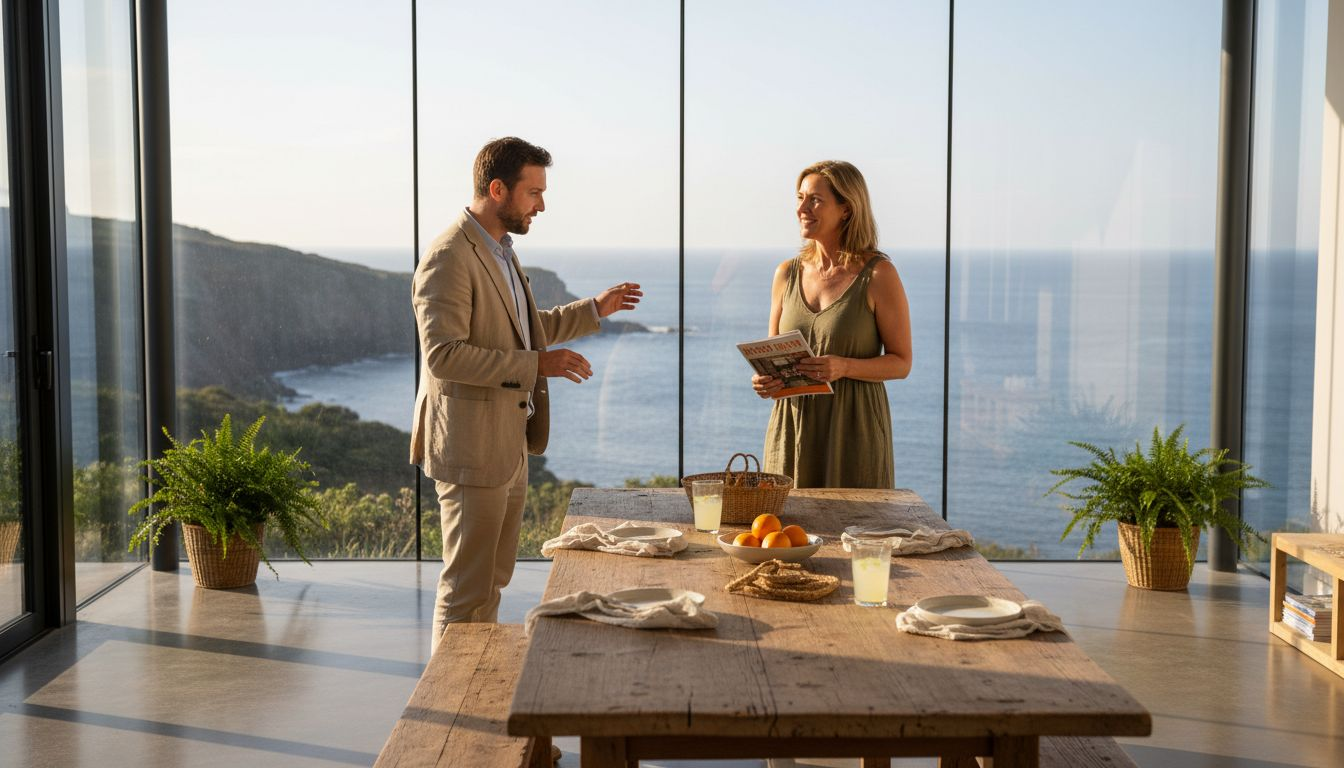
These innovative residences manifest in several distinctive architectural typologies, each representing a unique approach to sustainable luxury. The primary categories include:
Biophilic Villas
- Integrated natural landscape design
- Living walls and rooftop gardens
- Extensive glazing for natural light
- Seamless indoor-outdoor spatial transitions
High-Performance Ecological Residences
- Advanced thermal insulation systems
- Triple-glazed energy-efficient windows
- Mechanical ventilation with heat recovery
- Renewable energy infrastructure
Regenerative Design Estates
- Carbon-neutral construction materials
- Solar and geothermal energy systems
- Water recycling and conservation technologies
- Biodiversity-supporting landscape design
The French Riviera presents an ideal canvas for these extraordinary eco-luxury homes, where architectural innovation meets environmental stewardship. Each villa represents not just a dwelling, but a comprehensive ecosystem thoughtfully designed to minimise environmental impact while delivering unparalleled living experiences.
Pro Tip: Request comprehensive environmental performance documentation and third-party sustainability certifications when evaluating potential eco-luxury property investments.
Sustainability standards and certifications
In the rapidly evolving landscape of eco-luxury real estate, sustainability certifications have become pivotal markers of genuine environmental commitment. Green building certifications provide comprehensive assessment frameworks that evaluate properties across multiple critical environmental performance dimensions, transforming abstract sustainability concepts into measurable, verifiable standards.
The most prominent international sustainability certifications for luxury properties include:
Global Certification Systems
- BREEAM (Building Research Establishment Environmental Assessment Method)
- LEED (Leadership in Energy and Environmental Design)
- Green Globes
- WELL Building Standard
- Passive House Certification
Key Assessment Criteria
- Energy efficiency performance
- Water conservation strategies
- Sustainable material selection
- Indoor environmental quality
- Site development impact
- Carbon emissions reduction
- Waste management protocols
These rigorous certification processes go beyond superficial green marketing, demanding comprehensive evidence of sustainable design, construction, and operational practices. Investors and homeowners can rely on these standards as credible indicators of a property’s genuine environmental credentials, ensuring that eco-luxury estates deliver substantive sustainability rather than mere greenwashing.
Below is a summary of how leading sustainability certification systems differ in emphasis and scope:
| Certification System | Assessment Focus | Geographic Reach |
|---|---|---|
| BREEAM | Lifecycle impact & materials | Primarily Europe |
| LEED | Energy, water & innovation | Global |
| Green Globes | Project management & water | North America |
| WELL Standard | Occupant health & wellness | Increasingly global |
| Passive House | Ultra-low energy design | Europe & expanding |
Pro Tip: Request comprehensive certification documentation and verify the specific performance metrics associated with each sustainability standard before making an investment decision.
Costs, investment benefits, and risks
Eco-luxury property investments represent a sophisticated financial strategy that transcends traditional real estate approaches. Sustainability factors increasingly influence property valuations, creating a nuanced landscape where environmental credentials directly impact financial performance and long-term asset value.
The investment profile of eco-luxury properties encompasses several critical financial dimensions:
Financial Considerations
- Initial construction cost premium: 10-25% higher than conventional builds
- Potential energy savings: 30-50% reduced operational expenses
- Enhanced property market value
- Lower maintenance and replacement costs
- Reduced carbon taxation risks
- Improved tenant/buyer attraction
Risk Assessment Parameters
- Regulatory compliance potential
- Climate adaptation resilience
- Technological obsolescence
- Insurance and financing accessibility
- Future market adaptability
Climate transition risks challenge real estate investments, demanding strategic foresight and proactive investment approaches. Sophisticated investors recognise that sustainable properties are not merely an environmental statement but a robust financial strategy positioning assets against emerging market uncertainties.
Pro Tip: Conduct comprehensive financial modelling that integrates sustainability performance metrics, projected energy savings, and potential regulatory incentives before finalising your eco-luxury property investment.
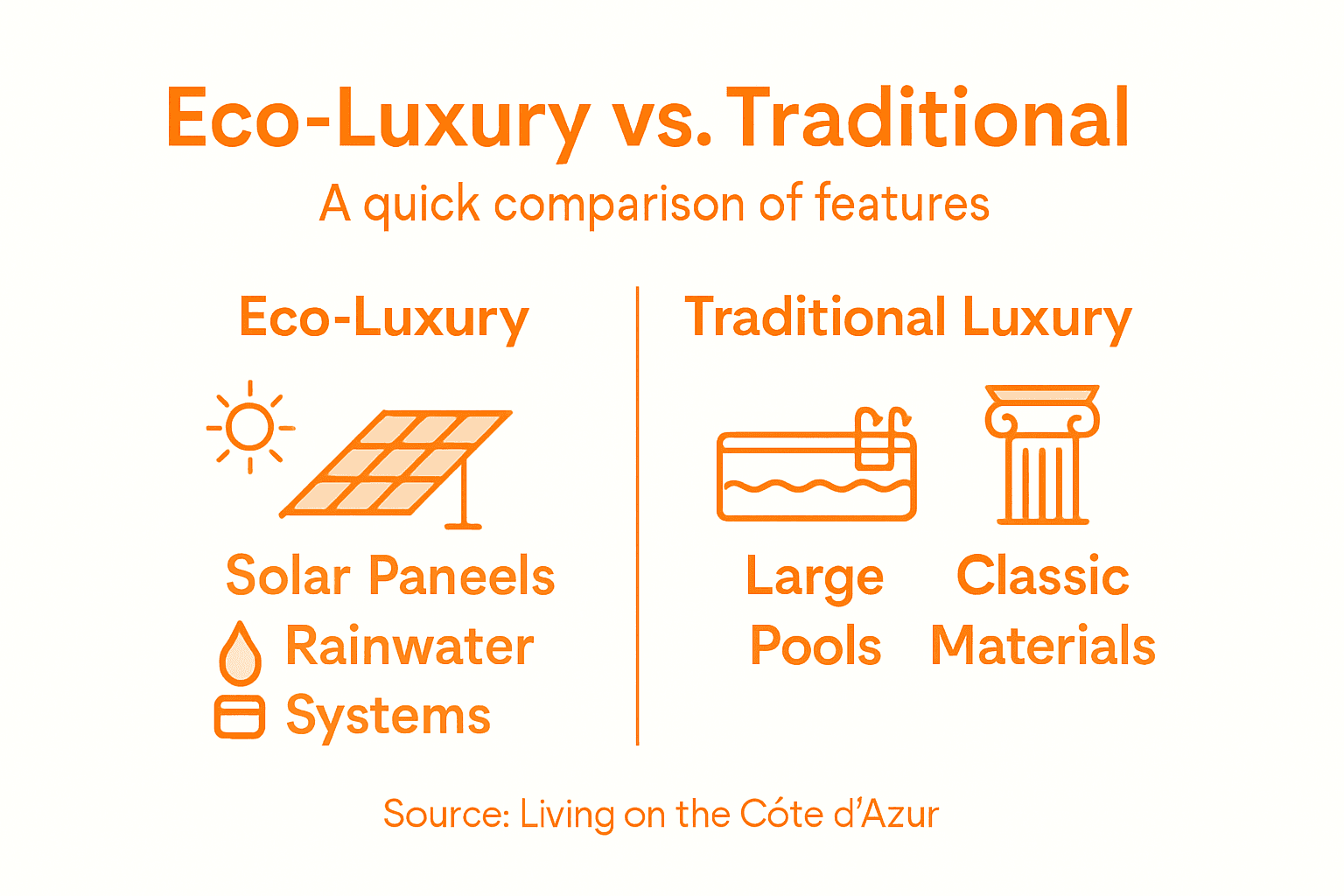
The chart below contrasts the financial profile of eco-luxury and traditional luxury properties:
| Factor | Eco-Luxury Property | Traditional Luxury Property |
|---|---|---|
| Initial Cost | Higher, 10–25% premium | Standard for luxury market |
| Long-Term Savings | Significant energy savings | High operating expenditure |
| Maintenance Needs | Lower due to efficiencies | Frequent costly upkeep |
| Resale Value Potential | Strong sustainability demand | Prestige-only driven |
| Regulatory Risk | Lower, future-ready | Higher, sustainability lag |
Comparisons with traditional luxury property
The landscape of luxury real estate is undergoing a profound transformation, challenging long-established paradigms of opulence and exclusivity. Sustainability is reshaping definitions of luxury property, introducing a nuanced approach that goes beyond mere aesthetic grandeur to encompass environmental responsibility and intelligent design.
Key distinctions between traditional and eco-luxury properties emerge across multiple dimensions:
Traditional Luxury Property Characteristics
- Emphasis on square footage
- Ornate architectural features
- Energy-intensive design
- High maintenance requirements
- Limited environmental considerations
- Status-driven aesthetic choices
Eco-Luxury Property Characteristics
- Holistic sustainability integration
- Resource-efficient systems
- Renewable energy infrastructure
- Low operational costs
- Minimal environmental footprint
- Intelligent technological integration
- Health and wellness-oriented design
While traditional luxury properties prioritised visual spectacle and size, eco-luxury estates represent a sophisticated evolution that harmonises aesthetic excellence with environmental stewardship. These properties demonstrate that luxury can be both visually stunning and ecologically responsible, appealing to a new generation of discerning, environmentally conscious investors.
Pro Tip: Evaluate potential luxury property investments through a comprehensive lens that balances aesthetic appeal, technological sophistication, and environmental performance.
Discover Eco-Luxury Living on the French Riviera with Living on the Côte d’Azur
The shift towards eco-luxury properties redefines the meaning of prestige on the Côte d’Azur. As the article highlights, today’s discerning investors no longer seek just grand villas but sustainable estates with advanced green technologies and certifications offering not only architectural brilliance but future-proof financial benefits. Navigating this complex market requires expert guidance to ensure your acquisition embodies resource efficiency, carbon neutrality, and seamless integration with the Riviera lifestyle.
At Living on the Côte d’Azur, we understand that establishing a legacy amid this evolving landscape demands comprehensive knowledge of local sustainability standards and an insider’s view of Riviera hotspots. Our team supports you through every step to ensure your eco-luxury investment stands as an heirloom with verified environmental credentials and lasting value. Should you wish to explore how to align your vision with authentic green estates, consult our contact page to connect with our specialists.
Are you ready to blend opulence with sustainability and secure a future-ready legacy in the French Riviera’s most coveted locations? Let us guide you through Buying Luxury Real Estate on the French Riviera while embracing the innovative features that eco-luxury offers. Act now to access insider expertise, tailored listings, and invaluable insights. Reach out today via Living on the Côte d’Azur contact, and turn your vision into a timeless Riviera treasure.
Frequently Asked Questions
What defines an eco-luxury property?
Eco-luxury properties combine architectural elegance with environmental consciousness, integrating sustainability into high-end living through intelligent systems and advanced green technologies.
What are the key features of eco-luxury estates?
Key features include renewable energy infrastructure, intelligent home automation systems, advanced waste management solutions, and resource-efficient design, all aimed at minimising the ecological impact while maximising comfort.
How do eco-luxury properties differ from traditional luxury properties?
Eco-luxury properties prioritise holistic sustainability, resource efficiency, and renewable energy, whereas traditional luxury properties typically focus on size, ornate design, and limited environmental considerations.
What sustainability certifications should I look for in eco-luxury properties?
Prominent sustainability certifications include BREEAM, LEED, Green Globes, and WELL Building Standard, each assessing different environmental performance criteria, ensuring properties meet rigorous sustainability standards.
Recommended
 //
//