
Real estate markets are influenced by a variety of factors, but one that often gets overlooked is the effect of external events. These events, whether economic crises, political shifts, cultural festivals, or natural disasters, can all dramatically impact property values in both the short and long term. For property investors, homeowners, and prospective buyers, understanding how events influence real estate prices can be the key to making smarter decisions and seizing profitable opportunities.
We’ll tell you how different types of events, global, national, and local, can shape the real estate market. From the financial crises that cause widespread price drops to sporting events that trigger temporary demand surges, knowing the potential impact can help you make more informed decisions when buying, selling, or investing in property.
The Role of Global Events in Shaping Real Estate Markets
Global events, whether economic downturns, geopolitical conflicts, or environmental disasters, can send ripples through the real estate market. These events often have far-reaching consequences, influencing everything from mortgage rates to foreign investment and market confidence. Here’s a closer look at how global occurrences affect property values.
1. Economic Shifts and Financial Crises
Global financial events, such as the 2008 financial crisis or the COVID-19 pandemic, can drastically alter real estate prices. When economies contract, people may feel less confident about making large investments like buying a house. This leads to a drop in demand, which causes property values to fall. For example, during the 2008 crisis, home prices in the United States and Europe plummeted, with many markets taking years to recover.
The COVID-19 pandemic similarly caused a temporary decline in property values due to widespread economic uncertainty and changes in consumer behavior. Unemployment rates spiked, and mortgage payments became more difficult for many people. However, some marketsespecially those with remote work opportunities and sustainable living optionssaw a rise in demand for suburban homes and vacation properties.
Another important economic factor is interest rate fluctuations. During times of crisis, central banks often lower interest rates to stimulate economic activity. While this can make mortgages more affordable, it can also create volatility in the market. On the flip side, when interest rates rise to combat inflation, mortgage payments become more expensive, which can lead to a slowdown in property purchases.
2. Political and Geopolitical Events
Political eventssuch as elections, policy changes, and regulatory shiftscan also have a significant impact on property values. Political stability is crucial to maintaining a stable real estate market. When there is uncertainty about leadership, especially in countries with volatile political environments, investors may hesitate to purchase property, leading to slower market growth or even decreased property values.
For instance, trade wars and sanctions can lead to reduced foreign investment in certain markets. In particular, cities like Monaco and Dubai, which are heavily reliant on international buyers, can see property prices fluctuate when global tensions rise.
Moreover, geopolitical conflictssuch as wars or sanctions can also significantly reduce property demand. For example, during times of armed conflict, potential buyers or investors may be reluctant to purchase property in affected areas, which can lead to declines in real estate prices.
3. Environmental Events: Natural Disasters and Climate Change
Natural disasters, including wildfires, hurricanes, earthquakes, and floods, can cause immediate declines in property values. For instance, homes in regions affected by flooding or earthquakes may lose value due to the perceived risk of future events. Over time, property prices in these areas may recover, but it often depends on rebuilding efforts and climate adaptation measures.
In the long term, climate change can also drive shifts in real estate values. As cities face increased environmental risks, properties in vulnerable areas may experience value depreciation, while demand for homes in climate-resilient locations increases. Cities that invest in green infrastructure, such as sustainable housing and flood prevention systems, may see higher demand for their properties as more people seek homes in safe, energy-efficient locations.
Local Events and Their Effect on Property Values
Local events have a more direct and immediate impact on real estate markets. These eventsranging from cultural festivals to infrastructure projectscan cause temporary price surges, especially in areas where the events take place. However, some events also lead to long-term changes in demand and property values. Let’s take a closer look at how these events influence real estate markets.
1. Cultural and Sporting Events
High-profile spectacles such as the fireworks in Cannes 2025 or the Grand Prix create massive temporary demand for luxury rentals and central apartments. High-profile events such as the Monaco Grand Prix, the Cannes Film Festival, and Formula 1 races have a short-term but powerful effect on property values. In cities where such events are hosted, demand for both short-term rentals and luxury residences skyrockets during the event period. Property owners in proximity to these event venues often see increased rental rates and higher property values during these high-demand times.
For example, Monaco sees a surge in interest in both short-term and long-term rentals during major events like the Monaco Grand Prix, which leads to a rise in property prices, particularly for luxury residences with harbor views or proximity to the circuit. Buyers and investors often target these properties with the expectation of strong rental returns during peak event seasons.
2. Infrastructure Developments and Regional Growth
Infrastructure development is another powerful driver of property value changes. Projects such as new public transport systems, airports, and highways can drastically change the attractiveness of a location. When new infrastructure projects are announced, especially those that improve accessibility and connectivity, the local property market often experiences an increase in demand, particularly for residential and commercial properties.
For example, the construction of a new subway line or a high-speed rail network in a city can increase demand for properties located near the new stations. This can lead to price appreciation for homes and businesses in those neighborhoods. Similarly, new commercial developments or the arrival of large corporations in an area can have a positive long-term impact on local property values, as businesses and employees look for places to live and work.
Long-Term vs. Short-Term Event Impacts on Property Values
While some events have an immediate effect on property values, others may influence the market for years to come. The effects of certain events can linger and create lasting trends that shift the demand for real estate.
1. Temporary Property Value Surges
Many events, such as festivals, sporting events, or international conferences, create temporary spikes in demand, especially in tourist-heavy areas. For example, in cities like Nice, Cannes, or Monaco, where large events are frequent, short-term rental properties can see a substantial increase in rental income. However, these price surges tend to be short-lived, with values returning to normal once the event concludes.
2. The Effect of Long-Term Infrastructure Improvements
On the other hand, major infrastructure projects and legacy investments resulting from large events such as the Olympic Games or World Expo scan create lasting growth in property values. These events often leave behind improved infrastructure, such as public transport systems, rejuvenated neighborhoods, or new business hubs. These improvements tend to have a positive long-term impact on property values, particularly in areas that benefit from enhanced connectivity and amenities. Improvements in connectivity, such as the tramway line 4 from Nice to Cagnes-sur-Mer, act as catalysts for long-term property appreciation in previously overlooked districts.
For instance, in cities like Paris or Tokyo, Olympic legacies have resulted in urban renewal projects that increased demand for real estate in specific areas, leading to long-term property appreciation.
Navigating Event-Driven Real Estate Investment
Investing in real estate during times of major events, whether global or local, presents both opportunities and risks. Understanding how to leverage these events for long-term gains and short-term profits is key to maximizing your investment in property.
Identifying Opportunities in Event-Impacted Markets
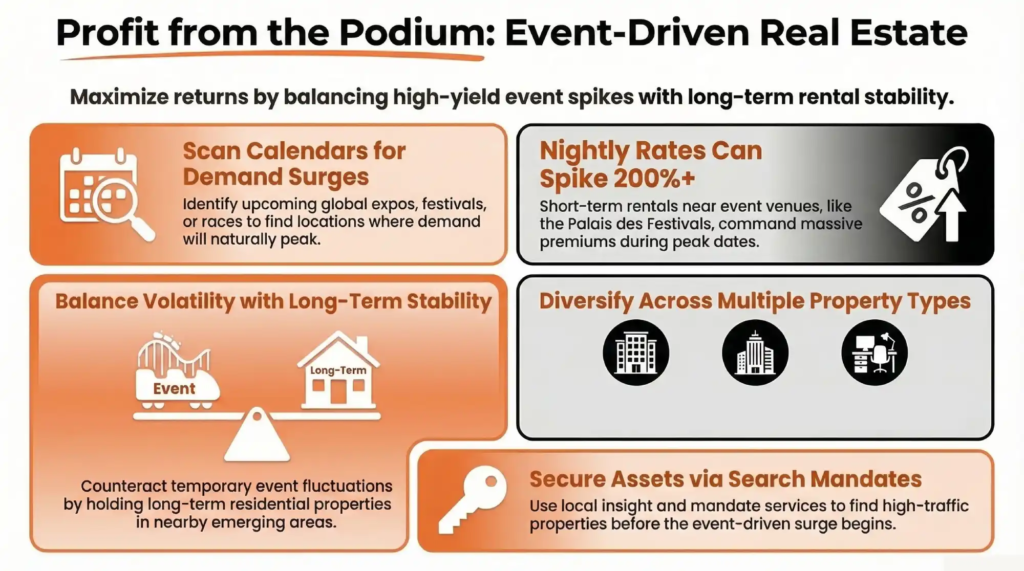
The first step in capitalizing on event-driven real estate opportunities is identifying markets that are likely to see demand surges due to upcoming events. Whether it’s a local festival, global expo, or sporting event, certain locations will naturally attract more interest. Securing the right asset before a major surge requires local insight; utilizing a search mandate service is the most efficient way to find properties that align with upcoming event calendars.
For example, if a Formula 1 race is scheduled in Monaco, properties near the event venue especially those with views of the circuit or harbor-side locations will see an increase in demand. As an investor, you can benefit from this temporary surge in demand by purchasing short-term rental properties in high-traffic areas.
How to Spot Event-Driven Opportunities:
- Research Event Calendars: Stay updated on local and international event calendars that can impact real estate demand. Events like the Cannes Film Festival, Monaco Grand Prix, or Dubai Expo bring significant tourist traffic and property interest.
- Analyze Local Market Trends: Look at past trends of similar events. For example, if the Monaco Yacht Show led to a rise in property rentals and sales in the past, it’s likely that the same will happen again.
By targeting these high-demand areas, investors can secure profitable rental yields or even long-term capital appreciation.
Diversifying Your Portfolio Based on Events
A strong real estate investment strategy involves diversification not only in property types but also in locations and investment strategies. During times when events are likely to drive market shifts, it’s important to diversify your holdings across different property types (residential, commercial, mixed-use developments) and even different regions.
For example:
- If you are investing in luxury properties for short-term rentals during events like the Monaco Grand Prix, also consider diversifying into long-term residential properties in nearby areas that are less event-driven but offer stable returns.
- Co-working spaces and commercial real estate may also benefit from events such as business conferences or corporate relocations. If the event is expected to bring in a significant number of business professionals, there may be a surge in demand for office space or business accommodations.
By having a diverse portfolio, you can benefit from different market cycles, location-based opportunities, and varied demand drivers. Even if one investment segment faces a downturn, another may thrive due to an event.
Balancing Short-Term and Long-Term Rentals
A crucial part of event-driven real estate investment is deciding whether to focus on short-term rentals or long-term residential properties. The balance between these two strategies is essential for maximizing your returns.
- Short-Term Rentals: In areas where large events like the Cannes Film Festival or the Monaco Grand Prix take place, short-term rentals can bring in significant income. These properties typically see a spike in demand before and during the event, making them ideal for investors who can capitalize on high rental rates in the short term. For example, during major events, nightly rental rates in Monaco can increase by 200% or more compared to regular periods.
- Long-Term Rentals: In contrast, long-term rental properties provide stability. While short-term rentals may fluctuate depending on the event, long-term rentals offer consistent cash flow over time, unaffected by temporary spikes in demand. Additionally, some areas may experience post-event growth in property values, making long-term rental investments an excellent choice in such regions.
How to Balance the Two:
- Target Properties Close to Event Venues for Short-Term Rentals: Focus on properties located near event venues, such as the Palais des Festivals for the Cannes Film Festival or the Monaco Yacht Show. These properties are likely to see an influx of visitors seeking short-term stays.
- Look for Long-Term Investments in Emerging Areas: For areas that are benefiting from long-term infrastructure projects or post-event improvements, long-term rentals may provide more stability and consistent growth over time.
How to Manage Risks and Prepare for Event-Driven Market Volatility
While real estate investments during event-driven periods can be lucrative, they also come with certain risks. Events can cause property values to fluctuate based on factors like political instability, economic changes, or environmental disasters. Therefore, managing risk is crucial.
Mitigating Risk in Volatile Markets
One of the best ways to mitigate risks during volatile market periods is to diversify your investments and not rely too heavily on one specific event or location. By investing in a mix of property types and locations, you can reduce the potential negative impact of any one event.
Additionally, keep a close eye on market signals such as interest rate changes, inflation, and real estate market trends to gauge whether a particular event might negatively affect the value of your property. For example, if interest rates rise dramatically due to inflationary concerns, this could dampen property demand and lead to price reductions.
Key Risk Mitigation Strategies:
- Diversify Across Locations and Property Types: Invest in multiple properties across different regions (e.g., Monaco, Côte d’Azur, Paris) and sectors (e.g., luxury properties, commercial spaces, short-term rentals).
- Stay Informed About Event-Specific Risks: Follow local news, government announcements, and expert opinions on the potential impact of global or regional events.
Preparing for Market Shifts
Anticipating shifts in the market is essential for staying ahead of the competition. Use tools like AI-driven analysis, market trend reports, and blockchain smart contracts to track real estate changes in real time. These tools can help you make more data-driven investment decisions. Navigating volatile markets requires professional advocacy, there are many advantages of using a buyer agent when timing your entry or exit around global events.
For example, during major events, monitoring changes in short-term rental demand, rental yields, and property values through advanced tools like the Grace AI Assistant can help you make timely adjustments to your portfolio.
Understanding the Long-Term Impact of Events on Property Values
While certain events can create temporary spikes or dips in property values, other events can have a long-lasting impact. From infrastructure developments triggered by international events like the Olympic Games to cultural shifts induced by major festivals, understanding the lasting effects on property markets will help both investors and homeowners make strategic decisions.
Legacy Projects and Post-Event Property Growth
Large-scale events often lead to significant urban development and infrastructure improvements that have lasting effects on property values. For example, hosting the Olympic Games or a World Expo often leads to the construction of new transportation systems, parks, sports facilities, and business districts, all of which can increase the value of surrounding properties long after the event itself is over.
Take, for instance, the London 2012 Olympics: the event led to significant urban regeneration in East London, transforming areas like Stratford and Hackney Wick. The legacy of these infrastructure improvements made the area more accessible, which increased the demand for both residential and commercial real estate.
In cities like Monaco, Paris, or Dubai, long-term investments in areas affected by global events whether cultural, political, or infrastructural can offer investors high returns well beyond the initial event. Understanding which areas are undergoing these types of improvements can be a critical step for investors seeking to buy property before prices soar.
Real Estate Market Shifts from Demographic Changes
Certain events can lead to long-term demographic shifts that change property demand over time. For example, remote work trends accelerated by the COVID-19 pandemic have prompted many people to move away from city centers and seek homes in suburban or rural areas. This shift in where people choose to live has had lasting effects on urban property values while boosting demand for homes in less dense, more affordable regions.
Similarly, international migration sparked by geopolitical conflicts or economic opportunities can alter demand for housing. For example, if a city becomes a hub for business tourism or a global relocation center, there can be a sustained increase in housing demand, as people move in for long-term opportunities.
By identifying which events may drive demographic changes, investors can anticipate the long-term demand for housing in specific areas and plan their investments accordingly. At Living on the Côte d’Azur, we specialize in helping you understand the dynamics of real estate markets on the French Riviera and beyond, offering expert advice on navigating event-driven changes.”
How to Leverage Event-Driven Real Estate for Profit
Real estate is an investment that requires careful planning and timing, especially in markets affected by event-driven changes. For investors, understanding when to buy and when to sell based on upcoming events can lead to higher returns. Here’s how you can use event-driven strategies to maximize your profit:
Buying Properties Before Major Events
One of the best times to buy property is before an event-driven surge in demand. If you know that a major event is coming to a city, such as the Monaco Grand Prix or a UN conference, purchasing a property in the area before the event creates an opportunity to capitalize on increased demand during and immediately after the event.
Best Strategies:
- Invest Early: Buy properties months or even years before major events. Prices tend to rise as the event draws nearer, particularly in high-demand areas.
- Focus on Locations Close to Event Venues: Properties near event venues, like the Palais des Festivals in Cannes or the Circuit de Monaco, typically see the highest price appreciation during the event period.
Selling During High Demand Events
Selling during an event can lead to high sale prices due to increased demand. However, it’s important to know when to sell. Properties near event venues or in tourist-heavy areas are more likely to benefit from the increase in visitors.
Best Strategies:
- Sell Short-Term Rentals During Peak Times: For luxury homes or vacation properties, capitalizing on short-term rental opportunities during events like Monaco Grand Prix or Cannes Film Festival can significantly boost your revenue.
- Focus on Timing: Ensure that the property is listed well in advance of the event. Timing the sale to coincide with peak demand can maximize sale prices.
Diversification to Reduce Event-Related Risk
While investing in event-driven properties can be profitable, it can also be risky if the market faces unforeseen events like economic downturns, political instability, or natural disasters. To mitigate risks, it’s crucial to diversify your investment portfolio.
Investors should focus on a mix of high-demand urban properties, rural real estate, commercial properties, and vacation homes. Diversifying helps protect against local market fluctuations caused by global or regional events.
Diversification Strategies:
- Mix Property Types: Balance luxury rentals with affordable housing and commercial real estate to hedge against market volatility.
- Invest in Resilient Properties: Focus on properties in regions that are less susceptible to risk from events like natural disasters or geopolitical unrest.
The Future of Event-Driven Real Estate Investment
As the world continues to experience major events geopolitical shifts, climate change, technological advancements, and pandemics the real estate market will continue to adapt. Understanding the long-term implications of these events on property values is crucial for investors seeking to stay ahead.
Technological Advancements and Real Estate Trends
The role of technology in real estate investment will continue to grow, with AI-driven analysis, virtual reality tours, and blockchain smart contracts making it easier for investors to track market trends and secure properties. Technology can help you predict future market changes, understand supply and demand shifts, and enhance the buying process, ensuring you capitalize on event-driven opportunities.
Investing in Resilient Real Estate
The demand for climate-resilient properties will increase as natural disasters and climate risks rise. Investing in green buildings, smart homes, and sustainable architecture will not only protect against climate risk but also provide long-term value appreciation in markets that prioritize sustainability.
Key Takeaways:
- Stay informed about upcoming events and global market shifts.
- Invest in areas and properties that are likely to benefit from upcoming cultural, sporting, or political events.
- Diversify your portfolio to protect against risks caused by event-driven volatility.
- Leverage technology to track market changes and predict property value fluctuations.
How Understanding Events Can Lead to Smarter Real Estate Decisions
Real estate investment is deeply influenced by external events. By understanding how economic shifts, geopolitical tensions, natural disasters, and local festivals affect property values, investors and homeowners can make more strategic decisions. Whether you’re looking to capitalize on short-term rental demand or seeking long-term capital appreciation, staying informed about the impact of events is essential.
At Living on the Côte d’Azur, we specialize in helping you understand the dynamics of real estate markets on the French Riviera and beyond. We offer expert advice on navigating event-driven market changes and provide exclusive access to off-market properties, ensuring you can make the best decisions in a rapidly changing world. If you’re ready to take advantage of the next big opportunity in event-driven real estate markets, get in touch with us today!
 //
//