
Yes, you can buy a Riviera villa that works for your children and grandchildren, if you put layout, ownership structure and buyer representation first. Check the Impôt sur la Fortune Immobilière (IFI) rules on impots.gouv.fr before you offer, and let us at Living on the Côte d’Azur plan a search with viewings across the seasons, not just one sunny week in July.
TL;DR:
- Prioritize separate wings, secondary living spaces, a second kitchen, and a ground floor suite; inspect noise paths and outdoor zones before judging finishes.
- Compare airport and school access, health care, seasonal traffic, and terrain; rent in the same commune during high summer and off season before committing.
- Nonresidents owe IFI on French property when net taxable assets exceed €1.3 million on January 1; progressive rates from 0.5% to 1.5% apply to the excess.
- Choose direct ownership or an SCI with a notaire and tax adviser, since the structure affects declarations and succession; get advice before making an offer.
- Before signing, commission structural, drainage, pool, electrical, and planning checks; budget for upkeep and phased upgrades, including accessible bedrooms and better separation.
Table of Contents
- What makes a villa layout work for several generations?
- Which Riviera sub-market suits family life and legacy value?
- What should non-resident buyers know about IFI and ownership?
- How does the purchase work, step by step, for international buyers?
- What due diligence and upkeep does a generational villa need?
- How do you prepare the villa and the family for inheritance?
- Why an independent buyer agent changes a legacy purchase
- Start a targeted search for your family villa
- FAQ
- Sources
What makes a villa layout work for several generations?
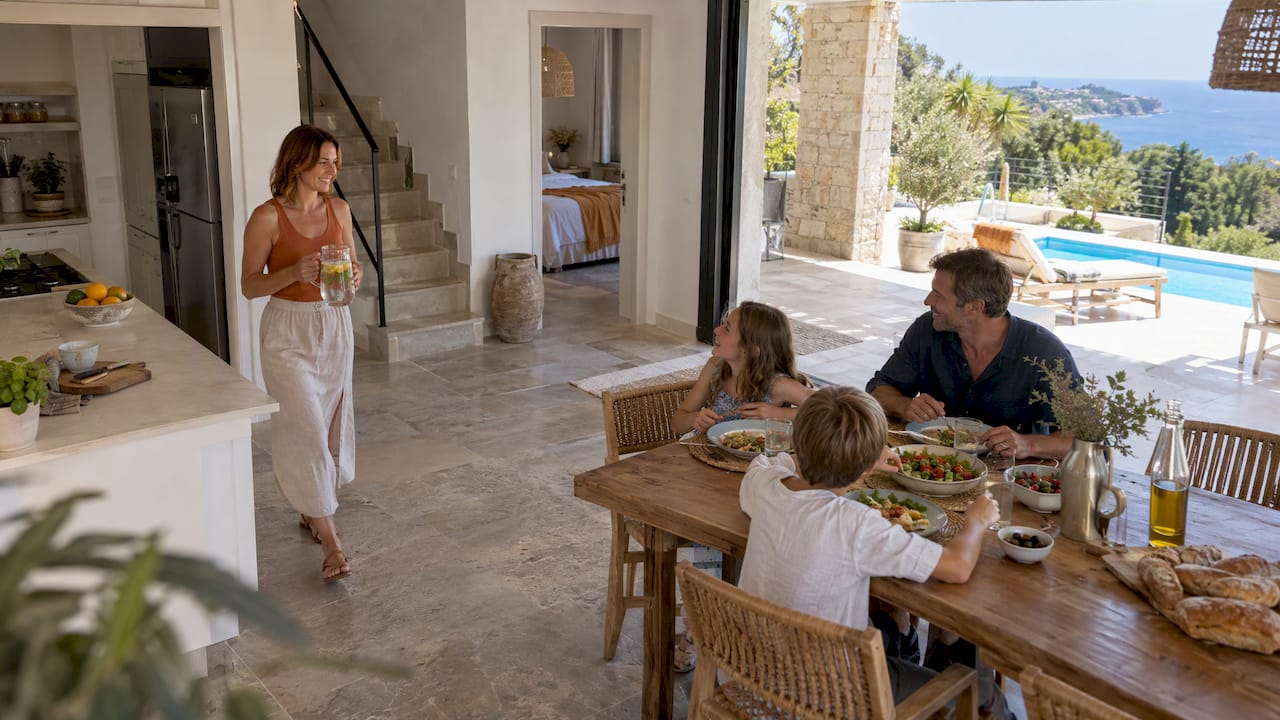
When several generations share a house, layout matters more than aesthetics. Forbes reports that experts favour natural separation, such as separate wings, dens and bunk rooms, plus several gathering points so people can share space without constant friction. We see the same thing on viewings: the villa that looks stunning in photos is not always the one a family can live in comfortably over the long term.
When we walk a villa with a family, these are the things we check:
- Independent suites: a wing or floor where grandparents or adult children can close the door and feel at home.
- More than one living hub: a main salon, plus a den, a pool house or a covered terrace for teenagers and guests.
- A second kitchen or kitchenette: it takes pressure off the main one during busy weeks.
- Ground-floor bedroom and bathroom: or a layout where a lift could be added later, so the house still works as relatives age.
- Service access: a discreet entrance for housekeepers, gardeners and deliveries, away from the terraces.
- Durable finishes: stone, tile and hard-wearing outdoor materials that cope with sun, salt and heavy use.
Look at the plot as well as the house. A flat lawn, a private terrace for the older generation and a pool zone that stays out of earshot of the bedrooms make the difference between a house everyone loves and one people avoid.
Pro Tip: Stand in each bedroom and listen. Note which rooms share a wall with the kitchen, the pool terrace or the staircase, because noise paths are rarely visible on a floor plan.
Which Riviera sub-market suits family life and legacy value?
The Riviera is not one market but many small ones, each with its own character. Prestige addresses such as Cap Ferrat or Cap d’Antibes tend to trade accessibility for scarcity and privacy. Resort towns bring buzz and easy rentals, but also crowds. Hill villages and inland communes behind the coast often give you more space and a calmer year-round life, at the price of longer drives.
Before you fall for a postcode, run through this list:
- Getting there: how far is Nice airport, and is there a train station you would really use?
- Schools and childcare: international and local options, and the daily school run.
- Health care: the nearest hospital and a family doctor in the commune.
- Seasonality: a quiet lane in March can be gridlocked in August, which also shapes rental prospects.
- Orientation and slope: east or west exposure decides where you eat breakfast and where you watch the sunset, and slope affects privacy and future building options.
The best test costs a little but saves a lot: rent in the same commune, ideally the same street, once in high summer and once off-season. Nothing else tells you as honestly how the house and neighbourhood behave outside holiday mode. For more on matching location and value, see our guide to investing in French Riviera real estate.
What should non-resident buyers know about IFI and ownership?
Non-residents have the same right to buy in France as French citizens, and the tax picture starts with one number. According to the Impots, you are liable to IFI on French property when your net taxable French real-estate assets exceed €1.3 million as of 1 January. For non-residents it applies only to French property, whether held directly or through an entity such as an SCI.
The IFI is progressive, from 0.5% to 1.5% on net French real-estate assets above €1.3 million, according to impots.gouv.fr. Only the slice above the threshold is taxed, so a villa that tips you over it does not mean the whole value is charged.
Filing is done alongside income tax. The official guidance for non-residents explains where to declare and pay, with form 2042-IFI and online options, and the 2026 IFI declaration form sets out the annexes and deadlines.
Budget for these items from day one:
- Notaire fees and the deposit at the preliminary contract.
- Annual property taxes and, where relevant, IFI.
- Maintenance, pool and garden upkeep.
- Rental tax treatment if you plan to let, where Serava’s overview of French rental tax regimes is a useful starting point.
Bring a notaire and a tax adviser in early, because the choice between direct ownership and an SCI affects both your declarations and succession. Our article on IFI benefits and implications goes deeper.
How does the purchase work, step by step, for international buyers?
The journey is easier when you know the order of events. Most of our international families follow this path:
- Scope the search: agree on budget, family needs, location shortlist and the must-haves for layout and plot.
- Visit in several seasons: view shortlisted villas, and revisit the streets in different months.
- Offer and negotiate: we negotiate on your behalf once you have chosen.
- Sign the compromis: the preliminary contract, with a deposit and its conditions.
- Complete at the notaire: funds are transferred and the deeds are signed, in person or by power of attorney.
Plan financing before you fall in love with a house. Non-resident mortgages exist, and a specialist broker is worth involving early, while cash buyers should plan currency transfers carefully. Keep timing flexible: viewings can be arranged quickly, but signatures and completion depend on the notaire’s calendar, and holiday periods can slow things down.
On the practical side, have documents translated where needed, and consider a power of attorney if you cannot travel for completion. Open a French bank account for local bills, and use SEPA transfers for payments where it suits. Keep a renovation contingency alongside deposit, notaire fees and any agency arrangement.
Pro Tip: Ask your notaire for a full list of the documents they need at the start. Missing papers from abroad are the most common cause of delay.
Our guide to non-resident property buying on the Riviera covers documentation in more detail.
What due diligence and upkeep does a generational villa need?
A house meant to last decades deserves a proper check before you commit. Commission the surveys that match the property:
- A full technical survey and structural check.
- Drainage and sea-exposure assessments for coastal plots.
- Pool and electrical safety inspections.
- A review of servitudes, planning permissions and permitted use, which decide what you may renovate.
Prioritise works that add real multigenerational value: a ground-floor suite, better separation between wings, a kitchen that handles crowds. Avoid over-capitalising on features the next owner will not pay for. Phased works let you keep using the villa while you upgrade it, and a clear plan for the roof, terraces, pool and garden keeps costs predictable. If you are rethinking the family kitchen, Jatoba Kitchens’ ideas for growing families are a helpful read on how design can adapt.
Reliable local contractors and a seasonal maintenance routine protect both enjoyment and value. Check that your insurance matches how the villa will really be used.
How do you prepare the villa and the family for inheritance?
A villa becomes a legacy only if the family is ready for it. Start with the structure: direct ownership and an SCI are the common routes, and families choose between them for practical reasons, so coordinate the decision with a notaire and a tax adviser. Our piece on wealth tax and ownership structures outlines the thinking.
Practical steps that reduce friction later:
- Talk openly about who will use the house, when and under what rules.
- Draft a clear will, so wishes are written down.
- Set aside liquidity for taxes, so heirs are not forced to sell.
- Keep a file with maintenance schedules, contractor contacts and insurance details.
- Run trial stays and agree simple family governance, so the next generation learns to look after the house before it is theirs.
Why an independent buyer agent changes a legacy purchase
Most of what we do for legacy buyers is quiet work: we represent you, not a seller, and we search the whole market through local agents, developers and off-market contacts. We arrange viewings across the seasons and bring in notaires, tax advisers and renovation experts where you need them. If you are interviewing buyer agents, ask three things: who do you represent, how do you find off-market homes, and who coordinates the local experts?
— Ab Kuijer
Start a targeted search for your family villa
If you want a villa that suits three generations, we start with your family: how you will use the house, who needs what, and where it should be. Then we search the entire Riviera market on your behalf, including off-market opportunities, and coordinate viewings, negotiation and the notaire. Our search mandate is the simplest way to begin, and our full-service approach covers everything through to completion. Book a discovery call and we will map out a search that fits your family, season by season.
This article is general information, not a substitute for advice from a qualified financial advisor. Consult a qualified financial professional about your own circumstances before acting on anything here.
FAQ
Which European country is best to buy a house?
It depends on how you plan to use the home, your tax position and the lifestyle you want. France offers the same acquisition rights to non-residents as to citizens, according to impots.gouv.fr, and the Riviera combines climate, airports and international schools.
What is the 2% rule for property?
It is a rule of thumb for rental investors, suggesting monthly rent should equal about 2% of the purchase price. It rarely fits Riviera villas bought for family use, where privacy, scarcity and long-term value matter more than yield.
Do non-residents pay IFI on a Riviera villa?
Yes, if your net taxable French real-estate assets exceed €1.3 million as of 1 January, according to impots.gouv.fr. Only the amount above the threshold is taxed, at progressive rates.
What is better than a villa for a multigenerational family?
A villa with separate wings or a guest house often works better than one large open-plan house. A cluster of smaller properties can also suit families who want independence, though it brings more upkeep.
Recommended
 //