
TL;DR:
- Thorough legal, financial, and market due diligence is essential before purchasing Riviera estates.
- Property features like location, architecture, and premium amenities significantly influence estate values.
- Verification steps, including title checks and independent surveys, prevent costly pitfalls in luxury acquisitions.
The French Riviera has long been a canvas upon which extraordinary fortunes are preserved and amplified. Yet the stakes in luxury estate evaluation have never been higher: a single misstep in due diligence can erode millions, while a well-executed acquisition can anchor generational wealth for decades to come. The 2026 Luxury Outlook Report confirms that markets remain resilient for high-net-worth buyers, with cross-border demand surging along the Côte d’Azur. This guide walks you through every essential layer of evaluation, from foundational prerequisites to sophisticated verification, so that your next acquisition becomes an heirloom rather than a liability.
Table of Contents
- Essential prerequisites for evaluating luxury estates
- Step-by-step process for evaluating luxury estates
- Key features and amenities impacting estate valuation
- Verification and common pitfalls in luxury estate evaluation
- Beyond the numbers: What seasoned investors know about evaluating luxury estates
- Connect with estate experts for tailored evaluation
- Frequently asked questions
Key Takeaways
| Point | Details |
|---|---|
| Preparation is crucial | Assembling legal, financial, and survey requirements sets the stage for rigorous estate evaluation. |
| Step-by-step analysis | Systematic market research and inspection underpin accurate valuation of luxury properties. |
| Features drive value | Location, amenities, and premium materials directly impact estate prices and investment potential. |
| Verification prevents mistakes | Careful review and third-party audits guard against overvaluation and overlooked risks. |
| Expert perspective matters | Seasoned advice and negotiation skills offer a competitive advantage in luxury estate transactions. |
Essential prerequisites for evaluating luxury estates
Before a single stone is inspected or a price negotiated beneath the salt-kissed skies of Cap d’Antibes, the groundwork must be impeccably laid. Luxury estate evaluation is not simply a matter of taste; it is a structured discipline requiring legal clarity, financial readiness, and deep market literacy. Overlooking any one of these pillars can expose even the most seasoned investor to costly consequences.
Legal due diligence forms the absolute foundation. In France, title ownership is recorded through the cadastre and notarised deeds, yet complexities can arise around easements, shared access rights, and heritage protections. You should commission a bilingual French notaire and an independent legal adviser to cross-reference title deeds, verify boundary lines, and confirm that the property carries no undisclosed liens or encumbrances. For Riviera estates close to the coastline, additional environmental regulations govern construction rights and maritime access.
Financial prerequisites demand equal rigour. Proof of funds or a confirmation letter from a private bank is typically required before serious negotiations commence in this market. Equally important is understanding the full tax landscape: French droits de mutation (transfer taxes) typically sit between 5% and 6% of the purchase price for existing properties, while Riviera-specific considerations such as the taxe foncière and wealth tax implications must be factored into your return calculations. Reviewing reliable property tax guidance before proceeding is essential for international buyers in particular.
Market-specific literacy is the third prerequisite. The Riviera’s micro-markets behave quite differently from one another: a Belle Époque villa in Menton, scented with citrus from the famous Lemon Festival gardens, carries a distinct value profile compared with a contemporary glass-and-steel residence on the Monaco border. Understanding property valuation impact across these micro-markets takes time and expert guidance, but it is non-negotiable for informed decision-making.
Key prerequisites at a glance:
- Title and cadastre verification by a qualified notaire
- Independent legal review for easements and heritage status
- Proof of funds and private banking confirmation
- Full tax liability mapping including transfer taxes and ongoing holding costs
- Micro-market comparables for the specific Riviera location
- Currency risk assessment for international buyers
- Understanding of VEFA contracts for off-plan purchases
| Prerequisite | Applies to existing properties | Applies to new builds |
|---|---|---|
| Title verification | Essential | Essential |
| Tax liability mapping | Essential | Essential |
| Survey and inspection | Essential | Recommended pre-completion |
| VEFA contract review | Not applicable | Essential |
| Heritage regulation check | Often required | Sometimes required |
Pro Tip: Engage an independent surveyor before any offer is tabled. In the luxury segment, surprises discovered post-offer are far more expensive to resolve than those identified during preliminary due diligence, and a qualified surveyor will flag structural concerns, drainage issues, and potential invasive species such as Japanese knotweed long before they become negotiating crises.
It is worth noting that generational wealth transfer is actively fuelling demand across luxury real estate markets globally, bringing with it a new generation of buyers who are both discerning in their lifestyle expectations and rigorous in their investment approach.
Step-by-step process for evaluating luxury estates
With the prerequisites firmly in place, the evaluation itself can unfold with confidence and precision. Think of this process as a layered investigation, moving from the broad sweep of market context down to the intimate details of a property’s bones and character.
Step 1: Location and market analysis. Begin with a thorough reading of French Riviera investment trends in the specific zone you are targeting. Each Riviera town has its own rhythm: Cannes during the Film Festival commands a different energy and price ceiling compared with Antibes during the summer regatta season, when Cap d’Antibes’ coastal walking trails draw discerning buyers who value privacy as much as prestige. Analyse recent comparable transactions, average price per square metre, and liquidity, meaning how quickly similar properties sell in that postcode.
Step 2: Physical inspection and condition assessment. Schedule a thorough inspection with both a structural engineer and an independent surveyor. Look beyond the polished surfaces: examine the roof, foundations, plumbing infrastructure, and electrical systems. For older Riviera estates, check for asbestos in pre-1997 construction materials and verify compliance with current seismic resilience standards.

Step 3: Amenities review and lifestyle audit. Luxury buyers in 2026 expect more than marble floors and sea views. Assess the full suite of amenities: infinity pools, spa facilities, smart-home automation, EV charging infrastructure, and solar arrays that align with contemporary eco-luxury expectations. Also evaluate lifestyle proximity, such as distance to private marinas in Antibes, helipad access near Monaco, or ferry connections from Sainte-Maxime to Saint-Tropez.
Step 4: Valuation methodology. Understanding luxury home price factors is critical at this stage. The three primary valuation approaches are the comparable sales method, the income capitalisation method for rental-yield properties, and the cost replacement method for unique heritage estates. For a Provençal mas near Èze, where Nietzsche himself once walked, the heritage premium can significantly exceed what standard comparables would suggest.
Step 5: Rental yield and ROI modelling. If seasonal letting is part of the investment thesis, model realistic occupancy rates, peak-season nightly rates, and management costs. The Riviera’s peak summer season commands exceptional rates, but elite tenants expect immaculate presentation. Reviewing cleaning best practices that reduce vacancy rates by up to 15% is a practical step many investors overlook.
| Evaluation step | Key focus area | Typical duration |
|---|---|---|
| Location and market analysis | Comparables, trends, liquidity | 1 to 2 weeks |
| Physical inspection | Structure, systems, compliance | 2 to 5 days |
| Amenities review | Lifestyle features, eco-compliance | 1 to 2 days |
| Valuation methodology | Sales, income, cost approaches | 1 to 2 weeks |
| Rental yield modelling | Occupancy, rates, costs | 3 to 5 days |
Explore the full spectrum of types of luxury properties available across the Riviera to calibrate your evaluation criteria before beginning this process.
Pro Tip: Always engage a locally based expert who has closed transactions in your specific Riviera micro-market within the last 12 months. The luxury market along the French Riviera is driven by international buyers with distinct preferences, and only an adviser who moves within those circles daily can interpret nuance accurately.
Key features and amenities impacting estate valuation
When the Riviera sunlight falls across a travertine terrace overlooking the Baie des Anges, it illuminates something that spreadsheets alone cannot capture: the irreplaceable quality of place. Yet experienced investors know that specific, quantifiable features are the true engines of value in this market. Understanding which elements command genuine premiums is both an art and a science.
Location, view, and exclusivity remain the supreme value drivers. A south-facing villa in Cap d’Antibes with unobstructed sea views will consistently outperform an inland property of comparable size by a substantial margin. Gated communities and private domains near Monaco command a prestige premium that has proven remarkably resilient across market cycles. Coastal proximity, measured precisely in metres from the shoreline, can influence price per square metre by as much as 30% to 50% in some Riviera postcodes.
Architectural quality and material excellence are the second tier of value. Properties featuring original Belle Époque architecture, sensitively restored, attract a rarified buyer who values heritage above all. For contemporary estates, material quality is paramount: understanding how marble surfaces add significant value to luxury properties is well-documented, with premium stone selections such as Calacatta marble or Noir Marquina elevating a bathroom or kitchen to gallery-level status. The specification of structural materials, joinery, and glazing systems speaks directly to discerning buyers who recognise craftsmanship.
Amenities that meet elite expectations in 2026 include an ever-expanding checklist. Reviewing premium marble design applications in comparable California and Riviera markets reveals consistent patterns: properties with bespoke kitchens, wellness suites, climate-controlled wine cellars, and automated security systems with remote monitoring achieve faster sales and stronger price retention.
Key amenity features and their valuation impact:
- Infinity or heated indoor pool: adds 8% to 15% to assessed value in prime locations
- Private spa with sauna and hammam: increasingly expected in the €5M-plus segment
- Smart-home automation with integrated security: considered standard above €3M
- Solar arrays and green energy certification: commands a 10% to 20% premium with eco-conscious buyers
- Private garage or underground parking: valued highly in coastal Riviera towns with limited street access
- Wine cellar with climate control: a signature feature for lifestyle-led buyers
- Direct beach access or private mooring rights: arguably the most coveted feature of all
“The finest estates on the French Riviera are valued not simply by the sum of their features, but by the irreplaceable experience of living within them. Location, material excellence, and curated amenity form a trinity that defines lasting value in this market.”
Understanding the full scope of luxury property key features across the Riviera helps you benchmark what truly constitutes premium specification versus what merely appears premium in marketing materials.
Verification and common pitfalls in luxury estate evaluation
Even the most thorough evaluation can unravel if the verification stage is treated as an afterthought. This is precisely where many buyers, including sophisticated ones, make expensive errors. Verification is not a formality; it is the final safeguard between an inspired acquisition and a costly miscalculation.
Title and authenticity verification must be watertight. Confirm that the vendor holds clear, unencumbered title with no ongoing litigation. In France, the notaire is obliged to conduct exhaustive title searches, but supplementing this with your own independent legal review is always prudent. Check for any outstanding planning permissions, unpaid charges de copropriété (service charges in co-ownership properties), or heritage restrictions that may limit future renovation ambitions.
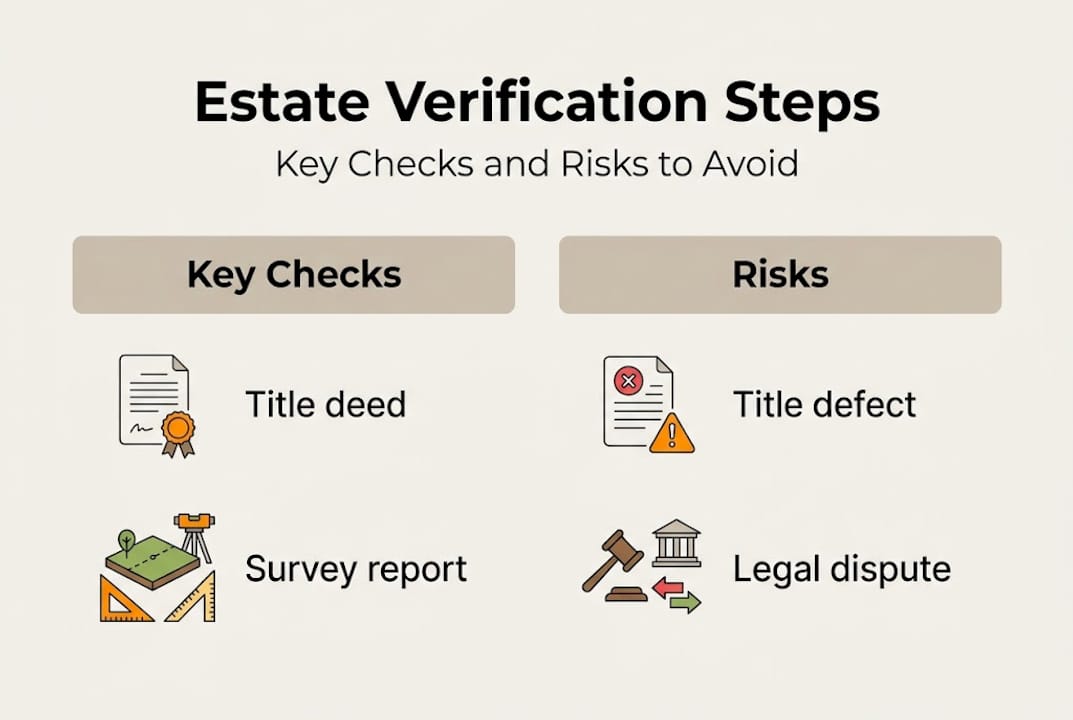
Third-party audits are particularly valuable for transactions above €5M. A specialist real estate audit firm can review the technical dossier, environmental compliance certificates, and energy performance diagnostics (DPE) to ensure they are accurate and current. For securing Riviera assets of significant value, this additional layer of scrutiny is a sound investment.
Common pitfalls to avoid:
- Overpaying relative to recent comparables by relying on the seller’s own valuation rather than independent assessment
- Ignoring rental-yield projections that assume unrealistic peak-season occupancy rates
- Overlooking ongoing costs such as taxe foncière, maintenance of grounds and pools, and concierge management fees
- Failing to conduct a turnover cleaning checklist review for rental-ready properties, which directly impacts occupancy and guest reviews
- Underestimating renovation costs for heritage properties, particularly where listed façades or period interiors require specialist craftsmen
- Neglecting luxury real estate tax risks that can significantly affect net returns for foreign-domiciled investors
It is also essential to understand that generational wealth transfer is reshaping buyer expectations, introducing a cohort of younger, digitally fluent inheritors who prioritise sustainability credentials, smart-home integration, and lifestyle versatility alongside traditional prestige markers.
Pro Tip: For any transaction above €3M, commission a third-party technical and legal audit before signing the compromis de vente (preliminary contract). The cost of this audit, typically a fraction of a percent of the purchase price, is negligible compared with the risk of proceeding without it.
Beyond the numbers: What seasoned investors know about evaluating luxury estates
We have guided many clients through acquisitions that appear flawless on paper yet carry subtle risks invisible to conventional analysis. The truth is, traditional valuation models were built for conventional markets. Luxury estates on the French Riviera operate by a different logic entirely.
The most sophisticated investors we work with understand that narrative drives value as powerfully as metrics. A villa where Picasso once stayed in Antibes, or an estate perched above Èze where the Mediterranean seems to pour into the sky, carries an emotional premium that rational models struggle to quantify yet the market consistently rewards.
We also observe that the buyers who fare best are those who think in decades, not years. They view the evaluation process as the opening chapter of a multi-generational story, one where the estate becomes a family sanctuary, a seasonal rental asset, and ultimately a legacy. Exploring deep luxury insights reveals how this long-horizon perspective changes every calculation. Do not just ask what a property is worth today. Ask what story it will tell in thirty years, and whether that story is one worth inheriting.
Connect with estate experts for tailored evaluation
The path from aspiration to acquisition on the French Riviera demands more than research; it requires the right relationships. At Living on the Côte d’Azur, we connect discerning buyers with a curated portfolio of exceptional estates, from Cannes’ Croisette-adjacent penthouses to secluded Cap d’Antibes villas kissed by morning sea light. Whether you are seeking visible prestige or the rarefied world of off-market luxury estates, our specialists offer tailored evaluation support at every stage. Browse our French Riviera villa listings or explore luxury explained to deepen your market understanding. We also accept cryptocurrency, making cross-border acquisition more seamless than ever. Enquire today and let us craft your Riviera legacy.
Frequently asked questions
What is the main factor influencing luxury estate valuation in the French Riviera?
Location, exclusivity, and premium amenities are the strongest drivers of estate value in the French Riviera, with international buyer demand consistently reinforcing premiums in sought-after micro-markets.
How does generational wealth transfer affect luxury real estate demand?
Generational wealth transfer is actively boosting demand, introducing younger, sustainability-focused buyers with distinct expectations around design, technology, and lifestyle credentials alongside traditional prestige.
What essential documents should investors review during estate evaluation?
Critical documents include title deeds, cadastre records, survey reports, energy performance diagnostics, and tax compliance records, all of which should be verified before signing any preliminary agreement as outlined in pre-purchase survey guidance.
Are there specific legal risks in luxury estate deals?
Legal risks include title defects, zoning restrictions, undisclosed easements, heritage protection orders, and regulatory compliance gaps, all of which require independent legal review to identify before exchange.
Should I use an independent surveyor when evaluating a luxury estate?
Yes, an independent surveyor provides unbiased structural and compliance assessment that protects your investment, as detailed in expert survey advice for high-value property acquisitions.
Recommended
 //
//