
TL;DR:
- Interior design establishes a home’s structural framework, while styling refines it through colour, texture, and accents. Proper sequencing—design first, then styling—ensures a balanced, harmonious, and functional living space. Restraint and editing in styling elevate a room’s sophistication and protect property value over time.
Interior design and styling together define how a home looks, feels, and functions at every level. Interior design sets the framework by addressing layout, architecture, cabinetry, and structural elements, while interior styling refines that framework through colour, texture, lighting, and curated accents. The two disciplines are distinct but inseparable. Whether you are refreshing a sun-drenched villa above Cannes or transforming a pied-à-terre in Nice’s Vieux Quartier, understanding both roles is the clearest path to a home that is as beautiful as it is liveable. This guide covers the principles, sequences, and practical tools that make the difference between a space that merely looks finished and one that genuinely feels complete.
How interior design and styling shape your home’s foundation
Interior design addresses the physical framework of a home: the floor plan, traffic flow, built-in cabinetry, lighting circuits, and the relationship between architectural features and furniture scale. Styling follows once that framework is resolved. Attempting to style a poorly planned space produces beautiful objects in an awkward room. The sequence matters enormously.
Before purchasing a single piece of furniture, map the room’s traffic paths. Professional designers maintain clear corridors of 60 to 90 centimetres between pieces so movement feels natural rather than obstructed. Zoning, the practice of dividing an open-plan space into defined areas for dining, lounging, and working, relies on layout decisions made before any decor is chosen.
Built-in elements carry particular weight in luxury properties. Bespoke cabinetry in a Mougins farmhouse or a Cap d’Antibes villa does not merely provide storage; it defines the room’s proportions and anchors the entire colour palette that follows. When a renovation is genuinely required, address it before styling. When only a refresh is needed, work with what exists and let the styling layer do the heavy lifting.
- Measure every room before buying furniture; scale errors are the most common and costly mistake
- Identify natural light sources and plan furniture placement around them
- Establish traffic paths of at least 60 cm before finalising any layout
- Decide which architectural features to highlight and which to recede
- Confirm that built-in elements such as cabinetry and shelving are resolved before choosing accent pieces
Pro Tip: Photograph each room at different times of day before making any design decisions. Natural light shifts dramatically between morning and late afternoon, and those shifts will influence every colour and material choice you make.
What is the 60-30-10 rule for colour in home styling?
The 60-30-10 colour rule is the single most reliable framework for building a balanced interior palette. Sixty per cent goes to the dominant colour, typically walls and large surfaces. Thirty per cent covers supporting tones, usually upholstery and major furniture pieces. Ten per cent is reserved for accent colours expressed through cushions, art, and small accessories. The result is visual harmony without monotony.
Texture operates alongside colour to give a room depth. A living room in Saint-Paul-de-Vence might combine linen curtains, a stone-effect wall, a velvet sofa, and a jute rug. Each material reads differently under light, creating layered interest that a single-material room cannot achieve. The key is contrast without competition: pair smooth with rough, matte with gloss, warm with cool.
Styling works best as an essential layer that clarifies and resolves a space, focusing on material relationship and restraint rather than mere decoration.
Restraint is the most underrated principle in modern interior styling. The instinct to fill every surface produces rooms that feel busy rather than considered. Select functional objects with genuine presence, a sculptural lamp, a single oversized artwork, a ceramic bowl with weight and patina, rather than accumulating smaller pieces that dilute each other’s impact. Editing is not deprivation; it is precision.
Common pitfalls to avoid when building a colour palette and styling layer:
- Chasing seasonal trends at the expense of lasting materials and tones
- Choosing accent colours that compete rather than complement the dominant palette
- Ignoring the undertones of white walls, which can read pink, yellow, or grey depending on light
- Mixing too many wood finishes, which fragments visual cohesion
- Styling before the layout and colour foundation are confirmed
How does layered lighting transform a room’s mood?
Layered lighting involves three distinct types: ambient, task, and accent. Ambient light provides general visibility across the room. Task lighting serves specific activities such as reading, cooking, or working at a desk. Accent lighting highlights architectural features, artwork, or focal points to create depth and drama. Most rooms benefit from all three layers working together.
Spaces with layered lighting feel up to 40% larger and more welcoming than rooms relying on a single overhead source. That figure reflects a real perceptual shift: multiple light sources at varying heights create dimension, whereas a single ceiling fixture flattens a room and makes it feel institutional rather than intimate.
Here is a practical sequence for layering lighting in any room:
- Install ambient lighting first, whether recessed downlights, a central pendant, or wall-mounted sconces that wash the room evenly
- Add task lighting specific to the room’s function: a reading lamp beside a chair, under-cabinet lighting in a kitchen, a desk lamp in a study
- Introduce accent lighting to highlight artwork, shelving, or architectural details such as exposed stone or a coffered ceiling
- Fit dimmers to ambient and accent circuits so the room can shift from bright and functional to warm and atmospheric
- Calibrate bulb temperature: 2700K to 3000K produces the warm, inviting glow that suits living rooms and bedrooms; kitchens and bathrooms benefit from slightly cooler 3500K tones
Fixture scale depends on room volume and furniture dimensions, not personal preference alone. A pendant that looks elegant in a showroom can appear incidental in a double-height salon or oppressive in a low-ceilinged bedroom. Measure ceiling height and the diameter of the dining table or seating group before selecting any hanging fixture.
Pro Tip: In a living room, position floor lamps and table lamps so their shades sit at eye level when you are seated. This creates the warm, horizontal band of light that makes a room feel genuinely cosy rather than merely lit.
Interior design tips for small and bespoke spaces
Layout optimisation is the primary driver of perceived size in compact rooms. Furniture placement, not paint colour, determines whether a small space feels generous or cramped. Resolve the layout before buying anything, and you will spend less and achieve more.
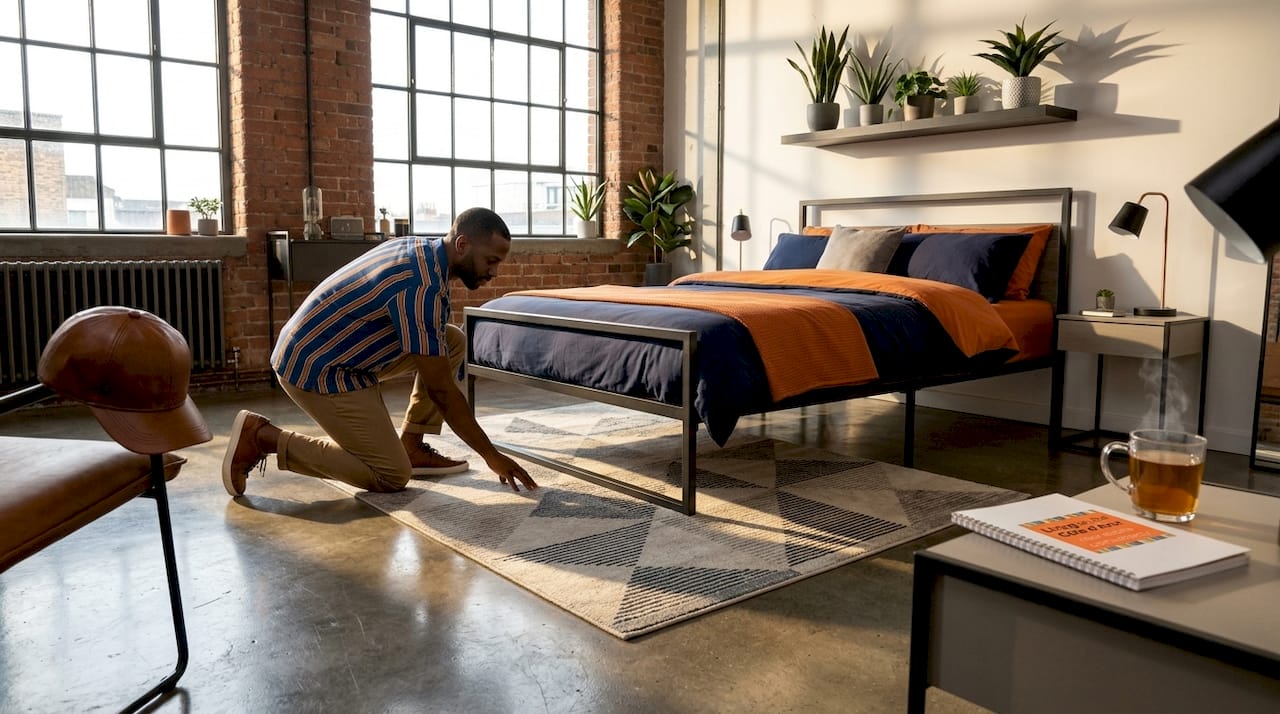
Floating furniture away from walls is one of the most counter-intuitive yet effective techniques available. Pulling a sofa 30 to 40 centimetres from the wall and placing a console or low bookcase behind it creates a defined zone that reads as intentional and spacious. Pushing everything against the perimeter, the instinctive response to a small room, actually makes the central space feel exposed and unresolved.
One focal point per room is a rule worth following without exception. In a compact bedroom in Valbonne or a studio apartment in Nice’s Mont Boron, a single strong element, an upholstered headboard, a framed artwork, a statement light fixture, organises the eye and gives the room a sense of purpose. Multiple competing focal points produce visual noise that makes a small room feel smaller still.
| Technique | Effect |
|---|---|
| Float furniture from walls | Creates defined zones and adds perceived depth |
| One focal point per room | Organises the eye and reduces visual clutter |
| Use a single large rug | Anchors the seating group and unifies the space |
| Limit wood finishes to two | Maintains cohesion across furniture and flooring |
| Layer lighting at multiple heights | Adds dimension and makes the room feel larger |
Rugs deserve particular attention in small spaces. A rug that is too small fragments the room into disconnected pieces. The front legs of all seating pieces should sit on the rug, anchoring the group as a single composition. For a bespoke villa interior, the same principle applies at a grander scale: proportion governs every decision.
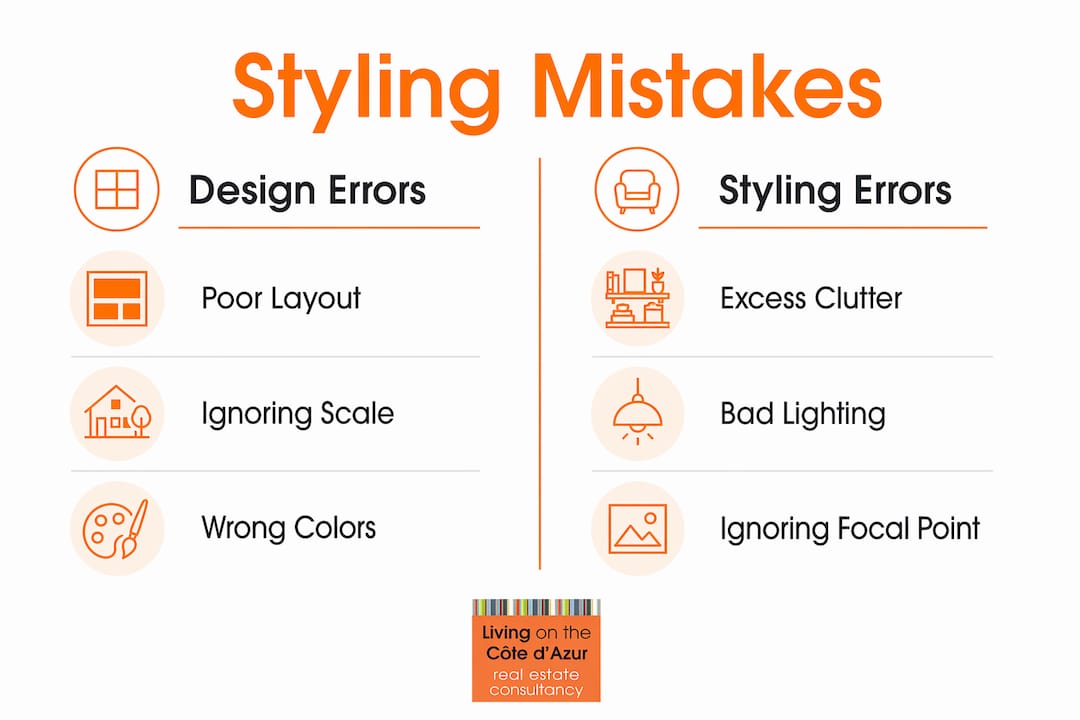
What styling mistakes do most homeowners make?
The most common styling failure is accumulation without intention. Rooms fill gradually, one object at a time, until the space reads as a collection of unrelated things rather than a considered whole. Styling as a disciplined editing process means selecting anchor pieces first, adding only items that serve a clear purpose, and removing anything that competes or clutters.
Scale errors rank alongside accumulation as the most damaging mistakes. A coffee table that is too small for the sofa group, a pendant that is too delicate for a double-height ceiling, artwork hung too high above a sofa: each of these breaks the proportional logic that makes a room feel resolved. Measure before you buy, every time.
- Anchor one surface at a time: style the coffee table, assess it, then move to the shelving
- Remove one item from every surface after styling; the room almost always improves
- Avoid mixing more than three accent colours across a room
- Resist the urge to fill empty wall space; negative space is a design tool, not a failure
- Distinguish between staging for sale and decorating for living; the two have different objectives and different rules
The professional sequence is worth memorising: lock the structure and layout first, build the colour palette using the 60-30-10 framework, then add accents last and sparingly. Reversing this sequence, buying decorative objects before the palette is established, produces the mismatched, trend-heavy rooms that date quickly and satisfy no one. Luxury upgrades that hold their value follow this same logic: structure first, refinement second.
Pro Tip: Before finalising any styled surface, photograph it in black and white. Colour is removed from the equation, and you can assess proportion, balance, and visual weight with complete clarity.
Key takeaways
Effective interior design and styling require a clear sequence: resolve structure and layout first, establish a proportional colour palette, then add accents with restraint and purpose.
| Point | Details |
|---|---|
| Design before styling | Fix layout, scale, and built-in elements before choosing any decorative pieces. |
| Apply the 60-30-10 rule | Allocate 60% dominant, 30% supporting, and 10% accent colour for a balanced palette. |
| Layer all three lighting types | Combine ambient, task, and accent lighting with dimmers for flexibility and mood. |
| Float furniture from walls | Create defined zones in small spaces by pulling pieces away from the perimeter. |
| Edit with discipline | Style one surface at a time, remove one item after finishing, and resist accumulation. |
Why restraint is the most underrated principle in home styling
Having worked closely with homeowners and property investors across the Côte d’Azur, from light-filled apartments above Nice’s Promenade des Anglais to stone-walled mas in the hills above Grasse, I have observed the same pattern repeatedly. The rooms that feel genuinely luxurious are almost always the ones where something has been taken away, not added.
The instinct to fill space is understandable. We associate fullness with generosity and emptiness with neglect. But the most compelling interiors I have encountered, whether in a Cap d’Antibes villa where the Mediterranean light does half the work, or in a Mougins farmhouse where the architecture speaks for itself, succeed because the styling supports the space rather than competing with it. One extraordinary piece of furniture, one considered artwork, one beautifully scaled light fixture: these choices carry more weight than a room full of carefully sourced objects that cancel each other out.
The practical implication is this: invest in fewer, better things. A single bespoke sofa in a considered fabric will outlast and outperform six trend-driven cushions purchased in a moment of enthusiasm. Proper interior design and styling, done in the right sequence, saves money over time because it eliminates the cycle of buying, regretting, and replacing. It also protects the value of the property itself, which matters considerably when that property sits on the French Riviera and represents a legacy investment rather than a temporary arrangement.
— ab
How Livingonthecotedazur supports your interior vision
At Livingonthecotedazur, we believe that a home’s interior is as much a part of its value as its location or architecture. Our interior design adviser Jolanda Kuijer listens to your vision, offers considered guidance, and coordinates every detail of your interior transformation, from structural decisions to the final styling layer. Whether you are preparing a newly acquired villa in Saint-Jean-Cap-Ferrat for seasonal letting or personalising a residence in Roquebrune-Cap-Martin for long-term living, Jolanda brings clarity, restraint, and genuine expertise to the process. For those seeking off-market Riviera properties where interior design and styling form part of the acquisition conversation from day one, we are the partner you want beside you. Speak with us and let us help you create a home that is worth inheriting.
FAQ
What is the difference between interior design and interior styling?
Interior design addresses layout, architecture, and structural elements, while interior styling refines a completed space through colour, texture, lighting, and curated accents. Design comes first; styling follows once the framework is resolved.
How does the 60-30-10 colour rule work in practice?
The 60-30-10 rule allocates 60% of a room’s colour to dominant surfaces such as walls, 30% to supporting elements like upholstery, and 10% to accent pieces. This proportion prevents both visual chaos and a flat, one-dimensional palette.
What are the three layers of lighting in interior design?
The three lighting layers are ambient for general visibility, task for specific activities, and accent for highlighting features and creating mood. Using dimmers on ambient and accent circuits allows a room to shift atmosphere without changing the physical setup.
How do I make a small room feel larger through styling?
Optimise the layout first, float furniture away from walls, establish one clear focal point, and layer lighting at multiple heights. A single large rug that anchors all seating pieces also unifies the space and adds perceived depth.
Should I style my home differently if I plan to sell it?
Staging for sale and decorating for living serve different objectives. Staging is temporary and designed to appeal to the broadest possible market, while personal decoration reflects individual taste and long-term comfort. If selling, prioritise neutral palettes and edited surfaces over personal collections.
Recommended
- Link to: International property acquisition process: 2026 guide
- Interior Design on the French Riviera: Crafting Legacy Homes
- Luxury renovation tips for Côte d’Azur homes
- Renovation types to maximise luxury property value and ROI
- Interior Design and Styling with Top Quality Brands
Interior design, styling and decoration
 //
//