
TL;DR:
- Acquiring a luxury apartment on the Côte d’Azur requires thorough preparation, off-market access, and detailed due diligence to secure a long-term asset.
- Understanding your financial capacity, objectives, and micro-market nuances ensures a strategic purchase aligned with your lifestyle, legacy, or investment goals.
Acquiring a luxury apartment in a prime location is one of the most rewarding decisions a high-net-worth individual can make. It is also one of the most unforgiving if approached without a clear framework. From the lavender-laced hillsides above Èze to the salt-kissed promenades of Cannes and the yacht-dotted harbour of Antibes, the Côte d’Azur concentrates extraordinary opportunity within a remarkably competitive market. Understanding the luxury apartment acquisition steps before you move is not merely prudent. It is the difference between securing a generational asset and losing the finest property to a more prepared buyer.
Table of Contents
- Key takeaways
- Prerequisites and preparation before acquisition
- The step-by-step acquisition process
- Legal, financial, and tax considerations
- Post-purchase management and long-term value
- Our perspective on acquiring luxury apartments with intention
- Discover exclusive off-market properties with Livingonthecotedazur
- FAQ
Key takeaways
| Point | Details |
|---|---|
| Preparation precedes everything | Define your financial capacity, investment horizon, and lifestyle objectives before viewing a single property. |
| Off-market access is decisive | The most coveted luxury apartments are never publicly listed; specialist broker relationships open these doors. |
| Due diligence goes beyond the walls | HOA reserve funds, building financials, and vendor contracts matter as much as the apartment itself. |
| Legal structure protects your wealth | Ownership entities and experienced international legal counsel are non-negotiable for cross-border acquisitions. |
| Post-purchase management sustains value | Professional property management and rental yield monitoring protect both lifestyle and long-term ROI. |
Prerequisites and preparation before acquisition
Before you begin the process of buying high-end apartments, you must first know precisely what you are buying and why. This clarity is not always as obvious as it sounds, even for seasoned investors.
Start with a frank assessment of your financial position. Liquidity matters far more in luxury transactions than headline net worth. You need capital that is genuinely accessible, not locked in other investments or awaiting divestment. Consider not just the purchase price but also acquisition costs, which in France typically range from 7 to 10% for resale properties in notary fees and transfer taxes, plus ongoing maintenance reserves.
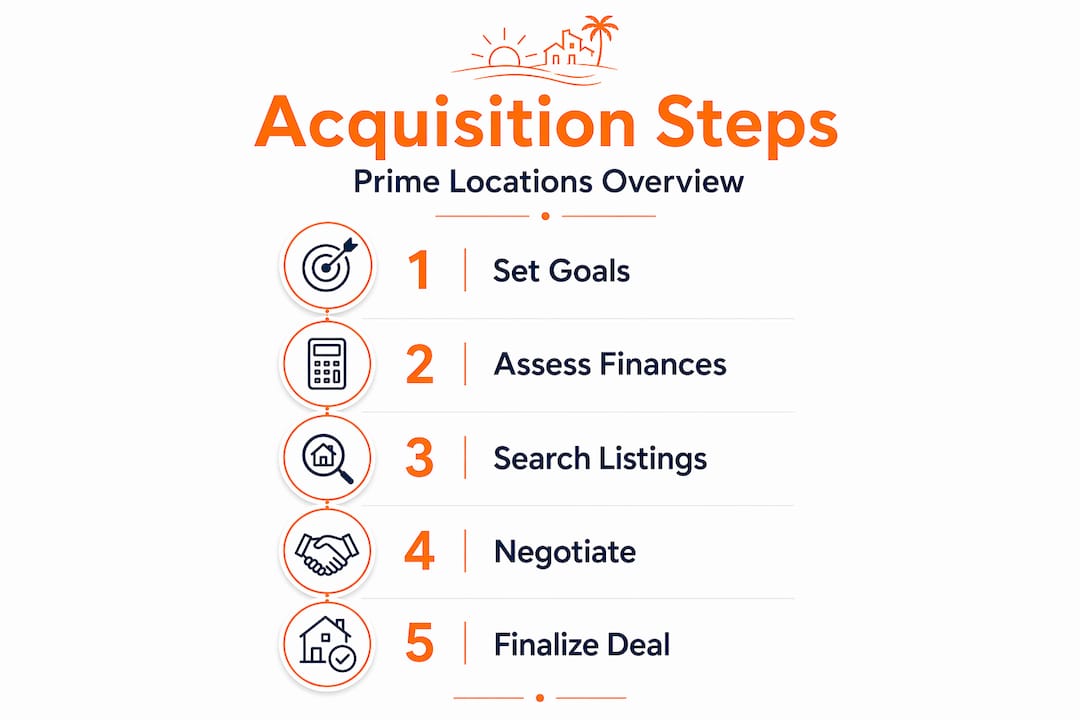
Beyond liquidity, define what we call your lifestyle utilisation score: how often will you actually occupy the property, and what proportion of the year would it realistically generate rental income? A sea-view apartment on Mont Boron in Nice commands strong seasonal returns, but only if your personal use calendar does not crowd out the peak summer weeks that drive yield.
Equally, you must clarify your primary objective before you begin:
- Personal sanctuary: A retreat for family, perhaps during the Cannes Film Festival or Menton’s famous Fête du Citron, where lifestyle takes precedence over yield.
- Legacy asset: A property held for generational wealth transfer, prioritising capital appreciation and estate planning compatibility.
- Investment vehicle: A property selected primarily for rental income and capital growth, where location, specification, and management infrastructure are paramount.
Each objective dictates an entirely different acquisition strategy, preferred location, and even ideal property type. Confusing them midway through a search wastes months and, occasionally, millions.
Pro Tip: Set your non-negotiables in writing before you engage any broker. Committing your criteria to paper before the search begins protects you from the very seductive temptation of a beautiful apartment that simply does not fit your objectives.
Market knowledge specific to your target villages is genuinely irreplaceable. The character of Cap d’Antibes differs enormously from Roquebrune-Cap-Martin. Beausoleil sits a few hundred metres from Monaco but offers a different fiscal and legal environment entirely. Understand the micro-market before you commit to the macro decision.
The step-by-step acquisition process
This is the heart of any serious luxury real estate purchase guide, and it must be followed with rigour rather than enthusiasm.
Access off-market opportunities. The finest luxury apartments rarely appear on public portals. Most desirable properties are never publicly advertised, and relationships with specialist luxury brokers are the only reliable gateway. In our experience at Livingonthecotedazur, the most extraordinary acquisitions happen quietly, between trusted parties, often months before any formal listing.
Engage a specialised luxury property adviser. A generalist agent will not know the reserve fund status of a prestige co-propriété in Mougins, nor will they have the relationships to secure a private viewing of an off-plan residence in Sainte-Maxime before public launch. Your adviser must live and breathe this segment.
Evaluate properties with precision. Go beyond the aesthetic. Assess ceiling heights, orientation relative to the sun, terrace quality, acoustics, lift access, and the calibre of the co-owners in the building. In a luxury context, the building’s reputation and management are as important as the apartment itself.
Conduct thorough due diligence. This is where most buyers underestimate the complexity. Building financial health deserves the same scrutiny as the apartment itself. Request the last three years of co-propriété accounts, the maintenance forecast, HOA reserve fund levels, and any outstanding works assessments. An unexpected capital call on a luxury building can run to tens of thousands of euros per unit. For a deeper framework, our due diligence guide covers these specifics for the Côte d’Azur market.
Arrange financing early. If you are not purchasing in cash, begin conversations with your private bank or specialist lender before you identify a target property. Jumbo loans require 20 to 30% down payments and credit scores around 700 or above, with terms that vary considerably between portfolio lenders and private institutions. At Livingonthecotedazur, we also work with buyers who prefer cryptocurrency as part of their acquisition structure.
Negotiate with strategy, not urgency. In a competitive prime market, rushing signals desperation. Understand the seller’s motivation: are they relocating, liquidating for an estate, or simply testing the market? Each scenario creates different leverage points. Price is rarely the only negotiable term. Completion timelines, included furnishings, and service charges in transition can all form part of a compelling offer.
Close with professional oversight. Luxury transactions typically take between 3 and 6 months from offer to completion. The notarial process in France is thorough and protective, but it requires coordination between your notaire, your legal counsel, and your financial adviser. Never treat closing as a formality.
Pro Tip: Patience is not passive. The buyers who secure the most coveted apartments are those who remain calm, informed, and ready to move decisively when the right property appears. Preparation is what makes decisiveness possible.
| Stage | Key action | Common mistake |
|---|---|---|
| Search | Access off-market listings via specialist broker | Relying solely on public property portals |
| Evaluation | Assess building financials and HOA health | Focusing only on interior aesthetics |
| Financing | Arrange private bank approval in advance | Assuming cash-equivalent speed with loans |
| Negotiation | Explore all terms, not just price | Offering urgently in a competitive situation |
| Closing | Coordinate notaire, legal counsel, and lender | Treating the process as a formality |
Legal, financial, and tax considerations
Buying luxury apartments across international borders introduces a layer of complexity that no amount of enthusiasm can substitute for professional expertise. This applies whether you are a European buyer acquiring on the Riviera or a global investor purchasing from Dubai, Bali, or Mauritius.
The ownership structure you choose at the outset shapes every financial outcome thereafter. International investors often establish LLCs or equivalent legal entities to limit personal liability, facilitate inheritance, and sometimes mitigate estate tax exposure. In France, the Société Civile Immobilière (SCI) is the most widely used vehicle for this purpose, offering flexibility in ownership transfer and estate planning.
Tax implications deserve specific attention:
- Wealth tax (IFI): France levies an annual tax on real property assets above €1.3 million, which applies to non-residents holding French property directly.
- Capital gains tax: Non-resident sellers are subject to French capital gains tax, though allowances increase with the duration of ownership.
- Rental income taxation: Income generated from French property is taxable in France, regardless of where you are tax resident.
- Inheritance and legacy planning: Without proper structuring, French succession law applies to French-situated assets, which may conflict with your home country’s testamentary intentions.
Experienced legal advisers who understand both local property law and cross-border complexity are not a luxury add-on. They are the foundation of a sound acquisition. We consistently recommend engaging specialist estate planning counsel in conjunction with your French notaire to create a structure that serves your legacy ambitions as well as your immediate acquisition.
“A well-structured acquisition is not just a purchase. It is the first chapter of a legacy, written in stone on one of the world’s most coveted coastlines.”
The international buyer’s guide from Livingonthecotedazur provides an updated framework for 2026 specifically addressing these cross-border intricacies, including the evolving regulatory environment for non-EU purchasers.
Post-purchase management and long-term value
The day you receive the keys is not the end of the acquisition process. It is, in many respects, the beginning of a more sustained commitment.
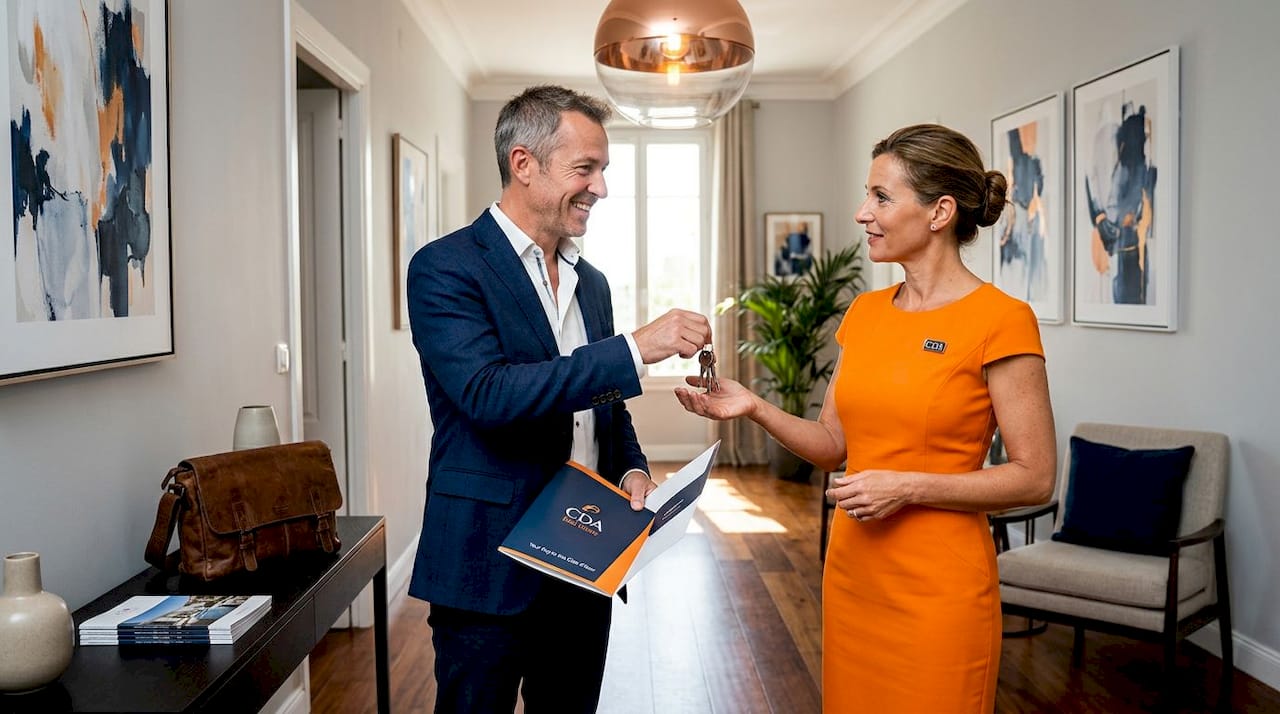
Professional property management is indispensable for any owner who is not permanently resident on the Côte d’Azur. Luxury apartments require a standard of upkeep commensurate with their specification, and remote ownership without trusted local management invariably leads to deferred maintenance and diminished value.
Key responsibilities to plan for from day one include:
- Routine maintenance: Climate control servicing, pool and terrace care, concierge coordination, and seasonal preparation all require consistent professional oversight.
- Building governance: Attend or be represented at annual co-propriété general meetings. Vote on major works. Monitor the syndic’s management of reserve funds.
- Rental performance: If you are generating seasonal income, review occupancy rates, average nightly rates, and guest feedback quarterly. The Riviera’s rental market is sophisticated and rewards well-managed, well-presented properties.
- Resale readiness: Even if you intend to hold for a decade or more, maintain the property as if you could sell tomorrow. The buyers of the finest apartments on the Côte d’Azur are exacting, and presentation at the moment of sale commands a significant premium.
Pro Tip: Invest time in building a genuine relationship with your local property manager, not merely a transactional one. The managers who go beyond their brief during a crisis or a difficult tenant situation are the ones who protect your investment and your reputation as a landlord.
Our perspective on acquiring luxury apartments with intention
I have spent years observing how the most successful acquisitions on the Côte d’Azur unfold, and the pattern is consistent. The buyers who build genuine wealth through luxury property are not the fastest or the most aggressive. They are the most prepared, the most patient, and the most honest with themselves about what they actually want.
I have watched buyers rush into a Cannes apartment because the Croisette views were intoxicating, only to discover six months later that the co-propriété’s reserve fund was essentially depleted and a major façade restoration was pending. I have also watched buyers spend eighteen months building relationships and refining their criteria before securing an off-market penthouse in Saint-Jean-Cap-Ferrat at a genuinely remarkable price, because they were known, trusted, and ready.
The misconception I encounter most often is that luxury property is inherently liquid. It is not. Resale timelines of three to six months are common even in prime locations, and that assumes you have priced correctly and the market is receptive. Luxury apartments are exceptional long-term wealth vehicles. They are not short-term trading instruments.
My honest advice: approach every acquisition as though you intend to hold it for twenty years. That mindset forces you to scrutinise the building, the location’s trajectory, the legal structure, and the management infrastructure with the rigour these decisions deserve. The lifestyle dividend, whether that is waking above Baie des Anges or cycling the coastal sentiers of Cap d’Antibes, is the pleasure. The wealth preservation is the purpose.
— ab
Discover exclusive off-market properties with Livingonthecotedazur
At Livingonthecotedazur, we curate access to the acquisitions that never appear on public portals. Our portfolio of invisible luxury properties on the Côte d’Azur represents the finest collection of off-market opportunities available to discerning buyers in 2026. From biophilic-design new builds in Sainte-Maxime to Monaco-adjacent residences in Beausoleil, we provide bespoke guidance at every stage of your acquisition. We welcome buyers from across the globe, and we accept cryptocurrency alongside traditional payment structures. If you are ready to invest in stones that grow in value and carry meaning across generations, we invite you to begin the conversation with our team today.
FAQ
What are the key luxury apartment acquisition steps?
The core steps are: define your objectives and financial capacity, access off-market listings via a specialist broker, evaluate properties with thorough due diligence including building financials, arrange appropriate financing or legal ownership structures, negotiate strategically, and close with coordinated professional oversight. Each step demands more rigour than in standard residential transactions.
How long does it take to acquire a luxury apartment in France?
Luxury transactions typically take between 3 and 6 months from accepted offer to completion, accounting for notarial procedures, due diligence, and financing. Off-plan purchases under a VEFA contract follow a different timeline aligned with construction progress.
Do international buyers need a special legal structure to purchase in France?
It is strongly advisable. Many international buyers use an SCI (Société Civile Immobilière) to manage inheritance, reduce estate tax exposure, and facilitate ownership transfer. Experienced legal counsel who understands both French property law and your home country’s legal framework is essential before you commit to any structure.
How do I find off-market luxury apartments on the Côte d’Azur?
Off-market access comes exclusively through trusted broker relationships built over time. Specialist portals like Livingonthecotedazur maintain curated networks of sellers who prefer to transact quietly, away from public exposure, which is where the most compelling acquisitions consistently occur.
What is the typical rental yield for a luxury apartment on the French Riviera?
Prime Côte d’Azur luxury apartments can generate 3 to 5% annual rental yields through elite seasonal lets, particularly in high-demand locations near Cannes, Antibes, and Saint-Jean-Cap-Ferrat during the summer and festival seasons. Yield varies considerably by location, specification, and quality of management.
Recommended
 //
//