TL;DR:
- Integrating smart technology and wellness amenities significantly enhances property value and appeal.
- Heritage-preserving renovations and multi-generational layouts are key to securing long-term investment resilience.
- Balancing tradition with discreet innovation creates timeless assets valued by discerning Côte d’Azur buyers.
Along the sun-warmed shores between Menton’s lemon-fragrant ramparts and Saint-Tropez’s storied Vieux Port, a Côte d’Azur estate is rarely just a property. It is a declaration of intent, a promise etched in Provençal stone, and, for the most discerning investors, a legacy asset designed to appreciate across generations. Selecting the right upgrades for such an estate is not simply an aesthetic exercise. It demands a careful balance of heritage respect, financial rigour, and lifestyle vision. This guide navigates that balance, covering smart technology, wellness amenities, heritage-preserving renovations, and multi-generational design.
Table of Contents
- Smart home technology and AI integration
- Wellness and lifestyle amenities
- Heritage-preserving renovations
- Guest accommodation and multi-generational design
- Why balancing tradition and innovation shapes legacy assets
- Explore invisible luxury, legacy assets, and expert guidance
- Frequently asked questions
Key Takeaways
| Point | Details |
|---|---|
| Smart tech boosts returns | Automated systems and AI increase rental premiums and resale values substantially. |
| Wellness upgrades enhance appeal | Spas, gyms, and saunas align with family and investment needs, supporting legacy value. |
| Renovation preserves heritage | Balanced upgrades protect aesthetic value and deliver price uplift, even under strict regulations. |
| Multi-gen layouts drive market resilience | Flexible guest accommodation helps properties sell faster and remain relevant. |
| Sustainable choices offer long-term ROI | Energy-efficient and eco-friendly upgrades stand up to regulatory and market pressures. |
Smart home technology and AI integration
We live in an era where the salt-kissed terraces of Cap d’Antibes can be monitored, secured, and illuminated from anywhere in the world at the touch of a screen. Smart home automation is no longer a novelty reserved for tech enthusiasts. On the Côte d’Azur, it has become a fundamental pillar of luxury estate investment. The numbers are persuasive: AI management systems boost rental premiums by 15 to 25 per cent and resale values by 12 to 18 per cent, making technology integration one of the most financially sound upgrades an owner can commission.
What does a fully integrated smart estate actually offer? Consider the following features that our clients are increasingly requesting across our luxury property guide:
- Remote security systems with biometric access, perimeter sensors, and live-stream cameras accessible via encrypted mobile applications
- Intelligent climate control that learns occupancy patterns and adjusts automatically, reducing energy bills whilst maintaining the precise comfort expected by elite renters
- Adaptive lighting that shifts from warm to cool tones throughout the day, enhancing both wellbeing and the visual drama of interiors designed with marble and bespoke verrières
- AI-driven estate management platforms that coordinate maintenance schedules, rental calendars, and guest communications with minimal human intervention
- Integrated audio-visual systems delivering cinema-grade sound and image across terraces, living areas, and pool pavilions
The challenge unique to the Côte d’Azur lies in preserving the architectural soul of these properties whilst threading modern infrastructure through walls that may date to the Belle Époque. Cable routing, concealed conduits, and wireless mesh networks must be engineered with surgical care in historic structures. Consulting architects who specialise in Riviera heritage is essential before any cabling begins.
“The most successful integrations we encounter are those where technology is truly invisible. A nineteenth-century bastide should feel timeless, not like a technology showroom. The intelligence should be felt, not seen.” — Côte d’Azur estate technology consultant
Understanding the estate market trends Côte d’Azur makes one thing abundantly clear: buyers and elite tenants in 2026 expect seamless automation as standard. Properties that lag behind are not simply less desirable; they are repositioned into an entirely different, lower-value market tier.
Pro Tip: Commission a dedicated smart-home audit before purchase. Many older Côte d’Azur estates carry outdated electrical panels that must be fully upgraded before automation layers can be safely added, and factoring this into your acquisition budget prevents costly surprises.
Wellness and lifestyle amenities
As the Cannes Film Festival crowds thin each May and the Croisette returns to its languid summer rhythm, one truth about the Riviera luxury market becomes unmistakable. The wealthiest buyers are not purchasing square metres. They are purchasing a lifestyle, and wellness is at its very heart. Wellness amenities such as spas, gyms, and saunas align directly with the priorities of today’s high-net-worth individuals, driving both rental demand and capital appreciation.
For estate owners thinking across generations, wellness spaces serve a dual purpose. They satisfy the aspirational lifestyle needs of summer tenants willing to pay premium nightly rates, and they speak to the multigenerational family buyers who intend to keep a property within the family for decades. As specialists in ultra-prime assets observe, a focus on multi-generational wellness design and tech integration protects legacy assets from market volatility by attracting cash buyers who are largely immune to fluctuating mortgage rates.
A proper wellness suite today typically encompasses:
- Hammam or steam room connected to the pool terrace, providing a spa-grade experience without requiring external service providers
- Dedicated fitness studio with rubber flooring, mirrored walls, and integrated air filtration
- Cold plunge pool or ice bath set alongside a traditional Finnish sauna, increasingly popular among health-conscious European elites
- Outdoor yoga or meditation platform positioned to capture morning sea views, preferably framed by mature cypress or olive trees
- Professional massage room with adjustable lighting and direct access to the estate’s private garden
The luxury amenities list for a high-performing Riviera estate always includes wellness infrastructure, and the investment case is compelling. Below is a summary of typical uplift by amenity type:
| Wellness amenity | Approximate installation cost | Estimated value uplift | Rental premium impact |
|---|---|---|---|
| Indoor spa and hammam | €60,000 to €120,000 | 6 to 10% | High |
| Dedicated gym studio | €25,000 to €55,000 | 3 to 5% | Moderate to high |
| Sauna and cold plunge | €18,000 to €40,000 | 2 to 4% | Moderate |
| Outdoor wellness terrace | €15,000 to €35,000 | 2 to 3% | Moderate |
| Massage and treatment room | €20,000 to €45,000 | 2 to 4% | High |
Maintaining these spaces to the standard elite guests expect is equally important. Studies on cleaning and maintenance value confirm that rigorous upkeep practices can cut rental vacancy rates by up to 15 per cent, directly improving annual yield. Investing in sustainable luxury properties that incorporate eco-conscious heating and water systems for spas also meets growing demand from environmentally aware clients.
Pro Tip: The most overlooked wellness addition is a dedicated changing suite adjacent to the pool and spa zone. This simple investment, costing as little as €8,000, consistently receives the highest praise in guest reviews and creates the seamless hotel-grade flow that elite renters remember when rebooking.
Heritage-preserving renovations
Stand on the terrace of an Antibes bastide at dusk, the warm stone walls glowing amber, and you understand immediately why heritage matters here. The Côte d’Azur’s architectural character, its ochre pigments, handmade terracotta floors, wrought-iron balustrades, and arched doorways, is precisely what commands €2M-plus premiums. Renovations that honour this character whilst introducing modern luxury deliver the strongest returns.
The financial case for full renovation is well established. Kitchen upgrades costing €18,000 to €35,000, bathroom refurbishments at €10,000 to €18,000, air conditioning at €6,000 to €12,000, and pool or terrace enhancements at €5,000 to €15,000 collectively yield a 20 to 30 per cent price uplift. The key is ensuring these interventions speak the language of the building itself. Custom verrières and natural materials such as marble and Néolith surface the best outcomes, maintaining the Côte d’Azur aesthetic whilst dramatically elevating perceived luxury.
The renovation landscape here carries regulatory complexity that investors must understand before committing funds. Coastal build restrictions, noise regulations, and permit requirements can significantly increase project costs and timescales. Historic listing constraints apply to a meaningful proportion of the premium stock in areas such as Menton’s old town and Èze village. The wisest approach prioritises energy-efficient and sustainable upgrades, which face less regulatory resistance and carry long-term value.
“Energy performance ratings are now a material factor in Côte d’Azur valuations. A property that moves from a DPE class D to a B commands a measurably different price point and attracts a qualitatively different buyer profile.” — Senior Riviera renovation architect
Consider the relative merits of different renovation types:
| Renovation type | Typical cost range | Value uplift potential | Regulatory risk |
|---|---|---|---|
| Kitchen full refurbishment | €18,000 to €35,000 | 8 to 12% | Low to moderate |
| Bathroom suite replacement | €10,000 to €18,000 | 4 to 7% | Low |
| Pool and terrace upgrade | €5,000 to €15,000 | 3 to 6% | Moderate to high |
| Air conditioning system | €6,000 to €12,000 | 2 to 4% | Low |
| Energy efficiency package | €20,000 to €50,000 | 6 to 10% | Low |
Material selection carries profound importance in this market. Marble surfaces add measurable value both aesthetically and financially, signalling quality to buyers trained to distinguish genuine luxury from approximation. For flooring and wall treatments, tile renovation choices should reflect regional tradition: Salernes terracotta, handmade Provence encaustic tiles, or large-format stone that echoes the mineral palette of the landscape. Understanding the full range of drivers of luxury home value helps prioritise which renovations will yield the most meaningful return for a specific property.
Renovation programmes should always begin with a thorough structural and energy audit. On the Côte d’Azur, where sea air accelerates corrosion and older properties may carry asbestos in roof tiles or lead in plumbing, the cost of discovery mid-project dwarfs the cost of investigation before works begin.
Guest accommodation and multi-generational design
An estate at Sainte-Maxime overlooking the Golfe de Saint-Tropez is magnificent in itself. But when it also offers a self-contained guest pavilion where a grandmother can enjoy her morning coffee in private, or where adult children can host their friends independently, it becomes something rarer: a true family sanctuary. Multi-generational design is one of the most compelling value drivers in the current Côte d’Azur market.
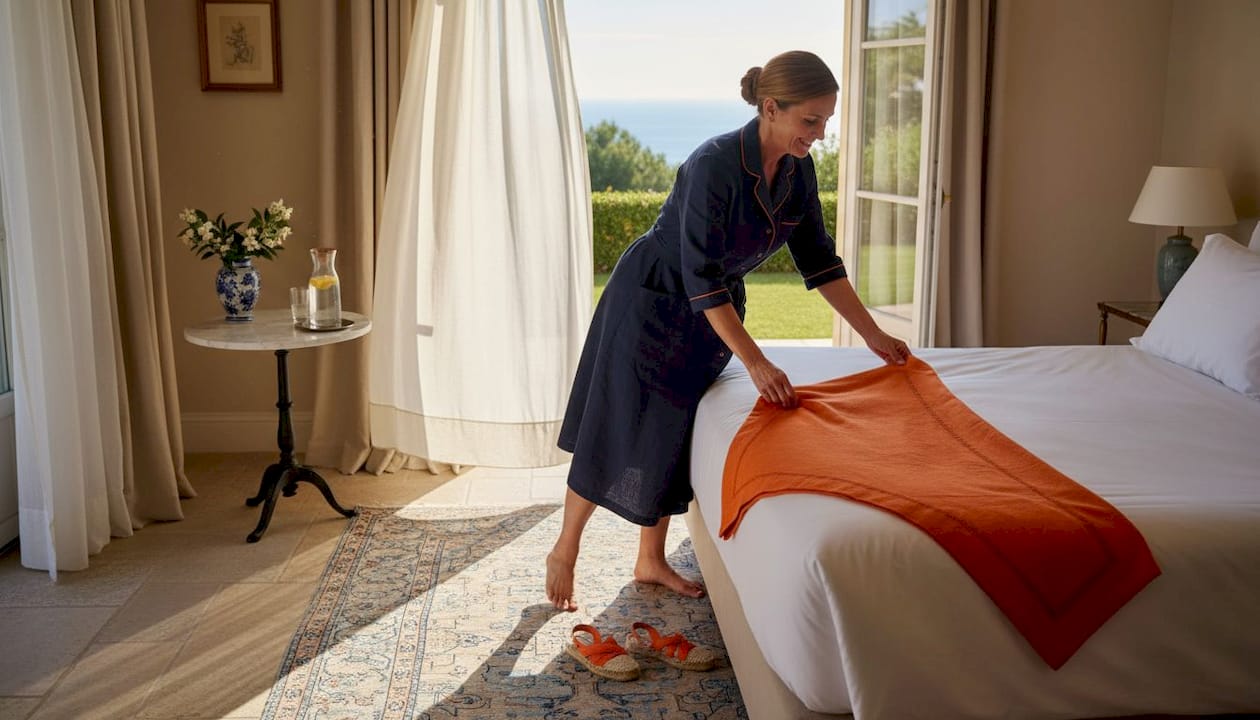
Properties with flexible layouts and guest accommodation that supports multi-generational living sell measurably faster than comparable single-dwelling estates, and they attract cash buyers who are insulated from credit market fluctuations. This is not a peripheral feature. It is a strategic differentiator that builds resilience directly into the asset.
The most effective multi-generational layouts typically include:
- Independent guest pavilion or pool house with private entrance, en-suite bathroom, and small kitchen, offering complete privacy without sacrificing proximity to the main estate
- Secondary master suite on a different floor or wing from the primary bedroom, designed for extended family stays of several weeks or months
- Flexible living spaces that can serve as playrooms for children during family occupancy and be converted to cinema or entertainment rooms for rental guests
- Service quarters or staff accommodation ensuring that the household team operates invisibly without disrupting family or guest experience
- Accessible design elements including level-access showers, wider doorways, and ground-floor bedroom options, future-proofing the property for use across all life stages
For visual inspiration on how pavilion-style guest spaces can be woven organically into a Mediterranean landscape, thoughtful villa guest house design from other premium European markets demonstrates what seamless integration looks like at its finest.
When considering how these investments translate into asset performance, the property appreciation factors specific to the Côte d’Azur reward multi-generational design consistently. Properties that accommodate extended families also generate higher occupancy rates during the shoulder seasons of April, May, September, and October, when family groups travelling outside peak school holidays seek spacious, private estates rather than hotels.
Pro Tip: The single most overlooked multi-generational feature is a covered outdoor dining space large enough for twelve to sixteen people. On the Riviera, where family life and entertainment centre on long alfresco meals under the stars, an oversized pergola or loggia with outdoor kitchen often delivers the emotional connection that closes a sale faster than any interior feature. Browse our curated French Riviera villa listings to see how this principle is applied across our current portfolio.
Statistic callout: Properties offering dedicated guest accommodation and multi-generational layouts sell up to 30 per cent faster than comparable single-dwelling estates on the Côte d’Azur, whilst attracting a higher proportion of cash buyers who sustain values even during credit market contractions.
Why balancing tradition and innovation shapes legacy assets
We have observed, across many years of working with discerning investors along this coastline, that the estates which hold their value most stubbornly and appreciate most reliably are never the ones that chased a trend. They are the ones that told a coherent story.
A bastide fitted with invisible smart technology, a wellness suite that draws on the calming palette of Provence, bathrooms lined with marble quarried from Italian mountains visible on a clear day from Menton’s hilltop walks. These choices compound over time. They attract the right buyers, command the right tenants, and pass between generations without apology or embarrassment.
The contrarian insight we offer is this: in a market as emotionally charged as the Côte d’Azur, where buyers arrive primed by the romance of the Lérins islands at dawn or the scent of jasmine in Grasse, the most powerful investment move is not to innovate boldly but to curate wisely. Sustainability and heritage together create an asset that no amount of flashy renovation can replicate. To invest smarter in 2026, think less about what is fashionable and more about what is irreplaceable.
Explore invisible luxury, legacy assets, and expert guidance
We invite you to explore what truly lasting Côte d’Azur investment looks like through our curated portal. Our invisible luxury real estate listings bring you off-market estates that never reach the public domain, properties where every upgrade described in this guide has already been realised with precision. For those beginning their journey, our luxury real estate guide offers essential grounding, whilst our dedicated resource on legacy and ROI strategies translates aspiration into actionable financial planning. We accept cryptocurrency. We connect legacies. Reach out today.
Frequently asked questions
Which upgrades deliver the highest ROI for Côte d’Azur properties?
Smart home automation, full renovations, and wellness amenities typically yield the greatest boosts, with rental premiums rising 15 to 25% and full renovation uplifts of 20 to 30% commonly recorded across the region.
How do regulatory constraints affect luxury upgrades?
Coastal restrictions and permit requirements can add significant cost and delay to projects, making energy-efficient and sustainable upgrades the most strategically prudent first priority.
Are wellness amenities worth adding for investment properties?
Absolutely. Wellness amenities align with HNWI priorities and, combined with multi-generational design, create legacy assets that insulate against market volatility by drawing cash buyers.
Do guest houses and multi-gen layouts influence sales speed?
Properties with dedicated guest accommodation and flexible layouts sell measurably faster, attract cash buyers, and demonstrate greater resilience to credit market fluctuations, as ultra-prime market analysis consistently confirms.
What materials maximise aesthetic and investment value?
Natural materials including marble and Néolith, combined with heritage-sensitive design choices, preserve the Côte d’Azur character that justifies premium pricing whilst satisfying the evolving expectations of elite buyers and tenants in 2026.
Recommended
 //
//