
A buyer’s agent represents you, not the seller. Their job is to find suitable properties, negotiate the purchase on your behalf, and manage the paperwork and deadlines through to completion. In most markets, the seller pays the commission, so this representation typically costs you nothing directly.
TL;DR:
- Buyers’ agents often have access to off-market properties and private listings, making them valuable in competitive markets where top homes sell quickly.
- The agent’s responsibilities include evaluating property value, negotiating terms, coordinating inspections, and managing all paperwork through to closing, often at no direct cost to the buyer.
- It is crucial to clarify whether your agent is paid via seller commission or a retainer, and to confirm their exclusive representation to avoid conflicts of interest.
- Dual agency can create loyalty conflicts, so choosing an exclusive buyer’s agent helps ensure full loyalty and transparent disclosure of interests.
- International buyers benefit from local networks that handle cross-border legal, tax, and financing complexities, making comprehensive representation essential in overseas property purchases.
Table of Contents
- What does a real estate agent do for the buyer, day to day?
- The step-by-step buyer journey: who does what and when
- Who pays the agent, and what should the contract say?
- Buyer’s agent vs listing agent: whose side are they really on?
- How to choose a buyer’s agent: the interview checklist
- Buying across borders: what changes for international buyers
- Why transparency matters more than most buyers realise
- How we can help you find and secure the right property
- Sources
- FAQ
What does a real estate agent do for the buyer, day to day?
A buyer’s agent works to your brief, not the seller’s. That distinction shapes everything they do, from the properties they show you to how hard they push during negotiations.
Most agents start by building a shortlist from the local Multiple Listing Service and, crucially, from off-market properties that never get publicly advertised. A good buyer’s agent has access to listings that aren’t publicly available, which matters most in competitive markets where the best homes sell before they hit a portal.
During viewings, the agent’s role goes beyond opening doors. They flag structural quirks, ask the questions you might not think to ask (why is it being sold, how long has it been listed, what’s the neighbourhood really like), and help you compare properties objectively rather than emotionally.
The core services break down like this:
- Market valuation: preparing a comparative market analysis (CMA) so you know whether the asking price reflects genuine value.
- Negotiation: drafting the offer, setting strategy, and pushing back on price or terms where the data supports it.
- Due diligence coordination: scheduling inspections, surveys, and legal checks, and interpreting what they find.
- Professional referrals: connecting you with mortgage brokers, lawyers, notaries, or contractors as needed.
- Paperwork and handover: managing contracts, contingencies, and the final steps to keys-in-hand.
Buyer’s agents help buyers find, assess, and shortlist properties, research fair pricing, inspect, negotiate, and follow the deal through to finalisation while liaising with everyone else involved.
The step-by-step buyer journey: who does what and when
Buying property follows a fairly predictable sequence, and knowing where your agent’s responsibilities sit at each stage helps you gauge whether they’re earning their keep.
- Brief and agreement. You outline your budget, must-haves, and timeline. Many buyer’s agents ask you to sign a representation agreement at this point, setting out exclusivity and fee terms.
- Search and shortlisting. The agent sets up alerts, works their network for off-market leads, and filters listings against your brief so you’re not wading through irrelevant properties.
- Viewings and evaluation. You tour shortlisted homes together. The agent takes notes on condition, pricing logic, and how each property stacks against the others.
- Offer and negotiation. The agent drafts the offer, builds in contingencies (financing, inspection, appraisal), and negotiates price and terms directly with the seller’s side.
- Inspections and appraisal. This is where the agent becomes a project manager. Buyer-side professionals often coordinate deadlines for inspections, appraisals, and surveys so you don’t accidentally waive a right or lose your deposit through a missed date.
- Exchange and completion. Final document review, last-minute negotiation over any inspection findings, and coordination with your lawyer or notaire to close.
Experienced agents effectively run the critical path on your behalf, reconciling inspection outcomes against renegotiation strategy so nothing slips through unnoticed.
Who pays the agent, and what should the contract say?
In many markets, the seller funds the commission split between their listing agent and your buyer’s agent, meaning representation costs you nothing out of pocket. Other markets, particularly for high-end or off-market deals, use a buyer-paid retainer or flat fee instead.
Before signing anything, confirm:
- Whether the arrangement is a percentage commission, flat fee, or retainer.
- Whether the agreement is exclusive, and for how long.
- How and when you can terminate it.
- Whether any referral fees change hands between your agent and other professionals in the deal.
You should always verify agent fees and the exclusivity terms in writing before you start viewing properties, not after you’ve fallen for one.
Pro Tip: Ask your agent directly whether they receive any referral fee from the mortgage broker, notaire, or inspector they recommend. A transparent agent will tell you without hesitation.
Buyer’s agent vs listing agent: whose side are they really on?
A listing agent owes loyalty to the seller. Their job is to get the highest price and the cleanest terms for the person who’s paying them, full stop. A buyer’s agent owes you the opposite: reasonable care, undivided loyalty, confidentiality, and full disclosure.
Dual agency, where one agent or agency represents both sides, complicates this. Loyalty gets split, and disclosure obligations shift. It’s legal in some markets and restricted in others, so ask directly:
- “Who exactly do you represent in this transaction, and can you confirm that in writing?”
- “Does your brokerage also represent the seller or the listing?”
- “If a conflict arises, what happens next?”
Exclusive buyer representation avoids the conflicts baked into dual agency and tends to matter most in competitive or high-value deals, where every point of leverage counts.
How to choose a buyer’s agent: the interview checklist
Hiring the wrong agent is expensive in ways that don’t show up until later, usually as a missed contingency deadline or a negotiation that folded too early. Treat the hiring process like a real interview.
- Verify credentials. Confirm their licence, ask how long they’ve worked in your target area, and clarify whether they operate buyer-only or also list properties (a sign of potential dual agency down the line).
- Ask for recent comparable deals. A good agent can talk through two or three purchases similar to yours, including what they negotiated off the asking price.
- Request a sample CMA. This shows you how they think about pricing, not just how they talk about it.
- Check references. Past clients will tell you more about responsiveness and negotiation style than any sales pitch will.
- Ask about off-market access. In tight markets, this is often where the real value sits.
Watch for red flags: an agent who’s vague about fees, reluctant to put representation in writing, or pushing you toward properties their own brokerage lists. Our guide to interviewing buyer-focused agents covers the exact questions worth asking before you commit.
Pro Tip: If an agent can’t produce a sample market analysis within a day of asking, that’s usually a sign they’re not doing the analytical work you’re paying for.
Buying across borders: what changes for international buyers
Cross-border purchases add layers that a purely local buyer never has to think about. On the French Riviera, for instance, a buyer’s agent searching the whole market, rather than a single agency’s own listings, matters because so much of the best inventory moves through private networks rather than public portals.
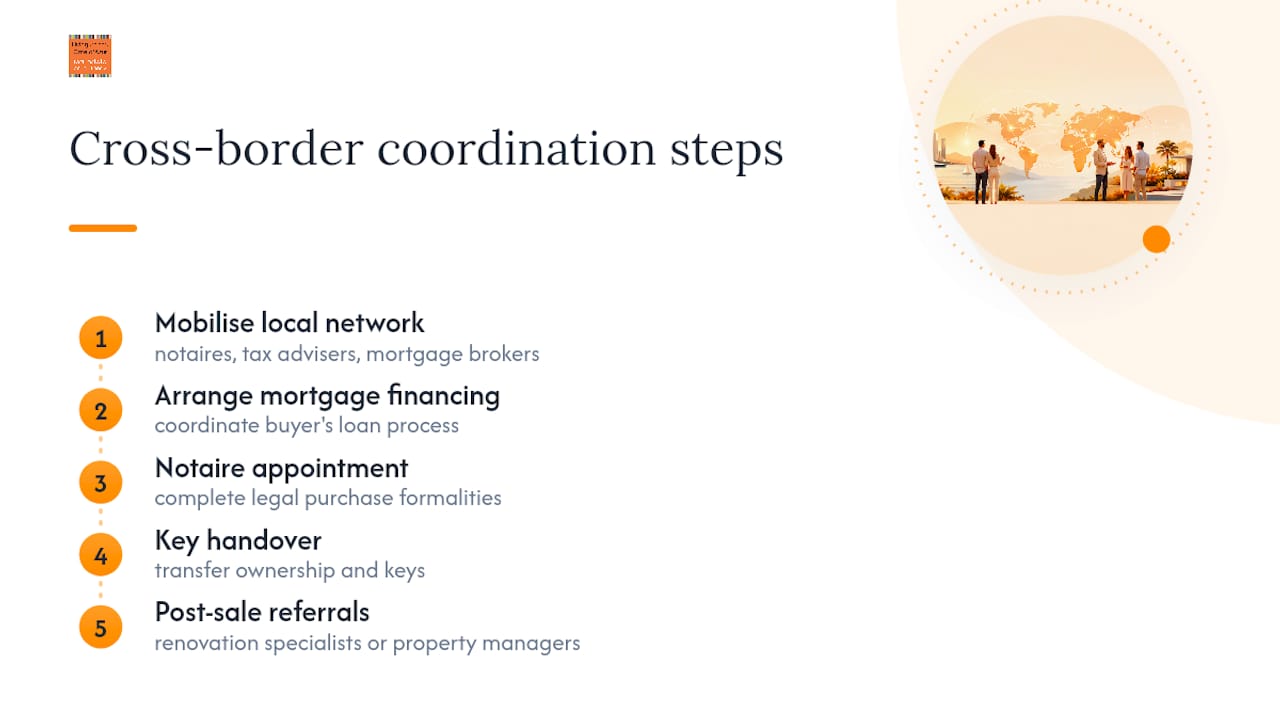
For international and second-home buyers, a local network spanning notaires, tax advisers, and mortgage brokers is often as valuable as market access itself, since cross-border purchases involve technical steps that a foreign buyer simply hasn’t encountered before. The right buyer’s agent coordinates all of it, from mortgage financing through to the notaire appointment, then hands you off to renovation specialists or property managers once the keys are yours.
Why transparency matters more than most buyers realise
I’ve come to think the biggest mistake in this business isn’t a bad negotiation. It’s an agent who never clarifies, in writing, whose interests they’re actually serving. Buyers rarely ask, and plenty of agents never volunteer it.
What matters to me is simple: understand what the client actually wants, be upfront about how fees work from the first conversation, and give buyers genuine access to the whole market rather than a curated slice of it. I once saw a buyer walk away from a property they loved because their agent quietly flagged a boundary dispute nobody else had mentioned. That’s what representation should look like. Not selling harder. Just standing on the right side of the table.
— Ab Kuijer
How we can help you find and secure the right property
Living On The Cote d’Azur works exclusively for buyers, never for sellers, which means there’s no split loyalty and no incentive to steer you toward a particular listing. We search the entire French Riviera market, including off-market opportunities that never reach public portals, through a network of local agents and developers covering everywhere from Nice to Saint-Tropez and Cap d’Antibes.

The process starts with a short introductory call to understand your brief, budget, and timeline. From there, we coordinate everything: sourcing, viewings, negotiation, and connections to trusted mortgage brokers, notaires, and tax advisers where cross-border complexity demands it. If you’re ready to start a focused search rather than scrolling listings alone, learn why working with a buyer’s agent changes the outcome and get in touch to scope your search.
Sources
- Using a real estate agent to buy a property — NSW Government
- Should you use a buyer’s agent? — U.S. News & World Report
- Realtor
FAQ
Does the buyer have to pay the estate agent?
Usually not directly. In most markets, the seller pays the commission, which is then split between the listing agent and the buyer’s agent, though some high-end or off-market deals use a buyer-paid retainer instead.
What is the biggest mistake a real estate agent can make?
Failing to disclose clearly whose interests they represent, especially in dual agency situations, is widely considered the most damaging error since it undermines the trust the entire relationship depends on.
What are estate agents obliged to tell you?
A buyer’s agent owes duties of reasonable care, undivided loyalty, confidentiality, and full disclosure, meaning they must share anything materially affecting your decision, including known property issues.
What do estate agents do when selling a house?
That’s the listing agent’s role: pricing the property, marketing it, arranging viewings, and negotiating on the seller’s behalf, which is the mirror image of what a buyer’s agent does for you.
What does a buyer’s agent do that a listing agent won’t?
A buyer’s agent negotiates purely in your interest, coordinates your due diligence, and can access off-market inventory, whereas a listing agent’s obligations run entirely to the seller.
Recommended
 //
//