
Many people dream of moving to the South of France, but there is a big difference between a two-week vacation and actually settling down here. If you are thinking about moving, you are likely looking for a way to trade a high-stress lifestyle for a bit of joie de vivre without losing the comforts of a modern city. Nice offers a solution to that problem by providing a major metropolitan infrastructure set against the backdrop of the Mediterranean Sea. This guide breaks down the truth about the city, helping you decide if the daily reality matches the dream.
Nice is often viewed as just a holiday spot, but for the people who live here, it is a functional city with deep historical roots. It was actually part of Italy until 1860, which gives it a unique Nissart culture that feels different from Paris or Lyon. You get the efficiency of French systems mixed with an Italian-style focus on family, food, and outdoor life. However, living here also means dealing with the same issues any popular global city faces, from rising costs to seasonal crowds.
Table of contents
- The Pros of Living in Nice: Why Expats Stay Forever
- The Cons of Living in Nice: Challenges to Consider
- The Financial Breakdown: Cost of Living in Nice
- Choosing Your District: Where to Live in Nice
- Practical Integration: Navigating Life as an Expat
- Living in Nice vs. Other Riviera Towns
- Final Verdict: Is Living in Nice Right for You?
The Pros of Living in Nice: Why Expats Stay Forever
Choosing to settle in the capital of the Alpes-Maritimes often starts with a desire for a higher quality of life, but the reasons people stay are far more practical. Nice offers a rare balance where the infrastructure of a major city meets the beauty of a coastal resort, making it an ideal choice for those who want modern conveniences without the grey skies of northern hubs.
The Microclimate and 300 Days of Sunshine
The weather is arguably the greatest health benefit of living in Nice. Protected by the surrounding hills, the city enjoys a Mediterranean microclimate that results in over 300 days of sunshine annually. This consistent light and warmth encourage an active, outdoor lifestyle, from morning swims in the Baie des Anges to evening walks along the Promenade des Anglais, even in the heart of winter.
Unbeatable Connectivity
Living in Nice puts you at a global crossroads. The Nice Côte d’Azur Airport (NCE) is the third busiest in France, offering direct links to major cities across Europe, North America, and the Middle East. Locally, the high-speed TGV network connects you to Paris in just under six hours, while the TER regional trains act as a seaside subway, making travel to nearby towns efficient and affordable.
A Cultural and Culinary Hub
The city is a feast for the senses. You have immediate access to world-class museums like the Musée Matisse and Musée Marc Chagall, which celebrate the artists who were famously inspired by the local light. The culinary scene is equally deep, defined by the Cuisine Nissarde label that protects authentic recipes like Socca and Pissaladière, ensuring that the food culture remains rooted in fresh, local produce.
The Gateway Location
Geography is a major pro here. You are less than 30 minutes from the border of Italy for weekend markets and only 20 minutes from the glitz of Monaco. Furthermore, the Southern Alps are only 90 minutes away, meaning you can literally ski in the morning and be back on the coast for a sunset aperitif by the sea.
Walkability and Public Transit
Nice has been transformed by its investment in public transport. The Ligne 1, 2, and 3 tramways have revolutionized how residents move. Ligne 2, in particular, provides a 26-minute direct link from the airport to Port Lympia, making a car entirely optional if you live in the city center. The flat coastal areas are highly walkable, reducing the daily stress of traffic and parking.
The Cons of Living in Nice: Challenges to Consider
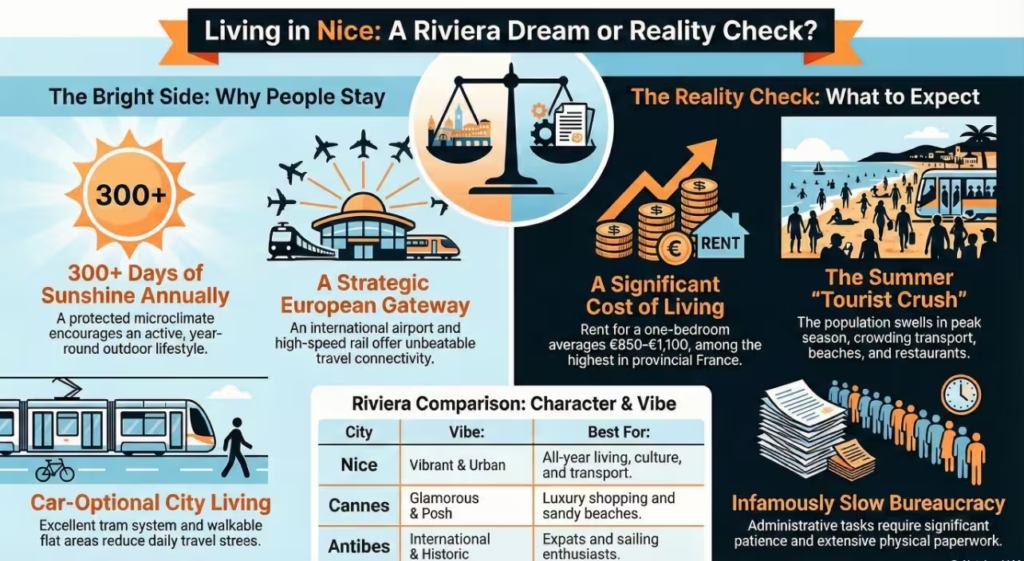
While the advantages are numerous, moving to Nice involves certain trade-offs that every expat should understand. The Mediterranean lifestyle comes with its own set of hurdles, ranging from financial pressures to the legendary pace of French administration.
The Cost of Living Premium
While Nice is significantly more affordable than Paris, with rents typically being 30% to 50% lower, it remains one of the most expensive cities in provincial France. Rent for a one-bedroom apartment in a normal area averages around €850 to €1,100, while groceries and dining out carry a Riviera tax due to the high demand for quality local ingredients and the influx of affluent seasonal visitors.
The Tourist Crush
During the peak summer months and the Nice Carnival in February, the city’s population swells. For a resident, this means crowded trams, fully booked restaurants, and a general loss of the quiet village feel that the Old Town has in the off-season. Managing your life around the cruise ship schedules and peak holiday weeks is a skill every local eventually learns.
Bureaucracy and La Lenteur
The French administrative system is famously slow. Dealing with the Prefecture for your Carte de Séjour (residency permit) can involve long wait times and a heavy requirement for physical paperwork. La Lenteur refers to the slower pace of life where things don’t always happen with the digital speed of the UK or US, requiring a significant amount of patience from new arrivals. For professionals and entrepreneurs, the France portal provides a streamlined tool to identify which residency permit, such as the ‘Talent Passport,’ best fits your career goals.
The Job Market
For non-French speakers, the job market is highly specialized. While there are opportunities in the tourism and yachting sectors, most professional roles require at least a B2 level of French. While the nearby tech hub of Sophia Antipolis offers roles for English-speaking engineers and developers, the local economy is still heavily reliant on hospitality, which can be seasonal.
Pebble Beaches vs. Sandy Shores
One of the biggest surprises for newcomers is the reality of the coastline. The beaches in Nice are made of large, smooth stones called galets. They are iconic and beautiful, but they aren’t the soft sand many imagine when they think of a beach. To find sand, you have to travel slightly east to Villefranche-sur-Mer or west toward Antibes, which can be a minor inconvenience for daily swimmers who prefer soft ground.
Summary of Pros and Cons
| The Good (Pros) | The Bad (Cons) |
| 300 Days of Sun: Incredible weather year-round. | Cost of Living: High rent and service charges. |
| Connectivity: An international airport and TGV trains. | Tourist Crowds: Summer months can feel packed. |
| Outdoor Lifestyle: Swimming, hiking, and skiing nearby. | Slow Bureaucracy: Paperwork takes a long time. |
| Healthcare: High-quality and affordable medical care. | Pebble Beaches: Not the soft sand some expect. |
A Helpful Partner for Your Move
If you are planning to make the leap, finding a place to live is your biggest hurdle. The local real estate market moves fast, and many of the best apartments never even make it to public websites. Living on the Côte d’Azur acts as a buyer’s agent, meaning they work for you, not the seller. They can help you find a home that fits your budget and handle the local negotiations that often trip up foreigners. Having an expert on your side makes the transition much smoother and helps you avoid the common mistakes of overpaying in the wrong neighborhood.
The Financial Breakdown: Cost of Living in Nice
Understanding the numbers is vital before signing a lease or a purchase agreement. While Nice is more affordable than London or New York, it remains a premium location within France. A single person can expect to spend around €1,200 to €1,500 per month (including rent) for a modest lifestyle, while a family of four will likely see expenses exceed €3,500. A significant part of your budget will go toward housing, as the demand for sea views and central locations keeps prices high. However, the quality of local produce at markets like Libération means you can eat exceptionally well for less than you would spend on processed foods in other countries.
Real Estate Deep Dive: Buying vs. Renting
The real estate market in Nice is divided into distinct zones that determine the price per square meter. In the Carré d’Or (Golden Square), you are paying for proximity to the high-end boutiques and the beach, with prices reflecting that prestige. If you are looking for more value, the Libération district has become popular for its local feel, massive open-air market, and direct tram access. Buying property in Nice is a solid long-term move, as the city continues to invest in green spaces and pedestrian zones, which typically lead to increased property values over time. Purchasing a home in a foreign country involves more than just picking a neighborhood. If you are thinking about buying real estate in the French Riviera, it is essential to understand the local tax implications and the legal role of the French notary before making an offer.
Healthcare for Expats: Accessing the System
France is famous for having one of the best healthcare systems in the world, and Nice is home to excellent facilities like the Pasteur Hospital. Once you have lived in France for three months, you can apply for the PUMA (Protection Universelle Maladie), which grants you a Carte Vitale. This card allows the government to reimburse a large portion of your medical costs, from doctor visits to prescription medications. While the system involves some initial paperwork, the peace of mind that comes from knowing you won’t face massive hospital bills is a huge pro for those moving from the United States or other countries with high medical costs.
| Expense Category | Estimated Monthly Cost (Individual) | Notes |
| Rent (1 Bedroom) | €850 – €1,200 | Varies by proximity to the sea. |
| Utilities | €120 – €180 | Includes electricity, water, and fiber internet. |
| Groceries | €300 – €450 | Cheaper if you shop at local markets. |
| Transport | €45 | Monthly pass for unlimited tram and bus. |
| Health Insurance | €30 – €60 | Mutuelle (top-up) insurance cost. |
Choosing Your District: Where to Live in Nice
Every neighborhood in Nice has a different personality, and picking the wrong one can change your entire experience of the city. Vieux Nice is beautiful and full of history, but it is also noisy, crowded, and the apartments are often old with no elevators. For a quieter, more upscale life, Cimiez is the preferred choice for families and retirees due to its large parks, museums, and grand apartment buildings. For families relocating from the US or UK, proximity to high-quality education is often the deciding factor in where to live. Many expats choose districts with easy access to the various international schools on the French Riviera, which offer IB and Cambridge curriculums in English. If you want a mix of trendy bars and a working-class spirit, Le Port (often called the Petit Marais) is perfect for younger professionals who want to be near the water but away from the main tourist strip of the Promenade.
- Fabron & Lanterne: These western hills offer modern residences often with swimming pools and balconies that look out over the Baie des Anges.
- Mont Boron: This is the most exclusive area, located on the cliffside between Nice and Villefranche. It features luxury villas and some of the best views in Europe.
- Musiciens: Named after famous composers, this district features wide streets and beautiful Bourgeois-style buildings, offering a very classic French living experience.
Navigating the Market with Confidence
The challenge for many newcomers is that the French property market operates differently than what they are used to. You may find that many agents do not return calls or that the best properties disappear in a single day. This is why having a dedicated buyer’s agent is so important. Living on the Côte d’Azur doesn’t just show you what is on the market; they search through private listings and network with local owners to find homes that match your exact needs. They handle the due diligence on the building’s health and ensure that the price you pay is fair, saving you time and money during the search for your Mediterranean base.
Practical Integration: Navigating Life as an Expat
Once the boxes are unpacked, the real work of integration begins. One of the most common questions for those moving to the South of France is about the language barrier. While you can get by with English in tourist shops and high-end restaurants, you will need at least a basic level of French to handle daily tasks like talking to a plumber, visiting the doctor, or understanding your utility bills. Making an effort to speak the language is seen as a sign of respect and is the fastest way to turn neighbors into friends. Nice has a very active expat community, with groups like AVF (Accueil des Villes de Français) and various international meetups that help newcomers find their footing and build a social circle.
Safety and Security: A Realistic Look at Nice
Nice is generally a safe city, especially when compared to major metropolitan areas in North America or Northern Europe. Violent crime is rare, and the city has invested heavily in an extensive network of CCTV cameras and a visible police presence. However, like any city that hosts millions of tourists, petty crimes such as pickpocketing and bag snatching can happen in crowded areas like the Cours Saleya or on the tram. While historic apartments in the city center have charm, they often come with high maintenance costs. To save on notary fees and enjoy modern energy standards, many investors prefer to buy new construction on the French Riviera, especially in the developing hillsides of western Nice. Residents are usually aware of quartiers à éviter (neighborhoods to avoid) late at night, such as certain pockets near the main train station or far-western suburbs like L’Ariane, but for the most part, you can walk through the center of town at night with peace of mind.
Living in Nice vs. Other Riviera Towns
Many people struggle to decide if they should live in Nice or one of the smaller surrounding towns. Nice offers a real city feel with year-round activity, which is a major pro if you don’t want the town to shut down in the winter. In contrast, Cannes offers more glitz and sandy beaches but can feel a bit empty outside of festival season. Antibes is very popular with English speakers due to the yachting industry, providing a smaller, more intimate community feel. If you prefer a much slower pace, Menton is quiet and warm but lacks the vibrant nightlife and shopping found in Nice. Nice remains the strategic choice for those who want the best balance of work, travel, and play.
| City | Vibe | Best For |
| Nice | Vibrant & Urban | All-year living, culture, and transport. |
| Cannes | Glamorous & Posh | Luxury shopping and sandy beaches. |
| Antibes | International & Historic | Expats and sailing enthusiasts. |
| Menton | Peaceful & Floral | Retirees and those seeking quiet. |
Final Verdict: Is Living in Nice Right for You?
The Pearl of the Riviera is an ideal home for a specific type of person. If you value sunshine, proximity to the sea, and a culture that prioritizes family and food over a 60-hour work week, you will likely thrive here. It is perfect for digital nomads who need good internet and an airport, or retirees who want a walkable city with high-quality healthcare. However, if you are looking for a fast-paced corporate ladder or a low-cost bargain destination, the high prices and slow administrative pace might become a source of frustration. Living in Nice is a trade-off: you pay more and wait longer for things to get done, but in exchange, you get one of the highest qualities of life in Europe.
The Trial Run Strategy
Before committing to a property purchase, it is highly recommended to rent for at least six months, ideally through the winter. This allows you to see the city when the tourists are gone and the Nissart spirit is most visible. It also gives you time to walk the different streets at night to see which neighborhood truly feels like home. During this time, you can get a better sense of things like noise levels, sun exposure, and local traffic patterns. This period is the perfect time to build a relationship with a local expert who can keep an eye out for the perfect permanent residence for you.
Taking the Next Step Toward Your Riviera Life
Making the move to the South of France is a big decision, and you shouldn’t have to do it alone. The difference between a stressful move and a successful one often comes down to the quality of your local contacts. Living on the Côte d’Azur is here to ensure you find a home that matches your dream without the common pitfalls of the French market. We offer a deep understanding of the pros and cons of every street in Nice, helping you find a property that represents a sound investment and a perfect lifestyle fit.
 //
//