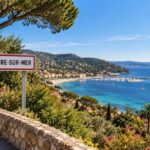
Solar panels can be an excellent investment for a property on the French Riviera.
With abundant sunshine, high summer electricity consumption from swimming pools and air conditioning, and the growing use of electric vehicles and heat pumps, many villas on the Côte d’Azur are particularly well suited to producing their own electricity.
But there is a problem.
The rapid growth of solar energy has attracted many companies that are better at selling solar panels than designing, installing, and maintaining photovoltaic systems.
As a property owner, it can be surprisingly difficult to tell the difference between a genuine solar specialist and a sophisticated sales organization.
And once panels have been installed on your roof, correcting a poor design or installation can be expensive.
At Living on the Côte d’Azur, we believe in working with specialists whose expertise is their core business. It is the same principle we apply when introducing our clients to notaries, architects, builders, mortgage specialists, and other professionals in the South of France.
So before signing a photovoltaic quotation in France, ask these 12 questions.
1. How did you calculate the size of my solar installation?
This should be your first question.
If the answer is essentially:
“This is how many panels fit on your roof”
— be careful.
A good photovoltaic installation is not designed around the maximum number of panels a salesperson can sell you.
It should be designed around your actual electricity consumption.
The installer should ideally review your annual electricity consumption in kWh and understand when you use electricity.
For a villa on the Côte d’Azur, this can be particularly important because electricity consumption may include:
- swimming pool filtration;
- air conditioning;
- heat pumps;
- electric water heating;
- electric vehicles;
- pool heating;
- guest accommodation;
- summer kitchens;
- irrigation and garden equipment.
A second home can have a completely different consumption pattern from a permanently occupied villa.
The right question is not “How many panels can I install?”
It is:
“How much solar electricity can my property use efficiently?”
2. How many kWh will the system actually produce per year?
Never evaluate a photovoltaic quotation based only on the number of panels or installed capacity in kWp.
Ask for the estimated annual electricity production in kWh.
On the Côte d’Azur, solar conditions are among the most favorable in France. Depending on the exact location, orientation, inclination, shading and equipment, a well-positioned photovoltaic installation can potentially generate approximately 1,600–1,750 kWh per installed kWp per year.
But this is not a guarantee.
Your installer should provide a production simulation specifically for your property.
Ask to see the assumptions behind the calculation.
3. Has shading been included in the calculation?
This is easily overlooked.
The Côte d’Azur has plenty of sunshine, but many villas also have beautiful mature gardens.
Pine trees, palm trees, neighboring buildings, chimneys and architectural elements can create shade at different times of the day.
Even partial shading can influence production.
A professional solar study should therefore consider the actual roof environment rather than simply calculating theoretical production based on your postcode.
Ask:
“Does your production estimate include the actual shading of my roof?”
4. What percentage of the electricity will I consume myself?
This may be one of the most important numbers in the entire quotation.
Producing electricity is one thing.
Using it efficiently is another.
Suppose your solar panels produce a large amount of electricity at 1 p.m., but nobody is home and very little electricity is being consumed.
That surplus has a different economic value from electricity you consume directly.
Fortunately, many Côte d’Azur villas have an advantage.
Swimming pool pumps, air conditioning and other equipment often consume electricity during daylight hours — precisely when solar panels are producing electricity.
A good solar proposal should therefore estimate your self-consumption rate, not just total production.
5. Should I have a physical battery, virtual battery or no battery?
Be suspicious of anyone who gives the same answer to every property owner.
There are several possibilities.
Physical battery
A physical home battery stores excess electricity generated during the day so you can use it later.
That sounds attractive, but batteries add substantially to the investment.
The financial benefit therefore needs to be calculated.
Virtual battery
A virtual battery works differently.
Instead of storing surplus electricity physically inside your property, excess electricity is injected into the grid and accounted for digitally under the conditions of the relevant energy provider.
This can be interesting for certain consumption profiles.
No battery
Sometimes the best economic solution is simply to maximize direct self-consumption without purchasing battery capacity.
There is no universally correct answer.
Ask the installer to calculate the different scenarios rather than simply selling you the most expensive one.
6. Which exact solar panels, inverter or micro-inverters are included?
Your quotation should not simply say:
“Premium photovoltaic panels.”
You need to know what you are buying.
Ask for the exact:
- manufacturer;
- model;
- panel capacity;
- inverter or micro-inverter manufacturer and model;
- monitoring equipment;
- mounting system;
- battery manufacturer and capacity, if applicable.
Why?
Because guarantees, reliability, efficiency, replacement availability and manufacturer support vary considerably.
It also allows you to compare quotations properly.
Two 6 kWp solar installations are not necessarily the same product.
7. Who will actually install the panels on my roof?
This question can reveal a lot.
The company selling the system may not necessarily be the company installing it.
Ask directly:
“Will your own technical team perform the installation, or will it be subcontracted?”
Subcontracting is not automatically a problem.
But you should know who is responsible for the work and who you contact if there is an issue afterward.
For us, this is particularly important.
Solar should be the installer’s core technical expertise — not simply another product added to a sales catalogue.
8. What qualifications, insurance and guarantees do you have?
Before letting anyone modify your roof and electrical installation, verify the professional credentials behind the work.
Ask about:
- relevant professional qualifications;
- appropriate photovoltaic certification;
- professional liability insurance;
- décennale insurance where applicable;
- panel product warranties;
- panel performance warranties;
- inverter or micro-inverter warranties;
- workmanship guarantees.
Do not just accept the words “fully guaranteed”.
Ask:
Guaranteed by whom, for what, and for how long?
9. Who handles the French administration?
Installing photovoltaic panels in France involves more than attaching equipment to a roof.
Depending on the installation and property, administrative procedures may be required involving planning authorities, grid connection and electricity contracts.
Certain properties may face additional restrictions, particularly in protected areas or near historic buildings.
This matters on the Côte d’Azur, where many properties sit in architecturally sensitive locations.
Ask your installer:
“Which administrative procedures are included in your quotation, and which ones remain my responsibility?”
A professional installation should have a clearly defined administrative process.
10. How have you calculated my financial savings?
This is where impressive sales presentations deserve careful scrutiny.
A salesperson can make almost any investment look attractive by changing assumptions.
For example:
- future electricity prices;
- annual electricity price increases;
- panel degradation;
- maintenance costs;
- self-consumption percentage;
- battery efficiency;
- resale value of surplus electricity.
Ask to see the assumptions.
If someone promises spectacular savings over 20 or 25 years, ask:
“What electricity price increases have you assumed to arrive at this number?”
A conservative calculation is usually more valuable than an optimistic sales projection.
11. What happens if something stops working in five years?
Solar panels are a long-term investment.
The sales presentation might take one hour.
The installation might take a few days.
But the system should operate for decades.
So ask:
Who do I call if something goes wrong?
And:
Who monitors whether the system is still producing correctly?
Modern photovoltaic installations generally offer monitoring that allows you to see production through an app or online platform.
This is useful not only because it is interesting to watch.
It also helps identify problems.
If production suddenly drops significantly, you want to know.
For international property owners and second-home owners, remote monitoring is particularly valuable.
12. Can I compare your calculation with an independent second opinion?
A reputable professional should have no problem with this.
Solar installations involve significant amounts of money and will potentially remain on your property for decades.
Getting a second opinion is therefore entirely reasonable.
Compare more than the final price.
Compare:
installed capacity
estimated annual production
self-consumption
surplus production
equipment brands
battery strategy
guarantees
administration
monitoring
total investment.
A cheaper quotation is not necessarily better.
But neither is necessarily better.
The important question is:
Which proposal makes the most sense for your property?
Already have a solar quotation? Let us check it.
Perhaps you have already spoken to a solar company.
Maybe you have received a beautiful presentation showing impressive electricity savings.
And perhaps you are wondering:
Is this really a good proposal?
Send us the quotation.
Through the Living on the Côte d’Azur professional network, we can have the proposed installation reviewed and compare it with a solution from a specialized local photovoltaic team whose core business is solar energy.
We can look at:
- whether the proposed capacity makes sense;
- whether expected production appears realistic;
- whether the equipment is appropriate;
- whether a battery is justified;
- whether the self-consumption calculation makes sense;
- whether important elements appear to be missing.
Five warning signs when choosing a solar company in France
You don’t need to be a photovoltaic engineer to spot potential warning signs.
Be particularly careful when:
1. You are pressured to sign immediately.
A good technical proposal should stand up to a few days of consideration.
2. Nobody asks for your electricity consumption.
Without understanding your consumption, it is difficult to design an optimized system.
3. The equipment isn’t clearly identified.
“High-performance panels” is not a technical specification.
4. The savings look almost too good to be true.
Ask which assumptions were used.
5. The company talks mostly about financing and tax advantages rather than electricity production.
A solar investment should always be based on the installation’s technical and economic performance.
Why the Côte d’Azur is particularly interesting for solar energy
There is another reason we believe photovoltaic energy deserves serious consideration for properties in the South of France.
The typical consumption pattern of a Riviera villa can match solar production remarkably well.
Think about a summer day in July.
The sun is shining.
The swimming pool filtration system is running.
The air conditioning is cooling the house.
Guests are using appliances.
Perhaps an electric vehicle is charging.
At exactly the same time, the solar panels are producing at or near their highest levels.
That creates the possibility of consuming a significant amount of the electricity directly where it is produced.
For a property owner, that is where solar becomes particularly interesting.
Solar panels for second homes on the French Riviera
If your property is a holiday home, tell the installer.
Don’t let them calculate the installation as if your villa were occupied by the same family 365 days a year.
A good analysis should consider:
- which months you occupy the property;
- swimming pool consumption when you are absent;
- air conditioning usage;
- heat pump usage;
- remote systems;
- electric vehicle charging;
- whether the property is rented when you are away.
For many of our international clients, this makes the calculation quite different from that of a standard French household.
The Living on the Côte d’Azur philosophy
Buying and owning property in another country means relying on local professionals.
Over the years, we have built a network around one simple principle:
We prefer specialists who are very good at one thing.
We apply that philosophy to real estate, legal advice, finance, construction, renovation and property services.
We apply the same principle to solar energy.
We are not interested in becoming solar panel installers ourselves.
Our role is different.
We help our property owners reach the right people.
Professionals who understand the region.
Professionals who understand the technology.
And professionals who still intend to answer the phone after your panels are installed.
Considering solar panels for your property on the Côte d’Azur?
Whether your villa is in Nice, Cannes, Antibes, Mougins, Valbonne, Biot, Cagnes-sur-Mer, Saint-Paul-de-Vence, Vence, Grasse, Mandelieu-la-Napoule, or elsewhere on the French Riviera, start with a proper analysis. Find your suncurve on the Côte d’Azur with this handy tool.
If you already have a quotation, send it to us for a second opinion.
If you haven’t requested a quotation yet, we can arrange an initial solar assessment through our professional network.
For an initial assessment, ideally send us:
- Your property location
- A recent electricity bill or annual kWh consumption
- A photograph of the roof
- Whether the property has a swimming pool
- Whether you have a heat pump
- Whether you own or plan to buy an electric vehicle
- Whether the property is a primary or second home
Don’t start by buying solar panels.
Start by understanding what your property actually needs.
[REQUEST A SOLAR ASSESSMENT]
Living on the Côte d’Azur — one trusted network for buying, owning and improving property in the South of France.
More info about solar panels
"*" indicates required fields
 //
//