
High-net-worth property investors often assume that disputes over luxury estates inevitably lead to protracted court battles, draining resources and exposing private affairs. This misconception overlooks arbitration as a private dispute resolution mechanism that offers confidentiality and efficiency compared to courts. In 2026, as global elites acquire Riviera villas commanding €2M+ premiums and cross-border transactions multiply, understanding arbitration becomes essential. This guide clarifies what real estate arbitration entails, how it protects your investment, and why it suits luxury property portfolios spanning Antibes, Monaco, and beyond.
Table of Contents
- Understanding Real Estate Arbitration And Its Benefits
- Common Arbitration Scenarios In Luxury Real Estate Transactions
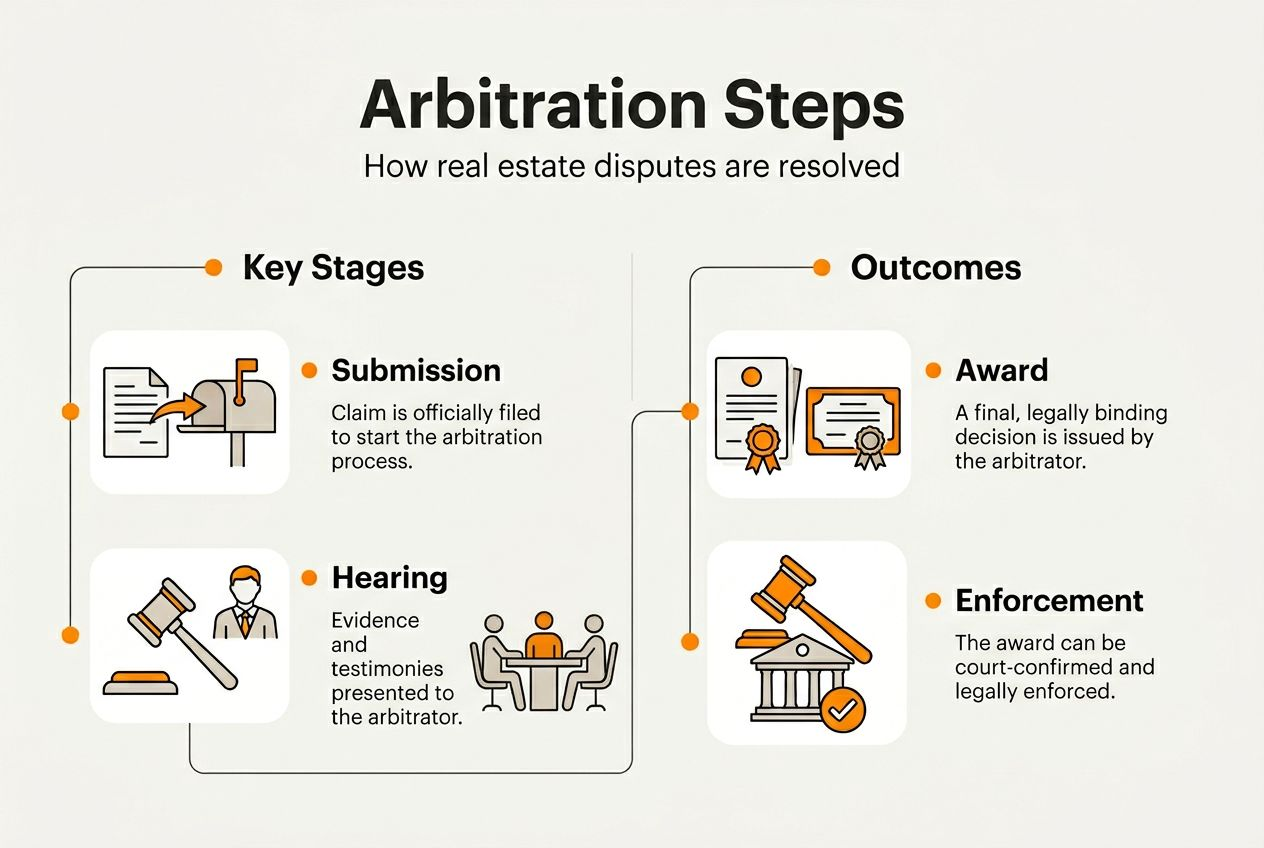
- The Arbitration Process Step-By-Step In Real Estate Disputes
- Legal And Strategic Considerations For High-Net-Worth Property Investors
- Explore Luxury Real Estate Opportunities With Expert Guidance
- Frequently Asked Questions About Real Estate Arbitration
Key takeaways
| Point | Details |
|---|---|
| Definition and purpose | Arbitration is a binding, private alternative to court litigation for resolving property disputes efficiently. |
| Speed and confidentiality | Proceedings typically conclude within months, shielding sensitive transaction details from public scrutiny. |
| Common applications | Purchase agreement breaches, valuation disputes, and boundary conflicts in high-value estates. |
| Enforceable outcomes | Awards are internationally binding under conventions, ensuring cross-border compliance. |
| Strategic drafting | Clear arbitration clauses prevent jurisdictional disputes and streamline resolution processes. |
Understanding real estate arbitration and its benefits
Arbitration is a structured dispute resolution process where parties submit conflicts to a neutral arbitrator rather than pursuing litigation. Unlike court proceedings that unfold in public, arbitration hearings remain private, preserving the discretion high-net-worth families demand. The arbitrator, often a specialist in international property law, reviews evidence, hears arguments, and delivers a binding decision enforceable across jurisdictions.
Why does this matter for luxury real estate? Consider a Monaco-adjacent villa purchase where the seller disputes the buyer’s claim of structural defects. Court litigation might stretch over years, exposing valuation details and personal finances. Arbitration resolves the matter in months, with proceedings conducted behind closed doors. For digital millionaires managing portfolios across the Riviera, Dubai, and Bali, this efficiency protects both capital and reputation.
Key advantages include:
- Cost control: Streamlined procedures reduce legal fees compared to multi-year court battles.
- Expert arbitrators: Panels specialising in luxury property understand nuances like heritage restrictions in Èze or Monaco’s unique leasehold structures.
- Finality: Awards are binding with limited appeal grounds, preventing endless litigation cycles.
- Flexibility: Parties choose arbitration rules, language, and venue, tailoring the process to complex international deals.
In 2026, as sustainable builds with solar arrays and green certifications dominate Riviera demand, arbitration also addresses emerging disputes over eco-performance guarantees. When a Sainte-Maxime beachside apartment fails to meet promised energy ratings, arbitration delivers faster remedies than traditional courts.
Pro Tip: When acquiring real estate investment opportunities on the Côte d’Azur, insist on arbitration clauses drafted by specialists familiar with both French property law and international conventions to ensure enforceability.
Common arbitration scenarios in luxury real estate transactions
Luxury property deals involve intricate agreements where disputes can derail legacy investments. Arbitration addresses several recurring conflict types that high-net-worth investors encounter when building Riviera portfolios.
Purchase agreement breaches top the list. Imagine a buyer commits to a Cap d’Antibes estate, then market conditions shift and they attempt withdrawal. The seller seeks damages for lost opportunity costs and holding expenses. Arbitration clauses embedded in the purchase contract activate immediately, bypassing French court backlogs. The arbitrator evaluates contract terms, market data, and good faith efforts, delivering a decision within six months.

Valuation disagreements arise frequently in cross-border transactions. A family office acquires a Provençal mas for legacy purposes, but the appraised value differs significantly from the agreed price due to heritage restrictions. Private real estate sales often include arbitration provisions to resolve such conflicts without jeopardising the transaction timeline or confidentiality.
Boundary and easement disputes plague properties with coastal access or shared amenities. A Menton villa owner discovers the neighbour’s renovation encroaches on their sea-view corridor. Rather than litigating publicly, arbitration delivers a tailored remedy, perhaps financial compensation or access modifications, preserving neighbourhood relationships crucial in tight-knit Riviera communities.
| Dispute type | Typical duration | Primary issues |
|---|---|---|
| Purchase breach | 4 to 8 months | Deposit forfeiture, damages, specific performance |
| Valuation conflict | 3 to 6 months | Appraisal methodology, market comparables, heritage impact |
| Boundary dispute | 5 to 9 months | Survey accuracy, easement rights, encroachment remedies |
| Construction defect | 6 to 12 months | Warranty claims, quality standards, completion delays |
Construction defects in new builds also trigger arbitration. Nice’s Mont Boron towers promise biophilic design and ten-year warranties, yet a buyer identifies structural issues post-completion. The VEFA contract’s arbitration clause ensures the developer addresses defects without public litigation that could damage both parties’ reputations.
Pro Tip: Review the property acquisition guide to understand how arbitration clauses integrate with due diligence, ensuring your legal framework anticipates disputes before they arise.
The arbitration process step-by-step in real estate disputes
Navigating arbitration requires understanding its sequential stages, each designed to deliver faster, more confidential outcomes than court litigation.
Filing the claim: The aggrieved party submits a notice of arbitration to the chosen institution, outlining the dispute, relief sought, and relevant contract clauses. For Riviera transactions, institutions like the International Chamber of Commerce or Swiss Chambers’ Arbitration Institution are common.
Arbitrator selection: Parties agree on a sole arbitrator or a three-member panel. In luxury property cases, selecting arbitrators with expertise in French real estate law and international transactions ensures informed decision-making. If parties cannot agree, the institution appoints arbitrators per its rules.
Preliminary hearing: The arbitrator establishes procedural timelines, evidence exchange protocols, and hearing dates. This stage sets expectations, often compressing what courts might take months to schedule into weeks.
Evidence and submissions: Both sides present documentation, expert reports on property valuations or structural integrity, and witness statements. Unlike court discovery, arbitration limits evidence scope, reducing costs and time.
Hearing: Parties argue their cases before the arbitrator, who questions witnesses and experts. Hearings are private, conducted in the agreed language, often English or French for Riviera deals.
Award delivery: The arbitrator issues a written decision, typically within weeks of the hearing. The award details findings, legal reasoning, and remedies, binding both parties.
| Factor | Arbitration | Court litigation |
|---|---|---|
| Average timeframe | 6 to 12 months | 18 to 36 months |
| Cost range | Moderate to high | High to very high |
| Privacy | Confidential proceedings | Public hearings and records |
| Arbitrator expertise | Specialists in property law | Generalist judges |
| Appeal options | Very limited | Extensive |
Arbitration timelines are typically shorter than court litigation, often concluding within months, which is critical when acquiring properties appreciating 5 to 8% annually. Delays in resolving disputes can erode investment returns and complicate portfolio rebalancing.
Enforcement is streamlined under the New York Convention, ratified by over 160 countries. An arbitration award against a seller in Saint-Tropez is enforceable in Dubai or Mauritius, ensuring global investors can protect their interests across jurisdictions. This universality makes arbitration indispensable for family offices managing international legacy portfolios.
Pro Tip: Explore the property investment process in France to see how arbitration integrates with legacy wealth strategies, ensuring disputes do not derail multi-generational estate planning.
Legal and strategic considerations for high-net-worth property investors
Successful arbitration hinges on strategic planning during contract negotiation, not reactive engagement when disputes erupt. High-net-worth investors must address several legal nuances to maximise arbitration’s benefits.
Choice of law and venue: Arbitration clauses should specify governing law and arbitration seat. For a Cannes villa purchase, French substantive law might govern property rights, whilst the arbitration seat could be Geneva for neutrality. Misalignment creates enforcement risks, especially if the award contradicts local property regulations.
Institutional versus ad hoc arbitration: Institutional arbitration through bodies like ICC provides administrative support and vetted arbitrator lists, ideal for complex luxury deals. Ad hoc arbitration offers flexibility but requires parties to manage logistics, suitable only when both sides have sophisticated legal teams.
Confidentiality provisions: Whilst arbitration is inherently private, explicit confidentiality clauses prevent parties from disclosing proceedings or awards. For family offices protecting legacy reputations, this shields sensitive financial details from competitors or media.
Costs and fee structures: Arbitration involves institution fees, arbitrator compensation, and legal costs. Clauses can allocate costs to the losing party, incentivising good faith negotiation. Transparency about fee structures prevents disputes over arbitration expenses themselves.
Key drafting elements include:
- Scope definition: Clearly delineate which disputes fall under arbitration to avoid jurisdictional challenges.
- Arbitrator qualifications: Specify expertise requirements, such as experience in French Riviera property law or sustainable construction standards.
- Emergency relief: Include provisions for interim measures, allowing parties to seek urgent remedies like property freezes pending final award.
- Language and procedure: Designate the arbitration language and procedural rules to prevent delays from translation or procedural ambiguity.
“Drafting clear arbitration agreements is essential to avoid jurisdictional disputes and ensure enforceable awards. In luxury real estate, where transactions span multiple legal systems, bespoke arbitration clauses tailored to the property’s location and the parties’ jurisdictions are non-negotiable for protecting investments.”
Risks of weak arbitration provisions include unenforceable awards, parallel court proceedings, and protracted jurisdictional battles. A poorly drafted clause in a Monaco-adjacent property contract might leave parties litigating in both French courts and arbitration, doubling costs and time.
Strategic benefits extend beyond dispute resolution. Arbitration clauses signal professionalism and commitment to fair dealing, reassuring sellers and co-investors. For digital millionaires acquiring Riviera estates as legacy plays, demonstrating sophisticated legal frameworks attracts premium opportunities and financing partners.
Pro Tip: Consult specialists familiar with private real estate sales on the Riviera to tailor arbitration clauses that reflect both international best practices and local property customs, ensuring seamless dispute resolution.
Explore luxury real estate opportunities with expert guidance
Understanding arbitration empowers you to navigate luxury property transactions with confidence, knowing disputes can be resolved efficiently and discreetly. Living on the Côte d’Azur connects high-net-worth visionaries with premier Riviera estates, from Cap d’Antibes sanctuaries to Sainte-Maxime beachside apartments, all supported by legal frameworks designed for legacy investments. Our advisors specialise in luxury property acquisition on the Riviera, ensuring your contracts include robust arbitration provisions. Explore our property acquisition guide for insights on due diligence, or contact us to discuss bespoke strategies for your portfolio.
Frequently asked questions about real estate arbitration
What types of disputes are best suited for arbitration in luxury property deals?
Arbitration excels for purchase agreement breaches, valuation conflicts, boundary disputes, and construction defects where confidentiality and speed matter. Complex international transactions involving multiple jurisdictions particularly benefit from arbitration’s streamlined procedures and expert arbitrators.
Can arbitration be used for cross-border real estate disputes?
Yes, arbitration is ideal for cross-border disputes. Awards are enforceable internationally under the New York Convention, ratified by over 160 countries. This ensures a decision regarding a Riviera villa is binding in Dubai, Mauritius, or any other signatory jurisdiction, providing global investors with reliable recourse.
How long does real estate arbitration typically take?
Real estate arbitration generally concludes within six to twelve months, significantly faster than court litigation which can extend 18 to 36 months. The exact duration depends on case complexity, evidence volume, and arbitrator availability, but institutional rules impose strict timelines to prevent delays.
Is the arbitration decision binding and enforceable internationally?
Arbitration awards are binding with very limited appeal grounds, ensuring finality. Under the New York Convention, awards are enforceable across signatory countries, making them more reliable than court judgements which may face recognition challenges in foreign jurisdictions. This enforceability is crucial for luxury portfolios spanning multiple countries.
What should investors look for when drafting arbitration clauses?
Investors should specify governing law, arbitration seat, institutional rules, arbitrator qualifications, language, and cost allocation. Clauses must clearly define dispute scope and include provisions for emergency relief. Engaging legal specialists familiar with both local property law and international arbitration ensures clauses are enforceable and tailored to the transaction’s unique characteristics.
Recommended
- Elite Guide to Off-Market Real Estate: Secure Riviera Gems – Living on the Côte d’Azur
- Property acquisition guide – Living on the Côte d’Azur
- Complete Guide to Investing in Ibiza Wellness Real Estate
- Private Real Estate Sales – Creating Lasting Riviera Legacies
- Real Estate Storytelling | Listing Marketing | Austin Real Estate
 //
//