
TL;DR:
- Curating a real estate portfolio involves strategically selecting and managing assets to maximize returns and reduce risks. Diversification across asset classes, geographies, and strategies protects portfolios from economic shocks and improves risk-adjusted performance. Active management and centralised data support better decision-making and long-term wealth growth.
Curating a real estate portfolio is defined as the deliberate, strategic process of selecting, managing, and rebalancing a diverse collection of properties to maximise risk-adjusted returns, reduce concentration risk, and build lasting generational wealth. This is distinct from simply accumulating properties. The industry term for this discipline is real estate portfolio management, and it draws on the same governance principles used by institutional investors managing billions in assets. Incorporating real estate alongside traditional assets improves the Sharpe ratio from 0.55 to 0.75, a meaningful uplift in risk-adjusted performance. For high-net-worth investors, understanding why curate a real estate portfolio matters is the foundation of every sound wealth strategy.
Why curate a real estate portfolio: the case for diversification
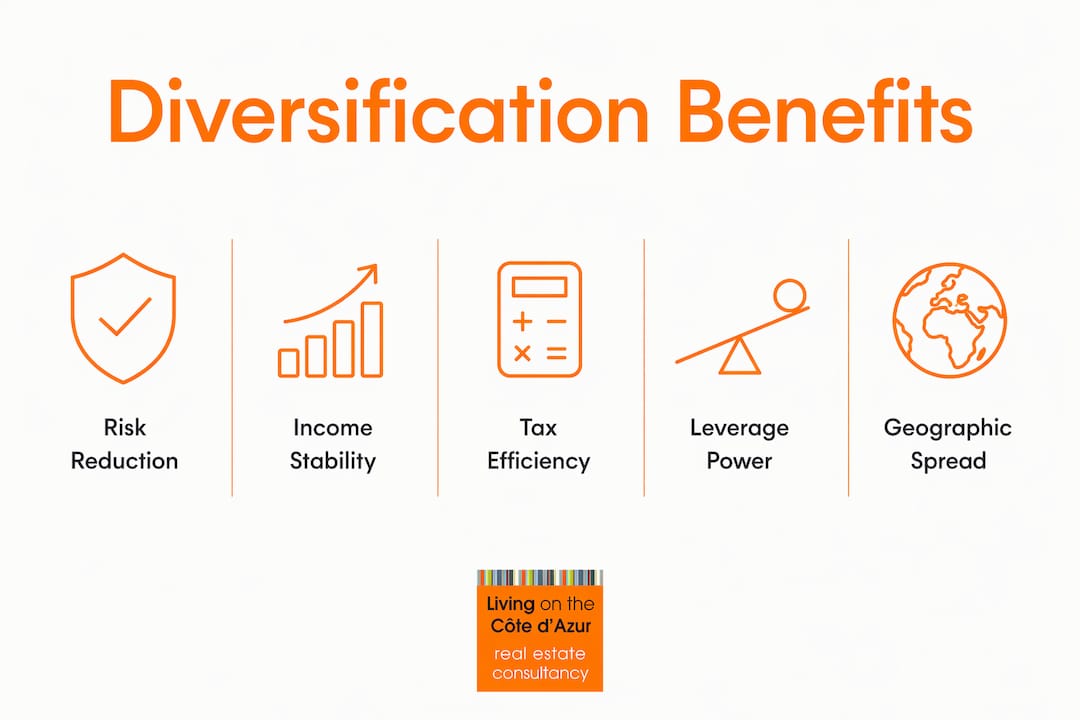
Diversification is the single most powerful tool in real estate portfolio management. It acts, as one expert framing puts it, as insurance without premiums, protecting the portfolio when one sector or geography suffers a downturn. The goal is not to eliminate risk entirely. The goal is to prevent any single economic shock from devastating the whole.
Diversification by asset class
Real estate spans multiple asset classes, each with a distinct risk-return profile. Multifamily residential properties deliver consistent rental income and low vacancy sensitivity. Industrial assets, including logistics warehouses, have benefited from structural demand shifts in e-commerce. Retail and office carry higher cyclical risk, while hospitality assets offer growth potential tied to tourism cycles. Blending these classes within a single portfolio means that weakness in one sector is cushioned by strength in another.
Diversification by geography
Geographic concentration exposes a portfolio to dangerous correlated risks. When a single employer leaves a regional economy, or when a local government changes zoning policy, every property in that market suffers simultaneously. Spreading assets across cities, countries, or even continents breaks this correlation. A villa on the Côte d’Azur, a commercial unit in a Northern European city, and a residential asset in an emerging Mediterranean market behave very differently in the same macro environment.
Diversification by investment strategy
Portfolio managers typically blend three strategy types: core, value-add, and opportunistic. Core assets are stabilised, income-generating properties with low risk. Value-add assets require active improvement to unlock higher rents or capital gains. Opportunistic assets carry the highest risk but offer the greatest upside. A well-curated portfolio holds all three in proportions that reflect the investor’s income needs and growth objectives.
| Diversification type | Risk it mitigates | Primary benefit |
|---|---|---|
| Asset class | Sector-specific downturns | Income stability across cycles |
| Geographic | Local economic shocks | Reduced correlation between assets |
| Investment strategy | Timing and execution risk | Balanced income and capital growth |
Pro Tip: When building geographic diversification, prioritise markets where you have genuine local intelligence or a trusted advisory partner. Diversification without local knowledge simply redistributes risk rather than reducing it.
What does active portfolio management actually deliver?
Portfolio management governs entire asset health through acquisitions, financing, and performance benchmarking. This is a strategic function, entirely distinct from day-to-day property management tasks such as tenant relations or maintenance scheduling. Confusing the two is one of the most common and costly errors investors make.

Active portfolio management operates at a higher level. It involves deciding which assets to acquire, when to refinance, how to benchmark performance against market indices, and when to exit a position. These decisions compound over time. A portfolio managed with discipline over a decade will outperform a passively held collection of properties by a significant margin, not because of luck, but because of systematic decision-making.
Key performance indicators every investor should track
Tracking the right metrics separates portfolio managers from passive landlords. The most important KPIs include:
- Net Operating Income (NOI): total income minus operating expenses, before debt service. This is the clearest measure of a property’s earning power.
- Cash-on-Cash Return: annual pre-tax cash flow divided by total cash invested. This tells you how hard your capital is working.
- Occupancy rate: the percentage of lettable space generating income at any given time.
- Debt Service Coverage Ratio (DSCR): NOI divided by annual debt payments. Lenders and sophisticated investors use this to assess financial resilience.
- Capital Expenditure (CapEx) reserve ratio: the proportion of income set aside for future asset improvements.
Monitoring these KPIs quarterly, rather than annually, allows investors to catch underperformance early and act before small problems become structural ones. A comprehensive guide to portfolio strategy and management can help investors build the governance framework to track these metrics consistently.
Technology and institutional knowledge
Real estate firms using unified operating systems report 50% productivity gains and 65% reductions in software costs. That efficiency translates directly into better decision-making speed and lower overhead. For private investors managing multiple assets, centralising data on a single platform eliminates the fragmented spreadsheets and missed signals that plague informal portfolios.
Centralising underwriting assumptions and asset performance data aids informed future acquisition decisions and closes the institutional knowledge gap that separates sophisticated portfolio managers from reactive landlords. When every deal’s assumptions, outcomes, and lessons are stored in one place, each new acquisition benefits from the full history of the portfolio.
Pro Tip: Treat your portfolio data as a living asset. Every acquisition, refinancing, and exit should feed back into a central record. That record becomes your most valuable decision-making tool over time.
What are the financial advantages of curating properties?
The financial case for curating a real estate portfolio rests on three pillars: leverage, tax efficiency, and income stability. Together, these advantages make real estate one of the most powerful wealth-building vehicles available to high-net-worth investors.
Leverage amplifies returns
Real estate is one of the few asset classes where investors routinely use debt to control assets worth multiples of their equity. A £1,000,000 property purchased with £250,000 in equity and £750,000 in debt generates returns on the full asset value, not just the equity portion. When the property appreciates by 10%, the equity return is 40%. No other mainstream asset class offers this combination of leverage, tangible collateral, and income generation.
Income stability through passive investment structures
Institutional-quality passive real estate investments now offer immediate distributions frequently at 8% or higher. That yield compares favourably with most fixed-income alternatives in the current rate environment. For investors who want exposure to real estate without direct management responsibilities, these structures provide income stability with professional oversight.
Seasonal rental income on the Côte d’Azur, for example, can generate yields that significantly exceed those of comparable residential assets in less prestigious locations. Understanding seasonal rental trends and strategies is increasingly relevant for investors structuring income-generating luxury portfolios.
Tax advantages unique to real estate
Real estate offers tax advantages that most other asset classes cannot match. Depreciation allowances reduce taxable income even as the underlying asset appreciates in value. Mortgage interest deductions lower the effective cost of leverage. In France, structures such as the Société Civile Immobilière (SCI) allow investors to manage inheritance, ownership, and income distribution with considerable tax efficiency. A detailed tax planning guide for investors covers the specific mechanisms available to Riviera-based portfolio holders.
| Return component | Real estate | Equities | Bonds |
|---|---|---|---|
| Income yield | High (rental income) | Moderate (dividends) | Low to moderate |
| Capital appreciation | High in prime markets | High but volatile | Low |
| Leverage available | Yes, at scale | Limited (margin) | No |
| Tax advantages | Depreciation, SCI, deductions | Limited | Minimal |
| Inflation hedge | Strong | Moderate | Weak |
Pro Tip: Structure your portfolio with both income-generating and capital-growth assets from the outset. Relying solely on appreciation leaves you exposed to market timing risk. Rental income provides the cash flow that funds patience.
What are the common pitfalls in real estate portfolio curation?
The most dangerous mistake in portfolio curation is concentration, whether by geography, asset type, or financing structure. Investors who manage properties locally for convenience often build portfolios that are entirely correlated to a single regional economy. When that economy contracts, every asset suffers simultaneously.
The wealthiest investors blend index funds for liquidity with real estate for leveraged, tax-advantaged returns. This dual-structure approach recognises that real estate’s illiquidity is not purely a disadvantage. Real estate’s illiquidity prevents panic selling, which often benefits long-term investors compared to liquid markets where emotional decisions destroy value. The constraint becomes a feature.
Pitfalls to avoid and how to address them
- Ignoring portfolio-wide metrics: Tracking individual property performance without measuring the portfolio as a whole creates blind spots. A single high-performing asset can mask systemic underperformance elsewhere.
- Over-leveraging in a single market: Concentrating debt in one geography amplifies both upside and downside. Spread financing across markets and lenders to reduce systemic exposure.
- Passive landlord mentality: Treating a portfolio as a set-and-forget investment leads to gradual value erosion. Active rebalancing, regular performance reviews, and timely exits are non-negotiable.
- Neglecting risk management protocols: Sophisticated investors set explicit limits on asset concentration, market exposure, and sponsor risk. Without these guardrails, portfolios drift into dangerous territory without the investor noticing.
- Skipping due diligence on new acquisitions: Each new asset must be assessed against the existing portfolio’s risk profile, not evaluated in isolation. Understanding how to minimise buying risks at the acquisition stage protects the entire portfolio.
Advanced strategies for enduring success include staged capital deployment, which involves committing capital in tranches rather than all at once, and blending defensive income assets with growth-oriented plays. Rebalancing annually, or when a single asset exceeds a pre-set percentage of total portfolio value, keeps the portfolio aligned with its original risk parameters.
Key takeaways
Curating a real estate portfolio delivers superior risk-adjusted returns, income stability, and tax efficiency when investors apply active management, geographic diversification, and disciplined performance tracking across all assets.
| Point | Details |
|---|---|
| Diversification is structural protection | Spread assets across classes, geographies, and strategies to prevent correlated losses. |
| Active management outperforms passive ownership | Track NOI, Cash-on-Cash Return, and DSCR quarterly to catch underperformance early. |
| Leverage and tax advantages compound wealth | Use depreciation, SCI structures, and mortgage deductions to maximise after-tax returns. |
| Concentration risk is the primary threat | Geographic and sector concentration exposes portfolios to simultaneous, correlated losses. |
| Data centralisation closes the knowledge gap | Centralising deal history and performance data improves every future acquisition decision. |
Why quantity alone never built a great portfolio
I have spent years watching investors confuse accumulation with curation. They acquire properties with enthusiasm, celebrate each purchase, and then wonder why their portfolio feels unwieldy and underperforming five years later. The problem is almost never the individual assets. The problem is the absence of a governing logic that connects them.
The shift from landlord to portfolio manager is a genuine change in mindset. A landlord asks: “Is this property a good deal?” A portfolio manager asks: “Does this asset improve the portfolio’s overall risk-return profile?” Those are fundamentally different questions, and they lead to fundamentally different decisions.
What I have found is that the investors who perform best over the long term are not those who own the most properties. They are those who review their portfolios with the same rigour they apply to any other business. They set KPIs. They rebalance. They exit positions that no longer serve the portfolio’s objectives, even when those positions are profitable in isolation. That discipline is uncomfortable, but it is what separates wealth preservation from wealth erosion.
The Côte d’Azur market illustrates this beautifully. A single prestige villa in Saint-Tropez is a magnificent asset. But it is also a concentrated bet on one micromarket, one asset class, and one income stream. Pair it with a diversified income-generating asset in a different geography, and suddenly you have the beginning of a portfolio with genuine resilience. The villa becomes part of a constellation rather than a solitary star.
Emerging market trends reinforce this view. Demand for prime Mediterranean real estate continues to grow among international buyers, but the investors who extract the most value are those who position each acquisition within a broader wealth strategy, not those who buy on impulse and manage reactively.
— Ab Kuijer
How Livingonthecotedazur supports luxury portfolio curation
At Livingonthecotedazur, we work with high-net-worth investors who understand that prestige property is most powerful when it sits within a thoughtfully structured portfolio. Our access to off-market luxury properties on the Côte d’Azur gives clients entry to assets that never appear on public listings, assets that offer both exceptional lifestyle value and solid ROI. We provide guidance on portfolio structuring, legal audits, tax optimisation through SCI and related instruments, and financing assistance tailored to the Riviera market. For investors focused on legacy, luxury, and long-term returns, we bring the local intelligence and institutional rigour that transforms individual property acquisitions into a coherent, wealth-generating portfolio.
FAQ
What does it mean to curate a real estate portfolio?
Curating a real estate portfolio means deliberately selecting and managing a diverse collection of properties to maximise risk-adjusted returns and build long-term wealth. It is a strategic function distinct from day-to-day property management.
How does diversification improve real estate portfolio performance?
Diversification across asset classes, geographies, and investment strategies reduces correlated risk. Incorporating real estate alongside traditional assets improves the Sharpe ratio from 0.55 to 0.75, reflecting meaningfully better risk-adjusted returns.
What are the main tax advantages of a real estate portfolio?
Real estate investors benefit from depreciation allowances, mortgage interest deductions, and ownership structures such as the SCI in France, which provide significant tax efficiency compared to direct equity or bond holdings.
How often should investors rebalance a real estate portfolio?
Investors should review portfolio composition annually and rebalance whenever a single asset exceeds pre-set concentration limits. Quarterly KPI monitoring allows early identification of underperforming assets before problems compound.
Why is geographic diversification critical for high-net-worth investors?
Geographic concentration exposes a portfolio to correlated losses when a local economy contracts or a major employer exits a market. Spreading assets across regions and countries breaks this correlation and protects overall portfolio value.
Recommended
 //
//